

Metagenomic biomarker discovery and explanation
Open accessThe DOI matches its Crossref record; 115 of the 115 references it cites were found in a registry or an index.
Abstract
This study describes and validates a new method for metagenomic biomarker discovery by way of class comparison, tests of biological consistency and effect size estimation. This addresses the challenge of finding organisms, genes, or pathways that consistently explain the differences between two or more microbial communities, which is a central problem to the study of metagenomics. We extensively validate our method on several microbiomes and a convenient online interface for the method is provided at http://huttenhower.sph.harvard.edu/lefse/ .
Overview
The claims and statistics of this paper haven’t been checked yet.
Free: it reads the open-access text and checks the first 5 claims that cite a source we can check. Create a free account to check every claim.
Integrity signals
Registry
Cites
Statistics
Figures
Verification
Claims the paper makes
The claims and statistics of this paper haven’t been checked yet.
Free: it reads the open-access text and checks the first 5 claims that cite a source we can check. Create a free account to check every claim.
Claims other papers make about this one
Each is checked against this paper’s own text: does it say what the citing paper says it does?
The cited source says what the claim attributes to it.
In the citing paper
“conducted high dimensional class comparisons using linear discriminant analysis of effect size (LEfSe) (Segata et al., 2011) which detected marked differences in the predominance of bacterial communities between LTS and STS”
From Tumor Microbiome Diversity and Composition Influence Pancreatic Cancer Outcomes (2019) · cites this paper as Segata et al., 2011
The cited source says what the claim attributes to it.
In the citing paper
“Linear discriminant analysis (LDA) identified 15 key bacterial genera differentially abundance between the two gastrointestinal regions [29] (p < 0.001, Fig. 1M, Additional File S4).”
From Reductive acetogenesis is a dominant process in the ruminant hindgut (2025) · cites this paper as [29]
Self-check
Percentages, sums and reported differences re-computed from the paper’s own numbers.
The self-check needs the paper’s full text.
Citations
Cites
Matplotlib: a 2D graphics environment
Hunter, J. D. (2007) · Computing in Science & Engineering · doi:10.1109/mcse.2007.55 · Cited by 39,249 · cited 1×
“LEfSe is implemented in Python and makes use of R statistical functions in the coin [111] and MASS [112] libraries through the rpy2 library [113] and of the matplotlib [114] library for graphical output.”
MethodModern Applied Statistics with S
Venables, W. N., & Ripley, B. D. (2002) · Statistics and Computing · doi:10.1007/978-0-387-21706-2 · Cited by 24,305
Naïve Bayesian Classifier for Rapid Assignment of rRNA Sequences into the New Bacterial Taxonomy
Wang, Q., Garrity, G. M., Tiedje, J. M., & Cole, J. R. (2007) · Applied and Environmental Microbiology · doi:10.1128/aem.00062-07 · Cited by 19,885 · cited 1×
“Except as stated otherwise, taxonomic abundances for 16S samples were generated from filtered sequence reads using the RDP classifier [101], with confidences below 80% rebinned to ‘uncertain’.”
MethodSchloss, P. D., Westcott, S. L., Ryabin, T., Hall, J. R., Hartmann, M., Hollister, E. B., Lesniewski, R. A., Oakley, B. B., Parks, D. H., Robinson, C. J., et al. (2009) · Applied and Environmental Microbiology · doi:10.1128/aem.01541-09 · Cited by 19,549 · cited 2×
“UniFrac [38] compares sets of metagenomes at a strictly taxonomic level using phylogenetic distance, while MGRAST [39], ShotgunFunctionalizeR [40], mothur [41], and METAREP [42] all process metagenomic data using standard statistical tests (mainly t-tests with some modifications).”
MethodIndividual Comparisons by Ranking Methods
Wilcoxon, F. (1945) · Biometrics Bulletin · doi:10.2307/3001968 · Cited by 15,354
THE USE OF MULTIPLE MEASUREMENTS IN TAXONOMIC PROBLEMS
FISHER, R. A. (1936) · Annals of Eugenics · doi:10.1111/j.1469-1809.1936.tb02137.x · Cited by 15,227 · cited 2×
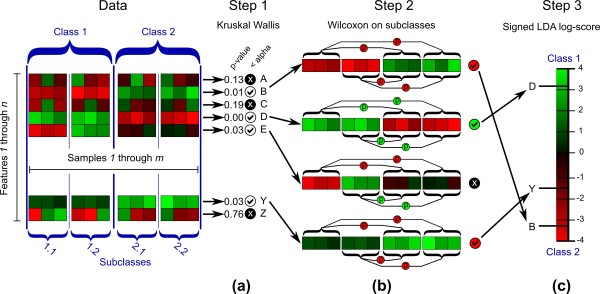
“The LEfSe algorithm is introduced in overview in the Results section, and Figure 6 illustrates in detail the format of the input (a matrix with n rows and m columns) and the three steps performed by the computational tool: the KW rank sum test [49] on classes, the pairwise Wilcoxon test [50,51] between subclasses of d…”
MethodOn a Test of Whether one of Two Random Variables is Stochastically Larger than the Other
Mann, H. B., & Whitney, D. R. (1947) · The Annals of Mathematical Statistics · doi:10.1214/aoms/1177730491 · Cited by 14,320 · cited 2×
“The LEfSe algorithm is introduced in overview in the Results section, and Figure 6 illustrates in detail the format of the input (a matrix with n rows and m columns) and the three steps performed by the computational tool: the KW rank sum test [49] on classes, the pairwise Wilcoxon test [50,51] between subclasses of d…”
MethodUse of Ranks in One-Criterion Variance Analysis
Kruskal, W. H., & Wallis, W. A. (1952) · Journal of the American Statistical Association · doi:10.1080/01621459.1952.10483441 · Cited by 13,912 · cited 2×
“The LEfSe algorithm is introduced in overview in the Results section, and Figure 6 illustrates in detail the format of the input (a matrix with n rows and m columns) and the three steps performed by the computational tool: the KW rank sum test [49] on classes, the pairwise Wilcoxon test [50,51] between subclasses of d…”
MethodAn obesity-associated gut microbiome with increased capacity for energy harvest
Turnbaugh, P. J., Ley, R. E., Mahowald, M. A., Magrini, V., Mardis, E. R., & Gordon, J. I. (2006) · Nature · doi:10.1038/nature05414 · Cited by 12,444 · cited 1×
“Changes in microbial abundances in the gut, oral cavity, and skin have been associated with disease states ranging from obesity [15-17] to psoriasis [18].”
BackgroundSmyth, G. K. (2004) · Statistical Applications in Genetics and Molecular Biology · doi:10.2202/1544-6115.1027 · Cited by 11,829
Golub, T. R., Slonim, D. K., Tamayo, P., Huard, C., Gaasenbeek, M., Mesirov, J. P., Coller, H., Loh, M. L., Downing, J. R., Caligiuri, M. A., et al. (1999) · Science · doi:10.1126/science.286.5439.531 · Cited by 11,516 · cited 2×
“Comparisons between healthy and diseased tissues have highlighted the importance of tasks such as class discovery (detecting novel subtypes of a disease) and class prediction (determining the subtype of a new sample) [1-4], and recent metagenomic assays have shown that human microbial communities can be used as biomar…”
BackgroundIn silico prediction of protein-protein interactions in human macrophages
Souiai, O., Guerfali, F., Ben Miled, S., Brun, C., & Benkahla, A. (2014) · BMC Research Notes · doi:10.1186/1756-0500-7-157 · Cited by 10,803
Significance analysis of microarrays applied to the ionizing radiation response
Tusher, V. G., Tibshirani, R., & Chu, G. (2001) · Proceedings of the National Academy of Sciences · doi:10.1073/pnas.091062498 · Cited by 10,568
Goodall, C. (1988) · Technometrics · doi:10.1080/00401706.1988.10488412 · Cited by 8,675
Jolliffe, I. T. (1986) · Springer Series in Statistics · doi:10.1007/978-1-4757-1904-8 · Cited by 8,273
UniFrac: a New Phylogenetic Method for Comparing Microbial Communities
Lozupone, C., & Knight, R. (2005) · Applied and Environmental Microbiology · doi:10.1128/aem.71.12.8228-8235.2005 · Cited by 8,227 · cited 1×
“UniFrac [38] compares sets of metagenomes at a strictly taxonomic level using phylogenetic distance, while MGRAST [39], ShotgunFunctionalizeR [40], mothur [41], and METAREP [42] all process metagenomic data using standard statistical tests (mainly t-tests with some modifications).”
MethodA core gut microbiome in obese and lean twins
Turnbaugh, P. J., Hamady, M., Yatsunenko, T., Cantarel, B. L., Duncan, A., Ley, R. E., Sogin, M. L., Jones, W. J., Roe, B. A., Affourtit, J. P., et al. (2009) · Nature · doi:10.1038/nature07540 · Cited by 7,823 · cited 1×
“differences are detected even among the gut microbiomes of twins [29], and both human microbiomes and environmental communities are thought to be characterized by the presence of a long tail of rare organisms [30-32].”
BackgroundPruesse, E., Quast, C., Knittel, K., Fuchs, B. M., Ludwig, W., Peplies, J., & Glockner, F. O. (2007) · Nucleic Acids Research · doi:10.1093/nar/gkm864 · Cited by 6,668
Turnbaugh, P. J., Ley, R. E., Hamady, M., Fraser-Liggett, C. M., Knight, R., & Gordon, J. I. (2007) · Nature · doi:10.1038/nature06244 · Cited by 6,091 · cited 1×
“The human microbiome, consisting of the total microbial complement associated with human hosts, is an important emerging area for metagenomic biomarker discovery [13,14].”
BackgroundDe Filippo, C., Cavalieri, D., Di Paola, M., Ramazzotti, M., Poullet, J. B., Massart, S., Collini, S., Pieraccini, G., & Lionetti, P. (2010) · Proceedings of the National Academy of Sciences · doi:10.1073/pnas.1005963107 · Cited by 5,579 · cited 2×
“Comparisons between healthy and diseased tissues have highlighted the importance of tasks such as class discovery (detecting novel subtypes of a disease) and class prediction (determining the subtype of a new sample) [1-4], and recent metagenomic assays have shown that human microbial communities can be used as biomar…”
BackgroundThe Ribosomal Database Project: improved alignments and new tools for rRNA analysis
Cole, J. R., Wang, Q., Cardenas, E., Fish, J., Chai, B., Farris, R. J., Kulam-Syed-Mohideen, A. S., McGarrell, D. M., Marsh, T., Garrity, G. M., et al. (2009) · Nucleic Acids Research · doi:10.1093/nar/gkn879 · Cited by 4,762 · cited 1×
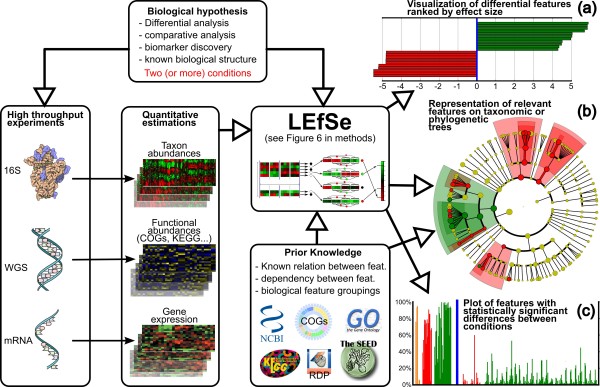
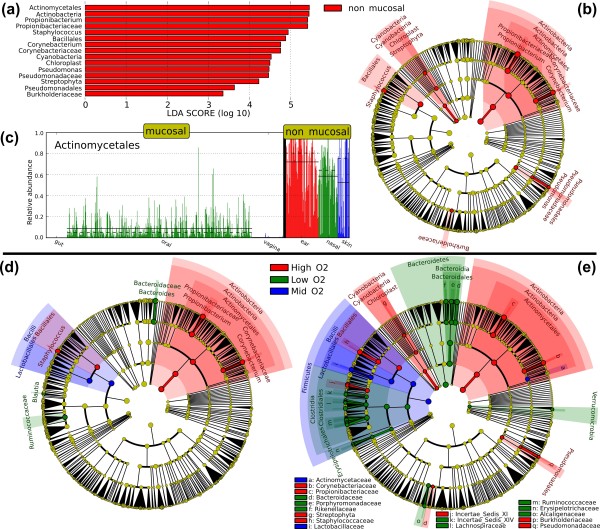
“LEfSe provides three main outputs (Figure 2), describing the effect sizes of differences observed among mucosal/non-mucosal communities, the phylogenetic distribution of these differences based on the Ribosomal Database Project (RDP) bacterial taxonomy [57], and the raw data driving these effects.”
BackgroundEcology: The Experimental Analysis of Distribution and Abundance
Krebs, C. J. (1973) · Cited by 4,620
Some distance properties of latent root and vector methods used in multivariate analysis
GOWER, J. C. (1966) · Biometrika · doi:10.1093/biomet/53.3-4.325 · Cited by 4,293 · cited 1×
“Most methods for community analysis from an ecological perspective rely on unsupervised cluster analyses based on principal component analysis [43] or principal coordinate analysis [44].”
MethodIntestinal mucosal barrier function in health and disease
Turner, J. R. (2009) · Nature reviews. Immunology · doi:10.1038/nri2653 · Cited by 3,952 · cited 11×
“from the Human Microbiome Project [55,56] assigning the main body sites to mucosal and non-mucosal classes, and using the body sites as”
BackgroundMethodInfluentialMicrobial diversity in the deep sea and the underexplored “rare biosphere”
Sogin, M. L., Morrison, H. G., Huber, J. A., Welch, D. M., Huse, S. M., Neal, P. R., Arrieta, J. M., & Herndl, G. J. (2006) · Proceedings of the National Academy of Sciences · doi:10.1073/pnas.0605127103 · Cited by 3,701 · cited 1×
“differences are detected even among the gut microbiomes of twins [29], and both human microbiomes and environmental communities are thought to be characterized by the presence of a long tail of rare organisms [30-32].”
BackgroundA Genomic Perspective on Protein Families
Tatusov, R. L., Koonin, E. V., & Lipman, D. J. (1997) · Science · doi:10.1126/science.278.5338.631 · Cited by 3,590 · cited 12×
“Functional features (COGs) that are discrimantive for the comparison between adult and infant microbiomes according to LEfSe but not detected by Metastats among the discriminant features with LDA score higher than 3.”
InfluentialMeyer, F., Paarmann, D., D'Souza, M., Olson, R., Glass, E., Kubal, M., Paczian, T., Rodriguez, A., Stevens, R., Wilke, A., et al. (2008) · BMC Bioinformatics · doi:10.1186/1471-2105-9-386 · Cited by 3,565 · cited 1×
“UniFrac [38] compares sets of metagenomes at a strictly taxonomic level using phylogenetic distance, while MGRAST [39], ShotgunFunctionalizeR [40], mothur [41], and METAREP [42] all process metagenomic data using standard statistical tests (mainly t-tests with some modifications).”
MethodChimeric 16S rRNA sequence formation and detection in Sanger and 454-pyrosequenced PCR amplicons
Haas, B. J., Gevers, D., Earl, A. M., Feldgarden, M., Ward, D. V., Giannoukos, G., Ciulla, D., Tabbaa, D., Highlander, S. K., Sodergren, E., et al. (2011) · Genome Research · doi:10.1101/gr.112730.110 · Cited by 3,473 · cited 1×
“Chimeric sequences were identified using the mothur implementation of the ChimeraSlayer algorithm [108].”
MethodSelf-citationGoecks, J., Nekrutenko, A., Taylor, J., & The Galaxy Team (2010) · Genome Biology · doi:10.1186/gb-2010-11-8-r86 · Cited by 3,453 · cited 3×
“LEfSe is provided with a graphical interface in the Galaxy framework [46,47], which allows the user to select parameters (the primary three stringency parameters, the multiclass setting, and other computational, statistical, and graphical preferences), to pipeline data between modules in a workflow framework, to gener…”
MethodResultEcological and Evolutionary Forces Shaping Microbial Diversity in the Human Intestine
Ley, R. E., Peterson, D. A., & Gordon, J. I. (2006) · Cell · doi:10.1016/j.cell.2006.02.017 · Cited by 3,358 · cited 2×
“Comparisons between healthy and diseased tissues have highlighted the importance of tasks such as class discovery (detecting novel subtypes of a disease) and class prediction (determining the subtype of a new sample) [1-4], and recent metagenomic assays have shown that human microbial communities can be used as biomar…”
BackgroundMEGAN analysis of metagenomic data
Huson, D. H., Auch, A. F., Qi, J., & Schuster, S. C. (2007) · Genome Research · doi:10.1101/gr.5969107 · Cited by 3,312 · cited 3×
“Huson DH, Auch AF, Qi J, Schuster SC: MEGAN analysis of metagenomic data.”
MethodUse of proteomic patterns in serum to identify ovarian cancer
Petricoin, E. F., Ardekani, A. M., Hitt, B. A., Levine, P. J., Fusaro, V. A., Steinberg, S. M., Mills, G. B., Simone, C., Fishman, D. A., Kohn, E. C., et al. (2002) · The Lancet · doi:10.1016/s0140-6736(02)07746-2 · Cited by 3,236
Bacterial Community Variation in Human Body Habitats Across Space and Time
Costello, E. K., Lauber, C. L., Hamady, M., Fierer, N., Gordon, J. I., & Knight, R. (2009) · Science · doi:10.1126/science.1177486 · Cited by 3,231
The Effect of Diet on the Human Gut Microbiome: A Metagenomic Analysis in Humanized Gnotobiotic Mice
Turnbaugh, P. J., Ridaura, V. K., Faith, J. J., Rey, F. E., Knight, R., & Gordon, J. I. (2009) · Science Translational Medicine · doi:10.1126/scitranslmed.3000322 · Cited by 3,058 · cited 1×
“Changes in microbial abundances in the gut, oral cavity, and skin have been associated with disease states ranging from obesity [15-17] to psoriasis [18].”
BackgroundTurnbaugh, P. J., Bäckhed, F., Fulton, L., & Gordon, J. I. (2008) · Cell Host & Microbe · doi:10.1016/j.chom.2008.02.015 · Cited by 2,915 · cited 2×
“Comparisons between healthy and diseased tissues have highlighted the importance of tasks such as class discovery (detecting novel subtypes of a disease) and class prediction (determining the subtype of a new sample) [1-4], and recent metagenomic assays have shown that human microbial communities can be used as biomar…”
BackgroundUse of Ranks in One-Criterion Variance Analysis
Kruskal, W., & Wallis, W. A. (1952) · Journal of the American Statistical Association · doi:10.2307/2280779 · Cited by 2,455
Community structure and metabolism through reconstruction of microbial genomes from the environment
Tyson, G. W., Chapman, J., Hugenholtz, P., Allen, E. E., Ram, R. J., Richardson, P. M., Solovyev, V. V., Rubin, E. M., Rokhsar, D. S., & Banfield, J. F. (2004) · Nature · doi:10.1038/nature02340 · Cited by 2,417 · cited 1×
“More generally, the metagenomic study of microbial communities is an effective approach for identifying the microorganisms or microbial metabolic characteristics of any uncultured sample [19,20].”
BackgroundReduced diversity of faecal microbiota in Crohn’s disease revealed by a metagenomic approach
Manichanh, C., Rigottier-Gois, L., Bonnaud, E., Gloux, K., Pelletier, E., Frangeul, L., Nalin, R., Jarrin, C., Chardon, P., Marteau, P., et al. (2006) · Gut · doi:10.1136/gut.2005.073817 · Cited by 2,277 · cited 3×
“For example, single pathogenic organisms can signal disease if present in a community [21,22], and increases and decreases in community complexity have been observed in bacterial vaginosis [23] and Crohn’s disease [8].”
BackgroundThe NIH Human Microbiome Project
The NIH HMP Working Group, Peterson, J., Garges, S., Giovanni, M., McInnes, P., Wang, L., Schloss, J. A., Bonazzi, V., McEwen, J. E., Wetterstrand, K. A., et al. (2009) · Genome Research · doi:10.1101/gr.096651.109 · Cited by 2,066
The Subsystems Approach to Genome Annotation and its Use in the Project to Annotate 1000 Genomes
Overbeek, R. (2005) · Nucleic Acids Research · doi:10.1093/nar/gki866 · Cited by 2,012 · cited 6×
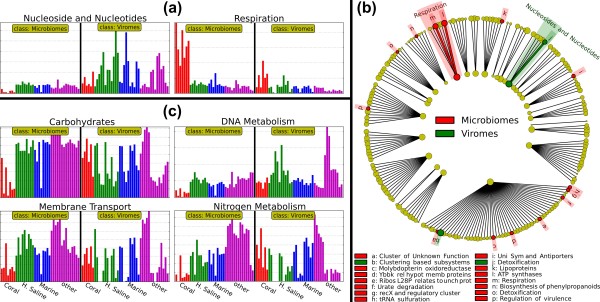
“differ consistently between bacterial microbiomes and viromes across environmental samples described in [70].”
BackgroundInfluentialThe COG database: new developments in phylogenetic classification of proteins from complete genomes
Tatusov, R. L. (2001) · Nucleic Acids Research · doi:10.1093/nar/29.1.22 · Cited by 1,895
Krämer, W. (2003) · Computational Statistics & Data Analysis · Cited by 1,858
Mechanisms of Disease: pathogenesis of Crohn's disease and ulcerative colitis
Sartor, R. B. (2006) · Nature Clinical Practice Gastroenterology & Hepatology · doi:10.1038/ncpgasthep0528 · Cited by 1,757 · cited 1×
“In particular, mouse models of inflammatory bowel disease [63] facilitate a mechanistic evaluation of the contribution of the gut microbiota to the initiation and perpetuation of chronic intestinal inflammation, as occurs in human Crohn’s disease and ulcerative colitis [64].”
BackgroundComparative Metagenomics of Microbial Communities
Tringe, S. G., von Mering, C., Kobayashi, A., Salamov, A. A., Chen, K., Chang, H. W., Podar, M., Short, J. M., Mathur, E. J., Detter, J. C., et al. (2005) · Science · doi:10.1126/science.1107851 · Cited by 1,689 · cited 1×
“More generally, the metagenomic study of microbial communities is an effective approach for identifying the microorganisms or microbial metabolic characteristics of any uncultured sample [19,20].”
BackgroundAn ecological and evolutionary perspective on human–microbe mutualism and disease
Dethlefsen, L., McFall-Ngai, M., & Relman, D. A. (2007) · Nature · doi:10.1038/nature06245 · Cited by 1,660 · cited 1×
“Moreover, simply identifying potential biomarkers without elucidating their biological consistency and roles is only a precursor to understanding the underlying mechanisms of microbe-microbe or host-microbe interactions [33].”
BackgroundStatistical Methods for Detecting Differentially Abundant Features in Clinical Metagenomic Samples
White, J. R., Nagarajan, N., & Pop, M. (2009) · PLoS Computational Biology · doi:10.1371/journal.pcbi.1000352 · Cited by 1,586 · cited 8×
“Metastats [45] seems to achieve results very similar to KW (Additional file 7) with the same disadvantages with respect to LEfSe.”
BackgroundMethodResultInfluentialImplementing a Class of Permutation Tests: The coin Package
Hothorn, T., Hornik, K., Wiel, M. A. V. D., & Zeileis, A. (2008) · Journal of Statistical Software · doi:10.18637/jss.v028.i08 · Cited by 1,492 · cited 1×
“LEfSe is implemented in Python and makes use of R statistical functions in the coin [111] and MASS [112] libraries through the rpy2 library [113] and of the matplotlib [114] library for graphical output.”
MethodNovel Molecular Subtypes of Serous and Endometrioid Ovarian Cancer Linked to Clinical Outcome
Tothill, R. W., Tinker, A. V., George, J., Brown, R., Fox, S. B., Lade, S., Johnson, D. S., Trivett, M. K., Etemadmoghadam, D., Locandro, B., et al. (2008) · Clinical Cancer Research · doi:10.1158/1078-0432.ccr-08-0196 · Cited by 1,467 · cited 1×
“Comparisons between healthy and diseased tissues have highlighted the importance of tasks such as class discovery (detecting novel subtypes of a disease) and class prediction (determining the subtype of a new sample) [1-4], and recent metagenomic assays have shown that human microbial communities can be used as biomar…”
BackgroundGalaxy: A Web‐Based Genome Analysis Tool for Experimentalists
Blankenberg, D., Kuster, G. V., Coraor, N., Ananda, G., Lazarus, R., Mangan, M., Nekrutenko, A., & Taylor, J. (2010) · Current Protocols in Molecular Biology · doi:10.1002/0471142727.mb1910s89 · Cited by 1,427 · cited 3×
“LEfSe is provided with a graphical interface in the Galaxy framework [46,47], which allows the user to select parameters (the primary three stringency parameters, the multiclass setting, and other computational, statistical, and graphical preferences), to pipeline data between modules in a workflow framework, to gener…”
MethodResultAccuracy and quality of massively parallel DNA pyrosequencing
Huse, S. M., Huber, J. A., Morrison, H. G., Sogin, M. L., & Welch, D. M. (2007) · Genome Biology · doi:10.1186/gb-2007-8-7-r143 · Cited by 1,282 · cited 1×
“Sequences with an ambiguous base call or a homopolymer longer than eight nucleotides were removed from subsequent analyses, as suggested previously [105].”
MethodLow counts of Faecalibacterium prausnitzii in colitis microbiota
Sokol, H., Seksik, P., Furet, J. P., Firmesse, O., Nion-Larmurier, I., Beaugerie, L., Cosnes, J., Corthier, G., Marteau, P., & Doré, J. (2009) · Inflammatory Bowel Diseases · doi:10.1002/ibd.20903 · Cited by 1,275 · cited 2×
“Comparisons between healthy and diseased tissues have highlighted the importance of tasks such as class discovery (detecting novel subtypes of a disease) and class prediction (determining the subtype of a new sample) [1-4], and recent metagenomic assays have shown that human microbial communities can be used as biomar…”
BackgroundHuman colonic microbiota associated with diet, obesity and weight loss
Duncan, S. H., Lobley, G. E., Holtrop, G., Ince, J., Johnstone, A. M., Louis, P., & Flint, H. J. (2008) · International Journal of Obesity · doi:10.1038/ijo.2008.155 · Cited by 1,222 · cited 1×
“Changes in microbial abundances in the gut, oral cavity, and skin have been associated with disease states ranging from obesity [15-17] to psoriasis [18].”
BackgroundIdentification of the Uncultured Bacillus of Whipple’s Disease
Relman, D. A., Schmidt, T. M., MacDermott, R. P., & Falkow, S. (1992) · New England Journal of Medicine · doi:10.1056/nejm199207303270501 · Cited by 1,157 · cited 1×
“For example, single pathogenic organisms can signal disease if present in a community [21,22], and increases and decreases in community complexity have been observed in bacterial vaginosis [23] and Crohn’s disease [8].”
BackgroundMicrobial community profiling for human microbiome projects: Tools, techniques, and challenges
Hamady, M., & Knight, R. (2009) · Genome Research · doi:10.1101/gr.085464.108 · Cited by 1,001 · cited 1×
“These findings demonstrate that a concept of class explanation including both statistical and biological significance is highly beneficial in tackling the statistical challenges associated with high-dimensional biomarker discovery [28,81,82].”
BackgroundBell, T., Cleary, J. G., & Witten, I. H. (1990) · Cited by 988
Functional metagenomic profiling of nine biomes
Dinsdale, E. A., Edwards, R. A., Hall, D., Angly, F., Breitbart, M., Brulc, J. M., Furlan, M., Desnues, C., Haynes, M., Li, L., et al. (2008) · Nature · doi:10.1038/nature06810 · Cited by 980 · cited 2×
“We applied LEfSe to the environmental data of [69], a dataset with the goal of characterizing the functional roles of viromes (that is, viral metagenomes) versus microbiomes (that is, bacterial metagenomes).”
MethodThe experimental evolution of specialists, generalists, and the maintenance of diversity
Kassen, R. (2002) · Journal of Evolutionary Biology · doi:10.1046/j.1420-9101.2002.00377.x · Cited by 954 · cited 1×
“These observations may reflect extensive microenvironmental heterogeneity and the coexistence of generalist and specialist bacteria [87-89].”
BackgroundIdentifying biologically relevant differences between metagenomic communities
Parks, D. H., & Beiko, R. G. (2010) · Bioinformatics · doi:10.1093/bioinformatics/btq041 · Cited by 947 · cited 1×
“MEGAN, however, can only compare single pairs of metagenomes, as is also the case with STAMP [37], which does introduce a concept of ‘biological relevance’ in the form of confidence intervals.”
MethodCommunicable Ulcerative Colitis Induced by T-bet Deficiency in the Innate Immune System
Garrett, W. S., Lord, G. M., Punit, S., Lugo-Villarino, G., Mazmanian, S. K., Ito, S., Glickman, J. N., & Glimcher, L. H. (2007) · Cell · doi:10.1016/j.cell.2007.08.017 · Cited by 918 · cited 1×
“Its loss in the absence of an adaptive immune system results in a highly penetrant and aggressive form of ulcerative colitis [65] that is specifically dependent on and transmissible through the gut flora.”
BackgroundSelf-citationComparative metagenomics revealed commonly enriched gene sets in human gut microbiomes
Kurokawa, K., Itoh, T., Kuwahara, T., Oshima, K., Toh, H., Toyoda, A., Takami, H., Morita, H., Sharma, V. K., Srivastava, T. P., et al. (2007) · DNA Research · doi:10.1093/dnares/dsm018 · Cited by 869 · cited 3×
“The COG profiles of the nine adult and four unweaned infant microbiomes were obtained from the supplemental material of [73] and used unmodified in this study.”
BackgroundMethodGarrett, W. S., Gallini, C. A., Yatsunenko, T., Michaud, M., DuBois, A., Delaney, M. L., Punit, S., Karlsson, M., Bry, L., Glickman, J. N., et al. (2010) · Cell Host & Microbe · doi:10.1016/j.chom.2010.08.004 · Cited by 788 · cited 1×
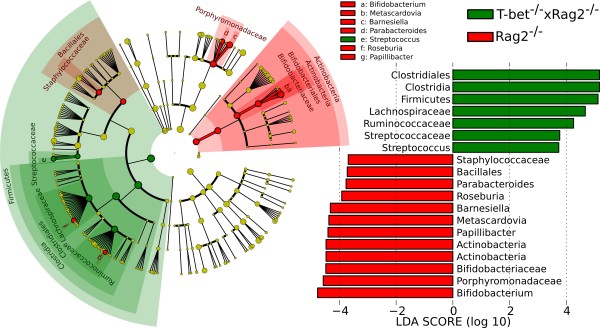
“We thus sought to investigate the characteristics of the fecal microbiota in a mouse model of spontaneous colitis that occurs in a colony of Balb/c T-bet × Rag2 mice using 16S rRNA gene metagenomic data [66,67].”
MethodSelf-citationMarine microbial diversity: can it be determined?
Pedrós-Alió, C. (2006) · Trends in Microbiology · doi:10.1016/j.tim.2006.04.007 · Cited by 731 · cited 1×
“differences are detected even among the gut microbiomes of twins [29], and both human microbiomes and environmental communities are thought to be characterized by the presence of a long tail of rare organisms [30-32].”
BackgroundWooley, J. C., Godzik, A., & Friedberg, I. (2010) · PLoS Computational Biology · doi:10.1371/journal.pcbi.1000667 · Cited by 688 · cited 1×
“These findings demonstrate that a concept of class explanation including both statistical and biological significance is highly beneficial in tackling the statistical challenges associated with high-dimensional biomarker discovery [28,81,82].”
BackgroundKhoruts, A., Dicksved, J., Jansson, J. K., & Sadowsky, M. J. (2010) · Journal of Clinical Gastroenterology · doi:10.1097/mcg.0b013e3181c87e02 · Cited by 649 · cited 1×
“Other important clinical applications of metagenomic analyses include probiotic treatments [94,95] and microbiome transplantation [96-99] for gastrointestinal diseases.”
BackgroundHigh-Throughput Gene Mapping in Caenorhabditis elegans
Swan, K. A., Curtis, D. E., McKusick, K. B., Voinov, A. V., Mapa, F. A., & Cancilla, M. R. (2002) · Genome Research · doi:10.1101/gr.208902 · Cited by 616
Clarke, R., Ressom, H. W., Wang, A., Xuan, J., Liu, M. C., Gehan, E. A., & Wang, Y. (2008) · Nature Reviews Cancer · doi:10.1038/nrc2294 · Cited by 603 · cited 1×
“Related challenges are associated with high-dimensional data regardless of the data type or experimental platform; the number of potential biomarkers, for example, is typically much higher than the number of samples [24-26].”
BackgroundPanwala, C. M., Jones, J. C., & Viney, J. L. (1998) · The Journal of Immunology · doi:10.4049/jimmunol.161.10.5733 · Cited by 567
Mouse models of inflammatory bowel disease☆
WIRTZ, S., & NEURATH, M. (2007) · Advanced Drug Delivery Reviews · doi:10.1016/j.addr.2007.07.003 · Cited by 507 · cited 2×
“In particular, mouse models of inflammatory bowel disease [63] facilitate a mechanistic evaluation of the contribution of the gut microbiota to the initiation and perpetuation of chronic intestinal inflammation, as occurs in human Crohn’s disease and ulcerative colitis [64].”
BackgroundMetagenomic approaches for defining the pathogenesis of inflammatory bowel diseases
Peterson, D. A., Frank, D. N., Pace, N. R., & Gordon, J. I. (2008) · Cell Host & Microbe · doi:10.1016/j.chom.2008.05.001 · Cited by 503 · cited 1×
“If the depletion of Bifidobacterium species in ulcerative colitis proves to occur early in human disease etiology, this and comparable shifts in the microbiota have potential applications in the detection of human disorders [90,91], especially as shifts in some bacterial consortia can be detected easily and inexpensiv…”
BackgroundPreidis, G. A., & Versalovic, J. (2009) · Gastroenterology · doi:10.1053/j.gastro.2009.01.072 · Cited by 485 · cited 1×
“Other important clinical applications of metagenomic analyses include probiotic treatments [94,95] and microbiome transplantation [96-99] for gastrointestinal diseases.”
BackgroundFalse discovery rate, sensitivity and sample size for microarray studies
Pawitan, Y., Michiels, S., Koscielny, S., Gusnanto, A., & Ploner, A. (2005) · Bioinformatics · doi:10.1093/bioinformatics/bti448 · Cited by 455 · cited 1×
“In biology, false positives are often perceived as more dramatic than false negatives [77-79]; this is often attributable to the fact that it is undesirable to invest in expensive experimental follow-up of false positives, whereas in high-throughput settings, a few true positives outweigh the false negatives that are…”
BackgroundSubstantial Alterations of the Cutaneous Bacterial Biota in Psoriatic Lesions
Gao, Z., Tseng, C.-H., Strober, B. E., Pei, Z., & Blaser, M. J. (2008) · PLoS ONE · doi:10.1371/journal.pone.0002719 · Cited by 451 · cited 1×
“Changes in microbial abundances in the gut, oral cavity, and skin have been associated with disease states ranging from obesity [15-17] to psoriasis [18].”
BackgroundTreatment of Ulcerative Colitis Using Fecal Bacteriotherapy
Borody, T. J., Warren, E. F., Leis, S., Surace, R., & Ashman, O. (2003) · Journal of Clinical Gastroenterology · doi:10.1097/00004836-200307000-00012 · Cited by 388 · cited 1×
“Other important clinical applications of metagenomic analyses include probiotic treatments [94,95] and microbiome transplantation [96-99] for gastrointestinal diseases.”
BackgroundImmunoproliferative small intestinal disease associated with Campylobacter jejuni
Mesnard, B., De Vroey, B., Maunoury, V., & Lecuit, M. (2012) · Digestive and Liver Disease · doi:10.1016/j.dld.2012.03.020 · Cited by 383
Salivary Transcriptomic Biomarkers for Detection of Resectable Pancreatic Cancer
Zhang, L., Farrell, J. J., Zhou, H., Elashoff, D., Akin, D., Park, N., Chia, D., & Wong, D. T. (2010) · Gastroenterology · doi:10.1053/j.gastro.2009.11.010 · Cited by 343 · cited 1×
“As sequencing technology continues to develop and makes microbial biomarkers increasingly easily detected, this enables clinical diagnostic and microbiological applications through the comparison of microbial communities [11,12].”
BackgroundReshaping the gut microbiome with bacterial transplantation and antibiotic intake
Manichanh, C., Reeder, J., Gibert, P., Varela, E., Llopis, M., Antolin, M., Guigo, R., Knight, R., & Guarner, F. (2010) · Genome Research · doi:10.1101/gr.107987.110 · Cited by 335 · cited 1×
“Other important clinical applications of metagenomic analyses include probiotic treatments [94,95] and microbiome transplantation [96-99] for gastrointestinal diseases.”
BackgroundA High-Throughput DNA Sequence Aligner for Microbial Ecology Studies
Schloss, P. D. (2009) · PLoS ONE · doi:10.1371/journal.pone.0008230 · Cited by 323 · cited 1×
“All sequences were aligned using a NAST-based sequence aligner to a custom reference based on the SILVA alignment [106,107].”
MethodFeature Ranking Using Linear SVM
Chang, Y.-W., & Lin, C. (2008) · Cited by 321
Exploring the Diversity of the Bifidobacterial Population in the Human Intestinal Tract
Turroni, F., Foroni, E., Pizzetti, P., Giubellini, V., Ribbera, A., Merusi, P., Cagnasso, P., Bizzarri, B., de'Angelis, G. L., Shanahan, F., et al. (2009) · Applied and Environmental Microbiology · doi:10.1128/aem.02216-08 · Cited by 311 · cited 1×
“Intriguingly, LEfSe’s distinct list of functional activities in the core infant and adult microbiomes is suggestive of ‘generalist’ microbial activity during early life and specialization over time [76].”
BackgroundTaylor, M. W., Schupp, P. J., Dahllöf, I., Kjelleberg, S., & Steinberg, P. D. (2004) · Environmental Microbiology · doi:10.1046/j.1462-2920.2003.00545.x · Cited by 269
Oakley, B. B., Fiedler, T. L., Marrazzo, J. M., & Fredricks, D. N. (2008) · Applied and Environmental Microbiology · doi:10.1128/aem.02884-07 · Cited by 265 · cited 1×
“For example, single pathogenic organisms can signal disease if present in a community [21,22], and increases and decreases in community complexity have been observed in bacterial vaginosis [23] and Crohn’s disease [8].”
BackgroundThe 'rare biosphere': a reality check
Reeder, J., & Knight, R. (2009) · Nature Methods · doi:10.1038/nmeth0909-636 · Cited by 264 · cited 1×
“This coupling of statistical approaches with biological consistency and effect size estimation alleviates possible artifacts or statistical inhomogeneity known to be common in metagenomic data, for example, extreme variability among subjects or the presence of a long tail of rare organisms [32,86].”
BackgroundImmunoproliferative small intestinal disease associated with Campylobacter jejuni
Lecuit, M. (2009) · Hematology Meeting Reports · doi:10.4081/hmr.v1i5.265 · Cited by 261
Veiga, P., Gallini, C. A., Beal, C., Michaud, M., Delaney, M. L., DuBois, A., Khlebnikov, A., van Hylckama Vlieg, J. E. T., Punit, S., Glickman, J. N., et al. (2010) · Proceedings of the National Academy of Sciences · doi:10.1073/pnas.1011737107 · Cited by 221 · cited 6×
“abundant clades were consonant with both our prior 16S rRNA-based sequence analysis using complete linkage hierarchical clustering and quantitative real time PCR-based experiments performed on the same fecal DNA samples [67].”
BackgroundMethodResultInfluentialSelf-citationEnvironmental distribution of prokaryotic taxa
Tamames, J., Abellan, J. J., Pignatelli, M., Camacho, A., & Moya, A. (2010) · BMC Microbiology · doi:10.1186/1471-2180-10-85 · Cited by 206 · cited 1×
“These observations may reflect extensive microenvironmental heterogeneity and the coexistence of generalist and specialist bacteria [87-89].”
BackgroundDavidson, B. (1991) · Cited by 192
Probiotics and gastrointestinal disease: successes, problems and future prospects
Culligan, E. P., Hill, C., & Sleator, R. D. (2009) · Gut Pathogens · doi:10.1186/1757-4749-1-19 · Cited by 187 · cited 1×
“Other important clinical applications of metagenomic analyses include probiotic treatments [94,95] and microbiome transplantation [96-99] for gastrointestinal diseases.”
BackgroundMetagenomics: Facts and Artifacts, and Computational Challenges
Wooley, J. C., & Ye, Y. (2010) · Journal of Computer Science and Technology · doi:10.1007/s11390-010-9306-4 · Cited by 186 · cited 2×
“Metagenomic analyses additionally present their own specific issues, including sequencing errors, chimeric reads [27,28], and complex underlying biology; many microbial communities have been found to show remarkably high inter-subject variability.”
BackgroundMouse models for the study of Crohn's disease
Pizarro, T. T., Arseneau, K. O., Bamias, G., & Cominelli, F. (2003) · Trends in Molecular Medicine · doi:10.1016/s1471-4914(03)00052-2 · Cited by 168 · cited 1×
“Rodent models have been established to provide a uniquely accurate and tractable model for studying the gut microbiota, including the molecular and cellular mechanisms driving chronic intestinal inflammation [60-63].”
BackgroundThe clinical value of salivary biomarkers for periodontal disease
Zhang, L., Henson, B. S., Camargo, P. M., & Wong, D. T. (2009) · Periodontology 2000 · doi:10.1111/j.1600-0757.2009.00315.x · Cited by 164 · cited 2×
“These appear particularly promising for clinical applications [11], as the microbial communities in the saliva seem to represent one potential proxy for other human microbiota [93].”
BackgroundShotgunFunctionalizeR: an R-package for functional comparison of metagenomes
Kristiansson, E., Hugenholtz, P., & Dalevi, D. (2009) · Bioinformatics · doi:10.1093/bioinformatics/btp508 · Cited by 137 · cited 2×
“UniFrac [38] compares sets of metagenomes at a strictly taxonomic level using phylogenetic distance, while MGRAST [39], ShotgunFunctionalizeR [40], mothur [41], and METAREP [42] all process metagenomic data using standard statistical tests (mainly t-tests with some modifications).”
MethodMETAREP: JCVI metagenomics reports—an open source tool for high-performance comparative metagenomics
Goll, J., Rusch, D. B., Tanenbaum, D. M., Thiagarajan, M., Li, K., Methé, B. A., & Yooseph, S. (2010) · Bioinformatics · doi:10.1093/bioinformatics/btq455 · Cited by 130
Multivariate Cutoff Level Analysis (MultiCoLA) of large community data sets
Gobet, A., Quince, C., & Ramette, A. (2010) · Nucleic Acids Research · doi:10.1093/nar/gkq545 · Cited by 123 · cited 2×
“This coupling of statistical approaches with biological consistency and effect size estimation alleviates possible artifacts or statistical inhomogeneity known to be common in metagenomic data, for example, extreme variability among subjects or the presence of a long tail of rare organisms [32,86].”
BackgroundSuzuki, Y., & Nei, M. (2004) · Molecular Biology and Evolution · doi:10.1093/molbev/msh098 · Cited by 120 · cited 1×
“In biology, false positives are often perceived as more dramatic than false negatives [77-79]; this is often attributable to the fact that it is undesirable to invest in expensive experimental follow-up of false positives, whereas in high-throughput settings, a few true positives outweigh the false negatives that are…”
BackgroundGodon, J., Morinière, J., Moletta, M., Gaillac, M., Bru, V., & Delgènes, J. (2005) · Environmental Microbiology · doi:10.1111/j.1462-2920.2004.00693.x · Cited by 113
Oral cavity as natural reservoir for intestinal lactobacilli
Bello, F. D., & Hertel, C. (2005) · Systematic and Applied Microbiology · doi:10.1016/j.syapm.2005.07.002 · Cited by 107
Biomarkers for Infants at Risk for Necrotizing Enterocolitis: Clues to Prevention?
Young, C., Sharma, R. R., Handfield, M., Mai, V., & Neu, J. (2009) · Pediatric Research · doi:10.1203/pdr.0b013e31819dba7d · Cited by 102 · cited 1×
“If the depletion of Bifidobacterium species in ulcerative colitis proves to occur early in human disease etiology, this and comparable shifts in the microbiota have potential applications in the detection of human disorders [90,91], especially as shifts in some bacterial consortia can be detected easily and inexpensiv…”
BackgroundSuccessful Treatment of Fulminant Clostridium difficile Infection with Fecal Bacteriotherapy
You, D. M., Franzos, M. A., & Holman, R. P. (2008) · Annals of Internal Medicine · doi:10.7326/0003-4819-148-8-200804150-00024 · Cited by 99
Norvig, P., Relman, D. A., Goldstein, D. B., Kammen, D. M., Weinberger, D. R., Aiello, L. C., Church, G. M., Hennessy, J. L., Sachs, J., Burrows, A. S., et al. (2010) · Nature · doi:10.1038/463026a · Cited by 88
Metagenomics: the role of the microbiome in cardiovascular diseases
Ordovas, J. M., & Mooser, V. (2006) · Current Opinion in Lipidology · doi:10.1097/01.mol.0000217897.75068.ba · Cited by 85 · cited 2×
“Comparisons between healthy and diseased tissues have highlighted the importance of tasks such as class discovery (detecting novel subtypes of a disease) and class prediction (determining the subtype of a new sample) [1-4], and recent metagenomic assays have shown that human microbial communities can be used as biomar…”
BackgroundOver-optimism in bioinformatics research
Boulesteix, A. (2009) · Bioinformatics · doi:10.1093/bioinformatics/btp648 · Cited by 85 · cited 1×
“In biology, false positives are often perceived as more dramatic than false negatives [77-79]; this is often attributable to the fact that it is undesirable to invest in expensive experimental follow-up of false positives, whereas in high-throughput settings, a few true positives outweigh the false negatives that are…”
BackgroundTaxonomic Outline of the Bacteria and Archaea
Garrity, G. M., & Cole, J. R. (2007) · Michigan State University eBooks · doi:10.1601/toba7.7 · Cited by 82
Visual and statistical comparison of metagenomes
Mitra, S., Klar, B., & Huson, D. H. (2009) · Bioinformatics · doi:10.1093/bioinformatics/btp341 · Cited by 81
Hilbert, F., Scherwitzel, M., Paulsen, P., & Szostak, M. P. (2010) · Applied and Environmental Microbiology · doi:10.1128/aem.01532-10 · Cited by 71
Greene, J. M., Collins, F., Lefkowitz, E. J., Roos, D. S., Scheuermann, R. H., Sobral, B., Stevens, R. L., White, O. R., & Francesco, V. D. (2007) · Infection and Immunity · doi:10.1128/iai.00105-07 · Cited by 63 · cited 6×
“Among the 29 high-level functional roles (including unclassified roles) in the subsystem hierarchy of the SEED [70] and NMPDR [71] frameworks, LEfSe identifies only the ‘Nucleosides and nucleotides’ subsystem to be strictly differentially abundant among all environmental subclasses, specifically with higher levels in…”
BackgroundMethodInfluentialComparison of multiple metagenomes using phylogenetic networks based on ecological indices
Mitra, S., Gilbert, J. A., Field, D., & Huson, D. H. (2010) · The ISME Journal · doi:10.1038/ismej.2010.51 · Cited by 53 · cited 1×
“MEGAN [34] is a metagenomic analysis tool with recent additions for phylogenetic comparisons [35] and statistical analyses [36].”
MethodExploring the within- and between-class correlation distributions for tumor classification
Wei, X., & Li, K.-C. (2010) · Proceedings of the National Academy of Sciences · doi:10.1073/pnas.0910140107 · Cited by 33 · cited 1×
“Comparisons between healthy and diseased tissues have highlighted the importance of tasks such as class discovery (detecting novel subtypes of a disease) and class prediction (determining the subtype of a new sample) [1-4], and recent metagenomic assays have shown that human microbial communities can be used as biomar…”
BackgroundSpecified Species in Gingival Crevicular Fluid Predict Bacterial Diversity
Asikainen, S. E., Doğan, B., Turgut, Z., Paster, B. J., Bodur, A., & Oscarsson, J. (2010) · PLoS ONE · doi:10.1371/journal.pone.0013589 · Cited by 32 · cited 1×
“Oral microbial biomarkers, for example, can be easily acquired and analyzed with microarray chips targeted for bacterial profiling [92].”
BackgroundDevelopment of Colonic Adenocarcinomas in a Mouse Model of Ulcerative Colitis
Shah, S. A., Simpson, S. J., Brown, L. F., Comiskey, M., de Jong, Y. P., Allen, D., & Terhorst, C. (1998) · Inflammatory Bowel Diseases · doi:10.1097/00054725-199808000-00004 · Cited by 31
Metascardovia criceti Gen. Nov., Sp. Nov., from Hamster Dental Plaque
Okamoto, M., Benno, Y., Leung, K., & Maeda, N. (2007) · Microbiology and Immunology · doi:10.1111/j.1348-0421.2007.tb03964.x · Cited by 27 · cited 3×
“mice is also interesting, as it may have a role similar to Bifidobacterium and because Metascardovia has been previously observed primarily in the oral cavity [68].”
BackgroundResultInfluentialLin, W., & Lee, W. (2010) · BMC Research Notes · doi:10.1186/1756-0500-3-26 · Cited by 27 · cited 1×
“from most current statistical approaches [45] and akin to the incorporation of biological prior knowledge that has proven highly successful in recent genome-wide association studies [83-85].”
BackgroundRitchie, M. D. (2009) · Genome Medicine · doi:10.1186/gm65 · Cited by 26 · cited 1×
“from most current statistical approaches [45] and akin to the incorporation of biological prior knowledge that has proven highly successful in recent genome-wide association studies [83-85].”
BackgroundInclusion of a priori information in genome‐wide association analysis
Tintle, N., Lantieri, F., Lebrec, J., Sohns, M., Ballard, D., & Bickeböller, H. (2009) · Genetic Epidemiology · doi:10.1002/gepi.20476 · Cited by 14 · cited 1×
“from most current statistical approaches [45] and akin to the incorporation of biological prior knowledge that has proven highly successful in recent genome-wide association studies [83-85].”
BackgroundSalivary biomarkers for pancreatic cancer detection
Wong, D. T., Zhang, L., Farrell, J. J., Zhou, H., Elashoff, D. A., Gao, K., & Paster, B. J. (2009) · Journal of Clinical Oncology · doi:10.1200/jco.2009.27.15_suppl.4630 · Cited by 10 · cited 1×
“These appear particularly promising for clinical applications [11], as the microbial communities in the saliva seem to represent one potential proxy for other human microbiota [93].”
BackgroundMaladie immunoproliférative de l'intestin grêle associée à Campylobacter jejuni
Lecuit, M., & Lortholary, O. (2005) · Médecine et Maladies Infectieuses · doi:10.1016/s0399-077x(05)80278-1 · Cited by 8
Research works printed but not linked: 1
- 110. Sequence Read Archive: SRP002012 Human Microbiome Project 454 Clinical Production Pilot (PPS) http://trace.ncbi.nlm.nih.gov/Traces/sra/?study=SRP002012#
Cited by
Diet rapidly and reproducibly alters the human gut microbiome
David, L. A., Maurice, C. F., Carmody, R. N., Gootenberg, D. B., Button, J. E., Wolfe, B. E., Ling, A. V., Devlin, A. S., Varma, Y., Fischbach, M. A., et al. (2014) · Nature · doi:10.1038/nature12820 · Cited by 10,100
Gut microbiome modulates response to anti-PD-1 immunotherapy in melanoma patients
Gopalakrishnan, V., Spencer, C. N., Nezi, L., Reuben, A., Andrews, M. C., Karpinets, T. V., Prieto, P. A., Vicente, D., Hoffman, K., Wei, S. C., et al. (2018) · Science · doi:10.1126/science.aan4236 · Cited by 4,812
Life in the “plastisphere”: microbial communities on plastic marine debris
Zettler, E. R., Mincer, T. J., & Amaral-Zettler, L. A. (2013) · Environmental Science & Technology · doi:10.1021/es401288x · Cited by 3,368
Hsiao, E. Y., McBride, S. W., Hsien, S., Sharon, G., Hyde, E. R., McCue, T., Codelli, J. A., Chow, J., Reisman, S. E., Petrosino, J. F., et al. (2013) · Cell · doi:10.1016/j.cell.2013.11.024 · Cited by 3,283
“, 2012), and (3) Galaxy platform-based LDA Effect Size analysis (LEfSe; Segata et al., 2011).”
Dysfunction of the intestinal microbiome in inflammatory bowel disease and treatment
Morgan, X. C., Tickle, T. L., Sokol, H., Gevers, D., Devaney, K. L., Ward, D. V., Reyes, J. A., Shah, S. A., LeLeiko, N., Snapper, S. B., et al. (2012) · Genome Biology · doi:10.1186/gb-2012-13-9-r79 · Cited by 2,713
Self-citation
Metadata
- Authors
- Segata, N., Izard, J., Waldron, L., Gevers, D., Miropolsky, L., Garrett, W. S., & Huttenhower, C.
- Affiliations
- Harvard University (US)
- Broad Institute (US)
- Corresponding author
- Huttenhower, Curtis
- Venue
- Genome Biology
- Published
- 2011-06-24
- Volume
- 12
- Issue
- 6
- Pages
- R60-R60
- ISSN
- 1465-6906 (ISSN-L)
- 1474-760X
- PMC
- PMC3218848
- OpenAlex
- W2133856765
- Cited by
- 16,192
- References
- 114
- Citations by year
- 2026: 1388 · 2025: 1816 · 2024: 2070 · 2023: 1973 · 2022: 2152 · 2021: 2096 · 2020: 1650 · 2019: 1030 · 2018: 833 · 2017: 527 · 2016: 326 · 2015: 156 · 2014: 87 · 2013: 49 · 2012: 19
- FWCI
- 20.63
- Type
- journal article
- Language
- en
- Open access
- gold
- doi.org
- Licence
- cc-by
- creativecommons.org/licenses/by/2.0/ (tdm)
- creativecommons.org/licenses/by/2.0/ (vor)
- Locations
- Genome biology (publishedVersion, cc-by)
- PubMed Central (publishedVersion, cc-by)
- PubMed (publishedVersion)
- Digital Access to Scholarship at Harvard (DASH) (Harvard University) (submittedVersion, cc-by)
- Lincoln (University of Nebraska) (submittedVersion, cc-by)
- DSpace@MIT (Massachusetts Institute of Technology) (submittedVersion, cc-by-nc)
- Institutional Research Information System (Università degli Studi di Trento) (submittedVersion, cc-by-nc-sa)
- Funders
- Broad Institute
- National Institutes of Health
- National Human Genome Research Institute (R01HG005969)
- NIH Office of the Director
- National Institute of Allergy and Infectious Diseases (K08AI078942, AI078942)
- National Institute of Dental and Craniofacial Research (DE017106, R21DE017106)
- Topics
- Life Sciences › Biochemistry, Genetics and Molecular Biology › Molecular Biology › Genomics and Phylogenetic Studies
- Life Sciences › Biochemistry, Genetics and Molecular Biology › Molecular Biology › Gut microbiota and health
- Life Sciences › Biochemistry, Genetics and Molecular Biology › Molecular Biology › Bioinformatics and Genomic Networks
- Keywords
- LEfSe, microbial community comparison, effect size estimation, microbiome, microbial taxa, web-based analysis tool
- MeSH terms
- Adult, Animals, Bacteria, Colitis, Ulcerative, Humans, Infant, Mice, Inbred BALB C, Mucous Membrane, Sensitivity and Specificity, Software, Viruses, Biomarkers, Mice, Knockout, Mice, Metagenome, Metagenomics, Data Mining
About these checks
Registry, retraction, Cites and statistics results are computed, not judged, with one exception: a printed reference that no index lists is read once by a model before it counts as a citation error. Claims are extracted by a model and kept only when their quote appears verbatim in the text; each cited source is then checked, with a model’s help, for whether it says what the claim relies on. Those verdicts can be wrong — read the claim’s quote and the cited source before relying on one.
Statistics and arithmetic are recomputed, not judged.
Confidence bands are shown only for fields calibrated on our annotated test set. None is calibrated yet, so no band is shown.
What counts as a claim ›How we measure confidence ›How we check this ›
Are you an author, or do you see a problem with this page? Request a review
Data sources
Bibliographic data: Semantic Scholar, OpenAlex, Crossref.
Contains information from the Semantic Scholar Academic Graph Datasets, made available under the ODC Attribution License (ODC-BY 1.0).
Semantic Scholar’s data is described in: Kinney, R., et al. (2023). The Semantic Scholar Open Data Platform. arXiv:2301.10140.
