

The DOI matches its Crossref record; 30 of the 31 references it cites were found in a registry or an index.
Population-specificity of human DNA methylation
Open accessAbstract
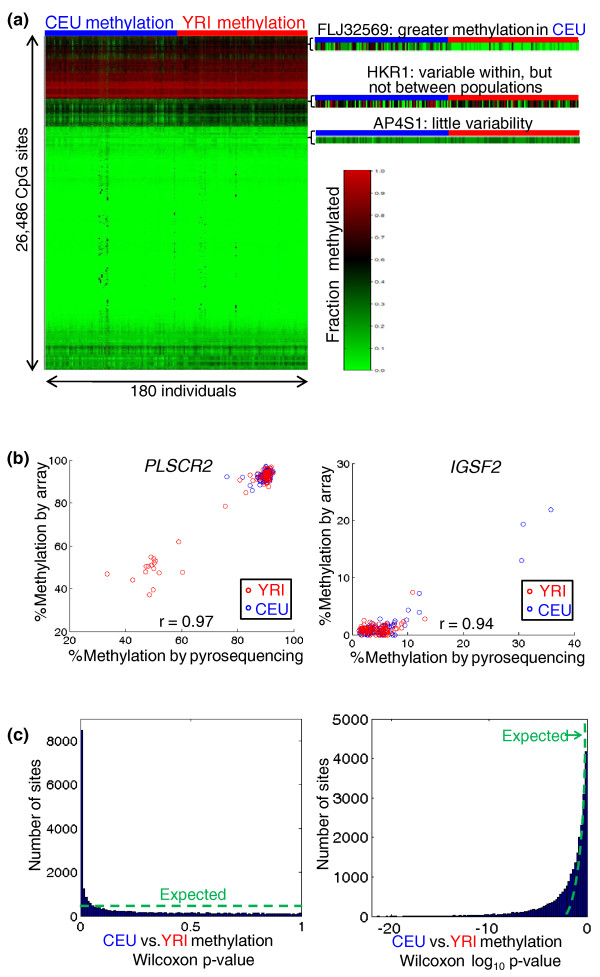
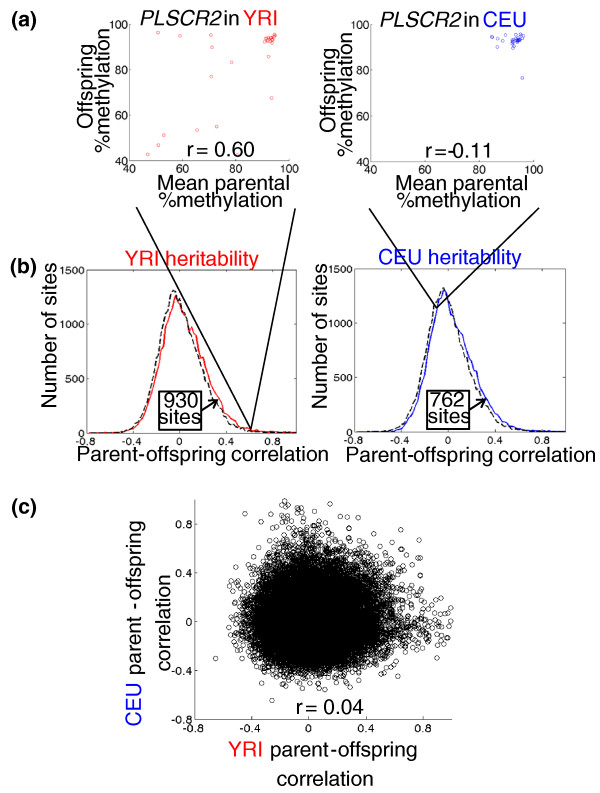
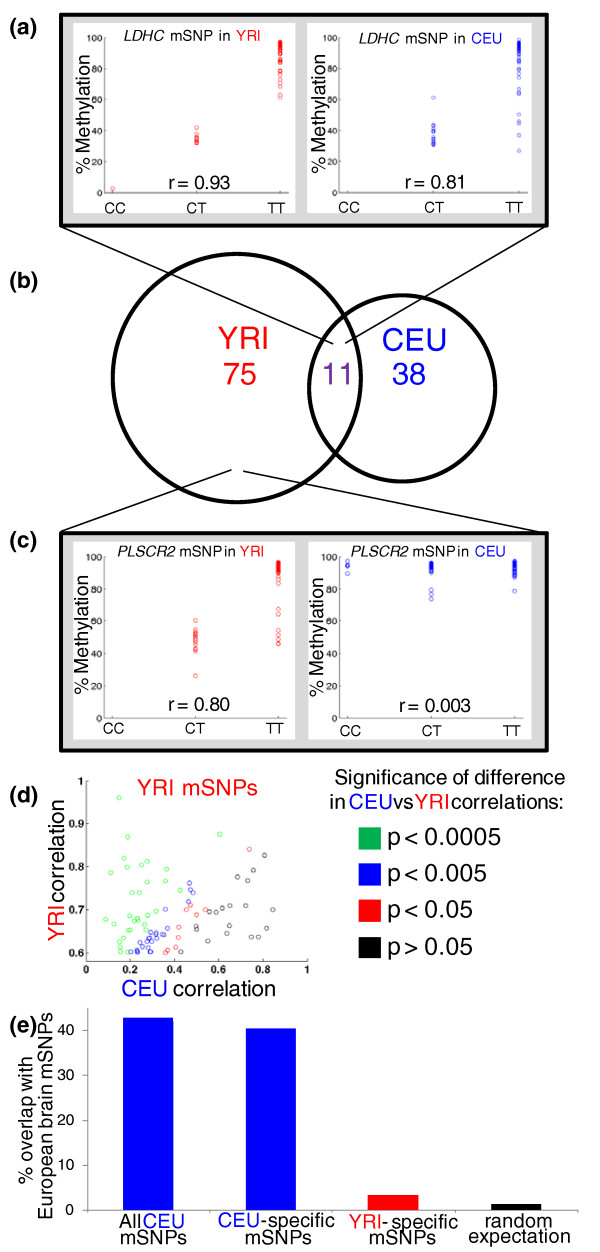
BACKGROUND: Ethnic differences in human DNA methylation have been shown for a number of CpG sites, but the genome-wide patterns and extent of these differences are largely unknown. In addition, whether the genetic control of polymorphic DNA methylation is population-specific has not been investigated. RESULTS: Here we measure DNA methylation near the transcription start sites of over 14, 000 genes in 180 cell lines derived from one African and one European population. We find population-specific patterns of DNA methylation at over a third of all genes. Furthermore, although the methylation at over a thousand CpG sites is heritable, these heritabilities also differ between populations, suggesting extensive divergence in the genetic control of DNA methylation. In support of this, genetic mapping of DNA methylation reveals that most of the population specificity can be explained by divergence in allele frequencies between populations, and that there is little overlap in genetic associations between populations. These population-specific genetic associations are supported by the patterns of DNA methylation in several hundred brain samples, suggesting that they hold in vivo and across tissues. CONCLUSIONS: These results suggest that DNA methylation is highly divergent between populations, and that this divergence may be due in large part to a combination of differences in allele frequencies and complex epistasis or gene × environment interactions.
Overview
The claims and statistics of this paper haven’t been checked yet.
Run the check — free, no account needed. It reads the open-access text and checks the sources it cites.
Integrity signals
Registry
Cites
Statistics
Figures
Verification
Claims the paper makes
The claims and statistics of this paper haven’t been checked yet.
Run the check — free, no account needed. It reads the open-access text and checks the sources it cites.
Claims other papers make about this one
Each is checked against this paper’s own text: does it say what the citing paper says it does?
The cited source says what the claim attributes to it.
In the citing paper
“Biological confounders known to affect epigenetic patterns such as age (Xiao, Wang, & Kong, 2019), sex (Yousefi et al., 2015), ethnicity (Fraser, Lam, Neumann, & Kobor, 2012), body mass index (Sayols-Baixeras et al., 2017), smoking behavior (Li et al., 2018) or nutritional aspects (Gadecka & Bielak-Zmijewska, 2019) may introduce critical biases limiting the interpretation of epigenetic data.”
From The applied implications of epigenetics in anxiety, affective and stress-related disorders - A review and synthesis on psychosocial stress, psychotherapy and prevention (2020) · cites this paper as Fraser, Lam, Neumann, & Kobor, 2012
Self-check
Percentages, sums and reported differences re-computed from the paper’s own numbers.
The self-check needs the paper’s full text.
Citations
Cites
A map of human genome variation from population-scale sequencing.
The 1000 Genomes Project Consortium (2010) · Nature · doi:10.1038/nature09534 · Cited by 7,877
Jaenisch, R., & Bird, A. (2003) · Nature Genetics · doi:10.1038/ng1089 · Cited by 6,325
Genetics and Analysis of Quantitative Traits
(2002) · Journal of Animal Breeding and Genetics · doi:10.1046/j.1439-0388.2002.00356.x · Cited by 6,176
Establishing, maintaining and modifying DNA methylation patterns in plants and animals
Law, J. A., & Jacobsen, S. E. (2010) · Nature Reviews Genetics · doi:10.1038/nrg2719 · Cited by 3,925
Integrating common and rare genetic variation in diverse human populations
The International HapMap 3 Consortium (2010) · Nature · doi:10.1038/nature09298 · Cited by 3,026
DNA methylation profiling of human chromosomes 6, 20 and 22
Eckhardt, F., Lewin, J., Cortese, R., Rakyan, V. K., Attwood, J., Burger, M., Burton, J. H., Cox, T. V., Davies, R., Down, T. A., et al. (2006) · Nature Genetics · doi:10.1038/ng1909 · Cited by 1,378
Understanding mechanisms underlying human gene expression variation with RNA sequencing
Pickrell, J. K., Marioni, J. C., Pai, A. A., Degner, J. F., Engelhardt, B. E., Nkadori, E., Veyrieras, J.-B., Stephens, M., Gilad, Y., & Pritchard, J. K. (2010) · Nature · doi:10.1038/nature08872 · Cited by 1,256
Illingworth, R. S., & Bird, A. P. (2009) · FEBS Letters · doi:10.1016/j.febslet.2009.04.012 · Cited by 940
Molecular Signals of Epigenetic States
Bonasio, R., Tu, S., & Reinberg, D. (2010) · Science · doi:10.1126/science.1191078 · Cited by 912
DNA methylation patterns associate with genetic and gene expression variation in HapMap cell lines
Bell, J. T., Pai, A. A., Pickrell, J. K., Gaffney, D. J., Pique-Regi, R., Degner, J. F., Gilad, Y., & Pritchard, J. K. (2011) · Genome Biology · doi:10.1186/gb-2011-12-1-r10 · Cited by 838
Cited by
Sorted by citations
Items 301–314 of 314
An atlas of genetic effects on the monocyte methylome across European and African populations
Zhang, W., Qiu, C., Zhang, X., Zhang, Z., Su, K., Luo, Z., Liu, M., Zhao, B., Wu, L., Tian, Q., et al. (2026) · Genome Medicine · doi:10.1186/s13073-026-01629-7 · Cited by 1
Hardy, L. M. (2019) · theses.fr (ABES) · doi:10.70675/2f5f4b0dzc92fz4cb4z9c5bzeb6d3fd3e791
DNA methylation and exosomes in relation to type 2 diabetes in Black South Africans: A pilot study
Mbali, B. B., Piame, L. T., Sehole, S., Musarurwa, H. T., & Yako, Y. Y. (2026) · Global Medical Genetics · doi:10.1016/j.gmg.2026.100109
Fu, L., Chen, J., Lian, D., Du, S., Wu, D., Yang, C., Wang, Z., Ma, H., Li, Z., Lake, N. J., et al. (2026) · Nature Communications · doi:10.1038/s41467-026-71348-5
Clark, C., Yang, G., Alarcón, C., Mishra, M., & Perera, M. A. (2026) · Research Square · doi:10.21203/rs.3.rs-9611937/v1
González‐Romero, R., Suárez-Ulloa, V., & Ibáñez, O. C. (2026) · Legal Medicine · doi:10.1016/j.legalmed.2026.102888
Chronological age estimation using CpG methylation signatures in Pakistani population
Arshad, F., Shahzad, M., Javed, F., Shehzadi, A., Baig, I. S., Shahıd, A. A., & Shafique, M. U. (2026) · International Journal of Legal Medicine · doi:10.1007/s00414-026-03866-2
“Although, previous research has shown significant accu - racy in age estimation, further research is needed for tissue-specific [28, 29] and population-specific [30, 31] DNAm patterns, and no data has been reported on age estimation in the Pakistani population.”
Gunasekara, C., Chang, W.-J., Baker, M. S., Issarapu, P., Jun, G., Hellenthal, G., Silver, M. J., Prentice, A. M., Coarfa, C., Li, Y., et al. (2026) · bioRxiv (Cold Spring Harbor Laboratory) · doi:10.64898/2026.06.12.731785
Future Perspectives on Forensic Epigenetics for DNA Investigative Intelligence
Kayser, M. (2026) · Epigenetics and human health · doi:10.1007/978-3-032-23085-0_10
Applications of Epigenetics to Forensic Sciences. Introduction
Zapico, S. C. (2026) · Epigenetics and human health · doi:10.1007/978-3-032-23085-0_1
Cheng, S., & Xu, S. (2026) · Molecular Biology and Evolution · doi:10.1093/molbev/msag160
Swenson, H., Ittner, E., Werner, L., Rönnerman, E. W., Nemes, S., Parris, T., & Helou, K. (2026) · Epigenetics · doi:10.1080/15592294.2026.2720990
Li, Y., Li, X., Jiang, L., Sun, L., Wang, F., Liu, H., Xu, Y., Zhou, Y., Li, Q., Fu, S., et al. (2026) · Cancer Genetics · doi:10.1016/j.cancergen.2026.10.001
The Role of Epigenetics in Inner City Asthma (ICAC-15)
Schwartz, D., Liu, A., & Mitchell, H. (2017) · ImmPort · doi:10.21430/m3sxdbhqts
Metadata
- Authors
- Fraser, H. B., Lam, L. L., Neumann, S. M., & Kobor, M. S.
- Affiliations
- Stanford University (US)
- University of British Columbia (CA)
- Corresponding author
- Fraser, Hunter B
- Kobor, Michael S
- Venue
- Genome Biology
- Published
- 2012-02-09
- Volume
- 13
- Issue
- 2
- Pages
- R8-R8
- ISSN
- 1465-6906 (ISSN-L)
- 1474-760X
- PMC
- PMC3334571
- OpenAlex
- W2170538199
- Cited by
- 313
- References
- 31
- Citations by year
- 2026: 20 · 2025: 21 · 2024: 15 · 2023: 16 · 2022: 18 · 2021: 25 · 2020: 27 · 2019: 21 · 2018: 21 · 2017: 20 · 2016: 31 · 2015: 27 · 2014: 19 · 2013: 24 · 2012: 8
- FWCI
- 10.04
- Type
- journal article
- Language
- en
- Open access
- gold
- doi.org
- Locations
- Genome biology (publishedVersion, cc-by)
- Europe PMC (PubMed Central) (publishedVersion, cc-by)
- PubMed Central (publishedVersion, cc-by)
- PubMed (publishedVersion)
- cIRcle (University of British Columbia) (submittedVersion, cc-by)
- Open Collections
- Funders
- Canadian Institute for Advanced Research
- National Institutes of Health (5r21hg005750-02)
- National Institute of Mental Health (R24MH081797)
- National Human Genome Research Institute (1R21HG005750-01A1, R21 HG005750)
- Topics
- Life Sciences › Biochemistry, Genetics and Molecular Biology › Molecular Biology › Epigenetics and DNA Methylation
- Life Sciences › Biochemistry, Genetics and Molecular Biology › Genetics › Genetic Associations and Epidemiology
- Life Sciences › Biochemistry, Genetics and Molecular Biology › Molecular Biology › Genomics and Chromatin Dynamics
- Keywords
- DNA methylation, ethnic differences, allele frequency divergence, CpG sites, transcription start sites, epistasis, gene-environment interaction
- MeSH terms
- Cell Line, Gene Frequency, Genetics, Population, Humans, Genetic Variation, Genome, Human, CpG Islands, DNA Methylation, Polymorphism, Single Nucleotide, Transcription Initiation Site, Black People, White People, Genetic Association Studies
About these checks
Registry, retraction, Cites and statistics results are computed, not judged, with one exception: a printed reference that no index lists is read once by a model before it counts as a citation error. Claims are extracted by a model and kept only when their quote appears verbatim in the text; each cited source is then checked, with a model’s help, for whether it says what the claim relies on. Those verdicts can be wrong — read the claim’s quote and the cited source before relying on one.
Statistics and arithmetic are recomputed, not judged.
Confidence bands are shown only for fields calibrated on our annotated test set. None is calibrated yet, so no band is shown.
What counts as a claim ›How we measure confidence ›How we check this ›
Are you an author, or do you see a problem with this page? Request a review
