

The DOI matches its Crossref record; 31 of the 31 references it cites were found in a registry or an index.
Quartz-Seq: a highly reproducible and sensitive single-cell RNA sequencing method, reveals non-genetic gene-expression heterogeneity
Open accessAbstract
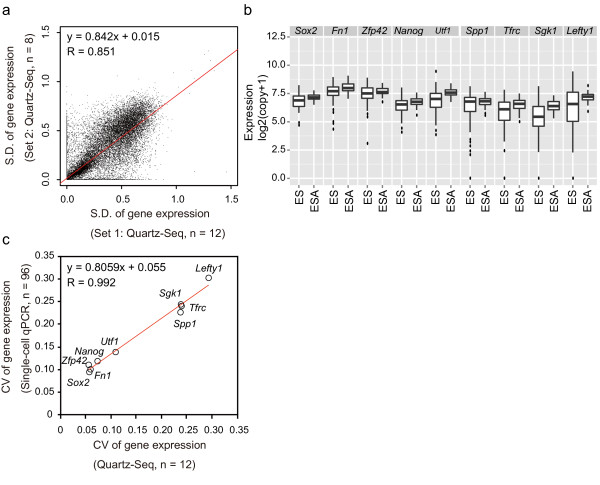
Development of a highly reproducible and sensitive single-cell RNA sequencing (RNA-seq) method would facilitate the understanding of the biological roles and underlying mechanisms of non-genetic cellular heterogeneity. In this study, we report a novel single-cell RNA-seq method called Quartz-Seq that has a simpler protocol and higher reproducibility and sensitivity than existing methods. We show that single-cell Quartz-Seq can quantitatively detect various kinds of non-genetic cellular heterogeneity, and can detect different cell types and different cell-cycle phases of a single cell type. Moreover, this method can comprehensively reveal gene-expression heterogeneity between single cells of the same cell type in the same cell-cycle phase.
Overview
The claims and statistics of this paper haven’t been checked yet.
Run the check — free, no account needed. It reads the open-access text and checks the sources it cites.
Integrity signals
Registry
Cites
Statistics
Figures
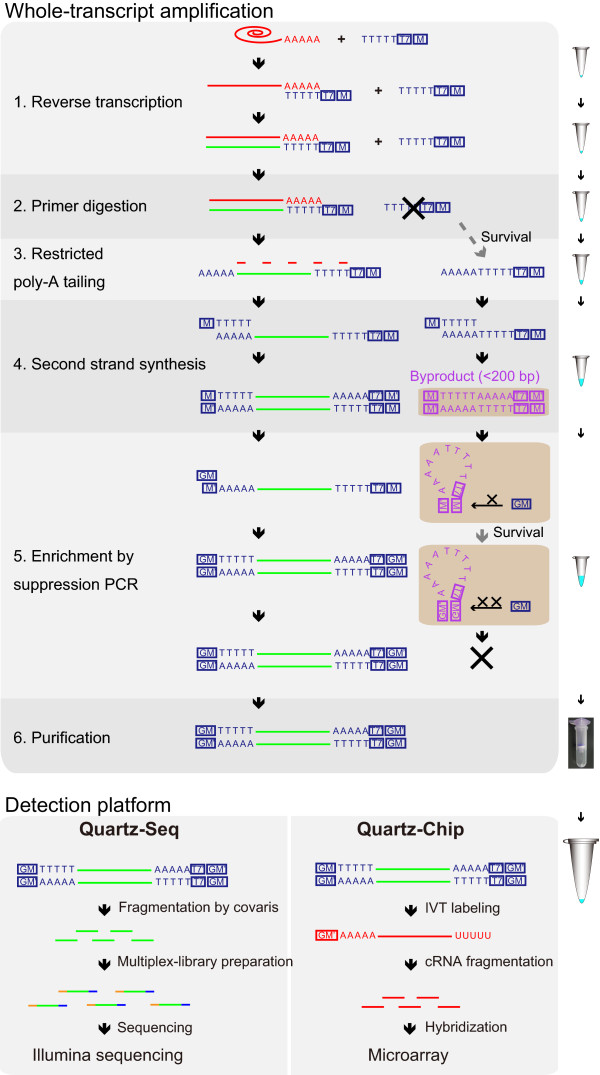
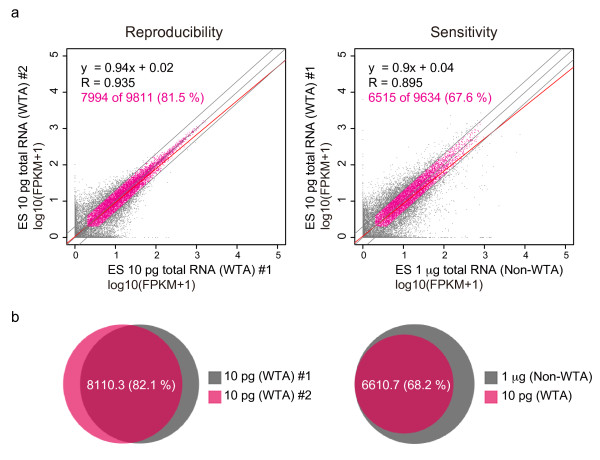
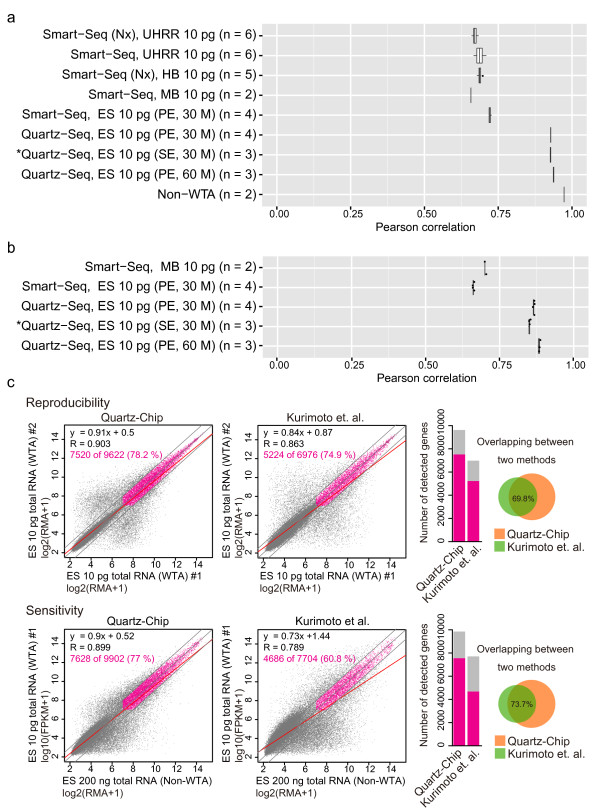
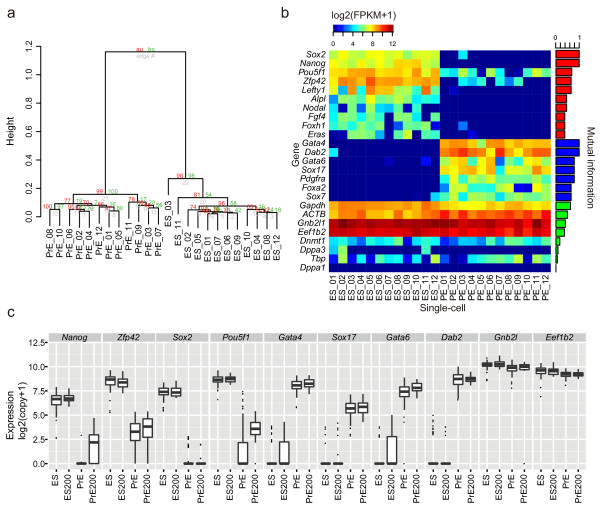
Verification
Claims the paper makes
The claims and statistics of this paper haven’t been checked yet.
Run the check — free, no account needed. It reads the open-access text and checks the sources it cites.
Claims other papers make about this one
Each is checked against this paper’s own text: does it say what the citing paper says it does?
In the citing paper
“Several scRNA-seq methods developed in the recent decade have become essential for capturing intercellular variation and its impact on cell functions at the population scale15–19.”
From The technological landscape and applications of single-cell multi-omics (2023) · cites this paper as [19]
Self-check
Percentages, sums and reported differences re-computed from the paper’s own numbers.
The self-check needs the paper’s full text.
Citations
Cites
TopHat: discovering splice junctions with RNA-Seq
Trapnell, C., Pachter, L. S., & Salzberg, S. L. (2009) · Bioinformatics · doi:10.1093/bioinformatics/btp120 · Cited by 11,682
Summaries of Affymetrix GeneChip probe level data
Irizarry, R. A. (2003) · Nucleic Acids Research · doi:10.1093/nar/gng015 · Cited by 4,837
mRNA-Seq whole-transcriptome analysis of a single cell
Tang, F., Barbacioru, C., Wang, Y., Nordman, E., Lee, C., Xu, N., Wang, X., Bodeau, J., Tuch, B. B., Siddiqui, A., et al. (2009) · Nature Methods · doi:10.1038/nmeth.1315 · Cited by 3,969
Quantifying E. coli Proteome and Transcriptome with Single-Molecule Sensitivity in Single Cells
Taniguchi, Y., Choi, P. J., Li, G.-W., Chen, H., Babu, M., Hearn, J., Emili, A., & Xie, X. S. (2010) · Science · doi:10.1126/science.1188308 · Cited by 1,982 · cited 1×
“Although gene-expression heterogeneities have been quantitatively measured for several target genes using single-molecule imaging or singlecell quantitative (q)PCR, comprehensive studies on the quantification of gene-expression heterogeneity are limited [9] and thus further work is required.”
BackgroundImproving RNA-Seq expression estimates by correcting for fragment bias
Roberts, A., Trapnell, C., Donaghey, J., Rinn, J. L., & Pachter, L. (2011) · Genome Biology · doi:10.1186/gb-2011-12-3-r22 · Cited by 1,725
Full-length mRNA-Seq from single-cell levels of RNA and individual circulating tumor cells
Ramsköld, D., Luo, S., Wang, Y.-C., Li, R., Deng, Q., Faridani, O. R., Daniels, G. A., Khrebtukova, I., Loring, J. F., Laurent, L. C., et al. (2012) · Nature Biotechnology · doi:10.1038/nbt.2282 · Cited by 1,609
Functional roles for noise in genetic circuits
Eldar, A., & Elowitz, M. B. (2010) · Nature · doi:10.1038/nature09326 · Cited by 1,482
CEL-seq: single-cell RNA-seq by multiplexed linear amplification
Hashimshony, T., Wagner, F., Sher, N., & Yanai, I. (2012) · Cell Reports · doi:10.1016/j.celrep.2012.08.003 · Cited by 1,231
Transcriptome-wide noise controls lineage choice in mammalian progenitor cells
Chang, H. H., Hemberg, M., Barahona, M., Ingber, D. E., & Huang, S. (2008) · Nature · doi:10.1038/nature06965 · Cited by 1,067
An improved PCR method for walking in uncloned genomic DNA
Siebert, P. D., Chenchik, A. A., Kellogg, D. E., Lukyanov, K. A., & Lukyanov, S. (1995) · Nucleic Acids Research · doi:10.1093/nar/23.6.1087 · Cited by 1,014
Cited by
Sorted by citations
Full-length RNA-seq from single cells using Smart-seq2
Picelli, S., Faridani, O. R., Björklund, Å. K., Winberg, G., Sagasser, S., & Sandberg, R. (2014) · Nature Protocols · doi:10.1038/nprot.2014.006 · Cited by 4,137
Smart-seq2 for sensitive full-length transcriptome profiling in single cells
Picelli, S., Björklund, Å. K., Faridani, O. R., Sagasser, S., Winberg, G., & Sandberg, R. (2013) · Nature Methods · doi:10.1038/nmeth.2639 · Cited by 2,358
Single-cell RNA sequencing technologies and bioinformatics pipelines
Hwang, B., Lee, J. H., & Bang, D. (2018) · Experimental & Molecular Medicine · doi:10.1038/s12276-018-0071-8 · Cited by 1,866
Massively parallel single-cell RNA-seq for marker-free decomposition of tissues into cell types
Jaitin, D. A., Kenigsberg, E., Keren-Shaul, H., Elefant, N., Paul, F., Zaretsky, I., Mildner, A., Cohen, N., Jung, S., Tanay, A., et al. (2014) · Science · doi:10.1126/science.1247651 · Cited by 1,795
The Technology and Biology of Single-Cell RNA Sequencing
Kolodziejczyk, A. A., Kim, J. K., Svensson, V., Marioni, J. C., & Teichmann, S. A. (2015) · Molecular Cell · doi:10.1016/j.molcel.2015.04.005 · Cited by 1,487
Metadata
- Authors
- Sasagawa, Y., Nikaido, I., Hayashi, T., Danno, H., Uno, K. D., Imai, T., & Ueda, H. R.
- Affiliations
- RIKEN (JP)
- Japan Science and Technology Agency (JP)
- Corresponding author
- Sasagawa, Yohei
- Nikaido, Itoshi
- Ueda, Hiroki R
- Venue
- Genome Biology
- Published
- 2013-04-17
- Volume
- 14
- Issue
- 4
- Pages
- 9-9
- ISSN
- 1465-6906 (ISSN-L)
- 1474-760X
- PMC
- PMC4054835
- OpenAlex
- W2045317504
- Cited by
- 455
- References
- 31
- Citations by year
- 2026: 14 · 2025: 16 · 2024: 33 · 2023: 30 · 2022: 46 · 2021: 35 · 2020: 40 · 2019: 54 · 2018: 32 · 2017: 42 · 2016: 34 · 2015: 39 · 2014: 30 · 2013: 8
- FWCI
- 16.56
- Type
- journal article
- Language
- en
- Update notices
- correction (2017-01-18)
- Open access
- gold
- doi.org
- Locations
- Genome biology (publishedVersion, cc-by)
- Europe PMC (PubMed Central) (publishedVersion, cc-by)
- PubMed Central (publishedVersion, cc-by)
- PubMed (publishedVersion)
- Funders
- Research Organization of Information and Systems
- Ministry of Education, Culture, Sports, Science and Technology
- Japan Society for the Promotion of Science (23115006, 23680038)
- RIKEN
- Institute of Genetics
- Topics
- Life Sciences › Biochemistry, Genetics and Molecular Biology › Molecular Biology › Single-cell and spatial transcriptomics
- Life Sciences › Biochemistry, Genetics and Molecular Biology › Molecular Biology › Genomics and Phylogenetic Studies
- Life Sciences › Biochemistry, Genetics and Molecular Biology › Molecular Biology › Molecular Biology Techniques and Applications
- Keywords
- single-cell RNA sequencing, non-genetic heterogeneity, gene expression heterogeneity, cell cycle, cell type annotation, sequencing sensitivity
- MeSH terms
- Animals, Cell Line, Organ Specificity, Sensitivity and Specificity, Transcription, Genetic, Sequence Analysis, RNA, Mice, Single-Cell Analysis
About these checks
Registry, retraction, Cites and statistics results are computed, not judged, with one exception: a printed reference that no index lists is read once by a model before it counts as a citation error. Claims are extracted by a model and kept only when their quote appears verbatim in the text; each cited source is then checked, with a model’s help, for whether it says what the claim relies on. Those verdicts can be wrong — read the claim’s quote and the cited source before relying on one.
Statistics and arithmetic are recomputed, not judged.
Confidence bands are shown only for fields calibrated on our annotated test set. None is calibrated yet, so no band is shown.
What counts as a claim ›How we measure confidence ›How we check this ›
Are you an author, or do you see a problem with this page? Request a review
