

voom: precision weights unlock linear model analysis tools for RNA-seq read counts
Open accessThe DOI matches its Crossref record; 65 of the 67 references it cites were found in a registry or an index; 1 of the 51 sources its claims cite were checked for support.
Abstract
New normal linear modeling strategies are presented for analyzing read counts from RNA-seq experiments. The voom method estimates the mean-variance relationship of the log-counts, generates a precision weight for each observation and enters these into the limma empirical Bayes analysis pipeline. This opens access for RNA-seq analysts to a large body of methodology developed for microarrays. Simulation studies show that voom performs as well or better than count-based RNA-seq methods even when the data are generated according to the assumptions of the earlier methods. Two case studies illustrate the use of linear modeling and gene set testing methods.
Overview
CoChat Summary
TL;DR
voom estimates the mean-variance relationship of log-counts per million and generates observation-level precision weights for limma, allowing normal-based linear model analysis of RNA-seq read counts. Simulations and case studies show voom controls error rates well and often has better power or lower FDR than negative binomial/Poisson methods, especially when library sizes are unequal.
Key findings
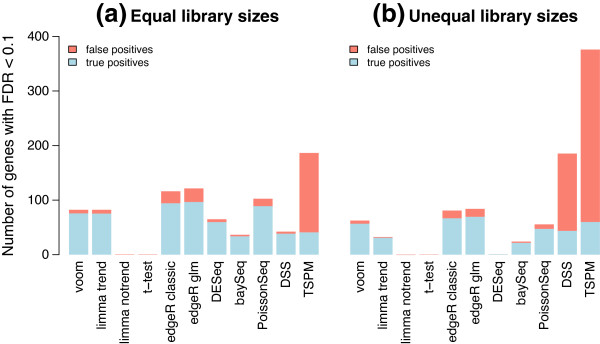
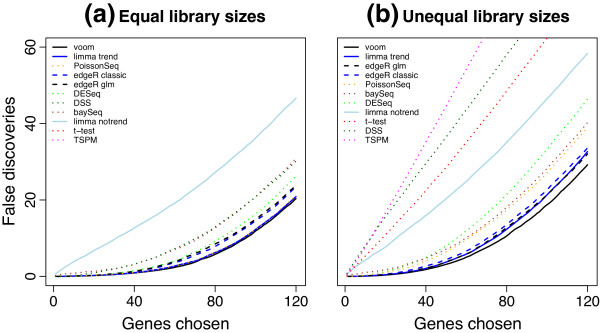
- In simulations with 6 libraries, 10,000 genes, and 100 upregulated plus 100 downregulated genes, voom had the best power among methods that controlled type I and FDR error rates; with unequal library sizes, voom had the best power except for edgeR while maintaining low FDR. edgeR and PoissonSeq were somewhat liberal, while DESeq and DSS became very conservative when library sizes were unequal.
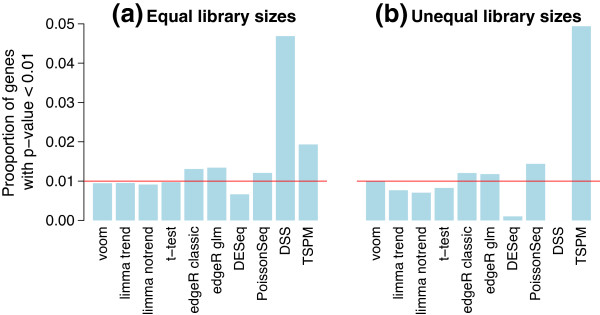
- For type I error at P<0.01, NB/Poisson methods did not control error accurately; voom was close to the nominal rate in both equal and unequal library size scenarios, while limma-trend was similar when sizes were equal but conservative when unequal. In SEQC HBRR technical replicates, voom returned no DE genes at 5% FDR for 6 of 7 possible partitions.
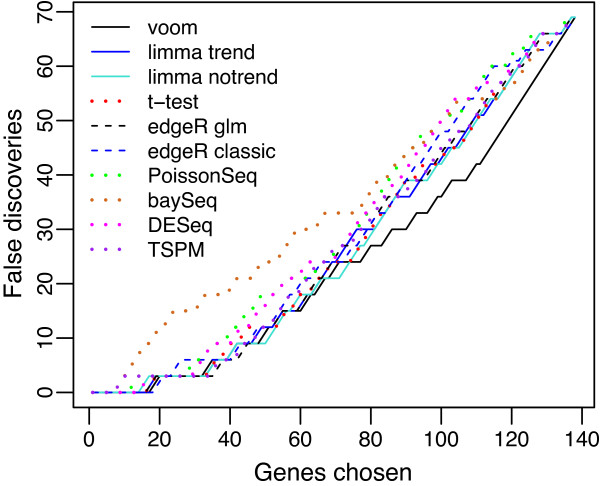
- voom had the lowest FDR at any cutoff in simulations and in SEQC spike-in data; the spike-in analysis used 138 transcripts, half truly DE and half non-DE.
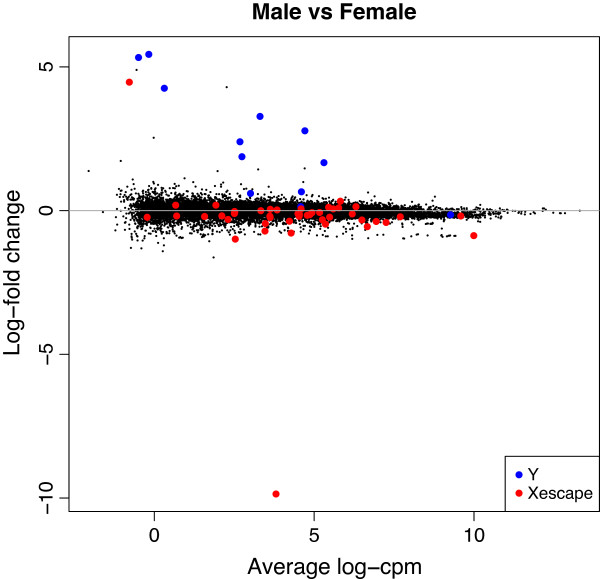
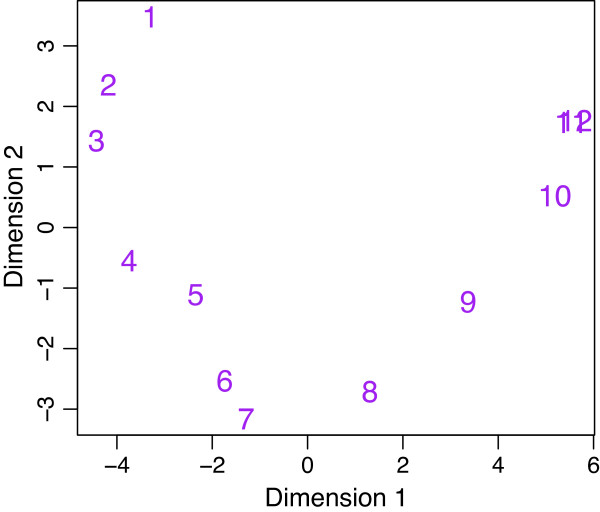
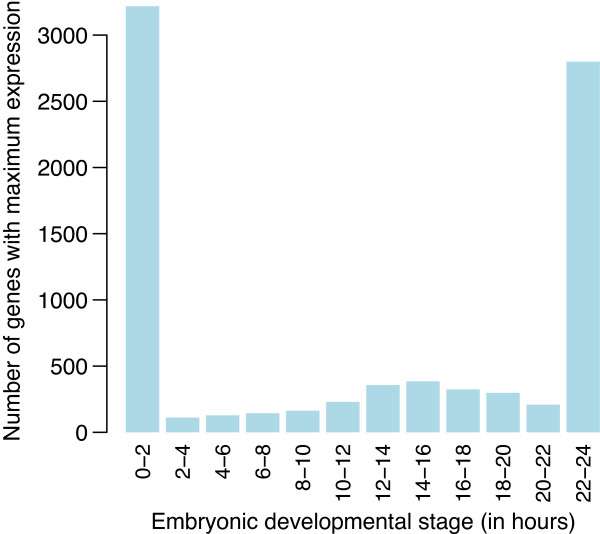
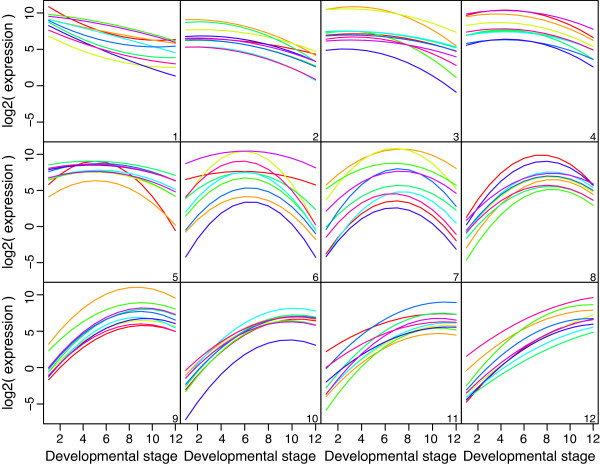
- In the Nigerian lymphoblastoid dataset (29 males, 40 females), voom found 16 genes upregulated in males and 43 upregulated in females at 5% FDR, with XIST the top gene; ROAST and CAMERA confirmed male-specific Y chromosome genes and X-inactivation escape genes. In Drosophila embryonic stages, 8,366 of 14,869 expressed genes showed a significant trend at 5% FDR.
Methods
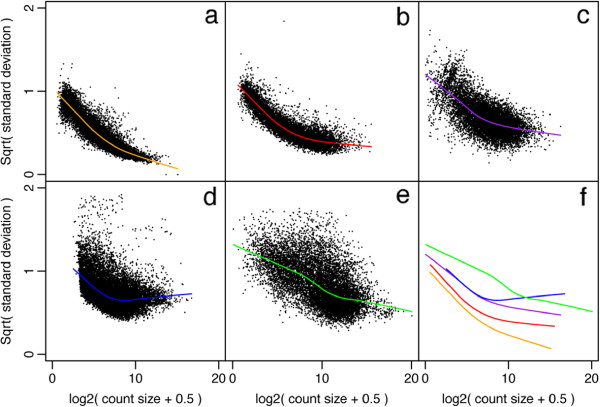
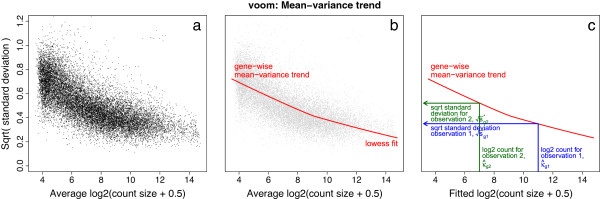
- voom works on log-cpm values: fit gene-wise linear models, estimate residual standard deviations as a function of average log-count using a robust LOWESS trend, interpolate that trend to each observation’s predicted count, and use inverse squared predicted standard deviation as a precision weight in limma’s empirical Bayes pipeline. limma-trend applies the mean-variance trend at the gene level instead.
- Simulations generated NB counts for 6 libraries and 10,000 genes, with baseline cpm distribution matched to real data and dispersion trend ψ^1/2 = 0.2 + λ^-1/2; gene-wise dispersions were drawn from an inverse chi-square with 40 degrees of freedom. Equal library sizes used 11 million reads per library; unequal sizes used 20 million for odd libraries and 2 million for even libraries. Results were averaged over 100 simulations and compared with edgeR, DESeq, baySeq, TSPM, PoissonSeq, and DSS.
- Case studies used SEQC pilot libraries (16 libraries in groups A–D; 4 HBRR libraries; 92 spike-in transcripts expanded to 138), Nigerian lymphoblastoid cell lines from 69 unrelated individuals, Drosophila melanogaster embryonic stages (12 libraries), and C57BL/6J versus DBA/2J mouse striatum data. Gene set testing used ROAST and CAMERA.
Limitations
- Stated: gene-level analysis does not allow different isoforms of the same gene to be differentially expressed in different directions, though voom can be run at exon level. The Drosophila quadratic time trends do not match all intricacies of gene expression over time. Simulations were generated under NB assumptions, and other scenarios may differ. baySeq was excluded from the type I error comparison because it does not return P values.
- Evident: the Drosophila analysis has no replicate libraries, so variances are estimated by assuming smooth expression over time and fitting quadratic trends. Performance comparisons rely on specific simulation settings and default software pipelines, and the case studies illustrate use rather than provide independent experimental validation.
Model-written summary. Check it against the paper before relying on it.
Integrity signals
Registry
Cites
Statistics
Figures
Verification
Claims the paper makes
1 Valid · 4 Not valid · 34 Not checked · 142 Own results and interpretations
The cited sources support only part of this claim — read each source’s verdict below.
In the paper
“voom and limma could be used to analyze any gene-level RNA-seq differential expression experiment, including those with multiple experimental factors [34].”
§ voom: precision weights unlock linear model analysis tools for RNA-seq read counts > Results > Development stages of Drosophila melanogaster
What the sources say
- Partly supportedcites [34] McCarthy DJ Chen Y Smyth GK Differential expression analysis of multifactor RNA-Seq experiments with respect to biological variation Nucleic Acids Res 2012 40 4288 4297 10.1093/nar/gks042 22287627 PMC3378882 sourceExperimental — accuracy not yet measured
Our copy of McCarthy et al. (2012) supports the scope part of the claim: the INTRODUCTION states 'The methodology provides a pipeline for analysing arbitrarily complex RNA-Seq experiments provided that there is some degree of biological replication', the Abstract describes analysis of 'complex experiments involving multiple treatment conditions and blocking variables', and the article's focus is gene-level counts ('For simplicity... counts are summarized at the gene level', RESULTS > Technical and biological variation). However, the capability is attributed to negative-binomial generalized linear models implemented in the edgeR package (DISCUSSION: 'The methods described in this article are implemented in the software package edgeR'), and no passage of our copy mentions voom or limma at all — the closest the paper comes to normal-linear-model analysis of transformed counts is a critique in the INTRODUCTION that transforming counts to approximate normality and analysing as for microarray data 'is however not fully tuned to the characteristics of read count data'. Thus the specific tools named in the citing sentence (voom and limma) are not this paper's methods, while the multifactor/gene-level applicability is. (LLM, conf=0.72)
hedged- Asserted: passes — The authors put it forward as true.
- Checkable: passes — It can be checked against evidence.
- Load-bearing: unclear — It is unclear whether the paper’s conclusions depend on it.
- Based: passes — The paper gives a reason why it holds.
- Rests on an assumption not shown here.
- Partly supported
A result the paper reports from its own data — it cites no other source for it, so there is none to check. The quote shows it is in the paper.
In the paper
“When the library sizes are unequal, DSS and DESeq became extremely conservative.”
§ voom: precision weights unlock linear model analysis tools for RNA-seq read counts > Results > voom and limma-trend control the type I error rate correctly
plainstates a cause- Asserted: passes — The authors put it forward as true.
- Checkable: passes — It can be checked against evidence.
- Load-bearing: unclear — It is unclear whether the paper’s conclusions depend on it.
- Based: passes — The paper gives a reason why it holds.
A result the paper reports from its own data — it cites no other source for it, so there is none to check. The quote shows it is in the paper.
In the paper
“Figures 3 and 4 together show that voom has the best power of those methods that correctly control the type I and FDR error rates.”
§ voom: precision weights unlock linear model analysis tools for RNA-seq read counts > Results > voom has the best power of methods that control the type I error rate
plain- Asserted: passes — The authors put it forward as true.
- Checkable: passes — It can be checked against evidence.
- Load-bearing: passes — The paper’s conclusions depend on it.
- Based: passes — The paper gives a reason why it holds.
- Rests on an assumption not shown here.
A result the paper reports from its own data — it cites no other source for it, so there is none to check. The quote shows it is in the paper.
In the paper
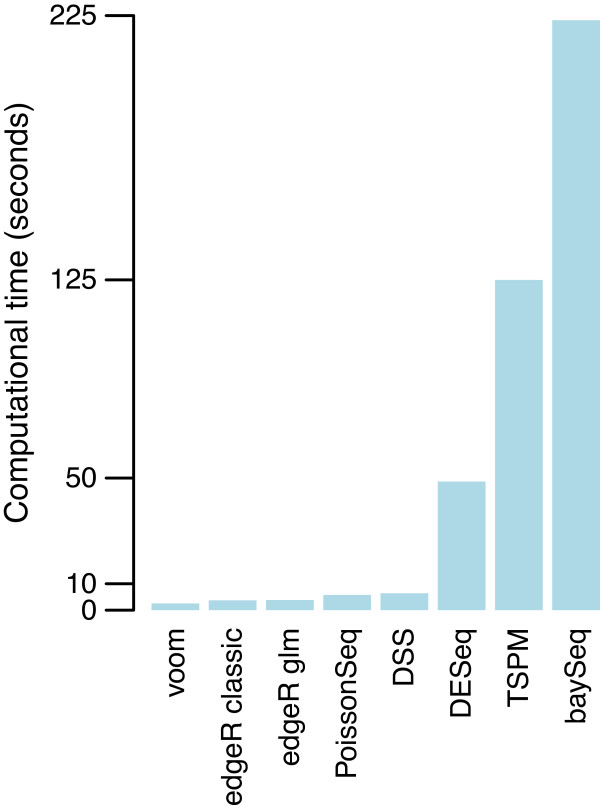
“voom is easily the fastest of the methods compared, with edgeR-classic next fastest (Figure 7).”
§ voom: precision weights unlock linear model analysis tools for RNA-seq read counts > Results > voom and limma-trend are faster than specialist RNA-seq methods
plain- Asserted: passes — The authors put it forward as true.
- Checkable: passes — It can be checked against evidence.
- Load-bearing: unclear — It is unclear whether the paper’s conclusions depend on it.
- Based: passes — The paper gives a reason why it holds.
A result the paper reports from its own data — it cites no other source for it, so there is none to check. The quote shows it is in the paper.
In the paper
“Genes peaking at the last stage tended to be associated with precursor metabolites and energy, the oxidation-reduction process and with metabolic pathways.”
§ voom: precision weights unlock linear model analysis tools for RNA-seq read counts > Results > Development stages of Drosophila melanogaster
plainstates an association- Asserted: passes — The authors put it forward as true.
- Checkable: passes — It can be checked against evidence.
- Load-bearing: unclear — It is unclear whether the paper’s conclusions depend on it.
- Based: passes — The paper gives a reason why it holds.
79 more claims
Create a free account to see all 181 claims and to verify the 45 references still open.
- It may state two separate claims as one. 48
- Probably not a substantial claim. 68
- The quote only partly states this claim. 2
Claims other papers make about this one
Each is checked against this paper’s own text: does it say what the citing paper says it does?
The source backs part of the claim, not all of it — or backs it for a different population, condition or comparison.
In the citing paper
“First, specific caution is needed with all the methods when the number of replicate samples is very small or for genes that are expressed at very low levels [55, 64, 209].”
From A survey of best practices for RNA-seq data analysis (2016) · cites this paper as [55]
Experimental — accuracy not yet measuredThe cited source says what the claim attributes to it.
In the citing paper
“Methods for transforming normalized counts of RNA-seq reads while learning the variance structure of the data have been shown to perform well in comparison to the discrete distribution approaches described above [55, 56].”
From A survey of best practices for RNA-seq data analysis (2016) · cites this paper as [55]
The cited source says what the claim attributes to it.
In the citing paper
“First, the global variance estimate can now incorporate a mean-variance trend (10,17,18).”
From limma powers differential expression analyses for RNA-sequencing and microarray studies (2015) · cites this paper as [10]
The cited source says what the claim attributes to it.
In the citing paper
“This approach is commonly applied in learning error models for bulk RNA-seq in the context of differential expression analysis [22–25], but to our knowledge has not been previously applied in this context for single-cell normalization.”
From Normalization and variance stabilization of single-cell RNA-seq data using regularized negative binomial regression (2019) · cites this paper as [25]
The check wasn’t confident either way, so it gives no verdict — never disputed.
In the citing paper
“SAMseq performs well in terms of FDR but presents an acceptable sensitivity when the number of replicates is relatively high, at least 10 [20, 55, 209].”
From A survey of best practices for RNA-seq data analysis (2016) · cites this paper as [55]
Experimental — accuracy not yet measured
12 more claims about this paper
Create a free account to see every claim other papers make about this one.
Self-check
Percentages, sums and reported differences re-computed from the paper’s own numbers.
Each contradiction between two passages listed here was confirmed by an independent check.
Rated minor: it would not touch a result — a value no result rests on, a p-value that stays on the same side of the significance level, or a conflict that is clerical, resolved elsewhere in the paper, or outside its own findings.
In the paper
§ voom: precision weights unlock linear model analysis tools for RNA-seq read counts > Materials and methods > Lymphoblastoid cell lines from Nigerian individuals
“Read counts, summarized by Ensembl gene, and transcript annotations were obtained from version 1.0.9 of the tweeDEseqCountData Bioconductor package [43]”
§ voom: precision weights unlock linear model analysis tools for RNA-seq read counts > Materials and methods > Software
“The results presented in this article were obtained using R version 3.0.0 and the software packages limma 3.16.2, edgeR 3.2.3, baySeq 1.14.1, DESeq 1.12.0, DSS 1.4.0, PoissonSeq 1.1.2 and tweeDEseqCountData 1.0.8.”
Citations
Cites
Subramanian, A., Tamayo, P., Mootha, V. K., Mukherjee, S., Ebert, B. L., Gillette, M. A., Paulovich, A., Pomeroy, S. L., Golub, T. R., Lander, E. S., et al. (2005) · Proceedings of the National Academy of Sciences · doi:10.1073/pnas.0506580102 · Cited by 53,625 · cited 1×
“This includes methods for differential expression analysis [1, 2, 3], random effects [4, 5], gene set enrichment [6], gene set testing [7, 8] and so on.”
MethodRobinson, M. D., McCarthy, D. J., & Smyth, G. K. (2010) · Bioinformatics · doi:10.1093/bioinformatics/btp616 · Cited by 41,364 · cited 2×
“Specifically we used the goodTuringProportions function of the edgeR package [12], which implements the Good-Turing algorithm [55], to predict the true proportion of total RNA attributable to each gene.”
BackgroundMethodSelf-citationfeatureCounts: an efficient general purpose program for assigning sequence reads to genomic features
Liao, Y., Smyth, G. K., & Shi, W. (2014) · Bioinformatics · doi:10.1093/bioinformatics/btt656 · Cited by 27,219
Self-citation(2005) · Statistics for Biology and Health · doi:10.1007/0-387-27255-0_9 · Cited by 20,133
McCullagh, P., & Nelder, J. A. (1989) · doi:10.1007/978-1-4899-3242-6 · Cited by 16,836
Differential expression analysis for sequence count data
Anders, S., & Huber, W. (2010) · Genome Biology · doi:10.1186/gb-2010-11-10-r106 · Cited by 15,581
Mapping and quantifying mammalian transcriptomes by RNA-Seq
Mortazavi, A., Williams, B. A., McCue, K., Schaeffer, L., & Wold, B. (2008) · Nature Methods · doi:10.1038/nmeth.1226 · Cited by 13,696
RNA-Seq: a revolutionary tool for transcriptomics
Wang, Z., Gerstein, M., & Snyder, M. (2009) · Nature Reviews Genetics · doi:10.1038/nrg2484 · Cited by 13,174 · cited 1×
“olutionary new technology for expression profiling [10].”
Bioconductor: open software development for computational biology and bioinformatics
Gentleman, R. C., Carey, V. J., Bates, D. M., Bolstad, B., Dettling, M., Dudoit, S., Ellis, B., Gautier, L., Ge, Y., Gentry, J., et al. (2004) · Genome Biology · doi:10.1186/gb-2004-5-10-r80 · Cited by 12,172 · cited 1×
“All of these packages are part of the Bioconductor project [67,68], except for PoissonSeq, which is part of the Comprehensive R Archive Network [69].”
BackgroundSelf-citationSmyth, G. K. (2004) · Statistical Applications in Genetics and Molecular Biology · doi:10.2202/1544-6115.1027 · Cited by 11,829
Self-citation
Research works printed but not linked: 2
- Law CW Chen Y Shi W Smyth GK Supplementary information for ‘Voom: precision weights unlock linear model analysis tools for RNA-seq read counts’ [ http://bioinf.wehi.edu.au/voom] PMC4053721 24485249
- Frazee A Langmead B Leek J ReCount: a multi-experiment resource of analysis-ready RNA-seq gene count datasets [ http://bowtie-bio.sourceforge.net/recount] PMC3229291 22087737
Cited by
Items 6,001–6,100 of 7,059
Li, C. I., Zhang, Y., Cieslik, M. P., Wu, Y., Xiao, L., Cobain, E. F., Tang, M.-T. C., Cao, X., Porter, P. L., Guenthoer, J., et al. (2023) · doi:10.1158/1078-0432.c.6529901.v1
Identifying and validating novel indicators of sheep welfare
Babington, S. (2025) · UWA Profiles and Research Repository (University of Western Australia) · doi:10.26182/0eev-b507
Atram, S. V. (2024) · White Rose eTheses Online (University of Leeds, The University of Sheffield, University of York)
Rodrigues, J. N. (2022) · Portuguese National Funding Agency for Science, Research and Technology (RCAAP Project by FCT) · doi:10.34626/9zrz-ps83
Savas, P. S. (2020) · Minerva Access (University of Melbourne)
Caractérisation intégrative de l'activation de ß-caténine dans le mélanome
Sohier, P. (2019) · theses.fr (ABES) · doi:10.70675/cce488c2zfba9z4bacza153z84f231914298
Developmental constraints, innovations and robustness
Liu, J. (2019) · IRIS
HALLACLI et al. CELL, 2022, all methods v1Preprint
Hallacli, E. (2022) · doi:10.17504/protocols.io.36wgq7eqxvk5/v1
Genetic and Environmental Modifiers of Immune Profiles in Two US Founder Populations
Stein, M. M. (2017) · Knowledge@UChicago (University of Chicago) · doi:10.6082/m1c827d1
Kołat, D., Kruczkowska, W., Kałuzińska‐Kołat, Ż., Zemnou, C. T., Kciuk, M., Zhao, L.-Y., Kontek, R., & Płuciennik, E. (2026) · Cancers · doi:10.3390/cancers18081278
Clustering et analyse différentielle de données d'expression génique
Hivert, B. (2024) · theses.fr (ABES) · doi:10.70675/5d594824z93a3z4f54z85e0z661e0af01eb5
Sihota, T. S. (2023) · cIRcle (University of British Columbia) · doi:10.14288/1.0431361
Jin, H., & Liu, Z. (2021) · Figshare · doi:10.6084/m9.figshare.14404042
Jin, H., & Liu, Z. (2021) · Figshare · doi:10.6084/m9.figshare.14404051
Jin, H., & Liu, Z. (2021) · Figshare · doi:10.6084/m9.figshare.14404054
Jin, H., & Liu, Z. (2021) · Figshare · doi:10.6084/m9.figshare.14404048
Breeding improvement of cruciferin content in the meal protein of spring Brassica napus L.
So, K. K. Y. (2021) · Mspace (University of Manitoba)
Profiling the microbiota to develop innovative therapies for infectious diarrhea
Chen, C. (2025) · IRIS
Licata, A. G. (2026) · Open Research Online (The Open University) · doi:10.21954/ou.ro.00109330
Eicher, T., Chan, J., Becker, A. P., Haque, S. J., Fleming, J. L., McElroy, J. P., Meng, W., Webb, A., Kelly, R. S., Celedon, J. C., et al. (2024) · bioRxiv (Cold Spring Harbor Laboratory) · doi:10.1101/2024.12.28.630633
Impact de l'administration des probiotiques sur les infections respiratoires
Belkacem, N. (2017) · theses.fr (ABES) · doi:10.70675/64125e46zc95dz4945zac13z4f8f56193346
Bi-directional vulnerability of brain tumors to Wnt signaling
Manoranjan, B. (2019) · MacSphere (McMaster University) · doi:10.71548/16520
Panmixia under thermal stress: the case of the worm pipefish
Gomes, L. P. N. D. S. (2024) · Portuguese National Funding Agency for Science, Research and Technology (RCAAP Project by FCT) · doi:10.34626/4efk-ge98
Combination immunotherapy induces post-intervention control of HIV
Sandel, D. A. (2025) · eScholarship (California Digital Library)
Miyagi, Y., Kin, K., & Satake, E. (2022) · Research Square · doi:10.21203/rs.3.rs-2055149/v1
Recherche d'antigènes spécifiques de tumeurs et analyse des cellules souches de glioblastomes
Robil, N. (2015) · theses.fr (ABES) · doi:10.70675/c7654736z9cefz40eezbf49z99b4cdba4eae
Frías-López, C. (2019) · Dipòsit Digital de la Universitat de Barcelona (Universitat de Barcelona)
Fernández‐Garibay, X., Sabater-Arcis, M., Tejedera‐Villafranca, A., Mamchaoui, K., Bigot, A., Suelves, M., Nogales‐Gadea, G., Artero, R. D., Ramón‐Azcón, J., & Fernández‐Costa, J. M. (2026) · bioRxiv (Cold Spring Harbor Laboratory) · doi:10.64898/2026.02.03.703003
Additional file 2 of The expressed mutational landscape of microsatellite stable colorectal cancers
Sveen, A., Johannessen, B., Eilertsen, I. A., Røsok, B. I., Gulla, M., Eide, P. W., Bruun, J., Kryeziu, K., Meza‐Zepeda, L. A., Myklebost, O., et al. (2021) · Figshare · doi:10.6084/m9.figshare.16557230
Additional file 1 of Heme metabolism genes Downregulated in COPD Cachexia
Wilson, A. C., Kumar, P. L., Lee, S., Parker, M. M., Arora, I., Morrow, J. D., Wouters, E. F. �., Casaburi, R., Rennard, S. I., Lomas, D. A., et al. (2020) · Figshare · doi:10.6084/m9.figshare.12228149
A Transcriptomics Analysis for Potential Biomarker in Pancreatic Cancer
Mostofa, S. M. J. (2025) · SVOA Medical Research · doi:10.58624/svoamr.2025.03.004
Koo, J. S., 詹前勝, & Zhang, H. (2026) · Environmental Epigenetics · doi:10.1093/eep/dvag011
Chin, N., Narayan, N. R., Méndez‐Lagares, G., Ardeshir, A., Chang, W. L. W., Deere, J. D., Fontaine, J. H., Chen, C., Kieu, H. T., Lu, W., et al. (2022) · Figshare · doi:10.6084/m9.figshare.21303602
CETP alternative splicing variation impacts human traitsPreprint
Gamache, I., Legault, M., Grenier, J., Rhéaume, É., Tardif, J., Dubé, M., & Hussin, J. (2026) · bioRxiv (Cold Spring Harbor Laboratory) · doi:10.64898/2026.03.16.712143
Ciblage de la voie PI3K/mTOR dans les léiomyosarcomes : sensibilité et mécanismes de résistance
Fourneaux, B. (2017) · theses.fr (ABES) · doi:10.70675/3f0ab847z27b0z4e03zad9ez3cb6ed282770
Golestannejad, E., Kalantary‐Charvadeh, A., Karimi, J., & Khodadadi, I. (2026) · Cancer Treatment and Research Communications · doi:10.1016/j.ctarc.2026.101206
R-Programming for Genome-Wide Data Analysis
Shilpi, A., & Dubey, S. (2018) · Springer eBooks · doi:10.1007/978-981-13-1562-6_8
Nguyen, N. T. (2023) · Digital Access to Scholarship at Harvard (DASH) (Harvard University)
Baker, B. H., Sathyanarayana, S., Szpiro, A. A., MacDonald, J. W., & Paquette, A. G. (2024) · Figshare · doi:10.6084/m9.figshare.26945580
Baker, B. H., Sathyanarayana, S., Szpiro, A. A., MacDonald, J. W., & Paquette, A. G. (2024) · Figshare · doi:10.6084/m9.figshare.26945577
Molecular évolution of RuBisCO subunits
Yamada, K. (2019) · IRIS
Specht, D. A. (2021) · eCommons (Cornell University) · doi:10.7298/s5p0-9773
Unmasking the Epigenetic Landscape of Freeze Tolerance in the Grey Tree Frog
Rehman, S. (2024) · Carleton University's Institutional Repository (MacOdrum Library, Carleton University) · doi:10.22215/etd/2024-16064
Towards a transcriptomic biomarker for the classification of melanocytic neoplasms
Borden, E. S., Hastings, C. T., Prakash, N., Kuo, T., Tapia, E., Yozwiak, M. L., Sagerman, P. J., Stefano, D. V. D., Buetow, K. H., Wilson, M. A., et al. (2025) · PLoS Genetics · doi:10.1371/journal.pgen.1011869
Sá, L. C. E. F., Machado, E. R., Ginani, V. C., Timbó, R. V., Romiti, R., Kurizky, P. S., & Gomes, C. (2026) · International Journal of Molecular Sciences · doi:10.3390/ijms27020838
Huot, B. (2016) · Michigan State University Libraries · doi:10.25335/abf1-3x39
Integrating oxylipins into the 'omics' research framework
Cayer, L. G. J. (2024) · Mspace (University of Manitoba)
Análisis integrado y meta-análisis de datos biomédicos
García, J. A. V. (2024) · Institutional Repository of the University of Granada (University of Granada)
Alldred, M. J., Penikalapati, S. C., Lee, S. H., Heguy, A., Roussos, P., & Ginsberg, S. D. (2021) · Molecular Neurobiology · doi:10.1007/s12035-021-02647-9
Lu, Y., Brill, J., Aghili, A. J., & Buetow, K. H. (2018) · Hepatoma Research · doi:10.20517/2394-5079.2018.44
García‐Vaquero, M. L., Heim, M., Flix, B., Pereira, M. H. N., Palin, L., Marques, T. M., Pinto, F. R., Rivas, J. D. L., Voigt, A., Besse, F., et al. (2023) · DIGITAL.CSIC (Spanish National Research Council (CSIC)) · doi:10.6084/m9.figshare.24209157
García‐Vaquero, M. L., Heim, M., Flix, B., Pereira, M. H. N., Palin, L., Marques, T. M., Pinto, F. R., Rivas, J. D. L., Voigt, A., Besse, F., et al. (2023) · Figshare · doi:10.6084/m9.figshare.24209148
García‐Vaquero, M. L., Heim, M., Flix, B., Pereira, M. H. N., Palin, L., Marques, T. M., Pinto, F. R., Rivas, J. D. L., Voigt, A., Besse, F., et al. (2023) · Figshare · doi:10.6084/m9.figshare.24209151
García‐Vaquero, M. L., Heim, M., Flix, B., Pereira, M. H. N., Palin, L., Marques, T. M., Pinto, F. R., Rivas, J. D. L., Voigt, A., Besse, F., et al. (2023) · DIGITAL.CSIC (Spanish National Research Council (CSIC)) · doi:10.6084/m9.figshare.24209166
García‐Vaquero, M. L., Heim, M., Flix, B., Pereira, M. H. N., Palin, L., Marques, T. M., Pinto, F. R., Rivas, J. D. L., Voigt, A., Besse, F., et al. (2023) · Figshare · doi:10.6084/m9.figshare.24209142
García‐Vaquero, M. L., Heim, M., Flix, B., Pereira, M. H. N., Palin, L., Marques, T. M., Pinto, F. R., Rivas, J. D. L., Voigt, A., Besse, F., et al. (2023) · DIGITAL.CSIC (Spanish National Research Council (CSIC)) · doi:10.6084/m9.figshare.24209163
García‐Vaquero, M. L., Heim, M., Flix, B., Pereira, M. H. N., Palin, L., Marques, T. M., Pinto, F. R., Rivas, J. D. L., Voigt, A., Besse, F., et al. (2023) · DIGITAL.CSIC (Spanish National Research Council (CSIC)) · doi:10.6084/m9.figshare.24209139
García‐Vaquero, M. L., Heim, M., Flix, B., Pereira, M. H. N., Palin, L., Marques, T. M., Pinto, F. R., Rivas, J. D. L., Voigt, A., Besse, F., et al. (2023) · DIGITAL.CSIC (Spanish National Research Council (CSIC)) · doi:10.6084/m9.figshare.24209154
García‐Vaquero, M. L., Heim, M., Flix, B., Pereira, M., Palin, L., Marques, T. M., Pinto, F. R., Rivas, J. D. L., Voigt, A., Besse, F., et al. (2023) · DIGITAL.CSIC (Spanish National Research Council (CSIC)) · doi:10.6084/m9.figshare.24209169
Wang, Y., Huang, P., Wang, B. G., Murdock, T. A., Cope, L., Hsu, F., Wang, T., & Shih, I. (2023) · doi:10.1158/0008-5472.c.6514418.v1
Rapid and widespread transcriptional plasticity underlies host shift in a specialist herbivore
Collison, W. N., Zafar, S. A., Groen, S. C., & Nabity, P. D. (2026) · Insect Biochemistry and Molecular Biology · doi:10.1016/j.ibmb.2026.104686
Austin, G. I., Kav, A. B., Park, H., Biermann, J., Uhlemann, A., & Korem, T. (2024) · Lecture notes in computer science · doi:10.1007/978-1-0716-3989-4_45
Flemister, A., Blakley, I. C., & Fodor, A. A. (2026) · bioRxiv (Cold Spring Harbor Laboratory) · doi:10.64898/2026.04.03.716326
(n.d.) · Tesis Doctorals en Xarxa (Consorci de Serveis Universitaris de Catalunya)
Cover Image, Volume 72, Issue 5
Martellucci, S., Flütsch, A., Carter, M., Norimoto, M., Pizzo, D. P., Mantuano, E., Sadri, M., Wang, Z., Chilin-Fuentes, D., Rosenthal, S. B., et al. (2024) · Glia · doi:10.1002/glia.24401
da Silva, A. A. S., Akinsomisoye, O. S., Battistone, M. A., Cerri, P. S., & Sasso‐Cerri, E. (2026) · Reproduction and Fertility · doi:10.1530/raf-25-0197
Characterizing the Role of FTO and m6A during Social Isolation Stress in Adolescence
Hategan, L. A. (2024) · TSpace (University of Toronto)
Plaça, D. R., Fonseca, D. L. M., Marques, A. H. C., Pour, S. Z., Usuda, J. N., Baiocchi, G., Prado, C. A. D. S., Salgado, R. C., Filgueiras, I. S., Freire, P. P., et al. (2022) · Research Square · doi:10.21203/rs.3.rs-1829181/v1
Dorrington, M. G., Bradfield, C. J., Lack, J., Lin, B., John, S. P., Liang, J. J., Starr, T., Ernst, O., Gross, J. L., Sun, J., et al. (2021) · PLoS Pathogens · doi:10.1371/journal.ppat.1009821
Halla-aho, V., & Lähdesmäki, H. (2022) · Figshare · doi:10.6084/m9.figshare.19518507
eLife Assessment: Precision RNAi using synthetic shRNAmir target sites
Eisen, M. B. (2023) · eLife · doi:10.7554/elife.84792.2.sa3
Sidwell, T. (2017) · Minerva Access (University of Melbourne)
Causal analysis of immune cell composition in systemic lupus erythematosus (SLE) disease.
Huybrechts, A. (2024) · Document Server@UHasselt (UHasselt)
Palombo, V. (2019) · Archivio Istituzionale della Ricerca - Università degli Studi del Molise
Network-based analysis of gene expression data
Geistlinger, L. (2016) · Electronic Theses of LMU Munich (Ludwig-Maximilians-Universität München) · doi:10.5282/edoc.19409
Akram, K. M., Rahman, M., Khan, T., Amabebe, E., Ikumi, N. M., Alam, M., Jahan, S., Oosthuizen, A., Mahon, C., Barker, S., et al. (2025) · bioRxiv (Cold Spring Harbor Laboratory) · doi:10.64898/2025.12.11.693726
Analysis of healthy breast tissue on MRI for prognosis of breast cancer
van der Velden, B. H. M. (2017) · Utrecht University Repository (Utrecht University)
Clinical follow up of cytogenetically subclassified diffuse large B-cell lymphoma (DLBCL)
Balikó, A. (2024) · Pécsi Egyetemi Archívum (University of Pécs)
Boisseau, M. (2022) · theses.fr (ABES) · doi:10.70675/9d21b4baz5917z40e0zaefcz4c6079189571
Additional file 1 of Censcyt: censored covariates in differential abundance analysis in cytometry
Gerber, R., & Robinson, M. D. (2021) · Figshare · doi:10.6084/m9.figshare.14570075
ASGARD is A Single-cell Guided Pipeline to Aid Repurposing of Drugs
Garmire, L. X. (2023) · Deep Blue (University of Michigan) · doi:10.7302/23159
Transcriptomic Interrogation of the Drivers of High Grade Serous Ovarian Cancer Progression
Willis, J. A. (2020) · D-Scholarship@Pitt (University of Pittsburgh)
A comparative study of genital lichen sclerosus transcriptomes
Margasyuk, S., Kuznetsova, A., Skvortsov, D. A., Alekberov, E. M., Iritsyan, M. M., Pulbere, S. A., Kotov, S. V., Sokolova, A. A., & Pervouchine, D. D. (2026) · Acta Naturae · doi:10.32607/actanaturae.27889
Multicentered Biospecimen Analyses after 4 Gy Sublethal Total Body Irradiation in Rhesus Macaques
McDonald, J., Rogers, C. J., Nishita, D., Ghandhi, S. A., Taraboletti, A., Morton, S. R., Shuryak, I., Bakke, J. P., Gahagan, J., Pannkuk, E. L., et al. (2025) · Radiation Research · doi:10.1667/rade-24-00008.1
Regulation of mucilage production in the Arabidopsis seed coat through MADS-box TF family members
David, D. R. (2018) · Minerva Access (University of Melbourne)
Hopfgartner, B., Kriz, M., Alpár, D., Westermaier, Y., Hofmann, M. H., Neumüller, R. A., & Grosche, S. (2026) · Oncotarget · doi:10.18632/oncotarget.28923
Metadata
- Authors
- Law, C. W., Chen, Y., Shi, W., & Smyth, G. K.
- Affiliations
- The University of Melbourne (AU)
- Corresponding author
- Smyth, Gordon K
- Venue
- Genome Biology
- Published
- 2014-02-03
- Volume
- 15
- Issue
- 2
- Pages
- R29-R29
- ISSN
- 1465-6906 (ISSN-L)
- 1474-760X
- PMC
- PMC4053721
- OpenAlex
- W2137526110
- Semantic Scholar
- f85a6cb90dbe6f064e37b427a129e3976e87a86d
- Cited by
- 6,155
- References
- 67
- Citations by year
- 2026: 472 · 2025: 640 · 2024: 713 · 2023: 671 · 2022: 664 · 2021: 761 · 2020: 586 · 2019: 471 · 2018: 420 · 2017: 307 · 2016: 241 · 2015: 145 · 2014: 52
- FWCI
- 101.89
- Type
- journal article
- Language
- en
- Open access
- gold
- doi.org
- Licence
- cc-by
- creativecommons.org/licenses/by/2.0/ (tdm)
- creativecommons.org/licenses/by/2.0/ (vor)
- Locations
- Genome biology (publishedVersion, cc-by)
- Europe PMC (PubMed Central) (publishedVersion, cc-by)
- PubMed Central (publishedVersion, cc-by)
- PubMed (publishedVersion)
- Minerva Access (University of Melbourne) (submittedVersion, cc-by)
- Topics
- Life Sciences › Biochemistry, Genetics and Molecular Biology › Molecular Biology › Gene expression and cancer classification
- Life Sciences › Biochemistry, Genetics and Molecular Biology › Molecular Biology › Genomics and Phylogenetic Studies
- Life Sciences › Biochemistry, Genetics and Molecular Biology › Molecular Biology › Single-cell and spatial transcriptomics
- Keywords
- RNA-seq read counts, mean-variance relationship, limma, empirical Bayes, linear modeling, differential gene expression
- MeSH terms
- Algorithms, Base Sequence, Bayes Theorem, Computer Simulation, RNA, Linear Models, Sequence Analysis, RNA, Gene Expression Profiling, High-Throughput Nucleotide Sequencing
About these checks
Registry, retraction, Cites and statistics results are computed, not judged, with one exception: a printed reference that no index lists is read once by a model before it counts as a citation error. Claims are extracted by a model and kept only when their quote appears verbatim in the text; each cited source is then checked, with a model’s help, for whether it says what the claim relies on. Those verdicts can be wrong — read the claim’s quote and the cited source before relying on one.
The claim verdicts this report counts are experimental: their accuracy is not yet measured.
A language model drew the claims from the paper on 2026-11-23, under version 3 of the claim definition (model deepseek-v4.1-flash, prompt extract-v3).
A second model labelled each claim on 2026-11-23 (model jev-1.13-20260917, definition revision gold-guideline-v0.2).
Cited sources are checked with a language model’s help (qwen3.8-omni-flash).
Statistics and arithmetic are recomputed, not judged.
Confidence bands are shown only for fields calibrated on our annotated test set. None is calibrated yet, so no band is shown.
What counts as a claim ›How we measure confidence ›How we check this ›
Are you an author, or do you see a problem with this page? Request a review
Data sources
Bibliographic data: Semantic Scholar, OpenAlex, Crossref.
Contains information from the Semantic Scholar Academic Graph Datasets, made available under the ODC Attribution License (ODC-BY 1.0).
Semantic Scholar’s data is described in: Kinney, R., et al. (2023). The Semantic Scholar Open Data Platform. arXiv:2301.10140.
