

Genome-wide mutational landscape of mucinous carcinomatosis peritonei of appendiceal origin
The DOI matches its Crossref record; 3 of the 3 references it cites were found in a registry or an index.
Abstract
Background: Mucinous neoplasms of the appendix (MNA) are rare tumors which may progress from benign to malignant disease with an aggressive biological behavior. MNA is often diagnosed after metastasis to the peritoneal surfaces resulting in mucinous carcinomatosis peritonei (MCP). Genetic alterations in MNA are poorly characterized due to its low incidence, the hypo-cellularity of MCPs, and a lack of relevant pre-clinical models. As such, application of targeted therapies to this disease is limited to those developed for colorectal cancer and not based on molecular rationale. Methods: We sequenced the whole exomes of 10 MCPs of appendiceal origin to identify genome-wide somatic mutations and copy number aberrations and validated significant findings in 19 additional cases. Results: Our study demonstrates that MNA has a different molecular makeup than colorectal cancer. Most tumors have co-existing oncogenic mutations in KRAS (26/29) and GNAS (20/29) and are characterized by downstream PKA activation. High-grade tumors are GNAS wild-type (5/6), suggesting they do not progress from low-grade tumors. MNAs do share some genetic alterations with colorectal cancer including gain of 1q (5/10), Wnt, and TGFβ pathway alterations. In contrast, mutations in TP53 (1/10) and APC (0/10), common in colorectal cancer, are rare in MNA. Concurrent activation of the KRAS and GNAS mediated signaling pathways appears to be shared with pancreatic intraductal papillary mucinous neoplasm. Conclusions: MNA genome-wide mutational analysis reveals genetic alterations distinct from colorectal cancer, in support of its unique pathophysiology and suggests new targeted therapeutic opportunities.
Overview
The claims and statistics of this paper haven’t been checked yet.
Free: it reads the open-access text and checks the first 5 claims that cite a source we can check. Create a free account to check every claim.
Integrity signals
Registry
Cites
Statistics
Figures
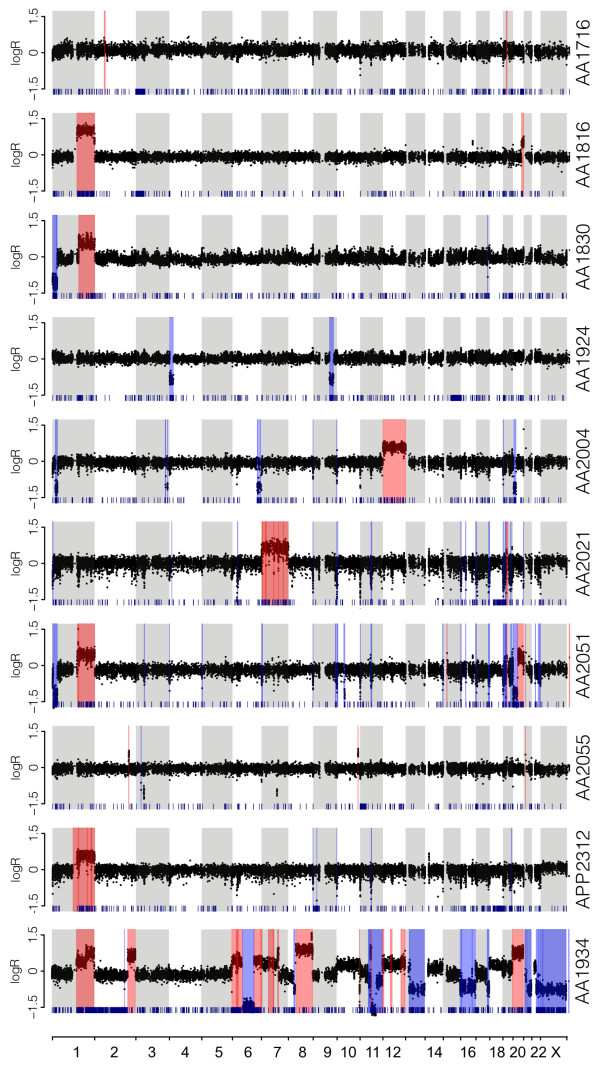
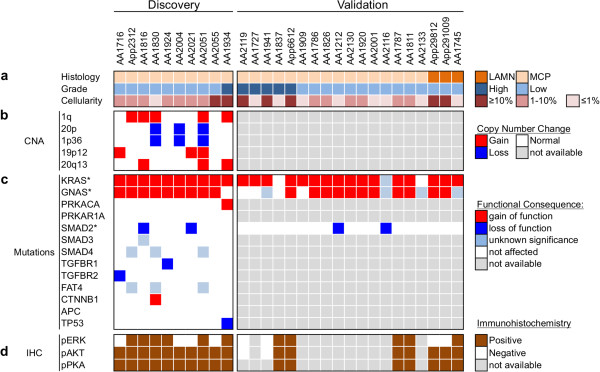
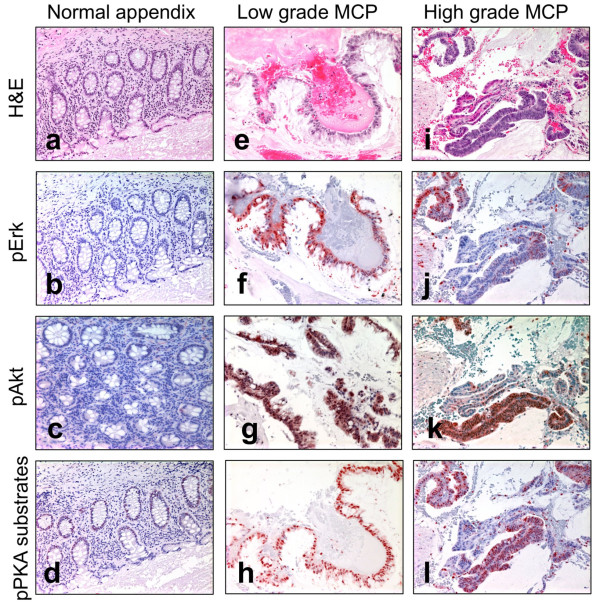
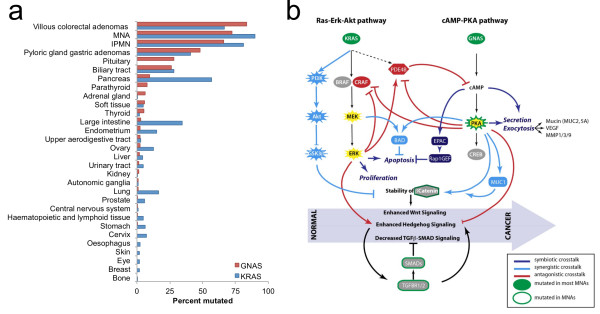
Verification
Claims the paper makes
The claims and statistics of this paper haven’t been checked yet.
Free: it reads the open-access text and checks the first 5 claims that cite a source we can check. Create a free account to check every claim.
Claims other papers make about this one
Each is checked against this paper’s own text: does it say what the citing paper says it does?
In the citing paper
“Furthermore, in mucinous neoplasms of the appendix, 69% of patients with GNAS mutations actually harbor GNAS and KRAS comutations.”
From Gαs–Protein Kinase A (PKA) Pathway Signalopathies: The Emerging Genetic Landscape and Therapeutic Potential of Human Diseases Driven by Aberrant Gαs-PKA Signaling (2021) · cites this paper as Alakus et al., 2014
Self-check
Percentages, sums and reported differences re-computed from the paper’s own numbers.
The self-check needs the paper’s full text.
Citations
Cites
Comprehensive molecular characterization of human colon and rectal cancer
The Cancer Genome Atlas Network (2012) · Nature · doi:10.1038/nature11252 · Cited by 8,499
The Salvador–Warts–Hippo pathway — an emerging tumour-suppressor network
Harvey, K., & Tapon, N. (2007) · Nature Reviews Cancer · doi:10.1038/nrc2070 · Cited by 628 · cited 1×
“Hippo pathway inactivation has been observed in cancer [29] including CRC in which both FAT4 and FAT2 , putative Hippo pathway receptors [30], are significantly mutated in 24% of the cases [15].”
Genomic and Biological Characterization of Exon 4 KRAS Mutations in Human Cancer
Janakiraman, M., Vakiani, E., Zeng, Z., Pratilas, C. A., Taylor, B. S., Chitale, D., Halilovic, E., Wilson, M., Huberman, K., Ricarte Filho, J. C., et al. (2010) · Cancer Research · doi:10.1158/0008-5472.can-10-0192 · Cited by 290
Research works printed but not linked: 41
- McCusker ME Cote TR Clegg LX Sobin LH Primary malignant neoplasms of the appendix: a population-based study from the surveillance, epidemiology and end-results program, 1973-1998 Cancer 2002 94 3307 3312 10.1002/cncr.10589 12115365 · DOI · Paper page
- Misdraji J Yantiss RK Graeme-Cook FM Balis UJ Young RH Appendiceal mucinous neoplasms: a clinicopathologic analysis of 107 cases Am J Surg Pathol 2003 27 1089 1103 10.1097/00000478-200308000-00006 12883241 · DOI · Paper page
- Fraenkel E Ueber das Sogenannte Pseudomyxoma Peritonei München med Wchnschr 1901 48 965 970
- Ronnett BM Kurman RJ Zahn CM Shmookler BM Jablonski KA Kass ME Sugarbaker PH Pseudomyxoma peritonei in women: a clinicopathologic analysis of 30 cases with emphasis on site of origin, prognosis, and relationship to ovarian mucinous tumors of low malignant potential Hum Pathol 1995 26 509 524 10.1016/0046-8177(95)90247-3 7750935 · doi:10.1016/0046-8177(95)90247-3
- Szych C Staebler A Connolly DC Wu R Cho KR Ronnett BM Molecular genetic evidence supporting the clonality and appendiceal origin of Pseudomyxoma peritonei in women Am J Pathol 1999 154 1849 1855 10.1016/S0002-9440(10)65442-9 10362811 PMC1866622 · doi:10.1016/s0002-9440(10)65442-9
- Misdraji J Appendiceal mucinous neoplasms: controversial issues Arch Pathol Lab Med 2010 134 864 870 20524864 · doi:10.5858/134.6.864
- Kabbani W Houlihan PS Luthra R Hamilton SR Rashid A Mucinous and nonmucinous appendiceal adenocarcinomas: different clinicopathological features but similar genetic alterations Mod Pathol 2002 15 599 605 10.1038/modpathol.3880572 12065772 · DOI
- Zauber P Berman E Marotta S Sabbath-Solitare M Bishop T Ki-ras gene mutations are invariably present in low-grade mucinous tumors of the vermiform appendix Scand J Gastroenterol 2011 46 869 874 10.3109/00365521.2011.565070 21443421 · DOI
- Austin F Mavanur A Sathaiah M Steel J Lenzner D Ramalingam L Holtzman M Ahrendt S Pingpank J Zeh H Bartlett D Choudry H Aggressive management of peritoneal carcinomatosis from mucinous appendiceal neoplasms Ann Surg Oncol 2012 19 1386 1393 10.1245/s10434-012-2241-6 22302270 PMC4100545 · doi:10.1245/s10434-012-2241-6
- Shetty S Thomas P Ramanan B Sharma P Govindarajan V Loggie B Kras mutations and p53 overexpression in pseudomyxoma peritonei: association with phenotype and prognosis J Surg Res 2013 180 97 103 10.1016/j.jss.2012.10.053 23199549 · DOI
- Shih IM Yan H Speyrer D Shmookler BM Sugarbaker PH Ronnett BM Molecular genetic analysis of appendiceal mucinous adenomas in identical twins, including one with pseudomyxoma peritonei Am J Surg Pathol 2001 25 1095 1099 10.1097/00000478-200108000-00017 11474297 · DOI
- Chuaqui RF Zhuang Z Emmert-Buck MR Bryant BR Nogales F Tavassoli FA Merino MJ Genetic analysis of synchronous mucinous tumors of the ovary and appendix Hum Pathol 1996 27 165 171 10.1016/S0046-8177(96)90370-6 8617458 · DOI
- Nishikawa G Sekine S Ogawa R Matsubara A Mori T Taniguchi H Kushima R Hiraoka N Tsuta K Tsuda H Kanai Y Frequent GNAS mutations in low-grade appendiceal mucinous neoplasms Br J Cancer 2013 108 951 958 10.1038/bjc.2013.47 23403822 PMC3590682 · DOI · Paper page
- Sjöblom T Jones S Wood LD Parsons DW Lin J Barber TD Mandelker D Leary RJ Ptak J Silliman N Szabo S Buckhaults P Farrell C Meeh P Markowitz SD Willis J Dawson D Willson JKV Gazdar AF Hartigan J Wu L Liu C Parmigiani G Park BH Bachman KE Papadopoulos N Vogelstein B Kinzler KW Velculescu VE The consensus coding sequences of human breast and colorectal cancers Science 2006 314 268 274 10.1126/science.1133427 16959974 · DOI · Paper page
- Improta G Zupa A Possidente L Tartarone A Pedicini P Nappi A Molinari S Fraggetta F Vita G Coexistence of two different mutations in codon 12 of the Kras gene in colorectal cancer: Report of a case supporting the concept of tumoral heterogeneity Oncol Lett 2013 5 1741 1743 23761841 PMC3678636 · DOI
- Lyons J Landis CA Harsh G Vallar L Grünewald K Feichtinger H Duh Q-Y Clark OH Kawasaki E Bourne HR McCormick F Two G protein oncogenes in human endocrine tumors Science 1990 249 655 659 10.1126/science.2116665 2116665 · DOI · Paper page
- Yamada M Sekine S Ogawa R Taniguchi H Kushima R Tsuda H Kanai Y Frequent activating GNAS mutations in villous adenoma of the colorectum J Pathol 2012 228 113 118 22374786 · DOI · Paper page
- Idziaszczyk S Wilson CH Smith CG Adams DJ Cheadle JP Analysis of the frequency of GNAS codon 201 mutations in advanced colorectal cancer Cancer Genet Cytogenet 2010 202 67 69 10.1016/j.cancergencyto.2010.04.023 20804925 · DOI
- Wu J Matthaei H Maitra A Dal Molin M Wood LD Eshleman JR Goggins M Canto MI Schulick RD Edil BH Wolfgang CL Klein AP Diaz LA Allen PJ Schmidt CM Kinzler KW Papadopoulos N Hruban RH Vogelstein B Recurrent GNAS mutations define an unexpected pathway for pancreatic cyst development Sci Transl Med 2011 3 92ra66 10.1126/scitranslmed.3002543 21775669 PMC3160649 · DOI · Paper page
- Matsubara A Sekine S Kushima R Ogawa R Taniguchi H Tsuda H Kanai Y Frequent GNAS and KRAS mutations in pyloric gland adenoma of the stomach and duodenum J Pathol 2013 229 579 587 10.1002/path.4153 23208952 · doi:10.1002/path.4153
- Weinstein LS Yu S Warner DR Liu J Endocrine manifestations of stimulatory G protein alpha-subunit mutations and the role of genomic imprinting Endocr Rev 2001 22 675 705 11588148
- Orellana SA McKnight GS Mutations in the catalytic subunit of cAMP-dependent protein kinase result in unregulated biological activity Proc Natl Acad Sci U S A 1992 89 4726 4730 10.1073/pnas.89.10.4726 1584809 PMC49156 · DOI · Paper page
- Abdollah S Macías-Silva M Tsukazaki T Hayashi H Attisano L Wrana JL TbetaRI phosphorylation of Smad2 on Ser465 and Ser467 is required for Smad2-Smad4 complex formation and signaling J Biol Chem 1997 272 27678 27685 10.1074/jbc.272.44.27678 9346908 · DOI · Paper page
- Mátyás G Arnold E Carrel T Baumgartner D Boileau C Berger W Steinmann B Identification and in silico analyses of novel TGFBR1 and TGFBR2 mutations in Marfan syndrome-related disorders Hum Mutat 2006 27 760 769 10.1002/humu.20353 16791849 · DOI
- Loeys BL Schwarze U Holm T Callewaert BL Thomas GH Pannu H De Backer JF Oswald GL Symoens S Manouvrier S Roberts AE Faravelli F Greco MA Pyeritz RE Milewicz DM Coucke PJ Cameron DE Braverman AC Byers PH De Paepe AM Dietz HC Aneurysm syndromes caused by mutations in the TGF-beta receptor N Engl J Med 2006 355 788 798 10.1056/NEJMoa055695 16928994 · DOI · Paper page
- Zhao B Li L Lei Q Guan K-L The Hippo–YAP pathway in organ size control and tumorigenesis: an updated version Genes Dev 2010 24 862 874 10.1101/gad.1909210 20439427 PMC2861185 · DOI · Paper page
- Zang ZJ Cutcutache I Poon SL Zhang SL McPherson JR Tao J Rajasegaran V Heng HL Deng N Gan A Lim KH Ong CK Huang D Chin SY Tan IB Ng CCY Yu W Wu Y Lee M Wu J Poh D Wan WK Rha SY So J Salto-Tellez M Yeoh KG Wong WK Zhu Y-J Futreal PA Pang B Exome sequencing of gastric adenocarcinoma identifies recurrent somatic mutations in cell adhesion and chromatin remodeling genes Nat Genet 2012 44 570 574 10.1038/ng.2246 22484628 · DOI · Paper page
- Al-Fageeh M Li Q Dashwood WM Myzak MC Dashwood RH Phosphorylation and ubiquitination of oncogenic mutants of beta-catenin containing substitutions at Asp32 Oncogene 2004 23 4839 4846 10.1038/sj.onc.1207634 15064718 PMC2267883 · DOI
- Sio TT Mansfield AS Grotz TE Graham RP Molina JR Que FG Miller RC Concurrent MCL1 and JUN amplification in pseudomyxoma peritonei: a comprehensive genetic profiling and survival analysis J Hum Genet 2013 59 124 128 24369359 PMC3973125 · DOI
- Forbes SA Bhamra G Bamford S Dawson E Kok C Clements J Menzies A Teague JW Futreal PA Stratton MR The Catalogue of Somatic Mutations in Cancer (COSMIC) Curr Protoc Hum Genet 2008 Chapter 10 Unit 10 Unit 11 PMC2705836 18428421
- Palorini R De Rasmo D Gaviraghi M Danna LS Signorile A Cirulli C Chiaradonna F Alberghina L Papa S Oncogenic K-ras expression is associated with derangement of the cAMP/PKA pathway and forskolin-reversible alterations of mitochondrial dynamics and respiration Oncogene 2013 32 352 362 10.1038/onc.2012.50 22410778 · DOI
- Beas AO Taupin V Teodorof C Nguyen LT Garcia-Marcos M Farquhar MG Gαs promotes EEA1 endosome maturation and shuts down proliferative signaling through interaction with GIV (Girdin) Mol Biol Cell 2012 23 4623 4634 10.1091/mbc.E12-02-0133 23051738 PMC3510023 · DOI
- Bradbury NA Protein kinase-A-mediated secretion of mucin from human colonic epithelial cells J Cell Physiol 2000 185 408 415 10.1002/1097-4652(200012)185:3<408::AID-JCP11>3.0.CO;2-2 11056011 · DOI
- Ernens I Rouy D Velot E Devaux Y Wagner DR Adenosine inhibits matrix metalloproteinase-9 secretion by neutrophils: implication of A2a receptor and cAMP/PKA/Ca2+ pathway Circ Res 2006 99 590 597 10.1161/01.RES.0000241428.82502.d4 16917093 · DOI
- Wang X Klein RD Prostaglandin E2 induces vascular endothelial growth factor secretion in prostate cancer cells through EP2 receptor-mediated cAMP pathway Mol Carcinog 2007 46 912 923 10.1002/mc.20320 17427962 · DOI
- Jarry A Merlin D Hopfer U Laboisse CL Cyclic AMP-induced mucin exocytosis is independent of Cl- movements in human colonic epithelial cells (HT29-Cl.16E) Biochem J 1994 304 675 678 7818467 PMC1137386 · DOI
- Bafna S Kaur S Batra SK Membrane-bound mucins: the mechanistic basis for alterations in the growth and survival of cancer cells Oncogene 2010 29 2893 2904 10.1038/onc.2010.87 20348949 PMC2879972 · DOI · Paper page
- Baillie GS MacKenzie SJ McPhee I Houslay MD Sub-family selective actions in the ability of Erk2 MAP kinase to phosphorylate and regulate the activity of PDE4 cyclic AMP-specific phosphodiesterases Br J Pharmacol 2000 131 811 819 10.1038/sj.bjp.0703636 11030732 PMC1572393 · DOI · Paper page
- Cook SJ McCormick F Inhibition by cAMP of Ras-dependent activation of Raf Sci 1993 262 1069 1072 10.1126/science.7694367 7694367 · DOI · Paper page
- Jafari N Christ M Menaker GJ Sheridan JT Villous adenoma of appendix–report of a case and review of the literature Am J Proctol Gastroenterol Colon Rectal Surg 1979 30 30 32 525688
- Kim D-D Eng C The promise of mTOR inhibitors in the treatment of colorectal cancer Expert Opin Investig Drugs 2012 21 1775 1788 10.1517/13543784.2012.721353 22978346 · DOI
Cited by
Uncovering novel mutational signatures by de novo extraction with SigProfilerExtractor
Islam, S. M. A., Díaz-Gay, M., Wu, Y., Barnes, M., Vangara, R., Bergstrom, E. N., He, Y., Vella, M., Wang, J., Teague, J. W., et al. (2022) · Cell Genomics · doi:10.1016/j.xgen.2022.100179 · Cited by 365
Kelly, K. (2015) · Clinics in Colon and Rectal Surgery · doi:10.1055/s-0035-1564433 · Cited by 189
Asare, E. A., Compton, C. C., Hanna, N. N., Kosinski, L. A., Washington, M. K., Kakar, S., Weiser, M. R., & Overman, M. J. (2016) · Cancer · doi:10.1002/cncr.29744 · Cited by 187
Wu, V., Yeerna, H., Nohata, N., Chiou, J., Harismendy, O., Raimondi, F., Inoue, A., Russell, R. B., Tamayo, P., & Gutkind, J. S. (2019) · Journal of Biological Chemistry · doi:10.1074/jbc.rev119.005601 · Cited by 179
“Similarly, GNAS mutations are found in 50% of low-grade appendiceal mucinous neoplasms (59) and are highly prevalent in a subset of pancreatic tumors, including intraductal papillary mucinous neoplasms and adenocarcinomas (14).”
BackgroundSelf-citationMutational landscape of mucinous ovarian carcinoma and its neoplastic precursors
Australian Ovarian Cancer Study Group, Ryland, G. L., Hunter, S. M., Doyle, M. A., Caramia, F., Li, J., Rowley, S. M., Christie, M., Allan, P. E., Stephens, A. N., et al. (2015) · Genome Medicine · doi:10.1186/s13073-015-0210-y · Cited by 164
“its associated pseudomyxoma peritonei) [37, 38]; and adenoma of the colon/rectum, stomach and small intestine”
Metadata
- Authors
- Alakus, H., Babicky, M. L., Ghosh, P., Yost, S., Jepsen, K., Dai, Y., Arias, A., Samuels, M. L., Mose, E. S., Schwab, R. B., Peterson, M. R., Lowy, A. M., Frazer, K. A., & Harismendy, O.
- Venue
- Genome Medicine
- Published
- 2014-05-29
- Volume
- 6
- Issue
- 5
- ISSN
- 1756-994X
- PMC
- PMC4062050
- Cited by
- 107
- References
- 3
- Language
- en
- Update notices
- erratum (2014-07-26)
- Licence
- creativecommons.org/licenses/by/2.0/ (tdm)
- creativecommons.org/licenses/by/2.0/ (vor)
About these checks
Registry, retraction, Cites and statistics results are computed, not judged, with one exception: a printed reference that no index lists is read once by a model before it counts as a citation error. Claims are extracted by a model and kept only when their quote appears verbatim in the text; each cited source is then checked, with a model’s help, for whether it says what the claim relies on. Those verdicts can be wrong — read the claim’s quote and the cited source before relying on one.
Statistics and arithmetic are recomputed, not judged.
Confidence bands are shown only for fields calibrated on our annotated test set. None is calibrated yet, so no band is shown.
What counts as a claim ›How we measure confidence ›How we check this ›
Are you an author, or do you see a problem with this page? Request a review
Data sources
Bibliographic data: Semantic Scholar, OpenAlex, Crossref.
Contains information from the Semantic Scholar Academic Graph Datasets, made available under the ODC Attribution License (ODC-BY 1.0).
Semantic Scholar’s data is described in: Kinney, R., et al. (2023). The Semantic Scholar Open Data Platform. arXiv:2301.10140.
