

Key role of MIF-related neuroinflammation in neurodegeneration and cognitive impairment in Alzheimer’s disease
Open accessThe DOI matches its Crossref record; 59 of the 59 references it cites were found in a registry or an index.
Abstract
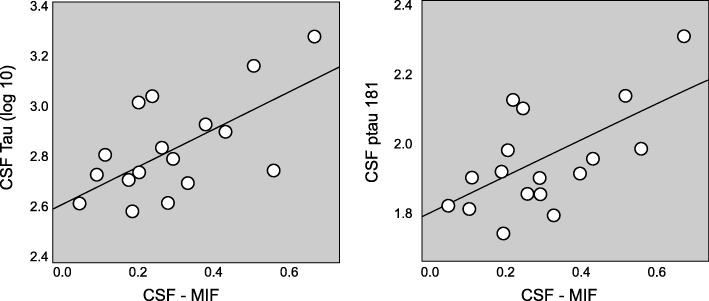
Background: Macrophage Migration Inhibitory Factor (MIF) is a potent proinflammatory cytokine that promotes the production of other immune mediators. MIF is produced by most cell types in the brain including microglia, astrocytes and neurons. Enhanced expression of MIF might contribute to the persistent activation of glial, chronic neuroinflammation and neurodegeneration. Here, we investigated the effect of MIF on inflammatory markers and spatial learning in a mouse model of sporadic AD and on tau pathology in AD patients. Methods: We examined the effects of MIF deficiency and pharmacological MIF inhibition in vitro and in vivo. In vitro, quantitative PCR and ELISA were used to assess cytokine production of STZ-treated glial cells. In vivo, C57BL/6 mice were subjected to intracerebroventricular streptozotocin injection (3 mg/kg, ICV-STZ). Neuroinflammation and contextual learning performance were assessed using quantitative PCR and fear conditioning, respectively. Pharmacological MIF inhibition was achieved with intraperitoneal injections of ISO-1 (daily, IP, 20 mg/kg in 5% DMSO in 0.9% NaCl) for 4 weeks following ICV-STZ injection. The findings from ISO-1 treated mice were confirmed in MIF knockout C57BL/6. To assess the role of MIF in human AD, cerebrospinal fluid levels of MIF and hyperphosphorylated tau were measured using ELISA. Results: Administration ICV-STZ resulted in hippocampal dependent cognitive impairment. MIF inhibition with ISO-1 significantly improved the STZ-induced impairment in contextual memory performance, indicating MIF-related inflammation as a major contributor to ICV-STZ-induced memory deficits. Furthermore, inhibition of the MIF resulted in reduced cytokine production in vitro and in vivo. In human subjects with AD at early clinical stages, cerebrospinal fluid levels of MIF were increased in comparison with age-matched controls, and correlated with biomarkers of tau hyper-phosphorylation and neuronal injury hinting at MIF levels as a potential biomarker for early-stage AD. Conclusions: The present study indicates the key role of MIF in controlling the chronic cytokine release in neuroinflammation related to tau hyperphosphorylation, neurodegeneration, and clinical manifestations of AD, suggesting the potential of MIF inhibition as therapeutic strategy to slow down neurodegeneration and clinical disease progression.
Overview
The claims and statistics of this paper haven’t been checked yet.
Free: it reads the open-access text and checks the first 5 claims that cite a source we can check. Create a free account to check every claim.
Integrity signals
Registry
Cites
Statistics
Figures
Verification
Claims the paper makes
The claims and statistics of this paper haven’t been checked yet.
Free: it reads the open-access text and checks the first 5 claims that cite a source we can check. Create a free account to check every claim.
Claims other papers make about this one
Each is checked against this paper’s own text: does it say what the citing paper says it does?
The cited source says what the claim attributes to it.
In the citing paper
“The increased expression of the macrophage migration inhibitory factor (MIF) protein (Fig. 4G, H), which is encoded by the Mif gene, provided additional evidence for the previous findings that an inflammatory response is closely associated with Aβ plaques [51, 85].”
From Abnormal accumulation of extracellular vesicles in hippocampal dystrophic axons and regulation by the primary cilia in Alzheimer's disease (2023) · cites this paper as [51]
Self-check
Percentages, sums and reported differences re-computed from the paper’s own numbers.
The self-check needs the paper’s full text.
Citations
Cites
R: A Language and Environment for Statistical Computing
R Core Team (2025) · doi:10.32614/r.manuals · Cited by 352,181
Folstein, M. F., Folstein, S. E., & McHugh, P. R. (1975) · Journal of Psychiatric Research · doi:10.1016/0022-3956(75)90026-6 · Cited by 88,282 · cited 2×
“CSF MIF (ng/ml), mean (SD) 0.158 (0.096) 0.270 (0.168) Plasma MIF (ng/ml), mean (SD) 0.045 (0.077) 0.113 (0.170) CSF Aβ 1–42 (pg/ml), mean (SD) 990.3 (203.9) 522.8 (134.0)* CSF tau (pg/ml), mean (SD) 182.1 (44.4) 738.5 (407.9)* CSF p-tau181 (pg/ml), mean (SD) 42.6 (12.4) 93.9 (35.7)* MIF macrophage migration inhibitor…”
MethodInfluentialNeuropathological stageing of Alzheimer-related changes.
Braak, H., & Braak, E. (1991) · Acta Neuropathologica · doi:10.1007/bf00308809 · Cited by 16,123 · cited 1×
“…link between neuroinflammation, as a recognized causing factor of sporadic AD (Krstic and Knuesel 2013), tau phosphorylation, the most important biomarker for AD progression (Braak and Braak 1991) and cognitive deficits as the defining symptom and major driver of disability in AD (Cummings 2005).”
BackgroundAlzheimer's Disease: Genes, Proteins, and Therapy
Selkoe, D. J. (2001) · Physiological Reviews · doi:10.1152/physrev.2001.81.2.741 · Cited by 6,063 · cited 1×
“Alzheimer’s Disease (AD) is an aging-associated disease defined by progressive neurodegeneration, neuroinflammation and the presence of protein aggregates consisting of amyloid β (Aβ) and hyperphosphorylated tau (Selkoe 2001).”
BackgroundThe pro- and anti-inflammatory properties of the cytokine interleukin-6
Scheller, J., Chalaris, A., Schmidt-Arras, D., & Rose-John, S. (2011) · Biochimica et Biophysica Acta (BBA) - Molecular Cell Research · doi:10.1016/j.bbamcr.2011.01.034 · Cited by 3,212 · cited 1×
“IL-6 is classically considered a proinflammatory cytokine which was also shown to have regenerative activity (Scheller et al. 2011).”
BackgroundTREM2 Variants in Alzheimer's Disease
Guerreiro, R., Wojtas, A., Bras, J., Carrasquillo, M., Rogaeva, E., Majounie, E., Cruchaga, C., Sassi, C., Kauwe, J. S. K., Younkin, S., et al. (2013) · New England Journal of Medicine · doi:10.1056/nejmoa1211851 · Cited by 3,020
Variant of TREM2 Associated with the Risk of Alzheimer's Disease
Jonsson, T., Stefansson, H., Steinberg, S., Jonsdottir, I., Jonsson, P. V., Snaedal, J., Bjornsson, S., Huttenlocher, J., Levey, A. I., Lah, J. J., et al. (2013) · New England Journal of Medicine · doi:10.1056/nejmoa1211103 · Cited by 2,558
Craft, S. (2012) · Archives of Neurology · doi:10.1001/archneurol.2011.233 · Cited by 1,253
Alzheimer’s Disease Risk Gene CD33 Inhibits Microglial Uptake of Amyloid Beta
Griciuc, A., Serrano-Pozo, A., Parrado, A. R., Lesinski, A. N., Asselin, C. N., Mullin, K., Hooli, B., Choi, S. H., Hyman, B. T., & Tanzi, R. E. (2013) · Neuron · doi:10.1016/j.neuron.2013.04.014 · Cited by 1,004
MIF is a pituitary-derived cytokine that potentiates lethal endotoxaemia
Bernhagen, J., Calandra, T., Mitchell, R. A., Martin, S. B., Tracey, K. J., Voelter, W., Manogue, K. R., Cerami, A., & Bucala, R. (1993) · Nature · doi:10.1038/365756a0 · Cited by 999
Ibuprofen Suppresses Plaque Pathology and Inflammation in a Mouse Model for Alzheimer's Disease
Lim, G. P., Yang, F., Chu, T., Chen, P., Beech, W., Teter, B., Tran, T., Ubeda, O., Ashe, K. H., Frautschy, S. A., et al. (2000) · The Journal of Neuroscience · doi:10.1523/jneurosci.20-15-05709.2000 · Cited by 884
Insulin and neurodegenerative disease: shared and specific mechanisms
Craft, S., & Stennis Watson, G. (2004) · The Lancet Neurology · doi:10.1016/s1474-4422(04)00681-7 · Cited by 830
Targeted Disruption of Migration Inhibitory Factor Gene Reveals Its Critical Role in Sepsis
Bozza, M., Satoskar, A. R., Lin, G., Lu, B., Humbles, A. A., Gerard, C., & David, J. R. (1999) · The Journal of Experimental Medicine · doi:10.1084/jem.189.2.341 · Cited by 551
Yan, Q., Zhang, J., Liu, H., Babu-Khan, S., Vassar, R., Biere, A. L., Citron, M., & Landreth, G. (2003) · The Journal of Neuroscience · doi:10.1523/jneurosci.23-20-07504.2003 · Cited by 469
Deciphering the mechanism underlying late-onset Alzheimer disease
Krstic, D., & Knuesel, I. (2013) · Nature Reviews Neurology · doi:10.1038/nrneurol.2012.236 · Cited by 457 · cited 6×
“Epidemiological evidence and studies in different mouse models have suggested that blocking chronic inflammation associated with the innate immune response of CNS attenuates AD-like pathology (Bacher et al. 2008; Walker and Lue 2007).”
BackgroundInfluentialA nuclease that mediates cell death induced by DNA damage and poly(ADP-ribose) polymerase-1
Wang, Y., An, R., Umanah, G. K., Park, H., Nambiar, K., Eacker, S. M., Kim, B., Bao, L., Harraz, M. M., Chang, C., et al. (2016) · Science · doi:10.1126/science.aad6872 · Cited by 421
Strle, K., Zhou, J.-H., Shen, W.-H., Broussard, S. R., Johnson, R. W., Freund, G. G., Dantzer, R., & Kelley, K. W. (2001) · Critical Reviews™ in Immunology · doi:10.1615/critrevimmunol.v21.i5.20 · Cited by 400
Grünblatt, E., Salkovic‐Petrisic, M., Osmanovic, J., Riederer, P., & Hoyer, S. (2007) · Journal of Neurochemistry · doi:10.1111/j.1471-4159.2006.04368.x · Cited by 374
Grieb, P. (2016) · Molecular Neurobiology · doi:10.1007/s12035-015-9132-3 · Cited by 361
Macrophage migration inhibitory factor (MIF): mechanisms of action and role in disease
Lue, H., Kleemann, R., Calandra, T., Roger, T., & Bernhagen, J. (2002) · Microbes and Infection · doi:10.1016/s1286-4579(02)01560-5 · Cited by 349
Al-Abed, Y., Dabideen, D., Aljabari, B., Valster, A., Messmer, D., Ochani, M., Tanovic, M., Ochani, K., Bacher, M., Nicoletti, F., et al. (2005) · Journal of Biological Chemistry · doi:10.1074/jbc.c500243200 · Cited by 307
Self-citationThe biological function and significance of CD74 in immune diseases
Su, H., Na, N., Zhang, X., & Zhao, Y. (2017) · Inflammation Research · doi:10.1007/s00011-016-0995-1 · Cited by 306
Growth factor-induced delayed early response genes.
Lanahan, A., Williams, J. B., Sanders, L. K., & Nathans, D. (1992) · Molecular and Cellular Biology · doi:10.1128/mcb.12.9.3919 · Cited by 303
Poly(ADP-ribose) polymerase-deficient mice are protected from streptozotocin-induced diabetes
Pieper, A. A., Brat, D. J., Krug, D. K., Watkins, C. C., Gupta, A., Blackshaw, S., Verma, A., Wang, Z.-Q., & Snyder, S. H. (1999) · Proceedings of the National Academy of Sciences · doi:10.1073/pnas.96.6.3059 · Cited by 298
Targeting neuroinflammation in Alzheimer’s disease
Bronzuoli, M. R., Iacomino, A., Steardo, L., & Scuderi, C. (2016) · Journal of Inflammation Research · doi:10.2147/jir.s86958 · Cited by 255
Rodent models of neuroinflammation for Alzheimer’s disease
Nazem, A., Sankowski, R., Bacher, M., & Al-Abed, Y. (2015) · Journal of Neuroinflammation · doi:10.1186/s12974-015-0291-y · Cited by 248
Self-citationVan Wagoner, N. J., Oh, J.-W., Repovic, P., & Benveniste, E. N. (1999) · The Journal of Neuroscience · doi:10.1523/jneurosci.19-13-05236.1999 · Cited by 244
Craig-Schapiro, R., Kuhn, M., Xiong, C., Pickering, E. H., Liu, J., Misko, T. P., Perrin, R. J., Bales, K. R., Soares, H., Fagan, A. M., et al. (2011) · PLoS ONE · doi:10.1371/journal.pone.0018850 · Cited by 237
Salkovic‐Petrisic, M., Tribl, F., Schmidt, M., Hoyer, S., & Riederer, P. (2006) · Journal of Neurochemistry · doi:10.1111/j.1471-4159.2005.03637.x · Cited by 221
Nishino, T., Bernhagen, J., Shiiki, H., Calandra, T., Dohi, K., & Bucala, R. (1995) · Molecular Medicine · doi:10.1007/bf03401892 · Cited by 182
Isolation and Culture of Hippocampal Neurons from Prenatal Mice
Seibenhener, M. L., & Wooten, M. W. (2012) · Journal of Visualized Experiments · doi:10.3791/3634 · Cited by 173
Markers of neuroinflammation associated with Alzheimer’s disease pathology in older adults
Popp, J., Oikonomidi, A., Tautvydaitė, D., Dayon, L., Bacher, M., Migliavacca, E., Henry, H., Kirkland, R., Severin, I., Wojcik, J., et al. (2017) · Brain, Behavior, and Immunity · doi:10.1016/j.bbi.2017.01.020 · Cited by 136
Self-citationQuintana, A., Erta, M., Ferrer, B., Comes, G., Giralt, M., & Hidalgo, J. (2012) · Brain Behavior and Immunity · doi:10.1016/j.bbi.2012.10.011 · Cited by 122
Varvel, N. H., Bhaskar, K., Kounnas, M. Z., Wagner, S. L., Yang, Y., Lamb, B. T., & Herrup, K. (2009) · Journal of Clinical Investigation · doi:10.1172/jci39716 · Cited by 121
Atsumi, T., Cho, Y.-R., Leng, L., McDonald, C., Yu, T. Y., Danton, C., Hong, E., Mitchell, R. A., Metz, C. N., Niwa, H., et al. (2007) · The Journal of Immunology · doi:10.4049/jimmunol.179.8.5399 · Cited by 121
Brosseron, F., Traschütz, A., Widmann, C. N., Kummer, M. P., Tacik, P., Santarelli, F., Jessen, F., & Heneka, M. T. (2018) · Alzheimer's Research & Therapy · doi:10.1186/s13195-018-0353-3 · Cited by 113
Drug repositioning for Alzheimer’s disease based on systematic “omics” data mining
Zhang, M., Schmitt-Ulms, G., Sato, C., Xi, Z., Zhang, Y., Zhou, Y., St George-Hyslop, P., & Rogaeva, E. (2016) · PLOS ONE · doi:10.1371/journal.pone.0168812 · Cited by 108
Kraska, A., Santin, M. D., Dorieux, O., Joseph-Mathurin, N., Bourrin, E., Petit, F., Jan, C., Chaigneau, M., Hantraye, P., Lestage, P., et al. (2012) · PLoS ONE · doi:10.1371/journal.pone.0046196 · Cited by 103
Macrophage migration inhibitory factor in mild cognitive impairment and Alzheimer’s disease
Popp, J., Bacher, M., Kölsch, H., Noelker, C., Deuster, O., Dodel, R. C., & Jessen, F. (2008) · Journal of Psychiatric Research · doi:10.1016/j.jpsychires.2008.10.006 · Cited by 99
Self-citationConboy, L., Varea, E., Castro, J. E., Ouertatani-Sakouhi, H., Calandra, T., Lashuel, H. A., & Sandi, C. (2010) · Molecular Psychiatry · doi:10.1038/mp.2010.15 · Cited by 98
Macrophage Migration Inhibitory Factor: A Therapeutic Target Across Inflammatory Diseases
Hoi, A., Iskander, M., & Morand, E. (2007) · Inflammation & Allergy-Drug Targets · doi:10.2174/187152807781696455 · Cited by 98
The Role of Macrophage Migration Inhibitory Factor in Alzheimer’s Disease
Bacher, M., Deuster, O., Aljabari, B., Egensperger, R., Neff, F., Jessen, F., Popp, J., Noelker, C., Reese, J. P., Al-Abed, Y., et al. (2010) · Molecular Medicine · doi:10.2119/molmed.2009.00123 · Cited by 95
Self-citationMischke, R., Kleemann, R., Brunner, H., & Bernhagen, J. (1998) · FEBS Letters · doi:10.1016/s0014-5793(98)00400-1 · Cited by 76
Sugimoto, H., Suzuki, M., Nakagawa, A., Tanaka, I., & Nishihira, J. (1996) · FEBS Letters · doi:10.1016/0014-5793(96)00553-4 · Cited by 76
Roger, T., Schneider, A., Weier, M., Sweep, F. C. G. J., Le Roy, D., Bernhagen, J., Calandra, T., & Giannoni, E. (2016) · Proceedings of the National Academy of Sciences · doi:10.1073/pnas.1514018113 · Cited by 73
Discovery of an Orally Active Series of Isoxazoline Glycoprotein IIb/IIIa Antagonists
Xue, C., Wityak, J., Sielecki, T. M., Pinto, D. J. P., Batt, D. G., Cain, G. A., Sworin, M., Rockwell, A. L., Roderick, J. J., Wang, S., et al. (1997) · Journal of Medicinal Chemistry · doi:10.1021/jm960799i · Cited by 72
Chen, Y., Tian, Z., Liang, Z., Sun, S., Dai, C.-L., Lee, M. H., LaFerla, F. M., Grundke-Iqbal, I., Iqbal, K., Liu, F., et al. (2012) · PLoS ONE · doi:10.1371/journal.pone.0051432 · Cited by 72
Anti-inflammatory and Immune Therapy for Alzheimers Disease: Current Status and Future Directions
Walker, D., & Lue, L.-F. (2007) · Current Neuropharmacology · doi:10.2174/157015907782793667 · Cited by 66
Anti-inflammatory drugs and Alzheimer's disease
Martyn, C. N. (2003) · BMJ · doi:10.1136/bmj.327.7411.353 · Cited by 63
CD44 Splice Variants as Potential Players in Alzheimer’s Disease Pathology
Pinner, E., Gruper, Y., Zimra, M. B., Kristt, D., Laudon, M., Naor, D., & Zisapel, N. (2017) · Journal of Alzheimer s Disease · doi:10.3233/jad-161245 · Cited by 63
Li, S.-Q., Yu, Y., Han, J.-Z., Wang, D., Liu, J., Qian, F., Fan, G.-H., Bucala, R., & Ye, R. D. (2015) · Journal of Neuroinflammation · doi:10.1186/s12974-015-0396-3 · Cited by 59
Kassaar, O., Morais, M. P. P., Xu, S., Adam, E. L., Chamberlain, R. C., Jenkins, B., James, T. D., Francis, P. T., Ward, S. G., Williams, R. J., et al. (2017) · Scientific Reports · doi:10.1038/srep42874 · Cited by 51
Oikonomidi, A., Tautvydaitė, D., Gholam‐Rezaee, M., Henry, H., Bacher, M., & Popp, J. (2017) · Journal of Alzheimer s Disease · doi:10.3233/jad-170335 · Cited by 51
Self-citationEndogenous retroviruses are associated with hippocampus-based memory impairment
Sankowski, R., Strohl, J. J., Huerta, T. S., Nasiri, E., Mazzarello, A. N., D’Abramo, C., Cheng, K. F., Staszewski, O., Prinz, M., Huerta, P. T., et al. (2019) · Proceedings of the National Academy of Sciences · doi:10.1073/pnas.1822164116 · Cited by 50
Self-citationChuang, C., Chuang, Y.-C., Chang, W., Chen, C.-C., Hor, L., Huang, A.-M., Choi, P.-C., Wang, C., Tseng, P.-C., & Lin, C. (2010) · BMC Immunology · doi:10.1186/1471-2172-11-50 · Cited by 47
Sun, N., Yang, G., Zhao, H., Savelkoul, H. F. J., & An, L. (2005) · Mediators of Inflammation · doi:10.1155/mi.2005.202 · Cited by 36
Zhang, Y., Ding, R., Wang, S., Ren, Z., Xu, L., Zhang, X., Zhao, J., Ding, Y., Wu, Y., & Gong, Y. (2018) · Experimental and Therapeutic Medicine · doi:10.3892/etm.2018.6487 · Cited by 36
Bacher, M., Dodel, R. C., Aljabari, B., Keyvani, K., Marambaud, P., Kayed, R., Glabe, C. G., Goertz, N., Hoppmann, A., Sachser, N., et al. (2008) · The Journal of Experimental Medicine · doi:10.1084/jem.20060467 · Cited by 25
Self-citationClinical evaluation as a biomarker for Alzheimer's disease
Cummings, J. L. (2006) · Journal of Alzheimer s Disease · doi:10.3233/jad-2005-8402 · Cited by 15
Cited by
Sumaiya, K., Langford, D., Natarajaseenivasan, K., & Shanmughapriya, S. (2022) · Pharmacology & Therapeutics · doi:10.1016/j.pharmthera.2021.108024 · Cited by 299
Liang, B., Huang, Y., Zhong, Y., Li, Z., Ye, R., Wang, B., Zhang, B., Meng, H., Lin, X., Du, J., et al. (2022) · Journal of Hazardous Materials · doi:10.1016/j.jhazmat.2022.128459 · Cited by 237
The role of the immune system in Alzheimer’s disease
Wu, K., Zhang, Y.-R., Huang, Y., Dong, Q., Tan, L., & Yu, J. (2021) · Ageing Research Reviews · doi:10.1016/j.arr.2021.101409 · Cited by 127
Interplay between stress and cancer—A focus on inflammation
Vignjević, S., Milošević, M. S., Marković, D. C., & Momčilović, S. (2023) · Frontiers in Physiology · doi:10.3389/fphys.2023.1119095 · Cited by 113
Roles of Heme Oxygenase-1 in Neuroinflammation and Brain Disorders
Wu, Y., & Hsieh, H. (2022) · Antioxidants · doi:10.3390/antiox11050923 · Cited by 92
Metadata
- Authors
- Nasiri, E., Sankowski, R., Dietrich, H., Oikonomidi, A., Huerta, P. T., Popp, J., Al-Abed, Y., & Bacher, M.
- Affiliations
- Philipps University of Marburg (DE)
- Feinstein Institute for Medical Research (US)
- Centre Hospitalier Universitaire Vaudois (CH)
- Northwell Health (US)
- University of Zurich (CH)
- Corresponding author
- Sankowski, Roman
- Venue
- Molecular Medicine
- Published
- 2020-04-17
- Volume
- 26
- Issue
- 1
- Pages
- 34-34
- ISSN
- 1076-1551 (ISSN-L)
- 1528-3658
- PMC
- PMC7164357
- OpenAlex
- W3016879694
- Cited by
- 91
- References
- 59
- Citations by year
- 2026: 10 · 2025: 13 · 2024: 22 · 2023: 23 · 2022: 12 · 2021: 9 · 2020: 1
- FWCI
- 4.35
- Type
- journal article
- Language
- en
- Open access
- gold
- doi.org
- Licence
- cc-by
- creativecommons.org/licenses/by/4.0 (tdm)
- creativecommons.org/licenses/by/4.0 (vor)
- Locations
- Molecular Medicine (publishedVersion, cc-by)
- PubMed Central (publishedVersion, cc-by)
- PubMed (publishedVersion)
- SERVAL (Université de Lausanne) (publishedVersion, cc-by)
- IRIS (submittedVersion, cc-by)
- DOAJ (DOAJ: Directory of Open Access Journals) (submittedVersion, cc-by-sa)
- Funders
- Deutsche Forschungsgemeinschaft (BA 1869/3-1)
- Hearst Foundations (-)
- Berta-Ottenstein-Programme for Clinician Scientists (-)
- Boehringer Ingelheim (-)
- Schweizerischer Nationalfonds zur Förderung der Wissenschaftlichen Forschung (320030_141179)
- Topics
- Life Sciences › Neuroscience › Neurology › Neuroinflammation and Neurodegeneration Mechanisms
- Life Sciences › Neuroscience › Cellular and Molecular Neuroscience › Alzheimer's disease research and treatments
- Life Sciences › Immunology and Microbiology › Immunology › Macrophage Migration Inhibitory Factor
- Keywords
- macrophage migration inhibitory factor, neuroinflammation, Alzheimer's disease, neurodegeneration, cognitive impairment, tau hyperphosphorylation, MIF inhibition, ISO-1, streptozotocin-induced neurotoxicity, contextual memory, cerebrospinal fluid biomarkers, glial activation, cytokine production, hippocampus
- MeSH terms
- Alzheimer Disease, Animals, Astrocytes, Cells, Cultured, Disease Models, Animal, Disease Susceptibility, Extracellular Space, Female, Gene Expression Regulation, Inflammation, Macrophage Migration-Inhibitory Factors, Male, Memory, Nerve Degeneration, Biomarkers, Cytokines, Microglia, Inflammation Mediators, Intramolecular Oxidoreductases, Mice, Cognitive Dysfunction
About these checks
Registry, retraction, Cites and statistics results are computed, not judged, with one exception: a printed reference that no index lists is read once by a model before it counts as a citation error. Claims are extracted by a model and kept only when their quote appears verbatim in the text; each cited source is then checked, with a model’s help, for whether it says what the claim relies on. Those verdicts can be wrong — read the claim’s quote and the cited source before relying on one.
Statistics and arithmetic are recomputed, not judged.
Confidence bands are shown only for fields calibrated on our annotated test set. None is calibrated yet, so no band is shown.
What counts as a claim ›How we measure confidence ›How we check this ›
Are you an author, or do you see a problem with this page? Request a review
Data sources
Bibliographic data: Semantic Scholar, OpenAlex, Crossref.
Contains information from the Semantic Scholar Academic Graph Datasets, made available under the ODC Attribution License (ODC-BY 1.0).
Semantic Scholar’s data is described in: Kinney, R., et al. (2023). The Semantic Scholar Open Data Platform. arXiv:2301.10140.
