

The DOI matches its Crossref record; 57 of the 58 references it cites were found in a registry or an index, and 1 are not checked yet.
The transition from HIF-1 to HIF-2 during prolonged hypoxia results from reactivation of PHDs and HIF1A mRNA instability
Open accessPublished version of a preprint
Abstract
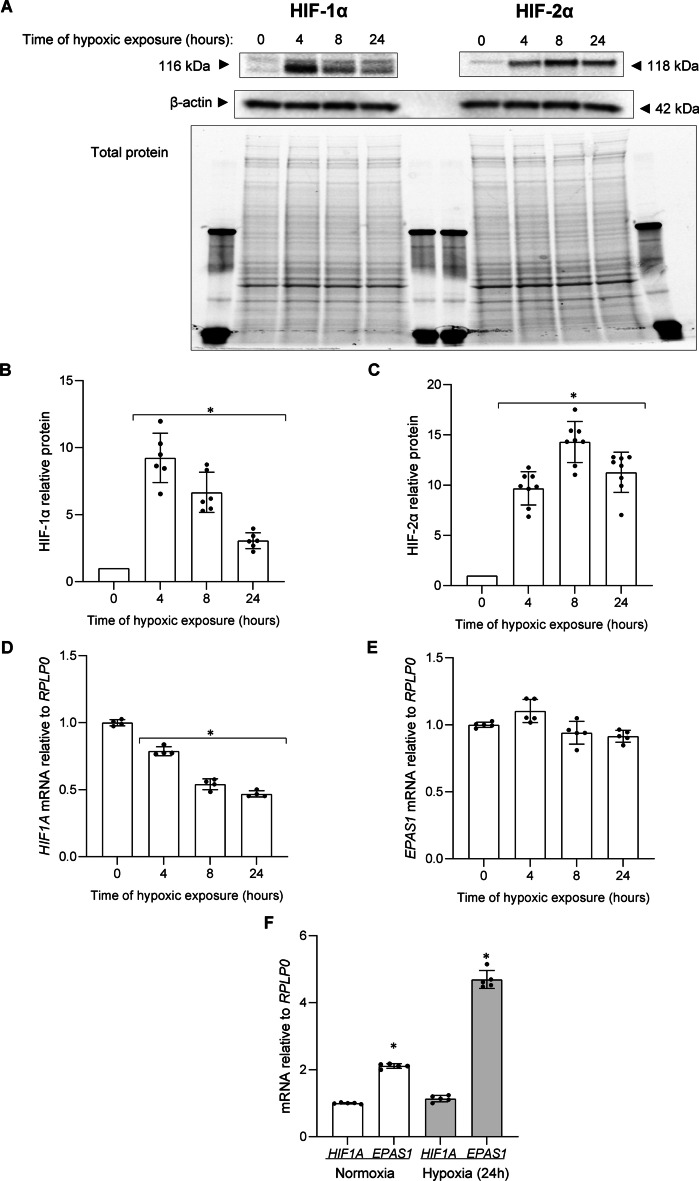
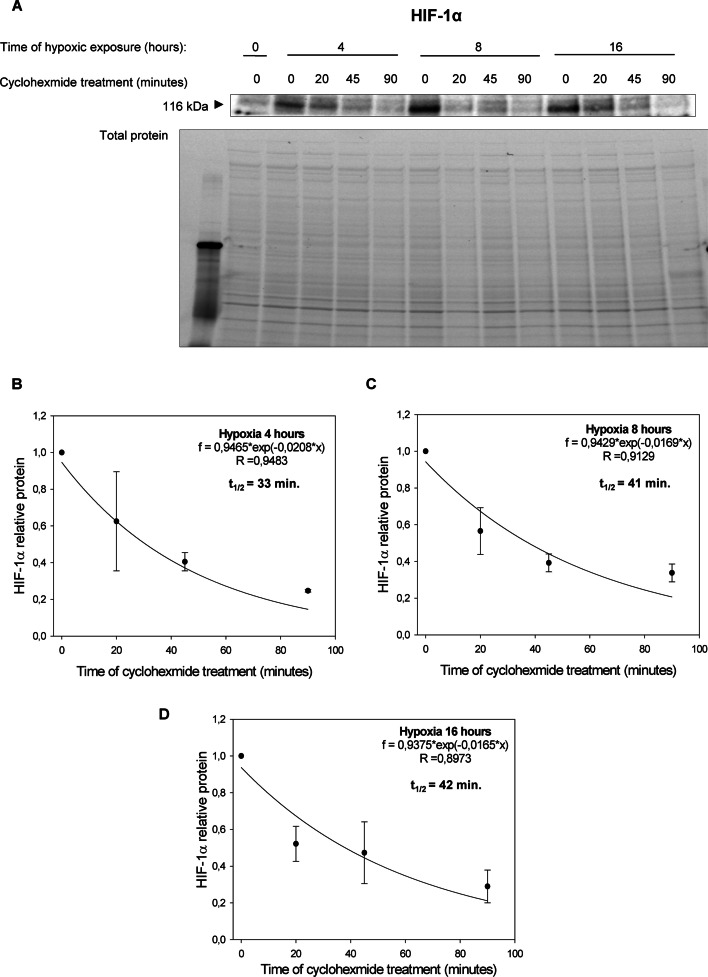
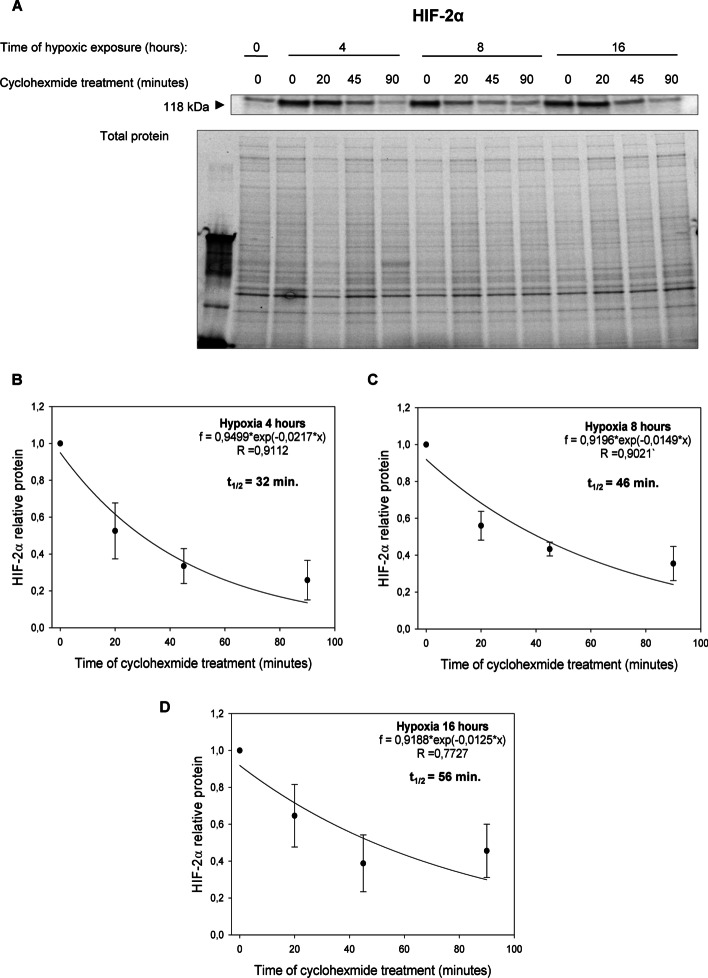
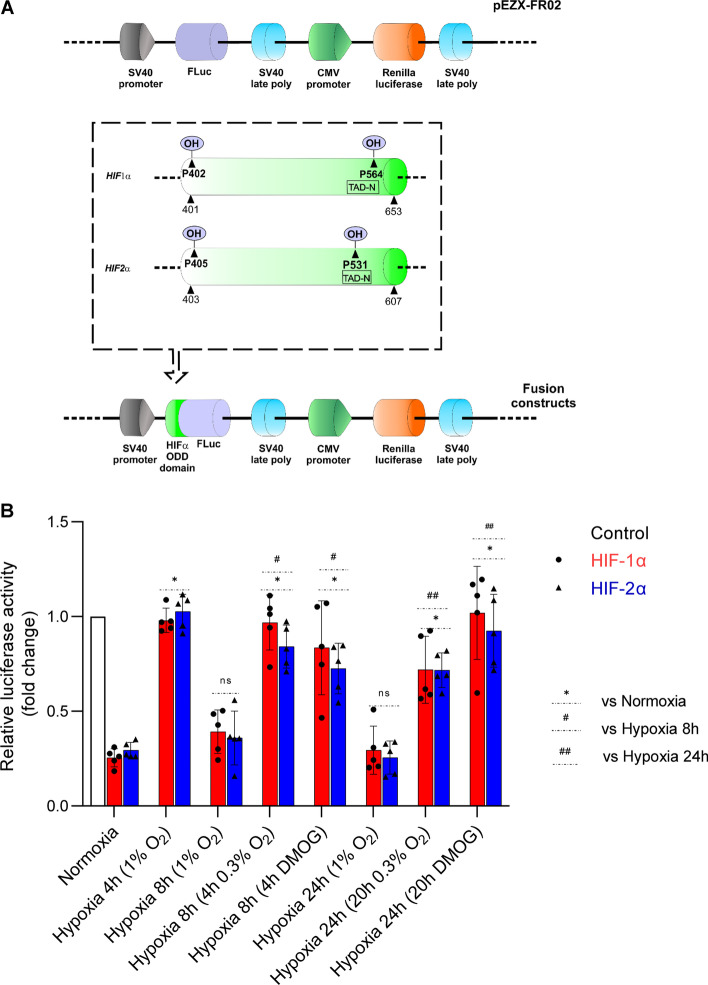
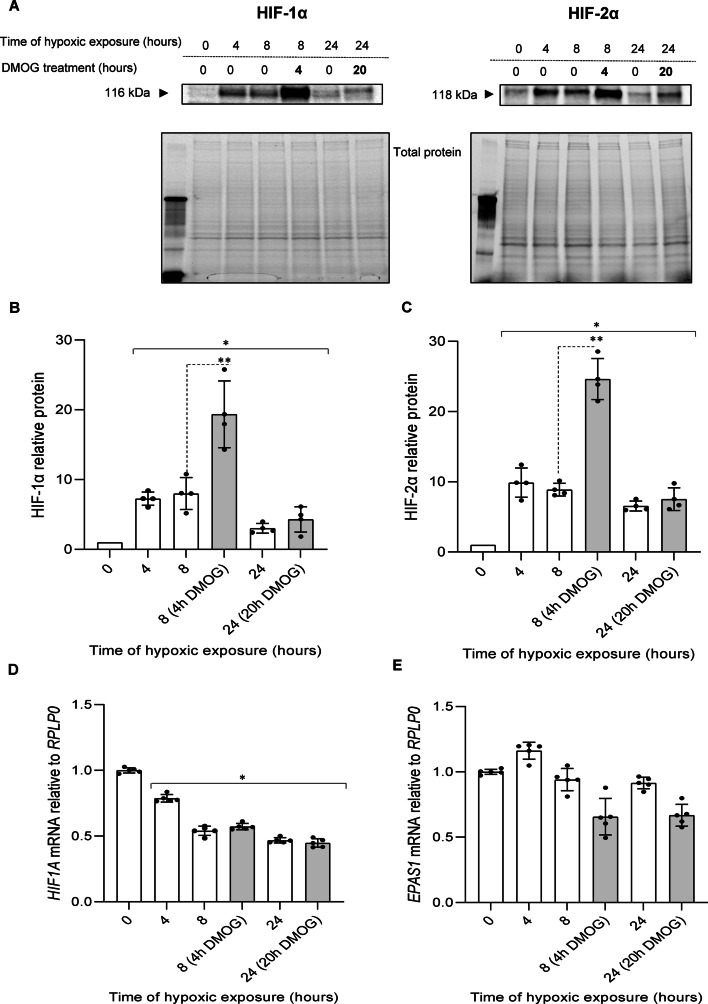
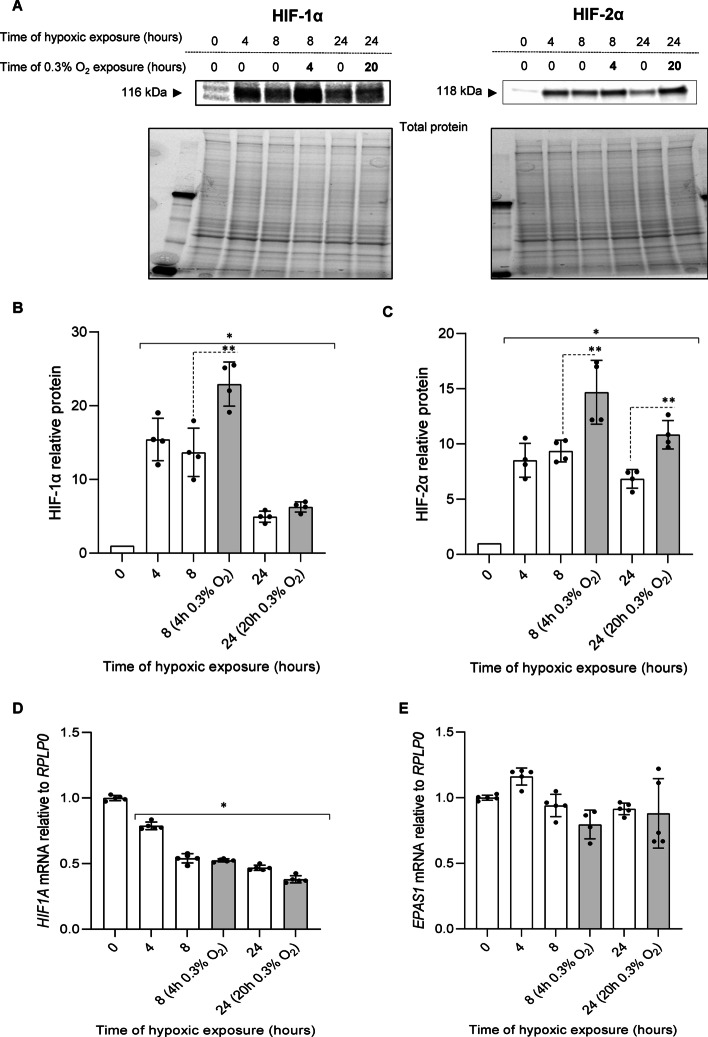
The hypoxia-inducible factors (HIF) are transcription factors that activate the adaptive hypoxic response when oxygen levels are low. The HIF transcriptional program increases oxygen delivery by inducing angiogenesis and by promoting metabolic reprograming that favors glycolysis. The two major HIFs, HIF-1 and HIF-2, mediate this response during prolonged hypoxia in an overlapping and sequential fashion that is referred to as the HIF switch. Both HIF proteins consist of an unstable alpha chain and a stable beta chain. The instability of the alpha chains is mediated by prolyl hydroxylase (PHD) activity during normoxic conditions, which leads to ubiquitination and proteasomal degradation of the alpha chains. During normoxic conditions, very little HIF-1 or HIF-2 alpha–beta dimers are present because of PHD activity. During hypoxia, however, PHD activity is suppressed, and HIF dimers are stable. Here we demonstrate that HIF-1 expression is maximal after 4 h of hypoxia in primary endothelial cells and then is dramatically reduced by 8 h. In contrast, HIF-2 is maximal at 8 h and remains elevated up to 24 h. There are differences in the HIF-1 and HIF-2 transcriptional profiles, and therefore understanding how the transition between them occurs is important and not clearly understood. Here we demonstrate that the HIF-1 to HIF-2 transition during prolonged hypoxia is mediated by two mechanisms: (1) the HIF-1 driven increase in the glycolytic pathways that reactivates PHD activity and (2) the much less stable mRNA levels of HIF-1α ( HIF1A ) compared to HIF-2α ( EPAS1 ) mRNA. We also demonstrate that the alpha mRNA levels directly correlate to the relative alpha protein levels, and therefore to the more stable HIF-2 expression during prolonged hypoxia.
Overview
The claims and statistics of this paper haven’t been checked yet.
Run the check — free, no account needed. It reads the open-access text and checks the sources it cites.
Integrity signals
Registry
Cites
Statistics
Figures
Verification
Claims the paper makes
The claims and statistics of this paper haven’t been checked yet.
Run the check — free, no account needed. It reads the open-access text and checks the sources it cites.
Claims other papers make about this one
Each is checked against this paper’s own text: does it say what the citing paper says it does?
The cited source doesn’t support the claim as written.
In the citing paper
“sustained intracellular oxygen redistribution has been reported to favor prolonged stabilization of HIF-2α [275]”
From HIF inhibition: Current strategies and clinical challenges (2026) · cites this paper as [275]
Checked by a reasoning model — may be wrong.
Experimental — accuracy not yet measuredThe cited source says what the claim attributes to it.
In the citing paper
“limitation of mitochondrial respiratory activity in hypoxic cells has been established to promote intracellular oxygen redistribution from mitochondria to the cytosol, thereby restoring prolyl hydroxylase activity and accelerating HIF-1α degradation [275,[366], [367], [368]].”
From HIF inhibition: Current strategies and clinical challenges (2026) · cites this paper as [275]
Self-check
Percentages, sums and reported differences re-computed from the paper’s own numbers.
The self-check needs the paper’s full text.
Citations
Cites
Analysis of Relative Gene Expression Data Using Real-Time Quantitative PCR and the 2−ΔΔCT Method
Livak, K. J., & Schmittgen, T. D. (2001) · Methods · doi:10.1006/meth.2001.1262 · Cited by 180,860
Proceedings of the National Academy of Sciences of the United States of America
Dowling, J. E., & Wald, G. (2009) · Nutrition Reviews · doi:10.1111/j.1753-4887.1981.tb06752.x · Cited by 17,937
Wang, G. L., Jiang, B. H., Rue, E. A., & Semenza, G. L. (1995) · Proceedings of the National Academy of Sciences · doi:10.1073/pnas.92.12.5510 · Cited by 6,212
Jaakkola, P., Mole, D. R., Tian, Y.-M., Wilson, M. I., Gielbert, J., Gaskell, S. J., Kriegsheim, A. V., Hebestreit, H. F., Mukherji, M., Schofield, C. J., et al. (2001) · Science · doi:10.1126/science.1059796 · Cited by 5,535
The tumour suppressor protein VHL targets hypoxia-inducible factors for oxygen-dependent proteolysis
Maxwell, P. H., Wiesener, M. S., Chang, G.-W., Clifford, S. C., Vaux, E. C., Cockman, M. E., Wykoff, C. C., Pugh, C. W., Maher, E. R., & Ratcliffe, P. J. (1999) · Nature · doi:10.1038/20459 · Cited by 5,180
Targeting Hypoxia-Inducible Factors for the Treatment of Anemia in Chronic Kidney Disease Patients
Locatelli, F., Fishbane, S. N., Block, G. A., & Macdougall, I. C. (2017) · American Journal of Nephrology · doi:10.1159/000455166 · Cited by 4,836
Mutation of the mouse klotho gene leads to a syndrome resembling ageing
Kuro-o, M., Matsumura, Y., Aizawa, H., Kawaguchi, H., Suga, T., Utsugi, T., Ohyama, Y., Kurabayashi, M., Kaname, T., Kume, E., et al. (1997) · Nature · doi:10.1038/36285 · Cited by 3,837
Regulation of Mammalian O 2 Homeostasis by Hypoxia-Inducible Factor 1
Semenza, G. L. (1999) · Annual Review of Cell and Developmental Biology · doi:10.1146/annurev.cellbio.15.1.551 · Cited by 1,914
Jones, M., Ibels, L. S., Schenkel, B., & Zagari, M. J. (2004) · Kidney International · doi:10.1111/j.1523-1755.2004.00450.x · Cited by 1,812
HIF1α and HIF2α: sibling rivalry in hypoxic tumour growth and progression
Keith, B., Johnson, R. S., & Simon, M. C. (2012) · Nature Reviews Cancer · doi:10.1038/nrc3183 · Cited by 1,693
Research works printed but not linked: 1
- Smirnova NA, Osipyants AI, Khristichenko AY, Hushpulian DM, Nikulin SV, Chubar TA, et al. HIF2 ODD-luciferase reporter: the most sensitive assay for HIF prolyl hydroxylase inhibitors. Russ Chem Bull. 2018;67(1):150–6. · DOI
Cited by
Sorted by citations
Items 101–143 of 143
Ma, M., Bai, Y., Zhang, Z., Su, X., Liu, C. X., Lv, W., Liu, W., Wang, K., Li, M., & Liu, Q. (2026) · Frontiers in Marine Science · doi:10.3389/fmars.2026.1816646 · Cited by 2
Hypoxia Independently Induces AID Expression in CH12 B Cells
Heyer, V., Ahmad, S. H., Haddad, M., Argentieri, I., Gessier, C., & Reina‐San‐Martin, B. (2026) · European Journal of Immunology · doi:10.1002/eji.70208 · Cited by 1
Sharma, N., Yadav, V., Sinha, S., Kumari, L., Sethi, A., Marcus, S., Singh, M., Kaur, S., Garg, N., Pathak, A., et al. (2026) · Molecular Aspects of Medicine · doi:10.1016/j.mam.2026.101486 · Cited by 1
The role of hypoxia-inducible factor-1α in COPD
Zhang, L., Huang, S., Wang, Z. P., Huang, P., Pang, X., Zeng, X., & Liu, X. (2026) · The International Journal of Biochemistry & Cell Biology · doi:10.1016/j.biocel.2026.106974 · Cited by 2
Aboouf, M. A., Thiel, C. S., Borisov, S. M., Tauber, S., Boenzli, E., Schetle, N., Ullrich, O., Gassmann, M., & Vogel, J. (2023) · Scientific Reports · doi:10.1038/s41598-023-41686-1 · Cited by 1
The Perspective of Using Flow Cytometry for Unpuzzling Hypoxia-Inducible Factors Signalling
Patel, V. J., Joharapurkar, A. A., & Jain, M. R. (2024) · Drug Research · doi:10.1055/a-2248-9180 · Cited by 1
Іваненко, Т. В., Kolesnyk, Y. M., & Абрамов, А. В. (2024) · Pathologia · doi:10.14739/2310-1237.2024.1.301114 · Cited by 1
Kotsyuba, A. E., Черток, В. М., & Romanova, T. E. (2025) · Pacific Medical Journal · doi:10.34215/1609-1175-2025-1-34-39 · Cited by 1
IRE1-mediated degradation of pre-miR-301a promotes apoptosis through upregulation of GADD45APreprint
Gebert, M., Bartoszewska, S., Opaliński, Ł., Collawn, J. F., & Bartoszewski, R. (2023) · bioRxiv (Cold Spring Harbor Laboratory) · doi:10.1101/2023.06.21.545854 · Cited by 1
Self-citationTime, location and function of hypoxia-inducible factors are critical to therapeutic tumour response
Marignol, L., & Pugh, C. W. (2024) · BMJ Oncology · doi:10.1136/bmjonc-2023-000290 · Cited by 1
Steltzer, S. S., Migotsky, N., Phillips, T., Lamia, S. N., Lee, K. W., Bae, S.-H., Leek, C. C., Grossman, S., Shaik, M., Risha, A., et al. (2025) · bioRxiv (Cold Spring Harbor Laboratory) · doi:10.64898/2025.12.17.693209 · Cited by 1
Ribeiro, A., Kuchler, T., Lech, M., Carbajo-Lozoya, J., Adorjan, K., Stubbe, H. C., Seifert, M., Wöhnle, A., Kesseler, V., Negele, J., et al. (2024) · medRxiv · doi:10.1101/2024.09.10.24313403
Николаевна, Д. И., Bylinskaya, K. A., Plekhanov, A. A., Kostyuk, A. B., Kirillin, M., Perekatova, V., Khilov, A. V., Orlova, A., Polozova, A. V., Komarova, A. D., et al. (2024) · Journal of Biophotonics · doi:10.1002/jbio.202400339
Zeng, K., Yuan, P.-R., Xuan, J., Zhao, L.-X., Li, X., Yao, J., & Dong, Z. (2025) · BMC Biology · doi:10.1186/s12915-025-02123-z
Mechanism of Action and Research Progress of Roxadustat in the Treatment of Renal Anemia
伍, 金. (2025) · Advances in Clinical Medicine · doi:10.12677/acm.2025.151196
PHARMACOKINETICS AND PHARMACODYNAMICS PREDICTED PROFILES OF STRIGOLACTONES-BIOINFORMATICS APPROACHES
PĂUN, A. M., TRÎMBIȚAȘ, S., Mernea, M., & Avram, S. (2025) · Romanian Journal of Biophysics · doi:10.59277/rjb.2025.1.01
Mohammed, D. K., & Farhan, L. O. (2025) · Gene Reports · doi:10.1016/j.genrep.2025.102313
Mastrolonardo, E. V., Sussman, S. M., Yun, B., Jegede, V. O., Amin, D. R., Rosenbloom, J., South, A. P., Bar‐Ad, V., Wermuth, P. J., & Luginbuhl, A. (2025) · Wound Repair and Regeneration · doi:10.1111/wrr.70075
HIF-1α and HIF-2α transcription factors differentially regulate lung alveolar macrophage functionPreprint
Priego, E., Adán‐Barrientos, I., Conde‐Garrosa, R., Martínez-Cano, S., Sánchez, I., Mañanes, D., Mastrangelo, A., Amores, J., Izquierdo, H. M., & Sancho, D. (2025) · bioRxiv (Cold Spring Harbor Laboratory) · doi:10.1101/2025.11.25.690373
Kirillova, M. V., Dzhalilova, D. S., & Makarova, O. V. (2025) · Bulletin of Experimental Biology and Medicine · doi:10.1007/s10517-026-06682-1
Audoux, K., Madec, E., Branchu, J., Olmos, É., & Schiavi, J. (2025) · Cytotherapy · doi:10.1016/j.jcyt.2025.102003
Kataoka, R., Hotta, K., Kurosaki, Y., Ishii, N., Izawa, K., Fukuzaki, N., Arai, S., Kamiya, K., Muller‐Delp, J. M., & Matsunaga, A. (2025) · Journal of Applied Physiology · doi:10.1152/japplphysiol.01040.2025
Na, K. S., Park, J., Kim, S. M., Lee, J., Lee, E., Woo, W., Choi, J., Kim, L. K., & Park, K. M. (2026) · Bioactive Materials · doi:10.1016/j.bioactmat.2025.12.045
Cell-free mitochondrial DNA as a potential predictor for hypoxic stress
Qu, Q., Xiao, C., Liu, X., Huang, A., Li, H., Xu, G., Shao, N., Zhao, Y., & Gao, B. (2026) · Molecular Biology Reports · doi:10.1007/s11033-025-11396-0
Identification of novel HIF2α inhibitors: a structure‐based virtual screening approach
Zhou, S., Yin, S., Yang, S., Wang, Y., & Feng, P. (2026) · Journal of Enzyme Inhibition and Medicinal Chemistry · doi:10.1080/14756366.2025.2606435
Yue, Y., Wang, X., Song, Y., Sun, Y., Xue, L., Chen, G., Feng, Z., Luo, G., & Wang, T. (2026) · Frontiers in Physiology · doi:10.3389/fphys.2026.1742306
Payo‐Serafín, T., Méndez‐Blanco, C., Martínez‐Geijo, J., Kopsida, M., San‐Miguel, B., Ortiz-de-Urbina, J. J., Palomo, A. G., Heindryckx, F., & Mauriz, J. L. (2026) · Biology Direct · doi:10.1186/s13062-026-00796-2
郝, 家. (2026) · Advances in Clinical Medicine · doi:10.12677/acm.2026.1651912
Min, H. K., Kim, S., & Min, J. (2026) · Journal of Clinical Medicine · doi:10.3390/jcm15103873
A Mechanistic Model of the HIF-1/HIF-2 Switch Regulating Hypoxia-Induced Cancer Stemness
Zhan, H., Wang, P., & Liu, F. (2026) · International Journal of Molecular Sciences · doi:10.3390/ijms27114697
Vishwakarma, U., Abraham, M., Kori, I., Chawade, A., Kushwaha, S., & Goel, S. (2026) · Frontiers in Cell and Developmental Biology · doi:10.3389/fcell.2026.1814793
Arora, S., Joshi, J., Patil, R., Chaure, A., Pusame, A., & Subhash, N. (2026) · Journal of Oral and Maxillofacial Pathology · doi:10.4103/jomfp.jomfp_378_25
Su, Z., Wang, L., Zhao, R., Li, Z., Li, J., Bi, J., & Huo, R. (2026) · PLoS ONE · doi:10.1371/journal.pone.0354272
Mai, Z., & Yang, M. (2026) · Journal of Brain and Spine · doi:10.1016/j.jbs.2026.08.001
Varma, S., Duttaroy, A. K., & Basak, S. (2026) · Environmental Toxicology and Pharmacology · doi:10.1016/j.etap.2026.105131
Bozaba, F., ATALAY, C., Kasnak, G., Toygar, H. U., & Balcı, N. (2026) · Clinical Oral Investigations · doi:10.1007/s00784-026-07056-7
Unraveling Radiation Enteritis: Oxidative Stress as a Central Driver and Therapeutic Target
Zhong, P., Li, Z., Pu, Z., Nian, H., & Li, J. (2026) · Antioxidants and Redox Signaling · doi:10.1177/15230864261481021
Molecular Mechanisms of Hypoxia-Driven Scleral Remodeling in Myopia Progression
Song, B., Duan, W., & Liu, H. (2026) · Journal of Ocular Pharmacology and Therapeutics · doi:10.1177/10807683261478741
Hosny, N., Li, S., Gatenby, R. A., Pienta, K. J., Brown, J. S., Hammarlund, E. U., Yu, C., Qu, J., Austin, R. H., & Amend, S. R. (2026) · Biophysical Journal · doi:10.1016/j.bpj.2026.09.001
Quiles, C. G., Abumanhal-Masarweh, H., Abalos, J. G., Lodhi, T., Sanchez-Martinez, D., Reeves, K. J., James, N. D., Hall, E., Huddart, R. A., Nuria, P., et al. (2026) · British Journal of Cancer · doi:10.1038/s41416-026-03603-x
Li, C.-Y., Duan, X., Yu, X., & Zhang, Y.-B. (2026) · Food Chemistry X · doi:10.1016/j.fochx.2026.104537
Shang, H., Zhang, R., Xie, Y., Yang, A., & Wang, J. (2026) · Frontiers in Physiology · doi:10.3389/fphys.2026.1944395
Navigating hypoxia in tissue engineering: From biological mechanisms to therapeutic strategies
Vieira, B., Cerqueira, A., Nunes, P. J., & Mano, J. F. (2026) · Acta Biomaterialia · doi:10.1016/j.actbio.2026.10.041
Metadata
- Authors
- Jaśkiewicz, M., Moszyńska, A., Króliczewski, J., Cabaj, A., Bartoszewska, S., Charzyńska, A., Gebert, M., Dąbrowski, M., Collawn, J. F., & Bartoszewski, R.
- Affiliations
- Gdańsk Medical University (PL)
- Instytut Biologii Doświadczalnej im. Marcelego Nenckiego (PL)
- University of Alabama at Birmingham (US)
- ORCID
- Venue
- Cellular & Molecular Biology Letters
- Published
- 2022-12
- Volume
- 27
- Issue
- 1
- Pages
- 109-109
- ISSN
- 1425-8153 (ISSN-L)
- 1689-1392
- PMC
- PMC9730601
- OpenAlex
- W4311079783
- Cited by
- 143
- References
- 58
- Citations by year
- 2026: 37 · 2025: 46 · 2024: 39 · 2023: 20 · 2022: 1
- FWCI
- 11.17
- Type
- journal article
- Language
- en
- Open access
- gold
- doi.org
- Locations
- Cellular & Molecular Biology Letters (publishedVersion, cc-by)
- Research Square (acceptedVersion, cc-by)
- PubMed Central (publishedVersion, cc-by)
- PubMed (publishedVersion)
- DOAJ (DOAJ: Directory of Open Access Journals) (submittedVersion, cc-by-sa)
- Funders
- Narodowe Centrum Nauki (2015/18/E/NZ3/00687)
- Topics
- Life Sciences › Biochemistry, Genetics and Molecular Biology › Cancer Research › Cancer, Hypoxia, and Metabolism
- Health Sciences › Medicine › Hematology › Erythropoietin and Anemia Treatment
- Life Sciences › Biochemistry, Genetics and Molecular Biology › Molecular Biology › Angiogenesis and VEGF in Cancer
- Keywords
- hypoxia-inducible factor, HIF-1, HIF-2, prolyl hydroxylase, EPAS1, HIF-1α, HIF-2α, glycolysis, endothelial cells, hypoxia response, transcriptional regulation, mRNA stability
- MeSH terms
- Endothelial PAS Domain-Containing Protein 1, Humans, Oxygen, RNA, Messenger, Cell Hypoxia, RNA Stability, Endothelial Cells, Basic Helix-Loop-Helix Proteins, Basic Helix-Loop-Helix Transcription Factors, Hypoxia-Inducible Factor 1, alpha Subunit
About these checks
Registry, retraction, Cites and statistics results are computed, not judged, with one exception: a printed reference that no index lists is read once by a model before it counts as a citation error. Claims are extracted by a model and kept only when their quote appears verbatim in the text; each cited source is then checked, with a model’s help, for whether it says what the claim relies on. Those verdicts can be wrong — read the claim’s quote and the cited source before relying on one.
Statistics and arithmetic are recomputed, not judged.
Confidence bands are shown only for fields calibrated on our annotated test set. None is calibrated yet, so no band is shown.
What counts as a claim ›How we measure confidence ›How we check this ›
Are you an author, or do you see a problem with this page? Request a review
