

A New Phase Change Material Based on Potassium Nitrate with Silica and Alumina Nanoparticles for Thermal Energy Storage
Open accessThe DOI matches its Crossref record; 64 of the 64 references it cites were found in a registry or an index.
Abstract
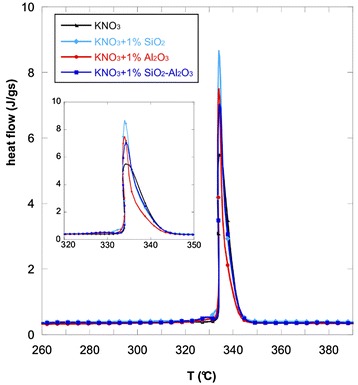
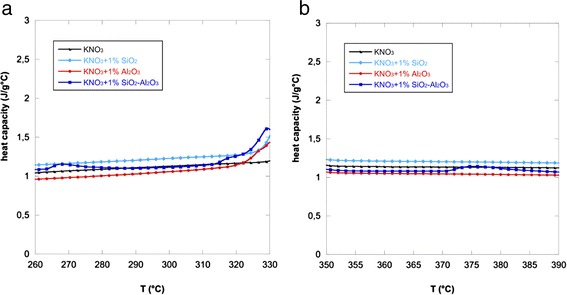
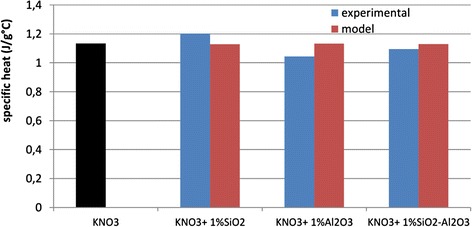
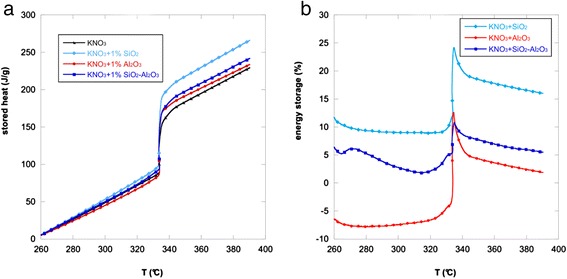
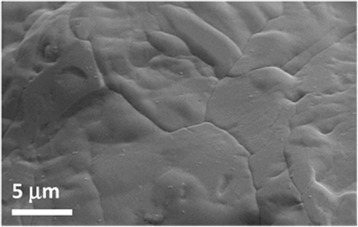
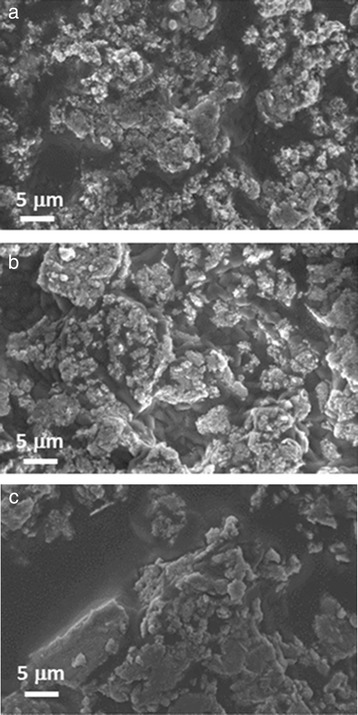
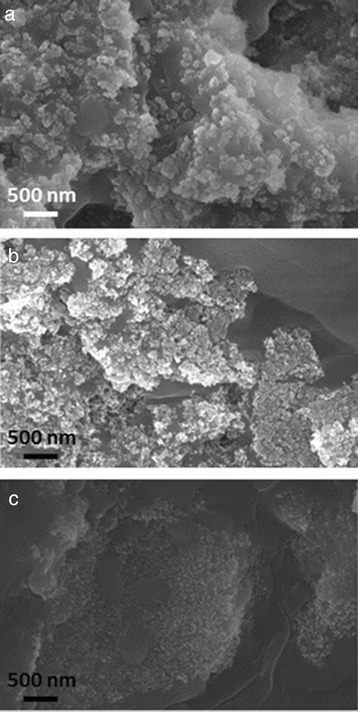
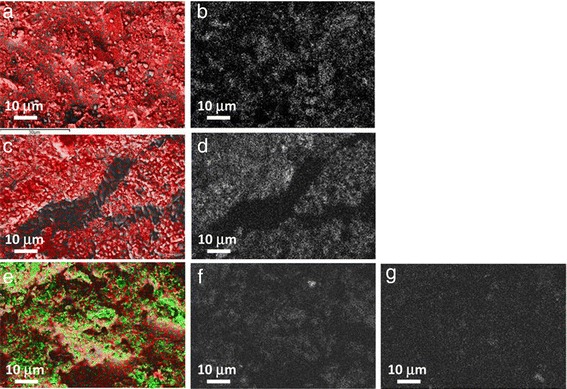
In this study different nanofluids with phase change behavior were developed by mixing a molten salt base fluid (KNO3 selected as phase change material) with nanoparticles using the direct synthesis method. The thermal properties of the nanofluids obtained were investigated. Following the improvement in the specific heat achieved, these nanofluids can be used in concentrating solar plants with a reduction of storage material. The nanoparticles used (1.0 wt.%) were silica (SiO2), alumina (Al2O3), and a mix of silica-alumina (SiO2-Al2O3) with an average diameter of 7, 13, and 2-200 nm respectively. Each nanofluid was prepared in water solution, sonicated, and evaporated. Measurements of the thermophysical properties were performed by DSC analysis, and the dispersion of the nanoparticles was analyzed by SEM microscopy. The results obtained show that the addition of 1.0 wt.% of nanoparticles to the base salt increases the specific heat of about 5-10 % in solid phase and of 6 % in liquid phase. In particular, this research shows that the addition of silica nanoparticles has significant potential for enhancing the thermal storage characteristics of KNO3. The phase-change temperature of potassium nitrate was lowered up to 3 °C, and the latent heat was increased to 12 % with the addition of silica nanoparticles. These results deviated from the predictions of theoretical simple mixing model used. The stored heat as a function of temperature was evaluated for the base salt, and the nanofluids and the maximum values obtained were 229, 234, 242, and 266 J/g respectively. The maximum total gain (16 %) due to the introduction of the nanoparticles (calculated as the ratio between the total stored heat of the nanofluids and the base salt in the range of temperatures 260-390 °C) was also recorded with the introduction of silica. SEM and EDX analysis showed the presence of aggregates in all nanofluids: with silica nanoparticles they were homogenously present while with alumina and silica-alumina also zones with pure salt could be detected.
Overview
The claims and statistics of this paper haven’t been checked yet.
Free: it reads the open-access text and checks the first 5 claims that cite a source we can check. Create a free account to check every claim.
Integrity signals
Registry
Cites
Statistics
Figures
Verification
Claims the paper makes
The claims and statistics of this paper haven’t been checked yet.
Free: it reads the open-access text and checks the first 5 claims that cite a source we can check. Create a free account to check every claim.
Claims other papers make about this one
Each is checked against this paper’s own text: does it say what the citing paper says it does?
The source backs part of the claim, not all of it — or backs it for a different population, condition or comparison.
In the citing paper
“In solid phase, NPs increased the specific heat by about 5-10% and in liquid phase around 6%.”
From Nano-Enhanced Phase Change Materials in Latent Heat Thermal Energy Storage Systems: A Review (2021) · cites this paper as [71]
Experimental — accuracy not yet measuredThe cited source says what the claim attributes to it.
In the citing paper
“Of the different NPs, the silica was the most promising, lowering the phase change temperature of the KNO 3 by 3 • C and increasing the latent heat of fusion up to 12%.”
From Nano-Enhanced Phase Change Materials in Latent Heat Thermal Energy Storage Systems: A Review (2021) · cites this paper as [71]
The cited source says what the claim attributes to it.
In the citing paper
“It was concluded that the materials would be useful for concentrated solar power (CSP) systems [71].”
From Nano-Enhanced Phase Change Materials in Latent Heat Thermal Energy Storage Systems: A Review (2021) · cites this paper as [71]
The cited source says what the claim attributes to it.
In the citing paper
“SEM showed that the silica particles were dispersed more uniformly than the other NPs.”
From Nano-Enhanced Phase Change Materials in Latent Heat Thermal Energy Storage Systems: A Review (2021) · cites this paper as [71]
The cited source says what the claim attributes to it.
In the citing paper
“All improved but silica was significantly the best”
From Nano-Enhanced Phase Change Materials in Latent Heat Thermal Energy Storage Systems: A Review (2021) · cites this paper as [71]
1 more claim about this paper
Create a free account to see every claim other papers make about this one.
Self-check
Percentages, sums and reported differences re-computed from the paper’s own numbers.
The self-check needs the paper’s full text.
Citations
Cites
Convective Transport in Nanofluids
Buongiorno, J. (2006) · Journal of Heat Transfer · doi:10.1115/1.2150834 · Cited by 7,013 · cited 1×
“The measurements were also compared with a theoretical model (“simple mixing model”) based on the assumption of thermal equilibrium between the particles and the surrounding fluid [22, 37]:”
MethodReview on thermal energy storage with phase change materials and applications
Sharma, A., Tyagi, V. V., Chen, C. R., & Buddhi, D. (2009) · Renewable and Sustainable Energy Reviews · doi:10.1016/j.rser.2007.10.005 · Cited by 5,936 · cited 1×
“Among the various methods of energy storage, latent heat thermal energy storage (LHTES) systems using phase change materials (PCMs) have been gaining importance in such fields as solar energy systems, district heating and cooling systems, energy-efficiency buildings [6–8] cool storage systems for central air-condition…”
MethodPhase change materials for thermal energy storage
Pielichowska, K., & Pielichowski, K. (2014) · Progress in Materials Science · doi:10.1016/j.pmatsci.2014.03.005 · Cited by 2,106
Materials used as PCM in thermal energy storage in buildings: A review
Cabeza, L. F., Castell, A., Barreneche, C., de Gracia, A., & Fernández, A. I. (2011) · Renewable and Sustainable Energy Reviews · doi:10.1016/j.rser.2010.11.018 · Cited by 1,889 · cited 1×
“Among the various methods of energy storage, latent heat thermal energy storage (LHTES) systems using phase change materials (PCMs) have been gaining importance in such fields as solar energy systems, district heating and cooling systems, energy-efficiency buildings [6–8] cool storage systems for central air-condition…”
MethodGil, A., Medrano, M., Martorell, I., Lázaro, A., Dolado, P., Zalba, B., & Cabeza, L. F. (2010) · Renewable and Sustainable Energy Reviews · doi:10.1016/j.rser.2009.07.035 · Cited by 1,762 · cited 2×
“Among the various methods of energy storage, latent heat thermal energy storage (LHTES) systems using phase change materials (PCMs) have been gaining importance in such fields as solar energy systems, district heating and cooling systems, energy-efficiency buildings [6–8] cool storage systems for central air-condition…”
BackgroundMethodYu, W., & Choi, S. U. S. (2003) · Journal of Nanoparticle Research · doi:10.1023/a:1024438603801 · Cited by 1,737 · cited 1×
“In order to explain the enhanced heat capacity of the nanofluids obtained, it is possible at first to refer at the same mechanisms proposed for thermal conductivity: the aggregation of nanoparticles [53–55], the Brownian motion of nanoparticles [56–58], and the formation of a nanolayer [20, 59, 60].”
BackgroundRole of Brownian motion in the enhanced thermal conductivity of nanofluids
Jang, S. P., & Choi, S. U. S. (2004) · Applied Physics Letters · doi:10.1063/1.1756684 · Cited by 1,596 · cited 1×
“In order to explain the enhanced heat capacity of the nanofluids obtained, it is possible at first to refer at the same mechanisms proposed for thermal conductivity: the aggregation of nanoparticles [53–55], the Brownian motion of nanoparticles [56–58], and the formation of a nanolayer [20, 59, 60].”
BackgroundEnergy Technology Perspectives 2020
International Energy Agency (2020) · OECD eBooks · doi:10.1787/ab43a9a5-en · Cited by 1,062
A review on phase change materials integrated in building walls
Kuznik, F., David, D., Johannes, K., & Roux, J.-J. (2011) · Renewable and Sustainable Energy Reviews · doi:10.1016/j.rser.2010.08.019 · Cited by 1,057 · cited 1×
“Among the various methods of energy storage, latent heat thermal energy storage (LHTES) systems using phase change materials (PCMs) have been gaining importance in such fields as solar energy systems, district heating and cooling systems, energy-efficiency buildings [6–8] cool storage systems for central air-condition…”
MethodThermal conductivity enhancement of suspensions containing nanosized alumina particles
Xie, H., Wang, J., Xi, T., Liu, Y., Ai, F., & Wu, Q. (2002) · Journal of Applied Physics · doi:10.1063/1.1454184 · Cited by 1,004 · cited 1×
“The nanoparticle diameter can play an important role since smaller nanoparticles give a greater solid/liquid interface area, thus increasing the contribution of interfacial effects in the corresponding suspensions [47, 48].”
Background
Research works printed but not linked: 1
- Choi S Developments applications of non-Newtonian flows 1995 New York ASME
Cited by
Items 101–154 of 154
Nithiyanantham, U., Grosu, Y. G., González-Fernández, L., Zaki, A., Igartua, J. M., & Faik, A. (2019) · AIP conference proceedings · doi:10.1063/1.5117740 · Cited by 15
Materials for Phase Change Material at High Temperature
Liu, M., Fernández, A. I., & Segarra, M. (2018) · Elsevier eBooks · doi:10.1016/b978-0-12-805323-2.00008-4 · Cited by 14
Ji, C., Yang, X., Xu, H., Lai, J., & Xie, J. (2025) · Renewable and Sustainable Energy Reviews · doi:10.1016/j.rser.2025.116360 · Cited by 18
Nabwey, H. A., & Tony, M. A. (2023) · Nanomaterials · doi:10.3390/nano13192635 · Cited by 14
“However, extra additions to the PCM above the optimal value cause aggregates and does not further improve the PCM [15,30].”
BackgroundHassan, E. A., Tony, M. A., & Awad, M. M. (2024) · Nanomaterials · doi:10.3390/nano14070604 · Cited by 16
Shehram, M., Hamidi, M. N., Wahab, A. A. A., & Desa, M. K. M. (2025) · Journal of Thermal Analysis and Calorimetry · doi:10.1007/s10973-025-14119-6 · Cited by 18
Cookoff of Black Powder and Smokeless Powder
Hobbs, M. L., & Kaneshige, M. J. (2021) · Propellants Explosives Pyrotechnics · doi:10.1002/prep.202000214 · Cited by 13
Zeitoun, M., Adel, M., Abulfotouh, F., & Ebrahim, S. M. (2021) · Journal of Energy Storage · doi:10.1016/j.est.2021.102512 · Cited by 13
Nanotechnology for energy storage
Awad, A. T., Ahmed, W., & Waleed, M. (2021) · Elsevier eBooks · doi:10.1016/b978-0-12-821346-9.00009-2 · Cited by 21
Chieruzzi, M., Miliozzi, A., Crescenzi, T., Kenny, J. M., & Torre, L. (2017) · ASME Journal of Heat and Mass Transfer · doi:10.1115/1.4038415 · Cited by 14
Self-citationSaha, R., Neha, Thukral, A., Pal, A., & Saini, P. (2024) · Resources Conservation and Recycling · doi:10.1016/j.resconrec.2024.108059 · Cited by 11
Particle Technology in the Formulation and Fabrication of Thermal Energy Storage Materials
Jiang, Z., Li, X., Jin, Y., Zhang, X., Tong, L., Wang, L., & Ding, Y. (2022) · Chemie Ingenieur Technik · doi:10.1002/cite.202200113 · Cited by 12
Nanofluids with Enhanced Heat Transfer Properties for Thermal Energy Storage
Chieruzzi, M., Miliozzi, A., Torre, L., & Kenny, J. M. (2016) · doi:10.1002/9781119242628.ch10 · Cited by 11
Self-citationUsing statistical analysis to create a new database of Nanofluids’ specific heat capacity
Svobodova‐Sedlackova, A., Calderón, A., Morell, X. S., Neira-Viñas, M., Majó, M., Barreneche, C., Gamallo, P., & Fernández, A. I. (2022) · Journal of Molecular Liquids · doi:10.1016/j.molliq.2022.120847 · Cited by 10
Variation of thermophysical parameters of PCM CaCl2.6H2O with dopant from T-history data analysis
Sutjahja, I. M., Silalahi, A. O., Sukmawati, N., Kurnia, D., & Wonorahardjo, S. (2018) · Materials Research Express · doi:10.1088/2053-1591/aab6f0 · Cited by 11
Chen, X., Wu, B., Fan, Y., Duan, X., & Yang, M. (2019) · Journal of Engineered Fibers and Fabrics · doi:10.1177/1558925019887289 · Cited by 8
Salim, N. J., Rahman, M. A., & Firoz, S. H. (2022) · ASME Journal of Heat and Mass Transfer · doi:10.1115/1.4054716 · Cited by 7
Ji, Y. H., & Jo, B. (2025) · Journal of Molecular Liquids · doi:10.1016/j.molliq.2025.126950 · Cited by 6
Gürgenç, E., Oztop, H. F., Şenocak, Ş. M., Aktemur, C., Gürgenç, T., Varol, Y., Yamaç, H. İ., & Gür, M. (2025) · Thermal Science and Engineering Progress · doi:10.1016/j.tsep.2025.104257 · Cited by 15
A composite phase change thermal storage material and its application in floor heating module
Zheng, C., Liu, J., Liu, Z., Tian, S., Guo, H., & Wang, S. (2025) · Journal of Energy Storage · doi:10.1016/j.est.2025.118853 · Cited by 6
Svobodova‐Sedlackova, A., Barreneche, C., Gamallo, P., & Fernández, A. I. (2021) · Journal of Molecular Liquids · doi:10.1016/j.molliq.2021.118316 · Cited by 6
Miliozzi, A., Liberatore, R., Nicolini, D., Chieruzzi, M., Veca, E., Crescenzi, T., & Torre, L. (2018) · InTech eBooks · doi:10.5772/intechopen.73672 · Cited by 6
Self-citationSilalahi, A. O., Sutjahja, I. M., Kurnia, D., & Wonorahardjo, S. (2019) · Journal of Physics Conference Series · doi:10.1088/1742-6596/1204/1/012055 · Cited by 6
“2 effective agent to change the solid and liquid specific heat of nanofluids in general and PCM in particular [8-9].”
BackgroundDevelopment of 3D ZnO-CNT Support Structures Impregnated with Inorganic Salts
Chiriac, Ș., Puscasu, M.-E., Tudor, I. A., Matei, A. C., Cursaru, L. M., & Piticescu, R. R. (2022) · Membranes · doi:10.3390/membranes12060588 · Cited by 5
“There are also various types of eutectic PCMs: inorganic-inorganic, inorganic-organic or organic-organic materials [11,13,15].”
BackgroundSai Sameer, D., Hari Suthan, V., Suganthi, K. S., & Rajan, K. S. (2024) · International Communications in Heat and Mass Transfer · doi:10.1016/j.icheatmasstransfer.2024.108130 · Cited by 9
Nanoparticles-enhanced energy storage materials in solar thermal desalination
Kapoor, V., Rufuss, D. D. W., Arulvel, S., Akinaga, T., & Davies, P. A. (2022) · Elsevier eBooks · doi:10.1016/b978-0-12-821920-1.00005-4 · Cited by 7
Specific Heat Capacity and Density of Nanofluids
Choi, T. J., Kim, S., & Jang, S. P. (2022) · Royal Society of Chemistry eBooks · doi:10.1039/9781839166457-00282 · Cited by 4
Rabani, R., & Naeini, K. H. (2025) · Sustainable Energy and Artificial Intelligence · doi:10.61186/seai.2506-1027 · Cited by 5
Carbon-based phase-change nanocomposites for battery thermal management of electric vehicles
Mahalingam, A., Balakrishnan, V., & Harish, S. (2024) · Elsevier eBooks · doi:10.1016/b978-0-443-19025-4.00014-2 · Cited by 3
Zhang, Y., Li, J., Jia, Y., Wang, L., Wu, K., Liu, S., & Liu, B. (2025) · Journal of Molecular Liquids · doi:10.1016/j.molliq.2025.127789 · Cited by 4
Liu, C., Ding, Y., & Sun, J. (2025) · Journal of Energy Storage · doi:10.1016/j.est.2025.117545 · Cited by 3
A Literature Review on Novel Nitrate Molten Salt for Heat Storage
Chen, J. (2021) · Key engineering materials · doi:10.4028/www.scientific.net/kem.881.87 · Cited by 2
“[32] compared the effects of different nanoparticles (1.”
BackgroundYao, S.-W., Ajour, M. N., Abu‐Hamdeh, N. H., & Elamin, A. E. A. M. A. (2023) · Journal of Energy Storage · doi:10.1016/j.est.2023.106653 · Cited by 2
Preparation and properties of in-situ synthesized nanoparticles in NaNO3-KNO3
Cheng, X., Huang, Y., Wang, X., Shi, D., & Li, Y. (2019) · AIP conference proceedings · doi:10.1063/1.5117726 · Cited by 2
Aiman, M., Ebrahim, S. M., & Abulfotuh, F. (2016) · International Renewable and Sustainable Energy Conference (IRSEC) · doi:10.1109/irsec.2016.7983936 · Cited by 2
“[3] Manila Chieruzzi1, Adio Miliozzi2, Tommaso Crescenzi2, Luigi Torre1, and José M Kenny1, “A New Phase Change Material Based on Potassium Nitrate with Silica and Alumina Nanoparticles for Thermal Energy Storage,” Chieruzzi et al.”
BackgroundHassan, E. A., & Tony, M. A. (2023) · Polymers · doi:10.3390/polym15214291 · Cited by 1
Preparation and study of novel mid-to-low-temperature phase-change molten salts
Ren, C., Wang, Y., He, X., Zheng, C., & Gao, X. (2025) · Science China Technological Sciences · doi:10.1007/s11431-024-2756-x · Cited by 1
Momani, D. A., Zyoud, A. A., Alasali, F., Abuashour, M. I., & Holderbaum, W. (2025) · International Transactions on Electrical Energy Systems · doi:10.1155/etep/5560963 · Cited by 1
Hu, W., Zeng, C., & Liu, W. (2025) · Journal of Building Engineering · doi:10.1016/j.jobe.2025.114891 · Cited by 1
Hari Suthan, V., Haribaskar, V., Suganthi, K. S., & Rajan, K. S. (2025) · Solar Energy · doi:10.1016/j.solener.2025.114020 · Cited by 4
Tricine Incorporated Potassium Metal Ion Crystal: Antibacterial and NLO Activities
Lalitha, P. V., Arumugam, S., Sinthiya, A. S. I. J., & Vallinayagam, S. (2023) · Topics in Catalysis · doi:10.1007/s11244-023-01882-9 · Cited by 1
Sitka, A., Szulc, P., Smykowski, D., Tietze, T., Anwajler, B., Pytlik, B., Jodkowski, W., & Redzicki, R. (2024) · Journal of Manufacturing and Materials Processing · doi:10.3390/jmmp8050208 · Cited by 5
Kareem, J. S. A., Hatami, M., Kianifar, A., & Hamzah, H. K. (2025) · Engineering Reports · doi:10.1002/eng2.70381 · Cited by 2
Ramani, R. V., Saparia, A. D., Maniar, N. P., & Markna, J. H. (2023) · Journal of Sustainable Materials Processing and Management · doi:10.30880/jsmpm.2023.03.01.006
“(2013) study the effect of nanoparticles on the heat capacity of nanofluids based on molten salts [8,10], while Hamilton (1962) considers the thermal conductivity of heterogeneous two-component systems [9].”
BackgroundScale-up method for comparative heat capacity measurement of liquids
Skrbek, K., Bartůněk, V., & Sedmidubský, D. (2023) · AIP conference proceedings · doi:10.1063/5.0164148
Polyurethane fibers: energy-efficient solutions for building and textile industries
Bili, O., kalaaoui, K. E., Boukhriss, A., & Gmouh, S. (2024) · Elsevier eBooks · doi:10.1016/b978-0-443-13623-8.00007-1 · Cited by 1
Zhu, J., Wang, J., Wu, W., He, Z., & Lu, S. (2026) · SSRN Electronic Journal · doi:10.2139/ssrn.6174385
Zhu, J., Wang, J., Wu, W., He, Z., & Lu, S. (2026) · SSRN Electronic Journal · doi:10.2139/ssrn.6239500
Zhu, J., Wang, J., Wu, W., He, Z., & Lu, S. (2026) · SSRN Electronic Journal · doi:10.2139/ssrn.6384992
Form-Stable Composite/Eutectic Phase Change Materials for Thermal Energy Storage: A Critical Review
Sharma, A. K., Sharma, P., Gupta, B., Vishwakarma, A., & Dubey, S. (2026) · Lecture notes in mechanical engineering · doi:10.1007/978-981-96-9521-8_47
Ji, Y. H., Song, E., Ahn, B., & Jo, B. (2026) · Ceramics International · doi:10.1016/j.ceramint.2026.05.289
Agarwala, S., & Prabhu, K. N. (2026) · Materials Performance and Characterization · doi:10.1520/mpc20250085
Khalil, M., Azab, A., Abulfotouh, F., Ebrahim, S., Elshaer, A. M., & Eltahan, A. (2026) · Journal of Thermal Analysis and Calorimetry · doi:10.1007/s10973-026-15990-7
“The stronger melting point depression observed in MSNs compared to SNs highlights their superior ability to modify the thermal properties of KNO 3 due to their higher surface-to-volume ratio and enhanced adsorption capacity [18].”
InfluentialJayathunga, D., Karunathilake, H., Narayana, M., & Witharana, S. (2026) · Frontiers in Energy Research · doi:10.3389/fenrg.2026.1865512
Metadata
- Authors
- Chieruzzi, M., Miliozzi, A., Crescenzi, T., Torre, L., & Kenny, J. M.
- Affiliations
- University of Perugia (IT)
- National Agency for New Technologies, Energy and Sustainable Economic Development (IT)
- Corresponding author
- Chieruzzi, Manila
- Venue
- Nanoscale Research Letters
- Published
- 2015-06-28
- Volume
- 10
- Issue
- 1
- Pages
- 984-984
- ISSN
- 1556-276X (ISSN-L)
- 1931-7573
- PMC
- PMC4484553
- OpenAlex
- W2166236553
- Semantic Scholar
- 159fb404b7b6895cc366923f59f60cb99b29a24e
- Cited by
- 154
- References
- 64
- Citations by year
- 2026: 8 · 2025: 16 · 2024: 11 · 2023: 16 · 2022: 13 · 2021: 14 · 2020: 21 · 2019: 17 · 2018: 7 · 2017: 15 · 2016: 16
- FWCI
- 12.42
- Type
- journal article
- Language
- en
- Open access
- gold
- doi.org
- Locations
- Nanoscale Research Letters (publishedVersion, cc-by)
- Europe PMC (PubMed Central) (publishedVersion, cc-by)
- PubMed Central (publishedVersion, cc-by)
- PubMed (publishedVersion)
- ENEA Open Archive (National Agency for New Technologies, Energy and Sustainable Economic Development) (submittedVersion)
- Funders
- Ministero dello Sviluppo Economico
- Topics
- Physical Sciences › Engineering › Mechanical Engineering › Phase Change Materials Research
- Physical Sciences › Engineering › Mechanical Engineering › Adsorption and Cooling Systems
- Physical Sciences › Chemical Engineering › Fluid Flow and Transfer Processes › Nanofluid Flow and Heat Transfer
- Keywords
- phase change materials, potassium nitrate, molten salts, silica nanoparticles, Al2O3 nanoparticles, nanofluids, thermal energy storage, specific heat enhancement, latent heat, phase transition temperature, concentrated solar power, nanoparticle aggregation, direct synthesis
About these checks
Registry, retraction, Cites and statistics results are computed, not judged, with one exception: a printed reference that no index lists is read once by a model before it counts as a citation error. Claims are extracted by a model and kept only when their quote appears verbatim in the text; each cited source is then checked, with a model’s help, for whether it says what the claim relies on. Those verdicts can be wrong — read the claim’s quote and the cited source before relying on one.
Statistics and arithmetic are recomputed, not judged.
Confidence bands are shown only for fields calibrated on our annotated test set. None is calibrated yet, so no band is shown.
What counts as a claim ›How we measure confidence ›How we check this ›
Are you an author, or do you see a problem with this page? Request a review
Data sources
Bibliographic data: Semantic Scholar, OpenAlex, Crossref.
Contains information from the Semantic Scholar Academic Graph Datasets, made available under the ODC Attribution License (ODC-BY 1.0).
Semantic Scholar’s data is described in: Kinney, R., et al. (2023). The Semantic Scholar Open Data Platform. arXiv:2301.10140.
