

Patterns of psychopathology and cognition in sex chromosome aneuploidy
Open accessPublished version of a preprint
The DOI matches its Crossref record; 60 of the 62 references it cites were found in a registry or an index.
Abstract
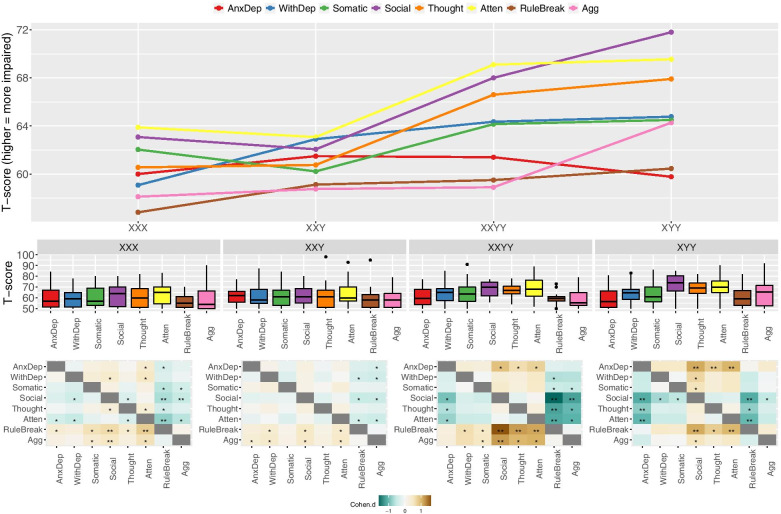
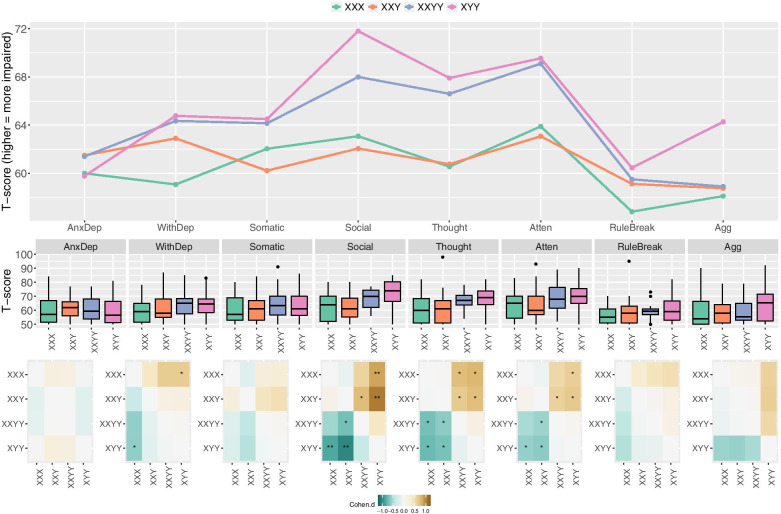
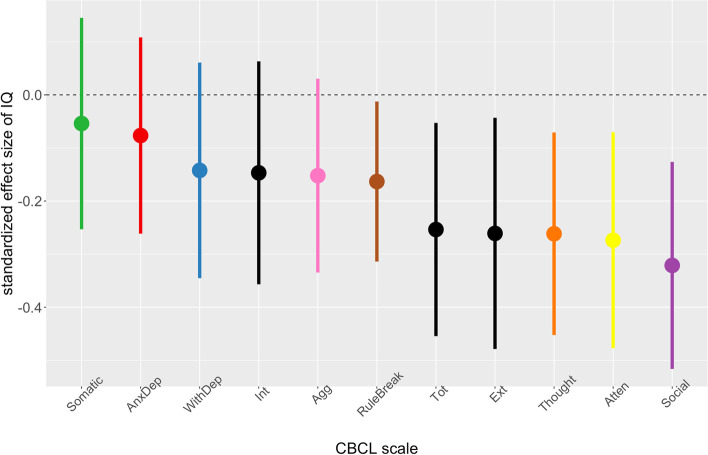
Background: Sex chromosome aneuploidies (SCAs) are a collectively common family of genetic disorders that increase the risk for neuropsychiatric and cognitive impairment. Beyond being important medical disorders in their own right, SCAs also offer a unique naturally occurring model for studying X- and Y-chromosome influences on the human brain. However, it remains unclear if (i) different SCAs are associated with different profiles of psychopathology and (ii) the notable interindividual variation in psychopathology is related to co-occurring variation in cognitive ability. Methods: We examined scores for 11 dimensions of psychopathology [Child/Adult Behavior Checklist (CBCL)] and general cognitive ability [full-scale IQ (FSIQ) from Wechsler tests] in 110 youth with varying SCAs (XXY = 41, XYY = 22, XXX = 27, XXYY = 20) and 131 typically developing controls (XX = 59, XY = 72). Results: All SCAs were associated with elevated CBCL scores across several dimensions of psychopathology (two-sample t tests comparing the euploidic and aneuploidic groups [all |T| > 9, and p < 0.001]). Social and attentional functioning were particularly sensitive to the carriage of a supernumerary Y-chromosome. In particular, the XYY group evidenced significantly more social problems than both extra-X groups (Cohen’s d effect size > 0.5, Bonferroni corrected p < .05). There was marked variability in CBCL scores within each SCA group, which generally correlated negatively with IQ, but most strongly so for social and attentional difficulties (standardized β , − 0.3). These correlations showed subtle differences as a function of the SCA group and CBCL scale. Conclusions: There is domain-specific variation in psychopathology across SCA groups and domain-specific correlation between psychopathology and IQ within SCAs. These findings (i) help to tailor clinical assessment of this common and impactful family of genetic disorders and (ii) suggest that dosage abnormalities of X- and Y-linked genes impart somewhat distinct profiles of neuropsychiatric risk.
Overview
The claims and statistics of this paper haven’t been checked yet.
Free: it reads the open-access text and checks the first 5 claims that cite a source we can check. Create a free account to check every claim.
Integrity signals
Registry
Cites
Statistics
Figures
Verification
Claims the paper makes
The claims and statistics of this paper haven’t been checked yet.
Free: it reads the open-access text and checks the first 5 claims that cite a source we can check. Create a free account to check every claim.
Claims other papers make about this one
Each is checked against this paper’s own text: does it say what the citing paper says it does?
The source backs part of the claim, not all of it — or backs it for a different population, condition or comparison.
In the citing paper
“Chromosomal dosage might influence SCA phenotypes owing to excess or reduced sex chromosome number; for example, a supernumerary Y chromosome is particularly associated with reduced social and attentional functioning240.”
From Sex and gender in neurodevelopmental conditions (2023) · cites this paper as [240]
Experimental — accuracy not yet measured
Self-check
Percentages, sums and reported differences re-computed from the paper’s own numbers.
The self-check needs the paper’s full text.
Citations
Cites
R: A Language and Environment for Statistical Computing
R Core Team (2025) · doi:10.32614/r.manuals · Cited by 352,181
Sex differences in autism spectrum disorders
Werling, D. M., & Geschwind, D. H. (2013) · Current Opinion in Neurology · doi:10.1097/wco.0b013e32835ee548 · Cited by 1,245 · cited 1×
“It is notable that disorders of social functioning like ASD and psychopathology are more common in XY males as compared to XX females in the general population [60], raising the idea that the Y-chromosome may have a special influence on brain systems subserving social functioning.”
Backgroundpatchwork: The Composer of Plots
Pedersen, T. L. (2019) · CRAN: Contributed Packages · doi:10.32614/cran.package.patchwork · Cited by 818
Vitacco, M. J., Neumann, C. S., & Jackson, R. L. (2005) · Journal of Consulting and Clinical Psychology · doi:10.1037/0022-006x.73.3.466 · Cited by 356
A review of trisomy X (47,XXX)
Tartaglia, N. R., Howell, S., Sutherland, A., Wilson, R., & Wilson, L. (2010) · Orphanet Journal of Rare Diseases · doi:10.1186/1750-1172-5-8 · Cited by 352
LEGGETT, V., JACOBS, P., NATION, K., SCERIF, G., & BISHOP, D. V. M. (2010) · Developmental Medicine & Child Neurology · doi:10.1111/j.1469-8749.2009.03545.x · Cited by 291 · cited 2×
“We therefore interpret this observation as providing further evidence against the previously refuted (yet still actively stigmatizing) notion that carriage of additional Y chromosomes is preferentially associated with aggressive and anti-social behaviors [1].”
BackgroundResultSex Chromosome Tetrasomy and Pentasomy
Linden, M. C., Bender, B. G., & Robinson, A. (1995) · Pediatrics · doi:10.1542/peds.96.4.672 · Cited by 282
Anxiety Levels in Children with Autism Spectrum Disorder: A Meta-Analysis
van Steensel, F. J. A., & Heeman, E. J. (2017) · Journal of Child and Family Studies · doi:10.1007/s10826-017-0687-7 · Cited by 240 · cited 1×
“Nevertheless, it is notable that some of the relationships between IQ and psychopathology that have been reported in other datasets (autism spectrum disorder [65];, and anxiety [66];)—were not apparent in SCA.”
BackgroundHoltmann, M., Buchmann, A. F., Esser, G., Schmidt, M. H., Banaschewski, T., & Laucht, M. (2011) · Journal of Child Psychology and Psychiatry · doi:10.1111/j.1469-7610.2010.02309.x · Cited by 230
Cognitive and neurological aspects of sex chromosome aneuploidies
Hong, D. S., & Reiss, A. L. (2014) · The Lancet Neurology · doi:10.1016/s1474-4422(13)70302-8 · Cited by 208 · cited 1×
“As detailed below, these conditions are broadly characterized by increased rates of psychopathology and cognitive impairment [2].”
BackgroundPsychiatric Characteristics in a Self-Selected Sample of Boys With Klinefelter Syndrome
Bruining, H., Swaab, H., Kas, M., & van Engeland, H. (2009) · Pediatrics · doi:10.1542/peds.2008-1954 · Cited by 194
48,XXYY, 48,XXXY and 49,XXXXY syndromes: not just variants of Klinefelter syndrome
Tartaglia, N., Ayari, N., Howell, S., D’Epagnier, C., & Zeitler, P. (2011) · Acta Paediatrica · doi:10.1111/j.1651-2227.2011.02235.x · Cited by 191
Behavioral and Social Phenotypes in Boys With 47,XYY Syndrome or 47,XXY Klinefelter Syndrome
Ross, J. L., Roeltgen, D. P., Kushner, H., Zinn, A. R., Reiss, A., Bardsley, M. Z., McCauley, E., & Tartaglia, N. (2012) · Pediatrics · doi:10.1542/peds.2011-0719 · Cited by 185 · cited 15×
“We next considered variations in IQ and psychopathology across individuals with SCAs to test if correlations between these two clinical features varied as a function of psychopathological domain, SCA group, or both.”
BackgroundInfluential47,XYY Syndrome: Clinical Phenotype and Timing of Ascertainment
Bardsley, M. Z., Kowal, K., Levy, C., Gosek, A., Ayari, N., Tartaglia, N., Lahlou, N., Winder, B., Grimes, S., & Ross, J. L. (2013) · The Journal of Pediatrics · doi:10.1016/j.jpeds.2013.05.037 · Cited by 180
A preliminary meta-analysis of the child behavior checklist in pediatric bipolar disorder
Mick, E., Biederman, J., Pandina, G., & Faraone, S. V. (2003) · Biological Psychiatry · doi:10.1016/s0006-3223(03)00234-8 · Cited by 179
Sex-chromosome dosage effects on gene expression in humans
Raznahan, A., Parikshak, N. N., Chandran, V., Blumenthal, J. D., Clasen, L. S., Alexander-Bloch, A. F., Zinn, A. R., Wangsa, D., Wise, J., Murphy, D. G. M., et al. (2018) · Proceedings of the National Academy of Sciences · doi:10.1073/pnas.1802889115 · Cited by 179 · cited 1×
“It is well established however that the proximal effects of X- and Y-chromosome aneuploidy on human gene expression are highly divergent [63] (e.”
BackgroundSelf-citationAutism, language and communication in children with sex chromosome trisomies
Bishop, D. V. M., Jacobs, P. A., Lachlan, K., Wellesley, D., Barnicoat, A., Boyd, P. A., Fryer, A., Middlemiss, P., Smithson, S., Metcalfe, K., et al. (2011) · Archives of Disease in Childhood · doi:10.1136/adc.2009.179747 · Cited by 176 · cited 1×
“For example, SCAs defined by carriage of an extra Y-chromosome have shown higher rates of autism spectrum disorder (ASD) and ADHD diagnoses [10, 20, 58], as well as higher scores on continuous measures of attentional problems [10], as compared to SCAs defined by carriage of an extra X-chromosome.”
BackgroundPandolfi, V., Magyar, C. I., & Dill, C. A. (2012) · Research in Autism Spectrum Disorders · doi:10.1016/j.rasd.2011.03.009 · Cited by 175 · cited 1×
“Of note, however, findings for the CBCL thought problems scale should be interpreted with caution as this scale is not necessarily indicative of a thought disorder but also consists of items measuring obsessions, repetitive behaviors, and sleep disturbance [57].”
BackgroundA new look at XXYY syndrome: Medical and psychological features
Tartaglia, N., Davis, S., Hench, A., Nimishakavi, S., Beauregard, R., Reynolds, A., Fenton, L., Albrecht, L., Ross, J., Visootsak, J., et al. (2008) · American Journal of Medical Genetics Part A · doi:10.1002/ajmg.a.32366 · Cited by 169 · cited 3×
“The most prevalent domains of psychopathology in XXYY syndrome include impulsivity, anxiety, temper tantrums, and social difficulties [14–18], with diagnoses of ADHD and mood disorders being most common [19].”
BackgroundOwens, M. M., Potter, A., Hyatt, C. S., Albaugh, M., Thompson, W. K., Jernigan, T., Yuan, D., Hahn, S., Allgaier, N., & Garavan, H. (2021) · PLOS ONE · doi:10.1371/journal.pone.0257535 · Cited by 156 · cited 1×
“However, there is growing recognition that correlations between different dimensions of cognition and psychopathology can be weak at the population level and require large sample sizes to be reliably estimated [64], which poses a particular challenge for estimating such correlations within individually rare SCA subgro…”
BackgroundCarlson, C. L., Lahey, B. B., & Neeper, R. (1986) · Journal of Psychopathology and Behavioral Assessment · doi:10.1007/bf00960874 · Cited by 149
Fifty‐one prenatally diagnosed children and adolescents with sex chromosome abnormalities
Linden, M. G., & Bender, B. G. (2002) · American Journal of Medical Genetics · doi:10.1002/ajmg.10394 · Cited by 148
Psychosocial Adaptation of 39 Adolescents With Sex Chromosome Abnormalities
Bender, B. G., Harmon, R. J., Linden, M. G., & Robinson, A. (1995) · Pediatrics · doi:10.1542/peds.96.2.302 · Cited by 141
The epidemiology of sex chromosome abnormalities
Berglund, A., Stochholm, K., & Gravholt, C. H. (2020) · American Journal of Medical Genetics Part C: Seminars in Medical Genetics · doi:10.1002/ajmg.c.31805 · Cited by 139 · cited 1×
“Expansion of SCA cohort sizes in future research will enable adequately powered statistical comparisons of carriers diagnosed prenatally vs those diagnosed postnatally, which can help to provide a proxy for potential ascertainment biases [70].”
BackgroundThe XYY syndrome: a follow-up study on 38 boys.
Geerts, M., Steyaert, J. G., & Fryns, J. P. (2003) · PubMed · Cited by 125
Tartaglia, N. R., Ayari, N., Hutaff-Lee, C., & Boada, R. (2012) · Journal of Developmental & Behavioral Pediatrics · doi:10.1097/dbp.0b013e31824501c8 · Cited by 118 · cited 1×
“Whereas the sex chromosome trisomies (XXY, XYY, and XXX syndromes) are all associated with an ~ 10 point reduction in full-scale IQ on average (slightly larger decrements for verbal as compared to performance IQ), reported mean IQs are typically lower in XXYY syndrome [8, 19, 20, 30, 31].”
BackgroundTartaglia, N. R., Wilson, R., Miller, J. S., Rafalko, J., Cordeiro, L., Davis, S., Hessl, D., & Ross, J. (2017) · Journal of Developmental & Behavioral Pediatrics · doi:10.1097/dbp.0000000000000429 · Cited by 113 · cited 3×
“Whereas the sex chromosome trisomies (XXY, XYY, and XXX syndromes) are all associated with an ~ 10 point reduction in full-scale IQ on average (slightly larger decrements for verbal as compared to performance IQ), reported mean IQs are typically lower in XXYY syndrome [8, 19, 20, 30, 31].”
BackgroundCognitive and Social Correlates of DSM-III Disorders in Preadolescent Children
Anderson, J. C., Williams, S., McGee, R. O., & Silva, P. J. (1989) · Journal of the American Academy of Child & Adolescent Psychiatry · doi:10.1097/00004583-198911000-00005 · Cited by 107
Guerrera, S., Menghini, D., Napoli, E., Vara, S. D., Valeri, G., & Vicari, S. (2019) · Frontiers in Psychiatry · doi:10.3389/fpsyt.2019.00535 · Cited by 107
Pianta, R. C., & Caldwell, C. B. (1990) · Development and Psychopathology · doi:10.1017/s0954579400000754 · Cited by 96
Chawner, S. J. R. A., Doherty, J. L., Anney, R. J. L., Antshel, K. M., Bearden, C. E., Bernier, R., Chung, W. K., Clements, C. C., Curran, S. R., Cuturilo, G., et al. (2021) · American Journal of Psychiatry · doi:10.1176/appi.ajp.2020.20010015 · Cited by 95
Globally Divergent but Locally Convergent X- and Y-Chromosome Influences on Cortical Development
Raznahan, A., Lee, N. R., Greenstein, D., Wallace, G. L., Blumenthal, J. D., Clasen, L. S., & Giedd, J. N. (2016) · Cerebral Cortex · doi:10.1093/cercor/bhu174 · Cited by 91 · cited 3×
“However, although there is evidence for anatomical changes in social networks within the human brain with Y-chromosome aneuploidy, these same systems are also sensitive to X-chromosome dosage [30, 61, 62] - which suggests that traditional in vivo measures of regional brain anatomy may not prove useful in identifying m…”
BackgroundSelf-citationCordeiro, L., Tartaglia, N., Roeltgen, D., & Ross, J. (2012) · Research in Developmental Disabilities · doi:10.1016/j.ridd.2012.02.013 · Cited by 90 · cited 3×
“Work in non-SCA groups suggests there can be complex correlations between clinical variation in IQ and psychopathology [35–45], but the few studies addressing this question in SCA have focused on individual domains of psychopathology [8], prompting the clinically important question of whether some psychiatric features…”
BackgroundKeyes, K. M., Platt, J., Kaufman, A. S., & McLaughlin, K. A. (2017) · JAMA Psychiatry · doi:10.1001/jamapsychiatry.2016.3723 · Cited by 89 · cited 1×
“We hypothesized that the magnitude of IQ-psychopathology coupling would vary for different domains of psychopathology, as seen in other clinical groups [43], and possibly further as a function of SCA karyotype.”
van Rijn, S. (2019) · Current Opinion in Psychiatry · doi:10.1097/yco.0000000000000471 · Cited by 89 · cited 2×
“As such studies of clinically identified cohorts such as ours may provide inflated estimates of penetrance due to ascertainment bias [3, 68, 69].”
BackgroundResultSocial function in multiple X and Y chromosome disorders: XXY, XYY, XXYY, XXXY
Visootsak, J., & Graham, J. M. (2009) · Developmental Disabilities Research Reviews · doi:10.1002/ddrr.76 · Cited by 89 · cited 1×
“, 47, XYY) have been associated with increased problems with hyperactivity, defiance, conduct problems, social problems, and low frustration tolerance [8–10], with diagnoses of ADHD and conduct problems being most common [11, 12].”
BackgroundGunther, D. F., Eugster, E., Zagar, A. J., Bryant, C. G., Davenport, M. L., & Quigley, C. A. (2004) · PEDIATRICS · doi:10.1542/peds.2003-1122-l · Cited by 87 · cited 1×
“As such studies of clinically identified cohorts such as ours may provide inflated estimates of penetrance due to ascertainment bias [3, 68, 69].”
BackgroundBehavioral signatures related to genetic disorders in autism
Bruining, H., Eijkemans, M. J., Kas, M. J., Curran, S. R., Vorstman, J. A., & Bolton, P. F. (2014) · Molecular Autism · doi:10.1186/2040-2392-5-11 · Cited by 77
The neural basis of intelligence in fine-grained cortical topographies
Feilong, M., Guntupalli, J. S., & Haxby, J. V. (2021) · eLife · doi:10.7554/elife.64058 · Cited by 73 · cited 1×
“This notion is supported by emerging evidence that general cognitive functioning is closely tied to functional organization of specific cortical networks (default mode and dorsal attentional) that are also key components of social and attentional systems within the brain [67].”
BackgroundMankiw, C., Park, M. T. M., Reardon, P. K., Fish, A. M., Clasen, L. S., Greenstein, D., Giedd, J. N., Blumenthal, J. D., Lerch, J. P., Chakravarty, M. M., et al. (2017) · The Journal of Neuroscience · doi:10.1523/jneurosci.2158-16.2017 · Cited by 72 · cited 1×
“However, although there is evidence for anatomical changes in social networks within the human brain with Y-chromosome aneuploidy, these same systems are also sensitive to X-chromosome dosage [30, 61, 62] - which suggests that traditional in vivo measures of regional brain anatomy may not prove useful in identifying m…”
BackgroundSelf-citationCognitive, behavioral, and neural consequences of sex chromosome aneuploidy
Printzlau, F., Wolstencroft, J., & Skuse, D. H. (2017) · Journal of Neuroscience Research · doi:10.1002/jnr.23951 · Cited by 63
Sørensen, K., Nielsen, J., Jacobsen, P., & Rølle, T. (1978) · PubMed · Cited by 59
XYY syndrome and other Y chromosome polysomies. Mental status and psychosocial functioning.
Fryns, J. P., Kleczkowska, A., Kubień, E., & BERGHE, H. V. D. (1995) · PubMed · Cited by 53
Relation between intelligence and psychopathology among preschoolers
Dietz, K. R., Lavigne, J. V., Arend, R., & Rosenbaum, D. (1997) · Journal of Clinical Child Psychology · doi:10.1207/s15374424jccp2601_10 · Cited by 47
Weiser, M., Reichenberg, A., Rabinowitz, J., Knobler, H. Y., Lubin, G., Yazvitzky, R., Nahon, D., Gur, R. C., & Davidson, M. (2004) · Acta Psychiatrica Scandinavica · doi:10.1111/j.1600-0447.2004.00385.x · Cited by 47
de Ribera, O. S., Kavish, N., Katz, I. M., & Boutwell, B. B. (2019) · European Journal of Personality · doi:10.1002/per.2207 · Cited by 44
Joseph, L. A., Farmer, C., Chlebowski, C., Henry, L., Fish, A. M., Mankiw, C., Xenophontos, A., CLASEN, L. S., Sauls, B., Seidlitz, J., et al. (2018) · Journal of Neurodevelopmental Disorders · doi:10.1186/s11689-018-9248-7 · Cited by 42
Self-citationA case‐control study of brain structure and behavioral characteristics in 47, XXX syndrome
Lenroot, R., Blumenthal, J. D., Wallace, G. L., CLASEN, L. S., Lee, N., & Giedd, J. N. (2014) · Genes Brain & Behavior · doi:10.1111/gbb.12180 · Cited by 42
Self-citationMeta-Analysis of Intelligence Quotient (IQ) in Obsessive-Compulsive Disorder
Abramovitch, A., Anholt, G. E., Raveh-Gottfried, S., Hamo, N., & Abramowitz, J. S. (2017) · Neuropsychology Review · doi:10.1007/s11065-017-9358-0 · Cited by 41
Pianta, R. C., & Castaldi, J. (1989) · Development and Psychopathology · doi:10.1017/s0954579400000493 · Cited by 39
Berona, J., Horwitz, A. G., Czyz, E. K., & King, C. A. (2017) · Journal of Affective Disorders · doi:10.1016/j.jad.2016.10.036 · Cited by 35
Nadig, A., Reardon, P. K., Seidlitz, J., McDermott, C. L., Blumenthal, J. D., CLASEN, L. S., Lalonde, F. M., Lerch, J. P., Chakravarty, M. M., & Raznahan, A. (2018) · eNeuro · doi:10.1523/eneuro.0265-18.2018 · Cited by 33 · cited 1×
“However, although there is evidence for anatomical changes in social networks within the human brain with Y-chromosome aneuploidy, these same systems are also sensitive to X-chromosome dosage [30, 61, 62] - which suggests that traditional in vivo measures of regional brain anatomy may not prove useful in identifying m…”
BackgroundSelf-citationIQ and Internalising Symptoms in Adolescents with ASD
Edirisooriya, M., Dykiert, D., & Auyeung, B. (2020) · Journal of Autism and Developmental Disorders · doi:10.1007/s10803-020-04810-y · Cited by 31 · cited 1×
“Nevertheless, it is notable that some of the relationships between IQ and psychopathology that have been reported in other datasets (autism spectrum disorder [65];, and anxiety [66];)—were not apparent in SCA.”
BackgroundKatsuki, D., Yamashita, H., Yamane, K., Kanba, S., & Yoshida, K. (2020) · Child Psychiatry & Human Development · doi:10.1007/s10578-020-00977-8 · Cited by 28
Brain and behavior in 48, XXYY syndrome
Hanley, A. P., Blumenthal, J. D., Lee, N., Baker, E. H., CLASEN, L. S., & Giedd, J. N. (2015) · NeuroImage Clinical · doi:10.1016/j.nicl.2015.04.009 · Cited by 24
Self-citationOwens, M. M., Potter, A., Hyatt, C. S., Albaugh, M. D., Thompson, W. K., Jernigan, T. L., Yuan, D., Hahn, S., Allgaier, N. A., & Garavan, H. (2020) · PsyArXiv (OSF Preprints) · doi:10.31234/osf.io/tn9u4 · Cited by 21
STUDIES ON A BOY WITH XXYY CHROMOSOME CONSTITUTION
Schlegel, R. J., Aspillaga, M., Neu, R. L., & Gardner, L. I. (1965) · PEDIATRICS · doi:10.1542/peds.36.1.113 · Cited by 19
EMOTIONAL DISORDER IN XYY CHILDREN: FOUR CASE REPORTS
Ratcliffe, S. G., & Field, M. A. S. (1982) · Journal of Child Psychology and Psychiatry · doi:10.1111/j.1469-7610.1982.tb00086.x · Cited by 15 · cited 1×
“, 47, XYY) have been associated with increased problems with hyperactivity, defiance, conduct problems, social problems, and low frustration tolerance [8–10], with diagnoses of ADHD and conduct problems being most common [11, 12].”
BackgroundWilson, K. E., Fish, A. M., Mankiw, C., Xenophontos, A., Warling, A., Whitman, E. T., CLASEN, L. S., Torres, E. N., Blumenthal, J. D., & Raznahan, A. (2021) · Journal of Neurodevelopmental Disorders · doi:10.1186/s11689-021-09360-7 · Cited by 10
Self-citationSrinivasan, R., Wolstencroft, J., Erwood, M., Raymond, F. L., van den Bree, M. B. M., Hall, J., & Skuse, D. (2019) · Journal of Intellectual Disability Research · doi:10.1111/jir.12607 · Cited by 9
Research works printed but not linked: 10
- Schroeder J Weiss J Bebko J CBCL profiles of children and adolescents with Asperger syndrome: a review and pilot study. yorkspace-new.library.yorku.ca 2011
- Howlin P Rutter M Berger M Hemsley R Hersov L Yule W Treatment of autistic children. Wiley series on studies in child psychiatry 1987 Oxford Wiley 299
- Wechsler D WISC-V: technical and interpretive manual 2014 Bloomington Pearson
- Wechsler D WAIS-IV administration and scoring manual 2008 San Antonio Psychological Corporation
- Wechsler D Wechsler Abbreviated Scale of Intelligence—Second Edition (WASI-II) 2011 San Antonio NCS Pearson
- Achenbach TM Edelbrock C Child behavior checklist Burlington (Vt) 1991 7 371 392
- Achenbach TM Rescorla L Manual for the ASEBA Adult Forms & Profiles: For Ages 18-59: Adult Self-report and Adult Behavior Checklist 2003 ASEBA
- IBM Corp IBM SPSS Statistics for Windows, Version 25.0 2017 Armonk IBM Corp
- IBM Corp IBM SPSS Statistics for Windows, Version 26.0 2019 Armonk IBM Corp
- Wickham H Programming with ggplot2. In: Wickham H, editor. ggplot2: elegant graphics for data analysis 2016 Cham Springer International Publishing 241 253
Cited by
Sex and gender in neurodevelopmental conditions
Bölte, S., Neufeld, J., Marschik, P. B., Williams, Z. J., Gallagher, L., & Lai, M.-C. (2023) · Nature Reviews Neurology · doi:10.1038/s41582-023-00774-6 · Cited by 249
Sánchez, X. C., Montalbano, S., Vaez, M., Krebs, M. D., Byberg-Grauholm, J., Mortensen, P. B., Børglum, A. D., HOUGAARD, D. M., Nordentoft, M., Geschwind, D. H., et al. (2023) · The Lancet Psychiatry · doi:10.1016/s2215-0366(23)00004-4 · Cited by 44
“34,35 This risk pattern might seem unlikely given that X-chromosome gain leads to substantially greater changes in gene dosage and brain anatomy 36 than Y-chromosome gain does.”
Self-citationLevitis, E., Liu, S., Whitman, E. T., Warling, A., Torres, E. N., CLASEN, L. S., Lalonde, F. M., Sarlls, J. E., Alexander, D. C., & Raznahan, A. (2023) · Biological Psychiatry · doi:10.1016/j.biopsych.2023.07.008 · Cited by 14
Self-citationRaznahan, A., Rau, S., Schaffer, L., Liu, S., Fish, A. M., Mankiw, C., Xenophontos, A., CLASEN, L. S., Joseph, L. A., Thurm, A. E., et al. (2023) · Journal of Neurodevelopmental Disorders · doi:10.1186/s11689-023-09476-y · Cited by 11
“Ranking these scales by score recapitulates prior findings that XYY syndrome is most impactful on attentional and social domains [19, 21] and further refutes the already debunked but sadly tenacious association between carriage of an extra Y-chromosome and violent behavior [8].”
ResultSelf-citationSchaffer, L. S., Rau, S., Larsen, I. G., CLASEN, L. S., Warling, A., Whitman, E. T., Nadig, A., McDermott, C. L., Xenophontos, A., Wilson, K., et al. (2024) · Journal of Neurodevelopmental Disorders · doi:10.1186/s11689-024-09574-5 · Cited by 11
“To supplement these domain-specific instruments, we also included the Child Behavior Checklist (CBCL) [47] and Strengths and Difficulties Questionnaire (SDQ) [48] as multidimensional measures of childhood psychopathology.”
BackgroundSelf-citation
Metadata
- Authors
- Rau, S., Whitman, E. T., Schauder, K., Gogate, N., Lee, N. R., Kenworthy, L., & Raznahan, A.
- Affiliations
- Children's National (US)
- National Institute of Mental Health (US)
- George Washington University (US)
- Drexel University (US)
- Corresponding author
- Rau, Srishti
- ORCID
- Venue
- Journal of Neurodevelopmental Disorders
- Published
- 2021-12
- Volume
- 13
- Issue
- 1
- Pages
- 61-61
- ISSN
- 1866-1947 (ISSN-L)
- 1866-1955
- PMC
- PMC8903493
- OpenAlex
- W4226206833
- Cited by
- 14
- References
- 62
- Citations by year
- 2026: 2 · 2025: 3 · 2024: 2 · 2023: 6 · 2022: 1
- FWCI
- 1.27
- Type
- journal article
- Language
- en
- Open access
- gold
- doi.org
- Licence
- cc-by
- creativecommons.org/licenses/by/4.0 (tdm)
- creativecommons.org/licenses/by/4.0 (vor, 14 d)
- Locations
- Journal of Neurodevelopmental Disorders (publishedVersion, cc-by)
- Research Square (acceptedVersion, cc-by)
- PubMed Central (publishedVersion, cc-by)
- PubMed (publishedVersion)
- DOAJ (DOAJ: Directory of Open Access Journals) (submittedVersion, cc-by-sa)
- Funders
- National Institute of Mental Health (ZIA MH002794-13)
- Topics
- Life Sciences › Biochemistry, Genetics and Molecular Biology › Genetics › Genetic and Clinical Aspects of Sex Determination and Chromosomal Abnormalities
- Health Sciences › Medicine › Endocrinology, Diabetes and Metabolism › Sexual Differentiation and Disorders
- Life Sciences › Biochemistry, Genetics and Molecular Biology › Genetics › Genetics and Neurodevelopmental Disorders
- Keywords
- sex chromosome aneuploidy, XYY syndrome, Klinefelter syndrome, psychopathology, cognitive ability, IQ, social problems, attention deficits, X-linked genes, Y-linked genes, interindividual variability
- MeSH terms
- Adolescent, Adult, Aneuploidy, Mental Disorders, Child, Cognition, Humans, Sex Chromosome Aberrations, Sex Chromosomes
About these checks
Registry, retraction, Cites and statistics results are computed, not judged, with one exception: a printed reference that no index lists is read once by a model before it counts as a citation error. Claims are extracted by a model and kept only when their quote appears verbatim in the text; each cited source is then checked, with a model’s help, for whether it says what the claim relies on. Those verdicts can be wrong — read the claim’s quote and the cited source before relying on one.
Statistics and arithmetic are recomputed, not judged.
Confidence bands are shown only for fields calibrated on our annotated test set. None is calibrated yet, so no band is shown.
What counts as a claim ›How we measure confidence ›How we check this ›
Are you an author, or do you see a problem with this page? Request a review
Data sources
Bibliographic data: Semantic Scholar, OpenAlex, Crossref.
Contains information from the Semantic Scholar Academic Graph Datasets, made available under the ODC Attribution License (ODC-BY 1.0).
Semantic Scholar’s data is described in: Kinney, R., et al. (2023). The Semantic Scholar Open Data Platform. arXiv:2301.10140.
