

The DOI matches its Crossref record; 84 of the 84 references it cites were found in a registry or an index.
3D deep convolutional neural networks for amino acid environment similarity analysis
Open accessAbstract
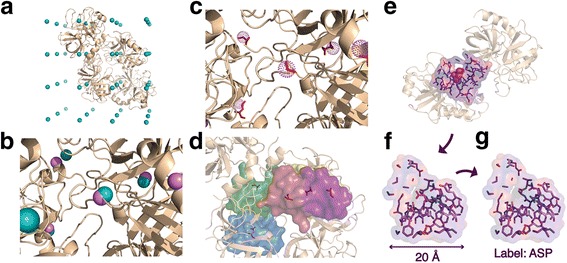
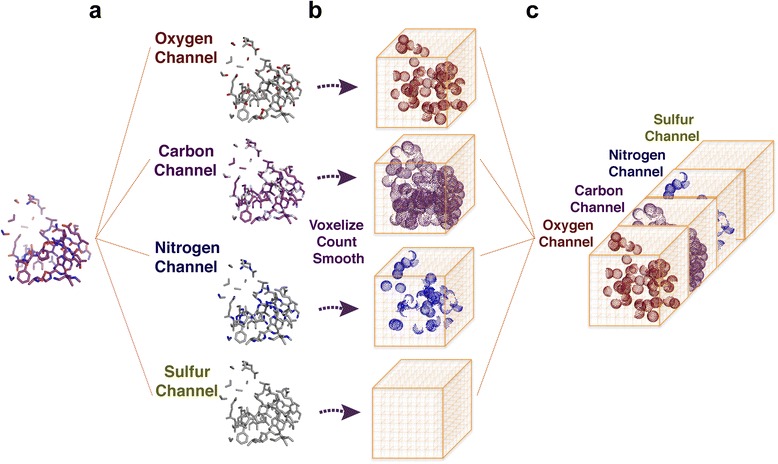
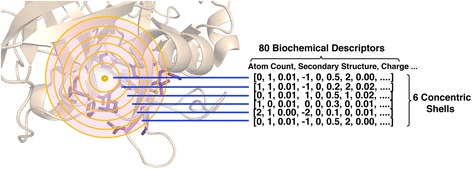
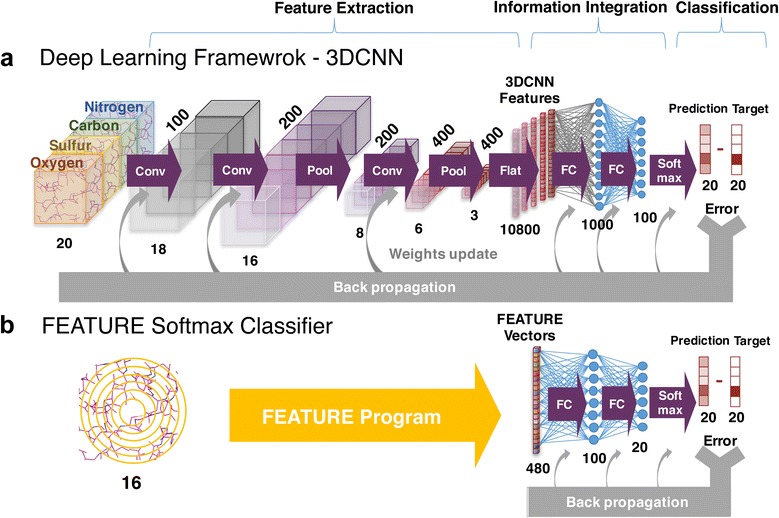
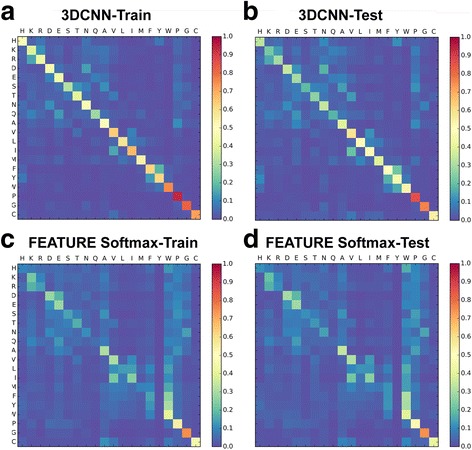
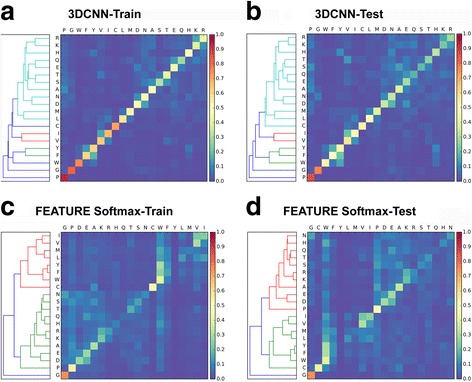
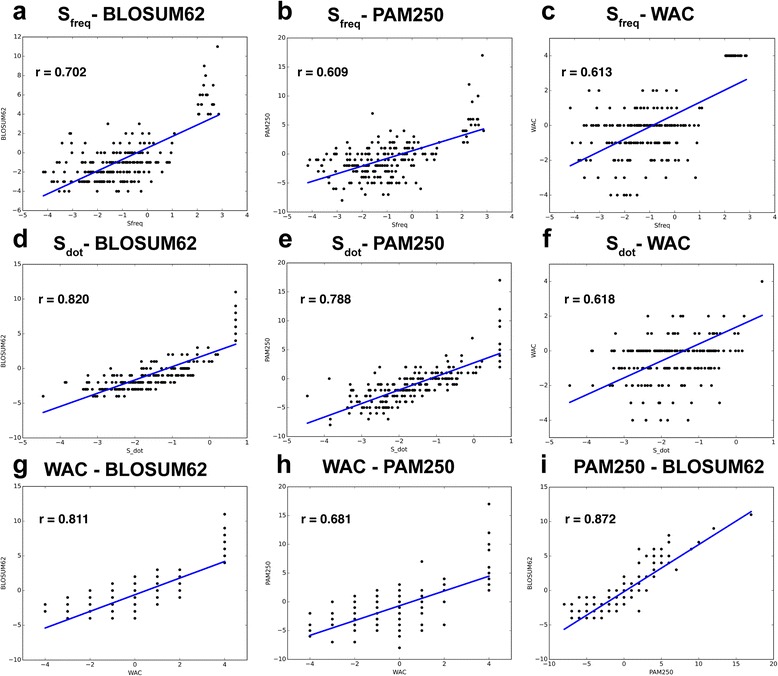
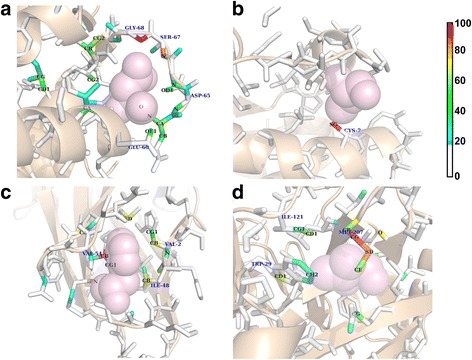
BACKGROUND: Central to protein biology is the understanding of how structural elements give rise to observed function. The surfeit of protein structural data enables development of computational methods to systematically derive rules governing structural-functional relationships. However, performance of these methods depends critically on the choice of protein structural representation. Most current methods rely on features that are manually selected based on knowledge about protein structures. These are often general-purpose but not optimized for the specific application of interest. In this paper, we present a general framework that applies 3D convolutional neural network (3DCNN) technology to structure-based protein analysis. The framework automatically extracts task-specific features from the raw atom distribution, driven by supervised labels. As a pilot study, we use our network to analyze local protein microenvironments surrounding the 20 amino acids, and predict the amino acids most compatible with environments within a protein structure. To further validate the power of our method, we construct two amino acid substitution matrices from the prediction statistics and use them to predict effects of mutations in T4 lysozyme structures. RESULTS: Our deep 3DCNN achieves a two-fold increase in prediction accuracy compared to models that employ conventional hand-engineered features and successfully recapitulates known information about similar and different microenvironments. Models built from our predictions and substitution matrices achieve an 85% accuracy predicting outcomes of the T4 lysozyme mutation variants. Our substitution matrices contain rich information relevant to mutation analysis compared to well-established substitution matrices. Finally, we present a visualization method to inspect the individual contributions of each atom to the classification decisions. CONCLUSIONS: End-to-end trained deep learning networks consistently outperform methods using hand-engineered features, suggesting that the 3DCNN framework is well suited for analysis of protein microenvironments and may be useful for other protein structural analyses.
Overview
The claims and statistics of this paper haven’t been checked yet.
Run the check — free, no account needed. It reads the open-access text and checks the sources it cites.
Integrity signals
Registry
Cites
Statistics
Figures
Verification
Claims the paper makes
The claims and statistics of this paper haven’t been checked yet.
Run the check — free, no account needed. It reads the open-access text and checks the sources it cites.
Claims other papers make about this one
Each is checked against this paper’s own text: does it say what the citing paper says it does?
In the citing paper
“We have previously shown that 3DCNNs can extract meaningful features of amino acid microenvironments directly from raw atom distribution 12 .”
From Graph Convolutional Neural Networks for Predicting Drug-Target Interactions (2019) · cites this paper as [12]
Self-check
Percentages, sums and reported differences re-computed from the paper’s own numbers.
The self-check needs the paper’s full text.
Citations
Cites
ImageNet classification with deep convolutional neural networks
Krizhevsky, A., Sutskever, I., & Hinton, G. E. (2017) · Communications of the ACM · doi:10.1145/3065386 · Cited by 112,155
LeCun, Y., Bengio, Y., & Hinton, G. (2015) · Nature · doi:10.1038/nature14539 · Cited by 84,126
Cortes, C., & Vapnik, V. (1995) · Machine Learning · doi:10.1007/bf00994018 · Cited by 59,421
Regression shrinkage and selection via the lasso
Tibshirani, R. (1996) · Journal of the Royal Statistical Society Series B: Statistical Methodology · doi:10.1111/j.2517-6161.1996.tb02080.x · Cited by 51,482
Going deeper with convolutions
Szegedy, C., Liu, W., Jia, Y., Sermanet, P., Reed, S., Anguelov, D., Erhan, D., Vanhoucke, V., & Rabinovich, A. (2015) · 2015 IEEE Conference on Computer Vision and Pattern Recognition (CVPR) · doi:10.1109/cvpr.2015.7298594 · Cited by 48,562
Berman, H. M. (2000) · Nucleic Acids Research · doi:10.1093/nar/28.1.235 · Cited by 40,196
Cortes, C., & Vapnik, V. N. (1995) · Machine Learning · doi:10.1023/a:1022627411411 · Cited by 34,565
(2014) · Cited by 33,419
Learning representations by back-propagating errors
Rumelhart, D. E., Hinton, G. E., & Williams, R. J. (1986) · Nature · doi:10.1038/323533a0 · Cited by 31,892
Hierarchical Grouping to Optimize an Objective Function
Ward, J. H. (1963) · Journal of the American Statistical Association · doi:10.1080/01621459.1963.10500845 · Cited by 21,341
Research works printed but not linked: 2
- C. M. Bishop, Pattern recognition. 2006.
- B. C. Dayhoff, M.O., Schwartz, R. and Orcutt, “A Model of Evolutionary Change in Proteins,” in Atlas of protein sequence and structure, Volume 5,., National Biomedical Research Foundation Silver Spring, MD, 1978, pp. 345–358
Cited by
Sorted by citations
Items 101–142 of 142
Protein sequence design on given backbones with deep learning
Liu, Y., & Liu, H. (2023) · Protein Engineering Design and Selection · doi:10.1093/protein/gzad024 · Cited by 5
Optimization of Machine Learning Algorithms for Proteomic Analysis Using TOPSIS
Javanbakht, T., & Chakravorty, S. (2022) · Journal of Engineering Sciences · doi:10.21272/jes.2022.9(2).e2 · Cited by 5
Classifying metal‐binding sites with neural networks
Oostrom, M. T., Akers, S. M., Garrett, N., Hanson, E., Shaw, W. J., & Laureanti, J. A. (2023) · Protein Science · doi:10.1002/pro.4591 · Cited by 4
Machine Learning Identification of Capsid Mutations to Improve AAV Production FitnessPreprint
Mikos, G., Chen, W., & Suh, J. (2021) · bioRxiv (Cold Spring Harbor Laboratory) · doi:10.1101/2021.06.15.447941 · Cited by 7
The Role of Artificial Intelligence in Therapeutic Drug Monitoring and Clinical Toxicity
Saikia, S., Prajapati, J. B., Prajapati, B. G., Padma, V. V., & Pathak, Y. V. (2022) · Springer eBooks · doi:10.1007/978-3-031-12398-6_5 · Cited by 5
DeepNose: An Equivariant Convolutional Neural Network Predictive of Human Olfactory Percepts
Shuvaev, S. A., Tran, K., Samoilova, K. V., Mascart, C., & Koulakov, A. A. (2024) · Asilomar Conference on Signals, Systems and Computers (ACSSC) · doi:10.1109/ieeeconf60004.2024.10942624 · Cited by 5
Generalizable Protein Interface Prediction with End-to-End Learning.Preprint
Townshend, R. J. L., Bedi, R., & Dror, R. O. (2018) · arXiv (Cornell University) · Cited by 4
Predicting enzyme substrate chemical structure with protein language modelsPreprint
Jinich, A., Nazia, S. Z., Tellez, A. V., Rappoport, D., AlQuraishi, M., & Rhee, K. Y. (2022) · bioRxiv (Cold Spring Harbor Laboratory) · doi:10.1101/2022.09.28.509940 · Cited by 4
Zhang, J., Wang, S., Gao, L., & Li, Q. (2026) · Journal of Biotechnology · doi:10.1016/j.jbiotec.2026.03.012 · Cited by 4
Machine learning based software tools and computational strategies for QSAR modeling
Kaur, R. P., & Manjh, S. (2026) · Discover Chemistry. · doi:10.1007/s44371-026-00663-z · Cited by 3
Gupta, S., Menon, V., & Baudry, J. Y. (2022) · IEEE International Conference on Bioinformatics and Biomedicine (BIBM) · doi:10.1109/bibm55620.2022.9995169 · Cited by 3
Cortés‐Ciriano, I., & Bender, A. (2018) · arXiv (Cornell University) · Cited by 3
Protein structure featurization via standard image classification neural networksPreprint
Sikosek, T. (2019) · bioRxiv (Cold Spring Harbor Laboratory) · doi:10.1101/841783 · Cited by 3
Haghighatlari, M., Li, J., Heidar‐Zadeh, F., Liu, Y., Guan, X., & Head-Gordon, T. L. (2020) · arXiv (Cornell University) · doi:10.48550/arxiv.2003.00157 · Cited by 3
Evolving to Evolve, Dan Tawfik’s Insights into Protein Engineering
Kosonocky, C. W., & Ellington, A. D. (2023) · Biochemistry · doi:10.1021/acs.biochem.2c00668 · Cited by 3
Powers, A. C., Renfrew, P. D., Hosseinzadeh, P., & Mulligan, V. K. (2025) · bioRxiv (Cold Spring Harbor Laboratory) · doi:10.1101/2025.02.21.639569 · Cited by 3
Liu, J., Xiao, J., Su, X., & Wang, Y. (2025) · Briefings in Bioinformatics · doi:10.1093/bib/bbaf331 · Cited by 2
Invariant Molecular Representations for Heterogeneous Catalysis
Chowdhury, J., Fricke, C. H., Bamidele, O. H., Bello, M., Yang, W., Heyden, A., & Terejanu, G. (2024) · Journal of Chemical Information and Modeling · doi:10.1021/acs.jcim.3c00594 · Cited by 2
A Multi-Resolution 3D-DenseNet for Chemical Shift Prediction in NMR CrystallographyPreprint
Liu, S., Li, J., Bennett, K., Ganoe, B., Stauch, T., Head‐Gordon, M., Hexemer, A., Ushizima, D. M., & Head-Gordon, T. L. (2019) · arXiv (Cornell University) · doi:10.48550/arxiv.1906.00102 · Cited by 2
Rappoport, D., & Jinich, A. (2022) · bioRxiv (Cold Spring Harbor Laboratory) · doi:10.1101/2022.06.14.496158 · Cited by 2
Silva, J. C. F., Schuster, L. A., Sexson, N., Kirst, M., Resende, M. F. R., & Dias, R. (2024) · bioRxiv (Cold Spring Harbor Laboratory) · doi:10.1101/2024.10.07.616705 · Cited by 2
Orientation-Aware Networks for Protein Structure Representation Learning
Li, J., Luo, S., Deng, C., Cheng, C., Guan, J., Guibas, L. J., Peng, J., & Ma, J. (2025) · Lecture notes in computer science · doi:10.1007/978-3-031-90252-9_1 · Cited by 1
An SE(3) Equivariant Unified Multi-Modal Framework for Protein-Ligand Interaction Prediction
Feng, Y., Bi, C., Tian, M., Wang, H., & Zhang, H. (2025) · IEEE International Conference on Bioinformatics and Biomedicine (BIBM) · doi:10.1109/bibm66473.2025.11356574 · Cited by 1
Guo, J., Xi, L., & Gao, H. (2026) · Journal of Manufacturing Systems · doi:10.1016/j.jmsy.2026.04.014 · Cited by 1
Pagès, G., & Grudinin, S. (2019) · Bioinformatics · doi:10.1093/bioinformatics/btz454 · Cited by 15
Deep Learning of Protein Structural Classes: Any Evidence for an ‘Urfold’?
Jaiswal, M., Saleem, S., Kweon, Y., Draizen, E. J., Veretnik, S., Mura, C., & Bourne, P. E. (2020) · Systems and Information Engineering Design Symposium · doi:10.1109/sieds49339.2020.9106642 · Cited by 1
Kavousipour, S., Barazesh, M., & Mohammadi, S. (2025) · Medical & Biological Engineering & Computing · doi:10.1007/s11517-025-03429-4 · Cited by 2
Amino acid environment affinity model based on graph attention network
Tong, X., Liu, S., Gu, J., Wu, C., Liang, Y., & Shi, X. (2021) · Journal of Bioinformatics and Computational Biology · doi:10.1142/s0219720021500323 · Cited by 1
Toward the Systematic Design of Complex Materials from Structural Motifs
Smidt, T. (2018) · ProQuest Demo Repository · Cited by 1
Transferrable End-to-End Learning for Protein Interface Prediction
Townshend, R. J. L., Bedi, R., & Dror, R. O. (2018)
Zhao, Y., Shao, J., & Asmann, Y. W. (2022) · bioRxiv (Cold Spring Harbor Laboratory) · doi:10.1101/2022.02.18.481077
Gupta, A., & Raghavachari, K. (2021) · ChemRxiv · doi:10.26434/chemrxiv.14612352
Secundary Structure of Physicochemical Clustered ProteinsPreprint
Nelson, I. (2023) · bioRxiv (Cold Spring Harbor Laboratory) · doi:10.1101/2023.05.30.542924
Kumari, A., & Rajput, V. S. (2023) · Springer eBooks · doi:10.1007/978-981-19-7952-1_1
RetractedDu, Q., Wang, F., Huang, H. M., Wan, H. F., Wu, X. O., & Wu, C. (2024) · IEEE International Conference on Bioinformatics and Biomedicine (BIBM) · doi:10.1109/bibm62325.2024.10821884
Ugurlu, S. Y., McDonald, D., Lei, H., Jones, A. M., Li, S., Tong, H. Y., Butler, M. S., & He, S. (2024) · Figshare · doi:10.6084/m9.figshare.24987698
Learning Protein Structure Representation with Orientation-Aware Networks
Li, J., Luo, S., Deng, C., Cheng, C., Guan, J., Guibas, L., Peng, J., & Ma, J. (2025) · Journal of Computational Biology · doi:10.1177/15578666251406300
Chen, S. H., & Chen, Y.-K. (2025) · Springer handbooks · doi:10.1007/978-3-031-81728-1_44
Novel computational developments for protein structure analysis and prediction
Pagès, G. (2019) · theses.fr (ABES) · doi:10.70675/59b6f421z6feaz4122za3ebz71dc7005fda6
Behbahani, Y. M. (2022) · theses.fr (ABES) · doi:10.70675/bfdded7czb638z455azaedaz4ae9f8d0a13d
Gupta, S., Menon, V., & Baudry, J. Y. (2026) · Frontiers in Drug Discovery · doi:10.3389/fddsv.2026.1805731
Metadata
- Authors
- Torng, W., & Altman, R. B.
- Affiliations
- Stanford University (US)
- Corresponding author
- Altman, Russ B.
- Venue
- BMC Bioinformatics
- Published
- 2017-06-14
- Volume
- 18
- Issue
- 1
- Pages
- 302-302
- ISSN
- 1471-2105 (ISSN-L)
- PMC
- PMC5472009
- OpenAlex
- W2625768267
- Cited by
- 142
- References
- 82
- Citations by year
- 2026: 6 · 2025: 13 · 2024: 12 · 2023: 23 · 2022: 21 · 2021: 18 · 2020: 15 · 2019: 20 · 2018: 14
- FWCI
- 5.48
- Type
- journal article
- Language
- en
- Open access
- gold
- doi.org
- Locations
- BMC Bioinformatics (publishedVersion, cc-by)
- Europe PMC (PubMed Central) (publishedVersion, other-oa)
- PubMed Central (publishedVersion, cc-by)
- PubMed (publishedVersion)
- DOAJ (DOAJ: Directory of Open Access Journals) (submittedVersion, cc-by-sa)
- Funders
- National Institutes of Health (GM102365, LM05652, HL117798)
- Topics
- Life Sciences › Biochemistry, Genetics and Molecular Biology › Molecular Biology › Protein Structure and Dynamics
- Life Sciences › Biochemistry, Genetics and Molecular Biology › Molecular Biology › Machine Learning in Bioinformatics
- Life Sciences › Pharmacology, Toxicology and Pharmaceutics › Drug Discovery › Computational Drug Discovery Methods
- Keywords
- 3D convolutional neural networks, protein microenvironment, protein structure representation, amino acid substitution matrices, T4 lysozyme, mutation prediction, structure-function relationship, end-to-end deep learning, feature visualization
- MeSH terms
- Amino Acids, Animals, Brain, Nerve Net, ROC Curve, In Situ Hybridization, Area Under Curve, Embryonic Development, Mice, Transcriptome
About these checks
Registry, retraction, Cites and statistics results are computed, not judged, with one exception: a printed reference that no index lists is read once by a model before it counts as a citation error. Claims are extracted by a model and kept only when their quote appears verbatim in the text; each cited source is then checked, with a model’s help, for whether it says what the claim relies on. Those verdicts can be wrong — read the claim’s quote and the cited source before relying on one.
Statistics and arithmetic are recomputed, not judged.
Confidence bands are shown only for fields calibrated on our annotated test set. None is calibrated yet, so no band is shown.
What counts as a claim ›How we measure confidence ›How we check this ›
Are you an author, or do you see a problem with this page? Request a review
