

The DOI matches its Crossref record; 84 of the 84 references it cites were found in a registry or an index.
3D deep convolutional neural networks for amino acid environment similarity analysis
Open accessAbstract
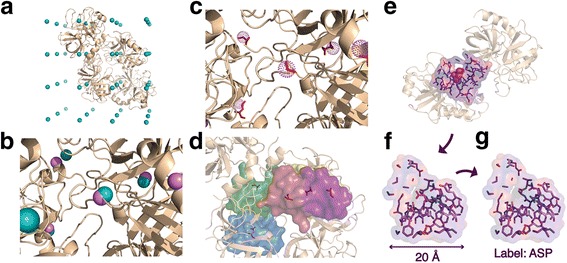
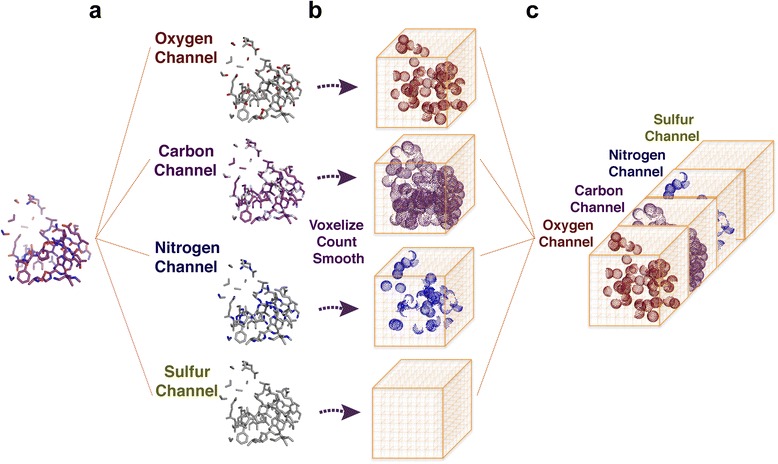
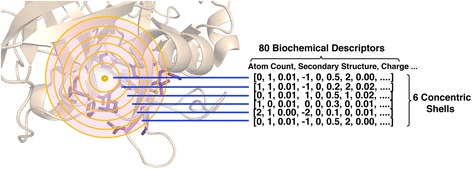
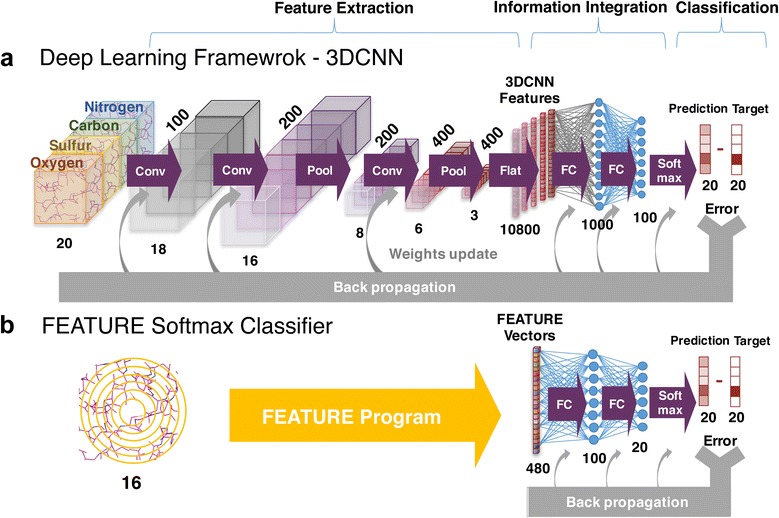
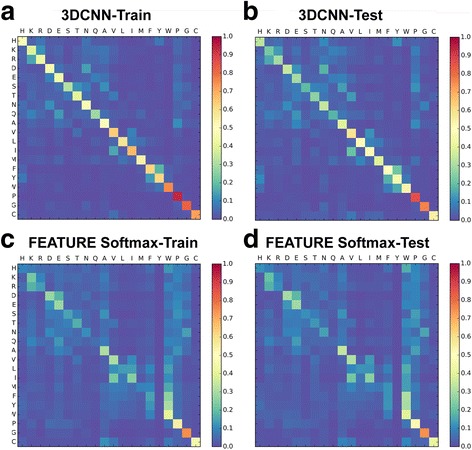
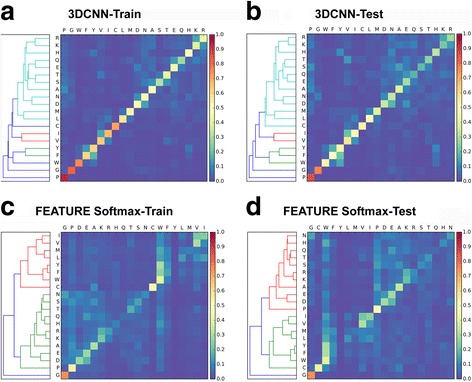
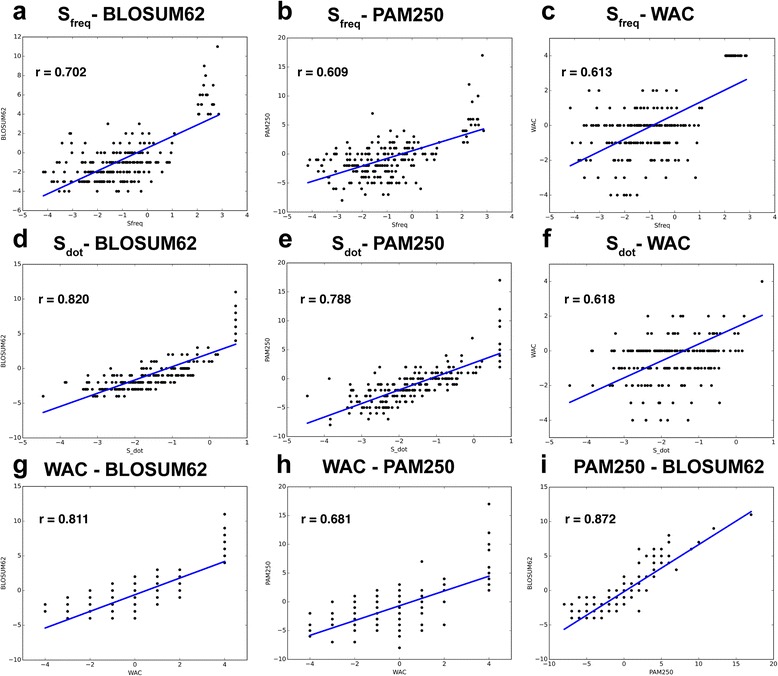
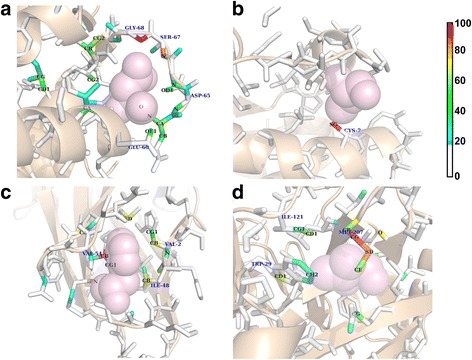
BACKGROUND: Central to protein biology is the understanding of how structural elements give rise to observed function. The surfeit of protein structural data enables development of computational methods to systematically derive rules governing structural-functional relationships. However, performance of these methods depends critically on the choice of protein structural representation. Most current methods rely on features that are manually selected based on knowledge about protein structures. These are often general-purpose but not optimized for the specific application of interest. In this paper, we present a general framework that applies 3D convolutional neural network (3DCNN) technology to structure-based protein analysis. The framework automatically extracts task-specific features from the raw atom distribution, driven by supervised labels. As a pilot study, we use our network to analyze local protein microenvironments surrounding the 20 amino acids, and predict the amino acids most compatible with environments within a protein structure. To further validate the power of our method, we construct two amino acid substitution matrices from the prediction statistics and use them to predict effects of mutations in T4 lysozyme structures. RESULTS: Our deep 3DCNN achieves a two-fold increase in prediction accuracy compared to models that employ conventional hand-engineered features and successfully recapitulates known information about similar and different microenvironments. Models built from our predictions and substitution matrices achieve an 85% accuracy predicting outcomes of the T4 lysozyme mutation variants. Our substitution matrices contain rich information relevant to mutation analysis compared to well-established substitution matrices. Finally, we present a visualization method to inspect the individual contributions of each atom to the classification decisions. CONCLUSIONS: End-to-end trained deep learning networks consistently outperform methods using hand-engineered features, suggesting that the 3DCNN framework is well suited for analysis of protein microenvironments and may be useful for other protein structural analyses.
Overview
The claims and statistics of this paper haven’t been checked yet.
Run the check — free, no account needed. It reads the open-access text and checks the sources it cites.
Integrity signals
Registry
Cites
Statistics
Figures
Verification
Claims the paper makes
The claims and statistics of this paper haven’t been checked yet.
Run the check — free, no account needed. It reads the open-access text and checks the sources it cites.
Claims other papers make about this one
Each is checked against this paper’s own text: does it say what the citing paper says it does?
In the citing paper
“We have previously shown that 3DCNNs can extract meaningful features of amino acid microenvironments directly from raw atom distribution 12 .”
From Graph Convolutional Neural Networks for Predicting Drug-Target Interactions (2019) · cites this paper as [12]
Self-check
Percentages, sums and reported differences re-computed from the paper’s own numbers.
The self-check needs the paper’s full text.
Citations
Cites
ImageNet classification with deep convolutional neural networks
Krizhevsky, A., Sutskever, I., & Hinton, G. E. (2017) · Communications of the ACM · doi:10.1145/3065386 · Cited by 112,155
LeCun, Y., Bengio, Y., & Hinton, G. (2015) · Nature · doi:10.1038/nature14539 · Cited by 84,126
Cortes, C., & Vapnik, V. (1995) · Machine Learning · doi:10.1007/bf00994018 · Cited by 59,421
Regression shrinkage and selection via the lasso
Tibshirani, R. (1996) · Journal of the Royal Statistical Society Series B: Statistical Methodology · doi:10.1111/j.2517-6161.1996.tb02080.x · Cited by 51,482
Going deeper with convolutions
Szegedy, C., Liu, W., Jia, Y., Sermanet, P., Reed, S., Anguelov, D., Erhan, D., Vanhoucke, V., & Rabinovich, A. (2015) · 2015 IEEE Conference on Computer Vision and Pattern Recognition (CVPR) · doi:10.1109/cvpr.2015.7298594 · Cited by 48,562
Berman, H. M. (2000) · Nucleic Acids Research · doi:10.1093/nar/28.1.235 · Cited by 40,196
Cortes, C., & Vapnik, V. N. (1995) · Machine Learning · doi:10.1023/a:1022627411411 · Cited by 34,565
(2014) · Cited by 33,419
Learning representations by back-propagating errors
Rumelhart, D. E., Hinton, G. E., & Williams, R. J. (1986) · Nature · doi:10.1038/323533a0 · Cited by 31,892
Hierarchical Grouping to Optimize an Objective Function
Ward, J. H. (1963) · Journal of the American Statistical Association · doi:10.1080/01621459.1963.10500845 · Cited by 21,341
Neural Machine Translation by Jointly Learning to Align and Translate
Bahdanau, D., Cho, K., & Bengio, Y. (2014) · arXiv · doi:10.48550/arxiv.1409.0473 · Cited by 16,213
Representation Learning: A Review and New Perspectives
Bengio, Y., Courville, A., & Vincent, P. (2013) · IEEE Transactions on Pattern Analysis and Machine Intelligence · doi:10.1109/tpami.2013.50 · Cited by 13,001
(2011) · Cited by 6,993
Murzin, A. G., Brenner, S. E., Hubbard, T., & Chothia, C. (1995) · Journal of Molecular Biology · doi:10.1016/s0022-2836(05)80134-2 · Cited by 6,445
Amino acid substitution matrices from protein blocks.
Henikoff, S., & Henikoff, J. G. (1992) · Proceedings of the National Academy of Sciences · doi:10.1073/pnas.89.22.10915 · Cited by 6,218
Large-Scale Machine Learning with Stochastic Gradient Descent
Bottou, L. (2010) · Proceedings of COMPSTAT'2010 · doi:10.1007/978-3-7908-2604-3_16 · Cited by 5,795
Deep Inside Convolutional Networks: Visualising Image Classification Models and Saliency Maps
Simonyan, K., Vedaldi, A., & Zisserman, A. (2013) · arXiv · doi:10.48550/arxiv.1312.6034 · Cited by 5,370
UniProt: a hub for protein information
The UniProt Consortium (2015) · Nucleic Acids Research · doi:10.1093/nar/gku989 · Cited by 5,106
A critical account on π–π stacking in metal complexes with aromatic nitrogen-containing ligands †
Janiak, C. (2000) · Journal of the Chemical Society Dalton Transactions · doi:10.1039/b003010o · Cited by 4,517
(1989) · neural information processing systems · Cited by 3,736
Python for scientific computing
Oliphant, T. E. (2007) · Computing in Science & Engineering · doi:10.1109/mcse.2007.58 · Cited by 3,303 · cited 1×
“Hierarchical clustering with the Ward linkage method was performed using the sci-py.cluster.hierarchy package [43].”
MethodPredicting the sequence specificities of DNA- and RNA-binding proteins by deep learning
Alipanahi, B., Delong, A., Weirauch, M. T., & Frey, B. J. (2015) · Nature Biotechnology · doi:10.1038/nbt.3300 · Cited by 2,873
Convolutional Networks on Graphs for Learning Molecular Fingerprints
Duvenaud, D., Maclaurin, D., Aguilera-Iparraguirre, J., Gómez-Bombarelli, R., Hirzel, T., Aspuru-Guzik, A., & Adams, R. P. (2015) · arXiv · doi:10.48550/arxiv.1509.09292 · Cited by 2,628
CD-HIT Suite: a web server for clustering and comparing biological sequences
Huang, Y., Niu, B., Gao, Y., Fu, L., & Li, W. (2010) · Bioinformatics · doi:10.1093/bioinformatics/btq003 · Cited by 2,613
Predicting effects of noncoding variants with deep learning–based sequence model
Zhou, J., & Troyanskaya, O. G. (2015) · Nature Methods · doi:10.1038/nmeth.3547 · Cited by 2,338
Theano: A Python framework for fast computation of mathematical expressionsPreprint
The Theano Development Team, Al‐Rfou, R., Alain, G., Almahairi, A., Angermueller, C., Bahdanau, D., Ballas, N., Bastien, F., Bayer, J., Belikov, A., et al. (2016) · arXiv (Cornell University) · doi:10.48550/arxiv.1605.02688 · Cited by 2,176
Miotto, R., Li, L., Kidd, B. A., & Dudley, J. T. (2016) · Scientific Reports · doi:10.1038/srep26094 · Cited by 1,710
A cartography of the van der Waals territories
Álvarez, S. (2013) · Dalton Transactions · doi:10.1039/c3dt50599e · Cited by 1,639
Molecular graph convolutions: moving beyond fingerprints
Kearnes, S., McCloskey, K., Berndl, M., Pande, V., & Riley, P. (2016) · Journal of Computer-Aided Molecular Design · doi:10.1007/s10822-016-9938-8 · Cited by 1,631
Static Analysis of Shape in TensorFlow ProgramsPreprint
The Theano Development Team, Al‐Rfou, R., Alain, G., et al. (2016) · arXiv (Cornell University) · doi:10.4230/lipics.ecoop.2020.15 · Cited by 1,629
Evaluation of Pooling Operations in Convolutional Architectures for Object Recognition
Scherer, D., Müller, A., & Behnke, S. (2010) · Lecture notes in computer science · doi:10.1007/978-3-642-15825-4_10 · Cited by 1,603
Bridle, J. S. (1990) · Springer eBooks · doi:10.1007/978-3-642-76153-9_28 · Cited by 1,278
Readings in Knowledge Representation
Brachman, R. J., & Levesque, H. J. (1985) · Medical Entomology and Zoology · Cited by 1,041
Being Sensitive to Uncertainty
Arriola, L. M., & Hyman, J. M. (2007) · Computing in Science & Engineering · doi:10.1109/mcse.2007.27 · Cited by 977
PROSITE, a protein domain database for functional characterization and annotation
Sigrist, C. J. A., Cerutti, L., de Castro, E., Langendijk-Genevaux, P. S., Bulliard, V., Bairoch, A., & Hulo, N. (2009) · Nucleic Acids Research · doi:10.1093/nar/gkp885 · Cited by 852
Matthews, B. W., Nicholson, H., & Becktel, W. J. (1987) · Proceedings of the National Academy of Sciences · doi:10.1073/pnas.84.19.6663 · Cited by 764
Amino Acid Properties and Consequences of Substitutions
Betts, M. J., & Russell, R. B. (2003) · doi:10.1002/0470867302.ch14 · Cited by 490
The ASTRAL compendium for protein structure and sequence analysis
Brenner, S. E. (2000) · Nucleic Acids Research · doi:10.1093/nar/28.1.254 · Cited by 482
Thorn, K. S., & Bogan, A. A. (2001) · Bioinformatics · doi:10.1093/bioinformatics/17.3.284 · Cited by 403
Evolution of EF-hand calcium-modulated proteins. I. Relationships based on amino acid sequences
Moncrief, N. D., Kretsinger, R. H., & Goodman, M. (1990) · Journal of Molecular Evolution · doi:10.1007/bf02101108 · Cited by 401
Hormone families: pancreatic hormones and homologous growth factors
Blundell, T. L., & HUMBEL, R. E. (1980) · Nature · doi:10.1038/287781a0 · Cited by 378
Hydrophobic stabilization in T4 lysozyme determined directly by multiple substitutions of Ile 3
Matsumura, M., Becktel, W. J., & Matthews, B. W. (1988) · Nature · doi:10.1038/334406a0 · Cited by 371
Structure of bacteriophage T4 lysozyme refined at 1.7 Å resolution
Weaver, L. H., & Matthews, B. W. (1987) · Journal of Molecular Biology · doi:10.1016/0022-2836(87)90636-x · Cited by 353
Systematic mutation of bacteriophage T4 lysozyme
Rennell, D., Bouvier, S. E., Hardy, L. W., & Poteete, A. R. (1991) · Journal of Molecular Biology · doi:10.1016/0022-2836(91)90738-r · Cited by 330
Enhanced protein thermostability from designed mutations that interact with α-helix dipoles
Nicholson, H., Becktel, W. J., & Matthews, B. W. (1988) · Nature · doi:10.1038/336651a0 · Cited by 287
Daopin, S., Anderson, D. E., Baase, W. A., Dahlquist, F. W., & Matthews, B. W. (1991) · Biochemistry · doi:10.1021/bi00113a006 · Cited by 264
Calcium-binding proteins 1: EF-hands.
Kawasaki, H., & Kretsinger, R. H. (1994) · PubMed · Cited by 256
Lessons from the lysozyme of phage T4
Baase, W. A., Liu, L., Tronrud, D. E., & Matthews, B. W. (2010) · Protein Science · doi:10.1002/pro.344 · Cited by 199
Crystal structure of troponin C in complex with troponin I fragment at 2.3-Å resolution
Vassylyev, D. G., Takeda, S., Soichi Wakatsuki, A., Maéda, K., & Maéda, Y. (1998) · Proceedings of the National Academy of Sciences · doi:10.1073/pnas.95.9.4847 · Cited by 197
Nicholson, H., Anderson, D. E., Daopin, S., & Matthews, B. W. (1991) · Biochemistry · doi:10.1021/bi00105a002 · Cited by 177
Hurley, J. H., Baase, W. A., & Matthews, B. W. (1992) · Journal of Molecular Biology · doi:10.1016/0022-2836(92)90475-y · Cited by 135
Characterizing the microenvironment surrounding protein sites
Bagley, S. C., & Altman, R. B. (1995) · Protein Science · doi:10.1002/pro.5560040404 · Cited by 134
Self-citationSchweinitz, A., Steinmetzer, T., Banke, I. G. J., Arlt, M., Stürzebecher, A., Schuster, O., Geissler, A., Giersiefen, H., Żesławska, E., Jacob, U., et al. (2004) · Journal of Biological Chemistry · doi:10.1074/jbc.m314151200 · Cited by 129
Tangiisuran, B., Scutt, G., Stevenson, J. M., Wright, J. E., Onder, G., Petrović, M., van der Cammen, T. J. M., Rajkumar, C., & Davies, G. (2014) · PLoS ONE · doi:10.1371/journal.pone.0111254 · Cited by 105
Lefevre, F. (1997) · Nucleic Acids Research · doi:10.1093/nar/25.2.447 · Cited by 101
Chandonia, J., Fox, N. K., & Brenner, S. E. (2016) · Journal of Molecular Biology · doi:10.1016/j.jmb.2016.11.023 · Cited by 99
Analysis and prediction of the location of catalytic residues in enzymes
Zvelebil, M., & Sternberg, M. J. E. (1988) · Protein Engineering Design and Selection · doi:10.1093/protein/2.2.127 · Cited by 91
Structure of a hinge-bending bacteriophage T4 lysozyme mutant, Ile3 → Pro
Dixon, M. M., Nicholson, H., Shewchuk, L. M., Baase, W. A., & Matthews, B. W. (1992) · Journal of Molecular Biology · doi:10.1016/0022-2836(92)90231-8 · Cited by 87
Altering protein specificity: techniques and applications
Antikainen, N. M., & Martin, S. F. (2005) · Bioorganic & Medicinal Chemistry · doi:10.1016/j.bmc.2005.01.059 · Cited by 82
Anderson, D. E., Hurley, J. H., Nicholson, H., Baase, W. A., & Matthews, B. W. (1993) · Protein Science · doi:10.1002/pro.5560020811 · Cited by 81
Liu, T., & Altman, R. B. (2011) · PLoS Computational Biology · doi:10.1371/journal.pcbi.1002326 · Cited by 67
Self-citationStructural studies of mutants of the lysozyme of bacteriophage T4
Grütter, M. G., Gray, T. M., Weaver, L. H., Alber, T., Wilson, K. P., & Matthews, B. W. (1987) · Journal of Molecular Biology · doi:10.1016/0022-2836(87)90126-4 · Cited by 65
Halperin, I., Glazer, D. S., Wu, S., & Altman, R. B. (2008) · BMC Genomics · doi:10.1186/1471-2164-9-s2-s2 · Cited by 65
Self-citationRepacking the Core of T4 Lysozyme by Automated Design
Mooers, B. H. M., Datta, D., Baase, W. A., Zollars, E. S., Mayo, S. L., & Matthews, B. W. (2003) · Journal of Molecular Biology · doi:10.1016/s0022-2836(03)00856-8 · Cited by 58
Block, P. C., Paern, J., Hüllermeier, E., Sanschagrin, P. C., Sotriffer, C., & Klebe, G. (2006) · Proteins Structure Function and Bioinformatics · doi:10.1002/prot.21104 · Cited by 58
Context‐dependent protein stabilization by methionine‐to‐leucine substitution shown in T4 lysozyme
Lipscomb, L. A., Gassner, N. C., Snow, S. D., Eldridge, A. M., Baase, W. A., Drew, D. L., & Matthews, B. W. (1998) · Protein Science · doi:10.1002/pro.5560070326 · Cited by 53
Wray, J. W., Baase, W. A., Lindstrom, J. D., Weaver, L. H., Poteete, A. R., & Matthews, B. W. (1999) · Journal of Molecular Biology · doi:10.1006/jmbi.1999.3102 · Cited by 49
Role of B13 Glu in insulin assembly
Bentley, G. A., Brange, J., Derewenda, Z. S., Dodson, E. J., Dodson, G. G., Markussen, J., Wilkinson, A. J., Wollmer, A., & Xiao, B. (1992) · Journal of Molecular Biology · doi:10.1016/0022-2836(92)90323-c · Cited by 47
Structural and thermodynamic analysis of the binding of solvent at internal sites in T4 lysozyme
Xu, J., Baase, W. A., Quillin, M. L., Baldwin, E. P., & Matthews, B. W. (2001) · Protein Science · doi:10.1110/ps.02101 · Cited by 45
High-resolution structure of the temperature-sensitive mutant of phage lysozyme, Arg 96 .fwdarw. His
Weaver, L. H., Gray, T. M., Gruetter, M. G., Anderson, D. E., Wozniak, J. A., Dahlquist, F. W., & Matthews, B. W. (1989) · Biochemistry · doi:10.1021/bi00435a025 · Cited by 39
Knowledge-based Fragment Binding Prediction
Tang, G. W., & Altman, R. B. (2014) · PLoS Computational Biology · doi:10.1371/journal.pcbi.1003589 · Cited by 38
Self-citationBenefits of Structural Genomics for Drug Discovery Research
Grabowski, M., Chruszcz, M., Zimmerman, M. D., Kirillova, O., & Minor, W. (2009) · Infectious Disorders - Drug Targets · doi:10.2174/187152609789105704 · Cited by 31
Wei, L., Altman, R. B., & Chang, J. T. (1997) · PubMed · Cited by 30
Self-citationGray, T. M., & Matthews, B. W. (1987) · PubMed · doi:10.2210/pdb1l16/pdb · Cited by 28
AUTOMATED CONSTRUCTION OF STRUCTURAL MOTIFS FOR PREDICTING FUNCTIONAL SITES ON PROTEIN STRUCTURES
Liang, M., Brutlag, D. L., & Altman, R. B. (2002) · Pacific Symposium on Biocomputing (PSB) · doi:10.1142/9789812776303_0020 · Cited by 28
Self-citationGassner, N. C., Baase, W. A., Lindstrom, J. D., Lu, J., Dahlquist, F. W., & Matthews, B. W. (1999) · Biochemistry · doi:10.1021/bi9915519 · Cited by 28
Contributions of all 20 amino acids at site 96 to the stability and structure of T4 lysozyme
Mooers, B. H. M., Baase, W. A., Wray, J. W., & Matthews, B. W. (2009) · Protein Science · doi:10.1002/pro.94 · Cited by 26
Neshich, G. (2004) · Nucleic Acids Research · doi:10.1093/nar/gki111 · Cited by 26
Gray, T. M., & Matthews, B. W. (1987) · Journal of Biological Chemistry · doi:10.1016/s0021-9258(18)45462-2 · Cited by 26
Structural Bioinformatics 2nd Edition
Bourne, P. E., & Gu, J. (2009) · SciVee · doi:10.4016/11276.01 · Cited by 25
Pjura, P. E., & Matthews, B. W. (1993) · Protein Science · doi:10.1002/pro.5560021222 · Cited by 22
High Precision Prediction of Functional Sites in Protein Structures
Buturović, L. J., Wong, M., Tang, G. W., Altman, R. B., & Petković, D. (2014) · PLoS ONE · doi:10.1371/journal.pone.0091240 · Cited by 16
Self-citationImpact of natural variation in bacterial F17G adhesins on crystallization behaviour
Buts, L., Wellens, A., Molle, I. V., Wyns, L., Loris, R., Lahmann, M., Oscarson, S., Greve, H. D., & Bouckaert, J. M. J. (2005) · Acta Crystallographica Section D Biological Crystallography · doi:10.1107/s0907444905017038 · Cited by 11
Wallach, I., Dzamba, M., & Heifets, A. (2015) · arXiv · doi:10.48550/arxiv.1510.02855
Research works printed but not linked: 2
- C. M. Bishop, Pattern recognition. 2006.
- B. C. Dayhoff, M.O., Schwartz, R. and Orcutt, “A Model of Evolutionary Change in Proteins,” in Atlas of protein sequence and structure, Volume 5,., National Biomedical Research Foundation Silver Spring, MD, 1978, pp. 345–358
Cited by
Sorted by citations
Machine learning in chemoinformatics and drug discovery
Lo, Y.-C., Rensi, S. E., Torng, W., & Altman, R. B. (2018) · Drug Discovery Today · doi:10.1016/j.drudis.2018.05.010 · Cited by 960
Self-citationTensor field networks: Rotation- and translation-equivariant neural networks for 3D point clouds
Thomas, N., Smidt, T., Kearnes, S., Yang, L., Li, L., Kohlhoff, K., & Riley, P. (2018) · arXiv · doi:10.48550/arxiv.1802.08219 · Cited by 1,303
Graph convolutional networks for computational drug development and discovery
Sun, M., Zhao, S., Gilvary, C. M., Elemento, O., Zhou, J., & Wang, F. (2019) · Briefings in Bioinformatics · doi:10.1093/bib/bbz042 · Cited by 424
Graph Convolutional Neural Networks for Predicting Drug-Target Interactions
Torng, W., & Altman, R. B. (2019) · Journal of Chemical Information and Modeling · doi:10.1021/acs.jcim.9b00628 · Cited by 371
Self-citationArtificial Intelligence for Drug Toxicity and Safety
Basile, A. O., Yahi, A., & Tatonetti, N. P. (2019) · Trends in Pharmacological Sciences · doi:10.1016/j.tips.2019.07.005 · Cited by 401
Metadata
- Authors
- Torng, W., & Altman, R. B.
- Affiliations
- Stanford University (US)
- Corresponding author
- Altman, Russ B.
- Venue
- BMC Bioinformatics
- Published
- 2017-06-14
- Volume
- 18
- Issue
- 1
- Pages
- 302-302
- ISSN
- 1471-2105 (ISSN-L)
- PMC
- PMC5472009
- OpenAlex
- W2625768267
- Cited by
- 142
- References
- 82
- Citations by year
- 2026: 6 · 2025: 13 · 2024: 12 · 2023: 23 · 2022: 21 · 2021: 18 · 2020: 15 · 2019: 20 · 2018: 14
- FWCI
- 5.48
- Type
- journal article
- Language
- en
- Open access
- gold
- doi.org
- Locations
- BMC Bioinformatics (publishedVersion, cc-by)
- Europe PMC (PubMed Central) (publishedVersion, other-oa)
- PubMed Central (publishedVersion, cc-by)
- PubMed (publishedVersion)
- DOAJ (DOAJ: Directory of Open Access Journals) (submittedVersion, cc-by-sa)
- Funders
- National Institutes of Health (GM102365, LM05652, HL117798)
- Topics
- Life Sciences › Biochemistry, Genetics and Molecular Biology › Molecular Biology › Protein Structure and Dynamics
- Life Sciences › Biochemistry, Genetics and Molecular Biology › Molecular Biology › Machine Learning in Bioinformatics
- Life Sciences › Pharmacology, Toxicology and Pharmaceutics › Drug Discovery › Computational Drug Discovery Methods
- Keywords
- 3D convolutional neural networks, protein microenvironment, protein structure representation, amino acid substitution matrices, T4 lysozyme, mutation prediction, structure-function relationship, end-to-end deep learning, feature visualization
- MeSH terms
- Amino Acids, Animals, Brain, Nerve Net, ROC Curve, In Situ Hybridization, Area Under Curve, Embryonic Development, Mice, Transcriptome
About these checks
Registry, retraction, Cites and statistics results are computed, not judged, with one exception: a printed reference that no index lists is read once by a model before it counts as a citation error. Claims are extracted by a model and kept only when their quote appears verbatim in the text; each cited source is then checked, with a model’s help, for whether it says what the claim relies on. Those verdicts can be wrong — read the claim’s quote and the cited source before relying on one.
Statistics and arithmetic are recomputed, not judged.
Confidence bands are shown only for fields calibrated on our annotated test set. None is calibrated yet, so no band is shown.
What counts as a claim ›How we measure confidence ›How we check this ›
Are you an author, or do you see a problem with this page? Request a review
