

The DOI matches its Crossref record; 104 of the 104 references it cites were found in a registry or an index.
Phylogenomics provides a robust topology of the major cnidarian lineages and insights on the origins of key organismal traits
Open accessAbstract
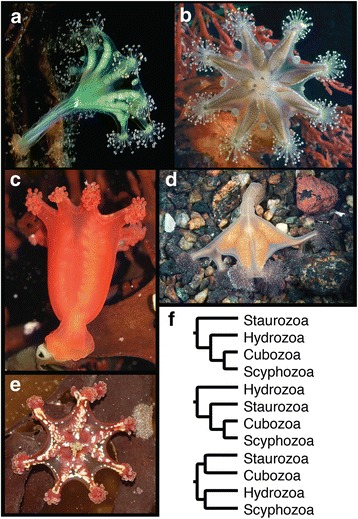
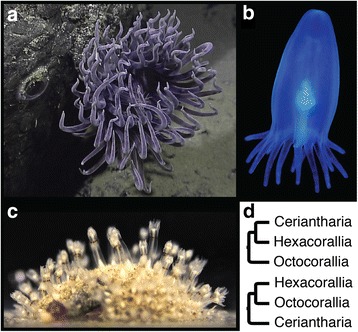
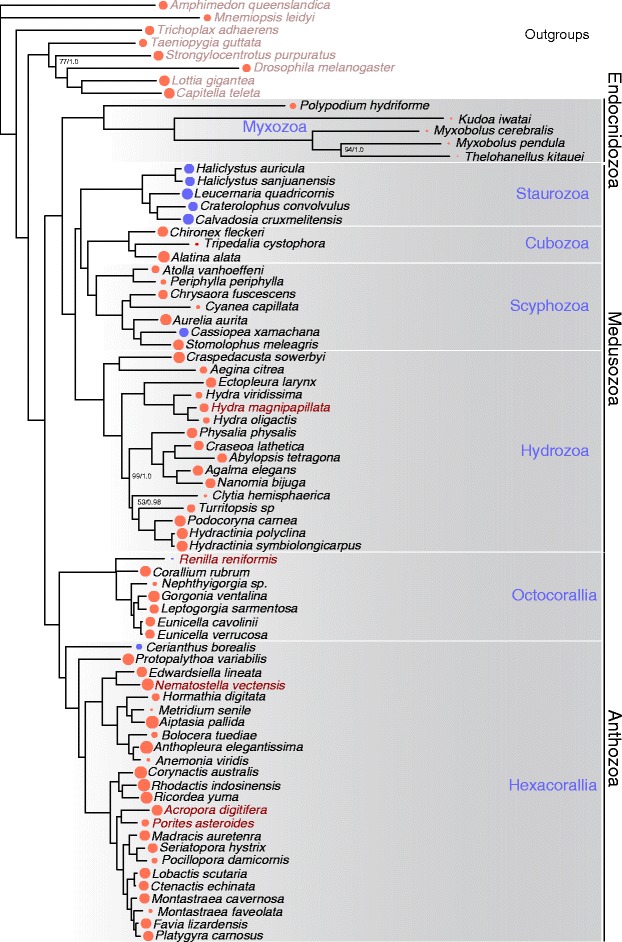
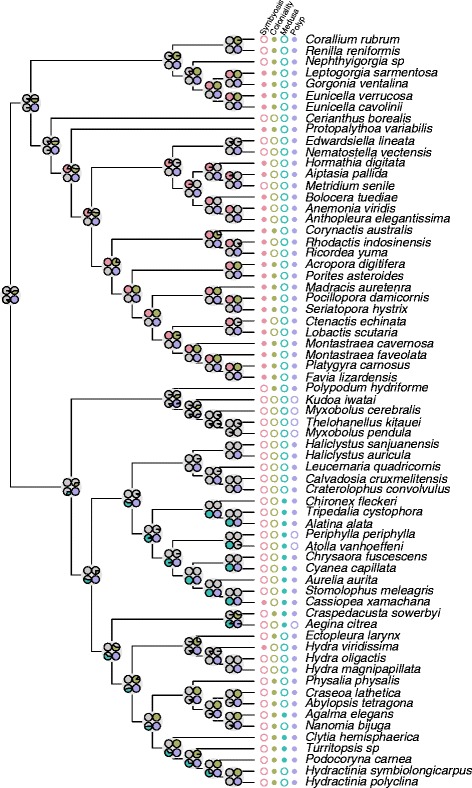
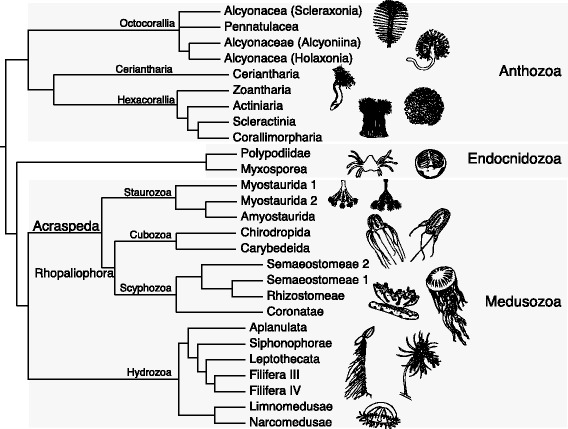
The phylogeny of Cnidaria has been a source of debate for decades, during which nearly all-possible relationships among the major lineages have been proposed. The ecological success of Cnidaria is predicated on several fascinating organismal innovations including stinging cells, symbiosis, colonial body plans and elaborate life histories. However, understanding the origins and subsequent diversification of these traits remains difficult due to persistent uncertainty surrounding the evolutionary relationships within Cnidaria. While recent phylogenomic studies have advanced our knowledge of the cnidarian tree of life, no analysis to date has included genome-scale data for each major cnidarian lineage. Here we describe a well-supported hypothesis for cnidarian phylogeny based on phylogenomic analyses of new and existing genome-scale data that includes representatives of all cnidarian classes. Our results are robust to alternative modes of phylogenetic estimation and phylogenomic dataset construction. We show that two popular phylogenomic matrix construction pipelines yield profoundly different datasets, both in the identities and in the functional classes of the loci they include, but resolve the same topology. We then leverage our phylogenetic resolution of Cnidaria to understand the character histories of several critical organismal traits. Ancestral state reconstruction analyses based on our phylogeny establish several notable organismal transitions in the evolutionary history of Cnidaria and depict the ancestral cnidarian as a solitary, non-symbiotic polyp that lacked a medusa stage. In addition, Bayes factor tests strongly suggest that symbiosis has evolved multiple times independently across the cnidarian radiation. Cnidaria have experienced more than 600 million years of independent evolution and in the process generated an array of organismal innovations. Our results add significant clarification on the cnidarian tree of life and the histories of some of these innovations. Further, we confirm the existence of Acraspeda (staurozoans plus scyphozoans and cubozoans), thus reviving an evolutionary hypothesis put forward more than a century ago.
Overview
The claims and statistics of this paper haven’t been checked yet.
Run the check — free, no account needed. It reads the open-access text and checks the sources it cites.
Integrity signals
Registry
Cites
Statistics
Figures
Verification
Claims the paper makes
The claims and statistics of this paper haven’t been checked yet.
Run the check — free, no account needed. It reads the open-access text and checks the sources it cites.
Claims other papers make about this one
Each is checked against this paper’s own text: does it say what the citing paper says it does?
The cited source says what the claim attributes to it.
In the citing paper
“A polypoid body plan has been inferred for the cnidarian ancestor [64”
From Cambrian Sessile, Suspension Feeding Stem-Group Ctenophores and Evolution of the Comb Jelly Body Plan (2019) · cites this paper as [64]
Self-check
Percentages, sums and reported differences re-computed from the paper’s own numbers.
The self-check needs the paper’s full text.
Citations
Cites
Basic local alignment search tool
Altschul, S. F., Gish, W., Miller, W., Myers, E. W., & Lipman, D. J. (1990) · Journal of Molecular Biology · doi:10.1006/jmbi.1990.9999 · Cited by 98,669
Trimmomatic: a flexible trimmer for Illumina sequence data
Bolger, A. M., Lohse, M., & Usadel, B. (2014) · Bioinformatics · doi:10.1093/bioinformatics/btu170 · Cited by 65,548
RAxML version 8: a tool for phylogenetic analysis and post-analysis of large phylogenies
Stamatakis, A. (2014) · Bioinformatics · doi:10.1093/bioinformatics/btu033 · Cited by 32,291
InterProScan 5: genome-scale protein function classification
JONES, P. M., Binns, D., Chang, H.-Y., Fraser, M., Li, W., McAnulla, C., McWilliam, H., Maslen, J., Mitchell, A., Nuka, G., et al. (2014) · Bioinformatics · doi:10.1093/bioinformatics/btu031 · Cited by 9,511
phytools: an R package for phylogenetic comparative biology (and other things)
Revell, L. J. (2011) · Methods in Ecology and Evolution · doi:10.1111/j.2041-210x.2011.00169.x · Cited by 9,439
Haas, B. J., Papanicolaou, A., Yassour, M., Grabherr, M., Blood, P. D., Bowden, J., Couger, M. B., Eccles, D., Li, B., Lieber, M., et al. (2013) · Nature Protocols · doi:10.1038/nprot.2013.084 · Cited by 8,464
REVIGO summarizes and visualizes long lists of gene ontology terms
Supek, F., Bošnjak, M., Škunca, N., & Šmuc, T. (2011) · PLoS ONE · doi:10.1371/journal.pone.0021800 · Cited by 6,264
OrthoMCL: Identification of Ortholog Groups for Eukaryotic Genomes
Li, L., Stoeckert, C. J., & Roos, D. S. (2003) · Genome Research · doi:10.1101/gr.1224503 · Cited by 5,707
Lanfear, R., Frandsen, P. B., Wright, A. M., Senfeld, T., & Calcott, B. (2016) · Molecular Biology and Evolution · doi:10.1093/molbev/msw260 · Cited by 5,319
Emms, D. M., & Kelly, S. (2015) · Genome Biology · doi:10.1186/s13059-015-0721-2 · Cited by 3,408
Research works printed but not linked: 19
- Wietrzykowski W. Recherches sur le de’veloppement des lucernaires. Arch Zool Exp Gen. 1912;5e Serie:1–95.
- Collins AG. Phylogeny, evolution, and systematics of the stalked jellyfishes (Cnidaria, Staurozoa). Integr Comp Biol. 2010;50:E32.
- Kiderlen H. Die Conularien. Über Bau and Leben der ersten Scyphozoa. Neues Jahrbuch für Mineralogie, Beilige-Band; 1937. p. 113–69.
- Collins AG, Schuchert P, Marques AC, Jankowski T, Medina M, Schierwater B. Medusozoan phylogeny and character evolution clarified by new large and small subunit rDNA data and an assessment of the utility of phylogenetic mixture models. Syst Biol. 2006a;55:97–115. https://doi.org/10.1080/10635150500433615 . · DOI
- Daly M, Fautin DG, Cappola VA. Systematics of the Hexacorallia (Cnidaria: Anthozoa). Zool J Linnean Soc. 2003b;139:419–37. https://doi.org/10.1046/J.1096-3642.2003.00084.X . · DOI
- Borowiec ML, Lee EK, Chiu JC, Plachetzki DC. Extracting phylogenetic signal and accounting for bias in whole-genome data sets supports the Ctenophora as sister to remaining Metazoa. BMC Genomics. 2015;16:987. https://doi.org/10.1186/s12864-015-2146-4 . · DOI · Paper page
- Schmidt H. On evolution in the Anthozoa. Proceedings of the 2nd International Coral Reef Symposium. 1974;1:533–560.
- Minin VN SM, Imholte GC. 2014. Indorigin: testing how many times a trait of interest was regained during evolution (R package).
- Thiel H. The evolution of Scyphozoa: a review. London: Academic Press; 1966.
- Haas, B. J., and A. Papanicolaou 2016. TransDecoder (find coding regions within transcripts).
- Vanhoeffen E. Untersuchungen ueber Anatomie und Entwicklung von Arachanctis albida, M. Sars. Bibliotheca Zoologica. 1895;20:1–14.
- Haeckel E. Das System der Medusen. I, 2: System der Acraspeden. Jenna: Gustav Fischer; 1880. p. 672.
- Goy J. Campagne de la Calypso au large des côtes atlantiques de l’Amérique du Sud Sud (1961–1962) - 35. In: Méduses. Resultats scientifiques des campagnes de la Calypso; 1979. p. 263–96.
- Cuvier G. Le Règne animal distribué d’après son organisation, pour servir de base à l’histoire naturelle des animaux et d’introduction à l’anatomie comparée. In: Tome IV Paris:: chez De’terville Libraire; 1817.
- Sars M. Fauna littoralis Norvegiae oder Beschreibung und Abbildungen neuer oder wenig bekannter Seethiere, nebst Beobachtungen u¨ber die Organisation, Lebensweise u. Entwickelung derselben. In: Christiania: Druck und Verlag von Johann Dahk; 1846.
- Hornell J. The Lucernarians as degenerate Scyphomedusae. A note upon the phylogeny of the Order. Nat Sci. 1893;3:204–8.
- Hurst CH. Biological theories. VI. The phylogeny of Lucernarians. In: Nat. Sci. London, New York; 1893. p. 208–17.
- Gegenbaur C. Versuch eines Systemes der Medusen, mit Beschreibung neuer oder wenig gekannter Formen; zugleich ein Beitrag zur Kenntnis der Fauna des Mittelmeeres. Z wiss Zool Leipzig. 1886;8:202–73.
- Ryan JF. alien_index: alien_index first release: zenodo. Salvini-Plawen lv 1978. On the origin and evolution of the lower Metazoa. J Zool Syst Evol Res. 2015;16:40–87.
Cited by
Sorted by citations
Items 101–200 of 259
Holst, S., Heins, A., & Laakmann, S. (2019) · Marine Biodiversity · doi:10.1007/s12526-019-00943-1 · Cited by 13
Yamakawa, S., Morino, Y., Kohtsuka, H., & Wada, H. (2019) · Biomolecules · doi:10.3390/biom10010037 · Cited by 13
Evolution, Origins and Diversification of Parasitic Cnidarians
Okamura, B., & Gruhl, A. (2021) · Topics in geobiology · doi:10.1007/978-3-030-42484-8_4 · Cited by 14
Owen, C. L., Marshall, D. C., Wade, E. J., Meister, R. C., Goemans, G., Kunte, K. K., Moulds, M. S., Hill, K. B. R., Villet, M. H., Pham, T.-H., et al. (2022) · Systematic Biology · doi:10.1093/sysbio/syac043 · Cited by 12
Kawsar, M. A., Zhao, C., Mao, F., Yu, Z., & Zhang, Y. (2025) · Antibiotics · doi:10.3390/antibiotics14090924 · Cited by 13
von Montfort, G. M., Costello, J. H., Colin, S. P., Morandini, A. C., Migotto, Á. E., Maronna, M. M., Reginato, M., Miyake, H., & Nagata, R. M. (2023) · Scientific Reports · doi:10.1038/s41598-023-34927-w · Cited by 13
Revisiting mitogenome evolution in Medusozoa with eight new mitochondrial genomes
Ling, M. K., Yap, N. W. L., Iesa, I., Yip, Z. T., Huang, D., & Quek, Z. B. R. (2023) · iScience · doi:10.1016/j.isci.2023.108252 · Cited by 12
An early Cambrian polyp reveals a potential anemone‐like ancestor for medusozoan cnidarians
Zhao, Y., Parry, L. A., Vinther, J., Dunn, F. S., Li, Y., Wei, F., Hou, X., & Cong, P. (2023) · Palaeontology · doi:10.1111/pala.12637 · Cited by 12
Eyes in Staurozoa (Cnidaria): a review
Miranda, L. S., & Collins, A. G. (2019) · PeerJ · doi:10.7717/peerj.6693 · Cited by 12
Self-citationRivera‐de‐Torre, E., Palacios‐Ortega, J., Slotte, J. P., Gavilanes, J. G., Martínez‐del‐Pozo, Á., & García‐Linares, S. (2020) · International Journal of Molecular Sciences · doi:10.3390/ijms21238915 · Cited by 13
Bentlage, B., & Collins, A. G. (2021) · PeerJ · doi:10.7717/peerj.12104 · Cited by 12
Self-citationBarroso, R. A., Ramos, L., Moreno, H., & Antunes, A. (2024) · Toxins · doi:10.3390/toxins16020075 · Cited by 12
Emery, M. A., Beavers, K. M., Buren, E. W. V., Batiste, R., Dimos, B., Pellegrino, M. W., & Mydlarz, L. D. (2024) · Proceedings of the Royal Society B Biological Sciences · doi:10.1098/rspb.2024.0428 · Cited by 10
Zhang, X. P., & Jacobs, D. K. (2022) · Genome Biology and Evolution · doi:10.1093/gbe/evab284 · Cited by 11
The genome of the deep-sea anemone Actinernus sp. contains a mega-array of ANTP-class homeobox genes
Law, S. T. S., Yu, Y., Nong, W., So, W. L., Li, Y., Swale, T., Ferrier, D. E. K., Qiu, J., Qian, P., & Hui, J. H. L. (2023) · Proceedings of the Royal Society B Biological Sciences · doi:10.1098/rspb.2023.1563 · Cited by 10
Rhizostomins: A Novel Pigment Family From Rhizostome Jellyfish (Cnidaria, Scyphozoa)
Lawley, J. W., Carroll, A. R., & McDougall, C. (2021) · Frontiers in Marine Science · doi:10.3389/fmars.2021.752949 · Cited by 10
Avian, M., Mancini, L., Voltolini, M., Bonnet, D., Dreossi, D., Macaluso, V., Pillepich, N., Prieto, L., Ramšak, A., Terlizzi, A., et al. (2022) · PLoS ONE · doi:10.1371/journal.pone.0272023 · Cited by 9
McIlroy, D., Pasinetti, G., Pérez-Pinedo, D., McKean, C., Dufour, S. C., Matthews, J. J., Menon, L. R., Nicholls, R., & Taylor, R. S. (2024) · Life · doi:10.3390/life14091096 · Cited by 10
Boosten, M., Sant, C., Silva, O. D., Chaffron, S., Guidi, L., & Leclère, L. (2025) · Proceedings of the National Academy of Sciences · doi:10.1073/pnas.2415979122 · Cited by 9
Americus, B., Hams, N., Klompen, A. M. L., Alama-Bermejo, G., Lotan, T., Bartholomew, J. L., & Atkinson, S. D. (2021) · PeerJ · doi:10.7717/peerj.12606 · Cited by 9
A Missing Link between Retrotransposons and Retroviruses
Wang, J., & Han, G. (2022) · mBio · doi:10.1128/mbio.00187-22 · Cited by 9
Straehler-Pohl, I., & Jarms, G. (2022) · Plankton and Benthos Research · doi:10.3800/pbr.17.105 · Cited by 9
Zuccarotto, A., Sollitto, M., Leclère, L., Panzella, L., Gerdol, M., Leone, S., & Castellano, I. (2024) · Free Radical Biology and Medicine · doi:10.1016/j.freeradbiomed.2024.11.037 · Cited by 8
Warner, J. F., Besemer, R. M., Schickle, A., Borbee, E. M., Changsut, I. V., Sharp, K. H., & Babonis, L. S. (2025) · EvoDevo · doi:10.1186/s13227-025-00243-9 · Cited by 10
Prudkovsky, A. A., Vetrova, A. A., & Kremnyov, S. V. (2023) · Diversity · doi:10.3390/d15050675 · Cited by 8
Amplatz, K., Zieger, E., Abed‐Navandi, D., Weissenbacher, A., & Wanninger, A. (2024) · Frontiers in Neuroscience · doi:10.3389/fnins.2023.1324980 · Cited by 9
Diversity of Feeding in Anthozoa (Cnidaria): A Systematic Review
Santos, T. B., Reimer, J. D., Acuña, F. H., & Stampar, S. N. (2020) · Diversity · doi:10.3390/d12100405 · Cited by 8
Cnidarians: Diversity and Evolution of Cnidarian Visual Systems
Birch, S., Picciani, N., Oakley, T. H., & Plachetzki, D. C. (2023) · Springer series in vision research · doi:10.1007/978-3-031-23216-9_2 · Cited by 8
Self-citationCnidarian Larvae: True Planulae, Other-Than-Planulae, and Planulae That Don’t Look Like Planulae
Kraus, Y. A. (2023) · Russian Journal of Developmental Biology · doi:10.1134/s1062360423070044 · Cited by 7
One Ring does not rule them all: Linear mtDNA in Metazoa
Kayal, E., & Lavrov, D. V. (2024) · Gene · doi:10.1016/j.gene.2024.148999 · Cited by 7
Self-citationPhylogenetic affinities and evolution of the Early Cambrian hexangulaconulariids
Song, Z., Guo, J., Han, J. W., Iten, H. V., Peng, J., Qiang, Y., Zhang, B., Zhao, X., Li, G., & Wen, H. (2024) · Journal of Systematic Palaeontology · doi:10.1080/14772019.2024.2417668 · Cited by 7
Colgren, J. J., & Burkhardt, P. (2025) · Nature reviews. Neuroscience · doi:10.1038/s41583-025-00983-6 · Cited by 7
da Silva, D. L., Valladão, R., Beraldo-Neto, E., Coelho, G. R., Neto, O. B. S., Vigerelli, H., Lopes, A. R., Hamilton, B. R., Undheim, E. A. B., Sciani, J. M., et al. (2023) · Marine Drugs · doi:10.3390/md21090481 · Cited by 7
Systematics and character evolution of capitate hydrozoans
Maggioni, D., Schuchert, P., Ostrovsky, A. N., Schiavo, A., Hoeksema, B. W., Pica, D., Piraino, S., Arrigoni, R., Seveso, D., Montalbetti, E., et al. (2023) · Cladistics · doi:10.1111/cla.12567 · Cited by 7
The evolution of cnidarian stinging cells supports a Precambrian radiation of animal predators
Sierra, N. C., & Gold, D. A. (2024) · Evolution & Development · doi:10.1111/ede.12469 · Cited by 7
Maloney, M. E., Buckley, K. M., & Strader, M. E. (2024) · Frontiers in Ecology and Evolution · doi:10.3389/fevo.2024.1409379 · Cited by 7
Morphology of Rhizostomeae jellyfishes: What is known and what we advanced since the 1970s
Morandini, A. C. (2024) · Advances in marine biology · doi:10.1016/bs.amb.2024.09.004 · Cited by 7
Lausen, B., Ahang, A., Cummins, S. F., & Wang, T. (2023) · Toxins · doi:10.3390/toxins15030170 · Cited by 7
Barroso, R. A., Rodrigues, T., Campos, A. M. O., Almeida, D., Guardiola, F. A., Turkina, M. V., & Antunes, A. (2025) · Marine Drugs · doi:10.3390/md23020079 · Cited by 6
Thies, A. B., Rangarajan-Paul, M., Wangpraseurt, D., & Tresguerres, M. (2025) · Journal of Experimental Biology · doi:10.1242/jeb.249849 · Cited by 6
Animal–chlorophyte photosymbioses: evolutionary origins and ecological diversity
Liao, I. J.-Y., Sakagami, T., Lewin, T. D., Bailly, X., Hamada, M., & Luo, Y. (2025) · Biology Letters · doi:10.1098/rsbl.2025.0250 · Cited by 6
Covering All Bases: A Universal Metazoan UCE Probe Set to Democratize Phylogenomics
Derkarabetian, S., Lord, A., Angier, K. I. W., Cosgrove, J. G., Frigyik, E. T., González-Delgado, S., Jordan, B., Rodríguez‐Flores, P. C., Sato, S., Shapiro, L., et al. (2025) · Genome Biology and Evolution · doi:10.1093/gbe/evaf193 · Cited by 6
A whole-body atlas of BMP signaling activity in an adult sea anemone
Knabl, P., Mörsdorf, D., & Genikhovich, G. (2025) · BMC Biology · doi:10.1186/s12915-025-02150-w · Cited by 6
Chiu, Y., & Shinzato, C. (2022) · Frontiers in Marine Science · doi:10.3389/fmars.2022.889866 · Cited by 5
Species and population genomic differentiation in Pocillopora corals (Cnidaria, Hexacorallia)
Aurelle, D., Pratlong, M., Oury, N., Haguenauer, A., Gélin, P., Magalon, H., Adjeroud, M., Romans, P., Vidal‐Dupiol, J., Claereboudt, M. R., et al. (2022) · Genetica · doi:10.1007/s10709-022-00165-7 · Cited by 8
Asymmetrical bleaching of upside-down jellyfish Cassiopea during high water temperatures in Cuba
Morejón-Arrojo, R. D., Anthony, C. J., & Rodríguez-Viera, L. (2024) · Marine Biodiversity · doi:10.1007/s12526-024-01434-8 · Cited by 6
Smith, D. R. (2020) · Genome Biology and Evolution · doi:10.1093/gbe/evaa130 · Cited by 6
miRNA-target complementarity in cnidarians resembles its counterpart in plants
Admoni, Y., Fridrich, A., Weavers, P. K., Aharoni, R., Razin, T., Salinas‐Saavedra, M., Rabani, M., Frank, U., & Moran, Y. (2025) · EMBO Reports · doi:10.1038/s44319-024-00350-z · Cited by 9
Myxozoans (Cnidaria) do not Retain Key Oxygen-Sensing and Homeostasis Toolkit Genes
Graham, A. M., & Barreto, F. S. (2023) · Genome Biology and Evolution · doi:10.1093/gbe/evad003 · Cited by 5
A comprehensive compilation of Iberian Medusozoan data: Diversity, ecology, and omics insights
Rodrigues, T., Almeida, D., Guardiola, F. A., Borges, P. A. V., & Antunes, A. (2024) · Regional Studies in Marine Science · doi:10.1016/j.rsma.2024.103462 · Cited by 5
Ceriello, H., Lopes, C. S. S., Dias, G. M., & Stampar, S. N. (2019) · Marine Biodiversity · doi:10.1007/s12526-019-00942-2 · Cited by 5
Medusozoans of Tuxpan, Veracruz, Gulf of Mexico
López-Torres, C. K., Mendoza‐Becerril, M. A., & la Cruz-Francisco, V. D. (2023) · Regional Studies in Marine Science · doi:10.1016/j.rsma.2023.102987 · Cited by 5
Gamero‐Mora, E., Lawley, J. W., Maronna, M. M., Stampar, S. N., Muhlia‐Almazán, A., & Morandini, A. C. (2024) · Advances in marine biology · doi:10.1016/bs.amb.2024.09.001 · Cited by 4
Marine Origin Bioactive Peptides: Novel Advances in the Therapeutic Potential
Dehghani, M., Taherizadeh, M. R., & Homaei, A. A. (2022) · Springer eBooks · doi:10.1007/978-981-16-5374-2_11 · Cited by 4
Estrada-González, M. C., Agüero, J., & Mendoza‐Becerril, M. A. (2023) · Journal of Natural History · doi:10.1080/00222933.2023.2214967 · Cited by 4
Late CambrianPywackiais a cnidarian, not a bryozoan: Insights from skeletal microstructure
Hageman, S. J., & Vinn, O. (2023) · Journal of Paleontology · doi:10.1017/jpa.2023.35 · Cited by 4
Reproductive and environmental traits explain the variation in egg size among Medusozoa (Cnidaria)
García‐Rodríguez, J., Cunha, A. F., Morales-Guerrero, A., González‐Chaves, A., Camacho, A., Miranda, L. S., Serrano, F. C., Jaimes‐Becerra, A., & Marques, A. C. (2023) · Proceedings of the Royal Society B Biological Sciences · doi:10.1098/rspb.2023.0543 · Cited by 4
Lyndby, N. H., Murthy, S., Bessette, S., Jakobsen, S. L., Meibom, A., & Kühl, M. (2023) · Proceedings of the Royal Society B Biological Sciences · doi:10.1098/rspb.2023.0127 · Cited by 4
Intraspecific variation of radial symmetry number of a 535 million-year-old jellyfish
Shao, T., Hu, B., Shao, Y., Zhang, Y. N., Liu, Y. H., Qin, J., Xu, Y., Fan, M. M., Duan, B., & Zhang, H. Q. (2019) · Precambrian Research · doi:10.1016/j.precamres.2019.105412 · Cited by 4
Genome assembly of Bougainvillia cf. muscus (Cnidaria: Hydrozoa)
Macias-Muñoz, A., Varney, R., Katcher, E., Everhart, M., & Oakley, T. H. (2025) · G3 Genes Genomes Genetics · doi:10.1093/g3journal/jkaf110 · Cited by 4
Lei, Y., Zhang, J., Xu, G., Wang, A., & Cao, Z. (2025) · Medicinal Research Reviews · doi:10.1002/med.70022 · Cited by 3
Zhou, F., Zhang, X., Ding, P., Sun, R., Wang, Z., & Liu, Y. (2025) · Fishes · doi:10.3390/fishes10020061 · Cited by 3
Meech, R. W. (2022) · Journal of Experimental Biology · doi:10.1242/jeb.243382 · Cited by 3
Mills, C. E., Westlake, H. E., Hirano, Y. M., & Miranda, L. S. (2023) · PeerJ · doi:10.7717/peerj.15944 · Cited by 3
A hydrozoan from the eurypterid-dominated Silurian Bertie Group Lagerstätten of North America
Larson, E., & Briggs, D. E. G. (2023) · Journal of Paleontology · doi:10.1017/jpa.2023.62 · Cited by 3
Tournière, O., Busengdal, H., Gahan, J. M., & Rentzsch, F. (2024) · Methods in molecular biology · doi:10.1007/978-1-0716-3766-1_4 · Cited by 2
Modica, M. V., Leone, S., Gerdol, M., Greco, S., Aurelle, D., Oliverio, M., Fassio, G., Koulali, K. E., Barrachina, C., & Dutertre, S. (2025) · Open Biology · doi:10.1098/rsob.250015 · Cited by 3
Epidemiology of Polypodium hydriforme in American Paddlefish
Okamura, B., Hartigan, A., Long, P. F., Ruggeri, P., Smith‐Easter, K., & Schooley, J. D. (2020) · Journal of Fish Diseases · doi:10.1111/jfd.13202 · Cited by 3
Deserti, M. I., Grohmann, P. A., & Stampar, S. N. (2020) · Elsevier eBooks · doi:10.1016/b978-0-12-804225-0.00004-6 · Cited by 3
Schnitzler, C. E. (2019) · Nature Ecology & Evolution · doi:10.1038/s41559-019-0872-8 · Cited by 3
The linear mitochondrial genome of commensal hydroid Eutima japonica (Cnidaria, Hydrozoa, Eirenidae)
Seo, J. S., Eom, H.-J., Cho, J.-K., Kang, H., & Rhee, J. (2021) · Mitochondrial DNA Part B · doi:10.1080/23802359.2021.1899869 · Cited by 3
Estrada-González, M. C., Jiménez-López, M. E., Huato‐Soberanis, L., & Mendoza‐Becerril, M. A. (2023) · Diversity · doi:10.3390/d15020182 · Cited by 3
Immune System Components in Cnidarians
Emery, M. A., Gutierrez-Andrade, D., Changsut, I. V., Swain, H. L., Fuess, L. E., & Mydlarz, L. D. (2025) · Elsevier eBooks · doi:10.1016/b978-0-128-24465-4.00122-8 · Cited by 3
Knabl, P., Ordoñez, J. F. F., Montenegro, J. D., Wollesen, T., & Genikhovich, G. (2025) · bioRxiv (Cold Spring Harbor Laboratory) · doi:10.1101/2025.06.08.658475 · Cited by 3
Alesci, A., Marino, S., Miller, A., Giliberti, A., Rigano, G., Giuffrè, L., Fernandes, J. M. O., Savoca, S., & Capillo, G. (2024) · Acta Zoologica · doi:10.1111/azo.12523 · Cited by 2
Millepora “fire coral” toxins: An overview of their biological activities
Hérnández‐Elizárraga, V. H., & López, N. B. O. (2025) · Pharmacological Research - Natural Products · doi:10.1016/j.prenap.2025.100171 · Cited by 2
Gamero‐Mora, E., & Muhlia‐Almazán, A. (2025) · Journal of Bioenergetics and Biomembranes · doi:10.1007/s10863-025-10071-0 · Cited by 2
Kaneko, T., Tanaka, S., Sugiyama, M., Kaise, S., Inui, H., & Ushida, K. (2024) · Glycobiology · doi:10.1093/glycob/cwae090 · Cited by 2
Medusozoans of Cuba (Cnidaria): an update
Morejón-Arrojo, R. D., & Rodríguez-Viera, L. (2025) · Journal of the Marine Biological Association of the United Kingdom · doi:10.1017/s0025315425100441 · Cited by 2
Rbm45 Phylogenetics, Protein Domain Conservation, and Gene Architecture in Clade Metazoa
Vuchkovska, V., Marti, T. N., Cisneros, A., Saiki, L. M., & Henderson, J. O. (2024) · Journal of Evolutionary Science · doi:10.14302/issn.2689-4602.jes-24-4982 · Cited by 2
Distribution of nematocytes differs in two types of gonophores in hydrozoan Sarsia loveniiPreprint
Vetrova, A. A., Prudkovsky, A. A., & Kremnyov, S. V. (2023) · bioRxiv (Cold Spring Harbor Laboratory) · doi:10.1101/2023.03.22.533798 · Cited by 2
A whole-body atlas of non-graded BMP signaling activity in a sea anemonePreprint
Knabl, P., Mörsdorf, D., & Genikhovich, G. (2024) · bioRxiv (Cold Spring Harbor Laboratory) · doi:10.1101/2024.07.24.604959 · Cited by 2
High-quality genome assembly of the azooxanthellate coral Tubastraea coccinea (Lesson, 1829)
Chen, X., Han, W., Chang, X., Tang, C., Chen, K., Bao, L., Zhang, L., Hu, J., Wang, S., & Bao, Z. (2025) · Scientific Data · doi:10.1038/s41597-025-04839-7 · Cited by 3
Cnida Morphology as Taxonomic Tools within Tube-Dwelling Anemones (Ceriantharia, Cnidaria)
Forero-Mejia, A. C., Duchatelet, L., & Östman, C. (2024) · Oceans · doi:10.3390/oceans5030029 · Cited by 1
Signaling Mechanism of Budding, Proliferation, and Tissue Regeneration in Cnidaria
Lv, J., Chen, J., Li, L., Geng, X., Li, B., Wang, M., & Yang, J. (2025) · Current Issues in Molecular Biology · doi:10.3390/cimb47040219 · Cited by 1
Parry, L. A., Lerosey‐Aubril, R., Coleman, R., Mouro, L. D., Gaines, R. R., Skabelund, J., Weaver, J. C., & Ortega‐Hernández, J. (2025) · Journal of Systematic Palaeontology · doi:10.1080/14772019.2025.2545834 · Cited by 3
Knabl, P., Ordoñez, J. F. F., Montenegro, J. D., Abed‐Navandi, D., Halbauer, R., Link, O., Wollesen, T., & Genikhovich, G. (2026) · PLoS Biology · doi:10.1371/journal.pbio.3003803 · Cited by 4
A review of box jellyfish (Cubozoa) diversity and distribution in the Northern Indian Ocean
Jena, A. K., & Sahu, B. K. (2026) · Estuarine Coastal and Shelf Science · doi:10.1016/j.ecss.2026.110222 · Cited by 1
Comparative analysis of transposable elements in jellyfish and hydroid species (Cnidaria: Medusozoa)
Mays, A., Cabrera, F. P., & Macias-Muñoz, A. (2026) · BMC Genomics · doi:10.1186/s12864-026-13353-y · Cited by 1
Lopes, C. S. S., Scarabino, F., Carranza, A., González-Muñoz, R., Morandini, A. C., Nagata, R. M., & Stampar, S. N. (2023) · PeerJ · doi:10.7717/peerj.15290 · Cited by 1
Lu, A., Kimble, M., Justinen, S., Morris, D. P., Wang, C., Martínez, D. E., & Hessinger, D. A. (2023) · Biological Bulletin · doi:10.1086/730702 · Cited by 1
Admoni, Y., Lewandowska, M., Aharoni, R., Shi, J., Zhang, X., Chen, Q., & Moran, Y. (2026) · PLoS Biology · doi:10.1371/journal.pbio.3003589 · Cited by 1
Wang, Y. (2022) · International Conference on Intelligent Computing and Control Systems (ICICCS) · doi:10.1109/iciccs53718.2022.9788275 · Cited by 1
Shostak, S. (2021) · Wiley eBooks · doi:10.1002/9780470015902.a0029250 · Cited by 1
Target complementarity in cnidarians supports a common origin for animal and plant microRNAsPreprint
Admoni, Y., Fridrich, A., Razin, T., Salinas‐Saavedra, M., Rabani, M., Uri Frank, A., & Moran, Y. (2023) · bioRxiv (Cold Spring Harbor Laboratory) · doi:10.1101/2023.01.08.523153 · Cited by 1
González-Rajal, Á., D'Araujo, T. Y., Ovchinnikov, V. Y., Alcalá, J. L. G.-J., Wang, T., Lausen, B., Brethouwer, T., Angeloni, A., Ross, S. E., Burgos-Ruiz, A. M., et al. (2026) · bioRxiv (Cold Spring Harbor Laboratory) · doi:10.64898/2026.08.01.742136 · Cited by 1
Photoreceptor complexity accompanies adaptation to challenging marine environments in AnthozoaPreprint
Gornik, S. G., Bergheim, B. G., Foulkes, N. S., & Guse, A. (2020) · bioRxiv (Cold Spring Harbor Laboratory) · doi:10.1101/2020.05.28.118018
Muthye, V., & Lavrov, D. V. (2020) · bioRxiv (Cold Spring Harbor Laboratory) · doi:10.17605/osf.io/rn9ft
Nicotine Stimulates Peristalsis in N. Vectensis: From Behavior to Nicotinic Receptor GenesPreprint
Figueiredo, J., Rest, J. S., Adamo, S., Grella, R., & Dilger, J. P. (2021) · Research Square · doi:10.21203/rs.3.rs-195699/v1
Metadata
- Authors
- Kayal, E., Bentlage, B., Sabrina Pankey, M., Ohdera, A. H., Medina, M., Plachetzki, D. C., Collins, A. G., & Ryan, J. F.
- Affiliations
- Smithsonian Institution (US)
- Pennsylvania State University (US)
- University of New Hampshire (US)
- University of Florida (US)
- Corresponding author
- Plachetzki, David C.
- Ryan, Joseph F.
- ORCID
- Venue
- BMC Evolutionary Biology
- Published
- 2018-04-13
- Volume
- 18
- Issue
- 1
- Pages
- 68
- ISSN
- 1471-2148 (ISSN-L)
- PMC
- PMC5932825
- OpenAlex
- W2807223659
- Cited by
- 255
- References
- 104
- Citations by year
- 2026: 15 · 2025: 28 · 2024: 35 · 2023: 37 · 2022: 28 · 2021: 40 · 2020: 40 · 2019: 28 · 2018: 4
- FWCI
- 20.61
- Type
- journal article
- Language
- en
- Open access
- gold
- doi.org
- Locations
- BMC Evolutionary Biology (publishedVersion, cc-by)
- Europe PMC (PubMed Central) (publishedVersion, other-oa)
- PubMed Central (publishedVersion, cc-by)
- HAL (submittedVersion, cc-by)
- DOAJ (DOAJ: Directory of Open Access Journals) (submittedVersion, cc-by-sa)
- NOAA Institutional Repository (submittedVersion)
- Funders
- Smithsonian Institution
- Directorate for Biological Sciences (OIA-1457769)
- National Institute of Food and Agriculture (Hatch Project 00654)
- Topics
- Life Sciences › Agricultural and Biological Sciences › Animal Science and Zoology › Marine Invertebrate Physiology and Ecology
- Life Sciences › Biochemistry, Genetics and Molecular Biology › Molecular Biology › Genomics and Phylogenetic Studies
- Life Sciences › Agricultural and Biological Sciences › Ecology, Evolution, Behavior and Systematics › Protist diversity and phylogeny
- Keywords
- genome-scale data, ancestral state reconstruction, symbiosis evolution, nematocysts, Scyphozoa, cubozoans
About these checks
Registry, retraction, Cites and statistics results are computed, not judged, with one exception: a printed reference that no index lists is read once by a model before it counts as a citation error. Claims are extracted by a model and kept only when their quote appears verbatim in the text; each cited source is then checked, with a model’s help, for whether it says what the claim relies on. Those verdicts can be wrong — read the claim’s quote and the cited source before relying on one.
Statistics and arithmetic are recomputed, not judged.
Confidence bands are shown only for fields calibrated on our annotated test set. None is calibrated yet, so no band is shown.
What counts as a claim ›How we measure confidence ›How we check this ›
Are you an author, or do you see a problem with this page? Request a review
