

The DOI matches its Crossref record; 104 of the 104 references it cites were found in a registry or an index.
Phylogenomics provides a robust topology of the major cnidarian lineages and insights on the origins of key organismal traits
Open accessAbstract
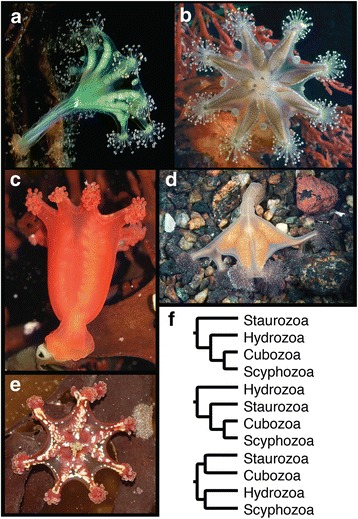
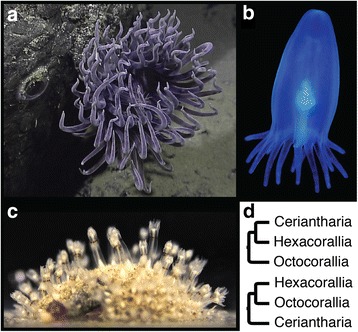
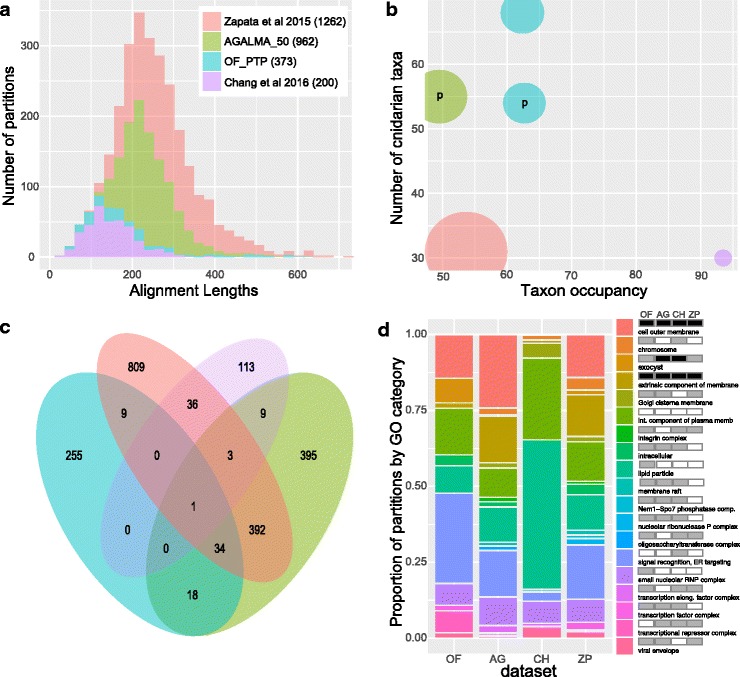
The phylogeny of Cnidaria has been a source of debate for decades, during which nearly all-possible relationships among the major lineages have been proposed. The ecological success of Cnidaria is predicated on several fascinating organismal innovations including stinging cells, symbiosis, colonial body plans and elaborate life histories. However, understanding the origins and subsequent diversification of these traits remains difficult due to persistent uncertainty surrounding the evolutionary relationships within Cnidaria. While recent phylogenomic studies have advanced our knowledge of the cnidarian tree of life, no analysis to date has included genome-scale data for each major cnidarian lineage. Here we describe a well-supported hypothesis for cnidarian phylogeny based on phylogenomic analyses of new and existing genome-scale data that includes representatives of all cnidarian classes. Our results are robust to alternative modes of phylogenetic estimation and phylogenomic dataset construction. We show that two popular phylogenomic matrix construction pipelines yield profoundly different datasets, both in the identities and in the functional classes of the loci they include, but resolve the same topology. We then leverage our phylogenetic resolution of Cnidaria to understand the character histories of several critical organismal traits. Ancestral state reconstruction analyses based on our phylogeny establish several notable organismal transitions in the evolutionary history of Cnidaria and depict the ancestral cnidarian as a solitary, non-symbiotic polyp that lacked a medusa stage. In addition, Bayes factor tests strongly suggest that symbiosis has evolved multiple times independently across the cnidarian radiation. Cnidaria have experienced more than 600 million years of independent evolution and in the process generated an array of organismal innovations. Our results add significant clarification on the cnidarian tree of life and the histories of some of these innovations. Further, we confirm the existence of Acraspeda (staurozoans plus scyphozoans and cubozoans), thus reviving an evolutionary hypothesis put forward more than a century ago.
Overview
The claims and statistics of this paper haven’t been checked yet.
Run the check — free, no account needed. It reads the open-access text and checks the sources it cites.
Integrity signals
Registry
Cites
Statistics
Figures
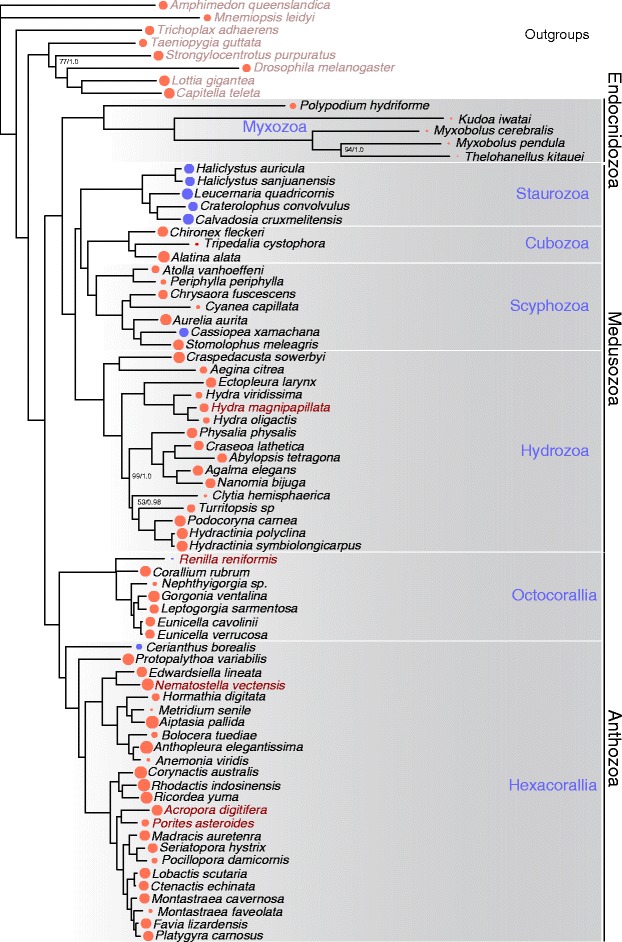
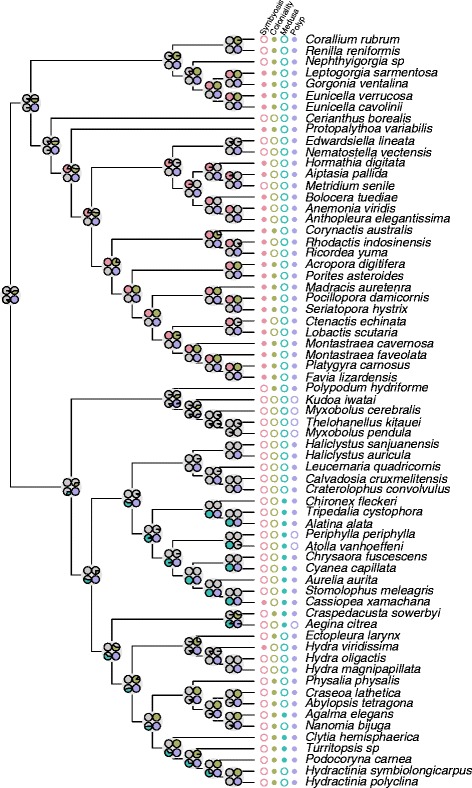
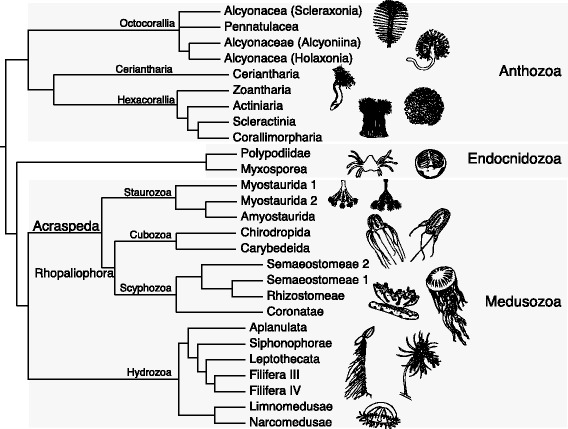
Verification
Claims the paper makes
The claims and statistics of this paper haven’t been checked yet.
Run the check — free, no account needed. It reads the open-access text and checks the sources it cites.
Claims other papers make about this one
Each is checked against this paper’s own text: does it say what the citing paper says it does?
The cited source says what the claim attributes to it.
In the citing paper
“A polypoid body plan has been inferred for the cnidarian ancestor [64”
From Cambrian Sessile, Suspension Feeding Stem-Group Ctenophores and Evolution of the Comb Jelly Body Plan (2019) · cites this paper as [64]
Self-check
Percentages, sums and reported differences re-computed from the paper’s own numbers.
The self-check needs the paper’s full text.
Citations
Cites
Basic local alignment search tool
Altschul, S. F., Gish, W., Miller, W., Myers, E. W., & Lipman, D. J. (1990) · Journal of Molecular Biology · doi:10.1006/jmbi.1990.9999 · Cited by 98,669
Trimmomatic: a flexible trimmer for Illumina sequence data
Bolger, A. M., Lohse, M., & Usadel, B. (2014) · Bioinformatics · doi:10.1093/bioinformatics/btu170 · Cited by 65,548
RAxML version 8: a tool for phylogenetic analysis and post-analysis of large phylogenies
Stamatakis, A. (2014) · Bioinformatics · doi:10.1093/bioinformatics/btu033 · Cited by 32,291
InterProScan 5: genome-scale protein function classification
JONES, P. M., Binns, D., Chang, H.-Y., Fraser, M., Li, W., McAnulla, C., McWilliam, H., Maslen, J., Mitchell, A., Nuka, G., et al. (2014) · Bioinformatics · doi:10.1093/bioinformatics/btu031 · Cited by 9,511
phytools: an R package for phylogenetic comparative biology (and other things)
Revell, L. J. (2011) · Methods in Ecology and Evolution · doi:10.1111/j.2041-210x.2011.00169.x · Cited by 9,439
Haas, B. J., Papanicolaou, A., Yassour, M., Grabherr, M., Blood, P. D., Bowden, J., Couger, M. B., Eccles, D., Li, B., Lieber, M., et al. (2013) · Nature Protocols · doi:10.1038/nprot.2013.084 · Cited by 8,464
REVIGO summarizes and visualizes long lists of gene ontology terms
Supek, F., Bošnjak, M., Škunca, N., & Šmuc, T. (2011) · PLoS ONE · doi:10.1371/journal.pone.0021800 · Cited by 6,264
OrthoMCL: Identification of Ortholog Groups for Eukaryotic Genomes
Li, L., Stoeckert, C. J., & Roos, D. S. (2003) · Genome Research · doi:10.1101/gr.1224503 · Cited by 5,707
Lanfear, R., Frandsen, P. B., Wright, A. M., Senfeld, T., & Calcott, B. (2016) · Molecular Biology and Evolution · doi:10.1093/molbev/msw260 · Cited by 5,319
Emms, D. M., & Kelly, S. (2015) · Genome Biology · doi:10.1186/s13059-015-0721-2 · Cited by 3,408
Using native and syntenically mapped cDNA alignments to improve de novo gene finding
Stanke, M., Diekhans, M., Baertsch, R., & Haussler, D. (2008) · Bioinformatics · doi:10.1093/bioinformatics/btn013 · Cited by 2,605
Broad phylogenomic sampling improves resolution of the animal tree of life
Dunn, C. W., Hejnol, A., Matus, D. Q., Pang, K., Browne, W. E., Smith, S. A., Seaver, E., Rouse, G. W., Obst, M., Edgecombe, G. D., et al. (2008) · Nature · doi:10.1038/nature06614 · Cited by 1,921 · cited 1×
“transcripts) have recently been exploited to resolve a host of longstanding phylogenetic issues [37, 38, 39].”
Sea Anemone Genome Reveals Ancestral Eumetazoan Gene Repertoire and Genomic Organization
Putnam, N. H., Srivastava, M., Hellsten, U., Dirks, B., Chapman, J., Salamov, A., Terry, A., Shapiro, H., Lindquist, E., Kapitonov, V. V., et al. (2007) · Science · doi:10.1126/science.1139158 · Cited by 1,555
High-quality draft assemblies of mammalian genomes from massively parallel sequence data
Gnerre, S., MacCallum, I., Przybylski, D., Ribeiro, F. J., Burton, J. N., Walker, B. J., Sharpe, T., Hall, G., Shea, T., Sykes, S. M., et al. (2010) · Proceedings of the National Academy of Sciences · doi:10.1073/pnas.1017351108 · Cited by 1,540
Efficient de novo assembly of highly heterozygous genomes from whole-genome shotgun short reads
Kajitani, R., Toshimoto, K., Noguchi, H., Toyoda, A., Ogura, Y., Okuno, M., Yabana, M., Harada, M., Nagayasu, E., Maruyama, H., et al. (2014) · Genome Research · doi:10.1101/gr.170720.113 · Cited by 1,017
SIMMAP: Stochastic character mapping of discrete traits on phylogenies
Bollback, J. P. (2006) · BMC Bioinformatics · doi:10.1186/1471-2105-7-88 · Cited by 948
Lartillot, N., Rodrigue, N., Stubbs, D., & Richer, J. (2013) · Systematic Biology · doi:10.1093/sysbio/syt022 · Cited by 871
Synopsis of the Medusae of the World
Kramp, P. L. (1961) · Journal of the Marine Biological Association of the United Kingdom · doi:10.1017/s0025315400007347 · Cited by 738
Cuvier, G., Audouin, J. V., Blanchard, E., Deshayes, G. P., Milne-Edwards, H. D. G., Doyère, L.-M.-F., Doyère, L.-M.-F., Dugès, A., Duvernoy, G. L., Duvernoy, G. L., et al. (1817) · doi:10.5962/bhl.title.130093 · Cited by 669
Insights into bilaterian evolution from three spiralian genomes
Simakov, O., Marletaz, F., Cho, S.-J., Edsinger-Gonzales, E., Havlak, P., Hellsten, U., Kuo, D.-H., Larsson, T., Lv, J., Arendt, D., et al. (2013) · Nature · doi:10.1038/nature11696 · Cited by 656
The deepest divergences in land plants inferred from phylogenomic evidence
Qiu, Y., Li, L., Wang, B., Chen, Z., Knoop, V., Groth‐Malonek, M., Dombrovska, O., Lee, J.-H., Kent, L., Rest, J. S., et al. (2006) · Proceedings of the National Academy of Sciences · doi:10.1073/pnas.0603335103 · Cited by 652
Phyutility: A phyloinformatics tool for trees, alignments and molecular data
Smith, S. A., & Dunn, C. W. (2008) · Bioinformatics · doi:10.1093/bioinformatics/btm619 · Cited by 629
(1940) · Andalas University Repository (Andalas University) · Cited by 591
Contentious relationships in phylogenomic studies can be driven by a handful of genes
Shen, X.-X., Hittinger, C. T., & Rokas, A. (2017) · Nature Ecology & Evolution · doi:10.1038/s41559-017-0126 · Cited by 520
Simion, P., Philippe, H., Baurain, D., Jager, M., Richter, D. J., Di Franco, A., Roure, B., Satoh, N., Quéinnec, É., Ereskovsky, A., et al. (2017) · Current Biology · doi:10.1016/j.cub.2017.02.031 · Cited by 518
The phylum Cnidaria: A review of phylogenetic patterns and diversity 300 years after Linnaeus*
Daly, M., Brugler, M. R., Cartwright, P., Collins, A. G., Dawson, M. N., Fautin, D. G., France, S. C., McFadden, C. S., Opresko, D. M., Rodríguez, E., et al. (2007) · Zootaxa · doi:10.11646/zootaxa.1668.1.11 · Cited by 514
Self-citationPhylogenomics reveals deep molluscan relationships
Kocot, K. M., Cannon, J. T., Todt, C., Citarella, M. R., Kohn, A. B., Meyer, A., Santos, S. R., Schänder, C., Moroz, L. L., Lieb, B., et al. (2011) · Nature · doi:10.1038/nature10382 · Cited by 491
Hampl, V., Hug, L. A., Leigh, J., Dacks, J. B., Lang, B. F., Simpson, A. G. B., & Roger, A. J. (2009) · Proceedings of the National Academy of Sciences · doi:10.1073/pnas.0807880106 · Cited by 488
Mapping Mutations on Phylogenies
Nielsen, R. (2002) · Systematic Biology · doi:10.1080/10635150290102393 · Cited by 417
Origins of Bilateral Symmetry: Hox and Dpp Expression in a Sea Anemone
Finnerty, J. R., Pang, K., Burton, P., Paulson, D., & Martindale, M. Q. (2004) · Science · doi:10.1126/science.1091946 · Cited by 407
Collins, A. G., Schuchert, P., Marques, A. C., Jankowski, T., Medina, M., & Schierwater, B. (2006) · Systematic Biology · doi:10.1080/10635150500433615 · Cited by 391
Self-citationBeaulieu, J. M., O'Meara, B. C., & Donoghue, M. J. (2013) · Systematic Biology · doi:10.1093/sysbio/syt034 · Cited by 375
The engine of the reef: photobiology of the coral–algal symbiosis
Roth, M. (2014) · Frontiers in Microbiology · doi:10.3389/fmicb.2014.00422 · Cited by 362
Phylogeny of Medusozoa and the evolution of cnidarian life cycles
Collins, A. G. (2002) · Journal of Evolutionary Biology · doi:10.1046/j.1420-9101.2002.00403.x · Cited by 355 · cited 2×
“In addition, the adult staurozoan body plan includes features common to both the polyp and medusa stages of other cnidarians, thus adding to their phylogenetic significance [15, 16, 17, 18].”
Self-citationA Functional Biology of Clonal Animals
Harrington, R., & Hughes, R. N. (1990) · Journal of Animal Ecology · doi:10.2307/4898 · Cited by 347
The phylum Cnidaria: A review of phylogenetic patterns and diversity 300 years after Linnaeus *
Daly, M., Brugler, M. R., Cartwright, P., Collins, A. G., Dawson, M. N., Fautin, D. G., France, S. C., McFadden, C. S., Opresko, D. M., Rodríguez, E., et al. (2007) · KU ScholarWorks (The University of Kansas) · doi:10.5281/zenodo.180149 · Cited by 344
Self-citationCladistic analysis of Medusozoa and cnidarian evolution
Marques, A. C., & Collins, A. G. (2004) · Invertebrate Biology · doi:10.1111/j.1744-7410.2004.tb00139.x · Cited by 323
Self-citationPark, E., Hwang, D., Lee, J., Song, J., Seo, T., & Won, Y. (2011) · Molecular Phylogenetics and Evolution · doi:10.1016/j.ympev.2011.10.008 · Cited by 266
Genomic insights into the evolutionary origin of Myxozoa within Cnidaria
Chang, E. S., Neuhof, M., Rubinstein, N. D., Diamant, A., Philippe, H., Huchon, D., & Cartwright, P. (2015) · Proceedings of the National Academy of Sciences · doi:10.1073/pnas.1511468112 · Cited by 262 · cited 8×
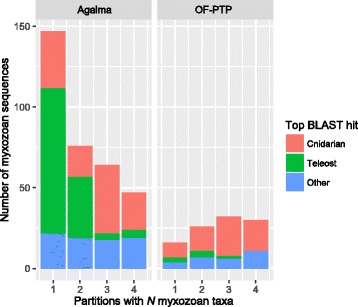
“[11], our analyses recovered a monophyletic Endocnidozoa (Myxozoa + Polypodiozoa) as sister to Medusozoa.”
InfluentialThe Invertebrates. Protozoa Through Ctenophora
Walford, L. A., & Hyman, L. H. (1941) · Copeia · doi:10.2307/1437456 · Cited by 259
The Demise of a Phylum of Protists: Phylogeny of Myxozoa and Other Parasitic Cnidaria
Siddall, M. E., Martin, D. S., Bridge, D. M., Desser, S. S., & Cone, D. K. (1995) · Journal of Parasitology · doi:10.2307/3284049 · Cited by 257
Cnidarian phylogenetic relationships as revealed by mitogenomics
Kayal, E., Roure, B., Philippe, H., Collins, A. G., & Lavrov, D. V. (2013) · BMC Evolutionary Biology · doi:10.1186/1471-2148-13-5 · Cited by 251
Self-citationPhylogenomic Analyses Support Traditional Relationships within Cnidaria
(2015) · doi:10.1371/journal.pone.0139068 · Cited by 232
Self-citationOn the origin and evolution of the lower Metazoa
Salvini-Plawen, L. V. (2009) · Journal of Zoological Systematics & Evolutionary Research · doi:10.1111/j.1439-0469.1978.tb00919.x · Cited by 217
Rodríguez, E., Barbeitos, M. S., Brugler, M. R., Crowley, L. M., Grajales, A., Gusmão, L. C., Häussermann, V., Reft, A., & Daly, M. (2014) · PLoS ONE · doi:10.1371/journal.pone.0096998 · Cited by 211
Exceptionally Preserved Jellyfishes from the Middle Cambrian
Cartwright, P., Halgedahl, S. L., Hendricks, J. R., Jarrard, R. D., Marques, A. C., Collins, A. G., & Lieberman, B. S. (2007) · PLoS ONE · doi:10.1371/journal.pone.0001121 · Cited by 210
Self-citationThe ancient evolutionary origins of Scleractinia revealed by azooxanthellate corals
Stolarski, J., Kitahara, M. V., Miller, D. J., Cairns, S. D., Mazur, M., & Meibom, A. (2011) · BMC Evolutionary Biology · doi:10.1186/1471-2148-11-316 · Cited by 197
Molecular Phylogenetic Insights into the Evolution of Octocorallia: A Review
McFadden, C. S., Sánchez, J. A., & France, S. C. (2010) · Integrative and Comparative Biology · doi:10.1093/icb/icq056 · Cited by 186
Borowiec, M. L., Lee, E. K., Chiu, J. C., & Plachetzki, D. C. (2015) · doi:10.1101/013946 · Cited by 172
Self-citationKocot, K. M., Citarella, M. R., Moroz, L. L., & Halanych, K. M. (2013) · Evolutionary Bioinformatics · doi:10.4137/ebo.s12813 · Cited by 166
Quattrini, A. M., Faircloth, B. C., Dueñas, L. F., Bridge, T. C. L., Brugler, M. R., Calixto-Botía, I., DeLeo, D. M., Forêt, S., Herrera, S., Lee, S. M., et al. (2017) · Molecular Ecology Resources · doi:10.1111/1755-0998.12736 · Cited by 160
Multicellular Animals: A new Approach to the Phylogenetic Order in Nature Volume 1
Ax, P. (1996) · doi:10.1007/978-3-642-80114-3 · Cited by 147
Systematics of the Hexacorallia (Cnidaria: Anthozoa)
Daly, M., Fautin, D. G., & Cappola, V. A. (2003) · Zoological Journal of the Linnean Society · doi:10.1046/j.1096-3642.2003.00084.x · Cited by 139
Van Iten, H., de Moraes Leme, J., Simões, M. G., Marques, A. C., & Collins, A. G. (2006) · Journal of Systematic Palaeontology · doi:10.1017/s1477201905001793 · Cited by 138
Self-citationNEW INVESTIGATIONS ON SYSTEMATICS AND EVOLUTION OF THE CLASS SCYPHOZOA AND THE PHYLUM CNIDARIA
Werner, B. (1973) · Publications of the Seto Marine Biological Laboratory · doi:10.5134/175791 · Cited by 136
Agalma: an automated phylogenomics workflow
Dunn, C. W., Howison, M., & Zapata, F. (2013) · BMC Bioinformatics · doi:10.1186/1471-2105-14-330 · Cited by 132
Agalma: an automated phylogenomics workflowPreprint
Howison, M., & Zapata, F. (2013) · Cited by 121
Repeated loss of coloniality and symbiosis in scleractinian corals
Barbeitos, M. S., Romano, S., & Lasker, H. R. (2010) · Proceedings of the National Academy of Sciences · doi:10.1073/pnas.0914380107 · Cited by 115
France, S. C., Rosel, P. E., Agenbroad, J. E., Mullineaux, L. S., & Kocher, T. D. (1996) · PubMed · Cited by 113
Phylogenetics of Hydroidolina (Hydrozoa: Cnidaria)
Cartwright, P., Evans, N., Dunn, C. W., Marques, A. C., Miglietta, M. P., Schuchert, P., & Collins, A. G. (2008) · Journal of the Marine Biological Association of the United Kingdom · doi:10.1017/s0025315408002257 · Cited by 111
Self-citationCharacter Evolution in Hydrozoa (phylum Cnidaria)
Cartwright, P., & Nawrocki, A. M. (2010) · Integrative and Comparative Biology · doi:10.1093/icb/icq089 · Cited by 111
Leclère, L., Schuchert, P., Cruaud, C., Couloux, A., & Manuel, M. (2009) · Systematic Biology · doi:10.1093/sysbio/syp044 · Cited by 107
Berntson, E. A., France, S. C., & Mullineaux, L. S. (1999) · Molecular Phylogenetics and Evolution · doi:10.1006/mpev.1999.0649 · Cited by 105
Fast-Evolving Mitochondrial DNA in Ceriantharia: A Reflection of Hexacorallia Paraphyly?
Stampar, S. N., Maronna, M. M., Kitahara, M. V., Reimer, J. D., & Morandini, A. C. (2014) · PLoS ONE · doi:10.1371/journal.pone.0086612 · Cited by 105
Collins, A. G., Bentlage, B., Lindner, A., LINDSAY, D. J., Haddock, S. H. D., Jarms, G., Norenburg, J. L., Jankowski, T., & Cartwright, P. (2008) · Journal of the Marine Biological Association of the United Kingdom · doi:10.1017/s0025315408001732 · Cited by 96
Self-citationSystematic Relationships within the Anthozoa (Cnidaria: Anthozoa) Using the 5′-end of the 28S rDNA
Chen, C., Odorico, D. M., Tenlohuis, M., Veron, J. E. N., & Miller, D. J. (1995) · Molecular Phylogenetics and Evolution · doi:10.1006/mpev.1995.1017 · Cited by 92
Recent Insights into Cnidarian Phylogeny
Collins, A. G. (2009) · Smithsonian contributions to the marine sciences · doi:10.5479/si.01960768.38.139 · Cited by 88
Self-citationPredictable transcriptome evolution in the convergent and complex bioluminescent organs of squid
Pankey, M. S., Minin, V. N., Imholte, G. C., Suchard, M. A., & Oakley, T. H. (2014) · Proceedings of the National Academy of Sciences · doi:10.1073/pnas.1416574111 · Cited by 87
Inferring Orthologs: Open Questions and Perspectives
Tekaia, F. (2016) · Genomics Insights · doi:10.4137/gei.s37925 · Cited by 84
Die scyphomedusen der Siboga-expedition
Maas, O. (1903) · doi:10.5962/bhl.title.11300 · Cited by 83
Phylogenetic placement of the enigmatic parasite, Polypodium hydriforme, within the Phylum Cnidaria
Evans, N., Lindner, A., Ev, R., Collins, A. G., & Cartwright, P. (2008) · BMC Evolutionary Biology · doi:10.1186/1471-2148-8-139 · Cited by 76
Self-citationEyun, S. (2017) · BMC Evolutionary Biology · doi:10.1186/s12862-017-0883-5 · Cited by 68
THE PTYCHOCYST, A MAJOR NEW CATEGORY OF CNIDA USED IN TUBE CONSTRUCTION BY A CERIANTHID ANEMONE
Mariscal, R. N., Conklin, E. J., & Bigger, C. H. (1977) · Biological Bulletin · doi:10.2307/1540427 · Cited by 62
Morphology and phylogenetic significance of the corners and midlines of the conulariid test
Iten, H. V. (1992) · Biodiversity Heritage Library (Smithsonian Institution) · Cited by 49
Huang, C., Morlighem, J.-É. R. L., Zhou, H., de Lima, É. P., Gomes, P. B., Cai, J., Lou, I., Pérez, C. D., Lee, S. M., & Rádis‐Baptista, G. (2016) · Genome Biology and Evolution · doi:10.1093/gbe/evw204 · Cited by 48
Three Cambrian fossils assembled into an extinct body plan of cnidarian affinity
Ou, Q., Han, J., Zhang, Z., Shu, D., Sun, G., & Mayer, G. (2017) · Proceedings of the National Academy of Sciences · doi:10.1073/pnas.1701650114 · Cited by 48
Daly, M., Lipscomb, D., & Allard, M. W. (2002) · Evolution · doi:10.1111/j.0014-3820.2002.tb01361.x · Cited by 47
Systematics of stalked jellyfishes (Cnidaria: Staurozoa)
Miranda, L. S., Hirano, Y. M., Mills, C. E., Falconer, A., Fenwick, D., Marques, A. C., & Collins, A. G. (2016) · PeerJ · doi:10.7717/peerj.1951 · Cited by 47
Self-citationDevelopment From Polyp to Stauromedusa inStylocoronella(Cnidaria: Scyphozoa)
Kikinger, R., & Salvini-Plawen, L. V. (1995) · Journal of the Marine Biological Association of the United Kingdom · doi:10.1017/s0025315400038236 · Cited by 45
The Road To Cnidaria: History of Phylogeny of the Myxozoa
Foox, J., & Siddall, M. E. (2015) · Journal of Parasitology · doi:10.1645/14-671.1 · Cited by 43
Gruhl, A., & Okamura, B. (2012) · EvoDevo · doi:10.1186/2041-9139-3-10 · Cited by 41
Cnidarian Origins of the Myxozoa
Okamura, B., Gruhl, A., & Reft, A. (2015) · Springer eBooks · doi:10.1007/978-3-319-14753-6_3 · Cited by 40
Monophyly of Anthozoa (Cnidaria): why do nuclear and mitochondrial phylogenies disagree?
Pratlong, M., Rancurel, C., Pontarotti, P., & Aurelle, D. (2016) · Zoologica Scripta · doi:10.1111/zsc.12208 · Cited by 37
Dunn, C. W. (2009) · Current Biology · doi:10.1016/j.cub.2009.02.009 · Cited by 34
XL.—Synopsis of the families, genera, and species of the British Actiniæ
Gosse, P. H. (1858) · Annals and Magazine of Natural History · doi:10.1080/00222935808696950 · Cited by 33
Systematic relationship of the anthozoan orders based on the partial nuclear 18S rDNA sequences
Song, J., & Won, J. H. (1997) · Korean Journal of Biological Sciences · doi:10.1080/12265071.1997.9647347 · Cited by 32
Untersuchungen über die Organisation und Entwicklung der Medusen
Claus, C. (1883) · doi:10.5962/bhl.title.1754 · Cited by 30
Stampar, S. N., Morandini, A. C., Branco, L. C., da Silveira, F. L., & Migotto, Á. E. (2015) · Marine Biology · doi:10.1007/s00227-015-2747-0 · Cited by 26
Succession of generations is still the general paradigm for scyphozoan life cycles
Morandini, A. C., Schiariti, A., Stampar, S. N., Maronna, M. M., Straehler-Pohl, I., & Marques, A. C. (2016) · Bulletin of Marine Science · doi:10.5343/bms.2016.1018 · Cited by 26
Comparative internal anatomy of Staurozoa (Cnidaria), with functional and evolutionary inferences
Miranda, L. S., Collins, A. G., Hirano, Y. M., Mills, C. E., & Marques, A. C. (2016) · PeerJ · doi:10.7717/peerj.2594 · Cited by 25
Self-citationMiranda, L. S., Collins, A. G., & Marques, A. C. (2013) · Journal of Morphology · doi:10.1002/jmor.20185 · Cited by 24
Self-citationEntwickelungsgeschichte der Aurelia aurita und Cotylorhiza tuberculata
Goette, A. (1887) · L. Voss eBooks · Cited by 21
Gibbons, T., Mount, S. M., Cooper, E. D., & Delwiche, C. F. (2015) · BMC Bioinformatics · doi:10.1186/s12859-015-0625-x · Cited by 21
Origin and evolution of a myxozoan worm
Jiménez-Guri, E., Okamura, B., & Holland, P. W. H. (2007) · Integrative and Comparative Biology · doi:10.1093/icb/icm026 · Cited by 20
Ceriantharia in Current Systematics: Life Cycles, Morphology and Genetics
Stampar, S. N., Maronna, M. M., Kitahara, M. V., Reimer, J. D., Beneti, J. S., & Morandini, A. C. (2016) · Springer eBooks · doi:10.1007/978-3-319-31305-4_5 · Cited by 19
Molodtsova, T. N. (2007) · Springer eBooks · doi:10.1007/978-1-4020-2762-8_30 · Cited by 17
THE SYSTEMATIC POSITION OF THE STAUROMEDUSAE
Uchida, T. (1973) · Publications of the Seto Marine Biological Laboratory · doi:10.5134/175784 · Cited by 14
Ergebnisse und Fortschritte der Zoologie
L., R. (1908) · Nature · doi:10.1038/077246b0 · Cited by 14
Gibbons, T., Mount, S. M., Cooper, E. D., & Delwiche, C. F. (2015) · BMC Bioinformatics · doi:10.1186/s12859-015-0690-1 · Cited by 13
The taxonomic position of the pelagic ‘staurozoan’ Tessera gemmaria as a ceriantharian larva
Rodriguez, C. S., Marques, A. C., Stampar, S. N., Morandini, A. C., Christiansen, E., Genzano, G., & Mianzan, H. W. (2011) · Zootaxa · doi:10.11646/zootaxa.2971.1.5 · Cited by 13
On the Relations of certain Stichodactylinae to the Madreporaria.
Duerden, J. E. (1898) · Journal of the Linnean Society of London Zoology · doi:10.1111/j.1096-3642.1898.tb01740.x · Cited by 11
XLVIII.—The Occurrence of Crenobia (Planaria) alpina in the Birmingham District
Unwin, M. D., & Whitney, R. J. (1939) · Annals and Magazine of Natural History · doi:10.1080/03745481.1939.9723618 · Cited by 4
Observations on Arachnactis albida, M. Sars
Bourne, G. C. (1919) · Journal of Cell Science · doi:10.1242/jcs.s2-64.253.27 · Cited by 4
Lucernaria; the coenotype of Acalephae
Clark, H. J. (1863) · American Journal of Science · doi:10.2475/ajs.s2-35.105.346 · Cited by 2
Research works printed but not linked: 19
- Wietrzykowski W. Recherches sur le de’veloppement des lucernaires. Arch Zool Exp Gen. 1912;5e Serie:1–95.
- Collins AG. Phylogeny, evolution, and systematics of the stalked jellyfishes (Cnidaria, Staurozoa). Integr Comp Biol. 2010;50:E32.
- Kiderlen H. Die Conularien. Über Bau and Leben der ersten Scyphozoa. Neues Jahrbuch für Mineralogie, Beilige-Band; 1937. p. 113–69.
- Collins AG, Schuchert P, Marques AC, Jankowski T, Medina M, Schierwater B. Medusozoan phylogeny and character evolution clarified by new large and small subunit rDNA data and an assessment of the utility of phylogenetic mixture models. Syst Biol. 2006a;55:97–115. https://doi.org/10.1080/10635150500433615 . · DOI
- Daly M, Fautin DG, Cappola VA. Systematics of the Hexacorallia (Cnidaria: Anthozoa). Zool J Linnean Soc. 2003b;139:419–37. https://doi.org/10.1046/J.1096-3642.2003.00084.X . · DOI
- Borowiec ML, Lee EK, Chiu JC, Plachetzki DC. Extracting phylogenetic signal and accounting for bias in whole-genome data sets supports the Ctenophora as sister to remaining Metazoa. BMC Genomics. 2015;16:987. https://doi.org/10.1186/s12864-015-2146-4 . · DOI · Paper page
- Schmidt H. On evolution in the Anthozoa. Proceedings of the 2nd International Coral Reef Symposium. 1974;1:533–560.
- Minin VN SM, Imholte GC. 2014. Indorigin: testing how many times a trait of interest was regained during evolution (R package).
- Thiel H. The evolution of Scyphozoa: a review. London: Academic Press; 1966.
- Haas, B. J., and A. Papanicolaou 2016. TransDecoder (find coding regions within transcripts).
- Vanhoeffen E. Untersuchungen ueber Anatomie und Entwicklung von Arachanctis albida, M. Sars. Bibliotheca Zoologica. 1895;20:1–14.
- Haeckel E. Das System der Medusen. I, 2: System der Acraspeden. Jenna: Gustav Fischer; 1880. p. 672.
- Goy J. Campagne de la Calypso au large des côtes atlantiques de l’Amérique du Sud Sud (1961–1962) - 35. In: Méduses. Resultats scientifiques des campagnes de la Calypso; 1979. p. 263–96.
- Cuvier G. Le Règne animal distribué d’après son organisation, pour servir de base à l’histoire naturelle des animaux et d’introduction à l’anatomie comparée. In: Tome IV Paris:: chez De’terville Libraire; 1817.
- Sars M. Fauna littoralis Norvegiae oder Beschreibung und Abbildungen neuer oder wenig bekannter Seethiere, nebst Beobachtungen u¨ber die Organisation, Lebensweise u. Entwickelung derselben. In: Christiania: Druck und Verlag von Johann Dahk; 1846.
- Hornell J. The Lucernarians as degenerate Scyphomedusae. A note upon the phylogeny of the Order. Nat Sci. 1893;3:204–8.
- Hurst CH. Biological theories. VI. The phylogeny of Lucernarians. In: Nat. Sci. London, New York; 1893. p. 208–17.
- Gegenbaur C. Versuch eines Systemes der Medusen, mit Beschreibung neuer oder wenig gekannter Formen; zugleich ein Beitrag zur Kenntnis der Fauna des Mittelmeeres. Z wiss Zool Leipzig. 1886;8:202–73.
- Ryan JF. alien_index: alien_index first release: zenodo. Salvini-Plawen lv 1978. On the origin and evolution of the lower Metazoa. J Zool Syst Evol Res. 2015;16:40–87.
Cited by
Sorted by citations
The genome of the jellyfish Clytia hemisphaerica and the evolution of the cnidarian life-cycle
Leclère, L., Horin, C., Chevalier, S., Lapébie, P., Dru, P., Péron, S., Jager, M., Condamine, T., Pottin, K., Romano, S., et al. (2019) · Nature Ecology & Evolution · doi:10.1038/s41559-019-0833-2 · Cited by 189
Phylogenomics, Origin, and Diversification of Anthozoans (Phylum Cnidaria)
McFadden, C. S., Quattrini, A. M., Brugler, M. R., Cowman, P. F., Dueñas, L. F., Kitahara, M. V., Paz‐García, D. A., Reimer, J. D., & Rodríguez, E. (2020) · Systematic Biology · doi:10.1093/sysbio/syaa103 · Cited by 155
Medusozoan genomes inform the evolution of the jellyfish body plan
Khalturin, K., Shinzato, C., Khalturina, M., Hamada, M., Fujie, M., Koyanagi, R., Kanda, M., Goto, H., Anton‐Erxleben, F., Toyokawa, M., et al. (2019) · Nature Ecology & Evolution · doi:10.1038/s41559-019-0853-y · Cited by 135
Palaeoclimate ocean conditions shaped the evolution of corals and their skeletons through deep time
Quattrini, A. M., Rodríguez, E., Faircloth, B. C., Cowman, P. F., Brugler, M. R., Farfán, G., Hellberg, M. E., Kitahara, M. V., Morrison, C. L., Paz‐García, D. A., et al. (2020) · Nature Ecology & Evolution · doi:10.1038/s41559-020-01291-1 · Cited by 146
A widespread coral-infecting apicomplexan with chlorophyll biosynthesis genes
Kwong, W. K., del Campo, J., Mathur, V., Vermeij, M. J. A., & Keeling, P. J. (2019) · Nature · doi:10.1038/s41586-019-1072-z · Cited by 145
Metadata
- Authors
- Kayal, E., Bentlage, B., Sabrina Pankey, M., Ohdera, A. H., Medina, M., Plachetzki, D. C., Collins, A. G., & Ryan, J. F.
- Affiliations
- Smithsonian Institution (US)
- Pennsylvania State University (US)
- University of New Hampshire (US)
- University of Florida (US)
- Corresponding author
- Plachetzki, David C.
- Ryan, Joseph F.
- ORCID
- Venue
- BMC Evolutionary Biology
- Published
- 2018-04-13
- Volume
- 18
- Issue
- 1
- Pages
- 68
- ISSN
- 1471-2148 (ISSN-L)
- PMC
- PMC5932825
- OpenAlex
- W2807223659
- Cited by
- 255
- References
- 104
- Citations by year
- 2026: 15 · 2025: 28 · 2024: 35 · 2023: 37 · 2022: 28 · 2021: 40 · 2020: 40 · 2019: 28 · 2018: 4
- FWCI
- 20.61
- Type
- journal article
- Language
- en
- Open access
- gold
- doi.org
- Locations
- BMC Evolutionary Biology (publishedVersion, cc-by)
- Europe PMC (PubMed Central) (publishedVersion, other-oa)
- PubMed Central (publishedVersion, cc-by)
- HAL (submittedVersion, cc-by)
- DOAJ (DOAJ: Directory of Open Access Journals) (submittedVersion, cc-by-sa)
- NOAA Institutional Repository (submittedVersion)
- Funders
- Smithsonian Institution
- Directorate for Biological Sciences (OIA-1457769)
- National Institute of Food and Agriculture (Hatch Project 00654)
- Topics
- Life Sciences › Agricultural and Biological Sciences › Animal Science and Zoology › Marine Invertebrate Physiology and Ecology
- Life Sciences › Biochemistry, Genetics and Molecular Biology › Molecular Biology › Genomics and Phylogenetic Studies
- Life Sciences › Agricultural and Biological Sciences › Ecology, Evolution, Behavior and Systematics › Protist diversity and phylogeny
- Keywords
- genome-scale data, ancestral state reconstruction, symbiosis evolution, nematocysts, Scyphozoa, cubozoans
About these checks
Registry, retraction, Cites and statistics results are computed, not judged, with one exception: a printed reference that no index lists is read once by a model before it counts as a citation error. Claims are extracted by a model and kept only when their quote appears verbatim in the text; each cited source is then checked, with a model’s help, for whether it says what the claim relies on. Those verdicts can be wrong — read the claim’s quote and the cited source before relying on one.
Statistics and arithmetic are recomputed, not judged.
Confidence bands are shown only for fields calibrated on our annotated test set. None is calibrated yet, so no band is shown.
What counts as a claim ›How we measure confidence ›How we check this ›
Are you an author, or do you see a problem with this page? Request a review
