

Global gene expression reveals stress-responsive genes in Aspergillus fumigatus mycelia
Open accessThe DOI matches its Crossref record; 59 of the 61 references it cites were found in a registry or an index.
Abstract
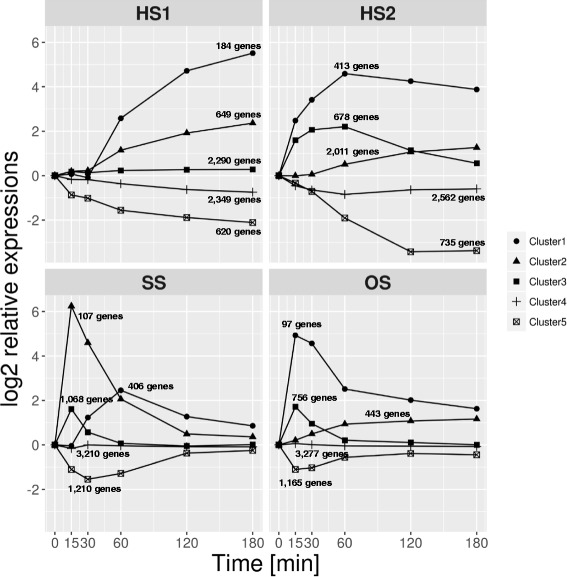
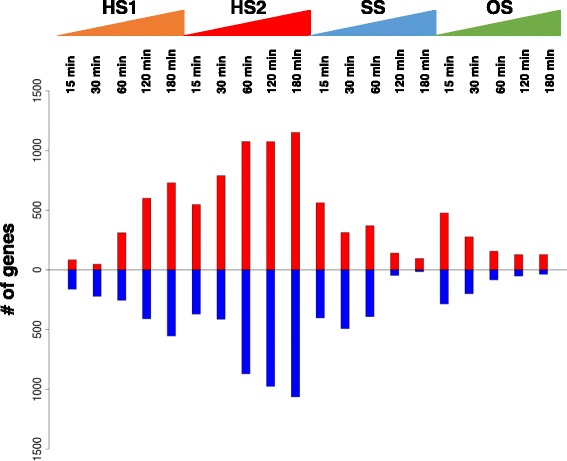
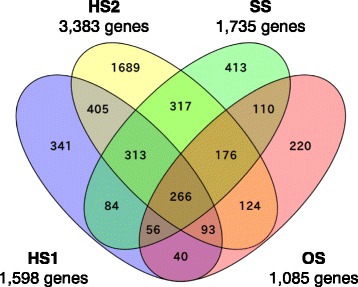
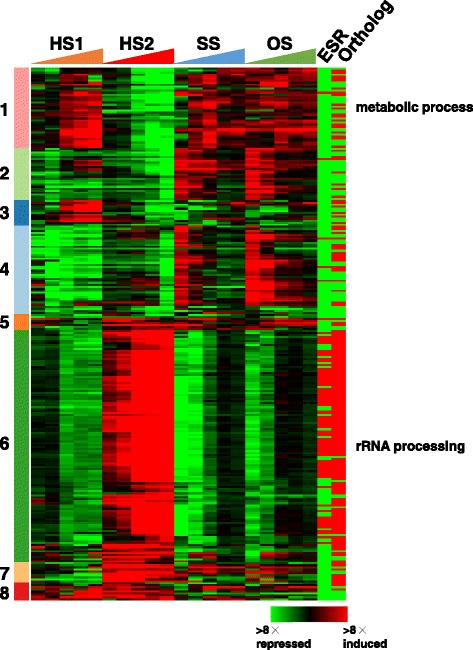
BACKGROUND: Aspergillus fumigatus is a human fungal pathogen that causes aspergillosis in immunocompromised hosts. A. fumigatus is believed to be exposed to diverse environmental stresses in the host cells. The adaptation mechanisms are critical for infections in human bodies. Transcriptional networks in response to diverse environmental challenges remain to be elucidated. To gain insights into the adaptation to environmental stresses in A. fumigatus mycelia, we conducted time series transcriptome analyses. RESULTS: With the aid of RNA-seq, we explored the global gene expression profiles of mycelia in A. fumigatus upon exposure to diverse environmental changes, including heat, superoxide, and osmotic stresses. From the perspective of global transcriptomes, transient responses to superoxide and osmotic stresses were observed while responses to heat stresses were gradual. We identified the stress-responsive genes for particular stresses, and the 266 genes whose expression levels drastically fluctuated upon exposure to all tested stresses. Among these, the 77 environmental stress response genes are conserved in S. cerevisiae, suggesting that these genes might be more general prerequisites for adaptation to environmental stresses. Finally, we revealed the strong correlations among expression profiles of genes related to 'rRNA processing'. CONCLUSIONS: The time series transcriptome analysis revealed the stress-responsive genes underlying the adaptation mechanisms in A. fumigatus mycelia. These results will shed light on the regulatory networks underpinning the adaptation of the filamentous fungi.
Overview
The claims and statistics of this paper haven’t been checked yet.
Free: it reads the open-access text and checks the first 5 claims that cite a source we can check. Create a free account to check every claim.
Integrity signals
Registry
Cites
Statistics
Figures
Verification
Claims the paper makes
The claims and statistics of this paper haven’t been checked yet.
Free: it reads the open-access text and checks the first 5 claims that cite a source we can check. Create a free account to check every claim.
Claims other papers make about this one
Each is checked against this paper’s own text: does it say what the citing paper says it does?
The check wasn’t confident either way, so it gives no verdict — never disputed.
In the citing paper
“Accordingly, recent RNA-seq identification of the transcripts regulated during germ tube emergence showed that the genes upregulated during germination are highly similar to those observed in vegetative mycelium (170, 503, 505).”
From Aspergillus fumigatus and Aspergillosis in 2019 (2019) · cites this paper as [170]
Experimental — accuracy not yet measured
Self-check
Percentages, sums and reported differences re-computed from the paper’s own numbers.
The self-check needs the paper’s full text.
Citations
Cites
Controlling the False Discovery Rate: A Practical and Powerful Approach to Multiple Testing
Benjamini, Y., & Hochberg, Y. (1995) · Journal of the Royal Statistical Society Series B: Statistical Methodology · doi:10.1111/j.2517-6161.1995.tb02031.x · Cited by 109,482 · cited 1×
“p-values were corrected by the false discovery rate method [62], and the threshold was set as 0.”
MethodGapped BLAST and PSI-BLAST: a new generation of protein database search programs
Altschul, S. (1997) · Nucleic Acids Research · doi:10.1093/nar/25.17.3389 · Cited by 73,302 · cited 1×
“28+) [60] analysis with ‘-evalue 1e4’ were used to identify the ortholog genes.”
MethodTrimmomatic: a flexible trimmer for Illumina sequence data
Bolger, A. M., Lohse, M., & Usadel, B. (2014) · Bioinformatics · doi:10.1093/bioinformatics/btu170 · Cited by 65,548 · cited 1×
“33), where sequencing adapters and sequences with low-quality scores were removed [53].”
BackgroundSTAR: ultrafast universal RNA-seq aligner
Dobin, A., Davis, C. A., Schlesinger, F., Drenkow, J., Zaleski, C., Jha, S., Batut, P., Chaisson, M., & Gingeras, T. R. (2013) · Bioinformatics · doi:10.1093/bioinformatics/bts635 · Cited by 51,709
Gene Ontology: tool for the unification of biology
Ashburner, M., Ball, C. A., Blake, J. A., Botstein, D., Butler, H., Cherry, J. M., Davis, A. P., Dolinski, K., Dwight, S. S., Eppig, J. T., et al. (2000) · Nature Genetics · doi:10.1038/75556 · Cited by 43,206 · cited 1×
“Genes were functionally categorized using their GO information [61] obtained from AspGD, and overrepresented GO terms were identified using Fisher’s exact test.”
MethodTrapnell, C., Williams, B. A., Pertea, G., Mortazavi, A., Kwan, G., van Baren, M. J., Salzberg, S. L., Wold, B. J., & Pachter, L. (2010) · Nature Biotechnology · doi:10.1038/nbt.1621 · Cited by 15,556
ggplot2: Elegant Graphics for Data Analysis
Wickham, H. (2009) · doi:10.1007/978-0-387-98141-3 · Cited by 14,447
Genomic Expression Programs in the Response of Yeast Cells to Environmental Changes
Gasch, A. P., Spellman, P. T., Kao, C. M., Carmel-Harel, O., Eisen, M. B., Storz, G., Botstein, D., & Brown, P. O. (2000) · Molecular Biology of the Cell · doi:10.1091/mbc.11.12.4241 · Cited by 4,815 · cited 6×
“A list of 867 ESR genes was obtained from Gasch et al. (2000) [18].”
BackgroundInfluentialTranscriptional regulatory code of a eukaryotic genome
Harbison, C. T., Gordon, D. B., Lee, T. I., Rinaldi, N. J., Macisaac, K. D., Danford, T. W., Hannett, N. M., Tagne, J.-B., Reynolds, D. B., Yoo, J., et al. (2004) · Nature · doi:10.1038/nature02800 · Cited by 2,143
Genomic sequence of the pathogenic and allergenic filamentous fungus Aspergillus fumigatus
Nierman, W. C., Pain, A., Anderson, M. J., Wortman, J. R., Kim, H. S., Arroyo, J., Berriman, M., Abe, K., Archer, D. B., Bermejo, C., et al. (2005) · Nature · doi:10.1038/nature04332 · Cited by 1,391 · cited 7×
“cerevisiae [6], indicating that the stress response in A.”
BackgroundMethodInfluentialRemodeling of Yeast Genome Expression in Response to Environmental Changes
Causton, H. C., Ren, B., Koh, S. S., Harbison, C. T., Kanin, E., Jennings, E. G., Lee, T. I., True, H. L., Lander, E. S., & Young, R. A. (2001) · Molecular Biology of the Cell · doi:10.1091/mbc.12.2.323 · Cited by 1,370
Pathogenesis of Aspergillus fumigatus in Invasive Aspergillosis
Dagenais, T. R. T., & Keller, N. P. (2009) · Clinical Microbiology Reviews · doi:10.1128/cmr.00055-08 · Cited by 993 · cited 1×
“Inhalation of airborne conidia is responsible for human infection [3, 4].”
BackgroundPulmonary aspergillosis: a clinical review
Kousha, M., Tadi, R., & Soubani, A. O. (2011) · European Respiratory Review · doi:10.1183/09059180.00001011 · Cited by 752 · cited 2×
“Inhalation of airborne conidia is responsible for human infection [3, 4].”
BackgroundTackling Human Fungal Infections
Brown, G. D., Denning, D. W., & Levitz, S. M. (2012) · Science · doi:10.1126/science.1222236 · Cited by 619 · cited 1×
“Billions of people are infected with fungi every year in the world [1].”
Background'Gene shaving' as a method for identifying distinct sets of genes with similar expression patterns
Hastie, T., Tibshirani, R., Eisen, M. B., Alizadeh, A., Levy, R., Staudt, L., Chan, W. C., Botstein, D., & Brown, P. (2000) · Genome Biology · doi:10.1186/gb-2000-1-2-research0003 · Cited by 547 · cited 2×
“applied to estimate the cluster size [43].”
MethodTHOM, C., & RAPER, K. B. (1945) · Soil Science · doi:10.1097/00010694-194510000-00008 · Cited by 424
Philippe, B., Ibrahim-Granet, O., Prévost, M. C., Gougerot-Pocidalo, M. A., Sanchez Perez, M., Van der Meeren, A., & Latgé, J. P. (2003) · Infection and Immunity · doi:10.1128/iai.71.6.3034-3042.2003 · Cited by 415
Cerqueira, G. C., Arnaud, M. B., Inglis, D. O., Skrzypek, M. S., Binkley, G., Simison, M., Miyasato, S. R., Binkley, J., Orvis, J., Shah, P., et al. (2014) · Nucleic Acids Research · doi:10.1093/nar/gkt1029 · Cited by 253
Sub-Telomere Directed Gene Expression during Initiation of Invasive Aspergillosis
McDonagh, A., Fedorova, N. D., Crabtree, J., Yu, Y., Kim, S., Chen, D., Loss, O., Cairns, T., Goldman, G., Armstrong-James, D., et al. (2008) · PLoS Pathogens · doi:10.1371/journal.ppat.1000154 · Cited by 235
Lessing, F., Kniemeyer, O., Wozniok, I., Loeffler, J., Kurzai, O., Haertl, A., & Brakhage, A. A. (2007) · Eukaryotic Cell · doi:10.1128/ec.00267-07 · Cited by 221 · cited 7×
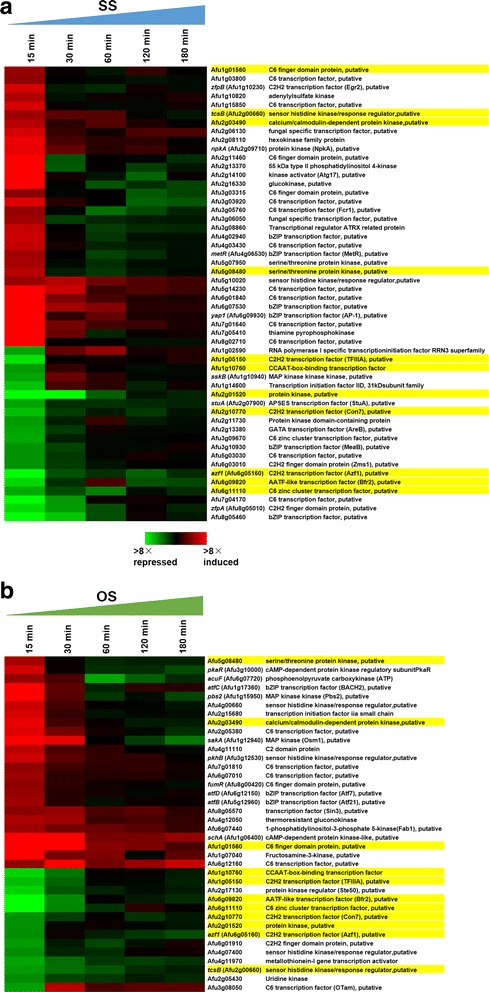
“Consistent with the observation that TF yap1 (Afu6g09930) responded to H2O2 [9], we observed that the expression of yap1 was 5.7-fold up-regulated at 15 min in response to SS.”
BackgroundResultInfluentialSignalling and oxidant adaptation in Candida albicans and Aspergillus fumigatus
Chauhan, N., Latge, J.-P., & Calderone, R. (2006) · Nature Reviews Microbiology · doi:10.1038/nrmicro1426 · Cited by 199
Chung, D., Barker, B. M., Carey, C. C., Merriman, B., Werner, E. R., Lechner, B. E., Dhingra, S., Cheng, C., Xu, W., Blosser, S. J., et al. (2014) · PLoS Pathogens · doi:10.1371/journal.ppat.1004487 · Cited by 193 · cited 1×
“srbB is involved in the regulation of ergosterol biosynthesis upon hypoxia [49], suggesting that srbB would respond to not only hypoxia but also oxidative stress.”
BackgroundNitrosative and oxidative stress responses in fungal pathogenicity
Brown, A. J., Haynes, K., & Quinn, J. (2009) · Current Opinion in Microbiology · doi:10.1016/j.mib.2009.06.007 · Cited by 167 · cited 1×
“fumigatus establishes an infection in the human lung, the mycelia must respond to highly variable conditions, which might impose stress on the fungal pathogen [4, 5].”
BackgroundSugiyama, K., Izawa, S., & Inoue, Y. (2000) · Journal of Biological Chemistry · doi:10.1074/jbc.275.20.15535 · Cited by 147 · cited 1×
“Probably, enhancement of oxygen respiration by heat shock may cause the redox imbalance as previously reported in yeast [44].”
BackgroundMontañés, F. M., Pascual‐Ahuir, A., & Proft, M. (2011) · Molecular Microbiology · doi:10.1111/j.1365-2958.2010.07502.x · Cited by 137
Gibbons, J. G., Beauvais, A., Beau, R., McGary, K. L., Latgé, J.-P., & Rokas, A. (2012) · Eukaryotic Cell · doi:10.1128/ec.05102-11 · Cited by 118
Sugui, J. A., Kim, H. S., Zarember, K. A., Chang, Y. C., Gallin, J. I., Nierman, W. C., & Kwon-Chung, K. J. (2008) · PLoS ONE · doi:10.1371/journal.pone.0002655 · Cited by 117 · cited 1×
“In addition, it has been reported that the protein abundance and gene expression of Afu5g09910 are up-regulated upon exposure to human neutrophils and gliotoxin, respectively [50, 51].”
BackgroundXue, T., Nguyen, C. K., Romans, A., & May, G. S. (2004) · Eukaryotic Cell · doi:10.1128/ec.3.2.557-560.2004 · Cited by 117 · cited 1×
“It has been reported that MAP kinase SakA plays a pivotal role in responses and adaptation to osmotic stress [10].”
BackgroundThe role of AtfA and HOG MAPK pathway in stress tolerance in conidia of Aspergillus fumigatus
Hagiwara, D., Suzuki, S., Kamei, K., Gonoi, T., & Kawamoto, S. (2014) · Fungal Genetics and Biology · doi:10.1016/j.fgb.2014.10.011 · Cited by 111
Self-citationAnnotation of stress–response proteins in the aspergilli
Miskei, M., Karányi, Z., & Pócsi, I. (2008) · Fungal Genetics and Biology · doi:10.1016/j.fgb.2008.07.013 · Cited by 107
Integrative analysis of the heat shock response in Aspergillus fumigatus
Albrecht, D., Guthke, R., Brakhage, A. A., & Kniemeyer, O. (2010) · BMC Genomics · doi:10.1186/1471-2164-11-32 · Cited by 105 · cited 3×
“The expression of aspf3 (Afu6g02280) was induced in response to HS1, HS2, and SS, consistent with upregulation upon exposure to heat stress [16].”
BackgroundMethodResultInfluentialReyes, G., Romans, A., Nguyen, C. K., & May, G. S. (2006) · Eukaryotic Cell · doi:10.1128/ec.00178-06 · Cited by 95 · cited 1×
“to OS, concordant with a previous study [34].”
ResultHagiwara, D., Sakamoto, K., Abe, K., & Gomi, K. (2016) · Bioscience, Biotechnology, and Biochemistry · doi:10.1080/09168451.2016.1162085 · Cited by 88
Self-citationThe contribution of Aspergillus fumigatus stress responses to virulence and antifungal resistance
Brown, N. A., & Goldman, G. H. (2016) · The Journal of Microbiology · doi:10.1007/s12275-016-5510-4 · Cited by 86
Hagiwara, D., Asano, Y., Marui, J., Yoshimi, A., Mizuno, T., & Abe, K. (2009) · Fungal Genetics and Biology · doi:10.1016/j.fgb.2009.07.003 · Cited by 84
Self-citationHagiwara, D., Takahashi, H., Kusuya, Y., Kawamoto, S., Kamei, K., & Gonoi, T. (2016) · BMC Genomics · doi:10.1186/s12864-016-2689-z · Cited by 80
Self-citationHagiwara, D., Takahashi-Nakaguchi, A., Toyotome, T., Yoshimi, A., Abe, K., Kamei, K., Gonoi, T., & Kawamoto, S. (2013) · PLoS ONE · doi:10.1371/journal.pone.0080881 · Cited by 78
Self-citationCore oxidative stress response in Aspergillus nidulans
Emri, T., Szarvas, V. E., Orosz, E., Antal, K., Park, H.-S., Han, K., Yu, J., & Pócsi, I. (2015) · BMC Genomics · doi:10.1186/s12864-015-1705-z · Cited by 75 · cited 1×
“Indeed, Emri et al. (2015) identified 116 ESR genes in response to five different oxidative stress conditions in A. nidulans [20].”
BackgroundGliotoxin effects on fungal growth: Mechanisms and exploitation
Carberry, S., Molloy, E. L., Hammel, S., O’Keeffe, G., Jones, G. W., Kavanagh, K. A., & Doyle, S. (2012) · Fungal Genetics and Biology · doi:10.1016/j.fgb.2012.02.003 · Cited by 75 · cited 1×
“In addition, it has been reported that the protein abundance and gene expression of Afu5g09910 are up-regulated upon exposure to human neutrophils and gliotoxin, respectively [50, 51].”
BackgroundCurrent Understanding of HOG-MAPK Pathway in Aspergillus fumigatus
Dong-mei, M., & Li, R. (2012) · Mycopathologia · doi:10.1007/s11046-012-9600-5 · Cited by 73 · cited 1×
“fumigatus [13], indicating that the acute induction of pbs2”
BackgroundDynamic Transcriptional and Metabolic Responses in Yeast Adapting to Temperature Stress
Strassburg, K., Walther, D., Takahashi, H., Kanaya, S., & Kopka, J. (2010) · OMICS A Journal of Integrative Biology · doi:10.1089/omi.2009.0107 · Cited by 72
Self-citationDemasi, A. P. D., Pereira, G. A. G., & Netto, L. E. S. (2006) · The FEBS Journal · doi:10.1111/j.1742-4658.2006.05116.x · Cited by 71
Oosthuizen, J. L., Gomez, P., Ruan, J., Hackett, T. L., Moore, M. M., Knight, D. A., & Tebbutt, S. J. (2011) · PLoS ONE · doi:10.1371/journal.pone.0020527 · Cited by 69 · cited 1×
“Interestingly, the expression of Afu3g14490, ketol-acid reductoisomerase, was differentially expressed upon exposure to airway epithelial cells in conidia [46], suggesting that Afu3g14490 may play important roles for environmental changes, e.”
BackgroundThe Involvement of the Mid1/Cch1/Yvc1 Calcium Channels in Aspergillus fumigatus Virulence
de Castro, P. A., Chiaratto, J., Winkelströter, L. K., Bom, V. L. P., Ramalho, L. N. Z., Goldman, M. H. S., Brown, N. A., & Goldman, G. H. (2014) · PLoS ONE · doi:10.1371/journal.pone.0103957 · Cited by 60
O’Keeffe, G., Hammel, S., Owens, R. A., Keane, T., Fitzpatrick, D. A., Jones, G. W., & Doyle, S. (2014) · BMC Genomics · doi:10.1186/1471-2164-15-894 · Cited by 60
Pereira Silva, L., Alves de Castro, P., dos Reis, T. F., Paziani, M. H., Von Zeska Kress, M. R., Riaño-Pachón, D. M., Hagiwara, D., Ries, L. N. A., Brown, N. A., & Goldman, G. H. (2017) · Cellular Microbiology · doi:10.1111/cmi.12681 · Cited by 57
Self-citationHigh osmolarity glycerol response PtcB phosphatase is important for Aspergillus fumigatus virulence
Winkelströter, L. K., Bom, V. L. P., de Castro, P. A., Ramalho, L. N. Z., Goldman, M. H. S., Brown, N. A., Rajendran, R., Ramage, G., Bovier, E., dos Reis, T. F., et al. (2015) · Molecular Microbiology · doi:10.1111/mmi.12919 · Cited by 53
Self-citationDo, J. H., Yamaguchi, R., & Miyano, S. (2009) · BMC Genomics · doi:10.1186/1471-2164-10-306 · Cited by 42 · cited 8×
“(2009) have reported 726 and 2200 genes for heat shock of 37 °C and 48 °C based on microarray data, respectively [6, 15].”
BackgroundMethodResultInfluentialMüller, S., Baldin, C., Groth, M., Guthke, R., Kniemeyer, O., Brakhage, A. A., & Valiante, V. (2012) · BMC Genomics · doi:10.1186/1471-2164-13-519 · Cited by 42
Takahashi, H., Morioka, R., Ito, R., Oshima, T., Altaf-Ul-Amin, M., Ogasawara, N., & Kanaya, S. (2011) · OMICS: A Journal of Integrative Biology · doi:10.1089/omi.2010.0074 · Cited by 39
Self-citationWada, M., Takahashi, H., Altaf‐Ul‐Amin, M., Nakamura, K., Hirai, M. Y., Ohta, D., & Kanaya, S. (2012) · Gene · doi:10.1016/j.gene.2012.04.043 · Cited by 38
Self-citationRedestig, H., Weicht, D., Selbig, J., & Hannah, M. A. (2007) · BMC Bioinformatics · doi:10.1186/1471-2105-8-454 · Cited by 38
Takahashi‐Nakaguchi, A., Muraosa, Y., Hagiwara, D., Sakai, K., Toyotome, T., Watanabe, A., Kawamoto, S., Kamei, K., Gonoi, T., & Takahashi, H. (2015) · Medical Mycology · doi:10.1093/mmy/myv003 · Cited by 38 · cited 1×
“Potato dextrose agar (PDA; Difco, Detroit, USA), YG [27], and AMM [52] were regularly used for culturing Takahashi et al.”
MethodSelf-citationETP1/YHL010cis a novel gene needed for the adaptation ofSaccharomyces cerevisiaeto ethanol
Snowdon, C., Schierholtz, R., Poliszczuk, P., Hughes, S. L., & van der Merwe, G. K. (2009) · FEMS Yeast Research · doi:10.1111/j.1567-1364.2009.00497.x · Cited by 35 · cited 1×
“The yeast ortholog of Afu4g10360, ETP1, is required for growth on ethanol and ethanol-induced transcriptional activation [47], suggesting that Afu4g10360 may sense environmental changes such as carbon source, heat stress, and osmotic stress, and relate to the transcriptional regulations.”
BackgroundTranscription factor Afmac1 controls copper import machinery in Aspergillus fumigatus
Kusuya, Y., Hagiwara, D., Sakai, K., Yaguchi, T., Gonoi, T., & Takahashi, H. (2017) · Current Genetics · doi:10.1007/s00294-017-0681-z · Cited by 34 · cited 7×
“Mycelia were grown in AMM medium at 37 °C for 24 h.”
MethodSelf-citationJi, Y., Yang, F. Y., Ma, D., Zhang, J., Wan, Z., Liu, W., & Li, R. (2012) · Mycopathologia · doi:10.1007/s11046-012-9557-4 · Cited by 29 · cited 1×
“Although the growth defect of Δpbs2 strain was not observed at 48 °C [32], Δpbs2 strain was Takahashi et al.”
BackgroundDeletion of the msdS/AfmsdC gene induces abnormal polarity and septation in Aspergillus fumigatus
Li, Y., Zhang, L., Wang, D., Zhou, H., Ouyang, H., Ming, J., & Jin, C. (2008) · Microbiology · doi:10.1099/mic.0.2008/017525-0 · Cited by 28 · cited 1×
“msdS encodes a class I 1,2-α-mannosidase, and the cell wall integrity of the msdS mutant was slightly affected at a higher temperature [37].”
BackgroundThe entire organization of transcription units on the Bacillus subtilis genome
Kobayashi, H., Akitomi, J., Fujii, N., Kobayashi, K., Altaf‐Ul‐Amin, M., Kurokawa, K., Ogasawara, N., & Kanaya, S. (2007) · BMC Genomics · doi:10.1186/1471-2164-8-197 · Cited by 22
The diverse applications of RNA‐seq for functional genomic studies in Aspergillus fumigatus
Rokas, A., Gibbons, J. G., Zhou, X., Beauvais, A., & Latgé, J. (2012) · Annals of the New York Academy of Sciences · doi:10.1111/j.1749-6632.2012.06755.x · Cited by 17
Cited by
Aspergillus fumigatus and Aspergillosis in 2019
Latgé, J.-P., & Chamilos, G. (2019) · Clinical Microbiology Reviews · doi:10.1128/cmr.00140-18 · Cited by 1,400
The high osmolarity glycerol (HOG) pathway in fungi †
Yaakoub, H., Sanchez, N. S., Ongay-Larios, L., Courdavault, V., Calenda, A., Bouchara, J.-P., Coria, R., & Papon, N. (2021) · Critical Reviews in Microbiology · doi:10.1080/1040841x.2021.2011834 · Cited by 82
“However, this does not match the transcriptional behaviours during oxidative stress as MpkC was markedly induced in expression, but SakA showed only a modest or no increase (Reyes et al. 2006; Takahashi et al. 2017).”
BackgroundSproles, A. E., Oakley, C. A., Matthews, J. L., Peng, L., Owen, J. G., Grossman, A. R., Weis, V. M., & Davy, S. K. (2019) · The ISME Journal · doi:10.1038/s41396-019-0437-5 · Cited by 84
How Environmental Fungi Cause a Range of Clinical Outcomes in Susceptible Hosts
Denham, S. T., Wambaugh, M. A., & Brown, J. C. S. (2019) · Journal of Molecular Biology · doi:10.1016/j.jmb.2019.05.003 · Cited by 68
“Cell surface changes are also tied to stress adaptation responses [279], which are in turn linked to nutritional adaptation to the lung environment [26, 280, 281].”
BackgroundHai, Y., Huang, A., & Tang, Y. (2019) · Proceedings of the National Academy of Sciences · doi:10.1073/pnas.1903282116 · Cited by 52
“Transcriptomics studies also suggest atrr genes are constitutively transcribed in different fungal species, including human opportunistic pathogen Aspergillus fumigatus (12, 13); and rice blast fungusMagnaporthe oryzae (14).”
Background
Metadata
- Authors
- Takahashi, H., Kusuya, Y., Hagiwara, D., Takahashi-Nakaguchi, A., Sakai, K., & Gonoi, T.
- Affiliations
- Chiba University (JP)
- Corresponding author
- Takahashi, Hiroki
- Venue
- BMC Genomics
- Published
- 2017-12
- Volume
- 18
- Issue
- 1
- Pages
- 942-942
- ISSN
- 1471-2164 (ISSN-L)
- PMC
- PMC5715996
- OpenAlex
- W2772406405
- Semantic Scholar
- 0de1aed2d06b168d0295b06ea23791c55d3c1d64
- Cited by
- 32
- References
- 61
- Citations by year
- 2026: 3 · 2025: 1 · 2024: 1 · 2023: 4 · 2022: 7 · 2021: 7 · 2020: 3 · 2019: 5 · 2018: 1
- FWCI
- 1.01
- Type
- journal article
- Language
- en
- Open access
- gold
- doi.org
- Licence
- cc-by
- creativecommons.org/licenses/by/4.0/ (tdm)
- creativecommons.org/licenses/by/4.0/ (vor, 3 d)
- Locations
- BMC Genomics (publishedVersion, cc-by)
- Europe PMC (PubMed Central) (publishedVersion, cc-by)
- PubMed Central (publishedVersion, cc-by)
- PubMed (publishedVersion)
- DOAJ (DOAJ: Directory of Open Access Journals) (submittedVersion, cc-by-sa)
- Funders
- Ministry of Education, Culture, Sports, Science and Technology (16K18671, 16H06279)
- Japan Agency for Medical Research and Development (17fm0208024h0001)
- Topics
- Life Sciences › Biochemistry, Genetics and Molecular Biology › Molecular Biology › Fungal and yeast genetics research
- Health Sciences › Medicine › Infectious Diseases › Antifungal resistance and susceptibility
- Life Sciences › Biochemistry, Genetics and Molecular Biology › Genetics › Bacterial Genetics and Biotechnology
- Keywords
- Aspergillus fumigatus, mycelium, environmental stress response, heat stress, superoxide stress, osmotic stress, stress response genes, transcriptional regulatory networks, rRNA processing, aspergillosis, time-series transcriptome
- MeSH terms
- Adaptation, Physiological, Aspergillus fumigatus, Fungal Proteins, Humans, Stress, Physiological, Gene Expression Regulation, Fungal, Sequence Analysis, RNA, Mycelium, Transcriptome
About these checks
Registry, retraction, Cites and statistics results are computed, not judged, with one exception: a printed reference that no index lists is read once by a model before it counts as a citation error. Claims are extracted by a model and kept only when their quote appears verbatim in the text; each cited source is then checked, with a model’s help, for whether it says what the claim relies on. Those verdicts can be wrong — read the claim’s quote and the cited source before relying on one.
Statistics and arithmetic are recomputed, not judged.
Confidence bands are shown only for fields calibrated on our annotated test set. None is calibrated yet, so no band is shown.
What counts as a claim ›How we measure confidence ›How we check this ›
Are you an author, or do you see a problem with this page? Request a review
Data sources
Bibliographic data: Semantic Scholar, OpenAlex, Crossref.
Contains information from the Semantic Scholar Academic Graph Datasets, made available under the ODC Attribution License (ODC-BY 1.0).
Semantic Scholar’s data is described in: Kinney, R., et al. (2023). The Semantic Scholar Open Data Platform. arXiv:2301.10140.
