

New genomic data and analyses challenge the traditional vision of animal epithelium evolution
Open accessPublished version of a preprint
The DOI matches its Crossref record; 93 of the 93 references it cites were found in a registry or an index.
Abstract
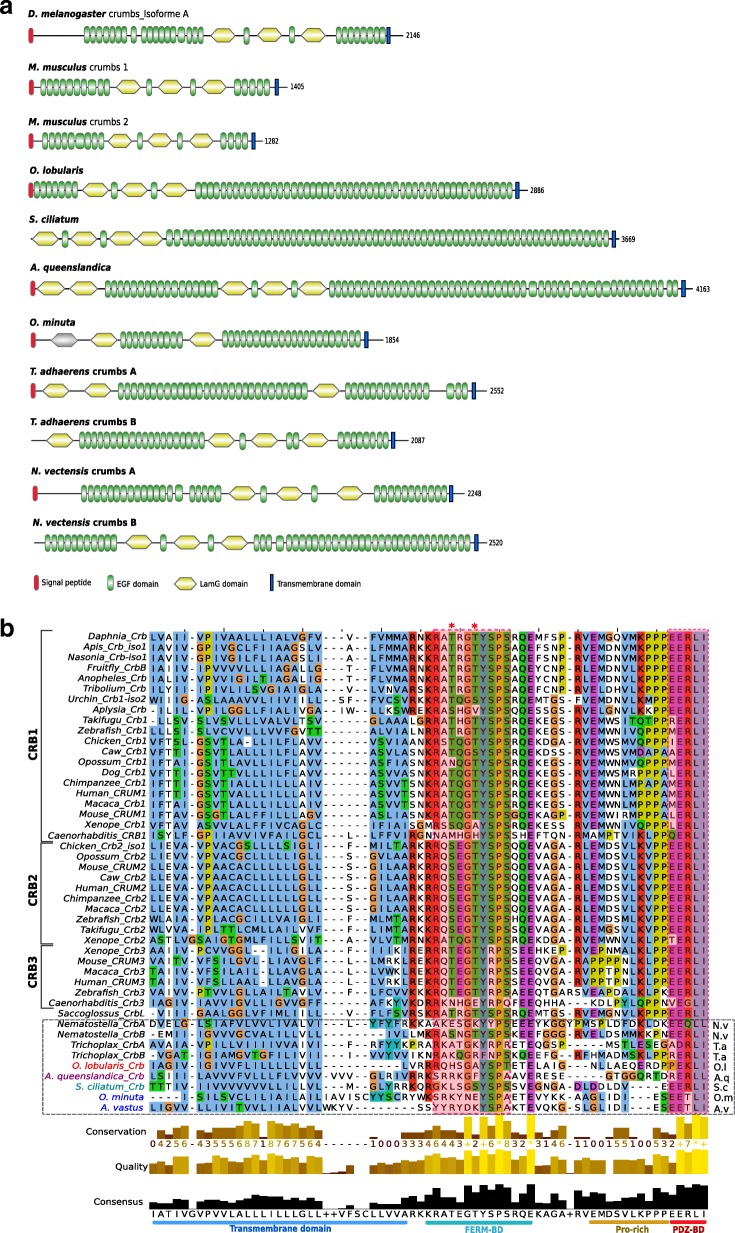
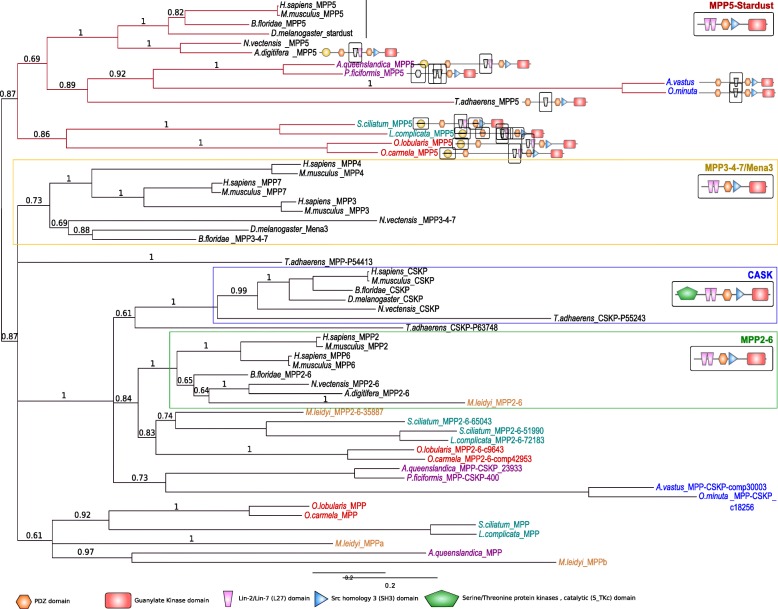
BACKGROUND: The emergence of epithelia was the foundation of metazoan expansion. Epithelial tissues are a hallmark of metazoans deeply rooted in the evolution of their complex developmental morphogenesis processes. However, studies on the epithelial features of non-bilaterians are still sparse and it remains unclear whether the last common metazoan ancestor possessed a fully functional epithelial toolkit or if it was acquired later during metazoan evolution. RESULTS: To investigate the early evolution of animal epithelia, we sequenced the genome and transcriptomes of two new sponge species to characterize epithelial markers such as the E-cadherin complex and the polarity complexes for all classes (Calcarea, Demospongiae, Hexactinellida, Homoscleromorpha) of sponges (phylum Porifera) and compare them with their homologues in Placozoa and in Ctenophora. We found that Placozoa and most sponges possess orthologues of all essential genes encoding proteins characteristic of bilaterian epithelial cells, as well as their conserved interaction domains. In stark contrast, we found that ctenophores lack several major polarity complex components such as the Crumbs complex and Scribble. Furthermore, the E-cadherin ctenophore orthologue exhibits a divergent cytoplasmic domain making it unlikely to interact with its canonical cytoplasmic partners. CONCLUSIONS: These unexpected findings challenge the current evolutionary paradigm on the emergence of epithelia. Altogether, our results raise doubt on the homology of protein complexes and structures involved in cell polarity and adhesive-type junctions between Ctenophora and Bilateria epithelia.
Overview
The claims and statistics of this paper haven’t been checked yet.
Free: it reads the open-access text and checks the first 5 claims that cite a source we can check. Create a free account to check every claim.
Integrity signals
Registry
Cites
Statistics
Figures
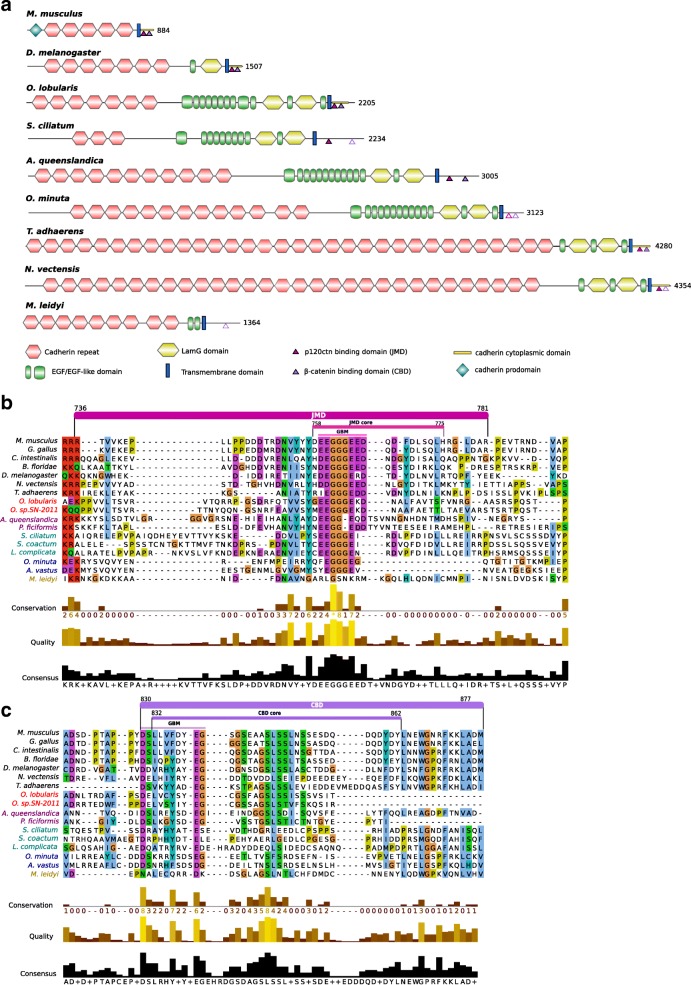
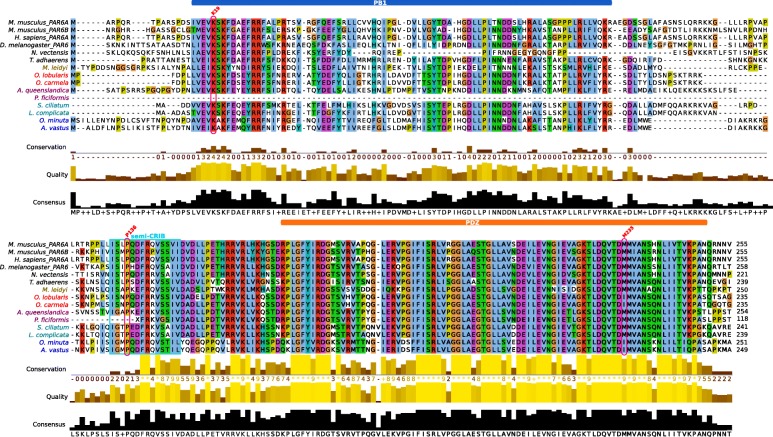
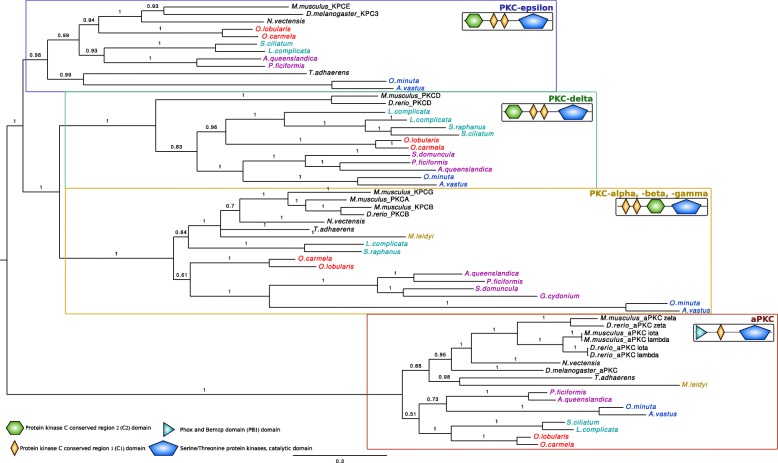
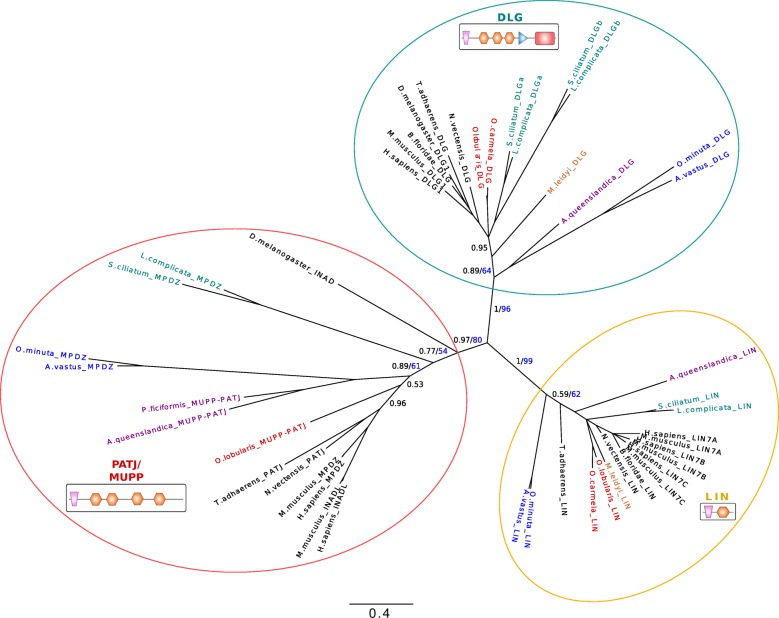
Verification
Claims the paper makes
The claims and statistics of this paper haven’t been checked yet.
Free: it reads the open-access text and checks the first 5 claims that cite a source we can check. Create a free account to check every claim.
Claims other papers make about this one
Each is checked against this paper’s own text: does it say what the citing paper says it does?
The source backs part of the claim, not all of it — or backs it for a different population, condition or comparison.
In the citing paper
“Under the ctenophore-sister scenario, these are most parsimoniously interpreted as arising on the myriazoan stem after the divergence of ctenophores1,5,59, and include genes associated, in bilaterians and cnidarians, with neuronal function1,5,59, development58 and cell adhesion60.”
From Ancient gene linkages support ctenophores as sister to other animals (2023) · cites this paper as [60]
Experimental — accuracy not yet measuredThe source backs part of the claim, not all of it — or backs it for a different population, condition or comparison.
In the citing paper
“Sponges have long been considered to lack epithelia, but recent studies have revealed the presence of some typical epithelial components (cell polarity and cell junction genes), and a capacity to seal their internal space from the environment (Adams et al. 2010; Belahbib et al. 2018; Fahey and Degnan 2010; Leys and Hill 2012; Leys et al. 2009; Riesgo et al. 2014).”
From A non-bilaterian perspective on the development and evolution of animal digestive systems (2019) · cites this paper as Belahbib et al. 2018
Experimental — accuracy not yet measured
Self-check
Percentages, sums and reported differences re-computed from the paper’s own numbers.
The self-check needs the paper’s full text.
Citations
Cites
Basic local alignment search tool
Altschul, S. F., Gish, W., Miller, W., Myers, E. W., & Lipman, D. J. (1990) · Journal of Molecular Biology · doi:10.1006/jmbi.1990.9999 · Cited by 98,669 · cited 7×
“D. melanogaster, M. musculus and A. queenslandica Epithelial cadherin, Crumbs, PAR and Scribble complexes retrieved from NCBI database were used to perform reciprocal besthits with BLAST 2.3.0 run locally using an E-value cutoff of 10-5.”
MethodInfluentialFast gapped-read alignment with Bowtie 2
Langmead, B., & Salzberg, S. L. (2012) · Nature Methods · doi:10.1038/nmeth.1923 · Cited by 56,400 · cited 3×
“Following the mapping of the individual reads to the final genome and transcriptome assembly using Bowtie2 73, the coverage values were found to be 98, ensuring a near 100% completeness of the predicted gene content.”
MethodInfluentialMUSCLE: multiple sequence alignment with high accuracy and high throughput
Edgar, R. C. (2004) · Nucleic Acids Research · doi:10.1093/nar/gkh340 · Cited by 44,662
Cutadapt removes adapter sequences from high-throughput sequencing reads
Martin, M. (2011) · EMBnet.journal · doi:10.14806/ej.17.1.200 · Cited by 33,889
MrBayes 3: Bayesian phylogenetic inference under mixed models
Ronquist, F., & Huelsenbeck, J. P. (2003) · Bioinformatics · doi:10.1093/bioinformatics/btg180 · Cited by 29,077
SPAdes: A New Genome Assembly Algorithm and Its Applications to Single-Cell Sequencing
Bankevich, A., Nurk, S., Antipov, D., Gurevich, A. A., Dvorkin, M., Kulikov, A. S., Lesin, V. M., Nikolenko, S. I., Pham, S., Prjibelski, A. D., et al. (2012) · Journal of Computational Biology · doi:10.1089/cmb.2012.0021 · Cited by 25,987 · cited 2×
“Mapped Illumina reads and corrected PacBio reads where then assembled together with SPAdes 75.”
MethodGuindon, S., Dufayard, J.-F., Lefort, V., Anisimova, M., Hordijk, W., & Gascuel, O. (2010) · Systematic Biology · doi:10.1093/sysbio/syq010 · Cited by 18,376
MAFFT: a novel method for rapid multiple sequence alignment based on fast Fourier transform
Katoh, K. (2002) · Nucleic Acids Research · doi:10.1093/nar/gkf436 · Cited by 17,027
Kim, D., Pertea, G., Trapnell, C., Pimentel, H., Kelley, R., & Salzberg, S. L. (2013) · Genome Biology · doi:10.1186/gb-2013-14-4-r36 · Cited by 12,668 · cited 2×
“A transcriptomic dataset was mapped with Tophat 70to all contigs longer than 1kb to identify potential Eukaryotic sequences.”
MethodJalview Version 2—a multiple sequence alignment editor and analysis workbench
Waterhouse, A. M., Procter, J. B., Martin, D. M. A., Clamp, M., & Barton, G. J. (2009) · Bioinformatics · doi:10.1093/bioinformatics/btp033 · Cited by 11,399
Cited by
Ancient gene linkages support ctenophores as sister to other animals
Schultz, D. T., Haddock, S. H. D., Bredeson, J. V., Green, R. E., Simakov, O., & Rokhsar, D. S. (2023) · Nature · doi:10.1038/s41586-023-05936-6 · Cited by 362
The origin of animals: an ancestral reconstruction of the unicellular-to-multicellular transition
Ros-Rocher, N., Pérez-Posada, A., Leger, M. M., & Ruiz-Trillo, I. (2021) · Open Biology · doi:10.1098/rsob.200359 · Cited by 163
“Other components related to adherens junctions and cell polarity functions are fairly well conserved in sponges [105,136,155] with some homologues missing in ctenophores [156].”
BackgroundThe origin and evolution of Wnt signalling
Holzem, M., Boutros, M., & Holstein, T. W. (2024) · Nature Reviews Genetics · doi:10.1038/s41576-024-00699-w · Cited by 121
“Morphologically, Ctenophora have different modes of epithelial organization to other Metazoa, which would fit with the lack of PCP pathway non-canonical Wnt signalling in Ctenophora, given its involvement in cellular orientation and polarity 108,113,117 (Fig.”
A non-bilaterian perspective on the development and evolution of animal digestive systems
Steinmetz, P. R. H. (2019) · Cell and Tissue Research · doi:10.1007/s00441-019-03075-x · Cited by 67
“…have revealed the presence of some typical epithelial components (cell polarity and cell junction genes), and a capacity to seal their internal space from the environment (Adams et al. 2010; Belahbib et al. 2018; Fahey and Degnan 2010; Leys and Hill 2012; Leys et al. 2009; Riesgo et al. 2014).”
BackgroundThe primitive streak and cellular principles of building an amniote body through gastrulation
Sheng, G., Martinez-Arias, A., & Sutherland, A. E. (2021) · Science · doi:10.1126/science.abg1727 · Cited by 72
“Nevertheless, comparative genomics and molecular phylogeny studies have shown that most of the genes involved in epithelial organization are present in sponge genomes (15, 16), as are someof the genes involved in germlayer formation in Bilateria (the protostomes and deuterostomes, including all vertebrate species) (14…”
Martin, E. R., Girardello, R., Dittmar, G., & Ludwig, A. (2021) · FEBS Journal · doi:10.1111/febs.15710 · Cited by 64
Inherency of Form and Function in Animal Development and Evolution
Newman, S. A. (2019) · Frontiers in Physiology · doi:10.3389/fphys.2019.00702 · Cited by 62
Understanding Animal Evolution: The Added Value of Sponge Transcriptomics and Genomics
Renard, E., Leys, S. P., Wörheide, G., & Borchiellini, C. (2018) · BioEssays · doi:10.1002/bies.201700237 · Cited by 52
Self-citationDiverse cell junctions with unique molecular composition in tissues of a sponge (Porifera)
Mitchell, J. M., & Nichols, S. (2019) · EvoDevo · doi:10.1186/s13227-019-0139-0 · Cited by 37
“Likewise, sequence analyses of ctenophores indicate that they lack conserved cadherin/β-catenin interaction motifs (Belahbib et al., 2018), and a recent study indicates that β-catenin is altogether absent at cell-cell contacts in Mnemiopsis leidyi (Salinas-Saavedra et al., n.d.).”
BackgroundInfluentialPhysical basis for the determination of lumen shape in a simple epithelium
Vasquez, C. G., Vachharajani, V. T., Garzón-Coral, C., & Dunn, A. R. (2021) · Nature Communications · doi:10.1038/s41467-021-25050-3 · Cited by 39
The enigmatic Placozoa part 1: Exploring evolutionary controversies and poor ecological knowledge
Schierwater, B., Osigus, H., Bergmann, T., Blackstone, N. W., Hadrys, H., Hauslage, J., Humbert, P. O., Kamm, K., Kvansakul, M., Wysocki, K., et al. (2021) · BioEssays · doi:10.1002/bies.202100080 · Cited by 38
“[4,70] The complex placozoan genetic toolkit[4,50,55,76] has been added to the discussion and led to the saying that a conservation of a primitive bauplan over such long periods is “unlikely”.”
BackgroundDevelopmental capacity and the early evolution of animals
Erwin, D. H. (2021) · Journal of the Geological Society · doi:10.1144/jgs2020-245 · Cited by 30
Clarke, D. N., Lowe, C. J., & Nelson, W. J. (2019) · Developmental Biology · doi:10.1016/j.ydbio.2019.01.007 · Cited by 27
“, 2012), and have cast doubt on whether the CCCs of basally branching animal phyla are likely to function in epithelial cell-cell adhesion (Belahbib et al., 2018).”
BackgroundThe compact genome of the sponge Oopsacas minuta (Hexactinellida) is lacking key metazoan core genes
Santini, S., Schenkelaars, Q., Jourda, C., Duschene, M., Belahbib, H., Rocher, C., Selva, M., Riesgo, A., Vervoort, M., Leys, S. P., et al. (2023) · BMC Biology · doi:10.1186/s12915-023-01619-w · Cited by 27
“1b) has remained a major gap in our knowledge of Porifera, despite the insights provided by snapshots of their gene contents [3, 23, 26, 32, 33].”
BackgroundSelf-citationCell polarity signalling at the birth of multicellularity: What can we learn from the first animals
Wright, B. A., Kvansakul, M., Schierwater, B., & Humbert, P. O. (2022) · Frontiers in Cell and Developmental Biology · doi:10.3389/fcell.2022.1024489 · Cited by 27
“However, Ctenophores lack key signalling and polarity genes like Scribble and crumbs (Belahbib et al., 2018) and members required for non-canonical Wnt signalling pathway (J.”
BackgroundInfluentialModelling the early evolution of extracellular matrix from modern Ctenophores and Sponges
Draper, G. W., Shoemark, D. K., & Adams, J. C. (2019) · Essays in Biochemistry · doi:10.1042/ebc20180048 · Cited by 25
Super-resolution imaging uncovers the nanoscopic segregation of polarity proteins in epithelia
Mangeol, P. J. J., Massey‐Harroche, D., Richard, F., Concordet, J., Lenne, P., & Bivic, A. L. (2022) · eLife · doi:10.7554/elife.62087 · Cited by 25
“These proteins are remarkably well conserved over the animal kingdom (Belahbib et al., 2018; Le Bivic, 2013).”
BackgroundVernale, A., Prünster, M. M., Marchianò, F., Debost, H., Brouilly, N., Rocher, C., Massey‐Harroche, D., Renard, E., Bivic, A. L., Habermann, B. H., et al. (2021) · BMC Ecology and Evolution · doi:10.1186/s12862-021-01866-x · Cited by 26
“lobularis, orthologs shared with the bilaterian proteins involved in the Crumbs complex (namely Crumbs, Patj, Pals1) have been reported, and key functional motifs required for their functional interactions have been clearly identified [11].”
BackgroundResultInfluentialSelf-citationInherency and homomorphy in the evolution of development
Newman, S. A. (2019) · Current Opinion in Genetics & Development · doi:10.1016/j.gde.2019.05.006 · Cited by 26
Early eukaryotic origins and metazoan elaboration of MAPR family proteins
Hehenberger, E., Eitel, M., Fortunato, S., Miller, D. J., Keeling, P. J., & Cahill, M. A. (2020) · Molecular Phylogenetics and Evolution · doi:10.1016/j.ympev.2020.106814 · Cited by 23
Agić, H., Högström, A. E. S., Moczydłowska, M., Jensen, S., Palacios, T., Meinhold, G., Ebbestad, J. O. R., Taylor, W. L., & Høyberget, M. (2019) · Scientific Reports · doi:10.1038/s41598-019-50650-x · Cited by 21
de Oliveira, B. F. R., Lopes, I. R., Canellas, A. L. B., Muricy, G. R. D. S., Dobson, A. D. W., & Laport, M. S. (2020) · Microorganisms · doi:10.3390/microorganisms8121978 · Cited by 23
Rocher, C., Vernale, A., Fierro‐Constaín, L., Séjourné, N., Chenesseau, S., Marschal, C., Issartel, J., Goff, E. L., Stroebel, D., Jouvion, J., et al. (2024) · Journal of Experimental Zoology Part B Molecular and Developmental Evolution · doi:10.1002/jez.b.23271 · Cited by 31
“…similarity between their epithelium and that of Bilateria with the clear presence of adherens ‐ junctions and Type IV collagen basal lamina (Belahbib et al. 2018; Boute et al. 1996; Ereskovsky, Dubois, et al. 2013; Ereskovsky et al. 2009; Fahey and Degnan 2010; Leys, Nichols, and Adams…”
Self-citationCell polarity in the protist-to-animal transition
Brunet, T., & Booth, D. S. (2023) · Current topics in developmental biology/Current Topics in Developmental Biology · doi:10.1016/bs.ctdb.2023.03.001 · Cited by 15
Improving Orthologous Signal and Model Fit in Datasets Addressing the Root of the Animal Phylogeny
McCarthy, C. G. P., Mulhair, P. O., Siu-Ting, K., Creevey, C. J., & O’Connell, M. J. (2023) · Molecular Biology and Evolution · doi:10.1093/molbev/msac276 · Cited by 20
“Both sponges and ctenophores have undergone gene loss after their divergence from other animals (Belahbib et al. 2018; Pett et al. 2019), and Ctenophora are thought to possess faster-evolving genomes than other animals (Pick et al.”
BackgroundA Look Back Over 20 Years of Evo-Devo Studies on Sponges: A Challenged View of Urmetazoa
Schenkelaars, Q., Vernale, A., Fierro‐Constaín, L., Borchiellini, C., & Renard, E. (2019) · Springer eBooks · doi:10.1007/978-3-030-30363-1_7 · Cited by 16
Self-citationРазнообразие клеточных типов у гаплотипа H4 Placozoa sp.
Romanova, D. Y. (2019) · Marine Biological Journal · doi:10.21072/mbj.2019.04.1.07 · Cited by 12
Inherent forms and the evolution of evolution
Newman, S. A. (2019) · Journal of Experimental Zoology Part B Molecular and Developmental Evolution · doi:10.1002/jez.b.22895 · Cited by 13
Salinas‐Saavedra, M., & Martindale, M. Q. (2020) · eLife · doi:10.7554/elife.54927 · Cited by 14
Maeso‐Alonso, L., López‐Ferreras, L., Marqués, M. M., & Marín, M. C. (2021) · Frontiers in Cell and Developmental Biology · doi:10.3389/fcell.2021.716957 · Cited by 14
Yuan, H., Hatleberg, W. L., Degnan, B. M., & Degnan, S. M. (2022) · Development Growth & Differentiation · doi:10.1111/dgd.12812 · Cited by 10
“This suggests they may have an ancestral role in the development or function of this primary metazoan cell type (Belahbib et al., 2018; Fahey & Degnan, 2010; Leys & Riesgo, 2012).”
BackgroundSkorentseva, K. V., Bolshakov, F. V., Saidova, A. A., & Lavrov, A. (2023) · Cell and Tissue Research · doi:10.1007/s00441-023-03810-5 · Cited by 15
The Homoscleromorph Sponge, Oscarella lobularis
Renard, E., Rocher, C., Ereskovsky, A. V., & Borchiellini, C. (2021) · CRC Press eBooks · doi:10.1201/9781003217503-5 · Cited by 14
Self-citationUnde venisti PGRMC? Grand-Scale Biology from Early Eukaryotes and Eumetazoan Animal Origins
Cahill, M. A. (2022) · Frontiers in Bioscience-Landmark · doi:10.31083/j.fbl2711317 · Cited by 10
Thiery, J. P., Sheng, G., Shu, X., & Runyan, R. B. (2024) · Development · doi:10.1242/dev.200128 · Cited by 10
Evolutionary origin of the nervous system from Ctenophora prospective
Sachkova, M. Y. (2024) · Evolution & Development · doi:10.1111/ede.12472 · Cited by 11
“…convergence and parallelism are historically different terms meaning evolution of similar traits either from different or same ancestral traits (Belahbib et al., 2018), the boundary between them has blurred (Arendt & Reznick, 2008), and in the literature discussing the evolution of nervous…”
Knoflacher, M. (2024) · Springer eBooks · doi:10.1007/978-3-662-69423-7_6 · Cited by 9
β-catenin has an ancestral role in cell fate specification but not cell adhesionPreprint
Salinas‐Saavedra, M., Wikramanayake, A. H., & Martindale, M. Q. (2019) · bioRxiv (Cold Spring Harbor Laboratory) · doi:10.1101/520957 · Cited by 9
“For example, ctenophores do not appear to have the genes encoding for most cell-cell adhesion systems (34, 35), Wnt/planar cell polarity (PCP), and bilaterianmesoderm (30, 33).”
BackgroundOrigin and development of primary animal epithelia
Doerr, S., Zhou, P., & Ragkousi, K. (2023) · BioEssays · doi:10.1002/bies.202300150 · Cited by 7
“[5,142,146,147,148,149,150] Sponges have few basement membrane proteins, including collagen IV, although only homoscleromorph spongeshavebasalmembranestructurallycomparabletothatofother animals.”
BackgroundFrom traveler to homebody: Which signaling mechanisms sponge larvae use to become adult sponges?
Borisenko, I., Podgornaya, O. I., & Ereskovsky, A. V. (2019) · Advances in protein chemistry and structural biology · doi:10.1016/bs.apcsb.2019.02.002 · Cited by 10
Crystallographic Studies of PDZ Domain–Peptide Interactions of the Scribble Polarity Module
Maddumage, J. C., Stewart, B. Z., Humbert, P. O., & Kvansakul, M. (2021) · Methods in molecular biology · doi:10.1007/978-1-0716-1166-1_7 · Cited by 6
Mendonca, K. D. P., Angeletti, B., Dufour, A., Borchiellini, C., Heimbürger‐Boavida, L., Renard, E., & Issartel, J. (2023) · Marine Pollution Bulletin · doi:10.1016/j.marpolbul.2023.114665 · Cited by 10
Self-citationHyper-accumulation of vanadium in animals: Two sponges compete with urochordates
Mendonca, K. D. P., Chaurand, P., Campos, A. P. C., Angeletti, B., Rovezzi, M., Delage, L., Borchiellini, C., Bivic, A. L., Issartel, J., Renard, E., et al. (2023) · The Science of The Total Environment · doi:10.1016/j.scitotenv.2023.169410 · Cited by 7
Self-citationStrehlow, B. W., Pineda, M.-C., Kenkel, C. D., Laffy, P. W., Duckworth, A. R., Renton, M., Clode, P. L., & Webster, N. S. (2020) · Coral Reefs · doi:10.1007/s00338-020-02028-z · Cited by 9
“Although there are approximately 9,000 described sponge species [8], 58 to date only ~35 species have published transcriptomes [9-25] and only ~10 have published genomes 59”
BackgroundRocher, C., Vernale, A., Fierro‐Constaín, L., Séjourné, N., Chenesseau, S., Marschal, C., Goff, E. L., Morgan, D., Matthews, C., Marschal, F., et al. (2020) · bioRxiv (Cold Spring Harbor Laboratory) · doi:10.1101/2020.06.23.167296 · Cited by 6
“Homoscleromorph sponges are of particular interest to study the evolution of epithelia as it has been already pointed (Belahbib et al., 2018; Boute et al., 1996; Ereskovsky et al., 2009, 2013b; Miller et al., 2018; Nichols et al., 2006, 2012) and the unexpected higher conservation of some…”
BackgroundSelf-citationCosta, M. L., Rosa, I. D. A., de Andrade, L. R., Mermelstein, C., & Coutinho, C. C. (2019) · Journal of Morphology · doi:10.1002/jmor.21090 · Cited by 7
“Moreover, sponges have the metazoan genetic repertoire for these developmental processes (Aouacheria et al., 2006; Belahbib et al., 2018; Borisenko, Adamski, Ereskovsky, & Adamska, 2016; Fahey & Degnan, 2010; Holstien et al., 2010; Paps, 2018; Paps & Holland, 2018; Renard et al., 2018; Schippers & Nichols, 2018).”
BackgroundWalters, B. M., Guttieres, L., Goëb, M., Marjenberg, S. J., Martindale, M. Q., & Wikramanayake, A. H. (2025) · Developmental Dynamics · doi:10.1002/dvdy.70004 · Cited by 4
“Additionally, 9 out of the 14 essential binding residues of the ⍺ -catenin binding motif are conserved (Belahbib et al. 2018).”
InfluentialOutlook on sponge reproduction science in the last ten years: are we far from where we should be?
Lanna, E., Cajado, B., dos Santos, D. F. C., Cruz, F., Oliveira, F. S., & Vasconcellos, V. (2018) · Invertebrate Reproduction & Development · doi:10.1080/07924259.2018.1453877 · Cited by 6
“…species have been studied (e.g. Mohri et al. 2008; Schenkelaars et al. 2016; Fierro-Constaín et al. 2017), but their transcriptomes and genomes are still not available (however, Belahbib et al. (2017) published a preprint article investigating the genome of Oscarella lobularis and Oopsacas minuta).”
BackgroundPhysical basis of lumen shape and stability in a simple epitheliumPreprint
Vasquez, C. G., Vachharajani, V. T., Garzón-Coral, C., & Dunn, A. R. (2019) · bioRxiv (Cold Spring Harbor Laboratory) · doi:10.1101/746792 · Cited by 3
“Evolutionary data indicate the molecular components required for the establishment of a defined apical domain are likewise ancient, and appeared simultaneously with the advent of multicellular animals (Belahbib et al., 2018).”
BackgroundA transphyletic study of metazoan β-catenin protein complexes
Mbogo, I., Kawano, C., Nakamura, R., Tsuchiya, Y., Villar‐Briones, A., Hirao, Y., Yasuoka, Y., Hayakawa, E., Tomii, K., & Watanabe, H. (2024) · Zoological Letters · doi:10.1186/s40851-024-00243-y · Cited by 2
Borisenko, I., Predeus, A. V., Lavrov, A., & Ereskovsky, A. V. (2025) · Scientific Reports · doi:10.1038/s41598-025-28962-y · Cited by 3
Long-Term Culturing of Placozoans (Trichoplax and Hoilungia)
Romanova, D. Y., Varoqueaux, F., Eitel, M., Yoshida, M., Nikitin, M. A., & Moroz, L. L. (2024) · Methods in molecular biology · doi:10.1007/978-1-0716-3642-8_21 · Cited by 2
The origin of human epithelial tissue.
Alaminos, M., & Campos, A. (2023) · PubMed · doi:10.14670/hh-18-485 · Cited by 5
“Moreover, genetic analyses showed that genes related to the cadherin/ β - catenin/ α -catenin complex, which are necessary for the establishment of adherent junctions are present in the placozoan genome (Belahbib et al., 2018).”
Principles of Epithelial Transport
Silverthorn, D. U. (2020) · Physiology in health and disease · doi:10.1007/978-3-030-52780-8_2 · Cited by 4
The compact genome of the sponge Oopsacas minuta (Hexactinellida) is lacking key metazoan core genesPreprint
Santini, S., Schenkelaars, Q., Jourda, C., Duschene, M., Belahbib, H., Rocher, C., Selva, M., Riesgo, A., Vervoort, M., Leys, S. P., et al. (2022) · bioRxiv (Cold Spring Harbor Laboratory) · doi:10.1101/2022.07.26.501511 · Cited by 2
Self-citationNewman, S. A. (2020) · Elsevier eBooks · doi:10.1016/b978-0-12-817996-3.00011-6 · Cited by 3
Methylmercury Exposure of the Sponge O. Lobularis Induces Strong Tissue and Cell Defects
Mendonca, K. D. P., Rocher, C., Dufour, A., Schenkelaars, Q., Heimbürger‐Boavida, L., Bivic, A. L., Borchiellini, C., Issartel, J., & Renard, E. (2023) · Chemosphere · doi:10.1016/j.chemosphere.2024.141839 · Cited by 2
Self-citationBorisenko, I., Predeus, A. V., Lavrov, A., & Ereskovsky, A. V. (2024) · bioRxiv (Cold Spring Harbor Laboratory) · doi:10.1101/2024.02.06.578935 · Cited by 1
“Then, with a large gap, new genomes began to appear, with assembly levels from shotgun to chromosome level (Belahbib et al., 2018 for Oopsacas minuta and Oscarella lobularis ; Even within the class Demospongiae, the evolutionary distance between families is so great that their genome size and gene…”
BackgroundA transphyletic study of metazoan β-catenin protein complexesPreprint
Mbogo, I., Kawano, C., Nakamura, R., Tsuchiya, Y., Villar‐Briones, A., Hirao, Y., Yasuoka, Y., Hayakawa, E., Tomii, K., & Watanabe, H. (2024) · Research Square · doi:10.21203/rs.3.rs-4627469/v1
Riesgo, A., Renard, E., Schenkelaars, Q., Borchiellini, C., Pita, L., Maldonado, M., Erpenbeck, D., Hentschel, U., Oatley, G., Sinclair, E., et al. (2025) · Wellcome Open Research · doi:10.12688/wellcomeopenres.24187.1
Self-citationVernale, A., Prünster, M. M., Marchianò, F., Debost, H., Brouilly, N., Rocher, C., Massey‐Harroche, D., Renard, E., Bivic, A. L., Habermann, B. H., et al. (2021) · Figshare · doi:10.6084/m9.figshare.16305720
Self-citationVernale, A., Prünster, M. M., Marchianò, F., Debost, H., Brouilly, N., Rocher, C., Massey‐Harroche, D., Renard, E., Bivic, A. L., Habermann, B. H., et al. (2021) · Figshare · doi:10.6084/m9.figshare.16305717
Self-citationVernale, A., Prünster, M. M., Marchianò, F., Debost, H., Brouilly, N., Rocher, C., Massey‐Harroche, D., Renard, E., Bivic, A. L., Habermann, B. H., et al. (2021) · Figshare · doi:10.6084/m9.figshare.16305729
Self-citationVernale, A., Prünster, M. M., Marchianò, F., Debost, H., Brouilly, N., Rocher, C., Massey‐Harroche, D., Renard, E., Bivic, A. L., Habermann, B. H., et al. (2021) · Figshare · doi:10.6084/m9.figshare.16305711
Self-citationVernale, A., Prünster, M. M., Marchianò, F., Debost, H., Brouilly, N., Rocher, C., Massey‐Harroche, D., Renard, E., Bivic, A. L., Habermann, B. H., et al. (2021) · Figshare · doi:10.6084/m9.figshare.16305699
Self-citationVernale, A., Prünster, M. M., Marchianò, F., Debost, H., Brouilly, N., Rocher, C., Massey‐Harroche, D., Renard, E., Bivic, A. L., Habermann, B. H., et al. (2021) · Figshare · doi:10.6084/m9.figshare.16305738
Self-citationVernale, A., Prünster, M. M., Marchianò, F., Debost, H., Brouilly, N., Rocher, C., Massey‐Harroche, D., Renard, E., Bivic, A. L., Habermann, B. H., et al. (2021) · Figshare · doi:10.6084/m9.figshare.16305705
Self-citationCtenophore neural systems: Independent origin(s) and “alien neurons”
Moroz, L. L. (2025) · Elsevier eBooks · doi:10.1016/b978-0-443-27380-3.00044-0 · Cited by 2
Multi-omics data integration and interactive visual data mining to explore mitochondrial dynamics
Marchianò, F. (2022) · theses.fr (ABES) · doi:10.70675/eb60a1f9zb03bz48d8z8b03zcb18fa2f49d8
Cell mechanics contribution to crypt-villus axis development and maintenance
Soleilhac, M. (2024) · theses.fr (ABES) · doi:10.70675/298c6b66z88a6z4a34z9437zf6ee84c0f295
Evidence for an early cadherin–catenin interaction network in ctenophores
Guttieres, L., Singh, A., Senatore, A., & Martindale, M. Q. (2026) · Molecular Biology and Evolution · doi:10.1093/molbev/msag123
Metadata
- Authors
- Belahbib, H., Renard, E., Santini, S., Jourda, C., Claverie, J.-M., Borchiellini, C., & Le Bivic, A.
- Affiliations
- Aix-Marseille Université (FR)
- Centre de Coopération Internationale en Recherche Agronomique pour le Développement (FR)
- Corresponding author
- Claverie, Jean-Michel
- Borchiellini, Carole
- ORCID
- Venue
- BMC Genomics
- Published
- 2018-05-24
- Volume
- 19
- Issue
- 1
- Pages
- 393-393
- ISSN
- 1471-2164 (ISSN-L)
- PMC
- PMC5968619
- OpenAlex
- W2782376870
- Cited by
- 71
- References
- 93
- Citations by year
- 2026: 1 · 2025: 4 · 2024: 10 · 2023: 9 · 2022: 7 · 2021: 17 · 2020: 7 · 2019: 14 · 2018: 2
- FWCI
- 7.36
- Type
- journal article
- Language
- en
- Open access
- gold
- doi.org
- Licence
- cc-by
- creativecommons.org/licenses/by/4.0/ (tdm)
- Locations
- BMC Genomics (publishedVersion, cc-by)
- bioRxiv (Cold Spring Harbor Laboratory) (acceptedVersion)
- Europe PMC (PubMed Central) (publishedVersion, other-oa)
- PubMed Central (publishedVersion, cc-by)
- PubMed (publishedVersion)
- HAL AMU (submittedVersion, cc-by)
- HAL (submittedVersion)
- HAL (submittedVersion, other-oa)
- Agritrop (Cirad) (submittedVersion)
- DOAJ (DOAJ: Directory of Open Access Journals) (submittedVersion, cc-by-sa)
- Funders
- A*MIDEX
- Aix-Marseille Université
- CNRS
- Topics
- Life Sciences › Agricultural and Biological Sciences › Animal Science and Zoology › Marine Invertebrate Physiology and Ecology
- Life Sciences › Biochemistry, Genetics and Molecular Biology › Molecular Biology › Developmental Biology and Gene Regulation
- Life Sciences › Biochemistry, Genetics and Molecular Biology › Biotechnology › Marine Sponges and Natural Products
- Keywords
- sponges, Placozoa, Ctenophora, E-cadherin, Crumbs complex, Scribble, metazoan origin
- MeSH terms
- Protein Domains, Amino Acid Sequence, Animals, Epithelium, Porifera, Cadherins, Evolution, Molecular, Adherens Junctions, Genomics, Ctenophora
About these checks
Registry, retraction, Cites and statistics results are computed, not judged, with one exception: a printed reference that no index lists is read once by a model before it counts as a citation error. Claims are extracted by a model and kept only when their quote appears verbatim in the text; each cited source is then checked, with a model’s help, for whether it says what the claim relies on. Those verdicts can be wrong — read the claim’s quote and the cited source before relying on one.
Statistics and arithmetic are recomputed, not judged.
Confidence bands are shown only for fields calibrated on our annotated test set. None is calibrated yet, so no band is shown.
What counts as a claim ›How we measure confidence ›How we check this ›
Are you an author, or do you see a problem with this page? Request a review
Data sources
Bibliographic data: Semantic Scholar, OpenAlex, Crossref.
Contains information from the Semantic Scholar Academic Graph Datasets, made available under the ODC Attribution License (ODC-BY 1.0).
Semantic Scholar’s data is described in: Kinney, R., et al. (2023). The Semantic Scholar Open Data Platform. arXiv:2301.10140.
