

RNA-Seq and iTRAQ reveal multiple pathways involved in storage root formation and development in sweet potato (Ipomoea batatas L.)
Open accessThe DOI matches its Crossref record; 48 of the 48 references it cites were found in a registry or an index; 26 of the 64 sources its claims cite were checked for support.
Abstract
BACKGROUND: Sweet potato (Ipomoea batatas L.) is the sixth most important food crop in the world. The formation and development of storage roots in sweet potato is a highly complicated and genetically programmed process. However, the underlying mechanisms of storage root development have not yet been elucidated. RESULTS: To better understand the molecular mechanisms involved in storage root development, a combined analysis of the transcriptome and proteome of sweet potato fibrous roots (F) and storage roots at four different stages (D1, D3, D5 and D10) was performed in the present study. A total of 26,273 differentially expressed genes were identified in a comparison between the fibrous root library and four storage root libraries, while 2558 proteins showed a 1.0-fold or greater expression difference as indicated by isobaric tags for relative and absolute quantitation (iTRAQ) analysis. The combination of the transcriptome and proteome analyses and morphological and physiological data revealed several critical pathways involved in storage root formation and development. First, genes/proteins involved in the development of meristems/cambia and starch biosynthesis were all significantly upregulated in storage roots compared with fibrous roots. Second, multiple phytohormones and the genes related to their biosynthesis showed differential expression between fibrous roots and storage roots. Third, a large number of transcription factors were differentially expressed during storage root initiation and development, which suggests the importance of transcription factor regulation in the development of storage roots. Fourth, inconsistent gene expression was found between the transcriptome and proteome data, which indicated posttranscriptional regulatory activity during the development of storage roots. CONCLUSION: Overall, these results reveal multiple events associated with storage root development and provide new insights into the molecular mechanisms underlying the regulatory networks involved in storage root development.
Overview
CoChat Summary
TL;DR
This study combined transcriptome, proteome, anatomical and physiological analyses of sweet potato fibrous roots and storage roots at four developmental stages to identify pathways underlying storage root formation and development. It reports extensive differential gene/protein expression, starch accumulation, hormone changes, and transcription factor regulation, with weak transcript–protein correlation suggesting posttranscriptional regulation.
Key findings
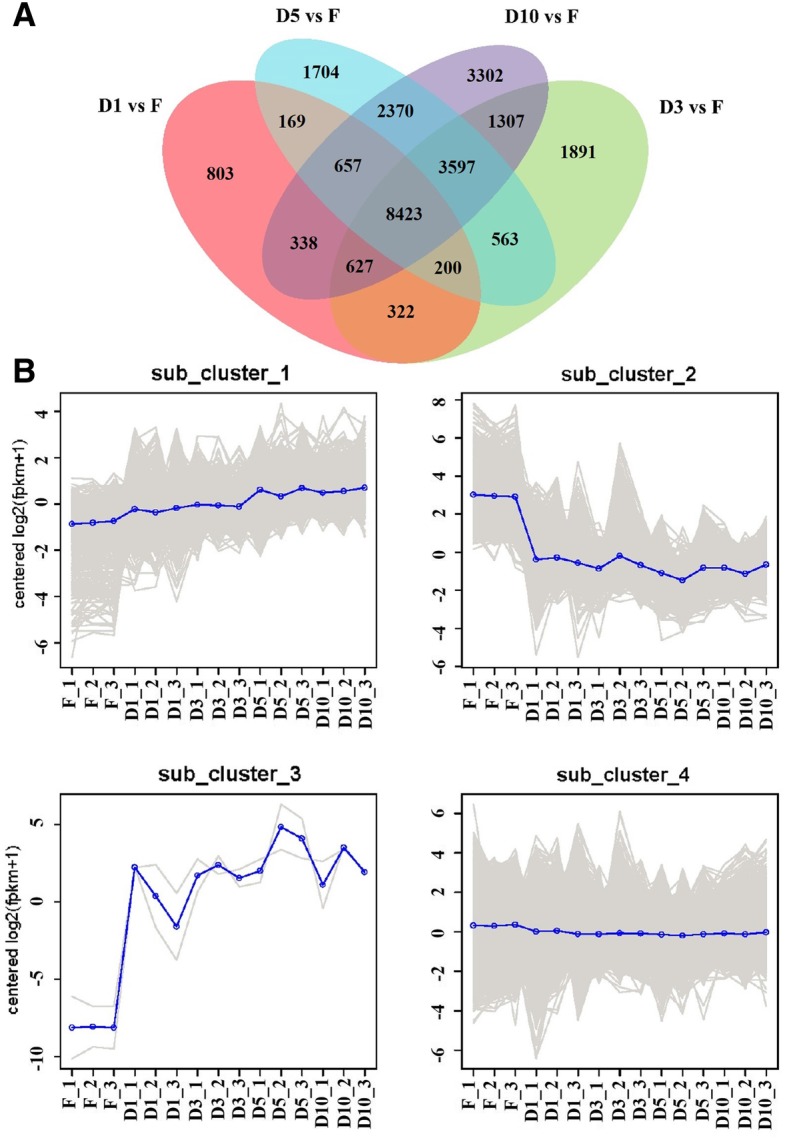
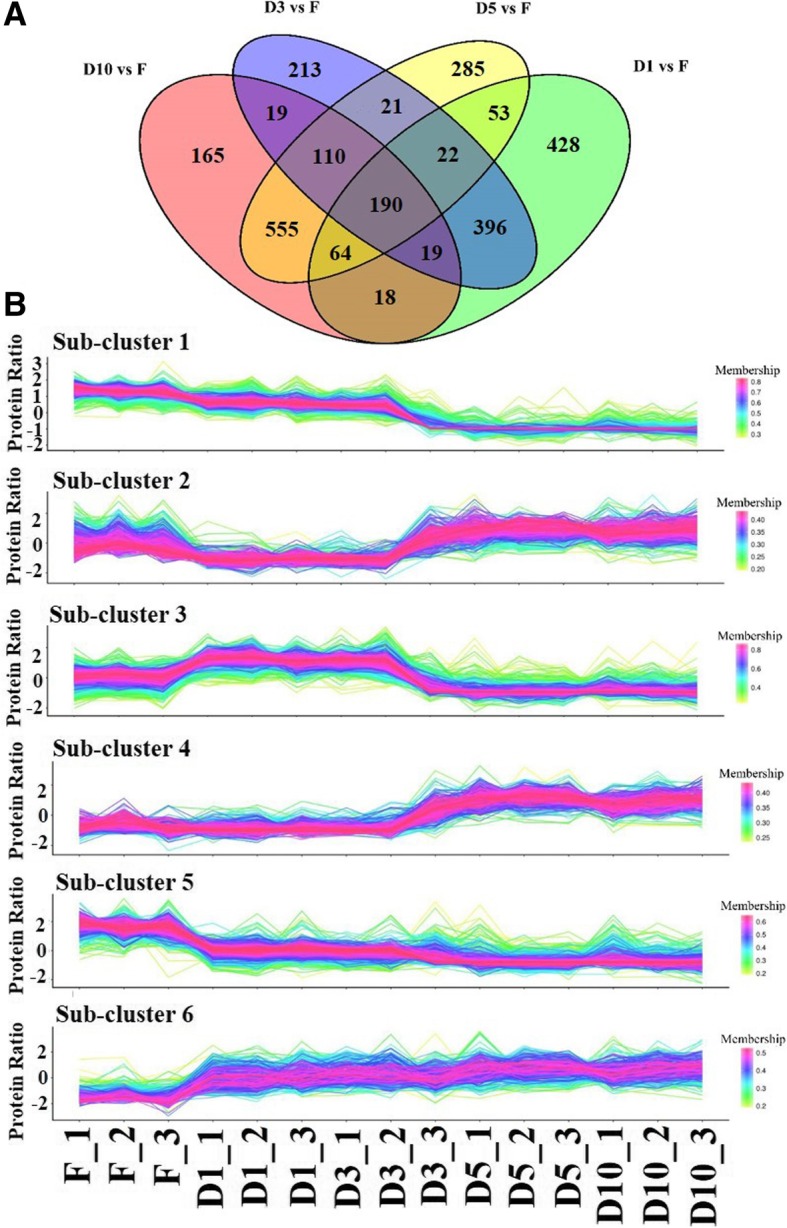
- A total of 26,273 differentially expressed genes (DEGs) were identified between the fibrous root library and four storage root libraries: 11,539 for F vs D1, 16,930 for F vs D3, 17,683 for F vs D5, and 20,621 for F vs D10. iTRAQ identified 2,558 differentially expressed proteins (DEPs): 1,190, 990, 1,300, and 1,140 for F vs D1, D3, D5, and D10, respectively.
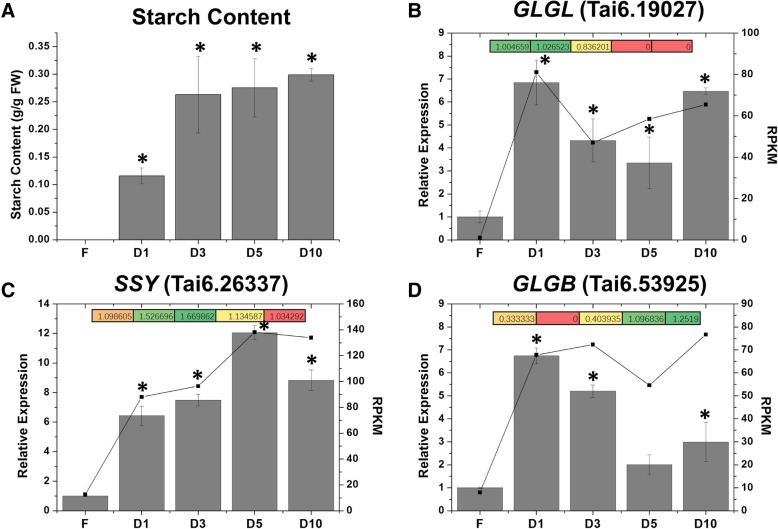
- Starch accumulated in storage roots but was nearly absent in fibrous roots, reaching 0.3 g/g fresh weight at the D10 stage; starch biosynthesis-related genes/enzymes GLGL, SSY, and GLGB were upregulated in storage roots.
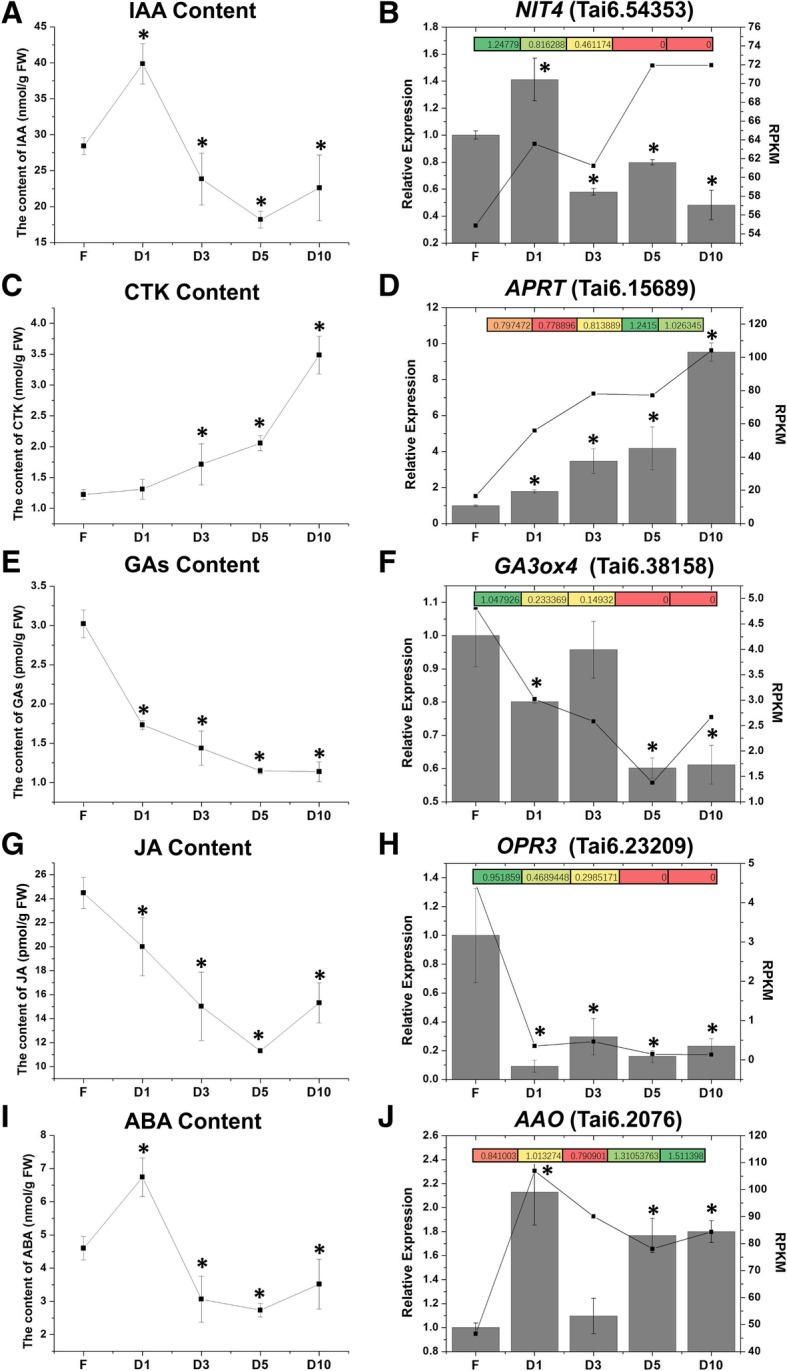
- Phytohormone patterns differed during development: IAA and ABA were induced at the initial storage root stage and then declined, CTK increased progressively, and GAs and JAs decreased gradually, with JA recovering at D10.
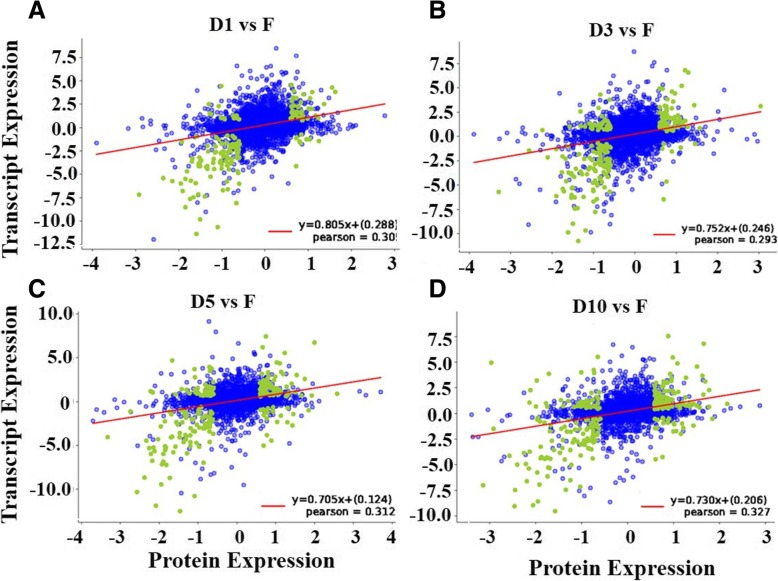
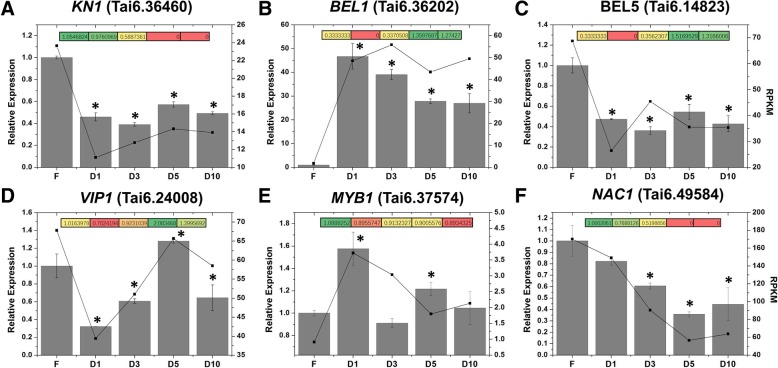
- More than 3,000 differentially expressed transcription factors were identified; BEL1 was strongly upregulated in storage roots (reported as more than 40-fold in Results and 50-fold in Discussion), while KN1, BEL5, and NAC1 were downregulated. Of 7,727 identified proteins, 4,110 matched transcripts, with a weak Pearson correlation of approximately 0.3 between transcriptome and proteome profiles.
Methods
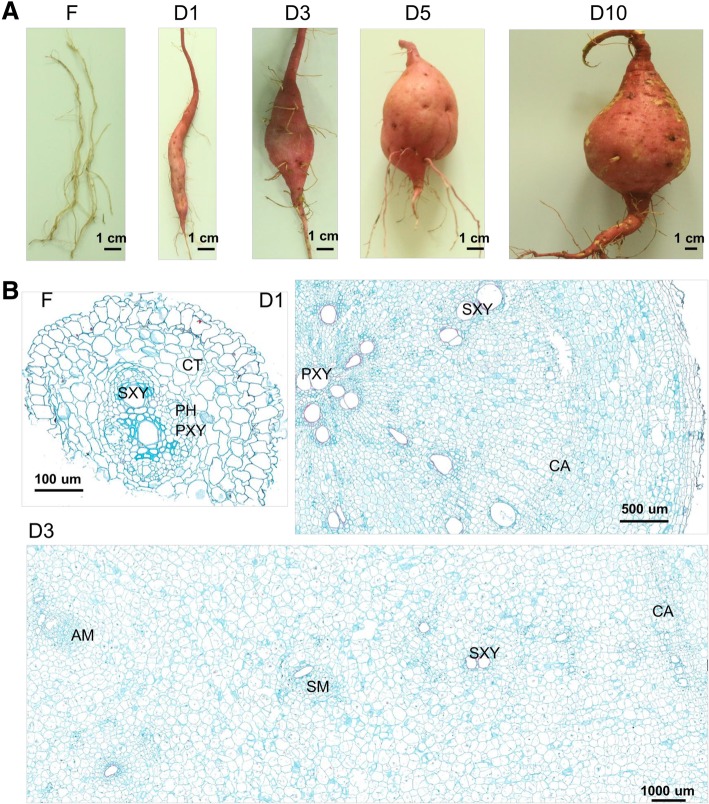
- Sweet potato cultivar Xushu22 was used; fibrous roots (F, ~1 mm diameter) and storage roots at D1, D3, D5, and D10 (~1, 3, 5, and 10 cm diameter) were collected at 15, 30, 60, 90, and 120 days after transplanting. RNA-Seq and iTRAQ libraries included three replicates per stage, and anatomical observations used paraffin sections.
- RNA-Seq was performed on the Illumina HiSeq 2000 platform; clean reads were aligned to the sweet potato genome, and DEGs were identified with DESeq2 using adjusted P < 0.05 and fold change ≥ 2 (abstract states FDR ≤ 0.05 and FC ≥ 2). Hierarchical clustering and GO/KEGG annotation were also performed.
- Proteome analysis used iTRAQ 8-plex labeling and Proteome Discoverer 2.2; DEPs were defined by Mann-Whitney test p < 0.05 and |log2(fold change)| ≥ 1. qRT-PCR validated 14 DEGs with ARF as the reference gene; starch content was measured by spectrophotometry, and hormones by ELISA.
Limitations
- Stated by the authors: further research is necessary to determine whether candidate genes are functionally correlated with storage root development; synergistic hormone effects warrant further investigation; many additional studies are needed to elucidate gene functions; and the weak transcript–protein correlation may reflect either a technical limitation of the proteome approach or posttranscriptional regulation.
- Evident from the text: the study is based on expression and protein-abundance correlations in a single cultivar under greenhouse conditions, with no functional validation such as transgenic or mutant experiments reported; qRT-PCR validation covered only 14 DEGs.
Model-written summary. Check it against the paper before relying on it.
Integrity signals
Registry
Cites
Statistics
Figures
Verification
Claims the paper makes
18 Valid · 5 Not valid · 32 Not checked · 111 Own results and interpretations
The cited sources support only part of this claim — read each source’s verdict below.
In the paper
“Several enzymes including ADP-glucose pyrophosphorylase (GLGL), starch synthase (SSY) and starch-branching enzyme (GLGB), are essential in sweet potato starch biosynthesis [26, 27].”
§ RNA-Seq and iTRAQ reveal multiple pathways involved in storage root formation and development in sweet potato (Ipomoea batatas L.) > Discussion
What the sources say
- Partly supportedcites [26] Eserman LA Jarret RL Leebens-Mack JH Parallel evolution of storage roots in morning glories (Convolvulaceae) BMC Plant Biol 2018 18 1 95 29843615 PMC5975488 sourceExperimental — accuracy not yet measured
The Discussion’s “Starch biosynthetic pathway” section identifies GLGL, SSY, and GLGB as enzymes in reactions that produce starch components. However, it says the pathway was characterized in potato tubers and cautions that sweetpotato starch accumulation may differ; it does not establish that these enzymes are essential in sweetpotato. (LLM, conf=0.86)
- Supportedcites [27] Zhang K Wu Z Tang D Luo K Lu H Liu Y Dong J Wang X Lv C Wang J Comparative transcriptome analysis reveals critical function of sucrose metabolism related-enzymes in starch accumulation in the storage root of sweet potato Front Plant Sci 2017 8 8 914 28690616 PMC5480015 source
The Introduction identifies ADP-glucose pyrophosphorylase, starch synthases, and starch-branching enzyme as key enzymes involved in sweet potato starch biosynthesis. The Results section likewise lists these among the key enzymes involved in starch granule formation. The paper uses different abbreviations from the citing sentence, but the enzyme names match. (LLM, conf=0.90)
plainstates a cause- Asserted: passes — The authors put it forward as true.
- Checkable: passes — It can be checked against evidence.
- Load-bearing: unclear — It is unclear whether the paper’s conclusions depend on it.
- Based: passes — The paper gives a reason why it holds.
- Partly supported
The cited sources support only part of this claim — read each source’s verdict below.
In the paper
“The developmental program of storage roots, including the formation of cambium meristems, starch biosynthesis and hormone biosynthesis and transport, mostly relies on transcription factor regulation [11, 18].”
§ RNA-Seq and iTRAQ reveal multiple pathways involved in storage root formation and development in sweet potato (Ipomoea batatas L.) > Discussion > Transcription factors play essential roles in the storage root development processes
What the sources say
- Partly supportedcites [11] Noh SA Lee H-S Huh EJ Huh GH Paek K-H Shin JS Bae JM SRD1 is involved in the auxin-mediated initial thickening growth of storage root by enhancing proliferation of metaxylem and cambium cells in sweetpotato (Ipomoea batatas) J Exp Bot 2010 61 5 1337 1349 20150515 PMC2837253 sourceExperimental — accuracy not yet measured
The Results identify SRD1 as probably a transcription factor, and the Discussion reports that its overexpression enhances cambium-cell proliferation during early sweetpotato storage-root formation (page unavailable). The paper does not establish that the broader storage-root developmental program mostly relies on transcription-factor regulation, or that transcription factors regulate starch biosynthesis and hormone biosynthesis and transport as claimed. (LLM, conf=0.86)
- Partly supportedcites [18] Ku AT Huang Y-S Wang Y-S Ma D Yeh K-W IbMADS1 (Ipomoea batatas MADS-box 1 gene) is involved in tuberous root initiation in sweet potato (Ipomoea batatas) Ann Bot 2008 102 1 57 67 18463111 PMC2712425 sourceExperimental — accuracy not yet measured
The Introduction says tuberous-root development involves cambial activity and starch-storage cells, and that such developmental programs mostly rely on transcription-factor regulation. The Results also link IbMADS1 expression with a starch-biosynthesis marker. However, the paper discusses hormones as signals affecting IbMADS1; it does not establish that transcription factors regulate hormone biosynthesis or transport. (LLM, conf=0.86)
plainstates a cause- Asserted: passes — The authors put it forward as true.
- Checkable: passes — It can be checked against evidence.
- Load-bearing: unclear — It is unclear whether the paper’s conclusions depend on it.
- Based: passes — The paper gives a reason why it holds.
- Partly supported
Every source the paper cites for this claim was checked and supports it.
In the paper
“CTKs cannot trigger storage root formation in the presence of a low sucrose level in the root [32].”
§ RNA-Seq and iTRAQ reveal multiple pathways involved in storage root formation and development in sweet potato (Ipomoea batatas L.) > Discussion > Multiple hormones synergistically regulate the development of storage roots
What the sources say
- Supportedcites [32] Eguchi T Yoshida S Effects of application of sucrose and cytokinin to roots on the formation of tuberous roots in sweetpotato (Ipomoea batatas (L.) lam.) Plant Root 2008 2 7 13 source
The Abstract (p.1) states that t-ZR 'did not induce morphogenesis when the sucrose level in the root was lowered to approximately 2 μg mg-1 of FW', and the Discussion repeats that t-ZR application 'did not affect root swelling when the level of sucrose in the root was lowered to approximately 2 μg mg-1', concluding that high endogenous sucrose is required before cytokinins can trigger tuberous root formation. This matches the claim's assertion that cytokinins cannot trigger storage root formation at low root sucrose level. The supporting experimental condition (dark-grown plants to deplete sucrose, then t-ZR application; Sucrose and t-ZR Treatments) is described in our copy. (LLM, conf=0.90)
plain- Asserted: passes — The authors put it forward as true.
- Checkable: passes — It can be checked against evidence.
- Load-bearing: unclear — It is unclear whether the paper’s conclusions depend on it.
- Based: passes — The paper gives a reason why it holds.
- Supported
The cited sources support only part of this claim — read each source’s verdict below.
In the paper
“In sweet potato, CTKs appear to be key factor in the formation of storage roots as a prerequirement for cambial cell proliferation [31].”
§ RNA-Seq and iTRAQ reveal multiple pathways involved in storage root formation and development in sweet potato (Ipomoea batatas L.) > Discussion > Multiple hormones synergistically regulate the development of storage roots
What the sources say
- Partly supportedcites [31] Nieminen K Immanen J Laxell M Kauppinen L Tarkowski P Dolezal K Tähtiharju S Elo A Decourteix M Ljung K Cytokinin signaling regulates cambial development in poplar Proc Natl Acad Sci U S A 2008 105 50 20032 19064928 PMC2604918 sourceExperimental — accuracy not yet measured
Our copy of Nieminen et al. (2008) establishes only the general mechanistic half of the claim: the Discussion states 'cytokinins are required for vascular cambium function in controlling radial growth' and 'during secondary development, their major function is the regulation of cell proliferation' — but this is demonstrated in poplar (P. tremula x tremuloides) stems, with cytokinin receptor expression profiling in poplar and birch cambium. Nothing in our copy concerns sweet potato (Ipomoea batatas) or storage/tuberous root formation; searches for 'sweet potato', 'Ipomoea batatas storage root' and 'root tuberization' returned only poplar/Arabidopsis material, and the paper's reference list contains no sweet potato work. So attributing the sweet-potato storage-root conclusion to this poplar cambium paper extends it to a different species and organ than it studied. (LLM, conf=0.70)
hedgedstates a possible cause- Asserted: passes — The authors put it forward as true.
- Checkable: passes — It can be checked against evidence.
- Load-bearing: unclear — It is unclear whether the paper’s conclusions depend on it.
- Based: passes — The paper gives a reason why it holds.
- Partly supported
A result the paper reports from its own data — it cites no other source for it, so there is none to check. The quote shows it is in the paper.
In the paper
“the comparison of the fibrous roots with the D10-stage storage roots showed that 258 out of 1074 DEPs exhibited significant transcript-level differences (Additional file 10: Figure S5D).”
§ RNA-Seq and iTRAQ reveal multiple pathways involved in storage root formation and development in sweet potato (Ipomoea batatas L.) > Results > Proteomic analysis and transcriptome-proteome matching
plain- Asserted: passes — The authors put it forward as true.
- Checkable: passes — It can be checked against evidence.
- Load-bearing: unclear — It is unclear whether the paper’s conclusions depend on it.
- Based: passes — The paper gives a reason why it holds.
93 more claims
Create a free account to see all 166 claims and to verify the 9 references still open.
- Probably not a substantial claim. 54
- It may state two separate claims as one. 25
Self-check
Percentages, sums and reported differences re-computed from the paper’s own numbers.
Each contradiction between two passages listed here was confirmed by an independent check.
Rated minor: it would not touch a result — a value no result rests on, a p-value that stays on the same side of the significance level, or a conflict that is clerical, resolved elsewhere in the paper, or outside its own findings.
In the paper
§ RNA-Seq and iTRAQ reveal multiple pathways involved in storage root formation and development in sweet potato (Ipomoea batatas L.) > Results > Accumulation of plant hormones during storage root formation and development
“the levels of GAs and JAs decreased gradually from the fibrous roots to the storage roots, and the JA content recovered at the D10 stage”
§ RNA-Seq and iTRAQ reveal multiple pathways involved in storage root formation and development in sweet potato (Ipomoea batatas L.) > Discussion > Multiple hormones synergistically regulate the development of storage roots
“the GA and JA contents showed gradual decreases during storage root development (from the fibrous roots to the D-10 stage storage roots)”
Rated minor: it would not touch a result — a value no result rests on, a p-value that stays on the same side of the significance level, or a conflict that is clerical, resolved elsewhere in the paper, or outside its own findings.
In the paper
§ RNA-Seq and iTRAQ reveal multiple pathways involved in storage root formation and development in sweet potato (Ipomoea batatas L.) > Results > Transcriptome analysis of fibrous roots and storage roots at different stages
“less than 5% of the reads mapped to multiple sites.”
§ RNA-Seq and iTRAQ reveal multiple pathways involved in storage root formation and development in sweet potato (Ipomoea batatas L.) > Results > Transcriptome analysis of fibrous roots and storage roots at different stages
“| D5_3 | 23,103,960 | 22,311,013 | 6.69G | 77.14% | 71.65% | 5.49% | 21.79% |”
Citations
Cites
HISAT: a fast spliced aligner with low memory requirements
Kim, D., Langmead, B., & Salzberg, S. L. (2015) · Nature Methods · doi:10.1038/nmeth.3317 · Cited by 24,112 · cited 3×
“After the removal of adaptors and reads containing unknown or low-quality nucleotides, more than 20,000,000 clean reads were obtained from the fibrous root (F) and the D1, D3, D5 and D10 storage root libraries (Table 1), and these reads then were aligned to the sweet potato genome (http://public-genomes-ngs.mol gen.mp…”
InfluentialCluster analysis and display of genome-wide expression patterns
Eisen, M. B., Spellman, P. T., Brown, P. O., & Botstein, D. (1998) · Proceedings of the National Academy of Sciences · doi:10.1073/pnas.95.25.14863 · Cited by 16,184
Gene ontology analysis for RNA-seq: accounting for selection bias
Young, M. D., Wakefield, M. J., Smyth, G. K., & Oshlack, A. (2010) · Genome Biology · doi:10.1186/gb-2010-11-2-r14 · Cited by 7,107
Mao, X., Cai, T., Olyarchuk, J. G., & Wei, L. (2005) · Bioinformatics · doi:10.1093/bioinformatics/bti430 · Cited by 3,828
On the Dependency of Cellular Protein Levels on mRNA Abundance
Liu, Y., Beyer, A., & Aebersold, R. (2016) · Cell · doi:10.1016/j.cell.2016.03.014 · Cited by 3,221
Gene‐specific correlation of RNA and protein levels in human cells and tissues
Edfors, F., Danielsson, F., Hallström, B. M., Käll, L., Lundberg, E., Pontén, F., Forsström, B., & Uhlén, M. (2016) · Molecular Systems Biology · doi:10.15252/msb.20167144 · Cited by 493
Cytokinin signaling regulates cambial development in poplar
Nieminen, K., Immanen, J., Laxell, M., Kauppinen, L., Tarkowski, P., Dolezal, K., Tähtiharju, S., Elo, A., Decourteix, M., Ljung, K., et al. (2008) · Proceedings of the National Academy of Sciences · doi:10.1073/pnas.0805617106 · Cited by 309
Bellaoui, M., Pidkowich, M. S., Samach, A., Kushalappa, K., Kohalmi, S. E., Modrusan, Z., Crosby, W. L., & Haughn, G. W. (2001) · The Plant Cell · doi:10.1105/tpc.010161 · Cited by 232
Factors Affecting the Formation of In vitro Tubers of Potato (Solanum tuberosum L.)
HUSSEY, G., & STACEY, N. J. (1984) · Annals of Botany · doi:10.1093/oxfordjournals.aob.a086720 · Cited by 210
An integrated view of the hormonal regulation of tuber formation in potato (Solanum tuberosum)
Vreugdenhil, D., & Struik, P. C. (1989) · Physiologia Plantarum · doi:10.1111/j.1399-3054.1989.tb05619.x · Cited by 187 · cited 2×
“ABA is essential for tuber formation [28], and it”
Background
Cited by
Tuber and Tuberous Root Development
Zierer, W., Rüscher, D., Sonnewald, U., & Sonnewald, S. (2021) · Annual Review of Plant Biology · doi:10.1146/annurev-arplant-080720-084456 · Cited by 218
Meng, X., Liu, S., Dong, T., Xu, T., Ma, D., Pan, S., Li, Z., & Zhu, M. (2020) · Frontiers in Plant Science · doi:10.3389/fpls.2020.572540 · Cited by 105
Self-citationAuxin: An emerging regulator of tuber and storage root development
Kondhare, K. R., Patil, A. B., & Giri, A. P. (2021) · Plant Science · doi:10.1016/j.plantsci.2021.110854 · Cited by 99
He, S., Wang, H., Hao, X., Wu, Y., Bian, X., Yin, M., Zhang, Y., Fan, W., Dai, H., Yuan, L., et al. (2021) · The Plant Journal · doi:10.1111/tpj.15478 · Cited by 95
Ding, Z., Fu, L., Tie, W., Yan, Y., Wu, C., Dai, J., Zhang, J., & Hu, W. (2020) · Journal of Experimental Botany · doi:10.1093/jxb/eraa369 · Cited by 77
Zhang, L., Yu, Y., Shi, T., Kou, M., Sun, J., Xu, T., Li, Q., Wu, S., Cao, Q., Hou, W., et al. (2020) · Horticulture Research · doi:10.1038/s41438-020-0314-4 · Cited by 80
Self-citationRoles of Abscisic Acid and Gibberellins in Stem/Root Tuber Development
Chen, P., Yang, R., Bartels, D., Dong, T., & Duan, H. (2022) · International Journal of Molecular Sciences · doi:10.3390/ijms23094955 · Cited by 69
“strikingly increased ABA level was observed at the early stage, which then decreased along with storage root development, with a minor rise in the late development stage [70].”
BackgroundInfluentialSelf-citationLai, Y., Zhang, D., Wang, J., Wang, J., Ren, P., Yao, L., Si, E., Kong, Y., & Wang, H. (2020) · International Journal of Molecular Sciences · doi:10.3390/ijms21010359 · Cited by 75
Auxin signaling and vascular cambium formation enable storage metabolism in cassava tuberous roots
Rüscher, D., Corral, J. M., Carluccio, A. V., Klemens, P. A. W., Gisel, A., Stavolone, L., Neuhaus, H. E., Ludewig, F., Sonnewald, U., & Zierer, W. (2021) · Journal of Experimental Botany · doi:10.1093/jxb/erab106 · Cited by 58
“Sweet potatoes show similar expression levels of a BEL1 gene in late developmental stages compared with PNF in this study (Dong et al., 2019), which goes hand-in-hand with low GA signaling causing lower amounts of lignified cells to be produced (Singh et al.”
BackgroundHoang, N. V., Park, C., Kamran, M., & Lee, J. (2020) · Frontiers in Plant Science · doi:10.3389/fpls.2020.00762 · Cited by 52
Exogenous melatonin alleviates browning of fresh-cut sweetpotato by enhancing anti-oxidative process
Li, Y., Zhang, L., Zhang, L., Nawaz, G., Zhao, C., Zhang, J., Cao, Q., Dong, T., & Xu, T. (2022) · Scientia Horticulturae · doi:10.1016/j.scienta.2022.110937 · Cited by 49
Self-citationCai, Z., Cai, Z., Huang, J., Wang, A., Ntambiyukuri, A., Chen, B., Zheng, G., Li, H., Huang, Y., Zhan, J., et al. (2022) · BMC Genomics · doi:10.1186/s12864-022-08670-x · Cited by 45
“de/ cgibin/ hgGat eway? hgsid= 9052& clade= plant & org= Ipomo ea+ batat as& db= ipoBa t4 ) [23].”
MethodResultInfluentialSong, Y., Das, D., Zhang, Y., Chen, M., Fernie, A. R., Zhu, F., & Han, J. (2023) · Trends in biotechnology · doi:10.1016/j.tibtech.2023.05.010 · Cited by 37
Yao, S., Lan, Z., Huang, R., Tan, Y. H., Huang, D., Gu, J., & Pan, C. (2021) · Scientific Reports · doi:10.1038/s41598-020-76633-x · Cited by 42
Yang, Y., Zhu, J., Sun, L. J., Kong, Y., Chen, J., Zhu, M., Xu, T., Li, Z., & Dong, T. (2022) · Scientia Horticulturae · doi:10.1016/j.scienta.2022.111588 · Cited by 32
Self-citationRegulation of hormone-related genes involved in adventitious root formation in sweetpotato
Nie, H., Kim, S.-J., Lee, Y., Park, H., Lee, J., Kim, J., Kim, D., & Kim, S. (2020) · Journal of Plant Biotechnology · doi:10.5010/jpb.2020.47.3.194 · Cited by 21
“For example, cytokinin expression increases during the development of tuberous roots from sweetpotato fibrous roots, and the initial expressions level of ABA- and auxinrelated genes are known to increase and then decrease again during the process (Dong et al. 2019).”
BackgroundMeng, X., Liu, S., Dong, T., Li, Z., Ma, D., Pan, S., & Zhu, M. (2020) · Crop Science · doi:10.1002/csc2.20290 · Cited by 27
Self-citationXiang, Q., Hu, S., Ligaba‐Osena, A., Yang, J., Tong, F., & Guo, W. (2021) · Frontiers in Plant Science · doi:10.3389/fpls.2021.659645 · Cited by 26
“…formation at the early stage (FaivreRampant et al., 2004; Noh et al., 2010; Sojikul et al., 2015; Xu et al., 2016), but auxin content is subsequently decreased gradually during the secondary thickening growth of the TR (Wang Q. et al., 2006; Noh et al., 2010; Dong et al., 2019; Ding et al., 2020).”
BackgroundInfluentialXu, L., Zheng, Y., Yu, Q. B., Liu, J., Yang, Z., & Chen, Y. (2022) · Plants · doi:10.3390/plants11162078 · Cited by 31
“Many molecular approaches have been developed, among them, the RNA sequencing (RNA-seq) strategy, that plays an essential role and helps to identify expected and unexpected gene expression and regulatory networks including the pathogenesis mechanism of avocado [27], dwarfing regulation in Seashore paspalum [12], stora…”
BackgroundSelf-citationMathura, S. R., Sutton, F., & Bowrin, V. (2023) · BMC Plant Biology · doi:10.1186/s12870-023-04598-w · Cited by 28
“Dong et al. [14] revealed that JA levels decline as SR formation progresses, since there is a reduction in JA bio-synthetic genes at 30 DAT.”
BackgroundSun, L. J., Yang, Y., Pan, H., Zhu, J., Zhu, M., Xu, T., Li, Z., & Dong, T. (2022) · Genes · doi:10.3390/genes13010110 · Cited by 24
“The hormone treatments suggested that miR156g, miR157d and novel 359 were all upregulated by the primary thickening growth of storage-root-related hormones (IAA/ZT) [31,32] (Figure 5).”
BackgroundSelf-citationParada-Rojas, C. H., Pecota, K. V., Almeyda, C. V., et al. (2021) · Phytopathology · doi:10.1094/phyto-12-20-0541-r · Cited by 24
Tang, C., Han, R., Zhou, Z., Yang, Y., Zhu, M., Xu, T., Wang, A., Li, Z., & Dong, T. (2020) · Journal of Plant Physiology · doi:10.1016/j.jplph.2020.153224 · Cited by 24
Self-citationThe dynamic and diverse nature of parenchyma cells in the Arabidopsis root during secondary growth
Lyu, M., Iida, H., Eekhout, T., Mäkelä, M., Muranen, S., Ye, L., Vatén, A., Wybouw, B., Wang, X., Rybel, B. D., et al. (2025) · Nature Plants · doi:10.1038/s41477-025-01938-6 · Cited by 35
“Storage organs consist of specialized secondary tissue produced by vascular cambium of several important crop species, such as cassava and sweet potato 47,48 .”
Ullah, A., Tariq, A., Zeng, F., Asghar, M. A., Sardans, J., & Peñuelas, J. (2024) · Plant Biology · doi:10.1111/plb.13619 · Cited by 22
“In contrast, we found that under DD, C. mongolicum seedling concentrations of Chl a , Chl b , and Car were higher than under SD, supporting studies of responses of other plant species to subsequent drought events (Dong et al .”
Liang, Q., Chen, H., Chang, H., et al. (2023) · Plants · doi:10.3390/plants12102039 · Cited by 18
“) is the seventh most important crop around the world for its yield and cultivated area, and China is the largest sweet potato producer worldwide [1].”
BackgroundMathura, S. R., Sutton, F., & Bowrin, V. (2023) · PLoS ONE · doi:10.1371/journal.pone.0288481 · Cited by 18
Su, L., Cheng, S., Liu, Y., Xie, Y., He, Z., Jia, M., Zhou, X., Zhang, R., & Li, C. (2022) · International Journal of Molecular Sciences · doi:10.3390/ijms23126390 · Cited by 27
“Thus, for example, IAA has been extensively studied in relation to this process, and IAA levels reportedly increase during the early tuberization stage, presumably acting to stimulate cell division and trigger the storage sink development process [44,45].”
BackgroundSun, H., Mei, J., Zhao, W., Hou, W., Zhang, Y., Xu, T., Wu, S., & Zhang, L. (2022) · Frontiers in Plant Science · doi:10.3389/fpls.2021.801061 · Cited by 20
Self-citationThe quantitative proteomic analysis provides insight into the effects of drought stress in maize
LI, H.-J., Wang, Y., Zhao, C., Yang, M., WANG, G.-X., & Zhang, R.-H. (2020) · Photosynthetica · doi:10.32615/ps.2020.078 · Cited by 22
“Recent rapid advances of high-throughput sequencing technology have enabled analyzing the complex mechanisms of plant response to stress at transcriptome and proteome levels (Chen et al. 2019, Dong et al. 2019).”
BackgroundZhang, B., Fan, J., & Liu, J. (2019) · BMC Genomics · doi:10.1186/s12864-019-6077-3 · Cited by 16
Self-citationTribble, C. M., Martínez‐Gómez, J., Alzate‐Guarín, F., Rothfels, C. J., & Specht, C. D. (2021) · Evolution & Development · doi:10.1111/ede.12369 · Cited by 16
Meng, X., Dong, T., Li, Z., & Zhu, M. (2024) · Frontiers in Plant Science · doi:10.3389/fpls.2024.1428975 · Cited by 22
Self-citationMathura, S. R. (2023) · AoB Plants · doi:10.1093/aobpla/plad027 · Cited by 14
“Auxin levels were observed to be high during the initial stages of SR formation (Noh et al. 2013), but these levels decline as secondary thickening growth progresses (Dong et al. 2019).”
BackgroundInfluentialXiao, X., Hu, Y., Ming, Z., Si, S., Haonan, Z., Zhu, W., Ge, F., Caijun, W., & Shuying, F. (2023) · BMC Plant Biology · doi:10.1186/s12870-023-04303-x · Cited by 15
“Similar results were also obtained during the development of sweet potato storage roots [37].”
ResultFan, W., Wang, Y., Zhang, L., Fang, Y., Yan, M., Yuan, L., Yang, J. M., & Wang, H. (2023) · Plant Physiology and Biochemistry · doi:10.1016/j.plaphy.2023.107796 · Cited by 17
Zhang, M., Sun, Y., Di, P., Han, M., & Yang, L. (2023) · International Journal of Molecular Sciences · doi:10.3390/ijms24065590 · Cited by 13
“The transcriptome data indicated that differentially expressed genes in CF-CG and F-CG were significantly enriched in the sucrose and starch metabolism (map00500) pathways, and the SUS gene has been found to be of great significance for the formation and development of potato tuberization [31], sweet potato rooting [1…”
BackgroundSong, W., Yan, H., Ma, M., Kou, M., Li, C., Tang, W., Yu, Y., Hao, Q., Nguyen, T., Wang, X., et al. (2022) · Genes · doi:10.3390/genes13071156 · Cited by 16
“The development of SR or tuber in tuber crops mostly relies on transcription factor regulation, including starch metabolism and hormone biosynthesis and transport [17].”
BackgroundWang, D., Li, C., Liu, H., Song, W., Shi, C., & Li, Q. (2024) · The Plant Journal · doi:10.1111/tpj.17029 · Cited by 17
The molecular coordination of tuberization: Current status and future directions
Mathura, S. R., Sutton, F., Rouse‐Miller, J., & Bowrin, V. (2024) · Current Opinion in Plant Biology · doi:10.1016/j.pbi.2024.102655 · Cited by 13
Wu, Y., Jin, X., Wang, L., Lei, J., Chai, S., Wang, C., Zhang, W., & Yang, X. (2024) · Genes · doi:10.3390/genes15101319 · Cited by 12
“Dong et al. [13] discovered that genes related to starch biosynthesis were highly up-regulated in storage roots, additionally, genes associated with plant hormone biosynthesis were identified.”
BackgroundMining for Candidate Genes Controlling Secondary Growth of the Carrot Storage Root
Macko‐Podgórni, A., Stelmach, K., Kwolek, K., Machaj, G., Ellison, S. L., Senalik, D. A., Simon, P. W., & Grzebelus, D. (2020) · International Journal of Molecular Sciences · doi:10.3390/ijms21124263 · Cited by 12
“It was suggested that ABA was essential for tuber formation, and that it might play roles in storage root bulking by activating cell division [36].”
BackgroundJia, L.-C., Yang, Z.-T., Shang, L.-L., He, S., Zhang, H., Li, X., & Xin, G.-S. (2024) · BMC Genomics · doi:10.1186/s12864-024-10470-4 · Cited by 10
Zheng, W. L., Shi, J. T., Zhu, Z., Jin, P., Chen, J., Zhang, L., Zhang, E., Lin, T., Zhu, Z., Zang, Y., et al. (2022) · Frontiers in Plant Science · doi:10.3389/fpls.2022.1004590 · Cited by 9
“RNA-seq was used to reveal that the formation of storage roots of sweet potato is related to cambium development, starch accumulation and endogenous hormones (Dong et al., 2019).”
MethodSuematsu, K., Tanaka, M., & Isobe, S. (2021) · Plant Production Science · doi:10.1080/1343943x.2021.1927766 · Cited by 11
Comprehensive effects of heavy-ion beam irradiation on sweet potato (Ipomoea batatas [L.] Lam.)
Park, H., Narasako, Y., Abe, T., Kunitake, H., & Hirano, T. (2022) · Plant Biotechnology · doi:10.5511/plantbiotechnology.22.0725a · Cited by 10
“Plant hormones, lignin synthesis, starch synthesis, and transcription factor-related genes have been revealed as regulation factors associated with the tuberous root formation (Dong et al. 2019; Firon et al. 2013; He et al. 2021).”
BackgroundNuruzzaman, M., Sato, M., Okamoto, S., Hoque, M., Shea, D. J., Fujimoto, R., Shimizu, M., Fukai, E., & Okazaki, K. (2022) · Physiologia Plantarum · doi:10.1111/ppl.13770 · Cited by 9
Kim, S.-J., Nie, H., Jun, B.-K., Kim, J., Lee, J., Kim, E., Kim, E., & Kim, S. (2020) · Genes & Genomics · doi:10.1007/s13258-020-00927-7 · Cited by 8
Zuo, Z., Zhao, H., Fan, Y., Zhu, Y., Song, W., Zhai, H., He, S., Zhang, H., Zhao, N., Liu, Q., et al. (2025) · Frontiers in Plant Science · doi:10.3389/fpls.2025.1494621 · Cited by 8
Hou, G., Wu, G., Jiang, H., Bai, X., & Chen, Y. (2024) · International Journal of Molecular Sciences · doi:10.3390/ijms25105100 · Cited by 7
“Gene ontology (GO) enrichment analysis of the DEGs was performed using the cluster Profler R package [66].”
MethodJose‐Santhi, J., Sheikh, F. R., Kalia, D., Sood, R., Kumar, R. S., Acharya, V., & Singh, R. K. (2024) · Physiologia Plantarum · doi:10.1111/ppl.14285 · Cited by 7
Chen, M., Dai, Y., Liao, J., Wu, H., Lv, Q., Huang, Y. W., Liu, L., Feng, Y., Lv, H., Zhou, B., et al. (2024) · Journal of Experimental Botany · doi:10.1093/jxb/erae005 · Cited by 4
Morpho-anatomical aspects of starchy underground organs
Jadoski, C. J., de Lima, L. B., Gimenez, J. I., Franco, A. P. S. D. A., da Silva, J. R., & Arruda, R. D. C. D. O. (2022) · Elsevier eBooks · doi:10.1016/b978-0-323-90058-4.00009-8 · Cited by 6
Meng, G., Yong, M., Zhang, Z., Zhang, Y., Wang, Y., Xiong, A., & Su, X. (2024) · Frontiers in Plant Science · doi:10.3389/fpls.2024.1395999 · Cited by 7
Cao, J., Zhu, W., Zhang, W., Chen, X., Sun, H., Sun, R., Zhao, J., Zhu, S., Liu, X., da Silva, J. A. T., et al. (2024) · Scientia Horticulturae · doi:10.1016/j.scienta.2024.113165 · Cited by 5
Nuruzzaman, M., Kojima, M., Sato, M., Takebayashi, Y., Hoque, M., Okamoto, S., Shea, D. J., Fujimoto, R., Fukai, E., Sakakibara, H., et al. (2023) · Scientia Horticulturae · doi:10.1016/j.scienta.2023.112002 · Cited by 7
Zhang, F., Mu, F., Hu, Q., HouJun, S., Lan, M., Li, Y., Yang, H., Zhu, M., Ma, J., Zhang, H., et al. (2025) · BMC Plant Biology · doi:10.1186/s12870-025-07862-3 · Cited by 6
Self-citationRoots and the Architecture of Root Systems
Gregory, P. J. (2025) · Wiley eBooks · doi:10.1002/9781118970621.ch2 · Cited by 4
Ding, F., Zou, X., Fan, H., Rao, L.-P., Sun, J., & Li, Q. (2025) · BMC Plant Biology · doi:10.1186/s12870-025-07030-7 · Cited by 5
“Several studies suggested that CKs likely play a crucial role in the initiation and development of SPSR [16, 20].”
Characterization of a novel mutant with inhibition of storage root formation in sweet potato
Park, H., Abe, T., Kunitake, H., & Hirano, T. (2023) · Ikushugaku zasshi · doi:10.1270/jsbbs.22090 · Cited by 5
“Starch biosynthesis-related genes are upregulated during SR de‐ velopment with increasing starch content (Dong et al. 2019, Firon et al. 2013).”
InfluentialHuang, Y., Liu, R., Song, R., Zhou, D., Chen, J., Liu, R., Chen, W., Yang, J., Yu, X., Cao, J., et al. (2022) · Scientia Horticulturae · doi:10.1016/j.scienta.2022.111536 · Cited by 4
Zhang, Y., Li, H., Yang, X., Chen, J., & Shi, T. (2022) · Computational and Structural Biotechnology Journal · doi:10.1016/j.csbj.2022.06.001 · Cited by 5
“Importantly, because of the role in cell diversion and growth, auxin signaling also has been recognized as the causal process in storage organ formation (tuberization) of the potato in several previous studies, and miR394 in sweet potato controlled the formation and (or) development of storage root by regulating this…”
ResultLin, X., Su, C., Hu, M., Tang, B., Wu, C., & Zhu, H. (2025) · BMC Plant Biology · doi:10.1186/s12870-025-07573-9 · Cited by 3
“CKs is proposed to play key roles in initiation and development [4, 6], ABA is involved in development [6–8], GAs promote lignification and can inhibit tuber formation [9], JA may influence early tuber formation [5, 6], and SA appears not to directly participate in initial tuber formation [10].”
Phytohormones during tuber and storage root formation
Malankar, N., Vyawahare, A. B., & Kondhare, K. R. (2025) · Plant Hormones · doi:10.48130/ph-0025-0024 · Cited by 3
Drought response of tuber genes in processing potatoes (Solanum tuberosum L.) in Japan
Kawamoto, K., Masutomi, H., Matsumoto, Y., Akutsu, K., Momiki, R., & Ishihara, K. (2024) · Molecular Biology Reports · doi:10.1007/s11033-024-09953-0 · Cited by 6
“Transcriptome analysis using RNA-Seq is an extremely powerful tool, and Dong et al. used RNA-seq analysis to sample sweet potato tuber roots during their growth stages and successfully isolated some factors associated with starch storage [13].”
Hu, Y., Dai, Z., Huang, J., et al. (2023) · Frontiers in Plant Science · doi:10.3389/fpls.2023.1255805 · Cited by 3
Li, D., Zhu, J., Zhang, J., Yang, Y., Jia, Q., Li, Z., Zhu, M., & Dong, T. (2023) · Scientia Horticulturae · doi:10.1016/j.scienta.2023.112753 · Cited by 3
Self-citationXia, S., Zhang, H., & He, S. (2023) · International Journal of Molecular Sciences · doi:10.3390/ijms241310930 · Cited by 6
Zhang, K., Wu, Z., Wu, X., Han, H., Ju, X., Fan, Y., Yang, C., Tang, D., Cao, Q., Wang, J., et al. (2023) · Frontiers in Plant Science · doi:10.3389/fpls.2023.1192417 · Cited by 9
“] is grown widely throughout the world due to its high yield potential, low input requirement, and adaptability under a range of environmental conditions (Zhou et al., 2015; Dong et al., 2019).”
BackgroundWang, W., Zhang, S., Chen, Y., Zhao, Y., Shi, F., Khalil-Ur-Rehman, M., Bai, X., & Zhu, C. (2022) · Forests · doi:10.3390/f13122028 · Cited by 4
Wang, K., Lv, Y., Gao, S., Kong, Y., Liu, M., Chen, Z., & Xu, K. (2025) · Agronomy · doi:10.3390/agronomy15040779 · Cited by 2
The dynamic and diverse nature of parenchyma cells in the Arabidopsis root during secondary growthPreprint
Lyu, M., Iida, H., Eekhout, T., et al. (2024) · bioRxiv (Cold Spring Harbor Laboratory) · doi:10.1101/2024.07.18.604073 · Cited by 2
Hou, Z., Yang, S., Zhong, Q., Sun, Z., Zhang, H., Gui, W., Wang, L., & Sun, X. (2023) · Industrial Crops and Products · doi:10.1016/j.indcrop.2023.116904 · Cited by 2
Mathura, S. R., Sutton, F., & Bowrin, V. (2023) · Research Square · doi:10.21203/rs.3.rs-2166009/v1 · Cited by 2
Applications of Mobile Machine Learning for Detecting Bio-energy Crops Flowers
Zeng, W., & Amen, B. (2021) · IEEE International Conference on Machine Learning and Applications (ICMLA) · doi:10.1109/icmla52953.2021.00121 · Cited by 2
Molecular mechanisms of root expansion in medicinal plants
Deng, M., Lv, Y., Zhang, S., Li, D., Xie, S., Xu, Y., Rao, C., Peng, C., & Gao, J. (2026) · Frontiers in Plant Science · doi:10.3389/fpls.2026.1830107 · Cited by 1
“It also suggests that the molecular regulation of root thickening involves tissue-speci fi c control of both growth and storage functions, likely mediated by coordinated hormonal signaling and gene expression networks (Oltmanns et al., 2006; Dong et al., 2019).”
Wang, X., Wu, J., Wan, X., et al. (2025) · Journal of Applied Research on Medicinal and Aromatic Plants · doi:10.1016/j.jarmap.2025.100691 · Cited by 1
Tarun, J. A., Amalin, D., & Balendres, M. A. (2025) · Physiological and Molecular Plant Pathology · doi:10.1016/j.pmpp.2025.102863 · Cited by 1
Peng, J.-L., Xu, H., Yang, W., & Li, X. (2025) · BMC Plant Biology · doi:10.1186/s12870-025-06732-2 · Cited by 2
Virus-Free Micro-Corm Induction and the Mechanism of Corm Development in Taro
Wang, S., Xiao, Y., Li, Z., Liu, T., Cui, J., Li, B., Zhu, Q., Luo, S., Shan, N., Sun, J., et al. (2025) · International Journal of Molecular Sciences · doi:10.3390/ijms26083740 · Cited by 1
Self-citationPhysiological and biochemical mechanisms in underground vegetable crops for growth and development
Sahoo, S. K., Dash, G. K., Pati, S., Sahoo, D., Lenka, B., Nayak, L., Kumar, A., Swain, P., & Guhey, A. (2025) · Elsevier eBooks · doi:10.1016/b978-0-443-23961-8.00003-6 · Cited by 3
Feng, H., Yang, H., Sun, H., Lu, P., Yan, P., Zhao, W., Zeng, L., Li, Z., Zhang, L., & Hou, W. (2024) · Scientia Horticulturae · doi:10.1016/j.scienta.2024.113718 · Cited by 2
Self-citationLiang, Q., Wang, J., Chen, H., Chen, Y., Kumar, S., Chang, H., Wu, J., Chen, Y., Liu, Y., Wang, Q., et al. (2024) · SSRN Electronic Journal · doi:10.2139/ssrn.4890337 · Cited by 1
Identification of MeC3HDZ1/MeCNA as a potential regulator of cassava storage root development
Solé-Gil, A., López, A., Ombrosi, D., Úrbez, C., Brumós, J., & Agustí, J. (2023) · Plant Science · doi:10.1016/j.plantsci.2023.111938 · Cited by 1
Rasjid, N., Kurniawan, F. Y., Putri, S. U., Linggabuwana, A., Prasojo, I. S., & Semiarti, E. (2023) · Journal of Tropical Biodiversity and Biotechnology · doi:10.22146/jtbb.83934 · Cited by 2
“…development, but also KNOX protein linked up to the lignification process in dicot and monocot plants (Townsley et al. 2013; Xu et al. 2019), the diversity of leaf shape (Gao et al. 2015; Wang et al. 2022), and a necessary role in starchy storage organs (Dong et al. 2019; Rüscher et al. 2021).”
BackgroundMathura, S. R., Sutton, F., & Bowrin, V. (2023) · Tropical Plant Biology · doi:10.1007/s12042-023-09333-1 · Cited by 1
Terakado‐Tonooka, J., Tanaka, F., 唐澤, 敏., Suzuki, A., & Ohwaki, Y. (2023) · Agronomy · doi:10.3390/agronomy13040963 · Cited by 2
Tribble, C. M., Martínez‐Gómez, J., Alzate‐Guarín, F., et al. (2019) · bioRxiv (Cold Spring Harbor Laboratory) · doi:10.1101/845602 · Cited by 1
Weng, Z., Lu, Y., Yang, C., et al. (2026) · Horticulturae · doi:10.3390/horticulturae12101217
Li, Y., Dai, X., Heng, Y., Sun, X., Zhu, Y. C., Li, Y., Chalasa, D. D., Cai, J., Cao, Q., Yang, X., et al. (2026) · Scientia Horticulturae · doi:10.1016/j.scienta.2026.115008 · Cited by 1
Self-citationSiahmansour, S., Firouzabadi, F. N., Ismaili, A., & Sohrabi, S. S. (2026) · Tropical Plant Biology · doi:10.1007/s12042-026-09471-2
Yang, Y., Li, T., Wu, D., et al. (2026) · Plant Hormones · doi:10.48130/ph-0026-0022
Wu, X., Wang, Y., Chen, N., Liu, C., Chi, T., Hua, D., Ge, A., Yang, L., Wang, Q., & Zhang, L. (2025) · Horticultural Plant Journal · doi:10.1016/j.hpj.2025.07.020
Lee, Y. M., Kim, D. Y., Kim, S., et al. (2025) · Plant Biotechnology Reports · doi:10.1007/s11816-025-01012-9
“Advances in transcrip-tomics have identified key genes controlling storage root initiation and enlargement despite genome complexity (Dong et al. 2019; Cai et al. 2022; Wu et al. 2024; Lin et al. 2025; Li et al. 2019; Yan et al. 2024).”
Zhang, F., Mu, F., Hu, Q., et al. (2025) · Research Square · doi:10.21203/rs.3.rs-6599112/v1
Self-citationAdvances in Our Understanding of the Genetic Regulation of Storage Root Formation and Growth
Villordon, A. Q., & LaBonte, D. (2024) · Compendium of plant genomes · doi:10.1007/978-3-031-65003-1_9 · Cited by 2
Transcriptomic regulation of potato in response to drought stressPreprint
Kawamoto, K., Masutomi, H., Matsumoto, Y., & Ishihara, K. (2023) · Research Square · doi:10.21203/rs.3.rs-3409137/v1
Mathura, S. R., Sutton, F., & Bowrin, V. (2023) · Research Square · doi:10.21203/rs.3.rs-2616315/v1
Xiao, X., Hu, Y., Zhang, M., et al. (2023) · Research Square · doi:10.21203/rs.3.rs-2465815/v1
Sun, H., Mei, J., Hou, W., et al. (2021) · Research Square · doi:10.21203/rs.3.rs-654042/v1
Self-citation
Metadata
- Authors
- Dong, T., Zhu, M., Yu, J., Han, R., Tang, C., Xu, T., Liu, J., & Li, Z.
- Affiliations
- Jiangsu Normal University (CN)
- Corresponding author
- Dong, Tingting
- Li, Zongyun
- Venue
- BMC Plant Biology
- Published
- 2019-04-11
- Volume
- 19
- Issue
- 1
- Pages
- 136-136
- ISSN
- 1471-2229 (ISSN-L)
- PMC
- PMC6458706
- OpenAlex
- W2937084164
- Semantic Scholar
- 85be313d2b3e10a5d20b435669c3acb5c4661100
- Cited by
- 109
- References
- 48
- Citations by year
- 2026: 5 · 2025: 15 · 2024: 28 · 2023: 21 · 2022: 16 · 2021: 11 · 2020: 11 · 2019: 2
- FWCI
- 7.37
- Type
- journal article
- Language
- en
- Open access
- gold
- doi.org
- Licence
- cc-by
- creativecommons.org/licenses/by/4.0/ (tdm)
- Locations
- BMC Plant Biology (publishedVersion, cc-by)
- PubMed Central (publishedVersion, cc-by)
- PubMed (publishedVersion)
- DOAJ (DOAJ: Directory of Open Access Journals) (submittedVersion, cc-by-sa)
- Funders
- National Natural Science Foundation of China (31501352, 31771367, 31700226)
- China Agriculture Research System (CARS-10-B03)
- Priority Academic Program Development of Jiangsu Higher Education Institutions (PAPD)
- National Key R & D Program of China (2018YFD1000705)
- Topics
- Life Sciences › Agricultural and Biological Sciences › Plant Science › Plant Molecular Biology Research
- Life Sciences › Agricultural and Biological Sciences › Horticulture › Cocoa and Sweet Potato Agronomy
- Life Sciences › Agricultural and Biological Sciences › Plant Science › Plant Parasitism and Resistance
- Keywords
- Ipomoea batatas, storage root development, fibrous roots, transcriptome, proteome, differentially expressed genes, plant hormones, starch biosynthesis, cambium, meristem development, transcription factors, post-transcriptional regulation
- MeSH terms
- Plant Growth Regulators, Starch, Sequence Analysis, RNA, Gene Expression Regulation, Plant, Plant Roots, Proteome, Ipomoea batatas, Proteomics, Gene Regulatory Networks, Transcriptome
About these checks
Registry, retraction, Cites and statistics results are computed, not judged, with one exception: a printed reference that no index lists is read once by a model before it counts as a citation error. Claims are extracted by a model and kept only when their quote appears verbatim in the text; each cited source is then checked, with a model’s help, for whether it says what the claim relies on. Those verdicts can be wrong — read the claim’s quote and the cited source before relying on one.
The claim verdicts this report counts are experimental: their accuracy is not yet measured.
A language model drew the claims from the paper on 2026-10-10, under version 3 of the claim definition (model deepseek-v4.1-flash, prompt extract-v3).
A second model labelled each claim on 2026-10-10 (model jev-1.13-20260917, definition revision gold-guideline-v0.2).
Cited sources are checked with a language model’s help (gpt-6-sol and qwen3.8-omni-flash).
Statistics and arithmetic are recomputed, not judged.
Confidence bands are shown only for fields calibrated on our annotated test set. None is calibrated yet, so no band is shown.
What counts as a claim ›How we measure confidence ›How we check this ›
Are you an author, or do you see a problem with this page? Request a review
Data sources
Bibliographic data: Semantic Scholar, OpenAlex, Crossref.
Contains information from the Semantic Scholar Academic Graph Datasets, made available under the ODC Attribution License (ODC-BY 1.0).
Semantic Scholar’s data is described in: Kinney, R., et al. (2023). The Semantic Scholar Open Data Platform. arXiv:2301.10140.
