

Unmet need in the hyperlipidaemia population with high risk of cardiovascular disease: a targeted literature review of observational studies
Open accessThe DOI matches its Crossref record; 61 of the 61 references it cites were found in a registry or an index.
Abstract
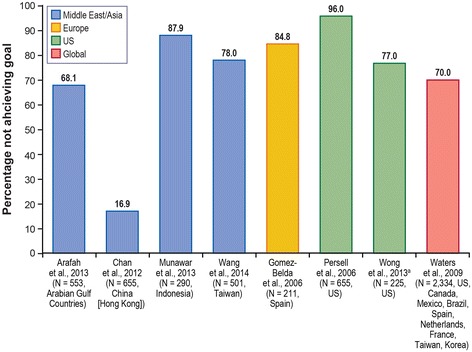
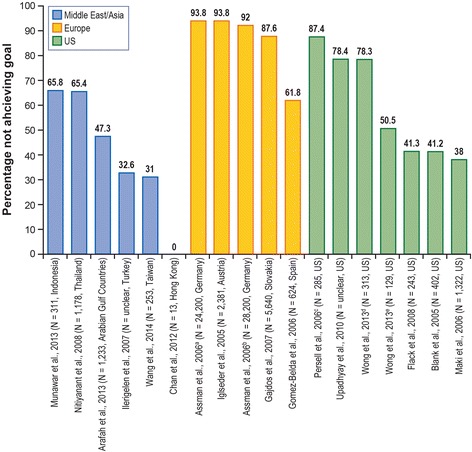
BACKGROUND: The aim of this study was to examine recommended target levels of low-density lipoprotein cholesterol (LDL-C) for hyperlipidaemia patients at high risk (i.e., with two or more risk factors or coronary heart disease or its risk equivalents) for cardiovascular disease (CVD); to determine LDL-C targets recommended by guidelines, and to examine the proportions of patients who do not achieve targeted LDL-C levels in real-world studies. METHODS: Electronic databases were searched: Medline, Medline In-Process, Embase, BIOSIS, and the Cochrane Library (1 January 2005 to 31 December 2013). Guideline searches were limited to publications in the last 5 years. There were no geographical or language restrictions. RESULTS: Seventeen guidelines and 42 observational studies that reported on high-risk hyperlipidaemia patients were identified. The National Cholesterol Education Program-Adult Treatment Panel III's LDL-C target levels were the most common guidelines used for patients with very high hyperlipidaemia. However, between 68 and 96 % of patients in the studies did not achieve an LDL-C goal <70 mg/dL, except in one study conducted in China (16.9 %). In high-risk patients, 61.8 to 93.8 % did not achieve a target of <100 mg/dL. Regarding common comorbidities, patients with concomitant CVD or diabetes were least likely to reach their target LDL-C goals. CONCLUSION: In patients with high risk for CVD, the majority of patients do not attain recommended LDL-C goals, highlighting worldwide suboptimal hyperlipidaemia management and missed opportunities for reduction of the patients CVD risk. Lipid-modifying management strategies need to be intensified.
Overview
The claims and statistics of this paper haven’t been checked yet.
Free: it reads the open-access text and checks the first 5 claims that cite a source we can check. Create a free account to check every claim.
Integrity signals
Registry
Cites
Statistics
Figures
Verification
Claims the paper makes
The claims and statistics of this paper haven’t been checked yet.
Free: it reads the open-access text and checks the first 5 claims that cite a source we can check. Create a free account to check every claim.
Claims other papers make about this one
Each is checked against this paper’s own text: does it say what the citing paper says it does?
The cited source says what the claim attributes to it.
In the citing paper
“As a consequence, multiple authors have concluded that there is a significant unmet medical need for patients with dyslipidaemia to reduce blood lipid levels to prevent the incidence of adverse cardiovascular events [26–30].”
From Established and Emerging Lipid-Lowering Drugs for Primary and Secondary Cardiovascular Prevention (2023) · cites this paper as [30]
Self-check
Percentages, sums and reported differences re-computed from the paper’s own numbers.
The self-check needs the paper’s full text.
Citations
Cites
Preferred Reporting Items for Systematic Reviews and Meta-Analyses: the PRISMA statement
Moher, D., Liberati, A., Tetzlaff, J., Altman, D. G., & for the PRISMA Group (2009) · BMJ · doi:10.1136/bmj.b2535 · Cited by 83,823
Preferred Reporting Items for Systematic Reviews and Meta-Analyses: The PRISMA Statement
Moher, D., Liberati, A., Tetzlaff, J., Altman, D. G., & The PRISMA Group (2009) · PLoS Medicine · doi:10.1371/journal.pmed.1000097 · Cited by 64,042 · cited 1×
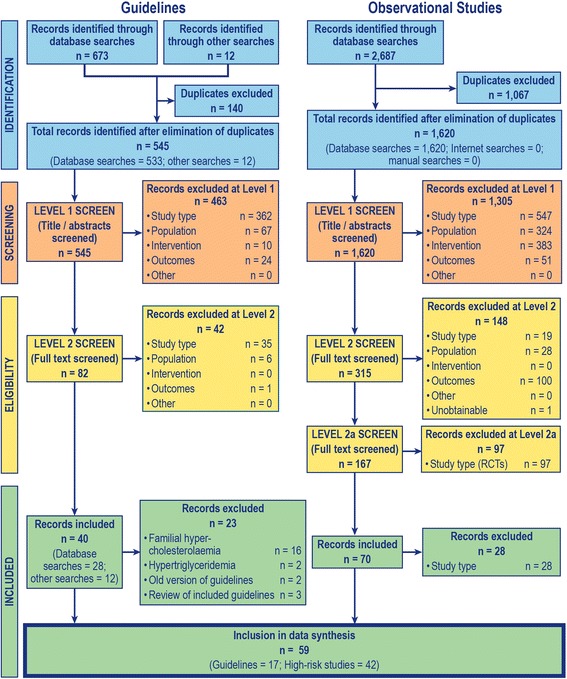
“screening is shown in the Preferred Reporting Items for Systematic Reviews and Meta-Analyses flow chart [14] presented in Fig.”
MethodPreferred reporting items for systematic reviews and meta-analyses: the PRISMA Statement.
(2009) · PubMed Central · Cited by 44,859
Preferred Reporting Items for Systematic Reviews and Meta-Analyses: The PRISMA Statement
Moher, D., Liberati, A., Tetzlaff, J., & Altman, D. G. (2009) · Journal of Clinical Epidemiology · doi:10.1016/j.jclinepi.2009.06.005 · Cited by 19,575
Wang, G., Ma, R., Qiao, G., Wada, K., Aizawa, Y., & Satoh, T. (2015) · Integrative Medicine International · doi:10.1159/000368408 · Cited by 18,657
European Guidelines on cardiovascular disease prevention in clinical practice (version 2012)
Authors/Task Force Members:, Perk, J., De Backer, G., Gohlke, H., Graham, I., Reiner, Ž., Verschuren, M., Albus, C., Benlian, P., Boysen, G., et al. (2012) · European Heart Journal · doi:10.1093/eurheartj/ehs092 · Cited by 8,490
Stone, N. J., Robinson, J. G., Lichtenstein, A. H., Bairey Merz, C. N., Blum, C. B., Eckel, R. H., Goldberg, A. C., Gordon, D., Levy, D., Lloyd-Jones, D. M., et al. (2014) · Circulation · doi:10.1161/01.cir.0000437738.63853.7a · Cited by 7,081
Grundy, S. M., Cleeman, J. I., Merz, C. N. B., Brewer, H. B., Clark, L. T., Hunninghake, D. B., Pasternak, R. C., Smith, S. C., & Stone, N. J. (2004) · Circulation · doi:10.1161/01.cir.0000133317.49796.0e · Cited by 6,902
Stone, N. J., Robinson, J. G., Lichtenstein, A. H., Bairey Merz, C. N., Blum, C. B., Eckel, R. H., Goldberg, A. C., Gordon, D., Levy, D., Lloyd-Jones, D. M., et al. (2014) · Journal of the American College of Cardiology · doi:10.1016/j.jacc.2013.11.002 · Cited by 3,845
Authors/Task Force Members, Graham, I., Atar, D., Borch-Johnsen, K., Boysen, G., Burell, G., Cifkova, R., Dallongeville, J., De Backer, G., Ebrahim, S., et al. (2007) · European Heart Journal · doi:10.1093/eurheartj/ehm316 · Cited by 3,753
Research works printed but not linked: 3
- 5. Cooper A, Nherera L, Calvert N, O'Flynn N, Turnbull N, Robson J, et al. Clinical guidelines and evidence review for lipid modification: cardiovascular risk assessment and the primary and secondary prevention of cardiovascular disease. London: National Collaborating Centre for Primary Care and Royal College of General Practitioners; 2008. p. 1-236 (revised March 2010).
- 15. Austrian Lipid Consensus. Management of dyslipidemia in the prevention of vascular complications. Joint Consensus Statement of Austrian eight professional societies. 2010. http://www.oedg.org/pdf/Lipidkonsensus_2010. pdf (20 May 2014, date last accessed).
- 16. Huber K, Saely CH, Drexel H, Francesconi M, Gaul G, Glehr R, et al. Practical implementation of the guidelines for LDL-lowering. J Cardiol. 2011;18(3-4):96-9.
Cited by
Hecht, H., Blaha, M. J., Berman, D. S., Nasir, K., Budoff, M., Leipsic, J., Blankstein, R., Narula, J., Rumberger, J., & Shaw, L. J. (2017) · Journal of Cardiovascular Computed Tomography · doi:10.1016/j.jcct.2017.02.010 · Cited by 371
Impact of Gut Microbiota and Microbiota-Related Metabolites on Hyperlipidemia
Jia, X., Xu, W., Zhang, L., Li, X., Wang, R., & Wu, S. (2021) · Frontiers in Cellular and Infection Microbiology · doi:10.3389/fcimb.2021.634780 · Cited by 226
Anti-obesity and Hypolipidemic effects of garlic oil and onion oil in rats fed a high-fat diet
Yang, C., Li, L., Yang, L., Lü, H., Wang, S., & Sun, G. (2018) · Nutrition & Metabolism · doi:10.1186/s12986-018-0275-x · Cited by 127
“Patients with dyslipidemia are at increased risk for cardiovascular disease (CVD), which is the main cause of premature death and has been a major cause of disability and ill health in recent years [13, 14].”
BackgroundEstablished and Emerging Lipid-Lowering Drugs for Primary and Secondary Cardiovascular Prevention
Michaeli, D. T., Michaeli, J. C., Albers, S., Boch, T., & Michaeli, T. (2023) · American Journal of Cardiovascular Drugs · doi:10.1007/s40256-023-00594-5 · Cited by 109
The emerging role of the small intestinal microbiota in human health and disease
Ruigrok, R. A. A. A., Weersma, R. K., & Vich Vila, A. (2023) · Gut Microbes · doi:10.1080/19490976.2023.2201155 · Cited by 91
“Dyslipidemia, or hyperlipidemia, is the presence of excess fat or lipids such as cholesterol and triglycerides in the blood.(105) Hyperlipidemia is an increasing health problem worldwide, and the complications associated with it, including cardiovascular disease, are devastating.”
BackgroundEffects of products designed to modulate the gut microbiota on hyperlipidaemia
Deng, X.-L., Ma, J., Song, M., Jin, Y., Ji, C., Ge, W.-H., & Guo, C. (2018) · European Journal of Nutrition · doi:10.1007/s00394-018-1821-z · Cited by 43
Bisceglie, A. M. D., Watts, G. F., Lavin, P. T., Yu, M., Bai, R., & Liu, L. (2020) · Lipids in Health and Disease · doi:10.1186/s12944-020-01406-4 · Cited by 36
Kim, S., Han, S., Rane, P. P., Qian, Y., Zhao, Z., & Suh, H. S. (2020) · PLoS ONE · doi:10.1371/journal.pone.0228472 · Cited by 42
Rotundic acid alleviates hyperlipidemia in rats by regulating lipid metabolism and gut microbiota
Zeng, W., Yang, B. H., Wang, Y., Sun, M., Yang, W.-Q., Cui, H., Jin, J., & Zhao, Z. (2023) · Phytotherapy Research · doi:10.1002/ptr.8008 · Cited by 21
“It frequently exhibits high TG, TC, and LDL-C levels, as well as decreased HDL-C levels (Mach et al., 2019; Mitchell et al., 2016).”
BackgroundHoeke, G., Wang, Y., van Dam, A. D., Mol, I. M., Gart, E., Klop, H. G., van den Berg, S. M., Pieterman, E. J., Princen, H. M. G., Groen, A. K., et al. (2017) · Atherosclerosis · doi:10.1016/j.atherosclerosis.2017.10.030 · Cited by 20
“The main underlying pathology of CVD is atherosclerosis, for which hyperlipidemia is a major risk factor [2].”
BackgroundFermented Garlic Ameliorates Hypercholesterolemia and Inhibits Platelet Activation
Irfan, M., Kim, M., Kim, K., Kim, T., Kim, S., Hong, S.-B., Kim, H. K., & Rhee, M. H. (2019) · Evidence-based Complementary and Alternative Medicine · doi:10.1155/2019/3030967 · Cited by 22
“One of the main underlying pathologies of CVDs is atherosclerosis, for which hyperlipidemia is a major risk factor [2, 3].”
BackgroundAppropriateness of Dyslipidemia Management Strategies in Post-Acute Coronary Syndrome: A 2023 Update
Lucà, F., Oliva, F. G., Rao, C. M., Abrignani, M. G., Amico, A. F., Fusco, S. A. D., Caretta, G., Matteo, I. D., Nora, C. D., Pilleri, A., et al. (2023) · Metabolites · doi:10.3390/metabo13080916 · Cited by 20
Interaction Between Konjac Glucomannan and Gut Microbiota and Its Impact on Health
Yu, Y., Jin, S., Yang, Y., Han, X., Guan, R., & Zhong, H. (2025) · Biology · doi:10.3390/biology14080923 · Cited by 15
“Strictly speaking, hyperlipidemia is not an independent disease but a disorder of lipid metabolism [106].”
Liang, F., Song, Y., Lin, D., He, H., Xu, J., He, X., & Wu, L. (2024) · Clinical and Translational Gastroenterology · doi:10.14309/ctg.0000000000000735 · Cited by 16
“Hyperlipidemia, de fi ned as the presence of excess fat or lipids in the blood, is characterized by a high tone of total cholesterol (TC), triglycerides (TG), low-density li-poprotein cholesterol (LDL-C), and a low tone of high-density lipoprotein cholesterol (HDL-C) (5,6).”
BackgroundLow‐density lipoprotein cholesterol lowering in real‐world patients treated with evolocumab
Desai, N. R., Wade, R. L., Xiang, P., Pinto, L. A., Nunna, S., Wang, X., Exter, J., Mues, K. E., Habib, M., & Chen, C. (2021) · Clinical Cardiology · doi:10.1002/clc.23600 · Cited by 13
Alirocumab for the treatment of hypercholesterolaemia
Pepa, G. D., Bozzetto, L., Annuzzi, G., & Rivellese, A. A. (2017) · Expert Review of Clinical Pharmacology · doi:10.1080/17512433.2017.1318063 · Cited by 13
“of high CV risk patients did not reach an LDL-C target <100 mg/dL [55].”
BackgroundFonarow, G. C., Kosiborod, M., Rane, P., Nunna, S., Villa, G., Habib, M., Arellano, J., Mues, K. E., Sun, K., & Wade, R. L. (2021) · Clinical Cardiology · doi:10.1002/clc.23706 · Cited by 10
Iqbal, A., Najam, R., Sımjee, S. U., Ishaqui, A. A., Ahmad, S. A., Ahmed, Z., Ahmed, S., Ahmed, S. A., Jaweed, L., Maboos, M., et al. (2022) · Saudi Pharmaceutical Journal · doi:10.1016/j.jsps.2022.09.013 · Cited by 10
“In recent decades, cardiovascular disease (CVD) has become one of the leading causes of early death and illness in patients with dyslipidemia (Mitchell et al., 2016; Nelson, 2013).”
Boston, D., Larson, A. E., Sheppler, C. R., O’Connor, P. J., Sperl‐Hillen, J. M., Hauschildt, J., & Gold, R. B. (2023) · The Journal of the American Board of Family Medicine · doi:10.3122/jabfm.2022.220391r2 · Cited by 9
Need for hyperlipidemia management policy reform in China: learning from the global experience
Yu, W., Shi, R., Li, J., Lan, Y., Li, Q., & Hu, S. (2017) · Current Medical Research and Opinion · doi:10.1080/03007995.2017.1354833 · Cited by 6
Huang, X., Hong, H., Zhu, W., Chen, N., Wei, Y., Wang, Z., & Shi, J. (2022) · Frontiers in Nutrition · doi:10.3389/fnut.2022.982626 · Cited by 8
Ray, S., Sawhney, J. P. S., Das, M. K., Deb, J., Jain, P., Sivakadaksham, N., & Sinha, K. K. (2018) · Indian Heart Journal · doi:10.1016/j.ihj.2018.03.011 · Cited by 7
“It has been reported that nearly 68–96% of high-risk population did not achieve LDL-C <70 [153_TD$DIFF]mg/dL.(59) This necessitates intensification of statin therapy and use of combination treatments in high-risk cases like ACS.”
BackgroundBass, A., Plotka, A., Mridha, K., Sattler, C., Kim, A. M., & Plowchalk, D. R. (2018) · Health Science Reports · doi:10.1002/hsr2.61 · Cited by 5
“Despite the widespread availability of effective lipid‐lowering agents, such as statins, a significant proportion of patients at high risk of ASCVD continue to be managed suboptimally due to insufficient therapeutic efficacy, safety concerns regarding higher doses of statins, and poor compliance.(5,6) Therefore, there…”
BackgroundLou, Z., Han, L., Qu, Y., Zhou, A., He, Y., Yan, M., Cheng, B., Liu, M., Jiang, T., & Huang, J. (2023) · Reviews in Cardiovascular Medicine · doi:10.31083/j.rcm2409248 · Cited by 6
“The IFI group exhibited higher serum levels of TBA and HDL-C at week five, along with lower levels of LDL-C and TC at week five.”
BackgroundInfluentialNiveles óptimos de colesterol en los pacientes con dislipemia. Revisión sistemática de la evidencia
Escobar, C., Barrios, V., & de Isla, L. P. (2017) · Medicina de Familia SEMERGEN · doi:10.1016/j.semerg.2017.08.006 · Cited by 11
Ethyl acetate extract of crabapple fruit is the cholesterol-lowering fraction
Wang, D., Wu, Y., Liu, C., Wang, Y., Li, Y., Luo, L., Zhao, Y., Ke, Z., Huang, C., & Fan, S. (2017) · RSC Advances · doi:10.1039/c7ra06585j · Cited by 5
Hansen, S. (2021) · Journal of Legal Affairs and Dispute Resolution in Engineering and Construction · doi:10.1061/(asce)la.1943-4170.0000504 · Cited by 5
Perceived Barriers to Follow AHA Dietary Recommendations in Hypercholesterolemic Patients
Chaharjoui, A. B., Mahdavi, R., & Nikniaz, Z. (2019) · Clinical Nursing Research · doi:10.1177/1054773819883177 · Cited by 5
“One of the major risk factors for cardiovascular disease is hypercholesterolemia (Mitchell et al., 2016).”
BackgroundYang, J., Zhang, R., Han, B., Li, H. Z., Wang, J., Xiao, Y., Yu, X., Guan, S., Dai, C., Yan, H., et al. (2024) · Lipids in Health and Disease · doi:10.1186/s12944-024-02244-4 · Cited by 4
Hypolipidemic activity and mechanism of active components of Dracocephalum moldavica L. tea
Li, S., Li, Q., Zhang, N., & Li, M. (2024) · Food Science and Human Wellness · doi:10.26599/fshw.2024.9250102 · Cited by 2
“Hyperlipidemia is considered a lipid metabolism disorder rather than a disease; it is characterized by abnormal lipid levels [1,2].”
Jalal, A. A., Hussain, S. I., Siddiqui, E., Khan, M. S., Burhan, M., Karim, A. J., Nizam, R., & Amir, M. (2025) · Journal of Cardiovascular Pharmacology · doi:10.1097/fjc.0000000000001789 · Cited by 3
Lactic acid bacteria co-fermentation enhances the hypolipidemic potential of kombucha
Wang, S., Su, Y., Wang, J., Wang, Y., Feng, K., Wang, S., Yang, J., & Yuan, L. (2026) · Food Bioscience · doi:10.1016/j.fbio.2026.108688 · Cited by 2
Etika Penelitian: Kajian Rektraksi Artikel Ilmiah Teknik Sipil
Hansen, S. (2023) · Jurnal Teknik Sipil · doi:10.5614/jts.2023.30.1.15 · Cited by 22
Indicaciones para el uso de los inhibidores de la PCSK9
Alonso, R., & Cuevas, A. M. (2017) · Revista Colombiana de Cardiología · doi:10.1016/j.rccar.2017.08.020 · Cited by 3
Chen, Q., Wu, F., Zhao, Y., Zeng, H., Zhong, L., Men, J., Wu, T., Liu, X., Tan, D., He, Y., et al. (2022) · Research Square · doi:10.21203/rs.3.rs-1798888/v1 · Cited by 1
Is a Picture Worth a Thousand Guidelines?
Cheezum, M. K., & Shah, N. R. (2019) · JACC. Cardiovascular imaging · doi:10.1016/j.jcmg.2019.06.004
Análisis molecular de las relaciones entre hiperlipidemia y fibrosis vascular
Serrano-García, L., Asenjo‐Bueno, A., Henández-López, K., Alcalde‐Estévez, E., Plaza, P., Sosa, P., Olmos, G., Ruiz‐Torres, M. P., & López‐Ongil, S. (2019) · Dianas · doi:10.37536/dianas.2019.8.2.49
“Estos lípidos circulan unidos a proteínas, denominándose lipoproteínas, entre las que encontramos las lipoproteínas de baja densidad (LDL), las cuales son susceptibles de sufrir modificaciones como la oxidación dando lugar a las LDL oxidadas (OxLDL) [2, 3].”
BackgroundNovel therapies in clinical use for the management of hyperlipidaemia
Mettananda, C. D. (2023) · Asian Journal of Internal Medicine · doi:10.4038/ajim.v2i2.105
Xie, B.-Y., Cai, L., Zhu, X.-Q., Li, M.-G., Zhao, J., & Ding, Z. (2026) · Food Bioscience · doi:10.1016/j.fbio.2026.109811
Metadata
- Authors
- Mitchell, S., Roso, S., Samuel, M., & Pladevall-Vila, M.
- Affiliations
- RTI Health Solutions (US)
- Pfizer (United Kingdom) (GB)
- National University of Singapore (SG)
- Corresponding author
- Mitchell, S.
- Venue
- BMC Cardiovascular Disorders
- Published
- 2016-04-26
- Volume
- 16
- Issue
- 1
- Pages
- 74-74
- ISSN
- 1471-2261 (ISSN-L)
- PMC
- PMC4845323
- OpenAlex
- W2342919462
- Semantic Scholar
- e6d9a75f9509f08dab49e94672391a1e3cdf44d0
- Cited by
- 40
- References
- 61
- Citations by year
- 2026: 2 · 2025: 2 · 2024: 3 · 2023: 8 · 2022: 3 · 2021: 4 · 2020: 2 · 2019: 4 · 2018: 4 · 2017: 8
- FWCI
- 5.91
- Type
- journal article
- Language
- en
- Open access
- gold
- doi.org
- Licence
- cc-by
- Locations
- BMC Cardiovascular Disorders (publishedVersion, cc-by)
- PubMed Central (publishedVersion, cc-by)
- PubMed (publishedVersion)
- Funders
- Pfizer UK
- Topics
- Health Sciences › Medicine › Cardiology and Cardiovascular Medicine › Lipoproteins and Cardiovascular Health
- Health Sciences › Medicine › Endocrinology, Diabetes and Metabolism › Diabetes, Cardiovascular Risks, and Lipoproteins
- Health Sciences › Medicine › Cardiology and Cardiovascular Medicine › Blood Pressure and Hypertension Studies
- Keywords
- hyperlipidemia, LDL cholesterol targets, cardiovascular risk, high-risk patients, NCEP ATP III guidelines, lipid-lowering therapy, diabetes comorbidity, coronary artery disease, real-world treatment outcomes
- MeSH terms
- Anticholesteremic Agents, Cardiovascular Diseases, Humans, Hyperlipidemias, Cholesterol, LDL, Risk Factors, Biomarkers, Down-Regulation, Comorbidity, Treatment Outcome, Practice Guidelines as Topic, Risk Assessment, Observational Studies as Topic
About these checks
Registry, retraction, Cites and statistics results are computed, not judged, with one exception: a printed reference that no index lists is read once by a model before it counts as a citation error. Claims are extracted by a model and kept only when their quote appears verbatim in the text; each cited source is then checked, with a model’s help, for whether it says what the claim relies on. Those verdicts can be wrong — read the claim’s quote and the cited source before relying on one.
Statistics and arithmetic are recomputed, not judged.
Confidence bands are shown only for fields calibrated on our annotated test set. None is calibrated yet, so no band is shown.
What counts as a claim ›How we measure confidence ›How we check this ›
Are you an author, or do you see a problem with this page? Request a review
Data sources
Bibliographic data: Semantic Scholar, OpenAlex, Crossref.
Contains information from the Semantic Scholar Academic Graph Datasets, made available under the ODC Attribution License (ODC-BY 1.0).
Semantic Scholar’s data is described in: Kinney, R., et al. (2023). The Semantic Scholar Open Data Platform. arXiv:2301.10140.
