

Unmet need in the hyperlipidaemia population with high risk of cardiovascular disease: a targeted literature review of observational studies
Open accessThe DOI matches its Crossref record; 61 of the 61 references it cites were found in a registry or an index.
Abstract
BACKGROUND: The aim of this study was to examine recommended target levels of low-density lipoprotein cholesterol (LDL-C) for hyperlipidaemia patients at high risk (i.e., with two or more risk factors or coronary heart disease or its risk equivalents) for cardiovascular disease (CVD); to determine LDL-C targets recommended by guidelines, and to examine the proportions of patients who do not achieve targeted LDL-C levels in real-world studies. METHODS: Electronic databases were searched: Medline, Medline In-Process, Embase, BIOSIS, and the Cochrane Library (1 January 2005 to 31 December 2013). Guideline searches were limited to publications in the last 5 years. There were no geographical or language restrictions. RESULTS: Seventeen guidelines and 42 observational studies that reported on high-risk hyperlipidaemia patients were identified. The National Cholesterol Education Program-Adult Treatment Panel III's LDL-C target levels were the most common guidelines used for patients with very high hyperlipidaemia. However, between 68 and 96 % of patients in the studies did not achieve an LDL-C goal <70 mg/dL, except in one study conducted in China (16.9 %). In high-risk patients, 61.8 to 93.8 % did not achieve a target of <100 mg/dL. Regarding common comorbidities, patients with concomitant CVD or diabetes were least likely to reach their target LDL-C goals. CONCLUSION: In patients with high risk for CVD, the majority of patients do not attain recommended LDL-C goals, highlighting worldwide suboptimal hyperlipidaemia management and missed opportunities for reduction of the patients CVD risk. Lipid-modifying management strategies need to be intensified.
Overview
The claims and statistics of this paper haven’t been checked yet.
Free: it reads the open-access text and checks the first 5 claims that cite a source we can check. Create a free account to check every claim.
Integrity signals
Registry
Cites
Statistics
Figures
Verification
Claims the paper makes
The claims and statistics of this paper haven’t been checked yet.
Free: it reads the open-access text and checks the first 5 claims that cite a source we can check. Create a free account to check every claim.
Claims other papers make about this one
Each is checked against this paper’s own text: does it say what the citing paper says it does?
The cited source says what the claim attributes to it.
In the citing paper
“As a consequence, multiple authors have concluded that there is a significant unmet medical need for patients with dyslipidaemia to reduce blood lipid levels to prevent the incidence of adverse cardiovascular events [26–30].”
From Established and Emerging Lipid-Lowering Drugs for Primary and Secondary Cardiovascular Prevention (2023) · cites this paper as [30]
Self-check
Percentages, sums and reported differences re-computed from the paper’s own numbers.
The self-check needs the paper’s full text.
Citations
Cites
Preferred Reporting Items for Systematic Reviews and Meta-Analyses: the PRISMA statement
Moher, D., Liberati, A., Tetzlaff, J., Altman, D. G., & for the PRISMA Group (2009) · BMJ · doi:10.1136/bmj.b2535 · Cited by 83,823
Preferred Reporting Items for Systematic Reviews and Meta-Analyses: The PRISMA Statement
Moher, D., Liberati, A., Tetzlaff, J., Altman, D. G., & The PRISMA Group (2009) · PLoS Medicine · doi:10.1371/journal.pmed.1000097 · Cited by 64,042 · cited 1×
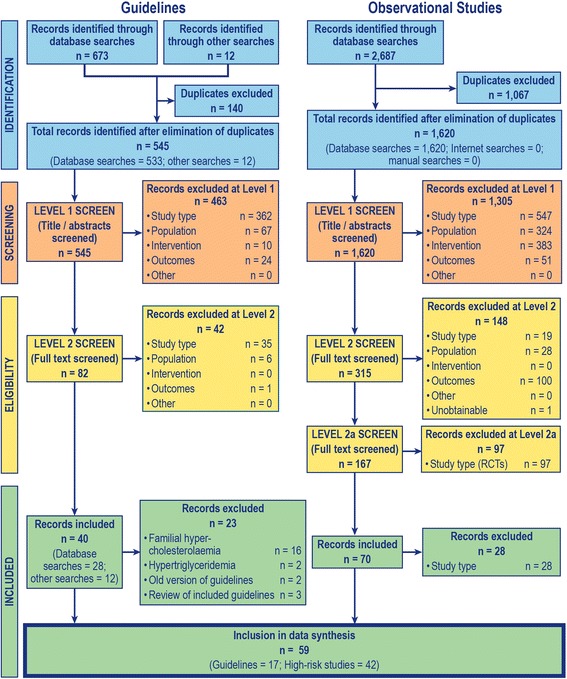
“screening is shown in the Preferred Reporting Items for Systematic Reviews and Meta-Analyses flow chart [14] presented in Fig.”
MethodPreferred reporting items for systematic reviews and meta-analyses: the PRISMA Statement.
(2009) · PubMed Central · Cited by 44,859
Preferred Reporting Items for Systematic Reviews and Meta-Analyses: The PRISMA Statement
Moher, D., Liberati, A., Tetzlaff, J., & Altman, D. G. (2009) · Journal of Clinical Epidemiology · doi:10.1016/j.jclinepi.2009.06.005 · Cited by 19,575
Wang, G., Ma, R., Qiao, G., Wada, K., Aizawa, Y., & Satoh, T. (2015) · Integrative Medicine International · doi:10.1159/000368408 · Cited by 18,657
European Guidelines on cardiovascular disease prevention in clinical practice (version 2012)
Authors/Task Force Members:, Perk, J., De Backer, G., Gohlke, H., Graham, I., Reiner, Ž., Verschuren, M., Albus, C., Benlian, P., Boysen, G., et al. (2012) · European Heart Journal · doi:10.1093/eurheartj/ehs092 · Cited by 8,490
Stone, N. J., Robinson, J. G., Lichtenstein, A. H., Bairey Merz, C. N., Blum, C. B., Eckel, R. H., Goldberg, A. C., Gordon, D., Levy, D., Lloyd-Jones, D. M., et al. (2014) · Circulation · doi:10.1161/01.cir.0000437738.63853.7a · Cited by 7,081
Grundy, S. M., Cleeman, J. I., Merz, C. N. B., Brewer, H. B., Clark, L. T., Hunninghake, D. B., Pasternak, R. C., Smith, S. C., & Stone, N. J. (2004) · Circulation · doi:10.1161/01.cir.0000133317.49796.0e · Cited by 6,902
Stone, N. J., Robinson, J. G., Lichtenstein, A. H., Bairey Merz, C. N., Blum, C. B., Eckel, R. H., Goldberg, A. C., Gordon, D., Levy, D., Lloyd-Jones, D. M., et al. (2014) · Journal of the American College of Cardiology · doi:10.1016/j.jacc.2013.11.002 · Cited by 3,845
Authors/Task Force Members, Graham, I., Atar, D., Borch-Johnsen, K., Boysen, G., Burell, G., Cifkova, R., Dallongeville, J., De Backer, G., Ebrahim, S., et al. (2007) · European Heart Journal · doi:10.1093/eurheartj/ehm316 · Cited by 3,753
ESC/EAS Guidelines for the management of dyslipidaemias
Reiner, Ž., Catapano, A. L., De Backer, G., Graham, I., Taskinen, M.-R., Wiklund, O., Agewall, S., Alegria, E., Chapman, M. J., Durrington, P., et al. (2011) · European Heart Journal · doi:10.1093/eurheartj/ehr158 · Cited by 3,549
Collaborators, C. T. T. (. (2012) · The Lancet · doi:10.1016/s0140-6736(12)60367-5 · Cited by 2,833
Universal Definition of Myocardial Infarction: Clinical Insights
Paiva, L., Providência, R., Barra, S., Dinis, P., Faustino, A. C., & Gonçalves, L. (2015) · Cardiology · doi:10.1159/000371739 · Cited by 2,513
Statins for the primary prevention of cardiovascular disease
Taylor, F., Huffman, M. D., Macedo, A. F., Moore, T. H., Burke, M., Davey Smith, G., Ward, K., Ebrahim, S., & Gay, H. C. (2013) · Cochrane Database of Systematic Reviews · doi:10.1002/14651858.cd004816.pub5 · Cited by 1,934
The Scottish Intercollegiate Guidelines Network (SIGN)
Miller, J. (2002) · The British Journal of Diabetes & Vascular Disease · doi:10.1177/14746514020020010401 · Cited by 1,544
Bruckert, E., Hayem, G., Dejager, S., Yau, C., & Bégaud, B. (2005) · Cardiovascular Drugs and Therapy · doi:10.1007/s10557-005-5686-z · Cited by 1,226 · cited 1×
“aemia population [12, 13]; however, to our knowledge the latest evidence has not been collated in a rigorous”
BackgroundYusuf, S., Reddy, S., Ôunpuu, S., & Anand, S. (2001) · Circulation · doi:10.1161/hc4701.099488 · Cited by 1,141
Anderson, T. J., Grégoire, J., Hegele, R. A., Couture, P., Mancini, G. B. J., McPherson, R., Francis, G. A., Poirier, P., Lau, D. C., Grover, S., et al. (2013) · Canadian Journal of Cardiology · doi:10.1016/j.cjca.2012.11.032 · Cited by 770
Athyros, V. G., Papageorgiou, A. A., Mercouris, B. R., Athyrou, V. V., Symeonidis, A. N., Basayannis, E. O., Demitriadis, D. S., & Kontopoulos, A. G. (2002) · Current Medical Research and Opinion · doi:10.1185/030079902125000787 · Cited by 533
Teramoto, T., Sasaki, J., Ishibashi, S., Birou, S., Daida, H., Dohi, S., Egusa, G., Hiro, T., Hirobe, K., Iida, M., et al. (2013) · Journal of Atherosclerosis and Thrombosis · doi:10.5551/jat.15792 · Cited by 468
Authors/Task Force Members:, Perk, J., De Backer, G., Gohlke, H., Graham, I., Reiner, Z., Verschuren, W. M. M., Albus, C., Benlian, P., Boysen, G., et al. (2012) · European Heart Journal · doi:10.1093/eurheartj/ehs254 · Cited by 390
Interventions to improve adherence to lipid-lowering medication
van Driel, M. L., Morledge, M. D., Ulep, R., Shaffer, J. P., Davies, P., & Deichmann, R. (2016) · Cochrane Database of Systematic Reviews · doi:10.1002/14651858.cd004371.pub4 · Cited by 333
Waters, D. D., Brotons, C., Chiang, C.-W., Ferrières, J., Foody, J., Jukema, J. W., Santos, R. D., Verdejo, J., Messig, M., McPherson, R., et al. (2009) · Circulation · doi:10.1161/circulationaha.108.838466 · Cited by 306
Davidson, M. H., Maki, K. C., Pearson, T. A., Pasternak, R. C., Deedwania, P. C., McKenney, J. M., Fonarow, G. C., Maron, D. J., Ansell, B. J., Clark, L. T., et al. (2005) · The American Journal of Cardiology · doi:10.1016/j.amjcard.2005.04.019 · Cited by 270 · cited 1×
“Sources: [25, 29, 35, 36, 44–53] Mitchell et al.”
Vijan, S., & Hayward, R. A. (2004) · Annals of Internal Medicine · doi:10.7326/0003-4819-140-8-200404200-00013 · Cited by 195 · cited 1×
“Patients in a high-risk or a very high-risk category tend to have lower achievement of LDL-C goals, highlighting suboptimal hyperlipidaemia management worldwide or even the setting of unrealistic goals [42].”
BackgroundHata, Y., Mabuchi, H., Saito, Y., Itakura, H., Egusa, G., Ito, H., Teramoto, T., Tsushima, M., Tada, N., Oikawa, S., et al. (2002) · Journal of Atherosclerosis and Thrombosis · doi:10.5551/jat.9.1 · Cited by 188 · cited 1×
“Guidelines published for Europe [4] and other countries before 2013 [10, 11] recommend a treat-to-goal paradigm for LDL-C levels.”
BackgroundTreatment strategies in patients with statin intolerance: the Cleveland Clinic experience
Mampuya, W. M., Frid, D., Rocco, M., Huang, J., Brennan, D. M., Hazen, S. L., & Cho, L. (2013) · American Heart Journal · doi:10.1016/j.ahj.2013.06.004 · Cited by 173 · cited 1×
“aemia population [12, 13]; however, to our knowledge the latest evidence has not been collated in a rigorous”
BackgroundEgan, B. M., Li, J., Qanungo, S., & Wolfman, T. E. (2013) · Circulation · doi:10.1161/circulationaha.112.000500 · Cited by 150
Statins for people at low risk of cardiovascular disease – Authors' reply
Mihaylova, B., Emberson, J., Keech, A., Collins, R., & Baigent, C. (2012) · The Lancet · doi:10.1016/s0140-6736(12)62027-3 · Cited by 146
Interventions to improve adherence to lipid lowering medication
Schedlbauer, A., Davies, P., & Fahey, T. (2010) · Cochrane Database of Systematic Reviews · doi:10.1002/14651858.cd004371.pub3 · Cited by 135
Blank, R., LaSalle, J., Reeves, R., Maroni, J., Tarasenko, L., & Sun, F. (2005) · The Journal of Clinical Hypertension · doi:10.1111/j.1524-6175.2005.04533.x · Cited by 73 · cited 1×
“Sources: [25, 29, 35, 36, 44–53] Mitchell et al.”
Flack, J. M., Victor, R. G., Watson, K. E., Ferdinand, K. C., Saunders, E., Tarasenko, L. C., Jamieson, M. J., Shi, H. H., & Bruschi, P. (2008) · Mayo Clinic Proceedings · doi:10.4065/83.1.35 · Cited by 55
Wong, N. D., Chuang, J., Wong, K., Pham, A. H., Neff, D., & Marrett, E. (2013) · The American Journal of Cardiology · doi:10.1016/j.amjcard.2013.03.041 · Cited by 43
Bourgault, C., Davignon, J., Fodor, G. J., Gagné, C., Gaudet, D., Genest, J. J., Lavoie, M.-A., Leiter, L. A., McPherson, R., Sénécal, M., et al. (2005) · PubMed · Cited by 41
Assmann, G., Benecke, H., Neiss, A., Cullen, P., Schulte, H., & Bestehorn, K. (2006) · European Journal of Cardiovascular Prevention & Rehabilitation · doi:10.1097/01.hjr.0000189805.76482.6e · Cited by 36 · cited 2×
“The statin dose was increased in only 10 % of patients; leading to the assumption that doctors are not aware of how to reach target values [34].”
BackgroundResultArafah, M., Al-Hinai, A. T., Almahmeed, W. A., Al‐Rasadi, K., Tamimi, O. A., Herz, S. A., Anazi, F. A., Nemer, K. A., Metwally, O., Al-Khadra, A. H., et al. (2013) · Angiology · doi:10.1177/0003319713512414 · Cited by 34
Persell, S. D., Lloyd‐Jones, D. M., & Baker, D. W. (2005) · Journal of General Internal Medicine · doi:10.1111/j.1525-1497.2006.00323.x · Cited by 27
The Impact of Physician Attitudes and Beliefs on Treatment Decisions
Foley, K. A., Denke, M. A., Kamal‐Bahl, S. J., Simpson, R. J., Berra, K. A., Sajjan, S., & Alexander, C. M. (2006) · Medical Care · doi:10.1097/01.mlr.0000208017.18278.1a · Cited by 27 · cited 9×
“There was a highly significant association of several physician attitudes and beliefs with the decision to increase the statin dose; physicians who believed that “statins are effective” were more likely to increase statin dose, whereas those who had an attitude that “close enough to goal is good enough” were less like…”
BackgroundInfluentialParagh, G., M??rk, L., Z??molyi, K., Pados, G., & Ofner, P. (2007) · Clinical Drug Investigation · doi:10.2165/00044011-200727090-00006 · Cited by 26
Persell, S. D., Lloyd‐Jones, D. M., & Baker, D. W. (2006) · Journal of General Internal Medicine · doi:10.1007/s11606-006-0253-2 · Cited by 23 · cited 1×
“Sources: [29, 35–37, 39, 43–45]”
LDL Cholesterol Goal Attainment in Hypercholesterolemia: CEPHEUS Indonesian Survey.
Munawar, M., Hartono, B., & Rifqi, S. (2013) · Europe PMC (PubMed Central) · Cited by 18
Prevalence, awareness, treatment, and control of high LDL cholesterol in New York City, 2004.
Upadhyay, U. D., Waddell, E. N., Young, S. W., Kerker, B. D., Berger, M., Matte, T., & Angell, S. Y. (2010) · PubMed Central · Cited by 17
Management of Cholesterol to Reduce the Burden of Stroke in Asia: Consensus Statement
Hankey, G. J., Wong, K. S., Chankrachang, S., Chen, C., Crimmins, D. S., Frayne, J. H., Kim, J. S., Li, Y., Liou, C., Merican, J. S., et al. (2010) · International Journal of Stroke · doi:10.1111/j.1747-4949.2010.00429.x · Cited by 16 · cited 2×
“6 mmol/L) [11, 15–21].”
Wang, K.-F., Chang, C., Wang, K.-L., Wu, C., Chen, L., Lu, T., Lin, S., & Chiang, C. (2013) · Journal of the Chinese Medical Association · doi:10.1016/j.jcma.2013.10.013 · Cited by 14 · cited 9×
“Wang KF, Chang CC, Wang KL, Wu CH, Chen LC, Lu TM, et al. Determinants of low-density lipoprotein cholesterol goal attainment: insights from the CEPHEUS Pan-Asian Survey.”
BackgroundInfluentialFarahani, P., Levine, M., Gaebel, K., LeLorier, J., Perreault, S., Gillis, J., & Soon, J. A. (2007) · Clinical and investigative medicine · doi:10.25011/cim.v30i2.981 · Cited by 12 · cited 1×
“3 % of high-risk patients did not achieve this goal [26–28].”
BackgroundGómez-Belda, A. B., Rodilla, E., González, C., Costa, J. A., Serra, B., & Pascual, J. M. (2006) · Revista Clínica Española · doi:10.1157/13093465 · Cited by 12
Chan, R. H.-W., Chan, P. F., Chan, K., Lam, S. C. C., Hai, J. J., Wong, M. K. L., Tam, F. C. C., Lam, L., Chan, C., Lam, Y. M., et al. (2012) · PubMed · Cited by 11
Secondary prevention of ischaemic cardiac events.
Gami, A. S. (2006) · PubMed · Cited by 10
Iglseder, B., Moroder, T., Staffen, W., & Ladurner, G. (2005) · Clinical Drug Investigation · doi:10.2165/00044011-200525110-00004 · Cited by 9 · cited 1×
“Sources: [25, 29, 35, 36, 44–53] Mitchell et al.”
Lipid treatment assessment project II in Thailand (LTAP-II Thailand).
Nitiyanant, W., Sritara, P., Deerochanawong, C., Ngarmukos, P., & Koanantakul, B. (2008) · PubMed · Cited by 9
Yiğiner, Ö., Özmen, N., Özçelik, F., İnanç, T., Kardeşoğlu, E., Uz, Ö., Işılak, Z., Aparcı, M., Sahin, I., Arslan, E., et al. (2010) · PubMed · Cited by 9
Maki, K. C., Davidson, M. H., & Dicklin, M. R. (2006) · Canadian Journal of Cardiology · doi:10.1016/s0828-282x(06)70916-3 · Cited by 8
Ilerigelen, B., Üresin, Y., ŞAN, M. K., Kültürsay, H., Güneri, S., Serdar, O. A., Güleç, S., Pençedemir, H., & on behalf of the TULIPS investigators (2007) · Current Medical Research and Opinion · doi:10.1185/030079907x187847 · Cited by 6 · cited 2×
“[25] (12.”
A baixa taxa de obtenção da meta do LDL-colesterol numa população de baixa renda
Vacanti, L. J., Santos, S. C. D. M., Fujita, A. M., Lima, D. S., Lopes, A. F., Vetorazi, R., Sellera, A., & Scarin, N. R. (2005) · Arquivos Brasileiros de Cardiologia · doi:10.1590/s0066-782x2005001600003 · Cited by 5 · cited 3×
“thought that non-adherence may be due to scarce financial resources [30] or to improper communication between the”
BackgroundInfluentialGajdos, M., Krivošíková, Z., & Uhliar, R. (2007) · Bratislavské lekárske listy/Bratislava medical journal · doi:10.1007/bf03656938 · Cited by 4 · cited 1×
“Sources: [25, 29, 35, 36, 44–53] Mitchell et al.”
Raal, F. J., Schamroth, C., Patel, J., & Becker, P. D. (2007) · Europe PMC (PubMed Central) · Cited by 4
National guidelines at a glance: hypercholesterolaemia
Butler, N. (2010) · Professional nursing today · Cited by 4
Screening and treatment of hypercholesterolemia for prevention of coronary heart disease.
Yr, W., Alexander, G. C., & Meltzer, D. O. (2006) · PubMed · Cited by 4
Chung, E. E. (2008) · PubMed · Cited by 3
Ab welchem Cholesterinwert soll in der Schweiz eine Behandlung erfolgen?
Rodondi, N., Gencer, B., Collet, T., & Battegay, E. (2011) · Swiss Medical Forum ‒ Schweizerisches Medizin-Forum · doi:10.4414/smf.2011.07559 · Cited by 3
[Pan-European survey on the undertreatment of hypercholesterolemia in hypolipidemias(Luxembourg)].
Michel, G., & Muller, P. (2008) · PubMed · Cited by 2
Research works printed but not linked: 3
- 5. Cooper A, Nherera L, Calvert N, O'Flynn N, Turnbull N, Robson J, et al. Clinical guidelines and evidence review for lipid modification: cardiovascular risk assessment and the primary and secondary prevention of cardiovascular disease. London: National Collaborating Centre for Primary Care and Royal College of General Practitioners; 2008. p. 1-236 (revised March 2010).
- 15. Austrian Lipid Consensus. Management of dyslipidemia in the prevention of vascular complications. Joint Consensus Statement of Austrian eight professional societies. 2010. http://www.oedg.org/pdf/Lipidkonsensus_2010. pdf (20 May 2014, date last accessed).
- 16. Huber K, Saely CH, Drexel H, Francesconi M, Gaul G, Glehr R, et al. Practical implementation of the guidelines for LDL-lowering. J Cardiol. 2011;18(3-4):96-9.
Cited by
Hecht, H., Blaha, M. J., Berman, D. S., Nasir, K., Budoff, M., Leipsic, J., Blankstein, R., Narula, J., Rumberger, J., & Shaw, L. J. (2017) · Journal of Cardiovascular Computed Tomography · doi:10.1016/j.jcct.2017.02.010 · Cited by 371
Impact of Gut Microbiota and Microbiota-Related Metabolites on Hyperlipidemia
Jia, X., Xu, W., Zhang, L., Li, X., Wang, R., & Wu, S. (2021) · Frontiers in Cellular and Infection Microbiology · doi:10.3389/fcimb.2021.634780 · Cited by 226
Anti-obesity and Hypolipidemic effects of garlic oil and onion oil in rats fed a high-fat diet
Yang, C., Li, L., Yang, L., Lü, H., Wang, S., & Sun, G. (2018) · Nutrition & Metabolism · doi:10.1186/s12986-018-0275-x · Cited by 127
“Patients with dyslipidemia are at increased risk for cardiovascular disease (CVD), which is the main cause of premature death and has been a major cause of disability and ill health in recent years [13, 14].”
BackgroundEstablished and Emerging Lipid-Lowering Drugs for Primary and Secondary Cardiovascular Prevention
Michaeli, D. T., Michaeli, J. C., Albers, S., Boch, T., & Michaeli, T. (2023) · American Journal of Cardiovascular Drugs · doi:10.1007/s40256-023-00594-5 · Cited by 109
The emerging role of the small intestinal microbiota in human health and disease
Ruigrok, R. A. A. A., Weersma, R. K., & Vich Vila, A. (2023) · Gut Microbes · doi:10.1080/19490976.2023.2201155 · Cited by 91
“Dyslipidemia, or hyperlipidemia, is the presence of excess fat or lipids such as cholesterol and triglycerides in the blood.(105) Hyperlipidemia is an increasing health problem worldwide, and the complications associated with it, including cardiovascular disease, are devastating.”
Background
Metadata
- Authors
- Mitchell, S., Roso, S., Samuel, M., & Pladevall-Vila, M.
- Affiliations
- RTI Health Solutions (US)
- Pfizer (United Kingdom) (GB)
- National University of Singapore (SG)
- Corresponding author
- Mitchell, S.
- Venue
- BMC Cardiovascular Disorders
- Published
- 2016-04-26
- Volume
- 16
- Issue
- 1
- Pages
- 74-74
- ISSN
- 1471-2261 (ISSN-L)
- PMC
- PMC4845323
- OpenAlex
- W2342919462
- Semantic Scholar
- e6d9a75f9509f08dab49e94672391a1e3cdf44d0
- Cited by
- 40
- References
- 61
- Citations by year
- 2026: 2 · 2025: 2 · 2024: 3 · 2023: 8 · 2022: 3 · 2021: 4 · 2020: 2 · 2019: 4 · 2018: 4 · 2017: 8
- FWCI
- 5.91
- Type
- journal article
- Language
- en
- Open access
- gold
- doi.org
- Licence
- cc-by
- Locations
- BMC Cardiovascular Disorders (publishedVersion, cc-by)
- PubMed Central (publishedVersion, cc-by)
- PubMed (publishedVersion)
- Funders
- Pfizer UK
- Topics
- Health Sciences › Medicine › Cardiology and Cardiovascular Medicine › Lipoproteins and Cardiovascular Health
- Health Sciences › Medicine › Endocrinology, Diabetes and Metabolism › Diabetes, Cardiovascular Risks, and Lipoproteins
- Health Sciences › Medicine › Cardiology and Cardiovascular Medicine › Blood Pressure and Hypertension Studies
- Keywords
- hyperlipidemia, LDL cholesterol targets, cardiovascular risk, high-risk patients, NCEP ATP III guidelines, lipid-lowering therapy, diabetes comorbidity, coronary artery disease, real-world treatment outcomes
- MeSH terms
- Anticholesteremic Agents, Cardiovascular Diseases, Humans, Hyperlipidemias, Cholesterol, LDL, Risk Factors, Biomarkers, Down-Regulation, Comorbidity, Treatment Outcome, Practice Guidelines as Topic, Risk Assessment, Observational Studies as Topic
About these checks
Registry, retraction, Cites and statistics results are computed, not judged, with one exception: a printed reference that no index lists is read once by a model before it counts as a citation error. Claims are extracted by a model and kept only when their quote appears verbatim in the text; each cited source is then checked, with a model’s help, for whether it says what the claim relies on. Those verdicts can be wrong — read the claim’s quote and the cited source before relying on one.
Statistics and arithmetic are recomputed, not judged.
Confidence bands are shown only for fields calibrated on our annotated test set. None is calibrated yet, so no band is shown.
What counts as a claim ›How we measure confidence ›How we check this ›
Are you an author, or do you see a problem with this page? Request a review
Data sources
Bibliographic data: Semantic Scholar, OpenAlex, Crossref.
Contains information from the Semantic Scholar Academic Graph Datasets, made available under the ODC Attribution License (ODC-BY 1.0).
Semantic Scholar’s data is described in: Kinney, R., et al. (2023). The Semantic Scholar Open Data Platform. arXiv:2301.10140.
