

Ketogenic diet-induced changes in adult lipid metabolism: a comprehensive systematic review and meta-regression of randomized controlled trials
Open accessThe DOI matches its Crossref record; 31 of the 32 references it cites were found in a registry or an index; 8 of the 19 sources its claims cite were checked for support.
Abstract
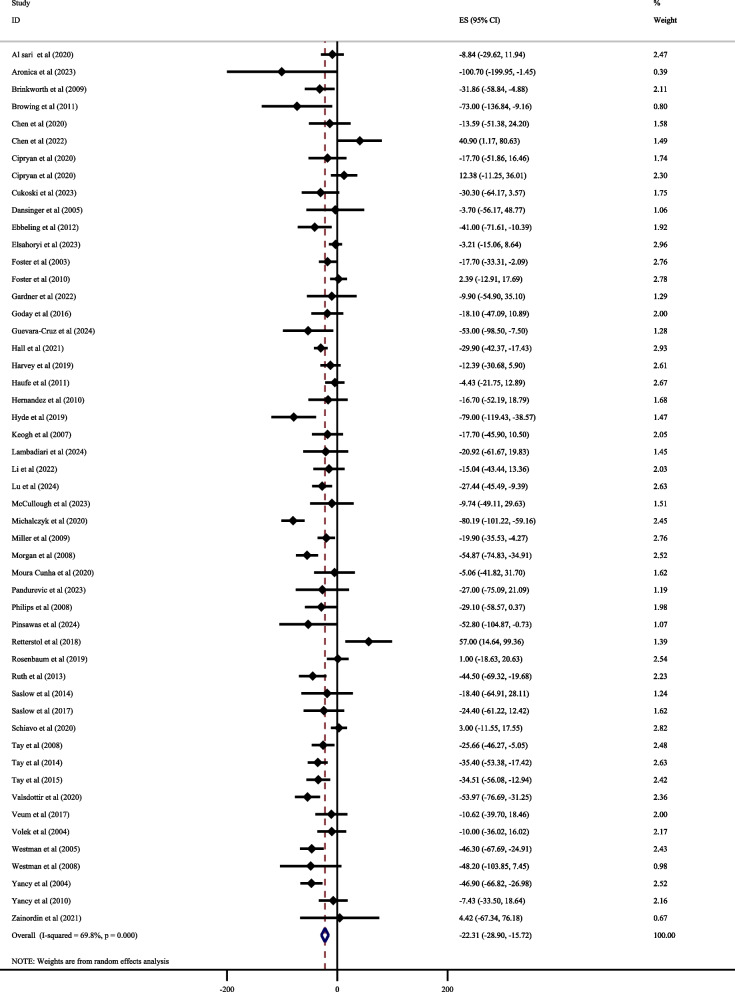
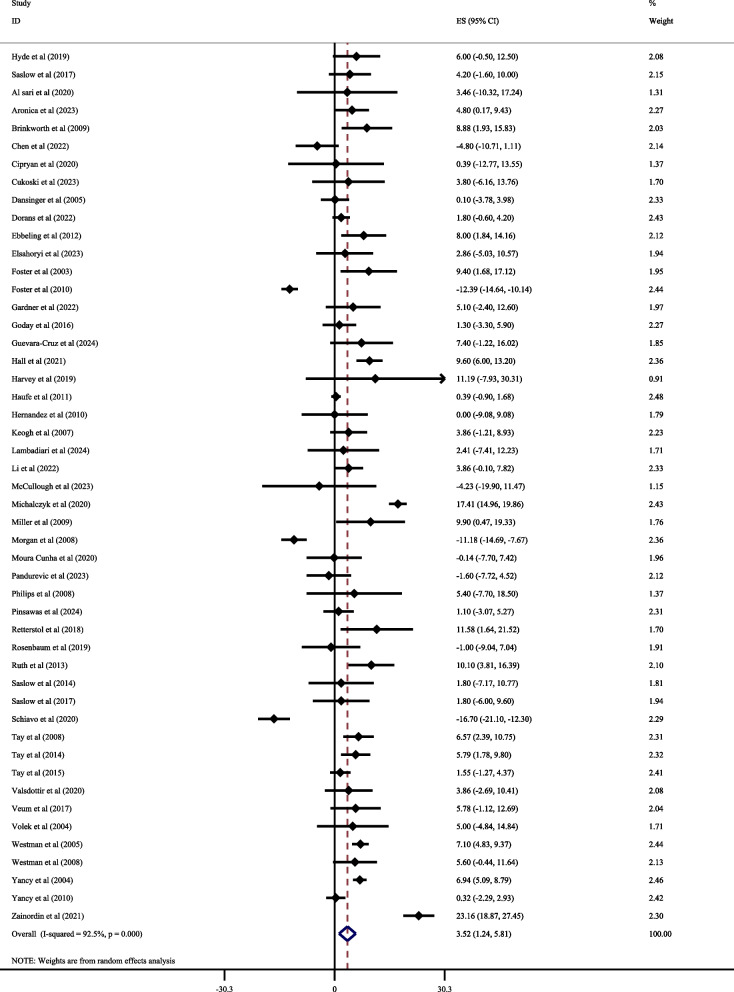
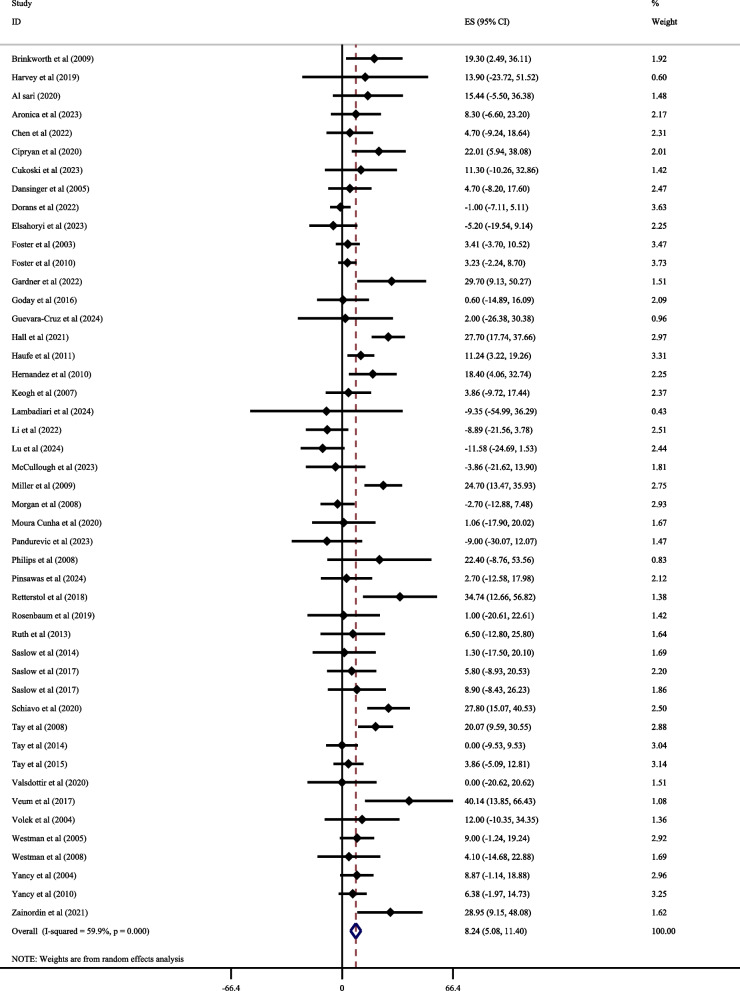
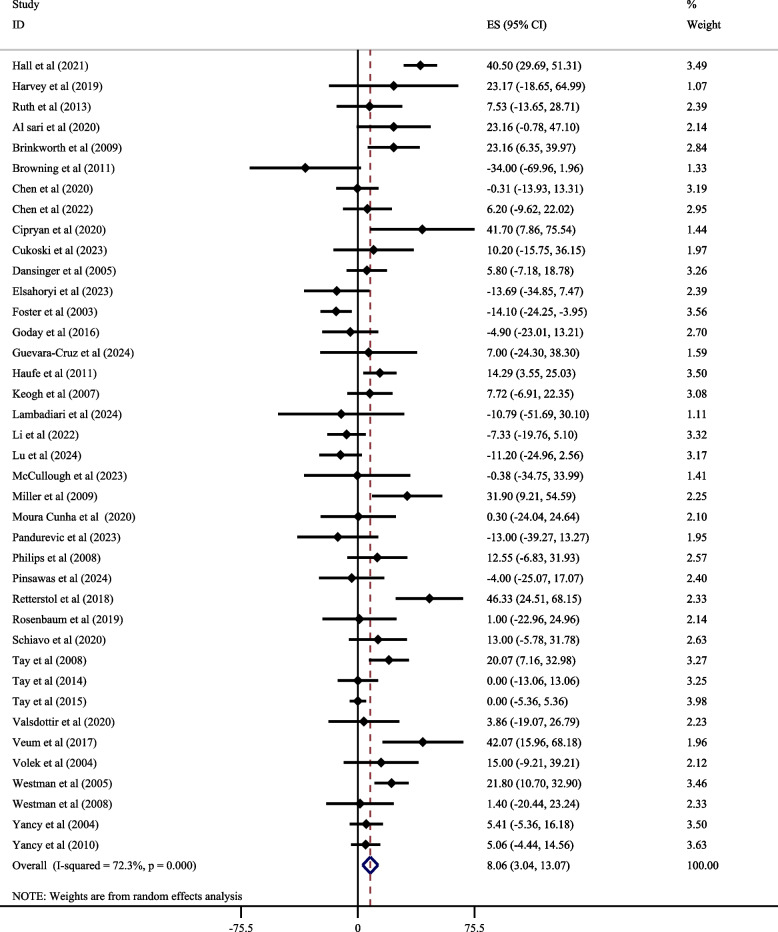
AIMS: The effects of the ketogenic diet (KD) on lipid metabolism remain controversial. We conducted a systematic review and meta-regression analysis of randomized controlled trials (RCTs) to evaluate the impact of KD on lipid profile parameters in adult populations. METHODS: Five electronic databases (PubMed/MEDLINE, Web of Science, Scopus, Embase, Cochrane Library) were systematically searched from inception through June 2025 for RCTs examining lipid-related outcomes following KD interventions (defined as > 45% fat, < 10% carbohydrate). The DerSimonian-Laird method was used to figure out pooled weighted mean differences (WMDs) and 95% confidence intervals (CIs) using random-effects models. We conducted meta-regression, subgroup analyses, sensitivity analyses, and assessed publication bias. Study quality was assessed using the Cochrane Risk of Bias 2 tool and the GRADE framework. RESULTS: Fifty-three RCTs met the inclusion criteria. Compared with control diets, KD significantly reduced triglycerides (WMD: -22.31 mg/dL; 95% CI: -28.90 to -15.72; p < 0.001; I2 = 69.8%, p < 0.001). HDL-C increased significantly (WMD: 3.52 mg/dL; 95% CI: 1.24 to 5.81; p < 0.001; I2 = 92.5%, p < 0.001). KD also raised LDL-C (WMD: 8.22 mg/dL; 95% CI: 5.08 to 11.40; p < 0.001; I2 = 59.9%, p < 0.001) and total cholesterol (WMD: 8.06 mg/dL; 95% CI: 3.04 to 13.07; p < 0.001; I2 = 72.3%, p < 0.001). Meta-regression revealed a significant negative correlation between changes in HDL-C and the duration of intervention (coefficient = − 0.125; p = 0.011). No evidence of publication bias was found, as Egger's test p-values exceeded 0.05 for all outcomes. According to the GRADE assessment, there is moderate certainty regarding TG and HDL-C, while certainty for LDL-C and TC remains low. CONCLUSIONS: KD causes an increase in HDL-C, LDL-C and total cholesterol while reducing triglycerides and. The long-term impact on heart and blood vessel health remains uncertain due to the lack of outcome data. These findings require careful interpretation and personalized monitoring.
Overview
CoChat Summary
TL;DR
This systematic review and meta-regression of 53 randomized controlled trials found that ketogenic diets lower triglycerides and raise HDL-C, but also raise LDL-C and total cholesterol in adults. The overall cardiovascular effect remains uncertain because most trials were short-term and heterogeneity was high.
Key findings
- Ketogenic diets significantly reduced triglycerides (WMD: −22.31 mg/dL; 95% CI: −28.90 to −15.72; p < 0.001; I² = 69.8%).
- Ketogenic diets significantly increased HDL-C (WMD: 3.52 mg/dL; 95% CI: 1.24 to 5.81; p < 0.001; I² = 92.5%), with meta-regression showing an inverse association between HDL-C change and intervention duration (coefficient = −0.125; p = 0.011).
- Ketogenic diets also increased LDL-C (WMD: 8.22 mg/dL; 95% CI: 5.08 to 11.40; p < 0.001; I² = 59.9%) and total cholesterol (WMD: 8.06 mg/dL; 95% CI: 3.04 to 13.07; p < 0.001; I² = 72.3%).
- No publication bias was detected (Egger’s test p > 0.05 for all outcomes); GRADE certainty was moderate for triglycerides and HDL-C, and low for LDL-C and total cholesterol.
Methods
- Systematic review and meta-analysis of RCTs; five databases were searched from inception through June 2025 for adults aged ≥ 18 years, with ketogenic diet defined as > 45% fat and < 10% carbohydrate, control diets as < 30% fat or standard dietary approaches, and at least one lipid outcome.
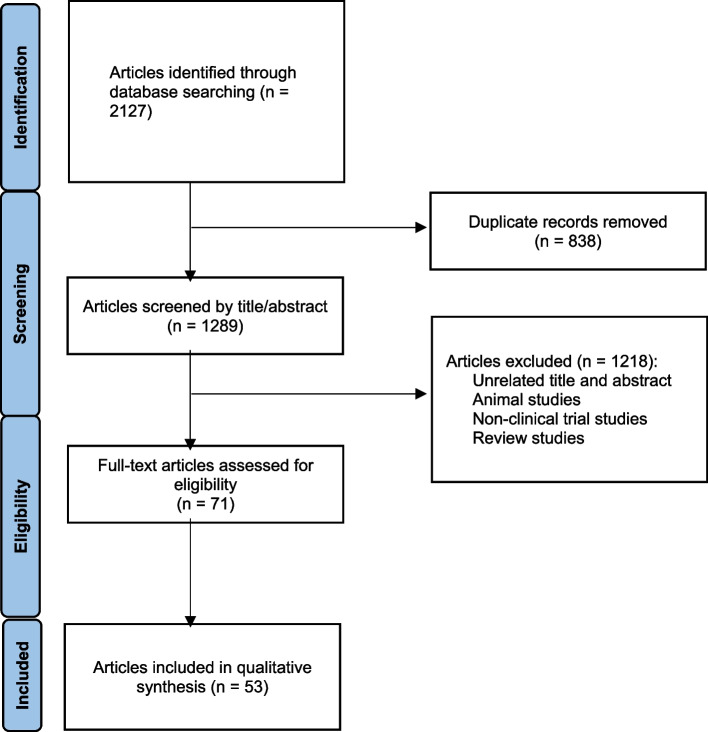
- Fifty-three RCTs met inclusion criteria; 46/53 were parallel-group and 7/53 crossover; sample sizes ranged from 16 to 248 participants, mean age from 23.8 to 64.8 years, and BMI from 21.7 to 39.9 kg/m².
- Random-effects models using the DerSimonian-Laird method calculated pooled weighted mean differences and 95% CIs; analyses included meta-regression, subgroup analyses, sensitivity analyses, prediction intervals, Cochrane Risk of Bias 2, GRADE, and Egger’s test.
Limitations
- Stated: most trials were short-term with a median duration of 12 weeks; 17 studies (27.4%) required SD imputation; blinding is difficult in dietary trials; there was heterogeneity in ketogenic diet formulations, comparator diets, and populations; dietary intake and physical activity were not consistently reported; and the KD definition (> 45% fat) differs from classical KD (≥ 70% fat).
- Evident from the text: heterogeneity was high (I² > 60% for all outcomes) and prediction intervals were wide and sometimes crossed or approached no effect (TG: −52.4 to 12.5 mg/dL; HDL-C: −5.8 to 13.0 mg/dL; LDL-C: −1.9 to 18.9 mg/dL; TC: −11.2 to 27.5 mg/dL), indicating substantial uncertainty for individual responses.
- Evident from the text: only one study was at low risk of bias across all domains; 38 studies had some concerns and 14 (26.4%) were rated high risk, mainly due to deviations from intended interventions.
Model-written summary. Check it against the paper before relying on it.
Integrity signals
Registry
Cites
Statistics
Figures
Verification
Claims the paper makes
5 Valid · 2 Not valid · 5 Not checked · 56 Own results and interpretations
The cited sources that could be checked couldn’t confirm or dispute this claim.
In the paper
“A decrease of 1 mmol/L (88.57 mg/dL) in triglycerides has been linked to roughly a 25% reduction in cardiovascular disease risk [24, 25]”
§ Ketogenic diet–induced changes in adult lipid metabolism: a comprehensive systematic review and meta-regression of randomized controlled trials > Discussion
What the sources say
- Not checked — no full text of the sourcecites [24] Borén J, et al. Metabolism of triglyceride-rich lipoproteins in health and dyslipidaemia. Nat Rev Cardiol. 2022;19(9):577–92. 35318466 source
- Could not verifycites [25] Zhang Y, et al. high triglyceride-glucose index is associated with poor cardiovascular outcomes in nondiabetic patients with ACS with LDL-C below 1.8 mmol/L. J Atheroscler Thromb. 2022;29(2):268–81. 33536384 PMC8803555 sourceExperimental — accuracy not yet measured
The Results section compares outcomes by triglyceride-glucose index, and the Discussion reports an association between that index and subsequent revascularization in a specific ACS population. Searches for a 1 mmol/L triglyceride decrease and a 25% cardiovascular-risk reduction found no passage in our copy addressing that quantitative claim. Page numbers were not available. (LLM, conf=0.72)
plainstates an association- Asserted: passes — The authors put it forward as true.
- Checkable: passes — It can be checked against evidence.
- Load-bearing: passes — The paper’s conclusions depend on it.
- Based: passes — The paper gives a reason why it holds.
The sources with a verdict support this claim; the rest weren’t checked yet, have no full text we could read, or their verdicts aren’t rated yet.
In the paper
“Our findings support recent umbrella reviews and meta-analyses, which report triglyceride reduction and LDL-C increases with the KD [30, 31].”
§ Ketogenic diet–induced changes in adult lipid metabolism: a comprehensive systematic review and meta-regression of randomized controlled trials > Discussion
What the sources say
- Supportedcites [30] Patikorn C, et al. Effects of ketogenic diet on health outcomes: an umbrella review of meta-analyses of randomized clinical trials. BMC Med. 2023;21(1):196. 37231411 PMC10210275 source
The Discussion (page not provided) states that triglycerides decrease after ketogenic diets and that the review’s aggregate results confirm an increase in LDL-C. The Results section also reports both associations in adults with type 2 diabetes. (LLM, conf=0.94)
- Not checked — no full text of the sourcecites [31] Chang C, et al. The Impact of the Ketogenic Diet on the Lipid Profile in Adults: A Comprehensive Review and Meta-Regression Analysis of Randomized Controlled Trials. Endocr Pract. 2026:S1530-891X(26)00026-1. 41621647 source
plainstates a cause- Asserted: passes — The authors put it forward as true.
- Checkable: passes — It can be checked against evidence.
- Load-bearing: passes — The paper’s conclusions depend on it.
- Based: passes — The paper gives a reason why it holds.
- Supported
The cited sources that could be checked couldn’t confirm or dispute this claim.
In the paper
“KD raised HDL-C by 3.5 mg/dL, which according to epidemiological data could translate to an estimated 7–11% decrease in CVD risk [27]”
§ Ketogenic diet–induced changes in adult lipid metabolism: a comprehensive systematic review and meta-regression of randomized controlled trials > Discussion
What the sources say
- Could not verifycites [27] Kunutsor SK, et al. Is high serum LDL/HDL cholesterol ratio an emerging risk factor for sudden cardiac death? Findings from the KIHD study. J Atheroscler Thromb. 2017;24(6):600–8. 27784848 PMC5453685 sourceExperimental — accuracy not yet measured
The Results report associations between lipoprotein levels and sudden cardiac death, but do not estimate the CVD-risk change associated with a 3.5 mg/dL rise in HDL-C. The Discussion cautions that higher HDL-C does not necessarily lower coronary risk. Searches for the 3.5 mg/dL change and the 7–11% estimate found neither in our copy. (LLM, conf=0.75)
hedgedstates a possible cause- Asserted: passes — The authors put it forward as true.
- Checkable: passes — It can be checked against evidence.
- Load-bearing: unclear — It is unclear whether the paper’s conclusions depend on it.
- Based: passes — The paper gives a reason why it holds.
- Could not verify
A result the paper reports from its own data — it cites no other source for it, so there is none to check. The quote shows it is in the paper.
In the paper
“Compared with control diets, KD significantly reduced triglycerides (WMD: -22.31 mg/dL; 95% CI: -28.90 to -15.72; p < 0.001; I2 = 69.8%, p < 0.001).”
§ Ketogenic diet–induced changes in adult lipid metabolism: a comprehensive systematic review and meta-regression of randomized controlled trials > Abstract > Results
plainstates a cause- Asserted: passes — The authors put it forward as true.
- Checkable: passes — It can be checked against evidence.
- Load-bearing: passes — The paper’s conclusions depend on it.
- Based: passes — The paper gives a reason why it holds.
- Rests on an assumption not shown here.
A result the paper reports from its own data — it cites no other source for it, so there is none to check. The quote shows it is in the paper.
In the paper
“Fifty-three RCTs met the inclusion criteria.”
- Also stated in: § Study selection · plain
“Ultimately, 53 RCTs fulfilled the inclusion criteria and were incorporated into the meta-analysis.”
§ Ketogenic diet–induced changes in adult lipid metabolism: a comprehensive systematic review and meta-regression of randomized controlled trials > Abstract > Results
plain- Asserted: passes — The authors put it forward as true.
- Checkable: passes — It can be checked against evidence.
- Load-bearing: passes — The paper’s conclusions depend on it.
- Based: passes — The paper gives a reason why it holds.
- Also stated in: § Study selection · plain
23 more claims
Create a free account to see all 68 claims and every source verdict.
- Probably not a substantial claim. 24
- It may state two separate claims as one. 25
Self-check
Percentages, sums and reported differences re-computed from the paper’s own numbers.
Each contradiction between two passages listed here was confirmed by an independent check.
Rated major: it would touch a result — a value a result rests on, reported and recomputed p-values on opposite sides of the significance level, two passages that conflict with no sign which is right, or a cited work retracted before this paper was published.
In the paper
§ Ketogenic diet–induced changes in adult lipid metabolism: a comprehensive systematic review and meta-regression of randomized controlled trials > Discussion
“The observed TG decrease (−19.96 mg/dL) aligns with Rafiullah et al.”
§ Ketogenic diet–induced changes in adult lipid metabolism: a comprehensive systematic review and meta-regression of randomized controlled trials > Results > Quality assessment
“KD significantly reduced TG (WMD: −22.31 mg/dL; 95% CI: −28.90 to −15.72; p < 0.001; I2 = 69.8%, p < 0.001)”
Rated major: it would touch a result — a value a result rests on, reported and recomputed p-values on opposite sides of the significance level, two passages that conflict with no sign which is right, or a cited work retracted before this paper was published.
In the paper
§ Ketogenic diet–induced changes in adult lipid metabolism: a comprehensive systematic review and meta-regression of randomized controlled trials > Materials and methods > Eligibility criteria
“Intervention: Ketogenic diet defined as > 45% fat and < 10% carbohydrate”
§ Ketogenic diet–induced changes in adult lipid metabolism: a comprehensive systematic review and meta-regression of randomized controlled trials > Results > Study characteristics
“| Tay et al., 2014 | Australia | Parallel | 46/47 | 58 | Type 2 Diabetes | Very low-carb, high-unsat. fat: 14% carbs (< 50 g), 28% protein, 58% fat (< 10% sat. fat) |”
Rated minor: it would not touch a result — a value no result rests on, a p-value that stays on the same side of the significance level, or a conflict that is clerical, resolved elsewhere in the paper, or outside its own findings.
In the paper
§ Ketogenic diet–induced changes in adult lipid metabolism: a comprehensive systematic review and meta-regression of randomized controlled trials > Discussion
“The substantial heterogeneity observed (I2 > 60% for all outcomes)”
§ Ketogenic diet–induced changes in adult lipid metabolism: a comprehensive systematic review and meta-regression of randomized controlled trials > Results > Quality assessment
“KD significantly increased LDL-C (WMD: 8.22 mg/dL; 95% CI: 5.08 to 11.40; p < 0.001; I2 = 59.9%, p < 0.001)”
Rated minor: it would not touch a result — a value no result rests on, a p-value that stays on the same side of the significance level, or a conflict that is clerical, resolved elsewhere in the paper, or outside its own findings.
In the paper
§ Ketogenic diet–induced changes in adult lipid metabolism: a comprehensive systematic review and meta-regression of randomized controlled trials > Results > Quality assessment
“Forty-eight RCTs reported LDL-C. KD significantly increased LDL-C (WMD: 8.22 mg/dL; 95% CI: 5.08 to 11.40; p < 0.001; I2 = 59.9%, p < 0.001)”
§ Ketogenic diet–induced changes in adult lipid metabolism: a comprehensive systematic review and meta-regression of randomized controlled trials > Results > Quality assessment
“| Overall | 47 | 8.24 (5.08, 11.40) |”
Rated minor: it would not touch a result — a value no result rests on, a p-value that stays on the same side of the significance level, or a conflict that is clerical, resolved elsewhere in the paper, or outside its own findings.
In the paper
§ Ketogenic diet–induced changes in adult lipid metabolism: a comprehensive systematic review and meta-regression of randomized controlled trials > Results > Study characteristics
“(46/53) employed parallel-group designs, while 13% (7/53) used crossover designs.”
§ Ketogenic diet–induced changes in adult lipid metabolism: a comprehensive systematic review and meta-regression of randomized controlled trials > Results > Study characteristics
“| Rosenbaum et al., 2019 | USA | NR | 17/17 | 33.6 | Healthy |”
3 more findings
Create a free account to see every finding of this check.
Citations
Cites
The PRISMA 2020 statement: An updated guideline for reporting systematic reviews
Page, M. J., McKenzie, J. E., Bossuyt, P. M., Boutron, I., Hoffmann, T. C., Mulrow, C. D., Shamseer, L., Tetzlaff, J. M., Akl, E. A., Brennan, S. E., et al. (2021) · BMJ · doi:10.1136/bmj.n71 · Cited by 108,283
Meta-analysis in clinical trials
DerSimonian, R., & Laird, N. (1986) · Controlled Clinical Trials · doi:10.1016/0197-2456(86)90046-2 · Cited by 39,552 · cited 2×
“The observed TG decrease (−19.96 mg/dL) aligns with Rafiullah et al., who reported −22.1 mg/dL in T2DM, while the LDL-C increase (8.49 mg/dL) is somewhat higher than other studies [21], likely due to our strict KD criteria (> 45% fat, 10% carbohydrate) [32].”
InfluentialEstimating the mean and variance from the median, range, and the size of a sample
Hozo, S. P., Djulbegovic, B., & Hozo, I. (2005) · BMC Medical Research Methodology · doi:10.1186/1471-2288-5-13 · Cited by 9,062
Assessing heterogeneity in meta-analysis: Q statistic or I² index?
Huedo-Medina, T. B., Sánchez-Meca, J., Marín-Martínez, F., & Botella, J. (2006) · Psychological Methods · doi:10.1037/1082-989x.11.2.193 · Cited by 4,256 · cited 1×
“An I 2 value of 50% or more indicated significant heterogeneity [22].”
Yancy, W. S., Olsen, M. K., Guyton, J. R., Bakst, R. P., & Westman, E. C. (2004) · Annals of Internal Medicine · doi:10.7326/0003-4819-140-10-200405180-00006 · Cited by 946 · cited 1×
“Although KD is often considered to negatively affect lipid metabolism due to its high saturated fat content, there is also evidence suggesting the opposite [10].”
Estimating the sample mean and standard deviation from commonly reported quantiles in meta-analysis
McGrath, S., Zhao, X., Steele, R., Thombs, B. D., Benedetti, A., the DEPRESsion Screening Data (DEPRESSD) Collaboration, Levis, B., Riehm, K. E., Saadat, N., Levis, A. W., et al. (2020) · Statistical Methods in Medical Research · doi:10.1177/0962280219889080 · Cited by 856 · cited 1×
“When studies did not provide mean changes or standard deviations, we estimated these values using established methods [16].”
Zhu, H., Bi, D., Zhang, Y., Kong, C., Du, J., Wu, X., Wei, Q., & Qin, H. (2022) · Signal Transduction and Targeted Therapy · doi:10.1038/s41392-021-00831-w · Cited by 399 · cited 2×
“Typically, individuals following this diet consume fewer than 50 g of carbs daily [1].”
InfluentialSystematic Evaluation and Comparison of Statistical Tests for Publication Bias
Hayashino, Y., Noguchi, Y., & Fukui, T. (2005) · Journal of Epidemiology · doi:10.2188/jea.15.235 · Cited by 379 · cited 1×
“Publication bias was evaluated visually with funnel plots and statistically via Egger's test [23].”
Schünemann, H. J., Mustafa, R., Brozek, J., Santesso, N., Alonso-Coello, P., Guyatt, G., Scholten, R., Langendam, M., Leeflang, M. M., Akl, E. A., et al. (2016) · Journal of Clinical Epidemiology · doi:10.1016/j.jclinepi.2016.01.032 · Cited by 350
Metabolism of triglyceride-rich lipoproteins in health and dyslipidaemia
Borén, J., Taskinen, M.-R., Björnson, E., & Packard, C. J. (2022) · Nature Reviews Cardiology · doi:10.1038/s41569-022-00676-y · Cited by 315 · cited 1×
“A decrease of 1 mmol/L (88.57 mg/dL) in triglycerides has been linked to roughly a 25% reduction in cardiovascular disease risk [24, 25], suggesting our findings may correspond to approximately a 6% risk reduction.”
Influential
Research works printed but not linked: 1
- Patel S. Effects of a high-protein ketogenic diet on strength training performance and body composition in recreational weight lifters. 2022;10(3):66–83.
Cited by
Soltani, S., Kosari, A., Mohammadi, M. A., Shahinfar, H., Motamed, N., Maadi, M., Nikkhah, M., Zamani, F., & Doustmohammadian, A. (2026) · Journal of clinical lipidology · doi:10.1016/j.jacl.2026.07.019
Metadata
- Authors
- Zhao, J., Wei, C., Gong, F., Pang, Z., & Zhao, H.
- Affiliations
- Minzu University of China (CN)
- Corresponding author
- Pang, Zongran
- Zhao, Huanhu
- ORCID
- Pang, Zongran
- Venue
- BMC Cardiovascular Disorders
- Published
- 2026-04-30
- Volume
- 26
- Issue
- 1
- ISSN
- 1471-2261 (ISSN-L)
- PMC
- PMC13281555
- OpenAlex
- W7159213034
- Semantic Scholar
- 24a6dd173ce1a146d2bb54f8473e23896def7af2
- Cited by
- 0
- References
- 32
- FWCI
- 0.00
- Type
- journal article
- Language
- en
- Open access
- gold
- doi.org
- Licence
- cc-by-nc-nd
- creativecommons.org/licenses/by-nc-nd/4.0 (tdm)
- creativecommons.org/licenses/by-nc-nd/4.0 (vor, 50 d)
- Locations
- BMC Cardiovascular Disorders (publishedVersion, cc-by-nc-nd)
- PubMed (publishedVersion)
- PubMed Central (publishedVersion, cc-by-nc-nd)
- DOAJ (DOAJ: Directory of Open Access Journals) (submittedVersion)
- Topics
- Health Sciences › Medicine › Physiology (medical) › Diet and metabolism studies
- Health Sciences › Medicine › Physiology (medical) › Dietary Effects on Health
- Health Sciences › Nursing › Nutrition and Dietetics › Fatty Acid Research and Health
- Keywords
- ketogenic diet, lipid metabolism, lipid profile, triglycerides, HDL cholesterol, LDL cholesterol, total cholesterol, intervention duration, adults, dietary fat restriction, cardiovascular risk factors, weight loss dieting, type 2 diabetes, metabolic syndrome, dyslipidemia, hypertriglyceridemia, cardiovascular risk reduction, LDL particle size
- MeSH terms
- Adult, Aged, Female, Humans, Lipids, Male, Middle Aged, Biomarkers, Randomized Controlled Trials as Topic, Treatment Outcome, Dyslipidemias, Lipid Metabolism, Diet, Ketogenic, Young Adult
About these checks
Registry, retraction, Cites and statistics results are computed, not judged, with one exception: a printed reference that no index lists is read once by a model before it counts as a citation error. Claims are extracted by a model and kept only when their quote appears verbatim in the text; each cited source is then checked, with a model’s help, for whether it says what the claim relies on. Those verdicts can be wrong — read the claim’s quote and the cited source before relying on one.
The claim verdicts this report counts are experimental: their accuracy is not yet measured.
A language model drew the claims from the paper on 2026-10-10, under version 3 of the claim definition (model deepseek-v4.1-flash, prompt extract-v3).
A second model labelled each claim on 2026-10-10 (model jev-1.13-20260917, definition revision gold-guideline-v0.2).
Cited sources are checked with a language model’s help (gpt-6-sol).
Statistics and arithmetic are recomputed, not judged.
Confidence bands are shown only for fields calibrated on our annotated test set. None is calibrated yet, so no band is shown.
What counts as a claim ›How we measure confidence ›How we check this ›
Are you an author, or do you see a problem with this page? Request a review
How to cite
Cite CoChat for the checks on this page, and the paper for its own findings.
- This page
- CoChat. (2026). Citation check: Ketogenic diet-induced changes in adult lipid metabolism: a comprehensive systematic review and meta-regression of randomized controlled trials. https://app.cochat.ai/papers/10.1186/s12872-026-05799-5
- The paper
- Zhao, J., Wei, C., Gong, F., Pang, Z., & Zhao, H. (2026). Ketogenic diet-induced changes in adult lipid metabolism: a comprehensive systematic review and meta-regression of randomized controlled trials. BMC Cardiovascular Disorders. https://doi.org/10.1186/s12872-026-05799-5
Data sources
Bibliographic data: Semantic Scholar, OpenAlex, Crossref.
Contains information from the Semantic Scholar Academic Graph Datasets, made available under the ODC Attribution License (ODC-BY 1.0).
Semantic Scholar’s data is described in: Kinney, R., et al. (2023). The Semantic Scholar Open Data Platform. arXiv:2301.10140.
