

Classification and prevalence of spin in abstracts of non-randomized studies evaluating an intervention
Open accessThe DOI matches its Crossref record; 38 of the 38 references it cites were found in a registry or an index.
Abstract
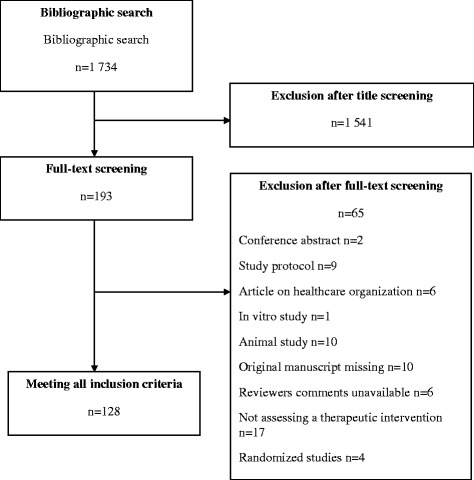
BACKGROUND: Spin represents specific reporting strategies, either intentional or unintentional, to convince the reader that the beneficial effect of the experimental intervention in terms of efficacy and safety is greater than that shown by the results. The objectives of this study were to 1) develop a classification of spin specific to non-randomized studies assessing an intervention and 2) estimate the prevalence of spin in abstracts of reports of such studies. METHODS: In a first step, we developed a specific classification of spin for non-randomized studies by a literature review and pilot study. In a second step, 2 researchers trained in the field of methodology evaluated the prevalence of spin in the abstract of all non-randomized studies assessing an intervention published in the BioMed Central Medical Series journals between January 1, 2011 and December 31, 2013. All disagreements were resolved by consensus. We also determined whether the level of spin in abstract conclusions was high (spin reported without uncertainty or recommendations for further trials), moderate (spin reported with some uncertainty or recommendations for further trials) or low (spin reported with uncertainty and recommendations for further trials). RESULTS: Among the 128 assessed articles assessed, 107 (84%) had at least one example of spin in their abstract. The most prevalent strategy of spin was the use of causal language, identified in 68 (53%) abstracts. Other frequent strategies were linguistic spin, inadequate implications for clinical practice, and lack of focus on harm, identified in 33 (26%), 25 (20%), and 34 (27%) abstracts respectively. Abstract conclusions of 61 (48%) articles featured a high level of spin. CONCLUSION: Abstract of reports of non-randomized studies assessing an intervention frequently includes spin. Efforts to reduce the prevalence of spin in abstract for such studies are needed.
Overview
The claims and statistics of this paper haven’t been checked yet.
Free: it reads the open-access text and checks the first 5 claims that cite a source we can check. Create a free account to check every claim.
Integrity signals
Registry
Cites
Statistics
Figures
Verification
Claims the paper makes
The claims and statistics of this paper haven’t been checked yet.
Free: it reads the open-access text and checks the first 5 claims that cite a source we can check. Create a free account to check every claim.
Claims other papers make about this one
Each is checked against this paper’s own text: does it say what the citing paper says it does?
The source backs part of the claim, not all of it — or backs it for a different population, condition or comparison.
In the citing paper
“Moreover, their capacity to detect errors [10, 11], identify deficiencies in reporting [12] and spin [13] has been found lacking.”
From Tools used to assess the quality of peer review reports: A methodological systematic review (2019) · cites this paper as [13]
Experimental — accuracy not yet measuredIn the citing paper
“There are several ways to spin a report (4, 6, 8–10).”
From Misrepresentation and distortion of research in biomedical literature (2018) · cites this paper as [10]
In the citing paper
“Specific classifications of spin have been developed for different study designs and contexts [randomized controlled trials with nonstatistically significant results (4), observational studies evaluating an intervention (10), diagnostic accuracy studies (8), systematic reviews (9)].”
From Misrepresentation and distortion of research in biomedical literature (2018) · cites this paper as [10]
Self-check
Percentages, sums and reported differences re-computed from the paper’s own numbers.
The self-check needs the paper’s full text.
Citations
Cites
Boutron, I. (2010) · JAMA · doi:10.1001/jama.2010.651 · Cited by 842 · cited 2×
“To develop the classification of spin, we performed a literature review of studies of spin for other study designs [3 – 5, 9, 11] as well as studies of distorted presentation and interpretation of findings from non-randomized studies [12 – 19].”
Self-citationComparison of Registered and Published Primary Outcomes in Randomized Controlled Trials
Mathieu, S. (2009) · JAMA · doi:10.1001/jama.2009.1242 · Cited by 730 · cited 1×
“To develop the classification of spin, we performed a literature review of studies of spin for other study designs [3 – 5, 9, 11] as well as studies of distorted presentation and interpretation of findings from non-randomized studies [12 – 19].”
Chan, A.-W., & Altman, D. G. (2005) · BMJ · doi:10.1136/bmj.38356.424606.8f · Cited by 613
When are observational studies as credible as randomised trials?
Vandenbroucke, J. P. (2004) · The Lancet · doi:10.1016/s0140-6736(04)16261-2 · Cited by 538 · cited 1×
“Particularly, contrary to randomized clinical trials, they may not allow for establishing causal inferences but rather, only an association [8 – 10].”
Boutron, I., Altman, D. G., Hopewell, S., Vera-Badillo, F., Tannock, I., & Ravaud, P. (2014) · Journal of Clinical Oncology · doi:10.1200/jco.2014.56.7503 · Cited by 368
Self-citationCausation in epidemiology: Table 1
Parascandola, M., & Weed, D. L. (2001) · Journal of Epidemiology and Community Health · doi:10.1136/jech.55.12.905 · Cited by 276 · cited 2×
“Particularly, contrary to randomized clinical trials, they may not allow for establishing causal inferences but rather, only an association [8 – 10].”
Comparisons against baseline within randomised groups are often used and can be highly misleading
Bland, J. M., & Altman, D. G. (2011) · Trials · doi:10.1186/1745-6215-12-264 · Cited by 241
Effect of interpretive bias on research evidence
Kaptchuk, T. J. (2003) · BMJ · doi:10.1136/bmj.326.7404.1453 · Cited by 222 · cited 1×
“This situation is problematic because it has been demonstrated [6] that spin in the abstract conclusions of randomized controlled trial reports could bias the interpretation of the results by clinicians [29].”
Overinterpretation and Misreporting of Diagnostic Accuracy Studies: Evidence of “Spin”
Ochodo, E. A., de Haan, M. C., Reitsma, J. B., Hooft, L., Bossuyt, P. M., & Leeflang, M. M. G. (2013) · Radiology · doi:10.1148/radiol.12120527 · Cited by 158 · cited 1×
“Spin was found in more than half of the abstract conclusions of randomized controlled trials with statistically non-significant results for the primary outcome [3]; moreover, one third of reports of diagnostic accuracy studies contained a form of over-interpretation [4].”
Brown, A. W., Bohan Brown, M. M., & Allison, D. B. (2013) · The American Journal of Clinical Nutrition · doi:10.3945/ajcn.113.064410 · Cited by 155 · cited 1×
“Brown et al. [32] evidenced a 26 % to 50 % rate of studies ascribing greater inferential strength than the study design warranted.”
Cited by
‘Spin’ in published biomedical literature: A methodological systematic review
Chiu, K., Grundy, Q., & Bero, L. (2017) · PLOS Biology · doi:10.1371/journal.pbio.2002173 · Cited by 317
Misrepresentation and distortion of research in biomedical literature
Boutron, I., & Ravaud, P. (2018) · Proceedings of the National Academy of Sciences · doi:10.1073/pnas.1710755115 · Cited by 273
“In observational studies evaluating an intervention, spin was identified in the abstract’s conclusions in more than 80% of reports, the most frequent type of spin being the use of causal language (10).”
BackgroundSelf-citationVinkers, C. H., Tijdink, J. K., & Otte, W. M. (2015) · BMJ · doi:10.1136/bmj.h6467 · Cited by 237
Yavchitz, A., Ravaud, P., Altman, D. G., Moher, D., Hrobjartsson, A., Lasserson, T., & Boutron, I. (2016) · Journal of Clinical Epidemiology · doi:10.1016/j.jclinepi.2016.01.020 · Cited by 224
“, understate efficacy and/or overstate harm) because these types of spin were not considered in previous works about spin for other study designs [4,7,9,11].”
BackgroundSelf-citationBruce, R., Chauvin, A., Trinquart, L., Ravaud, P., & Boutron, I. (2016) · BMC Medicine · doi:10.1186/s12916-016-0631-5 · Cited by 218
“the study results [17–19].”
Self-citationReproducible and replicable pain research: a critical review
Lee, H., Lamb, S. E., Bagg, M. K., Toomey, E., Cashin, A. G., & Moseley, G. L. (2018) · Pain · doi:10.1097/j.pain.0000000000001254 · Cited by 150
“3 reporting) of study outcomes [19], incomplete reporting of methods or incomplete description of interventions [18,22], and inaccurate or misleading reporting of results and inferences [8,34].”
BackgroundTools used to assess the quality of peer review reports: A methodological systematic review
Superchi, C., González, J. A., Solà, I., Cobo, E., Hren, D., & Boutron, I. (2019) · BMC Medical Research Methodology · doi:10.1186/s12874-019-0688-x · Cited by 128
Self-citationMagni, P., Bier, D. M., Pecorelli, S., Agostoni, C. V., Astrup, A. V., Brighenti, F., Cook, R., Folco, E., Fontana, L., Gibson, R. A., et al. (2017) · Advances in Nutrition · doi:10.3945/an.116.014738 · Cited by 99
“(72) reported finding$1 example of spin in 84% of scientific reports studied, most”
Andaur Navarro, C. L., Damen, J. A. A., Takada, T., Nijman, S. W. J., Dhiman, P., Ma, J., Collins, G. S., Bajpai, R., Riley, R. D., Moons, K. G. M., et al. (2023) · Journal of Clinical Epidemiology · doi:10.1016/j.jclinepi.2023.03.024 · Cited by 65
McGrath, T. A., McInnes, M. D. F., van Es, N., Leeflang, M. M. G., Korevaar, D. A., & Bossuyt, P. M. M. (2017) · Clinical Chemistry · doi:10.1373/clinchem.2017.271544 · Cited by 72
Brennan, S., McDonald, S. J., Page, M. J., Reid, J. E. A., Ward, S. A., Forbes, A. B., & McKenzie, J. E. (2020) · Systematic Reviews · doi:10.1186/s13643-019-1220-4 · Cited by 80
Evaluation of spin in abstracts of papers in psychiatry and psychology journals
Jellison, S., Roberts, W., Bowers, A., Combs, T., Beaman, J., Wayant, C., & Vassar, M. B. (2019) · BMJ Evidence-Based Medicine · doi:10.1136/bmjebm-2019-111176 · Cited by 82
How readers understand causal and correlational expressions used in news headlines.
Adams, R. C., Sumner, P., Vivian-Griffiths, S., Barrington, A., Williams, A., Boivin, J., Chambers, C. D., & Bott, L. (2017) · Journal of Experimental Psychology: Applied · doi:10.1037/xap0000100 · Cited by 63
Boutron, I., Haneef, R., Yavchitz, A., Baron, G., Novack, J., Oransky, I., Schwitzer, G., & Ravaud, P. (2019) · BMC Medicine · doi:10.1186/s12916-019-1330-9 · Cited by 76
Self-citationLazarus, C., Haneef, R., Ravaud, P., Hopewell, S., Altman, D. G., & Boutron, I. (2016) · Journal of Clinical Epidemiology · doi:10.1016/j.jclinepi.2016.04.012 · Cited by 58
Self-citationMillar, N., Batalo, B., & Budgell, B. (2022) · JAMA Network Open · doi:10.1001/jamanetworkopen.2022.28676 · Cited by 57
Mouffak, A., Lepelley, M., Revol, B., Bernardeau, C., Salvo, F., Pariente, A., Roustit, M., Cracowski, J., & Khouri, C. (2021) · Journal of Clinical Epidemiology · doi:10.1016/j.jclinepi.2021.06.022 · Cited by 57
Hype in reports of clinical research: The authors' perspectives
Millar, N., Budgell, B., & Salager‐Meyer, F. (2020) · English for Specific Purposes · doi:10.1016/j.esp.2020.07.001 · Cited by 45
Vorland, C. J., Brown, A. W., Dawson, J., Dickinson, S., Golzarri‐Arroyo, L., Hannon, B. A., Heo, M., Heymsfield, S. B., Jayawardene, W. P., Kahathuduwa, C. N., et al. (2021) · International Journal of Obesity · doi:10.1038/s41366-021-00909-z · Cited by 43
The Principles of Biomedical Scientific Writing: Abstract and Keywords
Bahadoran, Z., Mirmiran, P., Kashfi, K., & Ghasemi, A. (2020) · Intern J Endocrinol Metab · doi:10.5812/ijem.100159 · Cited by 42
“Other common flaws include misleading reporting, misleading interpretation and inadequate extrapolation of the results, using causal language, linguistic spin, inadequate statement of implications for clinical practice, and absence of negative results (43).”
BackgroundDhiman, P., Ma, J., Andaur Navarro, C. L., Speich, B., Bullock, G., Damen, J. A. A., Hooft, L., Kirtley, S., Riley, R. D., Van Calster, B., et al. (2023) · Journal of Clinical Epidemiology · doi:10.1016/j.jclinepi.2023.03.012 · Cited by 41
“Studies evaluating spin in medical research have largely focused on randomized and nonrandomized controlled trials [10,11], systematic reviews [12], prognostic factors, and diagnostic test accuracy studies [12 e 15].”
Detecting Causal Language Use in Science Findings
Yu, B., Li, Y., & Wang, J. (2019) · Proceedings of the 2019 Conference on Empirical Methods in Natural Language Processing and the 9th International Joint Conference on Natural Language Processing (EMNLP-IJCNLP) · doi:10.18653/v1/d19-1473 · Cited by 40
“Inappropriate use of causal language was then observed by researchers in different science reporting venues, such as leading research journals (e.g. Cofield et al., 2010; Brown et al., 2013; Lazarus et al., 2015), and press releases (e.g. Yavchitz et al., 2012).”
BackgroundMethodOverinterpretation and misreporting of prognostic factor studies in oncology: a systematic review
Kempf, E., de Beyer, J. A., Cook, J. A., Holmes, J., Mohammed, S. B., Nguyen, T., Simera, I., Trivella, M., Altman, D. G., Hopewell, S., et al. (2018) · British Journal of Cancer · doi:10.1038/s41416-018-0305-5 · Cited by 41
“We based our classification system on a framework that has been used to study misleading strategies in reporting and interpretation of studies in several other health research areas.(37,38) Most of the extracted items did not require a subjective judgement by the extractor, such as the type and number of statistical t…”
MethodShaqman, M., Al‐Abedalla, K., Wagner, J. A., Swede, H., Gunsolley, J. C., & Ioannidou, E. (2020) · PLoS ONE · doi:10.1371/journal.pone.0230843 · Cited by 39
“We employed spin analysis previously used by other groups [1, 4, 6, 53].”
MethodIto, C., Hashimoto, A., Uemura, K., & Oba, K. (2021) · JAMA Network Open · doi:10.1001/jamanetworkopen.2021.35765 · Cited by 44
Ghannad, M., Olsen, M., Boutron, I., & Bossuyt, P. M. (2019) · Journal of Clinical Epidemiology · doi:10.1016/j.jclinepi.2019.07.011 · Cited by 42
Self-citationExtent and prevalence of spin in randomized controlled trials in dentistry
Eleftheriadi, I., Ioannou, T., & Pandis, N. (2020) · Journal of Dentistry · doi:10.1016/j.jdent.2020.103433 · Cited by 32
Plutynski, A. (2021) · European Journal for Philosophy of Science · doi:10.1007/s13194-021-00371-8 · Cited by 33
Ghannad, M., Yang, B., Leeflang, M., Aldcroft, A., Bossuyt, P. M., Schroter, S., & Boutron, I. (2020) · Journal of Clinical Epidemiology · doi:10.1016/j.jclinepi.2020.10.014 · Cited by 32
Self-citationThe commercialization of the biomedical sciences: (mis)understanding bias
de Melo‐Martín, I. (2019) · History & Philosophy of the Life Sciences · doi:10.1007/s40656-019-0274-x · Cited by 30
Makou, O., Eliades, T., & Koletsi, D. (2021) · European Journal of Orthodontics · doi:10.1093/ejo/cjab009 · Cited by 28
Haneef, R., Yavchitz, A., Ravaud, P., Baron, G., Oranksy, I., Schwitzer, G., & Boutron, I. (2017) · BMJ Open · doi:10.1136/bmjopen-2017-017425 · Cited by 27
Self-citationKoroleva, A., Kamath, S., & Paroubek, P. (2019) · Journal of Biomedical Informatics · doi:10.1016/j.yjbinx.2019.100058 · Cited by 31
Causal theory error in college students’ understanding of science studies
Seifert, C. M., Harrington, M. B., Michal, A. L., & Shah, P. (2022) · Cognitive Research Principles and Implications · doi:10.1186/s41235-021-00347-5 · Cited by 29
“(2018) found that half of psychology journal articles offered unwarranted direct causal claims from non-experimental evidence, with similar findings in health studies (Lazarus et al., 2015).”
BackgroundHow to write an honest but effective abstract for scientific papers
Sanganyado, E. (2019) · Scientific African · doi:10.1016/j.sciaf.2019.e00170 · Cited by 20
Heim, A., Ravaud, P., Baron, G., & Boutron, I. (2018) · BMC Medicine · doi:10.1186/s12916-018-1167-7 · Cited by 19
Self-citationSteegmans, P. A. J., Girolamo, N. D., & Reynders, R. M. (2019) · Research Integrity and Peer Review · doi:10.1186/s41073-019-0084-4 · Cited by 19
“[4] identified at least one example of spin in 84% (107/128) of the abstracts of non-randomized intervention studies.”
BackgroundMethodInfluentialInfluence of overstated abstract conclusions on clinicians: a web-based randomised controlled trial
Shinohara, K., Aoki, T., So, R., Tsujimoto, Y., Suganuma, A. M., Kise, M., & Furukawa, T. A. (2017) · BMJ Open · doi:10.1136/bmjopen-2017-018355 · Cited by 18
Jiang, F. K., & Qiu, X. (2022) · Australian Journal of Linguistics · doi:10.1080/07268602.2023.2180320 · Cited by 19
Vaganay, A. (2016) · PLoS ONE · doi:10.1371/journal.pone.0163702 · Cited by 20
Meng, Z., Xiang, Q., Wu, X., Hua, F., Dong, W., & Tu, Y. (2020) · Journal Of Clinical Periodontology · doi:10.1111/jcpe.13322 · Cited by 17
Analysis of spin in the reporting of studies of topical treatments of photoaged skin
Motosko, C. C., Ault, A. K., Kimberly, L. L., Zakhem, G. A., Gothard, M. D., Ho, R. S., & Hazen, A. (2018) · Journal of the American Academy of Dermatology · doi:10.1016/j.jaad.2018.04.034 · Cited by 16
Shinohara, K., Suganuma, A. M., Imai, H., Takeshima, N., Hayasaka, Y., & Furukawa, T. A. (2017) · PLOS ONE · doi:10.1371/journal.pone.0184786 · Cited by 15
Hwang, N. M., Samuel, J. T., Thompson, A. A., Mayfield, C. K., Abu-Zahra, M., Kotlier, J. L., Petrigliano, F. A., & Liu, J. N. (2024) · Arthroscopy The Journal of Arthroscopic and Related Surgery · doi:10.1016/j.arthro.2023.12.018 · Cited by 15
SPIN-PM: a consensus framework to evaluate the presence of spin in studies on prediction models
Navarro, C. L. A., Damen, J. A., Ghannad, M., Dhiman, P., van Smeden, M., Reitsma, J. B., Collins, G. S., Riley, R. D., Moons, K. G. M., & Hooft, L. (2024) · Journal of Clinical Epidemiology · doi:10.1016/j.jclinepi.2024.111364 · Cited by 16
Valdez, D., Vorland, C. J., Brown, A. W., Mayo-Wilson, E., Otten, J. M., Ball, R. J., Grant, S., Levy, R., Svetina, D., & Allison, D. B. (2020) · F1000Research · doi:10.12688/f1000research.26594.1 · Cited by 16
“Evidence concerning the ways in which stakeholders use and interpret research evidence could inform future efforts to improve research communication (Boutron et al., 2019; Lazarus et al., 2015).”
BackgroundMartikainen, H. (2018) · Linguistica Antverpiensia New Series – Themes in Translation Studies · doi:10.52034/lanstts.v16i0.435 · Cited by 13
“Linguistic spin has been observed in some 20 per cent (Boutron et al., 2014) to 25 per cent (Lazarus et al., 2015) of research article abstracts.”
BackgroundExpert quotes and exaggeration in health news: a retrospective quantitative content analysis
Bossema, F. G., Burger, P., Bratton, L., Challenger, A., Adams, R. C., Sumner, P., Schat, J., Numans, M. E., & Smeets, I. (2019) · Wellcome Open Research · doi:10.12688/wellcomeopenres.15147.2 · Cited by 13
Demla, S., Shinn, E., Ottwell, R., Arthur, W., Khattab, M., Hartwell, M. L., Wright, D., & Vassar, M. B. (2021) · American Journal of Ophthalmology · doi:10.1016/j.ajo.2021.03.032 · Cited by 13
Guo, F., Zhao, T., Zhai, Q., Fang, X., Yue, H., Hua, F., & He, H. (2023) · SLEEP · doi:10.1093/sleep/zsad041 · Cited by 10
Spin in traumatic brain injury literature: prevalence and associated factors. A systematic review
Oliveira, J. V. M. P., Júnior, A. L. F. O., Martins, L. P. D. F., Dourado, H. N., Purificação, I. R., Kolias, A. G., Paiva, W. S., & Solla, D. J. F. (2024) · Journal of neurosurgery · doi:10.3171/2023.11.jns231822 · Cited by 10
Chellamuthu, G., Muthu, S., Damodaran, U. K., & Rangabashyam, R. (2021) · Knee Surgery Sports Traumatology Arthroscopy · doi:10.1007/s00167-021-06614-8 · Cited by 10
“Based on the previous classifications on spin [4, 19, 30], spin was classified into two domains:”
BackgroundTiming, modifications, and tenor of firms' mandatory R&D disclosures: The role of competition
Rathee, C., Malik, S., & Salandra, R. (2024) · Research Policy · doi:10.1016/j.respol.2024.105112 · Cited by 10
Li, Z., Lin, J., & Jinfen, X. (2025) · Journal of English for Academic Purposes · doi:10.1016/j.jeap.2025.101535 · Cited by 9
Horesh, N., Bomze, D., Lim, C., Markel, G., Meirson, T., & Azoulay, D. (2022) · HepatoBiliary Surgery and Nutrition · doi:10.21037/hbsn-21-118 · Cited by 9
“Similar observations were observed in RCTs for non-small cell lung cancer (25), breast cancer (26) and other malignancies (27).”
ResultRubinstein, S. M., Sigworth, E. A., Etemad, S. A., Martin, R. L., Chen, Q., & Warner, J. L. (2019) · JAMA Network Open · doi:10.1001/jamanetworkopen.2019.17530 · Cited by 9
Misrepresentation of mild traumatic brain injury research in press releases
Choi, A. R., & Feller, E. R. (2021) · PM&R · doi:10.1002/pmrj.12656 · Cited by 8
“To systematically assess for spin in the main text of each press release, we generated prestudy criteria based on a popular classification model established by Lazarus et al.24 No third party or outside source was involved in reviewing these criteria before use in our analysis.”
BackgroundMethodInfluentialBeijers, L., Jeronimus, B. F., Turner, E. H., de Jonge, P., & Roest, A. M. (2017) · BMJ Open · doi:10.1136/bmjopen-2016-012886 · Cited by 9
Psychopathy: Neurohype and Its Consequences
Jalava, J., & Griffiths, S. Y. (2021) · History, philosophy and theory of the life sciences · doi:10.1007/978-3-030-82454-9_6 · Cited by 8
Abstracts of randomized controlled trials in pediatric dentistry: reporting quality and spin
Guo, F., Ye, W., Qin, D., Fang, X., Hua, F., & He, H. (2023) · BMC Medical Research Methodology · doi:10.1186/s12874-023-02085-2 · Cited by 8
“Although different classifications of spin strategies have evolved for different types of research [5, 19, 20], there has been no commonly accepted standard for classifying spin.”
BackgroundSteegmans, P. A. J., Girolamo, N. D., & Reynders, R. M. (2023) · Systematic Reviews · doi:10.1186/s13643-023-02269-3 · Cited by 8
“” Misleading interpretation related spin [23] Inadequate interpretation of the study results overestimating the beneficial effect of the intervention.”
BackgroundMethodInfluentialSuganuma, A. M., Shinohara, K., Imai, H., Takeshima, N., Hayasaka, Y., & Furukawa, T. A. (2016) · BMJ Open · doi:10.1136/bmjopen-2015-009832 · Cited by 7
Academia versus social media: A psycho-linguistic analysis
Nguyen, T., Venkatesh, S., & Phung, D. (2017) · Journal of Computational Science · doi:10.1016/j.jocs.2017.08.011 · Cited by 8
Spin in dental publications: a scoping review
Cruz, L. R., Braga, S. F., Nadanovsky, P., & dos Santos, A. P. P. (2024) · Brazilian Oral Research · doi:10.1590/1807-3107bor-2024.vol38.0065 · Cited by 6
Shirvani, S., Rives‐Lange, C., Rassy, N., Berger, A., Carette, C., Poghosyan, T., & Czernichow, S. (2021) · Obesity Surgery · doi:10.1007/s11695-021-05790-3 · Cited by 7
“1% in general medical RCTs, [13] 57% in cardiovascular RCTs,[20] and 84% in non-RCTs [17].”
BackgroundGiannakoulas, D. G., Koletsi, D., & Tzanetakis, G. N. (2022) · International Endodontic Journal · doi:10.1111/iej.13832 · Cited by 6
Causal Interpretations of Correlational Evidence Regarding Violence
Nunes, K. L., Hatton, C. E., Pham, A. T., Blank, C., & Maimone, S. (2024) · Journal of Interpersonal Violence · doi:10.1177/08862605241285996 · Cited by 6
“Authors often draw stronger conclusions than warranted by their study’s methodology (e.g., Brown et al., 2013; Cofield et al., 2010; Han et al., 2022; Lazarus et al., 2015).”
Promotion of medical research: Stance in AI-generated and scholar-written highlights
Zou, H., & Fan, Y. (2025) · Journal of English for Academic Purposes · doi:10.1016/j.jeap.2025.101593 · Cited by 5
Kazi, S., Frank, R. A., Salameh, J., Fabiano, N., Absi, M., Pozdnyakov, A., Islam, N., Korevaar, D. A., Cohen, J. F., Bossuyt, P. M., et al. (2022) · Journal of Magnetic Resonance Imaging · doi:10.1002/jmri.28116 · Cited by 5
Leukel, J., Scheurer, L., & Zimpel, T. (2025) · Computers and Electronics in Agriculture · doi:10.1016/j.compag.2024.109892 · Cited by 5
Large-Scale Stylistic Analysis of Formality in Academia and Social Media
Nguyen, T., Venkatesh, S., & Phung, D. (2016) · Lecture notes in computer science · doi:10.1007/978-3-319-48743-4_11 · Cited by 6
White, M. A., & Burns, N. R. (2022) · Drug Science Policy and Law · doi:10.1177/20503245221119046 · Cited by 5
“Spin is particularly common in the failure of Abstracts to adequately reflect the prevalence of nonsignificant results in the raw findings (Boutron et al., 2010; Lazarus et al., 2015).”
BackgroundOver-interpretation of findings in diagnostic accuracy studies of infectious diseases
Bramer, S., Cheung, H. Y., Do, W., & Leeflang, M. (2023) · Clinical Microbiology and Infection · doi:10.1016/j.cmi.2023.03.006 · Cited by 6
Update on the Manuscript Peer Review Process
Elmore, S. A. (2017) · Toxicologic Pathology · doi:10.1177/0192623317742616 · Cited by 5
“…some peer reviewers are not able to appropriately detect errors (Ghimire et al. 2012; Boutron et al. 2010), improve the completeness of reporting (Hopewell et al. 2014), or decrease the distortion of the study results (i.e. “spin”; Turner et al. 2008; Melander et al. 2003; Lazarus et al. 2015).”
BackgroundCheng, L., Zheng, Y., Weng, Y., Yi, Y., Zhou, X., Jiang, N., & Xiong, X. (2024) · Journal of Oral Rehabilitation · doi:10.1111/joor.13824 · Cited by 5
Top nine pitfalls to avoid when writing a journal peer review report
EL-Sobky, T. A. (2025) · Journal of Musculoskeletal Surgery and Research · doi:10.25259/jmsr_579_2024 · Cited by 4
Published patterns of spin in biomedical literature: a protocol for a meta-research study
Su, N., van der Linden, M. W., van der Heijden, G. J. M. G., Listl, S., Schandelmaier, S., & Faggion, C. M. (2021) · BMJ Open · doi:10.1136/bmjopen-2020-043784 · Cited by 4
Peer review reduces spin in PCORI research reports
Mayo-Wilson, E., Phillips, M. L., Connor, A. E., Ley, K. V., Naaman, K., & Helfand, M. (2021) · Research Integrity and Peer Review · doi:10.1186/s41073-021-00119-1 · Cited by 4
“[7, 8] Examples of reviewers/editors’ comments”
BackgroundAnalysis of institutional conflict of interest and bias in research findings and reporting
Varady, N. H., Worsham, C. M., & Jena, A. B. (2021) · Healthcare · doi:10.1016/j.hjdsi.2020.100515 · Cited by 3
Nguyen, K. T., Brown, E. L., Rittmeyer, W., Saraf, S. M., Rumps, M. V., & Mulcahey, M. K. (2025) · Arthroscopy Sports Medicine and Rehabilitation · doi:10.1016/j.asmr.2025.101213 · Cited by 3
Os Princípios de Hong Kong e sua importância para o ecossistema científico atual
da Costa, G. G., Alves, C. P. D. L., & Luizeti, B. O. (2020) · Journal of Evidence-Based Healthcare · doi:10.17267/2675-021xevidence.v2i2.3247 · Cited by 6
Evaluating Spin in the Abstracts of Systematic Reviews and Meta-Analyses on Cannabis use Disorder
Corcoran, A., Neale, M., Arthur, W., Ottwell, R., Roberts, W., Hartwell, M. L., Cates, S., Wright, D., Beaman, J., & Vassar, M. B. (2022) · Substance Abuse · doi:10.1080/08897077.2021.1944953 · Cited by 3
Kim, P., Yuan, M., Wu, J., Gallo, L., Uhlman, K., Voineskos, S. H., O’Neill, A. C., & Hofer, S. O. P. (2023) · Plastic & Reconstructive Surgery Global Open · doi:10.1097/gox.0000000000005095 · Cited by 3
Spin in Randomised Clinical Trial Reports of Interventions for Obesity
Lee, S., Won, J., Kim, S.-Y., Park, S. J., & Lee, H. (2017) · Korean Journal of Acupuncture · doi:10.14406/acu.2017.029 · Cited by 3
DeSpin: a prototype system for detecting spin in biomedical publications
Koroleva, A., Kamath, S., Bossuyt, P. M., & Paroubek, P. (2020) · Workshop on Biomedical Language Processing (BioNLP) · doi:10.18653/v1/2020.bionlp-1.5 · Cited by 5
“We adopt the definition and classification of spin introduced by Boutron et al. (2010) and Lazarus et al. (2015), who divided instances of spin into several types and subtypes.”
BackgroundMethodSteegmans, P. A. J., Cavagnetto, D., & Reynders, R. M. (2022) · Evidence-Based Dentistry · doi:10.1038/s41432-022-0845-7 · Cited by 3
Leukel, J., Liu, Z., & Sugumaran, V. (2026) · Journal of Revenue and Pricing Management · doi:10.1057/s41272-026-00574-9 · Cited by 2
“To define reporting practices, we adapted a classification of overinterpretation proposed in previous research in bio - medical literature (Kempf et al. 2018; Lazarus et al. 2015 ) and organized the reporting practices in four groups.”
Aviram, J., & Gendler, Y. (2026) · Research Integrity and Peer Review · doi:10.1186/s41073-026-00243-w · Cited by 2
How To Lie with Statistics and Figures
Parks, J. J., & Yeh, D. D. (2021) · Surgical Infections · doi:10.1089/sur.2021.065 · Cited by 2
Oliveira, J. V. M. P., Júnior, A. L. F. O., Kolias, A. G., Paiva, W. S., & Solla, D. J. F. (2022) · BMJ Open · doi:10.1136/bmjopen-2020-046602 · Cited by 2
Advice Giving in Medical Research Literature
Li, Y., & Yu, B. (2022) · Lecture notes in computer science · doi:10.1007/978-3-030-96960-8_18 · Cited by 2
Analysis of Spin in RCTs of Spine Surgery Using ORG–LOC Grading Tool
Muthu, S., Chellamuthu, G., Hathwar, K. S. K., Ramakrishnan, E., Dakshinamoorthy, A. P., & Jeyaraman, M. (2022) · Indian Journal of Orthopaedics · doi:10.1007/s43465-022-00697-2 · Cited by 2
“Many studies on the types of spin and classification of spin have been proposed recently [10, 27, 28].”
Background‘Spin’ in urology non‐randomised studies comparing therapeutic interventions: a temporal analysis
Wu, J., Haile, S. S., Ho, W., Klotz, L. H., Yuan, M., Lee, J. Y., & Krakowsky, Y. (2024) · British Journal of Urology · doi:10.1111/bju.16342 · Cited by 2
Low prevalence of spin in conclusions of interventional pediatric orthopedic studies
Amen, J., Kamel, S. A., & EL-Sobky, T. A. (2024) · Journal of Musculoskeletal Surgery and Research · doi:10.25259/jmsr_249_2024 · Cited by 2
Promoting informed health choices: the long and winding road
Oxman, A. D., Chalmers, I., & Glasziou, P. (2025) · Journal of the Royal Society of Medicine · doi:10.1177/01410768251384317 · Cited by 2
“86 A systematic review published in 2007 found only 28 comparative studies of the effects of processes in editorial peer review.”
Linguistic spin in randomized controlled trials about age-related macular degeneration
Veldhuis, N., Nuijts, M. A., Isphording, L., Lee-Kong, F. V. Y. L., Imhof, S. M., & Stegeman, I. (2022) · Frontiers in Epidemiology · doi:10.3389/fepid.2022.961996 · Cited by 2
“” Each of the mentioned categories identifies multiple strategies of spin (4).”
BackgroundInfluentialCreativity of research in Europe
Buedts, K. (2018) · Foot and Ankle Surgery · doi:10.1016/j.fas.2018.09.002 · Cited by 2
Misinterpretations, mistakes, or just misbehaving
Glick, M., & Carrasco‐Labra, A. (2019) · The Journal of the American Dental Association · doi:10.1016/j.adaj.2019.02.010 · Cited by 2
Commentary: Quest for using sound evidence when making decisions about screening
Santesso, N. A. (2020) · Journal of Clinical Epidemiology · doi:10.1016/j.jclinepi.2020.09.002 · Cited by 2
Sharp, M. K., Haneef, R., Ravaud, P., & Boutron, I. (2017) · BMJ Open · doi:10.1136/bmjopen-2016-014503 · Cited by 1
Self-citation
Metadata
- Authors
- Lazarus, C., Haneef, R., Ravaud, P., & Boutron, I.
- Affiliations
- Inserm (FR)
- Corresponding author
- Boutron, Isabelle
- Venue
- BMC Medical Research Methodology
- Published
- 2015-10-13
- Volume
- 15
- Issue
- 1
- Pages
- 85-85
- ISSN
- 1471-2288 (ISSN-L)
- PMC
- PMC4604617
- OpenAlex
- W1953064436
- Cited by
- 137
- References
- 38
- Citations by year
- 2026: 11 · 2025: 11 · 2024: 15 · 2023: 10 · 2022: 13 · 2021: 20 · 2020: 13 · 2019: 15 · 2018: 10 · 2017: 11 · 2016: 7 · 2015: 1
- FWCI
- 8.82
- Type
- journal article
- Language
- en
- Open access
- gold
- doi.org
- Licence
- Locations
- BMC Medical Research Methodology (publishedVersion, cc-by)
- Europe PMC (PubMed Central) (publishedVersion, cc-by)
- PubMed Central (publishedVersion, cc-by)
- PubMed (publishedVersion)
- Funders
- Assistance Publique - Hôpitaux de Paris
- Topics
- Social Sciences › Decision Sciences › Statistics, Probability and Uncertainty › Meta-analysis and systematic reviews
- Health Sciences › Nursing › Issues, ethics and legal aspects › Pharmaceutical industry and healthcare
- Social Sciences › Library and Information Sciences › Academic Publishing and Open Access
- Keywords
- spin, non-randomized studies, abstracts, reporting bias, causal language, harms reporting, clinical implications, intervention research, research integrity
- MeSH terms
- Abstracting and Indexing, Humans, Research Design, Bias
About these checks
Registry, retraction, Cites and statistics results are computed, not judged, with one exception: a printed reference that no index lists is read once by a model before it counts as a citation error. Claims are extracted by a model and kept only when their quote appears verbatim in the text; each cited source is then checked, with a model’s help, for whether it says what the claim relies on. Those verdicts can be wrong — read the claim’s quote and the cited source before relying on one.
Statistics and arithmetic are recomputed, not judged.
Confidence bands are shown only for fields calibrated on our annotated test set. None is calibrated yet, so no band is shown.
What counts as a claim ›How we measure confidence ›How we check this ›
Are you an author, or do you see a problem with this page? Request a review
Data sources
Bibliographic data: Semantic Scholar, OpenAlex, Crossref.
Contains information from the Semantic Scholar Academic Graph Datasets, made available under the ODC Attribution License (ODC-BY 1.0).
Semantic Scholar’s data is described in: Kinney, R., et al. (2023). The Semantic Scholar Open Data Platform. arXiv:2301.10140.
