

Frequency of data extraction errors and methods to increase data extraction quality: a methodological review
Open accessThe DOI matches its Crossref record; 25 of the 25 references it cites were found in a registry or an index; 21 of the 45 sources its claims cite were checked for support.
Abstract
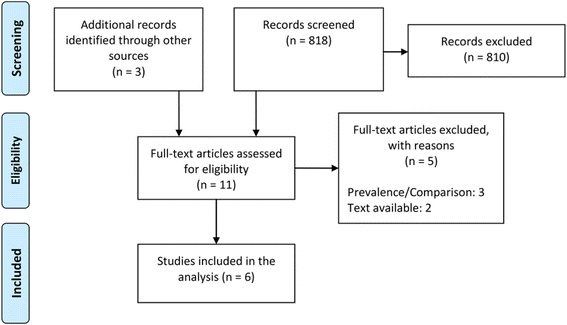
BACKGROUND: Our objective was to assess the frequency of data extraction errors and its potential impact on results in systematic reviews. Furthermore, we evaluated the effect of different extraction methods, reviewer characteristics and reviewer training on error rates and results. METHODS: We performed a systematic review of methodological literature in PubMed, Cochrane methodological registry, and by manual searches (12/2016). Studies were selected by two reviewers independently. Data were extracted in standardized tables by one reviewer and verified by a second. RESULTS: The analysis included six studies; four studies on extraction error frequency, one study comparing different reviewer extraction methods and two studies comparing different reviewer characteristics. We did not find a study on reviewer training. There was a high rate of extraction errors (up to 50%). Errors often had an influence on effect estimates. Different data extraction methods and reviewer characteristics had moderate effect on extraction error rates and effect estimates. CONCLUSION: The evidence base for established standards of data extraction seems weak despite the high prevalence of extraction errors. More comparative studies are needed to get deeper insights into the influence of different extraction methods.
Overview
CoChat Summary
TL;DR
This methodological review found a high prevalence of data extraction errors in systematic reviews, but these errors often had only moderate impact on pooled results or conclusions. Evidence comparing extraction methods and reviewer characteristics is sparse, and no studies on reviewer training were identified.
Key findings
- Across four frequency studies, extraction errors were common: Carroll et al. reported error rates of 8–42% depending on outcome/review, with small pooled effect differences (relative risk range 0.01–0.05); Gøtzsche et al. found at least one erroneous trial in 63% of 27 meta-analyses, and 70% of these also had an error in the pooled effect estimate; Jones et al. found errors in half of 42 Cochrane reviews, approximately 23% of which were misinterpretations, with all data-handling errors changing summary results but none affecting review conclusions.
- Tendal et al. found reviewer agreement of 53% at the trial level and 31% at the meta-analysis level; at the meta-analysis level, the difference in standardized mean difference was at least 1 in one of ten meta-analyses.
- Buscemi et al. compared double independent extraction with one reviewer plus verification: agreement was 28%; the total error rate risk difference was 21.7% (p = 0.019) favoring double extraction; inaccuracy risk difference was 52.9% (p = 0.308); double extraction took 49 min longer; pooled effect estimates did not differ statistically significantly from the reference standard in any of 6 meta-analyses.
- Horton et al. found similar error rates across experience levels (median total errors 24.3–26.4%, inaccuracy 13.6–15.7%, omission 10.0–12.1%; p-values >0.2), though inexperienced reviewers required more time (range 173–211); Tendal et al. found experienced methodologists agreed more than PhD students (61% vs 46% of trials; 33% vs 27% of meta-analyses). No studies on reviewer training were identified.
Methods
- Design: methodological review searching PubMed and the Cochrane Methodology Register (12/2016), Cochrane Colloquium abstracts since 2009, Cochrane oral/poster/workshop presentations since 1994, reference lists, and PubMed related articles.
- Eligibility: studies on frequency of data extraction errors or comparisons of extraction methods, reviewer characteristics, or reviewer training; required a quantitative error measure against a reference standard; intervention reviews in English or German; technical tools were excluded.
- Analysis: screening and data extraction used a semi-structured template; one experienced statistician extracted data and a second experienced epidemiologist verified accuracy; synthesis was narrative. Six studies were included: four on error frequency, one comparing extraction methods, and two comparing reviewer characteristics (Tendal et al. included in both); no training studies were identified.
Limitations
- Stated: no formal risk-of-bias assessment was performed because no established tool exists for methodological studies; reference standards in included studies were imperfect (e.g., Jones et al. used only one statistician; Carroll et al. used their own systematic review as reference); most studies addressed only a certain patient/intervention/comparison question, so generalizability is unclear; unspecific search terms with field limitations may have missed relevant articles; computer-aided extraction approaches were not investigated.
- Evident from the text: only six studies were included, comparative evidence on extraction methods and reviewer characteristics is sparse, and no studies on reviewer training were identified, limiting conclusions about training and method effects.
Model-written summary. Check it against the paper before relying on it.
Integrity signals
Registry
Cites
Statistics
Figures
Verification
Claims the paper makes
11 Valid · 8 Not valid · 11 Not checked · 24 Own results and interpretations
At least one cited source doesn’t support this claim or points to a different paper, and none confirmed it — see the verdicts below.
In the paper
“The rate of data extraction errors ranged between 8% and 42% (depending on outcome and review).”
What the sources say
- Disputedcites [16] Carroll C, Scope A, Kaltenthaler E: A case study of binary outcome data extraction across three systematic reviews of hip arthroplasty: errors and differences of selection. BMC research notes. 2013;6:539. PMC3878552 24344873 sourceExperimental — accuracy not yet measured
The Results distinguish extraction errors from differences caused by data selection. Error rates ranged from 8% to 17% across the outcomes and reviews; 42% was a data-selection figure for the 1-year mortality outcome, not an error rate. (LLM, conf=0.94)
Checked by a reasoning model — may be wrong.
plainstates an association- Asserted: passes — The authors put it forward as true.
- Checkable: passes — It can be checked against evidence.
- Load-bearing: passes — The paper’s conclusions depend on it.
- Based: passes — The paper gives a reason why it holds.
- Disputed
Some cited sources support this claim and some don’t — read each source’s verdict below.
In the paper
“There is a high prevalence of extraction errors [ 8 , 13 , 15 , 16 ].”
- Also stated in: § Conclusion · plain
“There is a high prevalence of extraction errors.”
What the sources say
- Not checked — no full text of the sourcecites [8] Gøtzsche PC Hróbjartsson A Marić K Tendal B Data extraction errors in meta-analyses that use standardized mean differences JAMA 2007 298 4 430 437 10.1001/jama.298.4.430 17652297 source
- Not checked — no full text of the sourcecites [13] Haywood KL Hargreaves J White R Lamb SE Reviewing measures of outcome: reliability of data extraction J Eval Clin Pract 2004 10 329 337 10.1111/j.1365-2753.2003.00411.x 15189399 source
- Disputedcites [15] Tendal B, Higgins JP, Juni P, Hrobjartsson A, Trelle S, Nuesch E, Wandel S, Jorgensen AW, Gesser K, Ilsoe-Kristensen S et al: Disagreements in meta-analyses using outcomes measured on continuous or rating scales: observer agreement study. In: Bmj. vol. 339; 2009: b3128. PMC2726927 19679616 sourceExperimental — accuracy not yet measured
The Results (Agreement at trial level; page unavailable) say data extraction errors were less common causes of disagreement than differing choices or trial exclusions. The paper reports substantial disagreement between observers, but does not equate that disagreement with a high prevalence of extraction errors. (LLM, conf=0.84)
Checked by a reasoning model — may be wrong.
- Partly supportedcites [16] Carroll C, Scope A, Kaltenthaler E: A case study of binary outcome data extraction across three systematic reviews of hip arthroplasty: errors and differences of selection. BMC research notes. 2013;6:539. PMC3878552 24344873 sourceExperimental — accuracy not yet measured
The Background reports that earlier studies found extraction errors could occur frequently, including errors in 20 of 34 reviews. But the Discussion says the incidence was low in this paper’s small case study—usually no more than 8% of the data—and cautions that its findings are not generalisable. The unqualified claim of high prevalence therefore overstates what this source establishes. (LLM, conf=0.86)
plain- Asserted: passes — The authors put it forward as true.
- Checkable: passes — It can be checked against evidence.
- Load-bearing: passes — The paper’s conclusions depend on it.
- Based: passes — The paper gives a reason why it holds.
- Also stated in: § Conclusion · plain
The sources with a verdict support this claim; the rest weren’t checked yet, have no full text we could read, or their verdicts aren’t rated yet.
In the paper
“For example, a study on the influence of searching multiple databases found only a weak impact of reducing the number of searched databases (because of not searching additional databases) on the results of meta-analysis and review conclusions [ 18 , 25 ].”
What the sources say
- Supportedcites [18] Hartling L Featherstone R Nuspl M Shave K Dryden DM Vandermeer B The contribution of databases to the results of systematic reviews: a cross-sectional study BMC Med Res Methodol 2016 16 1 127 10.1186/s12874-016-0232-1 27670136 PMC5037618 source
The Discussion (page not provided) reports that restricting searches to a limited number of databases left most meta-analysis results unchanged; changes in statistical significance were very rare. This supports the claim of a generally small impact on results and conclusions, within the database combinations the study examined. (LLM, conf=0.86)
- Not checked — no full text of the sourcecites [25] Halladay CW Trikalinos TA Schmid IT Schmid CH Dahabreh IJ Using data sources beyond PubMed has a modest impact on the results of systematic reviews of therapeutic interventions J Clin Epidemiol 2015 68 9 1076 1084 10.1016/j.jclinepi.2014.12.017 26279401 source
plain- Asserted: passes — The authors put it forward as true.
- Checkable: passes — It can be checked against evidence.
- Load-bearing: unclear — It is unclear whether the paper’s conclusions depend on it.
- Based: passes — The paper gives a reason why it holds.
- Supported
The cited sources support only part of this claim — read each source’s verdict below.
In the paper
“At the level of meta-analysis the difference in standardized mean difference (SMD) was at least 1 in one of ten meta-analyses.”
What the sources say
- Partly supportedcites [15] Tendal B, Higgins JP, Juni P, Hrobjartsson A, Trelle S, Nuesch E, Wandel S, Jorgensen AW, Gesser K, Ilsoe-Kristensen S et al: Disagreements in meta-analyses using outcomes measured on continuous or rating scales: observer agreement study. In: Bmj. vol. 339; 2009: b3128. PMC2726927 19679616 sourceExperimental — accuracy not yet measured
The Results section (‘Agreement at meta-analysis level’; page unavailable) reports SMD disagreements of at least 1 in 10% of observer-pair comparisons across the meta-analyses. The claim correctly identifies the size of the disagreement but incorrectly treats that percentage of comparisons as one of the ten meta-analyses. (LLM, conf=0.89)
plain- Asserted: passes — The authors put it forward as true.
- Checkable: passes — It can be checked against evidence.
- Load-bearing: unclear — It is unclear whether the paper’s conclusions depend on it.
- Based: passes — The paper gives a reason why it holds.
- Partly supported
Every source the paper cites for this claim was checked and supports it.
In the paper
“These large differences might cause significant difference in effect estimates [ 15 ].”
What the sources say
- Supportedcites [15] Tendal B, Higgins JP, Juni P, Hrobjartsson A, Trelle S, Nuesch E, Wandel S, Jorgensen AW, Gesser K, Ilsoe-Kristensen S et al: Disagreements in meta-analyses using outcomes measured on continuous or rating scales: observer agreement study. In: Bmj. vol. 339; 2009: b3128. PMC2726927 19679616 source
The Results (Agreement at meta-analysis level) report that different observers’ calculations changed some pooled effect estimates and, in some cases, whether results were statistically significant. The Discussion describes the disagreements as common and often large. (LLM, conf=0.92)
hedgedstates a possible cause- Asserted: passes — The authors put it forward as true.
- Checkable: passes — It can be checked against evidence.
- Load-bearing: passes — The paper’s conclusions depend on it.
- Based: passes — The paper gives a reason why it holds.
- Supported
27 more claims · 9 with their cited sources checked
Create a free account to see all 54 claims and every source verdict.
- It may state two separate claims as one. 8
- Probably not a substantial claim. 18
Claims other papers make about this one
Each is checked against this paper’s own text: does it say what the citing paper says it does?
The source backs part of the claim, not all of it — or backs it for a different population, condition or comparison.
In the citing paper
“The error rate varied depending on the type and complexity of the data.[3, 4]”
From Artificial Intelligence–Assisted Data Extraction With a Large Language Model: A Study Within Reviews (2025) · cites this paper as [3]
Experimental — accuracy not yet measuredThe source backs part of the claim, not all of it — or backs it for a different population, condition or comparison.
In the citing paper
“A methodology review has revealed a high rate of data extraction errors (up to 63%) in systematic reviews.[3]”
From Artificial Intelligence–Assisted Data Extraction With a Large Language Model: A Study Within Reviews (2025) · cites this paper as [3]
Experimental — accuracy not yet measuredThe source backs part of the claim, not all of it — or backs it for a different population, condition or comparison.
In the citing paper
“Despite these quality-control measures, the processes can still be prone to error [10].”
From Artificial Intelligence to Automate Network Meta-Analyses: Four Case Studies to Evaluate the Potential Application of Large Language Models (2024) · cites this paper as [10]
Experimental — accuracy not yet measuredThe source backs part of the claim, not all of it — or backs it for a different population, condition or comparison.
In the citing paper
“This level of performance exceeds the performance seen for human data extraction, where between 8 and 42% of data extraction errors have been observed [10].”
From Artificial Intelligence to Automate Network Meta-Analyses: Four Case Studies to Evaluate the Potential Application of Large Language Models (2024) · cites this paper as [10]
Experimental — accuracy not yet measuredThe cited source says what the claim attributes to it.
In the citing paper
“Empirical evidence suggests that the effect of data extraction error seems to be minor. 3 5”
From Validity of data extraction in evidence synthesis practice of adverse events: reproducibility study (2022) · cites this paper as [3]
4 more claims about this paper
Create a free account to see every claim other papers make about this one.
Self-check
Percentages, sums and reported differences re-computed from the paper’s own numbers.
Each contradiction between two passages listed here was confirmed by an independent check.
Rated minor: it would not touch a result — a value no result rests on, a p-value that stays on the same side of the significance level, or a conflict that is clerical, resolved elsewhere in the paper, or outside its own findings.
In the paper
“Buscemi et al. [ 18 ] compared data extraction of 30 randomized controlled trials by two independent reviewers with data extraction by one reviewer and verification by a second.”
“one study comparing different reviewer extraction methods [ 9 ]”
Citations
Cites
Guidance for conducting systematic scoping reviews
Peters, M. D. J., Godfrey, C. M., Khalil, H., McInerney, P., Parker, D., & Soares, C. B. (2015) · International Journal of Evidence-Based Healthcare · doi:10.1097/xeb.0000000000000050 · Cited by 7,472
The Joanna Briggs Institute reviewers' manual 2015: methodology for JBI scoping reviews
Peters, M. D. J., Godfrey, C. M., McInerney, P. A., Soares, C. B., Khalil, H., & Parker, D. (2015) · Cited by 1,135
Expediting systematic reviews: methods and implications of rapid reviews
Ganann, R., Ciliska, D., & Thomas, H. (2010) · Implementation Science · doi:10.1186/1748-5908-5-56 · Cited by 752 · cited 2×
“As the timely preparation and publication of SR is an important goal to support decision making considerations on the balance between resources/time and validity play an important role [7].”
BackgroundSingle data extraction generated more errors than double data extraction in systematic reviews
Buscemi, N., Hartling, L., Vandermeer, B., Tjosvold, L., & Klassen, T. P. (2006) · Journal of Clinical Epidemiology · doi:10.1016/j.jclinepi.2005.11.010 · Cited by 464 · cited 5×
“Buscemi 2006 [9] One reviewer verification by a second Two reviewers independently Extraction by one reviewer and verification by an experienced statistician N = 30 (6 meta-analysis)”
BackgroundMethodResultInfluentialZaza, S., Wright-De Agüero, L. K., Briss, P. A., Truman, B. I., Hopkins, D. P., Hennessy, M. H., Sosin, D. M., Anderson, L., Carande-Kulis, V. G., Teutsch, S. M., et al. (2000) · American Journal of Preventive Medicine · doi:10.1016/s0749-3797(99)00122-1 · Cited by 464
Finding What Works in Health Care: Standards for Systematic Reviews
Committee on Standards for Systematic Reviews of Comparative Effectiveness Research, Board on Health Care Services, & Institute of Medicine (2011) · doi:10.17226/13059 · Cited by 289
Automating data extraction in systematic reviews: a systematic review
Jonnalagadda, S. R., Goyal, P., & Huffman, M. D. (2015) · Systematic Reviews · doi:10.1186/s13643-015-0066-7 · Cited by 287 · cited 1×
“Biomedical natural language processing techniques will be developed further in the near future [27].”
BackgroundData Extraction Errors in Meta-analyses That Use Standardized Mean Differences
Gøtzsche, P. C., Hróbjartsson, A., Marić, K., & Tendal, B. (2007) · JAMA · doi:10.1001/jama.298.4.430 · Cited by 238 · cited 8×
“[8] replicated the results of 27 metaanalyses.”
BackgroundInfluentialBias in meta-analytic research
Felson, D. T. (1992) · Journal of Clinical Epidemiology · doi:10.1016/0895-4356(92)90072-u · Cited by 231 · cited 1×
“unclear inclusion criteria), in the data collection process and in the validity assessment of included studies [2].”
BackgroundPublishing Protocols of Systematic Reviews: Comparing What Was Done to What Was Planned
Silagy, C. A., Middleton, P., & Hopewell, S. (2002) · JAMA · doi:10.1001/jama.287.21.2831 · Cited by 188 · cited 1×
“time points, measures) and omission would be reduced [15, 22].”
Background
Research works printed but not linked: 1
- Joanna Briggs Institute. Reviewers’ manual: 2011 edition. Adelaide: JBI; 2014.
Cited by
Gates, M., Gates, A., Pieper, D., Fernandes, R. M., Tricco, A. C., Moher, D., Brennan, S. E., Li, T., Pollock, M., Lunny, C., et al. (2022) · BMJ · doi:10.1136/bmj-2022-070849 · Cited by 856
Self-citationWaffenschmidt, S., Knelangen, M., Sieben, W., Bühn, S., & Pieper, D. (2019) · BMC Medical Research Methodology · doi:10.1186/s12874-019-0782-0 · Cited by 626
Self-citationLunny, C., Pieper, D., Thabet, P., & Kanji, S. (2021) · BMC Medical Research Methodology · doi:10.1186/s12874-021-01269-y · Cited by 252
Self-citationKusmaryono, I., Wijayanti, D., & Maharani, H. R. (2022) · International Journal of Educational Methodology · doi:10.12973/ijem.8.4.625 · Cited by 283
“Then, the researcher changed the data obtained into new data by filtering the data into several categories (Mathes et al., 2017; Munn et al., 2014; Pedder et al., 2016; Schmidt et al., 2021).”
InfluentialMenopausal hormone therapy and women’s health: An umbrella review
Zhang, G.-Q., Chen, J.-L., Luo, Y., Mathur, M. B., Anagnostis, P., Nurmatov, U., Talibov, M., Zhang, J., Hawrylowicz, C. M., Lumsden, M. A., et al. (2021) · PLOS Medicine · doi:10.1371/journal.pmed.1003731 · Cited by 208
“…(e.g., incomplete data, poor data quality) in a sample of included meta-analyses [25–28] as well as the high prevalence of data extraction errors from empirical evaluations [29], we devoted extensive efforts to obtaining and validating the data for the individual studies in each meta-analysis.”
MethodDzakpasu, F. Q. S., Carver, A., Brakenridge, C. J., Cicuttini, F., Urquhart, D. M., Owen, N., & Dunstan, D. W. (2021) · International Journal of Behavioral Nutrition and Physical Activity · doi:10.1186/s12966-021-01191-y · Cited by 210
Data extraction for evidence synthesis using a large language model: A proof-of-concept study
Gartlehner, G., Kahwati, L., Hilscher, R., Thomas, I., Kugley, S., Crotty, K., Viswanathan, M., Nussbaumer‐Streit, B., Booth, G., Erskine, N., et al. (2024) · Research Synthesis Methods · doi:10.1002/jrsm.1710 · Cited by 164
A tutorial on methodological studies: the what, when, how and why
Mbuagbaw, L. C. E., Lawson, D. O., Puljak, L., Allison, D. B., & Thabane, L. (2020) · BMC Medical Research Methodology · doi:10.1186/s12874-020-01107-7 · Cited by 204
Clinical risk factors for Achilles tendinopathy: a systematic review
van der Vlist, A. C., Breda, S. J., Oei, E. H. G., Verhaar, J. A. N., & de Vos, R. (2019) · British Journal of Sports Medicine · doi:10.1136/bjsports-2018-099991 · Cited by 213
Büchter, R. B., Weise, A., & Pieper, D. (2020) · BMC Medical Research Methodology · doi:10.1186/s12874-020-01143-3 · Cited by 151
“Studies on the prevalence and impact of data extraction errors have recently been summarised by Mathes and colleagues [5].”
BackgroundSelf-citationThomas, G., Bennie, J. A., De Cocker, K., Castro, O., & Biddle, S. J. H. (2020) · Child Indicators Research · doi:10.1007/s12187-019-09663-1 · Cited by 139
“Data extraction was performed in duplicate for accuracy (Mathes et al. 2017) and available in Online Resource 3.”
MethodNußbaumer-Streit, B., Sommer, I., Hamel, C., Devane, D., Noel-Storr, A. H., Puljak, L., Trivella, M., & Gartlehner, G. (2023) · BMJ Evidence-Based Medicine · doi:10.1136/bmjebm-2022-112185 · Cited by 134
“38 To reduce the time spent during data verification, it is helpful for the initial extractor to highlight the extracted data in the electronic versions of the included papers.”
Resource use during systematic review production varies widely: a scoping review
Nussbaumer-Streit, B., Ellen, M., Klerings, I., Sfetcu, R., Riva, N., Mahmić-Kaknjo, M., Poulentzas, G., Martinez, P., Baladia, E., Ziganshina, L. E., et al. (2021) · Journal of Clinical Epidemiology · doi:10.1016/j.jclinepi.2021.05.019 · Cited by 98
“Characteristics of the included studies Thirty-two studies contributed to KQ1 and reported on resource use, mostly on time spent (9, 2339, 41-46, 48-59).”
BackgroundNtinopoulos, V., Biefer, H. R. C., Tudorache, I., Papadopoulos, N., Odavic, D., Risteski, P. S., Haeussler, A., & Dzemali, O. (2025) · BMJ Health & Care Informatics · doi:10.1136/bmjhci-2024-101139 · Cited by 132
“OD: conceptualisation, resources, writing – review and editing, supervision, project administration, guarantor.”
Robson, R. C., Pham, B., Hwee, J., Thomas, S. M., Rios, P., Page, M. J., & Tricco, A. C. (2019) · Journal of Clinical Epidemiology · doi:10.1016/j.jclinepi.2018.10.003 · Cited by 86
“568 [16] Mathes T, Klassen P, Pieper D.”
BackgroundMethodInfluentialValidity of data extraction in evidence synthesis practice of adverse events: reproducibility study
Xu, C., Yu, T., Furuya-Kanamori, L., Lin, L., Zorzela, L., Zhou, X., Dai, H., Loke, Y., & Vohra, S. (2022) · BMJ · doi:10.1136/bmj-2021-069155 · Cited by 82
Cognitive ability and risk aversion: A systematic review and meta analysis
Lilleholt, L. (2019) · Judgment and Decision Making · doi:10.1017/s1930297500004307 · Cited by 102
Performance of two large language models for data extraction in evidence synthesis
Konet, A., Thomas, I., Gartlehner, G., Kahwati, L., Hilscher, R., Kugley, S., Crotty, K., Viswanathan, M., & Chew, R. (2024) · Research Synthesis Methods · doi:10.1002/jrsm.1732 · Cited by 79
Reason, T., Benbow, E., Langham, J., Gimblett, A., Klijn, S. L., & Malcolm, B. (2024) · PharmacoEconomics - Open · doi:10.1007/s41669-024-00476-9 · Cited by 71
“This level of performance exceeds the performance seen for human data extraction, where between 8 and 42% of data extraction errors have been observed [10].”
BackgroundCowie, K., Rahmatullah, A., Hardy, N., Holub, K., & Kallmes, K. (2022) · JMIR Medical Informatics · doi:10.2196/33219 · Cited by 68
“This is a deep problem in the methods of review, as the error rate for manual extraction without dual extraction is highly variable and has even reached 50% in independent tests [16].”
BackgroundMethodCramond, F., O’Mara-Eves, A., Doran-Constant, L., Rice, A. S. C., Macleod, M. R., & Thomas, J. (2018) · Wellcome Open Research · doi:10.12688/wellcomeopenres.14738.3 · Cited by 74
Li, T., Saldanha, I. J., Jap, J., Smith, B. T., Canner, J., Hutfless, S. M., Branch, V., Carini, S., Chan, W., de Bruijn, B., et al. (2019) · Journal of Clinical Epidemiology · doi:10.1016/j.jclinepi.2019.07.005 · Cited by 54
Cramond, F., O’Mara-Eves, A., Doran-Constant, L., Rice, A. S. C., Macleod, M. R., & Thomas, J. (2018) · Wellcome Open Research · doi:10.12688/wellcomeopenres.14738.1 · Cited by 49
Patel, R., Ucer, C., Wright, S., & Khan, R. S. (2023) · Dentistry Journal · doi:10.3390/dj11090218 · Cited by 58
“Such rigour was essential to minimising the risk of extraction errors, which have been found to occur with high prevalence and lead to biased outcome effects in previously published reviews [18].”
ResultHaby, M. M., Barreto, J. O. M., Kim, J. Y. H., Peiris, S., Mansilla, C., Torres, M., Guerrero‐Magaña, D. E., & Revéiz, L. (2023) · Research Synthesis Methods · doi:10.1002/jrsm.1664 · Cited by 53
“The systematic reviews most commonly covered one particular review stage ( n = 12), including aspects of the inclusion criteria, 27,34,37 searching, 27,34,37 selection, 35,39 data extraction, 31,36 or RoB assessment.”
BackgroundResultQuestions and answers about conducting systematic reviews in sport and exercise psychology
Gunnell, K., Poitras, V. J., & Tod, D. (2020) · International Review of Sport and Exercise Psychology · doi:10.1080/1750984x.2019.1695141 · Cited by 45
Methods for using Bing’s AI-powered search engine for data extraction for a systematic review
Hill, J. E., Harris, C., & Clegg, A. (2024) · Research Synthesis Methods · doi:10.1002/jrsm.1689 · Cited by 45
“6 Natural language processing (NLP) artificial intelligence (AI) techniques hold significant potential in revo-lutionising data extraction for systematic reviews.”
BackgroundLong-Term Health Symptoms and Sequelae Following SARS-CoV-2 Infection: An Evidence Map
Franco, J. V. A., Garegnani, L., Oltra, G. V., Metzendorf, M., Trivisonno, L. F., Sgarbossa, N. J., Ducks, D., Heldt, K., Mumm, R., Barnes, B., et al. (2022) · International Journal of Environmental Research and Public Health · doi:10.3390/ijerph19169915 · Cited by 48
“Another limitation arose due to the fact that, due to a large number of studies, we had to rely on one data-extractor per study, which may lead to coding errors; nevertheless, we took precautions, including the independent data extraction for calibration of a sample of 10% of included studies and a double-check proces…”
Effect Sizes, Power, and Biases in Intelligence Research: A Meta-Meta-Analysis
Nuijten, M. B., van Assen, M. A. L. M., Augusteijn, H. E. M., Crompvoets, E. A. V., & Wicherts, J. M. (2020) · Journal of Intelligence · doi:10.3390/jintelligence8040036 · Cited by 45
Testa, L., Seah, R., Ludlow, K., Braithwaite, J., & Mitchell, R. J. (2019) · Geriatric Nursing · doi:10.1016/j.gerinurse.2019.02.001 · Cited by 38
Chang, J. R., Wang, X., Lin, G., Samartzis, D., Pinto, S. M., & Wong, A. Y. L. (2021) · Clinical Journal of Pain · doi:10.1097/ajp.0000000000001008 · Cited by 49
A systematic review of physical–digital play technology and developmentally relevant child behaviour
Torres, P. E., Ulrich, P., Cucuiat, V., Cukurova, M., la Presa, M. C. F. D., Luckin, R., Carr, A., Dylan, T., Durrant, A. C., Vines, J., et al. (2021) · International Journal of Child-Computer Interaction · doi:10.1016/j.ijcci.2021.100323 · Cited by 98
Blakeney, E. A., Chu, F., White, A. A., Smith, G. R., Woodward, K. F., Lavallee, D. C., Salas, R. M. E., Beaird, G., Willgerodt, M. A., Dang, D., et al. (2021) · Journal of Interprofessional Care · doi:10.1080/13561820.2021.1980379 · Cited by 49
“To mitigate bias and error, the lead author cross-checked a sample of abstractions (more than 25% of included articles; Mathes et al., 2017).”
MethodHarris, R. G., Neale, E. P., & Ferreira, I. (2019) · The American Journal of Clinical Nutrition · doi:10.1093/ajcn/nqz071 · Cited by 38
Forte, A. M., Pompili, M., Imbastaro, B., Luca, G. P. D., Mastrangelo, M., Montalbani, B., & Baldessarini, R. J. (2021) · Journal of Psychopharmacology · doi:10.1177/02698811211029738 · Cited by 43
“Also, less experienced reviewers were initially trained in study selection and data extraction by a more experienced investigator to avoid errors and maximize inter-rater agreement (Mathes et al., 2017).”
BackgroundGartlehner, G., Kahwati, L. C., Nußbaumer-Streit, B., Crotty, K., Hilscher, R., Kugley, S., Viswanathan, M., Thomas, I., Konet, A., Booth, G., et al. (2024) · BMJ Evidence-Based Medicine · doi:10.1136/bmjebm-2024-113199 · Cited by 49
Aly, A. S., Mamikutty, R., & Marhazlinda, J. (2022) · Children · doi:10.3390/children9111678 · Cited by 57
“, patients characteristics and added outcomes) [49,50].”
The Problem-Based Learning Approach towards Developing Soft Skills: A Systematic Review
Deep, S., Ahmed, A., Suleman, N., Abbas, M. Z., Naza, U., Shaheen, H., & Razzaq, A. (2020) · The Qualitative Report · doi:10.46743/2160-3715/2020.4114 · Cited by 104
“Extracting any type of data from primary studies into any form of standardized tables can be defined as the process of data extraction (Mathes et al., 2017).”
BackgroundAndersen, T. H., Marcussen, T. M., Termannsen, A., Lawaetz, T. W. H., & Nørgaard, O. (2025) · Cochrane Evidence Synthesis and Methods · doi:10.1002/cesm.70036 · Cited by 63
An overview of methodological approaches in systematic reviews
Veginadu, P., Calache, H., Gussy, M. G., Pandian, A., & Masood, M. (2022) · Journal of Evidence-Based Medicine · doi:10.1111/jebm.12468 · Cited by 74
Automation of Systematic Reviews with Large Language Models
Cao, C., Arora, R., Cento, P., Budak, A., Manta, K., Farahani, E., Cecere, M., Selemon, A., Sang, J., Gong, L. X., et al. (2025) · medRxiv · doi:10.1101/2025.06.13.25329541 · Cited by 33
Goldsworthy, S., Palmer, S., Latour, J. M., McNair, H. A., & Cramp, M. (2020) · Radiography · doi:10.1016/j.radi.2020.03.002 · Cited by 30
Artificial Intelligence–Assisted Data Extraction With a Large Language Model: A Study Within Reviews
Gartlehner, G., Kugley, S., Crotty, K., Viswanathan, M., Dobrescu, A., Nussbaumer-Streit, B., Booth, G., Treadwell, J. R., Han, J. M., Wagner, J., et al. (2025) · Annals of Internal Medicine · doi:10.7326/annals-25-00739 · Cited by 36
A Systematic Review and Meta-Analysis of the Association Between Perceived Injustice and Depression
Lynch, J., Fox, S., D’Alton, P., & Gaynor, K. (2021) · Journal of Pain · doi:10.1016/j.jpain.2020.12.009 · Cited by 31
Ndu, M. N., Andoniou, E., McNally, S., Olea‐Popelka, F. J., Tippett, M., & Nouvet, É. (2022) · Global Health Action · doi:10.1080/16549716.2022.2138117 · Cited by 48
“This was done using a partial double extraction process to reduce errors during the process [20,21].”
MethodABLE: Meta-Path Prediction in Heterogeneous Information Networks
Huang, C., Fang, Y., Lin, X., Cao, X., & Zhang, W. (2022) · ACM Transactions on Knowledge Discovery from Data · doi:10.1145/3494558 · Cited by 29
Wong, T. S. M., & Shorey, S. (2022) · Journal of Pediatric Nursing · doi:10.1016/j.pedn.2022.09.004 · Cited by 47
Difonzo, M. (2019) · Critical Care Research and Practice · doi:10.1155/2019/6902420 · Cited by 48
“Nonetheless, a recent paper [91] reported the great prevalence of extraction errors in systematic reviews, although these errors seem to have only a moderate impact on the results and conclusion of the reviews.”
Büchter, R. B., Weise, A., & Pieper, D. (2021) · BMC Medical Research Methodology · doi:10.1186/s12874-021-01438-z · Cited by 40
“Several studies have shown that these are frequent in systematic reviews and can lead to relevant changes to meta-analytic point estimates [5].”
BackgroundSelf-citationAdvice for improving the reproducibility of data extraction in meta‐analysis
Ivimey‐Cook, E. R., Noble, D. W. A., Nakagawa, S., Lajeunesse, M. J., & Pick, J. L. (2023) · Research Synthesis Methods · doi:10.1002/jrsm.1663 · Cited by 28
Afifi, M., Stryhn, H., & Sánchez, J. (2023) · Systematic Reviews · doi:10.1186/s13643-023-02322-1 · Cited by 52
“Besides reviewing different methodological aspects of DE, e.g. the development and pilot testing of the DE forms [7–9], errors from flaws in the DE process have been evaluated [10–13].”
MethodCharacteristics of collaborative care networks in functional disorders: A systematic review
Mamo, N., van de Klundert, M. A. W., Tak, L. M., Hartman, T. O., Hanssen, D. J. C., & Rosmalen, J. G. M. (2023) · Journal of Psychosomatic Research · doi:10.1016/j.jpsychores.2023.111357 · Cited by 23
Gates, A., Gates, M., Sim, S., Elliott, S. A., Pillay, J., & Hartling, L. (2021) · BMC Medical Research Methodology · doi:10.1186/s12874-021-01354-2 · Cited by 28
Nabeel, A., Al-Sabah, S. K., & Ashrafian, H. (2021) · Surgical Endoscopy · doi:10.1007/s00464-021-08519-6 · Cited by 25
“To avoid or attenuate the risk of data extraction errors that have previously compromised the credibility of several published systematic reviews, data from eligible articles was extracted by the utilisation of systematic pro formas developed and provided by the Cochrane Collaboration in their Handbook for conducting…”
MethodJap, J., Saldanha, I. J., Smith, B. T., Lau, J., Schmid, C. H., Li, T., & on behalf of the Data Abstraction Assistant Investigators (2018) · Research Synthesis Methods · doi:10.1002/jrsm.1326 · Cited by 20
“In this paper, we describe (1) the features and functioning of Data Abstraction Assistant (DAA), a free, open‐source, open‐access software application to facilitate tracking the location of abstracted information in source documents, with the potential to reduce errors and time spent during data abstraction in systema…”
BackgroundMethodResultInfluentialMicroplastics could be marginally more hazardous than natural suspended solids – A meta-analysis
Ogonowski, M., Wagner, M., Rogell, B., Haave, M., & Lusher, A. (2023) · Ecotoxicology and Environmental Safety · doi:10.1016/j.ecoenv.2023.115406 · Cited by 20
ROBOTIC PROCESS AUTOMATION FOR DOCUMENT PROCESSING: A CASE STUDY OF A LOGISTICS SERVICE PROVIDER
Gružauskas, V., & Ragavan, D. (2020) · Journal of Management · doi:10.38104/vadyba.2020.2.16 · Cited by 18
Xu, C., Doi, S. A. R., Zhou, X., Lin, L., Furuya‐Kanamori, L., & Tao, F. (2022) · Sleep Medicine Reviews · doi:10.1016/j.smrv.2022.101708 · Cited by 20
Puljak, L., Riva, N., Parmelli, E., González-Lorenzo, M., Moja, L., & Pieper, D. (2020) · Journal of Clinical Epidemiology · doi:10.1016/j.jclinepi.2019.09.003 · Cited by 16
“[5] indicated that extraction errors often have influence on the effect estimates.”
BackgroundSelf-citationPati, A. K., Tripathy, A. R., & Subudhi, S. (2025) · Measurement · doi:10.1016/j.measurement.2025.119122 · Cited by 28
Reason, T., Langham, J., & Gimblett, A. (2024) · Pharmaceutical Medicine · doi:10.1007/s40290-024-00539-6 · Cited by 16
“It is important to note, however, that human data extraction is also not error-free; several studies have reported high error rates, often involving misidentification or placing correct data in the wrong fields [29–31].”
BackgroundHow good are large language models for automated data extraction from randomized trials?Preprint
Sun, Z., Zhang, R., Doi, S. A. R., Furuya‐Kanamori, L., Yu, T., Lin, L., & Xu, C. (2024) · medRxiv · doi:10.1101/2024.02.20.24303083 · Cited by 26
“However, data extraction is time-intensive 15 and susceptive to human errors 16 .”
BackgroundBüchter, R. B., Rombey, T., Mathes, T., Khalil, H., Lunny, C., Pollock, D., Puljak, L., Tricco, A. C., & Pieper, D. (2023) · Journal of Clinical Epidemiology · doi:10.1016/j.jclinepi.2023.05.027 · Cited by 28
Self-citationValidation and usability study of the framework for a user needs-centered mHealth app selection
Lee, J., & Lee, M. A. (2022) · International Journal of Medical Informatics · doi:10.1016/j.ijmedinf.2022.104877 · Cited by 19
A new method for testing reproducibility in systematic reviews was developed, but needs more testing
Pieper, D., Heß, S., & Faggion, C. M. (2021) · BMC Medical Research Methodology · doi:10.1186/s12874-021-01342-6 · Cited by 21
Self-citationSercombe, J., Bryant, Z., & Wilson, J. (2025) · JMIR Formative Research · doi:10.2196/68666 · Cited by 16
“However, this research methodology often takes up significant time, and therefore can be costly, and is subject to human error [3-5].”
Rashid, M., Yi, C. S., Sathapanasiri, T., Udayachalerm, S., Boonpattharatthiti, K., Insuk, S., Veettil, S. K., Lai, N. M., Chaiyakunapruk, N., Dhippayom, T., et al. (2025) · Value in Health · doi:10.1016/j.jval.2025.07.001 · Cited by 26
Kendziora, B., & Dewey, M. (2020) · PLoS ONE · doi:10.1371/journal.pone.0228736 · Cited by 14
“This resulted in a higher likelihood of errors in these processes [5, 23].”
BackgroundLAIGNELOT, F., Martin, G. L., OSSMAN, M., Pingeon, O., BOUBAKER, A., PICOVSCHI, E., Jia, K. I. M., Tannier, X., Cohen, J. F., & Dechartres, A. (2026) · Journal of Clinical Epidemiology · doi:10.1016/j.jclinepi.2026.112221 · Cited by 39
Zhang, Y., Yang, X., & Xiong, C. (2021) · Acta Mechanica Sinica · doi:10.1007/s10409-021-01084-0 · Cited by 15
Daraqel, B., Owayda, A., Khan, H., Koletsi, D., & Mheissen, S. (2025) · Journal of Dentistry · doi:10.1016/j.jdent.2025.105846 · Cited by 17
Data Extraction for Evidence Synthesis Using a Large Language Model: A Proof-of-Concept StudyPreprint
Gartlehner, G., Kahwati, L. C., Hilscher, R., et al. (2023) · medRxiv · doi:10.1101/2023.10.02.23296415 · Cited by 13
Rethinking the production and publication of machine-readable expressions of research findings
Stocker, M., Snyder, L. D., Anfuso, M., Ludwig, O., Thießen, F., Farfar, K. E., Haris, M., Oelen, A., & Jaradeh, M. Y. (2025) · Scientific Data · doi:10.1038/s41597-025-04905-0 · Cited by 32
Calidad de vida del personal de salud durante la pandemia de COVID-19: revisión exploratoria
Wauters, M., Berra, T. Z., Crispim, J. D. A., Arcêncio, R. A., & Cartagena-Ramos, D. (2022) · Revista Panamericana de Salud Pública · doi:10.26633/rpsp.2022.30 · Cited by 36
“Un tercer revisor resolvió las discrepancias (17).”
Wu, S., Wang, J., Guo, Q., Lan, H., Zhang, J., Wang, L., Janne, E., Luo, X., Wang, Q., Song, Y., et al. (2021) · Intelligent Medicine · doi:10.1016/j.imed.2021.12.001 · Cited by 20
Psychological distress after subarachnoid haemorrhage: A systematic review and meta-analysis
Bartlett, M., Bulters, D. O., & Hou, R. H. (2021) · Journal of Psychosomatic Research · doi:10.1016/j.jpsychores.2021.110559 · Cited by 16
High Variability in Sepsis Guidelines in UK: Why Does It Matter?
Bray, A., Kampouraki, E., Winter, A., Jesuthasan, A., Messer, B., & Graziadio, S. (2020) · International Journal of Environmental Research and Public Health · doi:10.3390/ijerph17062026 · Cited by 13
“Our validation exercise demonstrated error rates lower than the majority reported in a recent review [38].”
MethodGeidl, W., Schlesinger, S., Mino, E., Miranda, L., Ryan, A., Bartsch, K. M., Janz, L., & Pfeifer, K. (2019) · BMJ Open · doi:10.1136/bmjopen-2018-028653 · Cited by 12
“To address extractor biases, we will use a double-check approach of data extraction, which has been proven to improve the extraction process.(27) 28 This review is limited to peer-reviewed published literature.”
MethodHilkenmeier, F., Pelzer, M., Stierle, C. M. G., & Fink‐Lamotte, J. (2025) · Social Science Computer Review · doi:10.1177/08944393251404052 · Cited by 23
Peng, Z., Wu, X., Qin, Z., Doi, S. A. R., Furuya‐Kanamori, L., Hong, Y., Lin, L., Chu, H., Xu, C., & Liu, M. (2025) · Sleep Medicine Reviews · doi:10.1016/j.smrv.2025.102192 · Cited by 16
Pendem, S., Jayakumar, N. K., Gopalakrishnan, S., & Arakeri, G. (2024) · British Journal of Oral and Maxillofacial Surgery · doi:10.1016/j.bjoms.2024.04.003 · Cited by 15
Gartlehner, G., Nußbaumer-Streit, B., Hamel, C., Garritty, C., Griebler, U., King, V. J., Devane, D., & Kamel, C. (2025) · Cochrane Evidence Synthesis and Methods · doi:10.1002/cesm.70063 · Cited by 20
Mangal, S., Pho, A. T., Arcia, A., & Carter, E. J. (2021) · The Joint Commission Journal on Quality and Patient Safety · doi:10.1016/j.jcjq.2021.05.009 · Cited by 26
Collaborative Large Language Models for Automated Data Extraction in Living Systematic Reviews
Khan, M. A., Ayub, U., Naqvi, S. A. A., Khakwani, K. Z. R., Sipra, Z. B. R., Raina, A., Zou, S., He, H., Hossein, S. A., Hasan, B., et al. (2024) · doi:10.1101/2024.09.20.24314108 · Cited by 54
“[11] Moreover, manual data extraction is cost-intensive, adding to the challenge of maintaining LSRs in a truly ‘living’ state.”
BackgroundWatroba, A., Luttinen, J., Lappalainen, P., Tolonen, J., & Ruotsalainen, H. (2023) · Journal of Occupational Therapy Schools & Early Intervention · doi:10.1080/19411243.2023.2224793 · Cited by 19
“As data extraction is a crucial step in conducting systematic reviews and the most critical task for the validity of the results of a systematic review (Mathes et al., 2017), this phase was done with care.”
Inaccuracy in the Scientific Record and Open Postpublication Critique
Brewin, C. R. (2023) · Perspectives on Psychological Science · doi:10.1177/17456916221141357 · Cited by 14
Systematic Reviews and Meta‐Analysis
Crombie, I. (2021) · Wiley eBooks · doi:10.1002/9781394322183.ch5 · Cited by 9
Hassen, J. Y., Debella, A., Eyeberu, A., & Mussa, I. (2024) · Scientific Reports · doi:10.1038/s41598-024-59534-1 · Cited by 10
Nivison, M. D., Fearon, P. R. M., Jenkins, J. M., & Madigan, S. L. (2026) · Journal of Child Psychology and Psychiatry · doi:10.1111/jcpp.70087 · Cited by 24
“Previous evidence (i.e., Mathes, Klaßen, & Pieper, 2017) has demonstrated that there is a high rate of inconsistency in effect size reporting across meta-analyses; therefore, when encountering duplicate studies, we strived to include the most accurately reported effect size.”
Rapid review: A review of methods and recommendations based on current evidence
Guo, Q., Jiang, G., Zhao, Q., Long, Y., Feng, K., Gu, X., Xu, Y., Li, Z., Huang, J., & Du, L. (2024) · Journal of Evidence-Based Medicine · doi:10.1111/jebm.12594 · Cited by 8
“However, its effect might be influenced by various confounding factors, such as the levels of expertise, different academic background and responsibility of the extractor, 214 and there was limited research on assessing its influence, 214 so further validation would be needed in the future.”
BackgroundMain, P. A. E., & Anderson, S. (2022) · JMIR Research Protocols · doi:10.2196/28625 · Cited by 7
“Data extraction by a single reviewer results in considerable time saving and has little impact on the conclusions [6].”
BackgroundThe diagnostic value of physical examination tests in adhesive capsulitis: a systematic review
Schiltz, M., Goudman, L., Moens, M., Nijs, J., & Hatem, S. M. (2023) · European Journal of Physical and Rehabilitation Medicine · doi:10.23736/s1973-9087.23.07940-6 · Cited by 15
Large language model-generated clinical practice guideline for appendicitis
Boyle, A., Huo, B., Sylla, P. A., Calabrese, E., Kumar, S. S., Slater, B. J., Walsh, D. S., & Vosburg, R. W. (2025) · Surgical Endoscopy · doi:10.1007/s00464-025-11723-3 · Cited by 12
“Although LLMs may miss a small proportion of data items, investigations into levels of human error suggest LLMs are comparable to, if not more accurate than, manual extraction [30, 31].”
Tang, L., Wang, R., Doi, S. A. R., Furuya‐Kanamori, L., Lin, L., Qin, Z., Tao, F., & Xu, C. (2024) · Postgraduate Medical Journal · doi:10.1093/postmj/qgae195 · Cited by 10
Zhou, X., Li, L., Lin, L., Ju, K., Kwong, J. S., & Xu, C. (2021) · BMC Medical Research Methodology · doi:10.1186/s12874-021-01423-6 · Cited by 9
Cramond, F., O’Mara-Eves, A., Doran-Constant, L., Rice, A. S. C., Macleod, M. R., & Thomas, J. (2019) · Wellcome Open Research · doi:10.12688/wellcomeopenres.14738.2 · Cited by 7
Accuracy of LLMs to retrieve numeric data for meta-analysis in dentistry
Caponio, V. C. A., Lorenzo‐Pouso, A. I., Magalhães, M. A. O., Ali, A. A., Adamo, D., Cirillo, N., López‐Pintor, R. M., & Musella, G. (2025) · Journal of Dentistry · doi:10.1016/j.jdent.2025.106245 · Cited by 13
Ikwue, U., Eyo-Udo, N. L., Onunka, O., Ekwezia, A. V., Nwankwo, E. E., & Daraojimba, C. (2023) · Agriculture Extension in Developing Countries · doi:10.26480/aedc.02.2023.78.88 · Cited by 10
Gillespie, C. S., Khanna, S., Vivian, M. E., McKoy, S., Touzet, A. Y., Edlmann, E., Stubbs, D. J., & Davies, B. M. (2023) · PLoS ONE · doi:10.1371/journal.pone.0283958 · Cited by 6
Metadata
- Authors
- Mathes, T., Klaßen, P., & Pieper, D.
- Affiliations
- Witten/Herdecke University (DE)
- Corresponding author
- Mathes, Tim
- Venue
- BMC Medical Research Methodology
- Published
- 2017-11-28
- Volume
- 17
- Issue
- 1
- Pages
- 152-152
- ISSN
- 1471-2288 (ISSN-L)
- PMC
- PMC5704562
- OpenAlex
- W2770117783
- Semantic Scholar
- 2e568c5ee173d547bfe6467fd01213750559649e
- Cited by
- 240
- References
- 24
- Citations by year
- 2026: 40 · 2025: 32 · 2024: 23 · 2023: 27 · 2022: 24 · 2021: 41 · 2020: 18 · 2019: 14 · 2018: 5
- FWCI
- 7.84
- Type
- journal article
- Language
- en
- Open access
- gold
- doi.org
- Licence
- cc-by
- Locations
- BMC Medical Research Methodology (publishedVersion, cc-by)
- PubMed (publishedVersion)
- Europe PMC (PubMed Central) (submittedVersion, cc-by)
- PubMed Central (submittedVersion, cc-by)
- DOAJ (DOAJ: Directory of Open Access Journals) (submittedVersion, cc-by-sa)
- GoeScholar The Publication Server of the Georg-August-Universität Göttingen (Georg-August-Universität Göttingen) (submittedVersion, cc-by)
- Topics
- Social Sciences › Decision Sciences › Statistics, Probability and Uncertainty › Meta-analysis and systematic reviews
- Social Sciences › Psychology › Social Psychology › Mental Health via Writing
- Social Sciences › Education › Academic integrity and plagiarism
- Keywords
- data extraction errors, extraction methods, reviewer characteristics, reviewer training, error rate, effect estimates
- MeSH terms
- Data Accuracy, Humans, Research Design, Review Literature as Topic
About these checks
Registry, retraction, Cites and statistics results are computed, not judged, with one exception: a printed reference that no index lists is read once by a model before it counts as a citation error. Claims are extracted by a model and kept only when their quote appears verbatim in the text; each cited source is then checked, with a model’s help, for whether it says what the claim relies on. Those verdicts can be wrong — read the claim’s quote and the cited source before relying on one.
The claim verdicts this report counts are experimental: their accuracy is not yet measured.
A language model drew the claims from the paper on 2026-09-29, under version 3 of the claim definition (model deepseek-v4.1-flash, prompt extract-v3).
A second model labelled each claim on 2026-09-29 (model jev-1.13-20260917, definition revision gold-guideline-v0.2).
Cited sources are checked with a language model’s help (gpt-6-sol).
Statistics and arithmetic are recomputed, not judged.
Confidence bands are shown only for fields calibrated on our annotated test set. None is calibrated yet, so no band is shown.
What counts as a claim ›How we measure confidence ›How we check this ›
Are you an author, or do you see a problem with this page? Request a review
Data sources
Bibliographic data: Semantic Scholar, OpenAlex, Crossref.
Contains information from the Semantic Scholar Academic Graph Datasets, made available under the ODC Attribution License (ODC-BY 1.0).
Semantic Scholar’s data is described in: Kinney, R., et al. (2023). The Semantic Scholar Open Data Platform. arXiv:2301.10140.
