

A systematic review of the clinical application of data-driven population segmentation analysis
Open accessThe DOI matches its Crossref record; 91 of the 91 references it cites were found in a registry or an index.
Abstract
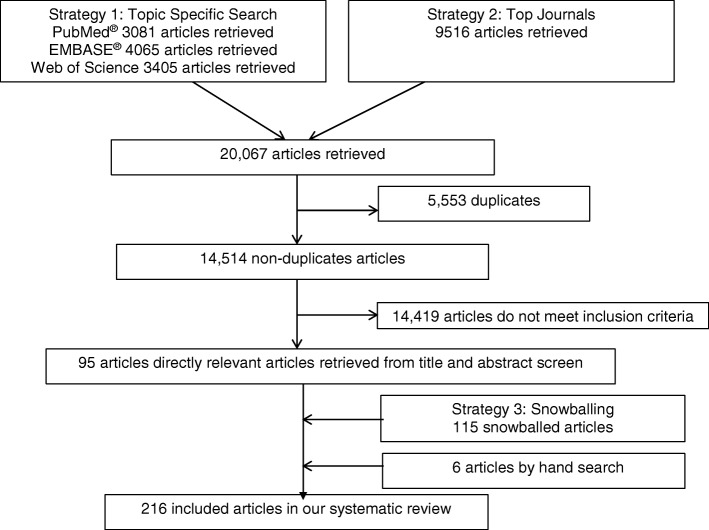
BACKGROUND: Data-driven population segmentation analysis utilizes data analytics to divide a heterogeneous population into parsimonious and relatively homogenous groups with similar healthcare characteristics. It is a promising patient-centric analysis that enables effective integrated healthcare interventions specific for each segment. Although widely applied, there is no systematic review on the clinical application of data-driven population segmentation analysis. METHODS: We carried out a systematic literature search using PubMed, Embase and Web of Science following PRISMA criteria. We included English peer-reviewed articles that applied data-driven population segmentation analysis on empirical health data. We summarized the clinical settings in which segmentation analysis was applied, compared and contrasted strengths, limitations, and practical considerations of different segmentation methods, and assessed the segmentation outcome of all included studies. The studies were assessed by two independent reviewers. RESULTS: We retrieved 14,514 articles and included 216 articles. Data-driven population segmentation analysis was widely used in different clinical contexts. 163 studies examined the general population while 53 focused on specific population with certain diseases or conditions, including psychological, oncological, respiratory, cardiovascular, and gastrointestinal conditions. Variables used for segmentation in the studies are heterogeneous. Most studies (n = 170) utilized secondary data in community settings (n = 185). The most common segmentation method was latent class/profile/transition/growth analysis (n = 96) followed by K-means cluster analysis (n = 60) and hierarchical analysis (n = 50), each having its advantages, disadvantages, and practical considerations. We also identified key criteria to evaluate a segmentation framework: internal validity, external validity, identifiability/interpretability, substantiality, stability, actionability/accessibility, and parsimony. CONCLUSIONS: Data-driven population segmentation has been widely applied and holds great potential in managing population health. The evaluations of segmentation outcome require the interplay of data analytics and subject matter expertise. The optimal framework for segmentation requires further research.
Overview
The claims and statistics of this paper haven’t been checked yet.
Free: it reads the open-access text and checks the first 5 claims that cite a source we can check. Create a free account to check every claim.
Integrity signals
Registry
Cites
Statistics
Figures
Verification
Claims the paper makes
The claims and statistics of this paper haven’t been checked yet.
Free: it reads the open-access text and checks the first 5 claims that cite a source we can check. Create a free account to check every claim.
Self-check
Percentages, sums and reported differences re-computed from the paper’s own numbers.
The self-check needs the paper’s full text.
Citations
Cites
(1998) · DigitalCommons - Kennesaw State University (Kennesaw State University) · Cited by 13,997
Jain, A. K., Murty, M. N., & Flynn, P. J. (1999) · ACM Computing Surveys · doi:10.1145/331499.331504 · Cited by 13,199
Nylund, K. L., Asparouhov, T., & Muthén, B. O. (2007) · Structural Equation Modeling: A Multidisciplinary Journal · doi:10.1080/10705510701575396 · Cited by 11,415
A dendrite method for cluster analysis
Caliński, T., & Harabasz, J. (1974) · Communications in Statistics · doi:10.1080/03610927408827101 · Cited by 4,480
Everitt, B. S., Landau, S., Leese, M., & Stahl, D. (2011) · Wiley Series in Probability and Statistics · doi:10.1002/9780470977811 · Cited by 2,907 · cited 1×
“S e n s i t i v e t o o u t li e r s [ 82 , 83 ] S u p e r v i s e d C l a ss i f i c a t i on D e c i s i on T r ee M e t h o d s ( C H A I D / C A R T ) 10 1 .”
The World Report on Ageing and Health
Beard, J. R., Officer, A. M., & Cassels, A. K. (2016) · The Gerontologist · doi:10.1093/geront/gnw037 · Cited by 2,843
Empirically derived eating patterns using factor or cluster analysis: a review
Newby, P. K., & Tucker, K. L. (2004) · Nutrition Reviews · doi:10.1111/j.1753-4887.2004.tb00040.x · Cited by 1,248
Integrated care: meaning, logic, applications, and implications – a discussion paper
Kodner, D. L., & Spreeuwenberg, C. (2002) · International Journal of Integrated Care · doi:10.5334/ijic.67 · Cited by 1,155 · cited 1×
“…interest in population health and integrated health systems, which aim to organize health services across the care continuum around the needs of individuals, with the ultimate goal to improve the overall health of population by more targeted, effective, and coordinated healthcare services [1 – 3].”
BackgroundPROC LCA: A SAS Procedure for Latent Class Analysis
Lanza, S. T., Collins, L. M., Lemmon, D. R., & Schafer, J. L. (2007) · Structural Equation Modeling: A Multidisciplinary Journal · doi:10.1080/10705510701575602 · Cited by 1,070
Berlin, K. S., Williams, N. A., & Parra, G. R. (2014) · Journal of Pediatric Psychology · doi:10.1093/jpepsy/jst084 · Cited by 986
Research works printed but not linked: 6
- Choose Health Delaware - Delaware’s State Health Care Innovation Plan [Internet]. Choose Heal. Delaware. 2013. Available from: https://www.dhss.delaware.gov/dhcc/cmmi/files/choosehealthplan.pdf 24367874
- Wedel M, Kamakura WA. Market Segmentation - Conceptual and Methodological Foundations [Internet]. 2nd ed. New York City: Springer US; 2000. Available from: https://www.springer.com/gp/book/9780792386353
- Erlich Z Gelbard R Spiegler I Evaluating a positive attribute clustering model for data mining J Comput Inf Syst 2003 43 100 108
- Collins LM, Lanza ST. Latent class and latent transition analysis: with applications in the social, behavioral, and health sciences [internet]. Sci York. 2010;122–23 Available from: https://www.wiley.com/enus/Latent+Class+and+Latent+Transition+Analysis%3A+With+Applications+in+the+Social%2C+Behavioral%2C+and+Health+Sciencesp-9780470228395.
- Huang A. Similarity Measures for Text Document Clustering. New Zeal Comput Sci Res Student Conf. 2008:49–56.
- Duda RO, Hart PE. Pattern classification and scene analysis [internet]. Leonardo 1973;97–99. Available from: https://www.jstor.org/stable/1573081?origin=crossref
Cited by
The “inconvenient truth” about AI in healthcare
Panch, T., Mattie, H., & Celi, L. A. (2019) · npj Digital Medicine · doi:10.1038/s41746-019-0155-4 · Cited by 473
Population segmentation based on healthcare needs: a systematic review
Chong, J. L., Lim, K. K., & Matchar, D. B. (2019) · Systematic Reviews · doi:10.1186/s13643-019-1105-6 · Cited by 117
Ng, S. H.-X., Rahman, N., Ang, I. Y. H., Sridharan, S., Ramachandran, S., Wang, D. D., Tan, C. S., Toh, S.-A. E. S., & Tan, X. Q. (2019) · BMC Health Services Research · doi:10.1186/s12913-019-4239-2 · Cited by 82
Self-citationMakrinioti, H., Fainardi, V., Bønnelykke, K., Čustović, A., Cicutto, L. C., Coleman, C., Eiwegger, T., Kuehni, C. E., Mœller, A., Pedersen, E. S. L., et al. (2024) · European Respiratory Journal · doi:10.1183/13993003.00624-2024 · Cited by 75
Oftedal, S., Vandelanotte, C., & Duncan, M. J. (2019) · International Journal of Environmental Research and Public Health · doi:10.3390/ijerph16132375 · Cited by 67
Network type, transition patterns and well-being among older Europeans
Litwin, H., Levinsky, M., & Cohn‐Schwartz, E. (2019) · European Journal of Ageing · doi:10.1007/s10433-019-00545-7 · Cited by 51
The Data-Driven Future of Healthcare: A Review
Amri, M. M., & Abed, S. A. (2023) · Mesopotamian Journal of Big Data · doi:10.58496/mjbd/2023/010 · Cited by 65
“Opportunities to use data to better patient outcomes have expanded as healthcare data has grown in volume and complexity[10].”
BackgroundShim, J., Fleisch, E., & Barata, F. (2023) · Scientific Reports · doi:10.1038/s41598-023-36062-y · Cited by 54
Nnoaham, K. E., & Cann, K. (2020) · BMC Public Health · doi:10.1186/s12889-020-08930-z · Cited by 35
Smeets, R. G. M., Elissen, A., Kroese, M., Hameleers, N., & Ruwaard, D. (2020) · PLoS ONE · doi:10.1371/journal.pone.0228103 · Cited by 41
“Also, the size of the classes within the model was taken into account (also reffered to as substantiality) [15].”
BackgroundSeng, J. J. B., Monteiro, A. Y., Kwan, Y. H., Zainudin, S. B., Tan, C. S., Thumboo, J., & Low, L. L. (2021) · BMC Medical Research Methodology · doi:10.1186/s12874-021-01209-w · Cited by 34
Self-citationNishimi, K. M., Borsari, B. E., Marx, B. P., Rosen, R. C., Cohen, B. E., Woodward, E., Maven, D., Tripp, P., Jiha, A., Woolley, J. D., et al. (2021) · Preventive Medicine Reports · doi:10.1016/j.pmedr.2021.101671 · Cited by 34
“We also identified socio-demographic, pandemicrelated, and mental health correlates of class membership, which underscore the potential for population segmentation approaches to public health (Yan et al., 2018).”
Shi, Y., Kwan, Y. H., Thumboo, J., & Low, L. L. (2019) · JAMA Network Open · doi:10.1001/jamanetworkopen.2019.10878 · Cited by 23
Self-citationKanda, E., Epureanu, B. I., ADACHI, T., Tsuruta, Y., Kikuchi, K., Kashihara, N., Abe, M., Masakane, I., & Nitta, K. (2020) · PLoS ONE · doi:10.1371/journal.pone.0233491 · Cited by 24
“review suggested the importance of assessing the segmentation outcome with a combination of statistical reasoning, clinical judgement, and policy implication [16].”
BackgroundLiu, P., Wang, Z., Liu, N., & Peres, M. A. (2023) · Journal of the American Medical Informatics Association · doi:10.1093/jamia/ocad111 · Cited by 22
Yoon, S., Goh, H., Kwan, Y. H., Thumboo, J., & Low, L. L. (2020) · Health Research Policy and Systems · doi:10.1186/s12961-019-0519-x · Cited by 18
Self-citationKreindler, S. A., Aboud, Z., Hastings, S. E., Winters, S., Johnson, K., Mallinson, S., & Brierley, M. (2021) · International Journal of Health Policy and Management · doi:10.34172/ijhpm.2021.36 · Cited by 23
Psycho-Behavioural Segmentation in Food and Nutrition: A Systematic Scoping Review of the Literature
Jenkins, E. L., Legrand, S., Brennan, L. L., Molenaar, A., Reid, M., & McCaffrey, T. A. (2021) · Nutrients · doi:10.3390/nu13061795 · Cited by 34
“Unlike latent class analysis which can only use categorical data [64], cluster analysis can be applied to coded qualitative data within studies to determine the motives behind participants’ behaviours [65].”
BackgroundMethodKuang, B., Gu, C., Rana, Z. A., Zhao, Y., Sun, S., & Nnabuife, S. G. (2022) · Sensors · doi:10.3390/s22218393 · Cited by 15
Association of use of contract nurses with hospitalized patient pressure injuries and falls.
Ferguson, A., Bradywood, A., Williams, B., & Blackmore, C. C. (2020) · Journal of Nursing Scholarship · doi:10.1111/jnu.12572 · Cited by 16
Hood, R., Goldacre, A., Jones, E., King, A., Clements, K., & Webb, C. (2023) · The British Journal of Social Work · doi:10.1093/bjsw/bcad141 · Cited by 16
Wang, Z., Li, D., Chen, Y., Tao, Z., Jiang, L., He, X., & Zhang, W. (2024) · Psychiatry Research · doi:10.1016/j.psychres.2024.115816 · Cited by 24
Koutroulis, I., Velez, T., Wang, T., Yohannes, S., Galarraga, J. E., Morales, J., Freishtat, R. J., & Chamberlain, J. M. (2022) · Journal of the American College of Emergency Physicians Open · doi:10.1002/emp2.12660 · Cited by 16
Beaney, T. E., Jha, S., Alaa, A., Smith, A., Clarke, J., Woodcock, T., Majeed, A., Aylin, P. P., & Barahona, M. (2024) · Journal of the American Medical Informatics Association · doi:10.1093/jamia/ocae091 · Cited by 19
“10,36 Transformation of data to a vector representation enables patient similarity to be determined for use as a clustering metric; the finding that these vector representations perform better across a range of healthcare outcomes suggests that derived clusters may be more informative with respect…”
BackgroundTan, J. K., Zhang, X., Cheng, D., Leong, I. Y. O., Wong, C. S., Tey, J., Loh, S. C., Soh, E. F., & Lim, W. Y. (2023) · BMJ Open · doi:10.1136/bmjopen-2022-062786 · Cited by 13
Li, D., Yin, Z.-J., Li, Y.-Z., Zheng, Y.-J., Qin, Y., Liang, G., & Pan, C. (2023) · BMC Public Health · doi:10.1186/s12889-023-15963-7 · Cited by 13
“Although the LCA has been widely used in medical research, no attempts have been made in myopia research [26].”
MethodBeaney, T. E., Clarke, J., Woodcock, T. M., McCarthy, R., Saravanakumar, K., Barahona, M., Blair, M. E., & Hargreaves, D. S. (2021) · BMJ Open · doi:10.1136/bmjopen-2021-050847 · Cited by 12
Unsupervised learning for county-level typological classification for COVID-19 research
Lai, Y., Charpignon, M., Ebner, D. K., & Celi, L. A. (2020) · Intelligence-Based Medicine · doi:10.1016/j.ibmed.2020.100002 · Cited by 10
Population stratification in type 2 diabetes mellitus: A systematic review
Hodgson, S., Cheema, S., Rana, Z., Olaniyan, D., O’Leary, E., Price, H. C., & Dambha‐Miller, H. (2021) · Diabetic Medicine · doi:10.1111/dme.14688 · Cited by 11
Applying a data-driven population segmentation approach in German claims data
Pioch, C., Henschke, C., Lantzsch, H., Busse, R., & Vogt, V. (2023) · BMC Health Services Research · doi:10.1186/s12913-023-09620-3 · Cited by 16
“In expert-driven approaches, a population is segmented by an expert panel based on pre-determined criteria derived from literature review and consensus [7].”
MethodClusters from chronic conditions in the Danish adult population
Stockmarr, A., & Frølich, A. (2024) · PLoS ONE · doi:10.1371/journal.pone.0302535 · Cited by 12
Ng, S. C. W., Kwan, Y. H., Yan, S., Tan, C. S., & Low, L. L. (2019) · BMC Health Services Research · doi:10.1186/s12913-019-4769-7 · Cited by 8
Self-citationDambha‐Miller, H., Simpson, G., Akyea, R. K., Hounkpatin, H. O., Morrison, L. G., Gibson, J., Stokes, J., Islam, N., Chapman, A. P., Stuart, B. L., et al. (2022) · JMIR Research Protocols · doi:10.2196/34405 · Cited by 8
“Advances in data-driven processing paradigms could overcome previous limitations in methodology using unsupervised or semisupervised deep embedded clustering [16,18,21].”
BackgroundMethodEmpiric Segmentation of High-risk Patients: A Structured Literature Review
Arnold, J., Thorpe, J., Mains-Mason, J., & Rosland, A.-M. (2021) · The American Journal of Managed Care · doi:10.37765/ajmc.2022.88752 · Cited by 9
Riihimies, R., Kosunen, E., & Koskela, T. (2020) · JMIR Research Protocols · doi:10.2196/20570 · Cited by 15
“Methods for patient segmentation are either data-driven, where data from different databases and/or electronic health records (EHR) are collected and statistically analyzed [24,25], or expert-driven, where an expert defines the criteria for segmentation [25,26].”
Xiao, W., & Lyu, Y. (2024) · Journal of Radiation Research and Applied Sciences · doi:10.1016/j.jrras.2024.101003 · Cited by 10
Strutz, K. L., Luo, Z., Raffo, J. E., Meghea, C. I., Meulen, P. V., & Roman, L. A. (2021) · Public Health Reports · doi:10.1177/00333549211030507 · Cited by 7
Emerging Issues in Management Accounting: Digital Technologies, Governance, and Sustainability
Zafar, F., Sabri, R., Siddiqui, H. M. A., & Masood, I. (2024) · Bulletin of Business and Economics (BBE) · doi:10.61506/01.00214 · Cited by 27
“Yan et al. (2018) determine that systematic reviews support delivering the comprehensive, reliable, and validated overview of the available evidence regarding the chosen topic.”
BackgroundDupraz, J., Zuercher, E., Taffé, P., & Peytremann‐Bridevaux, I. (2022) · Frontiers in Endocrinology · doi:10.3389/fendo.2022.841774 · Cited by 4
“In an attempt to meet the healthcare needs of patients with chronic diseases, there is an increasing interest in tools allowing the segmentation of populations into groups sharing common characteristics, such as health service utilization patterns (15, 16).”
BackgroundSegmenting citizens according to their self-sufficiency: A tool for local government
van der Fluit, M. E., Bortolotti, T., Broekhuis, M., & van Teerns, M. (2023) · Social Science & Medicine · doi:10.1016/j.socscimed.2023.116246 · Cited by 5
Beaney, T. E., Clarke, J., Salman, D., Woodcock, T. M., Majeed, A., Barahona, M., & Aylin, P. P. (2024) · Journal of Multimorbidity and Comorbidity · doi:10.1177/26335565241247430 · Cited by 5
“26,27 By including the relevant outcomes in the similarity measure, the derived clusters may be more meaningful with respect to those outcomes than similarity measures based only on disease co-occurrence, as used here.”
BackgroundMethodVelez, T., Wang, T., Garibaldi, B. T., Singman, E. L., & Koutroulis, I. (2023) · JMIR Formative Research · doi:10.2196/46807 · Cited by 4
“…an algorithm that derives clusters using a probabilistic model that describes the distribution of the data [12,13], and k-means, which identifies clusters in a data set by using a distance metric to find k centroids (a weighted average) within the n-dimensional space of clinical features [11-14].”
MethodKreutzberg, A., Tsatsaronis, C., Grobe, T., Quentin, W., & Busse, R. (2025) · Research in Health Services & Regions · doi:10.1007/s43999-025-00068-y · Cited by 7
“They can be either completely data-driven using statistical clustering methods [21] or they combine data-driven methods with clinical expertise to build clinically meaningful categories [20].”
Wood, R. M., Budiman, T. A., Hassey, N., Onen-Dumlu, Z., Vasilakis, C., Budd, F. J., Hollier, S. E., Thomson, P. M., & Kenward, C. (2023) · International Journal of Healthcare Management · doi:10.1080/20479700.2023.2232980 · Cited by 4
“Given that only one variable was used in describing segment membership, it was somewhat remarkable that such a close match to the above-mentioned three properties was achievable: other segmentations typically require the use of many variables to attain the desired characteristics [13].”
InfluentialHutchins, F., Rosland, A.-M. M., Zhao, X., Zhang, H., & Thorpe, J. M. (2023) · Journal of the American Geriatrics Society · doi:10.1111/jgs.18608 · Cited by 3
Lemke, K., Forrest, C. B., Leff, B. A., Boyd, C. M., Gudzune, K. A., Pollack, C. E., Pandya, C. J., & Weiner, J. P. (2023) · Medical Care · doi:10.1097/mlr.0000000000001898 · Cited by 6
“16, 25 – 27 Currently, for Webelieve the PNG framework we developed ac-complishes these goals.”
MethodTorkki, P. M., Leskelä, R., Mustonen, P., Linna, M., & Lillrank, P. M. (2023) · BMJ Open · doi:10.1136/bmjopen-2023-077250 · Cited by 11
Liu, X., Zhang, L., Fan, X., & Chen, W. (2024) · BMJ Global Health · doi:10.1136/bmjgh-2023-014717 · Cited by 5
Moving Beyond Simple Risk Prediction: Segmenting Patient Populations Using Consumer Data
Rezaeiahari, M. (2021) · Frontiers in Public Health · doi:10.3389/fpubh.2021.716754 · Cited by 6
Commentary: Data-driven subgrouping in epidemiology and medicine
Ala‐Korpela, M. (2019) · International Journal of Epidemiology · doi:10.1093/ije/dyz040 · Cited by 4
“This would be relevant in integrated health systems to improve the overall health of populations by better targeted and more effective healthcare services.(1) Subgrouping would also be pertinent for scientific applications, for example, finding genetically and metabolically distinct individuals and patients,(2,3) comp…”
BackgroundLi, T., & Jin, Y. (2021) · Family Relations · doi:10.1111/fare.12592 · Cited by 4
A Visuo-Haptic System for Nodule Detection Training: Insights From EEG and Behavioral Analysis
Ricci, S., Torrigino, D., Minuto, M. N., & Casadio, M. (2024) · IEEE Transactions on Haptics · doi:10.1109/toh.2024.3487522 · Cited by 4
“K-means clustering is a common tool to divide data into non-overlapping clusters, which is used in many different contexts (e.g. [55]).”
Piroddi, R., Astbury, A., Baker, W., Daras, K., Rafferty, J., Buchan, I. E., & Barr, B. (2025) · BMC Health Services Research · doi:10.1186/s12913-024-12100-x · Cited by 4
“Existing population health segmentation methods fall into two categories [70]: one of rule-based tools using expert clinical judgment [71]; and data-driven tools using real-world data [72].”
Rethinking spondyloarthritis: beyond lumping and splitting
Ermann, J. (2025) · Current Opinion in Rheumatology · doi:10.1097/bor.0000000000001094 · Cited by 3
“clinical overlap between the historically derived entities of axSpA, PsA and IBD-SpA, suggests that what we clinically recognize as axSpA, PsA, or IBD-SpA, may in fact be heterogeneous collections of shared endo-types rather than discrete entities.”
Beaney, T. E., Dregan, A., Glickman, M., Mountain, P., Khunti, K., & Dambha‐Miller, H. (2025) · Journal of the Royal Society of Medicine · doi:10.1177/01410768251395387 · Cited by 3
Lakew, Y., Temesgen, H. T., Kang, B., Kapadia‐Kundu, N., Kuka, S. H., & Rimal, R. N. (2026) · BMJ Global Health · doi:10.1136/bmjgh-2024-018811 · Cited by 3
“20 37–39 Second, conceptually (though not yet practically), this tool may be able to reduce disparities in maternal mortality.”
Deswal, S., Bulusu, K. C., Agapow, P., & Khan, F. M. (2021) · Elsevier eBooks · doi:10.1016/b978-0-12-820045-2.00009-x · Cited by 2
Keeney, T., Lee, M. K., Basford, J. R., & Cheville, A. L. (2022) · Archives of Physical Medicine and Rehabilitation · doi:10.1016/j.apmr.2022.06.004 · Cited by 2
Riihimies, R., Kosunen, E., & Koskela, T. (2023) · Journal of Medical Internet Research · doi:10.2196/40560 · Cited by 8
“Data-driven or expert-driven segmentation methods usually manage large data sets and multiple variables [19-21], thus disregarding the individuality of patients.”
Segmenting Customers with Data Analytics Tools: Understanding and Engaging Target Audiences
Pitka, T., & Bućko, J. (2023) · Acta Informatica Pragensia · doi:10.18267/j.aip.220 · Cited by 5
Varady, A. B., & Wood, R. M. (2024) · Health Informatics Journal · doi:10.1177/14604582241259344 · Cited by 2
“Population segmentation uses information about individual patients, such as age and sex, to divide a population into similar groups 24 ; typically with the aim of identifying population cohorts with similar healthcare needs.”
Ueno, K., Nishioka, D., Kino, S., & Kondo, N. (2025) · International Journal for Equity in Health · doi:10.1186/s12939-025-02467-6 · Cited by 3
“…interpreted; (4) substantiality, which ensures that each segment has a sufficient size; (5) actionability/accessibility, which ensures that each segment can be targeted for intervention; and (6) stability, which requires that the segment definition remains relatively consistent over time [74, 75].”
Dávila, D. C. B., Zapata, H. E. G., & Morales, L. (2022) · Revista Facultad Nacional de Salud Pública · doi:10.17533/udea.rfnsp.e352189 · Cited by 2
The Spread of Deepfakes in Digital Networks
Tonello, T., Dimitrova, A., Fenga, L., Biazzo, L., & Jacona, A. (2026) · doi:10.18690/um.feri.2.2026.2 · Cited by 1
Pečkauskas, A., Dulkys, A., Niakšu, O., & Kalèdiené, R. (2026) · Public health reviews · doi:10.3389/phrs.2026.1609977 · Cited by 1
“These enable population health management, resource allocation, and policy planning through data-driven approaches such as segmentation and predictive analytics [36].”
Beyond Automation: Unleashing Creativity and Enhancing Decision-Making with Generative AI
Ishaq, R., Gorsi, H., Butt, S., Umair, T., & Tajammal, R. (2025) · ACADEMIA International Journal for Social Sciences · doi:10.63056/acad.004.01.0142 · Cited by 3
“Conversely, data-driven decision-making is founded on a methodical investigation of experimental suggestions and measurable indicators (Yan S et al., 2018).”
Ueno, K., Teramoto, C., Sawatari, H., & Tanabe, K. (2023) · Acute Medicine & Surgery · doi:10.1002/ams2.911 · Cited by 1
Wilde, H., Knight, V., Gillard, J., & Smith, K. R. (2020) · arXiv (Cornell University) · doi:10.48550/arxiv.2008.04295 · Cited by 1
“The remaining characteristics can be segmented in a variety of ways, but recent works tend to favour unsupervised methods typically latent class analysis (LCA) or clustering [46].”
BackgroundApplication of AI in Healthcare
Priya, V., & Prabu, S. (2022) · doi:10.1002/9781119762010.ch9 · Cited by 1
Beaney, T. E., Jha, S., Alaa, A., Smith, A., Clarke, J., Woodcock, T. M., Majeed, A., Aylin, P. P., & Barahona, M. (2023) · medRxiv · doi:10.1101/2023.11.16.23298640 · Cited by 1
“10 However, there is little comparative research of the unsupervised representations of a person’s disease history generated by different NLP methods, and how these compare to standard epidemiological approaches in prediction of clinical outcomes.”
BackgroundRoot, E. D., Mishra, A., Lin, Y., Cooper, J., Kalnoky, M., Gao, L., Johnson, T. P., & Rao, D. W. (2025) · doi:10.12688/verixiv.1226.1 · Cited by 1
Deepfakes, Democracy, and the Ethics of Synthetic Media: A Synthesis of the SOLARIS Project
(2026) · University of Maribor Press · doi:10.18690/um.feri.2.2026
Torkki, P. M., Leskelä, R., Mustonen, P., Linna, M., & Lillrank, P. M. (2022) · Research Square · doi:10.21203/rs.3.rs-1640436/v1
Advances in Modelling Hospital Medical Wards
Landa, P., Resta, M. R., Tànfani, E., & Testi, A. (2022) · Intelligent systems reference library · doi:10.1007/978-3-031-11154-9_9
Hitting the TARGET in primary care: working towards integrated and person-centred care
Smeets, R. G. M. (2022) · Research Publications (Maastricht University) · doi:10.26481/dis.20230113rs · Cited by 1
Ginting, M. L., Ang, Y. H., Ho, S. H., Sum, G., & Wong, C. H. (2023) · PLoS ONE · doi:10.1371/journal.pone.0288441 · Cited by 3
“Majority of the studies on population segmentation included general population as the target population for segmentation, while others restricted to those with specific diseases or conditions [29].”
BackgroundRacial Prejudice and the Fear of the other in Amiri Baraka’s Dutchman
Alrammah, A. A. (2023) · International Academic Journal of Humanities · doi:10.9756/iajh/v10i2/iajh1003 · Cited by 1
Gärtner, A., Daniel, R., Slyne, C., & Nnoaham, K. E. (2024) · BMC Public Health · doi:10.1186/s12889-024-19065-w
“Some of these used expert-defined segments, different variables such as subsets of utilisation variables, and were based on utilisation in diverse settings, thereby making comparisons challenging, but we cite some relevant examples here [2, 5].”
BackgroundMethodUeno, K., Nishioka, D., Saito, J., Kino, S., & Kondo, N. (2024) · Global Health & Medicine · doi:10.35772/ghm.2024.01029
Optimizing healthcare queues: a case study on chronic respiratory illness
Gillard, J., Knight, V., Smith, K., & Wilde, H. (2025) · IMA Journal of Management Mathematics · doi:10.1093/imaman/dpaf002
Schuttner, L., Daniels, K., Venkatesh, S., Hutchins, F., Atchison, K., Piegari, R. I., Bober, T., Zhao, X., & Rosland, A.-M. M. (2025) · doi:10.2196/preprints.75081
De-prescribing opioids among Medicaid patients with long-term opioid use
Friedman, S. A., Snyder, P. M., Patterson, D., Hartzell, S. Y. T., & Keller, M. S. (2025) · Journal of Substance Use and Addiction Treatment · doi:10.1016/j.josat.2025.209695 · Cited by 1
Trajectories of Prescription Opioid Use for Low Back Pain Patients
Hartzell, S. Y. T., Albertson, E. M., Friedman, S. A., & Keller, M. S. (2025) · Pain Practice · doi:10.1111/papr.70046
“GBTM is similar to latent class analysis which can cluster patients into groups, or latent classes, based on cross-sectional data [28].”
Rupprecht, M., Campione, A., Wu, Y. N., Fischer‐Rosinsky, A., Slagman, A. C., Riedlinger, D., Möckel, M., Keil, T. O. P., Reitzle, L., & Henschke, C. (2025) · Frontiers in Medicine · doi:10.3389/fmed.2025.1509220
“Segmenting the population into homogenous groups according to their health care utilisation contributes to a better understanding of the population’s demand and facilitates the effective allocation of limited resources from a population health perspective (17, 18).”
Schuttner, L., Daniels, K., Venkatesh, S., Hutchins, F., Atchison, K., Piegari, R. I., Bober, T., Zhao, X., & Rosland, A.-M. M. (2025) · JMIR Formative Research · doi:10.2196/75081 · Cited by 1
Hu, Y., Lee, W. Y., Teo, K. W., & Ng, Y. F. (2025) · Healthcare · doi:10.3390/healthcare13212724 · Cited by 2
“…that more effectively address these specific characteristics to enhance outcomes or mitigate the risks of poor outcomes for different population segments or sub-populations [11,31]—can now be pursued systemically, at scale, potentially enabling more efficient whole-system allocation of resources.”
Multimorbidity measurement strategies for predicting hospital visits
Neves, B. D., Moreira, J. M., Gonçalves, S., Cerejo, J., Mota, I., Silva, N. A., Leite, F., & Silva, M. J. (2025) · BMC Health Services Research · doi:10.1186/s12913-025-13817-z
Seng, J. J. B., Monteiro, A. Y., Kwan, Y. H., Zainudin, S. B., Tan, C. S., Thumboo, J., & Low, L. L. (2021) · Figshare · doi:10.6084/m9.figshare.14205179
Self-citationGärtner, A., Daniel, R., Slyne, C., & Nnoaham, K. E. (2024) · Figshare · doi:10.6084/m9.figshare.26061432
Seng, J. J. B., Monteiro, A. Y., Kwan, Y. H., Zainudin, S. B., Tan, C. S., Thumboo, J., & Low, L. L. (2021) · Figshare · doi:10.6084/m9.figshare.14205170
Self-citationSeng, J. J. B., Monteiro, A. Y., Kwan, Y. H., Zainudin, S. B., Tan, C. S., Thumboo, J., & Low, L. L. (2021) · Figshare · doi:10.6084/m9.figshare.14205173
Self-citationSeng, J. J. B., Monteiro, A. Y., Kwan, Y. H., Zainudin, S. B., Tan, C. S., Thumboo, J., & Low, L. L. (2021) · Figshare · doi:10.6084/m9.figshare.14205167
Self-citationSeng, J. J. B., Monteiro, A. Y., Kwan, Y. H., Zainudin, S. B., Tan, C. S., Thumboo, J., & Low, L. L. (2021) · Figshare · doi:10.6084/m9.figshare.14205176
Self-citationAdditional file 2 of Population segmentation based on healthcare needs: a systematic review
Chong, J. L., Lim, K. H., & Matchar, D. B. (2019) · Figshare · doi:10.6084/m9.figshare.9599996
Additional file 1 of Population segmentation based on healthcare needs: a systematic review
Chong, J. L., Lim, K. H., & Matchar, D. B. (2019) · Figshare · doi:10.6084/m9.figshare.9599993
Application of Segmentation Methods in Health Care Services Planning and Delivery
Haren, M. T., Gartner, J., Côté, A., & Paquet, C. (2025) · Springer proceedings in mathematics & statistics · doi:10.1007/978-3-031-95659-1_8
Classifying Veterans’ pre-pregnancy health risks using latent class analysis
Quinn, D. A., Hutchins, F., Sileanu, F. E., Procario, G. T., Mor, M. K., Rosland, A.-M. M., Katon, J. G., Callegari, L. S., & Borrero, S. B. (2026) · Women s Health · doi:10.1177/17455057261430209
Verduyn, Y., Kia, S. M., & Brouwer, H. (2026) · Psychiatry Research Communications · doi:10.1016/j.psycom.2026.100279
Wei, S., Ji, L., Liu, K., & Lu, Y. (2026) · Physiological Reports · doi:10.14814/phy2.71091
“K-means is simple and interpretable and has been applied to medical phenotyping and population stratification (De Craen et al., 2006; Loftus et al., 2022; Yan et al., 2018).”
Metadata
- Authors
- Yan, S., Kwan, Y. H., Tan, C. S., Thumboo, J., & Low, L. L.
- Affiliations
- Duke-NUS Medical School (SG)
- National University of Singapore (SG)
- SingHealth (SG)
- Corresponding author
- Low, Lian Leng
- Venue
- BMC Medical Research Methodology
- Published
- 2018-11-03
- Volume
- 18
- Issue
- 1
- Pages
- 121-121
- ISSN
- 1471-2288 (ISSN-L)
- PMC
- PMC6215625
- OpenAlex
- W2898856363
- Semantic Scholar
- 7ec4d13a96d3ce045a0a9220cb7fe3b2c381ec56
- Cited by
- 99
- References
- 87
- Citations by year
- 2026: 6 · 2025: 17 · 2024: 13 · 2023: 19 · 2022: 10 · 2021: 16 · 2020: 8 · 2019: 10
- FWCI
- 1.57
- Type
- journal article
- Language
- en
- Open access
- gold
- doi.org
- Licence
- cc-by
- creativecommons.org/licenses/by/4.0/ (tdm)
- Locations
- BMC Medical Research Methodology (publishedVersion, cc-by)
- Europe PMC (PubMed Central) (publishedVersion, other-oa)
- PubMed Central (publishedVersion, cc-by)
- PubMed (publishedVersion)
- DOAJ (DOAJ: Directory of Open Access Journals) (acceptedVersion)
- National University of Singapore (submittedVersion)
- Funders
- National University of Singapore
- Topics
- Health Sciences › Health Professions › Health Information Management › Artificial Intelligence in Healthcare
- Social Sciences › Business, Management and Accounting › Marketing › Customer churn and segmentation
- Physical Sciences › Computer Science › Artificial Intelligence › Bayesian Methods and Mixture Models
- Keywords
- patient segmentation, latent class analysis, K-means clustering, hierarchical clustering, population health management, healthcare data analytics
- MeSH terms
- Population Health, Population Health Management, Data Analysis, Delivery of Health Care, Humans, Medical Record Linkage, Reproducibility of Results
About these checks
Registry, retraction, Cites and statistics results are computed, not judged, with one exception: a printed reference that no index lists is read once by a model before it counts as a citation error. Claims are extracted by a model and kept only when their quote appears verbatim in the text; each cited source is then checked, with a model’s help, for whether it says what the claim relies on. Those verdicts can be wrong — read the claim’s quote and the cited source before relying on one.
Statistics and arithmetic are recomputed, not judged.
Confidence bands are shown only for fields calibrated on our annotated test set. None is calibrated yet, so no band is shown.
What counts as a claim ›How we measure confidence ›How we check this ›
Are you an author, or do you see a problem with this page? Request a review
Data sources
Bibliographic data: Semantic Scholar, OpenAlex, Crossref.
Contains information from the Semantic Scholar Academic Graph Datasets, made available under the ODC Attribution License (ODC-BY 1.0).
Semantic Scholar’s data is described in: Kinney, R., et al. (2023). The Semantic Scholar Open Data Platform. arXiv:2301.10140.
