

Cognitive training can reduce the rate of cognitive aging: a neuroimaging cohort study
Open accessThe DOI matches its Crossref record; 64 of the 64 references it cites were found in a registry or an index.
Abstract
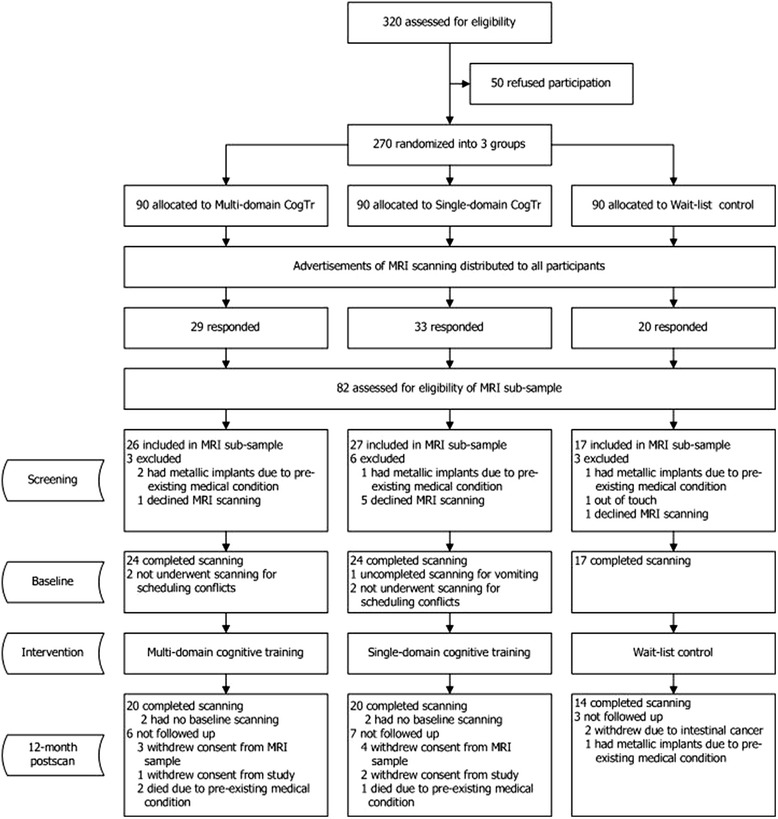
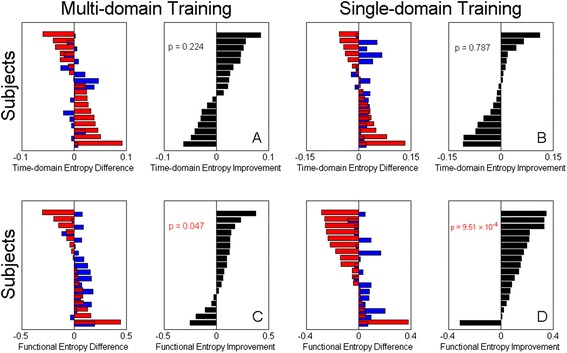
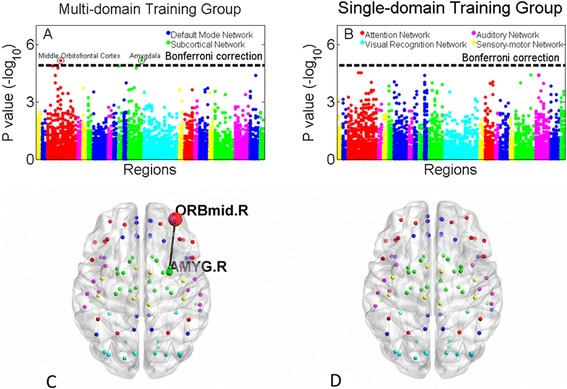
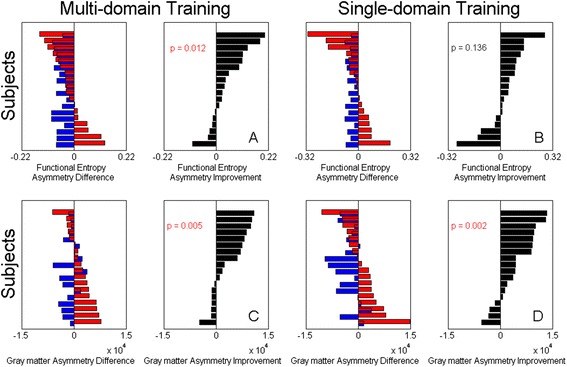
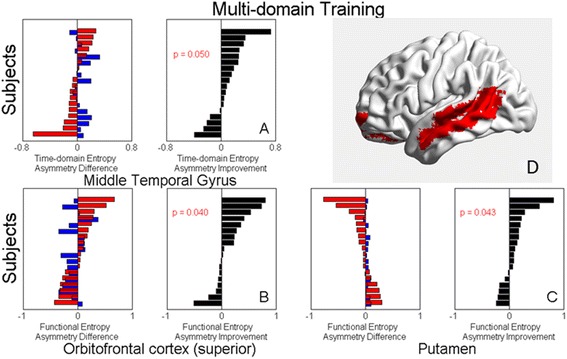
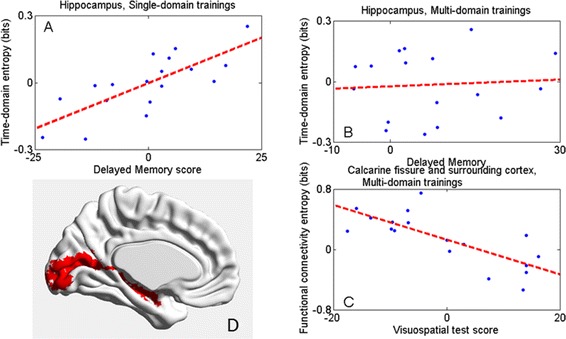
BACKGROUND: The neural mechanisms underlying the restorative effects of cognitive training on aging brains remain unclear. To address this issue, we examined the relationship between changes in spontaneous brain activity and cognitive performance that occur after cognitive training. METHODS: Participants were older adults who were part of a randomized control trial within a larger longitudinal cognitive training study. We conducted single-domain and multi-domain cognitive training in two respective intervention groups. Participants were trained for 1 h, twice a week, for 12 weeks. Cognition was assessed in all participants and magnetic resonance images were obtained at baseline and 1 year after training. To assess spontaneous fluctuations in brain activity, we acquired resting-state fMRI data. Two indices-functional entropy and time-domain entropy-were used to measure the effects of training. Functional entropy increases with aging, and indicates disruptions in functional conectivity. Time-domain entropy decreases with aging, and indicates structural alterations in the brain and blood-flow reduction. RESULTS: Seventy participants completed the study: 26 in the multi-domain cognitive training group (70.38 ± 3.30 yrs), 27 in single-domain group (70.48 ± 3.93 yrs), and 17 in a control group (68.59 ± 3.24 yrs). Functional entropy increased significantly less in the multi-domain (p = 0.047) and single-domain groups (p = 9.51 × 10(-4)) compared with the control group. In the multi-domain group, this was true in the paracentral lobule (p = 0.004, Bonferroni corrected p < 0.05). Time-domain entropy also improved with training. Compared with controls, time-domain entropy in the multi-domain group decreased less in the inferior frontal gyrus pars opercularis (p = 3.59 × 10(-4)), the medial part of superior frontal gyrus (p = 1.17 × 10(-5)), and the thalamus (p = 4.72 × 10(-5)), while that in the single-domain group decreased less in the cuneus (p = 2.58 × 10(-4), Bonferroni corrected p < 0.05). Additionally, changes in regional entropy for some regions such as hippocampus significantly correlated with improvements in cognitive performance. CONCLUSIONS: Cognitive training can induce plastic changes in neural functional connectivity of healthy older people, and these changes may underlie the positive effect of cognitive training. TRIAL REGISTRATION: ChiCTR-TRC-08000732 (Date of registration: 5th November, 2008).
Overview
The claims and statistics of this paper haven’t been checked yet.
Free: it reads the open-access text and checks the first 5 claims that cite a source we can check. Create a free account to check every claim.
Integrity signals
Registry
Cites
Statistics
Figures
Verification
Claims the paper makes
The claims and statistics of this paper haven’t been checked yet.
Free: it reads the open-access text and checks the first 5 claims that cite a source we can check. Create a free account to check every claim.
Claims other papers make about this one
Each is checked against this paper’s own text: does it say what the citing paper says it does?
In the citing paper
“Cognitive training enhances functional connectivity to attenuate the decline in overall memory.486”
From Antiageing strategy for neurodegenerative diseases: from mechanisms to clinical advances (2025) · cites this paper as [486]
Self-check
Percentages, sums and reported differences re-computed from the paper’s own numbers.
The self-check needs the paper’s full text.
Citations
Cites
Hirono, N., Mori, E., Ikejiri, Y., Imamura, T., Shimomura, T., Hashimoto, M., Yamashita, H., & Ikeda, M. (1997) · Brain and nerve · Cited by 21,039
Tzourio-Mazoyer, N., Landeau, B., Papathanassiou, D., Crivello, F., Etard, O., Delcroix, N., Mazoyer, B., & Joliot, M. (2002) · NeuroImage · doi:10.1006/nimg.2001.0978 · Cited by 16,319 · cited 1×
“In our present study, the automated anatomical labeling atlas [45] (AAL) was used to divide the brain into 90 regions of interest (ROIs) (45 per hemisphere).”
MethodSpontaneous fluctuations in brain activity observed with functional magnetic resonance imaging
Fox, M. D., & Raichle, M. E. (2007) · Nature Reviews Neuroscience · doi:10.1038/nrn2201 · Cited by 6,700 · cited 1×
“1Hz), arise primarily from spontaneous fluctuations in brain metabolism and intrinsic neuronal activity [18, 19].”
BackgroundApproximate entropy as a measure of system complexity.
Pincus, S. M. (1991) · Proceedings of the National Academy of Sciences · doi:10.1073/pnas.88.6.2297 · Cited by 5,811 · cited 4×
“We termed the Approximate Entropy of each individual brain region the regional time-domain entropy.”
MethodInfluentialPrediction and Entropy of Printed English
Shannon, C. E. (1951) · Bell System Technical Journal · doi:10.1002/j.1538-7305.1951.tb01366.x · Cited by 2,686
Randolph, C., Tierney, M. C., Mohr, E., & Chase, T. N. (1998) · Journal of Clinical and Experimental Neuropsychology · doi:10.1076/jcen.20.3.310.823 · Cited by 2,519 · cited 2×
“The measures included the Repeatable Battery for the Assessment of Neuropsychological Status [39] (RBANS, Form A), which has been shown to have good reliability and validity in a sample of Chinese community-living older people [40], the Color Word Stroop test (CWST) [41], the Visual Reasoning test [42] and the Trail M…”
MethodUnbiased average age-appropriate atlases for pediatric studies
Fonov, V., Evans, A. C., Botteron, K., Almli, C. R., McKinstry, R. C., & Collins, D. L. (2011) · NeuroImage · doi:10.1016/j.neuroimage.2010.07.033 · Cited by 2,290 · cited 1×
“Subsequently, the functional scans were spatially normalized to a standard template [44] (Montreal Neurological Fig.”
MethodInsights into the ageing mind: a view from cognitive neuroscience
Hedden, T., & Gabrieli, J. D. E. (2004) · Nature Reviews Neuroscience · doi:10.1038/nrn1323 · Cited by 2,223 · cited 1×
“and cognitive impairments that can interfere with daily routines [1] and affect the capacity of older people to live independently.”
BackgroundHemispheric asymmetry reduction in older adults: the HAROLD model
Cabeza, R. (2002) · Psychology and Aging · doi:10.1037/0882-7974.17.1.85 · Cited by 2,125 · cited 4×
“2) Cognitive training reduces HAROLD.”
BackgroundInfluentialHemispheric asymmetry reduction in older adults: The HAROLD model.
Cabeza, R. E. L. (2002) · Psychology and Aging · doi:10.1037//0882-7974.17.1.85 · Cited by 2,036
Cited by
Antiageing strategy for neurodegenerative diseases: from mechanisms to clinical advances
Jiang, Q., Liu, J., Huang, S., Wang, X.-Y., Chen, X., Liu, G.-H., Ye, K., Song, W., Masters, C. L., Wang, J., et al. (2025) · Signal Transduction and Targeted Therapy · doi:10.1038/s41392-025-02145-7 · Cited by 165
“486 Time-restricted feeding (TRF), a healthy diet, extends the Drosophila lifespan and delays the onset of ageing markers in the muscles and gut by stimulating circadian-regulated autophagy.”
Self-citationDamirchi, A., Hosseini, F., & Babaei, P. (2018) · American Journal of Alzheimer's Disease & Other Dementias® · doi:10.1177/1533317517727068 · Cited by 133
Bahar-Fuchs, A., Webb, S., Bartsch, L., Clare, L., Rebok, G., Cherbuin, N., & Anstey, K. J. (2017) · Journal of Alzheimer's Disease · doi:10.3233/jad-170404 · Cited by 116
“The exact mechanisms through which CT may improve cognitive functioning are not well understood, but are thought to involve the enhancement of neurobiological processes that underpin cognitive function, including synaptic activity, longterm potentiation, and the activation of diverse neural networks [19, 20].”
Backgroundvan Balkom, T. D., van den Heuvel, O. A., Berendse, H. W., van der Werf, Y. D., & Vriend, C. (2020) · Neuropsychology Review · doi:10.1007/s11065-020-09440-w · Cited by 130
“Two reports specifically addressed age-related neural alterations and described a long-term effect of CT on resting-state fMRI-derived indices of neural network laterality (Luo et al., 2016) and brain entropy (Li et al., 2016), even a year after training.”
BackgroundMethodInfluentialLi, B., He, N., Qiao, Y., Xu, H., Lu, Y., Cui, P., Ling, H., Yan, F.-H., Tang, H., & Chen, S. (2019) · NeuroImage Clinical · doi:10.1016/j.nicl.2019.101691 · Cited by 89
Bonnechère, B., Klass, M., Langley, C., & Sahakian, B. J. (2021) · Scientific Reports · doi:10.1038/s41598-021-91867-z · Cited by 85
Relationship between education, leisure activities, and cognitive functions in older adults
Park, S., Choi, B., Choi, C.-H., Kang, J. M., & Lee, J. (2018) · Aging & Mental Health · doi:10.1080/13607863.2018.1512083 · Cited by 87
“A multi-domain training program that includes both cognitive training (e.g. memory, reasoning, problem-solving strategies) and handicraft making has also been found to affect brain function (Cao et al., 2016; Jiang et al., 2016; Li et al., 2016; Luo et al., 2016).”
BackgroundDuda, B., & Sweet, L. H. (2019) · Brain Imaging and Behavior · doi:10.1007/s11682-019-00080-0 · Cited by 73
Bilingualism and healthy aging: Aging effects and neural maintenance
Borsa, V. M., Perani, D., Rosa, P. A. D., Videsott, G., Guidi, L., Weekes, B., Franceschini, R., & Abutalebi, J. (2018) · Neuropsychologia · doi:10.1016/j.neuropsychologia.2018.01.012 · Cited by 69
“…al., 2011; Kramer and Erickson, 2007), playing musical instruments (HannaPladdy and MacKay, 2011; Wan and Schlaug, 2010), targeted cognitive training (Li et al., 2016) and speaking more than one language (Perani and Abutalebi, 2015; Bialystok et al., 2016) can mitigate cognitive decline in seniors.”
BackgroundLi, B., Tang, H., He, G., Jin, Z., He, Y., Huang, P., He, N., & Chen, S. (2023) · Alzheimer's & Dementia · doi:10.1002/alz.12658 · Cited by 55
Canoe VR: An Immersive Exergame to Support Cognitive and Physical Exercises of Older Adults
Karaosmanoglu, S., Kruse, L., Rings, S., & Steinicke, F. (2022) · CHI Conference Extended Abstracts on Human Factors in Computing Systems (CHI EA) · doi:10.1145/3491101.3519736 · Cited by 58
“These exercises can help to reduce agerelated decline in abilities [8, 21] and support well-being [7, 27].”
BackgroundCao, X., Yao, Y., Li, T., Cheng, Y., Feng, W., Shen, Y., Li, Q., Jiang, L., Wu, W., Wang, J., et al. (2016) · Scientific Reports · doi:10.1038/srep33212 · Cited by 46
“Further functional connectivity analysis found that training-induced neural plasticity changes in frontal areas and the thalamus in the multi-domain CogTr group, and in the cuneus in the single-domain group 22 .”
InfluentialSelf-citationKüper, K., Gajewski, P. D., Frieg, C., & Falkenstein, M. (2017) · Frontiers in Human Neuroscience · doi:10.3389/fnhum.2017.00184 · Cited by 38
“Keywords: cognitive training, task difficulty, aging, Stroop switch task, switch positivity, P3, P2, N2 Frontiers in Human Neuroscience | www.frontiersin.org 1 April 2017 | Volume 11 | Article 184”
BackgroundCorti, C., Urgesi, C., Poggi, G., Strazzer, S., Borgatti, R., & Bardoni, A. (2020) · Scientific Reports · doi:10.1038/s41598-020-57952-5 · Cited by 36
Soni, A. K., Kumar, M., & Kothari, S. (2025) · Scientific Reports · doi:10.1038/s41598-025-85511-3 · Cited by 33
Donath, C., Luttenberger, K., Graessel, E., Scheel, J., Pendergrass, A., & Behrndt, E.-M. (2019) · BMC Geriatrics · doi:10.1186/s12877-019-1207-y · Cited by 26
Deng, L., Cheng, Y., Cao, X., Feng, W. G., Zhu, H., Jiang, L., Wu, W., Tong, S., Sun, J., & Li, C. (2019) · Scientific Reports · doi:10.1038/s41598-019-45463-x · Cited by 25
Self-citationSrisuwan, P., Nakawiro, D., Chansirikarnjana, S., Kuha, O., Chaikongthong, P., & Suwannagoot, T. (2020) · The Journal of Prevention of Alzheimer s Disease · doi:10.14283/jpad.2019.42 · Cited by 25
Brain Structural Changes in Patients with Pulmonary Arterial Hypertension
Roy, B., Vacas, S., Ehlert, L., McCloy, K., Saggar, R., & Kumar, R. (2021) · Journal of Neuroimaging · doi:10.1111/jon.12840 · Cited by 19
Feng, W. G., Wang, D., Tang, L., Cheng, Y., Wang, G., Hu, G., Gong, X., Cao, X., Jiang, L., & Li, C. (2018) · Medical Science Monitor · doi:10.12659/msm.908315 · Cited by 20
“A recent resting state fMRI study indicated that cognitive training may induce plastic changes in neural functional connectivity of healthy older people, and these changes may underlie the positive effect of cognitive training [15].”
BackgroundSelf-citationBehrndt, E.-M., Straubmeier, M., Seidl, H., Book, S., Graessel, E., & Luttenberger, K. (2017) · BMC Health Services Research · doi:10.1186/s12913-017-2422-x · Cited by 18
Bonnechère, B., Bier, J., Hove, O. V., Sheldon, S., Samadoulougou, S., Kirakoya-Samadoulougou, F., & Klass, M. (2020) · JMIR Serious Games · doi:10.2196/17121 · Cited by 18
Dimitriadis, S. I., Castells-Sánchez, A., Roig-Coll, F., Dacosta‐Aguayo, R., Lamonja-Vicente, N., Torán‐Monserrat, P., García‐Molina, A., Monté, G. C., Stillman, C. M., Perera-Lluna, A., et al. (2023) · GeroScience · doi:10.1007/s11357-023-00946-8 · Cited by 18
Hong, X., Chen, Y., Wang, J., Shen, Y., Li, Q., Zhao, B., Guo, X., Feng, W. G., Wu, W., & Li, C. (2021) · Scientific Reports · doi:10.1038/s41598-020-79784-z · Cited by 17
Self-citationLong-term studies in cognitive training for older adults: a systematic review
da Silva, T. B. L., Bratkauskas, J. S., Barbosa, M. E. D. C., da Silva, G. A., Zumkeller, M. G., de Moraes, L. C., Lessa, P. P., Cardoso, N. P., Ordonez, T. N., & Brucki, S. M. D. (2022) · Dementia & Neuropsychologia · doi:10.1590/1980-5764-dn-2021-0064 · Cited by 19
da Silva, T. B. L., Barbosa, M. E. D. C., Zumkeller, M. G., Verga, C. E. R., Lessa, P. P., Cardoso, N. P., de Moraes, L. C., & Brucki, S. M. D. (2021) · Dementia & Neuropsychologia · doi:10.1590/1980-57642021dn15-020014 · Cited by 17
Tomandl, J., Book, S., Gotthardt, S., Heinmüller, S., Graessel, E., Freiberger, E., Kuehlein, T., Hueber, S., & Hoyer, S. (2018) · BMJ Open · doi:10.1136/bmjopen-2018-024274 · Cited by 14
Roheger, M., Liebermann‐Jordanidis, H., Krohm, F., Adams, A., & Kalbe, E. (2021) · Frontiers in Human Neuroscience · doi:10.3389/fnhum.2021.636355 · Cited by 14
“, 2017) as well as fMRI studies (Li et al., 2016) indicating plastic processes in neural functioning in the healthy aging brain.”
BackgroundNagy, B., Protzner, A. B., van der Wijk, G., Wang, H., Cortese, F., Czigler, I., & Gaál, Z. A. (2022) · Scientific Reports · doi:10.1038/s41598-022-13708-x · Cited by 12
Luttenberger, K., Graessel, E., Behrndt, E.-M., Özbe, D., Donath, C., & Scheel, J. (2019) · Frontiers in Psychiatry · doi:10.3389/fpsyt.2019.00587 · Cited by 13
Brain Entropy Study on Obsessive-Compulsive Disorder Using Resting-State fMRI
Jiang, X., Li, X., Xing, H., Huang, X., Xu, X. Y., & Li, J. (2021) · Frontiers in Psychiatry · doi:10.3389/fpsyt.2021.764328 · Cited by 14
Liu, W., Li, J., Li, L., Zhang, Y., Yang, M., Liang, S., Li, L., Dai, Y., Chen, L., Jia, W., et al. (2022) · Frontiers in Cellular Neuroscience · doi:10.3389/fncel.2022.848967 · Cited by 14
Book, S., Luttenberger, K., Stemmler, M., Meyer, S., & Graessel, E. (2018) · BMC Psychiatry · doi:10.1186/s12888-018-1886-5 · Cited by 10
Corti, C., Oldrati, V., Papini, M., Strazzer, S., Poggi, G., Romaniello, R., Borgatti, R., Urgesi, C., & Bardoni, A. (2023) · Scientific Reports · doi:10.1038/s41598-023-41810-1 · Cited by 8
Donath, C., Geiß, C., & Schön, C. (2018) · BMC Health Services Research · doi:10.1186/s12913-018-2911-6 · Cited by 7
Handicraft art leisure activities and cognitive reserve
Mashinchi, G. M., McFarland, C. P., Hall, S., Strongin, D. L., Williams, G. A., & Cotter, K. A. (2023) · The Clinical Neuropsychologist · doi:10.1080/13854046.2023.2253993 · Cited by 7
“improved neural connectivity between the brain’s two hemispheres (Li et al., 2016), improved cortical thickness (Jiang et al.”
BackgroundCognitive Rehabilitation in Normal Aging and Individuals with Subjective Cognitive Decline
Eikelboom, W. S., Bertens, D., & Kessels, R. P. C. (2020) · Springer eBooks · doi:10.1007/978-3-030-48382-1_3 · Cited by 9
Srisuwan, P., Nakawiro, D., Kuha, O., Kengpanich, S., Gesakomol, K., & Chansirikarnjana, S. (2025) · The Journal of Prevention of Alzheimer s Disease · doi:10.1016/j.tjpad.2024.100033 · Cited by 6
Li, J., Guo, H., Ge, L., Cheng, L., Wang, J., Li, H., Zhang, K., Xiang, J., Chen, J., Zhang, H., et al. (2017) · Frontiers in Neuroscience · doi:10.3389/fnins.2017.00410 · Cited by 5
“L (Mochizuki et al., 2014; Li et al., 2016), and MOG.”
Self-citationDelayed reactive distractor suppression in aging populations.
Ashinoff, B. K., Geng, J. J., & Mevorach, C. (2019) · Psychology and Aging · doi:10.1037/pag0000336 · Cited by 6
Geraldo, A., Dores, A. R., Castro‐Caldas, A., & Barbosa, F. (2022) · Current Psychology · doi:10.1007/s12144-022-02989-0 · Cited by 6
McKinnon, M., Donnelly, F., & Perry, J. (2020) · Journal of Advanced Nursing · doi:10.1111/jan.14357 · Cited by 4
Liu, Z., Xiao, X., Zhang, K., Zhao, Q., Cao, X., Li, C., Wang, M., Lin, W. C., Qiu, J., Sahakian, B. J., et al. (2019) · bioRxiv (Cold Spring Harbor Laboratory) · doi:10.1101/695122 · Cited by 4
Self-citationCognitive Training Effect and Imaging Evidence
Dai, X., Wu, L., Han, Z., & He, L. (2023) · Advances in experimental medicine and biology · doi:10.1007/978-981-99-1627-6_13 · Cited by 3
Srisuwan, P., Nakawiro, D., Chansirikarnjana, S., Kuha, O., Janbumrung, S., & Thammachot, T. (2019) · International Journal of Medical and Biomedical Studies · doi:10.32553/ijmbs.v3i2.107 · Cited by 3
“Many studies have shown that cognitive-based interventions such as group activities and problem solving, reading and computer-based training are associated with better cognitive function and reduced risk of cognitive decline and dementia among healthy older people [3,4].”
BackgroundKumar, P. V., Subramaniam, P., & Din, N. C. (2021) · Asian Journal of Psychiatry · doi:10.1016/j.ajp.2021.102646 · Cited by 3
Pourfridoni, M., Hakemi, Z., Mashayekhi‐Sardoo, H., & Baghcheghi, Y. (2026) · Health Science Reports · doi:10.1002/hsr2.72024 · Cited by 2
“Additionally, regular physical activity has been shown to enhance cognitive function and promote neuro-plasticity, potentially counteracting some of the cognitive decline associated with PD [36].”
Yoga and Aging: Neurobiological Benefits
Afonso, R. F., Santaella, D. F., & Kozasa, E. H. (2020) · Advances in medical diagnosis, treatment, and care (AMDTC) book series · doi:10.4018/978-1-7998-3254-6.ch018 · Cited by 2
Kunkler, M. C., Falkenreck, J. M., Ophey, A., Dencker, K., Friese, A., Jahr, P., Kalbe, E., Nelles, G., & Polidori, M. C. (2024) · Journal of Alzheimer s Disease Reports · doi:10.3233/adr-230199 · Cited by 2
“16 Indeed, multicomponent interventions including cognitive training, physical activity and nutritional counseling have shown beneficial effects for cognitive performance in older individuals.”
BackgroundThe behavioral and neural correlates of cognitive control across the lifespan
Ashinoff, B. K. (2017) · University of Birmingham Institutional Research Archive (University of Birmingham) · Cited by 3
Song, J., Hou, J., & Guo, J. (2025) · International Journal of Bilingualism · doi:10.1177/13670069251396282 · Cited by 1
A Systematic Literature Review of Extended Reality Exercise Games for the Elderly
Fu, Y., Hu, Y. Q., Sundstedt, V., & Forsell, Y. (2023) · Communications in computer and information science · doi:10.1007/978-3-031-38854-5_17 · Cited by 1
Cognitive ageing and late-life depression across cultures
Brăilean, A. (2017) · UCL Discovery (University College London)
De neurale correlaten van cognitieve-functietraining bij ziekte en gezondheid
Vriend, C., van Balkom, T. D., & van den Heuvel, O. A. (2019) · Neuropraxis · doi:10.1007/s12474-019-00236-0
Description about Alzheimers Disease
Humpel, C. (2021)
Yoga and Aging: Neurobiological Benefits
Afonso, R. F., Santaella, D. F., & Kozasa, E. H. (2022) · IGI Global eBooks · doi:10.4018/978-1-6684-5295-0.ch070
The Effects of Cognitive Training in the Long Term: a Systematic Review of the LiteraturePreprint
Druda, Y., Chattat, R., Chirico, I., Casapulla, R., Pappadà, A., Esposti, V. D., & Ottoboni, G. (2022) · Research Square · doi:10.21203/rs.3.rs-1616223/v1
Guldner, I. H., & Wyss‐Coray, T. (2024) · Elsevier eBooks · doi:10.1016/b978-0-443-19041-4.00059-5
Xu, A. (2024) · Journal of High School Science · doi:10.64336/001c.121969
Cheng, Y., & Pang, H. (2023) · DiVA (University of Gävle)
Self-citationRewiring the Mind for AI: A Pilot Study on Neuro-Cognitive Changes from Prompt Engineering Training
Al-Khalifa, H., Alhuasini, L. A., Almansour, R., Al-Baity, H. H., Alsaleh, A., & Alruwaili, A. R. (2026) · IEEE International Conference on Computing and Machine Intelligence (ICMI) · doi:10.1109/icmi68585.2026.11539865
“While studies have examined cognitive training effects on brain connectivity [5], [6], and research has explored language-motor interactions [2], [3], no prior work has investigated how training in AI interaction skills affects neural organization.”
Tuminello, S., Anika, R., Turner, W. M., Joyama, Y., Lazaro, L., & Taioli, E. (2026) · GeroScience · doi:10.1007/s11357-026-02484-5
Metadata
- Authors
- Li, T., Yao, Y., Cheng, Y., Xu, B., Cao, X., Waxman, D., Feng, W., Shen, Y., Li, Q., Wang, J., Wu, W., Li, C., & Feng, J.
- Affiliations
- Shanghai Jiao Tong University (CN)
- Fudan University (CN)
- Tongji University (CN)
- Corresponding author
- Li, Chunbo
- Feng, Jianfeng
- ORCID
- Venue
- BMC Geriatrics
- Published
- 2016-01-14
- Volume
- 16
- Issue
- 1
- Pages
- 12-12
- ISSN
- 1471-2318 (ISSN-L)
- PMC
- PMC4712458
- OpenAlex
- W2234976655
- Cited by
- 59
- References
- 64
- Citations by year
- 2026: 2 · 2025: 4 · 2024: 3 · 2023: 5 · 2022: 8 · 2021: 8 · 2020: 7 · 2019: 9 · 2018: 6 · 2017: 6 · 2016: 1
- FWCI
- 4.67
- Type
- journal article
- Language
- en
- Open access
- gold
- doi.org
- Licence
- Locations
- BMC Geriatrics (publishedVersion, cc-by)
- PubMed Central (publishedVersion, cc-by)
- PubMed (publishedVersion)
- Funders
- National Natural Science Foundation of China (30770769, 13dz2260500, 81371505, 91230201)
- Chinese Academy of Sciences (91230201)
- Science and Technology Commission of Shanghai Municipality (13dz2260500, 134119a2501)
- China Scholarship Council
- National Center for Mathematics and Interdisciplinary Sciences, Chinese Academy of Sciences
- Topics
- Life Sciences › Neuroscience › Cognitive Neuroscience › Functional Brain Connectivity Studies
- Health Sciences › Medicine › Psychiatry and Mental health › Dementia and Cognitive Impairment Research
- Social Sciences › Psychology › Experimental and Cognitive Psychology › Cognitive Functions and Memory
- Keywords
- cognitive training, cognitive aging, resting-state brain activity, functional entropy, functional connectivity, neuroplasticity, older adults, hippocampus, paracentral lobule, thalamus, cuneus, cognitive performance, blood flow reduction, brain structural changes
- MeSH terms
- Cognitive Aging, Aged, Brain, Cognition, Cognition Disorders, Female, Humans, Learning, Longitudinal Studies, Magnetic Resonance Imaging, Male, Cohort Studies, Outcome Assessment, Health Care, Functional Neuroimaging
About these checks
Registry, retraction, Cites and statistics results are computed, not judged, with one exception: a printed reference that no index lists is read once by a model before it counts as a citation error. Claims are extracted by a model and kept only when their quote appears verbatim in the text; each cited source is then checked, with a model’s help, for whether it says what the claim relies on. Those verdicts can be wrong — read the claim’s quote and the cited source before relying on one.
Statistics and arithmetic are recomputed, not judged.
Confidence bands are shown only for fields calibrated on our annotated test set. None is calibrated yet, so no band is shown.
What counts as a claim ›How we measure confidence ›How we check this ›
Are you an author, or do you see a problem with this page? Request a review
Data sources
Bibliographic data: Semantic Scholar, OpenAlex, Crossref.
Contains information from the Semantic Scholar Academic Graph Datasets, made available under the ODC Attribution License (ODC-BY 1.0).
Semantic Scholar’s data is described in: Kinney, R., et al. (2023). The Semantic Scholar Open Data Platform. arXiv:2301.10140.
