

Cognitive training can reduce the rate of cognitive aging: a neuroimaging cohort study
Open accessThe DOI matches its Crossref record; 64 of the 64 references it cites were found in a registry or an index.
Abstract
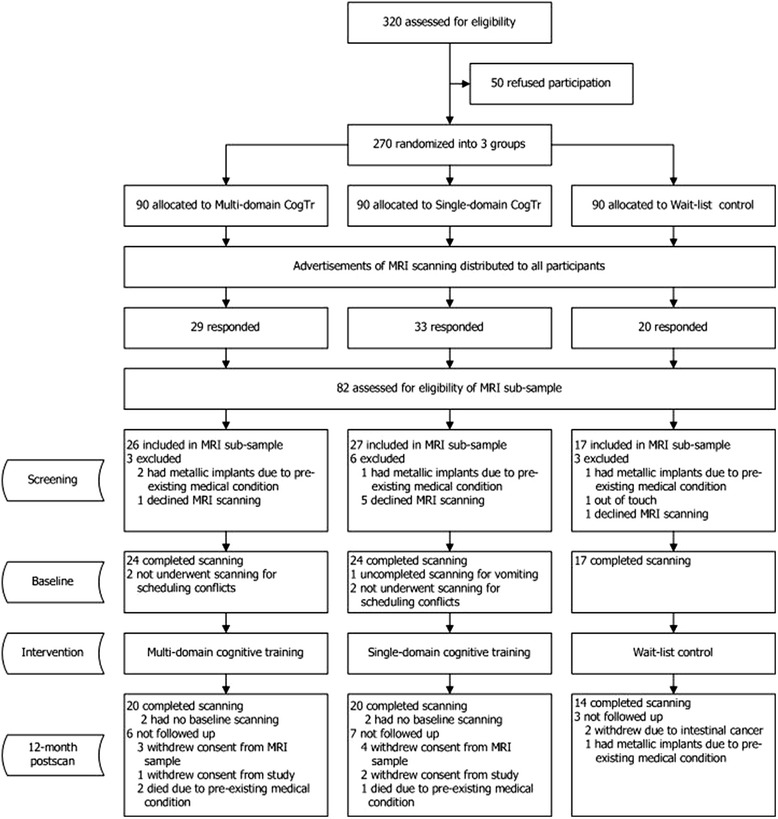
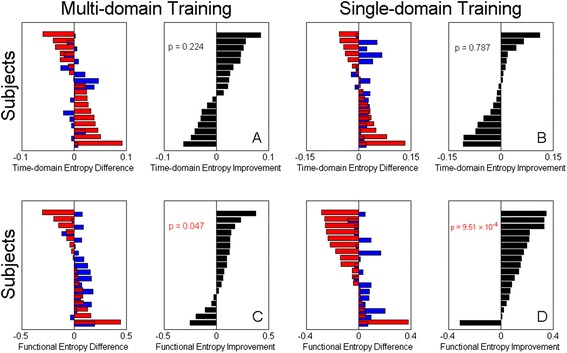
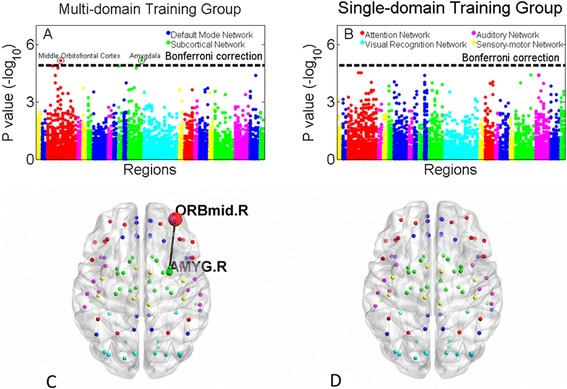
BACKGROUND: The neural mechanisms underlying the restorative effects of cognitive training on aging brains remain unclear. To address this issue, we examined the relationship between changes in spontaneous brain activity and cognitive performance that occur after cognitive training. METHODS: Participants were older adults who were part of a randomized control trial within a larger longitudinal cognitive training study. We conducted single-domain and multi-domain cognitive training in two respective intervention groups. Participants were trained for 1 h, twice a week, for 12 weeks. Cognition was assessed in all participants and magnetic resonance images were obtained at baseline and 1 year after training. To assess spontaneous fluctuations in brain activity, we acquired resting-state fMRI data. Two indices-functional entropy and time-domain entropy-were used to measure the effects of training. Functional entropy increases with aging, and indicates disruptions in functional conectivity. Time-domain entropy decreases with aging, and indicates structural alterations in the brain and blood-flow reduction. RESULTS: Seventy participants completed the study: 26 in the multi-domain cognitive training group (70.38 ± 3.30 yrs), 27 in single-domain group (70.48 ± 3.93 yrs), and 17 in a control group (68.59 ± 3.24 yrs). Functional entropy increased significantly less in the multi-domain (p = 0.047) and single-domain groups (p = 9.51 × 10(-4)) compared with the control group. In the multi-domain group, this was true in the paracentral lobule (p = 0.004, Bonferroni corrected p < 0.05). Time-domain entropy also improved with training. Compared with controls, time-domain entropy in the multi-domain group decreased less in the inferior frontal gyrus pars opercularis (p = 3.59 × 10(-4)), the medial part of superior frontal gyrus (p = 1.17 × 10(-5)), and the thalamus (p = 4.72 × 10(-5)), while that in the single-domain group decreased less in the cuneus (p = 2.58 × 10(-4), Bonferroni corrected p < 0.05). Additionally, changes in regional entropy for some regions such as hippocampus significantly correlated with improvements in cognitive performance. CONCLUSIONS: Cognitive training can induce plastic changes in neural functional connectivity of healthy older people, and these changes may underlie the positive effect of cognitive training. TRIAL REGISTRATION: ChiCTR-TRC-08000732 (Date of registration: 5th November, 2008).
Overview
The claims and statistics of this paper haven’t been checked yet.
Free: it reads the open-access text and checks the first 5 claims that cite a source we can check. Create a free account to check every claim.
Integrity signals
Registry
Cites
Statistics
Figures
Verification
Claims the paper makes
The claims and statistics of this paper haven’t been checked yet.
Free: it reads the open-access text and checks the first 5 claims that cite a source we can check. Create a free account to check every claim.
Claims other papers make about this one
Each is checked against this paper’s own text: does it say what the citing paper says it does?
In the citing paper
“Cognitive training enhances functional connectivity to attenuate the decline in overall memory.486”
From Antiageing strategy for neurodegenerative diseases: from mechanisms to clinical advances (2025) · cites this paper as [486]
Self-check
Percentages, sums and reported differences re-computed from the paper’s own numbers.
The self-check needs the paper’s full text.
Citations
Cites
Hirono, N., Mori, E., Ikejiri, Y., Imamura, T., Shimomura, T., Hashimoto, M., Yamashita, H., & Ikeda, M. (1997) · Brain and nerve · Cited by 21,039
Tzourio-Mazoyer, N., Landeau, B., Papathanassiou, D., Crivello, F., Etard, O., Delcroix, N., Mazoyer, B., & Joliot, M. (2002) · NeuroImage · doi:10.1006/nimg.2001.0978 · Cited by 16,319 · cited 1×
“In our present study, the automated anatomical labeling atlas [45] (AAL) was used to divide the brain into 90 regions of interest (ROIs) (45 per hemisphere).”
MethodSpontaneous fluctuations in brain activity observed with functional magnetic resonance imaging
Fox, M. D., & Raichle, M. E. (2007) · Nature Reviews Neuroscience · doi:10.1038/nrn2201 · Cited by 6,700 · cited 1×
“1Hz), arise primarily from spontaneous fluctuations in brain metabolism and intrinsic neuronal activity [18, 19].”
BackgroundApproximate entropy as a measure of system complexity.
Pincus, S. M. (1991) · Proceedings of the National Academy of Sciences · doi:10.1073/pnas.88.6.2297 · Cited by 5,811 · cited 4×
“We termed the Approximate Entropy of each individual brain region the regional time-domain entropy.”
MethodInfluentialPrediction and Entropy of Printed English
Shannon, C. E. (1951) · Bell System Technical Journal · doi:10.1002/j.1538-7305.1951.tb01366.x · Cited by 2,686
Randolph, C., Tierney, M. C., Mohr, E., & Chase, T. N. (1998) · Journal of Clinical and Experimental Neuropsychology · doi:10.1076/jcen.20.3.310.823 · Cited by 2,519 · cited 2×
“The measures included the Repeatable Battery for the Assessment of Neuropsychological Status [39] (RBANS, Form A), which has been shown to have good reliability and validity in a sample of Chinese community-living older people [40], the Color Word Stroop test (CWST) [41], the Visual Reasoning test [42] and the Trail M…”
MethodUnbiased average age-appropriate atlases for pediatric studies
Fonov, V., Evans, A. C., Botteron, K., Almli, C. R., McKinstry, R. C., & Collins, D. L. (2011) · NeuroImage · doi:10.1016/j.neuroimage.2010.07.033 · Cited by 2,290 · cited 1×
“Subsequently, the functional scans were spatially normalized to a standard template [44] (Montreal Neurological Fig.”
MethodInsights into the ageing mind: a view from cognitive neuroscience
Hedden, T., & Gabrieli, J. D. E. (2004) · Nature Reviews Neuroscience · doi:10.1038/nrn1323 · Cited by 2,223 · cited 1×
“and cognitive impairments that can interfere with daily routines [1] and affect the capacity of older people to live independently.”
BackgroundHemispheric asymmetry reduction in older adults: the HAROLD model
Cabeza, R. (2002) · Psychology and Aging · doi:10.1037/0882-7974.17.1.85 · Cited by 2,125 · cited 4×
“2) Cognitive training reduces HAROLD.”
BackgroundInfluentialHemispheric asymmetry reduction in older adults: The HAROLD model.
Cabeza, R. E. L. (2002) · Psychology and Aging · doi:10.1037//0882-7974.17.1.85 · Cited by 2,036
Functional mapping of the human visual cortex by magnetic resonance imaging
Belliveau, J. W., Kennedy, D. N., McKinstry, R. C., Buchbinder, B. R., Weisskoff, R. M., Cohen, M. S., Vevea, J. M., Brady, T. J., & Rosen, B. R. (1991) · Science · doi:10.1126/science.1948051 · Cited by 1,883 · cited 1×
“These regions function in primary sensory abilities such as vision and audition [61].”
BackgroundA direct demonstration of functional specialization in human visual cortex
Zeki, S., Watson, J., Lueck, C., Friston, K., Kennard, C., & Frackowiak, R. (1991) · The Journal of Neuroscience · doi:10.1523/jneurosci.11-03-00641.1991 · Cited by 1,716 · cited 1×
“These results suggest that regions involved in speech production [54], self-awareness [55], relaying sensory and motor signals [56], and visual processing [57] are sensitive to CogTr.”
Video game training enhances cognitive control in older adults
Anguera, J. A., Boccanfuso, J., Rintoul, J. L., Al-Hashimi, O., Faraji, F., Janowich, J., Kong, E., Larraburo, Y., Rolle, C., Johnston, E., et al. (2013) · Nature · doi:10.1038/nature12486 · Cited by 1,666 · cited 1×
“The newly learned skill was reinforced by solving a few real-life problems (for more details, see our previous study [10]).”
BackgroundLautenschlager, N. T., Cox, K. L., Flicker, L., Foster, J. K., van Bockxmeer, F. M., Xiao, J., Greenop, K. R., & Almeida, O. P. (2008) · JAMA · doi:10.1001/jama.300.9.1027 · Cited by 1,637 · cited 1×
“nitive training (CogTr) and physical exercise [4–6].”
Disruption of Large-Scale Brain Systems in Advanced Aging
Andrews-Hanna, J. R., Snyder, A. Z., Vincent, J. L., Lustig, C., Head, D., Raichle, M. E., & Buckner, R. L. (2007) · Neuron · doi:10.1016/j.neuron.2007.10.038 · Cited by 1,592 · cited 1×
“assumed to play a role in cognitive aging [51, 52].”
BackgroundLife and Death of Neurons in the Aging Brain
Morrison, J. H., & Hof, P. R. (1997) · Science · doi:10.1126/science.278.5337.412 · Cited by 1,344
Neurophysiological Architecture of Functional Magnetic Resonance Images of Human Brain
Salvador, R., Suckling, J., Coleman, M. R., Pickard, J. D., Menon, D., & Bullmore, E. (2005) · Cerebral Cortex · doi:10.1093/cercor/bhi016 · Cited by 1,344 · cited 1×
“found that functional connectivity for the paracentral lobule clustered statistically with resting-state activity of other frontal and parietal regions associated with spatial attention and motor functioning [58].”
BackgroundPutting brain training to the test
Owen, A. M., Hampshire, A., Grahn, J. A., Stenton, R., Dajani, S., Burns, A. S., Howard, R. J., & Ballard, C. G. (2010) · Nature · doi:10.1038/nature09042 · Cited by 1,056 · cited 2×
“However, the neural mechanisms underlying the restorative effects of CogTr on aging brains remains unclear and are subject to debate [12, 13].”
BackgroundThe cholinergic system in aging and neuronal degeneration
Schliebs, R., & Arendt, T. (2011) · Behavioural Brain Research · doi:10.1016/j.bbr.2010.11.058 · Cited by 1,047 · cited 1×
“A decreasing time-domain entropy with age (see Additional file 1 Section 3 for more details) reflects the lower oscillating frequency in BOLD signals as we get older, which can result from the loss of cortical and subcortical connections, loss of white matter or demyelination [27, 28], synaptic degeneration [29, 30],…”
BackgroundPlasticity of brain networks in a randomized intervention trial of exercise training in older adults
Voss (2010) · Frontiers in Aging Neuroscience · doi:10.3389/fnagi.2010.00032 · Cited by 841 · cited 1×
“ing how to prevent cognitive impairment with aging is essential, especially given the current aging crisis that is facing the world [3].”
BackgroundAge-related alterations in white matter microstructure measured by diffusion tensor imaging
Salat, D. H., Tuch, D. S., Greve, D. N., van der Kouwe, A. J. W., Hevelone, N. D., Zaleta, A. K., Rosen, B. R., Fischl, B., Corkin, S., Rosas, H. D., et al. (2005) · Neurobiology of Aging · doi:10.1016/j.neurobiolaging.2004.09.017 · Cited by 838 · cited 1×
“A decreasing time-domain entropy with age (see Additional file 1 Section 3 for more details) reflects the lower oscillating frequency in BOLD signals as we get older, which can result from the loss of cortical and subcortical connections, loss of white matter or demyelination [27, 28], synaptic degeneration [29, 30],…”
BackgroundInformation-driven dynamic sensor collaboration
Zhao, F., Shin, J., & Reich, J. (2002) · IEEE Signal Processing Magazine · doi:10.1109/79.985685 · Cited by 803 · cited 1×
“is a fundamental concept originating in statistical physics and information theory, and can be used to measure the degree of uncertainty within a probability distribution [22], with higher entropy reflecting greater uncertainty [23].”
BackgroundHead, D. (2004) · Cerebral Cortex · doi:10.1093/cercor/bhh003 · Cited by 645 · cited 1×
“A decreasing time-domain entropy with age (see Additional file 1 Section 3 for more details) reflects the lower oscillating frequency in BOLD signals as we get older, which can result from the loss of cortical and subcortical connections, loss of white matter or demyelination [27, 28], synaptic degeneration [29, 30],…”
BackgroundWhen the Brain Loses Its Self: Prefrontal Inactivation during Sensorimotor Processing
Goldberg, I. I., Harel, M., & Malach, R. (2006) · Neuron · doi:10.1016/j.neuron.2006.03.015 · Cited by 593 · cited 2×
“These results suggest that regions involved in speech production [54], self-awareness [55], relaying sensory and motor signals [56], and visual processing [57] are sensitive to CogTr.”
BackgroundPaul Broca's historic cases: high resolution MR imaging of the brains of Leborgne and Lelong
Dronkers, N. F., Plaisant, O., Iba-Zizen, M. T., & Cabanis, E. A. (2007) · Brain · doi:10.1093/brain/awm042 · Cited by 520 · cited 1×
“These results suggest that regions involved in speech production [54], self-awareness [55], relaying sensory and motor signals [56], and visual processing [57] are sensitive to CogTr.”
Kelly, M. E., Loughrey, D., Lawlor, B. A., Robertson, I. H., Walsh, C., & Brennan, S. (2014) · Ageing Research Reviews · doi:10.1016/j.arr.2014.02.004 · Cited by 509 · cited 1×
“creasing mental activity in older people by directed CogTr interventions is a particularly promising approach for delaying age-related cognitive decline [7].”
BackgroundMahncke, H. W., Connor, B. B., Appelman, J., Ahsanuddin, O. N., Hardy, J. L., Wood, R. A., Joyce, N. M., Boniske, T., Atkins, S. M., & Merzenich, M. M. (2006) · Proceedings of the National Academy of Sciences · doi:10.1073/pnas.0605194103 · Cited by 502
Hemispheric asymmetry and aging: right hemisphere decline or asymmetry reduction
Dolcos, F., Rice, H. J., & Cabeza, R. (2002) · Neuroscience & Biobehavioral Reviews · doi:10.1016/s0149-7634(02)00068-4 · Cited by 462 · cited 1×
“This may reflect age-related dedifferentiation processes or compensatory functional brain responses [35, 36].”
BackgroundTrail Making Test errors in normal aging, mild cognitive impairment, and dementia
ASHENDORF, L., JEFFERSON, A., OCONNOR, M., CHAISSON, C., GREEN, R., & STERN, R. (2008) · Archives of Clinical Neuropsychology · doi:10.1016/j.acn.2007.11.005 · Cited by 395 · cited 3×
“The measures included the Repeatable Battery for the Assessment of Neuropsychological Status [39] (RBANS, Form A), which has been shown to have good reliability and validity in a sample of Chinese community-living older people [40], the Color Word Stroop test (CWST) [41], the Visual Reasoning test [42] and the Trail M…”
MethodTraining-related brain plasticity in subjects at risk of developing Alzheimer’s disease
Belleville, S., Clément, F., Mellah, S., Gilbert, B., Fontaine, F., & Gauthier, S. (2011) · Brain · doi:10.1093/brain/awr037 · Cited by 386
Physical Exercise, Aging, and Mild Cognitive Impairment: A Population-Based Study
Geda, Y. E., Roberts, R. O., Knopman, D. S., Christianson, T. J. H., Pankratz, V. S., Ivnik, R. J., Boeve, B. F., Tangalos, E. G., Petersen, R. C., & Rocca, W. A. (2010) · Archives of Neurology · doi:10.1001/archneurol.2009.297 · Cited by 371
Age-associated reductions in cerebral blood flow are independent from regional atrophy
Chen, J. J., Rosas, H. D., & Salat, D. H. (2011) · NeuroImage · doi:10.1016/j.neuroimage.2010.12.032 · Cited by 360 · cited 1×
“A decreasing time-domain entropy with age (see Additional file 1 Section 3 for more details) reflects the lower oscillating frequency in BOLD signals as we get older, which can result from the loss of cortical and subcortical connections, loss of white matter or demyelination [27, 28], synaptic degeneration [29, 30],…”
BackgroundUddin, L. Q. (2010) · Frontiers in Systems Neuroscience · doi:10.3389/fnsys.2010.00021 · Cited by 343
Dendritic spine changes associated with normal aging
Dickstein, D. L., Weaver, C. M., Luebke, J. I., & Hof, P. R. (2013) · Neuroscience · doi:10.1016/j.neuroscience.2012.09.077 · Cited by 289 · cited 1×
“A decreasing time-domain entropy with age (see Additional file 1 Section 3 for more details) reflects the lower oscillating frequency in BOLD signals as we get older, which can result from the loss of cortical and subcortical connections, loss of white matter or demyelination [27, 28], synaptic degeneration [29, 30],…”
BackgroundDepression uncouples brain hate circuit
Tao, H., Guo, S., Ge, T., Kendrick, K. M., Xue, Z., Liu, Z., & Feng, J. (2013) · Molecular Psychiatry · doi:10.1038/mp.2011.127 · Cited by 254 · cited 1×
“The names of the ROIs and their corresponding abbreviations are listed in Tao’s work [46].”
BackgroundSelf-citationWolinsky, F. D., Unverzagt, F. W., Smith, D. M., Jones, R., Stoddard, A., & Tennstedt, S. L. (2006) · The Journals of Gerontology: Series A · doi:10.1093/gerona/61.12.1324 · Cited by 200 · cited 1×
“Results from randomized controlled trials suggest that cognitive training can even induce improvements in cognition [8–11].”
BackgroundPlasticity of the aging brain: New directions in cognitive neuroscience
Gutchess, A. (2014) · Science · doi:10.1126/science.1254604 · Cited by 195 · cited 1×
“fMRI is a noninvasive imaging method that assesses activity in regions of the brain based on the blood oxygen level-dependent (BOLD) contrast, and cognitive neuroscience research has already revealed brain plasticity throughout life that means changes and reorganization occurring even in the aging brain [16].”
BackgroundYang, A. C., Huang, C.-C., Yeh, H.-L., Liu, M.-E., Hong, C.-J., Tu, P.-C., Chen, J.-F., Huang, N. E., Peng, C.-K., Lin, C.-P., et al. (2013) · Neurobiology of Aging · doi:10.1016/j.neurobiolaging.2012.05.004 · Cited by 184
Cheng, Y., Wu, W., Feng, W., Wang, J., Chen, Y., Shen, Y., Li, Q., Zhang, X., & Li, C. (2012) · BMC Medicine · doi:10.1186/1741-7015-10-30 · Cited by 178 · cited 1×
“The longitudinal CogTr study was a randomized control trial in healthy older adults, using three groups, including two intervention groups (single-domain CogTr and multi-domain CogTr training) and one wait-list control group [11].”
MethodSelf-citationResting-state activity in development and maintenance of normal brain function
Pizoli, C. E., Shah, M. N., Snyder, A. Z., Shimony, J. S., Limbrick, D. D., Raichle, M. E., Schlaggar, B. L., & Smyth, M. D. (2011) · Proceedings of the National Academy of Sciences · doi:10.1073/pnas.1109144108 · Cited by 167 · cited 1×
“Researchers agree that spontaneous neuronal activity plays a fundamental role in brain function, maintaining brain integrity and its capacity to deal effectively with future demands [20, 21].”
BackgroundApproximate entropy as a measure of irregularity for psychiatric serial metrics
Pincus, S. M. (2006) · Bipolar Disorders · doi:10.1111/j.1399-5618.2006.00375.x · Cited by 153 · cited 3×
“We termed the Approximate Entropy of each individual brain region the regional time-domain entropy.”
MethodInfluentialCheng, Y., Wu, W., Wang, J., Feng, W., Wu, X., & Li, C. (2011) · Archives of Medical Science · doi:10.5114/aoms.2011.25561 · Cited by 121 · cited 1×
“The measures included the Repeatable Battery for the Assessment of Neuropsychological Status [39] (RBANS, Form A), which has been shown to have good reliability and validity in a sample of Chinese community-living older people [40], the Color Word Stroop test (CWST) [41], the Visual Reasoning test [42] and the Trail M…”
MethodSelf-citationLi, R., Zhu, X., Yin, S., Niu, Y., Zheng, Z., Huang, X., Wang, B., & Li, J. (2014) · Frontiers in Aging Neuroscience · doi:10.3389/fnagi.2014.00039 · Cited by 121 · cited 1×
“Differences could be because while they assessed short-term effects, we assessed long-term ones [50].”
BackgroundIntensive Reasoning Training Alters Patterns of Brain Connectivity at Rest
Mackey, A. P., Miller Singley, A. T., & Bunge, S. A. (2013) · The Journal of Neuroscience · doi:10.1523/jneurosci.4141-12.2013 · Cited by 119 · cited 1×
“Because the training-related changes predicted in our study have no relation with handedness [38], we enrolled both right- and left-handed participants.”
BackgroundProbability distribution and entropy as a measure of uncertainty
Wang, Q. A. (2008) · Journal of Physics A Mathematical and Theoretical · doi:10.1088/1751-8113/41/6/065004 · Cited by 116 · cited 1×
“is a fundamental concept originating in statistical physics and information theory, and can be used to measure the degree of uncertainty within a probability distribution [22], with higher entropy reflecting greater uncertainty [23].”
BackgroundPutamen coactivation during motor task execution
Marchand, W. R., Lee, J. N., Thatcher, J. W., Hsu, E. W., Rashkin, E., Suchy, Y., Chelune, G., Starr, J., & Barbera, S. S. (2008) · NeuroReport · doi:10.1097/wnr.0b013e328302c873 · Cited by 108 · cited 1×
“In fMRI experiments, these regions have been related to self-awareness [55], movement regulation [59], and several types of learning [60].”
BackgroundSuccessful aging in Shanghai, China: definition, distribution and related factors
Li, C., Wu, W., Jin, H., Zhang, X., Xue, H., He, Y., Xiao, S., Jeste, D. V., & Zhang, M. (2006) · International Psychogeriatrics · doi:10.1017/s1041610205002966 · Cited by 105 · cited 1×
“Eligibility criteria included: age 65–75 years; education ≥ 1 year; no difficulties with hearing, vision, or communication; no severe physical disease or psychotic disorder; and no obvious cognitive decline (a score on the Chinese version of the MiniMental State Examination ≥ 19 [37]).”
BackgroundSelf-citationCognitive and Neural Effects of Semantic Encoding Strategy Training in Older Adults
Kirchhoff, B. A., Anderson, B. A., Barch, D. M., & Jacoby, L. L. (2012) · Cerebral Cortex · doi:10.1093/cercor/bhr129 · Cited by 98 · cited 1×
“Further, semantic encoding-strategy training increased brain activity in the medial superior frontal gyrus, right precentral gyrus, and left caudate of older adults during intentional encoding [17].”
BackgroundThe Increase of the Functional Entropy of the Human Brain with Age
Yao, Y., Lu, W. L., Xu, B., Li, C. B., Lin, C. P., Waxman, D., & Feng, J. F. (2013) · Scientific Reports · doi:10.1038/srep02853 · Cited by 94
Self-citationCognitive training and plasticity: Theoretical perspective and methodological consequences
Willis, S. L., & Schaie, K. W. (2009) · Restorative Neurology and Neuroscience · doi:10.3233/rnn-2009-0527 · Cited by 92 · cited 1×
“One promising way to fully assess the impact of CogTr on aging individuals and to explore its mechanisms, is to studying cortical changes (neural plasticity) via neuroimaging techniques such as functional magnetic resonance imaging (fMRI) [14, 15].”
MethodEll, S. W., Marchant, N. L., & Ivry, R. B. (2006) · Neuropsychologia · doi:10.1016/j.neuropsychologia.2006.03.018 · Cited by 86
Yan, L., Zhuo, Y., Ye, Y., Xie, S. X., An, J., Aguirre, G. K., & Wang, J. (2009) · Magnetic Resonance in Medicine · doi:10.1002/mrm.21902 · Cited by 76 · cited 1×
“1Hz), arise primarily from spontaneous fluctuations in brain metabolism and intrinsic neuronal activity [18, 19].”
BackgroundSelf-citationLiu, C. Y., Krishnan, A. P., Yan, L., Smith, R. X., Kilroy, E., Alger, J. R., Ringman, J. M., & Wang, D. J. J. (2013) · Journal of Magnetic Resonance Imaging · doi:10.1002/jmri.23961 · Cited by 74 · cited 1×
“Aging has been found to be associated with a reduction in the time-domain entropy of spontaneous brain activity [24–26].”
BackgroundDeCarli, C. S., Kawas, C. H., Morrison, J. H., Reuter‐Lorenz, P. A., Sperling, R. A., & Wright, C. B. (2012) · The Journals of Gerontology Series A · doi:10.1093/gerona/gls111 · Cited by 73 · cited 1×
“assumed to play a role in cognitive aging [51, 52].”
BackgroundSherman, S. M. (2006) · Scholarpedia · doi:10.4249/scholarpedia.1583 · Cited by 67
The Increase of the Functional Entropy of the Human Brain with Age
Yao, Y., Lu, W., Waxman, D., & Feng, J. (2014) · Cited by 66
Self-citationPieramico, V., Esposito, R., Cesinaro, S., Frazzini, V., & Sensi, S. L. (2014) · Frontiers in Systems Neuroscience · doi:10.3389/fnsys.2014.00153 · Cited by 61
Visual Determinants of Reduced Performance on the Stroop Color-Word Test in Normal Aging Individuals
van Boxtel, M. P. J., ten Tusscher, M. P. M., Metsemakers, J. F. M., Willems, B., & Jolles, J. (2001) · Journal of Clinical and Experimental Neuropsychology · doi:10.1076/jcen.23.5.620.1245 · Cited by 61
Inter-individual Differences in fMRI Entropy Measurements in Old Age
Sokunbi, M. O., Staff, R. T., Waiter, G. D., Ahearn, T. S., Fox, H. C., Deary, I. J., Starr, J. M., Whalley, L. J., & Murray, A. D. (2011) · IEEE Transactions on Biomedical Engineering · doi:10.1109/tbme.2011.2164793 · Cited by 49
With time on our side? Task-dependent compensatory processes in graceful aging
Berlingeri, M., Bottini, G., Danelli, L., Ferri, F., Traficante, D., Sacheli, L. M., Colombo, N., Sberna, M., Sterzi, R., Scialfa, G., et al. (2010) · Experimental Brain Research · doi:10.1007/s00221-010-2363-7 · Cited by 46 · cited 1×
“This may reflect age-related dedifferentiation processes or compensatory functional brain responses [35, 36].”
BackgroundDecline in Cognitive Functioning Is Associated with a Higher Mortality Risk
van Gelder, B. M., Tijhuis, M. A. R., Kalmijn, S., Giampaoli, S., & Kromhout, D. (2007) · Neuroepidemiology · doi:10.1159/000098552 · Cited by 36
Katsnelson, A. (2010) · Nature · doi:10.1038/4641111a · Cited by 18 · cited 1×
“However, the neural mechanisms underlying the restorative effects of CogTr on aging brains remains unclear and are subject to debate [12, 13].”
BackgroundXiao, S., Yao, P., Li, X., & Zhang, M. (2002) · Hong Kong journal of psychiatry · Cited by 16
Luiten, P. G. M., Nyakas, C. J., Eisel, U. L. M., & van der Zee, E. (2012) · Springer eBooks · doi:10.1007/978-1-4614-1997-6_84 · Cited by 4
Cited by
Antiageing strategy for neurodegenerative diseases: from mechanisms to clinical advances
Jiang, Q., Liu, J., Huang, S., Wang, X.-Y., Chen, X., Liu, G.-H., Ye, K., Song, W., Masters, C. L., Wang, J., et al. (2025) · Signal Transduction and Targeted Therapy · doi:10.1038/s41392-025-02145-7 · Cited by 165
“486 Time-restricted feeding (TRF), a healthy diet, extends the Drosophila lifespan and delays the onset of ageing markers in the muscles and gut by stimulating circadian-regulated autophagy.”
Self-citationDamirchi, A., Hosseini, F., & Babaei, P. (2018) · American Journal of Alzheimer's Disease & Other Dementias® · doi:10.1177/1533317517727068 · Cited by 133
Bahar-Fuchs, A., Webb, S., Bartsch, L., Clare, L., Rebok, G., Cherbuin, N., & Anstey, K. J. (2017) · Journal of Alzheimer's Disease · doi:10.3233/jad-170404 · Cited by 116
“The exact mechanisms through which CT may improve cognitive functioning are not well understood, but are thought to involve the enhancement of neurobiological processes that underpin cognitive function, including synaptic activity, longterm potentiation, and the activation of diverse neural networks [19, 20].”
Backgroundvan Balkom, T. D., van den Heuvel, O. A., Berendse, H. W., van der Werf, Y. D., & Vriend, C. (2020) · Neuropsychology Review · doi:10.1007/s11065-020-09440-w · Cited by 130
“Two reports specifically addressed age-related neural alterations and described a long-term effect of CT on resting-state fMRI-derived indices of neural network laterality (Luo et al., 2016) and brain entropy (Li et al., 2016), even a year after training.”
BackgroundMethodInfluentialLi, B., He, N., Qiao, Y., Xu, H., Lu, Y., Cui, P., Ling, H., Yan, F.-H., Tang, H., & Chen, S. (2019) · NeuroImage Clinical · doi:10.1016/j.nicl.2019.101691 · Cited by 89
Metadata
- Authors
- Li, T., Yao, Y., Cheng, Y., Xu, B., Cao, X., Waxman, D., Feng, W., Shen, Y., Li, Q., Wang, J., Wu, W., Li, C., & Feng, J.
- Affiliations
- Shanghai Jiao Tong University (CN)
- Fudan University (CN)
- Tongji University (CN)
- Corresponding author
- Li, Chunbo
- Feng, Jianfeng
- ORCID
- Venue
- BMC Geriatrics
- Published
- 2016-01-14
- Volume
- 16
- Issue
- 1
- Pages
- 12-12
- ISSN
- 1471-2318 (ISSN-L)
- PMC
- PMC4712458
- OpenAlex
- W2234976655
- Cited by
- 59
- References
- 64
- Citations by year
- 2026: 2 · 2025: 4 · 2024: 3 · 2023: 5 · 2022: 8 · 2021: 8 · 2020: 7 · 2019: 9 · 2018: 6 · 2017: 6 · 2016: 1
- FWCI
- 4.67
- Type
- journal article
- Language
- en
- Open access
- gold
- doi.org
- Licence
- Locations
- BMC Geriatrics (publishedVersion, cc-by)
- PubMed Central (publishedVersion, cc-by)
- PubMed (publishedVersion)
- Funders
- National Natural Science Foundation of China (30770769, 13dz2260500, 81371505, 91230201)
- Chinese Academy of Sciences (91230201)
- Science and Technology Commission of Shanghai Municipality (13dz2260500, 134119a2501)
- China Scholarship Council
- National Center for Mathematics and Interdisciplinary Sciences, Chinese Academy of Sciences
- Topics
- Life Sciences › Neuroscience › Cognitive Neuroscience › Functional Brain Connectivity Studies
- Health Sciences › Medicine › Psychiatry and Mental health › Dementia and Cognitive Impairment Research
- Social Sciences › Psychology › Experimental and Cognitive Psychology › Cognitive Functions and Memory
- Keywords
- cognitive training, cognitive aging, resting-state brain activity, functional entropy, functional connectivity, neuroplasticity, older adults, hippocampus, paracentral lobule, thalamus, cuneus, cognitive performance, blood flow reduction, brain structural changes
- MeSH terms
- Cognitive Aging, Aged, Brain, Cognition, Cognition Disorders, Female, Humans, Learning, Longitudinal Studies, Magnetic Resonance Imaging, Male, Cohort Studies, Outcome Assessment, Health Care, Functional Neuroimaging
About these checks
Registry, retraction, Cites and statistics results are computed, not judged, with one exception: a printed reference that no index lists is read once by a model before it counts as a citation error. Claims are extracted by a model and kept only when their quote appears verbatim in the text; each cited source is then checked, with a model’s help, for whether it says what the claim relies on. Those verdicts can be wrong — read the claim’s quote and the cited source before relying on one.
Statistics and arithmetic are recomputed, not judged.
Confidence bands are shown only for fields calibrated on our annotated test set. None is calibrated yet, so no band is shown.
What counts as a claim ›How we measure confidence ›How we check this ›
Are you an author, or do you see a problem with this page? Request a review
Data sources
Bibliographic data: Semantic Scholar, OpenAlex, Crossref.
Contains information from the Semantic Scholar Academic Graph Datasets, made available under the ODC Attribution License (ODC-BY 1.0).
Semantic Scholar’s data is described in: Kinney, R., et al. (2023). The Semantic Scholar Open Data Platform. arXiv:2301.10140.
