

Dementia knowledge assessment scale (DKAS): confirmatory factor analysis and comparative subscale scores among an international cohort
Open accessThe DOI matches its Crossref record; 50 of the 51 references it cites were found in a registry or an index.
Abstract
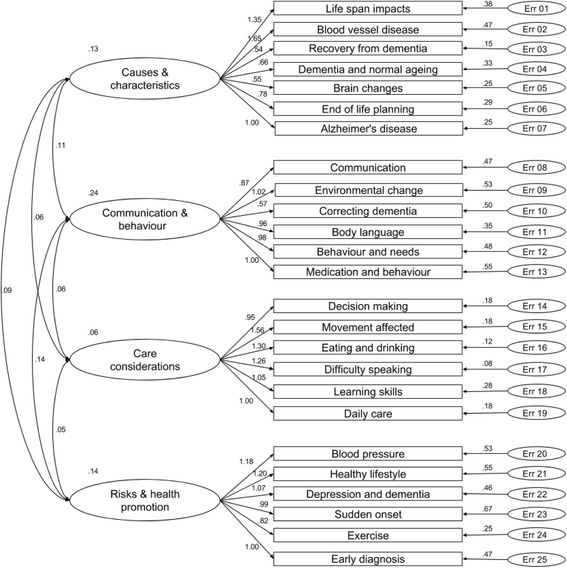
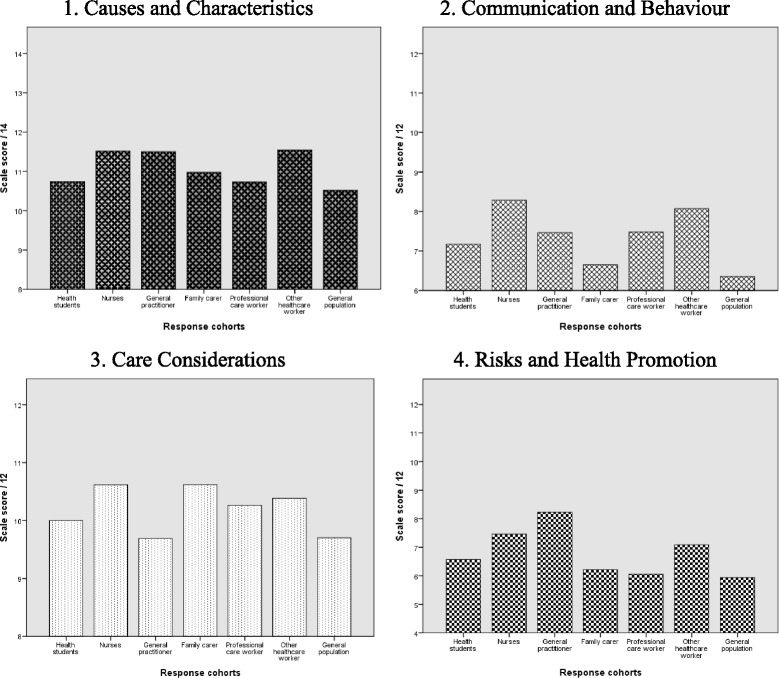
BACKGROUND: Dementia is a life-limiting condition that is increasing in global prevalence in line with population ageing. In this context, it is necessary to accurately measure dementia knowledge across a spectrum of health professional and lay populations with the aim of informing targeted educational interventions and improving literacy, care, and support. Building on prior exploratory analysis, which informed the development of the preliminarily valid and reliable version of the Dementia Knowledge Assessment Scale (DKAS), a Confirmatory Factor Analysis (CFA) was performed to affirm construct validity and proposed subscales to further increase the measure's utility for academics and educators. METHODS: A large, de novo sample of 3649 volunteer respondents to a dementia-related online course was recruited to evaluate the performance of the DKAS and its proposed subscales. Respondents represented diverse cohorts, including health professionals, students, and members of the general public. Analyses included CFA (using structural equation modelling), measures of internal consistency (α), and non-parametric tests of subscale correlation (Spearman Correlation) and score differences between cohorts (Kruskal-Wallis one-way analysis of variance). RESULTS: = .87; overall scale), with acceptable subscale internal consistency (α ≥ .65; subscales). Subscales showed acceptable correlation without any indication of redundancy. Finally, total and DKAS subscale scores showed good discrimination between cohorts of respondents who would be anticipated to hold different levels of knowledge on the basis of education or experience related to dementia. CONCLUSION: The DKAS has been confirmed as a reliable and valid measure of dementia knowledge for diverse populations that is capable of elucidating knowledge characteristics across four coherent domains: 1) Causes and Characteristics, 2) Communication and Behaviour, 3) Care Considerations, and 4) Risks and Health Promotion. Importantly, the four confirmed subscales clearly distinguish between groups who might be expected to hold differing levels of knowledge about dementia, allowing for a fine-grained level of detail to be established when evaluating baseline understanding or knowledge change associated with educational intervention.
Overview
The claims and statistics of this paper haven’t been checked yet.
Free: it reads the open-access text and checks the first 5 claims that cite a source we can check. Create a free account to check every claim.
Integrity signals
Registry
Cites
Statistics
Figures
Verification
Claims the paper makes
The claims and statistics of this paper haven’t been checked yet.
Free: it reads the open-access text and checks the first 5 claims that cite a source we can check. Create a free account to check every claim.
Claims other papers make about this one
Each is checked against this paper’s own text: does it say what the citing paper says it does?
The source backs part of the claim, not all of it — or backs it for a different population, condition or comparison.
In the citing paper
“Public knowledge about dementia can affect behaviors and attitudes towards this syndrome. 5-9”
From Dementia Knowledge in Older and Young Adults: A Cross-Sectional Study (2024) · cites this paper as [7]
Experimental — accuracy not yet measuredThe cited source says what the claim attributes to it.
In the citing paper
“The Dementia Knowledge Assessment Scale (DKAS) is instead a 25 items questionnaire designed to measure knowledge of dementia from a biopsychosocial perspective [7–9]”
The cited source says what the claim attributes to it.
In the citing paper
“Another strength of the DKAS is that it produces, in addition to an overall score for dementia knowledge, four sub-scores on the syndrome causes and characteristics, related risk and protective factors, care consideration and communication with people with the condition [7, 8, 11].”
Self-check
Percentages, sums and reported differences re-computed from the paper’s own numbers.
The self-check needs the paper’s full text.
Citations
Cites
Statistical Power Analysis for the Behavioral Sciences
Muller, K. (1989) · Technometrics · doi:10.1080/00401706.1989.10488618 · Cited by 99,167
Tabachnick, B. G., & Fidell, L. S. (1983) · Cited by 80,054
Statistical power analysis for the behavioral sciences
(1990) · Computers, Environment and Urban Systems · doi:10.1016/0198-9715(90)90050-4 · Cited by 65,269
Principles and Practice of Structural Equation Modeling
Tabri, N., & Elliott, C. M. (2012) · Canadian Graduate Journal of Sociology and Criminology · doi:10.15353/cgjsc-rcessc.v1i1.25 · Cited by 38,891
(1998) · Cited by 36,049
(1985) · Medical Entomology and Zoology · Cited by 19,180
(1991) · Cited by 15,554
Health Behavior and Health Education: Theory, Research, and Practice
(1992) · Annals of Internal Medicine · doi:10.7326/0003-4819-116-4-350_1 · Cited by 13,207
A Beginner's Guide to Structural Equation Modeling: Fourth Edition
Schumacker, R. E., & Lomax, R. G. (2015) · doi:10.4324/9781315749105 · Cited by 6,604
A Beginner's Guide to Structural Equation Modeling
Schumacker, R. E., & Lomax, R. G. (2004) · doi:10.4324/9781410610904 · Cited by 6,235
Research works printed but not linked: 4
- World Health Organization Towards a common language for functioning, disability and health: ICF 2002 Geneva, Switzerland World Health Organization
- McAlister AL, Perry CL, Parcel GS: How individuals, environments, and health behaviors interact. In: Health behavior and health education: theory, research, and practice. Edited by Glanz K, Rimer BK, viswanath K. San Francisco: Jossey-Bass; 2008: 169–188.
- Corp IBM IBM SPSS statistics for windows, version 20.0 2011 IBM Corp Armonk, New York
- Alzheimer's Disease International Women in dementia: a global research review 2015 London, United Kingdom Alzheimer’s Disease International
Cited by
Items 101–200 of 211
Błaszkiewicz, M., Szcześniak, D. M., Ciułkowicz, M., Kowalski, K., Rymaszewska, J. E., Bartosz, B., Bulińska, K., Karczewski, M., Brodaty, H., & Rymaszewska, J. (2024) · Aging & Mental Health · doi:10.1080/13607863.2024.2320139 · Cited by 8
“Taking into account the growing staffing needs (Martin et al., 2016) and striving for high-quality dementia care (Martyr et al., 2018), it seems that dementia education is still not sufficient, both at universities in Poland and in other countries (Annear, Otani, et al., 2017; Carnes et al., 2021; Haydon et al., 2022).”
InfluentialBabalola, D. O., Adewale, B. A., Okwunze, K. F., Mohammed, T. T., Oduguwa, I. O., Igwe, H. A., Farombi, T., & Akinyemi, R. (2025) · Journal of Alzheimer s Disease · doi:10.1177/13872877251333816 · Cited by 5
LEVEL OF KNOWLEDGE AND ATTITUDE ON DEMENTIA CARE AMONG NURSES
Lim, C. K., Ching, C. W., Jun, L. J., & Yun, L. (2021) · The Malaysian Journal of Nursing · doi:10.31674/mjn.2021.v13i02.001 · Cited by 7
“A self-administered questionnaire, Dementia Knowledge Assessment Scale (DKAS) was adopted with permission from Annear et al., (2017). The DKAS scale consists of 25 items across four domains, namely causes and characteristics (7 items), communication and behavior (6 items), care consideration (6 items), and risk and he…”
MethodNeed-based intervention delivery for family caregivers of older adults with dementia
Zauszniewski, J. A., Almutairi, R. R., Jeanblanc, A., & Juratovac, E. (2024) · Archives of Psychiatric Nursing · doi:10.1016/j.apnu.2024.05.012 · Cited by 6
Akyol, M. A., Ayįk, C., & Arıkan, Z. (2025) · Educational Gerontology · doi:10.1080/03601277.2025.2458146 · Cited by 4
“The application of the scale takes an average of 10 minutes (Annear et al., 2015, 2017).”
Conway, A., Harkin, D., Ryan, A. A., & Slater, P. F. (2025) · Nurse Education Today · doi:10.1016/j.nedt.2025.106723 · Cited by 6
The Attitudes of Nurses in the Hospital toward Vulnerable People
Mulyani, S., Lasmani, P. S., Saifullah, A. D., Fawadya, A. S., Ulayya, A. I., & Pramestya, S. (2021) · Open Access Macedonian Journal of Medical Sciences · doi:10.3889/oamjms.2021.6372 · Cited by 4
Makri, M., Γκιόκα, Μ., Μoraitou, D., Fidani, L., Tegos, T. J., & Tsolaki, M. (2023) · Journal of Alzheimer s Disease · doi:10.3233/jad-220954 · Cited by 5
“…share the PRE-ADS questionnaire to participants, including scales that measure the knowledge about AD, risk, and genetics, such as the Dementia Knowledge Assessment Tool [50] and the Dementia Attitudes Scale [51], and to compare their AD literacy with the acceptance of pre-symptomatic AD screening.”
Kim, S., Bindoff, A. D., Farrow, M., McInerney, F., Borchard, J., & Doherty, K. (2021) · The International Review of Research in Open and Distributed Learning · doi:10.19173/irrodl.v22i3.5380 · Cited by 4
“Dementia knowledge was measured using the DKAS (Annear et al., 2017), a 25-item English-language validated scale with five response options per item: false, probably false, probably true, true, and don’t know.”
MethodSelf-citationRumor Has it: “Dementia” A Discourse-Analytical Analysis of Obituaries of People With Dementia
Heynderickx, P. C., Creten, S., & Dieltjens, S. (2022) · OMEGA - Journal of Death and Dying · doi:10.1177/00302228211060594 · Cited by 4
“We are conducting different sub-studies using various research methods, such as surveys with validated scales (Dementia Knowledge Attribute Scale (Annear et al., 2017) and Dementia Attitude Scale (O ’ Connor & McFadden, 2010)) and discourse analyses of different text types (blogs, tweets etc.).”
MethodTesting the sensitivity of two dementia knowledge instruments in dementia workforce education
MacRae, R., Gamble, C., Ritchie, L., & Jack-Waugh, A. (2021) · Nurse Education Today · doi:10.1016/j.nedt.2021.105210 · Cited by 4
Community expectations of a village for people living with dementia
Tierney, L., Doherty, K., Breen, J., & Courtney‐Pratt, H. (2022) · Health & Social Care in the Community · doi:10.1111/hsc.14018 · Cited by 3
“Understanding communication in relation to dementia has previously been identified as a knowledge gap in the general community (Annear et al., 2017).”
BackgroundBrett, L., & Kwok, A. (2024) · Physical & Occupational Therapy In Geriatrics · doi:10.1080/02703181.2024.2380994 · Cited by 3
“23 The DKAS is a reliable and valid measure of dementia knowledge with an acceptable level of internal consistency for the overall score (Cronbach’s α = 0.85) and subscales (Cronbach’s α ranged between 0.65 and 0.76).”
InfluentialAcceptability of Euthanasia for People With Dementia: Perspectives of Clinicians From Six Countries
Xu, J., Smaling, H. J. A., Nakanishi, M., Shinan‐Altman, S., Radbruch, L., Gaertner, J., Achterberg, W. P., Mehr, D. R., & van der Steen, J. T. (2025) · American Journal of Geriatric Psychiatry · doi:10.1016/j.jagp.2025.08.003 · Cited by 5
Sumandar, Hsu, H., Hsieh, H., Chou, P., Wung, S., & Lin, P. (2025) · Journal of Professional Nursing · doi:10.1016/j.profnurs.2025.10.012 · Cited by 3
Levinson, A. J., Ayers, S., Clark, S., Woodburn, R., Schneeberg, A., Hadid, D., Kates, N., Strudwick, G., Grad, R. M., Papaioannou, A., et al. (2026) · Journal of Medical Internet Research · doi:10.2196/79405 · Cited by 7
“Knowledge of dementia risk factors was collected using a 15-item multiple choice assessment aligned with the content of the intervention as well as the Risks and Health Promotion subdomain of the Dementia Knowledge Assessment Scale [29].”
Sung, H. C., Su, H., Lee, W., Chin, M.-Y., Wang, H.-M., Huang, H.-J., & Chu, C.-H. (2026) · International Psychogeriatrics · doi:10.1016/j.inpsyc.2026.100202 · Cited by 4
Jagoda, T., Dharmaratne, S. D., & Rathnayake, S. (2024) · BMC Health Services Research · doi:10.1186/s12913-024-11273-9 · Cited by 4
“Section two assessed informal carers’ knowledge of dementia using the 25-item Dementia Knowledge Assessment Scale (DKAS) [41].”
MethodLevinson, A. J., Ayers, S., Clark, S., Woodburn, R., Dobbins, M., Duarte, D. G. G., Grad, R. M., Kates, N., Marr, S., Oliver, D., et al. (2024) · JMIR Research Protocols · doi:10.2196/64718 · Cited by 2
“Knowledge of dementia risk factors will be assessed using a custom 15-item multiple-choice assessment aligned with the content of the intervention as well as the risks and health promotion subdomain of the Dementia Knowledge Assessment Scale [13].”
Giebel, C. M., Marshall, H., Cannon, J., Donnellan, W. J., Bullen, H. A., Lomas, E., Porritt, B. M., Rees, A., Curran, S., Tetlow, H., et al. (2024) · Dementia · doi:10.1177/14713012241306489 · Cited by 5
“Future evaluations could also include more in-depth assessments of dementia knowledge, such as via the Dementia Knowledge Assessment Scale (Annear et al., 2017).”
Gaps in dementia knowledge: a nationwide study of public awareness and misconceptions in Bulgaria
Lazarova, S., & Petrova‐Antonova, D. (2025) · Psychogeriatrics · doi:10.1111/psyg.70016 · Cited by 6
“30,35 The DKAS is a 25-item scale, containing correct and incorrect statements about dementia.”
Senff, J. R., Tack, R. W. P., Tan, B. Y., Prapiadou, S., Kimball, T. N., Ng, S., Duskin, J. A., Shah-Ostrowski, M. J., Nunley, C., Brouwers, H. B., et al. (2025) · Scientific Reports · doi:10.1038/s41598-025-99246-8 · Cited by 3
“Knowledge questions were sourced from the ‘Stroke Knowledge Assessment Tool’ (SKAT) 18 and the ‘Dementia Knowledge Assessment Scale’ (DKAS) 19 .”
López-Soto, O. P., Aristizábal-Hoyos, J. A., Vásquez, J. M., Fuentes-Barría, H., Aguilera-Eguía, R. A., Angarita, L., Rojas-Gómez, D. M., & Roco-Videla, Á. (2025) · Dentistry Journal · doi:10.3390/dj13070329 · Cited by 3
Information avoidance is associated with lower willingness to be screened for dementia
Orom, H., & Allard, N. C. (2025) · Journal of Alzheimer s Disease · doi:10.1177/13872877251376720 · Cited by 5
‘You’re in a new game and you don’t know the rules: Preparing carers to care’
Atkinson, T. J., Bray, J., & Williamson, T. (2022) · Dementia · doi:10.1177/14713012221112242 · Cited by 4
“The measures contained in the booklet included: · DKAS – a 19-item measure assessing carers’ knowledge of dementia (Annear et al., 2017).”
BackgroundMethodTropea, J., Brand, C. A., Lim, W. K., Hepworth, G., & Finch, S. J. (2022) · International Journal of Older People Nursing · doi:10.1111/opn.12505 · Cited by 3
Dementia awareness among healthcare professionals in Kuwait
Manee, F., Nadar, M. S., Qadoura, D., Rassafiani, M., & Badr, H. E.-S. (2023) · International Journal of Therapy and Rehabilitation · doi:10.12968/ijtr.2022.0087 · Cited by 3
Testad, I., Clare, L., Anstey, K. J., Selbæk, G., Bjørkløf, G. H., Henderson, C., Dalen, I., Gjestsen, M. T., Rhodes, S. G., Røsvik, J., et al. (2020) · BMC Public Health · doi:10.1186/s12889-020-09590-9 · Cited by 3
“DKAS [48] Knowledge about dementia Care partner 25-item scale measuring dementia knowledge across four domains: causes and characteristics, communication and behaviour, care considerations, and risks and health promotion.”
BackgroundMethodInfluentialDementia Knowledge in Older and Young Adults: A Cross-Sectional Study
KORKMAZ YAYLAGÜL, N., AKIŞ, A. G., ÇOBAN, M., İMANCIOĞLU, H., ÖZGÜN BAŞIBÜYÜK, G., YILDIZ, N., ASLAN, M., & KIRIŞIK, H. (2024) · Turkiye Klinikleri Journal of Health Sciences · doi:10.5336/healthsci.2023-98620 · Cited by 2
Bushell, D., Jones, C., & Moro, C. (2023) · Frontiers in Dementia · doi:10.3389/frdem.2023.1156863 · Cited by 6
Gallagher, V. T., Reilly, S., Arp, A., Rossetti, M. A., Thompson, R., & Manning, C. A. (2025) · Aging Clinical and Experimental Research · doi:10.1007/s40520-025-02959-z · Cited by 4
“Future studies might consider utilizing the Dementia Knowledge Assessment Scale (DKAS) [49], which has up-to-date content and promising psychometric properties [50].”
Cesana, B. M., Poptsi, E., Tsolaki, M., Bergh, S., Fabbo, A., Froelich, L., Jori, M. C., & Defanti, C. A. (2025) · NeuroSci · doi:10.3390/neurosci6020045 · Cited by 3
“…(c) the Dementia Knowledge Assessment Scale (DKAS) which provides insights into attitudes by evaluating understanding of dementia-related issues [11], (d) the General Practitioners Attitude and Confidence Scale for Dementia (GPACS-D) which assesses attitudes and confidence levels among primary…”
Caballero, G., Dadich, A., DiGiacomo, M. L., Morrison, N., Okafor, C. E., Siette, J., Steiner, G. Z., Stakeholders, D. F. U., & Karamacoska, D. (2025) · Health Expectations · doi:10.1111/hex.70307 · Cited by 5
“The first measure is a quantitative survey designed to assess dementia knowledge and attitudes, respectively, using the dementia knowledge assessment scale (DKAS) [51] and an Australian dementia diagnosis attitudes scale (DDAS) [52], as favoured by the Canterbury Bankstown Dementia Alliance members.”
Sumandar, Hsu, H., Hsieh, H., Chou, P., Wung, S., & Lin, P. (2025) · Educational Gerontology · doi:10.1080/03601277.2025.2534696 · Cited by 2
“The DKAS demonstrated strong psychometric properties for measuring dementia knowledge across diverse populations (Annear et al., 2017).”
Angelidou, I. A., Ntova, T., Karar, E., Tsatali, M. S., & Teichmann, B. (2025) · Journal of Alzheimer s Disease · doi:10.1177/13872877251390842 · Cited by 2
“Forstructuralvalidity, the original four-factor structure 60 could be largely con fi rmed after excluding items 1, 2, 8, 9, and 23 due to low factor loadings, standardized regression weights, and squared multiple correlations.”
InfluentialOwnby, R. L., & Davenport, R. (2023) · Current Alzheimer Research · doi:10.2174/0115672050274126231120112158 · Cited by 1
Hunter, S. W., Nugent, K., Arnold, C. M., Auais, M. A., Beaupré, L. A., Bello-Haas, V. P. M. D., Liu-Ambrose, T. Y. L., McArthur, C., & Savundranayagam, M. Y. (2024) · Physiotherapy Canada · doi:10.3138/ptc-2023-0048 · Cited by 3
Middleton, L. E., Pelletier, C., Koch, M. S., Norman, R., Dupuis, S. L., Astell, A. J., Giangregorio, L., Freeman, S., & _, _. (2024) · Journal of Aging and Physical Activity · doi:10.1123/japa.2022-0401 · Cited by 3
Su, J. J., Tsui, K. Y., Lam, S. C., Yang, L., Chong, D., Wong, E. M. L., Suen, L. K. P., & Kwan, R. Y. C. (2024) · Nurse Education Today · doi:10.1016/j.nedt.2024.106532 · Cited by 4
Workforce Dementia Training Needs and Preferences for Residential Aged Care
Gulline, H., Bruce, L. J., Woolford, M., Horsman, P., Morawaka, N., Alberti, S., & Ayton, D. (2025) · Journal of the American Medical Directors Association · doi:10.1016/j.jamda.2025.105495 · Cited by 2
Improving Dementia Care for Gitxsan First Nations People
Gaspard, G., McAtackney, D., Sullivan, D., & Sebastian, M. (2021) · International Journal of Indigenous Health · doi:10.32799/ijih.v16i1.33225 · Cited by 5
“Activities Slide # AV/Video Estimated Time Handouts Props Discussion Bus stop game The experience cube 1–26 Teamwork YouTube 2.75 hrs Risk factors for dementia Preventing dementia Lessons from geese Promise to my co-workers Wind-Up Research follow-up/Evaluation Certificates V O L U M E 1 6 , I S S U E 1 , 2 0 2 1 • 14…”
MethodInfluentialYang, T., Gong, D., Peng, Y., & Yang, Y. (2022) · Nurse Education Today · doi:10.1016/j.nedt.2022.105454 · Cited by 2
Anh, N. H. P., Thanh, N. X., Linh, N. T., Hương, N. T. M., Hanh, N. H., & Huyền, V. T. T. (2023) · Tạp chí Nghiên cứu Y học · doi:10.52852/tcncyh.v173i12e13.2079 · Cited by 1
Bryant, J., Freund, M., McGhie, A., Walsh, J., Rumbel, J., Davis, R. E., Leigh, L., & Leask, S. (2024) · Australian Journal on Ageing · doi:10.1111/ajag.13394 · Cited by 1
“…the Dementia Knowledge Assessment Scale has been validated for assessment of dementia knowledge in international studies involving diverse cohorts, 32 it has not been validated for Aboriginal and Torres Strait Islander populations, and its content does not capture broader understanding and…”
Lazarova, S., & Petrova‐Antonova, D. (2024) · Archives of Public Health · doi:10.1186/s13690-024-01476-1 · Cited by 3
Cengız, B., Akyol, M. A., & Açıl, D. (2025) · Journal of Community Health Nursing · doi:10.1080/07370016.2025.2454463 · Cited by 1
“The scale was revised with a larger sample size in 2017 and reduced to 25 items after exploratory factor analysis (Annear et al., 2017).”
Levinson, A. J., Ayers, S., Clark, S., Woodburn, R., Markle‐Reid, M., McKenna, B., Oliver, D., Παπαϊωάννου, Α., Siu, H. Y., & Sztramko, R. (2025) · JMIR Research Protocols · doi:10.2196/67048 · Cited by 1
“Knowledge will be measured through the Dementia Knowledge Assessment Scale (DKAS; reliability α =.85; ω h=.87; overall scale) [29].”
Levinson, A. J., Ayers, S., Clark, S., Gerantonis, P., Schneeberg, A., & Sztramko, R. (2025) · JMIR Aging · doi:10.2196/67889 · Cited by 2
“Knowledge was measured at baseline and after program completion with the Dementia Knowledge Assessment Scale (DKAS; reliability α =.85; ω h =0.87; overall scale) [17].”
InfluentialWong, W. C., & Wu, T. (2025) · Nursing Education Perspectives · doi:10.1097/01.nep.0000000000001418 · Cited by 1
Islam, M. N., Musarrat, P., Konradsen, H., Tyrrell, M., Roy, A., Anik, A. I., & Kabir, Z. N. (2025) · PLoS ONE · doi:10.1371/journal.pone.0326207 · Cited by 1
“According to a 2016 study by Annear and colleagues (2017) which validated the DKAS among an international cohort of participants, the mean DKAS score was about 34.5 (in a scale of 50; SD Family = 6.8 and SD Formal = 8.4) for both family and formal caregivers [39].”
InfluentialHutchinson, A. M., Macpherson, H., Petrovich, T., Vasa, R., Chong, T. W. H., Engel, L., Botha, T., Bucknall, T. K., Burns, K., Daly, S., et al. (2025) · BMJ Open · doi:10.1136/bmjopen-2024-088182 · Cited by 2
Dahshan, A., Hassan, R. M., Doma, E. S., Abdelfatah, D., Khalil, M. I. M., Abdullahi, N. M., Al-Yafeai, T. M., Selim, T. M., Salameh, B. S., Nawaja’a, I. A. K. A., et al. (2025) · Journal of Geriatric Psychiatry and Neurology · doi:10.1177/08919887251414658 · Cited by 1
Anantapong, K., Jiraphan, A., Pariwatcharakul, P., Buathong, N., Setthawatcharawanich, S., Aunjitsakul, W., Paholpak, P., Aphisitphinyo, S., Wiwattanaworaset, P., Paholpak, P., et al. (2026) · BMC Geriatrics · doi:10.1186/s12877-025-06935-0 · Cited by 4
“Three subscales approached the 0.70 threshold, consistent with other versions [25, 29, 44] stability.”
InfluentialHamilton, L. J., Coleman, M. E., Sprecher, A., & Rutter, L. A. (2026) · Alzheimer s & Dementia Diagnosis Assessment & Disease Monitoring · doi:10.1002/dad2.70260 · Cited by 1
Ramadhani, A., Shimizu, K., Tamura, K., Setyowati, D., & Ogawa, H. (2026) · Journal of International Society of Preventive and Community Dentistry · doi:10.4103/jispcd.jispcd_176_25 · Cited by 1
“[17] For this study, the DKAS has been translated into Japanese and Indonesian versions and has been tested for its validity and reliability.”
Conway, A., Harkin, D., Ryan, A. A., & Slater, P. F. (2026) · Nurse Education Today · doi:10.1016/j.nedt.2026.107167 · Cited by 1
CONNECT: Dementia Assessment in Skilled Nursing Communities
Stephanie, R., Lyles, C., Gerber, M., Muirhead, K., Azios, J. H., & Douglas, N. (2026) · Topics in Language Disorders · doi:10.1097/tld.0000000000000388 · Cited by 1
Aboriginal Women Learning on Country: Lessons for Educators
Goldberg, L. R., Baldock, D., Cox, T., Hoang, H., Cross, M., & Price, A. D. (2022) · Frontiers in Public Health · doi:10.3389/fpubh.2022.786434 · Cited by 3
Pai, C.-H., Wang, Y., Shang, Y., & Hsu, T.-K. (2022) · Frontiers in Psychology · doi:10.3389/fpsyg.2022.817960 · Cited by 3
“Annear et al. (2017) discovered that most people could learn knowledge and skills in pre-service education for the application to the work as well as to enhance personal ability. Mastel-Smith et al. (2019) found a difference in pre-service education between Taiwanese companies and American companies; however, pre-serv…”
BackgroundInfluentialImproving Dementia-Specific Referrals From the Acute Care Setting: A Quality Improvement Project
Vallee, L. L., Johnson, J. L., & Shade, K. (2023) · Professional Case Management · doi:10.1097/ncm.0000000000000635 · Cited by 1
Creten, S., & Heynderickx, P. C. (2024) · Open Journal of Social Sciences · doi:10.4236/jss.2024.122006 · Cited by 3
“Annear et al. (2017) developed and tested the DKAS on 3649 international respondents from 97 different countries, who participated in a dementia-related online course.”
BackgroundMethodInfluentialSun, H., Liu, W., Sun, X., Gao, Y., Chen, Y., Lin, Y., Song, J., Zhang, Z., Wang, B. H., Li, L., et al. (2024) · Journal of Applied Gerontology · doi:10.1177/07334648241236036 · Cited by 2
“…Scale (ADKS, Cronbach ’ s α = .71, 30 items) (Carpenter et al., 2009), the Dementia Knowledge Assessment Scale (DKAS, Cronbach ’ s α = .85, 25 items) (Annear et al., 2015, 2017), and the Urinary Incontinence Knowledge Scale (UIKS, Cronbach ’ s α = .69 for older people, 30 items) (Yuan &…”
Measuring quality of self-care of elderly patients with dementia in a developing country
Buwembo, D. R., Gumikiriza‐Onoria, J. L., Lwere, K., Kaddumukasa, M., Kagaayi, J., Kiguli, J., Sajatovic, M., Nakasujja, N., & Makumbi, F. E. (2024) · Academia Mental Health and Well-Being · doi:10.20935/mhealthwellb7300 · Cited by 1
“The tool has been shown to have a high internal consistency Cronbach’s alpha of 0.85 and high discriminant validity [19].”
MethodInfluentialFactors associated with knowledge in African immigrants with personal experiences of dementia
Nkimbeng, M. J., Aswani, T. (., Albers, E., Russell, W. N., Shippee, T. P., & Gaugler, J. E. (2024) · Alzheimer s & Dementia Diagnosis Assessment & Disease Monitoring · doi:10.1002/dad2.70015 · Cited by 1
"Dementia: The Lost Memories" – A Serious Game Approach to Enhancing Public Awareness and Knowledge
Ghifari, A., Sadeli, A., Hendrawan, L., & Ramdhan, D. (2025) · Procedia Computer Science · doi:10.1016/j.procs.2025.09.002 · Cited by 1
Cheng, C., & Liem, A. (2024) · doi:10.31234/osf.io/bgqh6 · Cited by 1
Liem, A., Verghis, S., & Su, T. T. (2024) · PsyArXiv (OSF Preprints) · doi:10.31234/osf.io/fpsqt · Cited by 1
Development and initial evaluation of a conversational agent for Alzheimer’s diseasePreprint
Castano-Villegas, N., Llano, I., Villa, M. C., Martinez, J., Zea, J., Urrea, T., Bañol, A. M., Bohorquez, C., & Martinez, N. (2024) · medRxiv · doi:10.1101/2024.09.04.24312955 · Cited by 3
“It has been further validated in an international cohort, revealing good reliability and internal consistency [11].”
BackgroundPerceptions of dementia in faith-based organizations
Kooker, M. E. (2020) · UNI ScholarWorks (University of Northern Iowa)
Implementation and Impact of the Dementia Friends Pilot in Washington State
Strayer, A. T. (2020) · ResearchWorks at the University of Washington (University of Washington)
Felc, B., Felc, Z., & Deleja, G. (2021) · International Journal of Psychiatry Research · doi:10.33425/2641-4317.1108
Gallo, M. F., Tabernero, M. E., Berríos, W., Cores, E. V., & Deschle, F. (2022) · Neurología Argentina · doi:10.1016/j.neuarg.2022.02.001
Anh, N. H. P., & Hương, N. T. D. (2023) · Tạp chí Nghiên cứu Y học · doi:10.52852/tcncyh.v160i12v1.1105
Albers, B., Bergmann, J. M., Recchia, D. R., Müller-Widmer, R., Hohmann, A., Pinkert, C., Berner, N., Kunz, L. K., & Teupen, S. (2024) · BMJ Open · doi:10.1136/bmjopen-2023-081355 · Cited by 1
Levinson, A. J., Ayers, S., Clark, S., Gerantonis, P., Schneeberg, A., & Sztramko, R. (2024) · doi:10.2196/preprints.67889
Self-Management by Family Caregivers of People with Dementia
Shehadeh, A., & Malak, M. Z. (2024) · Springer eBooks · doi:10.1007/978-3-031-40858-8_384-1
Stigma associated with dementia among recreation and leisure studies students and professionals
Grigorovich, A., Norman, R., Dupuis, S. L., Smale, B. J. A., & Kontos, P. (2024) · Leisure/Loisir · doi:10.1080/14927713.2024.2437419
“…were developed for one study and were not psychometrically evaluated, as well as the variety of scales used to evaluate attitudes, of which the most commonly used have been the Dementia Attitudes Scale (O’Connor & McFadden, 2010) and the Alzheimer’s Disease Knowledge Scale (Annear et al., 2017).”
Development of a dementia literacy scale among community-dwelling older adults
Aihara, Y. (2025) · Geriatric Nursing · doi:10.1016/j.gerinurse.2025.03.032
Young, L., Harkess-Murphy, E., McGeehan, M., Brown, M., & Jack-Waugh, A. (2025) · Mental Health Practice · doi:10.7748/mhp.2025.e1736
Lai, Y. Y. R., Lim, S. M., Koh, H. J., Chin, A. L. M., Loh, E. H. C., & Nur, A. B. R. (2025) · The Journal of Mental Health Training Education and Practice · doi:10.1108/jmhtep-06-2024-0057
Ng, S. C. W., Senff, J. R., Tack, R. W. P., Maulik, M., Shah-Ostrowski, M. J., Ibrahim, S., Tan, B. Y., Prapriadou, S., Kimball, T. N., Choksi, D., et al. (2025) · American Journal of Health Promotion · doi:10.1177/08901171251348111
“The survey collected data on demographics (adapted from the “ American Community Survey ” 24 ), perceptions of pre-ventability and modi fi able risk factors for dementia and stroke ( “ Stroke Knowledge Assessment Tool ” 25 and “ Dementia Knowledge Assessment Tool ” 26 ), levels of trust in various health information so…”
Levinson, A. J., Ayers, S., Clark, S., Woodburn, R., Schneeberg, A., Hadid, D., Kates, N., Strudwick, G., Grad, R. M., Παπαϊωάννου, Α., et al. (2025) · doi:10.2196/preprints.79405
Senff, J. R., Shah-Ostrowski, M. J., Tack, R. W. P., Nunley, C., Palys, C. R., Ng, S., Mallick, A., Gutiérrez-Martínez, L., Duskin, J. A., Kimball, T. N., et al. (2025) · BMC Public Health · doi:10.21203/rs.3.rs-5145102/v1
Jagoda, T., & Rathnayake, S. (2025) · Frontiers of Nursing · doi:10.2478/fon-2025-0037
Psychometric Evaluation of the Spanish OSAKA Tool Among Dental Practitioners in Colombia
Bravo, M., Rivera, Á., & Molina, A. (2025) · International Journal of Dental Research and Allied Sciences · doi:10.51847/oke6ch6atw
Dementia knowledge among caregivers with and without training in Lima-Peru
Custodio, B., Montesinos, R., Málaga, M., Chambergo‐Michilot, D., del Castillo, R. C., Verastegui, G., Agüero, K., Yauri, Z., & Custodio, N. (2026) · Dementia & Neuropsychologia · doi:10.1590/1980-5764-dn-2024-0270
“While both have been validated for use with caregivers 17-19 , the DKAS demonstrated superior internal consistency and better discrimination to pre–post training changes 20 .”
Community awareness of dementia in Vietnam
Nguyen, H., Nguyen, T. T., Esterman, A., Brodaty, H., Kurrle, S. E., Nguyen, B. T., Hinton, L., Tran, K., Crotty, M., Nguyen, T. A., et al. (2025) · Discover Social Science and Health · doi:10.1007/s44155-025-00342-x
“While items were adapted from previous surveys on public knowledge of dementia [18, 19], tools such as ADKS and DKAS, developed in high-income settings [20, 21], might be less suitable for use in the general Vietnamese population.”
Ahmad, S. A., Ahmad, M. A., Mohamedali, L., Al-Kubaisi, M., Habib, A., Huwaijah, H., Mustafa, K., Barqawi, H. J., & Abu‐Gharbieh, E. (2025) · Scientific Reports · doi:10.1038/s41598-025-27528-2 · Cited by 3
“Those statements belong to one of four subscales (causes and characteristics, communication and behavior, care considerations, and risk and health promotion) that add up to a final total score between 0 and 50 21 .”
Zhao, Y., Liu, L., Ding, Y., Shan, Y., & Chan, H. Y. L. (2022) · Figshare · doi:10.6084/m9.figshare.19092519
Testad, I., Clare, L., Anstey, K. J., Selbæk, G., Bjørkløf, G. H., Henderson, C., Dalen, I., Gjestsen, M. T., Rhodes, S. G., Røsvik, J., et al. (2020) · Figshare · doi:10.6084/m9.figshare.13076522
Zhao, Y., Liu, L., Ding, Y., Shan, Y., & Chan, H. Y. L. (2022) · Figshare · doi:10.6084/m9.figshare.19092516
Hung, S.-P., Liao, Y.-H., Eccleston, C. E. A., & Ku, L.-J. E. (2022) · Figshare · doi:10.6084/m9.figshare.21621992
Self-citationVrijsen, J., Matulessij, T. F., Joxhorst, T., de Rooij, S. E., & Smidt, N. (2021) · Figshare · doi:10.6084/m9.figshare.14532380
Hung, S.-P., Liao, Y.-H., Eccleston, C. E. A., & Ku, L.-J. E. (2022) · Figshare · doi:10.6084/m9.figshare.21621989
Self-citationJagoda, T., Dharmaratne, S. D., & Rathnayake, S. (2024) · Figshare · doi:10.6084/m9.figshare.26777512
Wong, S. P., Starr, K. N. P., Brennan‐Cook, J., Brown, E., Bunn, M., Eller, M. A., Sanchez, M., Webb, A., & Heflin, M. T. (2026) · Journal of Interprofessional Education & Practice · doi:10.1016/j.xjep.2025.100798
Widiyaningsih, Pradana, A. A., Susanto, H., & Chiu, H. (2026) · Journal of Nursing Research · doi:10.1097/jnr.0000000000000723
“The discriminant validity of the DKAS revealed significant differences among different groups of respondents (Annear et al., 2017).”
Захаров, С. В., Schröter, A., & Teichmann, B. (2026) · Journal of Alzheimer s Disease Reports · doi:10.1177/25424823251409406
“Thescalehasdemonstratedstrong psychometric properties, including high test-retest reliability, robust internal consistency (Cronbach ’ s α = 0.85; McDonald ’ s ω = 0.87 in Annear et al. (2017)), and solid construct, concurrent, and factor validity.”
InfluentialHarper, L., Moon, L., Powell, R. A., & Reddon, J. R. (2026) · Gerontology & Geriatrics Education · doi:10.1080/02701960.2026.2630668
Coproducing an Evaluation of a Dementia Education Programme for Family Carers
MacRae, R., Jack-Waugh, A., Tolson, D., Harkess-Murphy, E., Mimnaugh, J., & Holland, S. A. (2026) · Health & Social Care in the Community · doi:10.1155/hsc/3500517
Metadata
- Authors
- Annear, M. J., Toye, C., Elliott, K.-E. J., McInerney, F., Eccleston, C., & Robinson, A.
- Affiliations
- University of Tasmania (AU)
- Corresponding author
- Annear, Michael J.
- Venue
- BMC Geriatrics
- Published
- 2017-07-31
- Volume
- 17
- Issue
- 1
- Pages
- 168-168
- ISSN
- 1471-2318 (ISSN-L)
- PMC
- PMC5537989
- OpenAlex
- W2741918151
- Semantic Scholar
- eaed6d5175648abc814c2a6b9f45d1d3772c8627
- Cited by
- 212
- References
- 51
- Citations by year
- 2026: 23 · 2025: 42 · 2024: 36 · 2023: 18 · 2022: 33 · 2021: 24 · 2020: 16 · 2019: 10 · 2018: 9
- FWCI
- 7.86
- Type
- journal article
- Language
- en
- Open access
- gold
- doi.org
- Licence
- cc-by
- Locations
- BMC Geriatrics (publishedVersion, cc-by)
- Europe PMC (PubMed Central) (publishedVersion, cc-by)
- PubMed Central (publishedVersion, cc-by)
- PubMed (publishedVersion)
- UTAS Research Repository (acceptedVersion)
- eCite Digital Repository (University of Tasmania) (submittedVersion, cc-by)
- DOAJ (DOAJ: Directory of Open Access Journals) (submittedVersion, cc-by-sa)
- eSpace (Curtin University) (submittedVersion, cc-by)
- Figshare (submittedVersion, cc-by)
- Open Scholarship Institutional Repository (Washington University in St. Louis) (submittedVersion, cc-by)
- Funders
- University of Tasmania
- Topics
- Health Sciences › Medicine › Psychiatry and Mental health › Dementia and Cognitive Impairment Research
- Health Sciences › Nursing › Research and Theory › Health Education and Validation
- Social Sciences › Decision Sciences › Management Science and Operations Research › Psychometric Methodologies and Testing
- Keywords
- dementia knowledge, scale validation, construct validity, subscales, healthcare workers, lay public, dementia education, knowledge assessment, dementia care
- MeSH terms
- Adolescent, Adult, Aged, Aged, 80 and over, Dementia, Factor Analysis, Statistical, Female, Health Education, Health Surveys, Humans, Health Knowledge, Attitudes, Practice, Male, Middle Aged, Psychometrics, Reproducibility of Results, Cohort Studies, Comprehension, Internationality, Young Adult
About these checks
Registry, retraction, Cites and statistics results are computed, not judged, with one exception: a printed reference that no index lists is read once by a model before it counts as a citation error. Claims are extracted by a model and kept only when their quote appears verbatim in the text; each cited source is then checked, with a model’s help, for whether it says what the claim relies on. Those verdicts can be wrong — read the claim’s quote and the cited source before relying on one.
Statistics and arithmetic are recomputed, not judged.
Confidence bands are shown only for fields calibrated on our annotated test set. None is calibrated yet, so no band is shown.
What counts as a claim ›How we measure confidence ›How we check this ›
Are you an author, or do you see a problem with this page? Request a review
Data sources
Bibliographic data: Semantic Scholar, OpenAlex, Crossref.
Contains information from the Semantic Scholar Academic Graph Datasets, made available under the ODC Attribution License (ODC-BY 1.0).
Semantic Scholar’s data is described in: Kinney, R., et al. (2023). The Semantic Scholar Open Data Platform. arXiv:2301.10140.
