

Dementia knowledge assessment scale (DKAS): confirmatory factor analysis and comparative subscale scores among an international cohort
Open accessThe DOI matches its Crossref record; 50 of the 51 references it cites were found in a registry or an index.
Abstract
BACKGROUND: Dementia is a life-limiting condition that is increasing in global prevalence in line with population ageing. In this context, it is necessary to accurately measure dementia knowledge across a spectrum of health professional and lay populations with the aim of informing targeted educational interventions and improving literacy, care, and support. Building on prior exploratory analysis, which informed the development of the preliminarily valid and reliable version of the Dementia Knowledge Assessment Scale (DKAS), a Confirmatory Factor Analysis (CFA) was performed to affirm construct validity and proposed subscales to further increase the measure's utility for academics and educators. METHODS: A large, de novo sample of 3649 volunteer respondents to a dementia-related online course was recruited to evaluate the performance of the DKAS and its proposed subscales. Respondents represented diverse cohorts, including health professionals, students, and members of the general public. Analyses included CFA (using structural equation modelling), measures of internal consistency (α), and non-parametric tests of subscale correlation (Spearman Correlation) and score differences between cohorts (Kruskal-Wallis one-way analysis of variance). RESULTS: = .87; overall scale), with acceptable subscale internal consistency (α ≥ .65; subscales). Subscales showed acceptable correlation without any indication of redundancy. Finally, total and DKAS subscale scores showed good discrimination between cohorts of respondents who would be anticipated to hold different levels of knowledge on the basis of education or experience related to dementia. CONCLUSION: The DKAS has been confirmed as a reliable and valid measure of dementia knowledge for diverse populations that is capable of elucidating knowledge characteristics across four coherent domains: 1) Causes and Characteristics, 2) Communication and Behaviour, 3) Care Considerations, and 4) Risks and Health Promotion. Importantly, the four confirmed subscales clearly distinguish between groups who might be expected to hold differing levels of knowledge about dementia, allowing for a fine-grained level of detail to be established when evaluating baseline understanding or knowledge change associated with educational intervention.
Overview
The claims and statistics of this paper haven’t been checked yet.
Free: it reads the open-access text and checks the first 5 claims that cite a source we can check. Create a free account to check every claim.
Integrity signals
Registry
Cites
Statistics
Figures
Verification
Claims the paper makes
The claims and statistics of this paper haven’t been checked yet.
Free: it reads the open-access text and checks the first 5 claims that cite a source we can check. Create a free account to check every claim.
Claims other papers make about this one
Each is checked against this paper’s own text: does it say what the citing paper says it does?
The source backs part of the claim, not all of it — or backs it for a different population, condition or comparison.
In the citing paper
“Public knowledge about dementia can affect behaviors and attitudes towards this syndrome. 5-9”
From Dementia Knowledge in Older and Young Adults: A Cross-Sectional Study (2024) · cites this paper as [7]
Experimental — accuracy not yet measuredThe cited source says what the claim attributes to it.
In the citing paper
“The Dementia Knowledge Assessment Scale (DKAS) is instead a 25 items questionnaire designed to measure knowledge of dementia from a biopsychosocial perspective [7–9]”
The cited source says what the claim attributes to it.
In the citing paper
“Another strength of the DKAS is that it produces, in addition to an overall score for dementia knowledge, four sub-scores on the syndrome causes and characteristics, related risk and protective factors, care consideration and communication with people with the condition [7, 8, 11].”
Self-check
Percentages, sums and reported differences re-computed from the paper’s own numbers.
The self-check needs the paper’s full text.
Citations
Cites
Statistical Power Analysis for the Behavioral Sciences
Muller, K. (1989) · Technometrics · doi:10.1080/00401706.1989.10488618 · Cited by 99,167
Tabachnick, B. G., & Fidell, L. S. (1983) · Cited by 80,054
Statistical power analysis for the behavioral sciences
(1990) · Computers, Environment and Urban Systems · doi:10.1016/0198-9715(90)90050-4 · Cited by 65,269
Principles and Practice of Structural Equation Modeling
Tabri, N., & Elliott, C. M. (2012) · Canadian Graduate Journal of Sociology and Criminology · doi:10.15353/cgjsc-rcessc.v1i1.25 · Cited by 38,891
(1998) · Cited by 36,049
(1985) · Medical Entomology and Zoology · Cited by 19,180
(1991) · Cited by 15,554
Health Behavior and Health Education: Theory, Research, and Practice
(1992) · Annals of Internal Medicine · doi:10.7326/0003-4819-116-4-350_1 · Cited by 13,207
A Beginner's Guide to Structural Equation Modeling: Fourth Edition
Schumacker, R. E., & Lomax, R. G. (2015) · doi:10.4324/9781315749105 · Cited by 6,604
A Beginner's Guide to Structural Equation Modeling
Schumacker, R. E., & Lomax, R. G. (2004) · doi:10.4324/9781410610904 · Cited by 6,235
Research works printed but not linked: 4
- World Health Organization Towards a common language for functioning, disability and health: ICF 2002 Geneva, Switzerland World Health Organization
- McAlister AL, Perry CL, Parcel GS: How individuals, environments, and health behaviors interact. In: Health behavior and health education: theory, research, and practice. Edited by Glanz K, Rimer BK, viswanath K. San Francisco: Jossey-Bass; 2008: 169–188.
- Corp IBM IBM SPSS statistics for windows, version 20.0 2011 IBM Corp Armonk, New York
- Alzheimer's Disease International Women in dementia: a global research review 2015 London, United Kingdom Alzheimer’s Disease International
Cited by
Diagnostic approach to tinnitus.
Crummer, R. W., & Hassan, G. A. (2004) · PubMed · Cited by 152
Knowledge about Alzheimer's disease in the Brazilian population
Amado, D. K., & Brucki, S. M. D. (2018) · Arquivos de Neuro-Psiquiatria · doi:10.1590/0004-282x20180106 · Cited by 68
Knowledge of Dementia Among the Australian Health Workforce: A National Online Survey
Annear, M. J. (2020) · Journal of Applied Gerontology · doi:10.1177/0733464817752085 · Cited by 64
“The scale has been validated with large Australian and international samples (n > 3,500) of health professionals (nurses, aged care workers, physiotherapists, occupational therapists, health educators, and students) and lay respondents (Annear, Eccleston, et al., 2016; Annear, Toye, Eccleston et al., 2015; Annear et a…”
BackgroundMethodInfluentialSelf-citationA Framework of AI-Based Approaches to Improving eHealth Literacy and Combating Infodemic
Liu, T., & Xiao, X. (2021) · Frontiers in Public Health · doi:10.3389/fpubh.2021.755808 · Cited by 77
Vrijsen, J., Matulessij, T. F., Joxhorst, T., de Rooij, S. E., & Smidt, N. (2021) · BMC Public Health · doi:10.1186/s12889-021-10913-7 · Cited by 58
Kim, S., Werner, P., Richardson, A., & Anstey, K. J. (2019) · Contemporary Clinical Trials Communications · doi:10.1016/j.conctc.2019.100351 · Cited by 55
“The secondary outcome is dementia knowledge which is being assessed with the Dementia Knowledge Assessment Scale (DKAS) - version 2 [31].”
MethodRelationship Between Knowledge and Types of Attitudes Towards People Living with Dementia
Chang, C.-Y., & Hsu, H.-C. (2020) · International Journal of Environmental Research and Public Health · doi:10.3390/ijerph17113777 · Cited by 45
Pacifico, D., Fiordelli, M., Fadda, M., Serena, S., Piumatti, G., Carlevaro, F., Magno, F., Franscella, G., & Albanese, E. (2022) · BMC Public Health · doi:10.1186/s12889-022-14578-8 · Cited by 42
Kim, S., Richardson, A., Werner, P., & Anstey, K. J. (2021) · Dementia · doi:10.1177/1471301220987374 · Cited by 46
“The secondary outcome was dementia knowledge which was assessed with the Dementia Knowledge Assessment Scale (DKAS) - version 2 (Annear et al., 2017).”
MethodResultPublic knowledge of late-life cognitive decline and dementia in an international sample
Van Patten, R., & Tremont, G. (2020) · Dementia · doi:10.1177/1471301218805923 · Cited by 40
Casey, A., Islam, M. M., Schütze, H., Parkinson, A., Yen, L. E., Shell, A., Winbolt, M., & Brodaty, H. (2020) · BMC Family Practice · doi:10.1186/s12875-020-01178-x · Cited by 42
“Scales exist to measure GP dementia knowledge and awareness [59, 63, 64].”
BackgroundPerceptions of dementia amongst the general public across Latin America: a systematic review
Farina, N., Suemoto, C. K., Burton, J. K., Oliveira, D., & Frost, R. (2020) · Aging & Mental Health · doi:10.1080/13607863.2020.1725738 · Cited by 44
“For example, the Dementia knowledge assessment scale (DKAS) has been confirmed to be valid and reliable in an English speaking international cohort (Annear et al., 2017).”
MethodLevel of understanding of Alzheimer disease among caregivers and the general population
Jorge, C., Cetó, M., Arias, A., Blasco, E., Gil, M. P., Ortega, R. L., Dakterzada, F., Purroy, F. F., & Piñol‐Ripoll, G. (2020) · Neurología (English Edition) · doi:10.1016/j.nrleng.2018.03.004 · Cited by 40
Capacity building for dementia care in community care services: a mixed methods approach
Chan, H. Y. L., Ho, F., Chui, K. C. M., Hui, E. Y. S., Wong, B., Chong, Y. Y., Bowes, A. M., & Kwok, T. C. Y. (2020) · BMC Geriatrics · doi:10.1186/s12877-020-01517-8 · Cited by 35
Dementia knowledge and its demographic correlates amongst informal dementia caregivers in Singapore
Tan, G. T. H., Yuan, Q., Devi, F., Wang, P., Ng, L. L., Goveas, R. R., Chong, S. A., & Subramaniam, M. (2020) · Aging & Mental Health · doi:10.1080/13607863.2020.1740914 · Cited by 35
Γκιόκα, Μ., Tsolaki, M., Papagiannopoulos, S., Teichmann, B., & Μoraitou, D. (2020) · Nursing Open · doi:10.1002/nop2.546 · Cited by 34
“Besides, a recent confirmatory factor analysis suggests that it may be used to effectively generate overall knowledge scores, when administered to nurses, family members of PwD, health workers, students in health-related disciplines and general adult population (Annear et al., 2017).”
MethodSu, H., Koo, M., Lee, W.-L., Sung, H., Lee, R., & Liu, W. (2021) · BMC Geriatrics · doi:10.1186/s12877-021-02075-3 · Cited by 32
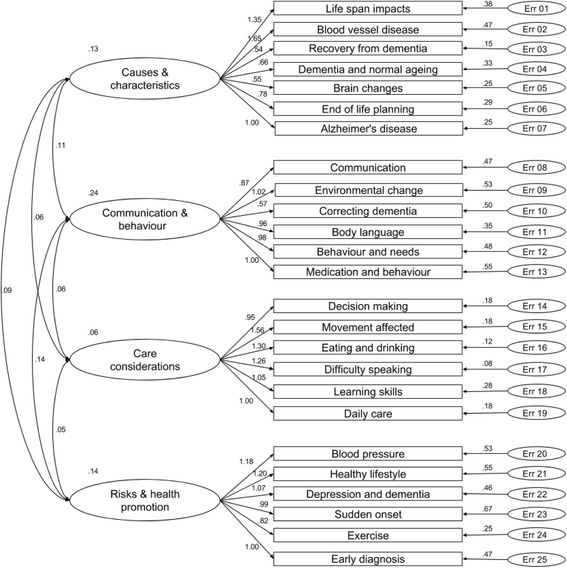
“Confirmatory factor analysis showed good model fit with four clearly discernible factors [20].”
Sung, H., Su, H., Lee, W., Yamakawa, M., & Wang, H.-M. (2022) · International Journal of Geriatric Psychiatry · doi:10.1002/gps.5799 · Cited by 28
“A higher score represents better knowledge in dementia.(20) The Cronbach's α of the traditional Chinese version was 0.”
BackgroundCrawley, S., Moore, K. J., Vickerstaff, V., Fisher, E., Cooper, C., & Sampson, E. L. (2022) · Dementia · doi:10.1177/14713012221074219 · Cited by 28
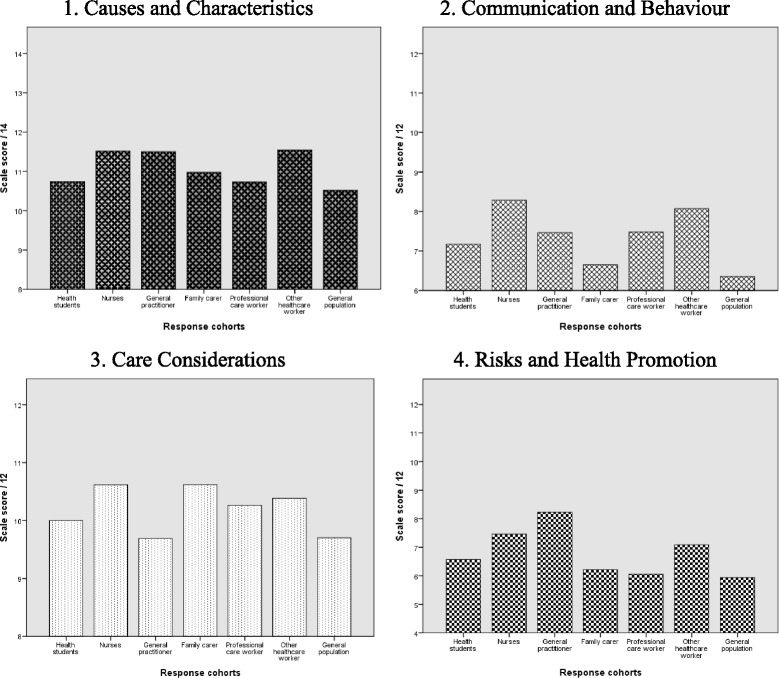
“This reflects findings by Annear et al. 2017 (Annear, Toye, et al., 2017b) who found higher levels of respondent knowledge of care considerations in individuals who were from a nursing background or who identified as family carers relative to other cohorts.”
ResultSung, H., Su, H., Wang, H.-M., Koo, M., & Lo, R. Y. (2021) · BMC Psychiatry · doi:10.1186/s12888-021-03530-6 · Cited by 26
“The majority of the samples in previous studies were nurses [15], health students and professionals in Japan [18], an international cohort of health professionals [16], and hospital and nursing home health care providers in China [17] except only one study from Singapore in which the sample was informal caregivers [19…”
BackgroundResultInfluentialZhao, Y., Eccleston, C. E. A., Ding, Y., Ye, S., Liu, L., & Chan, H. Y. L. (2020) · Journal of Clinical Nursing · doi:10.1111/jocn.15533 · Cited by 28
Self-citationUncertainty and health literacy in dementia care
Lo, R. Y. (2019) · Tzu Chi Medical Journal · doi:10.4103/tcmj.tcmj_116_19 · Cited by 30
“from Australia further developed the Dementia Knowledge Assessment Scale (DKAS) and validated the 25-item scale in a cohort of international respondents [24,25].”
MethodAkyol, M. A., Şentürk, S. G., Söylemez, B. A., & Küçükgüçlü, Ö. (2021) · Dementia and Geriatric Cognitive Disorders · doi:10.1159/000517537 · Cited by 24
Brooke, J., & Rybacka, M. (2020) · Journal of Correctional Health Care · doi:10.1177/1078345820916444 · Cited by 23
“The DKAS is a reliable and valid measure (Annear, Toye, Eccleston, et al., 2015; Annear, Toye, McInerney, et al., 2015; Annear et al., 2017) that contains 25 items across four domains: (1) causes and characteristics, (2) communication and behavior, (3) care and consideration, and (4) risk and health promotion.”
MethodInfluentialCouzner, L., Day, S., Draper, B., Withall, A., Laver, K., Eccleston, C. E. A., Elliott, K.-E., McInerney, F., & Cations, M. (2022) · BMC Health Services Research · doi:10.1186/s12913-021-07411-2 · Cited by 27
“Ten DKAS statements were identified as not corresponding to any of the statements based on the participant responses in this study.”
BackgroundMethodResultSelf-citationTierney, L., Mason, R. L., Doherty, K., Winbolt, M., Long, M., & Robinson, A. (2019) · BMJ Open · doi:10.1136/bmjopen-2018-027804 · Cited by 20
“Scores can also be calculated on four subscales: Causes and Characteristics (seven items relating to the pathology and terminal nature of dementia); Communication and Behaviour (six items relating to how a person with dementia engages with their environment and other people); Care Considerations (six items relating to…”
BackgroundMethodResultInfluentialSelf-citationWindle, G., Flynn, G., Hoare, Z., Goulden, N., Edwards, R. T., Anthony, B. F., Masterson‐Algar, P., Kurana, S., Spector, A. E., Hughes, G., et al. (2024) · The Lancet Regional Health - Europe · doi:10.1016/j.lanepe.2024.101125 · Cited by 27
Spanish-dementia knowledge assessment scale (DKAS-S): psychometric properties and validation
Carnes, A., Gimeno, E. B., Galvan, A., Lara, B., Lladó, A., Contador, J., Vega-Rodriguez, A., Escobar, M., & Piñol‐Ripoll, G. (2021) · BMC Geriatrics · doi:10.1186/s12877-021-02230-w · Cited by 25
“2) communication and behaviour (how a person with dementia engages with the world, 3) care considerations (dementia symptoms relevant to the provision of care) and 4) health risk and promotion (risk factors and conditions that are associated with or mistaken for dementia) [18].”
BackgroundWiese, L. K., Williams, C. L., Tappen, R. M., & Newman, D. O. (2019) · Aging & Mental Health · doi:10.1080/13607863.2019.1584880 · Cited by 25
“Annear et al. (2017) recent development of the Dementia Knowledge Assessment Scale (DKAS) included nursing students, physicians, carers, and general public enrolled in the Understanding Dementia Massive Open Online Course.”
BackgroundChan, C. M., Ong, M. J. Y., Zakaria, A. A., Visusasam, M. M., Ali, M. F., Jamil, T. R., Aizuddin, A. N., & Aziz, A. F. A. (2022) · BMC Geriatrics · doi:10.1186/s12877-022-03148-7 · Cited by 26
Windle, G., Flynn, G., Hoare, Z., Masterson‐Algar, P., Egan, K. J., Edwards, R. T., Jones, C., Spector, A. E., Algar-Skaife, K., Hughes, G., et al. (2022) · BMJ Open · doi:10.1136/bmjopen-2022-064314 · Cited by 20
Graham, F. A., Beattie, E., & Fielding, E. (2022) · Age and Ageing · doi:10.1093/ageing/afac140 · Cited by 25
Nivel de conocimiento de la enfermedad de Alzheimer en cuidadores y población general
Jorge, C., Cetó, M., Arias, A., Blasco, E., Gil, M. P., Ortega, R. L., Dakterzada, F., Purroy, F. F., & Piñol‐Ripoll, G. (2018) · Neurología · doi:10.1016/j.nrl.2018.03.004 · Cited by 25
Chan, W. S., & Leung, A. Y. M. (2020) · Journal of Medical Internet Research · doi:10.2196/16772 · Cited by 24
Fisher, E., Crawley, S., Sampson, E. L., Cooper, C., Jones, R., Anantapong, K., & Moore, K. J. (2022) · Dementia · doi:10.1177/14713012211066674 · Cited by 23
“Increasing severity was expected to increase preparation Dementia knowledge; dementia knowledge assessment scale (DKAS) (Annear et al., 2017; Toye et al. 2014) 25-item response scale with four subscales; 5-point Likert response; scoring: 0–50; higher scores indicate greater knowledge Carer…”
BackgroundInfluentialMelchior, F., & Teichmann, B. (2023) · Journal of Alzheimer s Disease · doi:10.3233/jad-230303 · Cited by 18
Graham, F. A., Fielding, E., & Beattie, E. (2021) · International Journal of Nursing Studies · doi:10.1016/j.ijnurstu.2021.104160 · Cited by 19
Validation of the Spanish Version of the Dementia Knowledge Assessment Tool 2
Parra‐Anguita, L., Moreno-Cámara, S., López-Franco, M. D., & Pancorbo-Hidalgo, P. L. (2018) · Journal of Alzheimer s Disease · doi:10.3233/jad-180290 · Cited by 23
“There 51 are also four published questionnaires about knowl52 edge on dementia: the Dementia Quiz (DQ) 1994 53 [14]; Dementia Knowledge 20 (DK-20) 2013 [15]; 54 the Dementia Knowledge Assessment Tool Version 55 2 (DKAT2) 2013 [16]; and the Dementia Knowl56 edge Assessment Scale (DKAS) 2015 [17, 18].”
BackgroundTeichmann, B., Melchior, F., & Kruse, A. (2022) · Journal of Alzheimer s Disease · doi:10.3233/jad-220678 · Cited by 17
“However, only a few question581 naires, such as the Alzheimer’s Disease Knowledge 582 Scale (ADKS) [41] and the Dementia Knowledge 583 Assessment Scale (DKAS) [42], have been validated 584 in several groups including the general population.”
BackgroundParra‐Anguita, L., Sánchez-García, I., Casado, R. D. P., & Pancorbo-Hidalgo, P. L. (2019) · BMC Geriatrics · doi:10.1186/s12877-019-1086-2 · Cited by 19
“Some authors highlight that the level of knowledge regarding dementia is not only influenced by training, but also experience and real contact with people with dementia [16].”
BackgroundKhait, A. F. A., Menger, A., Hamaideh, S. H., Al-Modallal, H. M., & Abdalrahim, A. (2021) · International Journal of Nursing Knowledge · doi:10.1111/2047-3095.12343 · Cited by 15
“Although different dementia-related knowledge scales are available, the DKAS-II (Dementia Knowledge Assessment Scale-II; Annear et al., 2017)wasselected.”
Assessment tools for measurement of dementia-friendliness of a community: A scoping review
Díaz, L. G., Durocher, E., Gardner, P. M., McAiney, C. A., Mokashi, V., & Letts, L. J. (2022) · Dementia · doi:10.1177/14713012221090032 · Cited by 18
“…knowledge attitude scales In our search, we identified assessment tools designed to measure dementia knowledge and attitudes towards people living with dementia (Annear et al., 2017; Baker et al., 2018; Lundquist & Ready, 2008; O’Connor & McFadden, 2010; Read et al., 2020; Shanahan et al., 2013).”
MethodBrookman, R., Shatnawi, E., Lukic, K., Sirota, S., & Harris, C. B. (2025) · Current Research in Behavioral Sciences · doi:10.1016/j.crbeha.2025.100170 · Cited by 19
Aboriginal community understandings of dementia and responses to dementia care
Cox, T., Hoang, H., Goldberg, L. R., & Baldock, D. (2019) · Public Health · doi:10.1016/j.puhe.2019.02.018 · Cited by 18
Doherty, K., Nguyen, H., Eccleston, C. E. A., Tierney, L., Mason, R. L., Bindoff, A. D., Robinson, A., Vickers, J. C., & McInerney, F. (2020) · BMC Geriatrics · doi:10.1186/s12877-020-01891-3 · Cited by 15
Self-citationAwuol, M. D. A., Besigye, I. K., & Winfred, A. (2023) · Scientific Reports · doi:10.1038/s41598-023-33948-9 · Cited by 14
Supporting caregivers of people with dementia: A systematic review of guidelines
Gao, W., Zhang, T., Wang, H., Wang, S., Liu, Y., & Pang, X. (2021) · Health & Social Care in the Community · doi:10.1111/hsc.13513 · Cited by 18
Nguyen, T. T. H., & Dinh, D. X. (2023) · International Journal of Geriatric Psychiatry · doi:10.1002/gps.5981 · Cited by 14
Predictors of dementia knowledge in a rural general public sample
Eccleston, C. E., Courtney‐Pratt, H., McInerney, F., Johnstone, A., & Doherty, K. (2021) · Australian Journal of Rural Health · doi:10.1111/ajr.12777 · Cited by 11
Self-citationBrijnath, B., González, E., Hlavač, J., Enticott, J., Woodward‐Kron, R. E., LoGiudice, D., Low, L., Antoniades, J., White, J. H., Hwang, K., et al. (2022) · Alzheimer s & Dementia Translational Research & Clinical Interventions · doi:10.1002/trc2.12349 · Cited by 11
Mulyani, S., Saifullah, A. D., Cahyani, K. D., Sukmawati, A. S., & Aisy, S. R. (2023) · Open Access Macedonian Journal of Medical Sciences · doi:10.3889/oamjms.2023.11630 · Cited by 14
“In addition, this instrument proved to be more sensitive than previous instruments [27].”
BackgroundContreras, M., Mioshi, E., & Kishita, N. (2021) · Journal of Contextual Behavioral Science · doi:10.1016/j.jcbs.2021.08.003 · Cited by 14
Zhao, Y., Liu, L., Ding, Y., Shan, Y., & Chan, H. Y. L. (2022) · BMC Nursing · doi:10.1186/s12912-022-00815-3 · Cited by 12
“Dementia knowledge assessment scale (DKAS) The 25-item DKAS which assesses dementia knowledge [35] was used to test the concurrent validity of SCIDSC because dementia knowledge towards people with dementia was used to confirm the concurrent validity of the English version of SCIDS [22].”
Dementia literacy in an ageing world
Smith, G. D., Ho, K. H. M., Lee, A. T. C., Lam, L. C. W., & Chan, S. W. (2022) · Journal of Advanced Nursing · doi:10.1111/jan.15556 · Cited by 16
Goldberg, L. R., Cox, T., Hoang, H., & Baldock, D. (2018) · Australian and New Zealand Journal of Public Health · doi:10.1111/1753-6405.12798 · Cited by 12
Parra‐Anguita, L., García‐Fernández, F. P., Casado, R. D. P., & Pancorbo-Hidalgo, P. L. (2019) · International Journal of Environmental Research and Public Health · doi:10.3390/ijerph16244907 · Cited by 18
“Knowledge about dementia is determined by education and training [17], but also by direct practical experience when caring for people with dementia [18].”
BackgroundHealthy Lifestyle Behaviors and Viewpoints Among Members of an Alzheimer Prevention Registry
Reynolds, G., Tremont, G. N., Santorelli, G. D., Denby, C., Margolis, S. A., & Ott, B. R. (2022) · Alzheimer Disease & Associated Disorders · doi:10.1097/wad.0000000000000496 · Cited by 12
Haydon, H. M., Lotfaliany, M., Jones, C., Chelberg, G., Horstmanshof, L., Taylor, M., Carey, M., Snoswell, C. L., Hicks, R. E., & Banbury, A. (2022) · Australian Journal on Ageing · doi:10.1111/ajag.13149 · Cited by 11
Zhang, Q., Deng, J., Luo, H.-Y., & Wang, L. (2023) · PeerJ · doi:10.7717/peerj.14613 · Cited by 12
Hung, L., Ka, C. M. H., Huang, C. Y., Wong, J., Wong, K. L. Y., Chew, K. H., Chao, Y. C., Hussein, A., Yuen, K., Ren, L. H., et al. (2025) · Frontiers in Virtual Reality · doi:10.3389/frvir.2025.1552370 · Cited by 10
Dementia knowledge and caregiver burden among carers of older adults in rural eastern Uganda
Pokala, S. S., Wandera, S. O., Kawooya, S., Victoria, A. E., Odo, L. W., Nakasujja, N., & Diaz, M. M. (2025) · Alzheimer s & Dementia · doi:10.1002/alz.70587 · Cited by 10
Dementia Knowledge among Kuwait University Students: a Descriptive Study
Manee, F. (2019) · Archives in Neurology & Neuroscience · doi:10.33552/ann.2019.05.000609 · Cited by 9
“In the future, they are expected to provide possible assessments of and treatments for people with dementia [11].”
BackgroundDementia in a regional hospital setting: contextual challenges and barriers to effective care
Annear, M. J., & Lucas, P. (2018) · International Journal of Ageing and Later Life · doi:10.3384/ijal.1652-8670.17344 · Cited by 14
Self-citationZhao, Y., Liu, L., Ding, Y., & Chan, H. Y. L. (2022) · Nurse Education Today · doi:10.1016/j.nedt.2022.105434 · Cited by 11
Nugraha, S., Tondokoro, T., Susilowati, I. H., Hasiholan, B. P., Alimoeso, S., Rahardjo, T. B. W., Takagi, K., & Wada, K. (2022) · Open Access Macedonian Journal of Medical Sciences · doi:10.3889/oamjms.2022.8892 · Cited by 12
“This subscale describes symptoms that are relevant to the provision of care [22].”
BackgroundDementia knowledge is low in adults with HIV disease
Woods, S. P., Fazeli, P. L., Matchanova, A., Vance, D. E., Medina, L. D., & Morgan, E. E. (2019) · International Psychogeriatrics · doi:10.1017/s104161021900139x · Cited by 9
“PLWH are at risk for low dementia knowledge, which is associated with lower education, minority race/ ethnicity, and general health illiteracy (Morgan et al. 2015; Annear et al. 2017).”
BackgroundAldharman, S. S., Alayed, F. T., Aljohani, B. S., Aladwani, A. M., Alyousef, M. A., Hakami, K., Albalawi, D. M., & Alnaaim, S. A. (2023) · Cureus · doi:10.7759/cureus.34578 · Cited by 17
“It was updated in 2017 to a 25-item Likert scale, which was utilized in this study [17].”
MethodJones, D., Capstick, A., Faisal, M., & Frankland, J. (2023) · British Paramedic Journal · doi:10.29045/14784726.2023.6.8.1.9 · Cited by 9
Public Knowledge about Dementia in Poland—A Survey Study
Skowronek, A., Bojkowska-Otrębska, K., & Labuz-Roszak, B. M. (2023) · Journal of Clinical Medicine · doi:10.3390/jcm12247675 · Cited by 12
“The questionnaire in the Polish language was prepared specifically for the purposes of this study and was based on the Dementia Knowledge Assessment Scale (DKAS) [2].”
MethodSeltmann, H., & Teichmann, B. (2024) · Journal of Alzheimer s Disease · doi:10.3233/jad-231338 · Cited by 10
Heward, M., Michèle Board, Spriggs, A., & Murphy, J. L. (2019) · International Psychogeriatrics · doi:10.1017/s1041610218002193 · Cited by 8
Japanese health professionals’ knowledge of dementia and educational needs: A population study
Annear, M. J. (2018) · Australian Journal on Ageing · doi:10.1111/ajag.12523 · Cited by 9
Self-citationWidiyaningsih, W., Pradana, A. A., Susanto, H., & Chiu, H. (2025) · International Journal of Nursing Studies · doi:10.1016/j.ijnurstu.2025.105191 · Cited by 15
What does the public really know about dementia? A community‐based cross‐sectional survey in Turkiye
Akyol, M. A., Güney, S., Özgül, E., Söylemez, B. A., & Küçükgüçlü, Ö. (2024) · Public Health Nursing · doi:10.1111/phn.13398 · Cited by 7
Nguyen, A. H. P., Huy, N. V., Nguyen, T. X., Nguyen, H. T. T., Nguyen, T. N., Nguyen, T. T. H., Goldberg, R. J., Yuan, Y., Gurwitz, J. H., Nguyen, H. L., et al. (2024) · International Journal of Older People Nursing · doi:10.1111/opn.12666 · Cited by 7
Perera, A., Samtani, S., Karamacoska, D., & Siette, J. (2025) · Australian Journal on Ageing · doi:10.1111/ajag.70071 · Cited by 8
Byers, M. D., Resciniti, N. V., Ureña, S., Leith, K. H., Brown, M. J., Lampe, N. M., & Friedman, D. B. (2021) · Journal of Applied Gerontology · doi:10.1177/0733464820986671 · Cited by 10
“…Assessment Tool Version Two (Toye et al., 2013), CARES® Dementia-Related Behavior™ Knowledge Test (Gaugler et al., 2016), Alzheimer’s Disease Knowledge Scale (Carpenter et al., 2009), and the 25-item Dementia Knowledge Assessment Scale (Annear et al., 2017) were used in the knowledge instrument.”
MethodToubøl, A. G., Moestrup, L., Thomsen, K., Ryg, J., Hansen, D. L., Foldager, M., Jakobsen, S., & Nielsen, D. S. (2021) · Nordic journal of nursing research · doi:10.1177/20571585211022971 · Cited by 8
Dissonant dementia: neuropsychiatry, awareness, and contradictions in cognitive decline
Fletcher, J. R., & Maddock, C. A. (2021) · Humanities and Social Sciences Communications · doi:10.1057/s41599-021-01004-4 · Cited by 9
“This type of dementia literacy measurement is now a popular research sub-tradition (see Annear et al., 2017; Bond et al., 2005; Hudson et al., 2012; Lüdecke et al., 2016; McParland et al., 2012; Purandare et al., 2007; Rimmer et al., 2005; Roberts et al., 2014).”
Nkimbeng, M. J., Rosebush, C. E., Akosah, K. O., Yam, H., Russell, W. N., Bustamante, G., Albers, E. A., Shippee, T. P., Sasikumar, A. P., & Gaugler, J. E. (2022) · International Journal of Environmental Research and Public Health · doi:10.3390/ijerph19074075 · Cited by 9
“Dementia knowledge in the quantitative survey was captured with the validated Dementia Knowledge Assessment Scale (DKAS) [42,43] that included questions from the following domains: causes and characteristics, communication and behavior, care considerations and risk, and health promotion in the context of dementia.”
MethodGiebel, C. M., Hanna, K. L., Tetlow, H., Gabbay, M., & Cannon, J. (2024) · Health Expectations · doi:10.1111/hex.13977 · Cited by 7
Grealish, L. A., Todd, J., Teodorczuk, A., Krug, M., Simpson, T., Jenkinson, K., Soltau, D., & Stockwell‐Smith, G. (2021) · International Journal of Nursing Studies Advances · doi:10.1016/j.ijnsa.2021.100040 · Cited by 10
“The DKAS is a validated instrument with an overall Cronbach alpha of .85 (Annear et al., 2017).”
BackgroundMethodInfluentialLee, D. A., Russell, G. M., Haines, T. P., Hill, K., O’Connor, C. M. C., Layton, N. A., Swaffer, K., Long, M., Devanny, C., & Callisaya, M. L. (2024) · Nursing Reports · doi:10.3390/nursrep14040226 · Cited by 6
Chang, C.-H., Huang, K., Kuo, L.-H., Cheng, V. Y.-W., Huang, S.-F., Chuang, T.-H., Huang, C., & Guo, J. (2025) · Healthcare · doi:10.3390/healthcare13091082 · Cited by 7
“To evaluate participants’ understanding of dementia, a 25-item questionnaire was adapted from a validated instrument developed by Annear et al. (2017), and refined through expert consultation [28].”
Wiese, L. K., Williams, I. C., Holt, J., Williams, C. L., Lingler, J. H., Galvin, J. E., & Schoenberg, N. E. (2023) · Aging & Mental Health · doi:10.1080/13607863.2023.2294062 · Cited by 8
“Another version of an AD knowledge scale, the Dementia Knowledge Assessment Scale (DKAS) was tested for psychometrics through a global nine-week online course among 7909 participants (Annear et al., 2016, 2017), and demonstrated desired effects between pre-post education scores.”
MethodAl-Awad, F. A., AlAbdulKader, A. M., AlShammari, M. A., Rohaiem, S. N., Alharkan, K. S., Mohammedin, A. S., Alshurem, M., Albakr, D. M., Alkhunaizi, F., Almaslami, M., et al. (2024) · Electronic Journal of General Medicine · doi:10.29333/ejgm/14159 · Cited by 8
“Dementia knowledge assessment scale (DKAS) is a recent scale that has been proven to be a reliable and valid measure of knowledge about dementia [20].”
BackgroundMethodStafford, A. C., Bender, S. M., Parsons, K., & Sung, B. (2024) · Australian Journal on Ageing · doi:10.1111/ajag.13294 · Cited by 6
“16 • the Dementia Knowledge Assessment Scale (DKAS) assessed participants' knowledge of dementia 17 ; and • the Person-centred Care of Older People with Cognitive Impairment in Acute Care Scale (POPAC) evaluated participants' person-centredness.”
Zhang, Y., Teo, W., & Theng, Y. (2024) · Journal of Applied Gerontology · doi:10.1177/07334648241260614 · Cited by 7
“The knowledge assessment adopted the Dementia Knowledge Assessment Scale (DKAS), a validated tool assessing four subscales of dementia knowledge: Causes and characteristics, Communication & behavior, Care considerations, and Risks and health promotion (Annear et al., 2017).”
MethodDementia knowledge of family caregivers in Indonesia: A cross-sectional survey study
Andrews, S., Mulyani, S., Saifullah, A. D., Maitimoe, M. D. R., Sani, T. P., Sudiyono, N., Dinh, T. T. H., Suharya, D., Effendy, C., Kadar, K., et al. (2024) · Belitung Nursing Journal · doi:10.33546/bnj.3457 · Cited by 10
“Similar deficits in caregiver knowledge of communication difficulties and changed behavioural presentations have been presented elsewhere (Annear et al., 2017a; Carnes et al., 2021; Hossain et al., 2020).”
BackgroundMethodResultInfluentialDevelopment of the dementia community attitudes questionnaire
Read, S. T., Wynaden, D., Albrecht, M. A., & Toye, C. M. (2020) · Dementia · doi:10.1177/1471301220977649 · Cited by 7
“, 2018), communication and behaviour (Annear et al., 2017), life impact (Carpenter et al.”
BackgroundInfluentialSelf-citationHung, S.-P., Liao, Y., Eccleston, C. E. A., & Ku, L. E. (2022) · BMC Geriatrics · doi:10.1186/s12877-022-03596-1 · Cited by 6
“It was shortened to a 25-item version (DKAS2) after being evaluated with a confirmatory factor analysis (CFA) [13].”
BackgroundMethodSelf-citationTecnologias para o cuidado em saúde mental e enfermagem: Revisão integrativa
de Lima, M. G. P., da Silva, K. V. L. G., dos Santos, R. L., Martins, Á. K. L., Filgueira, M. S., Leonel, A. C. G., Lima, A. K. D. A., Costa, C. D. A., Gondim, E. T., & de Souza, L. C. D. (2022) · Research Society and Development · doi:10.33448/rsd-v11i15.37648 · Cited by 15
Smaling, H. J. A., Xu, J., Nakanishi, M., Shinan‐Altman, S., Mehr, D. R., Radbruch, L., Gaertner, J., Werner, P., Achterberg, W. P., & van der Steen, J. T. (2023) · BMC Palliative Care · doi:10.1186/s12904-023-01249-7 · Cited by 9
“All three groups are asked to rate the extent they agree with two statements: Dementia is a disease you can die from [11, 37] and Dementia is a normal part of the ageing process [73, 74] using the response options strongly agree [1] to strongly disagree [5] and Don’t know [9].”
BackgroundHarkin, D., Conway, A., & Ryan, A. A. (2024) · Journal of research in nursing · doi:10.1177/17449871241266805 · Cited by 5
“…collection questionnaire has been devised compromising of three validated tools to measure knowledge (Dementia Knowledge Assessment Scale (DKAS; Annear et al., 2017)), attitudes (Dementia Attitudes Scale (DAS; O’Connor and Mc Fadden, 2010)) and confidence (Confidence in Dementia Scale (CODE;…”
Zhang, Y., Dong, X., Yang, Y., Wang, X., & Zhao, T. (2025) · Journal of Alzheimer s Disease · doi:10.1177/13872877251390494 · Cited by 6
“15,33 Dementia education is incorporated into routine health management in Western countries.”
Lea, E. J., Robinson, A., & Doherty, K. (2023) · Ageing International · doi:10.1007/s12126-023-09523-y · Cited by 8
“…advanced dementia often com - municate through body language”), care needs of people with dementia (e.g. “People with advanced dementia may have difficulty speaking”), and dementia risk factors (e.g. “Exercise is generally beneficial for people experiencing dementia”) (Annear, Toye, et al., 2017 ).”
InfluentialSelf-citationDementia knowledge and attitudes of healthcare staff: A community hospitals’ perspective
Han, W., Low, J. H., Yee, G. W. J., Chan, C. Q. H., & Low, L. L. (2024) · Proceedings of Singapore Healthcare · doi:10.1177/20101058241309987 · Cited by 5
Spetz, J., Wagner, L. M., White, E. M., Chapman, S. A., Chiong, W., Friedman, E. M., Gerlach, L. B., Harrison, K. L., Hunt, L. J., Lee, S., et al. (2025) · Journal of the American Geriatrics Society · doi:10.1111/jgs.70048 · Cited by 6
Sari, Y. M., Burton, E., Lee, D. A., & Hill, K. (2021) · Physiotherapy Research International · doi:10.1002/pri.1931 · Cited by 6
Hu, R., Zhang, F., Zhang, Y., Lai, B., Ma, W., Xu, X., Ye, H., Lv, Z., Chan, C., & Tao, Q. (2022) · Clinical Gerontologist · doi:10.1080/07317115.2022.2111290 · Cited by 6
“Significant differences between different cohorts supported discriminative validity (Annear et al., 2017).”
BackgroundMethodInfluential
Metadata
- Authors
- Annear, M. J., Toye, C., Elliott, K.-E. J., McInerney, F., Eccleston, C., & Robinson, A.
- Affiliations
- University of Tasmania (AU)
- Corresponding author
- Annear, Michael J.
- Venue
- BMC Geriatrics
- Published
- 2017-07-31
- Volume
- 17
- Issue
- 1
- Pages
- 168-168
- ISSN
- 1471-2318 (ISSN-L)
- PMC
- PMC5537989
- OpenAlex
- W2741918151
- Semantic Scholar
- eaed6d5175648abc814c2a6b9f45d1d3772c8627
- Cited by
- 212
- References
- 51
- Citations by year
- 2026: 23 · 2025: 42 · 2024: 36 · 2023: 18 · 2022: 33 · 2021: 24 · 2020: 16 · 2019: 10 · 2018: 9
- FWCI
- 7.86
- Type
- journal article
- Language
- en
- Open access
- gold
- doi.org
- Licence
- cc-by
- Locations
- BMC Geriatrics (publishedVersion, cc-by)
- Europe PMC (PubMed Central) (publishedVersion, cc-by)
- PubMed Central (publishedVersion, cc-by)
- PubMed (publishedVersion)
- UTAS Research Repository (acceptedVersion)
- eCite Digital Repository (University of Tasmania) (submittedVersion, cc-by)
- DOAJ (DOAJ: Directory of Open Access Journals) (submittedVersion, cc-by-sa)
- eSpace (Curtin University) (submittedVersion, cc-by)
- Figshare (submittedVersion, cc-by)
- Open Scholarship Institutional Repository (Washington University in St. Louis) (submittedVersion, cc-by)
- Funders
- University of Tasmania
- Topics
- Health Sciences › Medicine › Psychiatry and Mental health › Dementia and Cognitive Impairment Research
- Health Sciences › Nursing › Research and Theory › Health Education and Validation
- Social Sciences › Decision Sciences › Management Science and Operations Research › Psychometric Methodologies and Testing
- Keywords
- dementia knowledge, scale validation, construct validity, subscales, healthcare workers, lay public, dementia education, knowledge assessment, dementia care
- MeSH terms
- Adolescent, Adult, Aged, Aged, 80 and over, Dementia, Factor Analysis, Statistical, Female, Health Education, Health Surveys, Humans, Health Knowledge, Attitudes, Practice, Male, Middle Aged, Psychometrics, Reproducibility of Results, Cohort Studies, Comprehension, Internationality, Young Adult
About these checks
Registry, retraction, Cites and statistics results are computed, not judged, with one exception: a printed reference that no index lists is read once by a model before it counts as a citation error. Claims are extracted by a model and kept only when their quote appears verbatim in the text; each cited source is then checked, with a model’s help, for whether it says what the claim relies on. Those verdicts can be wrong — read the claim’s quote and the cited source before relying on one.
Statistics and arithmetic are recomputed, not judged.
Confidence bands are shown only for fields calibrated on our annotated test set. None is calibrated yet, so no band is shown.
What counts as a claim ›How we measure confidence ›How we check this ›
Are you an author, or do you see a problem with this page? Request a review
Data sources
Bibliographic data: Semantic Scholar, OpenAlex, Crossref.
Contains information from the Semantic Scholar Academic Graph Datasets, made available under the ODC Attribution License (ODC-BY 1.0).
Semantic Scholar’s data is described in: Kinney, R., et al. (2023). The Semantic Scholar Open Data Platform. arXiv:2301.10140.
