

The effects of a mindfulness-based lifestyle program for adults with Parkinson’s disease: a mixed methods, wait list controlled randomised control study
Open accessThe DOI matches its Crossref record; 51 of the 51 references it cites were found in a registry or an index.
Abstract
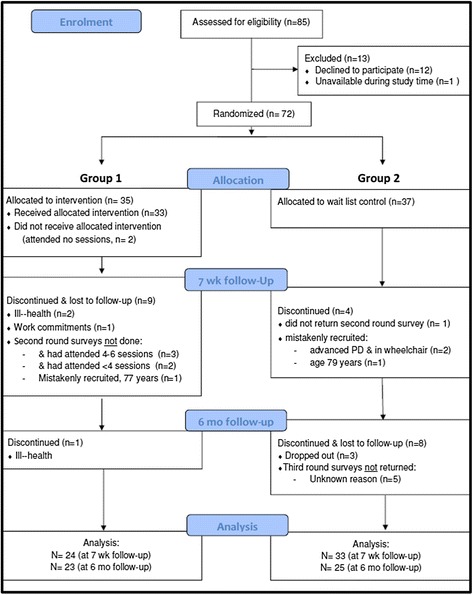
BACKGROUND: Parkinson's disease (PD) is the second commonest neurodegenerative disease in developed countries. Current treatment for PD is pharmacologically focused and can have significant side-effects. There is increasing interest in holistic approaches including mindfulness to help manage the challenges associated with living with PD. We hypothesised that there would be an improvement in PD associated function and wellbeing in participants after participating in a 6-week mindfulness-based lifestyle program, and that these improvements would be sustainable at 6 months. Our primary objective was to determine changes in function and wellbeing associated with PD. METHODS: An exploratory prospective, mixed-method, randomised control trial incorporating a before and after design with a waitlist control, with an embedded qualitative component was conducted in 2012-2013. Participants included community living adults with disability congruent to H&Y Stage 2 PD, aged 18-75, fluent in spoken and written English and able to attend at least four of six sessions of the program. Participants were randomised to the intervention or wait-list control groups at two locations. All participants in the wait-list control group eventually received the intervention. Two randomisation codes were created for each location. Allocation to the intervention or wait-list control was by random number generation. The program facilitator and participants were blinded to participant data. RESULTS: Group 1 included 35 participants and group 2 (the waitlist control), 37. Data was analysed from 24 (group 1) and 33 (group 2) participants. The intervention group, compared to the waitlist control, showed a small improvement in function and wellbeing associated with PD immediately after the program (t-score = -0.59) and at 6-month post intervention (t-score = -1.42) as reported by the PDQ-39 SI. However this finding was not significant (p = 0.56 and 0.16 respectively). A small yet significant effect size (β = 0.23) in PDQ-39 ADL was reported in group 1 after 6-months post-intervention. This showed a positive improvement in the ADL as reported by group 1 after 6-months (t-score -1.8, p = 0.04). Four secondary measures are reported. CONCLUSIONS: Our findings suggest mindfulness-based lifestyle programs have potential to assist participants in managing the ongoing difficulties associated with a neurological condition such as Parkinson's disease. Importantly, our study shows promise for the long term benefits of such programs. Improvements to participant activities in daily living and mindfulness were retained at 6-months post intervention. A more definitive study should be conducted in a larger sample of PD patients to further explore these findings and their impact on reducing stress and anxiety in PD patients. TRIAL REGISTRATION: Australian New Zealand Clinical Trials Registry (ANZCTR) ACTRN12612000440820 , 17(th) April 2012.
Overview
The claims and statistics of this paper haven’t been checked yet.
Free: it reads the open-access text and checks the first 5 claims that cite a source we can check. Create a free account to check every claim.
Integrity signals
Registry
Cites
Statistics
Figures
Verification
Claims the paper makes
The claims and statistics of this paper haven’t been checked yet.
Free: it reads the open-access text and checks the first 5 claims that cite a source we can check. Create a free account to check every claim.
Claims other papers make about this one
Each is checked against this paper’s own text: does it say what the citing paper says it does?
The source backs part of the claim, not all of it — or backs it for a different population, condition or comparison.
In the citing paper
“An emerging body of evidence highlights the effectiveness of MBIs for people with PD, showing reduced anxiety and depressive symptoms and improvement in activities of daily living, cognitive functioning, motor symptoms, and general well-being, although studies were small and had mixed results (Advocat et al., 2016; Birtwell et al., 2017; Cash et al., 2016; Dissanayaka et al., 2016; Kwok et al., 2”
From Online Mindfulness-Based Cognitive Therapy for People with Parkinson’s Disease and Their Caregivers: a Pilot Study (2022) · cites this paper as Advocat et al., 2016
Experimental — accuracy not yet measuredThe source backs part of the claim, not all of it — or backs it for a different population, condition or comparison.
In the citing paper
“No significant differences in global quality of life between the two groups at post- intervention and 6 months”
From Psychological interventions for people with Parkinson's disease in the early 2020s: Where do we stand? (2021) · cites this paper as Advocat et al., 2016
Experimental — accuracy not yet measuredThe source backs part of the claim, not all of it — or backs it for a different population, condition or comparison.
In the citing paper
“A recent six-week group mindfulness intervention involving lifestyle management strategies for PD patients showed a significant reduction in depression and stress, and improvements in mindfulness and ADL at six-month follow-up (Advocat et al., 2016”
From Remote delivery of psychological interventions for Parkinson's disease. (2018) · cites this paper as Advocat et al., 2016
Experimental — accuracy not yet measuredThe cited source says what the claim attributes to it.
In the citing paper
“Nevertheless, the sample size of the current study is above the average of existing MBI clinical trials for PD patients (number of studies = 7; range = 13–138; mean sample size = 50)12,32–37.”
From A randomized clinical trial of mindfulness meditation versus exercise in Parkinson’s disease during social unrest (2023) · cites this paper as [37]
The cited source says what the claim attributes to it.
In the citing paper
“Two studies which included depression and anxiety scores as secondary outcomes showed no differences between intervention and comparator arms (Advocat et al., 2016;Ghielen et al., 2017).”
From A Systematic Review of Third-Wave Therapies to Reduce Distress and Improve Wellbeing and Quality of Life in People with Parkinson's Disease. (2025) · cites this paper as Advocat et al., 2016
7 more claims about this paper
Create a free account to see every claim other papers make about this one.
Self-check
Percentages, sums and reported differences re-computed from the paper’s own numbers.
The self-check needs the paper’s full text.
Citations
Cites
Statistical Power Analysis for the Behavioral Sciences
Muller, K. (1989) · Technometrics · doi:10.1080/00401706.1989.10488618 · Cited by 99,167
Statistical power analysis for the behavioral sciences
(1990) · Computers, Environment and Urban Systems · doi:10.1016/0198-9715(90)90050-4 · Cited by 65,269
Statistical Power Analysis for the Behavioral Sciences (2nd ed.).
Lachenbruch, P. A., & Cohen, J. (1989) · Journal of the American Statistical Association · doi:10.2307/2290095 · Cited by 37,395
Lovibond, P. F., & Lovibond, S. H. (1995) · Behaviour Research and Therapy · doi:10.1016/0005-7967(94)00075-u · Cited by 14,523 · cited 1×
“Depression and stress average scores at baseline were consistent with the Australian population [31], but average anxiety scores were poorer than the Australian population and consistent with ‘mild’ degree anxiety.”
ResultParkinsonism: onset, progression, and mortality
Hoehn, M. M., & Yahr, M. D. (1967) · Neurology · doi:10.1212/wnl.17.5.427 · Cited by 12,107 · cited 7×
“Keywords: Parkinson’s disease, Neurological disorder, Mindfulness, Group program, Meditation Abbreviations: ADL, Activities of daily living; BOD, Bodily discomfort; COG, Cognitions; COM, Communication; DASS, Depression anxiety and stress scales; EMO, Emotional well-being; FMI, Freiberg mindfulness index; H&Y, Hoehn &…”
BackgroundInfluential(1995) · Cited by 6,909
Kalia, L. V., & Lang, A. E. (2015) · The Lancet · doi:10.1016/s0140-6736(14)61393-3 · Cited by 6,184
Overdependence on degraded gist memory in Alzheimer's disease.
Gallo, D. A., Shahid, K. R., Olson, M. A., Solomon, T. M., Schacter, D. L., & Budson, A. E. (2006) · Neuropsychology · doi:10.1037/0894-4105.20.6.625 · Cited by 4,732
Mindfulness-based stress reduction and health benefits
Grossman, P., Niemann, L., Schmidt, S., & Walach, H. (2004) · Journal of Psychosomatic Research · doi:10.1016/s0022-3999(03)00573-7 · Cited by 3,958
The Neuroscience of Mindfulness Meditation
Tang, Y.-Y., Hölzel, B. K., & Posner, M. I. (2015) · Nature reviews. Neuroscience · doi:10.1038/nrn3916 · Cited by 2,889 · cited 1×
“Emerging evidence which suggests that mindfulness may lead to neuroplastic changes of regions in the brain involved in the regulation of emotion [39, 40] and improvements in emotional well-being, particularly stressmanagement, anxiety and depression [36, 41, 42] for people with chronic and neurological disease.”
Background
Research works printed but not linked: 2
- World Health Organization Neurological disorders: a public health approach (Dementia, Epilepsy, Headache disorders, Multiple sclerosis, Neuroinfections) World Health Organization. Neurological disorders: public health challenges 2006 Geneva WHO Press 41 110
- Jenkinson C Fitzpatrick R Peto V Harris R Saunders P The Parkinson's disease questionaire: PDQ-39 user manual 2008 Oxford Health Services Research Unit, University of Oxford
Cited by
Goldman, J. G., Volpe, D., Ellis, T. D., Hirsch, M. A., Johnson, J. A., Wood, J., Vinagre‐Aragón, A., Biundo, R., Rocco, A. D., Kasman, G. S., et al. (2024) · Journal of Parkinson s Disease · doi:10.3233/jpd-230117 · Cited by 123
“Cognitive behavioral therapy (CBT) focused on sleep hygiene and behaviors [80, 81], resistance training, multimodal exercise, and mindfulness meditation combined with exercise can be used to improve sleep [74, 82–84].”
MethodRemote delivery of psychological interventions for Parkinson's disease.
Swalwell, C., Pachana, N. A., & Dissanayaka, N. N. (2018) · International Psychogeriatrics · doi:10.1017/s1041610218000340 · Cited by 87
“A recent six-week group mindfulness intervention involving lifestyle management strategies for PD patients showed a significant reduction in depression and stress, and improvements in mindfulness and ADL at sixmonth follow-up (Advocat et al., 2016).”
BackgroundMindfulness and physical disease: a concise review
Greeson, J. M., & Chin, G. R. (2019) · Current Opinion in Psychology · doi:10.1016/j.copsyc.2018.12.014 · Cited by 85
Stress and Mindfulness in Parkinson's Disease: Clinical Effects and Potential Underlying Mechanisms
van der Heide, A., Meinders, M. J., Speckens, A. E. M., Peerbolte, T. F., Bloem, B. R., & Helmich, R. C. (2021) · Movement Disorders · doi:10.1002/mds.28345 · Cited by 80
Positive psychological interventions for neurological disorders: A systematic review
Lai, S.-T., Lim, K. S., Low, W. Y., & Tang, V. Y. H. (2018) · The Clinical Neuropsychologist · doi:10.1080/13854046.2018.1489562 · Cited by 82
“%) reported a heightened state of present awareness (Advocat et al., 2016; Cash et al., 2016; Pickut et al., 2015; Reese et al., 2015; note: ncs, not clearly stated; presence of status.”
BackgroundMethodInfluentialZarotti, N., Eccles, F. J. R., Foley, J. A., Paget, A., Gunn, S., Leroi, I., & Simpson, J. (2021) · Psychology and Psychotherapy Theory Research and Practice · doi:10.1111/papt.12321 · Cited by 73
“, 2015) or a group mindfulness-based lifestyle programme (Advocat et al., 2016).”
BackgroundPontone, G. M., Dissanayaka, N. N., Apostolova, L. G., Brown, R. G., Dobkin, R. D., Dujardin, K., Friedman, J. H., Leentjens, A. F. G., Lenze, E. J., Marsh, L., et al. (2019) · npj Parkinson's Disease · doi:10.1038/s41531-019-0102-8 · Cited by 74
Pigott, J., Kane, E. J., Ambler, G., Walters, K. R., & Schrag, A. E. (2022) · BMC Geriatrics · doi:10.1186/s12877-021-02656-2 · Cited by 65
“In pre-post intervention comparison for all participants (intervention and waitlist controls) after 6 month, significant improvement in the ‘ADL’ domain of the QoL measure was seen [37].”
BackgroundMethodInfluentialMindfulness-based stress reduction in Parkinson’s disease: a systematic review
McLean, G., Lawrence, M., Simpson, R., & Mercer, S. W. (2017) · BMC Neurology · doi:10.1186/s12883-017-0876-4 · Cited by 59
“Since conducting our review a recent additional small exploratory RCT been published on an intervention that combined mindfulness with lifestyle education [37].”
BackgroundGoren, G., Schwartz, D., Friger, M., Banai, H., Sergienko, R., Regev, S., Abu-Kaf, H., Greenberg, D., Nemirovsky, A., Ilan, K., et al. (2022) · Inflammatory Bowel Diseases · doi:10.1093/ibd/izab083 · Cited by 56
Amiri, S., Mahmood, N., Javaid, S. F., & Khan, M. A. (2024) · Healthcare · doi:10.3390/healthcare12222263 · Cited by 59
Complementary and Alternative Medicine and Exercise in Nonmotor Symptoms of Parkinson's Disease
Subramanian, I. (2017) · International review of neurobiology · doi:10.1016/bs.irn.2017.05.037 · Cited by 48
“…1 h PDQ39 No difference in groups Boulgarides et al. (2014) 10 patients Yoga—8 week yoga pre- and postcomparison HADS Improved HADS depression subscale Advocat et al. (2016) Mindfulness—6 weeks vs wait list control—24/35 vs 33/37 PDQ39 Significant improvement in PDQ39-ADL 1170 Indu…”
BackgroundInfluentialUse and perceived effectiveness of complementary therapies in Parkinson's disease
Donley, S., McGregor, S., Wielinski, C. L., & Nance, M. (2018) · Parkinsonism & Related Disorders · doi:10.1016/j.parkreldis.2018.08.003 · Cited by 47
Kwok, J. Y. Y., Choi, E. P. H., Wong, J. Y. H., Lok, K. Y. W., Ho, M.-H., Fong, D. Y. T., Kwan, J. C. Y., Pang, S. Y. Y., & Auyeung, M. (2023) · npj Parkinson's Disease · doi:10.1038/s41531-023-00452-w · Cited by 43
Rodgers, S. H., Schütze, R., Gasson, N., Anderson, R. A., Kane, R. T., Starkstein, S., Morgan-Lowes, K., & Egan, S. J. (2019) · Behavioural and Cognitive Psychotherapy · doi:10.1017/s135246581800070x · Cited by 43
“…using mindfulness interventions, and MBCT in particular, to treat depressive symptoms in PD, there have been few studies to date examining their efficacy for psychological and motor symptoms associated with PD (Advocat et al., 2016; Cash et al., 2016; Dissanayaka et al., 2016; Pickut et al., 2015).”
BackgroundHong, C., Tan, S., & Huang, T. (2021) · Journal of the American Medical Directors Association · doi:10.1016/j.jamda.2021.03.031 · Cited by 48
Tosserams, A., Bloem, B. R., Martens, K. A. E., Helmich, R. C. G., Kessels, R. P. C., Shine, J. M., Taylor, N. L., Wainstein, G., Lewis, S. J. G., & Nonnekes, J. H. (2023) · Translational Neurodegeneration · doi:10.1186/s40035-023-00347-z · Cited by 36
Sánchez, M. V. N., Ambrosio, L., Portillo, M. C., Sesma, M. E. U., García, J. M. S., & Riverol, M. (2020) · Journal of Advanced Nursing · doi:10.1111/jan.14476 · Cited by 38
Lifestyle medicine for anxiety symptoms: A meta-analysis of randomized controlled trials
Wong, V. W.-H., Ho, F. Y., Shi, N.-K., Sarris, J. J., Ng, C. H., & Tam, O. K.-Y. (2022) · Journal of Affective Disorders · doi:10.1016/j.jad.2022.04.151 · Cited by 42
Occupational Therapy Practice Guidelines for People With Parkinson’s Disease
Wood, J., Henderson, W. L., & Foster, E. R. (2022) · American Journal of Occupational Therapy · doi:10.5014/ajot.2022.763001 · Cited by 38
Mindfulness, Stress, and Aging
Felsted, K. F. (2020) · Clinics in Geriatric Medicine · doi:10.1016/j.cger.2020.06.010 · Cited by 36
Systematic Review for the Medical Applications of Meditation in Randomized Controlled Trials
Kim, D.-Y., Hong, S.-H., Jang, S.-H., Park, S., Noh, J.-H., Seok, J.-M., Jo, H.-J., Son, C., & Lee, E. J. (2022) · International Journal of Environmental Research and Public Health · doi:10.3390/ijerph19031244 · Cited by 30
“Parkinson’s disease [51] Mindfulness-based lifestyle (M) 57 (2, waitlist) 6 stress, mindfulness depressive mood, feeling anxious, parkinsonism A, Multiple sclerosis [52] Yoga (Y) 60 (2, no treatment) 12 QoL Parkinson’s disease [53] MBSR (M) 27 (2, usual care) 8 brain MRI (gray matter density) A -”
Kwok, J. Y. Y., Chan, L. M. L., Lai, C. A., Ho, P. W., Choi, Z. Y.-K., Auyeung, M., Pang, S., Choi, E. P. H., Fong, D., Yu, D. S. F., et al. (2025) · Psychotherapy and Psychosomatics · doi:10.1159/000543457 · Cited by 40
The Relationship Between Anxiety Disorders and Parkinson’s Disease: Clinical and Therapeutic Issues
Kassm, S. A., Naja, W., Haddad, R. S., & Pélissolo, A. (2021) · Current Psychiatry Reports · doi:10.1007/s11920-021-01229-9 · Cited by 30
Batzu, L., Podlewska, A. M., Gibson, L. L., Chaudhuri, К. R., & Aarsland, D. (2024) · International review of neurobiology · doi:10.1016/bs.irn.2023.11.001 · Cited by 30
Doucet, B. M. M., Franc, I., & Hunter, E. G. (2021) · American Journal of Occupational Therapy · doi:10.5014/ajot.2021.048314 · Cited by 28
Health Promotion and Wellness in Neurologic Physical Therapy: Strategies to Advance Practice
Rafferty, M. R., Bradford, E. H., Fritz, S. L., Hutchinson, K. J., Miczak, K., Resnick, A., & Billinger, S. A. (2021) · Neurology Report · doi:10.1097/npt.0000000000000376 · Cited by 24
Interian, A., Miller, R. B., Hill, L. M. S., Latorre-Millán, M., King, A. R., Rodriguez, K. M., Mann, S., Kashan, R. S., Dissanayaka, N. N., & Dobkin, R. D. (2022) · Journal of Geriatric Psychiatry and Neurology · doi:10.1177/08919887221103579 · Cited by 22
A Systematic Review of Psychotherapy Approaches for Anxiety in Parkinson's Disease.
Roper, A., Pacas Fronza, G., Dobkin, R. D., Beaudreau, S. A., Mitchell, L. K., Pachana, N. A., Thangavelu, K., & Dissanayaka, N. N. (2024) · Clinical Gerontologist · doi:10.1080/07317115.2022.2074814 · Cited by 19
Lin, H., Tam, K., & Kuan, Y. (2023) · European Journal of Neurology · doi:10.1111/ene.15839 · Cited by 19
“Three of the included studies comparing mindfulness and meditation therapies with a control intervention reported changes in ADLs [25, 26, 33].”
BackgroundMethodInfluentialZarotti, N., Deane, K. H., Ford, C. E. L., & Simpson, J. (2023) · Disability and Rehabilitation · doi:10.1080/09638288.2023.2181409 · Cited by 21
Sánchez, M. V. N., Sesma, M. E. U., Riverol, M., Ambrosio, L., Medina, M., Ayesa, S. D. D. C., Álvarez, M. J. L., García, J. M. S., Gorraiz, A., Caparrós, N., et al. (2018) · BMC Family Practice · doi:10.1186/s12875-018-0730-9 · Cited by 20
“results of two randomised controlled trials into PD [13, 40] and a systematic review in LTCs [43] suggest that interventions focusing on improving lifestyles, redefinition of biography, social networks, emotional wellbeing and activities of daily life, such as the ReNACE intervention (see Table 3), represent tools wit…”
BackgroundMethodChandler, S. K., Robins, J. L. W., & Kinser, P. A. (2019) · Behavioural Neurology · doi:10.1155/2019/8459579 · Cited by 23
“[38] RCT Secondary Mindfulness-based lifestyle classes Waitlist 24 33 DASS-21 No”
Mindfulness-based lifestyle programs for the self-management of Parkinson’s disease in Australia
Vandenberg, B. E., Advocat, J., Hassed, C., Hester, J., Enticott, J., & Russell, G. (2019) · Health Promotion International · doi:10.1093/heapro/day021 · Cited by 17
Self-citationTerrens, A. F., Soh, S., & Morgan, P. E. (2021) · Health Expectations · doi:10.1111/hex.13202 · Cited by 21
Smart, C. M., Ali, J. I., Viczko, J., & Silveira, K. (2021) · Mindfulness · doi:10.1007/s12671-021-01779-2 · Cited by 20
“, 2008), PD (Advocat et al., 2016; Dissanayaka et al., 2016), and late-life cognitive decline (Smart et al.”
BackgroundSeritan, A. L., Iosif, A.-M., Prakash, P., Wang, S. S., & Eisendrath, S. (2022) · Journal of Technology in Behavioral Science · doi:10.1007/s41347-022-00261-7 · Cited by 16
“An emerging body of evidence highlights the effectiveness of MBIs for people with PD, showing reduced anxiety and depressive symptoms and improvement in activities of daily living, cognitive functioning, motor symptoms, and general well-being, although studies were small and had mixed results (Advocat et al., 2016; Bi…”
BackgroundYi, M., Zhang, W., Zhao, B., & Wang, Z. (2024) · Clinical Gerontologist · doi:10.1080/07317115.2024.2314192 · Cited by 17
“The measurements used varied between studies; eight studies (Advocat et al. 2016, Buchwitz et al., 2021, Dissanayaka et al., 2016, Koh et al., 2022, Kwok et al., 2019, Kwok et al., 2022, Kwok et al., 2023, Rodgers et al., 2019) used PDQ-related scales (e.g. PDQ-8, PDQ-39).”
InfluentialBuchwitz, T. M., Maier, F., Greuel, A., Thieken, F., Steidel, K., Jakobs, V., & Eggers, C. (2021) · Frontiers in Psychology · doi:10.3389/fpsyg.2021.763350 · Cited by 15
Tran, T., Finlayson, M. L., Nalder, E. J., Trothen, T. J., & Donnelly, C. A. (2023) · Journal of Alzheimer s Disease Reports · doi:10.3233/adr-230006 · Cited by 13
“The authors found a significant improvement in the ADL item scores from the Parkinson’s Disease Questionnaire (PDQ) 6-months after the mindfulness training [37].”
BackgroundSteinberg, R. J., Posa, S., Pattni, N., Wasilewski, M. B., Robinson, L. R., Jankey, S., Simpson, R., Mayo, A. L., MacKay, C., Dilkas, S., et al. (2023) · Rehabilitation Psychology · doi:10.1037/rep0000491 · Cited by 12
Treatment of psychiatric disturbances in hypokinetic movement disorders
Berardelli, I., Belvisi, D., Pasquini, M., Fabbrini, A., Petrini, F., & Fabbrini, G. (2019) · Expert Review of Neurotherapeutics · doi:10.1080/14737175.2019.1636648 · Cited by 13
Giguère-Rancourt, A., Plourde, M., Racine, E., Couture, M., Langlois, M., Dupré, N., & Simard, M. (2022) · PLoS ONE · doi:10.1371/journal.pone.0263108 · Cited by 12
Zarotti, N., Deane, K. H., Ford, C. E. L., & Simpson, J. (2023) · Disability and Rehabilitation · doi:10.1080/09638288.2023.2169376 · Cited by 11
“At post-intervention, the results showed a significant group effect only for the internal dimension of locus of control [58], suggesting that the participants of the intervention group reported significantly higher perceptions of internal causal attributions.”
BackgroundResultInfluentialMacchi, Z. A., Miyasaki, J. M., Katz, M., Galifianakis, N. B., Sillau, S., & Kluger, B. M. (2021) · Neurology Clinical Practice · doi:10.1212/cpj.0000000000001110 · Cited by 10
“To address these issues likely requires an integrated model to PDRD care, merging medical management with social services and disease-tailored behavioral health interventions, like cognitive behavioral therapy and mindfulness-based approaches.(31)”
MethodMace, R. A., Hopkins, S. W., Reynolds, G., & Vranceanu, A. (2022) · Journal of Clinical Psychology in Medical Settings · doi:10.1007/s10880-022-09843-2 · Cited by 8
“Prior multidomain lifestyle programs did not target psychosocial outcomes or reported no effects (Advocat et al., 2016).”
BackgroundBuchwitz, T. M., Maier, F., Greuel, A., & Eggers, C. (2020) · Frontiers in Psychology · doi:10.3389/fpsyg.2020.00743 · Cited by 8
Coles, A., & Collicutt, J. (2019) · Cambridge University Press eBooks · doi:10.1017/9781316014165 · Cited by 8
Khazai, O. F., Pishyareh, E., Rassafiani, M., Bakhshi, E., & Poursadeqiyan, M. (2019) · فصلنامه علمی پژوهشی توانبخشی · doi:10.32598/rj.20.2.190 · Cited by 10
Armstrong, M., Walters, K. R., Davies, N., Nimmons, D., Pigott, J., Read, J., & Schrag, A. E. (2024) · BMC Health Services Research · doi:10.1186/s12913-023-10436-4 · Cited by 8
“…qualitative synthesis and their inclusion in 18 RCTs of self-management interventions in Parkinson’s (included components are indicated in green) [33–50] capability to engage in a task (C), the opportunity to do so (O), and to want to engage in that behaviour over other competing behaviours (M)…”
BackgroundBlard, F., Erraud, J., Bonnet, M., Auzou, N., & Tison, F. (2024) · Revue Neurologique · doi:10.1016/j.neurol.2024.03.013 · Cited by 5
Complementary Health Approaches for People With Parkinson Disease
Moon, S., Sarmento, C. V. M., Colgrove, Y., & Liu, W. (2020) · Archives of Physical Medicine and Rehabilitation · doi:10.1016/j.apmr.2020.03.024 · Cited by 5
“Additionally, multiple mobile applications are available to guide meditation, but there is lack of evidence for its effectiveness for PD.10,11 Benefits: Improved pain, stress, anxiety, depression, and sleep.”
BackgroundChristodoulou, D., Reeves, S., Carvalho, N. P., Stellman, J., & Gould, R. L. (2025) · Clinical Gerontologist · doi:10.1080/07317115.2025.2511957 · Cited by 4
“In terms of selection bias, four trials ( n = 4; Advocat et al., 2016; Bogosian et al., 2021; Buchwitz et al., 2021; Rodgers et al., 2019) were classified as “strong,” four trials ( n = 4; Ayromlou et al., 2020; Kwok et al., 2019; Pickut et al., 2015; Son & Choi, 2018) were classified as…”
InfluentialFalling upward with Parkinson’s disease
Buetow, S., Martínez‐Martín, P., & McCormack, B. G. (2017) · npj Parkinson s Disease · doi:10.1038/s41531-017-0031-3 · Cited by 4
Ramadam Fasting and Neurologic Disorders
El‐Mitwalli, A. (2019) · Cambridge University Press eBooks · doi:10.1017/9781316014165.013 · Cited by 5
Beyond Reasonable Doubt: Cognitive and Neuropsychological Implications for Religious Disbelief
Pennycook, G., Tranel, D., Warner, K., & Asp, E. W. (2019) · Cambridge University Press eBooks · doi:10.1017/9781316014165.012 · Cited by 5
Simpson, J., & Zarotti, N. (2026) · Cortex · doi:10.1016/j.cortex.2026.05.004 · Cited by 3
Philosophical Hazards in the Neuroscientific Study of Religion
Haan, D. D. D. (2019) · Cambridge University Press eBooks · doi:10.1017/9781316014165.007 · Cited by 3
Religion and Frontotemporal Dementia
Block, N., & Miller, B. L. (2019) · Cambridge University Press eBooks · doi:10.1017/9781316014165.016 · Cited by 3
Eastern Spirituality, Mind–Body Practices and Neuro-Rehabilitation
Yeates, G. (2019) · Cambridge University Press eBooks · doi:10.1017/9781316014165.018 · Cited by 5
Adapted Physical Activity Can Increase Life Appreciation in Patients with Parkinson's Disease
Vescovelli, F., Cesetti, G., Sarti, D., & Ruini, C. (2023) · The International Journal of Aging and Human Development · doi:10.1177/00914150231183129 · Cited by 2
“…Thangavelu et al., 2020) or other mind-body techniques such as “ Mindfulness ” resulted to be well accepted by PD patients (Fitzpatrick et al., 2010) and to be effective in improving their cognitive and emotional functions (Advocat et al., 2016; Cash et al., 2016; Dissanayaka et al., 2016).”
BackgroundAutism and the Panoply of Religious Belief, Disbelief and Experience
Clark, K. J., & Visuri, I. (2019) · Cambridge University Press eBooks · doi:10.1017/9781316014165.014 · Cited by 3
Terapia cognitiva en pacientes con Parkinson
Rodríguez, P. F., & González, M. S. (2017) · Ansiedad y Estrés · doi:10.1016/j.anyes.2017.09.003 · Cited by 3
The Scientific Study of Religion
Collicutt, J. (2019) · Cambridge University Press eBooks · doi:10.1017/9781316014165.003 · Cited by 2
Coles, A. J. (2019) · Cambridge University Press eBooks · doi:10.1017/9781316014165.002 · Cited by 2
Vithanage, K., Dissanayake, D., & Chang, T. (2024) · Ceylon Journal of Medical Science · doi:10.4038/cjms.v61i1.5072 · Cited by 1
Stress Management and Resiliency Training in People with Parkinson's Disease and their Care Partners
Maurer, C. W., Skinner, S., Kulikov, V. N., & Gonzalez, A. (2026) · Movement Disorders Clinical Practice · doi:10.1002/mdc3.70676 · Cited by 1
Anxiety in Parkinson’s Disease
Dissanayaka, N. N. (2021) · Cambridge University Press eBooks · doi:10.1017/9781139087469.009 · Cited by 1
Parkinson’s Disease, Religious Belief and Spirituality
Barker, R. A., & Redfern, C. (2019) · Cambridge University Press eBooks · doi:10.1017/9781316014165.011 · Cited by 1
Methodological Hazards in the Neuroscientific Study of Religion
Judge, S. J. (2019) · Cambridge University Press eBooks · doi:10.1017/9781316014165.004 · Cited by 2
Religion and Spirituality in Neuro-Rehabilitation: A Case Study
Collicutt, J. (2019) · Cambridge University Press eBooks · doi:10.1017/9781316014165.017 · Cited by 1
Aggarwal, N. K. (2019) · Cambridge University Press eBooks · doi:10.1017/9781316014165.009 · Cited by 1
Chappell, S. G. (2019) · Cambridge University Press eBooks · doi:10.1017/9781316014165.008 · Cited by 1
Phenomenology, Neurology, Psychiatry and Religious Commitment
Kidd, I. J. (2019) · Cambridge University Press eBooks · doi:10.1017/9781316014165.006 · Cited by 4
Personhood and Religion in People with Dementia
Hughes, J. C. (2019) · Cambridge University Press eBooks · doi:10.1017/9781316014165.015 · Cited by 1
Mindfulness in Neurological Conditions
Detert, N. (2019) · Routledge eBooks · doi:10.4324/9780429506796-3 · Cited by 1
Tosserams, A. (2023) · Radboud University Press eBooks · doi:10.54195/9789493296251 · Cited by 1
Aggarwal, S. K. (2018) · Advances in Pharmacology & Clinical Trials · doi:10.23880/apct-16000142
The psychological impact of Parkinson’s disease patients’ delusions on spouses: A Thematic Analysis
Nolan, C. (2019) · Figshare · Cited by 1
Temporal Lobe Epilepsy, Dostoyevsky and Irrational Significance
Coles, A. J. (2019) · Cambridge University Press eBooks · doi:10.1017/9781316014165.010 · Cited by 2
Embodied Cognition and the Neurology of Religion
Brown, W. S. (2019) · Cambridge University Press eBooks · doi:10.1017/9781316014165.005
Near-Death and Out-of-Body Experiences: A Case for Dialogue between Scientist and Theologian?
Marsh, M. N. (2019) · Cambridge University Press eBooks · doi:10.1017/9781316014165.020 · Cited by 1
Examining the Continuum of Life to Determine Death: A Jewish Perspective
Buchman, A. S. (2019) · Cambridge University Press eBooks · doi:10.1017/9781316014165.019
The potential contribution of mind-body interventions within psychological support following aphasia
Yeates, G. (2019) · Routledge eBooks · doi:10.4324/9780429030482-8
Coles, A. J., & Collicutt, J. (2019) · Cambridge University Press eBooks · doi:10.1017/9781316014165.001
Coles, A. J., & Collicutt, J. (2019) · Cambridge University Press eBooks · doi:10.1017/9781316014165.022
Coles, A. J., & Collicutt, J. (2019) · Cambridge University Press eBooks · doi:10.1017/9781316014165.021
Pigott, J., Kane, E. J., Ambler, G., Walters, K. R., & Schrag, A. E. (2022) · Figshare · doi:10.6084/m9.figshare.18230485
Pigott, J., Kane, E. J., Ambler, G., Walters, K. R., & Schrag, A. E. (2022) · Figshare · doi:10.6084/m9.figshare.18230473
Pigott, J., Kane, E. J., Ambler, G., Walters, K. R., & Schrag, A. E. (2022) · Figshare · doi:10.6084/m9.figshare.18230476
Pigott, J., Kane, E. J., Ambler, G., Walters, K. R., & Schrag, A. E. (2022) · Figshare · doi:10.6084/m9.figshare.18230470
Pigott, J., Kane, E. J., Ambler, G., Walters, K. R., & Schrag, A. E. (2022) · Figshare · doi:10.6084/m9.figshare.18230482
A Community-Based Occupational Therapy Program for Parkinson's
Stiens, M. (2023) · IUScholarWorks (Indiana University)
Perceived stress and cognition shape the early clinical presentation of Parkinson's disease
Hero, M., Papić, E., Rožmarić, G., Grozdanić, N., & Vuletić, V. (2026) · Parkinsonism & Related Disorders · doi:10.1016/j.parkreldis.2026.108370
Liu, Z., An, S., Liu, S., Wang, Q., & Jiang, B. (2026) · Frontiers in Psychology · doi:10.3389/fpsyg.2026.1764300
Liu, Z., Liu, S., Chen, H., Wang, R., & Ye, W. (2026) · Geriatric Nursing · doi:10.1016/j.gerinurse.2026.104050
COLUCCIO, G., Cavallieri, F., Fioravanti, V., Argenziano, G., Portaro, G., Codeluppi, L., Iotti, O., Fusella, C., Rikabi, A. A. N. A., Biagini, G., et al. (2026) · Deep Brain Stimulation · doi:10.1016/j.jdbs.2026.11.001
Metadata
- Authors
- Advocat, J., Enticott, J., Vandenberg, B., Hassed, C., Hester, J., & Russell, G.
- Affiliations
- Monash University (AU)
- Brotherhood of St Laurence (AU)
- University of Ottawa (CA)
- Corresponding author
- Advocat, Jenny
- Venue
- BMC Neurology
- Published
- 2016-09-08
- Volume
- 16
- Issue
- 1
- Pages
- 166-166
- ISSN
- 1471-2377 (ISSN-L)
- PMC
- PMC5016929
- OpenAlex
- W2511124856
- Cited by
- 94
- References
- 50
- Citations by year
- 2026: 5 · 2025: 2 · 2024: 6 · 2023: 9 · 2022: 14 · 2021: 11 · 2020: 6 · 2019: 30 · 2018: 7 · 2017: 4
- FWCI
- 18.29
- Type
- journal article
- Language
- en
- Open access
- gold
- doi.org
- Licence
- Locations
- BMC Neurology (publishedVersion, cc-by)
- PubMed Central (publishedVersion, cc-by)
- PubMed (publishedVersion)
- Monash University Research Portal (Monash University) (submittedVersion, other-oa)
- Figshare (submittedVersion)
- Funders
- Parkinson's Victoria
- Topics
- Social Sciences › Psychology › Clinical Psychology › Mindfulness and Compassion Interventions
- Health Sciences › Medicine › Clinical Neurology › Parkinson's Disease Mechanisms and Treatments
- Health Sciences › Medicine › Oncology › Cancer survivorship and care
- Keywords
- Parkinson's disease, well-being, functional capacity, activities of daily living, PDQ-39, neurodegenerative diseases, holistic intervention, community-dwelling adults, quality of life, non-pharmacological treatment, mindfulness-based stress reduction, mindfulness-based acceptance and commitment therapy
- MeSH terms
- Adult, Aged, Australia, Female, Humans, Male, New Zealand, Parkinson Disease, Prospective Studies, Mindfulness
About these checks
Registry, retraction, Cites and statistics results are computed, not judged, with one exception: a printed reference that no index lists is read once by a model before it counts as a citation error. Claims are extracted by a model and kept only when their quote appears verbatim in the text; each cited source is then checked, with a model’s help, for whether it says what the claim relies on. Those verdicts can be wrong — read the claim’s quote and the cited source before relying on one.
Statistics and arithmetic are recomputed, not judged.
Confidence bands are shown only for fields calibrated on our annotated test set. None is calibrated yet, so no band is shown.
What counts as a claim ›How we measure confidence ›How we check this ›
Are you an author, or do you see a problem with this page? Request a review
Data sources
Bibliographic data: Semantic Scholar, OpenAlex, Crossref.
Contains information from the Semantic Scholar Academic Graph Datasets, made available under the ODC Attribution License (ODC-BY 1.0).
Semantic Scholar’s data is described in: Kinney, R., et al. (2023). The Semantic Scholar Open Data Platform. arXiv:2301.10140.
