

Mindfulness-based stress reduction in Parkinson’s disease: a systematic review
Open accessThe DOI matches its Crossref record; 41 of the 42 references it cites were found in a registry or an index.
Abstract
BACKGROUND: Mindfulness based stress reduction (MBSR) is increasingly being used to improve outcomes such as stress and depression in a range of long-term conditions (LTCs). While systematic reviews on MBSR have taken place for a number of conditions there remains limited information on its impact on individuals with Parkinson's disease (PD). METHODS: Medline, Central, Embase, Amed, CINAHAL were searched in March 2016. These databases were searched using a combination of MeSH subject headings where available and keywords in the title and abstracts. We also searched the reference lists of related reviews. Study quality was assessed based on questions from the Cochrane Collaboration risk of bias tool. RESULTS: Two interventions and three papers with a total of 66 participants were included. The interventions were undertaken in Belgium (n = 27) and the USA (n = 39). One study reported significantly increased grey matter density (GMD) in the brains of the MBSR group compared to the usual care group. Significant improvements were reported in one study for a number of outcomes including PD outcomes, depression, mindfulness, and quality of life indicators. Only one intervention was of reasonable quality and both interventions failed to control for potential confounders in the analysis. Adverse events and reasons for drop-outs were not reported. There was also no reporting on the costs/benefits of the intervention or how they affected health service utilisation. CONCLUSION: This systematic review found limited and inconclusive evidence of the effectiveness of MBSR for PD patients. Both of the included interventions claimed positive effects for PD patients but significant outcomes were often contradicted by other results. Further trials with larger sample sizes, control groups and longer follow-ups are needed before the evidence for MBSR in PD can be conclusively judged.
Overview
The claims and statistics of this paper haven’t been checked yet.
Free: it reads the open-access text and checks the first 5 claims that cite a source we can check. Create a free account to check every claim.
Integrity signals
Registry
Cites
Statistics
Figures
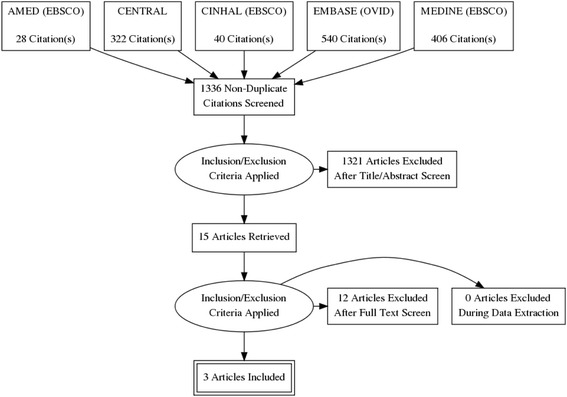
Verification
Claims the paper makes
The claims and statistics of this paper haven’t been checked yet.
Free: it reads the open-access text and checks the first 5 claims that cite a source we can check. Create a free account to check every claim.
Claims other papers make about this one
Each is checked against this paper’s own text: does it say what the citing paper says it does?
The cited source doesn’t support the claim as written.
In the citing paper
“Published systematic reviews have examined a variety of outcomes in people with PD, but have not focused on specific third-wave psychotherapies.”
From A Systematic Review of Third-Wave Therapies to Reduce Distress and Improve Wellbeing and Quality of Life in People with Parkinson's Disease. (2025) · cites this paper as McLean et al. (2017)
Checked by a reasoning model — may be wrong.
Experimental — accuracy not yet measuredThe source backs part of the claim, not all of it — or backs it for a different population, condition or comparison.
In the citing paper
“McLean et al. (2017), for example, examined the efficacy of Mindfulness-Based Stress Reduction (MBSR) and found substantial improvements in varied outcomes, including depression and quality of life.”
From A Systematic Review of Third-Wave Therapies to Reduce Distress and Improve Wellbeing and Quality of Life in People with Parkinson's Disease. (2025) · cites this paper as McLean et al. (2017)
Experimental — accuracy not yet measuredThe cited source says what the claim attributes to it.
In the citing paper
“a 2017 systematic review concluded the effects of mindfulness meditation remained inconclusive in PD patients13.”
From A randomized clinical trial of mindfulness meditation versus exercise in Parkinson’s disease during social unrest (2023) · cites this paper as [13]
The cited source says what the claim attributes to it.
In the citing paper
“However, only one of the two interventions investigated was of acceptable quality, and neither intervention appropriately accounted for possible confounding variables.”
From A Systematic Review of Third-Wave Therapies to Reduce Distress and Improve Wellbeing and Quality of Life in People with Parkinson's Disease. (2025) · cites this paper as McLean et al. (2017)
Self-check
Percentages, sums and reported differences re-computed from the paper’s own numbers.
The self-check needs the paper’s full text.
Citations
Cites
1 retracted
Gotink, R. A., Chu, P., Busschbach, J. J. V., Benson, H., Fricchione, G. L., & Hunink, M. G. M. (2015) · PLOS ONE · doi:10.1371/journal.pone.0124344 · Cited by 539 · cited 1×
“MBSR and related approaches have also been associated with improvements for a range of conditions [10].”
BackgroundRetractedPreferred Reporting Items for Systematic Reviews and Meta-Analyses: the PRISMA statement
Moher, D., Liberati, A., Tetzlaff, J., Altman, D. G., & for the PRISMA Group (2009) · BMJ · doi:10.1136/bmj.b2535 · Cited by 83,823
Preferred Reporting Items for Systematic Reviews and Meta-Analyses: The PRISMA Statement
Moher, D., Liberati, A., Tetzlaff, J., Altman, D. G., & The PRISMA Group (2009) · PLoS Medicine · doi:10.1371/journal.pmed.1000097 · Cited by 64,042 · cited 2×
“A registered protocol (PROSPERO 2016: CRD4 2016035304) guided the conduct of this review [18], which is reported in adherence to the Preferred Reporting Items for Systematic Reviews and Meta-analyses (PRISMA) Statement [19].”
MethodThe PHQ-9: Validity of a brief depression severity measure
Kroenke, K., Spitzer, R. L., & Williams, J. B. W. (2001) · Journal of General Internal Medicine · doi:10.1046/j.1525-1497.2001.016009606.x · Cited by 44,910
Preferred reporting items for systematic reviews and meta-analyses: the PRISMA Statement.
(2009) · PubMed Central · Cited by 44,859
The Cochrane Collaboration's tool for assessing risk of bias in randomised trials
Higgins, J. P. T., Altman, D. G., Gotzsche, P. C., Juni, P., Moher, D., Oxman, A. D., Savovic, J., Schulz, K. F., Weeks, L., Sterne, J. A. C., et al. (2011) · BMJ · doi:10.1136/bmj.d5928 · Cited by 33,817
A Brief Measure for Assessing Generalized Anxiety Disorder: The GAD-7
Spitzer, R. L., Kroenke, K., Williams, J. B. W., & Löwe, B. (2006) · Archives of Internal Medicine · doi:10.1001/archinte.166.10.1092 · Cited by 31,765 · cited 2×
“[23] assessed the impact on anxiety using the Generalized Anxiety Disorder-7 [31] scale but found no significant differences.”
MethodDermyshi, E., Wang, Y., Yan, C., Hong, W., Qiu, G., Gong, X., & Zhang, T. (2017) · Neonatology · doi:10.1159/000454668 · Cited by 24,451
Wang, G., Ma, R., Qiao, G., Wada, K., Aizawa, Y., & Satoh, T. (2015) · Integrative Medicine International · doi:10.1159/000368408 · Cited by 18,657
Goetz, C. G., Tilley, B. C., Shaftman, S. R., Stebbins, G. T., Fahn, S., Martinez‐Martin, P., Poewe, W., Sampaio, C., Stern, M. B., Dodel, R., et al. (2008) · Movement Disorders · doi:10.1002/mds.22340 · Cited by 7,536 · cited 6×
“They found significant change was obtained for the UPDRS motor III score (F = 4.39, p .05), demonstrating motor changes for the MBSR group (pre-M = 27.43 versus post-M = 21.93), while no significant changes could be obtained for the UC group (pre-M = 27.92 versus post-M = 29) [25].”
MethodInfluential
Research works printed but not linked: 1
- McLean G, Mercer S, Lawrence M. Mindfulness based stress reduction in Parkinson’s disease. PROSPERO 2016: CRD42016035304. PMC5433018 28506263
Cited by
Stress and mindfulness in Parkinson’s disease – a survey in 5000 patients
van der Heide, A., Speckens, A. E. M., Meinders, M. J., Rosenthal, L. S., Bloem, B. R., & Helmich, R. C. (2021) · npj Parkinson's Disease · doi:10.1038/s41531-020-00152-9 · Cited by 82
Mindfulness meditation for workplace wellness: An evidence map
Hilton, L. G., Marshall, N. J., Motala, A., Taylor, S. L., Miake-Lye, I. M., Baxi, S., Shanman, R. M., Solloway, M. R., Beroesand, J. M., & Hempel, S. (2019) · Work · doi:10.3233/wor-192922 · Cited by 77
Pontone, G. M., Dissanayaka, N. N., Apostolova, L. G., Brown, R. G., Dobkin, R. D., Dujardin, K., Friedman, J. H., Leentjens, A. F. G., Lenze, E. J., Marsh, L., et al. (2019) · npj Parkinson's Disease · doi:10.1038/s41531-019-0102-8 · Cited by 74
Jani, B. D., Simpson, R., Lawrence, M., Simpson, S., & Mercer, S. W. (2018) · Pilot and Feasibility Studies · doi:10.1186/s40814-018-0244-1 · Cited by 45
Self-citationRodgers, S. H., Schütze, R., Gasson, N., Anderson, R. A., Kane, R. T., Starkstein, S., Morgan-Lowes, K., & Egan, S. J. (2019) · Behavioural and Cognitive Psychotherapy · doi:10.1017/s135246581800070x · Cited by 43
“A recent systematic review echoes this call for further research into mindfulness-based therapies for PD (McLean et al., 2017).”
Background
Metadata
- Authors
- McLean, G., Lawrence, M., Simpson, R., & Mercer, S. W.
- Affiliations
- University of Glasgow (GB)
- Glasgow Caledonian University (GB)
- Corresponding author
- Mercer, S. W.
- Venue
- BMC Neurology
- Published
- 2017-05-15
- Volume
- 17
- Issue
- 1
- Pages
- 92-92
- ISSN
- 1471-2377 (ISSN-L)
- PMC
- PMC5433018
- OpenAlex
- W2614961045
- Cited by
- 59
- References
- 42
- Citations by year
- 2026: 4 · 2025: 4 · 2024: 11 · 2023: 11 · 2022: 4 · 2021: 7 · 2020: 6 · 2019: 9 · 2018: 2 · 2017: 1
- FWCI
- 0.76
- Type
- journal article
- Language
- en
- Open access
- gold
- doi.org
- Licence
- cc-by
- Locations
- BMC Neurology (publishedVersion, cc-by)
- Europe PMC (PubMed Central) (publishedVersion, cc-by)
- PubMed Central (publishedVersion, cc-by)
- PubMed (publishedVersion)
- ENLIGHTEN (Jurnal Bimbingan dan Konseling Islam) (acceptedVersion)
- ResearchOnline (Glasgow Caledonian University) (acceptedVersion, cc-by)
- Edinburgh Research Explorer (University of Edinburgh) (submittedVersion, cc-by)
- DOAJ (DOAJ: Directory of Open Access Journals) (submittedVersion)
- Funders
- RS McDonald Trust
- Topics
- Social Sciences › Psychology › Clinical Psychology › Mindfulness and Compassion Interventions
- Health Sciences › Medicine › Clinical Neurology › Parkinson's Disease Mechanisms and Treatments
- Health Sciences › Medicine › Oncology › Cancer survivorship and care
- Keywords
- mindfulness-based stress reduction, Parkinson's disease, depression, quality of life, gray matter density, chronic disease, mindfulness-based interventions
- MeSH terms
- Aged, Belgium, Depression, Female, Humans, Male, Parkinson Disease, Quality of Life, Stress, Psychological, United States, Mindfulness
About these checks
Registry, retraction, Cites and statistics results are computed, not judged, with one exception: a printed reference that no index lists is read once by a model before it counts as a citation error. Claims are extracted by a model and kept only when their quote appears verbatim in the text; each cited source is then checked, with a model’s help, for whether it says what the claim relies on. Those verdicts can be wrong — read the claim’s quote and the cited source before relying on one.
Statistics and arithmetic are recomputed, not judged.
Confidence bands are shown only for fields calibrated on our annotated test set. None is calibrated yet, so no band is shown.
What counts as a claim ›How we measure confidence ›How we check this ›
Are you an author, or do you see a problem with this page? Request a review
How to cite
Cite CoChat for the checks on this page, and the paper for its own findings.
- This page
- CoChat. (2026). Citation check: Mindfulness-based stress reduction in Parkinson’s disease: a systematic review. https://app.cochat.ai/papers/10.1186/s12883-017-0876-4
- The paper
- McLean, G., Lawrence, M., Simpson, R., & Mercer, S. W. (2017). Mindfulness-based stress reduction in Parkinson’s disease: a systematic review. BMC Neurology. https://doi.org/10.1186/s12883-017-0876-4
Data sources
Bibliographic data: Semantic Scholar, OpenAlex, Crossref.
Contains information from the Semantic Scholar Academic Graph Datasets, made available under the ODC Attribution License (ODC-BY 1.0).
Semantic Scholar’s data is described in: Kinney, R., et al. (2023). The Semantic Scholar Open Data Platform. arXiv:2301.10140.
