

Maternal age and the risk of adverse pregnancy outcomes: a retrospective cohort study
Open accessThe DOI matches its Crossref record; 62 of the 64 references it cites were found in a registry or an index.
Abstract
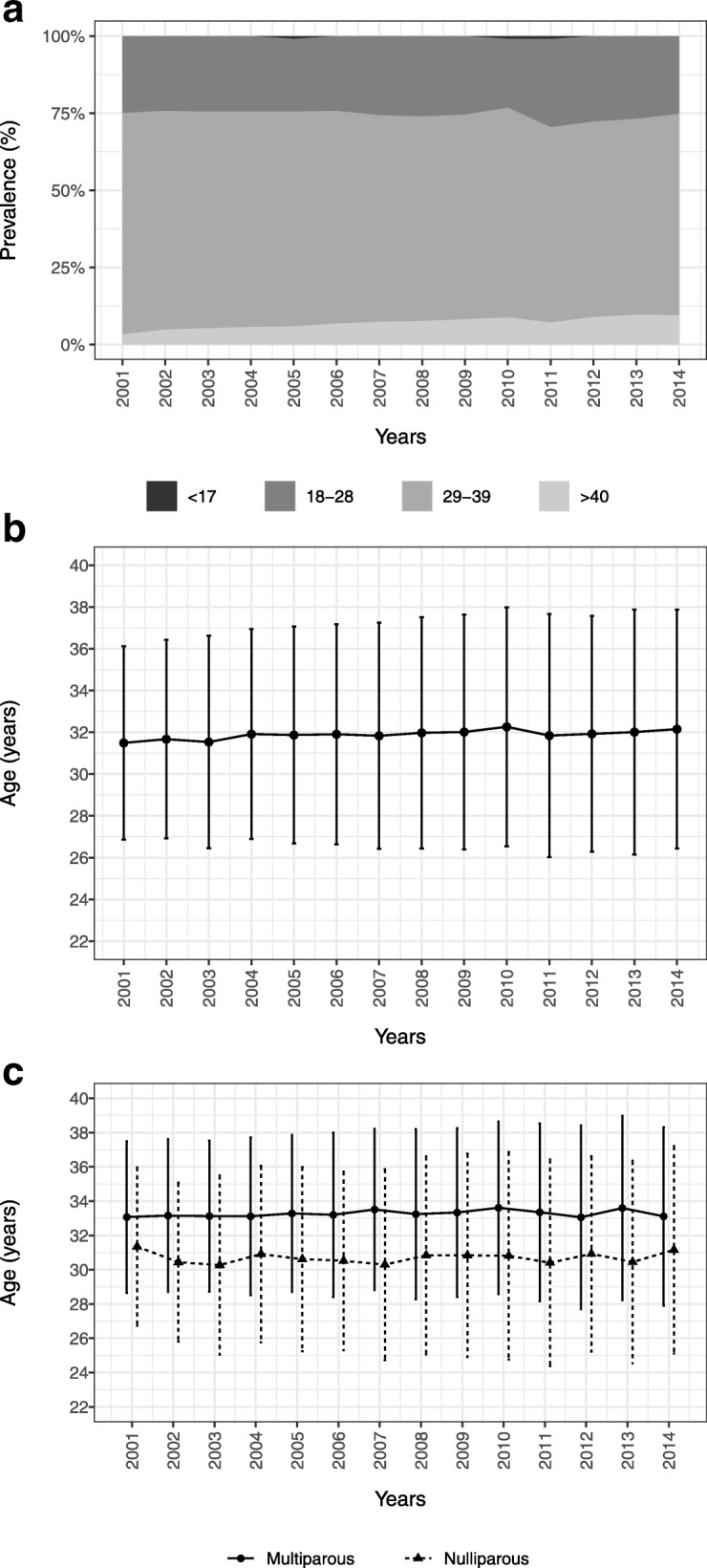
BACKGROUND: The increased potential for negative pregnancy outcomes in both extremes of reproductive age is a well-debated argument. The aim of this study was to analyze the prevalence and the outcome of pregnancies conceived at extreme maternal ages. METHODS: This retrospective study considered all single consecutive pregnancies delivered in a tertiary referral center between 2001 and 2014. Patients were categorized into 4 groups according to maternal age at delivery (< 17 years; 18-28 years; 29-39 years; > 40 years). The following outcomes were considered (amongst others): pregnancy-related hypertensive disorders (PRHDs), neonatal resuscitation (NR), neonatal intensive care unit (NICU) admission, periventricular leucomalacia (PVL), and grade 3 and 4 intraventicular hemorrhage (IVH). RESULTS: During the considered period 22,933 single pregnancies gave birth in our unit. We observed 71 women aged < 17 years, and 1552 aged > 40 years. In each year throughout the study period, there was a significant increment in maternal age of 0.041 years (95% CI 0.024-0.058) every new year. Multivariate analysis concluded out that maternal age over 40 years was an independent risk factor for preterm delivery (OR 1.36 95% CI 1.16-1.61, p < 0.05, PRHDs (OR 2.36 95% CI 1.86-3.00, p < 0.05), GDM (OR 1.71 95% CI 1.37-2.12, p < 0.05) cesarean section (OR 1.99 95% CI 1.78-2.23, p < 0.05), abnormal fetal presentation (OR 1.29 95% CI 1.03-1.61, p < 0.05), and fetal PVL (OR 3.32 95% CI 1.17-9.44, p < 0.05). We also observed that maternal age under 17 years or over 40 years was an independent risk factor for grade 3 or 4 neonatal IVH (OR 2.97 95% CI 1.24-7.14, p < 0.05). CONCLUSIONS: These findings confirm a negative impact of extreme maternal ages on pregnancy. These results should be carefully taken into account by maternal care providers in order to inform women adequately, supporting them in understanding potential risks associated with their procreation choices, and to improve clinical surveillance.
Overview
The claims and statistics of this paper haven’t been checked yet.
Free: it reads the open-access text and checks the first 5 claims that cite a source we can check. Create a free account to check every claim.
Integrity signals
Registry
Cites
Statistics
Figures
Verification
Claims the paper makes
The claims and statistics of this paper haven’t been checked yet.
Free: it reads the open-access text and checks the first 5 claims that cite a source we can check. Create a free account to check every claim.
Claims other papers make about this one
Each is checked against this paper’s own text: does it say what the citing paper says it does?
The source backs part of the claim, not all of it — or backs it for a different population, condition or comparison.
In the citing paper
“Studies have shown older women are more likely to have chronic morbidities prior to conception, such as hypertension, diabetes, and various autoimmune diseases.”
From Age-related disparities in national maternal mortality trends: A population-based study (2025) · cites this paper as [34]
Experimental — accuracy not yet measuredThe source backs part of the claim, not all of it — or backs it for a different population, condition or comparison.
In the citing paper
“These pre-existing conditions also render them at greater likelihood of developing peripartum adverse conditions [34, 35].”
From Age-related disparities in national maternal mortality trends: A population-based study (2025) · cites this paper as [34]
Experimental — accuracy not yet measured
Self-check
Percentages, sums and reported differences re-computed from the paper’s own numbers.
The self-check needs the paper’s full text.
Citations
Cites
Papile, L.-A., Burstein, J., Burstein, R., & Koffler, H. (1978) · The Journal of Pediatrics · doi:10.1016/s0022-3476(78)80282-0 · Cited by 6,430
An international classification of retinopathy of prematurity
(1985) · International Ophthalmology · doi:10.1007/bf00136454 · Cited by 1,005
Teenage pregnancy and adverse birth outcomes: a large population based retrospective cohort study.
Chen, X.-K., Wen, S. W., Fleming, N., Demissie, K., Rhoads, G. G., & Walker, M. (2007) · International Journal of Epidemiology · doi:10.1093/ije/dyl284 · Cited by 971
Intraventricular Hemorrhage in Premature Infants: Mechanism of Disease
Ballabh, P. (2010) · Pediatric Research · doi:10.1203/pdr.0b013e3181c1b176 · Cited by 782
Advanced Maternal Age and Adverse Perinatal Outcome
Jacobsson, B., Ladfors, L., & Milsom, I. (2004) · Obstetrics & Gynecology · doi:10.1097/01.aog.0000140682.63746.be · Cited by 704
(2015) · PubMed · Cited by 615
Advanced Maternal Age and Adverse Pregnancy Outcome: Evidence from a Large Contemporary Cohort
Kenny, L. C., Lavender, T., McNamee, R., O’Neill, S. M., Mills, T., & Khashan, A. S. (2013) · PLoS ONE · doi:10.1371/journal.pone.0056583 · Cited by 605
Cerebral White Matter Injury of the Premature Infant—More Common Than You Think
Volpe, J. J. (2003) · Pediatrics · doi:10.1542/peds.112.1.176 · Cited by 538
Advanced maternal age and pregnancy outcomes: a multicountry assessment
Laopaiboon, M., Lumbiganon, P., Intarut, N., Mori, R., Ganchimeg, T., Vogel, J., Souza, J., Gülmezoglu, A., & on behalf of the WHO Multicountry Survey on Maternal Newborn Health Research Network (2014) · BJOG: An International Journal of Obstetrics & Gynaecology · doi:10.1111/1471-0528.12659 · Cited by 492
The risks associated with pregnancy in women aged 35 years or older
Jolly, M. (2000) · Human Reproduction · doi:10.1093/humrep/15.11.2433 · Cited by 490
Cited by
Items 101–200 of 285
Sabas, R. R., Nyange, N. N., Mayala, A. M., Mahande, M. J., Amour, C., & Mboya, I. B. (2021) · Pan African Medical Journal · doi:10.11604/pamj.2021.40.179.30328 · Cited by 5
“Maternal characteristics such as advanced maternal age [6,7] preeclampsia, obesity, smoking during pregnancy, anemia [7,8] and previous history of LBW [7].”
BackgroundPrenatal Care, Son Preference, and the Sex Ratio at Birth
Echávarri, R. A., & Tapia, F. J. B. (2025) · Demography · doi:10.1215/00703370-11798263 · Cited by 4
Abebe, Y. M., Deribe, L., Fantahun, A., Beyene, B. N., Megule, S. M., Genaneh, W., Adugna, K. F., Tessema, L. W., Getu, A. A., Kassahun, E. A., et al. (2025) · BMC Pregnancy and Childbirth · doi:10.1186/s12884-025-08316-2 · Cited by 7
“The pregnancy rate among women of AMA is increasing worldwide [22, 23], ranging from 20 to 40% in developed countries [22, 24].”
Obstetric fractures in caesarean delivery and risk factors as evaluated by paediatric surgeons
Ulici, A., Herdea, A., Dragomirescu, M.-C., & Lungu, C. N. (2022) · International Orthopaedics · doi:10.1007/s00264-022-05547-2 · Cited by 7
Neonatal Surgical Procedures in the Intensive Care Unit versus the Operating Room
Brown, L., Ayad, I., & Iravani, M. (2023) · NeoReviews · doi:10.1542/neo.24-10-e650 · Cited by 4
Okui, T. (2023) · BMC Research Notes · doi:10.1186/s13104-023-06539-0 · Cited by 4
Guo, Y., Chen, H., Zha, L., Bai, D., & Jin, L. (2025) · Fertility and Sterility · doi:10.1016/j.fertnstert.2025.06.032 · Cited by 5
Soriano, L. C., Asiimwe, A., Hemelrijck, M. V., Bosco, C., & Rodríguez, L. A. G. (2020) · BMC Medical Informatics and Decision Making · doi:10.1186/s12911-020-01184-0 · Cited by 4
Johnson, A. R., Sunny, S., Nikitha, R., Thimmaiah, S., & Rao, S. P. (2021) · Neonatal Medicine · doi:10.5385/nm.2021.28.3.124 · Cited by 4
Martin, M. A., Keith, M., Olmedo, S. I., Edwards, D. L., Barrientes, A., Pan, A., & Valeggia, C. R. (2021) · Evolution Medicine and Public Health · doi:10.1093/emph/eoab045 · Cited by 9
“Factors, such as primiparity, obesity, adolescent and advanced maternal age have also been independently associated with greater risk of cesarean section [3, 27, 28] and suboptimal breastfeeding outcomes [29–31].”
Characteristics of Homebirth in Hungary: A Retrospective Cohort Study
Wami, G. A., Prémusz, V., Csákány, G. M., Kálmán, K., Vértes, V., & Tamás, P. (2022) · International Journal of Environmental Research and Public Health · doi:10.3390/ijerph191610461 · Cited by 4
Traffic-Related Air Pollution and Ultrasound Parameters of Fetal Growth in Eastern Massachusetts
Leung, M., Modest, A. M., Hacker, M. R., Wylie, B. J., Wei, Y., Schwartz, J. D., Iyer, H. S., Hart, J. E., Coull, B. A., Laden, F., et al. (2023) · American Journal of Epidemiology · doi:10.1093/aje/kwad072 · Cited by 5
Workplace Productivity Loss and Indirect Costs Associated With Preterm Birth in the United States
Pérez, V., Davis, M. R., Li, J., Hwang, S., Johnson, S., Kondejewski, J., Croft, D. J., Rood, K. M., & Simhan, H. N. (2023) · Obstetrics and Gynecology · doi:10.1097/aog.0000000000005404 · Cited by 6
Deng, W. Q., Pigeyre, M., Azab, S. M., Wilson, S. L., Campbell, N., Cawte, N., Morrison, K. M., Atkinson, S. A., Subbarao, P., Turvey, S. E., et al. (2024) · Clinical Epigenetics · doi:10.1186/s13148-024-01684-0 · Cited by 5
“Advanced maternal age (e.g., > 35) is typically considered a risk factor for pregnancy-related outcomes [98, 99].”
BackgroundFaktor-Faktor yang Berhubungan dengan Kepatuhan Orang Tua dalam Pemberian Imunisasi Dasar Lengkap
Rahmatina, L. A. (2021) · Jurnal Persatuan Perawat Nasional Indonesia (JPPNI) · doi:10.32419/jppni.v5i1.204 · Cited by 4
Obstetric outcomes in women of advanced maternal age after assisted reproduction
Рубінштейн, А. М., & Golyanovskiy, O. V. (2021) · Clinical and Experimental Obstetrics & Gynecology · doi:10.31083/j.ceog4804141 · Cited by 6
Iacono, C. D., Requena, M., & Stanek, M. (2024) · Gaceta Sanitaria · doi:10.1016/j.gaceta.2024.102386 · Cited by 5
Moutos, C. P., Ly, P., Moutos, D. M., & Clark, S. M. (2022) · Obstetrical & Gynecological Survey · doi:10.1097/ogx.0000000000000967 · Cited by 3
Abasi, H., Nasrabadi, F., Gerow, H. J., Yadi, F., & Khorashadizadeh, F. (2023) · Middle East Journal of Rehabilitation and Health Studies · doi:10.5812/mejrh-130394 · Cited by 3
Mulemena, D., Phiri, M., Mutombo, N., Lukama, C., Odhiambo, J. N., & Kalinda, C. (2023) · Women s Health · doi:10.1177/17455057231219600 · Cited by 3
“39–41 We also postulate that changes in the economic conditions and demands may discourage women from having more children and as they would have reached their intended family sizes thus engage themselves in using contraceptives to reduce the risks of unplanned pregnancies.”
BackgroundPetersen, J. W., Abusnina, W. A., Beesabathina, S., Desu, S. S., Walters, R. W., & Alla, V. M. (2024) · Journal of Racial and Ethnic Health Disparities · doi:10.1007/s40615-024-01950-0 · Cited by 3
Kusolo, R., Mumpe‐Mwanja, D., Serunjogi, R., Delaney, A. M., Namale-Matovu, J., Mwambi, K., Namukanja, P. M., Williams, J. L., Mai, C. T., Qi, Y., et al. (2025) · BMC Pregnancy and Childbirth · doi:10.1186/s12884-025-07550-y · Cited by 6
“These results are also consistent with studies done in Uganda [42], Ethiopia [43] and Italy [44].”
Effects of Maternal Prepregnancy Nutritional Status on Pregnancy Outcomes
Jiang, Y., Wang, X., Wu, L. L., Huang, X., & Cao, X. (2025) · Emergency Medicine International · doi:10.1155/emmi/1502902 · Cited by 5
“Additionally, advanced maternal age is associated with a higher risk of pregnancy-related complications [36, 37], prompting older pregnant women to pay more attention to their diet to mitigate age-related risks.”
Mazzone, P., Stephen, J., Weir, C. J., Bhattacharya, S., Black, M. E., & Chin, R. (2025) · Epilepsia · doi:10.1111/epi.18484 · Cited by 6
“Although the systematic review was able to provide up to date and more precise estimates for adverse outcomes, it was unable to account for some potential confounders, such as maternal age, 3,4 socioeconomic deprivation, 5–7 and pre-existing conditions.”
Samuels, A., Badeghiesh, A. M., Baghlaf, H. A., Margolese, N., & Dahan, M. H. (2025) · Acta cardiologica. Supplementum · doi:10.1080/00015385.2025.2581922 · Cited by 3
“Rising maternal age over the past few decades [9] has contributed to an increased risk of PPCM, as older women are more susceptible to pregnancy-related complications.”
Oni, T. O., Ilesanmi, B. B., Yinusa, R. A., Oyeleye, O. J., Oluwatope, O. B., & Solanke, B. L. (2021) · Women & Health · doi:10.1080/03630242.2021.1957746 · Cited by 3
“One, pregnancies among them whether intended or unintended elevates obstetric risks for both mother and child (Londero et al. 2019; Mehari et al. 2020; Nieto et al. 2019).”
BackgroundPredictors of the Rate of Illicit Fentanyl Metabolism in a Cohort of Pregnant Individuals
Wanar, A., Saia, K., & Field, T. A. (2022) · Journal of Addiction Medicine · doi:10.1097/adm.0000000000001043 · Cited by 3
Navarro‐Gomezlechon, A., Juliá, M. G., Hervás, I., Mossetti, L., Rivera‐Egea, R., & Garrido, N. (2023) · Journal of Clinical Medicine · doi:10.3390/jcm12031014 · Cited by 3
Wahyuli, R., & Risnawati, R. (2023) · JKM (Jurnal Kesehatan Masyarakat) Cendekia Utama · doi:10.31596/jkm.v11i1.1347 · Cited by 11
Factors affecting elective cesarean section in women with multiple pregnancy in Caruban, Indonesia
Mahindra, M. P., Sampurna, M. T. A., Mapindra, M. P., Putri, A. M. S., Krisbiyantoro, A., & Aryananda, R. A. (2023) · F1000Research · doi:10.12688/f1000research.27292.3 · Cited by 2
Chilipio-Chiclla, M. A., & Campos-Correa, K. E. (2020) · Revista Internacional de Salud Materno Fetal · doi:10.47784/rismf.2020.5.2.86 · Cited by 3
Predictors of contraceptive method mix in the Cameroon development corporation plantation camps
Emeh, A. N., Shey, N. D., & Ngouakam, H. (2021) · Pan African Medical Journal · doi:10.11604/pamj.2021.38.156.22357 · Cited by 3
Kushnick, G., Behie, A. M., & Zuska, F. (2021) · American Journal of Human Biology · doi:10.1002/ajhb.23628 · Cited by 5
Shen, M., Liang, X., Wu, Y., & Fang, S. (2022) · BMC Health Services Research · doi:10.1186/s12913-022-07571-9 · Cited by 3
“With an increase in births to mothers of advanced age, there is a concern that there would be an increase in maternal and child health problems due to the established relationship between advanced maternal age and various risk factors of maternal health and newborn health [7, 8].”
BackgroundContributors to Preterm Birth: Data from a Single Polish Perinatal Center
Jańczewska, I., Cichoń-Kotek, M., Glińska, M., Deptulska-Hurko, K., Basiński, K., Woźniak, M. K., Wiergowski, M., Biziuk, M., Szablewska, A. W., Cichoń, M., et al. (2023) · Children · doi:10.3390/children10030447 · Cited by 4
Nasich, L. L., Hoffman, R., Keren‐Politansky, A., Jabareen, A. J., Kalish, Y., Schliamser, L., Brenner, B., & Nadir, Y. (2023) · European Journal Of Haematology · doi:10.1111/ejh.14060 · Cited by 2
“While the groups significantly differed in age, some studies showed that the effect of this parameter on pregnancy outcomes was limited to extreme ages.(23) Controversy exists regarding the association between thrombophilia and pregnancy complications.”
Pregnancy outcomes in women of advanced maternal age: A retrospective cohort study
Awoyesuku, P. A., Okagua, K. E., Iwo-Amah, R. S., Ohaka, C., Altraide, B. O., & Kwosah, N. J. (2024) · International Journal of Clinical Obstetrics and Gynaecology · doi:10.33545/gynae.2024.v8.i2a.1430 · Cited by 4
Considerations of Fertility in Elite Sportswomen: A Narrative Review
L’Heveder, A., Roberts, R. E., Hassan, A. A., Kasaven, L. S., Saso, S., Bracewell‐Milnes, T., Nicopoullos, J. D. M., Thum, M., O’Neill, H. C., Pollock, N., et al. (2025) · BJOG An International Journal of Obstetrics & Gynaecology · doi:10.1111/1471-0528.18283 · Cited by 4
“It is also important to consider obstetric implications associated with becoming pregnant at advanced maternal age [84, 85].”
Nawsherwan, N., Shen, H., Haq, I. U., Nabi, G., Naeem, S., Xu, J.-L., & Ni, X. (2025) · Frontiers in Endocrinology · doi:10.3389/fendo.2025.1439592 · Cited by 2
Yang, X., Chen, X. W., & Baker, P. (2025) · PLoS ONE · doi:10.1371/journal.pone.0334326 · Cited by 4
Jalovaara, M., & Miettinen, A. (2025) · Population Studies · doi:10.1080/00324728.2025.2592578 · Cited by 5
“Furthermore, after age 35, the likelihood of complications during pregnancy and adverse pregnancy and perinatal outcomes increases (Schmidt et al. 2012; Londero et al. 2019).”
Elevated contractility drives implantation failure in mouse embryos from aged females
Cavanaugh, K. E., Franco-Oñate, M.-J., Horsley, N., Gokyer, D., Atazhanova, T., Laird, D. J., Oakes, P. W., Riley, J. K., Duncan, F. E., Pavone, M. E., et al. (2026) · Nature Cell Biology · doi:10.1038/s41556-026-02052-1 · Cited by 3
“Despite decades of refinement, current screening approaches yield only about a 40% success rate for younger women and a 15% success rate for women over the age of 35 years 18,19 .”
Sidek, S. N. B., & Ghani, R. B. A. (2022) · Asian Journal of Medicine and Biomedicine · doi:10.37231/ajmb.2021.5.s2.457 · Cited by 2
“Besides, mothers who aged over 40 years old may be exposed to other complications in pregnancy such as gestational diabetes mellitus, preterm delivery, caesarean birth, and abnormal foetal presentation which can interfere with the result of the study ([13]).”
BackgroundPoldiak, N. P., Morel, E., Hua, C., Gibbs, S. L., & Billue, D. (2020) · Cureus · doi:10.7759/cureus.11902 · Cited by 2
“A multivariate analysis study found maternal age greater than 40 to be an independent risk factor for preterm delivery, Cesarean section, abnormal fetal presentation, and fetal periventricular leukomalacia [8].”
BackgroundSouth African neonates with mild and moderate hypoxic-ischaemic encephalopathy
Malan, R., van der Linde, J., Kritzinger, A., Coetzee, M., Graham, M. A., & Krüger, E. E. (2022) · South African Journal of Child Health · doi:10.7196/sajch.2022.v16i3.1901 · Cited by 2
“[8,9,11] This may reflect the global pattern of increasing maternal age.[21] Seven participants (15.”
BackgroundSantoso, D. P. J., Nugrahani, A. D., Siddiq, A., Pramatirta, A. Y., Aziz, M. A., Irianti, S., Pribadi, A., Anwar, A. D., & Effendi, J. S. (2023) · Scientific Reports · doi:10.1038/s41598-023-40022-x · Cited by 2
“The age of participants included was beyond 17 years to reduce the risk factors for preterm delivery and the risk of grade 3 and 4 intraventricular haemorrhage in neonates at maternal age below 17 years 8 .”
BackgroundSetiawandari, S., Andarwulan, S., & Hubaedah, A. (2023) · Journal of Maternal and Child Health · doi:10.26911/thejmch.2023.08.06.08 · Cited by 2
Early screening factors associated with stunting risk in prospective brides
Angraini, V., Desmawati, D., & Defrin, D. (2024) · World Journal of Advanced Research and Reviews · doi:10.30574/wjarr.2024.21.3.0695 · Cited by 2
A New Model for Improving Quality of Hypertension’s Determinant Factors in Pregnancy
Sinambela, M., Dasman, H., Yusrawati, Y., Bachtiar, A., Muchtar, M., Mudjiran, M., Malini, H., & Defrin, D. (2024) · The Open Public Health Journal · doi:10.2174/0118749445303154240403084428 · Cited by 2
Zhao, X., & Kong, W. (2025) · Scientific Reports · doi:10.1038/s41598-025-93673-3 · Cited by 2
serbesa, M. L., Tura, A. K., Mezmur, H., Shiferaw, K., & Assefa, N. (2025) · Frontiers in Global Women s Health · doi:10.3389/fgwh.2025.1569815 · Cited by 4
Wang, X., Liang, T., Liang, Z., Jiang, T., Chen, Y., Chen, T., Dong, B., Wu, Q., & Gao, Y. (2025) · mSystems · doi:10.1128/msystems.00825-25 · Cited by 3
“Adverse pregnancy outcomes were significantly affected by the maternal age (30).”
Factors affecting elective cesarean section in women with multiple pregnancy in Caruban, Indonesia
Mahindra, M. P., Sampurna, M. T. A., Mapindra, M. P., Putri, A. M. S., Krisbiyantoro, A., & Aryananda, R. A. (2020) · F1000Research · doi:10.12688/f1000research.27292.1 · Cited by 2
“This finding was supported by a previous study that showed a significantly increased trend of caesarean delivery with increased maternal age 21 .”
Brown, H., Jesurasa, A., Bambra, C. L., Rankin, J. M., McNaughton, A., & Heslehurst, N. (2021) · BMJ Open · doi:10.1136/bmjopen-2021-052330 · Cited by 2
Milhan, Trihandini, I., & Prawitasari, S. (2022) · International Journal of Research and Review · doi:10.52403/ijrr.20220138 · Cited by 2
“Reproductive age is considered to be at risk for an adverse outcome (Londero et al., 2019).”
BackgroundGolyanovskiy, O. V., Zukin, V., Shemyakina, N. M., & Рубінштейн, А. М. (2021) · Reproductive health of woman · doi:10.30841/2708-8731.9-10.2021.252598 · Cited by 2
Prolonged Labor Characteristics: A Study in Gorontalo
Wulansari, I., Yusuf, N., & Jafar, C. P. S. H. (2022) · Jurnal Aisyah Jurnal Ilmu Kesehatan · doi:10.30604/jika.v7i1.754 · Cited by 2
“Women in such age groups are prone to preterm labor, abnormal fetal presentation, and fetal problems (such as intraventricular hemorrhage) (Londero et al., 2019).”
BackgroundErfina, E., Hariati, S., Kadar, K., Nurmaulid, N., & Andriani, A. (2022) · JKG (JURNAL KEPERAWATAN GLOBAL) · doi:10.37341/jkg.v0i0.351 · Cited by 2
“Pregnancy is an important period for a woman in her life but also a life- threatening event because during the pregnancy period, all pregnant women are at risk for complications or complications that require treatment during pregnancy (Mahajan & Sharma, 2014).”
BackgroundHermawan, D., Kurniasih, D., Nurhalina, N., Susanto, S., Furqoni, P. D., Rizki, R. N., Cahyani, S. D., Rismasari, N. G. A. D., Lubis, M. L., & Pagestu, K. W. I. (2022) · Malahayati Nursing Journal · doi:10.33024/mnj.v4i12.8370 · Cited by 2
Golyanovskiy, O. V., & Рубінштейн, А. М. (2022) · Perinatology and reproductology from research to practice · doi:10.52705/2788-6190-2022-01-8 · Cited by 2
Bühler, N. (2022) · Emerald Group Publishing Limited eBooks · doi:10.1108/978-1-80071-733-620221006 · Cited by 4
Gabrhelík, R., Skurtveit, S. O., Nechanská, B., Mravčík, V., & Handal, M. (2022) · European Addiction Research · doi:10.1159/000527238 · Cited by 3
Masheer, S., Ali, A. A., Jiwani, U., Gheewala, S., Jang, J., Shaheen, F., Rizvi, A., Memon, P., & Ariff, S. (2023) · International Journal of Community Medicine and Public Health · doi:10.18203/2394-6040.ijcmph20231680 · Cited by 1
Navarro‐Gomezlechon, A., Juliá, M. G., Pacheco-Rendón, R. M., Hervás, I., Mossetti, L., Rivera‐Egea, R., & Garrido, N. (2023) · Biology · doi:10.3390/biology12091256 · Cited by 1
Parmawati, I., Rachmawati, I. N., & Afiyanti, Y. (2024) · Caring Indonesian Journal of Nursing Science · doi:10.32734/ijns.v6i1.14746 · Cited by 1
Gebru, Z., Berhe, F., Shibiru, S., Honja, B., Kote, M., Baharu, A., & Awoke, T. (2025) · PLoS ONE · doi:10.1371/journal.pone.0313564 · Cited by 1
Teshale, G., Dellie, E., Aschalew, A. Y., Tsehay, C. T., Worku, N., Tafere, T. Z., Baykemagn, N. D., & Hagos, A. (2025) · BMC Pregnancy and Childbirth · doi:10.1186/s12884-025-07574-4 · Cited by 4
Hicks, A., Atkinson, D. J., D'Souza, R. D., Rice, D. B., Vanstone, M. G., & Jack, S. M. (2025) · JBI Evidence Synthesis · doi:10.11124/jbies-24-00398 · Cited by 1
Factors associated with weighing a child at birth: Evidence from 16 sub-Saharan African countries
Bawuah, A., Ampaw, S., & Nketiah‐Amponsah, E. (2025) · PLoS ONE · doi:10.1371/journal.pone.0328463 · Cited by 1
Periconceptual Caffeine Intake and Adverse Pregnancy Outcomes: Results From the nuMoM2b Cohort
Ruderman, R. S., Freedman, A. A., & Suresh, S. C. (2025) · BJOG An International Journal of Obstetrics & Gynaecology · doi:10.1111/1471-0528.70018 · Cited by 3
Stackhouse, M., Wallace, L., Simmons, H., Robertson, C., Caissie, J., & Magalhaes, S. (2025) · BMC Pregnancy and Childbirth · doi:10.1186/s12884-025-08150-6 · Cited by 1
Monson, M., & Sabarmathi, G. (2025) · International Conference on New Frontiers in Communication, Automation, Management and Security (ICCAMS) · doi:10.1109/iccams65118.2025.11234042 · Cited by 1
“[3][4] Pre-eclampsia is a severe pregnancy complication that poses danger and is characterized by symptoms such as elevated blood pressure and organ dysfunction, primarily affecting the kidneys and liver.”
Socioeconomic determinants of extreme perinatal outcomes in Spain, 1996–2022
Sifre-Armengol, C., Miralles, J. M. P., & Lledó, J. (2026) · Scientific Reports · doi:10.1038/s41598-026-47306-y · Cited by 1
Profiles of Childhood Adversity, Strengths, and Wellbeing in Adulthood
Mitchell, K. J., O’Brien, J. E., Colburn, D., Banyard, V. L., & Foster, H. (2026) · Child Maltreatment · doi:10.1177/10775595261446492 · Cited by 1
Tartour, A. I., Chivese, T., Khan, M. N., Ahmed, M. S., Fthenou, E., & Babu, G. R. (2026) · Journal of Affective Disorders · doi:10.1016/j.jad.2026.121907 · Cited by 1
Magalhães, S., Cookson, S. R., & Jones, B. (2026) · Canadian Journal of Public Health · doi:10.17269/s41997-026-01232-8 · Cited by 1
“…who are young, single, and socioeconomically disadvantaged are at increased risk of adverse pregnancy and birth outcomes (Blumenshine et al., 2010; Londero et al., 2019) due to disproportionate exposure to social and structural determinants of health that create barriers to accessing appropriate…”
Postmenopausal pregnancy: A case report
Attarha, M., & Mirsafi, R. S. (2020) · Iranian Journal of Nursing and Midwifery Research · doi:10.4103/ijnmr.ijnmr_94_19 · Cited by 1
Рубінштейн, А. М. (2022) · Reproductive health of woman · doi:10.30841/2708-8731.4.2022.262761 · Cited by 3
Level of maternal zinc serum as risk factor of preeclampsia
Kaprianti, T., Mirani, P., Martadiansyah, A., Lestari, P. M., & Theodorus, T. (2022) · Indonesian Journal of Obstetrics and Gynecology · doi:10.32771/inajog.v10i4.1616 · Cited by 2
Advanced maternal age: maternal and perinatal outcomes
Sharma, P. (2023) · International Journal of Reproduction Contraception Obstetrics and Gynecology · doi:10.18203/2320-1770.ijrcog20230827 · Cited by 2
Elmas, B., Bestel, A., & KINCI, Ö. Ş. (2023) · Eastern Journal Of Medicine · doi:10.5505/ejm.2023.18942 · Cited by 1
Paternal age and perinatal outcomes: an observational study
Xholli, A., Londero, A. P., Magnetti, E., Vadrucci, S., Neri, I., Marcantognini, G., Tramontano, A. L., Monari, F., & Cagnacci, A. (2023) · Journal of Perinatal Medicine · doi:10.1515/jpm-2023-0205 · Cited by 1
Self-citationOlagunju, O. J., Ben, E., Osanyinlusi, O. O., Olagunju, O. E., & Olorunmolu, S. E. (2025) · Cureus · doi:10.7759/cureus.79768 · Cited by 1
Impact of pre-pregnancy maternal body mass index on obstetric outcomes
Reddy, P. K., Thirumaran, H., & Vasanthalakshmi, G. N. (2025) · International Journal of Reproduction Contraception Obstetrics and Gynecology · doi:10.18203/2320-1770.ijrcog20250859 · Cited by 1
Eizellspende heute – Eizellspende morgen
Röthlisberger, M. (2020) · Journal für Gynäkologische Endokrinologie/Österreich · doi:10.1007/s41974-020-00136-w · Cited by 1
Analysis of Preterm Induction of Labour
Agrawal, K., Mande, S. A., & Rachakonda, L. (2020) · International Journal of Innovative Science and Research Technology (IJISRT) · doi:10.38124/ijisrt20sep618 · Cited by 1
Effect of advanced maternal age on pregnancy outcome - A retrospective cohort study
S, S. M. (2021) · Indian Journal of Obstetrics and Gynecology Research · doi:10.18231/j.ijogr.2021.077 · Cited by 1
The Maternal Risk Factors for Preterm Birth in Universitas Airlangga Hospital Surabaya in 2017-2018
Maharani, A., ADITIAWARMAN, A., & Fatmaningrum, W. (2022) · JUXTA Jurnal Ilmiah Mahasiswa Kedokteran Universitas Airlangga · doi:10.20473/juxta.v13i12022.31-37 · Cited by 1
Factors affecting elective cesarean section in women with multiple pregnancy in Caruban, Indonesia
Mahindra, M. P., Sampurna, M. T. A., Mapindra, M. P., Putri, A. M. S., Krisbiyantoro, A., & Aryananda, R. A. (2022) · F1000Research · doi:10.12688/f1000research.27292.2 · Cited by 1
Mother’s health risks in extreme age pregnancies
Stan, D. L., Mazilu, D. C., Dobre, C. E., & Brătilă, E. (2022) · Ginecologia ro · doi:10.26416/gine.36.2.2022.6552 · Cited by 1
Group Antenatal Care in Rwanda: Examining Successes and Challenges in Implementation
Singh, K. (2020) · eScholarship (California Digital Library) · Cited by 4
Evolution of Age‐Dependent Social Behaviour
Rodrigues, A. M. M. (2021) · Wiley eBooks · doi:10.1002/9780470015902.a0028744 · Cited by 1
Solanke, B. L., Oduyoye, O. A., & Oni, T. O. (2020) · Research Square · doi:10.21203/rs.3.rs-32023/v1 · Cited by 1
Ma, L., & Li, J. (2022) · Research Square · doi:10.21203/rs.3.rs-2007216/v1 · Cited by 1
Deng, W. Q., Pigeyre, M., Azab, S. M., Wilson, S. L., Campbell, N., Cawte, N., Morrison, K. M., Atkinson, S. A., Subbarao, P., Turvey, S. E., et al. (2024) · Research Square · doi:10.21203/rs.3.rs-3997065/v1 · Cited by 1
When is it too Small to be Born?
Kimera, C. L., & Lukolo, L. N. (2020) · Journal of Advance Research in Medical & Health Science · doi:10.53555/nnmhs.v6i3.831
Factors Associated to the Search for Dental Care in High Risk Pregnancy
Galvan, J., Bordin, D., Fadel, C. B., Martins, A. D. S., & Alves, F. B. T. (2020) · Dental Research and Management · doi:10.33805/10.33805/2572-6978.148
“It is known that maternal age has a strong influence on the perinatal medical condition of pregnant women and their babies, with a higher risk of low birth weight for children of very young mothers or mothers between 35 and 39 years old and with a higher risk of mortality for mothers over 40 years of age [22-25].”
BackgroundMaternal and Perinatal Outcomes in Female Survivors of Childhood, Adolescent, and Young Adult Cancer
Zgardau, A. (2020) · TSpace (University of Toronto)
Internações por gravidez, parto e puerpério no estado de Sergipe
Cardoso, L. D. C. C., Britto, S. S. S., & Passos, T. S. (2021) · Revista Família Ciclos de Vida e Saúde no Contexto Social · doi:10.18554/refacs.v9i2.4763
Zeng, M. J., Chen, R., He, J., Liang, D., Zhao, X., Lian, T., Yin, M., Ma, X., Luo, X., Pan, X., et al. (2021) · Research Square · doi:10.21203/rs.3.rs-827641/v1
Metadata
- Authors
- Londero, A. P., Rossetti, E., Pittini, C., Cagnacci, A., & Driul, L.
- Affiliations
- University of Udine (IT)
- Corresponding author
- Londero, Ambrogio P.
- Venue
- BMC Pregnancy and Childbirth
- Published
- 2019-07-23
- Volume
- 19
- Issue
- 1
- Pages
- 261-261
- ISSN
- 1471-2393 (ISSN-L)
- PMC
- PMC6651936
- OpenAlex
- W2964184732
- Cited by
- 285
- References
- 64
- Citations by year
- 2026: 30 · 2025: 45 · 2024: 32 · 2023: 47 · 2022: 49 · 2021: 47 · 2020: 35
- FWCI
- 35.63
- Type
- journal article
- Language
- en
- Open access
- gold
- doi.org
- Licence
- cc-by
- creativecommons.org/licenses/by/4.0/ (tdm)
- creativecommons.org/licenses/by/4.0/ (vor)
- Locations
- BMC Pregnancy and Childbirth (publishedVersion, cc-by)
- PubMed Central (publishedVersion, cc-by)
- PubMed (publishedVersion)
- Institutional Research Information System (University of Udine) (submittedVersion, cc-by-nc-nd)
- DOAJ (DOAJ: Directory of Open Access Journals) (submittedVersion, cc-by-sa)
- CINECA IRIS Institutial Research Information System (University of Genoa) (submittedVersion, other-oa)
- Topics
- Health Sciences › Medicine › Obstetrics and Gynecology › Maternal and Perinatal Health Interventions
- Health Sciences › Medicine › Obstetrics and Gynecology › Pregnancy and preeclampsia studies
- Health Sciences › Medicine › Pediatrics, Perinatology and Child Health › Assisted Reproductive Technology and Twin Pregnancy
- Keywords
- maternal age, advanced maternal age, adolescent pregnancy, preterm birth, gestational diabetes mellitus, cesarean section, fetal presentation, periventricular leukomalacia, intraventricular hemorrhage, neonatal intensive care admission, neonatal resuscitation, adverse pregnancy outcomes, risk factors, singleton pregnancy
- MeSH terms
- Adolescent, Adult, Cesarean Section, Female, Gestational Age, Humans, Maternal Age, Maternal Welfare, Pre-Eclampsia, Pregnancy, Pregnancy Complications, Pregnancy Outcome, Retrospective Studies, Risk Factors, Premature Birth, Stillbirth, Young Adult
About these checks
Registry, retraction, Cites and statistics results are computed, not judged, with one exception: a printed reference that no index lists is read once by a model before it counts as a citation error. Claims are extracted by a model and kept only when their quote appears verbatim in the text; each cited source is then checked, with a model’s help, for whether it says what the claim relies on. Those verdicts can be wrong — read the claim’s quote and the cited source before relying on one.
Statistics and arithmetic are recomputed, not judged.
Confidence bands are shown only for fields calibrated on our annotated test set. None is calibrated yet, so no band is shown.
What counts as a claim ›How we measure confidence ›How we check this ›
Are you an author, or do you see a problem with this page? Request a review
Data sources
Bibliographic data: Semantic Scholar, OpenAlex, Crossref.
Contains information from the Semantic Scholar Academic Graph Datasets, made available under the ODC Attribution License (ODC-BY 1.0).
Semantic Scholar’s data is described in: Kinney, R., et al. (2023). The Semantic Scholar Open Data Platform. arXiv:2301.10140.
