

Maternal age and the risk of adverse pregnancy outcomes: a retrospective cohort study
Open accessThe DOI matches its Crossref record; 62 of the 64 references it cites were found in a registry or an index.
Abstract
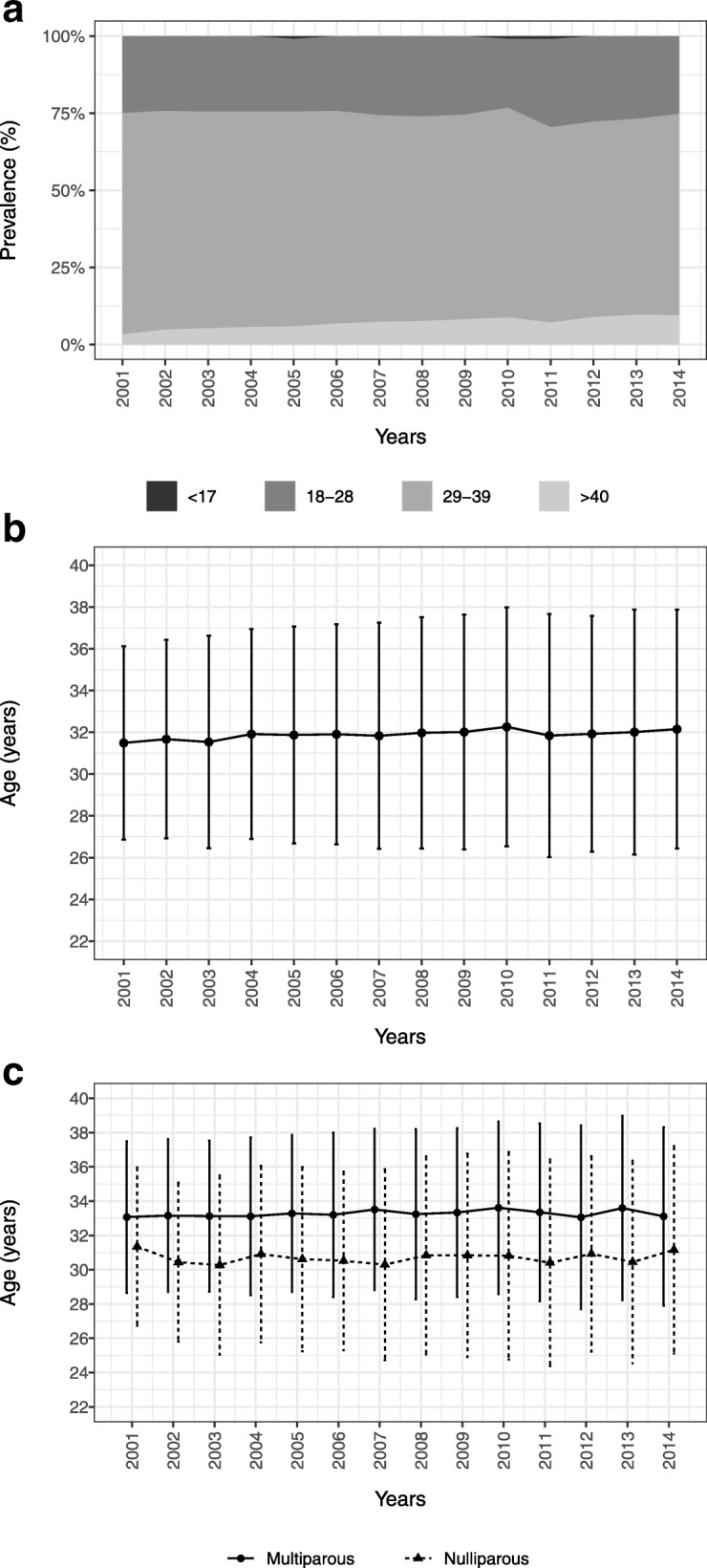
BACKGROUND: The increased potential for negative pregnancy outcomes in both extremes of reproductive age is a well-debated argument. The aim of this study was to analyze the prevalence and the outcome of pregnancies conceived at extreme maternal ages. METHODS: This retrospective study considered all single consecutive pregnancies delivered in a tertiary referral center between 2001 and 2014. Patients were categorized into 4 groups according to maternal age at delivery (< 17 years; 18-28 years; 29-39 years; > 40 years). The following outcomes were considered (amongst others): pregnancy-related hypertensive disorders (PRHDs), neonatal resuscitation (NR), neonatal intensive care unit (NICU) admission, periventricular leucomalacia (PVL), and grade 3 and 4 intraventicular hemorrhage (IVH). RESULTS: During the considered period 22,933 single pregnancies gave birth in our unit. We observed 71 women aged < 17 years, and 1552 aged > 40 years. In each year throughout the study period, there was a significant increment in maternal age of 0.041 years (95% CI 0.024-0.058) every new year. Multivariate analysis concluded out that maternal age over 40 years was an independent risk factor for preterm delivery (OR 1.36 95% CI 1.16-1.61, p < 0.05, PRHDs (OR 2.36 95% CI 1.86-3.00, p < 0.05), GDM (OR 1.71 95% CI 1.37-2.12, p < 0.05) cesarean section (OR 1.99 95% CI 1.78-2.23, p < 0.05), abnormal fetal presentation (OR 1.29 95% CI 1.03-1.61, p < 0.05), and fetal PVL (OR 3.32 95% CI 1.17-9.44, p < 0.05). We also observed that maternal age under 17 years or over 40 years was an independent risk factor for grade 3 or 4 neonatal IVH (OR 2.97 95% CI 1.24-7.14, p < 0.05). CONCLUSIONS: These findings confirm a negative impact of extreme maternal ages on pregnancy. These results should be carefully taken into account by maternal care providers in order to inform women adequately, supporting them in understanding potential risks associated with their procreation choices, and to improve clinical surveillance.
Overview
The claims and statistics of this paper haven’t been checked yet.
Free: it reads the open-access text and checks the first 5 claims that cite a source we can check. Create a free account to check every claim.
Integrity signals
Registry
Cites
Statistics
Figures
Verification
Claims the paper makes
The claims and statistics of this paper haven’t been checked yet.
Free: it reads the open-access text and checks the first 5 claims that cite a source we can check. Create a free account to check every claim.
Claims other papers make about this one
Each is checked against this paper’s own text: does it say what the citing paper says it does?
The source backs part of the claim, not all of it — or backs it for a different population, condition or comparison.
In the citing paper
“Studies have shown older women are more likely to have chronic morbidities prior to conception, such as hypertension, diabetes, and various autoimmune diseases.”
From Age-related disparities in national maternal mortality trends: A population-based study (2025) · cites this paper as [34]
Experimental — accuracy not yet measuredThe source backs part of the claim, not all of it — or backs it for a different population, condition or comparison.
In the citing paper
“These pre-existing conditions also render them at greater likelihood of developing peripartum adverse conditions [34, 35].”
From Age-related disparities in national maternal mortality trends: A population-based study (2025) · cites this paper as [34]
Experimental — accuracy not yet measured
Self-check
Percentages, sums and reported differences re-computed from the paper’s own numbers.
The self-check needs the paper’s full text.
Citations
Cites
Papile, L.-A., Burstein, J., Burstein, R., & Koffler, H. (1978) · The Journal of Pediatrics · doi:10.1016/s0022-3476(78)80282-0 · Cited by 6,430
An international classification of retinopathy of prematurity
(1985) · International Ophthalmology · doi:10.1007/bf00136454 · Cited by 1,005
Teenage pregnancy and adverse birth outcomes: a large population based retrospective cohort study.
Chen, X.-K., Wen, S. W., Fleming, N., Demissie, K., Rhoads, G. G., & Walker, M. (2007) · International Journal of Epidemiology · doi:10.1093/ije/dyl284 · Cited by 971
Intraventricular Hemorrhage in Premature Infants: Mechanism of Disease
Ballabh, P. (2010) · Pediatric Research · doi:10.1203/pdr.0b013e3181c1b176 · Cited by 782
Advanced Maternal Age and Adverse Perinatal Outcome
Jacobsson, B., Ladfors, L., & Milsom, I. (2004) · Obstetrics & Gynecology · doi:10.1097/01.aog.0000140682.63746.be · Cited by 704
(2015) · PubMed · Cited by 615
Advanced Maternal Age and Adverse Pregnancy Outcome: Evidence from a Large Contemporary Cohort
Kenny, L. C., Lavender, T., McNamee, R., O’Neill, S. M., Mills, T., & Khashan, A. S. (2013) · PLoS ONE · doi:10.1371/journal.pone.0056583 · Cited by 605
Cerebral White Matter Injury of the Premature Infant—More Common Than You Think
Volpe, J. J. (2003) · Pediatrics · doi:10.1542/peds.112.1.176 · Cited by 538
Advanced maternal age and pregnancy outcomes: a multicountry assessment
Laopaiboon, M., Lumbiganon, P., Intarut, N., Mori, R., Ganchimeg, T., Vogel, J., Souza, J., Gülmezoglu, A., & on behalf of the WHO Multicountry Survey on Maternal Newborn Health Research Network (2014) · BJOG: An International Journal of Obstetrics & Gynaecology · doi:10.1111/1471-0528.12659 · Cited by 492
The risks associated with pregnancy in women aged 35 years or older
Jolly, M. (2000) · Human Reproduction · doi:10.1093/humrep/15.11.2433 · Cited by 490
Cited by
Items 201–285 of 285
ZANIN, V., PARISI, N., VISINTINI, F., DRIUL, L., & LONDERO, A. P. (2021) · Minerva Obstetrics and Gynecology · doi:10.23736/s2724-606x.21.04873-9
Self-citationSleep Quality in Pregnant Women Considering Maternal Age: A Cross-sectional Study
Dolu, İ., SÖGÜT, S. C., & Cangöl, E. (2022) · Journal of Turkish Sleep Medicine · doi:10.4274/jtsm.galenos.2021.39200
“Most studies focusing on pregnant women with AMA are generally inquiry obstetrical outcomes (7,8) and maternal comorbidities.”
Characteristics of Homebirth in Hungary: a Comparative Retrospective Cohort StudyPreprint
Wami, G. A., Prémusz, V., Csákány, G. M., Kálmán, K., Vértes, V., & Tamás, P. (2022) · Research Square · doi:10.21203/rs.3.rs-1388434/v1
Uzunhasanoğlu, Ö., Çakıl, Y. D., Selam, B., & Cıncık, M. (2022) · Jinekoloji-Obstetrik ve Neonatoloji Tıp Dergisi · doi:10.38136/jgon.946852
Zeng, M. J., Chen, R., He, J., Liang, D., Zhao, X., Lian, T., Yin, M., Ma, X., Luo, X., Pan, X., et al. (2022) · Research Square · doi:10.21203/rs.3.rs-827641/v2
Haq, E. U., Kawish, A. B., & Fayaz, M. (2022) · International Journal of Natural Medicine and Health Sciences · doi:10.52461/ijnms.v1i2.847
Risk of morbidity and mortality in preterm infants born to advanced maternal age pregnancies
Ceran, B., Çakır, U., Yıldız, D., Tuğcu, A. U., Sınacı, S., & Tayman, C. (2022) · Archives of Current Medical Research · doi:10.47482/acmr.1134592
“More Previous studies have evaluated infants born to mothers with AMA in terms of short-term clinical outcomes, such as in the delivery room and indications for NICU admission (1,18-20 , 24 ).”
BackgroundDeterminants of maternal healthcare-seeking behaviours in Ghana
Bawuah, A., & Ampaw, S. (2022) · International Journal of Social Economics · doi:10.1108/ijse-03-2022-0199 · Cited by 2
Atsa’am, D. D., Gbaden, T., & Wario, R. D. (2023) · Advances in healthcare information systems and administration book series · doi:10.4018/978-1-6684-8103-5.ch018
Sandra, R. A., Sukamto, E., & Raihanah, S. (2023) · Formosa Journal of Science and Technology · doi:10.55927/fjst.v2i3.3134
Pregnancy Classes Increase Knowledge of Early Detection of High-Risk of Pregnancy
Wurihandayani, K., Fadhilah, S., & Kusumawardani, L. A. (2023) · Jurnal MID-Z (Midwivery Zigot) Jurnal Ilmiah Kebidanan · doi:10.56013/jurnalmidz.v6i1.2046
Faktor determinan kematian ibu di Kabupaten Sintang periode Agustus 2021 – 2022
Pratiwi, D. I., Kasjono, H. S., Gunarmi, G., Hadijono, R. S., Haryanti, Y., & Masan, L. (2023) · Jurnal SAGO Gizi dan Kesehatan · doi:10.30867/gikes.v4i2.1140
Shirazi, M. G., Yunesian, M., Partash, N., & Ebrahimi, E. (2023) · Journal of Nursing and Midwifery Sciences · doi:10.5812/jnms-138155
“Some researchers believe that decreasing the time between marriage and first pregnancy can significantly affect population growth between communities (6).”
BackgroundBenyuk, V. O., Chebotarova, A. S., Hychka, N. M., Kovaliuk, T. V., Beniuk, S. V., Usevych, I. A., Курочка, В. В., & Polovynka, V. O. (2023) · Reproductive health of woman · doi:10.30841/2708-8731.4.2023.285765 · Cited by 2
Maternal predictors of mode of delivery: A retrospective study
Ogbondah, B. O., Okagua, K. E., Owhondah, G., Okoh, D. A., & Oris-Onyiri, V. (2021) · Ibom Medical Journal · doi:10.61386/imj.v14i4.37
Impact of maternal age on perinatal results
SUMAN, K., GÖK, E., BÜYÜK, M., & SUMAN, M. (2023) · Acibadem Universitesi Saglik Bilimleri Dergisi · doi:10.31067/acusaglik.1287382
1. O nascimento prematuro: abordagem epidemiológica, social e assistencial
de Oliveira, N. D. (2023) · Editora FIOCRUZ eBooks · doi:10.7476/9786557082195.0003 · Cited by 1
Nassar, S. A., Hassanin, A. S., Ramzy, Y., & Abdallah, M. (2023) · Evidence Based Women s Health Journal · doi:10.21608/ebwhj.2023.233575.1261
“Multivariate analysis concluded out that maternal age over 40 years was an independent risk factor for preterm delivery, pregnancy-related hypertensive disorders, GDM, cesarean section, abnormal fetal presentation and fetal PVL [14] .”
BackgroundLondero, A. P., Fichera, A., Orabona, R., Cagnacci, A., & Prefumo, F. (2024) · International Journal of Gynecology & Obstetrics · doi:10.1002/ijgo.15375
“21 Previous research compared the delivery outcomes of small for gestational age and non-small for gestational age fetuses, yielding contradictory results, finding an increased CD rate in small fetuses 22 or no difference in CD rate.”
ResultSelf-citationFirdausy, D. E., Radityo, A. N., Wiyati, P. S., & Sareharto, T. P. (2024) · Basic and Applied Nursing Research Journal · doi:10.11594/banrj.04.02.08
Childlessness trends at different ages by educational attainment for men and women in FinlandPreprint
Jalovaara, M., & Miettinen, A. (2024) · doi:10.31235/osf.io/tmqhz
Анализ причин преждевременных родов
Садуакасова, Ш. М., Базарбаева, Ж. У., Айгырбаева, А. Н., Бузумова, Ж. О., Алмасбек, А. А., Курбанбай, А. Б., Жолбарыс, Д. А., Примбетова, А. Ш., & Толеубаева, А. А. (2024) · Репродуктивная медицина · doi:10.37800/rm.1.2024.34-43 · Cited by 2
Maternal and foeto-neonatal characteristics of home childbirth
Alemu, W. G. (2024) · Pécsi Egyetemi Archívum (University of Pécs) · doi:10.15170/pte.2024.011
Singh, S. S. A. (2023) · International Journal of Science and Research (IJSR) · doi:10.21275/sr23720112136
Mother pregnancy age association with the incidence of low birth weight infants
Sari, R. K., Mayangsari, C. P., Intan, Y. S. N., Aprilyanti, D. F., Alhasan, A. T., & Sembodo, T. (2023) · Science, Engineering and Health Studies · doi:10.69598/sehs.17.23050010 · Cited by 1
Recurring Materno-fetal Complications in Late Pregnancy: An Integrative Review
Araújo, S. C., Braga, G. B., Azevedo, D. L., Maria, D. A. O. S., & Ferreira, S. B. (2024) · Journal of Gynecological Research and Obstetrics · doi:10.17352/jgro.000125
Ulfah, M., Yusuf, M., Mulyani, S., & Widiyanto, W. (2024) · Journal of Health Research · doi:10.56808/2586-940x.1102 · Cited by 1
“Additionally, adolescent mothers are at a higher risk of receiving insuf fi cient prenatal care and encountering adverse birth outcomes, such as prematurity and low birth weight [58,59] both of which have been linked to raised risks of ADHD among children [60,61].”
Developmental profile of Filipino children born during the SARS-COV-2 pandemic: pilot study
Dy, A. B. C., Edillon, M. A. S., Malonzo, M. F. M. A., Garcia, G. D., Dy, A. B. C., Espiritu, C. J. S., Aquino, M. B. C., So, S. K., Capulong, N. L. D., Dagal, R. V. C., et al. (2024) · Frontiers in Public Health · doi:10.3389/fpubh.2024.1426409 · Cited by 1
“Prior research has found that there were more risk factors during pregnancy, for maternal health, and fetal development among extreme maternal ages (i.e., younger than 17 and older than 40) (27).”
BackgroundEarly and adult life environmental effects on reproductive performance in preindustrial women
Colejo-Durán, L., Pelletier, F., Dillon, L., Gagnon, A., & Bergeron, P. (2024) · PLoS ONE · doi:10.1371/journal.pone.0290212 · Cited by 1
Muthuka, J. K., Manyara, L. K., Linus, A., Jack, K. O., Chebungei, L. K., & Nabaweesi, R. (2024) · medRxiv · doi:10.1101/2024.11.28.24318132
El-touny, E. M., Hassan, M. F., Khamis, G. S., Ayad, A. M., & Bedawy, N. M. E. (2024) · Alexandria Journal of Pediatrics · doi:10.4103/ajop.ajop_31_24
Larsen, A., Pintye, J. C., Abuna, F., Dettinger, J. C., Gómez, L., Marwa, M. M., Ngumbau, N. M., Odhiambo, B. O., Richardson, B. A., Watoyi, S., et al. (2025) · BMC Pregnancy and Childbirth · doi:10.1186/s12884-024-07058-x · Cited by 1
“…morbidity and mortality are needed to achieve “last mile” gains in MCH. Multiple factors are associated with increased risk of PTB, including maternal age (women < 18 and > 35 are at higher risk for PTB) [8], inadequate antenatal care attendance [9], and comorbidities (e.g., diabetes) [10].”
Rodriguez, S., Marquez, K., Louis, G. S., Vazquez, A., Simonelli, L., Lindsay, K., Moscoso, J., & Attia, G. R. (2025) · Journal of Assisted Reproduction and Genetics · doi:10.1007/s10815-025-03449-x
“Although our finding was not statistically significant, it is known that conception at advanced maternal age poses greater risks of complications during the pregnancy such as cesarean delivery, hypertensive disorders, preterm birth, and low birth weight [26, 27].”
Aldanese, A. M., Huzien, F. M., Stutler, D. J., Nikolov, N. K., Dufrene, K., Kaye, A. J., Siddaiah, H. B., Shekoohi, S., & Kaye, A. D. (2025) · Elsevier eBooks · doi:10.1016/b978-0-443-21707-4.00053-7
Evaluation of the umbilical artery using Doppler Ultrasound in pregnant women with preeclampsia
Elbashir, M., Ahmed, R. M., Omer, A., Ali, S. H., Hurubi, F., Alfaifi, A., Ageeli, S., Abualfadil, B., Abdelrazig, A., & Nabil, G. (2025) · Journal Of Advanced Pharmacy Education And Research · doi:10.51847/2m0umclskq
“preeclampsia had lower birth weights compared to those born to normotensive mothers [22-24].”
Mason, M., Afe, A. J., & Fransaw, J. (2025) · PubMed Central · doi:10.34763/jmotherandchild.20252901.d-25-00002 · Cited by 4
Ray, R. (2025) · International Journal of Social Science and Economic Research · doi:10.46609/ijsser.2025.v10i05.021
“Adverse pregnancy outcome risk is higher for women under seventeen years old and over forty years old (Londero et al. 2019).”
Ray, R. (2025) · International Journal of Social Science and Economic Research · doi:10.46609/ijsser.2025.v10i05.026
Risk Factors of Preterm Labour Thi Qar Governorate Iraq
Ali, I. N., Abdullah, S. S., Kamil, S. K., Abdulhassan, K. K., Waja’an, Z. S., & Khaleel, M. (2025) · Academia Open · doi:10.21070/acopen.10.2025.11557
Choudhury, P., Sharma, A., & Sharma, K. (2025) · Sarvodaya International Journal of Medicine · doi:10.4103/sijm.sijm_19_25
A mechanical origin for implantation defects in embryos from aged femalesPreprint
Cavanaugh, K. E., Franco-Oñate, M.-J., Laird, D. J., Oakes, P. W., Alert, R., & Weiner, O. D. (2025) · bioRxiv (Cold Spring Harbor Laboratory) · doi:10.1101/2025.09.29.679218
“Despite decades of refinement, current screening approaches yield only about a 40% success rate for younger women and 15% for women over the age of 35 18,19 .”
Adipokine visfatin as a response of an efficient placenta to key pregnancy risk factors
Stangret, A., Wnuk, A., Lewandowski, Z., Chołuj, M., Skoda, M., Szukiewicz, D., Sawicki, W., & Cendrowski, K. (2025) · Placenta · doi:10.1016/j.placenta.2025.11.007
Pregnancy at 35 and Beyond: Is It Time to Redefine the Age of Geriatric Pregnancies?Preprint
Ganguli, D. (2025) · SSRN Electronic Journal · doi:10.2139/ssrn.5861764
Soriano, L. C., Asiimwe, A., Van Hemelrijck, M., Bosco, C., & García Rodríguez, L. A. (2020) · Figshare · doi:10.6084/m9.figshare.12672442
Soriano, L. C., Asiimwe, A., Van Hemelrijck, M., Bosco, C., & García Rodríguez, L. A. (2020) · Figshare · doi:10.6084/m9.figshare.12672448
Soriano, L. C., Asiimwe, A., Van Hemelrijck, M., Bosco, C., & García Rodríguez, L. A. (2020) · Figshare · doi:10.6084/m9.figshare.12672451
Soriano, L. C., Asiimwe, A., Van Hemelrijck, M., Bosco, C., & García Rodríguez, L. A. (2020) · Figshare · doi:10.6084/m9.figshare.12672454
Shen, M., Liang, X., Wu, Y., & Fang, S. (2022) · Figshare · doi:10.6084/m9.figshare.19143135
Soriano, L. C., Asiimwe, A., Van Hemelrijck, M., Bosco, C., & García Rodríguez, L. A. (2020) · Figshare · doi:10.6084/m9.figshare.12672433
Wang, Y., Gong, Y., Xu, Y., Wang, X., Shan, S., Cheng, G., & Zhang, B. (2024) · Figshare · doi:10.6084/m9.figshare.24953153
Lin, L., Lu, C., Chen, W., Li, C., & Guo, V. Y. (2021) · Figshare · doi:10.6084/m9.figshare.14329321
Lin, L., Lu, C., Chen, W., Li, C., & Guo, V. Y. (2021) · Figshare · doi:10.6084/m9.figshare.14329330
Lin, L., Lu, C., Chen, W., Li, C., & Guo, V. Y. (2021) · Figshare · doi:10.6084/m9.figshare.14329324
Lin, L., Lu, C., Chen, W., Li, C., & Guo, V. Y. (2021) · Figshare · doi:10.6084/m9.figshare.14329327
Soriano, L. C., Asiimwe, A., Hemelrijck, M. V., Bosco, C., & Rodríguez, L. A. G. (2020) · Figshare · doi:10.6084/m9.figshare.12672436
Soriano, L. C., Asiimwe, A., Van Hemelrijck, M., Bosco, C., & García Rodríguez, L. A. (2020) · Figshare · doi:10.6084/m9.figshare.12672439
Ouédraogo, L., Habonimana, D., Nkurunziza, T., Chilanga, A., Elamin, H., Fatim, T., Kidula, N., Conombo, G., Muriithi, A., & Onyiah, P. (2021) · Figshare · doi:10.6084/m9.figshare.14432576
Soriano, L. C., Asiimwe, A., Van Hemelrijck, M., Bosco, C., & Rodríguez, L. A. G. (2020) · Figshare · doi:10.6084/m9.figshare.12672445
Belokrinitskaya, T. E., Frolova, N. I., Mudrov, V. A., Жуковец, И. В., Philippova, R., Петровна, Р. М., Zhamyanova, T. B., Vayrakh, N. A., Dyachkovskaya, A. S., & Kolodezhnaya, A. K. (2025) · GYNECOLOGY · doi:10.26442/20795696.2025.4.203416
Morgan, K., Batra, K., Woodard, S., Ryst, E., Devereux, P. G., & Yang, W. (2026) · Healthcare · doi:10.3390/healthcare14020238
“Enhanced clinical surveillance among younger and older mothers due to perceived obstetric or social risk increase GES identification in clinical settings [30].”
Kusheta, S., & Mekonnen, W. (2026) · BMJ Open · doi:10.1136/bmjopen-2025-101792
“30 31 This association is explained by the physiological immaturity among young mothers, which may lead to cervical insufficiency, and older women may experience chronic conditions like hypertension, which may lead to ABOs.”
Golgelioglu, M., Akçabay, Ç., Akverdi, G., & Kavak, S. B. (2026) · BMC Pregnancy and Childbirth · doi:10.1186/s12884-026-08865-0
“Advanced maternal age has been associated with impaired vascular adaptation, increased arterial stiffness, and reduced spiral artery remodeling, all of which may contribute to higher uteroplacental resistance [15–17].”
Singh, G., Patil, P. P., Shetty, C., Mainani, A., & Gopal, S. (2026) · International Journal of Reproduction Contraception Obstetrics and Gynecology · doi:10.18203/2320-1770.ijrcog20260541
Pregnancy and Female Reproductive Disorders
Esterhuizen, M., & Pheiffer, Y. (2026) · Springer eBooks · doi:10.1007/978-3-031-90919-1_42-1 · Cited by 1
Synthetic Dataset Based Maternal Health Risk Prediction
Praba, G. C., Vani, V., & Suganya, G. (2026) · SN Computer Science · doi:10.1007/s42979-026-04939-0
Ranjit, K., Keshari, J. R., Pankaj, P., Prakash, P., Kirti, R., & Prasad, D. (2026) · Journal of Family Medicine and Primary Care · doi:10.4103/jfmpc.jfmpc_1467_25
“[12] Moreover, ROC curve analysis (AUC = 0.902) of maternal age and LMNA levels in the present study highlighted their potential diagnostic utility.”
InfluentialLin, L., Chen, L., Luo, J., Dong, J., & Lin, J. (2026) · BMC Pregnancy and Childbirth · doi:10.1186/s12884-026-09118-w
“Based on previous literature, maternal age, parity, education level, and occupation have been associated with adverse pregnancy outcomes [21–24].”
Cyiza, F. R., Rutayisire, E., Mukantagara, M., Uwimana, A., Mugabo, H., Remera, E., Rudasingwa, S., Ndererimana, E., Turate, I., & Kanyoko, N. C. (2026) · BMC Pregnancy and Childbirth · doi:10.1186/s12884-026-09122-0
“Some of these complications appear to be related to the aging process alone, while others are largely related to coexisting factors such as higher parity and hypertension [27].”
Biosocial Factors and Neonatal Mortality among Particularly Vulnerable Tribe of India
Panda, S., & Acharya, A. K. (2026) · Health and population. Perspectives and issues · doi:10.5005/hppi-11041-0050
Farrag, N. S., Salama, K. S., Salim, A. A., Ibrahim, A. M., & Ibrahim, N. F. (2026) · Journal of the Egyptian Public Health Association · doi:10.1186/s42506-026-00218-1
“This aligns with other studies [28–30], which found similar patterns in their analysis of delivery modes across age groups.”
The Influence of Maternal and Paternal Race on Perinatal Outcomes
Jones, S. A., Furukawa, N., & Kawakita, T. (2026) · American Journal of Perinatology · doi:10.1055/a-2869-3264
Guidance on physical activity from cancer survivorship to pregnancy: a scoping review
Szablewska, A. W., Pietrzak, K., Alves, A. J., Szumielewicz, A., Malveiro, C., Silva-Santos, S., & Santos‐Rocha, R. (2026) · Frontiers in Public Health · doi:10.3389/fpubh.2026.1801672
Shen, X., Zou, J., Song, J., & Gui, J. (2026) · BMC Pregnancy and Childbirth · doi:10.1186/s12884-026-09449-8
“This contrasts with most previous studies, which show that advanced maternal age (especially ≥ 35 or ≥ 40 years) increases preterm birth risk [42, 43].”
Wang, S., Hu, C., Liang, X., 和丽军, Shi, H., Yang, S., Bian, J., Zhang, Q., Ao, J., & (143236), F. L. (2026) · Environmental Research · doi:10.1016/j.envres.2026.124998
Chakulya, M., Chisompola, D., Siame, L., Hatwiko, H., Hamooya, B. M., & Masenga, S. K. (2026) · Discover Public Health · doi:10.1186/s12982-026-02315-0
“This is evidenced by a study by Lendro et al., which found that advancing maternal age was associated with an increased incidence of preeclampsia, even after adjusting for alcohol use [28].”
Bo, Z., Zou, K., Li, H., Jiang, Y., Zeng, L., Tang, Y., Zhao, S., Jiang, Y., & Zhang, L. (2026) · Frontiers in Public Health · doi:10.3389/fpubh.2026.1818893
“A retrospective cohort study concluded that women with maternal age over 40 years faced significantly higher risk of gestational diabetes, pregnancy-related hypertensive disorders and cesarean delivery compared with younger counterparts (14).”
Maternal age 30–34 years and adverse perinatal outcomes: a systematic review and meta-analysis
Xinna, C., Xinhua, L., Nawsherwan, & Mei, Y. (2026) · Frontiers in Medicine · doi:10.3389/fmed.2026.1845769
“Prior research often categorized them within broader age groups 18–34 years (22, 23) or 25–34 years (20, 24), thereby masking the risk of adverse perinatal outcomes in this cohort.”
Risk profiles of motor deficits in preterm infants: a cluster analysis approach
Middendorf, L., Jaekel, J., Gellhaus, A., Iannaccone, A., Dathe, A.-K., Bialas, J., Felderhoff‐Mueser, U., & Hüning, B. M. (2026) · Pediatric Research · doi:10.1038/s41390-026-05300-0 · Cited by 1
Mu, Q., Fang, J., Zheng, Y., Zhu, C., Chen, P., Zhou, Y., He, Y., Zhang, W., Tang, C., Guo, J., et al. (2026) · Paediatric and Perinatal Epidemiology · doi:10.1111/ppe.70175
Buralli, R. J., Elías, D., Kanai, C. M., Marques, L. J. P., dos Santos, O. A., Alencar, G. P., da Silva, Z. P., Figueiredo, G. M., Hoshida, M. S., Rodrigues, L. C., et al. (2026) · Air Quality Atmosphere & Health · doi:10.1007/s11869-026-02071-9
“Advanced maternal age is a known risk factor for adverse pregnancy outcomes, partly due to age-related placental decline, comorbidities, and reduced physiological adaptability, which may heighten vulnerability to environmental insults (Guo et al. 2020; Han et al. 2018; Londero et al., 2019).”
Management strategy for patients with functional stress-assosiated anovulation
Osadchaya, E. I., Борисовна, Б. Р., Kotelnikov, V. V., Ivanova, T. V., Андреевна, И. О., & Целкович, Л. С. (2026) · Russian Bulletin of Obstetrician-Gynecologist · doi:10.17116/rosakush20262604186
Banappagoudar, S. B., Alnomasy, N., David, M. S., Rani, M., Mohammad, Z., Alabdullah, A. A., Omer, F., & Arulappan, J. (2026) · Research Square · doi:10.21203/rs.3.rs-10915250/v1
Multi-tissue miRNA networks in preterm birth: from molecular mechanisms to precision medicine
Zhou, P., Song, B., Yan, P., Yu, S., & Wang, D. (2026) · Frontiers in Immunology · doi:10.3389/fimmu.2026.1948569
“Established risk factors fall into two principal categories: 1) Maternal baseline characteristics: Extreme age (<17 or >40 years) (27), low educational attainment (28), short interpregnancy interval (29), and preconception low body mass index (BMI) 18.5 kg/m² (30).”
InfluentialAlaca, C., Aker, M. N., Sezer, N. Y., & Tüzün, S. (2026) · BMJ Open · doi:10.1136/bmjopen-2026-122936
Metadata
- Authors
- Londero, A. P., Rossetti, E., Pittini, C., Cagnacci, A., & Driul, L.
- Affiliations
- University of Udine (IT)
- Corresponding author
- Londero, Ambrogio P.
- Venue
- BMC Pregnancy and Childbirth
- Published
- 2019-07-23
- Volume
- 19
- Issue
- 1
- Pages
- 261-261
- ISSN
- 1471-2393 (ISSN-L)
- PMC
- PMC6651936
- OpenAlex
- W2964184732
- Cited by
- 285
- References
- 64
- Citations by year
- 2026: 30 · 2025: 45 · 2024: 32 · 2023: 47 · 2022: 49 · 2021: 47 · 2020: 35
- FWCI
- 35.63
- Type
- journal article
- Language
- en
- Open access
- gold
- doi.org
- Licence
- cc-by
- creativecommons.org/licenses/by/4.0/ (tdm)
- creativecommons.org/licenses/by/4.0/ (vor)
- Locations
- BMC Pregnancy and Childbirth (publishedVersion, cc-by)
- PubMed Central (publishedVersion, cc-by)
- PubMed (publishedVersion)
- Institutional Research Information System (University of Udine) (submittedVersion, cc-by-nc-nd)
- DOAJ (DOAJ: Directory of Open Access Journals) (submittedVersion, cc-by-sa)
- CINECA IRIS Institutial Research Information System (University of Genoa) (submittedVersion, other-oa)
- Topics
- Health Sciences › Medicine › Obstetrics and Gynecology › Maternal and Perinatal Health Interventions
- Health Sciences › Medicine › Obstetrics and Gynecology › Pregnancy and preeclampsia studies
- Health Sciences › Medicine › Pediatrics, Perinatology and Child Health › Assisted Reproductive Technology and Twin Pregnancy
- Keywords
- maternal age, advanced maternal age, adolescent pregnancy, preterm birth, gestational diabetes mellitus, cesarean section, fetal presentation, periventricular leukomalacia, intraventricular hemorrhage, neonatal intensive care admission, neonatal resuscitation, adverse pregnancy outcomes, risk factors, singleton pregnancy
- MeSH terms
- Adolescent, Adult, Cesarean Section, Female, Gestational Age, Humans, Maternal Age, Maternal Welfare, Pre-Eclampsia, Pregnancy, Pregnancy Complications, Pregnancy Outcome, Retrospective Studies, Risk Factors, Premature Birth, Stillbirth, Young Adult
About these checks
Registry, retraction, Cites and statistics results are computed, not judged, with one exception: a printed reference that no index lists is read once by a model before it counts as a citation error. Claims are extracted by a model and kept only when their quote appears verbatim in the text; each cited source is then checked, with a model’s help, for whether it says what the claim relies on. Those verdicts can be wrong — read the claim’s quote and the cited source before relying on one.
Statistics and arithmetic are recomputed, not judged.
Confidence bands are shown only for fields calibrated on our annotated test set. None is calibrated yet, so no band is shown.
What counts as a claim ›How we measure confidence ›How we check this ›
Are you an author, or do you see a problem with this page? Request a review
Data sources
Bibliographic data: Semantic Scholar, OpenAlex, Crossref.
Contains information from the Semantic Scholar Academic Graph Datasets, made available under the ODC Attribution License (ODC-BY 1.0).
Semantic Scholar’s data is described in: Kinney, R., et al. (2023). The Semantic Scholar Open Data Platform. arXiv:2301.10140.
