

Effects of pre-pregnancy body mass index and gestational weight gain on maternal and infant complications
Open accessThe DOI matches its Crossref record; 45 of the 45 references it cites were found in a registry or an index.
Abstract
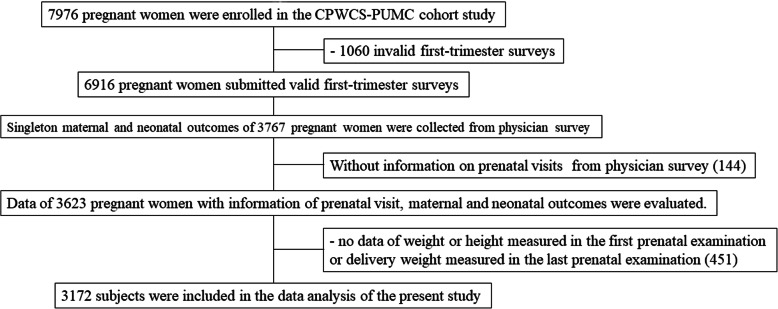
Background: The potential effects of pre-pregnancy body mass (BMI) and gestational weight gain (GWG) on pregnancy outcomes remain unclear. Thus, we investigated socio-demographic characteristics that affect pre-pregnancy BMIs and GWG and the effects of pre-pregnancy BMI and GWG on Chinese maternal and infant complications. Methods: 3172 women were enrolled in the Chinese Pregnant Women Cohort Study-Peking Union Medical College from July 25, 2017 to July 24, 2018, whose babies were delivered before December 31, 2018. Regression analysis was employed to evaluate the socio-demographic characteristics affecting pre-pregnancy BMI and GWG values and their effects on adverse maternal and infant complications. Results: Multivariate logistic regression analysis revealed that age groups < 20 years (OR: 1.97), 25–30 years (OR: 1.66), 30–35 years (OR: 2.24), 35–40 years (OR: 3.90) and ≥ 40 years (OR: 3.33) as well as elementary school or education below (OR: 3.53), middle school (OR: 1.53), high school (OR: 1.40), and living in the north (OR: 1.37) were risk factors in maintaining a normal pre-pregnancy BMI. An age range of 30–35 years (OR: 0.76), living in the north (OR: 1.32) and race of ethnic minorities (OR: 1.51) were factors affecting GWG. Overweight (OR: 2.01) and inadequate GWG (OR: 1.60) were risk factors for gestational diabetes mellitus (GDM). Overweight (OR: 2.80) and obesity (OR: 5.42) were risk factors for gestational hypertension (GHp). Overweight (OR: 1.92), obesity (OR: 2.48) and excessive GWG (OR: 1.95) were risk factors for macrosomia. Overweight and excessive GWG were risk factors for a large gestational age (LGA) and inadequate GWG was a risk factor for low birth weights. Conclusions: Overweight and obesity before pregnancy and an excessive GWG are associated with a greater risk of developing GDM, GHp, macrosomia and LGA. The control of body weight before and during the course of pregnancy is recommended to decrease adverse pregnancy outcomes, especially in pregnant women aged < 20 or > 25 years old educated below university and college levels, for ethnic minorities and those women who live in the north of China. Trial registration: Registered at Clinical Trials ( NCT03403543 ), September 29, 2017.
Overview
The claims and statistics of this paper haven’t been checked yet.
Free: it reads the open-access text and checks the first 5 claims that cite a source we can check. Create a free account to check every claim.
Integrity signals
Registry
Cites
Statistics
Figures
Verification
Claims the paper makes
The claims and statistics of this paper haven’t been checked yet.
Free: it reads the open-access text and checks the first 5 claims that cite a source we can check. Create a free account to check every claim.
Claims other papers make about this one
Each is checked against this paper’s own text: does it say what the citing paper says it does?
The source backs part of the claim, not all of it — or backs it for a different population, condition or comparison.
In the citing paper
“A weight gain of over 18 kg is associated with a twice higher risk of macrosomia [84,85].”
From Gestational Diabetes Mellitus—Recent Literature Review (2022) · cites this paper as [85]
Experimental — accuracy not yet measuredThe source backs part of the claim, not all of it — or backs it for a different population, condition or comparison.
In the citing paper
“most of the current evidences displayed that inadequate and excessive GWG were related to poor pregnancy outcomes for non-diabetic women in Western or high-income countries [9, 19, 20]”
From Associations of maternal pre-pregnancy BMI and gestational weight gain with the risks of adverse pregnancy outcomes in Chinese women with gestational diabetes mellitus (2023) · cites this paper as [9]
Experimental — accuracy not yet measured
Self-check
Percentages, sums and reported differences re-computed from the paper’s own numbers.
The self-check needs the paper’s full text.
Citations
Cites
(2004) · The Lancet · doi:10.1016/s0140-6736(03)15268-3 · Cited by 12,717
Weight Gain During Pregnancy: Reexamining the Guidelines
Rasmussen, K. M., & Yaktine, A. L. (2009) · Cited by 4,493
Brown, M. A., Lindheimer, M. D., Swiet, M. D., Assche, A. V., & Moutquin, J.-M. (2001) · Hypertension in Pregnancy · doi:10.1081/prg-100104165 · Cited by 1,894 · cited 1×
“GHp was defined as systolic blood pressure being ≥140 mmHg or diastolic pressure being ≥90 mmHg during the 3rd trimester, or if the mother-to-be had been prescribed medication to control hypertension [20].”
BackgroundGoldstein, R. F., Abell, S. K., Ranasinha, S., Misso, M., Boyle, J. A., Black, M. H., Li, N., Hu, G., Corrado, F., Rode, L., et al. (2017) · JAMA · doi:10.1001/jama.2017.3635 · Cited by 1,636
Anatomie aspects of vaginal eversion after hysterectomy
DeLancey, J. O. L. (1992) · American Journal of Obstetrics and Gynecology · doi:10.1016/0002-9378(92)91562-o · Cited by 993
Diagnostic Criteria and Classification of Hyperglycaemia First Detected in Pregnancy
Agarwal, M., Boulvain, M., Coetzee, E. J., Colagiuri, S., Falavigna, M., Hod, M., Meltzer, S. J., Metzger, B. E., Omori, Y., Rasa, I., et al. (2013) · Cited by 769
Swift, S., Woodman, P., O'Boyle, A., Kahn, M., Valley, M., Bland, D., Wang, W., & Schaffer, J. (2005) · American Journal of Obstetrics and Gynecology · doi:10.1016/j.ajog.2004.10.602 · Cited by 752
Outcomes of maternal weight gain.
Viswanathan, M., Siega‐Riz, A. M., Moos, M. K., Deierlein, A. L., Mumford, S. L., Knaack, J., Thieda, P., Lux, L. J., & Lohr, K. N. (2008) · PubMed · Cited by 500
Trends in Pre‐pregnancy Obesity in Nine States, 1993–2003
Kim, S. Y., Dietz, P. M., England, L., Morrow, B., & Callaghan, W. M. (2007) · Obesity · doi:10.1038/oby.2007.621 · Cited by 402
Maternal Prepregnancy Body Mass Index and Gestational Weight Gain on Pregnancy Outcomes
Li, N., Liu, E., Guo, J., Pan, L., Li, B., Wang, P., Liu, J., Wang, Y., Liu, G., Baccarelli, A. A., et al. (2013) · PLoS ONE · doi:10.1371/journal.pone.0082310 · Cited by 356
Self-citation
Research works printed but not linked: 5
- Organization WH A Guide for Progamme Managers 2001 Geneva World Health Organization; Iron Deficiency Anemia. Assessment, Prevention and Control
- Jin Z Ma S Dong L Li X Zhu J Zhang H Chin J Public Health 2009 25 4 415 416
- Li B Kong Y Research progress on the relationship between BMI and pregnancy outcome in pregnant women Chin J Family Plann 2017 25 10 715 717
- ZHAO J, HUANG W, QIN B, Ruiqing Z. Associations of pre-pregnancy BMI, pregnancy weight gain and newborn weight. China Med Her. 2018;15(30):84–6.
- Zhao R, Xu L, Wu M, Li R, Zhang Z, Cao X. Relationship between pre-pregnancy bodymass index,gestational weight gain and birth weight. Acta Univ Med Anhui. 2017;52(05):709–14.
Cited by
Items 101–200 of 358
Yong, H. Y., Shariff, Z. M., Yusof, B. N. M., Rejali, Z., Tee, Y. Y. S., BINDELS, J. G., & van der Beek, E. M. (2022) · PLoS ONE · doi:10.1371/journal.pone.0272253 · Cited by 8
“The associations between higher pre-pregnancy BMI and excessive GWG with the risk of GDM have not only been established in previous studies [35, 36] but also in previously reported data of a prospective cohort study in Malaysia (SECOST) [30, 37, 38].”
ResultXu, H., Li, M., Tang, X., & Lu, J. (2022) · Journal of Obstetrics and Gynaecology · doi:10.1080/01443615.2022.2124852 · Cited by 8
“This result was similar to previous studies which revealed that as the prenatal BMI value increases, the risk of adverse pregnancy outcomes also increases (Simko et al. 2019; Sun et al. 2020).”
ResultYang, H., Xiao, C., & Tu, J. (2024) · Medicine · doi:10.1097/md.0000000000037570 · Cited by 11
“…(≥35 years) was a well-documented and unmodifiable risk factor for GDM. [15] Obesity and inadequate GWG were other known risk factors for GDM. [16,17] The current study included 1076 advanced primip-arous women and found the prepregnancy weight and BMI in the GDM group were much higher than…”
BackgroundGestational obesity: An unconventional endocrine disruptor for the fetus
Barrea, L., Vetrani, C., Verde, L., Frías-Toral, E., Garcia-Velasquez, E., Ranasinghe, P. D., Méndez, V., Jayawardena, R., Savastano, S., Colao, A., et al. (2022) · Biochemical Pharmacology · doi:10.1016/j.bcp.2022.114974 · Cited by 8
Long, S. E., Jacobson, M. H., Wang, Y., Liu, M., Afanasyeva, Y., Sumner, S., McRitchie, S., Kirchner, D. R., Brubaker, S. G., Mehta‐Lee, S. S., et al. (2022) · International Journal of Obesity · doi:10.1038/s41366-022-01116-0 · Cited by 8
Self-citationTaha, Z., Hassan, A. A., & Papandreou, D. (2022) · Frontiers in Global Women s Health · doi:10.3389/fgwh.2022.893808 · Cited by 7
Liu, Q., Wang, D., Li, W., Li, X., Yang, Z., Zhang, A., He, J., Chen, X., Chang, Y., Chen, X., et al. (2023) · Ecotoxicology and Environmental Safety · doi:10.1016/j.ecoenv.2023.115518 · Cited by 7
Ahmadibeni, A., Kashani, P., Hallaj, M. S., Ghanbari, S., & Javadifar, N. (2023) · BMC Pregnancy and Childbirth · doi:10.1186/s12884-023-06116-0 · Cited by 10
“Also, the relationship between mother’s PPBMI and her education has been confirmed in previous studies [40].”
ResultShahid, S., Khalid, E., Fatima, S. S., & Khān, G. M. (2019) · European Journal of Obstetrics & Gynecology and Reproductive Biology · doi:10.1016/j.ejogrb.2019.01.020 · Cited by 7
Obesidade, gestação e complicações maternas e neonatais: uma revisão sistemática
Pinheiro, L. G. V., Soares, C. L. R., Lima, B. L. O., Sanches, N. M., de Oliveira, R. K., de Queiroz, D. A., & de Queiroz, E. A. I. F. (2023) · Scientific Electronic Archives · doi:10.36560/16420231691 · Cited by 14
Disordered Eating Behaviors Are Associated with Gestational Weight Gain in Adolescents
Sámano, R., Ortiz-Hernández, L., Martínez‐Rojano, H., Nájera-Medina, O., Chico‐Barba, G., Sánchez-Jiménez, B., Cruz-Cruz, J., & Echenique-González, M. J. (2021) · Nutrients · doi:10.3390/nu13093186 · Cited by 7
“Conversely, those with excessive weight gain are at an elevated risk of cesarean delivery, preeclampsia, gestational diabetes, blood transfusions, weight retention after delivery, and long-term obesity [9].”
Backgroundde Oliveira, T. I., dos Santos, L., & Höfelmann, D. A. (2023) · Sao Paulo Medical Journal · doi:10.1590/1516-3180.2022.0629.r1.190523 · Cited by 6
Arora, P., & Aeri, B. T. (2023) · European Journal of Obstetrics & Gynecology and Reproductive Biology X · doi:10.1016/j.eurox.2023.100258 · Cited by 6
“The control of body weight before and during the course of pregnancy is recommended to achieve positive pregnancy outcome [33].”
BackgroundChico‐Barba, G., Sámano, R., Martínez‐Rojano, H., Morales‐Hernández, R. M., Barrientos‐Galeana, E., Luna-Hidalgo, A., Kaufer‐Horwitz, M., Obrador, G. T., & Villa-Romero, A. R. (2024) · Nutrients · doi:10.3390/nu16132147 · Cited by 6
“Conversely, those with excessive weight gain have an increased risk of cesarean delivery, preeclamp-Nutrients sia, gestational diabetes, blood transfusions, postpartum weight retention, and long-term obesity [60].”
BackgroundChalid, M. T., Puspawaty, D., Tahir, A. M., Najdah, H., & Massi, M. N. (2022) · International Journal of Mycobacteriology · doi:10.4103/ijmy.ijmy_112_22 · Cited by 6
Recommendations for the prevention and management of obesity in the Iraqi population
Nwayyir, H. A., Mutasher, E. M., Alabid, O. M., Jabbar, M. A., Al-Kawaz, W. H. A., Alidrisi, H. A., Alabbood, M., Chabek, M., Alzubaidi, M. A., Alkhazrajy, L. A., et al. (2023) · Postgraduate Medicine · doi:10.1080/00325481.2023.2172914 · Cited by 9
Wang, K., Shang, B., Ye, P., Wei, Q., Zhang, Y., & Shi, H. (2023) · Nutrients · doi:10.3390/nu15214523 · Cited by 6
“Previous studies [8–10] have shown a positive correlation between excessive GWG (eGWG) and a larger birth size at term.”
ResultLame-Jouybari, A. H., Fahami, M. S., Hosseini, M. S., Moradpour, M., Hojati, A., & Farhangi, M. A. (2024) · Nutrition Reviews · doi:10.1093/nutrit/nuae187 · Cited by 7
Wang, Y., Yang, J., Liu, Y., Yang, A., Deng, Y., Xu, C., & Zhong, S. (2025) · Frontiers in Endocrinology · doi:10.3389/fendo.2025.1474694 · Cited by 6
Self-citationHuang, L., Chen, Y., Dai, Y., Xiao, L., Zhao, P., & Ben, X. (2021) · The Journal of Maternal-Fetal & Neonatal Medicine · doi:10.1080/14767058.2021.1907336 · Cited by 6
Self-citationJiang, F., Li, Y., & Sun, L. (2023) · PLoS ONE · doi:10.1371/journal.pone.0292665 · Cited by 6
“Preconception body mass index (BMI) is associated with GWG and the risk of adverse pregnancy outcomes, and thus, the determination of the best range of GWG should consider preconception BMI [9, 10].”
BackgroundZhang, X., Yin, B., Wu, K., Fang, L., & Chen, Y. (2024) · Journal of Obstetrics and Gynaecology · doi:10.1080/01443615.2024.2359671 · Cited by 6
“However, risk factors for Ptb still need to be explored. researchers have suggested that the nutritional state of women of childbearing age is a good predictor of perinatal and unfavourable outcomes for both the infant and the parturient (sun et al .”
Self-citationŠarac, J., Auguštin, D. H., Šunić, I., Lovrić, M., Novokmet, N., Milanović, S. M., Schell, L. M., & Missoni, S. (2023) · Annals of Human Biology · doi:10.1080/03014460.2023.2224058 · Cited by 7
“When looking at the connection between pregnancy and infant growth, the nutritional status of a pregnant woman shapes infant growth in the first year of life and it is believed to be a good predictor of adverse long-term outcomes for both the infant and the mother (Sun et al. 2020).”
BackgroundSeverity of excessive gestational weight gain and risk of severe maternal morbidity
Kouba, I., Pozzo, J. D., Álvarez, A., Keller, N. A., Gulersen, M., Bracero, L. A., & Blitz, M. J. (2023) · American Journal of Obstetrics & Gynecology MFM · doi:10.1016/j.ajogmf.2023.101247 · Cited by 5
Yaghobieh, N., Tarrahi, M. J., & Amani, R. (2025) · BMC Pregnancy and Childbirth · doi:10.1186/s12884-025-07340-6 · Cited by 7
“These include advanced maternal age, pre-pregnancy overweight and obesity, excessive weight gain during pregnancy, multiple pregnancies, ethnicity, and a history of hypertension in previous pregnancies [8–13].”
Su, W., Zhang, L., Cheng, J., Fu, Y., Zhao, J., & Chen, H. (2025) · European journal of medical research · doi:10.1186/s40001-025-03123-z · Cited by 6
“Elevated pre-pregnancy BMI significantly increases risks for gestational diabetes mellitus, hypertensive disorders, preterm delivery, fetal macrosomia and large-for-gestational-age infants [3, 4].”
Jayatissa, R., Wickramage, K. P., Denuwara, B. H., Herath, H. P., Jayawardana, R., Perera, A., & Alwis, N. D. (2022) · BMC Public Health · doi:10.1186/s12889-022-12615-0 · Cited by 6
Ghamri, K., Alsulami, S., Alotaibi, L., Salem, I., Tash, R. F., & Yousof, S. (2023) · Nigerian Journal of Clinical Practice · doi:10.4103/njcp.njcp_447_22 · Cited by 5
Wang, Y., Gong, Y., Xu, Y., Wang, X., Shan, S., Cheng, G., & Zhang, B. (2024) · BMC Pregnancy and Childbirth · doi:10.1186/s12884-023-06231-y · Cited by 5
“Variables that were risk factors for adverse birth weights based on literature [14, 25–27] and were statistically different according to maternal GWG (Table S1) were identified as potential confounders: maternal age, pre-pregnancy BMI, gestational diabetes mellitus (GDM), preeclampsia, caesarean…”
Self-citationBarzen, C., Vogel, M., Kieß, W., & Poulain, T. (2024) · Archives of Gynecology and Obstetrics · doi:10.1007/s00404-024-07487-1 · Cited by 5
“Previous studies found that GWG was positively associated with infants’ BW [8, 28, 30] and with a higher risk of o/o throughout childhood [9–11].”
ResultVan, S. N., Cui, J., Wang, Y., Jiang, H., Sha, F., & Li, Y. (2024) · Bioengineering · doi:10.3390/bioengineering11070657 · Cited by 6
“Short maternal stature is a risk factor for SGA, while taller mothers have a higher likelihood of LGA [33].”
BackgroundSelf-citationLleó, C. I. S., Soler, C., Soriano, J. M., & Onofre, N. S. (2024) · Nutrients · doi:10.3390/nu16162705 · Cited by 5
“The weight gain during pregnancy was optimal according to the recommendations, but one case of diabetes and three cases of thyroid disorders were detected, which could be due to hormonal imbalances during pregnancy [37].”
Masri, D. E., Alemayohu, M. A., Loperfido, F., Bianco, I., Ferrara, C., Cerbo, R. M., Ghirardello, S., Monti, M. C., Maccarini, B., Sottotetti, F., et al. (2024) · European Journal of Nutrition · doi:10.1007/s00394-024-03473-0 · Cited by 6
“These results were inconsistent with a study conducted by Sun Y et al. [27] on a sample of 3172 pregnant women, where the authors found that an average age of 20–25 years old, is a protective factor for maintaining GWG within IOM guidelines against adverse health effects and malformations [27].”
ResultAssociation between sleep quality and weight gain in pregnancy: a cross-sectional study
Roberto, A. P. D. S. C., Parenti, A. B. H., Gomes, C. D. B., Carvalhães, M. A. D. B. L., & Pàrada, C. M. G. D. L. (2024) · BMC Pregnancy and Childbirth · doi:10.1186/s12884-024-06965-3 · Cited by 5
Zhang, Y., Shao, S., Qin, J., Liu, Z., & Zhang, X. (2024) · Early Human Development · doi:10.1016/j.earlhumdev.2024.106180 · Cited by 5
Cohort profile: the Chinese Pregnant Women Cohort Study and Offspring Follow-up (CPWCSaOF)
Lyu, T., Chen, Y., Zhan, Y., Shi, Y., Yue, H., Liu, X. E., Meng, Y., Jing, A., Qu, Y., Ma, H., et al. (2021) · BMJ Open · doi:10.1136/bmjopen-2020-044933 · Cited by 5
Self-citationŠarac, J., Auguštin, D. H., Petranović, M. Z., Novokmet, N., Bočkor, L., Stanišić, L., Petherick, E., Karelović, D., Šelović, A., Mrdjen-Hodžić, R., et al. (2022) · Annals of Human Biology · doi:10.1080/03014460.2022.2080863 · Cited by 6
“A large body of literature suggests that overweight and/or obesity before pregnancy and an excessive GWG are associated with a greater risk of gestational diabetes mellitus (GDM), as well as newborn macrosomia and LGA (Berntorp et al. 2015; Goldstein et al. 2017; Sun et al. 2020).”
BackgroundObesity Increases Maternal Complications in Pregnant Women of Sinop: A Retrospective Cohort Study
Pinheiro, L. G. V., Sanches, N. M., Soares, C. L. R., Lima, B. L. O., Ramos, E. B., Ferreira, M. S., Loiola, M. D. O., Silva, R. R., PRATES, J. S. N., Silva, V. C., et al. (2024) · Obesities · doi:10.3390/obesities4020012 · Cited by 5
“These results confirms data from the literature that demonstrated that overweight and obesity contribute significantly to the incidence of maternal complications [10,11,37,38].”
ResultSun, Y., Zhang, M., Liu, R., Wang, J., Yang, K., Wu, Q., Yue, W., & Yin, C. (2022) · Frontiers in Endocrinology · doi:10.3389/fendo.2022.805636 · Cited by 5
Self-citationSelvam, N., Jayashree, K., & Mithra, P. (2022) · Korean Journal of Pediatrics · doi:10.3345/cep.2022.00122 · Cited by 5
Maternal Obezitenin Anne-Bebek Sağlığına Etkileri: Sistematik Derleme ve Meta-Analiz
Kurnaz, D., & Karaçam, Z. (2023) · Adnan Menderes Üniversitesi Sağlık Bilimleri Fakültesi Dergisi · doi:10.46237/amusbfd.1224641 · Cited by 8
He, J., Hu, K., Wang, B., Chen, Z., & Wang, H. (2023) · Healthcare · doi:10.3390/healthcare11162358 · Cited by 5
“are overweight or obese before pregnancy [35].”
Zhu, S., Chen, L., Shen, L., & Fu, X. (2025) · PeerJ · doi:10.7717/peerj.20277 · Cited by 4
Influence of Body Mass Index in Pregnancy on Maternal and Fetal Outcome
Farooq, S., Baloch, S., Awan, S., & nissa, F. (2022) · Pakistan Journal of Medical and Health Sciences · doi:10.53350/pjmhs22165616 · Cited by 4
Zhao, J., Zuo, L., Sun, J. P., Su, C., & Wang, H. (2023) · Nutrition Journal · doi:10.1186/s12937-023-00851-y · Cited by 4
“The recent Nutrition and Chronic Disease Surveillance of Chinese residents reported that over 50% of WCA in China are overweight or obese, which poses a major challenge to the health of the population and the medical system [12].”
BackgroundPi, Z., Chen, Y., Nie, Z., Peng, J., & Jiang, Z. (2023) · The Journal of Maternal-Fetal & Neonatal Medicine · doi:10.1080/14767058.2023.2224489 · Cited by 4
“Maternal obesity is a global health problem [10], and the pre-pregnancy body mass index (BMI) of women of childbearing age has shown an increasing trend in recent years [11].”
BackgroundInfluentialSelf-citationJia, Y., Jiang, H., Fu, Y., Li, Y., & Wang, H. (2024) · BMC Pregnancy and Childbirth · doi:10.1186/s12884-024-06592-y · Cited by 4
“GWG ranges of mothers-to-be was believed to be an important predictor of pregnancy outcomes [16, 17].”
BackgroundAsthma and risk of adverse pregnancy outcomes: A Mendelian randomization study
Han, X., Wu, T. Q., Bian, Y., Chen, L., & Feng, X. (2024) · Heliyon · doi:10.1016/j.heliyon.2024.e33857 · Cited by 4
Sedentarismo en el embarazo: efectos sobre la madre y el recién nacido
Morales-Suárez-Varela, M., Puig, B. M., Peraita‐Costa, I., Llopis-Morales, J., Hernández‐Segura, N., & González, A. L. (2023) · Medicina de Familia SEMERGEN · doi:10.1016/j.semerg.2023.102025 · Cited by 5
Castro, J. J., Umaña‐Pérez, A., Castaño‐Moreno, E., Casanello, P. C., & Ronco, A. M. (2023) · International Journal of Endocrinology · doi:10.1155/2023/1515033 · Cited by 4
Jiang, Y., Du, Y., Su, R., Wei, L., Gao, P., Zhang, J., Zhou, X., Zhu, S., Zhang, H., Chen, Y., et al. (2023) · Experimental Biology and Medicine · doi:10.1177/15353702231199077 · Cited by 4
Self-citationLin, J., Wu, F., Zhu, Y., Wang, B., Cao, Z., & Lin, J. (2024) · BMC Pregnancy and Childbirth · doi:10.1186/s12884-024-06795-3 · Cited by 4
“Female overweight/obesity has also been clearly associated with several adverse pregnancy outcomes, such as premature delivery, low birth weight, miscarriage, abnormal labor, and postpartum complications [8–10].”
BackgroundLu, J., Hao, X., Zhu, L., Guo, Y., Wu, X., Hao, J., Tao, F., & Huang, K. (2022) · International Journal of Environmental Research and Public Health · doi:10.3390/ijerph192013414 · Cited by 3
“(1) High pre-pregnancy BMI may be related to maternal hypertensive disorders and gestational diabetes [20], and the two conditions would affect the offspring’s neurodevelopment [21,22].”
BackgroundXu, L., Sheng, X.-J., Gu, L.-P., Yang, Z., Feng, Z., Gu, D.-F., & Gao, L. (2024) · World Journal of Clinical Cases · doi:10.12998/wjcc.v12.i26.5901 · Cited by 3
“Sun et al [19] showed that insufficient weight gain during pregnancy significantly affects newborn birth weight, consistent with the findings of this study.”
Wahabi, H., Esmaeil, S. A., & Fayed, A. A. (2025) · Healthcare · doi:10.3390/healthcare13243258 · Cited by 4
Shqara, R. A., Or, S., Francis, Y. N., Wiener, Y., Lowenstein, L., & Wolf, M. F. (2022) · Journal of obstetrics and gynaecology research · doi:10.1111/jog.15515 · Cited by 3
“Excessive weight gain during pregnancy is associated with a greater risk of developing GDM, macrosomia, and a large-for-gestational-age (LGA) fetus.(8) Individualized guidelines are recommended for appropriate weight gain during pregnancy, based on pre-pregnancy BMI, to avoid excessive weight gain and to improve pregn…”
BackgroundDickert, J. J., Springer, D. L. M., von Kaisenberg, C., Hillemanns, P., de Zwaan, M., & Brodowski, L. (2023) · Obesity Facts · doi:10.1159/000533276 · Cited by 3
“There is some evidence that women with low social status and ethnic minorities have a higher pre-pregnancy BMI [37, 38].”
BackgroundGenetic risk score for gestational weight gain
Mikołajczyk-Stecyna, J., Żuk, E., Seremak‐Mrozikiewicz, A., Kurzawińska, G., Wolski, H., Drews, K., & Chmurzyńska, A. (2024) · European Journal of Obstetrics & Gynecology and Reproductive Biology · doi:10.1016/j.ejogrb.2023.12.031 · Cited by 3
Effects of Maternal Prepregnancy Nutritional Status on Pregnancy Outcomes
Jiang, Y., Wang, X., Wu, L. L., Huang, X., & Cao, X. (2025) · Emergency Medicine International · doi:10.1155/emmi/1502902 · Cited by 5
“While previous research has established a strong correlation between maternal obesity and infant birth size [43], our fndings suggest that this relationship may not be direct, with dietary factors potentially playing a mediating role.”
Self-citationXi, Y., Wu, Q., Yin, B., Zhang, J., & Bai, Y. (2025) · Acta Obstetricia Et Gynecologica Scandinavica · doi:10.1111/aogs.70016 · Cited by 3
“63 Additionally, advanced maternal age is a significant risk factor for gestational hypertension, 64 as well as for LGA and macrosomia, 65 compared to younger women.”
Angali, K. A., Azhdari, M., Cheraghi, M., Shahri, P., Salmanzadeh, S., & Borazjani, F. (2023) · Journal of Holistic Nursing and Midwifery · doi:10.32598/jhnm.33.2.2290 · Cited by 3
Feria-Ramírez, C., Sanz, G., Molina‐Luque, R., & Molina‐Recio, G. (2023) · Midwifery · doi:10.1016/j.midw.2023.103908 · Cited by 3
Tori, M. E., Gosdin, L. K., Shih, Y.-W., Hung, P., Li, X., & Liu, J. (2024) · Annals of Epidemiology · doi:10.1016/j.annepidem.2024.02.002 · Cited by 3
Self-citationNgan, C. B. M., Kaur, R., & Jackson, D. E. (2024) · Vox Sanguinis · doi:10.1111/vox.13693 · Cited by 3
Tang, X., Zhang, B., Sun, M., Xue, H., Xu, R., Jian, W., Sun, X., Wang, P., Zhaxi, J., Wang, X., et al. (2024) · British Journal Of Nutrition · doi:10.1017/s0007114524002009 · Cited by 3
“Most prior studies have predominantly focused on maternal obesity leading to neonatal obesity, which may not apply to our population (52) .”
BackgroundSelf-citationPerceptual Factors Associated with Gestational Weight Gain: A Cross-Sectional Survey
Kim, S., & Ahn, S. (2024) · Journal of Korean Academy of Nursing · doi:10.4040/jkan.24052 · Cited by 3
Tang, Y., Liu, Z., Li, L., Liu, H., Li, X., & Gu, W. (2025) · The FASEB Journal · doi:10.1096/fj.202402129r · Cited by 3
Effect of Gestational Weight Gain on Overweight and Obese Pregnant Women
Sunsaneevitayakul, P., Sompagdee, N., Dehghan, M. A., & Talungchit, P. (2022) · Siriraj Medical Journal/San Sirirat · doi:10.33192/smj.2022.44 · Cited by 7
Farooq, M. H., Rizwan, A., Mughal, I. A., Rizvi, S. H. R., Faruqi, A., & Irfan, A. (2023) · Journal of Rawalpindi Medical College · doi:10.37939/jrmc.v27i3.2329 · Cited by 2
Kung, W., Kuo, H., Chang, C.-F., Zen, Y., & Lin, C. (2024) · Reproductive Sciences · doi:10.1007/s43032-024-01525-8 · Cited by 3
“Sun et al. has shown overweight and inadequate GWG were risk factors for GDM, overweight and obesity were risk factors for GHT. Overweight, obesity and excessive GWG were risk factors for macrosomia as compared to the reference group [20].”
Crivellenti, L. C., Carreira, N. P., de Lima, M. C., Baroni, N. F., & Sartorelli, D. S. (2025) · Journal of Human Nutrition and Dietetics · doi:10.1111/jhn.70039 · Cited by 2
Das, A., Bai, C., Chang, J., Huang, Y.-L., Wang, F., Hsu, C., Chen, Y.-C., & Chao, J. C.-J. (2025) · International Journal of Medical Informatics · doi:10.1016/j.ijmedinf.2025.105890 · Cited by 2
Self-citationYan, M., Zhang, Y., Zhao, D., Zhao, Y. M., Liu, D., Shan, L., Mi, Y., Pei, L., & Qu, P. (2025) · PeerJ · doi:10.7717/peerj.20332 · Cited by 2
Cheng, Y., Kivimäki, M., Zhang, Y., Carrillo-Larco, R. M., Dai, X., Wang, Y., & Xu, X. (2025) · Journal of Global Health · doi:10.7189/jogh.15.04333 · Cited by 2
“This result aligns with previous observations that CMDs were often interrelated and each additional CMD was associated with adverse pregnancy outcomes [ 20 , 33 ].”
Self-citationShen, W., Niu, A., Zhang, Q., Deng, J., Xu, X., Ma, X., Zhao, H., & Lou, Y. (2026) · PLoS ONE · doi:10.1371/journal.pone.0333081 · Cited by 3
Wu, K., Ke, H.-H., Gong, W., Hu, H., & Chen, L. (2022) · Diabetes Metabolic Syndrome and Obesity · doi:10.2147/dmso.s388562 · Cited by 2
Rusydiana, H. A., Dewi, M., Riyadi, H., & Kustiyah, L. (2022) · Jurnal Ilmiah Kesehatan (JIKA) · doi:10.36590/jika.v4i2.311 · Cited by 3
“Secara teori, cairan ketuban adalah selubung pelindung terhadap janin, yang juga mencegah luka akibat benturan mekanik ataupun luka biologis (Verma et al., 2016).”
BackgroundNasution, I. F., Sulastri, D., & Karmia, H. R. (2023) · Contagion Scientific Periodical Journal of Public Health and Coastal Health · doi:10.30829/contagion.v5i2.15047 · Cited by 2
“…newborns so that they experience health problems, such as hypoglycemia, hypothermia, mental retardation, and physical and neurodevelopmental problems resulting in a high risk of death in infants and also the risk of experiencing chronic disease in the future (Xi et al., 2020; Sun et al., 2020).”
BackgroundAssociation between maternal obesity and gestational diabetes mellitus and their related outcomes
Bharatnur, S., & Acharya, P. B. (2023) · International Journal of Reproduction Contraception Obstetrics and Gynecology · doi:10.18203/2320-1770.ijrcog20232935 · Cited by 2
Keleş, E., Kaya, L., Yakşi, N., Kaya, Z., & Tosun, Ö. (2024) · Revista da Associação Médica Brasileira · doi:10.1590/1806-9282.20231101 · Cited by 2
“It is well established that excessive GWG is a risk factor for macrosomia, regardless of pre-pregnancy BMI 16 .”
BackgroundBreastfeeding Behavior and LATCH Score in Postpartum Mothers days 1-7 with Overweight and Obesity
Astutik, R. Y., Istighosah, N., & Siwi, R. P. Y. (2024) · Journal Of Nursing Practice · doi:10.30994/jnp.v7i2.604 · Cited by 2
“Obesity before pregnancy is a high risk factor for gestational diabetes mellitus, hypertension syndrome, and fetal growth disorders, (Sun et al., 2020), the risk of premature birth (Li et al., 2020), and cellular oxidative stress.”
BackgroundIjaz, M., Ahmed, Z., & Khalid, N. (2024) · Global Knowledge, Memory and Communication · doi:10.1108/gkmc-08-2023-0314 · Cited by 3
Liu, Y., Feng, X., & Wang, X. (2024) · British Journal of Hospital Medicine · doi:10.12968/hmed.2024.0110 · Cited by 2
Gao, J., Li, M., Gao, S., Qin, F., & Cheng, W. (2024) · European Journal of Clinical Nutrition · doi:10.1038/s41430-024-01503-y · Cited by 2
“As the most easily measured and monitored parameter, pregnancy weight (i.e., p-BMI and GWG) is closely related to pregnancy outcomes [4].”
Bragg, A., Markcrow, S., Monk, S., Minehan, M., & Knight-Agarwal, C. R. (2024) · Midwifery · doi:10.1016/j.midw.2024.104210 · Cited by 2
Yang, A., Wang, Y., Liu, Y., Yang, J., Xu, C., & Zhong, S. (2025) · BMJ Open · doi:10.1136/bmjopen-2024-084282 · Cited by 2
Self-citationNiu, S., Wu, P., Li, B., Xin, H., Yu, K., & Du, N. (2025) · Frontiers in Endocrinology · doi:10.3389/fendo.2025.1548780 · Cited by 2
“Other research has shown that excessive maternal glucose is transferred to the fetus via the placenta, increasing the likelihood of premature rupture of membranes (30, 31).”
Eto, E., Kirino, S., Kato, M., Kuriyama, C., Sakata, S., Oishi, K., Suemori, A., Nakato, H., Oba, H., Mitoma, T., et al. (2025) · Journal of Diabetes Investigation · doi:10.1111/jdi.70131 · Cited by 2
“Promoting a healthy pre-pregnancy BMI and GWG is effective to reduce perinatal complications and ensure the health of women with GDM 18, 19 .”
Hubungan Status Gizi Ibu Hamil dengan Berat Badan Lahir di BPM Bidan Sri Harti
Khayati, Y. N., & Ningdiah, A. K. (2023) · Journal of Holistics and Health Sciences · doi:10.35473/jhhs.v5i1.267 · Cited by 2
Ker, C.-R., Hsu, W.-Y., Chuang, H.-Y., Lee, C., Wang, S.-H., & Chan, T. (2023) · Clinical and Experimental Obstetrics & Gynecology · doi:10.31083/j.ceog5004091 · Cited by 3
“Our analysis shows increased GDM incidence with advanced age, higher pre-pregnancy BMI and lower maternal educational status, which is in accordance with previous GDM studies [33–36].”
ResultHealth, U. S. M. M. P. I. P., Putranti, M. P. A., Murti, B., Health, U. S. M. M. I. P., & Adriani, R. B. (2023) · Journal of Maternal and Child Health · doi:10.26911/thejmch.2023.08.04.03 · Cited by 1
Maternal obesity as risk factor for diabetic fetopathy in gestational diabetes mellitus
Putilova, T. A., ́kova, I. V. D., & Tretyakova, T. B. (2024) · Russian Bulletin of Obstetrician-Gynecologist · doi:10.17116/rosakush20242401119 · Cited by 1
Ganho de peso excessivo em gestantes da Atenção Primária à Saúde
gonçalves, A. B. A., Oliva, G. A. C., Viana, G. S., Miranda, M. F. P. D. M., Torres, M. F., Carvalho, M. H. A., Brito, M. F. S. F., Lopes, W. C., & de PINHO, L. (2024) · Contribuciones a las Ciencias Sociales · doi:10.55905/revconv.17n.6-045 · Cited by 1
Tang, W., Jia, X., Tian, H., Zeng, X., & Jiang, Z. (2024) · American Journal of Translational Research · doi:10.62347/ojvv2986 · Cited by 1
Abdurrahman, E. S., Budiarto, E., Sutedja, I., Nasir, N. M., Besral, B., Universitas Indonesia, I., Masek, A., & Siregar, K. N. (2024) · Journal of Public Health and Development · doi:10.55131/jphd/2024/220302 · Cited by 2
Wu, L., Chen, F., Chen, M., Hu, Y., & Wang, Y. (2024) · Gynecological Endocrinology · doi:10.1080/09513590.2024.2433136 · Cited by 1
“Several studies have reported that pre-pregnancy body mass index (BMI) is associated with the risk of PIH [10–12].”
Self-citationZhao, R. Z., Zhang, A., Wang, Y., Chai, Y. X., Du, F., Qian, X., & Wang, Q. (2025) · BMC Pregnancy and Childbirth · doi:10.1186/s12884-025-07234-7 · Cited by 2
Self-citationXiong, J., Li, H., Tan, X.-Q., He, X.-J., & Fu, W.-Y. (2025) · Scientific Reports · doi:10.1038/s41598-025-02677-6 · Cited by 1
Chen, N., Shi, S., Zhao, S., Shen, L., Kong, L., Liang, Z., Cai, S., Chen, H., Wang, D., & Wang, Z. (2025) · The Journal of Maternal-Fetal & Neonatal Medicine · doi:10.1080/14767058.2025.2460180 · Cited by 2
“Reports indicated that GWG has increased during the COVID-19 pandemic [41], and excessive GWG was recognized as a risk factor for GDM occurrence [42].”
Self-citationChen, X., Zhang, J., Li, H., Tang, Y., Zhang, Y., Ma, Z., & Hu, Y. (2025) · Medicine · doi:10.1097/md.0000000000042440 · Cited by 1
“[9,10] Existing studies have shown that prepregnancy overweight and obesity significantly increase the physical and psychological health risks for both mothers and infants.”
Metadata
- Authors
- Sun, Y., Shen, Z., Zhan, Y., Wang, Y., Ma, S., Zhang, S., Liu, J., Wu, S., Feng, Y., Chen, Y., Cai, S., Shi, Y., Ma, L., & Jiang, Y.
- Affiliations
- Peking Union Medical College Hospital (CN)
- Chinese Academy of Medical Sciences & Peking Union Medical College (CN)
- Corresponding author
- Ma, Liangkun
- Jiang, Yu
- ORCID
- Venue
- BMC Pregnancy and Childbirth
- Published
- 2020-07-06
- Volume
- 20
- Issue
- 1
- Pages
- 390-390
- ISSN
- 1471-2393 (ISSN-L)
- PMC
- PMC7336408
- OpenAlex
- W3039753871
- Semantic Scholar
- 781167c9d6f8ccb3cbdf8aaa1520e673d070d7c2
- Cited by
- 319
- References
- 44
- Citations by year
- 2026: 27 · 2025: 52 · 2024: 77 · 2023: 77 · 2022: 55 · 2021: 24 · 2020: 5
- FWCI
- 24.49
- Type
- journal article
- Language
- en
- Open access
- gold
- doi.org
- Licence
- cc-by
- creativecommons.org/licenses/by/4.0 (tdm)
- creativecommons.org/licenses/by/4.0 (vor)
- Locations
- BMC Pregnancy and Childbirth (publishedVersion, cc-by)
- PubMed Central (publishedVersion, cc-by)
- PubMed (publishedVersion)
- DOAJ (DOAJ: Directory of Open Access Journals) (submittedVersion, cc-by-sa)
- Funders
- Chinese Academy of Medical Sciences Innovation Fund for Medical Sciences (2016-I2, M-1-008)
- Topics
- Health Sciences › Medicine › Obstetrics and Gynecology › Gestational Diabetes Research and Management
- Health Sciences › Medicine › Pediatrics, Perinatology and Child Health › Maternal and Neonatal Healthcare
- Health Sciences › Medicine › Public Health, Environmental and Occupational Health › Obesity, Physical Activity, Diet
- Keywords
- pre-pregnancy body mass index, gestational weight gain, maternal complications, neonatal complications, gestational diabetes mellitus, gestational hypertension, macrosomia, low birth weight, maternal obesity, maternal overweight, excessive weight gain, risk factors, sociodemographic factors, Chinese pregnant women, pregnancy outcomes, maternal age, maternal education, ethnic minorities, regional variation
- MeSH terms
- Gestational Weight Gain, Adult, Birth Weight, China, Female, Fetal Macrosomia, Gestational Age, Humans, Infant, Newborn, Obesity, Pregnancy, Pregnancy Complications, Pregnancy Outcome, Risk Factors, Socioeconomic Factors, Cohort Studies, Body Mass Index, Diabetes, Gestational, Hypertension, Pregnancy-Induced, Overweight, Young Adult
About these checks
Registry, retraction, Cites and statistics results are computed, not judged, with one exception: a printed reference that no index lists is read once by a model before it counts as a citation error. Claims are extracted by a model and kept only when their quote appears verbatim in the text; each cited source is then checked, with a model’s help, for whether it says what the claim relies on. Those verdicts can be wrong — read the claim’s quote and the cited source before relying on one.
Statistics and arithmetic are recomputed, not judged.
Confidence bands are shown only for fields calibrated on our annotated test set. None is calibrated yet, so no band is shown.
What counts as a claim ›How we measure confidence ›How we check this ›
Are you an author, or do you see a problem with this page? Request a review
Data sources
Bibliographic data: Semantic Scholar, OpenAlex, Crossref.
Contains information from the Semantic Scholar Academic Graph Datasets, made available under the ODC Attribution License (ODC-BY 1.0).
Semantic Scholar’s data is described in: Kinney, R., et al. (2023). The Semantic Scholar Open Data Platform. arXiv:2301.10140.
