

Effects of pre-pregnancy body mass index and gestational weight gain on maternal and infant complications
Open accessThe DOI matches its Crossref record; 45 of the 45 references it cites were found in a registry or an index.
Abstract
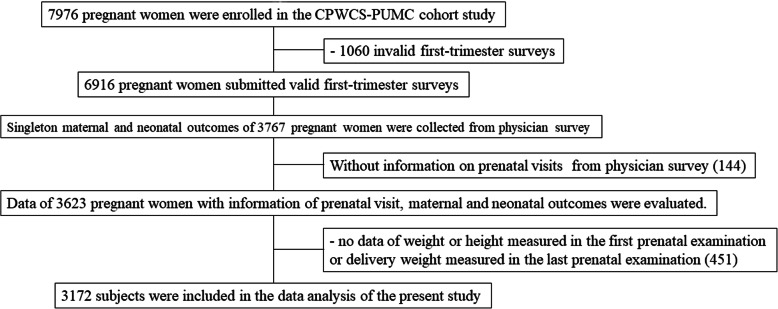
Background: The potential effects of pre-pregnancy body mass (BMI) and gestational weight gain (GWG) on pregnancy outcomes remain unclear. Thus, we investigated socio-demographic characteristics that affect pre-pregnancy BMIs and GWG and the effects of pre-pregnancy BMI and GWG on Chinese maternal and infant complications. Methods: 3172 women were enrolled in the Chinese Pregnant Women Cohort Study-Peking Union Medical College from July 25, 2017 to July 24, 2018, whose babies were delivered before December 31, 2018. Regression analysis was employed to evaluate the socio-demographic characteristics affecting pre-pregnancy BMI and GWG values and their effects on adverse maternal and infant complications. Results: Multivariate logistic regression analysis revealed that age groups < 20 years (OR: 1.97), 25–30 years (OR: 1.66), 30–35 years (OR: 2.24), 35–40 years (OR: 3.90) and ≥ 40 years (OR: 3.33) as well as elementary school or education below (OR: 3.53), middle school (OR: 1.53), high school (OR: 1.40), and living in the north (OR: 1.37) were risk factors in maintaining a normal pre-pregnancy BMI. An age range of 30–35 years (OR: 0.76), living in the north (OR: 1.32) and race of ethnic minorities (OR: 1.51) were factors affecting GWG. Overweight (OR: 2.01) and inadequate GWG (OR: 1.60) were risk factors for gestational diabetes mellitus (GDM). Overweight (OR: 2.80) and obesity (OR: 5.42) were risk factors for gestational hypertension (GHp). Overweight (OR: 1.92), obesity (OR: 2.48) and excessive GWG (OR: 1.95) were risk factors for macrosomia. Overweight and excessive GWG were risk factors for a large gestational age (LGA) and inadequate GWG was a risk factor for low birth weights. Conclusions: Overweight and obesity before pregnancy and an excessive GWG are associated with a greater risk of developing GDM, GHp, macrosomia and LGA. The control of body weight before and during the course of pregnancy is recommended to decrease adverse pregnancy outcomes, especially in pregnant women aged < 20 or > 25 years old educated below university and college levels, for ethnic minorities and those women who live in the north of China. Trial registration: Registered at Clinical Trials ( NCT03403543 ), September 29, 2017.
Overview
The claims and statistics of this paper haven’t been checked yet.
Free: it reads the open-access text and checks the first 5 claims that cite a source we can check. Create a free account to check every claim.
Integrity signals
Registry
Cites
Statistics
Figures
Verification
Claims the paper makes
The claims and statistics of this paper haven’t been checked yet.
Free: it reads the open-access text and checks the first 5 claims that cite a source we can check. Create a free account to check every claim.
Claims other papers make about this one
Each is checked against this paper’s own text: does it say what the citing paper says it does?
The source backs part of the claim, not all of it — or backs it for a different population, condition or comparison.
In the citing paper
“A weight gain of over 18 kg is associated with a twice higher risk of macrosomia [84,85].”
From Gestational Diabetes Mellitus—Recent Literature Review (2022) · cites this paper as [85]
Experimental — accuracy not yet measuredThe source backs part of the claim, not all of it — or backs it for a different population, condition or comparison.
In the citing paper
“most of the current evidences displayed that inadequate and excessive GWG were related to poor pregnancy outcomes for non-diabetic women in Western or high-income countries [9, 19, 20]”
From Associations of maternal pre-pregnancy BMI and gestational weight gain with the risks of adverse pregnancy outcomes in Chinese women with gestational diabetes mellitus (2023) · cites this paper as [9]
Experimental — accuracy not yet measured
Self-check
Percentages, sums and reported differences re-computed from the paper’s own numbers.
The self-check needs the paper’s full text.
Citations
Cites
(2004) · The Lancet · doi:10.1016/s0140-6736(03)15268-3 · Cited by 12,717
Weight Gain During Pregnancy: Reexamining the Guidelines
Rasmussen, K. M., & Yaktine, A. L. (2009) · Cited by 4,489
Brown, M. A., Lindheimer, M. D., Swiet, M. D., Assche, A. V., & Moutquin, J.-M. (2001) · Hypertension in Pregnancy · doi:10.1081/prg-100104165 · Cited by 1,894 · cited 1×
“GHp was defined as systolic blood pressure being ≥140 mmHg or diastolic pressure being ≥90 mmHg during the 3rd trimester, or if the mother-to-be had been prescribed medication to control hypertension [20].”
BackgroundGoldstein, R. F., Abell, S. K., Ranasinha, S., Misso, M., Boyle, J. A., Black, M. H., Li, N., Hu, G., Corrado, F., Rode, L., et al. (2017) · JAMA · doi:10.1001/jama.2017.3635 · Cited by 1,636
Anatomie aspects of vaginal eversion after hysterectomy
DeLancey, J. O. L. (1992) · American Journal of Obstetrics and Gynecology · doi:10.1016/0002-9378(92)91562-o · Cited by 993
Diagnostic Criteria and Classification of Hyperglycaemia First Detected in Pregnancy
Agarwal, M., Boulvain, M., Coetzee, E. J., Colagiuri, S., Falavigna, M., Hod, M., Meltzer, S. J., Metzger, B. E., Omori, Y., Rasa, I., et al. (2013) · Cited by 769
Swift, S., Woodman, P., O'Boyle, A., Kahn, M., Valley, M., Bland, D., Wang, W., & Schaffer, J. (2005) · American Journal of Obstetrics and Gynecology · doi:10.1016/j.ajog.2004.10.602 · Cited by 752
Outcomes of maternal weight gain.
Viswanathan, M., Siega‐Riz, A. M., Moos, M. K., Deierlein, A. L., Mumford, S. L., Knaack, J., Thieda, P., Lux, L. J., & Lohr, K. N. (2008) · PubMed · Cited by 500
Trends in Pre‐pregnancy Obesity in Nine States, 1993–2003
Kim, S. Y., Dietz, P. M., England, L., Morrow, B., & Callaghan, W. M. (2007) · Obesity · doi:10.1038/oby.2007.621 · Cited by 402
Maternal Prepregnancy Body Mass Index and Gestational Weight Gain on Pregnancy Outcomes
Li, N., Liu, E., Guo, J., Pan, L., Li, B., Wang, P., Liu, J., Wang, Y., Liu, G., Baccarelli, A. A., et al. (2013) · PLoS ONE · doi:10.1371/journal.pone.0082310 · Cited by 356
Self-citation
Research works printed but not linked: 5
- Organization WH A Guide for Progamme Managers 2001 Geneva World Health Organization; Iron Deficiency Anemia. Assessment, Prevention and Control
- Jin Z Ma S Dong L Li X Zhu J Zhang H Chin J Public Health 2009 25 4 415 416
- Li B Kong Y Research progress on the relationship between BMI and pregnancy outcome in pregnant women Chin J Family Plann 2017 25 10 715 717
- ZHAO J, HUANG W, QIN B, Ruiqing Z. Associations of pre-pregnancy BMI, pregnancy weight gain and newborn weight. China Med Her. 2018;15(30):84–6.
- Zhao R, Xu L, Wu M, Li R, Zhang Z, Cao X. Relationship between pre-pregnancy bodymass index,gestational weight gain and birth weight. Acta Univ Med Anhui. 2017;52(05):709–14.
Cited by
Gestational Diabetes Mellitus—Recent Literature Review
Modzelewski, R., Stefanowicz-Rutkowska, M. M., Matuszewski, W., & Bandurska-Stankiewicz, E. M. (2022) · Journal of Clinical Medicine · doi:10.3390/jcm11195736 · Cited by 223
Impacts of Consumption of Ultra-Processed Foods on the Maternal-Child Health: A Systematic Review
de Oliveira, P. G., de Sousa, J. M., Assunção, D. G. F., de Araújo, E. K. S., Bezerra, D. S., Dametto, J. F. D. S., & Ribeiro, K. D. D. S. (2022) · Frontiers in Nutrition · doi:10.3389/fnut.2022.821657 · Cited by 105
Weight gain during pregnancy: A narrative review on the recent evidences
Dalfrà, M. G., Burlina, S., & Lapolla, A. (2022) · Diabetes Research and Clinical Practice · doi:10.1016/j.diabres.2022.109913 · Cited by 95
Paula, W. O., Patriota, É. S. O., Gonçalves, V. S. S., & Pizato, N. (2022) · Nutrients · doi:10.3390/nu14153242 · Cited by 90
Sun, M., Luo, M., Wang, T., Wei, J., Zhang, S., Shu, J., Zhong, T., Liu, Y., Chen, Q., Zhu, P., et al. (2023) · BMJ Open Diabetes Research & Care · doi:10.1136/bmjdrc-2023-003324 · Cited by 96
Self-citationNajafi, F., Hasani, J., Izadi, N., Nazari, S. S. H., Namvar, Z., Shamsi, H., & Erfanpoor, S. (2021) · Diabetes & Metabolic Syndrome Clinical Research & Reviews · doi:10.1016/j.dsx.2021.06.018 · Cited by 78
Aji, A. S., Lipoeto, N. I., Yusrawati, Y., Malik, S. G., Kusmayanti, N. A., Susanto, I., Majidah, N. M., Nurunniyah, S., Alfiana, R. D., Wahyuningsih, W., et al. (2022) · BMC Pregnancy and Childbirth · doi:10.1186/s12884-022-04815-8 · Cited by 71
“an elevated risk of macrosomia and LBW babies [39].”
BackgroundZhang, S., Liu, H., Li, N., Dong, W., Li, W., Wang, L., Zhang, Y., Yang, Y., & Leng, J. (2022) · BMC Pregnancy and Childbirth · doi:10.1186/s12884-022-04672-5 · Cited by 63
Self-citationAssociations of pregnancy complications with ambient air pollution in China
Yan, M., Liu, N., Fan, Y., Ma, L., & Guan, T. (2022) · Ecotoxicology and Environmental Safety · doi:10.1016/j.ecoenv.2022.113727 · Cited by 56
Self-citationKe, J.-F., Liu, S., Ge, R.-L., Ma, L., & Li, M.-F. (2023) · BMC Pregnancy and Childbirth · doi:10.1186/s12884-023-05657-8 · Cited by 50
“In addition, most of the current evidences displayed that inadequate and excessive GWG were related to poor pregnancy outcomes for non-diabetic women in Western or high-income countries [9, 19, 20], there is limited information regarding the impacts of the revised IOM’s GWG targets on pregnancy outcomes in Asian women…”
BackgroundSelf-citationLiu, X., Wang, H., Liu, Y., Zhao, M., Magnussen, C. G., & Xi, B. (2022) · Frontiers in Nutrition · doi:10.3389/fnut.2022.811217 · Cited by 56
“Moreover, maternal GWG may vary by maternal age and race/ethnicity (8, 9).”
BackgroundPathophysiology of Maternal Obesity and Hypertension in Pregnancy
Lourenço, J., & Guedes‐Martins, L. (2025) · Journal of Cardiovascular Development and Disease · doi:10.3390/jcdd12030091 · Cited by 58
“High estrogen levels, mediated by the accumulation of AT in obese women, have also been linked with sodium retention trough an aldosterone-dependent pathway [144].”
Yu, Z., Zheng, Q., Pan, Y., Jiang, X., Li, J., Liu, R., & Huang, L. (2024) · BMJ Open · doi:10.1136/bmjopen-2023-075226 · Cited by 51
“For Chinese women with GDM, GDM women with excessive GWG Open access after OGTT was positively associated with the risk for adverse pregnancy outcomes, such as macrosomia, LGA and caesarean section.”
BackgroundMaternal lipid profile during early pregnancy and birth weight: A retrospective study
Zhu, S.-M., Zhang, H., Li, C., Zhang, C., Yu, J., Wu, Y., & Huang, H. (2022) · Frontiers in Endocrinology · doi:10.3389/fendo.2022.951871 · Cited by 47
Gámez-Valdez, J. S., García-Mazcorro, J. F., Rincón, A. H. M., Rodríguez-Reyes, D. L., Blanco, G. J., Rodríguez, M. T. A., de Vaca, R. P., Alcorta-García, M. R., Brunck, M. E. G., Díaz, V. J. L., et al. (2021) · Scientific Reports · doi:10.1038/s41598-021-03779-7 · Cited by 44
Mashayekh‐Amiri, S., Mohammad‐Alizadeh‐Charandabi, S., Abdolalipour, S., & Mirghafourvand, M. (2022) · Diabetology & Metabolic Syndrome · doi:10.1186/s13098-022-00862-5 · Cited by 44
Anto, E. O., Roberts, P., Coall, D. A., Turpin, C. A., Adua, E., Wang, Y., & Wang, W. (2019) · The EPMA Journal · doi:10.1007/s13167-019-00183-0 · Cited by 42
Self-citationZhang, J., Zhang, Y., Ma, Y., Ke, Y., Huo, S., He, L., Luo, W., Li, J., & Zhao, A. (2020) · Environmental Health and Preventive Medicine · doi:10.1186/s12199-020-00899-w · Cited by 39
“The definition of macrosomia was a neonatal birth weight > 4000 g, and low birth weight (LBW) was defined as < 2500 g [17, 18].”
BackgroundTalebi, S., Mehrabani, S., Ghoreishy, S. M., Wong, A., Moghaddam, A., Rahimi-Feyli, P., Amirian, P., Zarpoosh, M., Kermani, M. A. H., & Moradi, S. (2024) · BMC Pregnancy and Childbirth · doi:10.1186/s12884-024-06489-w · Cited by 41
“Previous research indicates that being overweight or obese before and during pregnancy is a significant risk factor for GDM [116–118].”
Santos-Rosendo, C., Bugatto, F., González‐Domínguez, Á., Lechuga-Sancho, A. M., Mateos, R. M., & Visiedo, F. (2020) · Antioxidants · doi:10.3390/antiox9090794 · Cited by 38
Maternal Nutritional Status and Pregnancy Outcomes Post-bariatric Surgery
Alamri, S. H., & Abdeen, G. N. (2022) · Obesity Surgery · doi:10.1007/s11695-021-05822-y · Cited by 41
“It observed a higher percentage of cesarean sections among pregnant women with overweight and obesity when compared to normal and underweight participants [30].”
Duo, Y., Song, S., Zhang, Y., Qiao, X., Xu, J., Zhang, J., Peng, Z., Chen, Y., Nie, X., Sun, Q., et al. (2022) · Journal of Personalized Medicine · doi:10.3390/jpm13010060 · Cited by 36
“FT-BMI is considered an independent risk factor for GDM, and previous studies have reported that overweight women are almost twice as likely to develop GDM as normal-weight women [32].”
BackgroundSelf-citationMichońska, I., Łuszczki, E., Zielińska, M., Oleksy, Ł., Stolarczyk, A., & Dereń, K. (2022) · Nutrients · doi:10.3390/nu14204422 · Cited by 38
“, 2020 [94] Clinical trial The possible impact of pre-pregnancy BMI and gestational weight gain (GWG) on pregnancy outcomes and maternal and infant complications.”
BackgroundGrajek, M. K., Krupa-Kotara, K. H., Grot, M., Kujawińska, M., Helisz, P., Gwioździk, W., Białek-Dratwa, A., Staśkiewicz‐Bartecka, W., & Kobza, J. (2022) · International Journal of Environmental Research and Public Health · doi:10.3390/ijerph191610137 · Cited by 31
Lautredou, M., Pan-Petesch, B., Dupré, P.-F., Drugmanne, G., Nowak, E., Anouilh, F., Briend, D., Salomon, C., Gourhant, L., Le Moigne, E., et al. (2022) · European Journal of Obstetrics & Gynecology and Reproductive Biology · doi:10.1016/j.ejogrb.2022.06.009 · Cited by 30
Adjei-Gyamfi, S., Musah, B., Asirifi, A., Hammond, J., Aryee, P. A., Miho, S., & Aiga, H. (2023) · Journal of Health Population and Nutrition · doi:10.1186/s41043-023-00431-0 · Cited by 39
Wang, Y., Ma, H., Feng, Y., Zhan, Y., Wu, S., Cai, S., Shi, Y., Chen, Y., Ma, L., & Jiang, Y. (2020) · BMC Pregnancy and Childbirth · doi:10.1186/s12884-020-03323-x · Cited by 31
Self-citationMaternal adiposity measures and hypertensive disorders of pregnancy: a meta-analysis
Xiang, C., Sui, L., Ding, X., Cao, M., Li, G., & Du, Z. (2024) · BMC Pregnancy and Childbirth · doi:10.1186/s12884-024-06788-2 · Cited by 32
“Eight [25, 30, 32, 33, 43–45 , 47 ] studies reported associations associations between pre-pregnancy Ten [9, 11, 26, 27, 29, 34, 39, 46, 50, 51] reported between BMI during the first trimester and diagnosed of HDP.”
BackgroundFactors associated with the very high caesarean section rate in urban areas of Vietnam
Giang, H. T. N., Duy, D. T. T., Hieu, L. T. M., Vuong, N. L., Ngoc, N. T. T., Phuong, M. T., & Huy, N. T. (2022) · PLoS ONE · doi:10.1371/journal.pone.0273847 · Cited by 34
“The risk of fetal distress, low Apgar score, and large for gestational age are higher in women gained excessive weight during pregnancy compared with women in the normal weight gain [27, 31, 32].”
BackgroundZhu, S., Zhao, A., Lan, H., Li, P., Mao, S., Szeto, I. M., Jiang, H., & Zhang, Y. (2023) · Nutrients · doi:10.3390/nu15040933 · Cited by 30
“Moreover, studies have shown that insufficient weight gain is associated with a variety of adverse maternal and infant outcomes, such as an increased risk of gestational diabetes [20] and low birthweight or small-for-gestational-age offspring [21–23].”
BackgroundDiaz-Thomas, A., Golden, S. H., Dabelea, D., Grimberg, A., Magge, S. N., Safer, J. D., Shumer, D. E., & Stanford, F. C. (2023) · The Journal of Clinical Endocrinology & Metabolism · doi:10.1210/clinem/dgad124 · Cited by 29
Hu, R., Liu, Z., Geng, Y., Huang, Y., Li, F., Dong, H., Ma, W., Song, K., Zhang, M., & Song, Y. (2023) · Microorganisms · doi:10.3390/microorganisms11071725 · Cited by 25
“Overweight and obesity before pregnancy are associated with a greater risk of developing GDM [55].”
BackgroundChanges in physical activity across pregnancy among Chinese women: a longitudinal cohort study
Lü, Y., Feng, Y., Ma, S., Jiang, Y., & Ma, L. (2021) · BMC Women s Health · doi:10.1186/s12905-021-01377-3 · Cited by 26
Self-citationChandrasekaran, S., Melhorn, S. J., Olerich, K. L. W., ANGELO, B. C., Chow, T., Xiang, A. H., Schur, E. A., & Page, K. A. (2022) · Diabetes · doi:10.2337/db22-0448 · Cited by 23
Khaled, K., Hundley, V. A., & Tsofliou, F. (2021) · Nutrients · doi:10.3390/nu13082588 · Cited by 24
Wang, N., Guo, H., Jing, Y., Song, L., Chen, H., Wang, M., Gao, L., Huang, L., Song, Y., Sun, B., et al. (2022) · Metabolites · doi:10.3390/metabo12111040 · Cited by 22
Gudipally, M., Farooq, F., Basany, K., Haggerty, C. L., Tang, G., Kusneniwar, G. N., Jammy, G. R., Bunker, C. H., & Reddy, P. S. (2022) · AJOG Global Reports · doi:10.1016/j.xagr.2022.100134 · Cited by 23
Effects of body mass index on IVF outcomes in different age groups
Liu, D., Li, L., Sun, N., Zhang, X., Yin, P., Zhang, W., Hu, P., Yan, H., & Zhang, Q. (2023) · BMC Women s Health · doi:10.1186/s12905-023-02540-8 · Cited by 23
“The effects of obesity on pregnancy outcomes have been extensively documented [5, 16, 17].”
Backgroundvan der Windt, M., van Zundert, S. K. M., Schoenmakers, S., Jansen, P. W., van Rossem, L., & Steegers‐Theunissen, R. P. M. (2021) · Preventive Medicine Reports · doi:10.1016/j.pmedr.2021.101631 · Cited by 23
“Socio-economic status and geographical background influence lifestyle behaviors as well as pregnancy outcomes (Kim et al., 2018; Sundquist and Johansson, 1998).”
BackgroundUnhealthy gestational weight gain: Are we neglecting inadequate gestational weight gain?
Arnedillo-Sánchez, S., Morilla, R., & Arnedillo‐Sánchez, I. (2022) · Midwifery · doi:10.1016/j.midw.2022.103277 · Cited by 19
Wei, J., Wang, T., Shu, J., Liu, Y., Song, X., Sun, M., Zhong, T., Chen, Q., Luo, M., Zhang, S., et al. (2022) · Frontiers in Public Health · doi:10.3389/fpubh.2022.1036689 · Cited by 20
Self-citationAdamczak, Ł., Mantaj, U., Sibiak, R., Gutaj, P., & Wender-Ożegowska, E. (2024) · BMC Pregnancy and Childbirth · doi:10.1186/s12884-024-06296-3 · Cited by 24
Song, S., Duo, Y., Zhang, Y., Qiao, X., Xu, J., Zhang, J., Peng, Z., Chen, Y., Nie, X., Sun, Q., et al. (2021) · Diabetes Metabolic Syndrome and Obesity · doi:10.2147/dmso.s335364 · Cited by 19
Self-citationSámano, R., Chico‐Barba, G., Flores-Quijano, M. E., Godínez-Martínez, E., Martínez‐Rojano, H., Ortiz-Hernández, L., Nájera-Medina, O., Hernández‐Trejo, M., & Hurtado-Solache, C. (2021) · International Journal of Environmental Research and Public Health · doi:10.3390/ijerph19010280 · Cited by 23
“Conversely, those with excessive weight gain are at an elevated risk of cesarean delivery, preeclampsia, gestational diabetes, blood transfusions, weight retention after delivery, and long-term obesity [7].”
BackgroundRisk Estimation of Gestational Diabetes Mellitus in the First Trimester
Gerszi, D., Orosz, G., Török, M., Szalay, B., Karvaly, G., Orosz, L., Hetthéssy, J. R., Vásárhelyi, B., Török, O., Horvath, E. M., et al. (2023) · The Journal of Clinical Endocrinology & Metabolism · doi:10.1210/clinem/dgad301 · Cited by 19
Øhman, E. A., Fossli, M., Ottestad, I. O., Holven, K. B., Ulven, S. M., Løland, B. F., & Brekke, H. K. (2023) · BMC Pregnancy and Childbirth · doi:10.1186/s12884-023-05976-w · Cited by 19
Yang, X., Zheng, B., & Wang, Y. (2021) · Fertility and Sterility · doi:10.1016/j.fertnstert.2021.03.044 · Cited by 21
Self-citationGestational Weight Gain Influences the Adipokine-Oxidative Stress Association during Pregnancy
Solis‐Paredes, J. M., Perichart‐Perera, O., Montoya-Estrada, A., Reyes-Muñoz, E., y Sosa, S. E., Ortega-Castillo, V., Medina-Bastidas, D., Tolentino‐Dolores, M., Sánchez-Martínez, M., Nava-Salazar, S., et al. (2021) · Obesity Facts · doi:10.1159/000518639 · Cited by 19
Dong, X., & Zhou, A. (2023) · Frontiers in Pediatrics · doi:10.3389/fped.2023.1165743 · Cited by 17
Sokołowska, E. M., Jassem-Bobowicz, J. M., Drążkowska, I., Świąder, Z., & Domżalska-Popadiuk, I. (2023) · Nutrients · doi:10.3390/nu15102404 · Cited by 16
“The authors proved that the carbohydrate and fat concentration of preterm HM increased gradually during the postpartum period of lactation, independently of milk volume [27].”
BackgroundPhysical Activity during Pregnancy and Risk of Gestational Diabetes Mellitus: A Meta-Review
Rute-Larrieta, C., Mota-Cátedra, G., Carmona‐Torres, J. M., Pardo, V. M., Barroso‐Corroto, E., Navarrete-Tejero, C., Zografakis‐Sfakianakis, M., Patelarou, A. E., Martins, M. M., Faria, A., et al. (2024) · Life · doi:10.3390/life14060755 · Cited by 25
“…indicating that exercise during pregnancy may reduce the risk of excessive weight gain during pregnancy, and other authors such as Sun et al. [60] confirm the unequivocal association between excessive gestational weight gain and an increased risk of developing GDM, so we can affirm that…”
BackgroundGu, C., Wu, W., Lai, K., Li, H., Wu, L., Lu, W., Ruan, X., & Luo, M. (2023) · BMC Pregnancy and Childbirth · doi:10.1186/s12884-023-05605-6 · Cited by 16
Prepregnancy plant-based diets and risk of hypertensive disorders of pregnancy
Mitsunami, M., Wang, S., Soria‐Contreras, D. C., Mínguez‐Alarcón, L., Ortiz‐Panozo, E., Stuart, J. J., Souter, I. C., Rich-Edwards, J. W., & Chavarro, J. E. (2023) · American Journal of Obstetrics and Gynecology · doi:10.1016/j.ajog.2023.07.057 · Cited by 17
Liu, L., Liu, Z., Duan, B., Zhang, Q., Zhou, Z., & Liu, W. (2023) · Nutrition Metabolism and Cardiovascular Diseases · doi:10.1016/j.numecd.2023.06.020 · Cited by 15
Shekaili, H. A. A., Hashmi, I. A., & Omari, O. A. (2024) · Midwifery · doi:10.1016/j.midw.2024.103929 · Cited by 17
Yang, X., Hu, R., Yao, L., Zhang, W., Shi, M., Gong, J., Yuan, X., Li, Y., Yan, J., Wang, Y., et al. (2024) · Food & Function · doi:10.1039/d4fo00671b · Cited by 14
Self-citationKarimi, M., Nejad, M. M., Tabaeifard, R., Omid, N., Rezaei, Z., & Azadbakht, L. (2024) · Scientific Reports · doi:10.1038/s41598-024-70162-7 · Cited by 15
“On the other hand, weight gain leads to increased estrogen levels in the body due to fat accumulation 23 .”
BackgroundResultInfluentialSun, Y., Shen, Z., Zhan, Y., Wang, Y., Ma, S., Zhang, S., Liu, J., Wu, S., Feng, Y., Chen, Y., et al. (2021) · Reproductive Biology and Endocrinology · doi:10.1186/s12958-021-00797-y · Cited by 15
“The detailed recruitment process can be seen in our previous paper [22].”
BackgroundSelf-citationFactor, P. A., & Corpuz, H. (2023) · Journal of the ASEAN Federation of Endocrine Societies · doi:10.15605/jafes.038.02.11 · Cited by 14
Asuhan Kebidanan Komprehensif Pada Ny. I Umur 35 Tahun Dengan Kehamilan Primi Tua
Febriani, D. T., Maryam, M., & Nurhidayah, N. (2022) · Indonesian Journal of Health Science · doi:10.54957/ijhs.v2i2.324 · Cited by 13
Yuan, Z., Wang, H., Su, T., Yang, J., Chen, J., Peng, Y., Zhou, S., Bao, H., Luo, S., Wang, H., et al. (2022) · Frontiers in Nutrition · doi:10.3389/fnut.2022.862323 · Cited by 14
Self-citationPlacental pathology and fetal growth outcomes in pregnancies complicated by maternal obesity
Hietalati, S., Pham, D., Arora, H., Mochizuki, M., Santiago, G., Vaught, J., Lin, E. T., Mestan, K. K. L., Parast, M. M., & Jacobs, M. B. (2024) · International Journal of Obesity · doi:10.1038/s41366-024-01546-y · Cited by 17
“…in the placenta may, in turn, be responsible for fetal programming which determines early infant health and disease; however, few studies have focused speci fi cally on the human placenta and its role in mediating the associations between obesity in pregnancy and infant health [6, 13, 14].”
Wu, H., Zhang, S., Lin, X., He, J., Wang, S., & Zhou, P. (2021) · Reproductive Biology and Endocrinology · doi:10.1186/s12958-021-00846-6 · Cited by 16
Self-citationImpact of COVID-19 on Fetal Outcomes in Pregnant Women: A Systematic Review and Meta-Analysis
Cannarella, R., Kaiyal, R. S., Marino, M., Vignera, S. L., & Calogero, A. E. (2023) · Journal of Personalized Medicine · doi:10.3390/jpm13091337 · Cited by 12
“Regarding the lack of a difference found for birth weight, it should be noted that multiple factors influence this outcome, including parity [49]; comorbidities such as maternal diabetes [50] and hypertension [51]; genetics [52]; and BMI [53].”
BackgroundMa, Z., Chu, L., Zhang, Z., Hu, Y., Zhu, Y., Wu, F. H., & Zhang, Y. (2024) · BMJ Open · doi:10.1136/bmjopen-2023-075269 · Cited by 12
Hu, M., Gu, X. P., Niu, Y., Lu, W., Huang, C., Tang, Q., & Wu, J. (2021) · Diabetes/Metabolism Research and Reviews · doi:10.1002/dmrr.3491 · Cited by 13
Wang, T., Li, L., Wu, C., Cao, R., Li, Q., Yu, L., & Chen, Y. (2021) · Journal of Diabetes Research · doi:10.1155/2021/4542367 · Cited by 14
Self-citationRisk factors for adverse pregnancy outcomes in Chinese women: a meta-analysis
Huang, Y., Xu, J., Peng, B., & Zhang, W. (2023) · PeerJ · doi:10.7717/peerj.15965 · Cited by 12
“The complete text of the remaining 60 articles underwent meticulous evaluation, and a total of 15 studies that met the inclusion and exclusion criteria were ultimately incorporated into the meta-analysis (Liu et al., 2021; Jing et al., 2018; Jia et al., 2020; Bi, Zhang & Wang, 2020; He et al., 2018; Zhao et al., 2021;…”
BackgroundZhang, Q., Dong, Y., & Fan, J. (2023) · Hepatobiliary & pancreatic diseases international · doi:10.1016/j.hbpd.2023.12.007 · Cited by 11
The influence of maternal gestational weight gain on adverse perinatal outcomes
Yan, Q., Cai, W., & Guo, Y. X. (2025) · Frontiers in Endocrinology · doi:10.3389/fendo.2025.1513344 · Cited by 12
Liu, Q., Zhu, S., Zhao, M., Ma, L., Wang, C., Sun, X., Feng, Y., Wu, Y., Zeng, Z., & Zhang, L. (2025) · BMC Pregnancy and Childbirth · doi:10.1186/s12884-025-07239-2 · Cited by 12
“Maternal overweight/ obesity, untreated gestational diabetes mellitus (GDM) and excessive gestational weight gain (GWG) are well-recognized independent risk factors for macrosomia [9– 11].”
Self-citationDubois, N., & Giroux, I. (2025) · Healthcare · doi:10.3390/healthcare13182261 · Cited by 15
Jeong, D. E., Hyun, S. M., Cho, I., Lee, K., Ahn, K., Kim, H. J., Park, J. Y., & Oh, K. J. (2022) · Taiwanese Journal of Obstetrics and Gynecology · doi:10.1016/j.tjog.2022.03.008 · Cited by 12
Jiang, Y., Zhou, X., He, Z., Wei, L., Zhu, S., Zhang, H., Zhang, J., Chen, Y., Du, Y., Ding, W., et al. (2024) · Biochemical Pharmacology · doi:10.1016/j.bcp.2024.116726 · Cited by 11
Self-citationObesity and Its Role in Fetal Programming—A Narrative Review
Mierzyński, R., Poniedziałek‐Czajkowska, E., Świda, K., & Mierzyńska, K. (2025) · Nutrients · doi:10.3390/nu17233704 · Cited by 11
“…augmentation including preterm birth below 32 weeks of gestation, macrosomia, transient tachypnea, sepsis, and an intensive care unit admission [2,3] Fetal programming refers to the process by which environmental conditions during critical periods of intrauterine development induce long-lasting…”
Zhang, Y., Li, H., Guo, W., Zhao, H., Zheng, N., & Huang, Y. (2023) · PubMed Central · Cited by 13
Gică, N., & Huluță, I. (2023) · IntechOpen eBooks · doi:10.5772/intechopen.1002793 · Cited by 11
Chen, Y., Yang, S., Zheng, W., Zu, R., Ran, S., Wu, H., Ren, B., Lv, N., Kuang, Y., Li, M., et al. (2022) · Frontiers in Endocrinology · doi:10.3389/fendo.2022.1062790 · Cited by 10
Self-citationMedical and Psychological Aspects of Pregnancy in Women with Obesity and after Bariatric Surgery
Bąk‐Sosnowska, M., & Naworska, B. (2023) · Nutrients · doi:10.3390/nu15194289 · Cited by 15
“…controlled by women aged 20–25 than younger or older women, as well as women with education other than lower or university; women not belonging to ethnic minorities; and those living in the south of the country, which is associated with specific cultural conditions in nutrition and climate [14].”
Puliani, R., Bhatt, Y., Gupta, S., Agnita, R. N., Tejaswini, B. D., & Jayanna, K. (2024) · Asia Pacific Journal of Public Health · doi:10.1177/10105395241252867 · Cited by 9
“69 Nutrients like protein and iron play a significant role before pregnancy.”
Huang, Y., Li, Z., Zhu, J., Xiao, L., Huang, Q., Li, W., & He, L. (2025) · Clinical and Experimental Hypertension · doi:10.1080/10641963.2025.2492621 · Cited by 10
“A high pre-pregnancy BMI indicates excess adiposity, often accompanied by abnormal glucose and lipid metabolism, which can impair fetal growth and increase the risk of adverse pregnancy outcomes (17,23).”
Efecto del comportamiento del peso materno en el peso del neonato
Ramírez-Montoya, D., Calvo, V., & Mesa, S. L. R. (2022) · Archivos Latinoamericanos de Nutrición · doi:10.37527/2021.71.4.006 · Cited by 11
Association between Gestational Weight Gain and Maternal and Birth Outcomes in Northern Ghana
Niyi, J. L., Li, Z., & Zumah, F. (2024) · BioMed Research International · doi:10.1155/2024/5526942 · Cited by 10
Breastfeeding self-efficacy in mothers: The body image and emotional intelligence perspective
Bülbül, H., & Menekşe, D. (2024) · Midwifery · doi:10.1016/j.midw.2024.104199 · Cited by 9
Chen, X., Zhang, J., Tang, Y., Zhang, Y., Ma, Z., & Hu, Y. (2024) · Diabetes Metabolic Syndrome and Obesity · doi:10.2147/dmso.s469957 · Cited by 9
“15 Previous research has shown that pre-pregnancy overweight and obesity can trigger complications during pregnancy, severely impacting the physical and psychological health of both mother and child.”
MethodZhang, L., Zhu, S., Wu, Y., Chen, D., & Liang, Z. (2023) · Frontiers in Psychiatry · doi:10.3389/fpsyt.2023.1129014 · Cited by 10
“Meanwhile, it is worth noting that pre-pregnancy body mass index (BMI) and gestational weight gain (GWG) also have independent effects on pregnancy outcomes (7, 8).”
BackgroundZhou, Y., Luo, Y., Zhou, Q., Xu, J., Tian, S., & Liao, B. (2023) · BMC Pregnancy and Childbirth · doi:10.1186/s12884-023-05602-9 · Cited by 10
Education programs for gestational diabetes mellitus: A systematic review
Akalpler, O., & Bağrıaçık, E. (2023) · Human Nutrition & Metabolism · doi:10.1016/j.hnm.2023.200195 · Cited by 15
Han, X., Wu, T., & Liu, C. Y. (2023) · Frontiers in Endocrinology · doi:10.3389/fendo.2023.1225600 · Cited by 12
Özcan, Ş. (2023) · Health Care For Women International · doi:10.1080/07399332.2023.2190980 · Cited by 8
“Excess weight after birth causes mothers to experience dissatisfaction and leads to many negativities, including psychological problems (Sun et al., 2020).”
BackgroundIncidence of excessive gestational weight gain among overweight and obese women
Maimaen, S., Russameecharoen, K., & Boriboonhirunsarn, D. (2024) · Obstetrics & Gynecology Science · doi:10.5468/ogs.24122 · Cited by 8
“A previous study reported that an age range of 30-35 years significantly decreased the risk of adequate GWG, compared to that of 20-25 years [11].”
BackgroundResultPreda, A., Stefan, A. G., Vladu, I. M., Fortofoiu, M.-C., Clenciu, D., Fortofoiu, M., Gheorghe, I. O., Comanescu, A. C., & Mota, M. (2022) · Journal of Diabetes Research · doi:10.1155/2022/2367213 · Cited by 8
Daida, Y. G., & Pedula, K. L. (2022) · Maternal and Child Health Journal · doi:10.1007/s10995-022-03560-w · Cited by 12
“In light of the many studies demonstrating the association of high prepregnancy BMI with adverse outcomes (Choi et al., 2011; Soltani et al., 2017; Sun et al., 2020), we find it worrisome that application of an aBMI cutoff resulted in more women being classified as overweight/obese than normal weight across all Asian…”
BackgroundShin, J., Kwon, Y., Kim, J. H., & Jeong, S. J. (2022) · Korean Journal of Pediatrics · doi:10.3345/cep.2022.01158 · Cited by 11
Xiong, W., Cui, S., Dong, J., Su, Y., Han, Y., Qu, Z., Jin, S., Li, Z., Gao, L., Cui, T., et al. (2023) · Nutrients · doi:10.3390/nu15092106 · Cited by 8
Rouhana, S., Hallit, S. R., & Nicolas, G. (2023) · Irish Journal of Medical Science (1971 -) · doi:10.1007/s11845-023-03472-w · Cited by 8
Pier, B. D., Roshong, A. J., Santoro, N. F., & Sammel, M. D. (2024) · Fertility and Sterility · doi:10.1016/j.fertnstert.2024.01.002 · Cited by 10
Bernardo, D. F. S., Sousa, D. P., Ferreira, I. H., Bobadilla-Agouborde, C., Soto-Rodríguez, F. J., & Santos, P. C. (2024) · Women · doi:10.3390/women4020010 · Cited by 8
Güleroğlu, F. Y., Selvi, E., Bakırcı, I. T., Bafalı, İ. O., Atalmış, H. A., Dayan, M. Y., Ozmen, A. B., Yurtçu, N., Atas, B. S., Anayurt, E. Ö., et al. (2022) · Zeitschrift für Geburtshilfe und Neonatologie · doi:10.1055/a-1937-1155 · Cited by 9
Fan, X., Dai, J., He, J., Tian, R., Xu, J., Song, J., Bai, J., Liu, Y., Zou, Z., & Chen, X. (2022) · Journal of obstetrics and gynaecology research · doi:10.1111/jog.15448 · Cited by 9
“Our study showed that pregnant women who had eGWG had a higher risk of LGA and macrosomia, while iGWG increased the risk of SGA, which was similar to prior studies.(21,22) Surprisingly, after adjusting for covariates, we still found that eGWG increased the risk of other fetal malformation based our proposed “optimal”…”
Result
Metadata
- Authors
- Sun, Y., Shen, Z., Zhan, Y., Wang, Y., Ma, S., Zhang, S., Liu, J., Wu, S., Feng, Y., Chen, Y., Cai, S., Shi, Y., Ma, L., & Jiang, Y.
- Affiliations
- Peking Union Medical College Hospital (CN)
- Chinese Academy of Medical Sciences & Peking Union Medical College (CN)
- Corresponding author
- Ma, Liangkun
- Jiang, Yu
- ORCID
- Venue
- BMC Pregnancy and Childbirth
- Published
- 2020-07-06
- Volume
- 20
- Issue
- 1
- Pages
- 390-390
- ISSN
- 1471-2393 (ISSN-L)
- PMC
- PMC7336408
- OpenAlex
- W3039753871
- Semantic Scholar
- 781167c9d6f8ccb3cbdf8aaa1520e673d070d7c2
- Cited by
- 319
- References
- 44
- Citations by year
- 2026: 27 · 2025: 52 · 2024: 77 · 2023: 77 · 2022: 55 · 2021: 24 · 2020: 5
- FWCI
- 24.49
- Type
- journal article
- Language
- en
- Open access
- gold
- doi.org
- Licence
- cc-by
- creativecommons.org/licenses/by/4.0 (tdm)
- creativecommons.org/licenses/by/4.0 (vor)
- Locations
- BMC Pregnancy and Childbirth (publishedVersion, cc-by)
- PubMed Central (publishedVersion, cc-by)
- PubMed (publishedVersion)
- DOAJ (DOAJ: Directory of Open Access Journals) (submittedVersion, cc-by-sa)
- Funders
- Chinese Academy of Medical Sciences Innovation Fund for Medical Sciences (2016-I2, M-1-008)
- Topics
- Health Sciences › Medicine › Obstetrics and Gynecology › Gestational Diabetes Research and Management
- Health Sciences › Medicine › Pediatrics, Perinatology and Child Health › Maternal and Neonatal Healthcare
- Health Sciences › Medicine › Public Health, Environmental and Occupational Health › Obesity, Physical Activity, Diet
- Keywords
- pre-pregnancy body mass index, gestational weight gain, maternal complications, neonatal complications, gestational diabetes mellitus, gestational hypertension, macrosomia, low birth weight, maternal obesity, maternal overweight, excessive weight gain, risk factors, sociodemographic factors, Chinese pregnant women, pregnancy outcomes, maternal age, maternal education, ethnic minorities, regional variation
- MeSH terms
- Gestational Weight Gain, Adult, Birth Weight, China, Female, Fetal Macrosomia, Gestational Age, Humans, Infant, Newborn, Obesity, Pregnancy, Pregnancy Complications, Pregnancy Outcome, Risk Factors, Socioeconomic Factors, Cohort Studies, Body Mass Index, Diabetes, Gestational, Hypertension, Pregnancy-Induced, Overweight, Young Adult
About these checks
Registry, retraction, Cites and statistics results are computed, not judged, with one exception: a printed reference that no index lists is read once by a model before it counts as a citation error. Claims are extracted by a model and kept only when their quote appears verbatim in the text; each cited source is then checked, with a model’s help, for whether it says what the claim relies on. Those verdicts can be wrong — read the claim’s quote and the cited source before relying on one.
Statistics and arithmetic are recomputed, not judged.
Confidence bands are shown only for fields calibrated on our annotated test set. None is calibrated yet, so no band is shown.
What counts as a claim ›How we measure confidence ›How we check this ›
Are you an author, or do you see a problem with this page? Request a review
Data sources
Bibliographic data: Semantic Scholar, OpenAlex, Crossref.
Contains information from the Semantic Scholar Academic Graph Datasets, made available under the ODC Attribution License (ODC-BY 1.0).
Semantic Scholar’s data is described in: Kinney, R., et al. (2023). The Semantic Scholar Open Data Platform. arXiv:2301.10140.
