

Chemokine profile in women with moderate to severe anxiety and depression during pregnancy
Open accessThe DOI matches its Crossref record; 83 of the 84 references it cites were found in a registry or an index.
Abstract
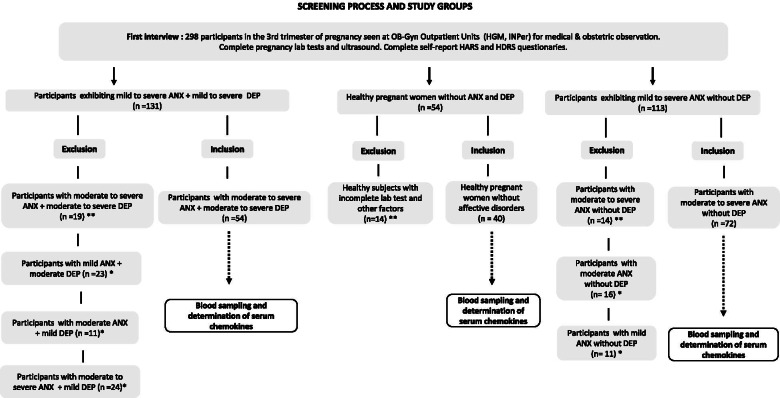
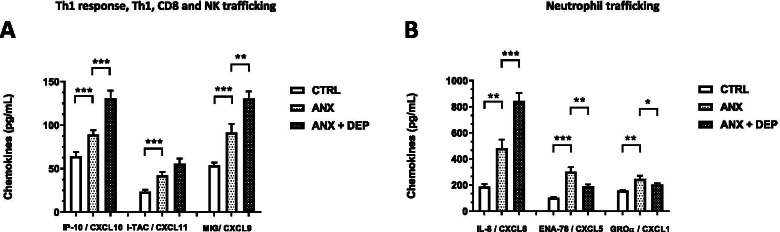
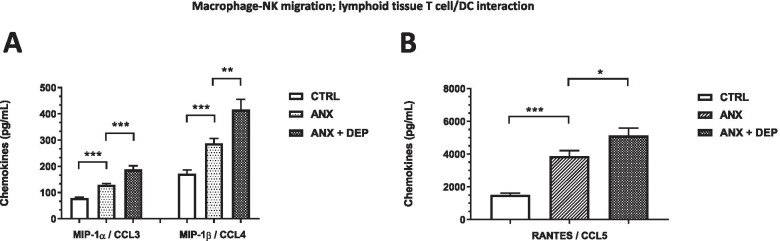
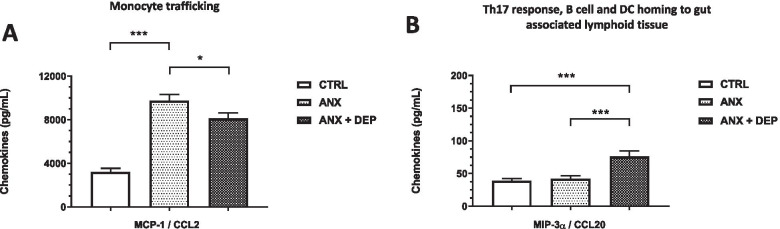
Background: Cytokine levels have been extensively described in pregnant subjects under normal and pathological conditions, including mood-related disorders. Concerning chemokines, very few studies have reported their association with psychiatric disorders during pregnancy. Therefore, we explored the chemokine profile in women exhibiting anxiety and depression during late pregnancy in the present study. Methods: One hundred twenty-six pregnant women in the 3rd trimester of pregnancy, displaying moderate to severe anxiety (ANX) alone and women exhibiting moderate to severe anxiety with comorbid depression (ANX + DEP), and 40 control pregnant women without affective disorders (CTRL) were evaluated through the Hamilton Anxiety Rating Scale (HARS) and the Hamilton Depression Rating Scale (HDRS). Serum chemokine levels of MCP-1 (CCL2), RANTES (CCL5), IP-10 (CXCL10), Eotaxin (CCL11), TARC (CCL17), MIP-1α (CCL3), MIP-1β (CCL4), MIG (CXCL9), MIP-3α (CCL20), ENA-78 (CXCL5), GROα (CXCL1), I-TAC (CXCL11) and IL-8 (CXCL8)] were measured by immunoassay. Clinical, biochemical, and sociodemographic parameters were correlated with HARS and HDRS score values. Results: Serum levels of most chemokines were significantly higher in the ANX and in the ANX + DEP groups, when compared to the CTRL group. Positive correlations were observed between MIP-1α/CCL3, MIP-1β/CCL4, MCP-1/CCL2, MIP-3α/CCL20, RANTES/CCL5, Eotaxin/CCL11, and I-TAC/CXCL11 with high scores for anxiety (HARS) (p < 0.05) and for depression (HDRS) (p < 0.004). After controlling clinical measures for age + gwk + BMI, chemokines such as IL-8/CXCL8, MCP-1/CCL2 and MIP-1β/CCL4 were found associated with high scores for anxiety (p < 0.05) in the ANX group. TARC/CCL17 and Eotaxin/CCL11 showed significant associations with high scores for depression (p < 0.04) whereas, MCP-1/CCL2 and MIP-1α/CCL3 were significantly associated with high scores for anxiety (p < 0.05) in the ANX + DEP group. Using a multivariate linear model, high serum levels of MIP-1β/CCL4 and Eotaxin/CCL11 remained associated with depression (p < 0.01), while, IL-8/CXCL8, MIP-1β/CCL4, MCP-1/CCL2, and MIP-1α/CCL3 were associated with anxiety (p < 0.05) in the symptomatic groups. Conclusions: Our data show that serum levels of distinct chemokines are increased in women exhibiting high levels of affective symptoms during late pregnancy. Our results suggest that increased levels of anxiety, depressive symptoms, and mood-related disorders may promote changes in specific functional chemokines associated with a chronic inflammatory process. If not controlled, it may lead to adverse obstetric and negative neonate outcomes, child development and neuropsychiatric alterations in the postnatal life. Highlights: Chemokine levels increase in affective disorders during pregnancy.
Overview
The claims and statistics of this paper haven’t been checked yet.
Free: it reads the open-access text and checks the first 5 claims that cite a source we can check. Create a free account to check every claim.
Integrity signals
Registry
Cites
Statistics
Figures
Verification
Claims the paper makes
The claims and statistics of this paper haven’t been checked yet.
Free: it reads the open-access text and checks the first 5 claims that cite a source we can check. Create a free account to check every claim.
Claims other papers make about this one
Each is checked against this paper’s own text: does it say what the citing paper says it does?
In the citing paper
“Moreover, increased levels of MIP-1α and other chemokines correlated with anxiety and depression during the late stages of pregnancy [188].”
From Selected biomarkers of depression: what are the effects of cytokines and inflammation (2022) · cites this paper as [188]
In the citing paper
“A study on pregnant women in the third trimester correlated CCL5 and other chemokines with higher anxiety and anxiety/depression prevalence. However, after adjustment for clinical measures, the association with CCL5 did not prove significant [188].”
From Selected biomarkers of depression: what are the effects of cytokines and inflammation (2022) · cites this paper as [188]
Self-check
Percentages, sums and reported differences re-computed from the paper’s own numbers.
The self-check needs the paper’s full text.
Citations
Cites
The assessment of anxiety states by rating
HAMILTON, M. (1959) · British Journal of Medical Psychology · doi:10.1111/j.2044-8341.1959.tb00467.x · Cited by 11,455 · cited 2×
“Criteria and clinician‐rated instruments Criteria considered for recruitment of patients was the presence of high levels of anxiety following the 14 itemHamilton Anxiety Rating Scale (HARS), which assesses the intensity of anxiety symptoms by a 5-point Likert scale ranging from 0 (no symptom) to 4 (severe anxiety), an…”
BackgroundMethodVos, T., Allen, C., Arora, M., Barber, R. M., Bhutta, Z. A., Brown, A., Carter, A., Casey, D. C., Charlson, F. J., Chen, A. Z., et al. (2016) · The Lancet · doi:10.1016/s0140-6736(16)31678-6 · Cited by 7,253
Monocyte Chemoattractant Protein-1 (MCP-1): An Overview
Deshmane, S. L., Kremlev, S., Amini, S., & Sawaya, B. E. (2009) · Journal of Interferon & Cytokine Research · doi:10.1089/jir.2008.0027 · Cited by 3,889 · cited 1×
“Chemokines studied in affective disorders [21, 46, 47]; include the monocyte chemoattractant protein (MCP)-1/CCL2 [48–50]; the macrophage inflammatory protein (MIP)-1α/CCL3 [51–53]; Gro-α/CXCL1 [22, 54, 55]; The IL-8/CXCL8 [48, 56, 57]; TNF-β [58]; IL-16 [58]; CTACK [56]; macrophages migration inhibitory Fig.”
BackgroundPrevalence of Depression During Pregnancy: Systematic Review
Bennett, H. A., Einarson, A., Taddio, A., Koren, G., & Einarson, T. R. (2004) · Obstetrics & Gynecology · doi:10.1097/01.aog.0000116689.75396.5f · Cited by 1,725 · cited 3×
“Different studies reported that the prevalence of perinatal depression ranges between 2 and 21% [5, 6], increasing to 31% upon the self-report scales used to screen the healthy pregnant population [6].”
BackgroundPrevalence of antenatal and postnatal anxiety: Systematic review and meta-analysis
Dennis, C.-L., Falah-Hassani, K., & Shiri, R. (2017) · British Journal of Psychiatry · doi:10.1192/bjp.bp.116.187179 · Cited by 1,491 · cited 1×
“6% in the postpartum [10], and the impact of affective symptoms during the perinatal period included obstetric and neonatal adverse outcomes, family dynamic consequences, child morbidity, and mortality, medical complications among other issues in the postnatal life [11].”
BackgroundThe Chemokine Superfamily Revisited
Zlotnik, A., & Yoshie, O. (2012) · Immunity · doi:10.1016/j.immuni.2012.05.008 · Cited by 1,235
Gaynes, B. N., Gavin, N., Meltzer-Brody, S., Lohr, K. N., Swinson, T., Gartlehner, G., Brody, S., & Miller, W. C. (2005) · PsycEXTRA Dataset · doi:10.1037/e439372005-001 · Cited by 1,211 · cited 2×
“Different studies reported that the prevalence of perinatal depression ranges between 2 and 21% [5, 6], increasing to 31% upon the self-report scales used to screen the healthy pregnant population [6].”
The Hamilton Depression Rating Scale: Has the Gold Standard Become a Lead Weight?
Bagby, R. M., Ryder, A. G., Schuller, D. R., & Marshall, M. B. (2004) · American Journal of Psychiatry · doi:10.1176/appi.ajp.161.12.2163 · Cited by 1,148
REVIEW ARTICLE: Th1/Th2/Th17 and Regulatory T‐Cell Paradigm in Pregnancy
Saito, S., Nakashima, A., Shima, T., & Ito, M. (2010) · American Journal of Reproductive Immunology · doi:10.1111/j.1600-0897.2010.00852.x · Cited by 1,109 · cited 3×
“It has been shown that pregnant patients with MDD display a preferential Th1-inflammatory response [59].”
BackgroundKatzman, M. A., Bleau, P., Blier, P., Chokka, P., Kjernisted, K., Van Ameringen, M., & the Canadian Anxiety Guidelines Initiative Group on behalf of the Anxiety Disorders Association of Canada/Association Canadienne des troubles anxieux and McGill University (2014) · BMC Psychiatry · doi:10.1186/1471-244x-14-s1-s1 · Cited by 1,090 · cited 1×
“Both scales were shown to be reliable, specific, and sensitive clinician-rated instruments [43].”
Background
Cited by
Selected biomarkers of depression: what are the effects of cytokines and inflammation
Harsanyi, S., Kupcova, I., Danisovic, L., & Klein, M. (2022) · International Journal of Molecular Sciences · doi:10.3390/ijms24010578 · Cited by 299
The (neuro)inflammatory system in anxiety disorders and PTSD: Potential treatment targets
Sah, A., & Singewald, N. (2025) · Pharmacology & Therapeutics · doi:10.1016/j.pharmthera.2025.108825 · Cited by 48
Tian, X., Wang, G., Teng, F., Xue, X., Pan, J., Mao, Q., Guo, D., Song, X., & Ma, K. (2023) · CNS Neuroscience & Therapeutics · doi:10.1111/cns.14519 · Cited by 44
“42 And the inflammation hypothesis of depression suggests that cytokines play a key role in the pathophysiology of MDD and alterations in peripheral cytokine levels are associated with antidepressant treat - ment outcome.”
BackgroundSominsky, L., O’Hely, M., Drummond, K. D., Cao, S., Collier, F., Dhar, P., Loughman, A., Dawson, S. L., Tang, M. L. K., Mansell, T., et al. (2023) · Brain Behavior and Immunity · doi:10.1016/j.bbi.2023.07.005 · Cited by 43
“, 2017), while others showing positive (Camacho-Arroyo et al., 2021), or no association (Sherer et al.”
BackgroundYang, H., Pan, Y., Chen, W., Yang, X., Liu, B., Yuan, N., & Zhang, X. (2023) · BMC Psychiatry · doi:10.1186/s12888-023-05059-2 · Cited by 38
“Mounting evidence indicates that the hypothalamic-pituitary-adrenal axis, autonomic nervous system, neurotransmitters, cytokines and chemokines may be involved in depression and anxiety during pregnancy, and further research is required [17, 67, 68] .”
BackgroundHagenberg, J., BeCOME study group, OPTIMA Study Group, Brückl, T. M., Erhart, M., Kopf‐Beck, J., Ködel, M., Rehawi, G., Roeh, S., Sauer, S., et al. (2024) · Brain Behavior and Immunity · doi:10.1016/j.bbi.2024.09.013 · Cited by 36
Is There an Inflammatory Profile of Perinatal Depression?
McCormack, C. A., Abuaish, S., & Monk, C. E. (2023) · Current Psychiatry Reports · doi:10.1007/s11920-023-01414-y · Cited by 35
“In three of ten studies an overall positive association between IL-8 and depression was observed [26, 32, 50].”
BackgroundBiomarkers of Postpartum Depression: A Narrative Review
Modzelewski, S., Oracz, A. J., Iłendo, K., Sokół, A., & Waszkiewicz, N. (2023) · Journal of Clinical Medicine · doi:10.3390/jcm12206519 · Cited by 32
Perinatal mood and anxiety disorders: biomarker discovery using plasma proteomics
Accortt, E. E., Mirocha, J., Zhang, D., Kilpatrick, S. J., Libermann, T. A., & Karumanchi, S. A. (2023) · American Journal of Obstetrics and Gynecology · doi:10.1016/j.ajog.2023.01.012 · Cited by 32
Kimmel, M., Verosky, B. G., Chen, H. J., Davis, O., & Gur, T. (2023) · Biological Psychiatry · doi:10.1016/j.biopsych.2023.11.014 · Cited by 30
The immune phenotype of perinatal anxiety
Sherer, M. L., Voegtline, K., Park, H.-S., Miller, K. N., Shuffrey, L. C., Klein, S. L., & Osborne, L. M. (2022) · Brain Behavior and Immunity · doi:10.1016/j.bbi.2022.09.005 · Cited by 29
Inflammatory and mental health sequelae of COVID-19
Loftis, J. M., Firsick, E. J., Shirley, K., Adkins, J. L., Le-Cook, A., Sano, E., Hudson, R., & Moorman, J. P. (2023) · Comprehensive Psychoneuroendocrinology · doi:10.1016/j.cpnec.2023.100186 · Cited by 25
“…with a consequent release of pro-inflammatory cytokines, particularly tumor necrosis factor-α (TNF-α ), interleukin-6 (IL-6), and monokine induced by gamma interferon (MIG, a. k.a CXCL9) — inflammatory factors that are also implicated in the pathophysiology of neuropsychiatric symptoms [22 – 24].”
Stress-induced red nucleus attenuation induces anxiety-like behavior and lymph node CCL5 secretion
Shi, D., Zhang, Y.-D., Zhang, S., Liao, B.-B., Chu, M., Su, S., Zhuo, K., Hu, H., Zhang, C., & Wang, Z. (2023) · Nature Communications · doi:10.1038/s41467-023-42814-1 · Cited by 25
Tamayo, M., Agustí, A., Molina-Mendoza, G. V., Rossini, V., Francés‐Cuesta, C., Tolosa-Enguís, V., & Sanz, Y. (2024) · Brain Behavior and Immunity · doi:10.1016/j.bbi.2024.12.028 · Cited by 23
Stress and depression-associated shifts in gut microbiota: A pilot study of human pregnancy
Rajasekera, T. A., Galley, J. D., Mackos, A. R., Chen, H. J., Mitchell, J. G., Kleinman, J. J., Cappelucci, P., Mashburn‐Warren, L., Lauber, C. L., Bailey, M. T., et al. (2024) · Brain Behavior & Immunity - Health · doi:10.1016/j.bbih.2024.100730 · Cited by 22
Serum CC Chemokines as Potential Biomarkers for the Diagnosis of Major Depressive Disorder
Gao, W., Xu, Y., Liang, J., Sun, Y., Zhang, Y., Shan, F., Ge, J., & Xia, Q. (2022) · Psychology Research and Behavior Management · doi:10.2147/prbm.s384267 · Cited by 22
“It has been reported that the serum levels of MIP-1β were significantly increased in pregnant women with anxiety and depression compared to the control group, and a positive relationship was found between MIP-1β levels and severity of depressive symptoms.(17) However, another study have shown that the serum levels of…”
ResultBiomarkers of reproductive psychiatric disorders
Etyemez, S., Mehta, K., Iyer, S., Özdemir, İ., & Osborne, L. M. (2025) · The British Journal of Psychiatry · doi:10.1192/bjp.2025.134 · Cited by 16
“…ligand 4 (MIP-1 β )/CCL4, as well as an increase in composite pro-inflammatory chemokine score in women with moderate to severe anxiety, suggesting that chemokine profiles may play a crucial role in immune dysregulation and mood disturbances, 95 although some studies have not found differences.”
Liu, X., Wu, J., Nie, H., Zhu, X., Song, G., Han, L., & Qin, W. (2022) · Frontiers in Genetics · doi:10.3389/fgene.2022.858641 · Cited by 14
Dynamic human gut microbiome and immune shifts during an immersive psychosocial intervention program
Zhou, X., Ganz, A. B., Rayner, A., Cheng, T. Y., Oba, H., Rolnik, B. M., Lancaster, S. M., Lu, X., Li, Y., Johnson, J. S., et al. (2024) · Brain Behavior and Immunity · doi:10.1016/j.bbi.2024.12.027 · Cited by 14
de Oliveira, C. M., Morael, J., Guille, A., Amadieu, C., Vancassel, S., Gaudout, D., Capuron, L., Pourtau, L., & Castanon, N. (2023) · Frontiers in Nutrition · doi:10.3389/fnut.2023.1267839 · Cited by 13
Chaszczewska-Markowska, M., Górna, K., Bogunia‐Kubik, K., Brzecka, A., & Kosacka, M. (2023) · Journal of Clinical Medicine · doi:10.3390/jcm12030801 · Cited by 11
“Chemokines constitute a large superfamily of ligands and receptors, participating in immunological and inflammatory disorders [32], as well as in neurobiological processes [33].”
BackgroundMargawati, A., Syauqy, A., Utami, A., Hananingtyas, A., & Zaimatussoleha, C. (2022) · Open Access Macedonian Journal of Medical Sciences · doi:10.3889/oamjms.2022.10937 · Cited by 10
“Anxiety levels were classified into no anxiety until mild anxiety (score ≤17) and moderate to severe anxiety (score >17) [26], [27].”
BackgroundTakács, L., Abuaish, S., Kaňková, Š., Hill, M., Ullmann, J., Včelák, J., & Monk, C. E. (2024) · Journal of Affective Disorders · doi:10.1016/j.jad.2024.08.141 · Cited by 9
Roknuzzaman, A. S. M., Qusar, M. S., Shahriar, M., Islam, S. M. A., & Islam, M. R. (2024) · Scientific Reports · doi:10.1038/s41598-024-79166-9 · Cited by 9
Zhou, M. S., Zhang, W., Dang, Y., Xu, F., Xu, C. Y., Wang, Z., Wang, C. S. E., Zhu, S. Y., Li, P., Wu, J., et al. (2025) · Scientific Reports · doi:10.1038/s41598-025-03543-1 · Cited by 9
“The initial study on CCL20 in mood disorders found a positive correlation between plasma CCL20 levels and anxiety/depression scores in pregnant women 28 .”
Etyemez, S., Mehta, K., Tutino, E., Zaidi, A., Atif, N., Rahman, A., Malik, A., Voegtline, K., Surkan, P. J., & Osborne, L. M. (2024) · Brain Behavior and Immunity · doi:10.1016/j.bbi.2024.05.028 · Cited by 8
Cord blood cytokines/chemokines linked to delays in toddlers exposed to SARS-CoV-2 prenatally
Kehdi, R. C., Silva, M. F. S., Cavalcante, L. R. L., Fiorenza, N. G., Viana, M. D. S., Leite, I. B., Silva, B. R. D. S., de Assis, D. F., Cortez, P. C., Bezerra, D. L., et al. (2025) · Pediatric Research · doi:10.1038/s41390-025-04192-w · Cited by 7
Santos, G. C. J., Rino, M. J., Lima, V. L. D. S., Santos, J. A., Fidelis, D. E. D. S., Ramos, T. L., de Andrade, A. J., de Lira, C. T. C., & Fernandes, M. S. D. S. (2023) · Biomedical Human Kinetics · doi:10.2478/bhk-2023-0014 · Cited by 6
Wang, X., Xi, R., Fu, W., Zhang, N., & Wang, M. (2025) · American Journal of Translational Research · doi:10.62347/wwpa8609 · Cited by 5
“Such emotional disturbances can significantly influence blood pres - sure, worsening the condition and creating a vicious cycle that negatively affects disease prognosis and pregnancy outcomes [20, 21].”
Wang, H., Jiang, J., Jin, T., Wang, Y., Li, M., Huang, S., Xie, J., Chen, Z., Guo, Y. Z., Zheng, J., et al. (2023) · Frontiers in Genetics · doi:10.3389/fgene.2023.1113804 · Cited by 5
Karatayev, O., & LEIBOWITZ, S. F. (2025) · International Journal of Molecular Sciences · doi:10.3390/ijms26157143 · Cited by 4
Soloey-Nilsen, H., Nygaard-Odeh, K., Kristiansen, M. G., Kvig, E. I., Brekke, O., Mollnes, T. E., Berk, M., Reitan, S. K., & Øiesvold, T. (2023) · Clinical Psychopharmacology and Neuroscience · doi:10.9758/cpn.23.1091 · Cited by 4
“In a recent study on pregnant patients with high levels of anxiety and depressive symptoms, IP-10 was significantly increased [27].”
BackgroundWang, M., Ma, Y., Zheng, Y., Tao, Y., Mu, W., Yang, L., Li, J., Li, Z., & Shi, C. (2025) · Depression and Anxiety · doi:10.1155/da/3984517 · Cited by 3
Furtak, G., Lerch, N., Kozłowski, M., Tkacz, P., Piekara, E., Łagódka, M., Durys, D., Gutowska, I., Widecka, K., Marchelek‐Myśliwiec, M., et al. (2024) · International Journal of Molecular Sciences · doi:10.3390/ijms252413449 · Cited by 3
“Among the chemokines evaluated in this study, the IL-8 levels were associated with high anxiety scores in the group of patients exhibiting moderate to severe anxiety [28].”
Wang, S., Zhang, J., Zhu, T., Xie, X., Xia, X., & Li, Y. (2024) · ALPHA PSYCHIATRY · doi:10.5152/alphapsychiatry.2024.231342 · Cited by 2
Maciaszek, J., Zabłocka, A., Rejek, M., Senczyszyn, A., Rudy, K., Błoch, M., Bubniak, A., Leszynska, K., Jakubczyk, D., Bogudzińska, B., et al. (2025) · Journal of Psychiatric Research · doi:10.1016/j.jpsychires.2025.02.060 · Cited by 1
Bernal‐Vega, S., Vázquez-Manjarrez, N., Villegas-Romero, M., Ortiz-Lopez, R., de la Barquera, J. A. O.-S., Pérez‐Maya, A. A., & Camacho‐Morales, A. (2026) · Frontiers in Cellular Neuroscience · doi:10.3389/fncel.2026.1777048 · Cited by 1
Cytokines as Predictors of Response to Electroconvulsive Therapy: an Update
Rajkumar, R. P. (2023) · Current Behavioral Neuroscience Reports · doi:10.1007/s40473-023-00265-4
“IP-10 (CXCL10), Rantes (CCL-5) and MIP-1α are also pro-inflammatory chemokines, and recent research has found them to be associated with the severity of depressive symptoms in diverse clinical contexts [80–82].”
BackgroundBoronin, L., Chihai, J., & Nastas, I. (2026) · Moldovan Journal of Health Sciences · doi:10.52645/mjhs.2026.1.14
Son, M., Song, I., Pradeep, P. E., Chang, B., Girgenti, M. J., Kim, C. Y., Jeong, J. C., & Lee, B. (2026) · Communications Biology · doi:10.1038/s42003-026-10111-4
Cattaneo, A., Norata, G. D., & Benedetto, M. G. D. (2024) · Archivio Istituzionale della Ricerca (Universita Degli Studi Di Milano)
Thati, N., Trudeau, J., Ng, D. Q., Chavez-Iglesias, E., Dhruva, A., Olshen, A. B., Chan, R. J., Chan, A., & Kober, K. M. (2026) · Research Square · doi:10.21203/rs.3.rs-9383360/v1
Fast and slow gene expression changes in blood following acute social stress
Grönvall, H., Edwards, S., Tabrizi, F. F., Ezer, S., Gamze, Y., Arner, E., Rosén, J., Katayama, S., Kere, J., Åhs, F., et al. (2026) · Brain Behavior & Immunity - Health · doi:10.1016/j.bbih.2026.101365
“For example, downregulated GZMB expression has been observed in individuals with current depression as compared to those in remission (Jansen et al., 2016), while blood levels of the cytokine CCL4 has been found to be elevated in individuals with anxiety, depressive disorders, and PTSD (Camacho-Arroyo et al., 2021; de…”
InfluentialHassan, G., Najeeb, M. A., Assim, M. M., Fadhil, S. H., & Albayati, A. F. (2026) · Egyptian journal of Immunology · doi:10.55133/eji.330408
Wang, H., Jiang, J., Jin, T., Wang, Y., Li, M., Huang, S., Xie, J., Chen, Z., Guo, Y., Zheng, J., et al. (2023) · doi:10.3389/fgene.2023.1113804.s001
Metadata
- Authors
- Camacho-Arroyo, I., Flores-Ramos, M., Mancilla-Herrera, I., Cruz, F. M. C., Hernández-Ruiz, J., Diaz, G. P., Labonne, B. F., del Pilar Meza-Rodríguez, M., & Gelman, P. L.
- Venue
- BMC Pregnancy and Childbirth
- Published
- 2021-12
- Volume
- 21
- Issue
- 1
- Pages
- 807-807
- ISSN
- 1471-2393 (ISSN-L)
- PMC
- PMC8642921
- OpenAlex
- W4200529942
- Semantic Scholar
- 2ece88b8ed8673e13f785cd73fbd0dfe37ee0434
- Cited by
- 41
- References
- 84
- Citations by year
- 2026: 3 · 2025: 8 · 2024: 10 · 2023: 15 · 2022: 5
- FWCI
- 6.49
- Type
- journal article
- Language
- en
- Open access
- gold
- doi.org
- Licence
- cc-by
- creativecommons.org/licenses/by/4.0 (tdm)
- creativecommons.org/licenses/by/4.0 (vor, 3 d)
- Locations
- BMC Pregnancy and Childbirth (publishedVersion, cc-by)
- PubMed Central (publishedVersion, cc-by)
- PubMed (publishedVersion)
- DOAJ (DOAJ: Directory of Open Access Journals) (submittedVersion, cc-by-sa)
- Greater South Information System
- Funders
- Instituto Nacional de Perinatología (212250-3000-10916-01-16.)
- Topics
- Health Sciences › Medicine › Public Health, Environmental and Occupational Health › Maternal Mental Health During Pregnancy and Postpartum
- Life Sciences › Neuroscience › Biological Psychiatry › Tryptophan and brain disorders
- Life Sciences › Neuroscience › Behavioral Neuroscience › Stress Responses and Cortisol
- Keywords
- chemokines, pregnancy, anxiety, depression, mood disorders, maternal mental health, MCP-1, CCL3, carbon tetrachloride, RANTES, CCL17, eotaxin, CCL20, CCL8
- MeSH terms
- Adult, Anxiety, Cross-Sectional Studies, Depression, Female, Humans, Mexico, Pregnancy, Pregnancy Complications, Pregnancy Trimester, Third, Psychiatric Status Rating Scales, Chemokines, Mood Disorders, Young Adult
About these checks
Registry, retraction, Cites and statistics results are computed, not judged, with one exception: a printed reference that no index lists is read once by a model before it counts as a citation error. Claims are extracted by a model and kept only when their quote appears verbatim in the text; each cited source is then checked, with a model’s help, for whether it says what the claim relies on. Those verdicts can be wrong — read the claim’s quote and the cited source before relying on one.
Statistics and arithmetic are recomputed, not judged.
Confidence bands are shown only for fields calibrated on our annotated test set. None is calibrated yet, so no band is shown.
What counts as a claim ›How we measure confidence ›How we check this ›
Are you an author, or do you see a problem with this page? Request a review
Data sources
Bibliographic data: Semantic Scholar, OpenAlex, Crossref.
Contains information from the Semantic Scholar Academic Graph Datasets, made available under the ODC Attribution License (ODC-BY 1.0).
Semantic Scholar’s data is described in: Kinney, R., et al. (2023). The Semantic Scholar Open Data Platform. arXiv:2301.10140.
