

Development of primary human pancreatic cancer organoids, matched stromal and immune cells and 3D tumor microenvironment models
Open accessThe DOI matches its Crossref record; 27 of the 27 references it cites were found in a registry or an index.
Abstract
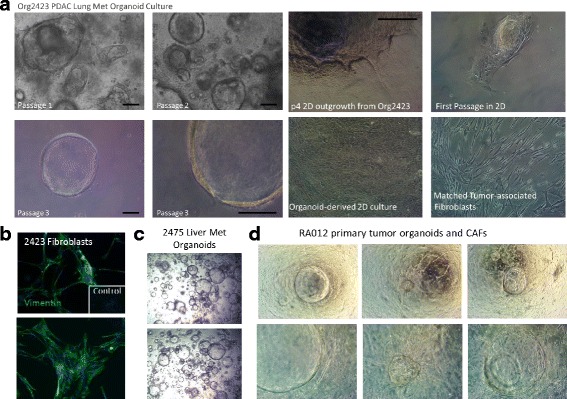
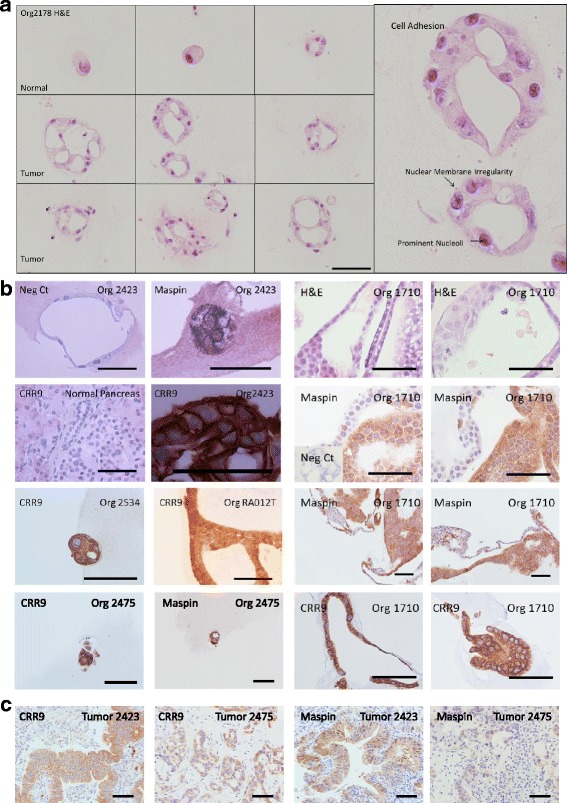
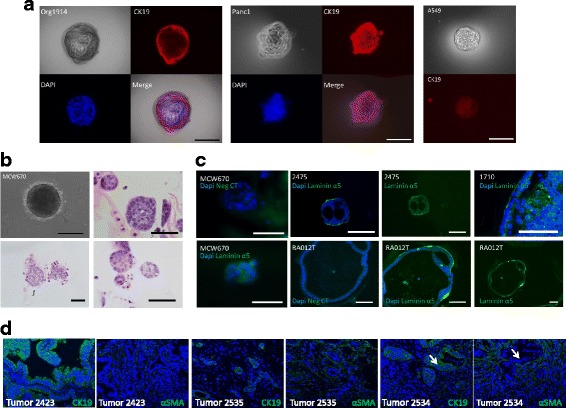
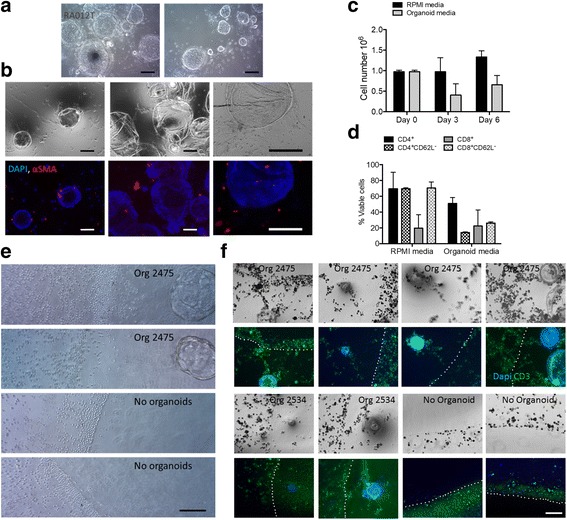
BACKGROUND: Patient-derived tumor models are the new standard for pre-clinical drug testing and biomarker discovery. However, the emerging technology of primary pancreatic cancer organoids has not yet been broadly implemented in research, and complex organotypic models using organoids in co-culture with stromal and immune cellular components of the tumor have yet to be established. In this study, our objective was to develop and characterize pancreatic cancer organoids and multi-cell type organotypic co-culture models to demonstrate their applicability to the study of pancreatic cancer. METHODS: We employed organoid culture methods and flow cytometric, cytologic, immunofluorescent and immunohistochemical methods to develop and characterize patient-derived pancreatic cancer organoids and multi-cell type organotypic co-culture models of the tumor microenvironment. RESULTS: We describe the culture and characterization of human pancreatic cancer organoids from resection, ascites and rapid autopsy sources and the derivation of adherent tumor cell monocultures and tumor-associated fibroblasts from these sources. Primary human organoids displayed tumor-like cellular morphology, tissue architecture and polarity in contrast to cell line spheroids, which formed homogenous, non-lumen forming spheres. Importantly, we demonstrate the construction of complex organotypic models of tumor, stromal and immune components of the tumor microenvironment. Activation of myofibroblast-like cancer associated fibroblasts and tumor-dependent lymphocyte infiltration were observed in these models. CONCLUSIONS: These studies provide the first report of novel and disease-relevant 3D in-vitro models representing pancreatic tumor, stromal and immune components using primary organoid co-cultures representative of the tumor-microenvironment. These models promise to facilitate the study of tumor-stroma and tumor-immune interaction and may be valuable for the assessment of immunotherapeutics such as checkpoint inhibitors in the context of T-cell infiltration.
Overview
The claims and statistics of this paper haven’t been checked yet.
Free: it reads the open-access text and checks the first 5 claims that cite a source we can check. Create a free account to check every claim.
Integrity signals
Registry
Cites
Statistics
Figures
Verification
Claims the paper makes
The claims and statistics of this paper haven’t been checked yet.
Free: it reads the open-access text and checks the first 5 claims that cite a source we can check. Create a free account to check every claim.
Claims other papers make about this one
Each is checked against this paper’s own text: does it say what the citing paper says it does?
The cited source says what the claim attributes to it.
In the citing paper
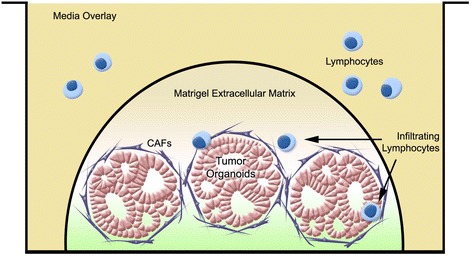
“Activation of CAFs and tumor-dependent in fi ltration of lymphocytes was observed [62].”
From 3D In Vitro Model (R)evolution: Unveiling Tumor–Stroma Interactions (2021) · cites this paper as [62]
Self-check
Percentages, sums and reported differences re-computed from the paper’s own numbers.
The self-check needs the paper’s full text.
Citations
Cites
Distinct populations of inflammatory fibroblasts and myofibroblasts in pancreatic cancer
Öhlund, D., Handly-Santana, A., Biffi, G., Elyada, E., Almeida, A. S., Ponz-Sarvise, M., Corbo, V., Oni, T. E., Hearn, S. A., Lee, E. J., et al. (2017) · Journal of Experimental Medicine · doi:10.1084/jem.20162024 · Cited by 2,590
Organoid models of human and mouse ductal pancreatic cancer
Boj, S. F., Hwang, C.-I., Baker, L. A., Chio, I. I. C., Engle, D. D., Corbo, V., Jager, M., Ponz-Sarvise, M., Tiriac, H., Spector, M. S., et al. (2015) · Cell · doi:10.1016/j.cell.2014.12.021 · Cited by 2,150 · cited 1×
“Although we do not describe the culture of organoids from fine-needle aspiration (FNA) biopsy specimens in this report, such techniques have been accomplished [15], and we are pursuing the utilization of organoids from FNA biopsies as a means to rapidly evaluate genetic and phenotypic markers as well as to facilitate…”
The Pancreas Cancer Microenvironment
Feig, C., Gopinathan, A., Neesse, A., Chan, D. S., Cook, N., & Tuveson, D. A. (2012) · Clinical Cancer Research · doi:10.1158/1078-0432.ccr-11-3114 · Cited by 1,316
Dynamics of the immune reaction to pancreatic cancer from inception to invasion
Clark, C. E., Hingorani, S. R., Mick, R., Combs, C., Tuveson, D. A., & Vonderheide, R. H. (2007) · Cancer Research · doi:10.1158/0008-5472.can-07-0175 · Cited by 990 · cited 1×
“Immune infiltrates are prevalent in pancreatic tumors, but the environment is highly immunosuppressive [12].”
Maspin, a Serpin with Tumor-Suppressing Activity in Human Mammary Epithelial Cells
Zou, Z., Anisowicz, A., Hendrix, M. J. C., Thor, A., Neveu, M., Sheng, S., Rafidi, K., Seftor, E., & Sager, R. (1994) · Science · doi:10.1126/science.8290962 · Cited by 912
Broutier, L., Andersson-Rolf, A., Hindley, C. J., Boj, S. F., Clevers, H., Koo, B.-K., & Huch, M. (2016) · Nature Protocols · doi:10.1038/nprot.2016.097 · Cited by 834 · cited 1×
“Tissue organoid cultures offer the advantages of expandability from stem cells derived from organs and primary tissues, genetic manipulability [2], long term storability, and the ability to xenograft into animal models.”
Huang, L., Holtzinger, A., Jagan, I., BeGora, M., Lohse, I., Ngai, N., Nostro, C., Wang, R., Muthuswamy, L. B., Crawford, H. C., et al. (2015) · Nature Medicine · doi:10.1038/nm.3973 · Cited by 740
Three-dimensional organotypic culture: experimental models of mammalian biology and disease
Shamir, E. R., & Ewald, A. J. (2014) · Nature Reviews Molecular Cell Biology · doi:10.1038/nrm3873 · Cited by 719 · cited 1×
“complex cellular environment of the tissue of origin, including parenchymal and stromal components [1].”
Unlimited in vitro expansion of adult bi-potent pancreas progenitors through the Lgr5/R-spondin axis
Huch, M., Bonfanti, P., Boj, S. F., Sato, T., Loomans, C. J. M., van de Wetering, M., Sojoodi, M., Li, V. S. W., Schuijers, J., Gracanin, A., et al. (2013) · The EMBO Journal · doi:10.1038/emboj.2013.204 · Cited by 711
Guerra, C., Collado, M., Navas, C., Schuhmacher, A. J., Hernández-Porras, I., Cañamero, M., Rodriguez-Justo, M., Serrano, M., & Barbacid, M. (2011) · Cancer Cell · doi:10.1016/j.ccr.2011.05.011 · Cited by 516 · cited 1×
“Inflammation (pancreatitis) is closely linked to pancreatic tumorigenesis [10, 11].”
Cited by
Items 401–442 of 442
Borová, B. (2024) · Digital library - University of Pardubice (University of Pardubice)
AN IN VITRO TUMOR ORGANOIDS PLATFORM TO UNCOVER MECHANISMS OF CANCER CHEMOTHERAPY
Forsythe, S. D. (2022) · WakeSpace Scholarship (Wake Forest University)
Deciphering mechanisms to increase anti-colon cancer NK cell reactivity
von Kries, A. (2025) · heiDOK (Heidelberg University) · doi:10.11588/heidok.00037486
Characterization of Tumor and Immune Cells in Breast Cancer Organoids
Spießl, K. (2025) · OPUS FAU (Kooperativer Bibliotheksverbund Berlin-Brandenburg (KOBV), on behalf of the Universitätsbibliothek Erlangen-Nürnberg) · doi:10.25593/open-fau-2514
Angeborene Immunabwehr im oralen Epithel
Rothbächer, P. (2025) · Online Publication Service of Würzburg University (Würzburg University) · doi:10.25972/opus-43365
Yu, J.-Q., Yu, S.-J., He, Y.-H., Xue, Y.-Z., Yu, X., Chen, W., Hu, L., Fan, X.-F., Gao, Z.-F., Zhou, H.-K., et al. (2026) · World Journal of Gastroenterology · doi:10.3748/wjg.v32.i9.115131
Medicina Personalizada en Adenocarcinoma de Páncreas: Caracterización Clínica y Molecular
Garrote, M. P. R. (2025) · e_Buah
Investigating the ATG4A/4B-GABARAPL2 axis in pancreatic ductal adenocarcinoma
Chan, J. (n.d.) · Summit (Simon Fraser University)
Systems analysis of intercellular communication in the tumor microenvironment
Massenet-Regad, L. (2023) · theses.fr (ABES) · doi:10.70675/909b8153z00efz42f7za922z6b476829dbf2
Etude de l'effet du microenvironnement sur le développement de tumeur pancréatique
Coffy, S. (2024) · theses.fr (ABES) · doi:10.70675/bd0a1100zdd28z43d2zb675zdbbcc6dab559
Développement de cancer sur puce : application au cancer du pancréas
Godier, C. (2024) · theses.fr (ABES) · doi:10.70675/a4e7b29ez87b0z4647za5a1z9c43ddd1a8f0
Boidin, L. (2024) · theses.fr (ABES) · doi:10.70675/085bc588zd389z4852z8217z35c4df4037a2
Modélisation de la réponse thérapeutique du lymphome folliculaire grâce à un modèle 3D organoïde
Houmera, N. (2023) · theses.fr (ABES) · doi:10.70675/08a3ce75z28fdz46aez9027z117136acf989
Trioën, C. (2024) · theses.fr (ABES) · doi:10.70675/7c132518z8997z4d01z8084z87c06a661e5a
Savadipour, A., Tummala, K. S., Muise, E. S., Buchanan, M., Vidimar, V., Veling, M. T., Liu, J., Kopinja, J. E., Schneider, C., Chan, B. P. H., et al. (2026) · Biochemistry and Biophysics Reports · doi:10.1016/j.bbrep.2026.102549
Impact de dilutions homéopathiques sur la composante immunitaire du microenvironnement
Debasly, S. (2025) · theses.fr (ABES) · doi:10.70675/ae9e62f2ze4f2z4d38z9968z29df335ea7fd
Parthiban, R., Bhavya, E., Gujjula, T. R., Vijayan, M. R., Nandakumar, K., Murugathirumal, A., & Valliappan, S. (2026) · Journal of Bio-X Research · doi:10.34133/jbioxresearch.0082
Pancreatic organoids and organoid-on-a-chip platforms: from disease modeling to precision therapy
Lin, M., Ma, W., Ma, T., He, Y., Shi, H., Ge, N., Guo, J., Xie, Y., Sun, S., & Yang, F. (2026) · Journal of Translational Medicine · doi:10.1186/s12967-026-08489-0
A colorectal cancer organoid-CAF co-culture chip for drug screening and personalized therapyPreprint
Xiao, R., Wang, Z., Zhou, Y., Ding, D., Wang, J., Liu, J., Wang, Y., Liu, Q., & Ai, X. (2026) · bioRxiv (Cold Spring Harbor Laboratory) · doi:10.64898/2026.06.15.732195
Ozeer, F. Z., & Kester, J. C. (2026) · Nutrients · doi:10.3390/nu18132113
Organoids in biliary tract cancers: Advances in modeling strategies and translational applications
Yang, X.-H., Liu, D.-Y., Zhao, W., Yang, C.-W., Wang, J.-X., & Yao, H. (2026) · Critical Reviews in Oncology/Hematology · doi:10.1016/j.critrevonc.2026.105468
Alves, A. L. V., Düzağaç, F., Zaheer, M., Martin, A. C. B. M., Baroni, M., Rosa, M. N., Teixeira, S. A., Silva, V. A. O., Oliveira, R. J. D. S., Guimarães, D. P., et al. (2026) · Biomedicine & Pharmacotherapy · doi:10.1016/j.biopha.2026.119721
Palazzo, G., Tinnirello, V., Bivona, G., Ghersi, G., & Campora, S. (2026) · Biology · doi:10.3390/biology15141167
Chen, Q.-Z., Chi, X., Pan, J.-H., Cheng, Q.-Z., Guo, Y.-J., Liu, Y.-X., Yu, L., & Feng, W. (2026) · World Journal of Gastrointestinal Oncology · doi:10.4251/wjgo.123966
Caruso, A., Hamrouni, Y., Delvecchio, A., Memeo, R., & Martinotti, S. (2026) · International Journal of Molecular Sciences · doi:10.3390/ijms27156949
Khaled, J., Nyman, S. S., Dahlgren, D., Rorsman, F., Lennernäs, H., Barbier, C. E., & Heindryckx, F. (2026) · Scientific Reports · doi:10.1038/s41598-026-65418-3
Patient-derived organoids in pancreatic cancer: Advances and applications in precision oncology
Lee, H. S., & Koo, B. (2026) · Cancer Biome and Targeted Therapy · doi:10.66505/cbtt.v1i3.46
Organoid Coculture Models for Cancer Research and Immunotherapy
Yang, Z., Yang, H., Guangxin, L., Liu, G., Chen, Z., Tian, W., Huang, M., Liu, X., Zhao, Y., & Chen, D. (2026) · Med Research · doi:10.1002/mdr2.70087
Dabaghi, M., & Fazio, P. D. (2026) · Gastroenterology Insights · doi:10.3390/gastroent17040055
Gadelkarim, M., Elsayed, A., Abaza, T., Bahr, A. R., Elsayed, Y. A.-E., & Iqbal, O. (2026) · Clinical Cancer Bulletin · doi:10.1007/s44272-026-00067-1
Oisakede, E. O., Ehizokhale, O., Oyedeji, O. O., & Olawade, D. B. (2026) · Organoids · doi:10.3390/organoids5030027
AI‐Driven Rational Design of Nanotherapeutics for Pancreatic Ductal Adenocarcinoma
Choo, S., Chae, K., Lee, J., Kim, I., & Lee, S. S. (2026) · Medicinal Research Reviews · doi:10.1002/med.70105
Modeling inflammation and inflammatory diseases in organoids
Moor, A. D., Vankelecom, H. E. J., & Arnauts, K. (2026) · British Medical Bulletin · doi:10.1093/bmb/ldag028
Chen, J., Du, Y., Niu, J., Zhu, W., Xiao, Y., Li, L., Fan, D., & Zhang, H. (2026) · International Immunopharmacology · doi:10.1016/j.intimp.2026.117371
COLTURE 3D COME MODELLO PER STUDIARE IL MICROAMBIENTE TUMORALE DEL MESOTELIOMA MALIGNO
Lamarca, A. (n.d.) · Archivio Istituzionale della Ricerca - Università Vita-Salute San Raffaele
Gasparini, G. (n.d.) · Archivio Istituzionale della Ricerca - Università Vita-Salute San Raffaele
ORGANOIDS IN CANCER RESEARCH: EXPANDING THE SCOPE OF PRECISION ONCOLOGY”
Bose, G. S., Kumari, R., Reur, P. N., Mittal, S. P. K., Kulkarni, A. P., Bhosale, S., Aggarwal, S., Agarwal, P., Agarwal, P., & Datkhile, K. D. (2026) · Acta Innovations · doi:10.62441/actainnovations.v63i1s.1644
Schaaf, C. R., Wajih, N., Hutchins, D. C., Edenhoffer, N. P., El-Derby, A. M., Abdulkhuseynova, S., Congress, Z., Miller, L. D., Hall, A. R., Votanopoulos, K. I., et al. (2026) · Elsevier eBooks · doi:10.1016/b978-0-443-16110-0.00027-3
Breast cancer organoids and organoids-on-a-chip in drug development
Chen, J., Deng, S., Li, C., Liu, C., Li, W., & Chen, P. (2026) · Science of Traditional Chinese Medicine · doi:10.1097/st9.0000000000000146
Metadata
- Authors
- Tsai, S., McOlash, L., Palen, K., Johnson, B., Duris, C., Yang, Q., Dwinell, M. B., Hunt, B., Evans, D. B., Gershan, J., & James, M. A.
- Affiliations
- Medical College of Wisconsin (US)
- Corresponding author
- James, Michael A.
- Venue
- BMC Cancer
- Published
- 2018-03-27
- Volume
- 18
- Issue
- 1
- Pages
- 335-335
- ISSN
- 1471-2407 (ISSN-L)
- PMC
- PMC5870823
- OpenAlex
- W2795248085
- Cited by
- 400
- References
- 27
- Citations by year
- 2026: 34 · 2025: 47 · 2024: 55 · 2023: 56 · 2022: 67 · 2021: 62 · 2020: 48 · 2019: 24 · 2018: 6
- FWCI
- 13.13
- Type
- journal article
- Language
- en
- Open access
- gold
- doi.org
- Licence
- cc-by
- creativecommons.org/licenses/by/4.0/ (tdm)
- Locations
- BMC Cancer (publishedVersion, cc-by)
- PubMed Central (publishedVersion, cc-by)
- PubMed (publishedVersion)
- DOAJ (DOAJ: Directory of Open Access Journals) (submittedVersion, cc-by-sa)
- Funders
- Batterman Foundation
- Ronald Burkland Eich Pancreatic Cancer Research Fund
- American Cancer Society (14-247-29-IRG)
- WeCare Fund
- Topics
- Health Sciences › Medicine › Oncology › Pancreatic and Hepatic Oncology Research
- Health Sciences › Medicine › Oncology › Cancer Cells and Metastasis
- Physical Sciences › Engineering › Biomedical Engineering › 3D Printing in Biomedical Research
- Keywords
- pancreatic cancer, organoids, tumor microenvironment, organotypic co-culture, cancer-associated fibroblasts, tumor-infiltrating lymphocytes, 3D tumor models, patient-derived tumor models, T cell infiltration, immunotherapy, immune checkpoint inhibitors, tumor-stroma interactions
- MeSH terms
- Humans, Pancreatic Neoplasms, T-Lymphocytes, Tumor Cells, Cultured, Stromal Cells, Spheroids, Cellular, Coculture Techniques, Cell Culture Techniques, Cell Line, Tumor, Tumor Microenvironment, In Vitro Techniques
About these checks
Registry, retraction, Cites and statistics results are computed, not judged, with one exception: a printed reference that no index lists is read once by a model before it counts as a citation error. Claims are extracted by a model and kept only when their quote appears verbatim in the text; each cited source is then checked, with a model’s help, for whether it says what the claim relies on. Those verdicts can be wrong — read the claim’s quote and the cited source before relying on one.
Statistics and arithmetic are recomputed, not judged.
Confidence bands are shown only for fields calibrated on our annotated test set. None is calibrated yet, so no band is shown.
What counts as a claim ›How we measure confidence ›How we check this ›
Are you an author, or do you see a problem with this page? Request a review
Data sources
Bibliographic data: Semantic Scholar, OpenAlex, Crossref.
Contains information from the Semantic Scholar Academic Graph Datasets, made available under the ODC Attribution License (ODC-BY 1.0).
Semantic Scholar’s data is described in: Kinney, R., et al. (2023). The Semantic Scholar Open Data Platform. arXiv:2301.10140.
