

Effectiveness of early intervention programs for parents of preterm infants: a meta-review of systematic reviews
Open accessThe DOI matches its Crossref record; 44 of the 44 references it cites were found in a registry or an index.
Abstract
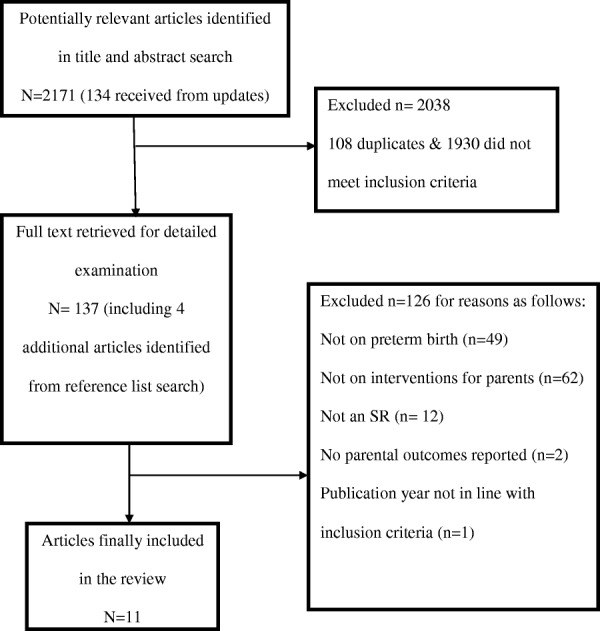
BACKGROUND: Various intervention programs exist for parents of preterm babies and some systematic reviews (SRs) have synthesised the evidence of their effectiveness. These reviews are, however, limited to specific interventions, components, or outcomes, and a comprehensive evidence base is lacking. The aim of this meta-review was to appraise and meta-synthesise the evidence from existing SRs to provide a comprehensive evidence base on the effectiveness of interventions for parents of preterm infants on parental and infant outcomes. METHODS: We conducted a comprehensive search of the following databases to identify relevant SRs: Cochrane library, Web of science, EMBASE, CINAHL, British Nursing Index, PsycINFO, Medline, ScienceDirect, Scopus, IBSS, DOAJ, ERIC, EPPI-Centre, PROSPERO, WHO Library. Additional searches were conducted using authors' institutional libraries, Google Scholar, and the reference lists of identified reviews. Identified articles were screened in two stages against an inclusion criteria with titles and abstracts screened first followed by full-text screening. Selected SRs were appraised using the AMSTAR tool. Extracted data using a predesigned tool were synthesised narratively examining the direction of impact on outcomes. RESULTS: We found 11 SRs eligible for inclusion that synthesised a total of 343 quantitative primary studies. The average quality of the SRs was 'medium'. Thirty four interventions were reported across the SRs with considerable heterogeneity in the structural framework and the targeted outcomes that included maternal-infant dyadic, maternal/parental, and infant outcomes. Among all interventions, Kangaroo Care (KC) showed the most frequent positive impact across outcomes (n = 19) followed by Mother Infant Transaction Program (MITP) (n = 14). Other interventions with most consistent positive impact on infant outcomes were Modified-Mother Infant Transaction Program (M-MITP) (n = 6), Infant Health and Development Program (IHDP) (n = 5) and Creating Opportunities for Parent Empowerment (COPE) (n = 5). Overall, interventions with both home and facility based components showed the most frequent positive impact across outcomes. CONCLUSIONS: Neonatal care policy and planning for preterm babies should consider the implementation of interventions with most positive impact on outcomes. The heterogeneity in interventions and outcomes calls for the development and implementation of an integrated program for parents of preterm infants with a clearly defined global set of parental and infant outcomes.
Overview
The claims and statistics of this paper haven’t been checked yet.
Free: it reads the open-access text and checks the first 5 claims that cite a source we can check. Create a free account to check every claim.
Integrity signals
Registry
Cites
Statistics
Figures
Verification
Claims the paper makes
The claims and statistics of this paper haven’t been checked yet.
Free: it reads the open-access text and checks the first 5 claims that cite a source we can check. Create a free account to check every claim.
Claims other papers make about this one
Each is checked against this paper’s own text: does it say what the citing paper says it does?
In the citing paper
“A later meta-analysis indicated that interventions given both in the home and in the hospital/preschool show the most promising results [43], suggesting that there should be multiple locations.”
Self-check
Percentages, sums and reported differences re-computed from the paper’s own numbers.
The self-check needs the paper’s full text.
Citations
Cites
Preferred Reporting Items for Systematic Reviews and Meta-Analyses: the PRISMA statement
Moher, D., Liberati, A., Tetzlaff, J., Altman, D. G., & for the PRISMA Group (2009) · BMJ · doi:10.1136/bmj.b2535 · Cited by 83,823
Preferred Reporting Items for Systematic Reviews and Meta-Analyses: The PRISMA Statement
Moher, D., Liberati, A., Tetzlaff, J., Altman, D. G., & The PRISMA Group (2009) · PLoS Medicine · doi:10.1371/journal.pmed.1000097 · Cited by 64,042
Wang, G., Ma, R., Qiao, G., Wada, K., Aizawa, Y., & Satoh, T. (2015) · Integrative Medicine International · doi:10.1159/000368408 · Cited by 18,657
Born Too Soon: The global epidemiology of 15 million preterm births
Blencowe, H., Cousens, S., Chou, D., Oestergaard, M., Say, L., Moller, A.-B., Kinney, M., Lawn, J., & the Born Too Soon Preterm Birth Action Group (see acknowledgement for full list) (2013) · Reproductive Health · doi:10.1186/1742-4755-10-s1-s2 · Cited by 2,206
Shea, B. J., Hamel, C., Wells, G. A., Bouter, L. M., Kristjansson, E., Grimshaw, J., Henry, D. A., & Boers, M. (2009) · Journal of Clinical Epidemiology · doi:10.1016/j.jclinepi.2008.10.009 · Cited by 1,755
The biopsychosocial model 25 years later: principles, practice, and scientific inquiry
Borrell-Carrio, F. (2004) · The Annals of Family Medicine · doi:10.1370/afm.245 · Cited by 1,546
Methodology in conducting a systematic review of systematic reviews of healthcare interventions
Smith, V., Devane, D., Begley, C. M., & Clarke, M. (2011) · BMC Medical Research Methodology · doi:10.1186/1471-2288-11-15 · Cited by 1,227
Spittle, A., Orton, J., Anderson, P. J., Boyd, R., & Doyle, L. W. (2015) · Cochrane Database of Systematic Reviews · doi:10.1002/14651858.cd005495.pub4 · Cited by 1,069 · cited 9×
“Two SRs reported follow up measurements for infant outcomes up to 18 years of the infant’s age [32, 34].”
BackgroundMethodInfluentialPhysical interventions to interrupt or reduce the spread of respiratory viruses
Jefferson, T., Del Mar, C. B., Dooley, L., Ferroni, E., Al-Ansary, L. A., Bawazeer, G. A., van Driel, M. L., Nair, N. S., Jones, M. A., Thorning, S., et al. (2011) · Cochrane Database of Systematic Reviews · doi:10.1002/14651858.cd006207.pub4 · Cited by 805
Clinical Outcomes of Near-Term Infants
Wang, M. L., Dorer, D. J., Fleming, M. P., & Catlin, E. A. (2004) · Pediatrics · doi:10.1542/peds.114.2.372 · Cited by 771
Cited by
Franck, L. S., & O'Brien, K. (2019) · Birth Defects Research · doi:10.1002/bdr2.1521 · Cited by 314
“Despite moderate-to-strong evidence that parents can achieve competency in caring for their infant and positive outcomes for their infants and for themselves through delivery of these interventions, parent-delivered interventions remain underutilized in most NICU settings (Puthussery et al., 2018).”
BackgroundHadders-Algra, M. (2021) · Journal of Clinical Medicine · doi:10.3390/jcm10040861 · Cited by 220
Norholt, H. (2020) · Infant Behavior and Development · doi:10.1016/j.infbeh.2020.101441 · Cited by 161
Reducing toxic stress in the neonatal intensive care unit to improve infant outcomes
Weber, A. M., & Harrison, T. M. (2018) · Nursing Outlook · doi:10.1016/j.outlook.2018.11.002 · Cited by 147
the Alberta FICare Level II NICU Study Team, Benzies, K., Aziz, K., Shah, V. S., Faris, P., Isaranuwatchai, W., Scotland, J., Larocque, J., Mrklas, K., Naugler, C. T., et al. (2020) · BMC Pediatrics · doi:10.1186/s12887-020-02438-6 · Cited by 119
Transtorno do Espectro do Autismo
Vital, A. A. F., GARCIA, A. H. C., SANTOS, A. P. D., Saad, A. G. D. F., DIAS, C. G. D. F., Miccas, C., de Araújo, C. O., MAGALHÃES, C. M., LOURENÇO, D. P. L., Galeti, F., et al. (2021) · doi:10.29327/558796 · Cited by 86
Tandberg, B. S., Flacking, R., Markestad, T., Grundt, H., & Møen, A. (2019) · PLoS ONE · doi:10.1371/journal.pone.0224488 · Cited by 88
ABM Clinical Protocol #7: Model Maternity Policy Supportive of Breastfeeding
Hernández-Aguilar, M.-T., Bartick, M., Schreck, P. K., Harrel, C., Young, M. A., Noble, L., Calhoun, S., Dodd, S. E., Elliott-Rudder, M., Lappin, S., et al. (2018) · Breastfeeding Medicine · doi:10.1089/bfm.2018.29110.mha · Cited by 79
Ochandorena‐Acha, M., Terradas‐Monllor, M., Sala, L. L., Cazorla-Sánchez, M., Marti, M. F., Pérez, I. M., Agut-Quijano, T., Iriondo, M., & Casas-Baroy, J. C. (2022) · Children · doi:10.3390/children9060895 · Cited by 83
Improving the Treatment of Neonatal Sepsis in Resource-Limited Settings: Gaps and Recommendations
Sturrock, S., Sadoo, S., Nanyunja, C., & Doaré, K. L. (2023) · Research and Reports in Tropical Medicine · doi:10.2147/rrtm.s410785 · Cited by 56
When a common language is missing: Nurse–mother communication in the NICU. A qualitative study
Kynø, N. M., Fugelseth, D., & Hanssen, I. (2020) · Journal of Clinical Nursing · doi:10.1111/jocn.15212 · Cited by 47
Moe, A. M., Kurilova, J., Afzal, A. R., & Benzies, K. (2022) · Journal of Clinical Medicine · doi:10.3390/jcm11061684 · Cited by 36
How to support fathers of preterm infants in early parenthood – An integrative review
Holm, K. G., Aagaard, H., Maastrup, R., Weis, J., Feenstra, M. M., Haslund‐Thomsen, H., Hägi‐Pedersen, M., Nilsson, I. M. S., Kristensen, I. H., Dreier, S., et al. (2022) · Journal of Pediatric Nursing · doi:10.1016/j.pedn.2022.10.001 · Cited by 38
Erdei, C., Liu, C. H., Machie, M., Church, P. T., & Heyne, R. (2021) · Early Human Development · doi:10.1016/j.earlhumdev.2020.105278 · Cited by 31
Valentini, N. C., de Almeida, C. S., & Smith, B. A. (2020) · Early Human Development · doi:10.1016/j.earlhumdev.2020.105223 · Cited by 34
Kristoffersen, L., Støen, R. Ø., Bergseng, H., Flottorp, S. T., Magerøy, G., Grunewaldt, K. H., & Aker, K. (2025) · JAMA Network Open · doi:10.1001/jamanetworkopen.2025.5467 · Cited by 31
Huang, L., Zhao, B.-Y., Li, X.-T., Huang, S.-X., Chen, T., Cheng, X., Li, S., Li, H., & Hu, R. (2023) · International Journal of Nursing Studies · doi:10.1016/j.ijnurstu.2023.104625 · Cited by 29
Haslbeck, F. B., Bucher, H. U., Bassler, D., Hagmann, C. F., & Natalucci, G. (2021) · Frontiers in Pediatrics · doi:10.3389/fped.2021.660393 · Cited by 28
Efficacy of Early Intervention Programmes: Systematic Review and Meta-analysis
Gómez-Cotilla, R., López-de-Uralde-Selva, M. D. L. Á., & Aguayo, L. V. (2023) · Psicologí a Educativa · doi:10.5093/psed2024a1 · Cited by 26
“However, reviews on EI have always found a positive effect in programmes that intervene at home and with parents (Puthussery et al., 2018; Tollan et al., 2023).”
BackgroundBaraldi, E., Allodi, M. W., Löwing, K., Smedler, A.-C., Westrup, B., & Ådén, U. (2020) · BMC Pediatrics · doi:10.1186/s12887-020-1934-4 · Cited by 25
Developmental Support for Infants With Genetic Disorders
Wojcik, M. H., Stewart, J. E., Waisbren, S. E., & Litt, J. S. (2020) · PEDIATRICS · doi:10.1542/peds.2019-0629 · Cited by 25
“Ideally, such follow-up should be family centered with an emphasis on enhancing communication among community-based pediatricians, early intervention providers, and parents and integrating care across settings.(70,76) At the same time, these programs would provide valuable information on neurodevelopmental outcomes th…”
BackgroundGaden, T. S., Ghetti, C. M., Kvestad, I., & Gold, C. (2021) · Nordic Journal of Music Therapy · doi:10.1080/08098131.2021.1921014 · Cited by 25
Lisanti, A. J., Kumar, A., Quinn, R., Chittams, J. L., Medoff-Cooper, B. S., & Demianczyk, A. C. (2021) · Cardiology in the Young · doi:10.1017/s1047951121001037 · Cited by 25
Haslbeck, F. B., Schmidli, L., Bucher, H. U., & Bassler, D. (2021) · International Journal of Environmental Research and Public Health · doi:10.3390/ijerph18126678 · Cited by 29
“, music therapy home services and music parent-infant groups, to meet the varying needs of the families, to enable meeting and sharing with other families or to receive services in the home setting [15].”
BackgroundDewi, D. T. K., Nguyen, C. T. T., Chen, S., Lee, G. T., Tsai, S., Huda, M. H., & Kuo, S. (2025) · International Journal of Nursing Studies · doi:10.1016/j.ijnurstu.2025.105128 · Cited by 25
Nieves, H., Clements‐Hickman, A. L., & Davies, C. C. (2021) · The Journal of Perinatal & Neonatal Nursing · doi:10.1097/jpn.0000000000000540 · Cited by 23
Kuo, S.-F., Chen, I.-H., Chen, S., Chen, K., & Fernandez, R. S. (2022) · PubMed · doi:10.1097/anc.0000000000000890 · Cited by 5
Efficacy of Therapist Supported Interventions from the Neonatal Intensive Care Unit to Home
McCarty, D. B., Letzkus, L., Attridge, E., & Dusing, S. C. (2023) · Clinics in Perinatology · doi:10.1016/j.clp.2022.10.004 · Cited by 23
Chan, S. H., & Shorey, S. (2023) · Journal of Pediatric Nursing · doi:10.1016/j.pedn.2023.10.028 · Cited by 23
Hadders‐Algra, M. (2022) · Frontiers in Pediatrics · doi:10.3389/fped.2022.989518 · Cited by 22
“For the first group of infants, many intervention programs are available (44).”
BackgroundAlves, C. R. L., Seibel, B. L., Gaspardo, C. M., Altafim, E. R. P., & Linhares, M. B. M. (2024) · Psychosocial Intervention · doi:10.5093/pi2024a7 · Cited by 21
“…being designed to be universal, address mothers or children with clinical conditions, such as maternal depression, autism spectrum disorders, or infants at biological risk for developmental disorders (Bornstein et al., 2022; Ferreira et al., 2020; Mountain et al., 2017; Puthussery et al., 2018).”
Ochandorena‐Acha, M., Noell-Boix, R., Yıldırım, M., Cazorla-Sánchez, M., Sanz, M. I., Troyano-Martos, M. J., & Casas-Baroy, J. C. (2020) · Physiotherapy Theory and Practice · doi:10.1080/09593985.2020.1818339 · Cited by 23
“…(Benzies, Magill-Evans, Hayden, and Ballantyne, 2013; Dusing, Murray, and Stern, 2008; Håkstad, Obstfelder, and Øberg, 2016; Kynø et al., 2013; Puthussery et al., 2018), we agree that interventions should be designed to enhance parents’ involvement and based on parents’ empowerment about…”
BackgroundYoun, Y., Shin, S. H., Kim, E., Jin, H. J., Jung, Y., Heo, J. S., Jeon, J.-H., Park, J.-H., & Sung, I.-K. (2021) · Brain Sciences · doi:10.3390/brainsci11050575 · Cited by 23
Vyas, S. S., Ford, M. K., Tam, E., Westmacott, R., Sananes, R., Beck, R., & Williams, T. S. (2021) · The Clinical Neuropsychologist · doi:10.1080/13854046.2020.1871516 · Cited by 19
“For families experiencing early conditions that impact brain development, early intervention studies focus heavily on services delivered in the first year following hospital discharge (Benzies et al., 2013; Evans et al., 2014; Kraljevic & Warnock, 2013; Landsem et al., 2014; Puthussery et al., 2018; van Wassenaer-Leem…”
BackgroundPreterm Infant Outcomes at 24 Months After Clinician-Supported Web-Based Intervention
Treyvaud, K., Eeles, A. L., Spittle, A. J., Lee, K. J., Cheong, J. L. Y., Shah, P., Doyle, L. W., & Anderson, P. J. (2022) · PEDIATRICS · doi:10.1542/peds.2021-055398 · Cited by 18
Helmer, C. S., Thornberg, U. B., & Mörelius, E. (2021) · International Journal of Environmental Research and Public Health · doi:10.3390/ijerph18126656 · Cited by 19
“The start of the EACI program happens early after the preterm infant’s birth as an early start have shown to improve parent-infant relations [24].”
BackgroundInfluentialUlvund, S. E. (2022) · Children · doi:10.3390/children9040474 · Cited by 17
El empoderamiento de los padres para el cuidado del hijo prematuro
de Antioquia, U., Galeano, S. P. O., Maya, Á. M. S., & de Antioquia, U. (2022) · Revista CUIDARTE · doi:10.15649/cuidarte.2104 · Cited by 21
Mancini, V. O., Brook, J., Hernandez, C., Strickland, D. H., Christophersen, C. T., D’Vaz, N., Silva, D. T., Prescott, S. L., Callaghan, B. L., Downs, J. A., et al. (2023) · Developmental Psychobiology · doi:10.1002/dev.22360 · Cited by 19
“Such insights provide novel opportunities for early action that can optimize and protect the developing brain, potentially preventing adverse neurodevelopmental outcomes (Chorna et al., 2020, Nahmias et al., 2019, Puthussery et al., 2018).”
BackgroundAltunalan, T., Sarı, Z., Doğan, T. D., Hacıfazlıoğlu, N. E., Akman, İ., Altıntaş, T., Uzer, S., & Akçakaya, N. H. (2023) · Brain and Behavior · doi:10.1002/brb3.3266 · Cited by 15
“Early intervention programs are appliedtoreducetheseadverseconditionsandenhanceinfants’ global development and their parents’ well-being (Puthussery et al., 2018).”
BackgroundThe AIMS home-video method: parental experiences and appraisal for use in neonatal follow-up clinics
Suir, I., Oosterhaven, J., Boonzaaijer, M., Nuysink, J., & Jongmans, M. J. (2022) · BMC Pediatrics · doi:10.1186/s12887-022-03398-9 · Cited by 19
Fernández-Medina, I. M., Granero-Molina, J., Hernández-Padilla, J. M., Jiménez-Lasserrotte, M. D. M., Ruiz-Fernández, M. D., & Fernández-Sola, C. (2022) · Journal of Child Health Care · doi:10.1177/1367493521996490 · Cited by 13
“As our results show, parents who participate in early intervention programs feel more competent and secure in caring for their extremely preterm infant (Puthussery et al., 2018; Silveira, et al., 2018).”
ResultTogo, A., Lincetto, O., Bua, J., Mariani, I., & Lazzerini, M. (2025) · Journal of Global Health · doi:10.7189/jogh.15.04263 · Cited by 14
“Several systematic reviews have shown that these approaches can effectively improve newborn health outcomes, reduce length of hospitalisation and rates of hospital re-admission, improve parental mental health outcomes and satisfaction, family relationships and bonding [ 4 , 48 – 52 ].”
Epstein, S., Elefant, C., Arnon, S., & Ghetti, C. M. (2023) · Nordic Journal of Music Therapy · doi:10.1080/08098131.2023.2180773 · Cited by 17
“Therefore, early intervention programs focused on parents, or parent-infant relationship – in the NICU and post-discharge – are becoming a main priority in care services in many countries around the world (Puthussery et al., 2018).”
BackgroundInfluentialParental Reflective Functioning as a Moderator of the Link Between Prematurity and Parental Stress
Dollberg, D. G., Harlev, Y., Malishkevitch, S., & Leitner, Y. (2022) · Frontiers in Psychiatry · doi:10.3389/fpsyt.2022.804694 · Cited by 15
“Finally, it has been noted that many of the existing interventions target mothers only (82, 86) and are less committed to involving resistant fathers in the therapy.”
BackgroundWaldron, M. K. (2022) · The Journal of Perinatal & Neonatal Nursing · doi:10.1097/jpn.0000000000000598 · Cited by 13
“Interactive teaching methods such as simulation, teach-back, and return demonstration are amenable to implementation with NICU parents.(54,55) Nurses in the NICU will require support via education and training on evidence-based methods for parent education and communication and secondarily, with time to effectively pr…”
MethodLeppänen, M. H., Korja, R., Rautava, P. T., & Ahlqvist‐Björkroth, S. (2024) · Frontiers in Psychology · doi:10.3389/fpsyg.2024.1380826 · Cited by 11
“…in the preterm context has also been shown to be very heterogeneous, leaving uncertainties about their effectiveness and understanding of what works for whom (Benzies et al., 2013; Cho et al., 2013; Evans et al., 2014; Puthussery et al., 2018; Givrad et al., 2021; Lavallée et al., 2021).”
BackgroundSuarez, C., Adair, P., Doherty, N. N., & McCormack, D. (2022) · Journal of Pediatric Psychology · doi:10.1093/jpepsy/jsac007 · Cited by 14
“…NICU could be delivered in the form of psycho-educational programs and psychological therapy, which have shown their effectiveness in relieving psychological distress in this population (Franck & O’Brien, 2019; Hall et al., 2015; Jotzo & Poets, 2005; Puthussery et al., 2018; Suttora et al., 2014).”
Maternal wellbeing of Malaysian mothers after the birth of a preterm infant
Jones, L., Mariapun, J., Tan, A. X. Q., Kassim, Z., & Su, T. T. (2023) · BMC Pregnancy and Childbirth · doi:10.1186/s12884-023-05823-y · Cited by 11
Itoshima, R., Helenius, K. K., Ahlqvist‐Björkroth, S., Vahlberg, T. J., & Lehtonen, L. (2024) · Neonatology · doi:10.1159/000535517 · Cited by 12
Feasibility study of a preventive parenting program with mothers of children born preterm
da Silva, F. B., Altafim, E. R. P., & Linhares, M. B. M. (2019) · Children and Youth Services Review · doi:10.1016/j.childyouth.2019.104526 · Cited by 10
Lubbe, W., Kruger, I. M., & Donald, K. A. (2026) · Children · doi:10.3390/children13020280 · Cited by 9
“Studies have also demonstrated fewer symptoms of parental depression and anxiety [46–48], lower readmission rates [44], and lower infant morbidity in premature infants [49] after discharge when parents receive discharge education prior to discharge.”
Lamond, B., Roberts, S. D., Miller, S. P., Wade, S. L., & Williams, T. S. (2022) · Journal of Pediatric Psychology · doi:10.1093/jpepsy/jsac038 · Cited by 9
Sajadi, H. (2020) · Indian Journal of Forensic Medicine & Toxicology · doi:10.37506/ijfmt.v14i2.3082 · Cited by 9
Knudsen, K., McGill, G., Waitzman, K. A., Powell, J., Carlson, M., Shaffer, G., & Morris, M. (2021) · Neonatal Network The Journal of Neonatal Nursing · doi:10.1891/11-t-680 · Cited by 9
Labrie, N., Straver, P., van Kempen, A. A. M. W., & van Veenendaal, N. R. (2024) · PEC Innovation · doi:10.1016/j.pecinn.2024.100341 · Cited by 8
“More so, many studies and practical interventions have been directed towards improving parent empowerment and enabling their self-management [11,33,34].”
BackgroundNICU Parents of Black Preterm Infants: Application of the Kenner Transition Model
Waldron, M. K. (2022) · Advances in Neonatal Care · doi:10.1097/anc.0000000000000980 · Cited by 8
Helmer, C. S., Thornberg, U. B., Abrahamsson, T., & Mörelius, E. (2022) · Journal of Clinical Nursing · doi:10.1111/jocn.16412 · Cited by 10
Parent-Carer Education: Reducing the Risks for Neonatal and Infant Mortality
Pillay, T. (2019) · IntechOpen eBooks · doi:10.5772/intechopen.82786 · Cited by 8
Fan, J., He, R., He, S., Yang, M., Tao, X., Zhou, M., Gao, X., Yu, W., & Wang, J. (2024) · BMC Public Health · doi:10.1186/s12889-024-19969-7 · Cited by 7
“Literature has demonstrated that EI not only promotes the neurodevelopment of infants but also effectively reduces the parental stress level [11].”
BackgroundStelwagen, M. A., Westmaas, A. H., van Kempen, A. A. M. W., & Scheele, F. (2022) · Journal of Clinical Nursing · doi:10.1111/jocn.16334 · Cited by 8
Thornberg, U. B., Koch, F., Helmer, C. S., Tell, J., Nyberg, E., Abrahamsson, T., & Mörelius, E. (2025) · Acta Paediatrica · doi:10.1111/apa.70173 · Cited by 6
Hearing, Speech, and Language in Infants and Toddlers Born Prematurely
Hunter, L. L., Vannest, J. J., Moore, D. R., Barnes‐Davis, M. E., Blankenship, C. M., Prather, L., Caldwell-Kurtzman, J., & Parikh, M. (2023) · The Volta Review · doi:10.17955/tvr.123.1.symp1 · Cited by 6
Hoyt, C. R., Erickson, J., Luo, L., Varughese, T. E., Han, T., Housten, A. J., & King, A. A. (2023) · Journal of Early Intervention · doi:10.1177/10538151231159637 · Cited by 6
“Although specific research on the effects of EI on the SCD population is scarce, EI has demonstrated beneficial effects on cognitive development of preterm infants and caregiver mental health (Hoyt et al., 2023; Puthussery et al., 2018; Spittle et al., 2015).”
BackgroundPadilla-Muñoz, E. M., Barbancho-Morant, M. M., Lanzarote-Fernández, M. D., Sanduvete‐Chaves, S., & Moscoso, S. C. (2024) · Family Process · doi:10.1111/famp.13002 · Cited by 6
Fernández, X. (2022) · Clínica Contemporánea · doi:10.5093/cc2022a3 · Cited by 7
Parent-Integrated Interventions to Improve Language Development in Children Born Very Preterm
Synnes, A. R., Luu, T. M., Afifi, J. K., Khairy, M. A., de Cabo, C., Moddemann, D. M., Hendson, L., Reichert, A., Coughlin, K. W., Nguyen, K. A., et al. (2023) · Children · doi:10.3390/children10060953 · Cited by 6
Bolbocean, C., Anderson, P. J., Bartmann, P., Cheong, J. L. Y., Doyle, L. W., Johnson, S. J., Marlow, N., Wolke, D., Petrou, S., & O’Neill, S. (2025) · Social Science & Medicine · doi:10.1016/j.socscimed.2025.118181 · Cited by 6
Miranda, R. M., Filho, J. E. C., Diniz, K. T., Clough, G. F., Alves, J. G. B., Lima, G. M. S., Figueredo, N. P. D. S., de França, A. A., & Luna, J. T. B. (2021) · Jornal de Pediatria · doi:10.1016/j.jped.2021.05.012 · Cited by 9
“Researches on premature infants inserted in the KMC show an improvement in oxygen saturation, however, such information refers to microcirculation.(2,5,7,9) The information that the SO2 remains constant in the first 24 h compared to a mean decrease in the control group strengthens the present study’s results and sugge…”
ResultNakai, A., & Nakamura, N. (2020) · Advances in Neonatal Care · doi:10.1097/anc.0000000000000700 · Cited by 5
Zhang, Y., & Johnston, L. J. (2023) · BMJ Open · doi:10.1136/bmjopen-2022-068759 · Cited by 5
Heidary, S., Heidari, H., & Choopani, R. (2021) · International Journal of Epidemiology and Health Sciences · doi:10.51757/ijehs.2.5.2021.242846 · Cited by 5
“The difference between this educational content and other contents of different article interventions is within the complete expression of the educational subsets required by mothers to train them in the NICU (8, 47).”
BackgroundChang, Y.-S., Cheng, Y.-C., Li, T., & Huang, L. (2022) · Healthcare · doi:10.3390/healthcare10081593 · Cited by 4
“Health professionals, therefore, provide informational support in the early postpartum, and family members provide tangible and emotional support when the infants are brought home [1,27].”
BackgroundFerraz, L. P. L., Xavier, M. R., Gameiro, M., Cardoso, A. F., Cardoso, D., Paradela, L., Dinis, D., Coutinho, E., & Fernandes, A. M. (2024) · JBI Evidence Synthesis · doi:10.11124/jbies-23-00422 · Cited by 4
Landsem, I. P., Handegård, B. H., Kaaresen, P. I., Tunby, J., Ulvund, S. E., & Rønning, J. A. (2019) · Children · doi:10.3390/children6020019 · Cited by 4
“Recently, the MITP intervention has been described as one of few promising interventions for preterms and their families in a meta-review of systematic reviews [7].”
BackgroundFerreira, R. D. C., Alves, C. R. L., & Magalhães, L. D. C. (2020) · Early Child Development and Care · doi:10.1080/03004430.2020.1851214 · Cited by 4
“Very few early intervention studies with a family focus come from low- and middle-income countries (Puthussery et al., 2018), making it challenging to conclude their effects on children’s development at social risk.”
BackgroundCost-benefit analysis of home visiting to reduce infant mortality among preterm infants
Lewis, K. N., Tilford, J. M., Goudie, A., Beavers, J., Casey, P. H., & McKelvey, L. M. (2023) · Journal of Pediatric Nursing · doi:10.1016/j.pedn.2023.05.003 · Cited by 4
Early psychomotor therapy in very preterm infants does not improve Bayley‐III scales at 2 years
Alberge, C., Ehlinger, V., Noack, N., Bolzoni, C., Colombié, B., Breinig, S., Dicky, O., Delobel‐Ayoub, M., & Arnaud, C. (2023) · Acta Paediatrica · doi:10.1111/apa.16848 · Cited by 8
A Compassion-Focused Approach to Support Parents After Preterm Birth
Lloyd-Collins, T. M., Fitzallen, G. C., & Kirby, J. N. (2025) · Clinical Child and Family Psychology Review · doi:10.1007/s10567-025-00549-z · Cited by 3
“…examined the effectiveness of interventions aimed at supporting the mental health of parents after preterm birth (Benzies et al., 2013; Chan & Shorey, 2024; Dewi et al., 2025; Laccetta et al., 2023; Mendelson et al., 2017; Puthussery et al., 2018; Seiiedi-Biarag et al., 2020; Zhang et al., 2021).”
Hernández-Aguilar, M.-T., Bartick, M., Schreck, P. K., & Chapin, E. M. (2025) · Breastfeeding Medicine · doi:10.1177/15568253251375964 · Cited by 5
75th Congress of the Italian Society of Pediatrics: Bologna, Italy. 29 May - 1 June 2019
days, O. N. I. T. F. 1., life, F. C. T. T. S. Y. O., infants, H. T. P. T. S. T. I. H. S. D. B. C. A. A. L. T. I. P. R. T. P., & neonatologist., W. I. I. M. N. M. A. D. C. F. T. (2019) · The Italian Journal of Pediatrics/Italian journal of pediatrics · doi:10.1186/s13052-019-0746-3 · Cited by 3
“The prevention is only possible with an appropriate falls risk assessment instrument that identifies patients that need specific prevention measures whit specifics tools like as Pediatric Fall Risk Assessment Scales (PFRAS) [10-18].”
BackgroundEffectiveness of feeding supplementation in preterm infants: an overview of systematic reviews
Liu, K., Tao, J., Yang, J., Li, Y., Su, Y., & Mao, J. (2022) · BMC Pediatrics · doi:10.1186/s12887-021-03052-w · Cited by 3
“[12] The evidences of outcomes which were of statistical significance, along with their quality were assessed by the Grades of Recommendation, Assessment, Development, and Evaluation guidelines (GRADE) [13].”
MethodDavis, H., & Hornsby, B. W. Y. (2023) · The Volta Review · doi:10.17955/tvr.123.1.symp2 · Cited by 3
ЕФЕКТИВНІСТЬ РАННЬОГО ВТРУЧАННЯ У РОБОТІ З ДІТЬМИ З МОВЛЕННЄВИМИ ПОРУШЕННЯМИ РАННЬОГО ВІКУ
Slozanska, H., & Horishna, N. (2023) · Education Innovation Practice · doi:10.31110/2616-650x-vol11i10-006 · Cited by 2
Burstein, O., Zevin, Z. T., & Geva, R. (2025) · Frontiers in Psychology · doi:10.3389/fpsyg.2025.1524008 · Cited by 4
Fontana, C., Provitera, L., Bonfanti, C., Schiavolin, P., Polimeni, B., Marasca, F., Pesenti, N., Iuliano, R., Gangi, S., Bodega, B., et al. (2025) · Scientific Reports · doi:10.1038/s41598-025-28564-8 · Cited by 41
The effect of tele-nursing on premature infants and their mothers: a systematic review
Göger, S., Tunç, A. M., & Çevirme, A. (2026) · BMC Nursing · doi:10.1186/s12912-026-04495-1 · Cited by 3
“However, the evidence regarding its effectiveness remains inconclusive due to methodological variations and heterogeneity across the studies [26].”
Filisetti, M., Cattarelli, D., & Bonomi, S. (2019) · International Journal of Pediatrics & Neonatal Care · doi:10.15344/2455-2364/2019/154 · Cited by 2
“Evidence suggests that early high quality parent-infant interactions positively influence cognitive and social development in children and reduce stress, anxiety and depression in parents [11,12,14].”
BackgroundSengane, M. L. M., Maree, C., & van Niekerk, L. R. (2021) · The Open Nursing Journal · doi:10.2174/1874434602115010236 · Cited by 2
Oliveira, F. A. D. B. G., & Brandão, M. T. P. M. (2024) · Research Society and Development · doi:10.33448/rsd-v13i3.45174 · Cited by 6
Yamada, J., Ballantyne, M., Kron, A., & Sidani, S. (2020) · Canadian Journal of Nursing Research · doi:10.1177/0844562120931661 · Cited by 2
“These early interventions are primarily designed to provide maternal emotional support and improve mother-infant connections and have demonstrated effectiveness in facilitating parent and child health outcomes (Puthussery et al., 2018).”
BackgroundKim, J., Kwan, J. Y., Speer, S. R., Park, I. Y., Bellamy, J. L., Banman, A., Harty, J. S., & Guterman, N. B. (2023) · Families in Society The Journal of Contemporary Social Services · doi:10.1177/10443894231156212 · Cited by 1
“However, despite the promising outcomes of home visiting, meta-analyses and review studies show somewhat mixed results (Casillas et al., 2016; Puthussery et al., 2018), which warrant additional research to identify and promote elements that ensure effective outcomes.”
Optimizing school readiness for children with developmental disabilities
(2023) · Frontiers research topics · doi:10.3389/978-2-8325-2273-8 · Cited by 1
Helmer, C. S. (2024) · Linköping University medical dissertations · doi:10.3384/9789180754934 · Cited by 2
Parental separation following preterm delivery in Canada: a population-based cohort study
Louis, D., Nykiforuk, A., Chiu, A., Oberoi, S., Ruth, C., Flaten, L., Bolton, J. M., Akil, H., Bacchini, F., Netzel, K., et al. (2024) · BMJ Paediatrics Open · doi:10.1136/bmjpo-2023-002408 · Cited by 1
“39 40 Healthcare professionals in obstetrics, paediatrics, psychiatry, psychology and primary care play a critical role in early screening, counselling and referral to appropriate supports for parents at risk.”
Chanpura, D. D., Mukkamala, N., & Gupta, N. (2025) · Cureus · doi:10.7759/cureus.89243 · Cited by 1
“This can play an important role in shaping a mother’s experience and emotional recovery during this difficult time [5-7].”
Epstein, S., Arnon, S., Marková, G., Nguyen, T., Hoehl, S., Eitan, L., Bauer‐Rusek, S., Yakobson, D., & Gold, C. (2025) · Children · doi:10.3390/children12091273 · Cited by 2
“Fostering interactions and emotional bonds between mothers and their preterm infants is therefore critical to enhancing the family’s well-being and an infant’s healthy development [19,20].”
Weinkoetz, A., Klasen, N. J., Felderhoff‐Mueser, U., Bruns, N., & Kobus, S. (2025) · Scientific Reports · doi:10.1038/s41598-025-25875-8 · Cited by 1
Boissel, L., Benarous, X., Mariana, C., Scoury, D., Corde, P., Crovetto, C., Kongolo, G., Wallois, F., Bonaiuto, J. J., Rayson, H., et al. (2025) · Scientific Reports · doi:10.1038/s41598-025-20448-1 · Cited by 1
“Interventions promoting positive parenting have been developed for parents of preterm infants, particularly in the context of the neonatal intensive care unit (NICU), to improve the quality of early parent-infant interactions.”
Influential
Metadata
- Authors
- Puthussery, S., Chutiyami, M., Tseng, P.-C., Kilby, L., & Kapadia, J.
- Affiliations
- University of Bedfordshire (GB)
- Luton and Dunstable Hospital (GB)
- Corresponding author
- Puthussery, Shuby
- Venue
- BMC Pediatrics
- Published
- 2018-07-09
- Volume
- 18
- Issue
- 1
- Pages
- 223-223
- ISSN
- 1471-2431 (ISSN-L)
- PMC
- PMC6038283
- OpenAlex
- W2845255882
- Cited by
- 140
- References
- 44
- Citations by year
- 2026: 12 · 2025: 15 · 2024: 17 · 2023: 26 · 2022: 27 · 2021: 18 · 2020: 14 · 2019: 9 · 2018: 2
- FWCI
- 2.05
- Type
- journal article
- Language
- en
- Open access
- gold
- doi.org
- Licence
- cc-by
- creativecommons.org/licenses/by/4.0/ (tdm)
- Locations
- BMC Pediatrics (publishedVersion, cc-by)
- Europe PMC (PubMed Central) (publishedVersion, other-oa)
- PubMed Central (publishedVersion, cc-by)
- PubMed (publishedVersion)
- DOAJ (DOAJ: Directory of Open Access Journals) (submittedVersion, cc-by-sa)
- University of Bedfordshire Repository (University of Bedfordshire) (submittedVersion, cc-by-nc-nd)
- Funders
- University of Bedfordshire
- Topics
- Health Sciences › Medicine › Pediatrics, Perinatology and Child Health › Infant Development and Preterm Care
- Health Sciences › Medicine › Pediatrics, Perinatology and Child Health › Infant Health and Development
- Health Sciences › Medicine › Pulmonary and Respiratory Medicine › Neonatal Respiratory Health Research
- Keywords
- preterm infants, kangaroo mother care, Infant Health and Development Program, infant outcomes, home-based intervention, neonatal care policy, intervention effectiveness
- MeSH terms
- Father-Child Relations, Humans, Infant Care, Infant, Newborn, Infant, Premature, Mother-Child Relations, Parents, Kangaroo-Mother Care Method
About these checks
Registry, retraction, Cites and statistics results are computed, not judged, with one exception: a printed reference that no index lists is read once by a model before it counts as a citation error. Claims are extracted by a model and kept only when their quote appears verbatim in the text; each cited source is then checked, with a model’s help, for whether it says what the claim relies on. Those verdicts can be wrong — read the claim’s quote and the cited source before relying on one.
Statistics and arithmetic are recomputed, not judged.
Confidence bands are shown only for fields calibrated on our annotated test set. None is calibrated yet, so no band is shown.
What counts as a claim ›How we measure confidence ›How we check this ›
Are you an author, or do you see a problem with this page? Request a review
Data sources
Bibliographic data: Semantic Scholar, OpenAlex, Crossref.
Contains information from the Semantic Scholar Academic Graph Datasets, made available under the ODC Attribution License (ODC-BY 1.0).
Semantic Scholar’s data is described in: Kinney, R., et al. (2023). The Semantic Scholar Open Data Platform. arXiv:2301.10140.
