

Effectiveness of a school-based intervention on knowledge, attitude and practice on healthy lifestyle and body composition in Malaysian adolescents
Open accessThe DOI matches its Crossref record; 59 of the 60 references it cites were found in a registry or an index.
Abstract
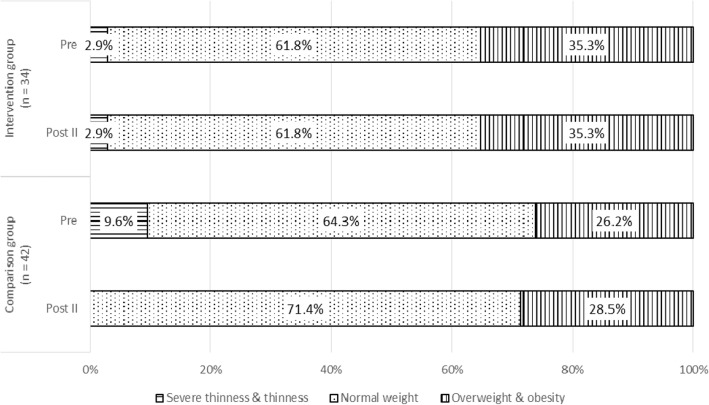
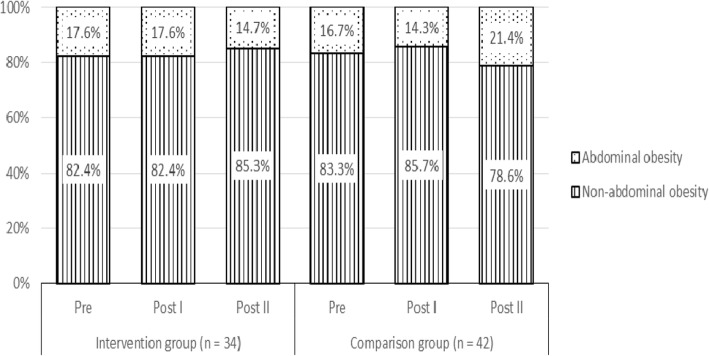
Background: The ‘Eat Right, Be Positive About Your Body and Live Actively’ (EPaL) intervention programme was developed to prevent overweight and disordered eating in Malaysian adolescents. This study aimed to evaluate the effectiveness of the EPaL programme on knowledge, attitudes and practices on healthy lifestyle and body composition (body mass index z-score [zBMI], waist circumference [WC] and body fat percentage [BF%]) among adolescents. Methods: All measures were taken at three time points: before intervention (Pre), after intervention (Post I) and 3 months after intervention (Post II). The intervention group (IG) participated in the EPaL programme for 16 weeks, whereas the comparison group (CG) received no intervention. Seventy-six adolescents (IG: n = 34; CG: n = 42) aged 13–14 years were included in the final analysis. Repeated measures analysis of covariance (ANCOVA) was used to assess the impact of the EPaL intervention programme on the measures between groups (IG and CG) at Post I and Post II. Results: The IG reported significantly higher knowledge scores at both Post I (adjusted mean difference = 3.34; 95% confidence interval [CI] = 0.99, 5.69; p = 0.006) and Post II (adjusted mean difference = 2.82; 95% CI = 0.86, 4.78; p = 0.005) compared with the CG. No significant differences between the IG and CG were found at either Post I or Post II in attitudes, practices, zBMI, WC and BF%. The proportion of participants who were overweight or obese was consistent from Pre to Post II in the IG (35.3%) and increased from 26.2% at Pre to 28.5% at Post II in the CG, but the difference was not statistically significant. The proportion of participants who had abdominal obesity in the IG decreased from 17.6% at Pre to 14.7% at Post II and increased from 16.7% at Pre to 21.4% at Post II in the CG, but the differences were not statistically significant. Conclusion: Despite no significant reduction of body composition, this programme shows the positive effect on the adolescents’ knowledge regarding healthy lifestyle. This study contributes to the evidence on the effectiveness of school-based health interventions in Malaysian adolescents. Trial registration: UMIN Clinical Trial Registration UMIN000024349. Registered 11 October 2016.
Overview
The claims and statistics of this paper haven’t been checked yet.
Free: it reads the open-access text and checks the first 5 claims that cite a source we can check. Create a free account to check every claim.
Integrity signals
Registry
Cites
Statistics
Figures
Verification
Claims the paper makes
The claims and statistics of this paper haven’t been checked yet.
Free: it reads the open-access text and checks the first 5 claims that cite a source we can check. Create a free account to check every claim.
Claims other papers make about this one
Each is checked against this paper’s own text: does it say what the citing paper says it does?
The source backs part of the claim, not all of it — or backs it for a different population, condition or comparison.
In the citing paper
“A systematic and well-organized lifestyle intervention program was attributed in one research noted by Sharif Ishak SI et al., 2020 [40] to a decrease in abdominal obesity; this conclusion is also supported by the findings of studies conducted by Kamin T et al., 2022 [42].”
From A Systematic Review of School-Based Nutrition Interventions for Promoting Healthy Dietary Practices and Lifestyle Among School Children and Adolescents (2024) · cites this paper as [40]
Experimental — accuracy not yet measured
Self-check
Percentages, sums and reported differences re-computed from the paper’s own numbers.
The self-check needs the paper’s full text.
Citations
Cites
Statistical Power Analysis for the Behavioral Sciences
Muller, K. (1989) · Technometrics · doi:10.1080/00401706.1989.10488618 · Cited by 99,167
Statistical power analysis for the behavioral sciences
(1990) · Computers, Environment and Urban Systems · doi:10.1016/0198-9715(90)90050-4 · Cited by 65,269
(2010) · Sociology for Pharmacists · doi:10.4324/9780203381175_chapter_9 · Cited by 14,152
(2002) · Cited by 13,211
(2000) · PubMed · Cited by 13,173
Use of mass media campaigns to change health behaviour
Wakefield, M. A., Loken, B., & Hornik, R. C. (2010) · The Lancet · doi:10.1016/s0140-6736(10)60809-4 · Cited by 2,485
Reilly, J. J., & Kelly, J. (2011) · International Journal of Obesity · doi:10.1038/ijo.2010.222 · Cited by 2,280
Health promotion planning: An educational and environmental approach
Lusk, S. L. (1992) · Patient Education and Counseling · doi:10.1016/0738-3991(92)90152-9 · Cited by 1,387
Health Promotion Planning: An Educational and Environmental Approach
Green, L. W., & Kreuter, M. W. (1991) · Cited by 1,286
Pubertal transitions in health
Patton, G. C., & Viner, R. (2007) · The Lancet · doi:10.1016/s0140-6736(07)60366-3 · Cited by 870
Adequacy of Sample Size in Health Studies
Ziegel, E. R., Lemeshow, S., Hosmer, D., Klar, J., & Luanga, S. (1994) · Technometrics · doi:10.2307/1270261 · Cited by 835
Nutrition knowledge and food consumption: can nutrition knowledge change food behaviour?
Worsley, A. (2002) · Asia Pacific Journal of Clinical Nutrition · doi:10.1046/j.1440-6047.11.supp3.7.x · Cited by 649
Shared Risk and Protective Factors for Overweight and Disordered Eating in Adolescents
Neumark-Sztainer, D. R., Wall, M. M., Haines, J. I., Story, M. T., Sherwood, N. E., & van den Berg, P. A. (2007) · American Journal of Preventive Medicine · doi:10.1016/j.amepre.2007.07.031 · Cited by 588
Disordered eating attitudes and behaviours in teenaged girls: a school-based study.
Jones, J. M., Bennett, S., Olmsted, M. P., Lawson, M. L., & Rodin, G. (2001) · Europe PMC (PubMed Central) · Cited by 440
McCabe, M. P., & Ricciardelli, L. A. (2001) · PubMed · Cited by 404
Adequacy of Sample Size in Health Studies
(1994) · Technometrics · doi:10.1080/00401706.1994.10485796 · Cited by 365
New moves: a school-based obesity prevention program for adolescent girls
Neumark-Sztainer, D., Story, M., Hannan, P. J., & Rex, J. (2003) · Preventive Medicine · doi:10.1016/s0091-7435(03)00057-4 · Cited by 353 · cited 1×
“It is important to assess BF% because changes in BF% have health implications, such as changes in blood lipids [59].”
BackgroundModified intention to treat reporting in randomised controlled trials: systematic review
Abraha, I., & Montedori, A. (2010) · BMJ · doi:10.1136/bmj.c2697 · Cited by 255
What works in secondary schools? A systematic review of classroom-based body image programs
Yager, Z., Diedrichs, P. C., Ricciardelli, L. A., & Halliwell, E. (2013) · Body Image · doi:10.1016/j.bodyim.2013.04.001 · Cited by 250
New Moves—Preventing Weight-Related Problems in Adolescent Girls
Neumark-Sztainer, D. R., Friend, S. E., Flattum, C. F., Hannan, P. J., Story, M. T., Bauer, K. W., Feldman, S. B., & Petrich, C. A. (2010) · American Journal of Preventive Medicine · doi:10.1016/j.amepre.2010.07.017 · Cited by 223 · cited 1×
“Similarly, nonsignificant decreases in zBMI following the intervention was shown in several other recent studies [34, 49, 50].”
ResultStock, S., Miranda, C., Evans, S., Plessis, S., Ridley, J., Yeh, S., & Chanoine, J.-P. (2007) · Pediatrics · doi:10.1542/peds.2006-3003 · Cited by 220
Saksvig, B. I., Gittelsohn, J., Harris, S. B., Hanley, A. J. G., Valente, T. W., & Zinman, B. (2005) · The Journal of Nutrition · doi:10.1093/jn/135.10.2392 · Cited by 197
Singhal, N., Misra, A., Shah, P., & Gulati, S. (2010) · European Journal of Clinical Nutrition · doi:10.1038/ejcn.2009.150 · Cited by 181
Health Promotion & Education Research Methods: Using the Five Chapter Thesis/ Dissertation Model
Cottrell, R. R., & McKenzie, J. F. (2010) · Medical Entomology and Zoology · Cited by 161
Fairclough, S. J., Hackett, A. F., Davies, I. G., Gobbi, R., Mackintosh, K. A., Warburton, G. L., Stratton, G., van Sluijs, E. M., & Boddy, L. M. (2013) · BMC Public Health · doi:10.1186/1471-2458-13-626 · Cited by 154
Using social media to engage adolescents and young adults with their health
Wong, C. A., Merchant, R. M., & Moreno, M. A. (2014) · Healthcare · doi:10.1016/j.hjdsi.2014.10.005 · Cited by 141
Melnyk, B. M., Small, L., Morrison-Beedy, D. C., Strasser, A., Spath, L., Kreipe, R. E., Crean, H. F., Jacobson, D., Kelly, S. A., & O’Haver, J. (2007) · Journal of Pediatric Health Care · doi:10.1016/j.pedhc.2007.02.009 · Cited by 141
Gravel, J., Opatrny, L., & Shapiro, S. (2007) · Clinical Trials · doi:10.1177/1740774507081223 · Cited by 136
Prevention of overweight and obesity in children and youth: a systematic review and meta-analysis
Peirson, L., Fitzpatrick‐Lewis, D., Morrison, K. M., Ciliska, D. K., Kenny, M., Ali, M. U., & Raïna, P. (2015) · CMAJ Open · doi:10.9778/cmajo.20140053 · Cited by 127
Waist circumference percentile curves for Malaysian children and adolescents aged 6.0–16.9 years
Poh, B. K., Jannah, A. N., Chong, L. K., Talib, R. A., Ismail, M. N., & McCarthy, H. D. (2011) · International Journal of Pediatric Obesity · doi:10.3109/17477166.2011.583658 · Cited by 95
Kothandan, S. K. (2014) · Archives of Public Health · doi:10.1186/2049-3258-72-3 · Cited by 93
Estimating treatment effects in randomised controlled trials with non-compliance: a simulation study
Ye, C., Beyene, J., BROWNE, G. B., & Thabane, L. (2014) · BMJ Open · doi:10.1136/bmjopen-2014-005362 · Cited by 82 · cited 1×
“After considering for non-response and noncompliance rate in this study, an additional 30% [22, 23] was added to the sample size.”
MethodSantos, R. G., Durksen, A., Rabbani, R., Chanoine, J., Miln, A. L., Mayer, T., & McGavock, J. (2014) · Archives of Pediatrics and Adolescent Medicine · doi:10.1001/jamapediatrics.2013.3688 · Cited by 79
Wang, D., Stewart, D., Chang, C., & Shi, Y. (2015) · Environmental Health and Preventive Medicine · doi:10.1007/s12199-015-0456-4 · Cited by 77
Why have Educational Evaluators Chosen Not to Do Randomized Experiments?
Cook, T. D. (2003) · The ANNALS of the American Academy of Political and Social Science · doi:10.1177/0002716203254764 · Cited by 76
Shariff, Z. M., Samah, B. A., Paim, L., Ismail, M., Kasim, M. S., Othman, N., Hashim, N., Buhari, S. S., Osman, Z. J., & Hussein, Z. A. M. (2008) · Universiti Putra Malaysia Institutional Repository (Universiti Putra Malaysia) · Cited by 73
Effects of Intervention Programs on Child and Adolescent BMI: A Meta-Analysis Study
Vasques, C. M. D. S., Magalhães, P. M., Cortinhas, A., Mota, P., Leitão, J. C., & Lopes, V. P. (2014) · Journal of Physical Activity and Health · doi:10.1123/jpah.2012-0035 · Cited by 72
Nutrition knowledge, attitudes and practices of canadian public health nurses
Schwartz, N. E. (1976) · Journal of Nutrition Education · doi:10.1016/s0022-3182(76)80113-6 · Cited by 70
Changes in child and adolescent inpatient psychiatric admission diagnoses between 1995 and 2000
Harpaz‐Rotem, I., LESLIE, D. L., Martin, A., & Rosenheck, R. A. (2005) · Social Psychiatry and Psychiatric Epidemiology · doi:10.1007/s00127-005-0923-0 · Cited by 59
Ardic, A., & Erdogan, S. (2017) · Journal of Advanced Nursing · doi:10.1111/jan.13217 · Cited by 57 · cited 1×
“Similarly, nonsignificant decreases in zBMI following the intervention was shown in several other recent studies [34, 49, 50].”
ResultCompliance with drug therapy—new answers to an old question
Düsing, R., Lottermoser, K., & Mengden, T. (2001) · Nephrology Dialysis Transplantation · doi:10.1093/ndt/16.7.1317 · Cited by 54
De Villiers, A., Steyn, N., Draper, C. E., Hill, J., Gwebushe, N., Lambert, E. V., & Lombard, C. (2016) · Ethnicity & Disease · doi:10.18865/ed.26.2.171 · Cited by 54
Ibrahim, N., Rampal, L. R. G., Jamil, Z., & Zain, A. M. (2012) · Preventive Medicine · doi:10.1016/j.ypmed.2012.09.003 · Cited by 50 · cited 2×
“A comparison of peer-led and teacher-led interventions in changing knowledge and attitutes related to HIV/AIDS among secondary school students; 2003.”
BackgroundA meta‐analytic review of obesity prevention in the schools: 1997–2008
Cook‐Cottone, C., Casey, C. M., Feeley, T. H., & Baran, J. (2009) · Psychology in the Schools · doi:10.1002/pits.20409 · Cited by 48
Ishak, S. I. Z. S., Chin, Y. S., Taib, M. N. M., & Shariff, Z. M. (2016) · BMC Public Health · doi:10.1186/s12889-016-3773-7 · Cited by 48
Self-citationFactors Associated with Binge Eating Behavior among Malaysian Adolescents
Gan, W. Y., Mohamad, N., & Law, L. S. (2018) · Nutrients · doi:10.3390/nu10010066 · Cited by 45 · cited 1×
“8% in 2018 [8], has been demonstrated in the literature.”
BackgroundWahida, Z. F., Nasir, M. T. M., & Hazizi, A. S. (2011) · PubMed · Cited by 43
The Use of the Intention-to-Treat Principle in Nursing Clinical Trials
Polit, D. F., & Gillespie, B. M. (2009) · Nursing Research · doi:10.1097/nnr.0b013e3181bf1505 · Cited by 39
The effectiveness of nutrition education programme for primary school children.
Talib, R. A., Azdie, W., & Ismail, M. N. (2007) · PubMed · Cited by 35
Eating Behaviour, Body Image, and Self-Esteem of Adolescent Girls in Malaysia
Soo, K. L., Shariff, Z. M., Taib, M. N. M., & Samah, B. A. (2008) · Perceptual and Motor Skills · doi:10.2466/pms.106.3.833-844 · Cited by 29
Cheah, W. L., Hazmi, H., & Chang, C. T. (2015) · International Journal of Adolescent Medicine and Health · doi:10.1515/ijamh-2015-0044 · Cited by 27
Cown, M. H., Grossman, B. M., & Giraudo, S. Q. (2017) · Ecology of Food and Nutrition · doi:10.1080/03670244.2017.1381606 · Cited by 26
Estimates and distribution of body mass index in a sample of Malaysian adolescents.
Ms, Z., Mirnalini, K., Khor, G. L., Merlin, A., As, B., & Norimah, K. (2006) · PubMed · Cited by 24
Epidemiology for advanced nursing practice
McDonough, J. P. (2012) · Jones & Bartlett Learning eBooks · Cited by 20
Liu, Q., Liu, L., Vu, H. X., Liu, X., Tang, S., & Wang, H. (2013) · Asia Pacific Journal of Public Health · doi:10.1177/1010539513498767 · Cited by 20
Grigg, M. J., William, T., Dhanaraj, P. S., Menon, J., Barber, B. E., von Seidlein, L., Rajahram, G. S., Price, R. N., Anstey, N. M., & Yeo, T. W. (2014) · BMJ Open · doi:10.1136/bmjopen-2014-006005 · Cited by 19
Disordered Eating among Female Adolescents: Prevalence, Risk Factors, and Consequences.
Bryla, K. Y. (2003) · Health Educator · Cited by 14
Sandanasamy, K. S., & Sandanasamy (2016) · University of Malaya Students Repository · Cited by 3
Kannan, A. (2003) · Universiti Putra Malaysia Institutional Repository (Universiti Putra Malaysia) · Cited by 1
Research works printed but not linked: 9
- 4. World Health Organization (WHO). WHO Technical Report Series 894 Obesity: Preventing and Managing The Global Epidemic. Geneva: World Health Organization; 2000.
- 6. Institute for Public Health (IPH) 2015. National Health and morbidity survey 2015 (NHMS 2015). Vol. II: Non-Communicable Diseases, Risk Factors & Other Health Problems; 2015.
- 17. Karen SS. PhD thesis. Disordered eating among urban and rural secondary school children in Selangor, Malaysia; 2016.
- 25. Chin YS, Sharifah Intan Zainun SI, Mohd Nasir MT, Zalilah MS. Modul Pengajaran Jilid 1 Program Kesihatan Remaja "Eat Right, Be Positive About Your Body & Live Actively (EPaL)" (Makan Secara Sihat, Berfikiran Positif Terhadap Tubuh Anda & Hidup Dengan Aktif). Serdang: Jabatan Pemakanan dan Dietetik, Fakulti Perubatan dan Sains Kesihatan, Universiti Putra Malaysia; 2015.
- 26. Chin YS, Sharifah Intan Zainun SI, Mohd Nasir MT, Zalilah MS. Modul Pengajaran Jilid 2 Program Kesihatan Remaja "Eat Right, Be Positive About Your Body & Live Actively (EPaL)" (Makan Secara Sihat, Berfikiran Positif Terhadap Tubuh Anda & Hidup Dengan Aktif). Serdang: Jabatan Pemakanan dan Dietetik, Fakulti Perubatan dan Sains Kesihatan, Universiti Putra Malaysia; 2016.
- 28. World Health Organization (WHO). Waist Circumference and Waist-Hip Ratio. Report of WHO Expert Consultation. Geneva: World Health Organization; 2008.
- 44. Ruzita A, Fatimah A, Yong K, Roslee R, Idris M. Penilaian pakej video sebagai alat pendidikan pemakanan di kalangan kanak-kanak sekolah rendah yang mengalami lebihan berat badan dan obesiti. J Mal Soc Hlth. 2000;18:1-5.
- 57. Institute of Medicine (IOM). Educating the study body: taking physical activity and physical education to school. In: Kohl HW, Cook HD, editors. . Washington: The National Academies Press; 2013.
- 63. Bryman A. Social research method. New York: Oxford University; 2008.
Cited by
Raut, S., Dirghayu, K. C., Singh, D. R., Dhungana, R. R., Pradhan, P. M. S., & Sunuwar, D. R. (2024) · BMC Nutrition · doi:10.1186/s40795-024-00850-0 · Cited by 177
“Educational program enhance knowledge, attitude, and practice for acquiring healthy behaviors among adolescents in schools or communities [16, 17].”
BackgroundResultTeo, C. H., Chin, Y. S., Lim, P. Y., Masrom, S. A. H., & Shariff, Z. M. (2021) · Nutrients · doi:10.3390/nu13051712 · Cited by 34
Self-citationEvidence-based strategy for prevention of hidden hunger among adolescents in a suburb of Nigeria
Ibeanu, V. N., Edeh, C. G., & Ani, P. N. (2020) · BMC Public Health · doi:10.1186/s12889-020-09729-8 · Cited by 43
A Systematic Review of Healthy Nutrition Intervention Programs in Kindergarten and Primary Education
Collado-Soler, R., Alférez-Pastor, M., Torres, F. L., Trigueros, R., Aguilar-Parra, J. M., & Navarro, N. (2023) · Nutrients · doi:10.3390/nu15030541 · Cited by 35
Shinde, S., Wang, D., Moulton, G. E., & Fawzi, W. W. (2025) · Maternal & Child Nutrition · doi:10.1111/mcn.13437 · Cited by 34
“For five studies, it was not possible to determine the intervention duration (Hosseini et al., 2015; Karimi ‐ Shahanjarini et al., 2013; Keshani et al., 2019; Leventhal et al., 2016; Sharif Ishak et al., 2020; Taghdisi et al., 2016).”
Metadata
- Authors
- Sharif Ishak, S. I. Z., Chin, Y. S., Mohd. Taib, M. N., Chan, Y. M., & Mohd. Shariff, Z.
- Affiliations
- Universiti Putra Malaysia (MY)
- Corresponding author
- Chin, Yit Siew
- Venue
- BMC Pediatrics
- Published
- 2020-03-14
- Volume
- 20
- Issue
- 1
- Pages
- 122-122
- ISSN
- 1471-2431 (ISSN-L)
- PMC
- PMC7071695
- OpenAlex
- W3011560905
- Semantic Scholar
- 54d024cc6748ab6d079fce84bddf120f8e39fce2
- Cited by
- 46
- References
- 60
- Citations by year
- 2026: 3 · 2025: 8 · 2024: 10 · 2023: 8 · 2022: 6 · 2021: 8 · 2020: 3
- FWCI
- 4.69
- Type
- journal article
- Language
- en
- Open access
- gold
- doi.org
- Licence
- cc-by
- creativecommons.org/licenses/by/4.0/ (tdm)
- creativecommons.org/licenses/by/4.0/ (vor)
- Locations
- BMC Pediatrics (publishedVersion, cc-by)
- PubMed Central (publishedVersion, cc-by)
- PubMed (publishedVersion)
- DOAJ (DOAJ: Directory of Open Access Journals) (submittedVersion, cc-by-sa)
- Greater South Information System
- Topics
- Health Sciences › Medicine › Public Health, Environmental and Occupational Health › Obesity, Physical Activity, Diet
- Social Sciences › Psychology › Clinical Psychology › Eating Disorders and Behaviors
- Health Sciences › Nursing › Nutrition and Dietetics › Nutrition, Health and Food Behavior
- Keywords
- school-based intervention, healthy lifestyle knowledge, body composition, adolescents, overweight prevention, disordered eating, abdominal obesity, waist circumference, body fat percentage, BMI z-score, Malaysian adolescents, nutrition education, intervention effectiveness, follow-up outcomes, Malay adolescents, Indigenous youth, urban-rural differences, ethnic differences, gender differences
- MeSH terms
- Healthy Lifestyle, Adolescent, Attitude, Body Composition, Female, Humans, Health Knowledge, Attitudes, Practice, Male, Schools, Exercise, Body Mass Index, Pediatric Obesity
About these checks
Registry, retraction, Cites and statistics results are computed, not judged, with one exception: a printed reference that no index lists is read once by a model before it counts as a citation error. Claims are extracted by a model and kept only when their quote appears verbatim in the text; each cited source is then checked, with a model’s help, for whether it says what the claim relies on. Those verdicts can be wrong — read the claim’s quote and the cited source before relying on one.
Statistics and arithmetic are recomputed, not judged.
Confidence bands are shown only for fields calibrated on our annotated test set. None is calibrated yet, so no band is shown.
What counts as a claim ›How we measure confidence ›How we check this ›
Are you an author, or do you see a problem with this page? Request a review
Data sources
Bibliographic data: Semantic Scholar, OpenAlex, Crossref.
Contains information from the Semantic Scholar Academic Graph Datasets, made available under the ODC Attribution License (ODC-BY 1.0).
Semantic Scholar’s data is described in: Kinney, R., et al. (2023). The Semantic Scholar Open Data Platform. arXiv:2301.10140.
