

The strengths based approach as a service delivery model for severe mental illness: a meta-analysis of clinical trials
Open accessThe DOI matches its Crossref record; 28 of the 28 references it cites were found in a registry or an index.
Abstract
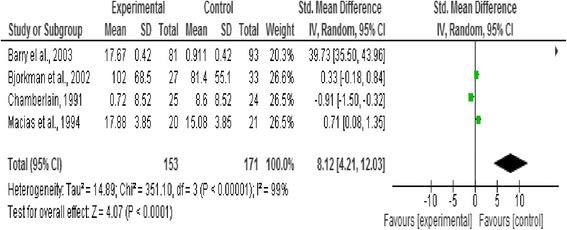
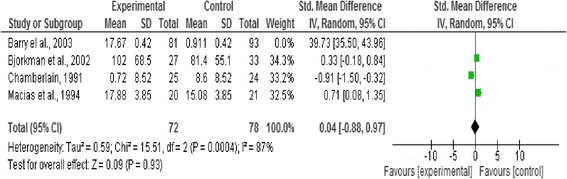
BACKGROUND: The strengths-based approach is considered a paradigm shift from the deficits- focused service delivery models. The aim of this review was to systematically review randomised controlled trials (RCTs) and quasi experimental studies examining the impact of the strengths-based approach on level of functioning and quality of life as primary outcomes and psychotic symptoms as secondary outcomes in people diagnosed with severe mental illness. METHODS: This review was conducted in the School of Health Sciences, University of Nottingham, United Kingdom. Participants in the primary studies were adults diagnosed with psychotic disorders. The methodological quality of the included studies was assessed independently by two reviewers using "Consort 2010" checklist for the randomized controlled trials or "TREND" for the quasi-experimental studies. The EPOC checklist was used for data extraction while management of data and meta-analysis were performed using Review Manager software (RevMan version 5.2). RESULTS: No significant difference was found between the strengths-based approach and other service delivery models in level of functioning and quality of life. However, a significant effect on symptoms favouring other service delivery models was reported. CONCLUSION: Based upon evidence of moderate quality, this review suggests there is no effect of the strengths-based model of service delivery in level of functioning and quality of life in adults diagnosed with severe mental illness. The number of trials is low; therefore further evidence is required to ascertain the impact of the strengths-based approach in community mental health care.
Overview
The claims and statistics of this paper haven’t been checked yet.
Free: it reads the open-access text and checks the first 5 claims that cite a source we can check. Create a free account to check every claim.
Integrity signals
Registry
Cites
Statistics
Figures
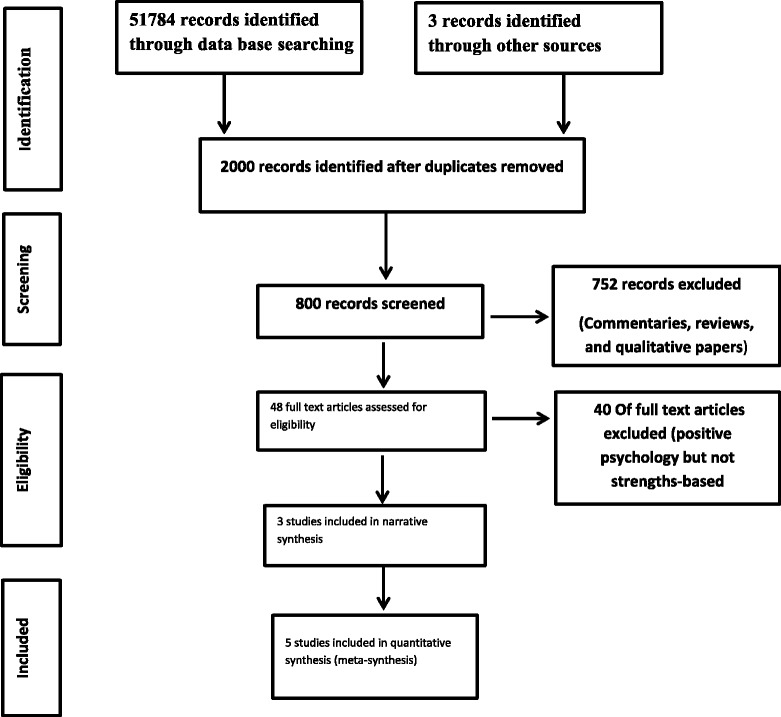
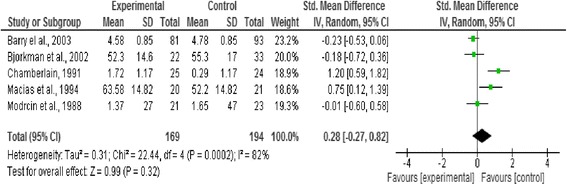
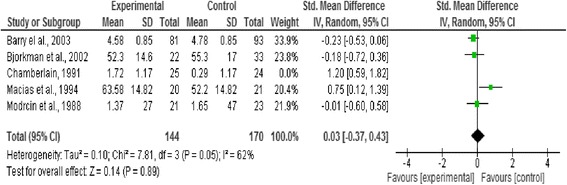
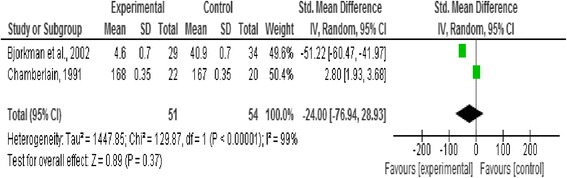
Verification
Claims the paper makes
The claims and statistics of this paper haven’t been checked yet.
Free: it reads the open-access text and checks the first 5 claims that cite a source we can check. Create a free account to check every claim.
Self-check
Percentages, sums and reported differences re-computed from the paper’s own numbers.
The self-check needs the paper’s full text.
Citations
Cites
Preferred Reporting Items for Systematic Reviews and Meta-Analyses: the PRISMA statement
Moher, D., Liberati, A., Tetzlaff, J., Altman, D. G., & for the PRISMA Group (2009) · BMJ · doi:10.1136/bmj.b2535 · Cited by 83,823
Preferred reporting items for systematic reviews and meta-analyses: the PRISMA Statement.
(2009) · PubMed Central · Cited by 44,859
Preferred reporting items for systematic reviews and meta-analyses: The PRISMA statement
Moher, D., Liberati, A., Tetzlaff, J., Altman, D. G., & the PRISMA Group* (2009) · Annals of Internal Medicine · doi:10.7326/0003-4819-151-4-200908180-00135 · Cited by 37,554
Cochrane Handbook for Systematic Reviews of Interventions: Cochrane Book Series
(2008) · doi:10.1002/9780470712184 · Cited by 25,048
Preferred Reporting Items for Systematic Reviews and Meta-Analyses: The PRISMA Statement
Moher, D., Liberati, A., Tetzlaff, J., & Altman, D. G. (2009) · Journal of Clinical Epidemiology · doi:10.1016/j.jclinepi.2009.06.005 · Cited by 19,575
The Brief Psychiatric Rating Scale.
Overall, J. E., & Gorham, D. R. (1962) · Psychological Reports · doi:10.2466/pr0.1962.10.3.799 · Cited by 11,090 · cited 1×
“[18] the Brief Psychiatric Rating Scale was used to assess service users’ symptoms [26] with the reported reliability coefficient of 0.”
MethodMoher, D., Hopewell, S., Schulz, K. F., Montori, V., Gotzsche, P. C., Devereaux, P. J., Elbourne, D., Egger, M., & Altman, D. G. (2010) · BMJ · doi:10.1136/bmj.c869 · Cited by 8,883 · cited 1×
“Two reviewers (NI and MM) independently assessed the quality of retrieved studies using CONSORT 2010 [10], which is a 25-item checklist developed for reporting RCTs.”
MethodInternational Statistical Classification of Diseases and Related Health Problems
Eisfeld, J. (2014) · TSQ: Transgender Studies Quarterly · doi:10.1215/23289252-2399740 · Cited by 3,570
Fixed-and random-effects models in meta-analysis.
Hedges, L. V., & Vevea, J. L. (1998) · Psychological Methods · doi:10.1037/1082-989x.3.4.486 · Cited by 2,977 · cited 1×
“The random effect model was used for combining data in the statistical pooling due to heterogeneity among included studies [13].”
MethodDes Jarlais, D. C., Lyles, C., Crepaz, N., & the TREND Group (2004) · American Journal of Public Health · doi:10.2105/ajph.94.3.361 · Cited by 2,817 · cited 1×
“For the non RCTs, the TREND statement [11] was used for assessing their quality.”
Method
Research works printed but not linked: 4
- EPOC-specific resources for review authors. http://epocoslo.cochrane.org/ epoc-specific-resources-review-authors.
- Chamberlain R: An Experimental Study of the Strengths Model of Case Management. ; 1991.
- Macias C, Jackson R: The Self-Report Inventory: an interview schedule for adults with serious mental illness. Salt Lake City: University of Utah: Graduate School of Social Work; 1990.
- Macias C, Kinney R: The brief psychological wellbeing index. Salt Lake City: University Of Utah: Graduate School of Social Work; 1990.
Cited by
Kahn, R. S., Sommer, I. E., Murray, R. M., Meyer-Lindenberg, A., Weinberger, D. R., Cannon, T. D., O'Donovan, M., Correll, C. U., Kane, J. M., van Os, J., et al. (2015) · Nature Reviews Disease Primers · doi:10.1038/nrdp.2015.67 · Cited by 1,124
Uses of strength-based interventions for people with serious mental illness: A critical review
Tse, S., Tsoi, E. W., Hamilton, B., O’Hagan, M., Shepherd, G., Slade, M., Whitley, R., & Petrakis, M. (2016) · International Journal of Social Psychiatry · doi:10.1177/0020764015623970 · Cited by 178
“Second, both of the reports have found that the effect of strength-based interventions on service users’ level of symptoms was either inconclusive (e.g. Björkman et al., 2002; Green et al., 2013) or less favourable in comparison to other service delivery models (Ibrahim et al., 2014).”
MethodResultInfluentialPaton, F., Wright, K., Ayre, N., Dare, C., Johnson, S., Lloyd-Evans, B., Simpson, A., Webber, M., & Meader, N. (2016) · Health Technology Assessment · doi:10.3310/hta20030 · Cited by 118
A Nonrandomized Controlled Trial of Strengths Model Case Management in Hong Kong
Tsoi, E. W. S., Tse, S. S.-K., Yu, C.-H., Chan, S.-K., Wan, E., Wong, S., & Liu, L. (2018) · Research on Social Work Practice · doi:10.1177/1049731518772142 · Cited by 63
Bitter, N., Roeg, D., van Assen, M., van Nieuwenhuizen, C., & van Weeghel, J. (2017) · BMC Psychiatry · doi:10.1186/s12888-017-1565-y · Cited by 53
“For example, few randomized controlled trials (RCTs) have been conducted to research the strengths model [32, 36], and several of these studies had methodological limitations such as small sample sizes and inadequate randomization [32, 37].”
BackgroundKalantar‐Zadeh, K., Li, P. K., Tantisattamo, E., Kumaraswami, L. A., Liakopoulos, V., Lui, S., Ulasi, I., Andreoli, S. P., Balducci, A., Dupuis, S., et al. (2021) · Kidney International · doi:10.1016/j.kint.2020.11.004 · Cited by 52
Kalantar‐Zadeh, K., Li, P. K., Tantisattamo, E., Kumaraswami, L. A., Liakopoulos, V., Lui, S., Ulasi, I., Andreoli, S. P., Balducci, A., Dupuis, S., et al. (2020) · Transplant International · doi:10.1111/tri.13811 · Cited by 29
“The strengths-based approach is in contrast to the medical model where chronic disease is traditionally focused on pathology, problems and failures [10].”
ResultGelkopf, M., Pickman, L. L., Werbeloff, N., Levine, S. Z., Telem, A., Zisman‐Ilani, Y., & Roe, D. (2016) · Psychiatry Research · doi:10.1016/j.psychres.2016.04.106 · Cited by 32
“Studies assessing the effectiveness of case management services, and particularly strengths-based case management, typically use non-experimental or quasi-experimental methods (Fukui et al., 2012; Ibrahim et al., 2014), and there is a”
BackgroundResultInfluentialAgent-as-a-service-based geospatial service aggregation in the cloud: A case study of flood response
Tan, X., Di, L., Deng, M., Huang, F., Ye, X., Sha, Z., Sun, Z., Gong, W., Shao, Y., & Huang, C. (2016) · Environmental Modelling & Software · doi:10.1016/j.envsoft.2016.07.001 · Cited by 29
“In addition to the fundamental Cloud services, Everything as a Service (XaaS) studies have also been conducted (Duan et al., 2012; Wang et al., 2013; Xiong et al., 2014; Ben-Yehuda et al., 2014; Ibrahim et al., 2014; Bitterman et al., 2014).”
BackgroundKalantar‐Zadeh, K., Li, P. K., Tantisattamo, E., Kumaraswami, L. A., Liakopoulos, V., Lui, S., Ulasi, I., Andreoli, S. P., Balducci, A., Dupuis, S., et al. (2021) · Journal of Renal Nutrition · doi:10.1053/j.jrn.2021.01.024 · Cited by 28
Bitter, N., Roeg, D., van Nieuwenhuizen, C., & van Weeghel, J. (2020) · Community Mental Health Journal · doi:10.1007/s10597-020-00561-3 · Cited by 24
O’Shea, L. E., & Dickens, G. L. (2016) · Clinical Psychology Science and Practice · doi:10.1111/cpsp.12146 · Cited by 38
Chronic Kidney Disease Management in Developing Countries
Badro, D. A. (2023) · Springer eBooks · doi:10.1007/978-3-030-74786-2_27-1 · Cited by 27
Deane, F. P., Goff, R. O., Pullman, J., Sommer, J., & Lim, P. (2018) · International Journal of Mental Health and Addiction · doi:10.1007/s11469-018-9885-9 · Cited by 14
“A meta-analysis of clinical trials involving strength-based approaches found sufficient evidence of moderate study quality in the five studies included in the analysis (Ibrahim et al. 2014).”
MethodSpaulding, W. D., Montague, E., Avila, A., & Sullivan, M. E. (2016) · Evidence-based practices in behavioral health · doi:10.1007/978-3-319-40537-7_1 · Cited by 14
Boman, E., Lundman, B. M., Nygren, B., Årestedt, K., & Fischer, R. S. (2017) · Journal of Advanced Nursing · doi:10.1111/jan.13341 · Cited by 13
“…results, applying a strength-based approach in mental health rehabilitation seems promising (Rapp, Goscha, & Fukui, 2015; Xie, 2013), even though Ibrahim, Michail, and Callaghan (2014), in a meta-analysis from 2014, stated that the numbers of trials so far were low and found no difference…”
Brongers, K., Cornelius, B., van der Klink, J. J. L., & Brouwer, S. (2020) · BMC Public Health · doi:10.1186/s12889-020-8157-3 · Cited by 10
Kalantar‐Zadeh, K., Li, P. K., Tantisattamo, E., Kumaraswami, L. A., Liakopoulos, V., Lui, S., Ulasi, I., Andreoli, S. P., Balducci, A., Dupuis, S., et al. (2021) · American Journal of Kidney Diseases · doi:10.1053/j.ajkd.2021.01.001 · Cited by 9
Innovations in community-based mental health care: an overview of meta-analyses
Carrà, G., Bartoli, F., Capogrosso, C. A., Cioni, R. M., Moretti, F., Piacenti, S., Riboldi, I., Crocamo, C., & Bebbington, P. (2022) · International Review of Psychiatry · doi:10.1080/09540261.2022.2113043 · Cited by 12
“…including CM/ACT/ ICM (n¼ 1: Dieterich et al., 2017), CCT (n¼ 1: Kisely et al., 2017), EIS (n¼ 1: Correll et al., 2018), recoverybased approaches (n¼ 2: Ibrahim et al., 2014; Lean et al., 2019), peer support (n¼ 1: Fuhr et al., 2014), and supported employment (n¼ 1: Kinoshita et al., 2013).”
BackgroundResultInfluentialWarren, M. A., Donaldson, S. I., & Galport, N. (2020) · Evaluation and Program Planning · doi:10.1016/j.evalprogplan.2021.102017 · Cited by 16
Wijekuruppu, C., Coetzer, A., & Susomrith, P. (2021) · Journal of Organizational Effectiveness People and Performance · doi:10.1108/joepp-04-2020-0051 · Cited by 10
Bai, B., Qiao, J., & Bai, C. (2025) · BMC Nursing · doi:10.1186/s12912-025-02936-x · Cited by 9
The Effects of Recovery-Oriented Cognitive–Behavior Approach for Chinese With Severe Mental Illness
Wong, D. F. K., Chan, V. Y. C., Ip, P. S. Y., & Zhuang, X. (2017) · Research on Social Work Practice · doi:10.1177/1049731517732837 · Cited by 7
Kalantar‐Zadeh, K., Li, P. K., Tantisattamo, E., Kumaraswami, L. A., Liakopoulos, V., Lui, S., Ulasi, I., Andreoli, S. P., Balducci, A., Dupuis, S., et al. (2020) · American Journal of Hypertension · doi:10.1093/ajh/hpaa213 · Cited by 6
Kalantar‐Zadeh, K., Li, P. K., Tantisattamo, E., Kumaraswami, L. A., Liakopoulos, V., Lui, S., Ulasi, I., Andreoli, S. P., Balducci, A., Dupuis, S., et al. (2021) · Clinical and Experimental Nephrology · doi:10.1007/s10157-021-02044-5 · Cited by 6
Roebuck, M., Latimer, E. A., Bergeron‐Leclerc, C., Briand, C., Durbin, J., Goscha, R., Krupa, T. M., Setliff, A., Vallée, C., & Aubry, T. (2022) · Psychiatric Services · doi:10.1176/appi.ps.202100387 · Cited by 8
Kalantar‐Zadeh, K., Li, P. K., Tantisattamo, E., Kumaraswami, L. A., Liakopoulos, V., Lui, S., Ulasi, I., Andreoli, S. P., Balducci, A., Dupuis, S., et al. (2021) · Canadian Journal of Kidney Health and Disease · doi:10.1177/2054358121995276 · Cited by 6
“The strengths-based approach is in contrast to the medical model where chronic disease is traditionally focussed on pathology, problems, and failures.[10] Instead, the strengths-based approach acknowledges that each individual has strengths and abilities to overcome the problems and challenges faced, and requires coll…”
ResultWong, D. F. K., Cheung, Y. C. H., Oades, L. G., Ye, S. S., & Petrus Yat-nam, N. G. (2023) · International Journal of Social Psychiatry · doi:10.1177/00207640231212096 · Cited by 8
“Tse et al. (2016) found that strength-based approaches improved employment, educational, and intrapersonal outcomes, but Ibrahim et al. (2014) reported that strength-based approaches were not superior to other service delivery models, and White et al. (2020) found only modest positive effect of…”
BackgroundKalantar‐Zadeh, K., Li, P. K., Tantisattamo, E., Kumaraswami, L. A., Liakopoulos, V., Lui, S., Ulasi, I., Andreoli, S. P., Balducci, A., Dupuis, S., et al. (2021) · Kidney Diseases · doi:10.1159/000516604 · Cited by 5
“The strengths-based approach is in contrast to the medical model where chronic disease is traditionally focused on pathology, problems, and failures (10).”
ResultKalantar‐Zadeh, K., Li, P. K., Tantisattamo, E., Kumaraswami, L. A., Liakopoulos, V., Lui, S., Ulasi, I., Andreoli, S. P., Balducci, A., Dupuis, S., et al. (2021) · Brazilian Journal of Medical and Biological Research · doi:10.1590/1414-431x202011098 · Cited by 4
Clarifying the Strengths-Oriented Attitude among Nurses in Psychiatric Hospitals in Japan
Kataoka, M., Ozawa, K., Tanioka, T., & Locsin, R. C. (2015) · Health · doi:10.4236/health.2015.76092 · Cited by 4
“Investigative research on the effects of strengths-based approaches and strength models has also been conducted [10] [12].”
BackgroundKalantar‐Zadeh, K., Li, P. K., Tantisattamo, E., Kumaraswami, L. A., Liakopoulos, V., Lui, S., Ulasi, I., Andreoli, S. P., Balducci, A., Dupuis, S., et al. (2021) · American Journal of Nephrology · doi:10.1159/000513952 · Cited by 4
“The strengths-based approach is in contrast to the medical model where chronic disease is traditionally focussed on pathology, problems and failures.(10) Instead, the strengths-based approach acknowledges that each individual has strengths and abilities to overcome the problems and challenges faced, and requires colla…”
ResultKalantar‐Zadeh, K., Li, P. K., Tantisattamo, E., Kumaraswami, L. A., Liakopoulos, V., Lui, S., Ulasi, I., Andreoli, S. P., Balducci, A., Dupuis, S., et al. (2021) · Journal of Nephrology · doi:10.1007/s40620-021-01000-6 · Cited by 4
Kalantar‐Zadeh, K., Li, P. K., Tantisattamo, E., Kumaraswami, L. A., Liakopoulos, V., Lui, S., Ulasi, I., Andreoli, S. P., Balducci, A., Dupuis, S., et al. (2021) · Nephrology Dialysis Transplantation · doi:10.1093/ndt/gfaa336 · Cited by 3
Kalantar‐Zadeh, K., Li, P. K., Tantisattamo, E., Kumaraswami, L. A., Liakopoulos, V., Lui, S., Ulasi, I., Andreoli, S. P., Balducci, A., Dupuis, S., et al. (2021) · Brazilian Journal of Nephrology · doi:10.1590/2175-8239-jbn-2020-0241 · Cited by 3
Promoting kidney health in cardiovascular disease: part two
Murphy, F., & Byrne, G. (2022) · British Journal of Cardiac Nursing · doi:10.12968/bjca.2022.0111 · Cited by 3
Tsoi, W.-S. E., Tse, S. S.-K., Fukui, S., & Jones, S. H. (2015) · BMJ Open · doi:10.1136/bmjopen-2015-008303 · Cited by 3
Kalantar‐Zadeh, K., Li, P. K., Tantisattamo, E., Kumaraswami, L. A., Liakopoulos, V., Lui, S., Ulasi, I., Andreoli, S. P., Balducci, A., Dupuis, S., et al. (2021) · Nefrología (English Edition) · doi:10.1016/j.nefroe.2021.05.002 · Cited by 3
“The strengths-based approach is in contrast to the medical model where chronic disease is traditionally focused on pathology, problems and failures [10].”
ResultKalantar‐Zadeh, K., Li, P. K., Tantisattamo, E., Kumaraswami, L. A., Liakopoulos, V., Lui, S., Ulasi, I., Andreoli, S. P., Balducci, A., Dupuis, S., et al. (2021) · Nefrología · doi:10.1016/j.nefro.2020.12.001 · Cited by 3
“The strengths-based approach contrasts with the medical model, in which chronic disease is traditionally focused on pathology, problems, and failures.(10) Instead, the strengths-based approach acknowledges that each individual has strengths and capabilities to overcome the problems and challenges faced and requires co…”
ResultKalantar‐Zadeh, K., Li, P. K., Tantisattamo, E., Kumaraswami, L. A., Liakopoulos, V., Lui, S., Ulasi, I., Andreoli, S. P., Balducci, A., Dupuis, S., et al. (2021) · Kidney Medicine · doi:10.1016/j.xkme.2021.01.001 · Cited by 3
“The strengths-based approach contrasts with the medical model, in which chronic disease is traditionally focused on pathology, problems, and failures.(10) Instead, the strengths-based approach acknowledges that each individual has strengths and capabilities to overcome the problems and challenges faced and requires co…”
Kalantar‐Zadeh, K., Li, P. K., Tantisattamo, E., Kumaraswami, L. A., Liakopoulos, V., Lui, S., Ulasi, I., Andreoli, S. P., Balducci, A., Dupuis, S., et al. (2021) · The Nephron journals/Nephron journals · doi:10.1159/000513867 · Cited by 3
“The strengths-based approach contrasts with the medical model, in which chronic disease is traditionally focused on pathology, problems, and failures.(10) Instead, the strengths-based approach acknowledges that each individual has strengths and capabilities to overcome the problems and challenges faced and requires co…”
ResultKalantar‐Zadeh, K., Li, P. K., Tantisattamo, E., Kumaraswami, L. A., Liakopoulos, V., Lui, S., Ulasi, I., Andreoli, S. P., Balducci, A., Dupuis, S., et al. (2021) · Journal of Renal Nutrition · doi:10.1053/j.jrn.2020.12.003 · Cited by 3
Randomised Controlled Trial Evaluating the Strengths Model Case Management in Hong Kong
Tse, S. S.-K., Yu, C. H., Yuen, W. W. Y., Ng, C. S. M., Lo, I. W.-K., Fukui, S., Goscha, R. J., Chan, S. H., Wan, E., Wong, S., et al. (2022) · Research on Social Work Practice · doi:10.1177/10497315221118550 · Cited by 2
Kalantar‐Zadeh, K., Li, P. K., Tantisattamo, E., Kumaraswami, L. A., Liakopoulos, V., Lui, S., Ulasi, I., Andreoli, S. P., Balducci, A., Dupuis, S., et al. (2021) · Journal of Renal Care · doi:10.1111/jorc.12366 · Cited by 2
Kalantar‐Zadeh, K., Li, P. K., Tantisattamo, E., Kumaraswami, L. A., Liakopoulos, V., Lui, S., Ulasi, I., Andreoli, S. P., Balducci, A., Dupuis, S., et al. (2021) · Clinical Kidney Journal · doi:10.1093/ckj/sfaa253 · Cited by 2
“The strength-based approach is in contrast to the medical model where chronic disease is traditionally focussed on pathology, problems, and failures [10].”
ResultKalantar‐Zadeh, K., Li, P. K., Tantisattamo, E., Kumaraswami, L. A., Liakopoulos, V., Lui, S., Ulasi, I., Andreoli, S. P., Balducci, A., Dupuis, S., et al. (2021) · Néphrologie & Thérapeutique · doi:10.1016/j.nephro.2021.02.001 · Cited by 2
Warren, M., Donaldson, S., & Galport, N. (2021) · Evaluation and Program Planning · doi:10.2139/ssrn.3629761 · Cited by 6
Kalantar‐Zadeh, K., Li, P. K., Tantisattamo, E., Kumaraswami, L. A., Liakopoulos, V., Lui, S., Ulasi, I., Andreoli, S. P., Balducci, A., Dupuis, S., et al. (2021) · Hong Kong Medical Journal · doi:10.12809/hkmj209122 · Cited by 2
Langton, C. M., Sheinin, G. D. B., & Worling, J. R. (2022) · Wiley eBooks · doi:10.1002/9781119166504.ch4 · Cited by 2
Sah, R. K., Singh, D. R., Simkhada, B., Sah, L. K., Retzler, J., Smith, T., Khan, W., & Doyle, M. (2025) · Journal of Immigrant and Minority Health · doi:10.1007/s10903-025-01761-3 · Cited by 1
Caring: The essence of mental health nursing
Bond, C., Stickley, T., & Stacey, G. (2025) · doi:10.1093/med/9780192864048.003.0004 · Cited by 1
精神疾患をもつ人々のリカバリーを支援するために,専門職者が大切であると認識していること: 自由記載の質的分析から
理恵, 千., 麻希, 梅., 有紀, 宮., 創生, 山., & 恭平, 後. (2018) · doi:10.20705/jjnhs.16.3_70 · Cited by 3
Wong, D. F. K., Cheung, Y. C. H., Zhuang, X., Petrus Yat-nam, N. G., Oades, L. G., & Ye, S. S. (2023) · BMC Psychiatry · doi:10.1186/s12888-023-05135-7 · Cited by 1
“The meta-analysis of Ibra-him et al. [22] examined five studies reporting that the strength-based approach was not superior to other service delivery models.”
BackgroundResultKalantar‐Zadeh, K., Li, P. K., Tantisattamo, E., Kumaraswami, L. A., Liakopoulos, V., Lui, S., Ulasi, I., Andreoli, S. P., Balducci, A., Dupuis, S., et al. (2021) · Internal Medicine Journal · doi:10.1111/imj.15177 · Cited by 1
Kalantar‐Zadeh, K., Li, P. K., Tantisattamo, E., Kumaraswami, L. A., Liakopoulos, V., Lui, S., Ulasi, I., Andreoli, S. P., Balducci, A., Dupuis, S., et al. (2021) · Nephrology · doi:10.1111/nep.13829
“The strengths-based approach is in contrast to the medical model where chronic disease is traditionally focussed on pathology, problems and failures.(10) Instead, the strengths-based”
ResultKalantar‐Zadeh, K., Li, P. K., Tantisattamo, E., Kumaraswami, L. A., Liakopoulos, V., Lui, S., Ulasi, I., Andreoli, S. P., Balducci, A., Dupuis, S., et al. (2021) · Nephrology (Saint-Petersburg) · doi:10.36485/1561-6274-2021-25-2-9-17
“The strengths-based approach is in contrast to the medical model where chronic disease is traditionally focused on pathology, problems and failures [10].”
ResultKalantar‐Zadeh, K., Li, P. K., Tantisattamo, E., Kumaraswami, L. A., Liakopoulos, V., Lui, S., Ulasi, I., Andreoli, S. P., Balducci, A., Dupuis, S., et al. (2021) · African Journal of Nephrology · doi:10.21804/24-1-4429
Kalantar‐Zadeh, K., Li, P. K.-T., Tantisattamo, E., Kumaraswami, L. A., Liakopoulos, V., Lui, S., Ulasi, I., Andreoli, S. P., Balducci, A., Dupuis, S., et al. (2021) · Indian Journal of Nephrology · doi:10.4103/ijn.ijn_59_21
“[10] Instead, the strengths-based approach acknowledges that each individual has strengths and abilities to overcome the problems and challenges faced, and requires collaboration and cultivation of the patient’s hopes, aspirations, interests, and values.”
BackgroundKalantar‐Zadeh, K., Li, P. K., Tantisattamo, E., Kumaraswami, L. A., Liakopoulos, V., Lui, S., Ulasi, I., Andreoli, S. P., Balducci, A., Dupuis, S., et al. (2021) · World Journal of Nephrology and Urology · doi:10.14740/wjnu420
Kalantar‐Zadeh, K., Li, P. K., Tantisattamo, E., Kumaraswami, L. A., Liakopoulos, V., Lui, S., Ulasi, I., Andreoli, S. P., Balducci, A., Dupuis, S., et al. (2021) · Archivos Argentinos de Pediatria · doi:10.5546/aap.2021.eng.213
Kalantar‐Zadeh, K., Li, P., Tantisattamo, E., Kumaraswami, L. A., Liakopoulos, V., Lui, S., Ulasi, I., Andreoli, S. P., Balducci, A., Dupuis, S., et al. (2021) · Insight Urology · doi:10.52786/isu.a.26
Living well with kidney disease by patient and care-partner empowerment
Kalantar‐Zadeh, K., Li, P. K.-T., Tantisattamo, E., Kumaraswami, L. A., Liakopoulos, V., Lui, S., Ulasi, I., Andreoli, S. P., Balducci, A., Dupuis, S., et al. (2021) · Journal of The Egyptian Society of Nephrology and Transplantation · doi:10.4103/jesnt.jesnt_9_21
Kalantar‐Zadeh, K., Philip Kam-Tao, L., Tantisattamo, E., Kumaraswami, L. A., Liakopoulos, V., Lui, S., Ulasi, I., Andreoli, S. P., Balducci, A., Dupuis, S., et al. (2021) · Nephrology - Open Journal · doi:10.17140/npoj-6-e012
Brongers, K. (2023) · University of Groningen research database (University of Groningen / Centre for Information Technology) · doi:10.33612/diss.821713198
Services and systems of care for psychotic disorders: A global perspective
MALLA, A. K., & Iyer, S. N. (2023) · Oxford University Press eBooks · doi:10.1093/med/9780198735588.003.0008
Murphy, F. L. M. (2024) · doi:10.1002/9781394178797.ch4
Introduction to Disability Care in Major Depressive Disorder
Kumar, A., Israr, J., & Alam, S. (2026) · SpringerBriefs in modern perspectives on disability research. · doi:10.1007/978-981-95-8955-5_1
Metadata
- Authors
- Ibrahim, N., Michail, M., & Callaghan, P.
- Affiliations
- University of Nottingham (GB)
- Corresponding author
- Ibrahim, Nashwa
- Venue
- BMC Psychiatry
- Published
- 2014-08-29
- Volume
- 14
- Issue
- 1
- Pages
- 243-243
- ISSN
- 1471-244X (ISSN-L)
- PMC
- PMC4154523
- OpenAlex
- W2155195539
- Semantic Scholar
- c72da33695d9616e4d08db4c13a39f03959ccfbe
- Cited by
- 69
- References
- 28
- Citations by year
- 2026: 1 · 2025: 3 · 2024: 1 · 2023: 5 · 2022: 5 · 2021: 33 · 2020: 5 · 2018: 3 · 2017: 3 · 2016: 7 · 2015: 3
- FWCI
- 0.66
- Type
- journal article
- Language
- en
- Open access
- gold
- doi.org
- Locations
- BMC Psychiatry (publishedVersion, cc-by)
- Europe PMC (PubMed Central) (publishedVersion, cc-by)
- PubMed Central (publishedVersion, cc-by)
- PubMed (publishedVersion)
- Research Open (London South Bank University) (acceptedVersion)
- Research Open (London South Bank University) (acceptedVersion, cc-by)
- University of Birmingham Research Portal (University of Birmingham) (submittedVersion)
- Funders
- University of Nottingham
- Topics
- Social Sciences › Psychology › Clinical Psychology › Psychiatric care and mental health services
- Health Sciences › Medicine › Psychiatry and Mental health › Schizophrenia research and treatment
- Health Sciences › Health Professions › General Health Professions › Mental Health and Patient Involvement
- Keywords
- strengths-based approach, severe mental illness, service delivery models, psychosis, level of functioning, quality of life, psychotic symptoms, community mental health services
- MeSH terms
- Mental Disorders, United Kingdom, Humans, Mental Health Services, Quality of Life
About these checks
Registry, retraction, Cites and statistics results are computed, not judged, with one exception: a printed reference that no index lists is read once by a model before it counts as a citation error. Claims are extracted by a model and kept only when their quote appears verbatim in the text; each cited source is then checked, with a model’s help, for whether it says what the claim relies on. Those verdicts can be wrong — read the claim’s quote and the cited source before relying on one.
Statistics and arithmetic are recomputed, not judged.
Confidence bands are shown only for fields calibrated on our annotated test set. None is calibrated yet, so no band is shown.
What counts as a claim ›How we measure confidence ›How we check this ›
Are you an author, or do you see a problem with this page? Request a review
Data sources
Bibliographic data: Semantic Scholar, OpenAlex, Crossref.
Contains information from the Semantic Scholar Academic Graph Datasets, made available under the ODC Attribution License (ODC-BY 1.0).
Semantic Scholar’s data is described in: Kinney, R., et al. (2023). The Semantic Scholar Open Data Platform. arXiv:2301.10140.
