

The strengths based approach as a service delivery model for severe mental illness: a meta-analysis of clinical trials
Open accessThe DOI matches its Crossref record; 28 of the 28 references it cites were found in a registry or an index.
Abstract
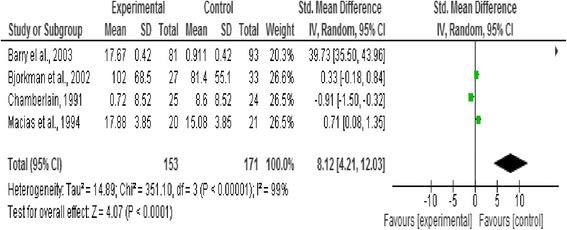
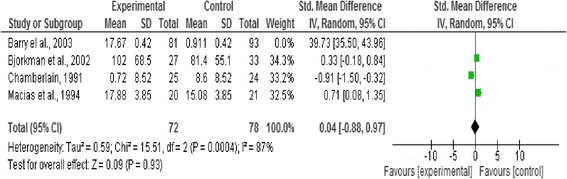
BACKGROUND: The strengths-based approach is considered a paradigm shift from the deficits- focused service delivery models. The aim of this review was to systematically review randomised controlled trials (RCTs) and quasi experimental studies examining the impact of the strengths-based approach on level of functioning and quality of life as primary outcomes and psychotic symptoms as secondary outcomes in people diagnosed with severe mental illness. METHODS: This review was conducted in the School of Health Sciences, University of Nottingham, United Kingdom. Participants in the primary studies were adults diagnosed with psychotic disorders. The methodological quality of the included studies was assessed independently by two reviewers using "Consort 2010" checklist for the randomized controlled trials or "TREND" for the quasi-experimental studies. The EPOC checklist was used for data extraction while management of data and meta-analysis were performed using Review Manager software (RevMan version 5.2). RESULTS: No significant difference was found between the strengths-based approach and other service delivery models in level of functioning and quality of life. However, a significant effect on symptoms favouring other service delivery models was reported. CONCLUSION: Based upon evidence of moderate quality, this review suggests there is no effect of the strengths-based model of service delivery in level of functioning and quality of life in adults diagnosed with severe mental illness. The number of trials is low; therefore further evidence is required to ascertain the impact of the strengths-based approach in community mental health care.
Overview
The claims and statistics of this paper haven’t been checked yet.
Free: it reads the open-access text and checks the first 5 claims that cite a source we can check. Create a free account to check every claim.
Integrity signals
Registry
Cites
Statistics
Figures
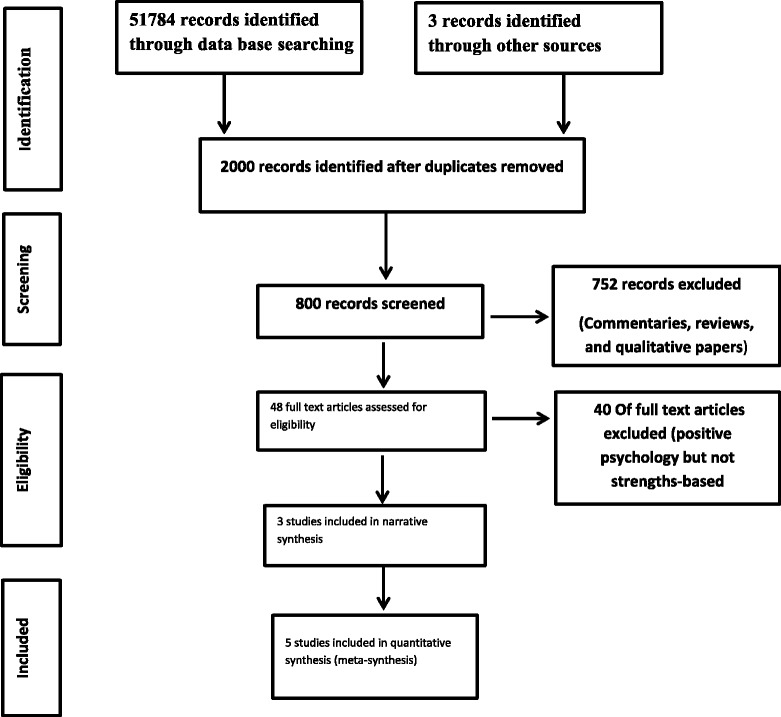
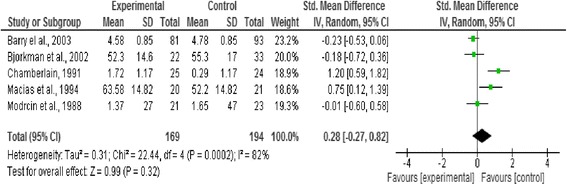
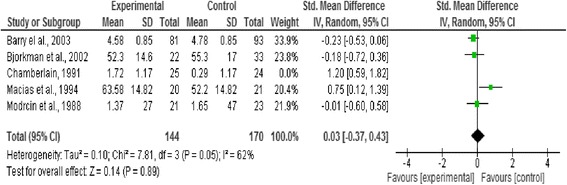
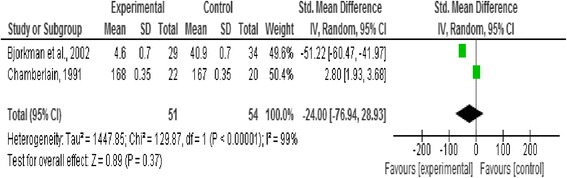
Verification
Claims the paper makes
The claims and statistics of this paper haven’t been checked yet.
Free: it reads the open-access text and checks the first 5 claims that cite a source we can check. Create a free account to check every claim.
Self-check
Percentages, sums and reported differences re-computed from the paper’s own numbers.
The self-check needs the paper’s full text.
Citations
Cites
Preferred Reporting Items for Systematic Reviews and Meta-Analyses: the PRISMA statement
Moher, D., Liberati, A., Tetzlaff, J., Altman, D. G., & for the PRISMA Group (2009) · BMJ · doi:10.1136/bmj.b2535 · Cited by 83,823
Preferred reporting items for systematic reviews and meta-analyses: the PRISMA Statement.
(2009) · PubMed Central · Cited by 44,859
Preferred reporting items for systematic reviews and meta-analyses: The PRISMA statement
Moher, D., Liberati, A., Tetzlaff, J., Altman, D. G., & the PRISMA Group* (2009) · Annals of Internal Medicine · doi:10.7326/0003-4819-151-4-200908180-00135 · Cited by 37,554
Cochrane Handbook for Systematic Reviews of Interventions: Cochrane Book Series
(2008) · doi:10.1002/9780470712184 · Cited by 25,048
Preferred Reporting Items for Systematic Reviews and Meta-Analyses: The PRISMA Statement
Moher, D., Liberati, A., Tetzlaff, J., & Altman, D. G. (2009) · Journal of Clinical Epidemiology · doi:10.1016/j.jclinepi.2009.06.005 · Cited by 19,575
The Brief Psychiatric Rating Scale.
Overall, J. E., & Gorham, D. R. (1962) · Psychological Reports · doi:10.2466/pr0.1962.10.3.799 · Cited by 11,090 · cited 1×
“[18] the Brief Psychiatric Rating Scale was used to assess service users’ symptoms [26] with the reported reliability coefficient of 0.”
MethodMoher, D., Hopewell, S., Schulz, K. F., Montori, V., Gotzsche, P. C., Devereaux, P. J., Elbourne, D., Egger, M., & Altman, D. G. (2010) · BMJ · doi:10.1136/bmj.c869 · Cited by 8,883 · cited 1×
“Two reviewers (NI and MM) independently assessed the quality of retrieved studies using CONSORT 2010 [10], which is a 25-item checklist developed for reporting RCTs.”
MethodInternational Statistical Classification of Diseases and Related Health Problems
Eisfeld, J. (2014) · TSQ: Transgender Studies Quarterly · doi:10.1215/23289252-2399740 · Cited by 3,570
Fixed-and random-effects models in meta-analysis.
Hedges, L. V., & Vevea, J. L. (1998) · Psychological Methods · doi:10.1037/1082-989x.3.4.486 · Cited by 2,977 · cited 1×
“The random effect model was used for combining data in the statistical pooling due to heterogeneity among included studies [13].”
MethodDes Jarlais, D. C., Lyles, C., Crepaz, N., & the TREND Group (2004) · American Journal of Public Health · doi:10.2105/ajph.94.3.361 · Cited by 2,817 · cited 1×
“For the non RCTs, the TREND statement [11] was used for assessing their quality.”
MethodUpdated Method Guidelines for Systematic Reviews in the Cochrane Collaboration Back Review Group
van Tulder, M., Furlan, A., Bombardier, C., & Bouter, L. (2003) · Spine · doi:10.1097/01.brs.0000065484.95996.af · Cited by 2,180
Moher, D., Hopewell, S., Schulz, K. F., Montori, V., Gøtzsche, P. C., Devereaux, P. J., Elbourne, D., Egger, M., & Altman, D. G. (2010) · Journal of Clinical Epidemiology · doi:10.1016/j.jclinepi.2010.03.004 · Cited by 1,858
Analysing Data and Undertaking Meta‐Analyses
Deeks, J. J., Higgins, J. P., & Altman, D. G. (2008) · Cochrane Handbook for Systematic Reviews of Interventions · doi:10.1002/9780470712184.ch9 · Cited by 1,800
Confirmation of the dimensional structure of the scl-90: A study in construct validation
Derogatis, L. R., & Cleary, P. A. (1977) · Journal of Clinical Psychology · doi:10.1002/1097-4679(197710)33:4<981::aid-jclp2270330412>3.0.co;2-0 · Cited by 1,563 · cited 1×
“[22] used the Hopkins Ckecklist-90 to assess participants’ symptoms [27] with no information provided regarding its reliability.”
MethodFrisch, M. B., Cornell, J., Villanueva, M., & Retzlaff, P. J. (1992) · Psychological Assessment · doi:10.1037/1040-3590.4.1.92 · Cited by 1,075 · cited 1×
“- Quality of life was measured by the Quality of Life Inventory by (Frisch, 1992) [30].”
MethodStrauss, J. S. (1974) · Archives of General Psychiatry · doi:10.1001/archpsyc.1974.01760130021003 · Cited by 643 · cited 2×
“Bjorkman et al. [22] measured the psychosocial functioning using the Strauss and Carpenter Scale [24].”
MethodThe Strengths Model: Case Management with People Suffering from Severe and Persistent Mental Illness
Rapp, C. A. (1997) · Cited by 372
Oliver, J. P. J., Huxley, P. J., Priebe, S., & Kaiser, W. (1997) · Social Psychiatry and Psychiatric Epidemiology · doi:10.1007/bf00788924 · Cited by 330 · cited 2×
“[22] used the Lancashire Quality of Life Profile (LQOLP) [25], but no data was given about the reliability of this scale.”
MethodThe Strengths Model: A Recovery-Oriented Approach to Mental Health Services
Rapp, C. A., & Goscha, R. J. (2011) · Medical Entomology and Zoology · Cited by 196
Strengths-based nursing care: health and healing for person and family
(2013) · Choice Reviews Online · doi:10.5860/choice.50-4469 · Cited by 104 · cited 1×
“The strengths-based approach is a person-centred approach to caring which supports commitment to human potential for development and growth [1].”
BackgroundThe evaluation of case management services with the chronically mentally ill
Modrcin, M. J., Rapp, C. A., & Poertner, J. (1988) · Evaluation and Program Planning · doi:10.1016/0149-7189(88)90043-2 · Cited by 104 · cited 6×
“[23] implemented an intervention guided by a 250- page manual (Modrcin et al.”
BackgroundMethodInfluentialBjörkman, T., Hansson, L. I., & Sandlund, M. (2002) · Social Psychiatry and Psychiatric Epidemiology · doi:10.1007/s001270200008 · Cited by 93 · cited 10×
“[22] provided no description of the service provided, however the study stated that the strengths-based services placed moderate emphasis on skills training, low emphasis on integration of services, and high emphasis on consumers’ engagement and input in planning the service with the case manager.”
BackgroundMethodInfluentialThe Operationalization, Implementation, and Effectiveness of the Strengths Perspective
Staudt, M. M., Howardw, M. O., & Drake, B. (2001) · Journal of Social Service Research · doi:10.1300/j079v27n03_01 · Cited by 89 · cited 1×
“All these components are items in the strengths-fidelity scale [3].”
BackgroundMacias, C., Kinney, R. F., Farley, O. W., Jackson, R., & Vos, B. (1994) · Community Mental Health Journal · doi:10.1007/bf02207486 · Cited by 85 · cited 5×
“[17] participants’ level of functioning was measured by Professional Rating of Consumer Functioning; no data was given about the reliability of this scale.”
BackgroundMethodInfluentialStanard, R. P. (1999) · Community Mental Health Journal · doi:10.1023/a:1018724831815 · Cited by 73 · cited 7×
“The three excluded studies varied in design; two were quasi-experimental (Macias et al. [15]; and Stanard [16]); one was an RCT (Glover, [14]).”
BackgroundMethodInfluentialStrengths Model Case Management Fidelity Scores and Client Outcomes
Fukui, S., Goscha, R., Rapp, C. A., Mabry, A., Liddy, P., & Marty, D. (2012) · Psychiatric Services · doi:10.1176/appi.ps.201100373 · Cited by 69 · cited 1×
“A fidelity scale of the strengths-based approach was developed to ensure adherence of practitioners to items of the fidelity scale during the implementation of the model [2].”
MethodBarry, K. L., Zeber, J. E., Blow, F. C., & Valenstein, M. M. (2003) · Psychiatric Rehabilitation Journal · doi:10.2975/26.2003.268.277 · Cited by 59 · cited 8×
“[18] the Brief Psychiatric Rating Scale was used to assess service users’ symptoms [26] with the reported reliability coefficient of 0.”
BackgroundMethodInfluentialCase management in the context of capitation financing: an evaluation of the strengths model
Macias, C., Farley, O. W., Jackson, R., & Kinney, R. F. (1997) · Administration and Policy in Mental Health and Mental Health Services Research · doi:10.1007/bf02042831 · Cited by 44 · cited 5×
“[15]; and Stanard, [16]) in order to avoid missing out any substantive conclusions about the strengths-based approach.”
BackgroundInfluential
Research works printed but not linked: 4
- EPOC-specific resources for review authors. http://epocoslo.cochrane.org/ epoc-specific-resources-review-authors.
- Chamberlain R: An Experimental Study of the Strengths Model of Case Management. ; 1991.
- Macias C, Jackson R: The Self-Report Inventory: an interview schedule for adults with serious mental illness. Salt Lake City: University of Utah: Graduate School of Social Work; 1990.
- Macias C, Kinney R: The brief psychological wellbeing index. Salt Lake City: University Of Utah: Graduate School of Social Work; 1990.
Cited by
Kahn, R. S., Sommer, I. E., Murray, R. M., Meyer-Lindenberg, A., Weinberger, D. R., Cannon, T. D., O'Donovan, M., Correll, C. U., Kane, J. M., van Os, J., et al. (2015) · Nature Reviews Disease Primers · doi:10.1038/nrdp.2015.67 · Cited by 1,124
Uses of strength-based interventions for people with serious mental illness: A critical review
Tse, S., Tsoi, E. W., Hamilton, B., O’Hagan, M., Shepherd, G., Slade, M., Whitley, R., & Petrakis, M. (2016) · International Journal of Social Psychiatry · doi:10.1177/0020764015623970 · Cited by 178
“Second, both of the reports have found that the effect of strength-based interventions on service users’ level of symptoms was either inconclusive (e.g. Björkman et al., 2002; Green et al., 2013) or less favourable in comparison to other service delivery models (Ibrahim et al., 2014).”
MethodResultInfluentialPaton, F., Wright, K., Ayre, N., Dare, C., Johnson, S., Lloyd-Evans, B., Simpson, A., Webber, M., & Meader, N. (2016) · Health Technology Assessment · doi:10.3310/hta20030 · Cited by 118
A Nonrandomized Controlled Trial of Strengths Model Case Management in Hong Kong
Tsoi, E. W. S., Tse, S. S.-K., Yu, C.-H., Chan, S.-K., Wan, E., Wong, S., & Liu, L. (2018) · Research on Social Work Practice · doi:10.1177/1049731518772142 · Cited by 63
Bitter, N., Roeg, D., van Assen, M., van Nieuwenhuizen, C., & van Weeghel, J. (2017) · BMC Psychiatry · doi:10.1186/s12888-017-1565-y · Cited by 53
“For example, few randomized controlled trials (RCTs) have been conducted to research the strengths model [32, 36], and several of these studies had methodological limitations such as small sample sizes and inadequate randomization [32, 37].”
Background
Metadata
- Authors
- Ibrahim, N., Michail, M., & Callaghan, P.
- Affiliations
- University of Nottingham (GB)
- Corresponding author
- Ibrahim, Nashwa
- Venue
- BMC Psychiatry
- Published
- 2014-08-29
- Volume
- 14
- Issue
- 1
- Pages
- 243-243
- ISSN
- 1471-244X (ISSN-L)
- PMC
- PMC4154523
- OpenAlex
- W2155195539
- Cited by
- 69
- References
- 28
- Citations by year
- 2026: 1 · 2025: 3 · 2024: 1 · 2023: 5 · 2022: 5 · 2021: 33 · 2020: 5 · 2018: 3 · 2017: 3 · 2016: 7 · 2015: 3
- FWCI
- 0.66
- Type
- journal article
- Language
- en
- Open access
- gold
- doi.org
- Locations
- BMC Psychiatry (publishedVersion, cc-by)
- Europe PMC (PubMed Central) (publishedVersion, cc-by)
- PubMed Central (publishedVersion, cc-by)
- PubMed (publishedVersion)
- Research Open (London South Bank University) (acceptedVersion)
- Research Open (London South Bank University) (acceptedVersion, cc-by)
- University of Birmingham Research Portal (University of Birmingham) (submittedVersion)
- Funders
- University of Nottingham
- Topics
- Social Sciences › Psychology › Clinical Psychology › Psychiatric care and mental health services
- Health Sciences › Medicine › Psychiatry and Mental health › Schizophrenia research and treatment
- Health Sciences › Health Professions › General Health Professions › Mental Health and Patient Involvement
- Keywords
- strengths-based approach, severe mental illness, service delivery models, psychosis, level of functioning, quality of life, psychotic symptoms, community mental health services
- MeSH terms
- Mental Disorders, United Kingdom, Humans, Mental Health Services, Quality of Life
About these checks
Registry, retraction, Cites and statistics results are computed, not judged, with one exception: a printed reference that no index lists is read once by a model before it counts as a citation error. Claims are extracted by a model and kept only when their quote appears verbatim in the text; each cited source is then checked, with a model’s help, for whether it says what the claim relies on. Those verdicts can be wrong — read the claim’s quote and the cited source before relying on one.
Statistics and arithmetic are recomputed, not judged.
Confidence bands are shown only for fields calibrated on our annotated test set. None is calibrated yet, so no band is shown.
What counts as a claim ›How we measure confidence ›How we check this ›
Are you an author, or do you see a problem with this page? Request a review
Data sources
Bibliographic data: Semantic Scholar, OpenAlex, Crossref.
Contains information from the Semantic Scholar Academic Graph Datasets, made available under the ODC Attribution License (ODC-BY 1.0).
Semantic Scholar’s data is described in: Kinney, R., et al. (2023). The Semantic Scholar Open Data Platform. arXiv:2301.10140.
