

Prevalence and factors associated with depression among medical students in Cameroon: a cross-sectional study
Open accessThe DOI matches its Crossref record; 23 of the 24 references it cites were found in a registry or an index.
Abstract
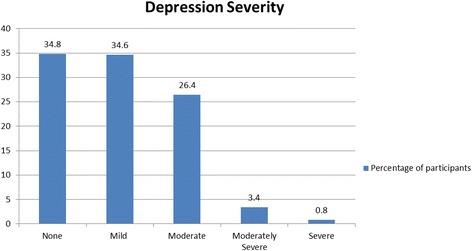
BACKGROUND: Depression is an important contributor to the global burden disease that affects people of communities all over the world. With high level of demands in academics and psychosocial pressure, medical students during their course of training tend to become depressed, leading to problems later in professional life and compromising patient care. In Cameroon, there is lack of data on the prevalence of depression and its impact on medical students. To determine the prevalence and predisposing factors associated with depression among medical students in Cameroon (preclinical and clinical). We also evaluated the impact of depression on self-reported academic performance. METHODS: A cross sectional study was carried out in all 4 state medical schools in 4 different regions from December 2015 to January 2016. Diagnosis of depression, major depression and its associated factors were assessed using the 9-Item-Patient Health Questionnaire (PHQ-9) and a structured questionnaire respectively. We included 618 medical students (response rate: 90.4%). RESULTS: About a third of them (30.6%, 95% CI: 22.8-36.7) were found to have major depressive disorder (PHQ Score ≥ 10). With regards to the severity of depression, 214 (34.6%), 163 (26.4%), 21 (3.4%), and 5 (0.80%) students were classified as having mild, moderate, moderately severe and severe depression respectively. The presence of a chronic disease (OR: 3.70, 95% CI: 1.72-7.94, p = 0.001), major life events (OR: 2.17, 95%CI: 1.32-3.58, P = 0.002), female gender (OR: 1.59, 95% CI: 1.06-2.37, p = 0.024) and being a student at the clinical level (OR: 4.26, 95% CI: 2.71-6.71, p < 0.001) were independently associated with depression. There was no association between depression and self-reported academic performance, (OR: 1.2, 95% CI: 0.9-1.7, p = 0.080). CONCLUSION: The prevalence of major depressive disorders among medical students in Cameroon is high and is associated with the presence chronic disease, major life events, female gender and being a student at the clinical level. So we recommend clinicians attending to medical students with demographic features suggestive of greater risk of depression, to make an in depth investigation on the possible presence of depression. Despite this high prevalence of major depression among medical students, it was not associated with self-reported academic performance.
Overview
The claims and statistics of this paper haven’t been checked yet.
Free: it reads the open-access text and checks the first 5 claims that cite a source we can check. Create a free account to check every claim.
Integrity signals
Registry
Cites
Statistics
Figures
Verification
Claims the paper makes
The claims and statistics of this paper haven’t been checked yet.
Free: it reads the open-access text and checks the first 5 claims that cite a source we can check. Create a free account to check every claim.
Claims other papers make about this one
Each is checked against this paper’s own text: does it say what the citing paper says it does?
The source backs part of the claim, not all of it — or backs it for a different population, condition or comparison.
In the citing paper
“Current research by Khan et al. (86) on the undergraduate medical students stated that even though the high occurrence of huge depression between the students, the students GPA is unharmed.”
From Family and Academic Stress and Their Impact on Students' Depression Level and Academic Performance (2022) · cites this paper as [86]
Experimental — accuracy not yet measured
Self-check
Percentages, sums and reported differences re-computed from the paper’s own numbers.
The self-check needs the paper’s full text.
Citations
Cites
The PHQ-9: Validity of a brief depression severity measure
Kroenke, K., Spitzer, R. L., & Williams, J. B. W. (2001) · Journal of General Internal Medicine · doi:10.1046/j.1525-1497.2001.016009606.x · Cited by 44,910
The PHQ-9: A New Depression Diagnostic and Severity Measure
Kroenke, K., & Spitzer, R. L. (2002) · Psychiatric Annals · doi:10.3928/0048-5713-20020901-06 · Cited by 5,898 · cited 1×
“These characteristics plus its simplicity and brevity make the PHQ-9 a useful clinical and research tool [16].”
BackgroundDepression, chronic diseases, and decrements in health: results from the World Health Surveys
Moussavi, S., Chatterji, S., Verdes, E., Tandon, A., Patel, V., & Ustun, B. (2007) · The Lancet · doi:10.1016/s0140-6736(07)61415-9 · Cited by 4,070 · cited 2×
“For these reasons, depression is the leading cause of disability worldwide in terms of total years lost due to disability [2].”
BackgroundDyrbye, L. N., Thomas, M. R., & Shanafelt, T. D. (2006) · Academic Medicine · doi:10.1097/00001888-200604000-00009 · Cited by 2,909 · cited 1×
“Worldwide, it has been demonstrated that 25–90% of medical students are stressed, that is an important determinant of depression [3, 4] leading to a higher prevalence of depression among medical students than general population [5, 6].”
BackgroundStress and depression among medical students: a cross-sectional study
Dahlin, M., Joneborg, N., & Runeson, B. (2005) · Medical Education · doi:10.1111/j.1365-2929.2005.02176.x · Cited by 1,226 · cited 1×
“This fact was supported in study by Dahlin and colleagues in 2005 [21], while other studies have demonstrated marginal increases in depression in female medical students compared to males [20].”
ResultRates of medication errors among depressed and burnt out residents: prospective cohort study
Fahrenkopf, A. M., Sectish, T. C., Barger, L. K., Sharek, P. J., Lewin, D., Chiang, V. W., Edwards, S., Wiedermann, B. L., & Landrigan, C. P. (2008) · BMJ · doi:10.1136/bmj.39469.763218.be · Cited by 1,175 · cited 1×
“In medical doctors, it has been demonstrated that depression affects patient care leading to increase prescription error [8].”
BackgroundDepression: A Global Public Health Concern: (517532013-004)
Marcus, M., Yasamy, M. T., van Ommeren, M. V., Chisholm, D., & Saxena, S. (2012) · PsycEXTRA Dataset · doi:10.1037/e517532013-004 · Cited by 985
Sample Size Estimation: How Many Individuals Should Be Studied?
Eng, J. (2003) · Radiology · doi:10.1148/radiol.2272012051 · Cited by 811
Medical student depression, anxiety and distress outside North America: a systematic review
Hope, V., & Henderson, M. (2014) · Medical Education · doi:10.1111/medu.12512 · Cited by 477
Venkatarao, E., Iqbal, S., & Gupta, S. (2015) · Indian Journal of Medical Research · doi:10.4103/0971-5916.156571 · Cited by 349 · cited 1×
“To prevent depressive symptoms among medical students, decreased self-esteem, selfperceived medical errors and thus improve on the quality of care given to patients, factors associated with depression in medical training should be identified and appropriately tackled [12].”
Background
Research works printed but not linked: 1
- Marcus M, Yasamy MT, van Ommeren M, Chisholm D, Saxena S, others. Depression: a global public health concern. WHO Department of Mental Health and Substance Abuse 2012;1:6–8.
Cited by
Items 101–197 of 197
Depression among Polish medical students and its lifestyle-linked predictors
Drożak, P., Duda, P., Bryliński, Ł., Augustowska, K., Drożak, M., Bura, A., & Rudnicka-Drożak, E. (2021) · Journal of Education Health and Sport · doi:10.12775/jehs.2021.11.07.014 · Cited by 5
Balderas-Vazquez, C. L., Bernal-Morales, B., Garcia-Montalvo, E. A., Vega, L., Herrera-Huerta, E. V., Rodríguez-Landa, J. F., Velázquez-Hernández, J. F., Xotlanihua-Gervacio, M. D. C., & Valenzuela, O. L. (2022) · Frontiers in Psychology · doi:10.3389/fpsyg.2021.666347 · Cited by 4
Harrafa, N., Berrada, B., & Ouahidi, I. (2025) · Journal of Education and Health Promotion · doi:10.4103/jehp.jehp_793_24 · Cited by 5
Ünal, B. Ü., & Marakoğlu, K. (2024) · Healthcare · doi:10.3390/healthcare12111130 · Cited by 7
Sulistiyowati, L., Fitrikasari, A., Wardani, N. D., & Sarjana, W. (2022) · Jurnal Psikiatri Surabaya · doi:10.20473/jps.v11i1.28009 · Cited by 4
Medical students’ mental health state during pandemic COVID-19 in Indonesia
Primatanti, P. A., Turana, Y., Sukarya, W. S., Wiyanto, M., & Duarsa, A. B. S. (2023) · Bali Medical Journal · doi:10.15562/bmj.v12i2.4104 · Cited by 7
Hubungan Tingkat Kecerdasan Emosi Dengan Derajat Depresi Pada Mahasiswa Kedokteran
Ramdhani, S. F., Fanani, M., & Nugroho, D. (2020) · WACANA · doi:10.13057/wacana.v12i1.171 · Cited by 11
Factors Associated with Depression, Anxiety and Stress Levels among Medical Students
Konar, N. M. (2020) · Ankara Medical Journal · doi:10.5505/amj.2020.35761 · Cited by 7
Mahmoud, M. A. (2023) · Frontiers in Psychiatry · doi:10.3389/fpsyt.2023.1286283 · Cited by 3
Altaş, Z. M., Kaya, C., Özel, F., & Topuzoǧlu, A. (2020) · Eskişehir Türk Dünyası Uygulama ve Araştırma Merkezi Halk Sağlığı Dergisi · doi:10.35232/estudamhsd.701164 · Cited by 4
Sarango, C. G. R., Palacios, M. S. S., Cordova, T., Peña, M. K. Z., & Dutan, A. A. A. (2022) · South Florida Journal of Development · doi:10.46932/sfjdv3n1-069 · Cited by 3
Ramu, S. S., Gurupatham, D., Babu, G. C., Mohan Kumar, M., & Shanmugam, J. (2023) · Indian Journal of Community Health · doi:10.47203/ijch.2023.v35i03.012 · Cited by 4
Verma, V., Afaque, S. F., Gupta, B., Chand, S., Narayandas, D. K., & Agrawal, U. (2024) · Cureus · doi:10.7759/cureus.61487 · Cited by 6
“These include age [4], lack of social support [5], female sex [6], family history of depression [6], socioeconomic status [6], chronic disease [7], major life events [7], and substance abuse [8].”
BackgroundTHE MENTAL HEALTH OF FIRST- AND FINAL-YEAR PRECLINICAL MEDICAL STUDENTS
Stephanie, M., & Surjadi, C. (2020) · Jurnal Pendidikan Kedokteran Indonesia The Indonesian Journal of Medical Education · doi:10.22146/jpki.52417 · Cited by 5
Assessment of depressive symptoms among students at Al-Kindy College of Medicine in Baghdad
Hanoon, Y. K., & Habib, H. A. (2021) · Family Medicine & Primary Care Review · doi:10.5114/fmpcr.2021.108195 · Cited by 4
“But disagreed with another study that supports such a strong association between the presence of chronic disease and depressive symptoms since chronic diseases affect the quality of life and put more stress on the student in addition to the medical study difficulties [18].”
Anyayo, L. G., Kabunga, A., Ponsiano, O., Okalo, P., Apili, B., & Nalwoga, V. (2022) · Insights on the Depression and Anxiety · doi:10.29328/journal.ida.1001029 · Cited by 5
“However, our result was lower than 74.2% reported in Pakistan [24], 78.4% in Egypt [25], 50% observed in Cameroon [26], and 65.2% in Sudan [27].”
BackgroundInfluentialPrevalence of Depression and Academic Performance among Medical Students: A Systematic Review
Nkporbu, A. K., & Ayodeji, O. (2022) · Journal of Biomedical Research & Environmental Sciences · doi:10.37871/jbres1502 · Cited by 4
Alshahrani, A. M., Alshahrani, M. S., Alharthi, M. H., Alamri, M. M. S., & Ibrahim, M. E. (2023) · World Family Medicine Journal/Middle East Journal of Family Medicine · doi:10.5742/mewfm.2023.95256086 · Cited by 3
Sonkoue, M. P., Kadia, B. M., Baame, M., Djouda, C. D., & Ateudjieu, J. (2020) · medRxiv · doi:10.1101/2020.02.29.20029405 · Cited by 5
Yusfi, H., Fitri, A. D., Bayu, W. I., Destriana, D., & Solahuddin, S. (2023) · Edu Sportivo/Edu Sportivo · doi:10.25299/es:ijope.2023.vol4(2).12428 · Cited by 3
Yang, Y., Granlund, M., Tao, F., Tao, S., Zou, L., Enskär, K., Wu, X., & Hong, J. (2024) · Acta Psychologica · doi:10.1016/j.actpsy.2024.104430 · Cited by 3
“Individual risk factors included age (Long et al., 2016), gender (Assari, 2017; Long et al., 2016; Ngasa et al., 2017), level of physical activity (Hosen et al., 2021), quality of sleep (Awasthi et al., 2020), and exposure to major adverse events in the preceding year (e.g., family conflicts,…”
Yang, Z., Zeng, L., Li, H., Chen, R., Ma, J., Min, X., & Yu, J. (2025) · Journal of Clinical Neuroscience · doi:10.1016/j.jocn.2025.111343 · Cited by 2
Nkouonlack, C., Atemlefac, T. A., Tendonglefac, N. M., Nkoké, C., Denis, T., Fufi, N. C., Arnuld, M., Monono, N., & NJAMNSHI, A. K. (2025) · Open Journal of Depression · doi:10.4236/ojd.2025.143004 · Cited by 3
Chikezie, U. E., & Okoro, T. E. (2021) · Global Journal of Health Science · doi:10.5539/gjhs.v13n12p12 · Cited by 6
“These range from 10–50% across the various studies (Puthran et al., 2016; Roh et al., 2010; Onyishi et al., 2016; Singh et al., 2010; Ngasa et al., 2017; Nwobi et al., 2009).”
BackgroundInfluentialOppong, E. E., Obese, E., Biney, R. P., Agbalekpor, P., Hanson, P. A., Aboagye, M. Y. A., Adakudugu, E. A., Adanusa, M., Pinkrah, R., Adomah, A. O., et al. (2021) · International Journal of Basic & Clinical Pharmacology · doi:10.18203/2319-2003.ijbcp20213358 · Cited by 2
“They are the leading cause of disease burden in women worldwide.(9) Despite the impact of this on women, the prevalence and consequences of depression and anxiety in women with gynaecologic disorders are understudied although gynaecological disorders affect a large proportion of females of reproductive age.”
BackgroundPhilip, S. T., Thimmapuram, J., Gupta, H., Fatima, T. H., Rahate, S., Yeram, N., Thakur, K., & Thakur, M. K. (2023) · Journal of Health and Allied Sciences NU · doi:10.1055/s-0043-1768588 · Cited by 2
Association between Mir-17-92 gene promoter polymorphisms and depression in a Chinese population
Liang, P., Yang, X., Long, R., Li, Y., Wang, Z., Yang, P., & Liang, Y. (2024) · BMC Medical Genomics · doi:10.1186/s12920-024-01894-8 · Cited by 2
“Depression can also be misdiagnosed and, in addition, detection of mild depression is difficult because symptoms can be confused with symptoms of nervousness under stress [31].”
BackgroundÖnlisans Öğrencilerinin Depresyon ve Gündüz Uykululuk Düzeyi Bakımından İncelenmesi
Şentürk, A. Y., & Okur, E. (2020) · Celal Bayar Üniversitesi Sağlık Bilimleri Enstitüsü Dergisi · doi:10.34087/cbusbed.777565 · Cited by 3
Prevalence of depression among medical students: A Cross-Sectional Study.
Sajjad, W., Samreen, A., Shah, S. A. Y., Batool, A., Umair, M., Ahmad, T., & Abideen, Z. (2021) · The Professional Medical Journal · doi:10.29309/tpmj/2021.28.12.6164 · Cited by 7
“Professional Med J 2021;28(12):1723-1731.”
Psychological Impact of Online Education on University Students
Mostafa, H. E., Alahmadi, D. Y. M., Jorob, S. M. H., Murtada, L., Aloufi, R., Almeshaly, S., & Aloufi, R. (2023) · Open Access Macedonian Journal of Medical Sciences · doi:10.3889/oamjms.2023.10917 · Cited by 3
Альрашдан, И., & Nweke, G. E. (2023) · Психиатрия психотерапия и клиническая психология · doi:10.34883/pi.2023.14.4.006 · Cited by 2
PREVALENCE OF DEPRESSION AMONG MEDICAL STUDENTS IN AFRICA: A SYSTEMATIC REVIEW AND META-ANALYSIS
Pitua, I., Namiiro, A. M., Raizudheen, R., & Apili, L. (2024) · F1000Research · doi:10.12688/f1000research.149103.1 · Cited by 5
Rizg, S. Y., Alkhalid, S. H., Saleh, E. R., Jarwan, R. O., & Alwagdani, R. K. (2021) · Journal of Virology Research & Reports · doi:10.47363/jvrr/2021(2)135 · Cited by 2
PREVALENCE OF DEPRESSIVE SYMPTOMS IN MEDICAL STUDENTS
Rancic, N. K., Kocić, B., Stević, S., Ilic, M. V., Stojanović, M., & Stojanović, M. (2019) · Acta Medica Medianae · doi:10.5633/amm.2019.0403 · Cited by 4
The Current Situation and Influencing Factors of Adversity Quotient of Medical UndergraduatesPreprint
Wang, X., Zhou, Y., Ma, L., Ma, T., Wang, Y., Liu, C., Wang, Q., Zhang, Y., & Dou, X. (2023) · Research Square · doi:10.21203/rs.3.rs-3758823/v1 · Cited by 2
PREDICAMENTS OF PROSTHETISTS & ORTHOTISTS IN PAKISTAN
Ali, F., Mumtaz, N., & Saqulain, G. (2021) · Pakistan Armed Forces Medical Journal · doi:10.51253/pafmj.v71isuppl-1.3513 · Cited by 1
Nair, S. C., Behere, N. S., & Ghosh‐Jerath, S. (2023) · International Journal of Occupational and Environmental Safety · doi:10.24840/2184-0954_007-002_002197 · Cited by 3
“Studies conducted globally show that depression among various sets of healthcare professionals like nurses and medical students ranges from 34 % to 66% (Mbanga et al., 2019) (Njim, Mbanga, et al., 2019) (Ngasa et al., 2017).”
BackgroundInfluentialYang, X., Yu, L., Zhang, S., Wei, Z., Xie, G., & Wang, J. (2024) · Frontiers in Psychology · doi:10.3389/fpsyg.2024.1375698 · Cited by 1
A Descriptive Study of Depressive Disorders among Medical Students in Jalalabad City
Hashimi, S. Z., Kamran, A., Niazi, S., & Rahemi, M. H. (2024) · Nangarhar University international journal of biosciences. · doi:10.70436/nuijb.v3i01.155 · Cited by 1
Shaikh, S., Golawar, S. H., Narlawar, U., Thakre, S. B., Padyal, P., & Jain, M. (2024) · International Journal of Community Medicine and Public Health · doi:10.18203/2394-6040.ijcmph20243782 · Cited by 2
Diep, T. T., Thao, H. P., Luận, T. C., Huong, N. T., & Lien, T. T. X. (2025) · Journal of Public Mental Health · doi:10.1108/jpmh-01-2025-0004 · Cited by 1
Facebook Addiction and Depression Among Students at the University of Douala
Eyoum, C., Moguem, S. T., Massi, D. G., Magnerou, A. M., Doumbe, J. N., Kuate, C. T., & Njankouo, Y. M. (2026) · Annals of Clinical Psychiatry · doi:10.1177/10401237261434902 · Cited by 1
EREN, S. Y., YILDIRIM, Ö., & Şahin, F. (2022) · Uluslararası Anadolu Sosyal Bilimler Dergisi · doi:10.47525/ulasbid.1176721 · Cited by 2
Vincent, S. T., Kareem, M. A., Adeeb, M., & Pachipala, R. (2024) · Georgian Biomedical News · doi:10.52340/gbmn.2024.01.01.64 · Cited by 1
Kadam, V., & p.Dobhal, S. (2024) · International Journal of Allied Medical Sciences and Clinical Research · doi:10.61096/ijamscr.v12.iss1.2024.40-46 · Cited by 2
Assessment of Sleep Quality and Depression Among Medical Students: A Cross-Sectional Study
Alsalloum, T., Alawaisheh, A., Daoud, A., Alnajjar, A. Z., Meky, A., & Funjan, K. (2025) · Avicenna Journal of Medicine · doi:10.1055/s-0045-1815851 · Cited by 2
Ossai, E. N., Nwuzor, A. N., Obayi, O., Onyebara, M., Ekechi, H. N., Eze, I. I., & Igwe, M. N. (2026) · Discover Mental Health · doi:10.1007/s44192-026-00496-3 · Cited by 1
“Contrary to these findings, a study among medical students in Cameroon revealed that being a student in the clinical level of training was associated with depression [36].”
Kirte, R. C., & Fahim, M. (2018) · International Journal of Community Medicine and Public Health · doi:10.18203/2394-6040.ijcmph20181246 · Cited by 1
Akram, N. A., Jameel, N., Bari, S. F., Hussain, M., Qadir, A., & Raza, A. (2020) · ANNALS OF ABBASI SHAHEED HOSPITAL AND KARACHI MEDICAL & DENTAL COLLEGE · doi:10.58397/ashkmdc.v25i3.363 · Cited by 1
Kumar, S., Verma, V., Kushwaha, U., & Arya, A. (2022) · Asian Journal of Medical Sciences · doi:10.3126/ajms.v13i6.44470 · Cited by 1
Čanković, S., Mijatović-Jovanović, V., Harhaji, S., Šušnjević, S., Ukropina, S., Kvrgić, S., & Čanković, D. (2022) · Vojnosanitetski pregled · doi:10.2298/vsp220209046c · Cited by 2
Talukder, A., Hasan, M. M., Haq, I., & Islam, S. M. S. (2022) · Minerva Psychiatry · doi:10.23736/s2724-6612.21.02167-9 · Cited by 1
แซ่ไว่, ช. (2023) · Ramathibodi Medical Journal · doi:10.33165/rmj.2023.46.3.263528 · Cited by 1
Bakri, N. H. S., Razi, N. A. N. M., Ahmad, M. F., Safwan, N. S. Z., Dahlan, N. D., & Mokhtar, U. K. M. (2024) · Information Management and Business Review · doi:10.22610/imbr.v16i2(i).3808 · Cited by 1
“A past study found that there is a significant association between depression and self-reported academic performance among medical students in Camerron (Ngasa et al., 2017).”
BackgroundDias, P., Babu, N. K., & Ramesh, N. (2025) · International Journal of Health Sciences and Research · doi:10.52403/ijhsr.20250122 · Cited by 1
Prevalence and factors associated with depression among the students of a medical college in Kerala
Madhusudan, M., Aravind, M. S., Gopi, A., Ajanya, V., Pradeep, V., Mangaladan, U. F., & Hussain, O. S. (2018) · Indian Journal of Public Health Research & Development · doi:10.5958/0976-5506.2018.01807.7 · Cited by 2
Gavurová, B., Rigelský, M., & Ivanková, V. (2021) · IntechOpen eBooks · doi:10.5772/intechopen.96469 · Cited by 1
Sonkoue, M. P., Ze, L. E. E., Miranda, B. E., Tah, R. M., & Kadia, B. M. (2020) · medRxiv · doi:10.1101/2020.11.29.20214544 · Cited by 3
“6% [9] respectively.”
Ngasa, S. N., Sama, C., Dzekem, B. S., Chang, N., Tindong, M., & Neba, K. N. (2020) · doi:10.21203/rs.3.rs-15820/v1 · Cited by 1
“The later studies (Mohammed et 2017 and Ngasa et al 2017) also used much larger sample size and these studies employed a sample size calculation unlike the first study.”
ResultSelf-citationLiao, T., Tang, Y., Yang, X., Gao, Y., Liu, Y., Zhu, P., Tao, F., & Shao, S. (2022) · Research Square · doi:10.21203/rs.3.rs-2112901/v1 · Cited by 1
Illán-Cortadelles, C., Ramírez-Saco, D., Serrano-Sarbosa, D., & Garre‐Olmo, J. (2025) · Research Square · doi:10.21203/rs.3.rs-7983625/v1 · Cited by 1
Orok, E. N., Okuoru, W., Oni, O. I., Ojo, T. F., Oluwadare, T., Bamitale, T., Jaiyesimi, B., Akinjisola, A., & Apara, T. (2023) · Research Square · doi:10.21203/rs.3.rs-3542029/v1 · Cited by 2
Hamid, F., Moosa, S. A., Quaium, S. M. M. A., & Haque, A. K. F. (2020) · International Journal of Research in Medical Sciences · doi:10.18203/2320-6012.ijrms20203663 · Cited by 2
“3%.(9,10) A systematic review conducted outside North America showed variable prevalence between 6 and 66.”
BackgroundFrecuencia de depresión en estudiantes de medicina de la Universidad Nacional de Caaguazú, 2017.
Rodríguez, A., & Ríos-González, C. M. (2019) · Medicina Clínica y Social · doi:10.52379/mcs.v2i3.60 · Cited by 7
Henao, G., & Alejandra, M. (2021) · Cited by 1
Ray, S., & Pal, A. K. (2021) · GLOBAL JOURNAL FOR RESEARCH ANALYSIS · doi:10.36106/gjra/8305247
Mascaro, J. S., Shellman, D., Keaton, W. A., Willson, M., Brauer, E., Samphel, T., Chang, H., Raison, C. L., Zivot, J., & Eisen, A. (2021) · Frontiers in Communication · doi:10.3389/fcomm.2021.752820 · Cited by 2
Fatima, I., Nadeem, M., Naeem, M. W., & Raza, H. M. Z. (2021) · World Journal of Advanced Research and Reviews · doi:10.30574/wjarr.2021.12.2.0600 · Cited by 1
“According to The transactional theory of stress and coping that if a person possesses good coping skills than stressor has little impact on him and if coping is ineffective than may have damaging results for person’s psychological health and social functioning [18].”
BackgroundPrevalence of depression symptoms among Tibetan Buddhist monastic science scholars in IndiaPreprint
Mascaro, J. S., Shellman, D., Samphel, T., Chang, H., Zivot, J., & Eisen, A. (2020) · Research Square · doi:10.21203/rs.3.rs-38653/v1 · Cited by 1
“Other studies nd associations between nutritional status, adiposity, and physical activity and rates of depression (14, 44, 47).”
BackgroundPrevalencia de depresión y factores asociados, en estudiantes de Medicina, Cuenca - Ecuador, 2019
Sarango, C. G. R., Palacios, M. S. S., Cordova, T., Jaen, J. J. M., & Cárdenas, V. T. N. (2022) · South Florida Journal of Development · doi:10.46932/sfjdv3n2-129
Kusar, S., Ayub, T., Faridi, T. A., saeed, S. U., Fatima, W., Ishfaq, A., Kiran, A., & Gilani, S. A. (2023) · Pakistan Journal of Health Sciences · doi:10.54393/pjhs.v4i01.64
Alrehaili, M. A., Aloufi, R. A., & Khan, A. H. (2022) · Journal of Family Medicine · doi:10.26420/jfammed.2022.1295
Prevalence of Anxiety and Depression among Orthopedic Trauma Inpatients
Mehdi, M., Ali, W., Qasim, M. F., Saidullah, A., Farooq, R., & Munir, A. (2022) · Pakistan Journal of Medical and Health Sciences · doi:10.53350/pjmhs20221612734
Liao, T., Tang, Y., Yang, X., Gao, Y., Liu, Y., Pan, G., Zhu, P., Tao, F., & Shao, S. (2023) · Research Square · doi:10.21203/rs.3.rs-2994921/v1
IMPACT OF COVID 19 ON ACADEMICS, MENTAL HEALTH AND SOCIAL LIFE OF MEDICAL STUDENTS
Alam, A., Nisar, S., Khan, I. A., Usama, U., Usman, J., Khan, T., Khan, A., Tariq, K., Mahnoor, Naseer, A., et al. (2022) · Journal of Khyber College of Dentistry · doi:10.33279/jkcd.v12i03.44
Niman, S., Parulian, T. S., Sibarani, D., Siagian, I. O., & Lee, K. Y. (2023) · New Voices in Psychology · doi:10.25159/2958-3918/14543
“Depression is a mental disorder characterised by loss of interest and pleasure, decreased energy, feelings of guilt, low self-esteem, sleep disorders, no appetite and lowered ability to concentrate (Ngasa et al., 2017).”
BackgroundDepression causes among medical students at KUMS: A quantitative study
Ehsan, H., Suzan, H., Dalil, L., Ahmadi, N., & Hoda, B. A. (2023) · Southeast Asian Journal of Health Professional · doi:10.18231/j.sajhp.2023.021
The Perceived Nursing Students’ Psychological Health Issues of Depression and Academic StressorsPreprint
Andargeery, S. Y. (2024) · Research Square · doi:10.21203/rs.3.rs-3989105/v1
Anais do VII Fórum Internacional de Diálogos e Práticas Interprofissionais em Saúde (FONDIPIS)
Unida, R. (2024) · Saúde em Redes · doi:10.18310/2446-4813.2024v10nsup1.4517
Çiftçi, M. Ç., & Tutuk, S. P. M. (2024) · Research Square · doi:10.21203/rs.3.rs-4075404/v1
RetractedFAMILY MEALTIME AND ITS CORRELATION WITH DEPRESSIVE DISORDER
Saifi, A. B. J., Abrar, A., Dars, J. A., & Adhami, Z. (2022) · Journal of Pakistan Psychiatric Society · doi:10.63050/jpps.19.02.150
Prevalence of Depression and Anxiety among Pharmacy Students in Libya
Aljabo, S. A., Masklandi, A. Q., & Almokdmi, N. (2024) · Attahadi Medical Journal · doi:10.69667/amj.24104 · Cited by 2
Adolescence Mental Health in School and University
Permana, I., & Susanti, H. (2024) · Frontiers research topics · doi:10.3389/978-2-8325-5237-7 · Cited by 1
Prevalencia del estado depresivo en estudiantes de medicina: una revisión sistemática
Lopes, F. R., Gallassi, A., Lino, L. A., & Mendes, L. M. C. (2025) · Contribuciones a las Ciencias Sociales · doi:10.55905/revconv.18n.2-313
Relationship between Students’ Depression and their Academic Performance at University Level
Shaheen, M. N. U. K., Abid, S., Shaukat, M., Akhter, K., & Farooq, S. (2025) · The regional tribune. · doi:10.55737/trt/wr25.116
KEUAGHO, L.-A. T., Njonnou, S. R. S., MAPA-TASSOU, C., Guimsop, D. K., Atchou, J. G. B., Lekpa, F. K., Ouankou, C. N., TEINTANG, L. F., Mbongo’o, G. C. N., Gustave Georges, M. B. O. E., et al. (2025) · Research Square · doi:10.21203/rs.3.rs-7151859/v1
Rong, R., Chen, W., Dai, Z., Gu, J., Chen, W., Zhou, Y., Kuang, M., & Xiao, H. (2021) · Figshare · doi:10.6084/m9.figshare.14954466
Lu, Y., Li, Z., Qin, K., Chen, J., Zeng, N., Yan, B., & Liu, D. (2024) · Figshare · doi:10.6084/m9.figshare.25132116
Rong, R., Chen, W., Dai, Z., Gu, J., Chen, W., Zhou, Y., Kuang, M., & Xiao, H. (2021) · Figshare · doi:10.6084/m9.figshare.14954463
Muleya, C., Tembo, N. N., Mukuka, S., Sakala, S., Maparuri, T., Pual, H., Muchimba, V., Ncheka, J. M., & Paul, R. (2026) · medRxiv · doi:10.64898/2026.02.12.26346135
Wandera, S. O., Nankinga, O., Ndugga, P., Namugenyi, C., Ashaba, C., Nakasujja, N., Kasujja, R., Agyapong, B., & Agyapong, V. I. O. (2026) · JMIR Research Protocols · doi:10.2196/84637
“Behavioral factors include substance use, excessive social media engagement, and relationship problems [20-22].”
Rashid, F., Noor, I., Najeeb, W., Siddiqui, H. R., & Ali, H. M. (2026) · Research Square · doi:10.21203/rs.3.rs-9666691/v1
Prevalence of Depression among Medical Students in Aden, Yemen: A Cross-Sectional StudyPreprint
Assiri, A., Gubran, A. N. M., Al-Qattib, S., El-Husseiny, F., Nasser, A. B., Thambri, S., Mohammed, H. A. A., & Ali, N. T. (2026) · Research Square · doi:10.21203/rs.3.rs-10092508/v1
Prevalence And Factors Associated With Depression Among Medical Students
Abbas, H., & Hamna, S. (2026) · JAIMC Journal of Allama Iqbal Medical College · doi:10.59058/jaimc.2026.24.2.97
Orok, E. N., Okuoru, W., Oni, O. I., Ojo, T. F., Oluwadare, T., Bamitale, T. D., Jaiyesimi, B., Saka, A., & Apara, T. (2026) · Discover Psychology · doi:10.1007/s44202-026-00823-3
“Gender, socioeconomic status, and family structure have also been identified as key determinants of student mental health [25, 26].”
Oyetola, E. O., Jagunmolu, H. A., Adeyemo, R. O., Oyelude, S. O., Lawal, Y. A., Lawal, R. A., Okelola, F., Ogundiran, V. O., & Ajagbe, K. A. (2026) · Discover Public Health · doi:10.1186/s12982-026-02873-3
“The overall experience of an academically challenging and psychosocially stressful experience makes medical students more susceptible to depression as they progress with their course of medical studies, with implications for overall professional competence and quality of patient care [20, 21].”
Prevalence and risk factors of depression and anxiety among Yemeni students in Saudi universities
Abbad, A. A. B., Alasheq, A., Bokir, M., Balafkhar, R. M., Binyamani, F., Aldabek, S., Makarem, Z. A. A., Binsaeedu, A. S., Tamim, H., Alghalyini, B., et al. (2026) · Scientific Reports · doi:10.1038/s41598-026-63348-8
“Our sample spans a narrow band, most participants are older than 24, and educational level is entangled with age, so a null result here carries little information.”
Influential
Metadata
- Authors
- Ngasa, S. N., Sama, C.-B., Dzekem, B. S., Nforchu, K. N., Tindong, M., Aroke, D., & Dimala, C. A.
- Affiliations
- Université Libre de Bruxelles (BE)
- Mubende Hospital (UG)
- London School of Hygiene & Tropical Medicine (GB)
- Corresponding author
- Ngasa, Stewart Ndutard
- ORCID
- Venue
- BMC Psychiatry
- Published
- 2017-06-09
- Volume
- 17
- Issue
- 1
- Pages
- 216-216
- ISSN
- 1471-244X (ISSN-L)
- PMC
- PMC5466797
- OpenAlex
- W2623980461
- Semantic Scholar
- 8e3f0df36767f534d23c9387a2b7a7da7a6bac85
- Cited by
- 192
- References
- 24
- Citations by year
- 2026: 11 · 2025: 9 · 2024: 28 · 2023: 24 · 2022: 28 · 2021: 29 · 2020: 36 · 2019: 13 · 2018: 14
- FWCI
- 27.93
- Type
- journal article
- Language
- en
- Open access
- gold
- doi.org
- Licence
- cc-by
- Locations
- BMC Psychiatry (publishedVersion, cc-by)
- Europe PMC (PubMed Central) (publishedVersion, other-oa)
- PubMed Central (publishedVersion, cc-by)
- PubMed (publishedVersion)
- DOAJ (DOAJ: Directory of Open Access Journals) (submittedVersion, cc-by-sa)
- Topics
- Health Sciences › Health Professions › General Health Professions › Healthcare professionals’ stress and burnout
- Health Sciences › Medicine › Psychiatry and Mental health › Mental Health Treatment and Access
- Social Sciences › Education › Innovations in Medical Education
- Keywords
- depression, medical students, prevalence, risk factors, major depressive disorder, academic performance, chronic disease, life events, gender differences, clinical year students, Cameroon, PHQ-9, mental health of medical students, student mental health services, student support services, peer support
- MeSH terms
- Adult, Cameroon, Cross-Sectional Studies, Depression, Depressive Disorder, Major, Major Depressive Disorder, Female, Humans, Male, Surveys and Questionnaires, Schools, Medical, Students, Medical, Prevalence, Young Adult, Self Report
About these checks
Registry, retraction, Cites and statistics results are computed, not judged, with one exception: a printed reference that no index lists is read once by a model before it counts as a citation error. Claims are extracted by a model and kept only when their quote appears verbatim in the text; each cited source is then checked, with a model’s help, for whether it says what the claim relies on. Those verdicts can be wrong — read the claim’s quote and the cited source before relying on one.
Statistics and arithmetic are recomputed, not judged.
Confidence bands are shown only for fields calibrated on our annotated test set. None is calibrated yet, so no band is shown.
What counts as a claim ›How we measure confidence ›How we check this ›
Are you an author, or do you see a problem with this page? Request a review
Data sources
Bibliographic data: Semantic Scholar, OpenAlex, Crossref.
Contains information from the Semantic Scholar Academic Graph Datasets, made available under the ODC Attribution License (ODC-BY 1.0).
Semantic Scholar’s data is described in: Kinney, R., et al. (2023). The Semantic Scholar Open Data Platform. arXiv:2301.10140.
