

eHealth interventions for the prevention of depression and anxiety in the general population: a systematic review and meta-analysis
Open accessThe DOI matches its Crossref record; 77 of the 78 references it cites were found in a registry or an index; 3 of the 23 sources its claims cite were checked for support.
Abstract
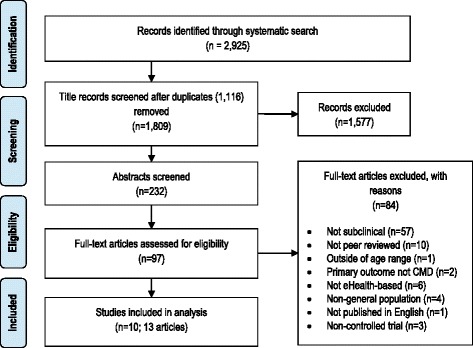
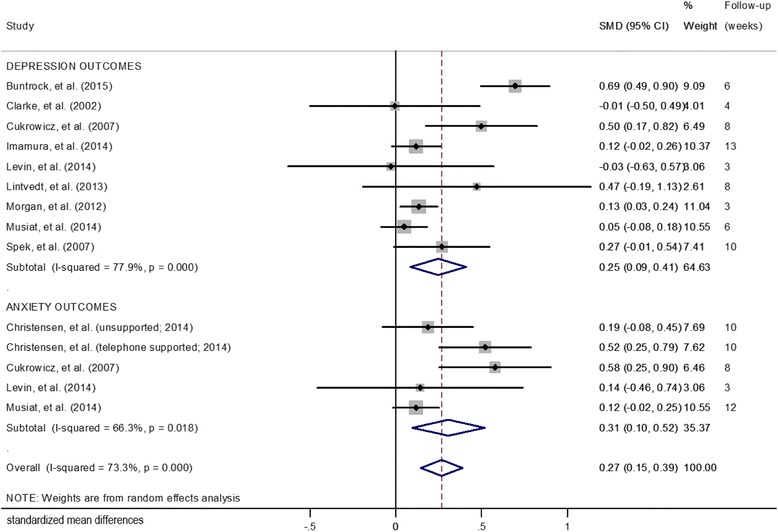
BACKGROUND: Anxiety and depression are associated with a range of adverse outcomes and represent a large global burden to individuals and health care systems. Prevention programs are an important way to avert a proportion of the burden associated with such conditions both at a clinical and subclinical level. eHealth interventions provide an opportunity to offer accessible, acceptable, easily disseminated globally low-cost interventions on a wide scale. However, the efficacy of these programs remains unclear. The aim of this study is to review and evaluate the effects of eHealth prevention interventions for anxiety and depression. METHOD: A systematic search was conducted on four relevant databases to identify randomized controlled trials of eHealth interventions aimed at the prevention of anxiety and depression in the general population published between 2000 and January 2016. The quality of studies was assessed and a meta-analysis was performed using pooled effect size estimates obtained from a random effects model. RESULTS: Ten trials were included in the systematic review and meta-analysis. All studies were of sufficient quality and utilized cognitive behavioural techniques. At post-treatment, the overall mean difference between the intervention and control groups was 0.25 (95% confidence internal: 0.09, 0.41; p = 0.003) for depression outcome studies and 0.31 (95% CI: 0.10, 0.52; p = 0.004) for anxiety outcome studies, indicating a small but positive effect of the eHealth interventions. The effect sizes for universal and indicated/selective interventions were similar (0.29 and 0.25 respectively). However, there was inadequate evidence to suggest that such interventions have an effect on long-term disorder incidence rates. CONCLUSIONS: Evidence suggests that eHealth prevention interventions for anxiety and depression are associated with small but positive effects on symptom reduction. However, there is inadequate evidence on the medium to long-term effect of such interventions, and importantly, on the reduction of incidence of disorders. Further work to explore the impact of eHealth psychological interventions on long-term incidence rates.
Verification finished with gaps
Some checks didn’t finish. The results below cover the steps that did.
- Registry recordVerified
- Full textRead the full text
- Reference list77 references found
- Reference check77 of 77 references checked
- StatisticsRecomputed
- Claims55 claims anchored to a quote
- Cited sourcesChecked
- Self-checkDidn’t finish — the rest of the report still applies.
- VerificationFindings verified
Overview
CoChat Summary
## TL;DR
This systematic review and meta-analysis found that eHealth prevention interventions for depression and anxiety produced small but positive short-term symptom reductions. Evidence was inadequate for medium- to long-term effects and for reducing disorder incidence.
## Key findings
- The review included 10 independent samples from 13 articles, with a total of 4522 relevant participants.
- At post-treatment, the pooled effect was 0.25 for depression outcomes (95% CI 0.09 to 0.41; p = 0.003) and 0.31 for anxiety outcomes (95% CI 0.10 to 0.52; p = 0.004), indicating small positive effects.
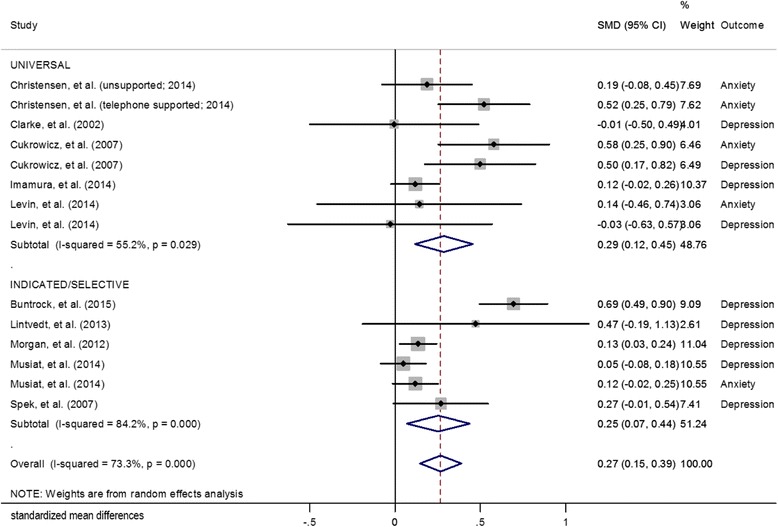
- For prevention type, pooled post-intervention effects were similar for universal programs (0.29; 95% CI 0.12 to 0.46; p = 0.001) and indicated/selective programs (0.25; 95% CI 0.07 to 0.44; p = 0.007).
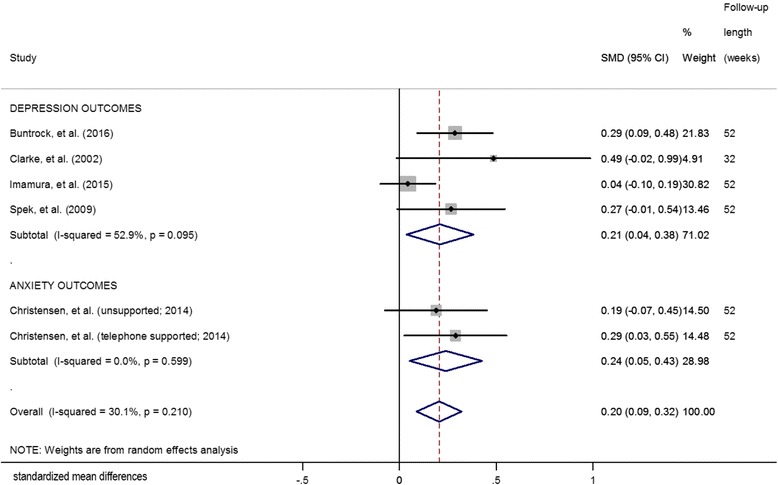
- Follow-up evidence was limited: depression studies at ≥6 months showed a pooled effect of 0.21 (95% CI 0.04 to 0.38; p = 0.02), but 12-month incidence for depression was not statistically significant (RR 0.42; 95% CI 0.13 to 1.35; p = 0.15); for anxiety, only one study had follow-up longer than 6 months.
## Methods
- Systematic review and meta-analysis of randomized controlled trials of eHealth psychological interventions for prevention of depression/anxiety in the general population, searching PubMed, PsycINFO, EMBASE, and Cochrane Library for studies published from 2000 to January 2016.
- Included subclinical or nonclinical samples aged 18 to 64 years; interventions had to be eHealth-based and compared with a control group. Excluded non-peer-reviewed, uncontrolled, non-English, child/adolescent, elderly, and non-general-population studies.
- Effects were synthesized using random-effects meta-analysis with standardized mean differences (SMDs) for symptom outcomes and risk ratios (RRs) for incidence outcomes; study quality was assessed with a modified Downs and Black checklist.
## Limitations
- The paper states that too few studies were available to compare theoretical approaches, prevention types, and other intervention elements, and that high heterogeneity limited interpretation of pooled estimates.
- The authors note that outcomes were mostly self-report symptom measures, so conclusions are largely limited to symptom reduction rather than clinical diagnosis.
- They also state that excluding non-English and unpublished studies may have missed relevant evidence.
- Evident from the text: only two studies reported 12-month incidence outcomes, and only one anxiety study had follow-up longer than 6 months, so long-term prevention effects are very sparsely tested.
Model-written summary. Check it against the paper before relying on it.
Integrity signals
Registry
Cites
Statistics
Figures
Verification
Claims the paper makes
3 Valid · 1 Not valid · 12 Not checked · 39 Own results and interpretations
The cited sources support only part of this claim — read each source’s verdict below.
In the paper
“It is consistently shown that eHealth interventions that include some form of guidance are associated with larger effect sizes than those that do not [60]”
§ eHealth interventions for the prevention of depression and anxiety in the general population: a systematic review and meta-analysis > Discussion This is the first systematic review and meta-analysis examining randomized controlled trials of eHealth interventions aimed at preventing depression and anxiety in the general population. Our results were drawn from ten randomised controlled studies with fair to good quality. Results indicate that a range of different cognitive behavioural programs produce small, but overall positive effects on symptom reduction for anxiety and depression, at both an indicated/selective and universal prevention level. Although the effect sizes among eHealth prevention interventions appear to be smaller than that reported for face-to-face prevention interventions [53], eHealth has potential for more reach with fewer resources. Indeed, eHealth technologies may be able to overcome a range of financial, geographic, and time barriers that have previously existed in this area. As such, these symptom effects may have considerable impact at a population level. Furthermore, considering the prevalence [54] and impairment associated with even subsyndomal disorders [55–57], this effect has the potential to make meaningful change. Prevention interventions are never likely to produce large individual effect sizes, as they are delivered to the mass populations who are not unwell, but when translated to a population level, the overall impact of these small effects can be substantial and result in dramatic improvements in public health outcomes [58]. The eHealth prevention interventions included in this meta-analysis produced similar pooled mean effect sizes for both depression and anxiety outcomes. This may be a consequence of the overlap in symptoms between these conditions [59] and the lack of diagnostic outcomes used. The majority of studies utilised some form of CBT, with behavioural, mindfulness, and problem-solving components often a major focus. It is consistently shown that eHealth interventions that include some form of guidance are associated with larger effect sizes than those that do not [60], interestingly, the degree of support provided for this sample was relatively minimal, and the heterogeneous nature of this support prohibited further exploration. Although reminders were consistently used in the studies reviewed, few provided any form of therapist feedback. This is of particular relevance when considering adherence rates and overall effectiveness, as subclinical populations (such as those studies here) have been said to lack intrinsic motivation for completing the programs evoked by a diagnostic treatment imperative [61]. Despite the relatively minimal guidance provided among the prevention studies, program adherence was moderate across the studies and not dissimilar to that of clinical studies [62, 63]. Overall, similar effectiveness was found across the universal and selected/indicated eHealth prevention interventions. Although there is some evidence to suggest selected/indicated interventions might be more successful that universal approaches [64, 65], the majority of published studies in this area utilise school-based populations. Furthermore, many universal interventions may not be appropriately powered to find such effects as the sample size required for universal prevention can be overwhelming [66, 67]. The findings presented here are in line with those of Jane-Llopis and colleagues [68], and cast some doubt on the categorical superiority of selected/indicated interventions within the general population. What is evident from this review is not only the lack of true eHealth prevention trials published in the literature [17, 69], but of those trials that do specifically target a non-clinical sample (be it universal, selective, or indicated prevention), the primary (and in most cases the only) relevant outcome is short-term symptom reduction rather than a decrease in disorder incidence. Three depression studies [40, 41, 52] and one anxiety study [43] reported medium to long-term follow-up, with 12-month incidence rates reported for only two studies [41, 52]. While each of the studies that examined depression diagnosis as an outcome reported significant differences at 12-months, when both were included in a meta-analysis the overall effect fell short of statistical significance. As such, there is inadequate evidence to suggest that eHealth interventions have an effect on long-term outcomes (especially for anxiety) and disorder incidence rates. One of the key issues in conducting prevention trials is the sample sizes required to gain sufficient statistical power. For instance, it has been suggested that to demonstrate that a universal prevention program could reduce the rates of new onset depression over 12 months by 15%, the number of subjects required amounts to tens of thousands [13]. Furthermore, accurate diagnostic-based prevention within automated eHealth interventions is rare as this requires assessment contact with research staff, diminishing some key benefits of eHealth interventions (anonymity, low cost). Finally, the mental illness prevention field is relatively new [15], and although there has been promising results on the feasibility of prevention as a way of reducing the incidence and overall burden of common mental disorders at a community level, eHealth is also in its infancy [17]. The main strengths of this review include a detailed systematic search strategy and the objective assessment of the methodological rigor of each included study. Despite these strengths, there are a number of other limitations to this review. First, due to the limited number of studies, comparison of different theoretical approaches, different forms of prevention (universal, selective, or indicated), and other elements was difficult. Indeed, although this meta-analysis reported similar effectiveness among the universal and indicated/selective eHealth prevention interventions, there are classification issues that make interpretation difficult. For instance, due to the opt-in nature of research trials it is possible that the universal programs do not accurately reflect true universal prevention, as those taking part in such studies may have had symptoms of concern, which provided motivation for initial engagement. Conversely, some selective interventions of non-generalised populations were excluded from the review (e.g., postnatal, chronic pain), as they are often associated with fundamental differences which are likely to preclude the translation of such programs to other populations. Additionally, it would have been advantageous to make specific comparisons of differing theoretical approaches in order to determine which held most effectiveness in prevention, again limited numbers precluded this exploration. Similarly, the limited number of interventions and different types of techniques used may explain the heterogeneity observed in the data. The high levels of heterogeneity suggest treatment effect estimates vary among the studies, which may be due to different intervention content, engagement or difference in the populations sampled. While we utilised random effect models to help account for this, the remaining heterogeneity places some limitations on the interpretation of the pooled effect size, which may not be an accurate summary of the effects in all interventions. Secondly, as mentioned, self-report measures were the primary outcome in all studies, and therefore, conclusions are largely limited to reductions in symptoms rather than clinical diagnosis. Thirdly, as study populations were randomized, we conducted the meta-analysis under the assumption that there was no pre-test difference in scores for the control and treatment groups. Most studies reviewed tested for this and reported that no significant differences were present in the pre-test scores; however, in studies that did not, or where subgroups were used, this assumption may not hold [47]. Finally, as non-English publications and non-published articles were excluded, there is a possibility that such studies published in other languages or in the grey literature may have not been identified. Although beyond the scope of this review it is important to note that one final limitation in evaluating effective prevention in this area is that of the search strategy [70]. The search specifically aimed to look at mental health disorders, however, this may have omitted relevant studies of wellbeing, or other less diagnostic studies (e.g., [71]). In short, these studies tend to measure reductions in the risk of illness by measuring symptoms of illness. In doing so the prevention techniques used were all ‘therapeutic’ (i.e., treatments intended to relieve or heal a disorder). This is a limitation across the clinical field of mental health prevention, as conditions lie on a spectrum and there is no accepted modifiable risk marker that is indicative of future illness. It would be useful to better understand the impact of CMD prevention interventions that do not target symptoms and whether other (non-therapeutic) techniques are effective (e.g., [72]). However, there is scepticism around the efficacy of wellbeing interventions as prevention [73]. Again, although beyond the scope of this review, a popular setting for prevention interventions is within school settings [74–77], due to the advantages of access and ease with which such programs can be incorporated into the curriculum. Modern workplaces are becoming increasingly aware of the cost and impact of mental illness at an employee level, and initiatives in this area may lead to the workplace becoming an equivalent location where working-age adults can be engaged [33, 78].
What the sources say
- Partly supportedcites [60] Johansson R Andersson G Internet-based psychological treatments for depression Expert Rev Neurother 2012 12 861 870 10.1586/ern.12.63 22853793 sourceExperimental — accuracy not yet measured
The 'How important is guidance in guided ICBT?' section states exactly the attributed substance for internet-based psychological treatment: average between-group effect sizes rose with degree of support (d = 0.21, 0.44, 0.58, 0.76; Spearman rho = 0.64, p < 0.01, 'more support yields larger effects'), and the conclusion reads 'there is now a strong support for the claim that guided internet-based psychological treatments are more effective than unguided treatments', reinforced by the Key issues bullet and the reported 2009 meta-analysis contrast (guided d = 0.61 vs unguided d = 0.25) in 'The overall effect of ICBT for depression'. The unsupported part is the scope: our copy's evidence is confined to ICBT/internet-based psychological treatments for depression (with a note that anxiety-focused meta-analyses are only cited secondhand), so it does not establish the claim for 'eHealth interventions' in general, and the same section concedes 'the question is debated' and that guidance effects may be moderated by pretreatment contact, which is weaker than 'consistently shown'. (LLM, conf=0.72)
boostedstates an association- Asserted: passes — The authors put it forward as true.
- Checkable: passes — It can be checked against evidence.
- Load-bearing: unclear — It is unclear whether the paper’s conclusions depend on it.
- Based: passes — The paper gives a reason why it holds.
- Partly supported
The cited sources support only part of this claim — read each source’s verdict below.
In the paper
“What is evident from this review is not only the lack of true eHealth prevention trials published in the literature [17, 69], but of those trials that do specifically target a non-clinical sample (be it universal, selective, or indicated prevention), the primary (and in most cases the only) relevant outcome is short-term symptom reduction rather than a decrease in disorder incidence.”
§ eHealth interventions for the prevention of depression and anxiety in the general population: a systematic review and meta-analysis > Discussion This is the first systematic review and meta-analysis examining randomized controlled trials of eHealth interventions aimed at preventing depression and anxiety in the general population. Our results were drawn from ten randomised controlled studies with fair to good quality. Results indicate that a range of different cognitive behavioural programs produce small, but overall positive effects on symptom reduction for anxiety and depression, at both an indicated/selective and universal prevention level. Although the effect sizes among eHealth prevention interventions appear to be smaller than that reported for face-to-face prevention interventions [53], eHealth has potential for more reach with fewer resources. Indeed, eHealth technologies may be able to overcome a range of financial, geographic, and time barriers that have previously existed in this area. As such, these symptom effects may have considerable impact at a population level. Furthermore, considering the prevalence [54] and impairment associated with even subsyndomal disorders [55–57], this effect has the potential to make meaningful change. Prevention interventions are never likely to produce large individual effect sizes, as they are delivered to the mass populations who are not unwell, but when translated to a population level, the overall impact of these small effects can be substantial and result in dramatic improvements in public health outcomes [58]. The eHealth prevention interventions included in this meta-analysis produced similar pooled mean effect sizes for both depression and anxiety outcomes. This may be a consequence of the overlap in symptoms between these conditions [59] and the lack of diagnostic outcomes used. The majority of studies utilised some form of CBT, with behavioural, mindfulness, and problem-solving components often a major focus. It is consistently shown that eHealth interventions that include some form of guidance are associated with larger effect sizes than those that do not [60], interestingly, the degree of support provided for this sample was relatively minimal, and the heterogeneous nature of this support prohibited further exploration. Although reminders were consistently used in the studies reviewed, few provided any form of therapist feedback. This is of particular relevance when considering adherence rates and overall effectiveness, as subclinical populations (such as those studies here) have been said to lack intrinsic motivation for completing the programs evoked by a diagnostic treatment imperative [61]. Despite the relatively minimal guidance provided among the prevention studies, program adherence was moderate across the studies and not dissimilar to that of clinical studies [62, 63]. Overall, similar effectiveness was found across the universal and selected/indicated eHealth prevention interventions. Although there is some evidence to suggest selected/indicated interventions might be more successful that universal approaches [64, 65], the majority of published studies in this area utilise school-based populations. Furthermore, many universal interventions may not be appropriately powered to find such effects as the sample size required for universal prevention can be overwhelming [66, 67]. The findings presented here are in line with those of Jane-Llopis and colleagues [68], and cast some doubt on the categorical superiority of selected/indicated interventions within the general population. What is evident from this review is not only the lack of true eHealth prevention trials published in the literature [17, 69], but of those trials that do specifically target a non-clinical sample (be it universal, selective, or indicated prevention), the primary (and in most cases the only) relevant outcome is short-term symptom reduction rather than a decrease in disorder incidence. Three depression studies [40, 41, 52] and one anxiety study [43] reported medium to long-term follow-up, with 12-month incidence rates reported for only two studies [41, 52]. While each of the studies that examined depression diagnosis as an outcome reported significant differences at 12-months, when both were included in a meta-analysis the overall effect fell short of statistical significance. As such, there is inadequate evidence to suggest that eHealth interventions have an effect on long-term outcomes (especially for anxiety) and disorder incidence rates. One of the key issues in conducting prevention trials is the sample sizes required to gain sufficient statistical power. For instance, it has been suggested that to demonstrate that a universal prevention program could reduce the rates of new onset depression over 12 months by 15%, the number of subjects required amounts to tens of thousands [13]. Furthermore, accurate diagnostic-based prevention within automated eHealth interventions is rare as this requires assessment contact with research staff, diminishing some key benefits of eHealth interventions (anonymity, low cost). Finally, the mental illness prevention field is relatively new [15], and although there has been promising results on the feasibility of prevention as a way of reducing the incidence and overall burden of common mental disorders at a community level, eHealth is also in its infancy [17]. The main strengths of this review include a detailed systematic search strategy and the objective assessment of the methodological rigor of each included study. Despite these strengths, there are a number of other limitations to this review. First, due to the limited number of studies, comparison of different theoretical approaches, different forms of prevention (universal, selective, or indicated), and other elements was difficult. Indeed, although this meta-analysis reported similar effectiveness among the universal and indicated/selective eHealth prevention interventions, there are classification issues that make interpretation difficult. For instance, due to the opt-in nature of research trials it is possible that the universal programs do not accurately reflect true universal prevention, as those taking part in such studies may have had symptoms of concern, which provided motivation for initial engagement. Conversely, some selective interventions of non-generalised populations were excluded from the review (e.g., postnatal, chronic pain), as they are often associated with fundamental differences which are likely to preclude the translation of such programs to other populations. Additionally, it would have been advantageous to make specific comparisons of differing theoretical approaches in order to determine which held most effectiveness in prevention, again limited numbers precluded this exploration. Similarly, the limited number of interventions and different types of techniques used may explain the heterogeneity observed in the data. The high levels of heterogeneity suggest treatment effect estimates vary among the studies, which may be due to different intervention content, engagement or difference in the populations sampled. While we utilised random effect models to help account for this, the remaining heterogeneity places some limitations on the interpretation of the pooled effect size, which may not be an accurate summary of the effects in all interventions. Secondly, as mentioned, self-report measures were the primary outcome in all studies, and therefore, conclusions are largely limited to reductions in symptoms rather than clinical diagnosis. Thirdly, as study populations were randomized, we conducted the meta-analysis under the assumption that there was no pre-test difference in scores for the control and treatment groups. Most studies reviewed tested for this and reported that no significant differences were present in the pre-test scores; however, in studies that did not, or where subgroups were used, this assumption may not hold [47]. Finally, as non-English publications and non-published articles were excluded, there is a possibility that such studies published in other languages or in the grey literature may have not been identified. Although beyond the scope of this review it is important to note that one final limitation in evaluating effective prevention in this area is that of the search strategy [70]. The search specifically aimed to look at mental health disorders, however, this may have omitted relevant studies of wellbeing, or other less diagnostic studies (e.g., [71]). In short, these studies tend to measure reductions in the risk of illness by measuring symptoms of illness. In doing so the prevention techniques used were all ‘therapeutic’ (i.e., treatments intended to relieve or heal a disorder). This is a limitation across the clinical field of mental health prevention, as conditions lie on a spectrum and there is no accepted modifiable risk marker that is indicative of future illness. It would be useful to better understand the impact of CMD prevention interventions that do not target symptoms and whether other (non-therapeutic) techniques are effective (e.g., [72]). However, there is scepticism around the efficacy of wellbeing interventions as prevention [73]. Again, although beyond the scope of this review, a popular setting for prevention interventions is within school settings [74–77], due to the advantages of access and ease with which such programs can be incorporated into the curriculum. Modern workplaces are becoming increasingly aware of the cost and impact of mental illness at an employee level, and initiatives in this area may lead to the workplace becoming an equivalent location where working-age adults can be engaged [33, 78].
What the sources say
- Partly supportedcites [17] Cuijpers P van Straten A Smit F Mihalopoulos C Beekman A Preventing the onset of depressive disorders: a meta-analytic review of psychological interventions Am J Psychiatr 2008 165 1272 1280 10.1176/appi.ajp.2008.07091422 18765483 sourceExperimental — accuracy not yet measured
The introduction (Am J Psychiatry 2008; 165:1272–1280) says that only a small proportion of prevention studies examined the onset of new disorders, while most measured intermediate outcomes such as depressive symptoms. That supports a shortage of trials testing prevention of disorder onset generally, but our copy does not establish a shortage specifically of eHealth prevention trials. (LLM, conf=0.78)
- Not checked yetcites [69] Cuijpers P Van Straten A Smit F Preventing the incidence of new cases of mental disorders: a meta-analytic review J Nerv Ment Dis 2005 193 119 125 10.1097/01.nmd.0000152810.76190.a6 15684914 source
plain- Asserted: passes — The authors put it forward as true.
- Checkable: passes — It can be checked against evidence.
- Load-bearing: passes — The paper’s conclusions depend on it.
- Based: passes — The paper gives a reason why it holds.
- Partly supported
The sources with a verdict support this claim; the rest weren’t checked yet, have no full text we could read, or their verdicts aren’t rated yet.
In the paper
“Symptom reduction was the primary outcome in all studies, with true prevention in the form of reduced 12-month incidence rates an outcome measure in only two studies [41, 52].”
§ eHealth interventions for the prevention of depression and anxiety in the general population: a systematic review and meta-analysis > Results > Types of intervention
What the sources say
- Supportedcites [41] Buntrock C Ebert D Lehr D Effect of a web-based guided self-help intervention for prevention of major depression in adults with subthreshold depression: a randomized clinical trial JAMA 2016 315 17 1854 1863 10.1001/jama.2016.4326 27139058 source
This is an identification citation: the citing sentence offers Buntrock et al. (2016) as one of the studies in which true prevention, i.e. a reduced 12-month incidence of depression, was an outcome measure. Our copy confirms the trial is exactly that: the Outcomes section states 'The primary outcome was time to onset of MDD in the intervention group relative to the control group over a 12-month follow-up period,' and the Abstract reports 27% vs 41% incident MDD at 12 months (HR 0.59, 95% CI 0.42-0.82) with the conclusion that the intervention 'reduced the incidence of MDD over 12 months'; Statistical Analysis also notes person-time Poisson regression yielding incidence rate ratios. The exclusivity ('only two studies') and the accompanying 'symptom reduction was the primary outcome in all studies' are the citing authors' own tally over the literature they reviewed, not something attributed to this source; notably our copy's own Discussion makes a differently scoped count ('only 2 such studies on non-web-based interventions' in adults without additional risk factors), which neither supports nor contradicts the citing tally. (LLM, conf=0.85)
- Not checked yetcites [52] Imamura K Kawakami N Furukawa TA Matsuyama Y Shimazu A Umanodan R Kawakami S Kasai K Does internet-based cognitive behavioral therapy (iCBT) prevent major depressive episode for workers? A 12-month follow-up of a randomized controlled trial Psychol Med 2015 45 9 1907 1917 10.1017/S0033291714003006 25562115 source
plain- Asserted: passes — The authors put it forward as true.
- Checkable: passes — It can be checked against evidence.
- Load-bearing: unclear — It is unclear whether the paper’s conclusions depend on it.
- Based: passes — The paper gives a reason why it holds.
- Supported
A result the paper reports from its own data — it cites no other source for it, so there is none to check. The quote shows it is in the paper.
In the paper
“The pooled mean effect size for the indicated/selective prevention programs was almost identical at 0.25 (95% CI: 0.07, 0.44, p = 0.007).”
§ eHealth interventions for the prevention of depression and anxiety in the general population: a systematic review and meta-analysis > Results > Secondary analyses
plain- Asserted: passes — The authors put it forward as true.
- Checkable: passes — It can be checked against evidence.
- Load-bearing: passes — The paper’s conclusions depend on it.
- Based: passes — The paper gives a reason why it holds.
A result the paper reports from its own data — it cites no other source for it, so there is none to check. The quote shows it is in the paper.
In the paper
“For anxiety outcome studies, the overall mean difference between the intervention and control groups was 0.31 (95% CI: 0.10, 0.52; p = 0.004).”
§ eHealth interventions for the prevention of depression and anxiety in the general population: a systematic review and meta-analysis > Results > Effects at post-intervention outcomes
plain- Asserted: passes — The authors put it forward as true.
- Checkable: passes — It can be checked against evidence.
- Load-bearing: passes — The paper’s conclusions depend on it.
- Based: passes — The paper gives a reason why it holds.
25 more claims
Create a free account to see all 55 claims and to verify the 20 references still open.
- It may state two separate claims as one. 17
- Probably not a substantial claim. 12
Claims other papers make about this one
Each is checked against this paper’s own text: does it say what the citing paper says it does?
The source backs part of the claim, not all of it — or backs it for a different population, condition or comparison.
In the citing paper
“Similarly, three other reviews found web-based CBT with remote monitoring, and remote therapist support was as effective as usual care in reducing symptoms of depression [41–43].”
From Telemedicine in the OECD: An umbrella review of clinical and cost-effectiveness, patient experience and implementation (2020) · cites this paper as [41]
Experimental — accuracy not yet measuredThe source backs part of the claim, not all of it — or backs it for a different population, condition or comparison.
In the citing paper
“While there is a growing body of evidence supporting that DMHIs can have significant small-to-moderate effects on alleviating or preventing symptoms of mental health disorders (6–10)”
From Effect of Engagement With Digital Interventions on Mental Health Outcomes: A Systematic Review and Meta-Analysis (2021) · cites this paper as [7]
Experimental — accuracy not yet measuredThe source backs part of the claim, not all of it — or backs it for a different population, condition or comparison.
In the citing paper
“Digital therapeutics are emerging as potentially viable treatments; however, very few have been empirically validated.”
From Clinical Efficacy and Psychological Mechanisms of an App-Based Digital Therapeutic for Generalized Anxiety Disorder: Randomized Controlled Trial (2021) · cites this paper as [40]
Experimental — accuracy not yet measuredThe source backs part of the claim, not all of it — or backs it for a different population, condition or comparison.
In the citing paper
“Two previous systematic review and meta-analysis found that eHealth interventions delivered to general population could both reduce and prevent depression and anxiety [11,19].”
From Effectiveness of eHealth interventions for reducing mental health conditions in employees: A systematic review and meta-analysis (2017) · cites this paper as [19]
Experimental — accuracy not yet measuredThe cited source says what the claim attributes to it.
In the citing paper
“Our results also align with other meta-analytic studies examining the internet-based interventions for non-clinical or subclinical depression/anxiety (Deady et al., 2017; Zhou et al., 2016).”
From Effects of self-guided stress management interventions in college students: A systematic review and meta-analysis (2022) · cites this paper as Deady et al., 2017
3 more claims about this paper
Create a free account to see every claim other papers make about this one.
Self-check
Percentages, sums and reported differences re-computed from the paper’s own numbers.
This check didn’t finish.
Citations
Cites
Statistical Power Analysis for the Behavioral Sciences
Muller, K. (1989) · Technometrics · doi:10.1080/00401706.1989.10488618 · Cited by 99,167
Statistical power analysis for the behavioral sciences
(1990) · Computers, Environment and Urban Systems · doi:10.1016/0198-9715(90)90050-4 · Cited by 65,269
Measuring inconsistency in meta-analyses
Higgins, J. P. T., Thompson, S. G., Deeks, J. J., & Altman, D. G. (2003) · BMJ · doi:10.1136/bmj.327.7414.557 · Cited by 63,139 · cited 1×
“An I(2) value of 0% denotes no observed heterogeneity, whereas, 25% is “low”, 50% is “moderate” and 75% is “high” heterogeneity [38].”
BackgroundRyan, R. M., & Deci, E. L. (2000) · American Psychologist · doi:10.1037//0003-066x.55.1.68 · Cited by 54,599 · cited 1×
“This is of particular relevance when considering adherence rates and overall effectiveness, as subclinical populations (such as those studies here) have been said to lack intrinsic motivation for completing the programs evoked by a diagnostic treatment imperative [61].”
BackgroundLiberati, A., Altman, D. G., Tetzlaff, J., Mulrow, C., Gøtzsche, P. C., Ioannidis, J. P. A., Clarke, M., Devereaux, P. J., Kleijnen, J., & Moher, D. (2009) · PLoS Medicine · doi:10.1371/journal.pmed.1000100 · Cited by 28,164 · cited 1×
“Methods Search strategy Consistent with methods detailed in the Cochrane Collaboration’s Handbook [26] and PRISMA statement for systematic reviews [27], the search strategy comprised two steps.”
MethodKessler, R. C., Berglund, P., Demler, O., Jin, R., Merikangas, K. R., & Walters, E. E. (2005) · Archives of General Psychiatry · doi:10.1001/archpsyc.62.6.593 · Cited by 20,391 · cited 1×
“Background Anxiety and depression, often termed ‘common mental disorders’ (CMD) because of their high prevalence rates in the general population [1], are associated with a substantial loss of quality of life for patients and their relatives [2, 3], increased mortality rates [4], high levels of service use, and enormou…”
BackgroundZhang, Q., Wang, C., Zheng, M., Li, Y., Li, J., Zhang, L., Shang, X., & Yan, C. (2015) · Cerebrovascular Diseases · doi:10.1159/000369778 · Cited by 11,533
Projections of Global Mortality and Burden of Disease from 2002 to 2030
Mathers, C. D., & Loncar, D. (2006) · PLoS Medicine · doi:10.1371/journal.pmed.0030442 · Cited by 11,386
Downs, S. H., & Black, N. (1998) · Journal of Epidemiology and Community Health · doi:10.1136/jech.52.6.377 · Cited by 8,252 · cited 1×
“Quality assessment The quality of the identified studies was assessed using the Downs and Black checklist [30].”
MethodMoral Identity and Developmental Theory
Lapsley, D. (2015) · Human Development · doi:10.1159/000435926 · Cited by 3,819
Research works printed but not linked: 4
- Smit F Cuijpers P Oostenbrink J Batelaan N de Graaf R Beekman A Excess costs of common mental disorders: population-based cohort study J Ment Health Policy Econ 2006 9 193 200 17200596
- Berkels H Henderson J Henke N Kuhn K Lavikainen J Lehtinen V Ozamiz A Van den Heede P Zenzinger K Mental health promotion and prevention strategies for coping with anxiety, depression and stress related disorders in Europe. In 2004 Dortmund European Commission
- Rose G The strategy of prevention medicine 1994 Oxford Oxford University Press
- Cuijpers P Examining the effects of prevention programs on the incidence of new cases of mental disorders: the lack of statistical power Am J Psychiatr 2003 160 8 1385 1391 10.1176/appi.ajp.160.8.1385 12900296 · DOI · Paper page
Cited by
Items 101–200 of 222
Zarski, A.-C., Weisel, K. K., Berger, T., Krieger, T., Schaub, M. P., Berking, M., Görlich, D., Jacobi, C., & Ebert, D. D. (2024) · Psychotherapy and Psychosomatics · doi:10.1159/000536149 · Cited by 13
“Previous IMI prevention research, though mostly targeting one disorder in isolation, shows small effects on symptom reduction for either anxiety ( d = 0.21, d = 0.31) or depressive ( d = 0.25 – 0.35) symptom severity [10 – 12].”
BackgroundResultInfluentialPrzybylko, G., Morton, D. P., Morton, J. K., & Renfrew, M. E. (2021) · JMIR Mental Health · doi:10.2196/29866 · Cited by 16
“Conversely, the literature also identifies several disadvantages of digital MHPIs, including the resources spent on individuals who do not develop adverse outcomes [13], higher dropout rates [15], and the smaller effect sizes compared with those of clinical interventions [10].”
BackgroundResultInfluentialNaturalistic Evaluation of HeadGear: A Smartphone App to Reduce Depressive Symptoms in Workers
Deady, M., Collins, D., Glozier, N., Gardiner, E., Arena, A. F. A., Gayed, A., Bryant, R. A., Calvo, R. A., & Harvey, S. B. (2024) · Behavior Therapy · doi:10.1016/j.beth.2024.01.001 · Cited by 14
Self-citationPetros, N. G., Hadlaczky, G., Carletto, S., González-Martínez, S., Ostacoli, L., Ottaviano, M., Meyer, B., Scilingo, E. P., & Carli, V. (2022) · JMIR Formative Research · doi:10.2196/33734 · Cited by 13
“Consequently, eHealth and information and communication technology–based self-management tools are of interest to the field of mental health because of their increased engagement with patients, faster response times, and increased coordination and integration of different elements of care [5-7].”
Jo, D., Yang, Y., & Yang, E. (2024) · Cognitive Therapy and Research · doi:10.1007/s10608-024-10534-5 · Cited by 12
“…non-clinical samples offers a more comprehensive under - standing of how depression and anxiety co-occur in daily settings, which is crucial for early intervention, prevention, and development of effective mental health strategies for the entire population (Arango et al., 2018; Deady et al., 2017).”
van Gelder, N. E., Ligthart, S. A., van Rosmalen-Nooijens, K. A. W. L., Prins, J. B., & Oertelt‐Prigione, S. (2023) · Journal of Medical Internet Research · doi:10.2196/42641 · Cited by 17
“Nevertheless, they can be helpful and meaningful for health outcomes in the general population [77,78].”
Rawnsley, C., & Stasiak, K. (2024) · Journal of Technology in Behavioral Science · doi:10.1007/s41347-024-00403-z · Cited by 11
“A substantial body of clinical trials has demonstrated the effectiveness of digital interventions across diverse modalities, diagnoses, and levels of problem severity (Batra et al., 2017; Deady et al., 2017).”
Validation of Wireless Sensors for Psychophysiological Studies
Moreira, P. S., Chaves, P., Dias, R., Dias, N. S., & Almeida, P. R. (2019) · Sensors · doi:10.3390/s19224824 · Cited by 17
“It has also been reported that eHealth interventions are associated with statistically significant improvements on symptoms of anxiety [14], depression [15], or posttraumatic stress disorder [16].”
BackgroundStratton, E., Glozier, N., Woolard, A. J., Gibbs, V., Demetriou, E. A., Boulton, K., Hickie, I. B., Pellicano, E., & Guastella, A. J. (2022) · Disability and Rehabilitation · doi:10.1080/09638288.2022.2066207 · Cited by 12
“CBT-based approaches delivered in the workplace both face-to-face and digitally have shown to be useful in the prevention and the treatment of depressive symptoms [57-59] but not yet specifically for autistic employees.”
MethodSelf-citationEdge, D., Watkins, E. R., Newbold, A., Ehring, T. W., Frost, M. M., & Rosenkranz, T. (2024) · JMIR mhealth and uhealth · doi:10.2196/51932 · Cited by 18
“While emerging evidence suggests that mobile-based apps can deliver efficacious treatment interventions for anxiety and depression [24,25], there have not been many trials examining their use for well-being promotion and prevention of poor mental health in young people specifically [26,27].”
BackgroundLara, M. A., Patiño, P., Tiburcio, M., & Navarrete, L. (2021) · JMIR Formative Research · doi:10.2196/29566 · Cited by 12
“Web-based interventions to prevent depression are associated with small but positive effects on the symptoms [13].”
BackgroundWilson, H. S., Hayward, P., & Donkin, L. (2023) · Frontiers in Digital Health · doi:10.3389/fdgth.2023.1008564 · Cited by 13
“For mental health, DI can support people to engage in well-being behaviours as prevention (15, 16) and help people who would not meet the threshold for secondary or tertiary services (15, 17, 18).”
BackgroundMental Health of People Under Isolation During the covid-19 Outbreak: An Exploratory Study
Díaz, C. M. C., García, N. B., Alba‐Marrugo, M. A., Escudero, J. P. S., Marín-Cortés, A., & Tungjitcharoen, W. (2022) · Revista Colombiana de Psicología · doi:10.15446/rcp.v31n2.89960 · Cited by 10
“To achieve this, we suggest the use of teletherapy, the clinical efficacy of which has been proven to treat depression (Deady et al., 2017; Kim et al., 2019; Massoudi et al., 2019; McCall et al., 2019) and stress (Glassman et al.”
MethodJacobson, N. C., Quist, R. E., Lee, C. M., & Marsch, L. A. (2022) · Elsevier eBooks · doi:10.1016/b978-0-323-90045-4.00005-8 · Cited by 15
Motrico, E., Cerón, S. C., Gómez, C. M., Gómez‐Gómez, I., Fonseca, A. C., & Moreno-Peral, P. (2021) · Internet Interventions · doi:10.1016/j.invent.2021.100471 · Cited by 10
“Recent systematic reviews and meta-analyses showed that Webbased and Mobile-based psychological interventions are effective to prevent depression in the general population (Rigabert et al., 2020; Deady et al., 2017; Stratton et al., 2017; Sander et al., 2016), but the evidence is scarce concerning the prevention of pe…”
BackgroundGuo, Y., Li, Y., Yu, C., He, X., Hong, Y. A., Wang, X., Zhang, N., Zeng, Y., Monroe‐Wise, A., Li, L., et al. (2022) · Journal of Medical Internet Research · doi:10.2196/36809 · Cited by 11
“Few studies have investigated the long-term effects (>1 year) of mHealth interventions on depressive symptoms among people living with HIV [12-15 , 41-45 41-45 ].”
Punukollu, M., Leighton, E. L., Brooks, A., Heron, S., Mitchell, F., Regener, P., Karagiorgou, O., Bell, C., Gilmour, M., Moya, N., et al. (2020) · Child and Adolescent Mental Health · doi:10.1111/camh.12375 · Cited by 11
Holter, M. T. S., Ness, O., Johansen, A. B., & Brendryen, H. (2020) · Qualitative Health Research · doi:10.1177/1049732320902456 · Cited by 8
“Often called “eHealth” or “mHealth” programs, these computerized interventions can be completely automated and have repeatedly proven to be effective (Barak et al., 2008; Deady et al., 2017; Knowles & Mikocka-Walus, 2014; Shahab & McEwen, 2009).”
BackgroundSchouten, M. J. E., Dekker, J., de Bruijn, T., Ebert, D. D., Koomen, L. E. M., Kosterman, S. L. A., Riper, H. M., Schaub, M. P., Goudriaan, A. E., & Blankers, M. (2021) · BMC Psychiatry · doi:10.1186/s12888-021-03222-1 · Cited by 9
Yu, T., Ren, J.-W., Wang, C., Liu, S., Cun, W., & Jiang, Y. (2023) · BMJ Open · doi:10.1136/bmjopen-2022-071461 · Cited by 10
ten Klooster, I., Kip, H., Beyer, S. L., van Gemert‐Pijnen, J. E. W. C., & Kelders, S. M. (2024) · Journal of Medical Internet Research · doi:10.2196/50497 · Cited by 12
Bhattacharya, S., Singh, A., & Kashyap, A. (2025) · Frontiers in Digital Health · doi:10.3389/fdgth.2025.1528711 · Cited by 12
Nieto-Casado, F. J., Gómez‐Gómez, I., Aznar‐Lou, I., Barquero‐Jimenez, C., Cáceres, I., Carretero, S., de-Juan-Iglesias, P., Domínguez‐Salas, S., Gil-Cosano, J. J., Goossens, L., et al. (2025) · Open Research Europe · doi:10.12688/openreseurope.20386.1 · Cited by 7
“These interventions require minimal synchronous professional presence while remaining professionally guided, thereby alleviating resource constraints that often limit access to peri-natal mental health services (Deady et al ., 2017; Muñoz et al ., 2018; Rigabert et al ., 2020).”
Sela, Y., Santamaria, L., Amichai‐Hamburger, Y., & Leong, V. (2020) · Sensors · doi:10.3390/s20205781 · Cited by 7
“The digital phenotyping approach has been widely applied to the field of mood disorders, such as depression, stress, and anxiety [8,9].”
MethodOzmen, S., Amarnath, A., Struijs, S. Y., de Wit, L. M., & Cuijpers, P. J. (2023) · JMIR Research Protocols · doi:10.2196/44907 · Cited by 14
“These interventions are effective in improving mental well-being for a wide range of psychological complaints such as depression, anxiety [21,22], and stress [23].”
A multiple health behaviour change intervention to prevent depression: A randomized controlled trial
Gómez‐Gómez, I., Motrico, E., Moreno-Peral, P., Casajuana‐Closas, M., López‐Jiménez, T., Zabaleta‐del‐Olmo, E., Clavería, A., Llobera, J., Martí‐Lluch, R., Ramos, R., et al. (2023) · General Hospital Psychiatry · doi:10.1016/j.genhosppsych.2023.02.004 · Cited by 10
Lin, Y., Huang, Y., & Xi, X. (2023) · Frontiers in Public Health · doi:10.3389/fpubh.2023.1131031 · Cited by 16
Ellis, A. E., Martino, S., Simiola, V., Mackintosh, M., Bellamy, C. D., & Cook, J. M. (2021) · Contemporary Clinical Trials · doi:10.1016/j.cct.2021.106597 · Cited by 9
Abhulimen, S., & Hirsch, A. (2018) · Journal of Medical Economics · doi:10.1080/13696998.2018.1510834 · Cited by 6
Lai, L., Sanatkar, S., Mackinnon, A. J., Deady, M., Petrie, K., Lipscomb, R., Counson, I., Francis‐Taylor, R., Dean, K., & Harvey, S. B. (2024) · JMIR Research Protocols · doi:10.2196/58288 · Cited by 6
“Power calculations were based on a recent systematic review and meta-analysis quantifying the efficacy of digital prevention interventions for depression [29].”
MethodSelf-citationZhang, Z., Sun, S., Moradbakhti, L., Hall, A., Mougenot, C., Chen, J., & Calvo, R. A. (2025) · JMIR Mental Health · doi:10.2196/67190 · Cited by 8
Self-citationSergeyev, N., Bodek, H. S., Krishnan, A., Rabin, L. A., Fasano, K., Jones, J., & Miles, R. T. (2025) · BMC Psychology · doi:10.1186/s40359-025-03142-9 · Cited by 9
“A recent study sought to synthesize knowledge on this topic in their meta-analysis [28], which addressed self-guided stress management programs [29] and internet-based interventions [30, 31] in non-clinical or subclinical college student populations.”
Gil, M., & Kim, S. (2022) · International Journal of Environmental Research and Public Health · doi:10.3390/ijerph19042142 · Cited by 9
“This is similar to findings from a systematic review and meta-analysis, which reported that online mental health interventions are easily accessible and widely disseminated at a low cost [8].”
BackgroundResultRigabert, A., Motrico, E., Moreno-Peral, P., Resurrección, D. M., Cerón, S. C., Navas-Campaña, D., & Bellón, J. Á. (2018) · BMJ Open · doi:10.1136/bmjopen-2018-022012 · Cited by 6
The future of Mental Health & Prevention
Jorm, A. F., & Yap, M. B. H. (2019) · Mental Health & Prevention · doi:10.1016/j.mhp.2019.200168 · Cited by 6
Evidence review: The primary prevention of mental health conditions
VicHealth (2020) · doi:10.37309/2020.po906 · Cited by 13
Peeters, S. B., Hilgersom, M., van Krugten, F. C. W., Olaya, B., Haro, J. M., Feltz-Cornelis, C. M. V. D., & Roijen, L. H. (2024) · Journal of Mental Health · doi:10.1080/09638237.2024.2390371 · Cited by 13
“The results of this study about the potential of eHealth interventions being cost-effectiveness was in line with the literature conducted out of a broader perspective (Deady et al., 2017; Gentili et al., 2022; Massoudi et al., 2019).”
ResultBeogo, I., Ramdé, J., Anne, A., Gagnon, M., Sia, D., & Nguemeleu, E. T. (2023) · JMIR Research Protocols · doi:10.2196/47059 · Cited by 7
“This alternative is cost-effective, timely, user-friendly, anonymous, and efficient for both the prevention [23-26] and the cure [27] of mental health problems.”
BackgroundLehr, D., Freund, H., Sieland, B., Kalon, L., Berking, M., Riper, H. M., & Ebert, D. D. (2024) · Internet Interventions · doi:10.1016/j.invent.2024.100787 · Cited by 6
“Looking at meta-analyses evaluating internet interventions targeting the general population (Deady et al., 2017), the present effect sizes compare favourably for both depression ( d = 0.25) and anxiety ( d = 0.31) and are consistent with the meta-analysis by Reins et al. (2021) The meta-analysis by…”
InfluentialKönig, L., Schröder, R., Hamer, T., & Suhr, R. (2024) · Frontiers in Psychology · doi:10.3389/fpsyg.2024.1494333 · Cited by 9
Getting Change-Space: A Grounded Theory Study of Automated eHealth Therapy
Holter, M. T. S., Ness, O., Johansen, A. B., & Brendryen, H. (2019) · The Qualitative Report · doi:10.46743/2160-3715/2019.3988 · Cited by 6
“…Research The future holds great promise in improving people’s health through technology; online, automated health interventions seem effective in preventing and treating a variety of mental and physical issues (Barak, Hen, Boniel-Nissim, & Shapira, 2008; Deady et al., 2017; Shahab & McEwen, 2009).”
BackgroundEMMA: An Emotionally Intelligent Personal Assistant for Improving Wellbeing.Preprint
Ghandeharioun, A., McDuff, D., Czerwinski, M. P., & Rowan, K. (2018) · arXiv (Cornell University) · Cited by 6
Moreno-Peral, P., Rodríguez-Morejón, A., Bellón, J. A., García-Huércano, C., Martínez-Vispo, C., Campos-Paino, H., Galán, S., Reyes-Martín, S., Sánchez Aguadero, N., Rangel-Henriques, M., et al. (2023) · Internet Interventions · doi:10.1016/j.invent.2023.100640 · Cited by 4
“…although small, effect on reducing anxiety symptoms in the general population; however, the adherence was low, there were only a few trials to prevent anxiety disorders and most of these preventive trials included population with anxiety disorders at the beginning of the study (Deady et al., 2017).”
BackgroundRoss, D., McCallum, N., Truuvert, A. K., Butt, A., Behdinan, T., Rojas, D., Soklaridis, S., & Vigod, S. N. (2024) · Journal of Mental Health · doi:10.1080/09638237.2024.2332797 · Cited by 5
“…are gaining traction, including asynchronous, and hybrid options that can improve access to care more efficiently than in-person services (Andersson et al., 2019; Deady et al., 2017; Gilmore et al., 2017, Olthuis et al., 2016; Sloan et al., 2011; Torous & Keshavan, 2020; Zhou et al., 2020).”
Hadjistavropoulos, H. D., Reiser, S. J., Beahm, J. D., McCall, H. C., Dena, I., Phillips, A. R., Scheltgen, M., Sekhar, S., Cox, M., Cramm, H. A., et al. (2023) · JMIR Formative Research · doi:10.2196/51088 · Cited by 7
“Previous research has demonstrated that ICBT can help prevent mental health concerns, such as anxiety and depression [55,56], supporting the extension of this course to SSOs who are seeking a preventive intervention.”
BackgroundZarski, A., Sextl-Plötz, T., Schmidt-Hantke, J., Hess, N. S., & Buntrock, C. (2025) · Frontiers in Public Health · doi:10.3389/fpubh.2025.1626428 · Cited by 5
Fonseca, A., Branquinho, M., & Canavarro, M. C. (2020) · Psychologica · doi:10.14195/1647-8606_63-2_6 · Cited by 5
“CBT has been investigated in fairly rigorous clinical trials and this has been replicated in web-based psychological interventions, showing the efficacy of web-based psychological interventions for the prevention and treatment of several emotional disorders (Deady et al., 2017; Lal & Adair, 2014; van’t Hof et al., 200…”
BackgroundGómez‐Gómez, I., Motrico, E., Moreno-Peral, P., Rigabert, A., Cerón, S. C., Ortega‐Calvo, M., Recio-Rodriguez, J. I., & Bellón, J. Á. (2019) · BMJ Open · doi:10.1136/bmjopen-2018-026842 · Cited by 5
“the reduction of new episodes or the improvement of depressive symptoms.(6) 7 Recent compelling evidence suggests that depression has a significant lifestyle-driven component.”
BackgroundGallardo, V. J., Alpuente, A., Torres‐Ferrús, M., del Río, M. S., Laínez, J. M., Leira, R., Trochet, J., & Pozo‐Rosich, P. (2021) · Headache The Journal of Head and Face Pain · doi:10.1111/head.14225 · Cited by 4
Zarski, A., Weisel, K. K., Berger, T., Krieger, T., Schaub, M. P., Berking, M., Görlich, D., Jacobi, C., Baños, R., Botella, C., et al. (2025) · npj Digital Medicine · doi:10.1038/s41746-025-01990-8 · Cited by 3
Peeters, S. B., de Mul, M., Thielen, F. W. F., Sinokki, M., Staszewska, K., Salvador‐Carulla, L., Lukersmith, S., Olaya, B., & Roijen, L. H. (2026) · Internet Interventions · doi:10.1016/j.invent.2026.100911 · Cited by 6
Depressive symptoms in individuals with overweight and obesity. Results from the LIFE-adult-study
Jung, F. U. C. E., Bleck, F., Pabst, A., Schladitz, K., Luppa, M., Hussenoeder, F. S., Engel, C., Loeffler, M., Hinz, A., Glaesmer, H., et al. (2025) · Journal of Affective Disorders · doi:10.1016/j.jad.2025.119792 · Cited by 6
“…been suggested to be very promising due to high acceptance rates, efficacy and easy integration into somatic therapy as multi-modal treatment of obesity, and may also be useful for non-treatment seeking individuals in F.U. Jung et al. terms of prevention (Kocol et al., 2024; Deady et al., 2017).”
John, M., & Kleppisch, M. (2021) · Springer Reference Pflege, Therapie, Gesundheit · doi:10.1007/978-3-662-62426-5_108 · Cited by 6
Profiles of depressive symptoms in Peru: An 8-year analysis in population-based surveys
Villarreal‐Zegarra, D., Otazú-Alfaro, S., Segovia-Bacilio, P., García-Serna, J., Reátegui-Rivera, C. M., & Meléndez‐Torres, G. J. (2023) · Journal of Affective Disorders · doi:10.1016/j.jad.2023.04.078 · Cited by 7
Nguyen, B., Nigro, M., Rueda, A., Bhat, V., & Krishnan, S. (2023) · IEEE International Conference on Acoustics Speech and Signal Processing · doi:10.1109/icassp49357.2023.10095849 · Cited by 3
“There are many benefits, such as health promotion and lifestyle improvements, which have been supported by various works [6–10].”
BackgroundJob Loss Due to COVID-19: A Longitudinal Study of Mental Health, Protective and Risk Factors
Arena, A. F. A., Collins, D., Mackinnon, A. J., Mobbs, S., Lavender, I., Harvey, S. B., & Deady, M. (2024) · Psychological Reports · doi:10.1177/00332941241248601 · Cited by 5
“Digital mental health tools are likely to be a valuable solution, in that they have been shown to be effective (Deady et al., 2017), can be immediately accessed at no or low cost, and can avoid stigma-related barriers to help-seeking.”
Self-citationSanftenberg, L., Bentrop, M., Jung‐Sievers, C., Dreischulte, T., & Gensichen, J. S. (2024) · Journal of Mental Health · doi:10.1080/09638237.2024.2426985 · Cited by 6
“Both synchronous and asynchronous interventions can contribute to improved mental health outcomes and a combination of the different aspects, often referred to as blended care, yields promising effects (Deady et al., 2017; Moore et al., 2021).”
Ehlis, A., Aas, B., Kieckhäfer, C., Schiepek, G. K., Rosenbaum, D., Theisen, C., Fallgatter, A. J., & Goldbeck, F. (2024) · Applied Psychology Health and Well-Being · doi:10.1111/aphw.12603 · Cited by 2
“Previous studies have shown the effectiveness of different web-based programs for depression management (Brown et al., 2016) with small but positive clinical effects (Deady et al., 2017).”
Varley, D., Southby, K., Trigwell, J., Brown, S. S., Lines, N., Hearn, A., & Bagnall, A. (2024) · Systematic Reviews · doi:10.1186/s13643-024-02732-9 · Cited by 2
Meuldijk, D., Deady, M., Collins, D., Williams, D. O., Bryant, R. A., & Harvey, S. B. (2025) · JMIR Formative Research · doi:10.2196/50995 · Cited by 2
“For example, whereas previous apps developed by the research team [18,22] present app content in a linear form to be completed on consecutive days, the Build Back Better app content is tailored to the individual needs, via an upfront needs analysis, and through an in-app search function, maximizing…”
InfluentialSelf-citationGarcía-Huércano, C., Cerón, S. C., Martínez-Vispo, C., Bellón, J. Á., Morejón, A. R., Tamayo‐Morales, O., & Moreno-Peral, P. (2025) · Psychological Medicine · doi:10.1017/s0033291725102262 · Cited by 5
“Nevertheless, these studies were limited to specific age ranges (Deady et al., 2017; Edge et al., 2023; Pennant et al., 2015), had very specific inclusion criteria (such as including only self-guided interventions) (Edge et al., 2023), did not limit inclusion solely to studies on the prevention of…”
InfluentialLiutsko, L., Oughton, D. H., Tomkiv, Y., Fattibene, P., Monaca, S. D., Nuccetelli, C., Goto, A., Ohba, T., Lyamzina, Y., Tanigawa, K., et al. (2023) · Journal of Radiological Protection · doi:10.1088/1361-6498/ad115a · Cited by 5
“Additionally, mobile apps can be used to prevent affective disorders, significantly decreasing their incidence [26].”
BackgroundScior, K., Richardson, L., Randell, E., Osborne, M., Bird, H., Ali, A., Bonin, E., Brown, A., Brown, C., Burke, C.-K., et al. (2024) · Public Health Research · doi:10.3310/ncbu6224 · Cited by 4
Jones, M., Metse, A. P., Watkins, A., Hermens, D. F., & Driver, C. (2024) · Digital Health · doi:10.1177/20552076241288381 · Cited by 3
“37 Telehealth interventions have been shown to produce good health outcomes with common chronic conditions, dietary interventions and behaviour change.”
BackgroundCarratalá-Ricart, L., Arnáez, S., Merchán, O. I., Corberán, M., Saman, Y., Vera, B. P., Doron, G., García‐Soriano, G., & Roncero, M. (2025) · Behavior Therapy · doi:10.1016/j.beth.2025.07.005 · Cited by 2
Furukawa, H., Noda, S., Kitashima, C., Omine, M., Fukumoto, T., Ono, H., OHARA, A., & Nakao, M. (2022) · BioPsychoSocial Medicine · doi:10.1186/s13030-021-00229-8 · Cited by 3
“In cognitive-behavioral preventive interventions for mental health problems, universal interventions are implemented to change cognitive-behavioral indicators, rather than improve indicators such as anxiety and depression [17].”
BackgroundGeete, D. B., Mhatre, B., & Iyer, S. K. (2022) · International Journal of Research in Medical Sciences · doi:10.18203/2320-6012.ijrms20222845 · Cited by 2
Petros, N. G., Alvarsson, J., Hadlaczky, G., Wasserman, D., Ottaviano, M., González-Martínez, S., Carletto, S., Scilingo, E. P., Valenza, G., & Carli, V. (2023) · JMIR Cancer · doi:10.2196/49775 · Cited by 2
“Over the past 2 decades, a growing body of research has demonstrated the efficacy of eHealth interventions for the treatment of depression and stress [7-9].”
BackgroundOutcome feedback technology helps therapists to tailor care
Glazebrook, C., & Davies, E. B. (2018) · The Lancet Psychiatry · doi:10.1016/s2215-0366(18)30212-8 · Cited by 2
Przybylko, G., Morton, D. P., Kent, L. M., Morton, J. K., Hinze, J. S., Beamish, P., & Renfrew, M. E. (2019) · Research Square · doi:10.21203/rs.3.rs-22666/v1 · Cited by 2
Krokos, O., Brandhorst, I., Gawrilow, C., & Löchner, J. (2025) · Internet Interventions · doi:10.1016/j.invent.2025.100874 · Cited by 1
“A meta-analysis including ten randomised controlled trials in the general (adult) population revealed similar effects as face-to-face interventions with small but positive effects for post-assessment for anxiety and depression outcomes (Deady et al., 2017).”
Bobčíková, K., Bužgová, R., Kozáková, R., & Zeleníková, R. (2026) · Nordic Journal of Music Therapy · doi:10.1080/08098131.2025.2602125 · Cited by 1
Deady, M., Gregory, M., Wong, Q. J. J., Meuldijk, D., Collins, D., Sander, L., Bryant, R. A., & Harvey, S. B. (2026) · PLoS ONE · doi:10.1371/journal.pone.0342419 · Cited by 1
Self-citationPaoli, T. D., Arena, M., Joyce, S., & Grenfell, T. (2026) · Journal of Police and Criminal Psychology · doi:10.1007/s11896-026-09802-9 · Cited by 1
“In response to these challenges, workplace mental health researchers are now developing and evaluating novel eHealth programs (online and web-based training), to help improve accessibility and engagement (Deady et al., 2017 ).”
Behavioral activation and prevention of depression in at-risk adults: A meta-analysis
Rochelle, N. S., & Hoyer, J. (2026) · Journal of Affective Disorders · doi:10.1016/j.jad.2026.121740 · Cited by 1
Is it chicken or the egg: Obesity, anxiety and depression in hospital workers
Demir, S., Akder, R. N., & Meseri, R. (2021) · Mediterranean Journal of Nutrition and Metabolism · doi:10.3233/mnm-211567 · Cited by 1
“Anxiety and depression are referred to as “common mental illnesses” due to their high prevalence in society that cause decreased quality of life, increased risk of death, frequent use of healthcare services and increased health expenses for themselves and their relatives [28].”
Digitization of Mental Health Services: A Business Perspective
Chatterjee, L., & Sengupta, R. (2022) · Advances in healthcare information systems and administration book series · doi:10.4018/978-1-7998-8966-3.ch009 · Cited by 1
Gil, M., Kim, S., Kim, D., & Kim, S. (2023) · Family Process · doi:10.1111/famp.12924 · Cited by 2
Riggs, N. R., Hepburn, S., & Pinks, M. E. (2021) · International review of research in developmental disabilities · doi:10.1016/bs.irrdd.2021.06.001 · Cited by 1
Fatores de risco de transtornos alimentares: revisão guarda-chuva de metanálises publicadas
Solmi, M., Raduà, J., Stubbs, B., Ricca, V., Moretti, D., Busatta, D., Carvalho, A. F., Dragioti, E., Favaro, A., Monteleone, A. M., et al. (2022) · Debates em Psiquiatria · doi:10.25118/2763-9037.2022.v12.460 · Cited by 1
Havinga, P. (2020) · University of Groningen research database (University of Groningen / Centre for Information Technology) · doi:10.33612/diss.112725525 · Cited by 2
Sela, Y., Santamaria, L., Amichai‐Hamburger, Y., & Leong, V. (2020) · PsyArXiv (OSF Preprints) · doi:10.31234/osf.io/x9wpc · Cited by 1
Clarifying the Concepts of Personalization and Tailoring: An Interview Study with ExpertsPreprint
ten Klooster, I., Kip, H., Gemert-Pijnen, J. E. W. C., & Kelders, S. M. (2022) · SSRN Electronic Journal · doi:10.2139/ssrn.4219647 · Cited by 2
Simpson, K. M., Freeman, M., Mitchell, S. S., MacKinnon, A., Protudjer, J. L. P., Tomfohr‐Madsen, L. M., Roos, L. E., & Reynolds, K. (2023) · PsyArXiv (OSF Preprints) · doi:10.31234/osf.io/7cf8a · Cited by 4
Social Robots as Therapists: Preliminary Tests of Feasibility
Robinson, N. (2018) · Queensland University of Technology · doi:10.5204/thesis.eprints.119160
Bekker, M. J. (2019) · ANU Open Research (Australian National University) · doi:10.25911/5d134a3f461fa · Cited by 2
“Deady et al. (2017) looked at the combination of electronic and online platform with prevention in their review of 10 studies covering a total of 4522 participants.”
BackgroundGet out of your mind and into your life: Using a self-help book to improve wellbeing in adolescents
Lisle, N. (2019) · Research Commons (University of Waikato) · Cited by 1
Depression Reduction for Patients With Type 2 Diabetes via E-Health Interventions
Wong, C. S. M. (2020) · Advances in medical technologies and clinical practice book series · doi:10.4018/978-1-5225-6067-8.ch006
Online programs for depression
Batterham, P. J., Calear, A. L., & Kurz, E. (2021) · Elsevier eBooks · doi:10.1016/b978-0-12-817933-8.00012-8
الشعراوی, ص. ف. م. (2021) · دراسات عربية في التربية و علم النفس · doi:10.21608/saep.2021.199277
Rakowska, J. M. (2021) · Wydawnictwa Uniwersytetu Warszawskiego eBooks · doi:10.31338/uw.9788323547655 · Cited by 2
The Behavioral Health Wellness Visit
Zimmermann, M., & O’Donohue, W. (2021) · Springer eBooks · doi:10.1007/978-3-030-83469-2_2
Cardamone-Breen, M. C., Jorm, A. F., Lawrence, K. A., Rapee, R. M., Mackinnon, A. J., & Yap, M. B. H. (2017) · doi:10.2196/preprints.9499
Gallardo, V. J., Alpuente, A., Torres‐Ferrús, M., del Río, M. S., Lainez, J. M., Leira, R., Trochet, J., & Pozo‐Rosich, P. (2020) · doi:10.2196/preprints.19336
John, M., & Kleppisch, M. (2019) · Springer Reference Pflege, Therapie, Gesundheit · doi:10.1007/978-3-662-55793-8_108-1
Coulibaly, S. (2022) · Queensland University of Technology · doi:10.5204/thesis.eprints.236175 · Cited by 1
Buntrock, C., Baumeister, H., & Ebert, D. D. (2023) · Springer eBooks · doi:10.1007/978-3-662-65816-1_20
Salfeld, B., Franz, R., Gerisch, B., & King, V. (2023) · Journal für Psychoanalyse · doi:10.18754/jfp.64.4 · Cited by 1
Gamified web-delivered attentional bias modification training for the management of chronic pain
Vermeir, J. F. (2023) · Queensland University of Technology · doi:10.5204/thesis.eprints.242456
Metadata
- Authors
- Deady, M., Choi, I., Calvo, R. A., Glozier, N., Christensen, H., & Harvey, S. B.
- Affiliations
- Black Dog Institute (AU)
- The University of Sydney (AU)
- Corresponding author
- Deady, M.
- Venue
- BMC Psychiatry
- Published
- 2017-08-29
- Volume
- 17
- Issue
- 1
- Pages
- 310-310
- ISSN
- 1471-244X (ISSN-L)
- PMC
- PMC5576307
- OpenAlex
- W2751552421
- Semantic Scholar
- 32068d4cf13bf85babd003d3dc21b07486fdc39a
- Cited by
- 222
- References
- 78
- Citations by year
- 2026: 14 · 2025: 18 · 2024: 27 · 2023: 28 · 2022: 30 · 2021: 36 · 2020: 32 · 2019: 19 · 2018: 15 · 2017: 3
- FWCI
- 2.18
- Type
- journal article
- Language
- en
- Open access
- gold
- doi.org
- Licence
- cc-by
- creativecommons.org/licenses/by/4.0/ (tdm)
- creativecommons.org/licenses/by/4.0/ (vor)
- Locations
- BMC Psychiatry (publishedVersion, cc-by)
- Europe PMC (PubMed Central) (publishedVersion, cc-by)
- PubMed Central (publishedVersion, cc-by)
- PubMed (publishedVersion)
- UNSWorks (UNSW Sydney) (submittedVersion, cc-by-nc-nd)
- DOAJ (DOAJ: Directory of Open Access Journals) (submittedVersion, cc-by-sa)
- Spiral (Imperial College London) (submittedVersion, cc-by)
- Funders
- beyondblue (RG142316)
- Movember Foundation (RG142316)
- Australian Research Council
- Topics
- Social Sciences › Psychology › Applied Psychology › Digital Mental Health Interventions
- Social Sciences › Psychology › Experimental and Cognitive Psychology › Anxiety, Depression, Psychometrics, Treatment, Cognitive Processes
- Health Sciences › Medicine › Psychiatry and Mental health › Mental Health Treatment and Access
- Keywords
- digital health interventions, depression prevention, anxiety prevention, general population, cognitive behavioral therapy, universal prevention, selective prevention, long-term incidence, digital psychological interventions
- MeSH terms
- Anxiety Disorders, Depressive Disorder, Health Promotion, Humans, Telemedicine
About these checks
Registry, retraction, Cites and statistics results are computed, not judged, with one exception: a printed reference that no index lists is read once by a model before it counts as a citation error. Claims are extracted by a model and kept only when their quote appears verbatim in the text; each cited source is then checked, with a model’s help, for whether it says what the claim relies on. Those verdicts can be wrong — read the claim’s quote and the cited source before relying on one.
The claim verdicts this report counts are experimental: their accuracy is not yet measured.
A language model drew the claims from the paper on 2026-10-11, under version 3 of the claim definition (model deepseek-v4.1-flash, prompt extract-v3).
A second model labelled each claim on 2026-10-11 (model jev-1.13-20260917, definition revision gold-guideline-v0.2).
Cited sources are checked with a language model’s help (qwen3.8-omni-flash and gpt-6-sol).
Statistics and arithmetic are recomputed, not judged.
Confidence bands are shown only for fields calibrated on our annotated test set. None is calibrated yet, so no band is shown.
What counts as a claim ›How we measure confidence ›How we check this ›
Are you an author, or do you see a problem with this page? Request a review
Data sources
Bibliographic data: Semantic Scholar, OpenAlex, Crossref.
Contains information from the Semantic Scholar Academic Graph Datasets, made available under the ODC Attribution License (ODC-BY 1.0).
Semantic Scholar’s data is described in: Kinney, R., et al. (2023). The Semantic Scholar Open Data Platform. arXiv:2301.10140.
