

Emotion regulation individual therapy for adolescents with nonsuicidal self-injury disorder: a feasibility study
Open accessThe DOI matches its Crossref record; 70 of the 70 references it cites were found in a registry or an index.
Abstract
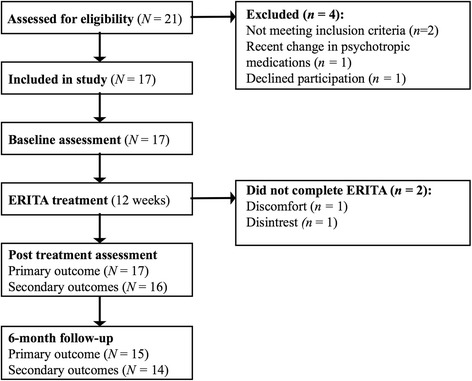
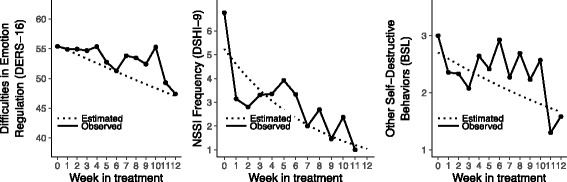
BACKGROUND: Nonsuicidal self-injury (NSSI) is a serious health risk behavior that forms the basis of a tentative diagnosis in DSM-5, NSSI Disorder (NSSID). To date, established treatments specific to NSSI or NSSID are scarce. As a first step in evaluating the feasibility, acceptability, and utility of a novel treatment for adolescents with NSSID, we conducted an open trial of emotion regulation individual therapy for adolescents (ERITA): a 12-week, behavioral treatment aimed at directly targeting both NSSI and its proposed underlying mechanism of emotion regulation difficulties. METHODS: Seventeen girls (aged 13-17; mean = 15.31) with NSSID were enrolled in a study adopting an uncontrolled open trial design with self-report and clinician-rated assessments of NSSI and other self-destructive behaviors, emotion regulation difficulties, borderline personality features, and global functioning administered at pre-treatment, post-treatment, and 6-month follow-up. Measures of NSSI and emotion regulation difficulties were also administered weekly during treatment. RESULTS: Ratings of treatment credibility and expectancy and the treatment completion rate (88%) were satisfactory, and both therapeutic alliance and treatment attendance were strong. Intent-to-treat analyses revealed significant improvements associated with large effect sizes in past-month NSSI frequency, emotion regulation difficulties, self-destructive behaviors, and global functioning, as well as a medium effect size in past-month NSSI versatility, from pre- to post-treatment. Further, all of these improvements were either maintained or further improved upon at 6-month follow-up. Finally, change in emotion regulation difficulties mediated improvements in NSSI over the course of treatment. CONCLUSIONS: Results suggest the acceptability, feasibility, and utility of this treatment for adolescents with NSSID. TRIAL REGISTRATION: ClinicalTrials.gov (NCT02326012, December 22, 2014, retrospectively registered).
Overview
The claims and statistics of this paper haven’t been checked yet.
Free: it reads the open-access text and checks the first 5 claims that cite a source we can check. Create a free account to check every claim.
Integrity signals
Registry
Cites
Statistics
Figures
Verification
Claims the paper makes
The claims and statistics of this paper haven’t been checked yet.
Free: it reads the open-access text and checks the first 5 claims that cite a source we can check. Create a free account to check every claim.
Claims other papers make about this one
Each is checked against this paper’s own text: does it say what the citing paper says it does?
The cited source says what the claim attributes to it.
In the citing paper
“and it is sensitive to changes following treatment [56-60].”
From A Virtual Reality-Assisted Cognitive Behavioral Therapy for and With Inuit in Québec: Protocol for a Proof-of-Concept Randomized Controlled Trial (2023) · cites this paper as [58]
The cited source says what the claim attributes to it.
In the citing paper
“During the last decade, other emotion regulation interventions for adolescents have been developed, such as Emotion Regulation Individual Therapy for Adolescents [ERITA (17, 18)] consisting of 12 weeks treatment, for example, and Unified Protocol for Adolescents [UP-A (19)] for approximately 16 weeks.”
From An emotion regulation skills training for adolescents and parents: perceptions and acceptability of methodological aspects (2024) · cites this paper as [17]
The cited source says what the claim attributes to it.
In the citing paper
“These findings are consistent with a previous study of the ERIC intervention with acutely vulnerable young people in residential drug rehabilitation (Sloan et al., 2018) and emotion regulation intervention studies in other cohorts of vulnerable young people including those with BPD and non-suicidal self-injury (NSSI; Bjureberg et al., 2017) and aggressive behaviors (Goldstein et al., 2018).”
From An Emotion Regulation and Impulse Control (ERIC) Intervention for Vulnerable Young People: A Multi-Sectoral Pilot Study (2021) · cites this paper as Bjureberg et al., 2017
Self-check
Percentages, sums and reported differences re-computed from the paper’s own numbers.
The self-check needs the paper’s full text.
Citations
Cites
Diagnostic and Statistical Manual of Mental Disorders
American Psychiatric Association (2013) · doi:10.1176/appi.books.9780890425596 · Cited by 116,369
(1998) · The Journal of Clinical Psychiatry · Cited by 19,139
(1998) · PubMed · Cited by 10,216
Gratz, K. L., & Roemer, L. (2004) · Journal of Psychopathology and Behavioral Assessment · doi:10.1023/b:joba.0000007455.08539.94 · Cited by 8,942 · cited 2×
“The Difficulties in Emotion Regulation Scale (DERS; [37]) is a 36- item self-report measure that assesses individuals’ typical levels of emotion regulation difficulties on a 5-point Likert-type scale across six domains: nonacceptance of negative emotions, inability to engage in goal-directed behaviors when distressed,…”
BackgroundSelf-citation(1993) · Cited by 7,136
Cognitive-Behavioral Treatment of Borderline Personality Disorder
Cary, G. L. (1994) · American Journal of Psychotherapy · doi:10.1176/appi.psychotherapy.1994.48.1.155 · Cited by 6,283
MacKinnon, D. P., Fairchild, A. J., & Fritz, M. S. (2007) · Annual Review of Psychology · doi:10.1146/annurev.psych.58.110405.085542 · Cited by 5,688 · cited 1×
“Specifically, this analysis was performed in four steps that investigated the different paths of mediation [59]: (1) the “c-path”, i.”
MethodA Children's Global Assessment Scale (CGAS)
Shaffer, D. (1983) · Archives of General Psychiatry · doi:10.1001/archpsyc.1983.01790100074010 · Cited by 3,716 · cited 1×
“The Children’s Global Assessment Scale (CGAS; [47]) was used to assess global functioning.”
MethodPreacher, K. J., & Kelley, K. (2011) · Psychological Methods · doi:10.1037/a0022658 · Cited by 3,060 · cited 1×
“We also calculated the proportion of the total relation of time in treatment to NSSI improvement that was accounted for by change in emotion regulation, PM, using the formula ab / c [60].”
Method(1997) · American Psychiatric Press eBooks · Cited by 3,056
Research works printed but not linked: 2
- Ougrin D, Tranah T, Stahl D, Moran P, Asarnow JR. Therapeutic interventions for suicide attempts and self-harm in adolescents: systematic review and meta-analysis. J Am Acad Child Adolesc Psychiatry 2015;54. 97–107:e2. 25617250 · DOI · Paper page
- Gratz KL Tull MT Levy R Randomized controlled trial and uncontrolled 9-month follow-up of an adjunctive emotion regulation group therapy for deliberate self-harm among women with borderline personality disorder Psychol Med 2014 44 2099 2112 10.1017/S0033291713002134 23985088 · DOI · Paper page
Cited by
Psychological therapies for women who experience intimate partner violence
Hameed, M., O'Doherty, L., Gilchrist, G., Tirado-Muñoz, J., Taft, A., Chondros, P., Feder, G., Tan, M., & Hegarty, K. (2020) · Cochrane Database of Systematic Reviews · doi:10.1002/14651858.cd013017.pub2 · Cited by 146
Hossain, M. M., Purohit, N., Sultana, A., Ma, P., McKyer, E. L. J., & Ahmed, H. U. (2020) · Asian Journal of Psychiatry · doi:10.1016/j.ajp.2020.102041 · Cited by 115
Bjureberg, J., Sahlin, H., Hedman-Lagerlöf, E., Gratz, K. L., Tull, M. T., Jokinen, J., Hellner, C., & Ljótsson, B. (2018) · BMC Psychiatry · doi:10.1186/s12888-018-1885-6 · Cited by 96
Self-citationA Meta-Analytic Review of Emotion Regulation Focused Psychosocial Interventions for Adolescents
Eadeh, H., Breaux, R., & Nikolas, M. A. (2021) · Clinical Child and Family Psychology Review · doi:10.1007/s10567-021-00362-4 · Cited by 126
Psychotherapeutic interventions specifically developed for NSSI in adolescence: A systematic review
Calvo, N., García-González, S., Pérez-Galbarro, C., Regales-Peco, C., Lugo‐Marín, J., Ramos‐Quiroga, J. A., & Ferrer, M. (2022) · European Neuropsychopharmacology · doi:10.1016/j.euroneuro.2022.02.009 · Cited by 102
Bjureberg, J., Ojala, O., Hesser, H., Häbel, H., Sahlin, H., Gratz, K. L., Tull, M. T., Claesdotter Knutsson, E., Hedman-Lagerlöf, E., Ljótsson, B., et al. (2023) · JAMA Network Open · doi:10.1001/jamanetworkopen.2023.22069 · Cited by 59
Shahabi, M., Hasani, J., & Bjureberg, J. (2020) · Assessment for Effective Intervention · doi:10.1177/1534508418800210 · Cited by 48
“…stability over time, the scale has also been shown to change in response to treatments that target emotion regulation (Bjureberg et al., in press; Bjureberg et al., 2017; Wilks et al., 2018), and due to its brief format, it has been included in studies that require repeated measure with tight…”
BackgroundMethodInfluentialSelf-citationAlhalal, E., Ford‐Gilboe, M., Wong, C. A., & AlBuhairan, F. S. (2017) · Research in Nursing & Health · doi:10.1002/nur.21837 · Cited by 47
Zetterqvist, M., Perini, I., Mayo, L. M., & Gustafsson, P. A. (2020) · Frontiers in Psychiatry · doi:10.3389/fpsyt.2020.00008 · Cited by 55
“The Swedish version has also been used to assess adolescents that participated in an emotion regulation treatment study (29, 30), suggesting that it has potential for this population.”
MethodWainberg, M. L., Gouveia, M. L., Stockton, M. A., Feliciano, P., Suleman, A., Mootz, J. J., Mello, M., Fiks Salem, A., Greene, M. C., Bezuidenhout, C., et al. (2021) · Evidence Based Mental Health · doi:10.1136/ebmental-2020-300199 · Cited by 33
Bojanić, I., Sund, E. R., Sletvold, H., & Bjerkeset, O. A. (2021) · BMC Psychology · doi:10.1186/s40359-021-00636-0 · Cited by 39
Waite, F., Bradley, J., Chadwick, E., Reeve, S., Bird, J. C., & Freeman, D. H. (2018) · Frontiers in Psychiatry · doi:10.3389/fpsyt.2018.00375 · Cited by 38
Hasking, P. A., Boyes, M. E., & Greves, S. (2018) · Psychiatry Research · doi:10.1016/j.psychres.2018.09.045 · Cited by 36
Simonsson, O., Engberg, H., Bjureberg, J., Ljótsson, B., Stensils, J., Sahlin, H., & Hellner, C. (2021) · JMIR Formative Research · doi:10.2196/17910 · Cited by 33
“Furthermore, the results are in line with those of previous studies [24,30,36], indicating that interventions that are designed specifically for NSSI and target emotion regulation difficulties can affect other symptoms and the overall function.”
BackgroundMethodResultInfluentialSelf-citationFekih‐Romdhane, F., Kanj, G., Obeïd, S., & Hallit, S. R. (2023) · BMC Psychology · doi:10.1186/s40359-023-01117-2 · Cited by 27
“Since its development, several studies sought to investigate the DERS-16’s psychometric characteristics across different settings and in different populations, such as adolescents with non-suicidal self-injury [44, 45], adolescents and adults with severe mental illnesses [46], community adults [47], adults with substa…”
BackgroundLawlor, C., Vitoratou, S., Hepworth, C., & Jolley, S. (2021) · Journal of Clinical Psychology · doi:10.1002/jclp.23164 · Cited by 32
“…with emotional disorders (Hallion et al., 2018), substance use disorders (Tull et al., 2018), suicidal ideation and alcohol misuse (Wilks et al., 2018), and adolescents with non‐suicidal self‐injury (Bjureberg et al., 2017) and complex substance use and mental health issues (Sloan et al., 2017).”
BackgroundPersonality Pathology in Youth
Sharp, C., & Clercq, B. J. D. (2020) · Cambridge University Press eBooks · doi:10.1017/9781108333931.015 · Cited by 27
Monell, E., Birgegård, A., Nordgren, L., Hesser, H., & Bjureberg, J. (2021) · Journal of Clinical Psychology · doi:10.1002/jclp.23286 · Cited by 26
Self-citationSpitzen, T. L., Tull, M. T., & Gratz, K. L. (2020) · Archives of Suicide Research · doi:10.1080/13811118.2020.1818654 · Cited by 25
Self-citationHall, K., Youssef, G., Simpson, A., Sloan, E., Graeme, L., Perry, N., Moulding, R., Baker, A. L., Beck, A. K., & Staiger, P. K. (2021) · Frontiers in Psychology · doi:10.3389/fpsyg.2021.554100 · Cited by 17
“The 16-item version of the Difficulties in Emotional Regulation Scale (DERS-16; Bjureberg et al., 2017) assesses individuals’ typical levels of emotional dysregulation. across five separate domains: non-acceptance of negative emotions; inability to engage in goal directed behaviors when experiencing negative emotions;…”
BackgroundMethodInfluentialManaging risk and self-harm: Keeping young people safe
Westers, N. J., & Plener, P. L. (2020) · Clinical Child Psychology and Psychiatry · doi:10.1177/1359104519895064 · Cited by 16
“To date, two treatments for adolescents that specifically target NSSI have been developed: Emotion Regulation Individual Therapy for Adolescents (ERITA; Bjureberg et al., 2017) and the manualized Cutting Down Program (CDP) which is based on principles of CBT and DBT (Kaess et al., 2019).”
MethodInfluentialChen, X., Dong, Y., Ye, M., Wang, X., Yan, J., Yao, Y., Zhou, Q., Qian, C., & Liu, Z. (2025) · BMC Psychiatry · doi:10.1186/s12888-025-06735-1 · Cited by 23
Support Seeking in the Context of Self-Injury Recovery
Meheli, S., & Lewis, S. P. (2022) · The Journal of Nervous and Mental Disease · doi:10.1097/nmd.0000000000001481 · Cited by 18
“Indeed, they have been previously highlighted as useful in the context of NSSI (Bjureberg et al., 2017).”
BackgroundEmotion Regulation Difficulties and Health-Risk Behaviours in Adolescents
Singh, P., & Singh, A. (2022) · Behaviour Change · doi:10.1017/bec.2022.5 · Cited by 23
Arqueros, M., Ibáñez, B., Goñi-Sarriés, A., & Galbete, A. (2022) · Revista de Psiquiatría y Salud Mental · doi:10.1016/j.rpsm.2022.10.001 · Cited by 24
Romano, M., Hudd, T., Huppert, J. D., Reimer, S. G., & Moscovitch, D. A. (2020) · Cognitive Therapy and Research · doi:10.1007/s10608-020-10149-6 · Cited by 20
Olsen, M. H., Morthorst, B. R., Pagsberg, A. K., Heinrichsen, M., Møhl, B., Rubæk, L., Bjureberg, J., Simonsson, O., Lindschou, J., Gluud, C. N., et al. (2021) · Trials · doi:10.1186/s13063-021-05406-2 · Cited by 13
Self-citationSeon, Q., Mady, N., Yang, M., Karia, M., Lashley, M., Sescu, C., Lalonde, M., Puskas, S., Outerbridge, J., Parent-Racine, E., et al. (2023) · JMIR Research Protocols · doi:10.2196/40236 · Cited by 12
Morthorst, B. R., Olsen, M. H., Jakobsen, J. C., Lindschou, J., Gluud, C. N., Heinrichsen, M., Møhl, B., Rubæk, L., Ojala, O., Hellner, C., et al. (2022) · JCPP Advances · doi:10.1002/jcv2.12115 · Cited by 16
Self-citationPan, B., Gong, Y., Guo, M., Wang, X.-H. F., Lu, H., Zheng, L., & Zhang, B. (2025) · Neuropsychiatric Disease and Treatment · doi:10.2147/ndt.s498951 · Cited by 17
Belastende Kindheitserfahrungen und selbstverletzendes Verhalten – die Rolle der Emotionsregulation
Haid-Stecher, N., & Sevecke, K. (2019) · Praxis der Kinderpsychologie und Kinderpsychiatrie · doi:10.13109/prkk.2019.68.7.623 · Cited by 19
Understanding predictors of change in a day treatment setting for non‐suicidal self‐injury
Slesinger, N. C., Hayes, N. A., & Washburn, J. J. (2020) · Psychology and Psychotherapy Theory Research and Practice · doi:10.1111/papt.12295 · Cited by 12
Andersson, H., Svensson, E., Magnusson, A., Holmqvist, R., & Zetterqvist, M. (2024) · Child and Adolescent Psychiatry and Mental Health · doi:10.1186/s13034-024-00706-2 · Cited by 16
“Some examples of treatments are Dialectical Behavioral Therapy for Adolescents (DBT-A; [17]), Emotion Regulation Therapy for Adolescents (ERITA; [18, 19]) and the online STAR program [20].”
BackgroundKruzan, K. P., Biernesser, C. L., Hoffmann, J. A., & Meyerhoff, J. (2024) · Current Treatment Options in Psychiatry · doi:10.1007/s40501-024-00318-9 · Cited by 16
Qin, Y., Chen, H., Liu, F., Zou, T., Jin, K., Teng, Z., Liu, J., Yuan, H., Yang, J., Huang, C., et al. (2025) · Molecular Psychiatry · doi:10.1038/s41380-025-03183-x · Cited by 13
Jiang, Y., Li, X., Harrison, S. E., Zhang, J., Qiao, S., Decker, S. H., Zhao, J., & Zhao, G. (2022) · Children and Youth Services Review · doi:10.1016/j.childyouth.2021.106363 · Cited by 11
Holmqvist Larsson, K., Thunberg, M., Münger, A.-C., Andersson, G., Falkenström, F., & Zetterqvist, M. (2023) · BMC Psychiatry · doi:10.1186/s12888-023-05080-5 · Cited by 9
“The above-mentioned studies were all originally developed for adults but have been modified for adolescents [40–42].”
BackgroundMethodSjöblom, K., Frankenstein, K., Klintwall, L., Nilbrink, J., Zetterqvist, M., Hesser, H., Hedman‐Lagerlöf, E., Gross, J. J., Hellner, C., Bellander, M., et al. (2025) · JAMA Network Open · doi:10.1001/jamanetworkopen.2025.14871 · Cited by 14
Self-citationMorthorst, B. R., Rubæk, L., Lindschou, J., Jakobsen, J. C., Gluud, C. N., Bjureberg, J., Hellner, C., Møhl, B., & Pagsberg, A. K. (2021) · Pilot and Feasibility Studies · doi:10.1186/s40814-021-00785-4 · Cited by 14
Self-citationOjala, O., Hesser, H., Gratz, K. L., Tull, M. T., Hedman‐Lagerlöf, E., Sahlin, H., Ljótsson, B., Hellner, C., & Bjureberg, J. (2024) · JCPP Advances · doi:10.1002/jcv2.12243 · Cited by 12
“IERITA is a 12 ‐ week acceptance ‐ based emotion regulation behavioral therapy developed from the face ‐ to ‐ face manuals of emotion regulation individual therapy for adolescents (Bjureberg et al., 2017), ERGT (Gratz & Gunderson, 2006) and DBT ‐”
BackgroundSelf-citationDoes the millennial generation of women experience more mental illness than their mothers?
Najman, J. M., Bor, W., Williams, G. M., Middeldorp, C. M., Mamun, A. A., Clavarino, A. M., & Scott, J. G. (2021) · BMC Psychiatry · doi:10.1186/s12888-021-03361-5 · Cited by 12
Holmqvist Larsson, K., & Zetterqvist, M. (2024) · Frontiers in Psychiatry · doi:10.3389/fpsyt.2024.1448529 · Cited by 7
Tschan, T., Pfeiffer, S., Gutzweiler, R., & In‐Albon, T. (2022) · Child and Adolescent Psychiatry and Mental Health · doi:10.1186/s13034-022-00500-y · Cited by 10
Nonsuicidal Self-Injury in Children and Adolescents
Westers, N. J. (2023) · Autism and child psychopathology series · doi:10.1007/978-3-031-24926-6_50 · Cited by 9
Madsen, F. A., Andreasen, T. H., Lindschou, J., Gluud, C. N., & Møller, K. (2021) · PLoS ONE · doi:10.1371/journal.pone.0259899 · Cited by 7
Not a fad: Nonsuicidal self-injury and suicide attempts
Westers, N. J. (2019) · Clinical Child Psychology and Psychiatry · doi:10.1177/1359104519873496 · Cited by 7
“Although there are no empirically supported treatments specifically for adolescents who engage in NSSI, promising interventions for adolescent NSSI target emotion dysregulation and include Emotion Regulation Individual Therapy for Adolescents (ERITA; Bjureberg et al., 2017) and dialectical behavioral therapy (DBT) ada…”
BackgroundYu, C., Liao, X., Ni, X., & Wang, H. (2025) · Child Psychiatry & Human Development · doi:10.1007/s10578-025-01825-3 · Cited by 11
The Role of Emotion Regulation in Clinical Interventions
Bjureberg, J. (2026) · Annual Review of Clinical Psychology · doi:10.1146/annurev-clinpsy-061324-072853 · Cited by 8
Self-citationMagnitude of Developmental Disabilities in India
Ansari, H. (2021) · Springer eBooks · doi:10.1007/978-981-16-1554-2_7 · Cited by 8
Li, M., Li, Q., & Wu, C. (2023) · Interdisciplinary Nursing Research · doi:10.1097/nr9.0000000000000041 · Cited by 6
Christensen, S. H., Heinrichsen, M., Møhl, B., Rubæk, L., Byrialsen, K. K., Ojala, O., Hellner, C., Pagsberg, A. K., Bjureberg, J., & Morthorst, B. R. (2024) · Psychology and Psychotherapy Theory Research and Practice · doi:10.1111/papt.12541 · Cited by 8
“However, previous feasibility studies of the ERITA programme, both face- to-face and internet-delivered, proved strong therapeutic alliance and treatment adherence (Bjureberg et al., 2017, 2018).”
Self-citationHickey, K. L., Rossetti, J., & Musker, K. (2019) · Journal of Child and Adolescent Psychiatric Nursing · doi:10.1111/jcap.12234 · Cited by 6
Mediators during a Multimodal intervention for stress-induced exhaustion disorder
van de Leur, J. C., Johansson, F., McCracken, L. M., Åhs, F., Brodda Jansen, G., & Buhrman, M. (2024) · Cognitive Behaviour Therapy · doi:10.1080/16506073.2023.2295217 · Cited by 5
“…in the current study, X was defined as “time in treatment” (treatment start, mid-treatment, and post-treatment), assuming a linear change over time on mediators as well as symptoms of exhaustion, a procedure previously used in clinical trials (Bjureberg et al., 2017, 2018; Särnholm et al., 2021).”
MethodOpoku, M. P., Nketsia, W., JF, J., Mprah, W. K., Agyei‐Okyere, E., & Safi, M. F. (2021) · Frontiers in Psychology · doi:10.3389/fpsyg.2021.752569 · Cited by 4
NSSI in Adolescence and Emerging Adulthood
Kiekens, G., Hasking, P. A., & Claes, L. (2023) · Oxford University Press eBooks · doi:10.1093/oxfordhb/9780197611272.013.26 · Cited by 4
Martínez-Miranda, J., Palacios-Isaac, A., López-Flores, F., Martínez, A., Aguilar, H., Jiménez, L., Ramos, R., Rosales, G., & Altamirano, L. (2019) · Lecture notes of the Institute for Computer Sciences, Social Informatics and Telecommunications Engineering · doi:10.1007/978-3-030-25872-6_7 · Cited by 5
ADHD in Individuals with Intellectual Disability
Flanigan, L., Climie, E. A., Gray, C., & Conde, C. F. (2019) · Autism and child psychopathology series · doi:10.1007/978-3-030-20843-1_48 · Cited by 4
Bjureberg, J., Ojala, O., Rasmusson, B., Malmgren, J., Hellner, C., Sampaio, F., & Flygare, O. (2025) · JMIR Mental Health · doi:10.2196/74303 · Cited by 7
“The therapist-guided IERITA treatment is an acceptance-based behavioral treatment delivered through a web-based platform [18,20,23].”
Self-citationGuerrero, E., Andreasson, K., Larsen, L., Buus, N., Larsen, J. L. S., Krogh, J., Thastum, R., Lindberg, L., Lindblad, K., Erlangsen, A., et al. (2024) · Trials · doi:10.1186/s13063-024-07932-1 · Cited by 8
“A post-intervention standard deviation of 9 is assumed based on previous findings [43, 44].”
MethodInfluentialKang, T., Zhao, X., Huo, X., Liu, X., Wang, Y., Wang, X., Ding, X., & Wu, H. (2026) · JAMA Network Open · doi:10.1001/jamanetworkopen.2026.17336 · Cited by 4
Group-based intervention for eating disorders with non-suicidal-self-injury: a case series
Vieira, A. I., Rodrigues, T. F., Brandão, I., Timóteo, S., Nunes, P., & Gonçalves, S. F. (2021) · Clinical Psychologist · doi:10.1080/13284207.2021.1892454 · Cited by 3
Yin, Y., Zhang, S., Yu, L., Shi, F., & Yu, G. (2025) · Journal of Psychiatric Practice · doi:10.1097/pra.0000000000000846 · Cited by 1
“12,14,45,46 NSSI often occurs in combination with a variety of comorbid conditions 47 and is often associated with suicidal tendencies, 5 so we did not exclude patients based on comorbidities or suicidal tendencies (with the exception of the risk of immediate suicide or acute symptoms that would…”
Better Sleep: Evidence-Based Interventions
Waite, F., & Sheaves, B. (2019) · Elsevier eBooks · doi:10.1016/b978-0-12-815012-2.00020-1 · Cited by 2
Smith, T., & Pappademetriou, V. (2021) · Advances in intelligent systems and computing · doi:10.1007/978-3-030-70416-2_22 · Cited by 1
Research Progress on Causes of Non-suicidal Self-injury Behaviors in Adolescents
Xinyue, Q., Leyi, L., Ding, L., Hong, S., & Liu, S. (2023) · Medical Research Frontiers · doi:10.57237/j.mrf.2023.04.001 · Cited by 1
Gratz, K. L. (2019) · Journal of Personality Assessment · doi:10.1080/00223891.2019.1673761
“…support for the utility of a brief emotion regulation treatment designed to target the specific dimensions of emotion regulation difficulties assessed in this study (e.g., Bjureberg et al., 2018; Bjureberg et al., 2017; Gratz & Gunderson, 2006; Gratz, Tull, & Levy, 2014; Sahlin et al., 2017).”
BackgroundSelf-citationDeveloping and Evaluating Novel Treatments for Nonsuicidal Self-Injury Within Swedish Health Care
Bjureberg, J. (2021) · Suicidologi/Nytt i suicidologi · doi:10.5617/suicidologi.8534
“We concluded that the results provided preliminary support for the acceptability, feasibility, and utility of ERITA for youth with NSSI disorder and reductions in emotion dysregulation was a potential mediator of treatment effect (Bjureberg et al., 2017).”
MethodResultSelf-citationSelf-harm among adolescents : correlates, treatment, and healthcare consumption
Wijana, M. B. (2021) · Figshare
Tschan, T., Pfeiffer, S., Gutzweiler, R., & In‐Albon, T. (2022) · Research Square · doi:10.21203/rs.3.rs-1550544/v1
Andreasson, K., Larsen, L., Buus, N., Larsen, J., Krogh, J., Thastum, R., Guerrero, E., Lindberg, L., Lindblad, K., Erlangsen, A., et al. (2022) · Research Square · doi:10.21203/rs.3.rs-1755977/v1
Akbari-Motlaq, M., Teymuri, S., Asghari-ebrahimabadi, M., & Mahram, B. (2023) · Caspian Journal of Health Research · doi:10.32598/cjhr.8.1.440.1 · Cited by 2
Online Approaches to NSSI Treatment
Hooley, J. M., & Fox, K. R. (2023) · Oxford University Press eBooks · doi:10.1093/oxfordhb/9780197611272.013.53
Bridging Brain and Behavior: Using Biology to Inform NSSI Interventions
Schreiner, M. W., Frandsen, S. B., Molina, N. C., & Dillahunt, A. K. (2023) · Oxford University Press eBooks · doi:10.1093/oxfordhb/9780197611272.013.19
Newell, E. (2023) · Open Access Victoria University of Wellington | Te Herenga Waka (Figshare) · doi:10.26686/wgtn.24040788 · Cited by 2
Reducing non-suicidal self-injury in Chinese adolescents through Imagery Communication Psychotherapy
Lyu, R., Zhang, S., Mao, Y., & Tan, Y. (2025) · Journal of Psychologists and Counsellors in Schools · doi:10.1177/20556365251347382
“The effectiveness of the ICP in reducing NSSI, as well as reducing negative affect and difficulties in emotion regulation, is encouraging and comparable to previous individual behavioural interventions for adolescent NSSI in a similar age group (Bjureberg et al., 2017, 2018).”
Zhou, S. C., Luo, D., Liu, S., Shi, Y. X., Fu, H. Y., Bai, N., Zhang, P., Yang, L., Xiong, X., Zhang, J., et al. (2025) · doi:10.2196/preprints.87326
Babaeifard, M., Akbari, M., Mohammadkhani, S., Hasani, J., Shahbazian, R., & Roediger, E. (2025) · International Journal of Cognitive Behavioral Therapy · doi:10.1007/s41811-025-00269-w
“…regard to psychotherapeutic interventions for NSSI in adolescents, we can point to emotional regulation individual therapy for adolescents (ERITA; Bjureberg et al., 2017); cutting down program (CDP; Saxena et al., 2023); developmental group psychotherapy (DGP; Wood et al., 2001); and treatment…”
Baek, J., Lee, J., Park, W., & Kim, D. (2026) · Cognitive Therapy and Research · doi:10.1007/s10608-026-10726-1 · Cited by 4
“Several interventions have been used to reduce NSSI symptoms, with recent attention on emotion regulation-focused approaches such as DBT, ERGT, and ERITA (Kothgassner et al., 2021; Sahlin et al., 2017).”
InfluentialWang, S., Zhou, Y., Yu, Y., Zhang, J., Zhu, X., Zhang, K., Ji, Z., Li, Y., Yan, F., & Wang, C. (2026) · Frontiers in Public Health · doi:10.3389/fpubh.2026.1828667
Giannakopoulos, G., & Prassou, A. (2026) · Children · doi:10.3390/children13070972
“Bjureberg et al. [35] reported a face-to-face ERITA feasibility study in 17 girls aged 13–17 years with NSSI disorder.”
Zhou, S. C., Luo, D., Liu, S., Shi, Y., Fu, H. Y., Bai, N., Zhang, P., Yang, L., Xiong, X., Zhang, J., et al. (2026) · Research Square · doi:10.21203/rs.3.rs-10334486/v1
Park, H., Nam, H., Song, M., & Oh, Y. (2027) · Journal of Korean Medical Science · doi:10.3346/jkms.2027.42.e14
Bergman, L. E., Ramklint, M., Zetterqvist, V., & Isaksson, M. (2026) · Journal of Eating Disorders · doi:10.1186/s40337-026-01803-7
“In the current study, the abbreviated Swedish 9-item version (DSHI-9) was used [38, 39].”
Luijsmans, M., Claes, L., Tatnell, R., Houben, M., Vaessen, T., Smeets, T. J. M., Myin‐Germeys, I., & Kiekens, G. (2026) · Internet Interventions · doi:10.1016/j.invent.2026.101014
“Finally, the period following a crisis was indicated to represent an important opportunity for reflection about why it was difficult to prevent NSSI behavior or what helped them from engaging in NSSI (Bjureberg et al., 2017).”
Metadata
- Authors
- Bjureberg, J., Sahlin, H., Hellner, C., Hedman-Lagerlöf, E., Gratz, K. L., Bjärehed, J., Jokinen, J., Tull, M. T., & Ljótsson, B.
- Affiliations
- Karolinska Institutet (SE)
- University of Toledo (US)
- Lund University (SE)
- Corresponding author
- Bjureberg, Johan
- ORCID
- Venue
- BMC Psychiatry
- Published
- 2017-12
- Volume
- 17
- Issue
- 1
- Pages
- 411-411
- ISSN
- 1471-244X (ISSN-L)
- PMC
- PMC5745918
- OpenAlex
- W2778770268
- Semantic Scholar
- 0aeee39a89ba3726ecd48def7d96af16b2d27968
- Cited by
- 84
- References
- 70
- Citations by year
- 2026: 9 · 2025: 9 · 2024: 7 · 2023: 13 · 2022: 9 · 2021: 16 · 2020: 8 · 2019: 8 · 2018: 4 · 2017: 1
- FWCI
- 7.11
- Type
- journal article
- Language
- en
- Open access
- gold
- doi.org
- Licence
- cc-by
- Locations
- BMC Psychiatry (publishedVersion, cc-by)
- Europe PMC (PubMed Central) (publishedVersion, cc-by)
- PubMed Central (publishedVersion, cc-by)
- PubMed (publishedVersion)
- KTH Publication Database DiVA (KTH Royal Institute of Technology) (submittedVersion, other-oa)
- DOAJ (DOAJ: Directory of Open Access Journals) (submittedVersion, cc-by-sa)
- Lund University Publications (Lund University) (submittedVersion)
- Funders
- Kempe-Carlgrenska Foundation
- L. J., Boëthius stiftelse
- Fredik och Ingrid Thurings Stiftelse
- Swedish Research Council (2014-1008)
- Markus och Amelia Wallenberg Foundation (MAW 2014.0021)
- Topics
- Social Sciences › Psychology › Clinical Psychology › Suicide and Self-Harm Studies
- Social Sciences › Psychology › Clinical Psychology › Personality Disorders and Psychopathology
- Social Sciences › Psychology › Clinical Psychology › Psychotherapy Techniques and Applications
- Keywords
- non-suicidal self-injury, emotion regulation, individual psychotherapy, adolescents, behavior therapy, treatment feasibility, treatment acceptability, self-destructive behavior, borderline personality traits, therapeutic relationship, mediation
- MeSH terms
- Adolescent, Adolescent Behavior, Emotions, Feasibility Studies, Female, Humans, Psychotherapy, Retrospective Studies, Self-Injurious Behavior, Self Report
About these checks
Registry, retraction, Cites and statistics results are computed, not judged, with one exception: a printed reference that no index lists is read once by a model before it counts as a citation error. Claims are extracted by a model and kept only when their quote appears verbatim in the text; each cited source is then checked, with a model’s help, for whether it says what the claim relies on. Those verdicts can be wrong — read the claim’s quote and the cited source before relying on one.
Statistics and arithmetic are recomputed, not judged.
Confidence bands are shown only for fields calibrated on our annotated test set. None is calibrated yet, so no band is shown.
What counts as a claim ›How we measure confidence ›How we check this ›
Are you an author, or do you see a problem with this page? Request a review
Data sources
Bibliographic data: Semantic Scholar, OpenAlex, Crossref.
Contains information from the Semantic Scholar Academic Graph Datasets, made available under the ODC Attribution License (ODC-BY 1.0).
Semantic Scholar’s data is described in: Kinney, R., et al. (2023). The Semantic Scholar Open Data Platform. arXiv:2301.10140.
