

The relationship between addiction to smartphone usage and depression among adults: a cross sectional study
Open accessThe DOI matches its Crossref record; 41 of the 41 references it cites were found in a registry or an index.
Abstract
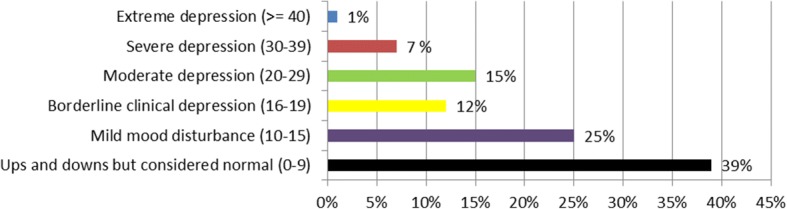
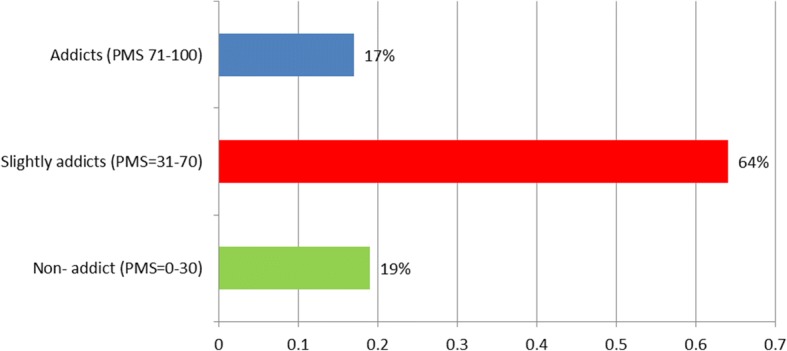
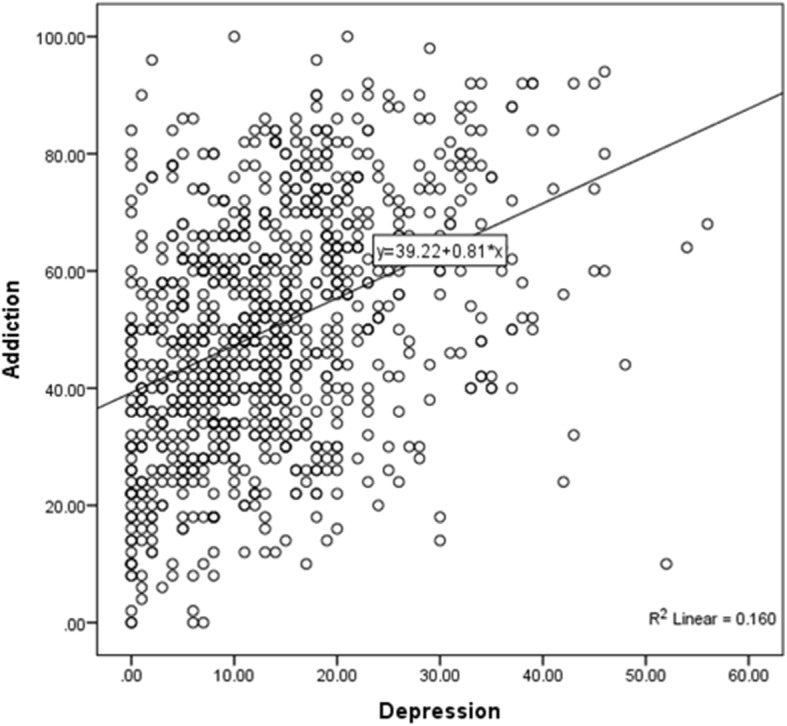
BACKGROUND: Addiction to smartphone usage is a common worldwide problem among adults, which might negatively affect their wellbeing. This study investigated the prevalence and factors associated with smartphone addiction and depression among a Middle Eastern population. METHODS: This cross-sectional study was conducted in 2017 using a web-based questionnaire distributed via social media. Responses to the Smartphone Addiction Scale - Short version (10-items) were rated on a 6-point Likert scale, and their percentage mean score (PMS) was commuted. Responses to Beck's Depression Inventory (20-items) were summated (range 0-60); their mean score (MS) was commuted and categorized. Higher scores indicated higher levels of addiction and depression. Factors associated with these outcomes were identified using descriptive and regression analyses. Statistical significance was set at P < 0.05. RESULTS: Complete questionnaires were 935/1120 (83.5%), of which 619 (66.2%) were females and 316 (33.8%) were males. The mean ± standard deviation of their age was 31.7 ± 11 years. Majority of participants obtained university education 766 (81.9%), while 169 (18.1%) had school education. The PMS of addiction was 50.2 ± 20.3, and MS of depression was 13.6 ± 10.0. A significant positive linear relationship was present between smart phone addiction and depression (y = 39.2 + 0.8×; P < 0.001). Significantly higher smartphone addiction scores were associated with younger age users, (β = - 0.203, adj. P = 0.004). Factors associated with higher depression scores were school educated users (β = - 2.03, adj. P = 0.01) compared to the university educated group and users with higher smart phone addiction scores (β =0.194, adj. P < 0.001). CONCLUSIONS: The positive correlation between smartphone addiction and depression is alarming. Reasonable usage of smart phones is advised, especially among younger adults and less educated users who could be at higher risk of depression.
Overview
The claims and statistics of this paper haven’t been checked yet.
Free: it reads the open-access text and checks the first 5 claims that cite a source we can check. Create a free account to check every claim.
Integrity signals
Registry
Cites
Statistics
Figures
Verification
Claims the paper makes
The claims and statistics of this paper haven’t been checked yet.
Free: it reads the open-access text and checks the first 5 claims that cite a source we can check. Create a free account to check every claim.
Claims other papers make about this one
Each is checked against this paper’s own text: does it say what the citing paper says it does?
The cited source says what the claim attributes to it.
In the citing paper
“some studies raise concerns about these findings, stating that”
From Antecedents and consequences of problematic smartphone use: A systematic literature review of an emerging research area (2021) · cites this paper as Alhassan et al., 2018
Experimental — accuracy not yet measured
Self-check
Percentages, sums and reported differences re-computed from the paper’s own numbers.
The self-check needs the paper’s full text.
Citations
Cites
Diagnostic and Statistical Manual of Mental Disorders
American Psychiatric Association (2013) · doi:10.1176/appi.books.9780890425596 · Cited by 116,369
Diagnostic and Statistical Manual of Mental Disorders
Siegel, L. J., & Fletcher‐Janzem, E. (2008) · Encyclopedia of Special Education · doi:10.1002/9780470373699.speced0655 · Cited by 8,477 · cited 1×
“However, many people fail to realize that addiction to smartphone usage is a serious issue that can have a negative effect on the person’s thoughts, behavior, tendencies, feelings, and sense of well-being [2].”
BackgroundThe Smartphone addiction scale: development and validation of a short version for adolescents
Kwon, M., Kim, D.-J., Cho, H., & Yang, S. (2013) · PLoS ONE · doi:10.1371/journal.pone.0083558 · Cited by 2,177 · cited 2×
“In the original scale of SAS, the cut-off point was not reported [18].”
BackgroundElhai, J. D., Dvorak, R. D., Levine, J. C., & Hall, B. J. (2017) · Journal of Affective Disorders · doi:10.1016/j.jad.2016.08.030 · Cited by 1,689 · cited 1×
“A systematic review of 23 peer reviewed papers reported that depression was consistently related to problematic smartphone usage [22].”
BackgroundDemirci, K., Akgönül, M., & Akpinar, A. (2015) · Journal of Behavioral Addictions · doi:10.1556/2006.4.2015.010 · Cited by 1,529 · cited 2×
“In Turkey, females were more likely to develop an addiction to smartphone usage compared to males [11], while in Austria chronic stress, low emotional stability, female gender, young age and depression were associated with problematic mobile usage [12].”
BackgroundMethodLemola, S., Perkinson-Gloor, N., Brand, S., Dewald-Kaufmann, J. F., & Grob, A. (2015) · Journal of Youth and Adolescence · doi:10.1007/s10964-014-0176-x · Cited by 940 · cited 1×
“It is worth mentioning, that no relationship between smartphone ownership and symptoms of depression were reported by one study, which entails that addiction is related to self-control rather than the possession of the phone itself [25].”
BackgroundBian, M., & Leung, L. (2015) · Social Science Computer Review · doi:10.1177/0894439314528779 · Cited by 669 · cited 1×
“It was reported that high levels of smartphone addiction were correlated with low self-esteem, loneliness, depression and shyness [10].”
BackgroundDepression, anxiety, and smartphone addiction in university students- A cross sectional study
Matar Boumosleh, J., & Jaalouk, D. (2017) · PLOS ONE · doi:10.1371/journal.pone.0182239 · Cited by 668 · cited 2×
“Depression in Lebanese and Austrian university students was also significantly associated with smartphone addiction [12, 23] or problematic mobile phone usage [13] respectively.”
BackgroundResultStaying connected while on the move: Cell phone use and social connectedness
Wei, R., & Lo, V.-H. (2006) · New Media & Society · doi:10.1177/1461444806059870 · Cited by 493 · cited 2×
“For example, one study found that people with depression, social anxiety and loneliness had different uses for their smartphones compared to others [9].”
BackgroundCulturally sensitive social work practice with Arab clients in mental health settings
Al-Krenawi, A., & Graham, J. R. (2000) · Health & Social Work · doi:10.1093/hsw/25.1.9 · Cited by 485 · cited 1×
“It is worth mentioning that Western cultural norms have been disseminated into the Arab world, but this effect has been experienced differently in communities and across societies [16].”
BackgroundChoi, S.-W., Kim, D.-J., Choi, J.-S., Ahn, H., Choi, E.-J., Song, W.-Y., Kim, S., & Youn, H. (2015) · Journal of Behavioral Addictions · doi:10.1556/2006.4.2015.043 · Cited by 476 · cited 2×
“It was reported that males tend to use the internet mainly for online gaming, while females tend to use the internet for sending messages, chatting and blogging [26, 38].”
BackgroundAssociations between problematic mobile phone use and psychological parameters in young adults
Augner, C., & Hacker, G. W. (2012) · International Journal of Public Health · doi:10.1007/s00038-011-0234-z · Cited by 427 · cited 3×
“In Turkey, females were more likely to develop an addiction to smartphone usage compared to males [11], while in Austria chronic stress, low emotional stability, female gender, young age and depression were associated with problematic mobile usage [12].”
BackgroundYen, C., Tang, T., Yen, J., Lin, H., Huang, C., Liu, S., & Ko, C. (2009) · Journal of Adolescence · doi:10.1016/j.adolescence.2008.10.006 · Cited by 416 · cited 2×
“Depression in Lebanese and Austrian university students was also significantly associated with smartphone addiction [12, 23] or problematic mobile phone usage [13] respectively.”
BackgroundLopez-Fernandez, O. (2017) · Addictive Behaviors · doi:10.1016/j.addbeh.2015.11.013 · Cited by 358 · cited 3×
“Since no gender differences were reported between these cut off points [19], a cut-off point of score 32/60 or PMS = 53.”
BackgroundMethodResultInfluentialSmartphone addiction among university students in Riyadh, Saudi Arabia
Alosaimi, F. D., Alyahya, H., Alshahwan, H., Mahyijari, N. A., & Shaik, S. A. (2016) · Saudi Medical Journal · doi:10.15537/smj.2016.6.14430 · Cited by 327 · cited 1×
“This was confirmed by one Saudi study stating that higher problematic mobile usage scores were correlated with various unhealthy sleep hygiene, physical inactivity, dietary style and others [30].”
BackgroundMobile phone addiction and sleep quality among Chinese adolescents: A moderated mediation model
Liu, Q.-Q., Zhou, Z.-K., Yang, X.-J., Kong, F.-C., Niu, G.-F., & Fan, C.-Y. (2017) · Computers in Human Behavior · doi:10.1016/j.chb.2017.02.042 · Cited by 278
Davey, S., & Davey, A. (2014) · PubMed Central · Cited by 238
Constantly connected–The effects of smart-devices on mental health
Harwood, J., Dooley, J. J., Scott, A. J., & Joiner, R. (2014) · Computers in Human Behavior · doi:10.1016/j.chb.2014.02.006 · Cited by 236 · cited 1×
“It manifests itself in the excessive usage of their phones, while engaged in other activities such as studying, driving, social gatherings and even sleeping [1].”
BackgroundEffects of smartphone overuse on hand function, pinch strength, and the median nerve
İNal, E. E., Demİrcİ, K., Çetİntürk, A., Akgönül, M., & Savaş, S. (2015) · Muscle & Nerve · doi:10.1002/mus.24695 · Cited by 230 · cited 1×
“Over usage of smartphones can actually impair the hand function by causing pain in the thumb and lowering the pinch strength [36].”
BackgroundRisk Factors for Smartphone Addiction in Korean Adolescents: Smartphone Use Patterns
Lee, H., Kim, J. W., & Choi, T. Y. (2017) · Journal of Korean Medical Science · doi:10.3346/jkms.2017.32.10.1674 · Cited by 200 · cited 1×
“Addiction manifests itself in various forms such as preoccupation, tolerance, lack of control, withdrawal, mood modification, conflict, lies, excessive use and loss of interest [7].”
BackgroundStress and adult smartphone addiction: Mediation by self‐control, neuroticism, and extraversion
Cho, H., Kim, D. J., & Park, J. W. (2017) · Stress and Health · doi:10.1002/smi.2749 · Cited by 175
Reliability and Validity of the Beck Depression Inventory-II among Korean Adolescents
Lee, E., Lee, S.-J., Hwang, S.-T., Hong, S.-H., & Kim, J. (2017) · Psychiatry Investigation · doi:10.4306/pi.2017.14.1.30 · Cited by 171
Smartphone use addiction can cause neck disability
AlAbdulwahab, S. S., Kachanathu, S. J., & AlMotairi, M. S. (2017) · Musculoskeletal Care · doi:10.1002/msc.1170 · Cited by 152
Addictive Internet Use among Korean Adolescents: A National Survey
Heo, J., Oh, J., Subramanian, S. V., Kim, Y., & Kawachi, I. (2014) · PLoS ONE · doi:10.1371/journal.pone.0087819 · Cited by 146 · cited 1×
“It was reported that males tend to use the internet mainly for online gaming, while females tend to use the internet for sending messages, chatting and blogging [26, 38].”
BackgroundRisk of Late-Life Depression Across 10 European Union Countries: Deconstructing the Education Effect
Ladin, K. (2008) · Journal of Aging and Health · doi:10.1177/0898264308321002 · Cited by 126 · cited 1×
“Adults with higher educational level were less likely to have symptoms of depression, which was similar to results of a study conducted in 10 European countries [39].”
ResultHow smartphone usage correlates with social anxiety and loneliness
Gao, Y., Li, A., Zhu, T., Liu, X., & Liu, X. (2016) · PeerJ · doi:10.7717/peerj.2197 · Cited by 112 · cited 2×
“In particular, it can be a risk factor for depression, loneliness, anxiety and sleep disturbances [3].”
BackgroundPsychosocial Factors Affecting Smartphone Addiction in University Students
Aker, S., Şahin, M. K., Sezgin, S., & Oğuz, G. (2017) · Journal of Addictions Nursing · doi:10.1097/jan.0000000000000197 · Cited by 107 · cited 2×
“Furthermore, another study stated that familial social support was a significant predictor of smartphone addiction, as this addiction increased as individuals’ familial support decreased [27].”
BackgroundElhai, J. D., Hall, B. J., & Erwin, M. C. (2017) · Psychiatry Research · doi:10.1016/j.psychres.2017.12.045 · Cited by 106 · cited 1×
“An alarming finding in this study was suggestive of an association between emotional dysregulation (suppression and decreased use of cognitive appraisal) and the psychopathology (depression, stress and anxiety) from social media loss [32].”
BackgroundPrevalence of mental illness among Saudi adult primary-care patients in Central Saudi Arabia
Al-Khathami, A. D., & Ogbeide, D. O. (2002) · Saudi Medical Journal · doi:10.15537/1658-3175.1739 · Cited by 105 · cited 14×
“This study was approved by the Institutional Review Board of the Saudi Ministry of National Guard Health Affairs (MNG-HA), Riyadh, Saudi Arabia (Rss 17/003).”
BackgroundInfluentialThe Epidemiology of Psychological Problems in the Elderly
Streiner, D. L., Cairney, J., & Veldhuizen, S. (2006) · The Canadian Journal of Psychiatry · doi:10.1177/070674370605100309 · Cited by 86 · cited 1×
“This was consistent with findings in previous studies which can be attributed to the fact that younger adults are more susceptible to stressors such as social conflicts, marital relationships, raising children and others [40, 41].”
ResultNeuroticism and quality of life: Multiple mediating effects of smartphone addiction and depression
Gao, T., Xiang, Y.-T., Zhang, H., Zhang, Z., & Mei, S. (2017) · Psychiatry Research · doi:10.1016/j.psychres.2017.08.074 · Cited by 83 · cited 1×
“Another study had claimed that neuroticism is linked in a chain-mediating effect with smartphone addiction and depression, all important variables that worsen the quality of life [33].”
BackgroundKim, H.-J., Min, J.-Y., Kim, H.-J., & Min, K.-B. (2019) · Journal of Mental Health · doi:10.1080/09638237.2017.1370641 · Cited by 80
Development of a Problematic Mobile Phone Use Scale for Turkish Adolescents
Güzeller, C. O., & Coşguner, T. (2012) · Cyberpsychology, Behavior, and Social Networking · doi:10.1089/cyber.2011.0210 · Cited by 71 · cited 1×
“These tools have been widely used in literature [11, 17].”
MethodWade, T. J., & Cairney, J. (2000) · Canadian Journal of Public Health · doi:10.1007/bf03404295 · Cited by 69
UNDERSTANDING THE ROLE OF MOTIVES IN SMARTPHONE ADDICTION
Zhang, K. Z. K., Chen, C., & Lee, M. (2014) · AIS Electronic Library (AISeL) · Cited by 65
Alansari, B. M. (2006) · Social Behavior and Personality: an international journal · doi:10.2224/sbp.2006.34.4.425 · Cited by 61
Kim, Y., Lee, N., & Lim, Y. (2017) · Public Health · doi:10.1016/j.puhe.2016.12.026 · Cited by 41 · cited 1×
“These can be accounted as predisposing factors to depression [29].”
Background박남수, & 이현주 (2014) · Journal of Communication Research · doi:10.22174/jcr.2014.51.1.100 · Cited by 35
Smartphone Addiction of Adolescents, Not a Smart Choice
Bae, S. M. (2017) · Journal of Korean Medical Science · doi:10.3346/jkms.2017.32.10.1563 · Cited by 31 · cited 1×
“Remarkably, there was a tendency to use a non-pathological terminology, such as “Problematic Smartphone Use,” rather than the term smartphone addiction [6].”
BackgroundZisman-Ilani, Y., Hasson-Ohayon, I., Levy-Frank, I., Tuval-Mashiach, R., & Roe, D. (2017) · Transcultural Psychiatry · doi:10.1177/1363461517703022 · Cited by 16 · cited 1×
“Even within a single Middle Eastern setting, ethno-national affiliations may influence how people associate between insights and self-stigma [15].”
BackgroundMental health in the smartphone era
Collier, R. (2016) · Canadian Medical Association Journal · doi:10.1503/cmaj.109-5336 · Cited by 13
Cited by
Busch, P. A., & McCarthy, S. (2021) · Computers in Human Behavior · doi:10.1016/j.chb.2020.106414 · Cited by 657
Global prevalence of digital addiction in general population: A systematic review and meta-analysis
Meng, S.-Q., Cheng, J.-L., Li, Y.-Y., Yang, X.-Q., Zheng, J.-W., Chang, X.-W., Shi, Y., Chen, Y., Lu, L., Sun, Y., et al. (2022) · Clinical Psychology Review · doi:10.1016/j.cpr.2022.102128 · Cited by 622
Wong, H. Y., Mo, H. Y., Potenza, M. N., Chan, M. N. M., Lau, W. M., Chui, T. K., Pakpour, A. H., & Lin, C.-Y. (2020) · International Journal of Environmental Research and Public Health · doi:10.3390/ijerph17061879 · Cited by 482
“Individuals with more problematic smartphone use may experience more functional impairment, and this may interfere with their school/work and family life and eventually lead to increased stress [9].”
BackgroundInfluentialYang, J., Fu, X., Liao, X., & Li, Y. (2020) · Psychiatry Research · doi:10.1016/j.psychres.2019.112686 · Cited by 377
Smartphone addiction and depression, anxiety: The role of bedtime procrastination and self-control
Geng, Y., Gu, J., Wang, J., & Zhang, R. (2021) · Journal of Affective Disorders · doi:10.1016/j.jad.2021.06.062 · Cited by 309
Metadata
- Authors
- Alhassan, A. A., Alqadhib, E. M., Taha, N. W., Alahmari, R. A., Salam, M., & Almutairi, A. F.
- Affiliations
- Princess Nourah bint Abdulrahman University (SA)
- King Saud bin Abdulaziz University for Health Sciences (SA)
- Corresponding author
- Salam, Mahmoud
- Venue
- BMC Psychiatry
- Published
- 2018-05-25
- Volume
- 18
- Issue
- 1
- Pages
- 148-148
- ISSN
- 1471-244X (ISSN-L)
- PMC
- PMC5970452
- OpenAlex
- W2803385648
- Cited by
- 353
- References
- 41
- Citations by year
- 2026: 25 · 2025: 43 · 2024: 46 · 2023: 58 · 2022: 52 · 2021: 51 · 2020: 59 · 2019: 17 · 2018: 2
- FWCI
- 73.25
- Type
- journal article
- Language
- en
- Open access
- gold
- doi.org
- Licence
- cc-by
- creativecommons.org/licenses/by/4.0/ (tdm)
- Locations
- BMC Psychiatry (publishedVersion, cc-by)
- Europe PMC (PubMed Central) (publishedVersion, other-oa)
- PubMed Central (publishedVersion, cc-by)
- PubMed (publishedVersion)
- DOAJ (DOAJ: Directory of Open Access Journals) (submittedVersion, cc-by-sa)
- Funders
- King Saud University
- King Abdulaziz University
- King Abdullah International Medical Research Center
- King Saud bin Abdulaziz University for Health Science
- Topics
- Social Sciences › Sociology and Political Science › Impact of Technology on Adolescents
- Social Sciences › Education › Child Development and Digital Technology
- Social Sciences › Psychology › Clinical Psychology › Sexuality, Behavior, and Technology
- Keywords
- smartphone addiction, depression, adults, prevalence, risk factors, educational attainment, age, Middle Eastern populations, Smartphone Addiction Scale, Beck Depression Inventory
- MeSH terms
- Behavior Rating Scale, Smartphone, Addiction Medicine, Adult, Age Factors, Cross-Sectional Studies, Depression, Female, Humans, Male, Middle Aged, Surveys and Questionnaires, Risk Factors, Saudi Arabia, Sex Factors, Universities, Prevalence, Behavior, Addictive
About these checks
Registry, retraction, Cites and statistics results are computed, not judged, with one exception: a printed reference that no index lists is read once by a model before it counts as a citation error. Claims are extracted by a model and kept only when their quote appears verbatim in the text; each cited source is then checked, with a model’s help, for whether it says what the claim relies on. Those verdicts can be wrong — read the claim’s quote and the cited source before relying on one.
Statistics and arithmetic are recomputed, not judged.
Confidence bands are shown only for fields calibrated on our annotated test set. None is calibrated yet, so no band is shown.
What counts as a claim ›How we measure confidence ›How we check this ›
Are you an author, or do you see a problem with this page? Request a review
Data sources
Bibliographic data: Semantic Scholar, OpenAlex, Crossref.
Contains information from the Semantic Scholar Academic Graph Datasets, made available under the ODC Attribution License (ODC-BY 1.0).
Semantic Scholar’s data is described in: Kinney, R., et al. (2023). The Semantic Scholar Open Data Platform. arXiv:2301.10140.
