

The effects of emergency medical service work on the psychological, physical, and social well-being of ambulance personnel: a systematic review of qualitative research
Open accessThe DOI matches its Crossref record; 52 of the 53 references it cites were found in a registry or an index.
Abstract
Background: High rates of mental distress, mental illness, and the associated physical effects of psychological injury experienced by ambulance personnel has been widely reported in quantitative research. However, there is limited understanding of how the nature of ambulance work contributes to this problem, the significant large toll that emergency medical response takes on the individual, and particularly about late and cumulative development of work-related distress among this first responder workforce. Methods: This study examined peer-reviewed qualitative research published from 2000 to 2018 to outline the effect of emergency medical response work on the psychological, psychosocial, and physical health of paramedics, ambulance officers, ambulance volunteers, and call-takers. Databases searched included: Ovid Medline, CINAHL, Ovid EMcare, PsychInfo and Scopus. The systematic review was organised around five key areas: impact of the work on psychological wellbeing; impact of psychological stress on physical wellbeing; how work-related well-being needs were articulated; effects of workflow and the nature of the work on well-being; and, effects of organisational structures on psychological and physical well-being. Results: Thirty-nine articles met the eligibility criteria. Several factors present in the day-to-day work of ambulance personnel, and in how organisational management acknowledge and respond, were identified as being significant and contributing to mental health and well-being, or increasing the risk for developing conditions such as PTSD, depression, and anxiety. Ambulance personnel articulated their well-being needs across four key areas: organisational support; informal support; use of humour; and individual mechanisms to cope such as detachment and external supports. Conclusions: Interactions between critical incidents and workplace culture and demands have an overwhelming impact on the psychological, physical and social well-being of ambulance personnel. These include day-to-day managerial actions and responses, the impact of shift work, poorly-managed rosters, and long hours of work with little time between for recovery. Mental health issues result from exposure to traumatic events, and the way managers and peers respond to worker distress. Ambulance personnel suffering from work-related stress feel abandoned by peers, management, and the service, during illness, in return-to-work, and post-retirement. Policy, programmes and interventions, and education need to occur at an individual, peer, organisational, and government level.
Overview
The claims and statistics of this paper haven’t been checked yet.
Free: it reads the open-access text and checks the first 5 claims that cite a source we can check. Create a free account to check every claim.
Integrity signals
Registry
Cites
Statistics
Figures
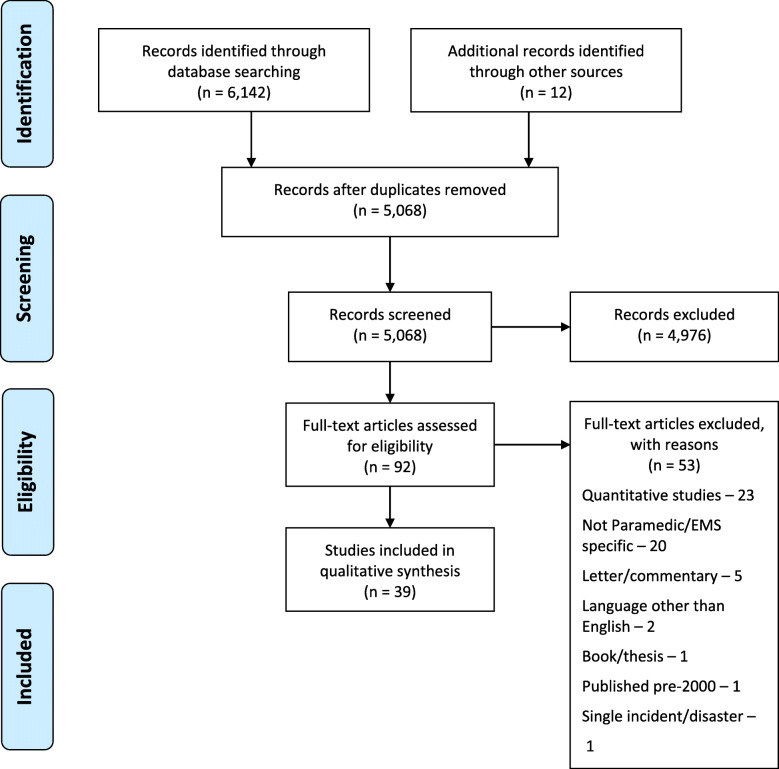
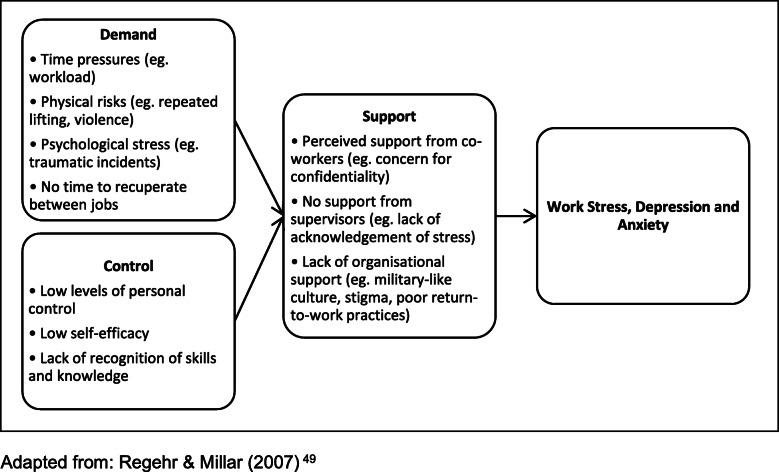
Verification
Claims the paper makes
The claims and statistics of this paper haven’t been checked yet.
Free: it reads the open-access text and checks the first 5 claims that cite a source we can check. Create a free account to check every claim.
Claims other papers make about this one
Each is checked against this paper’s own text: does it say what the citing paper says it does?
The cited source doesn’t support the claim as written.
In the citing paper
“with a very limited understanding in the literature of the key elements within the profession that contribute to the issue.”
From Understanding the Occupational Factors that Influence Paramedic Health and Wellbeing (2024) · cites this paper as Lawn et al., 2020
Checked by a reasoning model — may be wrong.
Experimental — accuracy not yet measuredThe source backs part of the claim, not all of it — or backs it for a different population, condition or comparison.
In the citing paper
“From a healthcare service perspective, emergency medical services (EMS) is a specific context; paramedics are often highly trained healthcare professionals on the front lines, involving autonomous decision making with limited outside hospital resources while working in unpredictable environments under emotional pressure [5–7].”
From Paramedics’ perceptions of job demands and resources in Finnish emergency medical services: a qualitative study (2022) · cites this paper as [7]
Experimental — accuracy not yet measuredThe source backs part of the claim, not all of it — or backs it for a different population, condition or comparison.
In the citing paper
“Lawn et al. (2020) further explain a high prevalence of physical and psychological ailments experienced by the paramedic workforce ultimately negatively impacting their wellbeing”
From Understanding the Occupational Factors that Influence Paramedic Health and Wellbeing (2024) · cites this paper as Lawn et al., 2020
Experimental — accuracy not yet measuredThe cited source says what the claim attributes to it.
In the citing paper
“All the while, paramedics are confronted with a variety of stressful elements [7, 8] or job demands”
From Paramedics’ perceptions of job demands and resources in Finnish emergency medical services: a qualitative study (2022) · cites this paper as [7]
The cited source says what the claim attributes to it.
In the citing paper
“Meanwhile, individual performance pressure [25], conflicts of an ethical nature [26] and social pressures [7], as well as continuously occurring emotional patient encounters [27], seem to be inherent phenomena within the EMS profession.”
From Paramedics’ perceptions of job demands and resources in Finnish emergency medical services: a qualitative study (2022) · cites this paper as [7]
3 more claims about this paper
Create a free account to see every claim other papers make about this one.
Self-check
Percentages, sums and reported differences re-computed from the paper’s own numbers.
The self-check needs the paper’s full text.
Citations
Cites
Utilization of the PICO framework to improve searching PubMed for clinical questions
Schardt, C., Adams, M. B., Owens, T., Keitz, S., & Fontelo, P. (2007) · BMC Medical Informatics and Decision Making · doi:10.1186/1472-6947-7-16 · Cited by 3,053
Popay, J., Roberts, H., Sowden, A., Petticrew, M., Arai, L., Rodgers, M., Britten, N., Roen, K., & Duffy, S. (2006) · Lancaster University · doi:10.13140/2.1.1018.4643 · Cited by 2,070
Mental Disorder Symptoms among Public Safety Personnel in Canada
Carleton, R. N., Afifi, T. O., Turner, S., Taillieu, T., Duranceau, S., LeBouthillier, D. M., Sareen, J., Ricciardelli, R., MacPhee, R. S., Groll, D., et al. (2018) · The Canadian Journal of Psychiatry · doi:10.1177/0706743717723825 · Cited by 558
Exposure to human tragedy, empathy, and trauma in ambulance paramedics.
Regehr, C., Goldberg, G., & Hughes, J. (2002) · American Journal of Orthopsychiatry · doi:10.1037/0002-9432.72.4.505 · Cited by 382
Petrie, K., Milligan-Saville, J., Gayed, A., Deady, M., Phelps, A., Dell, L., Forbes, D., Bryant, R. A., Calvo, R. A., Glozier, N., et al. (2018) · Social Psychiatry and Psychiatric Epidemiology · doi:10.1007/s00127-018-1539-5 · Cited by 382
Health status in the ambulance services: a systematic review
Sterud, T., Ekeberg, Ø., & Hem, E. (2006) · BMC Health Services Research · doi:10.1186/1472-6963-6-82 · Cited by 271
Work-related post-traumatic stress disorder
Skogstad, M., Skorstad, M., Lie, A., Conradi, H. S., Heir, T., & Weisaeth, L. (2013) · Occupational Medicine · doi:10.1093/occmed/kqt003 · Cited by 252
Multiple Dimensions of Work Intensity: Ambulance Work as Edgework
Granter, E., Wankhade, P., McCann, L., Hassard, J. S., & Hyde, P. (2018) · Work Employment and Society · doi:10.1177/0950017018759207 · Cited by 165
Posttraumatic stress disorder in police, firefighters, and emergency dispatchers
Klimley, K. E., Van Hasselt, V. B., & Stripling, A. M. (2018) · Aggression and Violent Behavior · doi:10.1016/j.avb.2018.08.005 · Cited by 159
Lewis-Schroeder, N. F., Kieran, K., Murphy, B. L., Wolff, J. D., Robinson, M. A., & Kaufman, M. L. (2018) · Harvard Review of Psychiatry · doi:10.1097/hrp.0000000000000176 · Cited by 132
Research works printed but not linked: 3
- Phoenix Australia. St John Ambulance review of workplace mental health risks [Internet]. Melbourne, Australia: University of Melbourne;. p. 88. [cited 2019 Mar 22]. https://stjohnwacomau/docs/default-source/corporate-publications/phoenix-reportpdf?sfvrsn=2. Accessed 7 June 2019.
- Critical Appraisal Skills Program (CASP). Systematic review checklist 2018. https://casp-uk.net/. Accessed 7 June 2019.
- Goble EA The culture of coping in paramedics (doctoral dissertation) 2020 Adelaide Flinders University
Cited by
Items 301–394 of 394
Jälkipurkutoiminnan kehittäminen Lapin hyvinvointialueella ensihoidossa
Räisänen, E., & Kulmala, O. (2024) · Theseus (Ammattikorkeakoulujen)
Ulmanen, H. (2023) · Theseus (Ammattikorkeakoulujen)
McTaggart, J. M. (2024) · ScholarWorks (Walden University)
von Knorring, L., & Ulterman, S. (2025) · Lund University Publications Student Papers (Lund University)
Andersson, U. (2023) · DiVA - University of Borås (Högskolan i Borås)
Ensihoitajien psyykkinen jaksaminen ja sen edistäminen
Giers, J., & Pollari, P. (2024) · Theseus (Ammattikorkeakoulujen)
Tessier, M. (2022) · Papyrus : Institutional Repository (Université de Montréal) · doi:10.71781/19074
Berry, S., Sellwood, B., & Parry, S. L. (2024) · Lancaster EPrints (Lancaster University)
Åkerström, F., & Tillgren, E. (2023) · Lund University Publications Student Papers (Lund University)
Alm, J., & Björkman, P. (2024) · DiVA (Linnaeus University)
Fonseca, S. M. (2021) · Portuguese National Funding Agency for Science, Research and Technology (RCAAP Project by FCT) · doi:10.34626/temy-hg71 · Cited by 1
Ambulance nurses ‘perception of support after traumatic experiences
Marusic, M. (2024) · KTH Publication Database DiVA (KTH Royal Institute of Technology)
Thomas, V. (2025) · ANU Open Research (Australian National University) · doi:10.25911/4wvh-ga54
Factors Affecting Response Time of the Saudi Red Crescent Ambulances
Alkhalifa, E. I. E., Abadi, A. A. M. A., Alhumud, Q. M., Alnuwaysir, A. A. H., Alomran, H. H. M., Alsamaee, H. H. M., Aldawsari, A. S. M., Alanazi, S. H. M., Alsultan, M. H. A., Alruwaili, H. M. M., et al. (2025) · International Journal of Computational and Experimental Science and Engineering · doi:10.22399/ijcesen.4197
Multi-Model Fusion for Evaluating the Impact of Garden Design on Urban Mental Health
Qin, J., Liu, M., Yu, J., & Zhang, D. (2025) · Journal of Circuits Systems and Computers · doi:10.1142/s0218126626500349
Ambulance nurse’s experiences of being ambulance incident commander at the scene of an accident
Pettersson, P., & Mickelsson, J. (2023) · KTH Publication Database DiVA (KTH Royal Institute of Technology)
Learning from Excellence för förstavården vid Österbottens välfärdsområde: ett utvecklingsprojekt
Wik, P. (2025) · Theseus (Ammattikorkeakoulujen)
Profissionais do Atendimento Pré-Hospitalar: Aspectos ergonômicos e psicossociais
Oliveira, J. (2025) · doi:10.14393/ufu.di.2025.686 · Cited by 2
Nylund-Ahokas, J. (2025) · Theseus (Ammattikorkeakoulujen)
van Rensburg, C. J., & Thekiso, P. S. (2025) · IISES International Academic Conference · doi:10.20472/iac.2025.068.007
Olçum, F. G. E., & Güre, M. D. P. (2026) · Social Work in Mental Health · doi:10.1080/15332985.2026.2623878
“…described how chaotic field conditions, cumulative trauma exposure, and unpredictable workloads challenged their ability to function – findings consistent with research on vicarious trauma and emotional exhaustion (Alharthi et al., 2024; Andrews et al., 2024; Bevan et al., 2022; Lawn et al., 2020).”
Miller, A., Driscoll, P., & Brown, L. W. (2026) · Community Work & Family · doi:10.1080/13668803.2026.2619057
Managing menstruation while working in the Australasian ambulance service environment
Hobbs, L., Devenish, S., Reynolds, L., Westwood, A. F., & Larsen, B. (2026) · Social Science & Medicine · doi:10.1016/j.socscimed.2025.118920
Self-Reported Fatigue and Injury Risk in Paramedics
Marvin, G., Canetti, E. F. D., Schram, B. L., & Orr, R. M. (2025) · Medical Research Archives · doi:10.18103/mra.v14i1.7144
GREITOSIOS MEDICINOS PAGALBOS TARNYBOS DARBUOTOJŲ KOMANDINIO DARBO YPATUMAI GAIVINIMO METU
Paulikienė, S., & Stankevičienė, D. (2026) · Sveikatos mokslai · doi:10.35988/sm-hs.2026.019
Pradeep, S. (2025) · Tuwhera (Auckland University of Technology)
Abuşka, D., Aydin, Y., Soylu, H. Y., Tunalıgil, V., & Özüçelik, D. N. (2026) · Medicine · doi:10.1097/md.0000000000047751
“[3,4] A meta-analysis of 27 international studies involving 30,878 EMS-HCWs reported the prevalence of post-traumatic stress, depression, anxiety, and psychological distress as 11%, 15%, 15%, and 27%, respectively.”
Luneckienė, L. (2024) · Lithuanian University of Health Sciences
Sheridan, S., Pope, R., MacPhee, R. S., MacQuarrie, A., Fischer, S. L., Buzza, G., Stack, H., Bolton, L., Grevell, J., Sheridan, T., et al. (2026) · Internet Journal of Allied Health Sciences and Practice · doi:10.46743/1540-580x.2831
“The role of a paramedic is recognised physically and mentally demanding 2-5 , with high work related incidence of injury 6-9 , stress, depression 10 , cardiovascular disease 11, 12 , and obesity 13-15 .”
Wanstall, S. E., Naweed, A., Brown, B. W. J., Crowther, M., Adams, R. J., & Reynolds, A. C. (2026) · BMC Health Services Research · doi:10.1186/s12913-026-14278-8
“More-over, the nature of paramedic work involves exposure to potentially traumatising events and a requirement to perform emotional labour [16, 17] which may contribute to delayed sleep onset or poor sleep quality, and thus, insufficient sleep.”
Hutchinson, J. (2026) · The Research Repository @ WVU (West Virginia University)
Rubens, M. (2026) · Queensland University of Technology · doi:10.5204/thesis.eprints.263605
Njoku, J. C., Udedibie Okechukwu Boniface, I., & Uchendu, B. A. (2026) · International Journal of Research and Innovation in Social Science · doi:10.47772/ijriss.2026.10200263
Factores de riesgo y estrés en los servicios de urgencias extrahospitalarias
Cortés, A. L. (2025) · Academica-e (Universidad Pública de Navarra)
Pilbrow, O. (2022) · Tuwhera (Auckland University of Technology)
Boyle, J. (2024) · Staffordshire Online Repository (Staffordshire University)
Razumevanje in zaznavanje utrujenosti zaradi sočutja pri medicinskih sestrah na primarni ravni
Radočaj, T. (2026) · Repository of the University of Primorsk (University of Primorska)
Kekesi, E. K., Asumeng, M. A., Darkwah, E., & Sam, D. L. (2026) · PLOS mental health. · doi:10.1371/journal.pmen.0000483
Huevos, R. E., Villazor, J., Masangcap, J. R., & Montaniel, M. C. (2026) · American Journal of Human Psychology · doi:10.54536/ajhp.v4i1.6906
“…(O’Toole et al ., 2022), However, these qualitative insights together underscores the intricate psychological challenges faced by emergency responders, wherein both direct and indirect trauma exposures demand comprehensive and diversified support systems (Lawn et al ., 2020; Azizi et al ., 2021).”
InfluentialPreditores de Estresse Ocupacional em Profissionais das Centrais de Regulação do SAMU 192 em Goiás
Guimarães, D. A., & Prudente, C. O. M. (2026) · Revista Psicologia Organizações e Trabalho · doi:10.5935/rpot/e26122
The Forgotten Frontline Service: A Mixed Method Exploration of Correctional Officer Wellbeing
Miller, O. K. (2024) · Queensland University of Technology · doi:10.5204/thesis.eprints.249837 · Cited by 1
Johnston, S., Waite, P., Violato, M., Black, S., & Wild, J. (2026) · Research Square · doi:10.21203/rs.3.rs-9542409/v1
Tosun, E., & Ulutaşdemir, N. (2026) · International Journal of Emergency Services · doi:10.1108/ijes-04-2025-0024
Gilbert, B. W., Zimmerman, D. E., Robertson, A., Jones, G. D., Gendron, B. J., Corio, J. L., Harlan, S. S., Engstrom, K., Maisenbach, A., Rambaran, K. A., et al. (2026) · JACCP JOURNAL OF THE AMERICAN COLLEGE OF CLINICAL PHARMACY · doi:10.1002/jac5.70227
Jälkipurun toteutuminen Länsi-Uudenmaan pelastuslaitoksella
Honkanen, J., & Keski-Petäjä, A. (2026) · Theseus (Ammattikorkeakoulujen)
Wolff, D. E. (2026) · Digital Commons (Liberty University)
Kunkuaboor, Y. C., Atandigre, A. R., Opoku-Ware, J., Duku, G. A., Duut, M. S., Mensah, I. A., & Bofa, A. (2026) · BMC Public Health · doi:10.1186/s12889-026-27661-1
“Each type can reinforce the others, collectively shaping workers’ experiences and responses [7, 12, 14].”
Pryba, B., Wieczorek-Wójcik, B., Pietrzak, K., & Gaworska‐Krzemińska, A. (2026) · Frontiers in Public Health · doi:10.3389/fpubh.2026.1830270
“…Imbalance (ERI), Work–Family Conflict (WFC), and organizational factors inherent to shift work and chronic understaffing (7, 16, 17, 28–30, 45, 46) Consequently, despite these methodological constraints, enhancing WLB must be recognized as a critical public health and workforce policy…”
InfluentialIštok, M., Jankelová, N., Dobias, V., & Fabiny, A. (2026) · Zdravotnícke štúdie · doi:10.54937/zs.2026.18.1.41-45
Safarabadi, M., Etedali, M., Bahrami, P., Azadi, D., & Jadidi, A. (2026) · Advanced Biomedical Research · doi:10.4103/abr.abr_222_24
“This can include [21,22] as follows:”
Engberg, M., & Eriksson, E. (2026) · Diva portal (Dalarna University Library)
Hirvikallio, J., Haaranen, A., & Kvist, T. A. (2026) · BMC Health Services Research · doi:10.1186/s12913-026-14994-1
Effects of Sprituality on Resiliance and Psychological Well-being Among Fatherless Adolescents
Esmaeili, M., Khayyer, Z., & بصیری, ن. (2025) · Health Spirituality and Medical Ethics · doi:10.32598/hsmej.12.3.391.1
The Role of Optimism and Self-compassion in Predicting Students’ Social Well-being
Sadeghi, E., & Ahmadi, M. (2025) · Health Spirituality and Medical Ethics · doi:10.32598/hsmej.12.3.985.1
Psychische Traumafolgen im Überblick
Steffes-Holländer, S. (2026) · Springer eBooks · doi:10.1007/978-3-658-51183-8_5
Domeij, J., & Vestin, E. (2026) · DiVA (Luleå University of Technology)
Jebreel, A., Al-Wathinani, A. M., Gilkaramenthi, R., Alamer, B. H., Mushawwah, S. M., Alsamhari, A., Altaezi, L., Abdulbar, H. H., Alharbi, R. J., Abid, S. K., et al. (2026) · International Journal of Emergency Medicine · doi:10.1186/s12245-026-01266-2
“However, the clinical utility, sustainability, and effectiveness of these interventions remain variably reported across the literature, warranting rigorous evaluation and synthesis [7].”
Anchors, Z. G., Arnold, R., Nicholson, H., Voss, S. E., Walsh, N. E., Black, S., & Moore, L. (2026) · BMJ Open · doi:10.1136/bmjopen-2026-119532 · Cited by 2
“Zoe Anchors https://orcid.org/0000-0002-3090-2334 Helen Nicholson https://orcid.org/0000-0002-8964-0607 Sarah Voss https://orcid.org/0000-0001-5044-5145”
Dırmıkcı, S., & Kılıç, B. (2026) · Acta Medica Nicomedia · doi:10.53446/actamednicomedia.1963014
Rimstad, C., Kayanja, J., Newman, S., & Violato, E. M. (2026) · International Journal of Paramedicine · doi:10.56068/hrsg6460
Positivity in the paramedic workplace: pathways to flourishing amidst adversity
van Rensburg, C. J., & Marais, C. (2026) · BMC Health Services Research · doi:10.1186/s12913-026-15117-6
“Physical occurrences such as headaches, insomnia, musculoskeletal ailments, exhaustion, nutrition issues, weight gain and exposure to hazardous microorganisms were also reported [25].”
Ebrahimian, A., Ghiyasi, M., Babamohamadi, H., & Fakhr‐Movahedi, A. (2025) · Mental Health Religion & Culture · doi:10.1080/13674676.2025.2507399
“The critical incidents and workplace culture and demands have a profound effect on the mental, physical, and social health of ambulance personnel, and utilising individual mechanisms to cope with work stress can enhance their health (Lawn et al., 2020).”
Pant, A. B., Yang, K. M., Rattanapan, C., Laosee, O. C., Sritoomma, N., & Suksaroj, T. T. (2026) · Australasian Emergency Care · doi:10.1016/j.auec.2026.07.003
Emami, P., Sadafi, M., Marzban, A., & Fatahi, N. (2026) · Health Science Reports · doi:10.1002/hsr2.72885
Coyte, B., Devenish, S., Betihavas, V., Wehr, T., Steele, M. C., & Kim, F. (2026) · International Emergency Nursing · doi:10.1016/j.ienj.2026.101884
Closing the Gap Between Need and Care: Predictors of Mental Health Service Use in EMS
O’Dare, K., Bowers, C. A., Beidel, D. C., Jiang, J., & McCoy, S. (2026) · International Journal of Environmental Research and Public Health · doi:10.3390/ijerph23080978
“Workers who express psychological difficulties are often stigmatized and perceived as not being able to perform the demands of the job [9].”
Experiências dos enfermeiros-bombeiros no atendimento extra-hospitalar a vítimas politraumatizadas
Miguel, J. I. C. (2025) · Portuguese National Funding Agency for Science, Research and Technology (RCAAP Project by FCT)
PARAMEDİKLERİN PERSPEKTİFİNDEN İŞ TALEPLERİ VE İŞ KAYNAKLARI
Yıldız, D., Bedir, R. N. T., & Kişi, M. (2026) · Uluslararası İktisadi ve İdari İncelemeler Dergisi · doi:10.18092/ulikidince.1820712
Labbé-Roy, N., & Viau‐Quesnel, C. (2026) · Safety Science · doi:10.1016/j.ssci.2026.107397
Mohanty, I., Niyonsenga, T., Salvador‐Carulla, L., Woods, C., & Lukersmith, S. (2026) · PLoS ONE · doi:10.1371/journal.pone.0353179
“Veterans and first responders (VFRs), including firefighters, police officers, para-medics, and military personnel, are often exposed to highly stressful and traumatic events in their line of duty [1,2].”
Police officers' experiences of return to work in Aotearoa New Zealand: A Phenomenological study
de Klerk, L. (2024) · Otago University Research Archive (University of Otago)
The experience of occupational exposure to suicide among police and paramedics in New Zealand
de Lyra, R. L. (2019) · Otago University Research Archive (University of Otago) · Cited by 2
Psychosocial work environment and health among ambulance clinicians in northern Sweden
Hedqvist, A., Lindström, V., Ericsson, C., & Aléx, J. (2026) · Discover Mental Health · doi:10.1007/s44192-026-00573-7
“At the same time, consistent with research in prehospital emergency care, repeated exposure to traumatic incidents often co-exists with strong professional identity, collegial solidarity, and a sense of meaning derived from teamwork and patient care [32, 41–43].”
Paramedic perspectives on workplace peer support: a thematic analysis
Sawtell, E. S. D., Cowlishaw, S., King, K., Dobbie, M. L., Bobetic, K. L., Elmer, J. J., Wolkow, A. P., & Morton, E. E. (2026) · International Journal of Qualitative Studies on Health and Well-Being · doi:10.1080/17482631.2026.2722434
“She has strong partnerships in research, obtaining grant funding for prevention and early intervention programmes around suicide intervention, RCT early intervention for PTSD, and Compassion training RCT for paramedics in 2025.”
InfluentialAlmutairi, A. Z. (2024) · Journal of International Crisis and Risk Communication Research · doi:10.63278/jicrcr.vi.1017 · Cited by 1
“Lawn et al. (2020) highlight concerns that paramedics often represent an overlooked profession within healthcare, overshadowed by more prominent areas such as emergency departments and acute care (Lawn et al., 2020).”
InfluentialWankhade, P., & Hertelndy, A. (2022) · Edge Hill University Research Information Repository (Edge Hill University)
Tahlil, A. A., Mohamed, M. A., Ali, L. A., Abdi, M. A., Ahmed, H. S., Mohamud, N. A., Adam, A. H., & Osman, A. Y. (2026) · Frontiers in Public Health · doi:10.3389/fpubh.2026.1935035
“Ambulance personnel report that while organizations provide peer support programs, actual helpful debriefing occurs largely outside formal organizational channels, with family or friends rather than professional resources (22).”
The Role Of Nursing And Psychology In Emergency Healthcare
Mohammed Eatie Slzahrani, A. A. A. A., & Anwar Salem Ahmed Alghamdi, H. A. A. A. (2024) · The Review of Diabetic Studies · doi:10.70082/mrd0ab77
The Role of Saudi Red Crescent Authority in Emergency Response
al, L. M. A. E. (2024) · Letters in High Energy Physics
HC-05 PROTOCOL IOT BASED FOR SMART WEARABLE HEART-RATE MONITORING SYSTEM WITH BLYNK APPLICATION
Azmin, A., Mahyuni, A., Faiza, Z., Ahmad, N. R., Akhbar, R., & Rahiman, W. M. Y. (2022) · Journal of Islamic Social Economics and Development
Mohamed, M., & Mazalan, N. S. (2024) · Jurnal Penyeidikan Sains Sosial
Montenegro, J. E. O., Arroyo, L. Á. B., Mora, M. A. S., & Baquerizo, R. D. C. (2024) · Revista Científica Interdisciplinaria Investigación y Saberes
Lyana, N. A., Victoria, A. Z., & Megawati, R. R. (2026) · International Conference on Health Practice and Research
Phillpotts, E. L., Meaden, R., Byron‐Daniel, J., & Voss, S. E. (2026) · Stress and Health · doi:10.1002/smi.70233
“The search strategy was developed in line with previous similar systematic reviews, including Lawn et al. (2020), with outcomes including psychological wellbeing, mental health, work related stress and physical health (Lawn et al. 2020).”
Ciriaco, R. N., Cordero, R. P., Aslam, Y. M., Javines, R. G., Molina, E. P., Canapi, J. B., & Abubakar, A. (2026) · Emergency Care Journal · doi:10.4081/ecj.2026.15994
Russo‐Netzer, P., & Atzmon‐Meshulam, V. (2026) · International Journal of Psychology · doi:10.1002/ijop.70277
Wahyuningsih, I., Achmad, B. F., Kosim, M. Y., & Sari, D. (2026) · Paramedicine · doi:10.1177/27536386261496253
(2026) · International Journal of Drug Delivery Technology · doi:10.25258/ijddt.16.67s.36
Ask the experts: a practitioner-centred approach to resilience in emergency medical services
Butterworth, J., & Tangen, J. M. (2026) · European Journal of Psychotraumatology · doi:10.1080/20008066.2026.2737041
“Unpredictability – low-fidelity information, dispatch–scene mismatches, stochastic exposure across careers – captured the fragility of expert functioning when predictive models are violated, and is well documented in the first responder literature (Lawn et al., 2020).”
Burnout in Out-of-Hospital Emergency Healthcare Professionals: Systematic Review and Meta-Analysis
Rodríguez-Gómez, M. J., Suleiman-Martos, S., Gutiérrez-Pastor, J. M., Loonsri-Pizarro, I., García‐Lara, R. A., Quesada-Caballero, M., & Caballero-Mateos, A. M. (2026) · Healthcare · doi:10.3390/healthcare14213591
Whiteley, C. (2026) · Sunderland Repository (University of Sunderland)
Wood, C.-J. (2026) · Nelson Mandela University Research Repository
Cai, Y., Shanghavi, A. A., & Mehta, R. K. (2026) · Proceedings of the Human Factors and Ergonomics Society Annual Meeting · doi:10.1177/10711813261498776
Metadata
- Authors
- Lawn, S., Roberts, L., Willis, E., Couzner, L., Mohammadi, L., & Goble, E.
- Affiliations
- Flinders University (AU)
- Corresponding author
- Lawn, Sharon
- Venue
- BMC Psychiatry
- Published
- 2020-07-03
- Volume
- 20
- Issue
- 1
- Pages
- 348-348
- ISSN
- 1471-244X (ISSN-L)
- PMC
- PMC7332532
- OpenAlex
- W3038825886
- Semantic Scholar
- 2e94b196a9f39cebdb44424b50ad4ce14098d61c
- Cited by
- 304
- References
- 53
- Citations by year
- 2026: 43 · 2025: 67 · 2024: 71 · 2023: 47 · 2022: 48 · 2021: 26 · 2020: 2
- FWCI
- 7.56
- Type
- journal article
- Language
- en
- Open access
- gold
- doi.org
- Licence
- cc-by
- creativecommons.org/licenses/by/4.0 (tdm)
- creativecommons.org/licenses/by/4.0 (vor)
- Locations
- BMC Psychiatry (publishedVersion, cc-by)
- PubMed Central (publishedVersion, cc-by)
- PubMed (publishedVersion)
- Acquire (CQUniversity) (submittedVersion, cc-by)
- DOAJ (DOAJ: Directory of Open Access Journals) (submittedVersion, cc-by-sa)
- Figshare (submittedVersion, cc-by)
- Funders
- Ambulance Employees Association of South Australia (NA)
- Topics
- Health Sciences › Medicine › Public Health, Environmental and Occupational Health › Occupational Health and Performance
- Health Sciences › Medicine › Public Health, Environmental and Occupational Health › Occupational Health and Burnout
- Social Sciences › Psychology › Social Psychology › Stress and Burnout Research
- Keywords
- ambulance personnel, paramedics, emergency medical services, occupational stress, psychological well-being, physical health, social well-being, post-traumatic stress disorder, depression, anxiety, shift work, rostering, organizational support, organizational culture, coping strategies, return to work, first responders
- MeSH terms
- Occupational Stress, Allied Health Personnel, Ambulances, Emergency Medical Services, Health Status, Humans, Mental Health, Volunteers, Organizational Culture, Qualitative Research
About these checks
Registry, retraction, Cites and statistics results are computed, not judged, with one exception: a printed reference that no index lists is read once by a model before it counts as a citation error. Claims are extracted by a model and kept only when their quote appears verbatim in the text; each cited source is then checked, with a model’s help, for whether it says what the claim relies on. Those verdicts can be wrong — read the claim’s quote and the cited source before relying on one.
Statistics and arithmetic are recomputed, not judged.
Confidence bands are shown only for fields calibrated on our annotated test set. None is calibrated yet, so no band is shown.
What counts as a claim ›How we measure confidence ›How we check this ›
Are you an author, or do you see a problem with this page? Request a review
Data sources
Bibliographic data: Semantic Scholar, OpenAlex, Crossref.
Contains information from the Semantic Scholar Academic Graph Datasets, made available under the ODC Attribution License (ODC-BY 1.0).
Semantic Scholar’s data is described in: Kinney, R., et al. (2023). The Semantic Scholar Open Data Platform. arXiv:2301.10140.
