

The effects of emergency medical service work on the psychological, physical, and social well-being of ambulance personnel: a systematic review of qualitative research
Open accessThe DOI matches its Crossref record; 52 of the 53 references it cites were found in a registry or an index.
Abstract
Background: High rates of mental distress, mental illness, and the associated physical effects of psychological injury experienced by ambulance personnel has been widely reported in quantitative research. However, there is limited understanding of how the nature of ambulance work contributes to this problem, the significant large toll that emergency medical response takes on the individual, and particularly about late and cumulative development of work-related distress among this first responder workforce. Methods: This study examined peer-reviewed qualitative research published from 2000 to 2018 to outline the effect of emergency medical response work on the psychological, psychosocial, and physical health of paramedics, ambulance officers, ambulance volunteers, and call-takers. Databases searched included: Ovid Medline, CINAHL, Ovid EMcare, PsychInfo and Scopus. The systematic review was organised around five key areas: impact of the work on psychological wellbeing; impact of psychological stress on physical wellbeing; how work-related well-being needs were articulated; effects of workflow and the nature of the work on well-being; and, effects of organisational structures on psychological and physical well-being. Results: Thirty-nine articles met the eligibility criteria. Several factors present in the day-to-day work of ambulance personnel, and in how organisational management acknowledge and respond, were identified as being significant and contributing to mental health and well-being, or increasing the risk for developing conditions such as PTSD, depression, and anxiety. Ambulance personnel articulated their well-being needs across four key areas: organisational support; informal support; use of humour; and individual mechanisms to cope such as detachment and external supports. Conclusions: Interactions between critical incidents and workplace culture and demands have an overwhelming impact on the psychological, physical and social well-being of ambulance personnel. These include day-to-day managerial actions and responses, the impact of shift work, poorly-managed rosters, and long hours of work with little time between for recovery. Mental health issues result from exposure to traumatic events, and the way managers and peers respond to worker distress. Ambulance personnel suffering from work-related stress feel abandoned by peers, management, and the service, during illness, in return-to-work, and post-retirement. Policy, programmes and interventions, and education need to occur at an individual, peer, organisational, and government level.
Overview
The claims and statistics of this paper haven’t been checked yet.
Free: it reads the open-access text and checks the first 5 claims that cite a source we can check. Create a free account to check every claim.
Integrity signals
Registry
Cites
Statistics
Figures
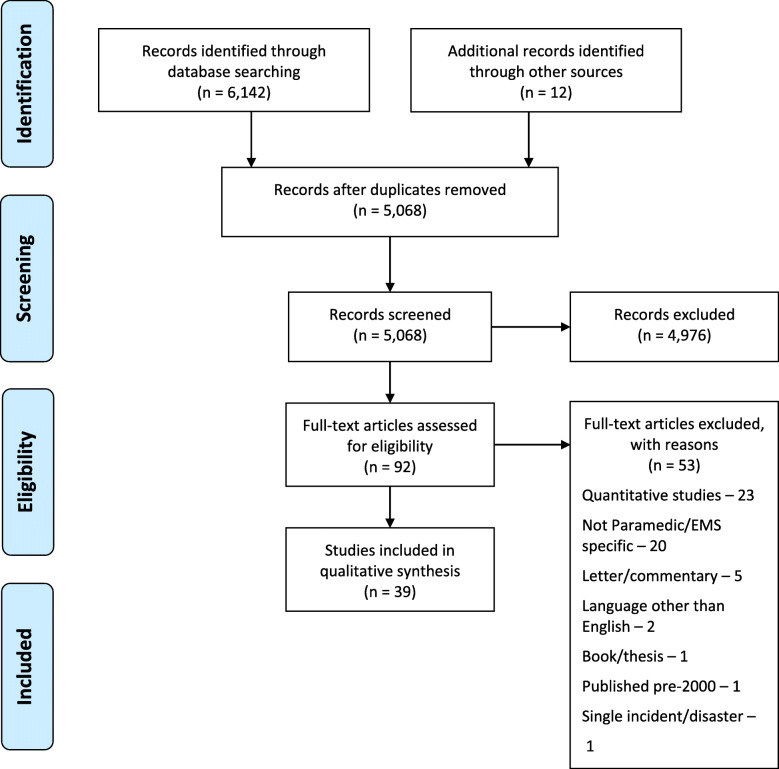
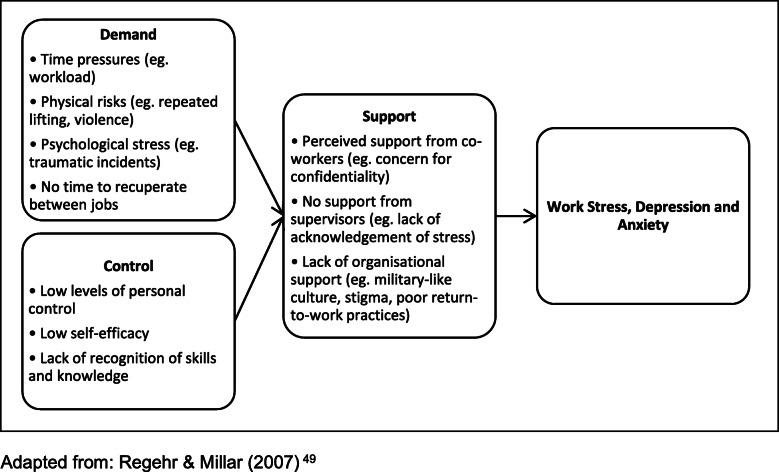
Verification
Claims the paper makes
The claims and statistics of this paper haven’t been checked yet.
Free: it reads the open-access text and checks the first 5 claims that cite a source we can check. Create a free account to check every claim.
Claims other papers make about this one
Each is checked against this paper’s own text: does it say what the citing paper says it does?
The cited source doesn’t support the claim as written.
In the citing paper
“with a very limited understanding in the literature of the key elements within the profession that contribute to the issue.”
From Understanding the Occupational Factors that Influence Paramedic Health and Wellbeing (2024) · cites this paper as Lawn et al., 2020
Checked by a reasoning model — may be wrong.
Experimental — accuracy not yet measuredThe source backs part of the claim, not all of it — or backs it for a different population, condition or comparison.
In the citing paper
“From a healthcare service perspective, emergency medical services (EMS) is a specific context; paramedics are often highly trained healthcare professionals on the front lines, involving autonomous decision making with limited outside hospital resources while working in unpredictable environments under emotional pressure [5–7].”
From Paramedics’ perceptions of job demands and resources in Finnish emergency medical services: a qualitative study (2022) · cites this paper as [7]
Experimental — accuracy not yet measuredThe source backs part of the claim, not all of it — or backs it for a different population, condition or comparison.
In the citing paper
“Lawn et al. (2020) further explain a high prevalence of physical and psychological ailments experienced by the paramedic workforce ultimately negatively impacting their wellbeing”
From Understanding the Occupational Factors that Influence Paramedic Health and Wellbeing (2024) · cites this paper as Lawn et al., 2020
Experimental — accuracy not yet measuredThe cited source says what the claim attributes to it.
In the citing paper
“All the while, paramedics are confronted with a variety of stressful elements [7, 8] or job demands”
From Paramedics’ perceptions of job demands and resources in Finnish emergency medical services: a qualitative study (2022) · cites this paper as [7]
The cited source says what the claim attributes to it.
In the citing paper
“Meanwhile, individual performance pressure [25], conflicts of an ethical nature [26] and social pressures [7], as well as continuously occurring emotional patient encounters [27], seem to be inherent phenomena within the EMS profession.”
From Paramedics’ perceptions of job demands and resources in Finnish emergency medical services: a qualitative study (2022) · cites this paper as [7]
3 more claims about this paper
Create a free account to see every claim other papers make about this one.
Self-check
Percentages, sums and reported differences re-computed from the paper’s own numbers.
The self-check needs the paper’s full text.
Citations
Cites
Utilization of the PICO framework to improve searching PubMed for clinical questions
Schardt, C., Adams, M. B., Owens, T., Keitz, S., & Fontelo, P. (2007) · BMC Medical Informatics and Decision Making · doi:10.1186/1472-6947-7-16 · Cited by 3,053
Popay, J., Roberts, H., Sowden, A., Petticrew, M., Arai, L., Rodgers, M., Britten, N., Roen, K., & Duffy, S. (2006) · Lancaster University · doi:10.13140/2.1.1018.4643 · Cited by 2,070
Mental Disorder Symptoms among Public Safety Personnel in Canada
Carleton, R. N., Afifi, T. O., Turner, S., Taillieu, T., Duranceau, S., LeBouthillier, D. M., Sareen, J., Ricciardelli, R., MacPhee, R. S., Groll, D., et al. (2018) · The Canadian Journal of Psychiatry · doi:10.1177/0706743717723825 · Cited by 558
Exposure to human tragedy, empathy, and trauma in ambulance paramedics.
Regehr, C., Goldberg, G., & Hughes, J. (2002) · American Journal of Orthopsychiatry · doi:10.1037/0002-9432.72.4.505 · Cited by 382
Petrie, K., Milligan-Saville, J., Gayed, A., Deady, M., Phelps, A., Dell, L., Forbes, D., Bryant, R. A., Calvo, R. A., Glozier, N., et al. (2018) · Social Psychiatry and Psychiatric Epidemiology · doi:10.1007/s00127-018-1539-5 · Cited by 382
Health status in the ambulance services: a systematic review
Sterud, T., Ekeberg, Ø., & Hem, E. (2006) · BMC Health Services Research · doi:10.1186/1472-6963-6-82 · Cited by 271
Work-related post-traumatic stress disorder
Skogstad, M., Skorstad, M., Lie, A., Conradi, H. S., Heir, T., & Weisaeth, L. (2013) · Occupational Medicine · doi:10.1093/occmed/kqt003 · Cited by 252
Multiple Dimensions of Work Intensity: Ambulance Work as Edgework
Granter, E., Wankhade, P., McCann, L., Hassard, J. S., & Hyde, P. (2018) · Work Employment and Society · doi:10.1177/0950017018759207 · Cited by 165
Posttraumatic stress disorder in police, firefighters, and emergency dispatchers
Klimley, K. E., Van Hasselt, V. B., & Stripling, A. M. (2018) · Aggression and Violent Behavior · doi:10.1016/j.avb.2018.08.005 · Cited by 159
Lewis-Schroeder, N. F., Kieran, K., Murphy, B. L., Wolff, J. D., Robinson, M. A., & Kaufman, M. L. (2018) · Harvard Review of Psychiatry · doi:10.1097/hrp.0000000000000176 · Cited by 132
Research works printed but not linked: 3
- Phoenix Australia. St John Ambulance review of workplace mental health risks [Internet]. Melbourne, Australia: University of Melbourne;. p. 88. [cited 2019 Mar 22]. https://stjohnwacomau/docs/default-source/corporate-publications/phoenix-reportpdf?sfvrsn=2. Accessed 7 June 2019.
- Critical Appraisal Skills Program (CASP). Systematic review checklist 2018. https://casp-uk.net/. Accessed 7 June 2019.
- Goble EA The culture of coping in paramedics (doctoral dissertation) 2020 Adelaide Flinders University
Cited by
Factors preceding occupational distress in emergency nurses: An integrative review
Caulfield, R., Wiseman, T., Gullick, J. G., & Ogilvie, R. (2022) · Journal of Clinical Nursing · doi:10.1111/jocn.16461 · Cited by 94
Cameron, G., Mulvenna, M. D., Ennis, E., O’Neill, S. M., Bond, R., Cameron, D., & Bunting, A. (2024) · JMIR Mental Health · doi:10.2196/67785 · Cited by 81
de Lyra, R. L., McKenzie, S., Every‐Palmer, S., & Jenkin, G. L. S. (2021) · PLoS ONE · doi:10.1371/journal.pone.0251038 · Cited by 77
“Attending suicide calls is one of the critical incidents ambulance personnel describe as leading to an emotional toll and therefore contributes to their mental health and well-being [12].”
BackgroundHuang, G., Chu, H., Chen, R., Liu, D., Banda, K. J., O’Brien, A. P., Jen, H.-J., Chiang, K.-J., Chiou, J.-F., & Chou, K.-R. (2022) · Journal of Global Health · doi:10.7189/jogh.12.05028 · Cited by 64
Strandås, M., Vizcaya-Moreno, M. F., Ingstad, K., Sepp, J., Linnik, L., & Vaismoradi, M. (2024) · Journal of Multidisciplinary Healthcare · doi:10.2147/jmdh.s460194 · Cited by 64
Glawing, C., Karlsson, I., Kylin, C., & Nilsson, J. (2023) · Journal of Advanced Nursing · doi:10.1111/jan.15819 · Cited by 61
Thomas, V., Bizumić, B., Cruwys, T., & Walsh, E. (2024) · Psychological Trauma Theory Research Practice and Policy · doi:10.1037/tra0001490 · Cited by 51
Li, C., Castillo, C. F. S., Nahidi, S., Kuznetsov, S., Considine, J., Curtis, K. A., Fry, M., Morgan, D. P., Walker, T., Burgess, A., et al. (2021) · Australasian Emergency Care · doi:10.1016/j.auec.2021.03.008 · Cited by 52
Calamassi, D., Vigni, M. L. L., Fumagalli, C., Gheri, F., Pomponi, G. P., & Bambi, S. (2022) · Acta bio-medica dell'Ateneo parmense/Acta biomedica · doi:10.23750/abm.v93is2.12915 · Cited by 51
“Healthcare collaborators, N (%) 3 (11) 3 (11) 2 (7)”
BackgroundArena, A. F. A., Gregory, M., Collins, D., Vilus, B., Bryant, R. A., Harvey, S. B., & Deady, M. (2025) · Clinical Psychology Review · doi:10.1016/j.cpr.2025.102622 · Cited by 50
Ericsson, C. R., Lindström, V., Rudman, A., & Nordquist, H. (2022) · BMC Health Services Research · doi:10.1186/s12913-022-08856-9 · Cited by 40
“This broad responsibility correlates with a sense of helplessness or inadequacy among paramedic professionals [7].”
BackgroundMethodInfluentialMontero-Tejero, D. J., Picón, N. J., Gómez-Salgado, J. C., Vidal-Tejero, E., & Fagundo-Rivera, J. (2024) · Psychology Research and Behavior Management · doi:10.2147/prbm.s455224 · Cited by 40
“59 Likewise, a significant influence of the low level of support perceived by nurses from their superiors during the performance of their duties has also been observed.”
InfluentialThe impact of resilience on anxiety and depression among grass-roots civil servants in China
Song, H., Zhang, M., Wang, Y., Yang, L., Wang, Y., & Li, Y. (2021) · BMC Public Health · doi:10.1186/s12889-021-10710-2 · Cited by 44
Kangarlou, M. B., Fatemi, F., Paknazar, F., & Dehdashti, A. (2022) · Frontiers in Public Health · doi:10.3389/fpubh.2022.852629 · Cited by 41
“(33) reported that older nurses had lower personal accomplishments but found no significant association between age and working years with emotional exhaustion or depersonalization (32).”
BackgroundThe Molecular Relationship between Stress and Insomnia
Birch, J., & Vanderheyden, W. M. (2022) · Advanced Biology · doi:10.1002/adbi.202101203 · Cited by 32
Al-Wathinani, A. M., Almusallam, M. A., Albaqami, N. A., Aljuaid, M. M., Alghamdi, A. A., Alhallaf, M. A., & Goniewicz, K. (2023) · Healthcare · doi:10.3390/healthcare11091277 · Cited by 29
Gerodimos, V., Καρατράντου, Κ., Papazeti, K., Batatolis, C., & Κrommidas, C. (2022) · International Archives of Occupational and Environmental Health · doi:10.1007/s00420-022-01856-6 · Cited by 31
“, accident, pandemic), can lead to emotional exhaustion, helplessness, depersonalization, negative attitudes towards work and life, and reduced accomplishment (Lawn et al. 2020; Restauri and Sheridan 2020).”
BackgroundReid, B. O., Næss-Pleym, L. E., Bakkelund, K. E., Dale, J., Uleberg, O., & Nordstrand, A. E. (2022) · Scandinavian Journal of Trauma, Resuscitation and Emergency Medicine · doi:10.1186/s13049-021-00991-2 · Cited by 25
“Accordingly, Posttraumatic Stress Disorder (PTSD) has been shown to be elevated among first responders (Emergency Medical Services (EMS), fire service, police force) compared to the general population [7, 8].”
BackgroundJohnston, S., Waite, P., Laing, J., Rashid, L., Wilkins, A., Hooper, C., Hindhaugh, E., & Wild, J. (2025) · International Journal of Environmental Research and Public Health · doi:10.3390/ijerph22040629 · Cited by 30
“We found that organizational structure may complicate the landscape with a pervasive stigma around mental health, discouraging open discourse and perpetuating a culture that values stoicism [66].”
The Paramedic at Work: A Sociology of a New Profession
McCann, L. (2022) · doi:10.1093/oso/9780198816362.001.0001 · Cited by 38
Ericsson, C. R., Nordquist, H., Lindström, V., & Rudman, A. (2021) · BMC Public Health · doi:10.1186/s12889-021-11851-0 · Cited by 23
“Other theories suggest that paramedics’ generally lower STS and BO scores are partly explained by the need to fit in socially, a ‘culture of managing’ prominent in paramedic and acute healthcare cultures, leading to positive response biases [11, 12].”
BackgroundInfluentialTahernejad, A., Makki, F., Rezaei, E., Marzban, H., Tahernejad, S., & Sahebi, A. (2024) · Public Health · doi:10.1016/j.puhe.2024.08.020 · Cited by 23
Özbay, A., & Bülbül, A. E. (2024) · Journal of Community Psychology · doi:10.1002/jcop.23150 · Cited by 24
The Role and Value of Chaplains in the Ambulance Service: Paramedic Perspectives
Leach, K. T., Simpson, P., Lewis, J. M., & Levett-Jones, T. L. (2021) · Journal of Religion and Health · doi:10.1007/s10943-021-01446-9 · Cited by 25
Alzahrani, A., Keyworth, C., Alshahrani, K. M., Alkhelaifi, R., & Johnson, J. (2024) · Social Psychiatry and Psychiatric Epidemiology · doi:10.1007/s00127-024-02755-6 · Cited by 23
“These burdens pose significant challenges, including related physical and mental demands, and so it is unsurprising that the risk of common mental health disorders is elevated in this group [4, 5, 24, 40].”
The relationship between role identity and mental health among paramedics
Mausz, J., Donnelly, E. A., Moll, S. E., Harms, S., Tavares, W., & McConnell, M. (2021) · Journal of Workplace Behavioral Health · doi:10.1080/15555240.2021.1981763 · Cited by 21
“A multitude of investigations have convincingly demonstrated that paramedics are at an increased risk of adverse mental health outcomes as a result of their work (Berger et al., 2012; Brooks & Brooks, 2021; Lawn et al., 2020).”
BackgroundReid, B. O., Næss-Pleym, L. E., Haugland, H., Dale, J., Uleberg, O., & Nordstrand, A. E. (2022) · Air Medical Journal · doi:10.1016/j.amj.2022.02.006 · Cited by 24
Perceptions and experiences of mental health support for ambulance trust employees
Johnston, S., Wild, J., Sanderson, K. A., & Kent, B. (2022) · Journal of Paramedic Practice · doi:10.12968/jpar.2022.14.7.287 · Cited by 21
Alzahrani, A., Keyworth, C., Wilson, C., & Johnson, J. (2023) · BMC Health Services Research · doi:10.1186/s12913-023-09374-y · Cited by 25
“[2], our participants believed that patient care could be negatively affected by their limited knowledge and resources as students as well as other personal or patient-related factors (e.”
BackgroundMusio, M. E., Ginogi, F., Casini, S., Lucente, G., Timmins, F., Hayter, M., Catania, G., Zanini, M. P., Aleo, G., Sasso, L., et al. (2024) · Journal of Clinical Nursing · doi:10.1111/jocn.17511 · Cited by 20
Chen, D.-D., Tu, J.-H., Ling, K.-N., Jin, X., & Huang, H. (2025) · Frontiers in Public Health · doi:10.3389/fpubh.2024.1463676 · Cited by 23
Newton, J., & Smith, A. D. A. C. (2024) · BMC Medical Education · doi:10.1186/s12909-024-05526-8 · Cited by 18
“The wider literature highlights the clinical process for declaring life extinct is robustly taught to healthcare professionals, but effectively dealing with the anxiety and grief associated with making such a decision is not [6, 57–59].”
BackgroundThe prevalence of diseases in German emergency medical services staff: A survey study
Möckel, L., Arnold, C., May, T., & Hofmann, T. (2022) · Archives of Environmental & Occupational Health · doi:10.1080/19338244.2022.2031846 · Cited by 19
“Potential reasons for mental disorders in pre-hospital EMS staff might be the continuous exposure to traumatic events, but also a lack of organizational responds to job-related stressors.(24,25) In addition, German EMS staff with pain indicated significantly higher depression scores compared to those without pain.”
BackgroundPhung, V., Sanderson, K. A., Pritchard, G. A., Bell, F., Hird, K., Wankhade, P., Asghar, Z. B., & Siriwardena, A. N. (2022) · BMC Health Services Research · doi:10.1186/s12913-022-08729-1 · Cited by 17
“Just as ambulance staff face obstacles in achieving positive wellbeing [7], so do wellbeing policies and leads.”
BackgroundInfluentialPerera, N., Birnie, T., Whiteside, A., Ball, S. J., & Finn, J. (2023) · PLoS ONE · doi:10.1371/journal.pone.0279521 · Cited by 17
(2022) · doi:10.3389/fpsyt.2022.780498 · Cited by 15
“Due to this accumulation of traumatic events, emergency and rescue personnel experience higher levels of psychological stress and are consequently at greater risk of developingmental health problems (6, 7).”
BackgroundDynamic ambulance relocation: a scoping review
Becker, J., Kurland, L., Höglund, E., & Hugelius, K. (2023) · BMJ Open · doi:10.1136/bmjopen-2023-073394 · Cited by 15
The COVID-19 pandemic as a stress factor in the work of a paramedic
Spychała, A., Piwowarska, M., & Piekut, A. (2023) · Medycyna Pracy · doi:10.13075/mp.5893.01278 · Cited by 15
Coyte, B., Betihavas, V., Devenish, S., & Foster, K. (2023) · Paramedicine · doi:10.1177/27536386231206501 · Cited by 16
Herttuainen, A., & Nordquist, H. (2023) · INQUIRY The Journal of Health Care Organization Provision and Financing · doi:10.1177/00469580231210706 · Cited by 16
“10,21,23 Other studies in the nursing sector have linked chronic stress emerging from these types of issues to recently graduated nurses’ intentions to leave the profession.”
BackgroundMilling, L., Binderup, L. G., de Muckadell, C. S., Christensen, E. F., Lassen, A. T., Christensen, H. C., Nielsen, D. S., Mikkelsen, S. S., The Danish Cardiac Arrest Registry Group, Bergmann, R. A., et al. (2021) · BMC Medical Ethics · doi:10.1186/s12910-021-00654-y · Cited by 15
“Prehospital resuscitation providers work in stressful environments under considerable time constraints leaving little time for in-depth documentation [23, 24] However, our finding of “best practice” examples indicate that accurate and transparent documentation is feasible in the prehospital environment.”
BackgroundSawyer, S., Cowlishaw, S., Kendrick, K., Boyle, M. J., Dicker, B. L., & Lord, B. (2022) · Prehospital Emergency Care · doi:10.1080/10903127.2022.2064019 · Cited by 15
“When reporting on best estimates of incidence and prevalence when multiple studies report on the same outcomes, we will give priority in best estimates to studies that are (1) deemed to be of higher methodological quality, and then (2) that are more representative of the entire population under investigation using the…”
BackgroundHeath, G., Wankhade, P., & Murphy, P. (2024) · Public Money & Management · doi:10.1080/09540962.2021.1899613 · Cited by 13
“…to musculoskeletal injuries (Stilwell & Stilwell, 1984) and the multiple dimensions of work intensity (Granter et al., 2019); with increased exposure to traumatic events, loss and grief leading to sleep disorders, obesity and PTSD cases in ambulance sta ff (Lawn et al., 2020; Nelson et al., 2020).”
BackgroundPuyvelde, M. V., Herck, J. V., den Bossche, J. V., Goethals, F., Gijbels, D., Detaille, F., & Pattyn, N. (2023) · Frontiers in Public Health · doi:10.3389/fpubh.2023.1136090 · Cited by 13
Kearney, J., Muir, C., Salmon, P. M., & Smith, K. L. (2024) · Safety Science · doi:10.1016/j.ssci.2024.106419 · Cited by 14
Kamaja, V., & Nordquist, H. (2024) · Journal of Occupational Medicine and Toxicology · doi:10.1186/s12995-024-00417-6 · Cited by 13
“In addition, social support reduces the likelihood of developing PTSD [36].”
BackgroundResultInfluentialSo, B. C. L., Lee, E. W. F., Ng, S. S. M., & Man, S. S. (2025) · Scientific Reports · doi:10.1038/s41598-025-04945-x · Cited by 13
Ambulance personnel’s perceptions on their workplace well-being: A descriptive interpretative study
Osmančević, B., Karnjuš, I., & Prosen, M. (2023) · Work · doi:10.3233/wor-230056 · Cited by 14
“In addition to the nature of their work, ambulance personnel are also influenced by other factors such as high workloads, work demands, shift work, limited timefordebriefingordowntime,hierarchicalsupervi-sion,andlackofrecognition,whichareassignificant asthenatureoftheworkitself,ifnotmoreso[16].”
Traynor, A., Doyle, B., Eppich, W., Tjin, A., Mulhall, C. M., & O’Toole, M. (2024) · Comprehensive Psychiatry · doi:10.1016/j.comppsych.2024.152499 · Cited by 13
Tikkanen, V., Kääriäinen, M., & Roivainen, P. (2025) · Emergency and Critical Care Medicine · doi:10.1097/ec9.0000000000000145 · Cited by 16
Benton, J. S., Lee, C., Long, H. A., Sugavanam, T., Holmes, L., Keane, A., Thurley, N., Kyle, S. D., Ray, D. W., & French, D. (2025) · Scandinavian Journal of Work Environment & Health · doi:10.5271/sjweh.4223 · Cited by 15
Wilson, C., Janes, G., Lawton, R., & Benn, J. (2023) · Healthcare · doi:10.3390/healthcare11162229 · Cited by 13
“EMS professionals work autonomously in an environment characterised by complexity, uncertainty and extreme stressors [3,4].”
BackgroundKorpela, S., & Nordquist, H. (2024) · BMC Psychology · doi:10.1186/s40359-024-01534-x · Cited by 14
“Moreover, it has been noted that among paramedics, there can be a lower overall psychological, physical, and social well-being [1, 10].”
BackgroundКононенко, О., Ivanchenko, A., Гайворонська, Т. О., Khitrova, T. V., Semenko, S., & Kuzmin, V. V. (2024) · Revista de Cercetare si Interventie Sociala · doi:10.33788/rcis.84.14 · Cited by 20
Younes, S., Hallit, S. R., Irfan, M., Khatib, S. E., Brytek‐Matera, A., Eze, S. C., Egwu, K. C., Jabeen, R., Pavlović, N., Salameh, P., et al. (2024) · BioPsychoSocial Medicine · doi:10.1186/s13030-024-00300-0 · Cited by 11
Occupational Stress Factors and Psychosocial Environment for Ambulance Personnel
Iordache, R. M., Cioca, G., Mihăilă, D. C., Petreanu, V., Ionescu, Ș. E., & Antonov, A. E. (2025) · Sustainability · doi:10.3390/su17104518 · Cited by 11
Gonczaryk, A., Chmielewski, J. P., Strzelecka, A., Fiks, J., Nowak-Starz, G., & Florek-Łuszczki, M. (2022) · Annals of Agricultural and Environmental Medicine · doi:10.26444/aaem/151531 · Cited by 12
Korpela, S., & Nordquist, H. (2023) · Scandinavian Journal of Psychology · doi:10.1111/sjop.12967 · Cited by 12
Bäckström, D., & Alvinius, A. (2024) · International Journal of Emergency Medicine · doi:10.1186/s12245-024-00599-0 · Cited by 12
“Carrying the formal liability for the situation is a source of stress that can be observed in many professions working in prehospital care [17].”
BackgroundHaruna, J., Minamoto, N., Shiromaru, M., Taguchi, Y., Makino, N., Kanda, N., & Uchida, H. (2022) · Healthcare · doi:10.3390/healthcare10030518 · Cited by 14
Reimagining Well-Being Research in HRD
Alagaraja, M. (2023) · Human Resource Development Review · doi:10.1177/15344843231170293 · Cited by 12
“One such commonality is that both HRD and non-HRD scholars (Lawn et al., 2020) found it valuable to develop research linking different dimensions of well-being to workplace performance outcomes.”
BackgroundImproving spaces for women first responders: A grounded theory on gender equity
Gregory, K., Mielke, J. G., & Neiterman, E. (2025) · PLoS ONE · doi:10.1371/journal.pone.0330849 · Cited by 10
Mansouri, T., Ghanatios, G. E., Hatzinger, L. A., Barich, R., Dampha, E., Temple, J. L., Clemency, B. M., & Hostler, D. P. (2022) · Nutrients · doi:10.3390/nu14224884 · Cited by 12
Leka, S., & Jain, A. (2025) · SSRN Electronic Journal · doi:10.2139/ssrn.5114626 · Cited by 10
Oosterhuis-Nienhaus, M. M. E., Vloet, L. C. M., Detaille, S. I., Vermeulen, H., Hoefnagel, J., Knol, M., Schepens, E., van den Boogaard, M., Berben, S. A. A., & Ebben, R. H. A. (2025) · BMC Nursing · doi:10.1186/s12912-025-03270-y · Cited by 10
Załuski, M., & Makara‐Studzińska, M. (2024) · INQUIRY The Journal of Health Care Organization Provision and Financing · doi:10.1177/00469580241229642 · Cited by 10
“45 The organization of working time in the form of 12-h shifts, work in front of computer monitors and lack of physical activity contribute to the overweight and obesity of public-safety answering points staff.”
BackgroundHulkkonen, E., Kouvonen, A. M., & Nordquist, H. (2024) · Nursing Open · doi:10.1002/nop2.2133 · Cited by 9
“The support provided by EMS organizations has been deemed insufficient (Ericsson et al., 2022; Lawn et al., 2020).”
BackgroundRelationship Between Emotional Intelligence, Self-Compassion and Wellbeing in Ambulance Staff
Parker, B., Ashton, A., Fletcher, I. J., & Eccles, F. J. R. (2024) · International Journal of Paramedicine · doi:10.56068/jnud3075 · Cited by 9
Alghamdi, A., Alharbi, M., Alshibani, A. N., Allohidan, F., Alabdali, A. A., & Aljerian, N. (2023) · British Paramedic Journal · doi:10.29045/14784726.2023.6.8.1.1 · Cited by 11
Riding to the Rescue: A Comprehensive Review of Health and Safety Measures in Ambulance Cars
Almaazmi, A. M., Alhammadi, S. H., Ali, A. A. A., Alzaabi, N. I., & Kiklikian, J. M. (2024) · International Journal of Occupational Safety and Health · doi:10.3126/ijosh.v14i2.55311 · Cited by 8
Ericsson, C. R., Rudman, A., Lindström, V., & Nordquist, H. (2024) · Nursing Open · doi:10.1002/nop2.70014 · Cited by 11
“(Lawn et al., 2020 ) Although there is undoubtedly good reason to expect prehospi - tal providers to exhibit a certain amount of resilience and capacity to manage their duties and critical patient care, considering the nature of the work, it is not unsurprising that a higher risk of psychological…”
BackgroundResultInfluentialInfluence of work and family environment on burnout among emergency medical technicians
Haruna, J., Uemura, S., Taguchi, Y., Muranaka, S., Niiyama, S., Inamura, H., Sawamoto, K., Mizuno, H., & Narimatsu, E. (2023) · Clinical and Experimental Emergency Medicine · doi:10.15441/ceem.22.389 · Cited by 8
“First, to determine the contents of the questions regarding the burden of responsibility on EMTs, first, the available information from previous studies was examined [24,39,40].”
MethodWilson, C., Budworth, L., Janes, G., Lawton, R., & Benn, J. (2024) · BMC Emergency Medicine · doi:10.1186/s12873-024-01082-y · Cited by 10
“EMS professionals could particularly benefit from feedback as their work environment is characterised by complexity, uncertainty and extreme stressors [8, 9].”
BackgroundShmul, C. S., Berzon, B., & Adini, B. B. (2024) · Israel Journal of Health Policy Research · doi:10.1186/s13584-024-00656-2 · Cited by 15
“Therefore, while the perception of threat alone may not serve as an independent predictor, it is an integral part of the complex interplay of factors contributing to well-being and resilience [59].”
Edmondson, S., Wright, K. E., Jackson, B., Simpson, A., & Furzer, B. J. (2025) · Stress and Health · doi:10.1002/smi.70084 · Cited by 9
Albishri, F., & Zamzami, L. (2021) · Open Journal of Emergency Medicine · doi:10.4236/ojem.2021.93012 · Cited by 8
Wankhade, P. (2021) · Public Money & Management · doi:10.1080/09540962.2021.2003101 · Cited by 8
“This often entails remaining calm and hiding their own true feelings in a ‘dynamic’ (sometimes both intense and dangerous) work environment (Furness et al., 2020; Lawn et al., 2020; Maguire et al., 2014; Sterud et al., 2011).”
BackgroundSarbaz, M., Baigi, S. F. M., Darroudi, A., & Kimiafar, K. (2023) · American Journal of Infection Control · doi:10.1016/j.ajic.2023.02.012 · Cited by 8
Kubickova, V., Steel, C., Moulds, M. L., Kanstrup, M., Beer, S., Darwent, M., Keating, L., Holmes, E. A., & Iyadurai, L. (2024) · JMIR Human Factors · doi:10.2196/55562 · Cited by 7
Golfiruzi, S., Nouri, M., Sheikhshoaei, F., Fazli, F., Ramezanghorbani, N., Mahboubi, M., & Mohammadi, M. (2023) · Archives of Academic Emergency Medicine · doi:10.22037/aaem.v11i1.2019 · Cited by 7
Examining distress among Saudi paramedics in responding to traumatic events: A mixed-methods study
Alshamrani, A., Gosling, C. M., Alsofayan, Y., Khasawneh, E., & Williams, B. A. (2023) · International Emergency Nursing · doi:10.1016/j.ienj.2023.101380 · Cited by 8
OCCUPATIONAL HEALTH OF FIREFIGHTERS: A SYSTEMATIC REVIEW
Alves, S., Vaz, J. A., & Fernandes, A. M. P. D. S. (2023) · International Symposium on Occupational Safety and Hygiene (SHO) · doi:10.24840/978-989-54863-4-2_0056-0066 · Cited by 7
“Furthermore, non-fire events, as vehicle accidents, medical emergencies (Lawn et al., 2020) and night shift work (Brown et al., 2020) can also increase the risk of mental health problems.”
BackgroundO’Dare, K., Atwell, L., King, E. A., Dillard, D., Herzog, J., & Rotunda, R. J. (2024) · Advances in Mental Health · doi:10.1080/18387357.2024.2320635 · Cited by 8
Dao‐Tran, T., Townsend, K., Loundoun, R., Wilkinson, A. J., & Seib, C. A. (2025) · International Journal of Emergency Services · doi:10.1108/ijes-07-2023-0028 · Cited by 8
Effects of simulation training on student confidence in de-escalation skills
Downs, S. T., Drew, L., & Shore, C. B. (2023) · Journal of Paramedic Practice · doi:10.12968/jpar.2023.15.1.28 · Cited by 7
Portrayals of a profession: Reflecting on media depictions of paramedics
Johnston, T., Cameron, C., & Batt, A. M. (2024) · Paramedicine · doi:10.1177/27536386241244786 · Cited by 7
“21,39,40 The causes are complex and multifactorial and have been attributed to occupational stressors such as increased physical and psychological workload demands, a lack of debrie fi ng and recovery time 41 and role disson-ance.”
BackgroundMalizal, Z. Z. (2024) · Sinergi International Journal of Psychology · doi:10.61194/psychology.v2i2.522 · Cited by 6
“CINAHL was utilized to retrieve research relevant to nursing and allied health professions, which are integral to discussions on psychological well-being and intervention strategies (Lawn et al., 2020).”
Job burnout in a sample of Polish paramedics – role of work experience, age and health behaviours
Chmielewski, J. P., Wojciechowska, M., Chirico, F., Crescenzo, P., Rizzo, A., Starz, R., Yıldırım, M., Olcay, Z. F., Szarpak, Ł., Strzelecka, A., et al. (2024) · Annals of Agricultural and Environmental Medicine · doi:10.26444/aaem/191526 · Cited by 6
Kussainova, D. K., Оразалина, А. С., Khismetova, Z. A., С., С.-Е. Д., Khamidullina, Z., К.М., А., Ериковна, Т. А., Tukinova, A. R., & Shalgumbayeva, G. M. (2025) · International Journal of Environmental Research and Public Health · doi:10.3390/ijerph22030407 · Cited by 6
“The study revealed that critical incidents, along with workplace culture and demands, profoundly affect the mental, physical, and social well-being of ambulance personnel [47].”
Wojtysiak, K., Wielgus, A., & Zielińska-Więczkowska, H. (2021) · Humanities & Social Sciences Reviews · doi:10.18510/hssr.2021.9426 · Cited by 6
Blomberg, K., & Hugelius, K. (2023) · BMJ Open · doi:10.1136/bmjopen-2023-071848 · Cited by 7
Barrett, J. W., Bennett, K., Herbland, A., Owen, P., Naeem, S., Mortimer, C., KING, J. F., Foster, T., Rees, N., Rosser, A., et al. (2024) · British Paramedic Journal · doi:10.29045/14784726.2024.3.8.4.10 · Cited by 6
“…al., 2022), operational and organisational demands placed on the ambulance workforce (Clark et al., 2021), increasing demand on ambulance services to tackle urgent, rather than emergency, care needs and the absence of managerial support (Clark et al., 2021; Lawn et al., 2020; Taylor et al., 2022).”
Jin, L., Compton, S. E., Al-Khaz’Aly, H., & Contractor, A. A. (2025) · European Journal of Psychotraumatology · doi:10.1080/20008066.2024.2447202 · Cited by 5
Cogan, N. A., Whittaker, S., Craig, A., Milligan, L., McCluskey, R., Burns, T., Kirk, A. F., Rasmussen, S. A., & Hodgson, W. (2025) · JMIR Human Factors · doi:10.2196/76158 · Cited by 6
“Additionally, paramedics often work in isolated environments, providing care in ambulances, homes, or public settings without immediate access to team support [10].”
Szivak, T. K., Schafer, E. A., MacDonald, H. V., & Sáenz, C. (2025) · Metabolites · doi:10.3390/metabo15080506 · Cited by 6
Newton, J. (2025) · British Paramedic Journal · doi:10.29045/14784726.2025.9.10.2.55 · Cited by 5
Roche, N., Darzins, S. W., Oakman, J., & Stuckey, R. (2024) · Mortality · doi:10.1080/13576275.2024.2315988 · Cited by 5
“Job demands will vary depending on the occupation and work context, but non-clinical settings can present a range of hazards to a person’s health and wellbeing that are difficult to predict and manage in uncontrolled and often unpredictable environments (Lawn et al., 2020; Terry et al., 2015).”
Problematika Tuntutan Eksternal bagi Kesejahteraan Psikologis Peserta Didik: Literature Review
Setiawan, M. A., Eriyanti, R. W., Huda, A. M., & Rofieq, A. (2024) · JURNAL BIMBINGAN DAN KONSELING AR-RAHMAN · doi:10.31602/jbkr.v10i1.13719 · Cited by 5
Fitzpatrick, S., Mitchell, C. S., Bell, L., Cuenca, J., Ditton-Phare, P., Vallender, K., & Fitzgeraldson, E. (2024) · Illness Crisis & Loss · doi:10.1177/10541373241267970 · Cited by 5
“However, these fi ndings are consistent with the literature in which paramedics and other responders have higher than average rates of anxiety, depression, PTSD, and/or suicidal ideation (Lawn et al., 2020; Petrie, Spittal et al., 2022).”
InfluentialDeveloping resilience interventions for emergency service responders—a view from the field
Hesketh, I., & Tehrani, N. (2022) · Public Money & Management · doi:10.1080/09540962.2022.2141876 · Cited by 8
“All traumatic events can cause distress to emergency service personnel and may lead to signi fi cant mental health problems (Tehrani et al., 2018; Lawn et al., 2020), including acute stress, post-traumatic stress, major anxiety, and depressive disorders (Tehrani & Hesketh, 2018).”
Background
Metadata
- Authors
- Lawn, S., Roberts, L., Willis, E., Couzner, L., Mohammadi, L., & Goble, E.
- Affiliations
- Flinders University (AU)
- Corresponding author
- Lawn, Sharon
- Venue
- BMC Psychiatry
- Published
- 2020-07-03
- Volume
- 20
- Issue
- 1
- Pages
- 348-348
- ISSN
- 1471-244X (ISSN-L)
- PMC
- PMC7332532
- OpenAlex
- W3038825886
- Cited by
- 304
- References
- 53
- Citations by year
- 2026: 43 · 2025: 67 · 2024: 71 · 2023: 47 · 2022: 48 · 2021: 26 · 2020: 2
- FWCI
- 7.56
- Type
- journal article
- Language
- en
- Open access
- gold
- doi.org
- Licence
- cc-by
- creativecommons.org/licenses/by/4.0 (tdm)
- creativecommons.org/licenses/by/4.0 (vor)
- Locations
- BMC Psychiatry (publishedVersion, cc-by)
- PubMed Central (publishedVersion, cc-by)
- PubMed (publishedVersion)
- Acquire (CQUniversity) (submittedVersion, cc-by)
- DOAJ (DOAJ: Directory of Open Access Journals) (submittedVersion, cc-by-sa)
- Figshare (submittedVersion, cc-by)
- Funders
- Ambulance Employees Association of South Australia (NA)
- Topics
- Health Sciences › Medicine › Public Health, Environmental and Occupational Health › Occupational Health and Performance
- Health Sciences › Medicine › Public Health, Environmental and Occupational Health › Occupational Health and Burnout
- Social Sciences › Psychology › Social Psychology › Stress and Burnout Research
- Keywords
- ambulance personnel, paramedics, emergency medical services, occupational stress, psychological well-being, physical health, social well-being, post-traumatic stress disorder, depression, anxiety, shift work, rostering, organizational support, organizational culture, coping strategies, return to work, first responders
- MeSH terms
- Occupational Stress, Allied Health Personnel, Ambulances, Emergency Medical Services, Health Status, Humans, Mental Health, Volunteers, Organizational Culture, Qualitative Research
About these checks
Registry, retraction, Cites and statistics results are computed, not judged, with one exception: a printed reference that no index lists is read once by a model before it counts as a citation error. Claims are extracted by a model and kept only when their quote appears verbatim in the text; each cited source is then checked, with a model’s help, for whether it says what the claim relies on. Those verdicts can be wrong — read the claim’s quote and the cited source before relying on one.
Statistics and arithmetic are recomputed, not judged.
Confidence bands are shown only for fields calibrated on our annotated test set. None is calibrated yet, so no band is shown.
What counts as a claim ›How we measure confidence ›How we check this ›
Are you an author, or do you see a problem with this page? Request a review
Data sources
Bibliographic data: Semantic Scholar, OpenAlex, Crossref.
Contains information from the Semantic Scholar Academic Graph Datasets, made available under the ODC Attribution License (ODC-BY 1.0).
Semantic Scholar’s data is described in: Kinney, R., et al. (2023). The Semantic Scholar Open Data Platform. arXiv:2301.10140.
