

Positive and Negative Affect Schedule (PANAS): psychometric properties of the online Spanish version in a clinical sample with emotional disorders
Open accessThe DOI matches its Crossref record; 89 of the 95 references it cites were found in a registry or an index.
Abstract
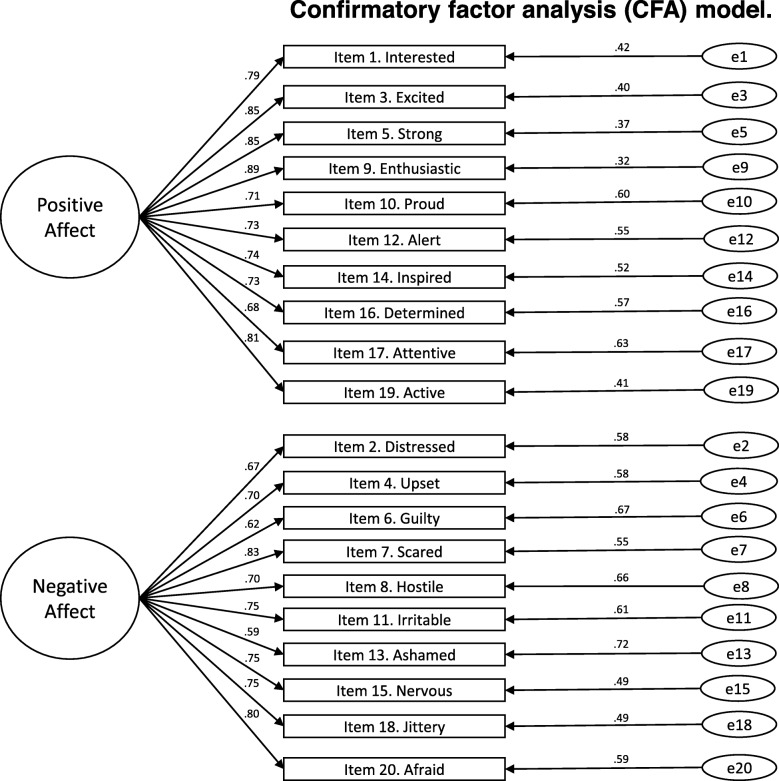
Background: The Positive and Negative Affect Schedule (PANAS) is the most widely and frequently used scale to assess positive and negative affect. The PANAS has been validated in several languages, and it has shown excellent psychometric properties in the general population and some clinical samples, such as forensic samples, substance users, and adult women with fibromyalgia. Nevertheless, the psychometric properties of the scale have not yet been examined in clinical samples with anxiety, depressive, and adjustment disorders. In addition, the proliferation of Internet-based treatments has led to the development of a wide range of assessments conducted online with digital versions of pen and paper self-report questionnaires. However, no validations have been carried out to analyze the psychometric properties of the online version of the PANAS. The present study investigates the psychometric properties of the online Spanish version of the PANAS in a clinical sample of individuals with emotional disorders. Methods: The sample was composed of 595 Spanish adult volunteers with a diagnosis of depressive disorder (n = 237), anxiety disorder (n = 284), or adjustment disorder (n = 74). Factor structure, construct validity, internal consistency, and sensitivity to change were analyzed. Results: Confirmatory factor analysis yielded a latent structure of two independent factors, consistent with previous validations of the instrument. The analyses showed adequate convergent and discriminant validity, good internal consistency as well as sensitivity to change. Conclusions: Overall, the results obtained in this study show that the online version of the PANAS has adequate psychometric properties for the assessment of positive and negative affect in a Spanish clinical population.
Overview
The claims and statistics of this paper haven’t been checked yet.
Free: it reads the open-access text and checks the first 5 claims that cite a source we can check. Create a free account to check every claim.
Integrity signals
Registry
Cites
Statistics
Figures
Verification
Claims the paper makes
The claims and statistics of this paper haven’t been checked yet.
Free: it reads the open-access text and checks the first 5 claims that cite a source we can check. Create a free account to check every claim.
Claims other papers make about this one
Each is checked against this paper’s own text: does it say what the citing paper says it does?
The cited source says what the claim attributes to it.
In the citing paper
“The scale has adequate convergent and discriminant validity, good internal consistency, and sensitivity to change. Cronbach's alpha is 0.91 for the PANAS-PA and 0.87 for the PANAS-NA.”
From Efficacy of an internet-based psychological intervention for problem gambling and gambling disorder: Study protocol for a randomized controlled trial (2021) · cites this paper as Díaz-García et al., 2020
Self-check
Percentages, sums and reported differences re-computed from the paper’s own numbers.
The self-check needs the paper’s full text.
Citations
Cites
Statistical Power Analysis for the Behavioral Sciences
Muller, K. (1989) · Technometrics · doi:10.1080/00401706.1989.10488618 · Cited by 99,167
Statistical power analysis for the behavioral sciences
(1990) · Computers, Environment and Urban Systems · doi:10.1016/0198-9715(90)90050-4 · Cited by 65,269
The PHQ-9: Validity of a brief depression severity measure
Kroenke, K., Spitzer, R. L., & Williams, J. B. W. (2001) · Journal of General Internal Medicine · doi:10.1046/j.1525-1497.2001.016009606.x · Cited by 44,910
Development and validation of brief measures of positive and negative affect: The PANAS scales.
Watson, D., Clark, L. A., & Tellegen, A. (1988) · Journal of Personality and Social Psychology · doi:10.1037/0022-3514.54.6.1063 · Cited by 32,433
(1998) · The Journal of Clinical Psychiatry · Cited by 19,139
Fredrickson, B. L. (2001) · American Psychologist · doi:10.1037//0003-066x.56.3.218 · Cited by 18,025
Russell, J. A. (1980) · Journal of Personality and Social Psychology · doi:10.1037/h0077714 · Cited by 16,334
An inventory for measuring clinical anxiety: Psychometric properties.
Beck, A. T., Epstein, N., Brown, G., & Steer, R. A. (1988) · Journal of Consulting and Clinical Psychology · doi:10.1037/0022-006x.56.6.893 · Cited by 14,407
Kessler, R. C., Chiu, W. T., Demler, O., & Walters, E. E. (2005) · Archives of General Psychiatry · doi:10.1001/archpsyc.62.6.617 · Cited by 12,052
Quality criteria were proposed for measurement properties of health status questionnaires
Terwee, C. B., Bot, S. D. M., de Boer, M. R., van der Windt, D. A. W. M., Knol, D. L., Dekker, J., Bouter, L. M., & de Vet, H. C. W. (2007) · Journal of Clinical Epidemiology · doi:10.1016/j.jclinepi.2006.03.012 · Cited by 10,764
Research works printed but not linked: 3
- Sanz J García-Vera MP Espinosa R Fortún M Vázquez C Adaptación española del Inventario para la Depresión de Beck-II (BDI-II): 3. Propiedades psicométricas en pacientes con trastornos psicológicos Clínica y Salud 2005 16 2 121 142
- Muthén LK Muthén BO Statistical Analysis With Latent Variables User’s Guide 1998
- Nunnally J Bernstein I Psychometric Theory 3rd edition 1994 New York MacGraw-Hill
Cited by
Items 101–200 of 206
Creative Arts Therapy Reduces Psychological Distress in Nonpatient-Facing Healthcare Workers
Mantelli, R. A., Forster, J. E., Reed, K. E., Edelblute, A., Henry, M., Sinn, H., & Moss, M. (2024) · The American Journal of Medicine · doi:10.1016/j.amjmed.2024.12.002 · Cited by 6
Sports experience, affects and life satisfaction in Portuguese athletes with disabilities
Jacinto, M., Couto, N., Vitorino, A., Bento, T., Matos, R. M. N., Monteiro, D., Amaro, N., Antunes, R., & Cid, L. (2025) · BMC Psychology · doi:10.1186/s40359-024-02247-x · Cited by 8
McDonald, C. W., Mattson, R. E., Sleight, F. G., Lynn, S. J., Balderrama‐Durbin, C. M., & Coles, M. E. (2025) · Journal of Behavior Therapy and Experimental Psychiatry · doi:10.1016/j.jbtep.2025.102051 · Cited by 3
Spontaneous Breathing Rate Variations Linked to Social Exclusion and Emotion Self-assessment
Hidalgo-Muñoz, A. R., Cuadrado, E., Castillo‐Mayén, R., Luque, B., & Tabernero, C. (2022) · Applied Psychophysiology and Biofeedback · doi:10.1007/s10484-022-09551-5 · Cited by 5
“The most common approach to analyse the data from the PANAS, which has been validated in a Spanish population (Díaz-García et al., 2020), is based on a 2-factor structure (PA and NA) showing good internal consistency (0.”
MethodDe-Torres, I., Bustos, F., Arango‐Lasprilla, J. C., & Fernández‐Berrocal, P. (2022) · International Journal of Environmental Research and Public Health · doi:10.3390/ijerph192114050 · Cited by 5
“%) resilience level, and the positive affect was higher than the negative affect in the previous month (Mdn = 32 vs. 20; PANAS).”
BackgroundInfluentialStudents’ Emotions During Distance Education: The Role of Personality Factors and Sense of Coherence
Lajunen, T., Gaygısız, E., & Wang, W. (2023) · SAGE Open · doi:10.1177/21582440231157305 · Cited by 2
Video analysis of interaction in schizophrenia reveals functionally relevant abnormalities
Krämer, M., Fink, F., Campo, L. A., AKINCI, E., Wieser, M.-O., Juckel, G., & Mavrogiorgou, P. (2024) · Schizophrenia Research · doi:10.1016/j.schres.2024.09.003 · Cited by 5
Leal-Soto, F., Morales-Gómez, M.-C., Sepúlveda-Páez, G. L., & Karmelic-Pavlov, V. (2023) · Terapia psicológica · doi:10.4067/s0718-48082023000300275 · Cited by 12
Holder, T., Nichols, C., Summers, E., Roberts, D. L., & Bozkurt, A. Y. (2024) · Animals · doi:10.3390/ani14243628 · Cited by 4
Parra, C., Vinueza-Cabezas, A., & Bourgeat-Salazar, M. (2025) · Frontiers in Psychology · doi:10.3389/fpsyg.2025.1635726 · Cited by 4
Zhang, X., Peng, L., Lv, J., & Mao, S. (2025) · Journal of Adolescent Health · doi:10.1016/j.jadohealth.2025.06.032 · Cited by 2
Jiang, A., Foing, B. H., Yao, X., Gong, Y., Li, G., Yang, H., & Westland, S. (2025) · Space Science & Technology · doi:10.34133/space.0361 · Cited by 4
Moharrer, G., Rajendran, K., Pinto, R., & Kleinsmith, A. (2025) · INTERNATIONAL CONFERENCE ON MULTIMODAL INTERACTION · doi:10.1145/3716553.3750798 · Cited by 2
“Participants then completed a demographic questionnaire and the PANAS questionnaire [15], after which they engaged in positive and negative self-reflection separately (i.e., two conditions) through each of the modalities (Fig.”
Ramaabya, M. J., & Makgosa, R. (2025) · Cogent Business & Management · doi:10.1080/23311975.2025.2586265 · Cited by 5
“…and psychology have approached and defined emotions differently as feelings, either positive or negative that change consumer behaviour and are associated with changes in both the physical and psychological environments (de Medeiros et al., 2021; Díaz-garcía et al., 2020; szymkowiak et al., 2020).”
Westerberg, T., Håkansson, A., & Berglund, K. J. (2025) · BMC Psychology · doi:10.1186/s40359-025-03816-4 · Cited by 5
“This is perhaps unsurprising, as the relationship among high negative affects, low positive affects, and elevated levels of anxiety and depression has consistently been documented in the literature (e.g., [35, 124]).”
Scatterty, K. R., VonStein, D., Prichard, L. B., Franczak, B. C., Hamilton, T. J., & Schmaltz, R. M. (2026) · Frontiers in Behavioral Neuroscience · doi:10.3389/fnbeh.2026.1729876 · Cited by 2
Derya, S. A. R. I., & Baş, A. U. (2021) · Opus uluslararası toplum araştırmaları dergisi · doi:10.26466/opus.880621 · Cited by 2
Ecological Momentary Assessment of Positive and Negative Affect in Posttraumatic Stress Disorder
Olatunji, B. O., Liu, Q., Cox, R. C., & Jessup, S. C. (2024) · Journal of Psychopathology and Behavioral Assessment · doi:10.1007/s10862-024-10126-3 · Cited by 3
“…studies have failed to find a significant association between trait positive affect and trait nega - tive affect (i.e., Schmukle et al., 2002 ), studies that have observed a significant association have typically reported a negative but medium size correlation (i.e., Diaz-Garcia et al., 2020 ).”
Jiménez-Orenga, N., Díaz‐García, A., García‐Palacios, A., & Bretón-López, J. M. (2024) · Internet Interventions · doi:10.1016/j.invent.2024.100761 · Cited by 2
Self-citationJalali, S., Saed, O., Mansori, K., & Nourian, A. (2024) · Majallah-i dānishkadah-i pizishkī.Dānishgāh-i ̒ulūm-i pizishkī va khadamāt-i bihdāshtī- darmānī-i Tihrān./Majallah-i dānishkadah-i pizishkī.Dānishgāh-i ̒ulūm-i pizishkī va khadamāt-i bihdāshtī- darmānī-i Tihrān. · doi:10.61186/edcj.17.55.40 · Cited by 2
Petrovic, J., Sadowski, I., Böke, B. N., Mettler, J., Bastien, L., & Heath, N. L. (2024) · Current Psychology · doi:10.1007/s12144-024-06781-0 · Cited by 3
“The PANAS is a widely used instrument that has demonstrated high internal consistency across both subscales in previous studies (with alphas ranging from 0.87 to 0.91), as well as adequate convergent and discriminant validity (Díaz-García et al., 2020; Merz et al., 2013).”
InfluentialUsability and Affects Study of a Virtual Reality System Toward Scorpion Phobia Exposure Therapy
Gutiérrez-Sánchez, M. D. J., González-Islas, J.-C., Huerta-Ortiz, L.-M., Franco-Árcega, A., Vázquez, V. M. V., & Suárez-Navarrete, A. (2024) · Applied Sciences · doi:10.3390/app142210569 · Cited by 3
Haywood, S., Garbett, K. M., Craddock, N., Hayes, C., Saraswati, L. A., Nasution, K., Medise, B. E., Vitoratou, S., & Diedrichs, P. C. (2024) · BMC Psychology · doi:10.1186/s40359-024-02209-3 · Cited by 8
Analysis of Maternity Rights Perception: Impact of Maternal Care in Diverse Socio-Health Contexts
Silva-Fernández, C. S., Camacho, P. A., de la Calle, M., Arribas, S. M., Garrosa, E., & Ramiro‐Cortijo, D. (2025) · European Journal of Investigation in Health Psychology and Education · doi:10.3390/ejihpe15020010 · Cited by 3
“Previous application of the PANAS obtained a reliability between 0.87 to 0.91 (Díaz-García et al., 2020).”
InfluentialMitigation Approach for Certain Biases in Survey Scale Input Within AI Control and Decision Systems
Chan, S. (2025) · International Conference on Artificial Intelligence in Information and Communication (ICAIIC) · doi:10.1109/icaiic64266.2025.10920828 · Cited by 2
“…is a 25-item Likert scale), the Positive and Negative Affect Schedule (PANAS) (a 20-item Likert-based measure, comprised of a 10-item Negative Affect Scale and a 10-item Positive Affect Scale), the Expanded Tellegen Absorption Scale (ETAS) (which is a 20-item Likert scale), etc. [13][19][20][21].”
Positive and Negative Affect Schedule (PANAS)
Roemer, A., & Medvedev, O. N. (2025) · Springer eBooks · doi:10.1007/978-3-031-47219-0_86 · Cited by 3
Risk perception and affective state on work exhaustion in obstetrics during the COVID-19 pandemic
Perlini, C., Garzon, S., Franchi, M. P., Donisi, V., Rimondini, M., Bosco, M., Uccella, S., Cromi, A., Ghezzi, F., Ginami, M., et al. (2022) · Open Medicine · doi:10.1515/med-2022-0571 · Cited by 2
Santos-Puerta, N., & Peñacoba, C. (2023) · Applied Sciences · doi:10.3390/app13074327 · Cited by 4
Mohn, C., Olsson, A.-K., Johansson, M., Moradi, H., & Helldin, L. (2021) · Nordic Journal of Psychiatry · doi:10.1080/08039488.2020.1862294 · Cited by 4
“We recently demonstrated abnormally low PA in Swedish SSD patients [6], and there is some indication that this holds also for depression patients [5].”
BackgroundMethodLucero, B. A., Muñoz-Quezada, M. T., Canales‐Johnson, A., Carrasco, C., Rodriguez, M. V., Reid, T., Méndez, P., Adonis, J., & Bekinschtein, T. A. (2025) · medRxiv · doi:10.1101/2025.01.30.25321387 · Cited by 3
Advertising Effectiveness for Recruitment and Retention in a Trial of Yoga for Smoking Cessation
DUNSIGER, S. I., Bock, B. C., Horowitz, S., Lantini, R., Jennings, E., & Thind, H. K. (2022) · American Journal of Health Education · doi:10.1080/19325037.2022.2071782 · Cited by 1
“PANAS has been widely used among general population in different countries with high internal consistency and discriminant validity.(31,32) Nicotine dependence was assessed using the Fagerstrom Test for Nicotine Dependence (FTND).”
MethodPre-frontal stimulation does not reliably increase reward responsiveness
Hadden, L., Penny, H., Jones, A. L., Partridge, A. M., Lancaster, T. M., & Allen, C. P. G. (2022) · Cortex · doi:10.1016/j.cortex.2022.11.011 · Cited by 1
A blended intervention for adjustment disorder: Study protocol for a feasibility trial
Fernández-Buendía, S., Cuijpers, P. J., Grimaldos, J., Díaz‐García, A., Palau-Batet, M., & Quero, S. (2024) · Internet Interventions · doi:10.1016/j.invent.2024.100715 · Cited by 5
Self-citationVally, Z., & Rehman, W. J. (2024) · Cogent Psychology · doi:10.1080/23311908.2024.2414614 · Cited by 1
“…negative affect (Na). the scale has previously been applied to discern emotional shifts resulting from experimental manipulations in ‘fat talk’ research, showcasing good reliability (cronbach’s alpha ranging between .85 and .89) (Watson et al., 1988; Díaz-garcía et al., 2020; Merz et al., 2013).”
Crumly, B., New, O., & Samek, D. R. (2025) · Personality and Individual Differences · doi:10.1016/j.paid.2025.113252 · Cited by 1
Does Mood Change During a Mind-Wandering Task?
Nayda, D. M., & Takarangi, M. K. T. (2025) · Cognitive Therapy and Research · doi:10.1007/s10608-025-10626-w · Cited by 3
“Positive affect (PA) is a state of feeling highly energetic and plea - surably engaged; higher scores indicate feeling active and alert, while lower scores indicate lethargy and sadness, predictive of depression (Díaz-García et al., 2020).”
Hou, C., Zhai, Y., & Chen, M. (2025) · Current Psychology · doi:10.1007/s12144-025-08241-9 · Cited by 1
“It captures a broad spec - trum of unpleasant emotions such as fear, nervousness, guilt, and shame (Díaz-García et al., 2020 ).”
Navarrete, J., Rodríguez‐Freire, C., Campos, D., García‐Campayo, J., Fernandez-Felix, B. M., Queraltó, J. M., Sandín, B., Luciano, J. V., & Feliu‐Soler, A. (2025) · European Journal of Psychological Assessment · doi:10.1027/1015-5759/a000932 · Cited by 1
Singing reveals vocal biomarkers of stress and cognitive load
Rodrigo, I., Navas-León, S., & Duñabeitia, J. A. (2026) · Discover Psychology · doi:10.1007/s44202-026-00679-7 · Cited by 1
“Participants first completed the Positive and Negative Affect Schedule (PANAS-SF; [34]).”
Lorente-Català, R., Castro, A., Fernández‐Martínez, S., Moreno, E. V., Guerrero-Pertiñez, G., Forteza-Rey, I., Gili, M., del Hoyo, Y. L., Mayoral, F., García‐Campayo, J., et al. (2026) · BMC Public Health · doi:10.1186/s12889-026-27573-0 · Cited by 1
“…receiving the intervention were assessed on severity of depressive sym-toms (Patient Health Questionnaire-9; PHQ-9) [42, 43], the presence and valence of emotional affect (Positive and Negative Affect Schedule,PANAS-SF) [44, 45] and the severity on mobility, self-care, usual activities, pain/ Fig.”
Self-citationBaptista, T., Colmenares, R. T., Vargas, O. J., Piñero, J., & Rengel, L. (2020) · Investigación Clínica · doi:10.22209/ic.v61n4a02 · Cited by 1
“orders and psychoses, particularly schizophrenia (2-5).”
Amir, F. Z., Saberi, H., & Bashardoust, S. (2021) · International journal of health and life sciences · doi:10.5812/ijhls.118130 · Cited by 1
The Differential Effects of Positive and Negative Affect on Gratitude After an Intervention
Boyd, C., Johnson, M., Pichardo, A., Khayamian, A., Schmelzer, N., Lin, T., & Olivas, J. (2021) · Psi Beta Research Journal - Brief Reports · doi:10.54581/wppw9019 · Cited by 1
Mohammadi, A., & Education Office, D. 2. (2021) · Iranian Evolutionary Educational Psychology Journal · doi:10.52547/ieepj.3.4.557 · Cited by 1
“In the study of Díaz-García et al. (2020), the validity of the Positive Emotion and Negative Emotion Scale was confirmed by confirmatory factor analysis, and its reliability was 0.91.”
InfluentialPeláez, T., López‐Carrilero, R., Subirana-Mirete, J., Ochoa, S., & Osma, J. (2023) · Clinical Case Studies · doi:10.1177/15346501231179250 · Cited by 1
Positive Affectivity and Employee Engagement: Mediating Role of Social Support
Okojie, G., Ismail, I. R., & Yasin, H. I. M. (2023) · Business Perspective Review · doi:10.38157/bpr.v5i1.554 · Cited by 3
González, M., Panta, J. B., Yáñez, P. B., Díaz, H. G., Jara, E., & Reyes, B. E. V. (2023) · Revista de Psicología · doi:10.18800/psico.202302.007 · Cited by 11
“El afecto se refiere a cualquier tipo de experiencia emocional, es decir, sentimientos, preferencias, emociones, estados de ánimo y rasgos afectivos que pueden ser experimentados como positivos (agradables) o negativos (desagradables) (Díaz-García et al., 2020).”
BackgroundHolder, T., Nichols, C., Summers, E., Roberts, D. L., & Bozkurt, A. Y. (2023) · International Conference on Animal-Computer Interaction (ACI) · doi:10.1145/3637882.3637886 · Cited by 1
Lajmi, N., Duan, S., Moll, J., & Zahn, R. (2025) · Frontiers in Psychology · doi:10.3389/fpsyg.2024.1438896 · Cited by 2
Stress, Memory, and Hormonal Influence: Considering Ovarian Hormones in Emotional Memory Intrusions
Daly, K. A., Tsytsurina, A., Mitnick, D. M., & Marshall, A. D. (2025) · Women · doi:10.3390/women5030025 · Cited by 1
Technological Support to Musculoskeletal Disorders Assessment and Management
Markova, V. I., & Ganchev, T. D. (2022) · Lecture notes in networks and systems · doi:10.1007/978-3-030-96638-6_46 · Cited by 1
Colombo, D. (2020) · Tesis Doctorals en Xarxa (Consorci de Serveis Universitaris de Catalunya) · doi:10.6035/14109.2020.762821 · Cited by 1
An Intelligent Model to Predict the Impact on Health Due to Commuting to Work on a RegularbasisPreprint
Sharif, M. S., Tamang, M. T., Fu, C. H. Y., & Baker, A. (2022) · SSRN Electronic Journal · doi:10.2139/ssrn.4148048 · Cited by 1
Development and psycholinguistic properties of the Brazilian-Portuguese Affect Scale (EAPB)Preprint
Torres, E. N. L., Silvestrin, M., felix, A., Baradel, R. R., Carthery‐Goulart, M. T., Lukášová, K., & Biazoli, C. E. (2022) · PsyArXiv (OSF Preprints) · doi:10.31234/osf.io/g5vj8 · Cited by 1
Henss, R. (2024) · Qeios · doi:10.32388/fevw0z.2 · Cited by 1
Gittleman, J. M., Shpigel, D. M., Agterberg, S., Mercedes, E., & Weinberger, A. H. (2021) · Journal of Underrepresented & Minority Progress · doi:10.32674/jump.v5i1.3282
Mental Time Travel: The role of Positive Rumination
Colombo, D., Suso‐Ribera, C., Fernández‐Álvarez, J., Cipresso, P., García‐Palacios, A., Riva, G., & Botella, C. (2020) · Institutional Research Information System University of Turin (University of Turin)
Self-citationPersonality, affect and coping style in severe personality disorder
Ramos, J. M., Sánchez, A., & Doll, A. (2021) · Behavioral Psychology/Psicología Conductual · doi:10.51668/bp.8321311n
Natural User Interfaces for Meditative Health Games
Fashoro, I., & Ncube, S. (2022) · Advances in business strategy and competitive advantage book series · doi:10.4018/978-1-7998-9223-6.ch010
Samnia, Z., Yousefi, Z., Mahdavi, A., Suksatan, W., Nouri, S., & Khodadadi, E. (2022) · Research Square · doi:10.21203/rs.3.rs-1954093/v1
Rao, H. C. (2022) · INTERNATIONAL JOURNAL OF SCIENTIFIC RESEARCH · doi:10.36106/ijsr/0824685
An anger premium: An experiment on the role of counterpart emotions in coordination
Jiang, B., & Pan, X. S. (2023) · Journal of Behavioral and Experimental Economics · doi:10.1016/j.socec.2023.101985 · Cited by 1
Tur, C., & Tur Domenech, C. (2023) · Tesis Doctorals en Xarxa (Consorci de Serveis Universitaris de Catalunya) · doi:10.6035/14109.2023.433029
Nik, Z. M., Nasehi, M. M., Tajeri, B., Hassani‐Abharian, P., & Kraskian, A. (2021) · Military Caring Sciences · doi:10.52547/mcs.8.2.156 · Cited by 1
Samnia, Z., Yousefi, Z., Jh, N., Khan, I. M., Rouzbahani, A., Nouri, S., & Khodadadi, E. (2023) · doi:10.53555/jptcp.v30i18.1838
Lyu, Y. (2023) · Journal of Student Research · doi:10.47611/jsrhs.v12i4.5515
Brysbaert, M. (2024) · PsyArXiv (OSF Preprints) · doi:10.31234/osf.io/m72w8 · Cited by 1
THE EFFECT OF SELF-COMPASSION ON DEPRESSION AMONG UNIVERSITY STUDENTS IN YOGYAKARTA
Nashori, F., Leonita Ikasari Saputri, D., & Lubis, N. S. J. (2024) · Psychosophia Journal of Psychology Religion and Humanity · doi:10.32923/psc.v6i1.4243 · Cited by 3
Pahlke, M. L., Hoopes, K. H., Black, H. F., Connelly, H., Klinger, W., Joubert, K., Nazarenko, E., Marchand, W. R., & Sheppard, S. R. (2024) · Military Medicine · doi:10.1093/milmed/usae352 · Cited by 1
Zhu, W., Wang, L., Yang, T., Su, X., Guo, Y., Wang, L., Dong, X., Zhang, Y., & Pan, M. (2024) · Research Square · doi:10.21203/rs.3.rs-4946574/v1
Quality of Life and Positive and Negative Affect in the Personality Disorder
Ramos, J. M., Marco, P. M., Sánchez, A., & Doll, A. (2024) · Clínica y Salud · doi:10.5093/clysa2024a16
Vergara‐Morales, J., Valle, M. D., & Lepe-Martínez, N. F. (2025) · Journal of Intelligence · doi:10.3390/jintelligence13020020 · Cited by 4
“Affectivity is defined as “a psychological construct that refers to mental states that involve evaluative feelings (e.g., feeling good-bad, pleasant-unpleasant situations)” (Díaz-García et al. 2020, p. 1).”
Alizadeh, N. H., Taghizadeh, G., Akbarfahimi, M., Kühl, J., Meimandi, M., Mehdizadeh, M., & Joghataei, M. T. (2025) · Research Square · doi:10.21203/rs.3.rs-6386704/v1
Integrating sEMG and Cooperative Games to Enhance the Fun and Engagement of Home Fitness
Wang, W., Tan, P. T., Wei, C., Guan, S., & Lin, Y. (2025) · Lecture notes in computer science · doi:10.1007/978-3-031-93163-5_12
Implementation of Gemini API in Journaling Application to Increase Positive Emotion of Generation Z
Hudi, R., & Daruranto, M. (2025) · Lecture notes on data engineering and communications technologies · doi:10.1007/978-3-031-96093-2_20
Mihaldžić, M. D., Subotić, S., & Sočan, G. (2025) · Research Square · doi:10.21203/rs.3.rs-7107242/v1
Sánchez, G., Losada, F., & Venegas, J. (2025) · Research in Dance Education · doi:10.1080/14647893.2025.2524127
Losada-del-Pozo, M. Á., González, J. L., Villafañe, J. H., Corbellini, C., & López‐López, A. (2025) · Behavioral Psychology/Psicología Conductual · doi:10.31083/bp45892
“To examine the convergence of central sensitization scores with other psychological features several self-administered questionnaires were included, namely the Hospital Anxiety Depression Scale (HADS) (Quintana et al, 2003), the Pain Catastro-phizing Scale (PCS) (García Campayo et al, 2008), the Anxiety Sensitivity In…”
Kamaei, E., Jayervand, H., Heidari, A., & Shoushtari, M. T. (2025) · Journal of Health Reports and Technology · doi:10.5812/jhrt-163773
Tur, C., Campos, D., Díaz-Sanahuja, L., Fernández-Buendía, S., Grimaldos, J., la Coba-Cañizares, L. D., Kazlauskas, E., & Quero, S. (2025) · Behavioral Sciences · doi:10.3390/bs15101312 · Cited by 2
“…Depression Severity and Impairment Scale (ODSIS) (Bentley et al., 2014; Mira et al., 2019), the Positive and Negative Affect Schedule (PANAS) (Díaz-García et al., 2020; Watson et al., 1988), the Quality of Life Index (QLI) (Mezzich et al., 2000), the Work and Social Adjustment Scale (WSAS)…”
Self-citationKaur, K., Asnaani, A., McMahon, T. P., Park, J., & Naragon‐Gainey, K. (2025) · Cognitive Therapy and Research · doi:10.1007/s10608-025-10683-1 · Cited by 1
Nathan, M., Spagnolo, P. A., Grant, L. K., Rahman, S. A., Gonsalvez, I., Harder, J., Kim, H., Wiley, A., & Joffe, H. (2025) · Psychoneuroendocrinology · doi:10.1016/j.psyneuen.2025.107690 · Cited by 1
Shahzad, S., Sattar, M. A., Malik, F. N., Aqib, M., & Sattar, A. (2025) · Scientific Reports · doi:10.1038/s41598-025-28872-z · Cited by 2
Reliability, validity, and correlates of an AI voice emotion recognition app among nurses
Huang, C.-Y., & Chang, W. (2025) · PLoS ONE · doi:10.1371/journal.pone.0339365
Antuña‐Camblor, C., Esteller-Collado, G., Hernández, V. T., & Muñoz‐Navarro, R. (2026) · International Journal of Social Psychiatry · doi:10.1177/00207640251411743
“Several studies (e.g., Díaz-García et al., 2020) have shown that positive and negative affect are independent and uncorrelated dimensions.”
A Brief Mindfulness Intervention for Pain Management in Fibromyalgia: A Single-arm Open-Label Study
Ramasawmy, P., Heim, L. C., Fechner, E., Schumann, S. E., Mai, T. T., Moschner, O., Jiang, Y., Guo, X., Lesani, A., Petzke, F. W., et al. (2026) · Restorative Neurology and Neuroscience · doi:10.1177/09226028251410014
“The Positive and Negative Affect Schedule (PANAS; Cronbach ’ s α : positive affect: 0.91, negative effect : 0.87) (Breyer & Bluemke, 2014; Díaz-García et al., 2020; Watson et al., 1988) was used to assess positive and negative affect.”
InfluentialE-Servicescape and Online Travel Platform Outcomes: The Moderating Role of E-Familiarity
Uslu, A., Tarınç, A., Erul, E., Eren, R., Andrade-Ruiz, G., Tuncer, M. A., & Alagöz, G. (2026) · Sustainability · doi:10.3390/su18042105 · Cited by 1
Maciaszek, J., Zimny, A., Podgórski, P., Machaj, W., Alejnikowa, J., Dybek, A., Błoch, M., Maciaszek, A., & Misiak, B. (2026) · Psychoneuroendocrinology · doi:10.1016/j.psyneuen.2026.107831
Moharrer, G. (2026) · International Conference on Tangible, Embedded, and Embodied Interaction (TEI) · doi:10.1145/3731459.3779037
“Participants will begin with baseline assessments, including recording a five-minute resting physiological recording as a baseline, and completing pre-session PANAS (Positive and Negative Affect Schedule) [3] and SRIS (Self-Reflection and Insight Scale) [11] surveys.”
Ambalavanar, N., Tang, B., Galinato, D. J. A., Spoelma, M. J., Newby, J. M., & Whitton, A. E. (2026) · Neuroscience & Biobehavioral Reviews · doi:10.1016/j.neubiorev.2026.106667
Village, A., & Francis, L. J. (2025) · Mental Health Religion & Culture · doi:10.1080/13674676.2025.2534513
“Repeated studies have generally confirmed the factor structure of these two measures, including data recently reported by Díaz-García et al. (2020).”
Vasiou, A., Vasilaki, E., Veloni, M., Smaropoulou, C., & Gkontelos, A. (2026) · International Journal of Applied Positive Psychology · doi:10.1007/s41042-026-00298-6
“…between-persons levels (Dunkley et al., 2017), the strong reported validity (Thompson, 2020) and the high internal consistency (Kornilaki, 2022 ; Díaz-García et al., 2020) it has demonstrated, while it has been widely used in relative research conducted in a wide range of geographical locations…”
Psychosocial Health Following Non-Invasive Brain Stimulation of Oculomotor Regions
Upadhyaya, S. (2026) · Behavioral Sciences · doi:10.3390/bs16060897
“Its applicability across developmental groups (Hughes & Kendall, 2009; Veronese & Pepe, 2017) and diverse cultural settings (Díaz-García et al., 2020; Hovmand et al., 2023; L. Song et al., 2024; X. Song et al., 2024; Wang, 2024) has made it a standard tool for capturing subtle mood fluctuations in…”
Díaz-Narváez, V. P., Reyes-Reyes, F., Reyes‐Reyes, A., Rod, J. E., Gamarra‐Moncayo, J., Bustos, O. E. H., & Gelvez, A. I. L. (2026) · Frontiers in Psychology · doi:10.3389/fpsyg.2026.1845073
Díaz-Sanahuja, L., Paredes-Mealla, M., Suso‐Ribera, C., García‐Palacios, A., Quero, S., & Bretón-López, J. M. (2026) · BMC Psychology · doi:10.1186/s40359-026-05031-1
Self-citationRomero‐Moreno, R., Pedroso‐Chaparro, M. D. S., Castelo, A. M. D. L. V., Nogales‐González, C., Leocadio-Baño, J., Zettle, R. D., & Vara‐García, C. (2026) · Journal of Contextual Behavioral Science · doi:10.1016/j.jcbs.2026.101019
A blended intervention for adjustment disorder: Results from a feasibility trial
Fernández-Buendía, S., la Coba-Cañizares, L. D., Grimaldos, J., Castilla, D., Alonso-Guillén, S., Cuijpers, P. J., & Quero, S. (2026) · Internet Interventions · doi:10.1016/j.invent.2026.100976
Self-citationHerrero‐Fernández, D., Álvarez-Ferradas, C., Vistorte, A. O. R., Setién‐Suero, E., Visiers, A., Garay, H., Diego, I., Morales-Ortiz, S., & Ayala, J. L. M. (2026) · International Journal of Intercultural Relations · doi:10.1016/j.ijintrel.2026.102467
Metadata
- Authors
- Díaz-García, A., González-Robles, A., Mor, S., Mira, A., Quero, S., García-Palacios, A., Baños, R. M., & Botella, C.
- Affiliations
- Universitat Jaume I (ES)
- Universitat de València (ES)
- Venue
- BMC Psychiatry
- Published
- 2020-02-10
- Volume
- 20
- Issue
- 1
- Pages
- 56-56
- ISSN
- 1471-244X (ISSN-L)
- PMC
- PMC7008531
- OpenAlex
- W3012668448
- Semantic Scholar
- 0d95f71b7c195977b47159f1c1c96ffd7db935f1
- Cited by
- 207
- References
- 95
- Citations by year
- 2026: 24 · 2025: 45 · 2024: 31 · 2023: 31 · 2022: 35 · 2021: 32 · 2020: 9
- FWCI
- 25.88
- Type
- journal article
- Language
- en
- Open access
- gold
- doi.org
- Licence
- cc-by
- creativecommons.org/licenses/by/4.0/ (tdm)
- creativecommons.org/licenses/by/4.0/ (vor)
- Locations
- BMC Psychiatry (publishedVersion, cc-by)
- Europe PMC (PubMed Central) (publishedVersion, cc-by)
- PubMed Central (publishedVersion, cc-by)
- PubMed (publishedVersion)
- LA Referencia (Red Federada de Repositorios Institucionales de Publicaciones Científicas) (publishedVersion, other-oa)
- Zaguan (University of Zaragoza Repository) (publishedVersion, cc-by)
- Repositori UJI (Universitat Jaume I) (submittedVersion, cc-by-sa)
- DOAJ (DOAJ: Directory of Open Access Journals) (submittedVersion, cc-by-sa)
- Funders
- Centro de Investigación Biomédica en Red-Fisiopatología de la Obesidad y Nutrición
- Ministerio de Economía y Competitividad (BES-2015-072360)
- Topics
- Social Sciences › Psychology › Experimental and Cognitive Psychology › Anxiety, Depression, Psychometrics, Treatment, Cognitive Processes
- Social Sciences › Psychology › Experimental and Cognitive Psychology › Mental Health Research Topics
- Social Sciences › Decision Sciences › Management Science and Operations Research › Psychometric Methodologies and Testing
- Keywords
- PANAS, Spanish translation, psychometric validation, positive affect, negative affect, emotional disorders, depressive disorders, anxiety disorders, adjustment disorder, factor structure, construct validity, sensitivity to change, online assessment
- MeSH terms
- Adjustment Disorders, Adult, Affect, Anxiety Disorders, Depressive Disorder, Factor Analysis, Statistical, Female, Health Surveys, Humans, Language, Male, Psychometrics, Spain, Reproducibility of Results
About these checks
Registry, retraction, Cites and statistics results are computed, not judged, with one exception: a printed reference that no index lists is read once by a model before it counts as a citation error. Claims are extracted by a model and kept only when their quote appears verbatim in the text; each cited source is then checked, with a model’s help, for whether it says what the claim relies on. Those verdicts can be wrong — read the claim’s quote and the cited source before relying on one.
Statistics and arithmetic are recomputed, not judged.
Confidence bands are shown only for fields calibrated on our annotated test set. None is calibrated yet, so no band is shown.
What counts as a claim ›How we measure confidence ›How we check this ›
Are you an author, or do you see a problem with this page? Request a review
Data sources
Bibliographic data: Semantic Scholar, OpenAlex, Crossref.
Contains information from the Semantic Scholar Academic Graph Datasets, made available under the ODC Attribution License (ODC-BY 1.0).
Semantic Scholar’s data is described in: Kinney, R., et al. (2023). The Semantic Scholar Open Data Platform. arXiv:2301.10140.
