

Positive and Negative Affect Schedule (PANAS): psychometric properties of the online Spanish version in a clinical sample with emotional disorders
Open accessThe DOI matches its Crossref record; 89 of the 95 references it cites were found in a registry or an index.
Abstract
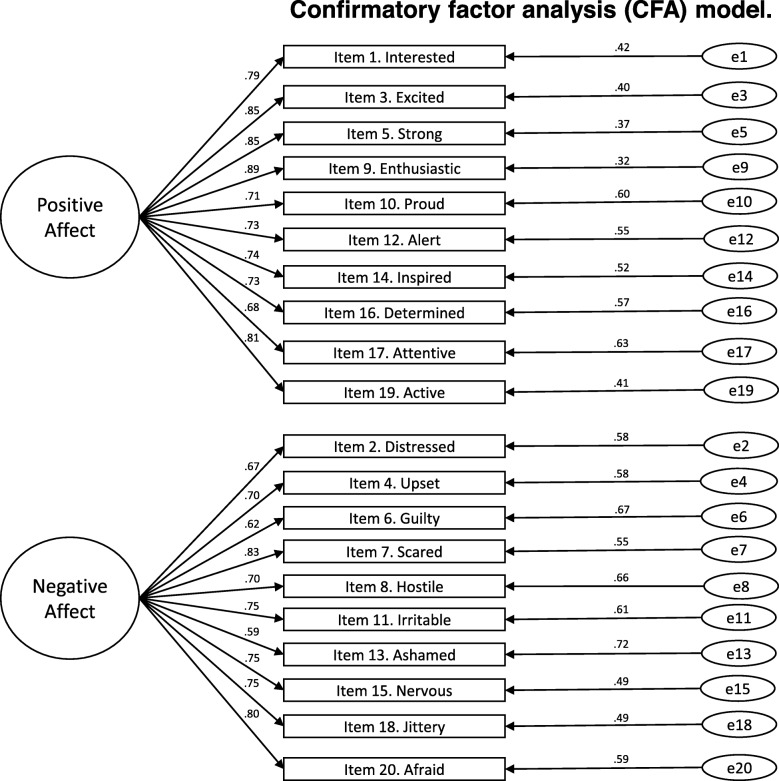
Background: The Positive and Negative Affect Schedule (PANAS) is the most widely and frequently used scale to assess positive and negative affect. The PANAS has been validated in several languages, and it has shown excellent psychometric properties in the general population and some clinical samples, such as forensic samples, substance users, and adult women with fibromyalgia. Nevertheless, the psychometric properties of the scale have not yet been examined in clinical samples with anxiety, depressive, and adjustment disorders. In addition, the proliferation of Internet-based treatments has led to the development of a wide range of assessments conducted online with digital versions of pen and paper self-report questionnaires. However, no validations have been carried out to analyze the psychometric properties of the online version of the PANAS. The present study investigates the psychometric properties of the online Spanish version of the PANAS in a clinical sample of individuals with emotional disorders. Methods: The sample was composed of 595 Spanish adult volunteers with a diagnosis of depressive disorder (n = 237), anxiety disorder (n = 284), or adjustment disorder (n = 74). Factor structure, construct validity, internal consistency, and sensitivity to change were analyzed. Results: Confirmatory factor analysis yielded a latent structure of two independent factors, consistent with previous validations of the instrument. The analyses showed adequate convergent and discriminant validity, good internal consistency as well as sensitivity to change. Conclusions: Overall, the results obtained in this study show that the online version of the PANAS has adequate psychometric properties for the assessment of positive and negative affect in a Spanish clinical population.
Overview
The claims and statistics of this paper haven’t been checked yet.
Free: it reads the open-access text and checks the first 5 claims that cite a source we can check. Create a free account to check every claim.
Integrity signals
Registry
Cites
Statistics
Figures
Verification
Claims the paper makes
The claims and statistics of this paper haven’t been checked yet.
Free: it reads the open-access text and checks the first 5 claims that cite a source we can check. Create a free account to check every claim.
Claims other papers make about this one
Each is checked against this paper’s own text: does it say what the citing paper says it does?
The cited source says what the claim attributes to it.
In the citing paper
“The scale has adequate convergent and discriminant validity, good internal consistency, and sensitivity to change. Cronbach's alpha is 0.91 for the PANAS-PA and 0.87 for the PANAS-NA.”
From Efficacy of an internet-based psychological intervention for problem gambling and gambling disorder: Study protocol for a randomized controlled trial (2021) · cites this paper as Díaz-García et al., 2020
Self-check
Percentages, sums and reported differences re-computed from the paper’s own numbers.
The self-check needs the paper’s full text.
Citations
Cites
Statistical Power Analysis for the Behavioral Sciences
Muller, K. (1989) · Technometrics · doi:10.1080/00401706.1989.10488618 · Cited by 99,167
Statistical power analysis for the behavioral sciences
(1990) · Computers, Environment and Urban Systems · doi:10.1016/0198-9715(90)90050-4 · Cited by 65,269
The PHQ-9: Validity of a brief depression severity measure
Kroenke, K., Spitzer, R. L., & Williams, J. B. W. (2001) · Journal of General Internal Medicine · doi:10.1046/j.1525-1497.2001.016009606.x · Cited by 44,910
Development and validation of brief measures of positive and negative affect: The PANAS scales.
Watson, D., Clark, L. A., & Tellegen, A. (1988) · Journal of Personality and Social Psychology · doi:10.1037/0022-3514.54.6.1063 · Cited by 32,433
(1998) · The Journal of Clinical Psychiatry · Cited by 19,139
Fredrickson, B. L. (2001) · American Psychologist · doi:10.1037//0003-066x.56.3.218 · Cited by 18,025
Russell, J. A. (1980) · Journal of Personality and Social Psychology · doi:10.1037/h0077714 · Cited by 16,334
An inventory for measuring clinical anxiety: Psychometric properties.
Beck, A. T., Epstein, N., Brown, G., & Steer, R. A. (1988) · Journal of Consulting and Clinical Psychology · doi:10.1037/0022-006x.56.6.893 · Cited by 14,407
Kessler, R. C., Chiu, W. T., Demler, O., & Walters, E. E. (2005) · Archives of General Psychiatry · doi:10.1001/archpsyc.62.6.617 · Cited by 12,052
Quality criteria were proposed for measurement properties of health status questionnaires
Terwee, C. B., Bot, S. D. M., de Boer, M. R., van der Windt, D. A. W. M., Knol, D. L., Dekker, J., Bouter, L. M., & de Vet, H. C. W. (2007) · Journal of Clinical Epidemiology · doi:10.1016/j.jclinepi.2006.03.012 · Cited by 10,764
Research works printed but not linked: 3
- Sanz J García-Vera MP Espinosa R Fortún M Vázquez C Adaptación española del Inventario para la Depresión de Beck-II (BDI-II): 3. Propiedades psicométricas en pacientes con trastornos psicológicos Clínica y Salud 2005 16 2 121 142
- Muthén LK Muthén BO Statistical Analysis With Latent Variables User’s Guide 1998
- Nunnally J Bernstein I Psychometric Theory 3rd edition 1994 New York MacGraw-Hill
Cited by
Social support and mental health: the mediating role of perceived stress
Acoba, E. F. (2024) · Frontiers in Psychology · doi:10.3389/fpsyg.2024.1330720 · Cited by 458
Affect Recall Bias: Being Resilient by Distorting Reality
Colombo, D., Suso-Ribera, C., Fernández-Álvarez, J., Cipresso, P., Garcia-Palacios, A., Riva, G., & Botella, C. (2020) · Cognitive Therapy and Research · doi:10.1007/s10608-020-10122-3 · Cited by 159
“2013; Diener and Seligman 2002; Lyubomirsky et al.”
Self-citationDialectical emotions in a dark heritage site: A study at the Auschwitz Death Camp
Oren, G., Shani, A., & Poria, Y. (2020) · Tourism Management · doi:10.1016/j.tourman.2020.104194 · Cited by 135
Multi-Modal Physiological Data Fusion for Affect Estimation Using Deep Learning
Hssayeni, M. D., & Ghoraani, B. (2021) · IEEE Access · doi:10.1109/access.2021.3055933 · Cited by 64
“Specifically, the positive affects (PA) and negative affect (NA) give physicians valuable information about mood and anxiety disorders [1].”
BackgroundRocliffe, P., Adamakis, M., O’Keeffe, B. T., Walsh, L., Bannon, A., García‐González, L., Chambers, F. C., Stylianou, M., Sherwin, I., McNamara, P., et al. (2023) · Adolescent Research Review · doi:10.1007/s40894-023-00220-0 · Cited by 102
“Similar to wellbeing, a sport education model embedded within typical physical education class was found to positively affect indicators of adolescent positive mental health, such as positive and negative affect (Luna et al., 2019; Diaz-Garcia et al., 2020).”
Wang, Y., Jing, X., Han, W., Jing, Y., & Xu, L. (2020) · International Journal of Public Health · doi:10.1007/s00038-020-01483-3 · Cited by 63
Obtaining Evidence for No Effect
Dienes, Z. P. (2021) · Collabra Psychology · doi:10.1525/collabra.28202 · Cited by 59
Emotional impact, task performance and task load of green walls exposure in a virtual environment
Yeom, S., Kim, H., Hong, T., Ji, C., & Lee, D. (2021) · Indoor Air · doi:10.1111/ina.12936 · Cited by 46
Kirca, A., Malouff, J. M., & Meynadier, J. (2023) · International Journal of Applied Positive Psychology · doi:10.1007/s41042-023-00086-6 · Cited by 106
“, 1988) positive affect scale is a commonly used measure of positive affect that has shown excellent reliability and validity across diverse populations (Davis et al., 2020; Diaz-García et al., 2020).”
BackgroundFlores-Kanter, P. E., Garrido, L. E., Moretti, L. S., & Medrano, L. A. (2021) · Journal of Clinical Psychology · doi:10.1002/jclp.23191 · Cited by 60
Biased Affective Forecasting: A Potential Mechanism That Enhances Resilience and Well-Being
Colombo, D., Fernández‐Álvarez, J., Suso‐Ribera, C., Cipresso, P., García‐Palacios, A., Riva, G., & Botella, C. (2020) · Frontiers in Psychology · doi:10.3389/fpsyg.2020.01333 · Cited by 52
Self-citationParedes-Céspedes, D. M., Vélez, N., Parada-López, A., Toloza-Pérez, Y. G., Téllez, E., Portilla, C., González, C., Blandón, L., Santacruz, J. C., & Malagón-Rojas, J. (2024) · European Journal of Investigation in Health Psychology and Education · doi:10.3390/ejihpe14030040 · Cited by 62
“In addition, the Positive and Negative Affect Schedule (PANAS) [11,25] evaluates positive and negative effects, providing insights into an individual’s emotional balance.”
BackgroundWan, J., Pan, K., Yuan, P., & Meng, L. Q. (2022) · Frontiers in Psychology · doi:10.3389/fpsyg.2022.917287 · Cited by 51
Baron-Cohen, K. L., Feldman, R., Fearon, P. R. M., & Fonagy, P. (2021) · Journal of Affective Disorders · doi:10.1016/j.jad.2021.11.062 · Cited by 31
Colombo, D., Suso‐Ribera, C., Ortigosa-Beltrán, I., Fernández‐Álvarez, J., García‐Palacios, A., & Botella, C. (2022) · Journal of Clinical Medicine · doi:10.3390/jcm11051262 · Cited by 36
“, from moderate to severe depressive symptoms) and scoring less than 24 at the PA subscale of the Positive and Negative Affect Schedule (PANAS) [46,47] (i.”
BackgroundInfluentialSelf-citationXu, C., Ganesan, K., Liu, X., Ye, Q., Cheung, Y. S., Liu, D., Zhong, S., & Chen, J. (2022) · Cancers · doi:10.3390/cancers14030475 · Cited by 35
Tasting More Than Just Food: Effect of Aesthetic Appeal of Plate Patterns on Food Perception
Zhang, S., Qian, J., Wu, C., He, D., Zhang, W., Yan, J., & He, X. (2022) · Foods · doi:10.3390/foods11070931 · Cited by 44
Who falls for fake news? Psychological and clinical profiling evidence of fake news consumers
Escolà‐Gascón, Á., Dagnall, N., Denovan, A., Drinkwater, K. G., & Bosch, M. D. (2022) · Personality and Individual Differences · doi:10.1016/j.paid.2022.111893 · Cited by 36
Enhancing the precision of the Positive and Negative Affect Schedule (PANAS) using Rasch analysis
Medvedev, O. N., Roemer, A., Krägeloh, C. U., Sandham, M. H., & Siegert, R. J. (2021) · Current Psychology · doi:10.1007/s12144-021-01556-3 · Cited by 31
Mansell, P. C., Sparks, K. V., Wright, J. L., Roe, L., Carrington, S., Lock, J., & Slater, M. (2023) · Journal of Applied Sport Psychology · doi:10.1080/10413200.2023.2296900 · Cited by 33
Kafaei, M., Latifi, M., Burry, J., Ciorciari, J., Aminitabar, A., & Ji, K. (2025) · Building and Environment · doi:10.1016/j.buildenv.2025.112626 · Cited by 27
Sharif, M. S., Raj Theeng Tamang, M., Fu, C. H. Y., Baker, A., Alzahrani, A. I., & Alalwan, N. (2023) · Sensors · doi:10.3390/s23063274 · Cited by 22
“A PANAS questionnaire form was used to collect the responses from the participants before and after the commute [31].”
MethodLopresti, A. L., & Smith, S. J. (2021) · Journal of Menopausal Medicine · doi:10.6118/jmm.21002 · Cited by 27
“The PANAS has robust psychometric properties in the general population and clinical populations presenting with anxiety, depression, and adjustment disorders [20,21].”
BackgroundDu, C., Hsiao, P. Y., Ludy, M., & Tucker, R. M. (2022) · Nutrients · doi:10.3390/nu14040775 · Cited by 34
“Mood was assessed using the validated Positive Affect Negative Affect Schedule (PANAS) scale [46], which measures both positive and negative mood [47].”
MethodStress-Relieving Video Game and Its Effects: A POMS Case Study
Ajmal, A., Aldabbas, H., Amin, R., Ibrar, S., Alouffi, B., & Gheisari, M. (2022) · Computational Intelligence and Neuroscience · doi:10.1155/2022/4239536 · Cited by 24
RetractedQuansah, F., Hagan, J. E., Ankomah, F., Agormedah, E. K., Nugba, R. M., Srem‐Sai, M., & Schack, T. (2022) · Children · doi:10.3390/children9070991 · Cited by 29
“Corroborating these findings, other validation studies confirmed that feelings of affect significantly predicted depression and well-being [83,84].”
ResultFrancis, L. J., & Village, A. (2021) · Mental Health Religion & Culture · doi:10.1080/13674676.2021.1923679 · Cited by 22
“Repeated studies have generally confirmed the factor structure of these two measures, including most recently data reported by Díaz-García et al. (2020).”
ResultThe Leader Vitality Scale: Development, Psychometric Assessment, and Validation
Shapiro, J., & Donaldson, S. I. (2022) · Frontiers in Psychology · doi:10.3389/fpsyg.2022.884672 · Cited by 28
Leertouwer, I., Schuurman, N. K., & Vermunt, J. K. (2022) · Journal for Person-Oriented Research · doi:10.17505/jpor.2022.24855 · Cited by 25
“After the EMA data collection, participants filled in a Spanish version (Díaz-García et al., 2020) of the Positive and Negative Affect Schedule (PANAS; Watson et al., 1988), in which they considered the extent to which they experienced 10 positive affective experiences and 10 negative affective…”
MethodSelf-Assessed Experience of Emotional Involvement in Sensory Analysis Performed in Virtual Reality
Zulkarnain, A. H. B., Cao, X., Kókai, Z., & Gere, A. (2024) · Foods · doi:10.3390/foods13030375 · Cited by 31
Impairments of Social Interaction in Depressive Disorder
AKINCI, E., Wieser, M.-O., Vanscheidt, S., Diop, S., Flasbeck, V., Akinci, B., Stiller, C., Juckel, G., & Mavrogiorgou, P. (2022) · Psychiatry Investigation · doi:10.30773/pi.2021.0289 · Cited by 26
“Current relationship 5 (25) 15 (75) χ(2)(1)=10.”
Costa, P. J. C., Inman, R. A., & Moreira, P. (2022) · Applied Research in Quality of Life · doi:10.1007/s11482-022-10078-4 · Cited by 23
“…wellbeing has been a consistent topic of interest over the past decades (e.g. Diener & Emmons 1984; Mroczek & Kolarz, 1998; Diehl & Hay, 2011; Díaz-García et al., 2020), some authors (Huebner et al., 2004; Valois et al., 2019) have highlighted that, despite its importance, cognitive…”
BackgroundFlor‐Alemany, M., Baena‐García, L., Migueles, J. H., Henriksson, P., Löf, M., & Aparicio, V. A. (2022) · Quality of Life Research · doi:10.1007/s11136-022-03121-2 · Cited by 23
Aparicio, V. A., Flor‐Alemany, M., Marín‐Jiménez, N., Coll‐Risco, I., & Aranda, P. (2021) · Menopause The Journal of The North American Menopause Society · doi:10.1097/gme.0000000000001760 · Cited by 17
“116 Negative affect (n1⁄4 53 vs 55) (10-50) 17.”
Quiñonez-Freire, C., Vara, M. D., Tomás, J. M., & Baños, R. M. (2022) · Revista Latinoamericana de Psicología · doi:10.14349/rlp.2021.v53.23 · Cited by 21
Self-citationPet ownership, feelings of loneliness, and mood in people affected by the first COVID-19 lockdown
Martinez-Caja, A. M., Herdt, V. D., Enders‐Slegers, M., & Moons, C. P. H. (2022) · Journal of Veterinary Behavior · doi:10.1016/j.jveb.2022.09.008 · Cited by 22
Positive Affect/Negative Affect Scale for Mexicans (PANA-M): Evidences of Validity and Reliability
Matus, P. W. V., Aragón, S. R., Espinosa, A. D. C. D., Méndez-Rangel, F., & Loving, R. D. (2021) · Acta de Investigación Psicológica · doi:10.22201/fpsi.20074719e.2021.1.377 · Cited by 17
Turner, M. J., Evans, A. L., Fortune, G., & Chadha, N. J. (2024) · Anxiety Stress & Coping · doi:10.1080/10615806.2024.2360732 · Cited by 24
“A ff ect plays an important role in human life (Gray & Watson, 2007), and refers to feelings, preferences, emotions, moods, and a ff ective traits (Díaz-García et al., 2020).”
González, M., Dibona, P., Soto-Flores, B., Rojas-Puelles, A., Amato, M., Álvarez-Trigo, D., & Castillo, R. R. (2025) · Frontiers in Psychology · doi:10.3389/fpsyg.2025.1519454 · Cited by 40
Exploring biophilic building designs to promote wellbeing and stimulate inspiration
Xing, Y., Stevenson, N., Thomas, C., Hardy, A., Knight, A., Heym, N., & Sumich, A. L. (2025) · PLoS ONE · doi:10.1371/journal.pone.0317372 · Cited by 26
“PANAS assessments of positive and negative affect have shown excellent reliabilities (Cronbach alpha = .910; [36].”
Pawełczyk, W., Olejarz, D., Gaweł, Z., Merta, M., Nowakowska, A., Nowak, M., Rutkowska, A., Baťalík, L., & Rutkowski, S. (2025) · Journal of Clinical Medicine · doi:10.3390/jcm14082718 · Cited by 22
“As a result, alternative questionnaires have been developed, including the Cybersickness Questionnaire (CSQ), VR Sickness Questionnaire (VRSQ), and The Positive and Negative Affect Schedule (PANAS), which aim to provide a more precise evaluation of VR’s impact on user well-being [33,34].”
Unanue, W., Martela, F., Vignoles, V. L., & Dittmar, H. (2023) · European Journal of Personality · doi:10.1177/08902070231157149 · Cited by 18
“For example, López-Gómez et al. (2015) have used the word “ Despierto, ” Nolla et al. (2014) have used the word “ Disposición, ” and D´ ı az-Garc´ ı a et al. (2020) have used the words “ Despejado/a ” and “ Despierto/a. ” Rey (2015) used the word “ Alerta ” as we did.”
Gonzálvez, C., Díaz-Herrero, Á., Vicent, M., Sanmartín, R., Fernández‐Sogorb, A., & Esteban, C. R. (2021) · Frontiers in Psychology · doi:10.3389/fpsyg.2021.666218 · Cited by 18
“Affect, understood as the central core of emotions, plays an essential role in the human experience (Díaz-García et al., 2020).”
BackgroundRamasawmy, P., Gamboa, O. L., Mai, T. T., Heim, L. C., Schumann, S. E., Fechner, E., Jiang, Y., Moschner, O., Chakalov, I., Bähr, M., et al. (2024) · Clinical Neurophysiology · doi:10.1016/j.clinph.2024.05.018 · Cited by 15
Positive and negative affect during the COVID-19 pandemic quarantine in Portugal
Santos, E., Ratten, V., Diogo, A., & Tavares, F. O. (2021) · Journal of Science and Technology Policy Management · doi:10.1108/jstpm-07-2020-0111 · Cited by 15
Ma, Z., Cai, M., Yang, K., Liu, J., Guo, T., Liu, X., & Zhang, J. (2023) · Frontiers in Endocrinology · doi:10.3389/fendo.2023.1109925 · Cited by 17
“We selected the following 11 potential predictors in the 703 patients with vitiligo (Figures 1, 2), including sex, age, vitiligo type, family history of AITD, family medical history of non-thyroid autoimmune diseases, thyroid nodules or tumors, PANAS evaluation, smoking history, alcohol history, vitiligo involvement >…”
MethodPositive and Negative Affect Schedule (PANAS)
Roemer, A., & Medvedev, O. N. (2023) · Springer eBooks · doi:10.1007/978-3-030-77644-2_86-1 · Cited by 23
Depression detection using virtual avatar communication and eye tracking system
Takemoto, A., Aispuriete, I., Niedra, L., & Dreimane, L. F. (2023) · Journal of Eye Movement Research · doi:10.16910/jemr.16.2.6 · Cited by 15
“The reliability of this survey to measure the emotional effect was reported in many different types of medical situations, and the psychometric properties of the scale were clarified in clinical individuals with anxiety, depressive, and adjustment disorders (Díaz-García et al., 2020).”
BackgroundDavis, R. C., Arce, M. A., Tobin, K. E., Palumbo, I. M., Chmielewski, M. S., Megreya, A. M., & Latzman, R. D. (2020) · International Journal of Mental Health and Addiction · doi:10.1007/s11469-020-00411-z · Cited by 15
Life Satisfaction, Affects at School and Depression Symptoms among Adolescents
Dias-Viana, J. L., & Noronha, A. P. P. (2022) · Paidéia (Ribeirão Preto) · doi:10.1590/1982-4327e3203 · Cited by 32
Li, L., Sullivan, A., Musah, A., Stavrianaki, K., Wood, C. E., Baker, P., & Kostkova, P. (2024) · PLoS ONE · doi:10.1371/journal.pone.0297214 · Cited by 18
Lopresti, A. L., & Smith, S. J. (2021) · Journal of Affective Disorders · doi:10.1016/j.jad.2021.06.054 · Cited by 12
Diaz-Sanahuja, L., Campos, D., Mira, A., Castilla, D., García-Palacios, A., & Bretón-López, J. M. (2021) · Internet Interventions · doi:10.1016/j.invent.2021.100466 · Cited by 10
Self-citationKnight, M. J., Lyrtzis, E., Fourrier, C., Aboustate, N., Sampson, E., Hori, H., Cearns, M., Morgan, J., Toben, C. G., & Baune, B. T. (2021) · Psychiatry Research · doi:10.1016/j.psychres.2021.113906 · Cited by 14
Andréen, L., Galazka, M. A., Hadjikhani, N. K., Jeuris, S., Masulli, P., & Johnels, J. Å. (2021) · Psychology of Language and Communication · doi:10.2478/plc-2021-0011 · Cited by 12
“Both the negative (α = .87) and the positive (α = .91) PANAS scores have shown excellent reliability in previous research (Díaz-García et al., 2020).”
ResultTur, C., Campos, D., Herrero, R., Mor, S., López-Montoyo, A., Castilla, D., & Quero, S. (2021) · BMJ Open · doi:10.1136/bmjopen-2020-046477 · Cited by 9
Self-citationFincham, G. W., Epel, E. S., Colasanti, A., Strauss, C., & Cavanagh, K. (2024) · Scientific Reports · doi:10.1038/s41598-024-64254-7 · Cited by 16
“The PANAS-20 is well-validated 27,28 and showed very high internal consistency at baseline for both positive affect (10 items; α = 0.93) and negative affect (10 items; α = 0.91).”
BackgroundInfluentialSzuhany, K. L., Steinberg, M. H., McLaughlin, N. C. R., Mancebo, M. C., Brown, R. A., Greenberg, B. D., Simon, N. M., & Abrantes, A. M. (2023) · Behavior Therapy · doi:10.1016/j.beth.2022.12.010 · Cited by 10
Son, W.-J., & Bae, S. (2022) · Children and Youth Services Review · doi:10.1016/j.childyouth.2022.106568 · Cited by 12
Effect of food stimuli presentation on restrained eater's food choice: An ERP study
Liu, Y., Zhang, X., Pang, Y., Zhao, J. L., Han, J., Jing, Y., & Chen, H. (2024) · Physiology & Behavior · doi:10.1016/j.physbeh.2024.114704 · Cited by 8
Gómez-Cambronero, Á., Casteleyn, S., Bretón-López, J. M., García‐Palacios, A., & Mira, A. (2023) · Internet Interventions · doi:10.1016/j.invent.2023.100624 · Cited by 33
Self-citationGrigoriadou, E., Kolias, P., Theocharidou, M., & Γκιόκα, Μ. (2024) · Discover Psychology · doi:10.1007/s44202-024-00153-2 · Cited by 12
“The validation of PANAS scale has been confirmed in multiple languages, showing excellent internal consistency and discriminant validity [37].”
Blended transdiagnostic group CBT for emotional disorders: A feasibility trial protocol
Díaz‐García, A., González‐Robles, A., García‐Palacios, A., Fernández‐Felipe, I., Tur, C., Castilla, D., & Botella, C. (2021) · Internet Interventions · doi:10.1016/j.invent.2021.100363 · Cited by 11
Self-citationThe Melody of the Mysterious Stones: A VR Mindfulness Game Using Sound Spatialization
Kim, H., Choi, J., Doh, Y. Y., & Nam, J. (2022) · CHI Conference Extended Abstracts on Human Factors in Computing Systems (CHI EA) · doi:10.1145/3491101.3516490 · Cited by 8
“for measuring the change of both positive emotions and negative emotions [8].”
BackgroundCOVID-19 and Emotional Variables in a Sample of Chileans
Tovar, M. G., & Hernández-Rodríguez, S. I. (2021) · Frontiers in Psychology · doi:10.3389/fpsyg.2021.615268 · Cited by 12
“It has led to the postponement or cancelation a lot of events (Deb et al., 2020).”
BackgroundTorres, E. N. L., Silvestrin, M., felix, A., & Biazoli, C. E. (2023) · doi:10.31234/osf.io/yx4s8 · Cited by 8
Balkıs, M., & Duru, E. (2024) · Psychological Reports · doi:10.1177/00332941241253588 · Cited by 12
Qi, J. (2024) · Innovation in Language Learning and Teaching · doi:10.1080/17501229.2024.2444645 · Cited by 12
“The longitudinal study of Díaz-García et al. (2020) explored the complex interplay between the learning atmosphere, negative emotions, and academic engagement in international language students.”
Sex and Sleep Quality Effects on the Relationship Between Sleep Disruption and Pain Sensitivity
Joensen, E. D. R., Frederiksen, L., Frederiksen, S. V., Valeur, E. S., Giordano, R., Hertel, E., & Petersen, K. K. (2025) · European Journal of Pain · doi:10.1002/ejp.70023 · Cited by 9
“A lower score indicated a lower level, and higher scores indicated a higher level of either positive or negative affect (Díaz-García et al. 2020).”
Moreta‐Herrera, R., Pérez, M. T. P., Reyes, C., Torres-Salazar, C., & Ramírez-Iglesias, G. (2021) · Anuario de Psicología/The UB Journal of Psychology · doi:10.1344/anpsic2021.51/2.31540 · Cited by 7
Psychometric properties of the Spanish version of the Flourishing Scale in the Honduran population
Landa–Blanco, M., Ramos, A. C., Vásquez, G., Reyes, Y., & Echenique, Y. (2023) · Frontiers in Psychology · doi:10.3389/fpsyg.2023.1223269 · Cited by 10
Peters, E., Hovinga, D., Maas, J., & Schuengel, C. (2021) · Journal of Social Distress and the Homeless · doi:10.1080/10530789.2021.1995937 · Cited by 12
“Previous studies with this questionnaire (Díaz-García et al., 2020 Merz & Roesch, 2011”
BackgroundResultBeyond the filter: Impact of popularity on the mental health of social media influencers
Azayem, A. K., Nawaz, F. A., Jeyaseelan, L., Kair, H. M., & Sultan, M. A. (2024) · Digital Health · doi:10.1177/20552076241287843 · Cited by 14
Lei, M., Tan, S., & Gao, P. (2025) · Buildings · doi:10.3390/buildings15091430 · Cited by 8
la Peña‐Arteaga, V. D., Cano, M., Casteràs, D. P., Vicent-Gil, M., Miquel-Giner, N., Martínez‐Zalacaín, I., Mar‐Barrutia, L., López‐Solà, M., Andrews‐Hanna, J. R., Soriano‐Mas, C., et al. (2024) · European Neuropsychopharmacology · doi:10.1016/j.euroneuro.2024.02.011 · Cited by 8
Serrat, M., Royuela-Colomer, E., Alonso-Marsol, S., Ferrés, S., Auer, W., Muro, A., Nieto, R., & Feliu‐Soler, A. (2025) · Healthcare · doi:10.3390/healthcare13141654 · Cited by 8
Walkiewicz, M., Zalewski, B., & Guziak, M. (2022) · Healthcare · doi:10.3390/healthcare10061076 · Cited by 9
Differentiating depression using facial expressions in a virtual avatar communication system
Takemoto, A., Aispuriete, I., Niedra, L., & Dreimane, L. F. (2023) · Frontiers in Digital Health · doi:10.3389/fdgth.2023.1080023 · Cited by 8
“The reliability of this survey to measure the emotional effect was reported in many different types of medical situations such as rehabilitation or clinical interviews (45, 46).”
BackgroundHemispheric asymmetry in the processing of an emotional working memory task
Abril-Ronderos, J. P., Alvarado‐Rojas, C., & Lamprea, M. R. (2023) · International Journal of Psychophysiology · doi:10.1016/j.ijpsycho.2023.03.008 · Cited by 6
Kumagai, H., Sawatari, H., Kiyohara, Y., Kanoh, A., Asada, K., Kawaguchi, K., Arita, A., Murase, Y., Konishi, N., Hoshino, T., et al. (2022) · Scientific Reports · doi:10.1038/s41598-022-25842-7 · Cited by 8
Tanner, L., Sowden, S. L., Still, M., Thomson, K. H., Bambra, C. L., & Wildman, J. M. (2021) · International Journal of Environmental Research and Public Health · doi:10.3390/ijerph182412978 · Cited by 7
“We will also include adapted versions of these mental health screening tools that have been validated in other languages (e.g., the Spanish and Dutch versions of the PANAS) [56,57], as well as validated tools that have been developed for use in high-income countries outside of the UK, if the study is reported in Engli…”
MethodAlsharawy, A., Anstett, R., & Landgrave, M. G. (2025) · Political Studies Review · doi:10.1177/14789299251323741 · Cited by 14
Baptista, T., Vargas, O. J., Colmenares, R. T., & Piñero, J. (2020) · Investigación Clínica · doi:10.22209/ic.v61n4a01 · Cited by 5
“In summary, the Venezuelan, Spanish version of the PANAS displayed the well-known, two component model, but also a three-component model, with a small third, negative-affect component.”
InfluentialEfficacy of attention bias modification via smartphones in a large population sample
Chelliah, A., & Robinson, O. J. (2022) · Royal Society Open Science · doi:10.1098/rsos.211629 · Cited by 5
Miquel-Giner, N., Vicent-Gil, M., Martínez‐Zalacaín, I., Casteràs, D. P., Mar‐Barrutia, L., López‐Solà, M., Andrews‐Hanna, J. R., Soriano‐Mas, C., Menchón, J. M., Cardoner, N., et al. (2022) · Revista de Psiquiatría y Salud Mental · doi:10.1016/j.rpsm.2022.11.002 · Cited by 6
Francis, L. J., & Village, A. (2023) · Journal of Anglican Studies · doi:10.1017/s1740355323000591 · Cited by 5
Flores-Kanter, P. E., Garrido, L. E., Moretti, L. S., & Medrano, L. A. (2021) · PsyArXiv (OSF Preprints) · doi:10.31234/osf.io/nkp9r · Cited by 6
Balgansuren, D., Bayanmunkh, B., Zhu, H., Bat-Ulzii, N., Bat-Erdene, E., Tsend, B., Sudo, N., Shirchin, N.-E., & Lkhagvasuren, B. (2025) · BMC Psychology · doi:10.1186/s40359-025-03514-1 · Cited by 5
“The PANAS instrument specifically addresses the need for robust affect measurement through its well-established two-factor structure [16, 17].”
InfluentialRogers, A. H., Lackner, J. M., Radziwon, C. D., Danforth, T. L., & Gudleski, G. D. (2025) · Journal of Pain · doi:10.1016/j.jpain.2025.105439 · Cited by 4
Affect sensing from smartphones through touch and motion contexts
Jacob, S., Vinod, P., Subramanian, A., & Menon, V. G. (2023) · Multimedia Systems · doi:10.1007/s00530-023-01142-6 · Cited by 5
“The Positive and Negative Affect Schedule (PANAS) [9] is one of the most widely used models of affect.”
MethodInfluentialGarcía, I. D.-T., Bustos, F., Arango‐Lasprilla, J. C., & Fernández‐Berrocal, P. (2021) · Ansiedad y Estrés · doi:10.5093/anyes2022a6 · Cited by 6
“Kruskal Wallis test showed relationship among positive emotions (PANAS; Díaz-García et al., 2020) and the following variables: resilience (p = 0.012; CD-RISC-10; Notario-Pacheco et al., 2011); emotional clarity (p = .023; TMMS-24: Fernández-Berrocal et al., 2004; Figure 1); emotional repair (p =…”
BackgroundMethodResultInfluentialPsychological effects of music on mental health
Deshmukh, S. M., & Gupta, P. (2022) · International Journal of Health Sciences · doi:10.53730/ijhs.v6ns2.6753 · Cited by 4
“Music and stress, value of music on our health and everyday life is discussed in [6,7,8,9,10,11,12].”
BackgroundChi, R.-B., Cai, Y., & Mao, H.-P. (2022) · World Journal of Clinical Cases · doi:10.12998/wjcc.v10.i21.7285 · Cited by 4
Jiménez-Orenga, N., Díaz-García, A., Lorente-Català, R., González-Robles, A., Paredes-Mealla, M., García-Palacios, A., & Bretón-López, J. (2025) · Internet Interventions · doi:10.1016/j.invent.2025.100823 · Cited by 3
Self-citationMaciaszek, J., Alejnikowa, J., Dybek, A., Błoch, M., & Misiak, B. (2025) · Psychoneuroendocrinology · doi:10.1016/j.psyneuen.2025.107387 · Cited by 3
Pawełczyk, W., Młyńczyk, K., Murawski, M., Rutkowska, A., & Rutkowski, S. (2025) · Journal of Clinical Medicine · doi:10.3390/jcm14124200 · Cited by 7
“It can help elucidate the relationship between specific emotional states—such as anxiety or inspiration—and the degree of perceived presence in virtual environments [31–33].”
Elhai, J. D., & Casale, S. (2026) · Anxiety Stress & Coping · doi:10.1080/10615806.2026.2624434 · Cited by 4
“The PANAS is valid and reliable (Crawford & Henry, 2004; Diaz-Garcia et al., 2020).”
Is the association between food insecurity and depression mediated by diet?
Bateson, M., Neal, C., Shannon, O., & Nettle, D. (2026) · Appetite · doi:10.1016/j.appet.2026.108696 · Cited by 3
García, S. D. O., Edbrooke-Childs, J. H., Salhi, L., Ruby, F. J. M., Sefi, A., & Jacob, J. (2023) · Frontiers in Psychiatry · doi:10.3389/fpsyt.2023.1067378 · Cited by 5
Segovia, F. A. R., & Benuto, L. T. (2023) · Behavior Therapy · doi:10.1016/j.beth.2023.05.011 · Cited by 4
Metadata
- Authors
- Díaz-García, A., González-Robles, A., Mor, S., Mira, A., Quero, S., García-Palacios, A., Baños, R. M., & Botella, C.
- Affiliations
- Universitat Jaume I (ES)
- Universitat de València (ES)
- Venue
- BMC Psychiatry
- Published
- 2020-02-10
- Volume
- 20
- Issue
- 1
- Pages
- 56-56
- ISSN
- 1471-244X (ISSN-L)
- PMC
- PMC7008531
- OpenAlex
- W3012668448
- Semantic Scholar
- 0d95f71b7c195977b47159f1c1c96ffd7db935f1
- Cited by
- 207
- References
- 95
- Citations by year
- 2026: 24 · 2025: 45 · 2024: 31 · 2023: 31 · 2022: 35 · 2021: 32 · 2020: 9
- FWCI
- 25.88
- Type
- journal article
- Language
- en
- Open access
- gold
- doi.org
- Licence
- cc-by
- creativecommons.org/licenses/by/4.0/ (tdm)
- creativecommons.org/licenses/by/4.0/ (vor)
- Locations
- BMC Psychiatry (publishedVersion, cc-by)
- Europe PMC (PubMed Central) (publishedVersion, cc-by)
- PubMed Central (publishedVersion, cc-by)
- PubMed (publishedVersion)
- LA Referencia (Red Federada de Repositorios Institucionales de Publicaciones Científicas) (publishedVersion, other-oa)
- Zaguan (University of Zaragoza Repository) (publishedVersion, cc-by)
- Repositori UJI (Universitat Jaume I) (submittedVersion, cc-by-sa)
- DOAJ (DOAJ: Directory of Open Access Journals) (submittedVersion, cc-by-sa)
- Funders
- Centro de Investigación Biomédica en Red-Fisiopatología de la Obesidad y Nutrición
- Ministerio de Economía y Competitividad (BES-2015-072360)
- Topics
- Social Sciences › Psychology › Experimental and Cognitive Psychology › Anxiety, Depression, Psychometrics, Treatment, Cognitive Processes
- Social Sciences › Psychology › Experimental and Cognitive Psychology › Mental Health Research Topics
- Social Sciences › Decision Sciences › Management Science and Operations Research › Psychometric Methodologies and Testing
- Keywords
- PANAS, Spanish translation, psychometric validation, positive affect, negative affect, emotional disorders, depressive disorders, anxiety disorders, adjustment disorder, factor structure, construct validity, sensitivity to change, online assessment
- MeSH terms
- Adjustment Disorders, Adult, Affect, Anxiety Disorders, Depressive Disorder, Factor Analysis, Statistical, Female, Health Surveys, Humans, Language, Male, Psychometrics, Spain, Reproducibility of Results
About these checks
Registry, retraction, Cites and statistics results are computed, not judged, with one exception: a printed reference that no index lists is read once by a model before it counts as a citation error. Claims are extracted by a model and kept only when their quote appears verbatim in the text; each cited source is then checked, with a model’s help, for whether it says what the claim relies on. Those verdicts can be wrong — read the claim’s quote and the cited source before relying on one.
Statistics and arithmetic are recomputed, not judged.
Confidence bands are shown only for fields calibrated on our annotated test set. None is calibrated yet, so no band is shown.
What counts as a claim ›How we measure confidence ›How we check this ›
Are you an author, or do you see a problem with this page? Request a review
Data sources
Bibliographic data: Semantic Scholar, OpenAlex, Crossref.
Contains information from the Semantic Scholar Academic Graph Datasets, made available under the ODC Attribution License (ODC-BY 1.0).
Semantic Scholar’s data is described in: Kinney, R., et al. (2023). The Semantic Scholar Open Data Platform. arXiv:2301.10140.
