

The DOI matches its Crossref record; 64 of the 64 references it cites were found in a registry or an index.
The effects of cyberbullying victimization on depression and suicidal ideation among adolescents and young adults: a three year cohort study from India
Open accessAbstract
Background: Cyberbullying victimisation is considered a global public health issue concerning the psychological development of adolescents that oftentimes persists into adulthood. The current study explored the longitudinal relationship between cyberbullying victimisation and depression and suicidal ideation among adolescents and young adults, given the scarcity of such studies in poor-resource settings like India. Methods: Data were drawn from the “Understanding the Lives of Adolescents and Young Adults” (UDAYA- 2015-16 and 2018–19) surveys conducted in two most-populated Indian states of Uttar Pradesh and Bihar. Bivariate and logistic regression analysis was conducted to fulfil the objectives of the study using a sample of 4428 and 11,864 adolescent (aged 10–19 years) male and female cohorts, respectively. Results: The prevalence of cyberbullying victimization increased from 3.8% to 6.4% among female respondents and 1.9% to 5.6% among male respondents over three years. About 33% of females and 16.6% of males had depressive symptoms in their young adulthood. Nearly 7.5% females compared to 2.3% of males, reported that they have seriously considered attempting suicide in the past one year. Adolscents who experienced cyberbullying victimization were 2.07 times more likely to have depressive symptoms comapared to those who did not experience cyberbullying victimization. Similarly, adolescents who experienced cyberbullying victimization were 2.50 times more likely to have suicidal ideation than their counterparts with no experience of cyberbullying victimization. Conclusion: The findings suggest that cyberbullying victims are at higher risk of depressive symptoms and suicidal thoughts and these adverse effects persist for longer period. Therefore, cyberbullying and related mental health problems need to be addressed with more efficient strategies such as increased awareness of nuances of online harassments among adolescent and young adult population.
Overview
The claims and statistics of this paper haven’t been checked yet.
Run the check — free, no account needed. It reads the open-access text and checks the sources it cites.
Integrity signals
Registry
Cites
Statistics
Figures
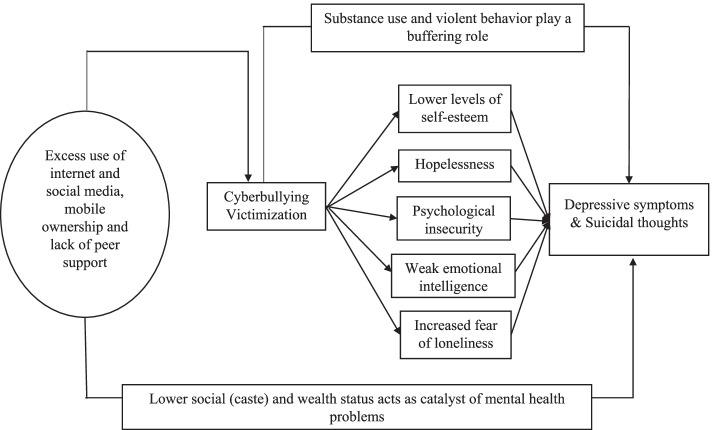
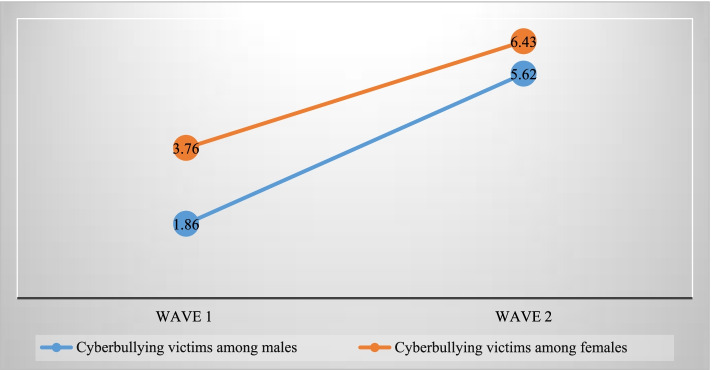
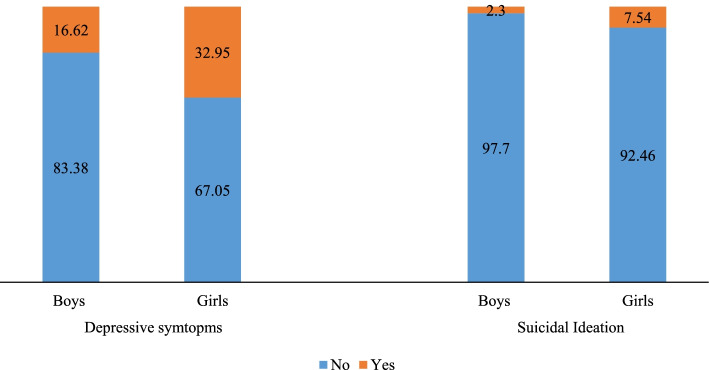
Verification
Claims the paper makes
The claims and statistics of this paper haven’t been checked yet.
Run the check — free, no account needed. It reads the open-access text and checks the sources it cites.
Claims other papers make about this one
Each is checked against this paper’s own text: does it say what the citing paper says it does?
The source backs part of the claim, not all of it — or backs it for a different population, condition or comparison.
In the citing paper
“Victims often experience isolation and negative emotions69, leading to hopelessness and depression145, which are, in turn, linked to self-harm and suicidal ideation149.”
From Umbrella review of meta-analyses on the risk factors, protective factors, consequences and interventions of cyberbullying victimization (2024) · cites this paper as [149]
Experimental — accuracy not yet measuredThe source backs part of the claim, not all of it — or backs it for a different population, condition or comparison.
In the citing paper
“Cyberbullying can lead to anxiety, depression, and, in extreme cases, suicidal thoughts among children (Martínez-Monteagudo et al., 2020; Maurya et al., 2022);”
From Virtual Reality Risks for Children in the Metaverse: An Examination through Criminological Perspectives (2026) · cites this paper as Maurya et al., 2022
Experimental — accuracy not yet measuredThe source backs part of the claim, not all of it — or backs it for a different population, condition or comparison.
In the citing paper
“Experiences of online harassment and victimisation have been associated with poorer psychological outcomes among some young people, including elevated distress, anxiety, and depressive symptoms [27, 28].”
From The Complex and Multifaceted Nature of Social Media: Perspectives From Young Adolescents, Parents and Experts (2026) · cites this paper as [28]
Experimental — accuracy not yet measuredThe source backs part of the claim, not all of it — or backs it for a different population, condition or comparison.
In the citing paper
“Consistent with previous research (e.g., [4]), social media was identifed as a complex and multifaceted tool, ofering opportunities for connection, education, and identity exploration [19, 55, 56], while also highlighting concerns relating to misinformation, social comparison, online victimisation and highly immersive or difcult-to-disengage-from forms of engagement [24, 25, 28, 57].”
From The Complex and Multifaceted Nature of Social Media: Perspectives From Young Adolescents, Parents and Experts (2026) · cites this paper as [28]
Experimental — accuracy not yet measuredThe source backs part of the claim, not all of it — or backs it for a different population, condition or comparison.
In the citing paper
“Research consistently reveals that individuals who are bullied typically have lower levels of self-esteem compared to those who are not victimized [34, 96].”
From How social media usage affects psychological and subjective well-being: testing a moderated mediation model (2023) · cites this paper as [96]
Experimental — accuracy not yet measured
Self-check
Percentages, sums and reported differences re-computed from the paper’s own numbers.
The self-check needs the paper’s full text.
Citations
Cites
The PHQ-9: Validity of a brief depression severity measure
Kroenke, K., Spitzer, R. L., & Williams, J. B. W. (2001) · Journal of General Internal Medicine · doi:10.1046/j.1525-1497.2001.016009606.x · Cited by 44,910
Kowalski, R. M., Giumetti, G. W., Schroeder, A. N., & Lattanner, M. R. (2014) · Psychological Bulletin · doi:10.1037/a0035618 · Cited by 3,266
Tokunaga, R. S. (2010) · Computers in Human Behavior · doi:10.1016/j.chb.2009.11.014 · Cited by 2,566
Bullying, Cyberbullying, and Suicide
Hinduja, S., & Patchin, J. W. (2010) · Archives of Suicide Research · doi:10.1080/13811118.2010.494133 · Cited by 2,078
Reiss, F. (2013) · Social Science & Medicine · doi:10.1016/j.socscimed.2013.04.026 · Cited by 2,062
Prevalence of and Risk Factors for Depressive Symptoms Among Young Adolescents
Saluja, G., Iachan, R., Scheidt, P. C., Overpeck, M. D., Sun, W., & Giedd, J. N. (2004) · Archives of Pediatrics & Adolescent Medicine · doi:10.1001/archpedi.158.8.760 · Cited by 701
Parental mediation, online activities, and cyberbullying
Mesch, G. S. (2009) · CyberPsychology & Behavior · doi:10.1089/cpb.2009.0068 · Cited by 665
Livingstone, S., & Smith, P. K. (2014) · Journal of Child Psychology and Psychiatry · doi:10.1111/jcpp.12197 · Cited by 590
Self-harm, suicidal behaviours, and cyberbullying in children and young people: systematic review
John, A., Glendenning, A. C., Marchant, A., Montgomery, P., Stewart, A., Wood, S., Lloyd, K., & Hawton, K. (2018) · Journal of Medical Internet Research · doi:10.2196/jmir.9044 · Cited by 580
Longitudinal associations between cyberbullying involvement and adolescent mental health
Fahy, A. E., Stansfeld, S. A., Smuk, M., Smith, N. R., Cummins, S., & Clark, C. (2016) · Journal of Adolescent Health · doi:10.1016/j.jadohealth.2016.06.006 · Cited by 457
Research works printed but not linked: 1
- Albin KA. Bullies in a wired world: the impact of cyberspace victimization on adolescent mental health and the need for Cyberbullying legislation in Ohio. J Law Health. 2012;25:153–88.
Cited by
Sorted by citations
The Impact of Social Media on the Mental Health of Adolescents and Young Adults: A Systematic Review
Khalaf, A. M., Alubied, A. A., Khalaf, A. M., & Rifaey, A. A. (2023) · Cureus · doi:10.7759/cureus.42990 · Cited by 252
Kasturiratna, K. T. A. S., Hartanto, A., Chen, C. H. Y., Tong, E. M. W., & Majeed, N. M. (2024) · Nature Human Behaviour · doi:10.1038/s41562-024-02011-6 · Cited by 119
Zhang, C., Tang, L., & Liu, Z. (2023) · BMC Psychology · doi:10.1186/s40359-023-01311-2 · Cited by 78
Cyberbullying and mental health: past, present and future
Bansal, S., Garg, N., Singh, J., & van der Walt, F. (2024) · Frontiers in Psychology · doi:10.3389/fpsyg.2023.1279234 · Cited by 92
Sorrentino, A., Sulla, F., Santamato, M., di Furia, M., Toto, G. A., & Monacis, L. (2023) · International Journal of Environmental Research and Public Health · doi:10.3390/ijerph20105825 · Cited by 69
Metadata
- Authors
- Maurya, C., Muhammad, T., Dhillon, P., & Maurya, P.
- Affiliations
- International Institute for Population Sciences (IN)
- Corresponding author
- Maurya, Priya
- Venue
- BMC Psychiatry
- Published
- 2022-09-09
- Volume
- 22
- Issue
- 1
- Pages
- 599-599
- ISSN
- 1471-244X (ISSN-L)
- PMC
- PMC9461154
- OpenAlex
- W4295008754
- Cited by
- 153
- References
- 64
- Citations by year
- 2026: 42 · 2025: 45 · 2024: 42 · 2023: 23 · 2022: 1
- FWCI
- 26.22
- Type
- journal article
- Language
- en
- Open access
- gold
- doi.org
- Locations
- BMC Psychiatry (publishedVersion, cc-by)
- PubMed Central (publishedVersion, cc-by)
- PubMed (publishedVersion)
- DOAJ (DOAJ: Directory of Open Access Journals) (submittedVersion, cc-by-sa)
- Greater South Information System
- Funders
- David and Lucile Packard Foundation
- Bill and Melinda Gates Foundation
- Topics
- Social Sciences › Psychology › Social Psychology › Bullying, Victimization, and Aggression
- Social Sciences › Psychology › Clinical Psychology › Suicide and Self-Harm Studies
- Social Sciences › Sociology and Political Science › Impact of Technology on Adolescents
- Keywords
- cyber victimization, depression, suicidal ideation, adolescents, young adults, gender differences, longitudinal effects, online harassment, adolescent mental health, India
- MeSH terms
- Cyberbullying, Adolescent, Adult, Depression, Female, Humans, Male, Cohort Studies, Crime Victims, Young Adult, Suicidal Ideation
About these checks
Registry, retraction, Cites and statistics results are computed, not judged, with one exception: a printed reference that no index lists is read once by a model before it counts as a citation error. Claims are extracted by a model and kept only when their quote appears verbatim in the text; each cited source is then checked, with a model’s help, for whether it says what the claim relies on. Those verdicts can be wrong — read the claim’s quote and the cited source before relying on one.
Statistics and arithmetic are recomputed, not judged.
Confidence bands are shown only for fields calibrated on our annotated test set. None is calibrated yet, so no band is shown.
What counts as a claim ›How we measure confidence ›How we check this ›
Are you an author, or do you see a problem with this page? Request a review
