

The relationship between postpartum negative life events and postpartum depression: a moderated mediation model of neuroticism and psychological flexibility
Open accessThe DOI matches its Crossref record; 41 of the 43 references it cites were found in a registry or an index; 6 of the 11 sources its claims cite were checked for support.
Abstract
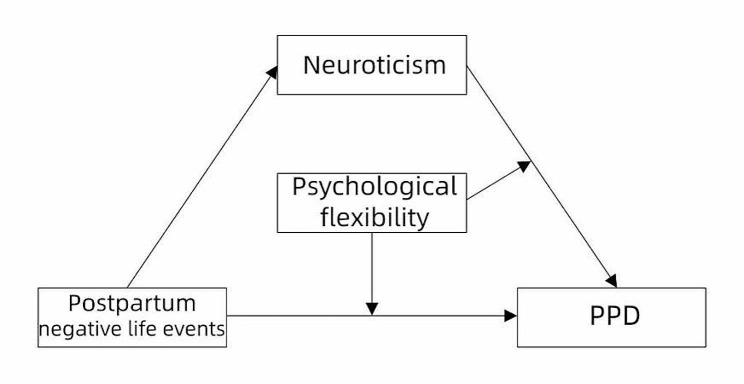
Background: Postpartum depression (PPD) is a major public health problem worldwide. Previous studies have shown that postpartum negative life events and neuroticism are both important risk factors for PPD. However, few studies have considered the role of protective factors in the influence of postpartum negative life events and neuroticism on PPD. Based on the diathesis–stress model and Acceptance and Commitment Therapy (ACT), a moderated mediating model was established to examine the mediating role of neuroticism between postpartum negative life events and PPD, as well as the moderating role of psychological flexibility in this mediating effect. Methods: A sample of 776 parturients from three different Grade A hospitals in China were assessed using the Edinburgh Postpartum Depression Scale, the Postpartum Negative Life Events Scale, the Neuroticism Subscale of the Big Five Personality Scale, and the Acceptance and Action Questionnaire– II. Results: PPD, postpartum negative life events, neuroticism, and experiential avoidance were significantly positively correlated with one another. Neuroticism partially mediated the relationship between postpartum negative life events and PPD. In this mediation model, the direct path and the second half of the mediation path were moderated by psychological flexibility. Specifically, the links between postpartum negative life events and PPD, as well as between neuroticism and PPD, were stronger when psychological flexibility was low, but weaker when psychological flexibility was high. Conclusions: The results show that psychological flexibility plays an important role in buffering the negative effects of postpartum negative life events and neuroticism on PPD. These findings provide implications for the prevention and intervention of PPD using an ACT approach. © The Author(s) 2024.
Overview
CoChat Summary
## TL;DR
In a cross-sectional sample of 776 Chinese parturients, postpartum negative life events were positively associated with postpartum depression (PPD), and neuroticism partially mediated this relationship. Psychological flexibility buffered both the direct effect of negative life events on PPD and the effect of neuroticism on PPD.
## Key findings
- In the mediation model, neuroticism had a significant positive effect on PPD (β = 0.388, p < 0.001), postpartum negative life events had a significant direct effect on PPD (β = 0.340, p < 0.001), and the indirect effect via neuroticism was significant (β = 0.188, 95% CI [0.133, 0.253]), accounting for 35.61% of the total effect.
- In the moderated mediation analysis, the interaction between neuroticism and psychological flexibility predicted PPD (β = 0.058, p < 0.05), and the interaction between postpartum negative life events and experiential avoidance predicted PPD (β = 0.080, p < 0.01).
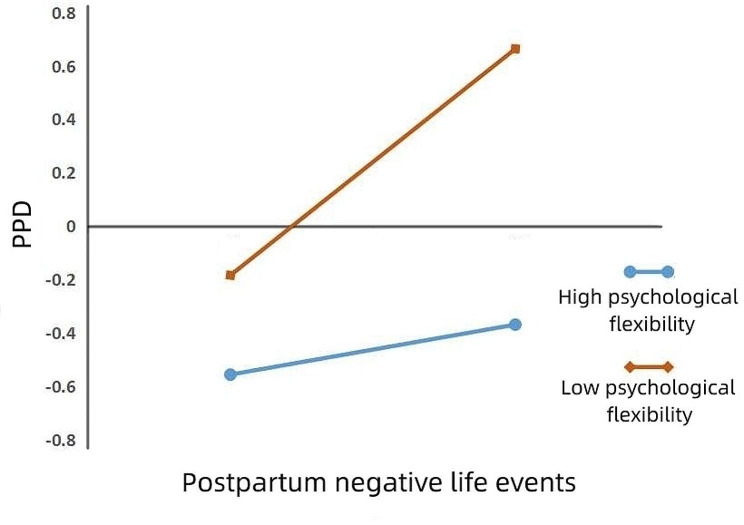
- Simple slopes showed that negative life events predicted PPD when psychological flexibility was low (βsimple = 0.424, p < 0.001), but not when psychological flexibility was high (βsimple = 0.094, p > 0.05).
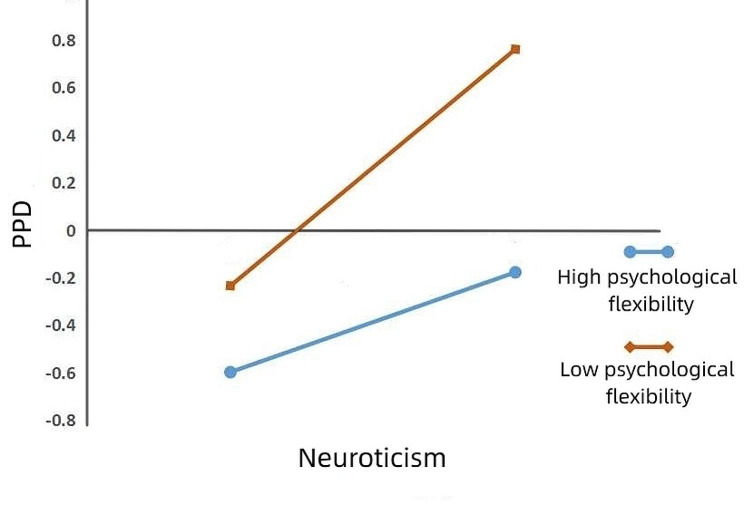
- Neuroticism still predicted PPD at both levels of psychological flexibility, but the effect was smaller when psychological flexibility was high (βsimple = 0.469 vs. 0.240).
## Methods
- Convenience sample of 776 parturients from three Grade A hospitals in Guizhou, Xinjiang, and Hainan provinces in China; 855 questionnaires were distributed and 776 valid questionnaires were analyzed.
- Measures: Edinburgh Postpartum Depression Scale (EPDS), Postpartum Negative Life Events Scale, Neuroticism Subscale of the Big Five Personality Scale, and the Acceptance and Action Questionnaire-II (AAQ-II).
- Statistical analysis used SPSS 25.0, Pearson correlations, Hayes PROCESS models 4 and 15, bootstrapping with 5,000 samples and 95% bias-corrected CIs, simple slope tests, and age and education as covariates.
## Limitations
- The paper states that the study was cross-sectional, so the moderated mediation model should be tested further with longitudinal research.
- The paper states that only social and psychological factors were examined; biological factors should be considered in future research.
- The paper states that AAQ-II has shortcomings, including variable reliability and discriminant validity; it suggests using other instruments such as the Personalized Psychological Flexibility Index (PPFI) in future studies.
- Evident from the text: the sample came from three hospitals in three Chinese provinces and was obtained by convenience sampling, which limits generalizability beyond this setting.
Model-written summary. Check it against the paper before relying on it.
Integrity signals
Registry
Cites
Statistics
Figures
Verification
Claims the paper makes
5 Valid · 1 Not valid · 2 Not checked · 28 Own results and interpretations
The cited sources support only part of this claim — read each source’s verdict below.
In the paper
“Empirical studies have confirmed that life events are positively correlated with neuroticism, and that stressful life events and experiences can predict neuroticism [28].”
§ The relationship between postpartum negative life events and postpartum depression: a moderated mediation model of neuroticism and psychological flexibility > Introduction Postpartum depression (PPD) is the most common symptom of maternal mental disorders, and its symptoms include sadness, despair, low self-evaluation, depression, inability to feel happiness with one’s baby, anxiety, loss of appetite, poor attention and memory, sleep disorders, long-term fatigue, social isolation, and even suicidal thoughts and, in severe cases, thoughts of harming one’s baby [1]. PPD symptoms can last up for up to 10 days and often resolve on their own. However, 13–20% of new mothers experience a longer duration of these symptoms, and as a result, can develop PPD [2]. World Health Organization research has shown that the incidence of depression in women after childbirth is three times higher than that in other periods of their life [3]. A meta-analysis covering the years 2000 to 2021 showed that the global prevalence of PPD was 17.22% [4]. In the Chinese maternal population, the total detection rate of PPD was 15% (covering the years 2001 to 2019) [5]. PPD among Chinese women has attracted the attention of the Chinese government which, in the Healthy China Initiative (2019–2030), clearly calls for action to promote better mental health, as well as improved maternal and child health, so as to prevent and intervene against PPD [6]. Given this, exploring the influencing mechanism of PPD in Chinese women will allow for better understandings and empirical support for the development of interventions or prevention measures to counter incidences of PPD. > The mediating role of neuroticism
What the sources say
- Partly supportedcites [28] Bleidorn W Hopwood CJ Lucas RE Life events and personality trait change J Pers 2018 86 1 83 96 10.1111/jopy.12286 27716921 sourceExperimental — accuracy not yet measured
The review reports that being fired was associated with increased neuroticism relative to being promoted (Life Events and Trait Change, p. 26), supporting a link for a specific stressful event. But it describes the broader evidence as mixed: neuroticism was largely unaffected by the life events in one major study (p. 6). It therefore does not support a general positive correlation between life events and neuroticism. (LLM, conf=0.86)
boostedstates a cause- Asserted: passes — The authors put it forward as true.
- Checkable: passes — It can be checked against evidence.
- Load-bearing: passes — The paper’s conclusions depend on it.
- Based: passes — The paper gives a reason why it holds.
- Partly supported
The sources with a verdict support this claim; the rest weren’t checked yet, have no full text we could read, or their verdicts aren’t rated yet.
In the paper
“Meta-analysis has shown that negative postpartum life events such as high life pressure, lack of social support, abuse, marital conflict, delivery and postpartum physical conditions, newborn conditions, and postpartum sleep problems are all important risk factors for PPD [12, 13].”
§ The relationship between postpartum negative life events and postpartum depression: a moderated mediation model of neuroticism and psychological flexibility > Introduction Postpartum depression (PPD) is the most common symptom of maternal mental disorders, and its symptoms include sadness, despair, low self-evaluation, depression, inability to feel happiness with one’s baby, anxiety, loss of appetite, poor attention and memory, sleep disorders, long-term fatigue, social isolation, and even suicidal thoughts and, in severe cases, thoughts of harming one’s baby [1]. PPD symptoms can last up for up to 10 days and often resolve on their own. However, 13–20% of new mothers experience a longer duration of these symptoms, and as a result, can develop PPD [2]. World Health Organization research has shown that the incidence of depression in women after childbirth is three times higher than that in other periods of their life [3]. A meta-analysis covering the years 2000 to 2021 showed that the global prevalence of PPD was 17.22% [4]. In the Chinese maternal population, the total detection rate of PPD was 15% (covering the years 2001 to 2019) [5]. PPD among Chinese women has attracted the attention of the Chinese government which, in the Healthy China Initiative (2019–2030), clearly calls for action to promote better mental health, as well as improved maternal and child health, so as to prevent and intervene against PPD [6]. Given this, exploring the influencing mechanism of PPD in Chinese women will allow for better understandings and empirical support for the development of interventions or prevention measures to counter incidences of PPD. > Postpartum negative life events and PPD The occurrence of PPD usually involves multi-dimensional risk factors which can be biological, psychological, or related to the social environment [7, 8]. As a social environmental factor, postpartum negative life events have attracted much attention from researchers for their universality and uncontrollability. Postpartum negative life events refer to the daily life events related to childbirth, child-rearing, and life adjustment, but with specific consideration of maternal difficulties in coping with these within the first year after delivery [9]. According to the diathesis–stress model, as a source of stress, postpartum negative life events can trigger the onset of depression and other mental disorders [10]. Cognitive behavioral therapy explains this process accordingly: when mothers are faced with the stressor of postpartum negative life events and cannot cope effectively, dysfunctional beliefs become activated, generating more biased interpretations, negative thoughts, and emotional experiences, which then leads to depression [11]. Meta-analysis has shown that negative postpartum life events such as high life pressure, lack of social support, abuse, marital conflict, delivery and postpartum physical conditions, newborn conditions, and postpartum sleep problems are all important risk factors for PPD [12, 13]. A longitudinal study showed that postpartum negative life events have a strong impact on PPD in Chinese parturients [14]. Overall, the predictive effect of postpartum negative life events on PPD has been confirmed by many studies, however few of these studies have focused on the mediating and moderating factors which exist between them. Therefore, it is important to explore the mediating and regulating mechanisms between postpartum negative life events and PPD in order to provide more effective guidance for the governments and other relevant institutions in the prevention of and intervention against PPD.
What the sources say
- Supportedcites [12] Hutchens BF Kearney J Risk factors for postpartum depression: an umbrella review J Midwifery Wom Heal 2020 65 1 96 108 10.1111/jmwh.13067 31970924 source
The Results identify life stress and social support among the most frequently reported statistically significant risk factors for postpartum depression. They also identify abuse and marital or partner satisfaction, supporting the claim that adverse life circumstances are important risk factors. (LLM, conf=0.90)
- Not checked — no full text of the sourcecites [13] Zhao XH Zhang ZH Risk factors for postpartum depression: an evidence-based systematic review of systematic reviews and meta-analyses Asian J Psychiat 2020 53 102353 10.1016/j.ajp.2020.102353 32927309 source
boostedstates an association- Asserted: passes — The authors put it forward as true.
- Checkable: passes — It can be checked against evidence.
- Load-bearing: passes — The paper’s conclusions depend on it.
- Based: passes — The paper gives a reason why it holds.
- Supported
The cited sources support only part of this claim — read each source’s verdict below.
In the paper
“Previous studies have confirmed that neuroticism is an important risk factor for increasing postpartum major depression [20, 21]”
§ The relationship between postpartum negative life events and postpartum depression: a moderated mediation model of neuroticism and psychological flexibility > Introduction Postpartum depression (PPD) is the most common symptom of maternal mental disorders, and its symptoms include sadness, despair, low self-evaluation, depression, inability to feel happiness with one’s baby, anxiety, loss of appetite, poor attention and memory, sleep disorders, long-term fatigue, social isolation, and even suicidal thoughts and, in severe cases, thoughts of harming one’s baby [1]. PPD symptoms can last up for up to 10 days and often resolve on their own. However, 13–20% of new mothers experience a longer duration of these symptoms, and as a result, can develop PPD [2]. World Health Organization research has shown that the incidence of depression in women after childbirth is three times higher than that in other periods of their life [3]. A meta-analysis covering the years 2000 to 2021 showed that the global prevalence of PPD was 17.22% [4]. In the Chinese maternal population, the total detection rate of PPD was 15% (covering the years 2001 to 2019) [5]. PPD among Chinese women has attracted the attention of the Chinese government which, in the Healthy China Initiative (2019–2030), clearly calls for action to promote better mental health, as well as improved maternal and child health, so as to prevent and intervene against PPD [6]. Given this, exploring the influencing mechanism of PPD in Chinese women will allow for better understandings and empirical support for the development of interventions or prevention measures to counter incidences of PPD. > The mediating role of neuroticism
What the sources say
- Supportedcites [20] Martin-Santos R Gelabert E Subirà S Gutierrez-Zotes A Langorh K Jover M Is neuroticism a risk factor for postpartum depression? Psychol Med 2012 42 7 1559 65 10.1017/S0033291712000712 22622082 PMC3359638 source
The Results report that neuroticism increased the risk of a major depressive episode during the 32 weeks after childbirth. The Discussion also calls it an independent predictor of major postpartum depression, while noting a slightly moderate effect size and other contributing risk factors. (LLM, conf=0.94)
- Not matchedcites [21] Yuan D Li Y Dong Y Wang M Relationship between different personality traits and Postpartum Depression: a Meta-analysis Chin Gen Prac 2023 26 14 1775 82
Its entry has no title and year that we can search by.
boostedstates a cause- Asserted: passes — The authors put it forward as true.
- Checkable: passes — It can be checked against evidence.
- Load-bearing: passes — The paper’s conclusions depend on it.
- Based: passes — The paper gives a reason why it holds.
- Supported
Every source the paper cites for this claim was checked and supports it.
In the paper
“of all personality traits, neuroticism is the strongest predictor of PPD [22].”
§ The relationship between postpartum negative life events and postpartum depression: a moderated mediation model of neuroticism and psychological flexibility > Introduction Postpartum depression (PPD) is the most common symptom of maternal mental disorders, and its symptoms include sadness, despair, low self-evaluation, depression, inability to feel happiness with one’s baby, anxiety, loss of appetite, poor attention and memory, sleep disorders, long-term fatigue, social isolation, and even suicidal thoughts and, in severe cases, thoughts of harming one’s baby [1]. PPD symptoms can last up for up to 10 days and often resolve on their own. However, 13–20% of new mothers experience a longer duration of these symptoms, and as a result, can develop PPD [2]. World Health Organization research has shown that the incidence of depression in women after childbirth is three times higher than that in other periods of their life [3]. A meta-analysis covering the years 2000 to 2021 showed that the global prevalence of PPD was 17.22% [4]. In the Chinese maternal population, the total detection rate of PPD was 15% (covering the years 2001 to 2019) [5]. PPD among Chinese women has attracted the attention of the Chinese government which, in the Healthy China Initiative (2019–2030), clearly calls for action to promote better mental health, as well as improved maternal and child health, so as to prevent and intervene against PPD [6]. Given this, exploring the influencing mechanism of PPD in Chinese women will allow for better understandings and empirical support for the development of interventions or prevention measures to counter incidences of PPD. > The mediating role of neuroticism
What the sources say
- Supportedcites [22] Udovičić S Big five personality traits and social support as predictors of postpartum depression J Eur Psychol Stud 2014 5 3 66 73 10.5334/jeps.ck source
The Discussion explicitly identifies neuroticism as the strongest predictor of postpartum depression among the personality traits studied. (LLM, conf=0.95)
plainstates an association- Asserted: passes — The authors put it forward as true.
- Checkable: passes — It can be checked against evidence.
- Load-bearing: unclear — It is unclear whether the paper’s conclusions depend on it.
- Based: passes — The paper gives a reason why it holds.
- Supported
A result the paper reports from its own data — it cites no other source for it, so there is none to check. The quote shows it is in the paper.
In the paper
“postpartum negative life events had a significant indirect effect on PPD (β = 0.188, t = 6.383, p < 0.001), with 95% CI [0.133, 0.253]”
§ The relationship between postpartum negative life events and postpartum depression: a moderated mediation model of neuroticism and psychological flexibility > Results > Mediation analysis
plainstates an association- Asserted: passes — The authors put it forward as true.
- Checkable: passes — It can be checked against evidence.
- Load-bearing: passes — The paper’s conclusions depend on it.
- Based: passes — The paper gives a reason why it holds.
19 more claims
Create a free account to see all 36 claims and every source verdict.
- Probably not a substantial claim. 9
- It may state two separate claims as one. 3
Citations
Cites
Detection of Postnatal Depression: Development of the 10-item Edinburgh Postnatal Depression Scale
Cox, J. L., Holden, J. M., & Sagovsky, R. (1987) · British Journal of Psychiatry · doi:10.1192/bjp.150.6.782 · Cited by 14,183
Acceptance and commitment therapy: model, processes and outcomes
Hayes, S. C., Luoma, J. B., Bond, F. W., Masuda, A., & Lillis, J. (2006) · Behaviour Research and Therapy · doi:10.1016/j.brat.2005.06.006 · Cited by 6,587 · cited 3×
“…the diathesis–stress and the psychological flexibility models, psychological flexibility is an important protective factor for mental health [15, 32], comprising six core components: acceptance, defusion, self as context, contact with the present moment, values, and committed action, all of…”
BackgroundInfluentialBond, F. W., Hayes, S. C., Baer, R. A., Carpenter, K. M., Guenole, N., Orcutt, H. K., Waltz, T., & Zettle, R. D. (2011) · Behavior Therapy · doi:10.1016/j.beth.2011.03.007 · Cited by 3,950 · cited 1×
“The acceptance and action questionnaire– second edition (AAQ-II), compiled by Bond et al. [44], was adopted, specifically the Chinese version which was translated into Chinese by Cao et al. (2013) [45].”
MethodRoberts, B. W., & DelVecchio, W. F. (2000) · Psychological Bulletin · doi:10.1037/0033-2909.126.1.3 · Cited by 3,241 · cited 2×
“Specifically, it proposes that the predisposition model can be extended to identify personality changes, and that negative life events will not only affect the onset of depression, but also affect one’s level of trait vulnerability [26, 27].”
BackgroundPublic health significance of neuroticism
Lahey, B. B. (2009) · American Psychologist · doi:10.1037/a0015309 · Cited by 1,901 · cited 1×
“Neuroticism is a personality trait referring one’s tendency to experience negative emotions (e.g., anger, sadness, anxiety, worry, hostility, etc.) manifested according to individual differences in negative emotional responses to threats, setbacks, or losses [17].”
BackgroundConsequences of maternal postpartum depression: A systematic review of maternal and infant outcomes
Slomian, J., Honvo, G., Emonts, P., Reginster, J.-Y., & Bruyère, O. (2019) · Women's Health · doi:10.1177/1745506519844044 · Cited by 1,496 · cited 1×
“…include sadness, despair, low self-evaluation, depression, inability to feel happiness with one’s baby, anxiety, loss of appetite, poor attention and memory, sleep disorders, long-term fatigue, social isolation, and even suicidal thoughts and, in severe cases, thoughts of harming one’s baby [1].”
BackgroundThe Revised NEO Personality Inventory (NEO-PI-R)
Costa, P. T., & McCrae, R. R. (2008) · The SAGE Handbook of Personality Theory and Assessment: Volume 2 — Personality Measurement and Testing · doi:10.4135/9781849200479.n9 · Cited by 1,463
Gelaye, B., Rondon, M. B., Araya, R., & Williams, M. A. (2016) · The Lancet Psychiatry · doi:10.1016/s2215-0366(16)30284-x · Cited by 1,155 · cited 1×
“However, 13–20% of new mothers experience a longer duration of these symptoms, and as a result, can develop PPD [2].”
BackgroundPersonality and depression: explanatory models and review of the evidence
Klein, D. N., Kotov, R., & Bufferd, S. J. (2011) · Annual Review of Clinical Psychology · doi:10.1146/annurev-clinpsy-032210-104540 · Cited by 886 · cited 2×
“At the same time, the predisposition model of depression holds that neuroticism and other adverse personality characteristics are important vulnerability factors in the generation and development of depression [16].”
BackgroundYim, I. S., Tanner Stapleton, L. R., Guardino, C. M., Hahn-Holbrook, J., & Dunkel Schetter, C. (2015) · Annual Review of Clinical Psychology · doi:10.1146/annurev-clinpsy-101414-020426 · Cited by 749 · cited 1×
“The occurrence of PPD usually involves multi-dimensional risk factors which can be biological, psychological, or related to the social environment [7, 8].”
BackgroundMapping global prevalence of depression among postpartum women
Wang, Z., Liu, J., Shuai, H., Cai, Z., Fu, X., Liu, Y., Xiao, X., Zhang, W., Krabbendam, E., Liu, S., et al. (2021) · Translational Psychiatry · doi:10.1038/s41398-021-01663-6 · Cited by 734 · cited 1×
“A meta-analysis covering the years 2000 to 2021 showed that the global prevalence of PPD was 17.22% [4].”
Influential(2009) · Cited by 655
Encyclopedia of Personality and Individual Differences
(2020) · Springer eBooks · doi:10.1007/978-3-319-24612-3 · Cited by 604
The Role of Mindfulness in Positive Reappraisal
Garland, E., Gaylord, S., & Park, J. (2009) · EXPLORE · doi:10.1016/j.explore.2008.10.001 · Cited by 595 · cited 1×
“…contrast, parturi-ents with high psychological flexibility are better able to maintain self-awareness through mindfulness and other means, holding a more flexible attention to the present moment, and engaging in positive cognitive reappraisal to redefine and evaluate negative life events [33, 54].”
BackgroundLife Events and Personality Trait Change.
Bleidorn, W., Hopwood, C. J., & Lucas, R. E. (2018) · Journal of personality · doi:10.1111/jopy.12286 · Cited by 588 · cited 2×
“Previous studies have consistently found that stressful life events predict a subsequent increase in neuroticism [28, 29, 53].”
BackgroundResultLee, D. T. S., Yip, S. K., Chiu, H. F. K., Leung, T. Y. S., Chan, K. P. M., Chau, I. O. L., Leung, H. C. M., & Chung, T. K. H. (1998) · British Journal of Psychiatry · doi:10.1192/bjp.172.5.433 · Cited by 578 · cited 1×
“The Edinburgh postpartum depression scale (EPDS) compiled by Cox was adopted [39], specifically the Chinese version of the scale as translated by Lee et al. (1998) [40], which has been shown to have good reliability and validity.”
MethodRisk Factors for Postpartum Depression: An Umbrella Review
Hutchens, B. F., & Kearney, J. (2020) · Journal of Midwifery & Women's Health · doi:10.1111/jmwh.13067 · Cited by 372 · cited 2×
“…with PPD and neuroticism, neuroticism is significantly positively correlated with PPD, experiential avoidance is significantly negatively correlated with PPD, and postpartum negative life events can positively predict PPD, which is consistent with the findings of previous studies [12, 37, 50].”
BackgroundResultZhao, X.-H., & Zhang, Z.-H. (2020) · Asian Journal of Psychiatry · doi:10.1016/j.ajp.2020.102353 · Cited by 357 · cited 1×
“Meta-analysis has shown that negative postpartum life events such as high life pressure, lack of social support, abuse, marital conflict, delivery and postpartum physical conditions, new-born conditions, and postpartum sleep problems are all important risk factors for PPD [12, 13].”
BackgroundOrmel, J., Oldehinkel, A. J., & Brilman, E. I. (2001) · American Journal of Psychiatry · doi:10.1176/appi.ajp.158.6.885 · Cited by 330 · cited 2×
“Specifically, it proposes that the predisposition model can be extended to identify personality changes, and that negative life events will not only affect the onset of depression, but also affect one’s level of trait vulnerability [26, 27].”
BackgroundTyndall, I., Waldeck, D., Pancani, L., Whelan, R., Roche, B., & Dawson, D. L. (2019) · Journal of Contextual Behavioral Science · doi:10.1016/j.jcbs.2018.09.005 · Cited by 303 · cited 2×
“In recent years, some researchers have pointed out that AAQ-II has some shortcomings in measuring experiential avoidance, but it is still the most commonly used self-report instrument to assess the efficacy of ACT intervention [46].”
MethodCherry, K. M., Hoeven, E. V., Patterson, T. S., & Lumley, M. N. (2021) · Clinical Psychology Review · doi:10.1016/j.cpr.2021.101973 · Cited by 267 · cited 1×
“To infer psychological flexibility from psychological inflexibility will have some shortcomings [58].”
BackgroundScreening for perinatal depression
Milgrom, J., & Gemmill, A. W. (2014) · Best Practice & Research Clinical Obstetrics & Gynaecology · doi:10.1016/j.bpobgyn.2013.08.014 · Cited by 232 · cited 1×
“Inclusion criteria: age ≥ 20 years old; within one year of child delivery (according to previous studies, sufferers of PPD are generally within one year post-delivery [38]); basic reading comprehension skills; no history of mental illness.”
BackgroundPredicting depressive symptomatology: Cognitive-behavioral models and postpartum depression.
O'Hara, M. W., Rehm, L. P., & Campbell, S. B. (1982) · Journal of Abnormal Psychology · doi:10.1037//0021-843x.91.6.457 · Cited by 227 · cited 2×
“…this process accordingly: when mothers are faced with the stressor of postpartum negative life events and cannot cope effectively, dysfunctional beliefs become activated, generating more biased interpretations, negative thoughts, and emotional experiences, which then leads to depression [11].”
BackgroundJeronimus, B. F., Riese, H., Sanderman, R., & Ormel, J. (2014) · Journal of Personality and Social Psychology · doi:10.1037/a0037009 · Cited by 208 · cited 2×
“Previous studies have consistently found that stressful life events predict a subsequent increase in neuroticism [28, 29, 53].”
BackgroundResultShallcross, A. J., Troy, A. S., Boland, M., & Mauss, I. B. (2010) · Behaviour Research and Therapy · doi:10.1016/j.brat.2010.05.025 · Cited by 177 · cited 2×
“Previous studies have confirmed that a higher level of psychological flexibility protects women from depression symptoms when faced with high-intensity stress [36], and that a lack of psychological flexibility is one mechanism for the persistence of PPD symptoms [37].”
BackgroundNeuroticism and self-esteem as indices of the vulnerability to major depression in women
ROBERTS, S. B., & KENDLER, K. S. (1999) · Psychological Medicine · doi:10.1017/s0033291799008739 · Cited by 164 · cited 1×
“…with PPD and neuroticism, neuroticism is significantly positively correlated with PPD, experiential avoidance is significantly negatively correlated with PPD, and postpartum negative life events can positively predict PPD, which is consistent with the findings of previous studies [12, 37, 50].”
ResultNegative and positive life events are associated with small but lasting change in neuroticism
Jeronimus, B. F., Ormel, J., Aleman, A., Penninx, B. W. J. H., & Riese, H. (2013) · Psychological Medicine · doi:10.1017/s0033291713000159 · Cited by 159 · cited 2×
“…three possible sources of variance for neuroticism: an allegedly stable set-point-neuroticism component representing the general trait-level of neuroticism, a transient state-deviation component which changes in response to life events and current psychopathology, and an error component [53].”
BackgroundResultNeuroticism, Life Events and Negative Thoughts in the Development of Depression in Adolescent Girls
Kercher, A. J., Rapee, R. M., & Schniering, C. A. (2009) · Journal of Abnormal Child Psychology · doi:10.1007/s10802-009-9325-1 · Cited by 130 · cited 1×
“They are more likely to be depressed than people with a low level of neuroticism [51, 52].”
BackgroundMonteiro, F., Fonseca, A., Pereira, M., Alves, S., & Canavarro, M. C. (2019) · Journal of Affective Disorders · doi:10.1016/j.jad.2018.12.124 · Cited by 61 · cited 1×
“…flexibility are more likely to adopt acceptance and mindfulness, and be able to take meaningful actions to cope with their negative experiences so as to interrupt the mechanism of depression caused by experiential avoidance, thereby relieving the risk of depression caused by neuroticism [36, 57].”
BackgroundAndersson, H. W., Lilleeng, S. E., Ruud, T., & Ose, S. O. (2022) · BMC Psychiatry · doi:10.1186/s12888-021-03663-8 · Cited by 51
Research letter: Is neuroticism a risk factor for postpartum depression?
MARTÍN-SANTOS, R., GELABERT, E., SUBIRÀ, S., GUTIERREZ-ZOTES, A., LANGORH, K., JOVER, M., TORRENS, M., GUILLAMAT, R., MAYORAL, F., CANELLAS, F., et al. (2012) · Psychological Medicine · doi:10.1017/s0033291712000712 · Cited by 50
Walker, A. L., de Rooij, S. R., Dimitrova, M., Witteveen, A. B., Verhoeven, C. J. M., de Jonge, A., Vrijkotte, T. G. M., & Henrichs, J. (2021) · Comprehensive Psychiatry · doi:10.1016/j.comppsych.2021.152239 · Cited by 43 · cited 1×
“The occurrence of PPD usually involves multi-dimensional risk factors which can be biological, psychological, or related to the social environment [7, 8].”
BackgroundStotts, A. L., Villarreal, Y. R., Klawans, M. R., Suchting, R., Dindo, L., Dempsey, A., Spellman, M., Green, C., & Northrup, T. F. (2019) · Maternal and Child Health Journal · doi:10.1007/s10995-018-02699-9 · Cited by 36 · cited 2×
“…with PPD and neuroticism, neuroticism is significantly positively correlated with PPD, experiential avoidance is significantly negatively correlated with PPD, and postpartum negative life events can positively predict PPD, which is consistent with the findings of previous studies [12, 37, 50].”
BackgroundResultGoldstein, B. L., Perlman, G., Eaton, N. R., Kotov, R., & Klein, D. N. (2020) · Psychological Medicine · doi:10.1017/s0033291719002927 · Cited by 34 · cited 4×
“Some studies have shown that neuroticism plays a mediating role between negative life events and depression [23, 24], while other studies have also shown that neuroticism plays a moderating role between negative life events and depression [25].”
ResultInfluentialChu, Q.-Q., Wang, X., Yao, R., Fan, J., Li, Y., Nie, F., Wang, L., & Tang, Q. (2022) · BMC Psychiatry · doi:10.1186/s12888-021-03673-6 · Cited by 34 · cited 1×
“Some studies have shown that neuroticism plays a mediating role between negative life events and depression [23, 24], while other studies have also shown that neuroticism plays a moderating role between negative life events and depression [25].”
ResultCheng, S. C., Walsh, E., & Schepp, K. G. (2016) · Archives of Psychiatric Nursing · doi:10.1016/j.apnu.2016.07.008 · Cited by 31 · cited 1×
“Protective factors can help individuals cope more effectively with the effects of risk factors, reducing the probability of negative outcomes for those predisposed to them [15, 31].”
BackgroundNegative emotion differentiation and long-term physical health—The moderating role of neuroticism.
Oh, V. Y. S., & Tong, E. M. W. (2020) · Health Psychology · doi:10.1037/hea0000809 · Cited by 23 · cited 2×
“Individuals with a high level of neuroticism tend to have a higher baseline level of negative emotions, higher sensitivity to exter-nal stimuli, and an increased attentional bias toward threatening information [18, 19].”
BackgroundEnvironmental influences on neuroticism : a story about emotional (in)stability
Jeronimus, B. F. (2015) · University of Groningen research database (University of Groningen / Centre for Information Technology) · Cited by 13
Neurophysiological Mechanism of Neuroticism
Huang, Y., Zhou, R., & Wu, M. (2015) · Advances in Psychological Science · doi:10.3724/sp.j.1042.2015.00602 · Cited by 10 · cited 2×
“Individuals with a high level of neuroticism tend to have a higher baseline level of negative emotions, higher sensitivity to exter-nal stimuli, and an increased attentional bias toward threatening information [18, 19].”
BackgroundAcceptance and Commitment Theory of Depression
Zettle, R. D. (2015) · Wiley eBooks · doi:10.1002/9781119114482.ch7 · Cited by 9 · cited 2×
“The lower the total score of the questionnaire, the lower their level of experiential avoidance and the higher their level of psychological flexibility [34].”
BackgroundBig Five Personality Traits and Social Support as Predictors of Postpartum Depression
Udovičić, S. (2014) · Journal of European Psychology Students · doi:10.5334/jeps.ck · Cited by 8 · cited 2×
“Previous studies have confirmed that neuroticism is an important risk factor for increasing postpartum major depression [20, 21], and of all personality traits, neuroticism is the strongest predictor of PPD [22].”
BackgroundResult
Research works printed but not linked: 16
- Liu D Ma Y Yu G Kuang J The detection rate of maternal postpartum depression in China:a meta-analysis Chin J Evid-Based Med 2019 19 12 1409 15
- Wen S. Research on postpartum depression: postpartum negative life events, depressogenic attributional style and perceived loss of control as predictors. Southwest University, Chongqing. Unpublished Master’s dissertation Retrieved from Available from CNKI: Master. 2014.
- Xu F Zhu X Zhou H Zhang Y Lin Q Sheng B Prevalence and determinants of early postpartum depressive symptoms:a longitudinal study J Nurs Sci 2022 37 17 36 9
- Butcher JN Mineka S Hooley JM Abnormal psychology (16 th edition) 2013 New Jersey Pearson Education Inc
- Yuan D Li Y Dong Y Wang M Relationship between different personality traits and Postpartum Depression: a Meta-analysis Chin Gen Prac 2023 26 14 1775 82
- Liu S Hu Y Sun L Mediating Effect of Neuroticism and coping styles between stress and depression Chin J Clin Psychol 2018 26 6 1230 3
- Hayes SC Strosahl KD Wilson KG Acceptance and Commitment Therapy: the process and practice of mindful change 2011 New York Guilford Press
- Zhuang Y Jiang C Zeng L Wen J Li X Zhang L The mediating effect of maternal resilience on Postpartum Depression and Postpartum Nega-tive life events Nurs J Chin PLA 2021 38 12 18 21
- Xi C Zhong M Lei X Liu Y Ling Y Yi J Comparing the Neuroticism Subscale of the NEO-PI-R with that of the NEO-FFI. Chin J Clin Psychol 2017 25 3 453 6
- Cao J Ji Y Zhu Z Reliability and validity of the Chinese version of the Acceptance and Action Questionnaire-Second Edition (AAQ-II) in college students Chin Ment Heath J 2013 27 11 873 7
- Hayes AF. Introduction to Mediation, Moderation, and Conditional Process Analysis: A Regression-Based Approach. New York: The Guilford Press; 2013. http://www.Afhayes.com. Accessed 29 April 2023.
- Lu Q Ding L Wang Y Wang Y Moderating effect of psychological resilience between prenatal perceived stress and postnatal depression among perinatal women Chin Nurs Res 2019 33 11 1906 10
- Guo P Qin Y Nie C Wu J Shan L Wang R Current status of Postpartum Depression symptoms among Lactating women in Guangxi and the Effect of Social Capital Med Soc 2023 36 02 64 8
- McDonnell S Semkovska M Resilience as mediator between extraversion, neuroticism, and depressive symptoms in university students J Posit Psychol Wellbeing 2020 4 1 26 40
- Zhang P Li X Sang Y Chen N The effects of neurotic personality on Depression in primary and secondary School students: the multilayered moderating role of Class Environment Stud Psychol Behav 2022 20 5 637 43
- Zhu H Cui Y Xiong P Zhu Z Research on postpartum depression and experiential avoidance of parturient Chin J Behav Med Brain Sci 2015 24 4 364 6
Cited by
Zou, Y., Wang, R., Xiong, X., Bian, C., Yan, S., & Zhang, Y. (2025) · BMC Psychiatry · doi:10.1186/s12888-025-07067-w · Cited by 31
Walczak‐Kozłowska, T., Wilczyńska, D. M., Santos‐Rocha, R., & Szumilewicz, A. (2025) · Applied Psychology Health and Well-Being · doi:10.1111/aphw.70043 · Cited by 5
Sun, W., & Chang, Y. (2025) · Hemodialysis International · doi:10.1111/hdi.13269 · Cited by 5
Mahamid, S., & Chasson, M. (2025) · Journal of Psychiatric Research · doi:10.1016/j.jpsychires.2025.09.026 · Cited by 4
Fu, B., Zhang, S., Xiang, L., Cai, M., Ou, M., Tang, G., Huang, R., Lei, J., & Lu, X. (2026) · Frontiers in Public Health · doi:10.3389/fpubh.2025.1692231 · Cited by 7
Metadata
- Authors
- Hu, N., Luo, J., Xiang, W., Yang, G., Huang, T., Guan, L., Xu, J., & Peng, B.
- Affiliations
- Xinjiang Medical University (CN)
- Guizhou Normal University (CN)
- Changsha University (CN)
- Changsha Social Work College (CN)
- Corresponding author
- Xu, Jufang
- Peng, Biao
- Venue
- BMC Psychiatry
- Published
- 2024-02-21
- Volume
- 24
- Issue
- 1
- Pages
- 147-147
- ISSN
- 1471-244X (ISSN-L)
- PMC
- PMC10882800
- OpenAlex
- W4391990085
- Cited by
- 23
- References
- 43
- Citations by year
- 2026: 9 · 2025: 10 · 2024: 4
- FWCI
- 7.93
- Type
- journal article
- Language
- en
- Open access
- gold
- doi.org
- Licence
- cc-by
- creativecommons.org/licenses/by/4.0 (tdm)
- creativecommons.org/licenses/by/4.0 (vor)
- Locations
- BMC Psychiatry (publishedVersion, cc-by)
- PubMed Central (publishedVersion, cc-by)
- PubMed (publishedVersion)
- DOAJ (DOAJ: Directory of Open Access Journals) (submittedVersion, cc-by-sa)
- Funders
- Jufang Xu (Research on the construction and application of "Internet + Nursing service" model in Urumqi based on ROCCIPI framework)
- Topics
- Health Sciences › Medicine › Public Health, Environmental and Occupational Health › Maternal Mental Health During Pregnancy and Postpartum
- Social Sciences › Psychology › Clinical Psychology › Personality Disorders and Psychopathology
- Health Sciences › Medicine › Obstetrics and Gynecology › Maternal and Perinatal Health Interventions
- Keywords
- postpartum depression, neuroticism, psychological flexibility, experiential avoidance, moderated mediation, diathesis-stress model, acceptance and commitment therapy, personality traits, protective factors
- MeSH terms
- Neuroticism, Female, Humans, Personality, Risk Factors, Depression, Postpartum, Postpartum Period, Acceptance and Commitment Therapy
About these checks
Registry, retraction, Cites and statistics results are computed, not judged, with one exception: a printed reference that no index lists is read once by a model before it counts as a citation error. Claims are extracted by a model and kept only when their quote appears verbatim in the text; each cited source is then checked, with a model’s help, for whether it says what the claim relies on. Those verdicts can be wrong — read the claim’s quote and the cited source before relying on one.
The claim verdicts this report counts are experimental: their accuracy is not yet measured.
A language model drew the claims from the paper on 2026-10-11, under version 3 of the claim definition (model deepseek-v4.1-flash, prompt extract-v3).
A second model labelled each claim on 2026-10-11 (model jev-1.13-20260917, definition revision gold-guideline-v0.2).
Cited sources are checked with a language model’s help (gpt-6-sol).
Statistics and arithmetic are recomputed, not judged.
Confidence bands are shown only for fields calibrated on our annotated test set. None is calibrated yet, so no band is shown.
What counts as a claim ›How we measure confidence ›How we check this ›
Are you an author, or do you see a problem with this page? Request a review
Data sources
Bibliographic data: Semantic Scholar, OpenAlex, Crossref.
Contains information from the Semantic Scholar Academic Graph Datasets, made available under the ODC Attribution License (ODC-BY 1.0).
Semantic Scholar’s data is described in: Kinney, R., et al. (2023). The Semantic Scholar Open Data Platform. arXiv:2301.10140.
