

Exploring depression in adults over a decade: a review of longitudinal studies
Open accessThe DOI matches its Crossref record; 81 of the 81 references it cites were found in a registry or an index.
Abstract
Depression, as a prevalent global mental health disorder, stands as one of the main causes of disability worldwide, imposing significant individual, societal, and economic burdens. While its heterogeneous nature is well recognized, growing evidence highlights the importance of understanding depression trajectories, which describe the long-term course and variability of depressive symptoms over time. These trajectories are shaped by a complex interplay of biological, psychological, and social factors. However, despite extensive research on depression’s prevalence and risk factors, a comprehensive synthesis of trajectory patterns, their determinants, and their long-term implications remains limited. This review systematically examines the existing literature on depression trajectories in adults, identifying key influences such as age, gender, socioeconomic status, early life experiences, social support, physical health, lifestyle factors, and external stressors, including pandemics. By integrating findings from longitudinal and epidemiological studies, this review provides novel insights into the bidirectional relationship between depression and chronic health conditions, underscoring the need for a holistic, trajectory-based approach to mental health care. The findings have important implications for clinical practice, public health, and future research. Recognizing distinct trajectory patterns may facilitate earlier identification of high-risk individuals, inform the development of personalized interventions, and optimize the allocation of mental health resources. Furthermore, by elucidating the complex interconnections between depression and broader health determinants, this review establishes a foundation for advancing targeted, evidence-based interventions aimed at reducing the long-term burden of depression, particularly among vulnerable populations. • Depression affects millions of adults around the world. • Adult depression trajectories and symptoms are multifaceted and diverse. • Depression trajectories are shaped by biological, psychological, and social factors. • Understanding depression's trajectories unveils critical insights into mitigating its impact. • Every individual's trajectory should require personalized mental health care approaches.
Overview
The claims and statistics of this paper haven’t been checked yet.
Free: it reads the open-access text and checks the first 5 claims that cite a source we can check. Create a free account to check every claim.
Integrity signals
Registry
Cites
Statistics
Figures
Verification
Claims the paper makes
The claims and statistics of this paper haven’t been checked yet.
Free: it reads the open-access text and checks the first 5 claims that cite a source we can check. Create a free account to check every claim.
Self-check
Percentages, sums and reported differences re-computed from the paper’s own numbers.
The self-check needs the paper’s full text.
Citations
Cites
PRISMA Extension for Scoping Reviews (PRISMA-ScR): Checklist and Explanation
Tricco, A. C., Lillie, E., Zarin, W., O'Brien, K. K., Colquhoun, H., Levac, D., Moher, D., Peters, M. D. J., Horsley, T., Weeks, L., et al. (2018) · Annals of Internal Medicine · doi:10.7326/m18-0850 · Cited by 43,565 · cited 1×
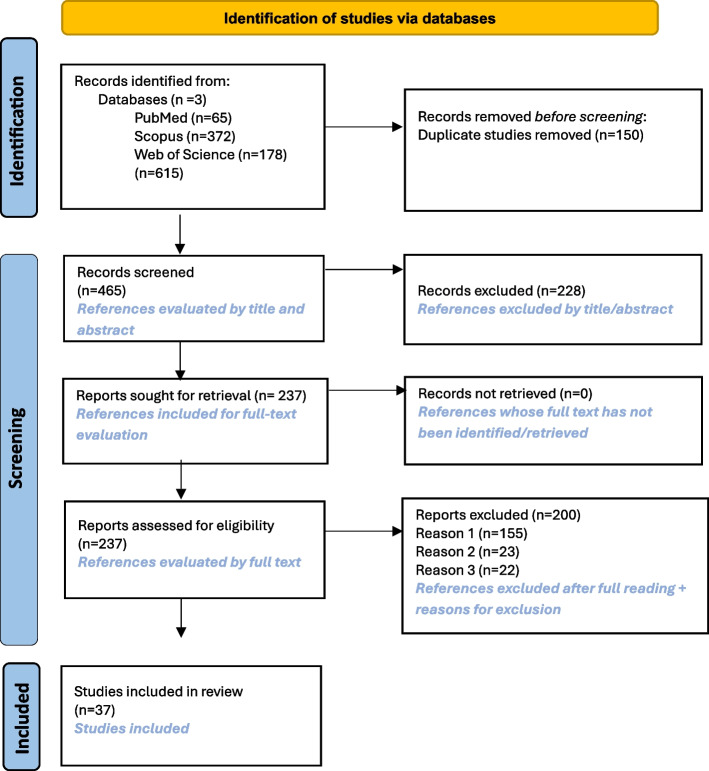
“This meticulous and transparent study selection process was conducted in accordance with the Preferred Reporting Items for Systematic Reviews and Meta-Analyses Statement for Scoping Reviews (PRISMA-ScR) guidelines [39].”
Scoville, W. B. (1949) · Journal of neurosurgery · doi:10.3171/jns.1949.6.1.0065 · Cited by 7,381
The Economic Burden of Adults With Major Depressive Disorder in the United States (2005 and 2010)
Greenberg, P. E., Fournier, A.-A., Sisitsky, T., Pike, C. T., & Kessler, R. C. (2015) · The Journal of Clinical Psychiatry · doi:10.4088/jcp.14m09298 · Cited by 1,779
A systematic review and meta-regression of the prevalence and incidence of perinatal depression
Woody, C. A., Ferrari, A. J., Siskind, D. J., Whiteford, H. A., & Harris, M. G. (2017) · Journal of Affective Disorders · doi:10.1016/j.jad.2017.05.003 · Cited by 1,577 · cited 1×
“Moreover, over 10% of pregnant women and those recently post-partum are affected by depression [3].”
The Economic Burden of Adults with Major Depressive Disorder in the United States (2010 and 2018)
Greenberg, P. E., Fournier, A.-A., Sisitsky, T., Simes, M., Berman, R., Koenigsberg, S. H., & Kessler, R. C. (2021) · PharmacoEconomics · doi:10.1007/s40273-021-01019-4 · Cited by 838
Evans-Lacko, S., Aguilar-Gaxiola, S., Al-Hamzawi, A., Alonso, J., Benjet, C., Bruffaerts, R., Chiu, W. T., Florescu, S., de Girolamo, G., Gureje, O., et al. (2018) · Psychological Medicine · doi:10.1017/s0033291717003336 · Cited by 781 · cited 1×
“Findings from the WHO World Mental Health (WMH) Surveys indicate that, despite the existence of established and effective therapies for mental disorders, over 75% of individuals in low-and middle-income countries do not receive treatment [4].”
Li, H., Zhang, R., Lee, Y.-C., Kraut, R. E., & Mohr, D. C. (2023) · npj Digital Medicine · doi:10.1038/s41746-023-00979-5 · Cited by 598 · cited 3×
“However, despite these advancements, the long-term effects and safe integration of large language models (LLMs) in chatbot interventions remain an area that requires further exploration [62].”
Polyakova, M., Stuke, K., Schuemberg, K., Mueller, K., Schoenknecht, P., & Schroeter, M. L. (2015) · Journal of Affective Disorders · doi:10.1016/j.jad.2014.11.044 · Cited by 488 · cited 1×
“For instance, a meta-analysis demonstrated that serum BDNF levels are decreased in acute Major Depressive Disorder (MDD) but recover after treatment, suggesting that serum BDNF could serve as a biomarker for successful treatment [80].”
Haque, M. D. R., & Rubya, S. (2023) · JMIR mHealth and uHealth · doi:10.2196/44838 · Cited by 404
Liu, H., Peng, H., Song, X., Xu, C., & Zhang, M. (2022) · Internet Interventions · doi:10.1016/j.invent.2022.100495 · Cited by 296 · cited 1×
“…therapy to bibliotherapy demonstrated that chatbot interventions led to greater reductions in both depressive and anxiety symptoms among university students, underlining the potential of chatbots as an affordable, accessible, and interactive self-help option for mental health care [60].”
Cited by
Geurgas, R., Newman, S., Akimova, E. T., Thompson, K. N., & Wedow, R. (2025) · SSM - Population Health · doi:10.1016/j.ssmph.2025.101886 · Cited by 10
Takeuchi, N., Maruyama, T., Toyama, N., Katsube, Y., Tabuchi, T., & Ekuni, D. (2026) · Journal of Clinical Medicine · doi:10.3390/jcm15010376 · Cited by 7
“According to de Sousa et al. [5], in their review of a longitudinal study, the course of depression varies among individuals and is influenced by factors such as age and Sex [6–9], social isolation [6,7,10], socioeconomic factors including childhood and current economic status [11], educational…”
Liu, J., Wang, J., Wu, Z., & Assim, M. I. S. A. (2026) · JMIR Mental Health · doi:10.2196/85319 · Cited by 7
“Depression not only has a significant impact at the individual level but also imposes a heavy economic burden on health care systems and society as a whole [3].”
Psychotherapy for older adults with depression: a narrative review
Gum, A. M., & Crawford, N. O. (2026) · Neuropsychopharmacology · doi:10.1038/s41386-026-02327-z · Cited by 6
An umbrella review of psychological capacity and mental health trajectories across the life course
Moreno‐Agostino, D., Khan, N., Rubeis, V. D., Jacob, C. M., Banati, P., Sadana, R., & Prina, M. (2026) · Nature Mental Health · doi:10.1038/s44220-026-00592-x · Cited by 4
Hy-OCNN-BiLSTM: a deep learning approach to predict depression risk from social media usage
Balraj, C. S. R., & Nagaraj, P. (2026) · Quality & Quantity · doi:10.1007/s11135-026-02656-7 · Cited by 2
“The conceptualization implies that to effectively measure the risk of depression, predictive models need to be able to incorporate longitudinal dependencies such as behavioral changes across time (de Sousa et al. 2025).”
Yu, W., Zhang, X., & Yi, W. (2026) · Current Psychology · doi:10.1007/s12144-026-09545-0 · Cited by 3
“However, this approach has been increasingly challenged by evidence suggesting depression manifests heterogeneously across individuals and contexts (de Sousa et al., 2025).”
Cheng, L. J., Cheng, J. Y., Chern, C. W. J., Liew, H. M., Tay, S. P., Ja'Affar, M. H. B., Wu, X. V., Wang, W., & He, H. G. (2025) · International Journal of Nursing Studies · doi:10.1016/j.ijnurstu.2025.105213 · Cited by 3
Siwa, M., Wietrzykowska, D., Szczuka, Z., Kuliś, E., Boberska, M., Banik, A., Zaleskiewicz, H., Krzywicka, P., Knoll, N., DeLongis, A., et al. (2025) · Mental health and physical activity · doi:10.1016/j.mhpa.2025.100729 · Cited by 1
Ranganatha, K., & Rananavare, L. B. (2025) · IEEE International Conference on Distributed Computing, VLSI, Electrical Circuits and Robotics (DISCOVER) · doi:10.1109/discover66922.2025.11258944 · Cited by 1
“As per the survey estimated by the WHO in the year 2021, 3.8% of people suffer from depression, i.e, 280 million people approximately, of which 5.7% of adults are included, and 5.7% of adults and older than 60 years are included [4].”
InfluentialLiu, X., & Wang, Y. (2026) · Current Psychology · doi:10.1007/s12144-025-08999-y · Cited by 4
“Depression arises from a complex interplay of biological vulnerabilities, psychological processes, and socio-contex-tual factors (de Sousa et al., 2025).”
Xu, K., Wu, L., & Zhu, L. (2026) · Journal of Affective Disorders · doi:10.1016/j.jad.2026.121323 · Cited by 1
Borbor-Cordova, M. J., Searles, M. P., Roa-López, H., Cornejo-Rodriguez, M. D. P., Castillo, K., Orellana‐Manzano, A., & Campagna, C. D. (2026) · PLoS ONE · doi:10.1371/journal.pone.0343239 · Cited by 2
Wang, H., Wei, Y., Gao, A., Guo, J.-J., Ding, X., Yang, J.-J., Wang, Z.-R., Da, J., Kang, Y., Ding, J.-H., et al. (2026) · Acta Pharmacologica Sinica · doi:10.1038/s41401-026-01824-7 · Cited by 1
Multidimensional Factors Associated With Depressive Symptoms in Colombian Centenarians
Anaya, J., Guillen-Burgos, H. F., Lozada-Martínez, I. D., & Birchenall-Jiménez, C. I. (2026) · American Journal of Geriatric Psychiatry · doi:10.1016/j.jagp.2026.07.009 · Cited by 1
Synaptic Plasticity—Intrinsic Excitability and Antidepressant Discovery
Tanaka, M. (2026) · Biomedicines · doi:10.3390/biomedicines14061265
Mardes, S., Septiaji, A., Hafizi, R., Hasanah, U., Rosyalita, D., Perdana, M. R., Ilahi, A., & Ramadhani, E. (2025) · Journal of Pediatric Surgery · doi:10.1016/j.jpedsurg.2025.162479
Liu, J., Wang, J., Wu, Z., & Assim, M. I. S. A. (2025) · doi:10.2196/preprints.80538
Salihu, E. Y., & Reddy, A. C. (2025) · doi:10.2196/preprints.85812
Khosravi, M. (2025) · Electronic Journal of General Medicine · doi:10.29333/ejgm/17676
“Longitudinal study designs are recommended to assess the durability of observed effects and potential impacts on cancer progression [46].”
Mapping Peer Support in Antidepressant Discussions on Reddit: Pilot Network Analysis
Salihu, E. Y., & Reddy, A. C. (2026) · Journal of Participatory Medicine · doi:10.2196/85812
García‐Rudolph, A., Soler, M. D., Gilabert, A., Opisso, E., & Saurí, J. (2026) · Neurorehabilitation · doi:10.1177/10538135261433166
“Given its heterogeneous course, long-term longitudinal analyses are needed to better capture the dynamic nature of depressive symptoms and their determinants (de Sousa et al., 2025).”
Risk factors associated with depressive symptoms among institutionalized elderly in Lebanon
Mohsen, H. A., Abbas, L. A., Calvet, B., & Salameh, P. (2026) · Scientific Reports · doi:10.1038/s41598-026-47721-1
Thompson, K. N., Couvy‐Duchesne, B., Lee, S., Geurgas, R., Jeong, Y., Arirangan, S., Newman, S., Tropf, F. C., & Wedow, R. (2026) · Social Psychiatry and Psychiatric Epidemiology · doi:10.1007/s00127-026-03098-0 · Cited by 1
Chawla, G., Pradhan, T., Alam, N., Kunzang, S., & Gupta, O. (2026) · Archiv der Pharmazie · doi:10.1002/ardp.70251 · Cited by 2
Cai, X., Zhang, S., Zhao, Z., Lan, T., Mei, L., Dai, Q., & Jin, Y. (2026) · Frontiers in Nutrition · doi:10.3389/fnut.2026.1749859
Li, L., Wang, Y., Liu, X., Jiang, W., Wang, J., & Yu, M. (2026) · Journal of Affective Disorders · doi:10.1016/j.jad.2026.121981 · Cited by 1
Rosario, A. D. (2026) · Psychology and Education A Multidisciplinary Journal · doi:10.70838/pemj.560501
Ni, P., Yao, P., & Zhu, K. (2026) · Frontiers in Psychiatry · doi:10.3389/fpsyt.2026.1783980
“Depression is a common and severe mental disorder, with its high prevalence, recurrence, and disability rates posing a signi fi cant burden on individual functioning and public health (1, 2).”
Xie, Z., Wang, Q., Wei, L., Dong, C., & Han, Y. (2026) · Aging & Mental Health · doi:10.1080/13607863.2026.2681154
Multi‐Modal AI Approach in Depression Detection and Treatment: A Systematic Review of Last Decade
Khare, S. K., Nadimi, E. S., Acharya, U. R., & Blanes‐Vidal, V. (2026) · Wiley Interdisciplinary Reviews Data Mining and Knowledge Discovery · doi:10.1002/widm.70106
4-Acyl-5-aminoimidazole Alkaloids from a Marine-Derived Streptomyces sp. OUCMDZ-944
Liu, Y., Wen, B., Zhu, G., Jian, S., Gao, Y., Chen, L., Li, N., & Zhu, W. (2026) · Journal of Natural Products · doi:10.1021/acs.jnatprod.6c00591
Wang, X., Xie, L., Wang, S., Meng, S., & Huang, Y. (2026) · BMC Psychology · doi:10.1186/s40359-026-05109-w
“In addition to the ongoing burden of symptoms and the stress of therapy, people with chronic illnesses frequently experience a deterioration in their quality of life, all of which play a significant role in the development of depression [14].”
Flexible wood-derived hydrogel patch for smartphone-assisted interval sweat cortisol profiling
Chen, M., Shi, J., Zhang, S., 庄东青, Ren, Y., & Zhang, Y. (2026) · Biosensors and Bioelectronics · doi:10.1016/j.bios.2026.119037
Social justice and mental health: nonlinear impacts of poverty and income inequality in Iran
Mohammadalizadeh, M., Basakha, M., Kamal, S. H. M., & Akbari, Y. (2026) · BMC Public Health · doi:10.1186/s12889-026-28842-8
“Poverty and income inequality have been identified as critical social determinants that profoundly shape mental health outcomes [4, 5]; however, the relationship between poverty, inequality and mental health is complex and bidirectional.”
Gupta, L. R., Ahmad, A., Srivastava, S., & Jafar, D. T. (2026) · Research Square · doi:10.21203/rs.3.rs-10521019/v1
Khali, R., & Tadi, N. F. (2026) · Middle East Current Psychiatry · doi:10.1186/s43045-026-00666-7
“Overall, general findings show that depression is shaped by an interplay of social, traditional, and psychological factors, contributing to varying explanations of its causes across different genders and educational backgrounds [7].”
Zandbergen, M. M. E., Jansen, E. E. L., Jabbarian, L. J., & de Kok, I. M. C. M. (2026) · Mental Health & Prevention · doi:10.1016/j.mhp.2026.200555
The Associations Between Income and Depression: A Cross‐National Analysis
Li, R., & Yang, X. (2026) · Depression and Anxiety · doi:10.1155/da/5511191
Tian, W., Yang, J., Dai, B., & Yang, Z. (2026) · Journal of Affective Disorders · doi:10.1016/j.jad.2026.122445
Mirhashemi, S. B., Eftekhari, H., Faraji, N., Maroufizadeh, S., Joukar, F., & Mansour‐Ghanaei, F. (2026) · Endocrine and Metabolic Science · doi:10.1016/j.endmts.2026.100328
Yu, Z., Zhang, A., Wang, K., An, Q., Chen, M., Wang, Y., & Wang, Z. (2026) · International Psychogeriatrics · doi:10.1016/j.inpsyc.2026.100270 · Cited by 1
Zhang, X., Zhang, X., Zhang, H., & Wei, S. (2026) · International Journal of Molecular Sciences · doi:10.3390/ijms27188052
“Recent epidemiological surveys indicate that depression affects approximately 3.8% of the global population, with higher prevalence among adult females [2], and is projected to become the second most common disease worldwide [3].”
InfluentialKlein, V., Gong, X., Eden, A., & Huskey, R. (2026) · Communication and Change · doi:10.1007/s44382-026-00040-5
“By comparison, depression, anxiety, and loneliness tend to be relatively stable within individuals over time (de Sousa et al., 2025; Hinz et al., 2023; Mund et al., 2020).”
Metadata
- Authors
- de Sousa, R. D., Zagalo, D. M., Costa, T., de Almeida, J. M. C., Canhão, H., & Rodrigues, A.
- Affiliations
- Universidade Nova de Lisboa (PT)
- Venue
- BMC Psychiatry
- Published
- 2025-04-15
- Volume
- 25
- Issue
- 1
- Pages
- 378-378
- ISSN
- 1471-244X (ISSN-L)
- PMC
- PMC11998219
- OpenAlex
- W4409444916
- Semantic Scholar
- 2ef751aee70150242e30ee201b42b68caab98db8
- Cited by
- 44
- References
- 81
- Citations by year
- 2026: 36 · 2025: 8
- FWCI
- 8.61
- Type
- journal article
- Language
- en
- Open access
- gold
- doi.org
- Licence
- cc-by-nc-nd
- creativecommons.org/licenses/by-nc-nd/4.0 (tdm)
- creativecommons.org/licenses/by-nc-nd/4.0 (vor)
- Locations
- BMC Psychiatry (publishedVersion, cc-by-nc-nd)
- PubMed Central (publishedVersion, cc-by-nc-nd)
- PubMed (publishedVersion)
- DOAJ (DOAJ: Directory of Open Access Journals) (submittedVersion, cc-by-sa)
- Funders
- Fundação para a Ciência e a Tecnologia (UIDP/04923/2020)
- Topics
- Health Sciences › Medicine › Psychiatry and Mental health › Mental Health Treatment and Access
- Social Sciences › Psychology › Experimental and Cognitive Psychology › Anxiety, Depression, Psychometrics, Treatment, Cognitive Processes
- Social Sciences › Psychology › Clinical Psychology › Child and Adolescent Psychosocial and Emotional Development
- Keywords
- adult depression, depression trajectories, risk factors for depression, socioeconomic status, gender differences, early life experience, social support, physical health, lifestyle factors, stressors, COVID-19 pandemic, chronic disease, mental health burden
- MeSH terms
- Adult, Depression, Humans, Life Style, Longitudinal Studies, Risk Factors
About these checks
Registry, retraction, Cites and statistics results are computed, not judged, with one exception: a printed reference that no index lists is read once by a model before it counts as a citation error. Claims are extracted by a model and kept only when their quote appears verbatim in the text; each cited source is then checked, with a model’s help, for whether it says what the claim relies on. Those verdicts can be wrong — read the claim’s quote and the cited source before relying on one.
Statistics and arithmetic are recomputed, not judged.
Confidence bands are shown only for fields calibrated on our annotated test set. None is calibrated yet, so no band is shown.
What counts as a claim ›How we measure confidence ›How we check this ›
Are you an author, or do you see a problem with this page? Request a review
Data sources
Bibliographic data: Semantic Scholar, OpenAlex, Crossref.
Contains information from the Semantic Scholar Academic Graph Datasets, made available under the ODC Attribution License (ODC-BY 1.0).
Semantic Scholar’s data is described in: Kinney, R., et al. (2023). The Semantic Scholar Open Data Platform. arXiv:2301.10140.
