

Exploring depression in adults over a decade: a review of longitudinal studies
Open accessThe DOI matches its Crossref record; 81 of the 81 references it cites were found in a registry or an index.
Abstract
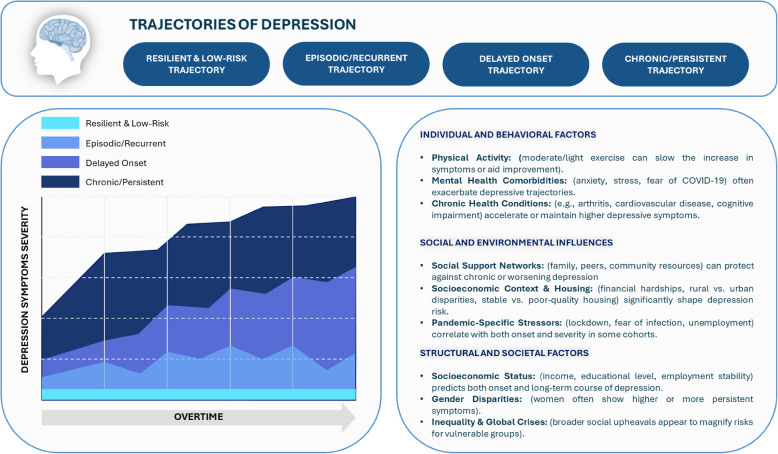
Depression, as a prevalent global mental health disorder, stands as one of the main causes of disability worldwide, imposing significant individual, societal, and economic burdens. While its heterogeneous nature is well recognized, growing evidence highlights the importance of understanding depression trajectories, which describe the long-term course and variability of depressive symptoms over time. These trajectories are shaped by a complex interplay of biological, psychological, and social factors. However, despite extensive research on depression’s prevalence and risk factors, a comprehensive synthesis of trajectory patterns, their determinants, and their long-term implications remains limited. This review systematically examines the existing literature on depression trajectories in adults, identifying key influences such as age, gender, socioeconomic status, early life experiences, social support, physical health, lifestyle factors, and external stressors, including pandemics. By integrating findings from longitudinal and epidemiological studies, this review provides novel insights into the bidirectional relationship between depression and chronic health conditions, underscoring the need for a holistic, trajectory-based approach to mental health care. The findings have important implications for clinical practice, public health, and future research. Recognizing distinct trajectory patterns may facilitate earlier identification of high-risk individuals, inform the development of personalized interventions, and optimize the allocation of mental health resources. Furthermore, by elucidating the complex interconnections between depression and broader health determinants, this review establishes a foundation for advancing targeted, evidence-based interventions aimed at reducing the long-term burden of depression, particularly among vulnerable populations. • Depression affects millions of adults around the world. • Adult depression trajectories and symptoms are multifaceted and diverse. • Depression trajectories are shaped by biological, psychological, and social factors. • Understanding depression's trajectories unveils critical insights into mitigating its impact. • Every individual's trajectory should require personalized mental health care approaches.
Overview
The claims and statistics of this paper haven’t been checked yet.
Free: it reads the open-access text and checks the first 5 claims that cite a source we can check. Create a free account to check every claim.
Integrity signals
Registry
Cites
Statistics
Figures
Verification
Claims the paper makes
The claims and statistics of this paper haven’t been checked yet.
Free: it reads the open-access text and checks the first 5 claims that cite a source we can check. Create a free account to check every claim.
Self-check
Percentages, sums and reported differences re-computed from the paper’s own numbers.
The self-check needs the paper’s full text.
Citations
Cites
PRISMA Extension for Scoping Reviews (PRISMA-ScR): Checklist and Explanation
Tricco, A. C., Lillie, E., Zarin, W., O'Brien, K. K., Colquhoun, H., Levac, D., Moher, D., Peters, M. D. J., Horsley, T., Weeks, L., et al. (2018) · Annals of Internal Medicine · doi:10.7326/m18-0850 · Cited by 43,565 · cited 1×
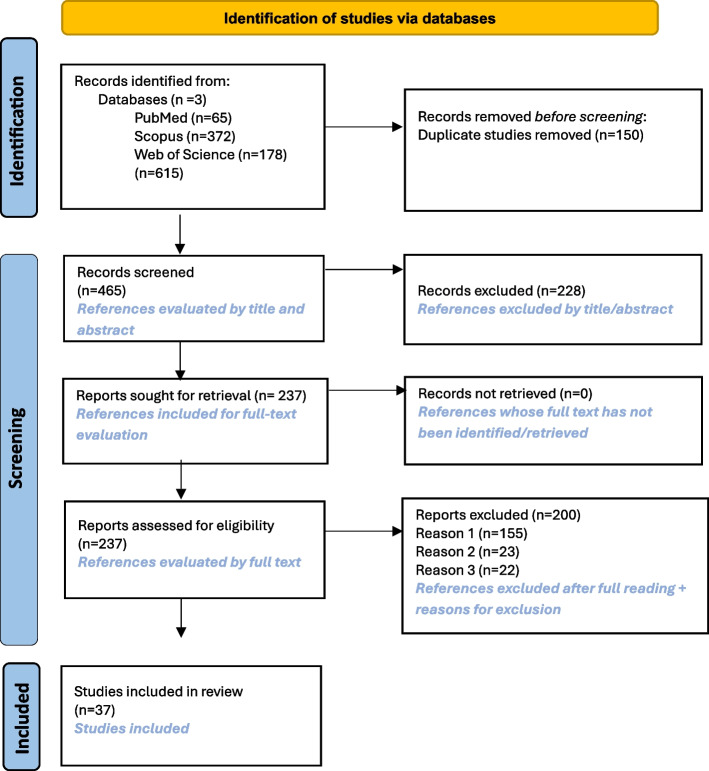
“This meticulous and transparent study selection process was conducted in accordance with the Preferred Reporting Items for Systematic Reviews and Meta-Analyses Statement for Scoping Reviews (PRISMA-ScR) guidelines [39].”
Scoville, W. B. (1949) · Journal of neurosurgery · doi:10.3171/jns.1949.6.1.0065 · Cited by 7,381
The Economic Burden of Adults With Major Depressive Disorder in the United States (2005 and 2010)
Greenberg, P. E., Fournier, A.-A., Sisitsky, T., Pike, C. T., & Kessler, R. C. (2015) · The Journal of Clinical Psychiatry · doi:10.4088/jcp.14m09298 · Cited by 1,779
A systematic review and meta-regression of the prevalence and incidence of perinatal depression
Woody, C. A., Ferrari, A. J., Siskind, D. J., Whiteford, H. A., & Harris, M. G. (2017) · Journal of Affective Disorders · doi:10.1016/j.jad.2017.05.003 · Cited by 1,577 · cited 1×
“Moreover, over 10% of pregnant women and those recently post-partum are affected by depression [3].”
The Economic Burden of Adults with Major Depressive Disorder in the United States (2010 and 2018)
Greenberg, P. E., Fournier, A.-A., Sisitsky, T., Simes, M., Berman, R., Koenigsberg, S. H., & Kessler, R. C. (2021) · PharmacoEconomics · doi:10.1007/s40273-021-01019-4 · Cited by 838
Evans-Lacko, S., Aguilar-Gaxiola, S., Al-Hamzawi, A., Alonso, J., Benjet, C., Bruffaerts, R., Chiu, W. T., Florescu, S., de Girolamo, G., Gureje, O., et al. (2018) · Psychological Medicine · doi:10.1017/s0033291717003336 · Cited by 781 · cited 1×
“Findings from the WHO World Mental Health (WMH) Surveys indicate that, despite the existence of established and effective therapies for mental disorders, over 75% of individuals in low-and middle-income countries do not receive treatment [4].”
Li, H., Zhang, R., Lee, Y.-C., Kraut, R. E., & Mohr, D. C. (2023) · npj Digital Medicine · doi:10.1038/s41746-023-00979-5 · Cited by 598 · cited 3×
“However, despite these advancements, the long-term effects and safe integration of large language models (LLMs) in chatbot interventions remain an area that requires further exploration [62].”
Polyakova, M., Stuke, K., Schuemberg, K., Mueller, K., Schoenknecht, P., & Schroeter, M. L. (2015) · Journal of Affective Disorders · doi:10.1016/j.jad.2014.11.044 · Cited by 488 · cited 1×
“For instance, a meta-analysis demonstrated that serum BDNF levels are decreased in acute Major Depressive Disorder (MDD) but recover after treatment, suggesting that serum BDNF could serve as a biomarker for successful treatment [80].”
Haque, M. D. R., & Rubya, S. (2023) · JMIR mHealth and uHealth · doi:10.2196/44838 · Cited by 404
Liu, H., Peng, H., Song, X., Xu, C., & Zhang, M. (2022) · Internet Interventions · doi:10.1016/j.invent.2022.100495 · Cited by 296 · cited 1×
“…therapy to bibliotherapy demonstrated that chatbot interventions led to greater reductions in both depressive and anxiety symptoms among university students, underlining the potential of chatbots as an affordable, accessible, and interactive self-help option for mental health care [60].”
The Economic Burden of Adults with Major Depressive Disorder in the United States (2019)
Greenberg, P., Chitnis, A., Louie, D., Suthoff, E., Chen, S.-Y., Maitland, J., Gagnon-Sanschagrin, P., Fournier, A.-A., & Kessler, R. C. (2023) · Advances in Therapy · doi:10.1007/s12325-023-02622-x · Cited by 223 · cited 1×
“Depression leads to reduced workforce productivity, increased healthcare expenditures, and significant disability-related costs, further amplifying its societal toll [5, 5–10].”
Vulnerability to Depression: From Brain Neuroplasticity to Identification of Biomarkers
Blugeot, A., Rivat, C., Bouvier, E., Molet, J., Mouchard, A., Zeau, B., Bernard, C., Benoliel, J.-J., & Becker, C. (2011) · The Journal of Neuroscience · doi:10.1523/jneurosci.1309-11.2011 · Cited by 189 · cited 2×
“Neuroplasticity, which encompasses the brain’s capacity to adapt and reorganize in response to environmental stimuli and experiences, is integral to both the onset and progression of depression [71, 72].”
Zhong, W., Luo, J., & Zhang, H. (2024) · Journal of Affective Disorders · doi:10.1016/j.jad.2024.04.057 · Cited by 173 · cited 1×
“…chatbot-based interventions significantly alleviate depression and anxiety symptoms in short-course treatments, with the most notable improvements occurring after 8 weeks [61], and are particularly effective in clinical populations, especially in contexts where human resources are limited [62].”
Jiao, W., Lin, J., Deng, Y., Ji, Y., Liang, C., Wei, S., Xi, J., & Yan, F. (2025) · Journal of Neuroinflammation · doi:10.1186/s12974-024-03312-3 · Cited by 144
Abd-Alrazaq, A., AlSaad, R., Shuweihdi, F., Ahmed, A., Aziz, S., & Sheikh, J. (2023) · npj Digital Medicine · doi:10.1038/s41746-023-00828-5 · Cited by 138 · cited 1×
“Devices capable of tracking sleep patterns, heart rate variability, and physical activity provide real-time insights that are vital for diagnosing and managing mental health disorders, including depres - sion [64–66].”
Current advances in wearable devices and their sensors in patients with depression
Lee, S., Kim, H., Park, M. J., & Jeon, H. J. (2021) · Frontiers in Psychiatry · doi:10.3389/fpsyt.2021.672347 · Cited by 117
Depressive Symptoms Among Older Adults Pre– and Post–COVID-19 Pandemic
Briggs, R., McDowell, C. P., Looze, C. D., Kenny, R. A., & Ward, M. D. (2021) · Journal of the American Medical Directors Association · doi:10.1016/j.jamda.2021.09.003 · Cited by 103 · cited 1×
“Briggs et al. [40] shed light on the prevalence of clinically significant depressive symptoms among older adults before and during the pandemic.”
Elnaggar, K., El-Gayar, M. M., & Elmogy, M. M. (2025) · Diagnostics · doi:10.3390/diagnostics15020210 · Cited by 84 · cited 1×
“Similarly, AI-powered electroencephalogram (EEG) analysis has improved the accuracy of depression diagnoses, with machine learning techniques identifying pathophysiological markers associated with the disorder, offering a scalable and automated approach to diagnosis [55].”
Chatbot features for anxiety and depression: a scoping review
Ahmed, A., Hassan, A., Aziz, S., Abd-alrazaq, A. A., Ali, N., Alzubaidi, M., Al-Thani, D., Elhusein, B., Siddig, M. A., Ahmed, M., et al. (2023) · Health Informatics Journal · doi:10.1177/14604582221146719 · Cited by 82
Chen, C., Lee, I., Su, Y., Mullan, J., & Chiu, H. (2016) · International Journal of Geriatric Psychiatry · doi:10.1002/gps.4561 · Cited by 75 · cited 2×
“Chronic physical conditions such as dementia, coronary heart diseases, stroke, arthritis, musculoskeletal disorders have been associated with higher rates of depressive symptoms, suggesting a bidirectional relationship between physical and mental health [18–21].”
Fancourt, D. E., Steptoe, A., & Bu, F. (2022) · The British Journal of Psychiatry · doi:10.1192/bjp.2022.155 · Cited by 73
Sialino, L. D., van Oostrom, S. H., Wijnhoven, H. A. H., Picavet, H. S. J., Verschuren, W. M. M., Visser, M., & Schaap, L. S. (2020) · Aging & Mental Health · doi:10.1080/13607863.2020.1847248 · Cited by 72 · cited 2×
“Lower socioeconomic status limited educational attainment, and reduced access to social support networks have all been identified as key factors influencing the onset and progression of depression [12, 23, 25, 26].”
Challenges for Artificial Intelligence in Recognizing Mental Disorders
Yan, W.-J., Ruan, Q.-N., & Jiang, K. (2022) · Diagnostics · doi:10.3390/diagnostics13010002 · Cited by 71 · cited 2×
“To this end, addressing the existing limitations and fostering collaborations across disciplines will be critical to realizing the full potential of these technologies in advancing mental health care [67, 69, 70].”
Epidemiology and costs of depressive disorder in Spain: the EPICO study
Vieta, E., Alonso, J., Pérez-Sola, V., Roca, M., Hernando, T., Sicras-Mainar, A., Sicras-Navarro, A., Herrera, B., & Gabilondo, A. (2021) · European Neuropsychopharmacology · doi:10.1016/j.euroneuro.2021.04.022 · Cited by 70
Pellerin, N., Raufaste, E., Corman, M., Teissedre, F., & Dambrun, M. (2022) · Scientific Reports · doi:10.1038/s41598-022-14572-5 · Cited by 69
Wearable Technology in Clinical Practice for Depressive Disorder
Fedor, S., Lewis, R., Pedrelli, P., Mischoulon, D., Curtiss, J. E., & Picard, R. W. (2023) · New England Journal of Medicine · doi:10.1056/nejmra2215898 · Cited by 66 · cited 1×
“Devices capable of tracking sleep patterns, heart rate variability, and physical activity provide real-time insights that are vital for diagnosing and managing mental health disorders, including depres - sion [64–66].”
Zelada, M. I., Garrido, V., Liberona, A., Jones, N., Zúñiga, K., Silva, H., & Nieto, R. R. (2023) · International Journal of Molecular Sciences · doi:10.3390/ijms241914810 · Cited by 60 · cited 1×
“Additionally, a systematic review highlighted that early increases in BDNF levels after treatment initiation could indicate a positive response, underscoring the potential of BDNF as a predictor of treatment response in MDD [81].”
Yan, C., Liao, H., Ma, Y., Xiang, Q., & Wang, J. (2021) · Quality of Life Research · doi:10.1007/s11136-021-02807-3 · Cited by 57 · cited 3×
“This is particularly evident in research focused on rural populations, where community involvement and social support play pivotal roles in sustaining mental well-being [27–30].”
Late-life depressive symptoms: Prediction models of change
García-Peña, C., Wagner, F. A., Sánchez-García, S., Espinel-Bermúdez, C., Juárez-Cedillo, T., Pérez-Zepeda, M., Arango-Lopera, V., Franco-Marina, F., Ramírez-Aldana, R., & Gallo, J. J. (2013) · Journal of Affective Disorders · doi:10.1016/j.jad.2013.05.007 · Cited by 55 · cited 1×
“Furthermore [47], focuses on the factors associated with predictors of change in depressive symptoms among elderly individuals, both with and without baseline significant depressive symptoms.”
Short-Term Trajectories of Depressive Symptoms in Stroke Survivors and Their Family Caregivers
Malhotra, R., Chei, C., Menon, E., Chow, W. L., Quah, S. R., Chan, A. W.-M., & Matchar, D. B. (2015) · Journal of Stroke and Cerebrovascular Diseases · doi:10.1016/j.jstrokecerebrovasdis.2015.09.012 · Cited by 51 · cited 1×
“Malhotra et al. [48] undertook an investigation into the short-term trajectories of depressive symptoms among stroke survivors and their caregivers.”
The 9-year clinical course of depressive and anxiety disorders: New NESDA findings
Solis, E. C., van Hemert, A. M., Carlier, I. V. E., Wardenaar, K. J., Schoevers, R. A., Beekman, A. T. F., Penninx, B. W. J. H., & Giltay, E. J. (2021) · Journal of Affective Disorders · doi:10.1016/j.jad.2021.08.108 · Cited by 50 · cited 1×
“Solis et al. [53] conducted a thorough analysis of the nine-year clinical trajectory of depressive and anxiety disorders, revealing significant differences between categorical (DSM diagnoses) and dimensional (symptom severity) approaches.”
Wearable devices for anxiety & depression: A scoping review
Ahmed, A., Aziz, S., Alzubaidi, M., Schneider, J., Irshaidat, S., Abu Serhan, H., Abd-alrazaq, A. A., Solaiman, B., & Househ, M. (2023) · Computer Methods and Programs in Biomedicine Update · doi:10.1016/j.cmpbup.2023.100095 · Cited by 50 · cited 2×
“To this end, addressing the existing limitations and fostering collaborations across disciplines will be critical to realizing the full potential of these technologies in advancing mental health care [67, 69, 70].”
Liang, Y. (2020) · Health & Place · doi:10.1016/j.healthplace.2020.102449 · Cited by 47 · cited 1×
“Additionally [28], contributed to the understanding of depressive trajectories among elderly individuals in rural China by investigating the impact of housing characteristics.”
Goerigk, S. A., Cretaz, E., Sampaio-Júnior, B., Vieira, É. L. M., Gattaz, W. F., Klein, I., Lafer, B., Teixeira, A. L., Carvalho, A. F., Lotufo, P. A., et al. (2020) · Progress in Neuro-Psychopharmacology and Biological Psychiatry · doi:10.1016/j.pnpbp.2020.110119 · Cited by 40 · cited 2×
“…of early interven-tions—ranging from neuromodulatory techniques such as transcranial magnetic stimulation (TMS) to pharmacological agents designed to enhance neuroplasticity— holds promise for modifying depressive trajectories and preventing the transition from acute to chronic depression [72].”
Handley, T. E., Rich, J., Lewin, T. J., & Kelly, B. J. (2018) · Social Psychiatry and Psychiatric Epidemiology · doi:10.1007/s00127-018-1591-1 · Cited by 38 · cited 3×
“This is particularly evident in research focused on rural populations, where community involvement and social support play pivotal roles in sustaining mental well-being [27–30].”
Cheng, Y., Thorpe, L., Kabir, R., & Lim, H. J. (2021) · BMC Geriatrics · doi:10.1186/s12877-021-02501-6 · Cited by 37 · cited 1×
“Additionally [43], delved into the trajectories of depression and anxiety among Korean older adults using Growth Mixture Modeling.”
Shin, J., & Cho, E. (2022) · BMC Psychiatry · doi:10.1186/s12888-022-03905-3 · Cited by 37 · cited 2×
“The studies by [25, 26, 44] offer valuable insights into the association between socioeconomic factors and depressive symptoms in South Korea and the United States, respectively.”
Depression Recognition Using Daily Wearable-Derived Physiological Data
Shui, X., Xu, H. J., Tan, S., & Zhang, D. (2025) · Sensors · doi:10.3390/s25020567 · Cited by 37 · cited 2×
“Additionally, wearable devices can play a significant role in managing anxiety, further expanding their utility in the broader spectrum of psychiatric disorders [68].”
Zhang, B., Lin, Y., Hu, M., Sun, Y., Xu, M., Hao, J., & Zhu, C. (2022) · Journal of Psychosomatic Research · doi:10.1016/j.jpsychores.2022.110986 · Cited by 36 · cited 2×
“Zhang et al. [17] longitudinal study among Chinese middle-aged and older adults sheds light on the dynamic nature of depressive symptoms and their association with the rate of decline in global cognitive function, episodic memory, and executive function.”
Song, S., Seo, Y., Hwang, S., Kim, H., & Kim, J. (2024) · JMIR mhealth and uhealth · doi:10.2196/55842 · Cited by 36 · cited 1×
“This approach not only enabled real-time feedback but also enhanced the support provided to caregivers, improving mental health outcomes for these individuals [56].”
Best, J. R., Gan, D. R. Y., Wister, A., & Cosco, T. D. (2021) · Journal of Affective Disorders · doi:10.1016/j.jad.2021.08.109 · Cited by 35 · cited 3×
“Best et al. [16] conducted a comparative study of age and sex trends in self-reported depressive symptoms across middle and older adulthood, examining data from the Canadian Longitudinal Study on Aging (CLSA) alongside American and European cohorts.”
Patel, J., Hung, C., & Katapally, T. R. (2024) · Psychiatry Research · doi:10.1016/j.psychres.2024.116277 · Cited by 35 · cited 1×
“Predictive models that integrate data from smartphones and wearables have demonstrated strong accuracy in detecting symptoms of depression and other mental health conditions, confirming their potential in real-time mental health monitoring [58].”
Depression and anger across 25 years: Changing vulnerabilities in the VSA model.
Johnson, M. D., Galambos, N. L., & Krahn, H. J. (2014) · Journal of Family Psychology · doi:10.1037/a0036087 · Cited by 33 · cited 2×
“The study conducted by [41] provides valuable insights into the long-term effects of mental health vulnerabilities, specifically depressive symptoms, perceptions of life and stress, on intimate relationship outcomes.”
Trajectories of Depressive Symptoms in Elderly Mexican Americans
Rote, S. M., Chen, N., & Markides, K. S. (2015) · Journal of the American Geriatrics Society · doi:10.1111/jgs.13480 · Cited by 32 · cited 1×
“Rote et al. [49] focused on the trajectories of depressive symptoms among elderly Mexican Americans, identifying distinct groups with varying symptom levels over time.”
Sinkewicz, M., Rostant, O. S., Zivin, K., McCammon, R. J., & Clarke, P. J. (2022) · SSM - Population Health · doi:10.1016/j.ssmph.2022.101125 · Cited by 30 · cited 4×
“Sinkewicz et al. [25] emphasize the importance of a public health approach to mental health, advocating for community-based mental health and social services instead of the criminalization of mental illness.”
InfluentialMooldijk, S. S., Dommershuijsen, L. J., de Feijter, M., & Luik, A. I. (2022) · Journal of Psychiatric Research · doi:10.1016/j.jpsychires.2022.03.002 · Cited by 29
Leung, J., Fan, V. S., & Mahadevan, R. (2020) · Journal of Affective Disorders · doi:10.1016/j.jad.2020.03.125 · Cited by 28 · cited 1×
“The study conducted by [19] was designed to investigate the impact of various chronic condition comorbidities on changes in depressive symptoms among middle-aged and older adults.”
Rossi, R., Socci, V., Jannini, T. B., D’Aurizio, G., Mensi, S., Pacitti, F., Rossi, A., & Lorenzo, G. D. (2023) · Journal of Affective Disorders · doi:10.1016/j.jad.2022.12.148 · Cited by 27
Li, K., Wang, K., Xu, S., Xie, X., Tang, Y., Zhang, L., & Liu, Z. (2024) · International Journal of Nanomedicine · doi:10.2147/ijn.s477482 · Cited by 26 · cited 3×
“Studies examining BDNF levels in plasma and astro - cyte-derived extracellular vesicles have shown that these biomarkers may be more stable and reliable than traditional plasma markers [75].”
Mallett, J., Redican, E., Doherty, A. S., Shevlin, M. E., & Adamson, G. (2021) · Journal of Affective Disorders · doi:10.1016/j.jad.2021.10.114 · Cited by 25 · cited 2×
“Variables such as pain limitation, mobility impairments, perceived stress, lone-liness, retirement status, and levels of worry were found to be associated with distinct trajectory classes of depressive symptoms [11–17].”
Physical activity mediates the effect of education on mental health trajectories in older age
Cheval, B., Maltagliati, S., Saoudi, I., Fessler, L., Farajzadeh, A., Sieber, S., Cullati, S., & Boisgontier, M. P. (2023) · Journal of Affective Disorders · doi:10.1016/j.jad.2023.05.052 · Cited by 25 · cited 3×
“Cheval et al. [23] highlight the mediating role of physical activity in the association between educational attainment and mental health trajectories in older age.”
Chondros, P., Davidson, S. K., Wolfe, R. S., Gilchrist, G., Dowrick, C. F., Griffiths, F. E., Hegarty, K. L., Herrman, H., & Gunn, J. M. (2017) · Journal of Affective Disorders · doi:10.1016/j.jad.2017.11.042 · Cited by 24 · cited 2×
“The studies by [42, 52] contribute valuable insights into predicting depression severity and trajectory in adult primary care patients, offering complementary perspectives on prognostic modeling and transdiagnostic predictors.”
Coco, G. L., Salerno, L., Albano, G., Pazzagli, C., Lagetto, G., Mancinelli, E., Freda, M. F., Bassi, G., Giordano, C., Gullo, S., et al. (2023) · Psychiatry Research · doi:10.1016/j.psychres.2023.115262 · Cited by 23
Luo, M., Li, L., Liu, Z., & Li, A. (2021) · Aging & Mental Health · doi:10.1080/13607863.2021.2010182 · Cited by 22 · cited 2×
“Lou et al. [14] investigation of depressive symptom trajectories among U.S. adults in mid-and later life provides a comprehensive view of how these symptoms evolve across different cohorts and sociodemographic groups.”
Ebrahimi, O. V., Hoffart, A., & Johnson, S. U. (2022) · Current Psychology · doi:10.1007/s12144-022-02732-9 · Cited by 22
Rosa, L., Godwin, H. J., Cortese, S., & Brandt, V. C. (2022) · Evidence-Based Mental Health · doi:10.1136/ebmental-2022-300461 · Cited by 21 · cited 1×
“Likewise, the research conducted by [34] provides valuable insights into the progression of depressive symptoms among adults in the UK during the COVID-19 pandemic.”
Manchia, M., Isayeva, U., Collu, R., Primavera, D., Deriu, L., Caboni, E., Iaselli, M. N., Sundas, D., Tusconi, M., Pinna, F., et al. (2022) · Brain Sciences · doi:10.3390/brainsci12121666 · Cited by 20 · cited 1×
“Reduced BDNF levels have been associated with more severe depressive symptoms in schizophrenia-spectrum disorders, suggesting that BDNF may reflect broader neurobiological dysfunction [77–79].”
Li, E., Ai, F., Tian, Q., Yang, H., Tang, P., & Guo, B. (2025) · BMC Psychiatry · doi:10.1186/s12888-025-06657-y · Cited by 20 · cited 1×
“Additionally, machine learning models have proven effective in predicting depressive symptoms in older adults with cognitive impairment, highlighting the need for early, tailored interventions for this group [57].”
Wu, T., Li, C., Zhu, Y., Ma, Y., Hua, R., Zhong, B., & Xie, W. (2022) · Journal of Affective Disorders · doi:10.1016/j.jad.2022.06.001 · Cited by 19 · cited 2×
“As in the previous study [21], conducted a comprehensive longitudinal cohort study using the Health and Retirement Study (HRS) data of U.S. residents aged 50 years and above to investigate the trajectories of depressive symptoms and their association with incident dementia, coronary heart disease…”
Zhang, W., Wang, T., & Wang, A. (2022) · Journal of Affective Disorders · doi:10.1016/j.jad.2022.07.012 · Cited by 19 · cited 3×
“Notably, the role of physical activity in moderating depressive symptoms has been increasingly recognized, suggesting that personalized exercise regimens could play a crucial role in mitigating the severity and duration of depressive episodes [22–24].”
Kim, W., Kim, T. H., Lee, T.-H., Ju, Y. J., & Park, E. (2016) · International Journal for Equity in Health · doi:10.1186/s12939-016-0402-0 · Cited by 18 · cited 5×
“The studies by [25, 26, 44] offer valuable insights into the association between socioeconomic factors and depressive symptoms in South Korea and the United States, respectively.”
InfluentialSimultaneous employment and depressive symptom trajectories around retirement age in Chile
Madero-Cabib, I., Azar, A., & Guerra, J. (2021) · Aging & Mental Health · doi:10.1080/13607863.2021.1929065 · Cited by 17 · cited 2×
“Furthermore, the role of education and economic stability in adulthood suggests that interventions aimed at improving these areas could have a positive effect on mental health outcomes [13, 26].”
Mercedes, B. P. D. C., da Silva, E. N., Carregaro, R. L., & Miasso, A. I. (2022) · Expert Review of Pharmacoeconomics & Outcomes Research · doi:10.1080/14737167.2023.2154659 · Cited by 17
Meesters, J. J., Bergman, S., Haglund, E., Jacobsson, L., Petersson, I. F., & Bremander, A. (2017) · Scandinavian Journal of Rheumatology · doi:10.1080/03009742.2017.1350744 · Cited by 14 · cited 2×
“On the other hand [20], investigated self-reported anxiety and depression in spondyloarthritis (SpA) patients, revealing intriguing dynamics between the two over time.”
Opie, R., Abbott, G., Crawford, D. A., & Ball, K. (2021) · International Journal of Behavioral Nutrition and Physical Activity · doi:10.1186/s12966-021-01233-5 · Cited by 14 · cited 2×
“Opie et al. [50] offer valuable insights into the associations between depressive symptoms and personal drivers of healthy eating behaviours, such as self-efficacy among women in the READI cohort study.”
Isayeva, U., Manchia, M., Collu, R., Primavera, D., Deriu, L., Caboni, E., Iaselli, M. N., Sundas, D., Tusconi, M., Pinna, F., et al. (2022) · European Psychiatry · doi:10.1192/j.eurpsy.2022.2333 · Cited by 13 · cited 1×
“Reduced BDNF levels have been associated with more severe depressive symptoms in schizophrenia-spectrum disorders, suggesting that BDNF may reflect broader neurobiological dysfunction [77–79].”
Gomaa, H., Baweja, R., Mukherjee, D., He, F., Pearl, A. M., Waschbusch, D. A., Aksu, E., Liao, D., & Saunders, E. F. H. (2021) · Journal of Affective Disorders · doi:10.1016/j.jad.2021.10.048 · Cited by 12 · cited 3×
“Furthermore [52], identified clinical predictors associated with depression outcomes.”
Wang, J., Wu, B., Pei, Y., & Zhong, R. (2022) · Aging & Mental Health · doi:10.1080/13607863.2022.2056140 · Cited by 12
Baune, B. T., Minelli, A., Carpiniello, B., Contu, M., Barragán, J. D., Donlo, C., Ferensztajn‐Rochowiak, E., Glaser, R., Kelch, B., Kobelska, P., et al. (2024) · Frontiers in Psychiatry · doi:10.3389/fpsyt.2023.1279688 · Cited by 12 · cited 1×
“By combining clinical, genomic, and transcriptomic data, these efforts seek to identify early predictors of treatment response, enabling clinicians to intervene before the onset of TRD [82].”
Lopez-Saavedra, J., & Abad‐Santos, F. (2024) · Journal of Affective Disorders · doi:10.1016/j.jad.2024.08.154 · Cited by 12 · cited 1×
“Depression leads to reduced workforce productivity, increased healthcare expenditures, and significant disability-related costs, further amplifying its societal toll [5, 5–10].”
Walschots, Q., Zarchev, M. G., Unkel, M., & Kamperman, A. M. (2024) · Algorithms · doi:10.3390/a17090408 · Cited by 12 · cited 3×
“These devices can detect subtle physiological changes that may signal the onset of depressive episodes, which is particularly valuable for early intervention [67].”
Um, J., Park, J., Lee, D. E., Ahn, J. E., & Baek, J. H. (2025) · Psychiatry Investigation · doi:10.30773/pi.2024.0257 · Cited by 12 · cited 1×
“These models have shown strong performance in identifying high-risk individuals, underscoring the value of real-time physiological data in improving risk assessment and timely intervention [54].”
Lengvenytė, A., Cognasse, F., Hamzeh‐Cognasse, H., Sénèque, M., Strumila, R., Olié, É., & Courtet, P. (2024) · Psychoneuroendocrinology · doi:10.1016/j.psyneuen.2024.107119 · Cited by 11 · cited 1×
“…research, including studies on extracellular vesicles and immune-inflammatory pathways, have opened new avenues for understanding how these biomarkers can predict depression trajectories, particularly in individuals with chronic comorbidities or those exposed to prolonged stress [74, 75].”
Yang, G., & D’Arcy, C. (2022) · Frontiers in Psychiatry · doi:10.3389/fpsyt.2022.1078161 · Cited by 10
Primavera, D., Manchia, M., Deriu, L., Tusconi, M., Collu, R., Scherma, M., Fadda, P., Fratta, W., & Carpiniello, B. (2017) · BMJ Open · doi:10.1136/bmjopen-2016-014938 · Cited by 8
Luo, M. S., & Li, L. (2023) · Aging & Mental Health · doi:10.1080/13607863.2023.2214099 · Cited by 7 · cited 1×
“A longitudinal study by [46] examined the trajectories of social isolation and depressive symptoms in middle and later life using a nationally representative sample of adults in the United States.”
Trajectories of mental health across baby boomers: latent growth curve modeling for depression
Lee, J. (2019) · Social Work in Mental Health · doi:10.1080/15332985.2019.1683674 · Cited by 6 · cited 1×
“Similarly [51], focused on mental health trajectories among American baby boomers, revealing a distinctive V-shaped curve in depression levels during middle age.”
Pharmacokinetic Markers of Clinical Outcomes in Severe Mental Illness: A Systematic Review
Paribello, P., Manchia, M., Pinna, F., Isayeva, U., Squassina, A., Pisanu, C., Balderi, L., Contu, M., Pinna, M., & Carpiniello, B. (2023) · International Journal of Molecular Sciences · doi:10.3390/ijms24054776 · Cited by 6
Zhu, J., Zaninotto, P., & Gessa, G. D. (2023) · BJPsych Open · doi:10.1192/bjo.2023.586 · Cited by 6
Yang, B., He, H., Nie, Q., & Yang, Y. (2023) · Journal of Psychosomatic Research · doi:10.1016/j.jpsychores.2023.111490 · Cited by 5 · cited 1×
“The recent study of [15] investigated the association between depression and multimorbidity among Chinese middle-aged and older individuals, concluding that middle-aged and older people with depressive symptoms are more likely to have multimorbidity than non-depressed individuals.”
Feter, N., Rocha, J. Q. S., Leite, J. S., Delpino, F. M., Caputo, E. L., Cassuriaga, J., Paz, I. D. A., da Silva, L. S., Vieira, Y. P., Schröeder, N., et al. (2023) · Mental health and physical activity · doi:10.1016/j.mhpa.2023.100543 · Cited by 4 · cited 3×
“In particular, research has focused on the psychiatric consequences of SARS- CoV-2 infection, exploring its long-term implications for mental health outcomes in affected adults [24, 31–38].”
Cited by
Geurgas, R., Newman, S., Akimova, E. T., Thompson, K. N., & Wedow, R. (2025) · SSM - Population Health · doi:10.1016/j.ssmph.2025.101886 · Cited by 10
Takeuchi, N., Maruyama, T., Toyama, N., Katsube, Y., Tabuchi, T., & Ekuni, D. (2026) · Journal of Clinical Medicine · doi:10.3390/jcm15010376 · Cited by 7
“According to de Sousa et al. [5], in their review of a longitudinal study, the course of depression varies among individuals and is influenced by factors such as age and Sex [6–9], social isolation [6,7,10], socioeconomic factors including childhood and current economic status [11], educational…”
Liu, J., Wang, J., Wu, Z., & Assim, M. I. S. A. (2026) · JMIR Mental Health · doi:10.2196/85319 · Cited by 7
“Depression not only has a significant impact at the individual level but also imposes a heavy economic burden on health care systems and society as a whole [3].”
Psychotherapy for older adults with depression: a narrative review
Gum, A. M., & Crawford, N. O. (2026) · Neuropsychopharmacology · doi:10.1038/s41386-026-02327-z · Cited by 6
An umbrella review of psychological capacity and mental health trajectories across the life course
Moreno‐Agostino, D., Khan, N., Rubeis, V. D., Jacob, C. M., Banati, P., Sadana, R., & Prina, M. (2026) · Nature Mental Health · doi:10.1038/s44220-026-00592-x · Cited by 4
Metadata
- Authors
- de Sousa, R. D., Zagalo, D. M., Costa, T., de Almeida, J. M. C., Canhão, H., & Rodrigues, A.
- Affiliations
- Universidade Nova de Lisboa (PT)
- Venue
- BMC Psychiatry
- Published
- 2025-04-15
- Volume
- 25
- Issue
- 1
- Pages
- 378-378
- ISSN
- 1471-244X (ISSN-L)
- PMC
- PMC11998219
- OpenAlex
- W4409444916
- Semantic Scholar
- 2ef751aee70150242e30ee201b42b68caab98db8
- Cited by
- 44
- References
- 81
- Citations by year
- 2026: 36 · 2025: 8
- FWCI
- 8.61
- Type
- journal article
- Language
- en
- Open access
- gold
- doi.org
- Licence
- cc-by-nc-nd
- creativecommons.org/licenses/by-nc-nd/4.0 (tdm)
- creativecommons.org/licenses/by-nc-nd/4.0 (vor)
- Locations
- BMC Psychiatry (publishedVersion, cc-by-nc-nd)
- PubMed Central (publishedVersion, cc-by-nc-nd)
- PubMed (publishedVersion)
- DOAJ (DOAJ: Directory of Open Access Journals) (submittedVersion, cc-by-sa)
- Funders
- Fundação para a Ciência e a Tecnologia (UIDP/04923/2020)
- Topics
- Health Sciences › Medicine › Psychiatry and Mental health › Mental Health Treatment and Access
- Social Sciences › Psychology › Experimental and Cognitive Psychology › Anxiety, Depression, Psychometrics, Treatment, Cognitive Processes
- Social Sciences › Psychology › Clinical Psychology › Child and Adolescent Psychosocial and Emotional Development
- Keywords
- adult depression, depression trajectories, risk factors for depression, socioeconomic status, gender differences, early life experience, social support, physical health, lifestyle factors, stressors, COVID-19 pandemic, chronic disease, mental health burden
- MeSH terms
- Adult, Depression, Humans, Life Style, Longitudinal Studies, Risk Factors
About these checks
Registry, retraction, Cites and statistics results are computed, not judged, with one exception: a printed reference that no index lists is read once by a model before it counts as a citation error. Claims are extracted by a model and kept only when their quote appears verbatim in the text; each cited source is then checked, with a model’s help, for whether it says what the claim relies on. Those verdicts can be wrong — read the claim’s quote and the cited source before relying on one.
Statistics and arithmetic are recomputed, not judged.
Confidence bands are shown only for fields calibrated on our annotated test set. None is calibrated yet, so no band is shown.
What counts as a claim ›How we measure confidence ›How we check this ›
Are you an author, or do you see a problem with this page? Request a review
Data sources
Bibliographic data: Semantic Scholar, OpenAlex, Crossref.
Contains information from the Semantic Scholar Academic Graph Datasets, made available under the ODC Attribution License (ODC-BY 1.0).
Semantic Scholar’s data is described in: Kinney, R., et al. (2023). The Semantic Scholar Open Data Platform. arXiv:2301.10140.
